Spandidos Publications Logo
  • About
    • About Spandidos
    • Aims and Scopes
    • Abstracting and Indexing
    • Editorial Policies
    • Reprints and Permissions
    • Job Opportunities
    • Terms and Conditions
    • Contact
  • Journals
    • All Journals
    • Oncology Letters
      • Oncology Letters
      • Information for Authors
      • Editorial Policies
      • Editorial Board
      • Aims and Scope
      • Abstracting and Indexing
      • Bibliographic Information
      • Archive
    • International Journal of Oncology
      • International Journal of Oncology
      • Information for Authors
      • Editorial Policies
      • Editorial Board
      • Aims and Scope
      • Abstracting and Indexing
      • Bibliographic Information
      • Archive
    • Molecular and Clinical Oncology
      • Molecular and Clinical Oncology
      • Information for Authors
      • Editorial Policies
      • Editorial Board
      • Aims and Scope
      • Abstracting and Indexing
      • Bibliographic Information
      • Archive
    • Experimental and Therapeutic Medicine
      • Experimental and Therapeutic Medicine
      • Information for Authors
      • Editorial Policies
      • Editorial Board
      • Aims and Scope
      • Abstracting and Indexing
      • Bibliographic Information
      • Archive
    • International Journal of Molecular Medicine
      • International Journal of Molecular Medicine
      • Information for Authors
      • Editorial Policies
      • Editorial Board
      • Aims and Scope
      • Abstracting and Indexing
      • Bibliographic Information
      • Archive
    • Biomedical Reports
      • Biomedical Reports
      • Information for Authors
      • Editorial Policies
      • Editorial Board
      • Aims and Scope
      • Abstracting and Indexing
      • Bibliographic Information
      • Archive
    • Oncology Reports
      • Oncology Reports
      • Information for Authors
      • Editorial Policies
      • Editorial Board
      • Aims and Scope
      • Abstracting and Indexing
      • Bibliographic Information
      • Archive
    • Molecular Medicine Reports
      • Molecular Medicine Reports
      • Information for Authors
      • Editorial Policies
      • Editorial Board
      • Aims and Scope
      • Abstracting and Indexing
      • Bibliographic Information
      • Archive
    • World Academy of Sciences Journal
      • World Academy of Sciences Journal
      • Information for Authors
      • Editorial Policies
      • Editorial Board
      • Aims and Scope
      • Abstracting and Indexing
      • Bibliographic Information
      • Archive
    • International Journal of Functional Nutrition
      • International Journal of Functional Nutrition
      • Information for Authors
      • Editorial Policies
      • Editorial Board
      • Aims and Scope
      • Abstracting and Indexing
      • Bibliographic Information
      • Archive
    • International Journal of Epigenetics
      • International Journal of Epigenetics
      • Information for Authors
      • Editorial Policies
      • Editorial Board
      • Aims and Scope
      • Abstracting and Indexing
      • Bibliographic Information
      • Archive
    • Medicine International
      • Medicine International
      • Information for Authors
      • Editorial Policies
      • Editorial Board
      • Aims and Scope
      • Abstracting and Indexing
      • Bibliographic Information
      • Archive
  • Articles
  • Information
    • Information for Authors
    • Information for Reviewers
    • Information for Librarians
    • Information for Advertisers
    • Conferences
  • Language Editing
Spandidos Publications Logo
  • About
    • About Spandidos
    • Aims and Scopes
    • Abstracting and Indexing
    • Editorial Policies
    • Reprints and Permissions
    • Job Opportunities
    • Terms and Conditions
    • Contact
  • Journals
    • All Journals
    • Biomedical Reports
      • Information for Authors
      • Editorial Policies
      • Editorial Board
      • Aims and Scope
      • Abstracting and Indexing
      • Bibliographic Information
      • Archive
    • Experimental and Therapeutic Medicine
      • Information for Authors
      • Editorial Policies
      • Editorial Board
      • Aims and Scope
      • Abstracting and Indexing
      • Bibliographic Information
      • Archive
    • International Journal of Epigenetics
      • Information for Authors
      • Editorial Policies
      • Editorial Board
      • Aims and Scope
      • Abstracting and Indexing
      • Bibliographic Information
      • Archive
    • International Journal of Functional Nutrition
      • Information for Authors
      • Editorial Policies
      • Editorial Board
      • Aims and Scope
      • Abstracting and Indexing
      • Bibliographic Information
      • Archive
    • International Journal of Molecular Medicine
      • Information for Authors
      • Editorial Policies
      • Editorial Board
      • Aims and Scope
      • Abstracting and Indexing
      • Bibliographic Information
      • Archive
    • International Journal of Oncology
      • Information for Authors
      • Editorial Policies
      • Editorial Board
      • Aims and Scope
      • Abstracting and Indexing
      • Bibliographic Information
      • Archive
    • Medicine International
      • Information for Authors
      • Editorial Policies
      • Editorial Board
      • Aims and Scope
      • Abstracting and Indexing
      • Bibliographic Information
      • Archive
    • Molecular and Clinical Oncology
      • Information for Authors
      • Editorial Policies
      • Editorial Board
      • Aims and Scope
      • Abstracting and Indexing
      • Bibliographic Information
      • Archive
    • Molecular Medicine Reports
      • Information for Authors
      • Editorial Policies
      • Editorial Board
      • Aims and Scope
      • Abstracting and Indexing
      • Bibliographic Information
      • Archive
    • Oncology Letters
      • Information for Authors
      • Editorial Policies
      • Editorial Board
      • Aims and Scope
      • Abstracting and Indexing
      • Bibliographic Information
      • Archive
    • Oncology Reports
      • Information for Authors
      • Editorial Policies
      • Editorial Board
      • Aims and Scope
      • Abstracting and Indexing
      • Bibliographic Information
      • Archive
    • World Academy of Sciences Journal
      • Information for Authors
      • Editorial Policies
      • Editorial Board
      • Aims and Scope
      • Abstracting and Indexing
      • Bibliographic Information
      • Archive
  • Articles
  • Information
    • For Authors
    • For Reviewers
    • For Librarians
    • For Advertisers
    • Conferences
  • Language Editing
Login Register Submit
  • This site uses cookies
  • You can change your cookie settings at any time by following the instructions in our Cookie Policy. To find out more, you may read our Privacy Policy.

    I agree
Search articles by DOI, keyword, author or affiliation
Search
Advanced Search
presentation
International Journal of Oncology
Join Editorial Board Propose a Special Issue
Print ISSN: 1019-6439 Online ISSN: 1791-2423
Journal Cover
October 2013 Volume 43 Issue 4

Full Size Image

Cover Legend PDF

Sign up for eToc alerts
Recommend to Library

Journals

International Journal of Molecular Medicine

International Journal of Molecular Medicine

International Journal of Molecular Medicine is an international journal devoted to molecular mechanisms of human disease.

International Journal of Oncology

International Journal of Oncology

International Journal of Oncology is an international journal devoted to oncology research and cancer treatment.

Molecular Medicine Reports

Molecular Medicine Reports

Covers molecular medicine topics such as pharmacology, pathology, genetics, neuroscience, infectious diseases, molecular cardiology, and molecular surgery.

Oncology Reports

Oncology Reports

Oncology Reports is an international journal devoted to fundamental and applied research in Oncology.

Experimental and Therapeutic Medicine

Experimental and Therapeutic Medicine

Experimental and Therapeutic Medicine is an international journal devoted to laboratory and clinical medicine.

Oncology Letters

Oncology Letters

Oncology Letters is an international journal devoted to Experimental and Clinical Oncology.

Biomedical Reports

Biomedical Reports

Explores a wide range of biological and medical fields, including pharmacology, genetics, microbiology, neuroscience, and molecular cardiology.

Molecular and Clinical Oncology

Molecular and Clinical Oncology

International journal addressing all aspects of oncology research, from tumorigenesis and oncogenes to chemotherapy and metastasis.

World Academy of Sciences Journal

World Academy of Sciences Journal

Multidisciplinary open-access journal spanning biochemistry, genetics, neuroscience, environmental health, and synthetic biology.

International Journal of Functional Nutrition

International Journal of Functional Nutrition

Open-access journal combining biochemistry, pharmacology, immunology, and genetics to advance health through functional nutrition.

International Journal of Epigenetics

International Journal of Epigenetics

Publishes open-access research on using epigenetics to advance understanding and treatment of human disease.

Medicine International

Medicine International

An International Open Access Journal Devoted to General Medicine.

Journal Cover
October 2013 Volume 43 Issue 4

Full Size Image

Cover Legend PDF

Sign up for eToc alerts
Recommend to Library

  • Article
  • Citations
    • Cite This Article
    • Download Citation
    • Create Citation Alert
    • Remove Citation Alert
    • Cited By
  • Similar Articles
    • Related Articles (in Spandidos Publications)
    • Similar Articles (Google Scholar)
    • Similar Articles (PubMed)
  • Download PDF
  • Download XML
  • View XML
Article

Anti-proliferative effect of honokiol in oral squamous cancer through the regulation of specificity protein 1

  • Authors:
    • Dong-Wook Kim
    • Seon Mi Ko
    • Young-Joo Jeon
    • Young-Woock Noh
    • Nag-Jin Choi
    • Sung-Dae Cho
    • Hong Seop Moon
    • Young Sik Cho
    • Jae-Chen Shin
    • Seon-Min Park
    • Kang Seok Seo
    • Ji-Young Choi
    • Jung-Il Chae
    • Jung-Hyun Shim
  • View Affiliations / Copyright

    Affiliations: Department of Oral Pharmacology, School of Dentistry and Institute of Dental Bioscience, BK21 project, Chonbuk National University, Jeonju, Republic of Korea, Graduate School and Department of Analytical Science and Technology, Chungnam National University, Daejeon, Republic of Korea, Department of Animal Science, College of Agricultural and Life Science, Chonbuk National University, Jeonju, Republic of Korea, Department of Oral Pathology, Chonbuk National University, Jeonju, Republic of Korea, College of Pharmacy, Mokpo National University, Jeonnam, Republic of Korea, Department of Pharmacy, Keimyung University, Daegu, Republic of Korea, Pohang Center for Evaluation of Biomaterials, Pohang, Gyeongbuk, Republic of Korea, Department of Animal Science and Technology, Sunchon National University, Suncheon, Republic of Korea, Medical Proteomics Research Center, KRIBB, Daejeon, Republic of Korea
  • Pages: 1103-1110
    |
    Published online on: July 22, 2013
       https://doi.org/10.3892/ijo.2013.2028
  • Expand metrics +
Metrics: Total Views: 0 (Spandidos Publications: | PMC Statistics: )
Metrics: Total PDF Downloads: 0 (Spandidos Publications: | PMC Statistics: )
Cited By (CrossRef): 0 citations Loading Articles...

This article is mentioned in:


Abstract

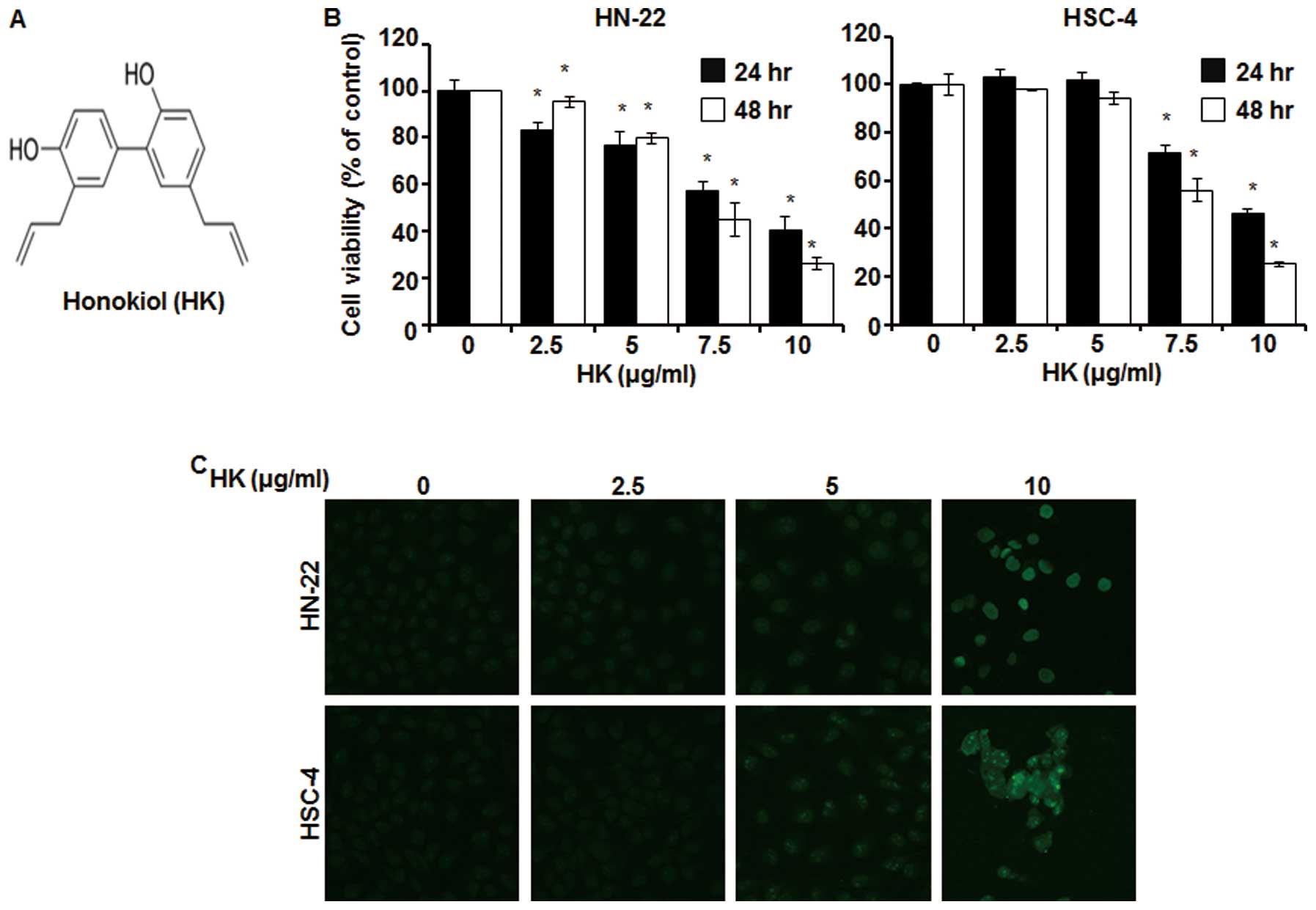
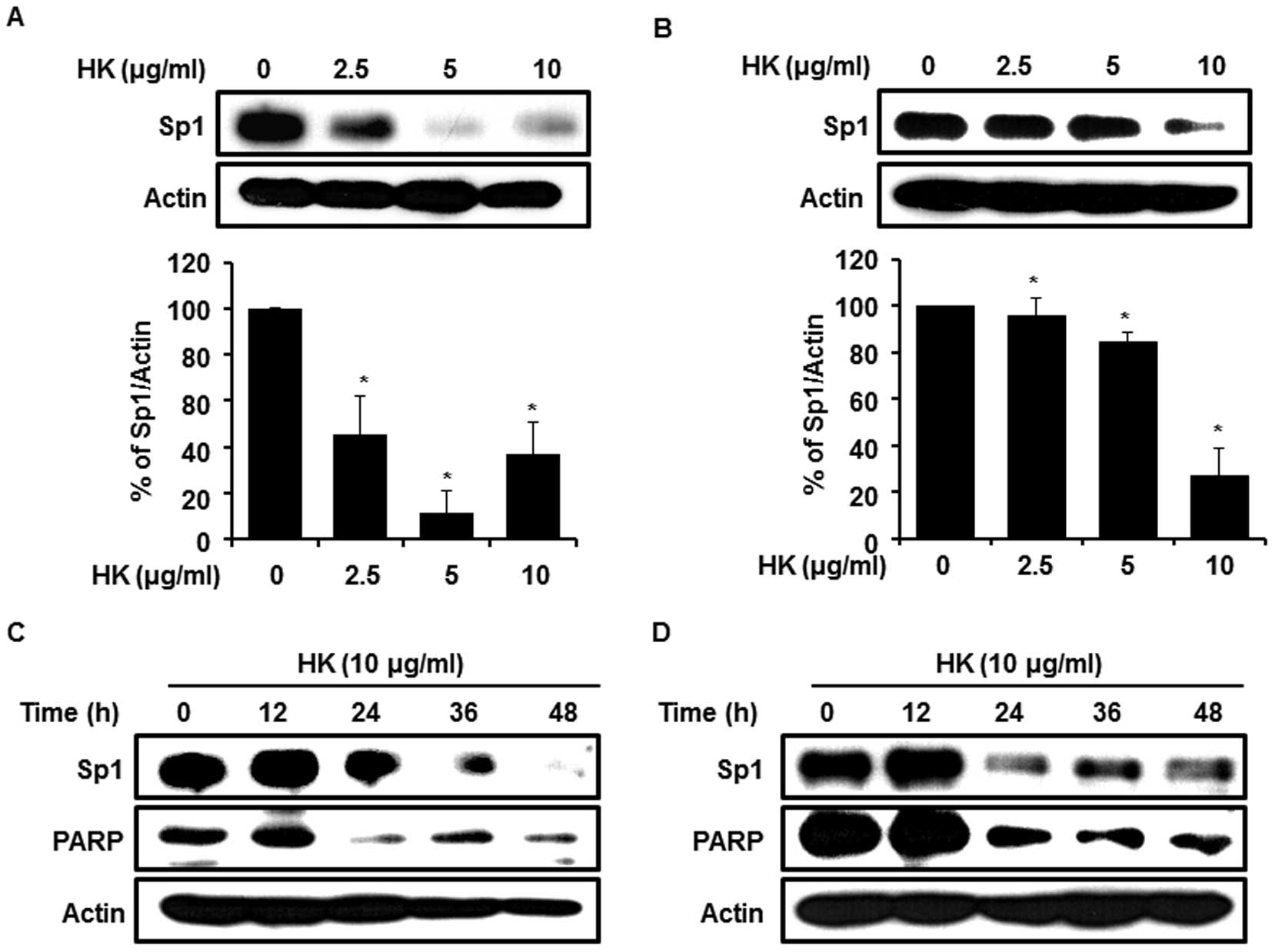
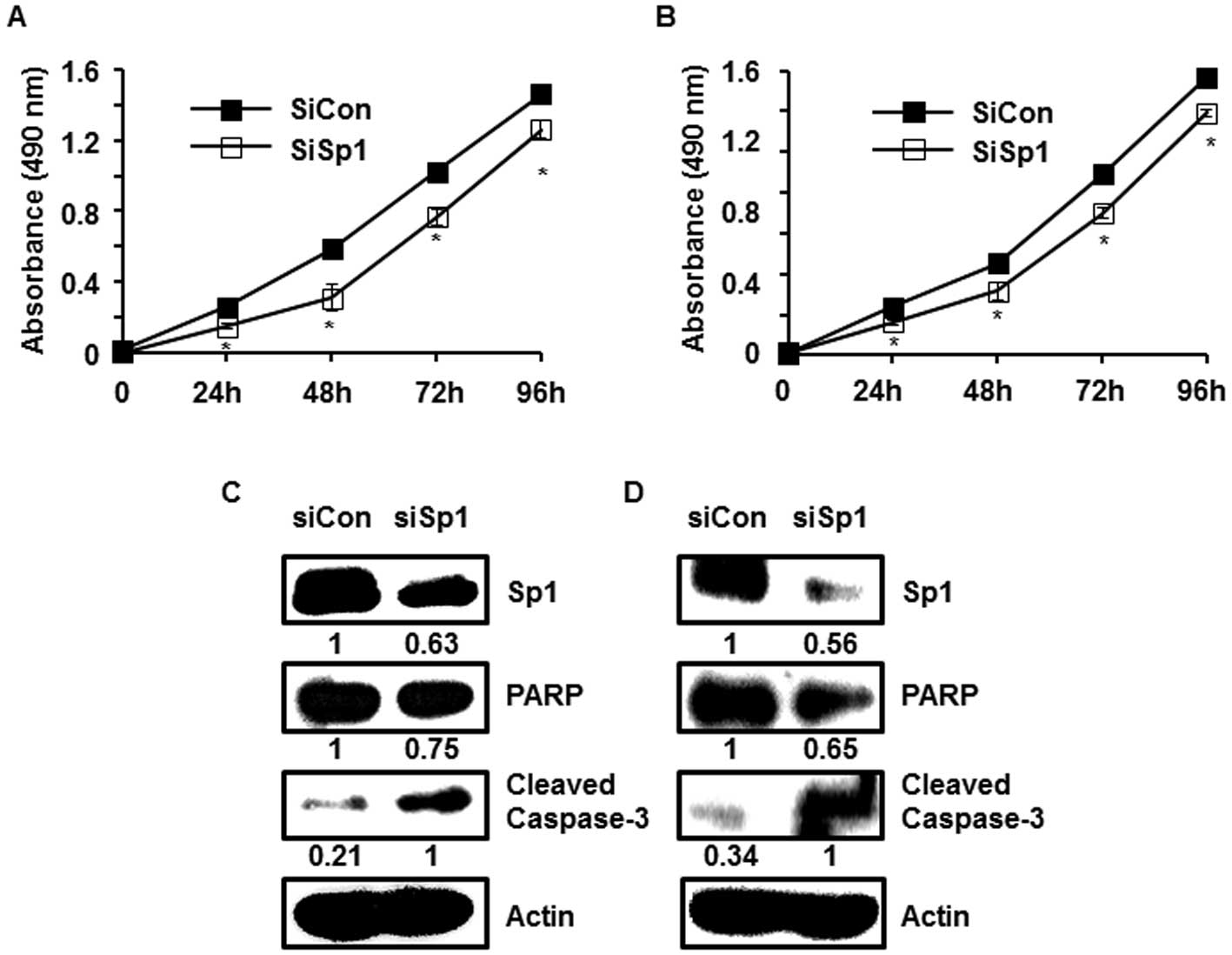
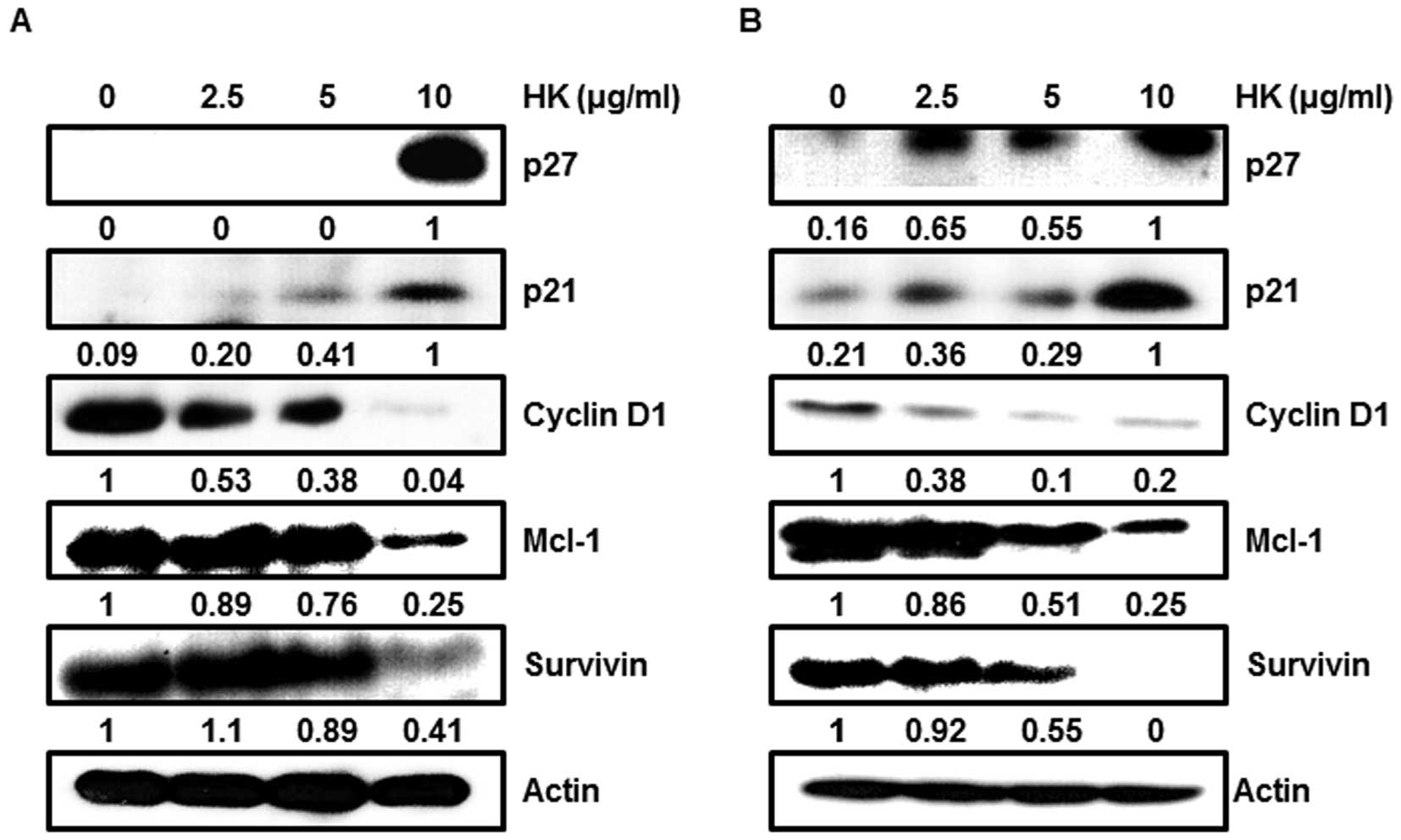
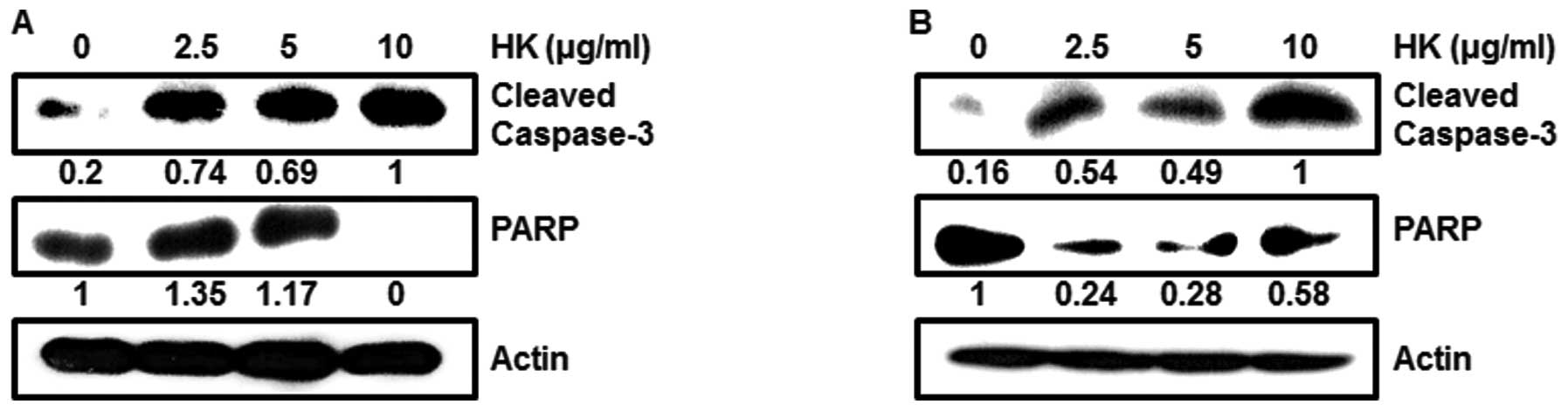
Honokiol (HK), a novel plant-derived natural product, is a physiologically activated compound with polyphenolic structure, and has been identified to function as an anticancer agent. It has been widely used in several diseases as a traditional medicine for a long time. We investigated whether HK could show anticancer effects on two oral squamous cell lines (OSCCs), HN-22 and HSC-4. We demonstrated that HK-treated cells showed dramatic reduction in cell growth and apoptotic cell morphologies. Intriguingly, the transcription factor specificity protein 1 (Sp1) was significantly inhibited by HK in a dose-dependent manner. Furthermore, we checked changes in cell cycle regulatory proteins and anti-apoptotic proteins at the molecular level, which are known as Sp1 target genes. The important key regulators in the cell cycle such as p27 and p21 were up-regulated by HK-mediated down-regulation of Sp1, whereas anti-apoptotic proteins including Mcl-1 and survivin were decreased, resulting in caspase-dependent apoptosis. Taken together, results from this study suggest that HK could modulate Sp1 transactivation and induce apoptotic cell death through the regulation of cell cycle and suppression of anti‑apoptotic proteins. In addition, HK may be used in cancer prevention and therapies to improve the clinical outcome as an anticancer drug.
View Figures

Figure 1

Figure 2

Figure 3

Figure 4

Figure 5

View References

1. 

Hamada T, Wakamatsu T, Miyahara M, et al: MUC4: a novel prognostic factor of oral squamous cell carcinoma. Int J Cancer. 130:1768–1776. 2012. View Article : Google Scholar : PubMed/NCBI

2. 

Warnakulasuriya S: Global epidemiology of oral and oropharyngeal cancer. Oral Oncol. 45:309–316. 2009. View Article : Google Scholar

3. 

Newman DJ and Cragg GM: Natural products as sources of new drugs over the 30 years from 1981 to 2010. J Nat Prod. 75:311–335. 2012.PubMed/NCBI

4. 

Fried LE and Arbiser JL: Honokiol, a multifunctional anti-angiogenic and antitumor agent. Antioxid Redox Signal. 11:1139–1148. 2009. View Article : Google Scholar

5. 

Fujita M, Itokawa H and Sashida Y: Studies on the components of Magnolia obovata Thunb. 3. Occurrence of magnolol and honokiol in M. obovata and other allied plants. Yakugaku Zasshi. 93:429–434. 1973.(In Japanese).

6. 

Teng CM, Chen CC, Ko FN, et al: Two antiplatelet agents from Magnolia officinalis. Thromb Res. 50:757–765. 1988. View Article : Google Scholar : PubMed/NCBI

7. 

Liou KT, Lin SM, Huang SS, Chih CL and Tsai SK: Honokiol ameliorates cerebral infarction from ischemia-reperfusion injury in rats. Planta Med. 69:130–134. 2003. View Article : Google Scholar : PubMed/NCBI

8. 

Lo YC, Teng CM, Chen CF, Chen CC and Hong CY: Magnolol and honokiol isolated from Magnolia officinalis protect rat heart mitochondria against lipid peroxidation. Biochem Pharmacol. 47:549–553. 1994.

9. 

Kuribara H, Kishi E, Hattori N, Yuzurihara M and Maruyama Y: Application of the elevated plus-maze test in mice for evaluation of the content of honokiol in water extracts of magnolia. Phytother Res. 13:593–596. 1999. View Article : Google Scholar : PubMed/NCBI

10. 

Battle TE, Arbiser J and Frank DA: The natural product honokiol induces caspase-dependent apoptosis in B-cell chronic lymphocytic leukemia (B-CLL) cells. Blood. 106:690–697. 2005. View Article : Google Scholar : PubMed/NCBI

11. 

Shigemura K, Arbiser JL, Sun SY, et al: Honokiol, a natural plant product, inhibits the bone metastatic growth of human prostate cancer cells. Cancer. 109:1279–1289. 2007. View Article : Google Scholar : PubMed/NCBI

12. 

Garcia A, Zheng Y, Zhao C, et al: Honokiol suppresses survival signals mediated by Ras-dependent phospholipase D activity in human cancer cells. Clin Cancer Res. 14:4267–4274. 2008. View Article : Google Scholar : PubMed/NCBI

13. 

Deng J, Qian Y, Geng L, et al: Involvement of p38 mitogen-activated protein kinase pathway in honokiol-induced apoptosis in a human hepatoma cell line (hepG2). Liver Int. 28:1458–1464. 2008. View Article : Google Scholar : PubMed/NCBI

14. 

Li Z, Liu Y, Zhao X, et al: Honokiol, a natural therapeutic candidate, induces apoptosis and inhibits angiogenesis of ovarian tumor cells. Eur J Obstet Gynecol Reprod Biol. 140:95–102. 2008. View Article : Google Scholar : PubMed/NCBI

15. 

Bai X, Cerimele F, Ushio-Fukai M, et al: Honokiol, a small molecular weight natural product, inhibits angiogenesis in vitro and tumor growth in vivo. J Biol Chem. 278:35501–35507. 2003. View Article : Google Scholar : PubMed/NCBI

16. 

Sheu ML, Chiang CK, Tsai KS, et al: Inhibition of NADPH oxidase-related oxidative stress-triggered signaling by honokiol suppresses high glucose-induced human endothelial cell apoptosis. Free Radic Biol Med. 44:2043–2050. 2008. View Article : Google Scholar : PubMed/NCBI

17. 

Lee J, Jung E, Park J, et al: Anti-inflammatory effects of magnolol and honokiol are mediated through inhibition of the downstream pathway of MEKK-1 in NF-kappaB activation signaling. Planta Med. 71:338–343. 2005. View Article : Google Scholar : PubMed/NCBI

18. 

Tse AK, Wan CK, Shen XL, Yang M and Fong WF: Honokiol inhibits TNF-alpha-stimulated NF-kappaB activation and NF-kappaB-regulated gene expression through suppression of IKK activation. Biochem Pharmacol. 70:1443–1457. 2005. View Article : Google Scholar : PubMed/NCBI

19. 

Li L and Davie JR: The role of Sp1 and Sp3 in normal and cancer cell biology. Ann Anat. 192:275–283. 2010. View Article : Google Scholar : PubMed/NCBI

20. 

Hirano T, Gotoh M and Oka K: Natural flavonoids and lignans are potent cytostatic agents against human leukemic HL-60 cells. Life Sci. 55:1061–1069. 1994. View Article : Google Scholar : PubMed/NCBI

21. 

Yang SE, Hsieh MT, Tsai TH and Hsu SL: Down-modulation of Bcl-XL, release of cytochrome c and sequential activation of caspases during honokiol-induced apoptosis in human squamous lung cancer CH27 cells. Biochem Pharmacol. 63:1641–1651. 2002. View Article : Google Scholar : PubMed/NCBI

22. 

Abdelrahim M, Smith R III, Burghardt R and Safe S: Role of Sp proteins in regulation of vascular endothelial growth factor expression and proliferation of pancreatic cancer cells. Cancer Res. 64:6740–6749. 2004. View Article : Google Scholar : PubMed/NCBI

23. 

Ishibashi H, Nakagawa K, Onimaru M, et al: Sp1 decoy transfected to carcinoma cells suppresses the expression of vascular endothelial growth factor, transforming growth factor beta1, and tissue factor and also cell growth and invasion activities. Cancer Res. 60:6531–6536. 2000.

24. 

Kong LM, Liao CG, Fei F, Guo X, Xing JL and Chen ZN: Transcription factor Sp1 regulates expression of cancer-associated molecule CD147 in human lung cancer. Cancer Sci. 101:1463–1470. 2010. View Article : Google Scholar : PubMed/NCBI

25. 

Chuang JY, Wu CH, Lai MD, Chang WC and Hung JJ: Overexpression of Sp1 leads to p53-dependent apoptosis in cancer cells. Int J Cancer. 125:2066–2076. 2009. View Article : Google Scholar : PubMed/NCBI

26. 

Choi ES, Shim JH, Jung JY, et al: Apoptotic effect of tolfenamic acid in androgen receptor-independent prostate cancer cell and xenograft tumor through specificity protein 1. Cancer Sci. 102:742–748. 2011. View Article : Google Scholar : PubMed/NCBI

27. 

Shim JH, Shin JA, Jung JY, et al: Chemopreventive effect of tolfenamic acid on KB human cervical cancer cells and tumor xenograft by downregulating specificity protein 1. Eur J Cancer Prev. 20:102–111. 2011. View Article : Google Scholar : PubMed/NCBI

28. 

Davie JR, He S, Li L, et al: Nuclear organization and chromatin dynamics - Sp1, Sp3 and histone deacetylases. Adv Enzyme Regul. 48:189–208. 2008. View Article : Google Scholar : PubMed/NCBI

29. 

Grinstein E, Jundt F, Weinert I, Wernet P and Royer HD: Sp1 as G1 cell cycle phase specific transcription factor in epithelial cells. Oncogene. 21:1485–1492. 2002. View Article : Google Scholar : PubMed/NCBI

30. 

Chen F, Zhang F, Rao J and Studzinski GP: Ectopic expression of truncated Sp1 transcription factor prolongs the S phase and reduces the growth rate. Anticancer Res. 20:661–667. 2000.PubMed/NCBI

31. 

Blume SW, Snyder RC, Ray R, Thomas S, Koller CA and Miller DM: Mithramycin inhibits SP1 binding and selectively inhibits transcriptional activity of the dihydrofolate reductase gene in vitro and in vivo. J Clin Invest. 88:1613–1621. 1991. View Article : Google Scholar : PubMed/NCBI

32. 

Porter PL, Malone KE, Heagerty PJ, et al: Expression of cell-cycle regulators p27Kip1 and cyclin E, alone and in combination, correlate with survival in young breast cancer patients. Nat Med. 3:222–225. 1997. View Article : Google Scholar : PubMed/NCBI

33. 

Abbas T and Dutta A: p21 in cancer: intricate networks and multiple activities. Nat Rev Cancer. 9:400–414. 2009. View Article : Google Scholar : PubMed/NCBI

34. 

Sherr CJ and Roberts JM: CDK inhibitors: positive and negative regulators of G1-phase progression. Genes Dev. 13:1501–1512. 1999. View Article : Google Scholar : PubMed/NCBI

35. 

Murray AW: Recycling the cell cycle: cyclins revisited. Cell. 116:221–234. 2004. View Article : Google Scholar : PubMed/NCBI

36. 

Albanese C, Johnson J, Watanabe G, et al: Transforming p21ras mutants and c-Ets-2 activate the cyclin D1 promoter through distinguishable regions. J Biol Chem. 270:23589–23597. 1995. View Article : Google Scholar : PubMed/NCBI

37. 

Lee RJ, Albanese C, Stenger RJ, et al: pp60(v-src) induction of cyclin D1 requires collaborative interactions between the extracellular signal-regulated kinase, p38, and Jun kinase pathways. A role for cAMP response element-binding protein and activating transcription factor-2 in pp60(v-src) signaling in breast cancer cells. J Biol Chem. 274:7341–7350. 1999.

38. 

Shtutman M, Zhurinsky J, Simcha I, et al: The cyclin D1 gene is a target of the beta-catenin/LEF-1 pathway. Proc Natl Acad Sci USA. 96:5522–5527. 1999. View Article : Google Scholar : PubMed/NCBI

39. 

Weinstein IB: Relevance of cyclin D1 and other molecular markers to cancer chemoprevention. J Cell Biochem (Suppl). 25:23–28. 1996. View Article : Google Scholar : PubMed/NCBI

40. 

Li F: Survivin study: what is the next wave? J Cell Physiol. 197:8–29. 2003. View Article : Google Scholar : PubMed/NCBI

41. 

Xu R, Zhang P, Huang J, Ge S, Lu J and Qian G: Sp1 and Sp3 regulate basal transcription of the survivin gene. Biochem Biophys Res Commun. 356:286–292. 2007. View Article : Google Scholar : PubMed/NCBI

42. 

Chun JY, Hu Y, Pinder E, Wu J, Li F and Gao AC: Selenium inhibition of survivin expression by preventing Sp1 binding to its promoter. Mol Cancer Ther. 6:2572–2580. 2007. View Article : Google Scholar : PubMed/NCBI

43. 

Yoon JH, Werneburg NW, Higuchi H, et al: Bile acids inhibit Mcl-1 protein turnover via an epidermal growth factor receptor/Raf-1-dependent mechanism. Cancer Res. 62:6500–6505. 2002.PubMed/NCBI

44. 

Okaro AC, Deery AR, Hutchins RR and Davidson BR: The expression of antiapoptotic proteins Bcl-2, Bcl-X(L), and Mcl-1 in benign, dysplastic, and malignant biliary epithelium. J Clin Pathol. 54:927–932. 2001. View Article : Google Scholar : PubMed/NCBI

45. 

Akgul C: Mcl-1 is a potential therapeutic target in multiple types of cancer. Cell Mol Life Sci. 66:1326–1336. 2009. View Article : Google Scholar : PubMed/NCBI

46. 

Andersson Y, Juell S and Fodstad O: Downregulation of the antiapoptotic MCL-1 protein and apoptosis in MA-11 breast cancer cells induced by an anti-epidermal growth factor receptor-pseudomonas exotoxin a immunotoxin. Int J Cancer. 112:475–483. 2004. View Article : Google Scholar : PubMed/NCBI

47. 

Chetoui N, Sylla K, Gagnon-Houde JV, et al: Down-regulation of mcl-1 by small interfering RNA sensitizes resistant melanoma cells to fas-mediated apoptosis. Mol Cancer Res. 6:42–52. 2008. View Article : Google Scholar : PubMed/NCBI

48. 

Wei SH, Dong K, Lin F, et al: Inducing apoptosis and enhancing chemosensitivity to gemcitabine via RNA interference targeting Mcl-1 gene in pancreatic carcinoma cell. Cancer Chemother Pharmacol. 62:1055–1064. 2008. View Article : Google Scholar : PubMed/NCBI

Related Articles

  • Abstract
  • View
  • Download
  • Twitter
Copy and paste a formatted citation
Spandidos Publications style
Kim D, Ko SM, Jeon Y, Noh Y, Choi N, Cho S, Moon HS, Cho YS, Shin J, Park S, Park S, et al: Anti-proliferative effect of honokiol in oral squamous cancer through the regulation of specificity protein 1. Int J Oncol 43: 1103-1110, 2013.
APA
Kim, D., Ko, S.M., Jeon, Y., Noh, Y., Choi, N., Cho, S. ... Shim, J. (2013). Anti-proliferative effect of honokiol in oral squamous cancer through the regulation of specificity protein 1. International Journal of Oncology, 43, 1103-1110. https://doi.org/10.3892/ijo.2013.2028
MLA
Kim, D., Ko, S. M., Jeon, Y., Noh, Y., Choi, N., Cho, S., Moon, H. S., Cho, Y. S., Shin, J., Park, S., Seo, K. S., Choi, J., Chae, J., Shim, J."Anti-proliferative effect of honokiol in oral squamous cancer through the regulation of specificity protein 1". International Journal of Oncology 43.4 (2013): 1103-1110.
Chicago
Kim, D., Ko, S. M., Jeon, Y., Noh, Y., Choi, N., Cho, S., Moon, H. S., Cho, Y. S., Shin, J., Park, S., Seo, K. S., Choi, J., Chae, J., Shim, J."Anti-proliferative effect of honokiol in oral squamous cancer through the regulation of specificity protein 1". International Journal of Oncology 43, no. 4 (2013): 1103-1110. https://doi.org/10.3892/ijo.2013.2028
Copy and paste a formatted citation
x
Spandidos Publications style
Kim D, Ko SM, Jeon Y, Noh Y, Choi N, Cho S, Moon HS, Cho YS, Shin J, Park S, Park S, et al: Anti-proliferative effect of honokiol in oral squamous cancer through the regulation of specificity protein 1. Int J Oncol 43: 1103-1110, 2013.
APA
Kim, D., Ko, S.M., Jeon, Y., Noh, Y., Choi, N., Cho, S. ... Shim, J. (2013). Anti-proliferative effect of honokiol in oral squamous cancer through the regulation of specificity protein 1. International Journal of Oncology, 43, 1103-1110. https://doi.org/10.3892/ijo.2013.2028
MLA
Kim, D., Ko, S. M., Jeon, Y., Noh, Y., Choi, N., Cho, S., Moon, H. S., Cho, Y. S., Shin, J., Park, S., Seo, K. S., Choi, J., Chae, J., Shim, J."Anti-proliferative effect of honokiol in oral squamous cancer through the regulation of specificity protein 1". International Journal of Oncology 43.4 (2013): 1103-1110.
Chicago
Kim, D., Ko, S. M., Jeon, Y., Noh, Y., Choi, N., Cho, S., Moon, H. S., Cho, Y. S., Shin, J., Park, S., Seo, K. S., Choi, J., Chae, J., Shim, J."Anti-proliferative effect of honokiol in oral squamous cancer through the regulation of specificity protein 1". International Journal of Oncology 43, no. 4 (2013): 1103-1110. https://doi.org/10.3892/ijo.2013.2028
Follow us
  • Twitter
  • LinkedIn
  • Facebook
About
  • Spandidos Publications
  • Careers
  • Cookie Policy
  • Privacy Policy
How can we help?
  • Help
  • Live Chat
  • Contact
  • Email to our Support Team