Spandidos Publications Logo
  • About
    • About Spandidos
    • Aims and Scopes
    • Abstracting and Indexing
    • Editorial Policies
    • Reprints and Permissions
    • Job Opportunities
    • Terms and Conditions
    • Contact
  • Journals
    • All Journals
    • Oncology Letters
      • Oncology Letters
      • Information for Authors
      • Editorial Policies
      • Editorial Board
      • Aims and Scope
      • Abstracting and Indexing
      • Bibliographic Information
      • Archive
    • International Journal of Oncology
      • International Journal of Oncology
      • Information for Authors
      • Editorial Policies
      • Editorial Board
      • Aims and Scope
      • Abstracting and Indexing
      • Bibliographic Information
      • Archive
    • Molecular and Clinical Oncology
      • Molecular and Clinical Oncology
      • Information for Authors
      • Editorial Policies
      • Editorial Board
      • Aims and Scope
      • Abstracting and Indexing
      • Bibliographic Information
      • Archive
    • Experimental and Therapeutic Medicine
      • Experimental and Therapeutic Medicine
      • Information for Authors
      • Editorial Policies
      • Editorial Board
      • Aims and Scope
      • Abstracting and Indexing
      • Bibliographic Information
      • Archive
    • International Journal of Molecular Medicine
      • International Journal of Molecular Medicine
      • Information for Authors
      • Editorial Policies
      • Editorial Board
      • Aims and Scope
      • Abstracting and Indexing
      • Bibliographic Information
      • Archive
    • Biomedical Reports
      • Biomedical Reports
      • Information for Authors
      • Editorial Policies
      • Editorial Board
      • Aims and Scope
      • Abstracting and Indexing
      • Bibliographic Information
      • Archive
    • Oncology Reports
      • Oncology Reports
      • Information for Authors
      • Editorial Policies
      • Editorial Board
      • Aims and Scope
      • Abstracting and Indexing
      • Bibliographic Information
      • Archive
    • Molecular Medicine Reports
      • Molecular Medicine Reports
      • Information for Authors
      • Editorial Policies
      • Editorial Board
      • Aims and Scope
      • Abstracting and Indexing
      • Bibliographic Information
      • Archive
    • World Academy of Sciences Journal
      • World Academy of Sciences Journal
      • Information for Authors
      • Editorial Policies
      • Editorial Board
      • Aims and Scope
      • Abstracting and Indexing
      • Bibliographic Information
      • Archive
    • International Journal of Functional Nutrition
      • International Journal of Functional Nutrition
      • Information for Authors
      • Editorial Policies
      • Editorial Board
      • Aims and Scope
      • Abstracting and Indexing
      • Bibliographic Information
      • Archive
    • International Journal of Epigenetics
      • International Journal of Epigenetics
      • Information for Authors
      • Editorial Policies
      • Editorial Board
      • Aims and Scope
      • Abstracting and Indexing
      • Bibliographic Information
      • Archive
    • Medicine International
      • Medicine International
      • Information for Authors
      • Editorial Policies
      • Editorial Board
      • Aims and Scope
      • Abstracting and Indexing
      • Bibliographic Information
      • Archive
  • Articles
  • Information
    • Information for Authors
    • Information for Reviewers
    • Information for Librarians
    • Information for Advertisers
    • Conferences
  • Language Editing
Spandidos Publications Logo
  • About
    • About Spandidos
    • Aims and Scopes
    • Abstracting and Indexing
    • Editorial Policies
    • Reprints and Permissions
    • Job Opportunities
    • Terms and Conditions
    • Contact
  • Journals
    • All Journals
    • Biomedical Reports
      • Information for Authors
      • Editorial Policies
      • Editorial Board
      • Aims and Scope
      • Abstracting and Indexing
      • Bibliographic Information
      • Archive
    • Experimental and Therapeutic Medicine
      • Information for Authors
      • Editorial Policies
      • Editorial Board
      • Aims and Scope
      • Abstracting and Indexing
      • Bibliographic Information
      • Archive
    • International Journal of Epigenetics
      • Information for Authors
      • Editorial Policies
      • Editorial Board
      • Aims and Scope
      • Abstracting and Indexing
      • Bibliographic Information
      • Archive
    • International Journal of Functional Nutrition
      • Information for Authors
      • Editorial Policies
      • Editorial Board
      • Aims and Scope
      • Abstracting and Indexing
      • Bibliographic Information
      • Archive
    • International Journal of Molecular Medicine
      • Information for Authors
      • Editorial Policies
      • Editorial Board
      • Aims and Scope
      • Abstracting and Indexing
      • Bibliographic Information
      • Archive
    • International Journal of Oncology
      • Information for Authors
      • Editorial Policies
      • Editorial Board
      • Aims and Scope
      • Abstracting and Indexing
      • Bibliographic Information
      • Archive
    • Medicine International
      • Information for Authors
      • Editorial Policies
      • Editorial Board
      • Aims and Scope
      • Abstracting and Indexing
      • Bibliographic Information
      • Archive
    • Molecular and Clinical Oncology
      • Information for Authors
      • Editorial Policies
      • Editorial Board
      • Aims and Scope
      • Abstracting and Indexing
      • Bibliographic Information
      • Archive
    • Molecular Medicine Reports
      • Information for Authors
      • Editorial Policies
      • Editorial Board
      • Aims and Scope
      • Abstracting and Indexing
      • Bibliographic Information
      • Archive
    • Oncology Letters
      • Information for Authors
      • Editorial Policies
      • Editorial Board
      • Aims and Scope
      • Abstracting and Indexing
      • Bibliographic Information
      • Archive
    • Oncology Reports
      • Information for Authors
      • Editorial Policies
      • Editorial Board
      • Aims and Scope
      • Abstracting and Indexing
      • Bibliographic Information
      • Archive
    • World Academy of Sciences Journal
      • Information for Authors
      • Editorial Policies
      • Editorial Board
      • Aims and Scope
      • Abstracting and Indexing
      • Bibliographic Information
      • Archive
  • Articles
  • Information
    • For Authors
    • For Reviewers
    • For Librarians
    • For Advertisers
    • Conferences
  • Language Editing
Login Register Submit
  • This site uses cookies
  • You can change your cookie settings at any time by following the instructions in our Cookie Policy. To find out more, you may read our Privacy Policy.

    I agree
Search articles by DOI, keyword, author or affiliation
Search
Advanced Search
presentation
International Journal of Oncology
Join Editorial Board Propose a Special Issue
Print ISSN: 1019-6439 Online ISSN: 1791-2423
Journal Cover
2014-January Volume 44 Issue 1

Full Size Image

Cover Legend PDF

Sign up for eToc alerts
Recommend to Library

Journals

International Journal of Molecular Medicine

International Journal of Molecular Medicine

International Journal of Molecular Medicine is an international journal devoted to molecular mechanisms of human disease.

International Journal of Oncology

International Journal of Oncology

International Journal of Oncology is an international journal devoted to oncology research and cancer treatment.

Molecular Medicine Reports

Molecular Medicine Reports

Covers molecular medicine topics such as pharmacology, pathology, genetics, neuroscience, infectious diseases, molecular cardiology, and molecular surgery.

Oncology Reports

Oncology Reports

Oncology Reports is an international journal devoted to fundamental and applied research in Oncology.

Experimental and Therapeutic Medicine

Experimental and Therapeutic Medicine

Experimental and Therapeutic Medicine is an international journal devoted to laboratory and clinical medicine.

Oncology Letters

Oncology Letters

Oncology Letters is an international journal devoted to Experimental and Clinical Oncology.

Biomedical Reports

Biomedical Reports

Explores a wide range of biological and medical fields, including pharmacology, genetics, microbiology, neuroscience, and molecular cardiology.

Molecular and Clinical Oncology

Molecular and Clinical Oncology

International journal addressing all aspects of oncology research, from tumorigenesis and oncogenes to chemotherapy and metastasis.

World Academy of Sciences Journal

World Academy of Sciences Journal

Multidisciplinary open-access journal spanning biochemistry, genetics, neuroscience, environmental health, and synthetic biology.

International Journal of Functional Nutrition

International Journal of Functional Nutrition

Open-access journal combining biochemistry, pharmacology, immunology, and genetics to advance health through functional nutrition.

International Journal of Epigenetics

International Journal of Epigenetics

Publishes open-access research on using epigenetics to advance understanding and treatment of human disease.

Medicine International

Medicine International

An International Open Access Journal Devoted to General Medicine.

Journal Cover
2014-January Volume 44 Issue 1

Full Size Image

Cover Legend PDF

Sign up for eToc alerts
Recommend to Library

  • Article
  • Citations
    • Cite This Article
    • Download Citation
    • Create Citation Alert
    • Remove Citation Alert
    • Cited By
  • Similar Articles
    • Related Articles (in Spandidos Publications)
    • Similar Articles (Google Scholar)
    • Similar Articles (PubMed)
  • Download PDF
  • Download XML
  • View XML
Article

The expression of C-FABP and PPARγ and their prognostic significance in prostate cancer

  • Authors:
    • Farzad S. Forootan
    • Shiva S. Forootan
    • Mohammed I. Malki
    • Danqing Chen
    • Gandi Li
    • Ke Lin
    • Philip S. Rudland
    • Christopher S. Foster
    • Youqiang Ke
  • View Affiliations / Copyright

    Affiliations: Molecular Pathology Laboratory, Department of Molecular and Clinical Cancer Medicine, Liverpool University, Liverpool, L69 3GA, UK, Department of Pathology, West-China Hospital/West-China Medical School, Sichuan University, P.R. China, Department of Biochemistry and Cell Biology, Liverpool University, Liverpool, L69 3GA, UK
  • Pages: 265-275
    |
    Published online on: November 5, 2013
       https://doi.org/10.3892/ijo.2013.2166
  • Expand metrics +
Metrics: Total Views: 0 (Spandidos Publications: | PMC Statistics: )
Metrics: Total PDF Downloads: 0 (Spandidos Publications: | PMC Statistics: )
Cited By (CrossRef): 0 citations Loading Articles...

This article is mentioned in:


Abstract

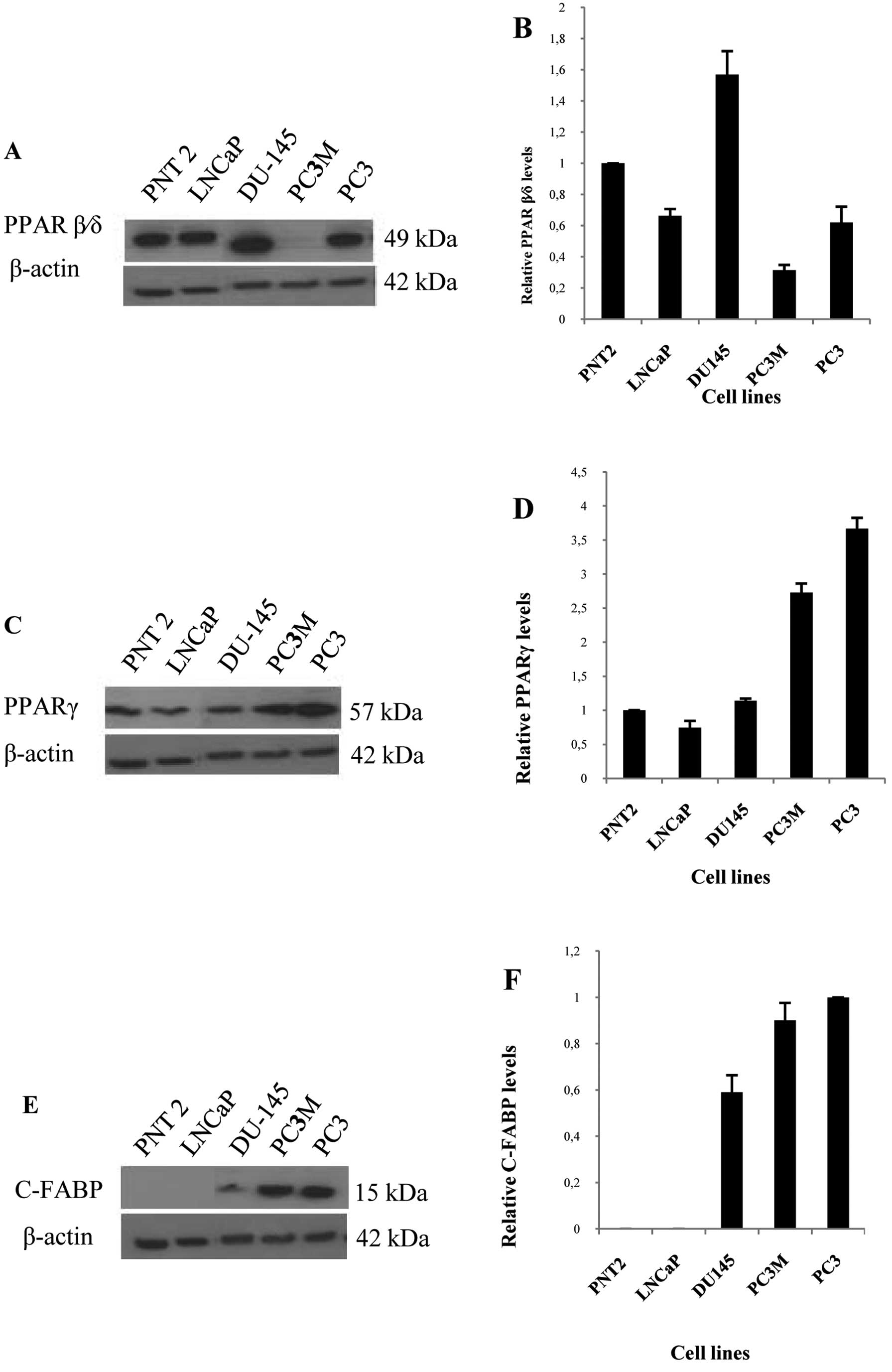
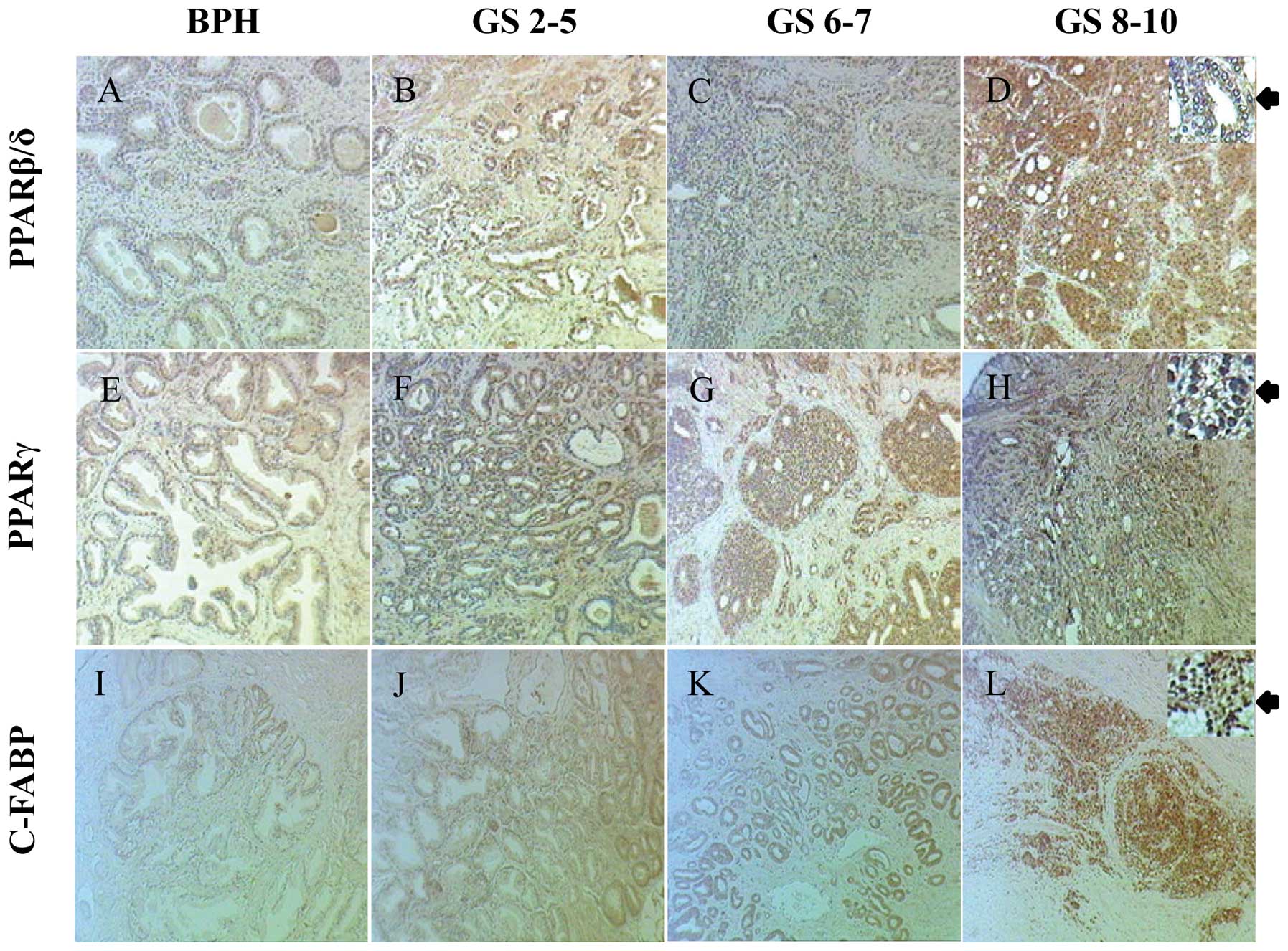
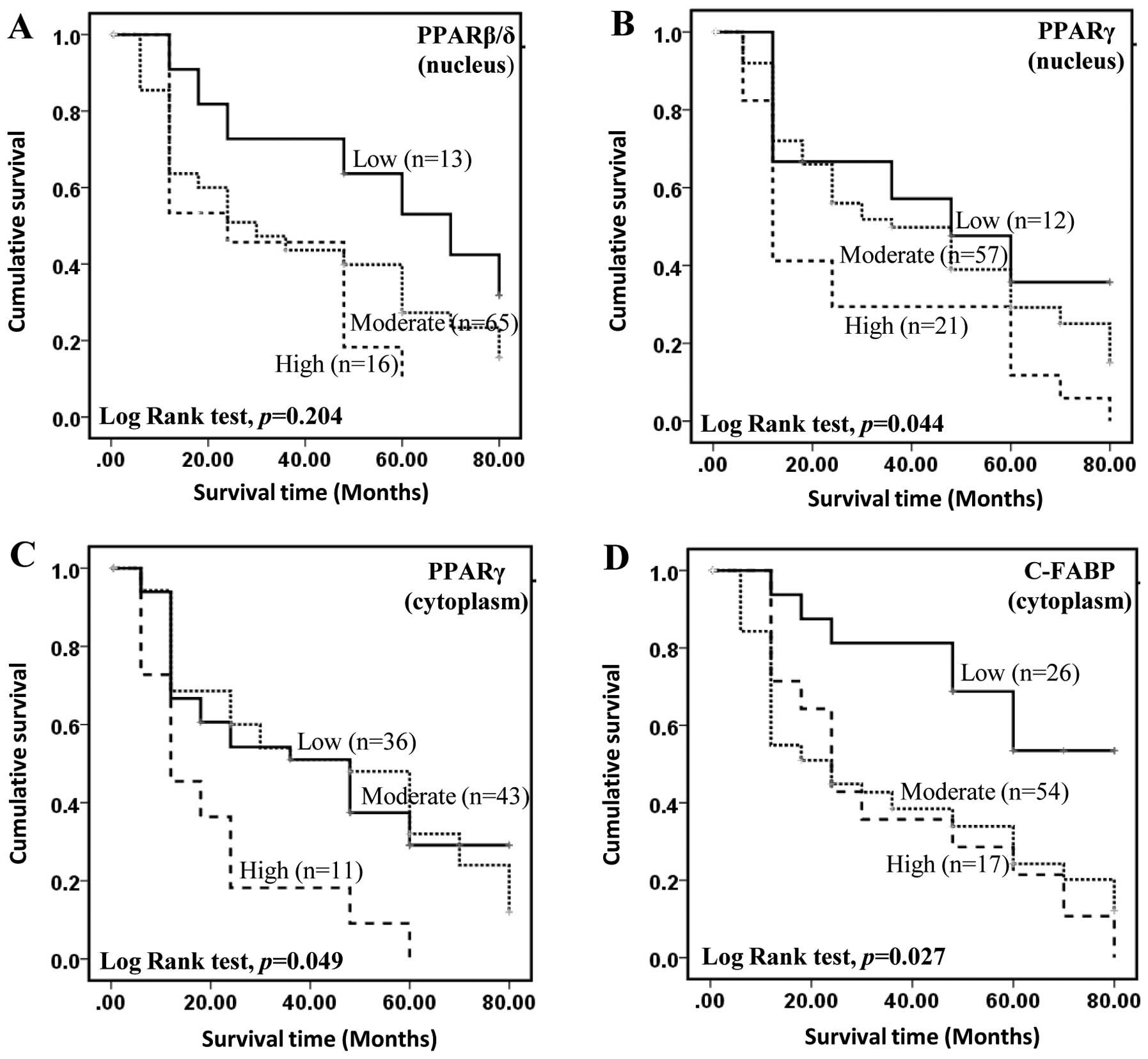
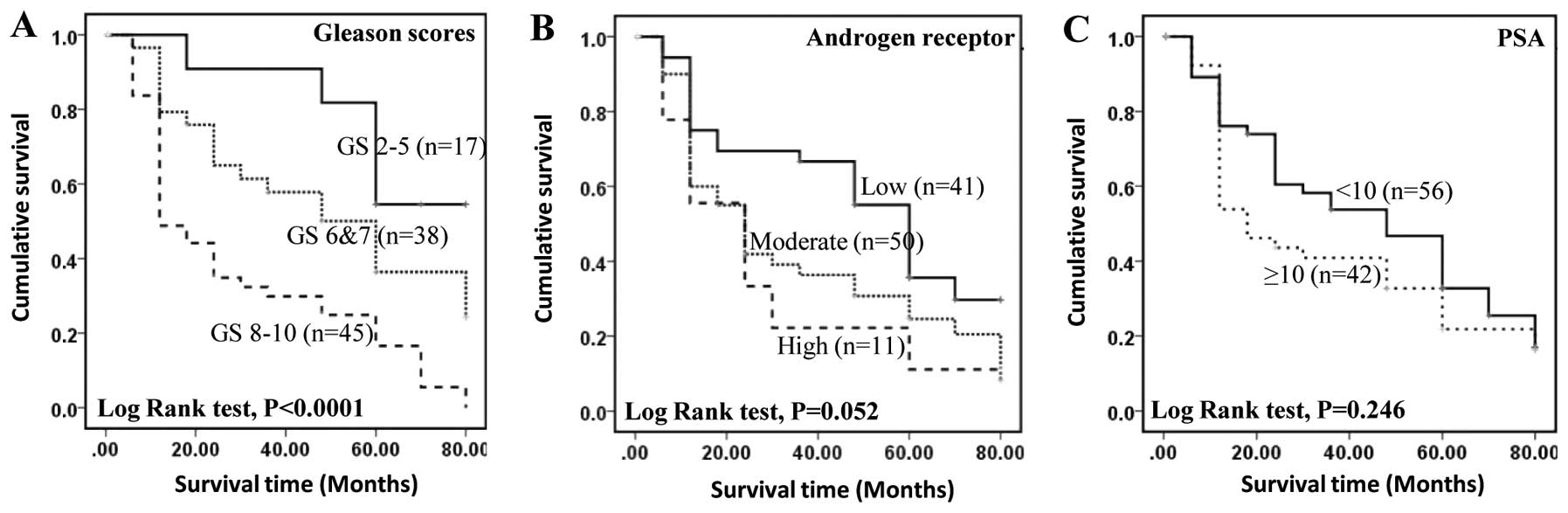
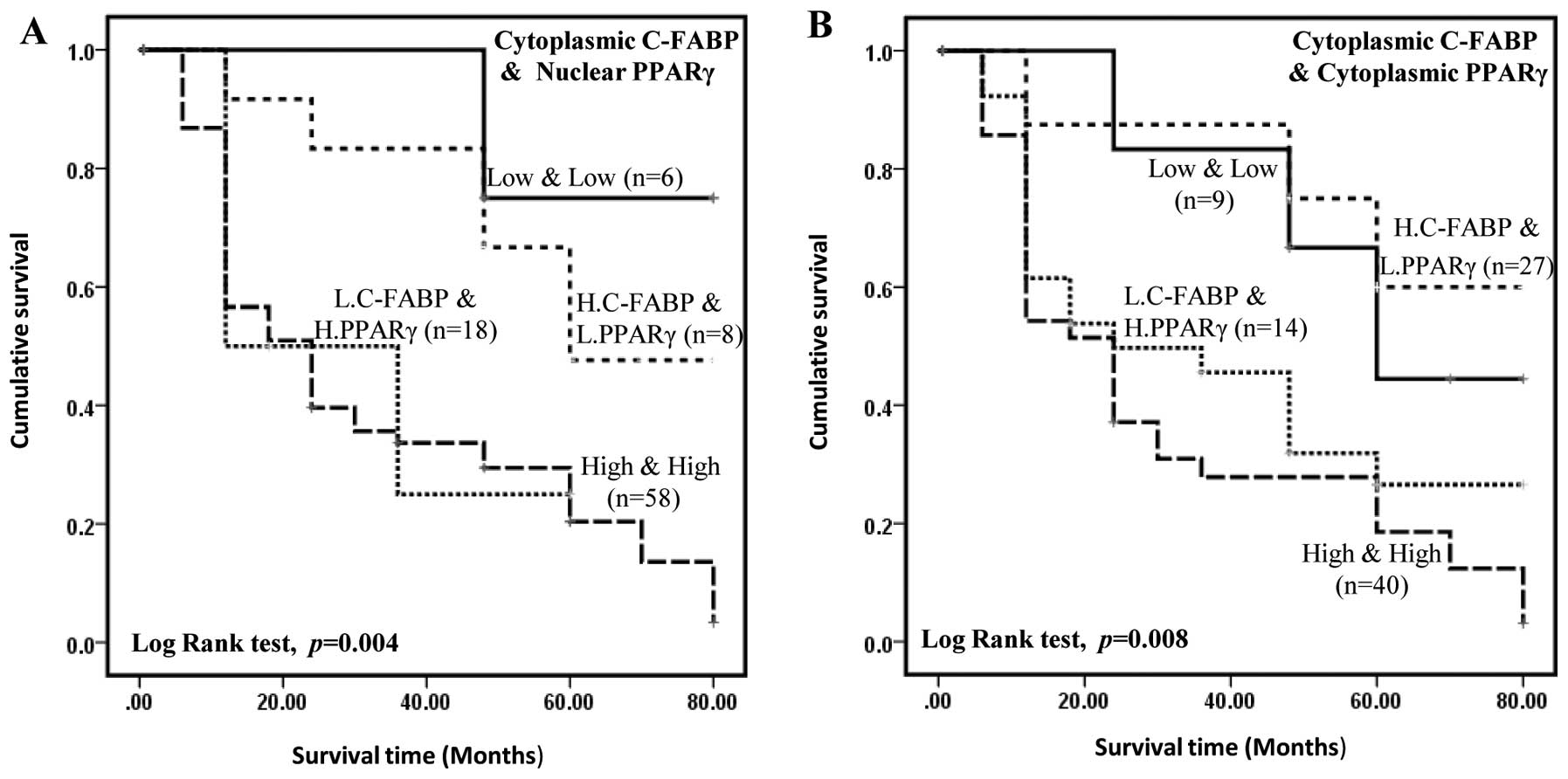
The purpose of this study was to test the hypothesis that cooperative interaction between cutaneous fatty acid-binding protein (C-FABP) and peroxisome proliferator-activated receptors (PPAR) promotes the malignant progression of human prostate cancer. The expression of C-FABP, PPARβ/δ and PPARγ was measured by western blot analysis in prostate cell lines and by immunohistochemical staining in tissue sections of benign prostatic hyperplasia (BPH) and prostatic carcinomas. The correlation between the expression of PPARs and C-FABP was assessed. The significance of increased expression of these proteins was analysed with respect to prognosis and compared with those of alternative biomarkers. The expression levels of C-FABP and PPARγ in prostate cancer cell lines and the cytoplasm and nuclei of carcinoma tissues were significantly (Student's t-test, p<0.05) higher compared to those in benign cell lines and BPH tissues. The raised expression level of C-FABP and PPARγ was significantly correlated with the increased combined Gleason scores (GS) of the carcinomas. Enhanced expression of cytoplasmic C-FABP significantly correlated with increased nuclear PPARγ (Student's t-test, p<0.005). While expression of PPARβ/δ in carcinomas did not correlate with patient outcome, the increased levels of both C-FABP and PPARγ were associated with shorter patient survival. Multivariate analysis indicated that C-FABP was independently associated with patient survival, whereas PPARγ was confounded by C-FABP in predicting patient survival. Thus, the increased C-FABP may interact with PPARγ in a coordinated mechanism to facilitate malignant progression in prostatic cancer. Both C-FABP and PPARγ are suitable as prognostic factors to predict the clinical outcome of prostatic cancer patients.
View Figures

Figure 1

Figure 2

Figure 3

Figure 4

Figure 5

View References

1. 

Ferlay J, Parkin DM and Steliarova-Foucher E: Estimates of cancer incidence and mortality in Europe in 2008. Eur J Cancer. 46:765–781. 2010. View Article : Google Scholar : PubMed/NCBI

2. 

Lee JT, Lehmann BD, Terrian DM, et al: Targeting prostate cancer based on signal transduction and cell cycle pathways. Cell Cycle. 7:1745–1762. 2008. View Article : Google Scholar : PubMed/NCBI

3. 

Madsen P, Rasmussen HH, Leffers H, Honore B and Celis JE: Molecular cloning and expression of a novel keratinocyte protein (psoriasis-associated fatty acid-binding protein [PA-FABP]) that is highly up-regulated in psoriatic skin and that shares similarity to fatty acid-binding proteins. J Invest Dermatol. 99:299–305. 1992.PubMed/NCBI

4. 

Jing C, Beesley C, Foster CS, et al: Identification of the messenger RNA for human cutaneous fatty acid-binding protein as a metastasis inducer. Cancer Res. 60:2390–2398. 2000.PubMed/NCBI

5. 

Jing C, Beesley C, Foster CS, et al: Human cutaneous fatty acid-binding protein induces metastasis by up-regulating the expression of vascular endothelial growth factor gene in rat Rama 37 model cells. Cancer Res. 61:4357–4364. 2001.PubMed/NCBI

6. 

Bao ZZ, Malki MI, Forootan SS, et al: A novel cutaneous fatty acid-binding protein-related signaling pathway leading to malignant progression in prostate cancer cells. Genes Cancer. Sep 18–2013.(Epub ahead of print). View Article : Google Scholar

7. 

Adamson J, Morgan EA, Beesley C, et al: High-level expression of cutaneous fatty acid-binding protein in prostatic carcinomas and its effect on tumorigenicity. Oncogene. 22:2739–2749. 2003. View Article : Google Scholar : PubMed/NCBI

8. 

Forootan SS, Bao ZZ, Forootan FS, et al: Atelocollagen-delivered siRNA targeting the FABP5 gene as an experimental therapy for prostate cancer in mouse xenografts. Int J Oncol. 36:69–76. 2010.PubMed/NCBI

9. 

Morgan EA, Forootan SS, Adamson J, et al: Expression of cutaneous fatty acid-binding protein (C-FABP) in prostate cancer: potential prognostic marker and target for tumourigenicity-suppression. Int J Oncol. 32:767–775. 2008.

10. 

Gebert N, Gebert M, Oeljeklaus S, et al: Dual function of Sdh3 in the respiratory chain and TIM22 protein translocase of the mitochondrial inner membrane. Mol Cell. 44:811–818. 2011. View Article : Google Scholar : PubMed/NCBI

11. 

Xu HE, Lambert MH, Montana VG, et al: Molecular recognition of fatty acids by peroxisome proliferator-activated receptors. Mol Cell. 3:397–403. 1999. View Article : Google Scholar : PubMed/NCBI

12. 

Santos CR and Schulze A: Lipid metabolism in cancer. FEBS J. 279:2610–2623. 2012. View Article : Google Scholar : PubMed/NCBI

13. 

Matsuyama M and Yoshimura R: Peroxisome proliferator-activated receptor-gamma is a potent target for prevention and treatment in human prostate and testicular cancer. PPAR Res. 2008:2498492008. View Article : Google Scholar : PubMed/NCBI

14. 

Kliewer SA, Xu HE, Lambert MH and Willson TM: Peroxisome proliferator-activated receptors: from genes to physiology. Rec Prog Horm Res. 56:239–263. 2001. View Article : Google Scholar : PubMed/NCBI

15. 

Qi C, Zhu Y and Reddy JK: Peroxisome proliferator-activated receptors, coactivators, and downstream targets. Cell Biochem Biophys. 32:187–204. 2000. View Article : Google Scholar : PubMed/NCBI

16. 

Sterchele PF, Sun H, Peterson RE and Vanden Heuvel JP: Regulation of peroxisome proliferator-activated receptor-alpha mRNA in rat liver. Arch Biochem Biophys. 326:281–289. 1996. View Article : Google Scholar : PubMed/NCBI

17. 

Lemberger T, Saladin R, Vazquez M, et al: Expression of the peroxisome proliferator-activated receptor alpha gene is stimulated by stress and follows a diurnal rhythm. J Biol Chem. 271:1764–1769. 1996. View Article : Google Scholar : PubMed/NCBI

18. 

Braissant O, Foufelle F, Scotto C, Dauca M and Wahli W: Differential expression of peroxisome proliferator-activated receptors (PPARs): tissue distribution of PPAR-alpha, -beta, and -gamma in the adult rat. Endocrinology. 137:354–366. 1996.

19. 

Mansure JJ, Nassim R and Kassouf W: Peroxisome proliferator-activated receptor gamma in bladder cancer: a promising therapeutic target. Cancer Biol Ther. 8:6–15. 2009. View Article : Google Scholar : PubMed/NCBI

20. 

Chawla A, Barak Y, Nagy L, Liao D, Tontonoz P and Evans RM: PPAR-gamma dependent and independent effects on macrophage-gene expression in lipid metabolism and inflammation. Nat Med. 7:48–52. 2001. View Article : Google Scholar : PubMed/NCBI

21. 

Segawa Y, Yoshimura R, Hase T, et al: Expression of peroxisome proliferator-activated receptor (PPAR) in human prostate cancer. Prostate. 51:108–116. 2002. View Article : Google Scholar : PubMed/NCBI

22. 

Berthon P, Cussenot O, Hopwood L, Leduc A and Maitland N: Functional expression of sv40 in normal human prostatic epithelial and fibroblastic cells - differentiation pattern of nontumorigenic cell lines. Int J Oncol. 6:333–343. 1995.

23. 

Cussenot O, Berthon P, Berger R, et al: Immortalization of human adult normal prostatic epithelial cells by liposomes containing large T-SV40 gene. J Urol. 146:881–886. 1991.PubMed/NCBI

24. 

Horoszewicz JS, Leong SS, Kawinski E, et al: LNCaP model of human prostatic carcinoma. Cancer Res. 43:1809–1818. 1983.

25. 

Stone KR, Mickey DD, Wunderli H, Mickey GH and Paulson DF: Isolation of a human prostate carcinoma cell line (DU 145). Int J Cancer. 21:274–281. 1978. View Article : Google Scholar : PubMed/NCBI

26. 

Kaighn ME, Lechner JF, Narayan KS and Jones LW: Prostate carcinoma: tissue culture cell lines. Natl Cancer Inst Monogr. 17–21. 1978.

27. 

Kozlowski JM, Fidler IJ, Campbell D, Xu ZL, Kaighn ME and Hart IR: Metastatic behavior of human tumor cell lines grown in the nude mouse. Cancer Res. 44:3522–3529. 1984.PubMed/NCBI

28. 

Forootan SS, Foster CS, Aachi VR, et al: Prognostic significance of osteopontin expression in human prostate cancer. Int J Cancer. 118:2255–2261. 2006. View Article : Google Scholar : PubMed/NCBI

29. 

Forootan SS, Wong YC, Dodson A, et al: Increased Id-1 expression is significantly associated with poor survival of patients with prostate cancer. Hum Pathol. 38:1321–1329. 2007. View Article : Google Scholar : PubMed/NCBI

30. 

Jing C, El-Ghany MA, Beesley C, et al: Tazarotene-induced gene 1 (TIG1) expression in prostate carcinomas and its relationship to tumorigenicity. J Natl Cancer Inst. 94:482–490. 2002. View Article : Google Scholar : PubMed/NCBI

31. 

Zhang Y, Forootan SS, Liu D, et al: Increased expression of anterior gradient-2 is significantly associated with poor survival of prostate cancer patients. Prostate Cancer Prostatic Dis. 10:293–300. 2007. View Article : Google Scholar : PubMed/NCBI

32. 

Gleason DF and Mellinger GT: Prediction of prognosis for prostatic adenocarcinoma by combined histological grading and clinical staging. J Urol. 111:58–64. 1974.

33. 

Keller H, Dreyer C, Medin J, Mahfoudi A, Ozato K and Wahli W: Fatty acids and retinoids control lipid metabolism through activation of peroxisome proliferator-activated receptor-retinoid X receptor heterodimers. Proc Natl Acad Sci USA. 90:2160–2164. 1993. View Article : Google Scholar

34. 

Foster CS, Gosden CM and Ke YQ: Primer: tissue fixation and preservation for optimal molecular analysis of urologic tissues. Nat Clin Pract Urol. 3:268–278. 2006. View Article : Google Scholar : PubMed/NCBI

35. 

Remmele W and Stegner HE: Recommendation for uniform definition of an immunoreactive score (IRS) for immunohistochemical estrogen receptor detection (ER-ICA) in breast cancer tissue. Pathologe. 8:138–140. 1987.(In German).

36. 

Masouye I, Saurat JH and Siegenthaler G: Epidermal fatty-acid-binding protein in psoriasis, basal and squamous cell carcinomas: an immunohistological study. Dermatology. 192:208–213. 1996. View Article : Google Scholar : PubMed/NCBI

37. 

Celis A, Rasmussen HH, Celis P, et al: Short-term culturing of low-grade superficial bladder transitional cell carcinomas leads to changes in the expression levels of several proteins involved in key cellular activities. Electrophoresis. 20:355–361. 1999. View Article : Google Scholar

38. 

Ostergaard M, Rasmussen HH, Nielsen HV, et al: Proteome profiling of bladder squamous cell carcinomas: identification of markers that define their degree of differentiation. Cancer Res. 57:4111–4117. 1997.PubMed/NCBI

39. 

Sinha P, Hutter G, Kottgen E, Dietel M, Schadendorf D and Lage H: Increased expression of epidermal fatty acid binding protein, cofilin, and 14-3-3-sigma (stratifin) detected by two-dimensional gel electrophoresis, mass spectrometry and microsequencing of drug-resistant human adenocarcinoma of the pancreas. Electrophoresis. 20:2952–2960. 1999. View Article : Google Scholar

40. 

Liu RZ, Graham K, Glubrecht DD, Germain DR, Mackey JR and Godbout R: Association of FABP5 expression with poor survival in triple-negative breast cancer: implication for retinoic acid therapy. Am JPathol. 178:997–1008. 2011.PubMed/NCBI

41. 

Barbus S, Tews B, Karra D, et al: Differential retinoic acid signaling in tumors of long- and short-term glioblastoma survivors. J Natl Cancer Inst. 103:598–606. 2011. View Article : Google Scholar : PubMed/NCBI

42. 

Lemberger T, Desvergne B and Wahli W: Peroxisome proliferator-activated receptors: a nuclear receptor signaling pathway in lipid physiology. An Rev Cell Dev Biol. 12:335–363. 1996. View Article : Google Scholar : PubMed/NCBI

43. 

Roberts-Thomson SJ: Peroxisome proliferator-activated receptors in tumorigenesis: targets of tumour promotion and treatment. Immunol Cell Biol. 78:436–441. 2000. View Article : Google Scholar : PubMed/NCBI

44. 

Jiang Y, Zou L, Zhang C, et al: PPARgamma and Wnt/beta-catenin pathway in human breast cancer: expression pattern, molecular interaction and clinical/prognostic correlations. J Cancer Res Clin Oncol. 135:1551–1559. 2009. View Article : Google Scholar

45. 

Papadaki I, Mylona E, Giannopoulou I, Markaki S, Keramopoulos A and Nakopoulou L: PPARgamma expression in breast cancer: clinical value and correlation with ERbeta. Histopathology. 46:37–42. 2005. View Article : Google Scholar : PubMed/NCBI

46. 

Rohrl C, Kaindl U, Koneczny I, et al: Peroxisome-proliferator-activated receptors gamma and beta/delta mediate vascular endothelial growth factor production in colorectal tumor cells. J Cancer Res Clin Oncol. 137:29–39. 2011. View Article : Google Scholar

47. 

Bishop-Bailey D: PPARs and angiogenesis. Biochem Soc Trans. 39:1601–1605. 2011. View Article : Google Scholar

48. 

Roobol MJ, Haese A and Bjartell A: Tumour markers in prostate cancer III: biomarkers in urine. Acta Oncol. 50(Suppl 1): 85–89. 2011. View Article : Google Scholar : PubMed/NCBI

49. 

Theocharis S, Giaginis C, Parasi A, et al: Expression of peroxisome proliferator-activated receptor-gamma in colon cancer: correlation with histopathological parameters, cell cycle-related molecules, and patients’ survival. Dig Dis Sci. 52:2305–2311. 2007.PubMed/NCBI

50. 

Han SW, Greene ME, Pitts J, Wada RK and Sidell N: Novel expression and function of peroxisome proliferator-activated receptor gamma (PPARgamma) in human neuroblastoma cells. Clin Cancer Res. 7:98–104. 2001.PubMed/NCBI

51. 

Zhang GY, Ahmed N, Riley C, et al: Enhanced expression of peroxisome proliferator-activated receptor gamma in epithelial ovarian carcinoma. Br J Cancer. 92:113–119. 2005. View Article : Google Scholar : PubMed/NCBI

52. 

Lee TW, Chen GG, Xu H, et al: Differential expression of inducible nitric oxide synthase and peroxisome proliferator-activated receptor gamma in non-small cell lung carcinoma. Eur J Cancer. 39:1296–1301. 2003. View Article : Google Scholar : PubMed/NCBI

53. 

Jiang WG, Redfern A, Bryce RP and Mansel RE: Peroxisome proliferator activated receptor-gamma (PPAR-gamma) mediates the action of gamma linolenic acid in breast cancer cells. Prostaglandins Leukot Essent Fatty Acids. 62:119–127. 2000. View Article : Google Scholar : PubMed/NCBI

54. 

Katagiri Y, Takeda K, Yu ZX, Ferrans VJ, Ozato K and Guroff G: Modulation of retinoid signalling through NGF-induced nuclear export of NGFI-B. Nat Cell Biol. 2:435–440. 2000. View Article : Google Scholar : PubMed/NCBI

55. 

Jiang M, Shappell SB and Hayward SW: Approaches to understanding the importance and clinical implications of peroxisome proliferator-activated receptor gamma (PPARgamma) signaling in prostate cancer. J Cell Biochem. 91:513–527. 2004. View Article : Google Scholar

56. 

Morgan E, Kannan-Thulasiraman P and Noy N: Involvement of Fatty acid binding protein 5 and PPARbeta/delta in prostate cancer cell growth. PPAR Res. 2010.Article No. 234629. View Article : Google Scholar

57. 

Foster CS, Dodson AR, Ambroisine L, et al: Hsp-27 expression at diagnosis predicts poor clinical outcome in prostate cancer independent of ETS-gene rearrangement. Br J Cancer. 101:1137–1144. 2009. View Article : Google Scholar : PubMed/NCBI

58. 

Yao S, Bee A, Brewer D, et al: PRKC-ζ expression promotes the aggressive phenotype of human prostate cancer cells and is a novel target for therapeutic intervention. Genes Cancer. 1:444–464. 2010.

Related Articles

  • Abstract
  • View
  • Download
  • Twitter
Copy and paste a formatted citation
Spandidos Publications style
Forootan FS, Forootan SS, Malki MI, Chen D, Li G, Lin K, Rudland PS, Foster CS and Ke Y: The expression of C-FABP and PPARγ and their prognostic significance in prostate cancer. Int J Oncol 44: 265-275, 2014.
APA
Forootan, F.S., Forootan, S.S., Malki, M.I., Chen, D., Li, G., Lin, K. ... Ke, Y. (2014). The expression of C-FABP and PPARγ and their prognostic significance in prostate cancer. International Journal of Oncology, 44, 265-275. https://doi.org/10.3892/ijo.2013.2166
MLA
Forootan, F. S., Forootan, S. S., Malki, M. I., Chen, D., Li, G., Lin, K., Rudland, P. S., Foster, C. S., Ke, Y."The expression of C-FABP and PPARγ and their prognostic significance in prostate cancer". International Journal of Oncology 44.1 (2014): 265-275.
Chicago
Forootan, F. S., Forootan, S. S., Malki, M. I., Chen, D., Li, G., Lin, K., Rudland, P. S., Foster, C. S., Ke, Y."The expression of C-FABP and PPARγ and their prognostic significance in prostate cancer". International Journal of Oncology 44, no. 1 (2014): 265-275. https://doi.org/10.3892/ijo.2013.2166
Copy and paste a formatted citation
x
Spandidos Publications style
Forootan FS, Forootan SS, Malki MI, Chen D, Li G, Lin K, Rudland PS, Foster CS and Ke Y: The expression of C-FABP and PPARγ and their prognostic significance in prostate cancer. Int J Oncol 44: 265-275, 2014.
APA
Forootan, F.S., Forootan, S.S., Malki, M.I., Chen, D., Li, G., Lin, K. ... Ke, Y. (2014). The expression of C-FABP and PPARγ and their prognostic significance in prostate cancer. International Journal of Oncology, 44, 265-275. https://doi.org/10.3892/ijo.2013.2166
MLA
Forootan, F. S., Forootan, S. S., Malki, M. I., Chen, D., Li, G., Lin, K., Rudland, P. S., Foster, C. S., Ke, Y."The expression of C-FABP and PPARγ and their prognostic significance in prostate cancer". International Journal of Oncology 44.1 (2014): 265-275.
Chicago
Forootan, F. S., Forootan, S. S., Malki, M. I., Chen, D., Li, G., Lin, K., Rudland, P. S., Foster, C. S., Ke, Y."The expression of C-FABP and PPARγ and their prognostic significance in prostate cancer". International Journal of Oncology 44, no. 1 (2014): 265-275. https://doi.org/10.3892/ijo.2013.2166
Follow us
  • Twitter
  • LinkedIn
  • Facebook
About
  • Spandidos Publications
  • Careers
  • Cookie Policy
  • Privacy Policy
How can we help?
  • Help
  • Live Chat
  • Contact
  • Email to our Support Team