Spandidos Publications Logo
  • About
    • About Spandidos
    • Aims and Scopes
    • Abstracting and Indexing
    • Editorial Policies
    • Reprints and Permissions
    • Job Opportunities
    • Terms and Conditions
    • Contact
  • Journals
    • All Journals
    • Oncology Letters
      • Oncology Letters
      • Information for Authors
      • Editorial Policies
      • Editorial Board
      • Aims and Scope
      • Abstracting and Indexing
      • Bibliographic Information
      • Archive
    • International Journal of Oncology
      • International Journal of Oncology
      • Information for Authors
      • Editorial Policies
      • Editorial Board
      • Aims and Scope
      • Abstracting and Indexing
      • Bibliographic Information
      • Archive
    • Molecular and Clinical Oncology
      • Molecular and Clinical Oncology
      • Information for Authors
      • Editorial Policies
      • Editorial Board
      • Aims and Scope
      • Abstracting and Indexing
      • Bibliographic Information
      • Archive
    • Experimental and Therapeutic Medicine
      • Experimental and Therapeutic Medicine
      • Information for Authors
      • Editorial Policies
      • Editorial Board
      • Aims and Scope
      • Abstracting and Indexing
      • Bibliographic Information
      • Archive
    • International Journal of Molecular Medicine
      • International Journal of Molecular Medicine
      • Information for Authors
      • Editorial Policies
      • Editorial Board
      • Aims and Scope
      • Abstracting and Indexing
      • Bibliographic Information
      • Archive
    • Biomedical Reports
      • Biomedical Reports
      • Information for Authors
      • Editorial Policies
      • Editorial Board
      • Aims and Scope
      • Abstracting and Indexing
      • Bibliographic Information
      • Archive
    • Oncology Reports
      • Oncology Reports
      • Information for Authors
      • Editorial Policies
      • Editorial Board
      • Aims and Scope
      • Abstracting and Indexing
      • Bibliographic Information
      • Archive
    • Molecular Medicine Reports
      • Molecular Medicine Reports
      • Information for Authors
      • Editorial Policies
      • Editorial Board
      • Aims and Scope
      • Abstracting and Indexing
      • Bibliographic Information
      • Archive
    • World Academy of Sciences Journal
      • World Academy of Sciences Journal
      • Information for Authors
      • Editorial Policies
      • Editorial Board
      • Aims and Scope
      • Abstracting and Indexing
      • Bibliographic Information
      • Archive
    • International Journal of Functional Nutrition
      • International Journal of Functional Nutrition
      • Information for Authors
      • Editorial Policies
      • Editorial Board
      • Aims and Scope
      • Abstracting and Indexing
      • Bibliographic Information
      • Archive
    • International Journal of Epigenetics
      • International Journal of Epigenetics
      • Information for Authors
      • Editorial Policies
      • Editorial Board
      • Aims and Scope
      • Abstracting and Indexing
      • Bibliographic Information
      • Archive
    • Medicine International
      • Medicine International
      • Information for Authors
      • Editorial Policies
      • Editorial Board
      • Aims and Scope
      • Abstracting and Indexing
      • Bibliographic Information
      • Archive
  • Articles
  • Information
    • Information for Authors
    • Information for Reviewers
    • Information for Librarians
    • Information for Advertisers
    • Conferences
  • Language Editing
Spandidos Publications Logo
  • About
    • About Spandidos
    • Aims and Scopes
    • Abstracting and Indexing
    • Editorial Policies
    • Reprints and Permissions
    • Job Opportunities
    • Terms and Conditions
    • Contact
  • Journals
    • All Journals
    • Biomedical Reports
      • Information for Authors
      • Editorial Policies
      • Editorial Board
      • Aims and Scope
      • Abstracting and Indexing
      • Bibliographic Information
      • Archive
    • Experimental and Therapeutic Medicine
      • Information for Authors
      • Editorial Policies
      • Editorial Board
      • Aims and Scope
      • Abstracting and Indexing
      • Bibliographic Information
      • Archive
    • International Journal of Epigenetics
      • Information for Authors
      • Editorial Policies
      • Editorial Board
      • Aims and Scope
      • Abstracting and Indexing
      • Bibliographic Information
      • Archive
    • International Journal of Functional Nutrition
      • Information for Authors
      • Editorial Policies
      • Editorial Board
      • Aims and Scope
      • Abstracting and Indexing
      • Bibliographic Information
      • Archive
    • International Journal of Molecular Medicine
      • Information for Authors
      • Editorial Policies
      • Editorial Board
      • Aims and Scope
      • Abstracting and Indexing
      • Bibliographic Information
      • Archive
    • International Journal of Oncology
      • Information for Authors
      • Editorial Policies
      • Editorial Board
      • Aims and Scope
      • Abstracting and Indexing
      • Bibliographic Information
      • Archive
    • Medicine International
      • Information for Authors
      • Editorial Policies
      • Editorial Board
      • Aims and Scope
      • Abstracting and Indexing
      • Bibliographic Information
      • Archive
    • Molecular and Clinical Oncology
      • Information for Authors
      • Editorial Policies
      • Editorial Board
      • Aims and Scope
      • Abstracting and Indexing
      • Bibliographic Information
      • Archive
    • Molecular Medicine Reports
      • Information for Authors
      • Editorial Policies
      • Editorial Board
      • Aims and Scope
      • Abstracting and Indexing
      • Bibliographic Information
      • Archive
    • Oncology Letters
      • Information for Authors
      • Editorial Policies
      • Editorial Board
      • Aims and Scope
      • Abstracting and Indexing
      • Bibliographic Information
      • Archive
    • Oncology Reports
      • Information for Authors
      • Editorial Policies
      • Editorial Board
      • Aims and Scope
      • Abstracting and Indexing
      • Bibliographic Information
      • Archive
    • World Academy of Sciences Journal
      • Information for Authors
      • Editorial Policies
      • Editorial Board
      • Aims and Scope
      • Abstracting and Indexing
      • Bibliographic Information
      • Archive
  • Articles
  • Information
    • For Authors
    • For Reviewers
    • For Librarians
    • For Advertisers
    • Conferences
  • Language Editing
Login Register Submit
  • This site uses cookies
  • You can change your cookie settings at any time by following the instructions in our Cookie Policy. To find out more, you may read our Privacy Policy.

    I agree
Search articles by DOI, keyword, author or affiliation
Search
Advanced Search
presentation
International Journal of Oncology
Join Editorial Board Propose a Special Issue
Print ISSN: 1019-6439 Online ISSN: 1791-2423
Journal Cover
2014-March Volume 44 Issue 3

Full Size Image

Cover Legend PDF

Sign up for eToc alerts
Recommend to Library

Journals

International Journal of Molecular Medicine

International Journal of Molecular Medicine

International Journal of Molecular Medicine is an international journal devoted to molecular mechanisms of human disease.

International Journal of Oncology

International Journal of Oncology

International Journal of Oncology is an international journal devoted to oncology research and cancer treatment.

Molecular Medicine Reports

Molecular Medicine Reports

Covers molecular medicine topics such as pharmacology, pathology, genetics, neuroscience, infectious diseases, molecular cardiology, and molecular surgery.

Oncology Reports

Oncology Reports

Oncology Reports is an international journal devoted to fundamental and applied research in Oncology.

Experimental and Therapeutic Medicine

Experimental and Therapeutic Medicine

Experimental and Therapeutic Medicine is an international journal devoted to laboratory and clinical medicine.

Oncology Letters

Oncology Letters

Oncology Letters is an international journal devoted to Experimental and Clinical Oncology.

Biomedical Reports

Biomedical Reports

Explores a wide range of biological and medical fields, including pharmacology, genetics, microbiology, neuroscience, and molecular cardiology.

Molecular and Clinical Oncology

Molecular and Clinical Oncology

International journal addressing all aspects of oncology research, from tumorigenesis and oncogenes to chemotherapy and metastasis.

World Academy of Sciences Journal

World Academy of Sciences Journal

Multidisciplinary open-access journal spanning biochemistry, genetics, neuroscience, environmental health, and synthetic biology.

International Journal of Functional Nutrition

International Journal of Functional Nutrition

Open-access journal combining biochemistry, pharmacology, immunology, and genetics to advance health through functional nutrition.

International Journal of Epigenetics

International Journal of Epigenetics

Publishes open-access research on using epigenetics to advance understanding and treatment of human disease.

Medicine International

Medicine International

An International Open Access Journal Devoted to General Medicine.

Journal Cover
2014-March Volume 44 Issue 3

Full Size Image

Cover Legend PDF

Sign up for eToc alerts
Recommend to Library

  • Article
  • Citations
    • Cite This Article
    • Download Citation
    • Create Citation Alert
    • Remove Citation Alert
    • Cited By
  • Similar Articles
    • Related Articles (in Spandidos Publications)
    • Similar Articles (Google Scholar)
    • Similar Articles (PubMed)
  • Download PDF
  • Download XML
  • View XML
Article

Analysis of gene profiles involved in the enhancement of all-trans retinoic acid-induced HL-60 cell differentiation by sesquiterpene lactones identifies asparagine synthetase as a novel target for differentiation-inducing therapy

  • Authors:
    • Ju Han Song
    • Seung Hyun Kim
    • Kyung-Min Cho
    • Seung Yong Hwang
    • Hyeoung-Joon Kim
    • Tae Sung Kim
  • View Affiliations / Copyright

    Affiliations: Department of Life Sciences, College of Life Sciences and Biotechnology, Korea University, Seoul 136-701, Republic of Korea, Division of Molecular and Life Science and GenoCheck Co. Ltd., Hanyang University, Ansan 426-791, Republic of Korea, Genome Research Center for Hematopoietic Diseases, Chonnam National University Hwasun Hospital, Hwasun 519-809, Republic of Korea
  • Pages: 970-976
    |
    Published online on: December 31, 2013
       https://doi.org/10.3892/ijo.2013.2241
  • Expand metrics +
Metrics: Total Views: 0 (Spandidos Publications: | PMC Statistics: )
Metrics: Total PDF Downloads: 0 (Spandidos Publications: | PMC Statistics: )
Cited By (CrossRef): 0 citations Loading Articles...

This article is mentioned in:


Abstract

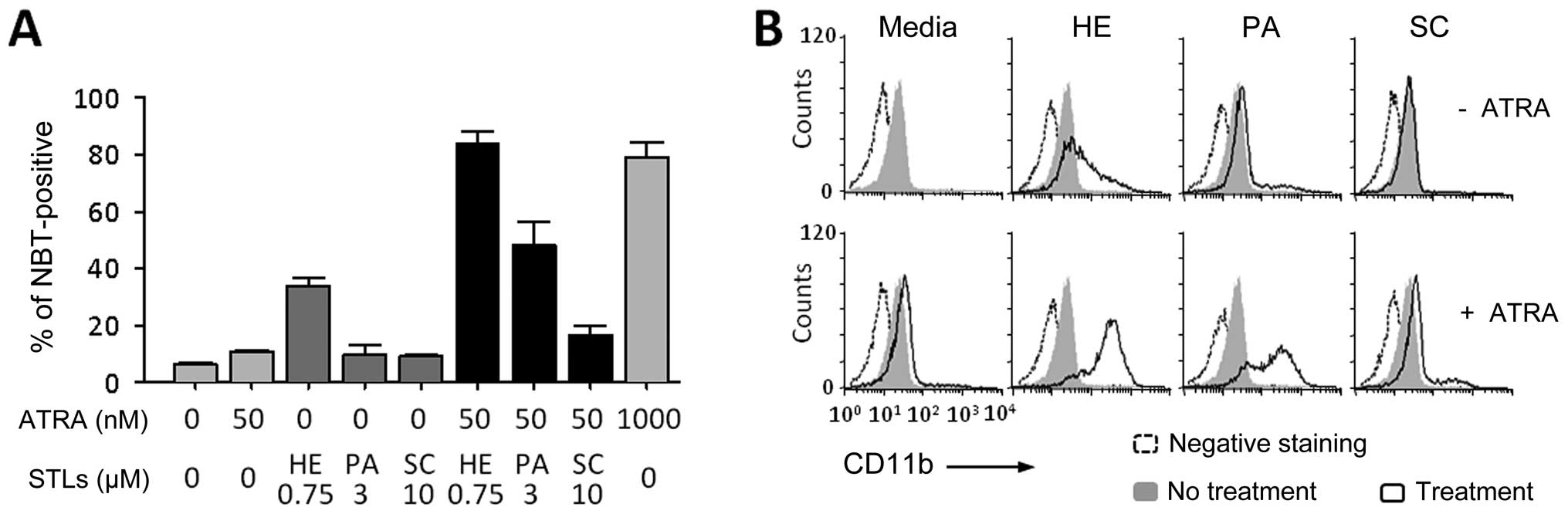
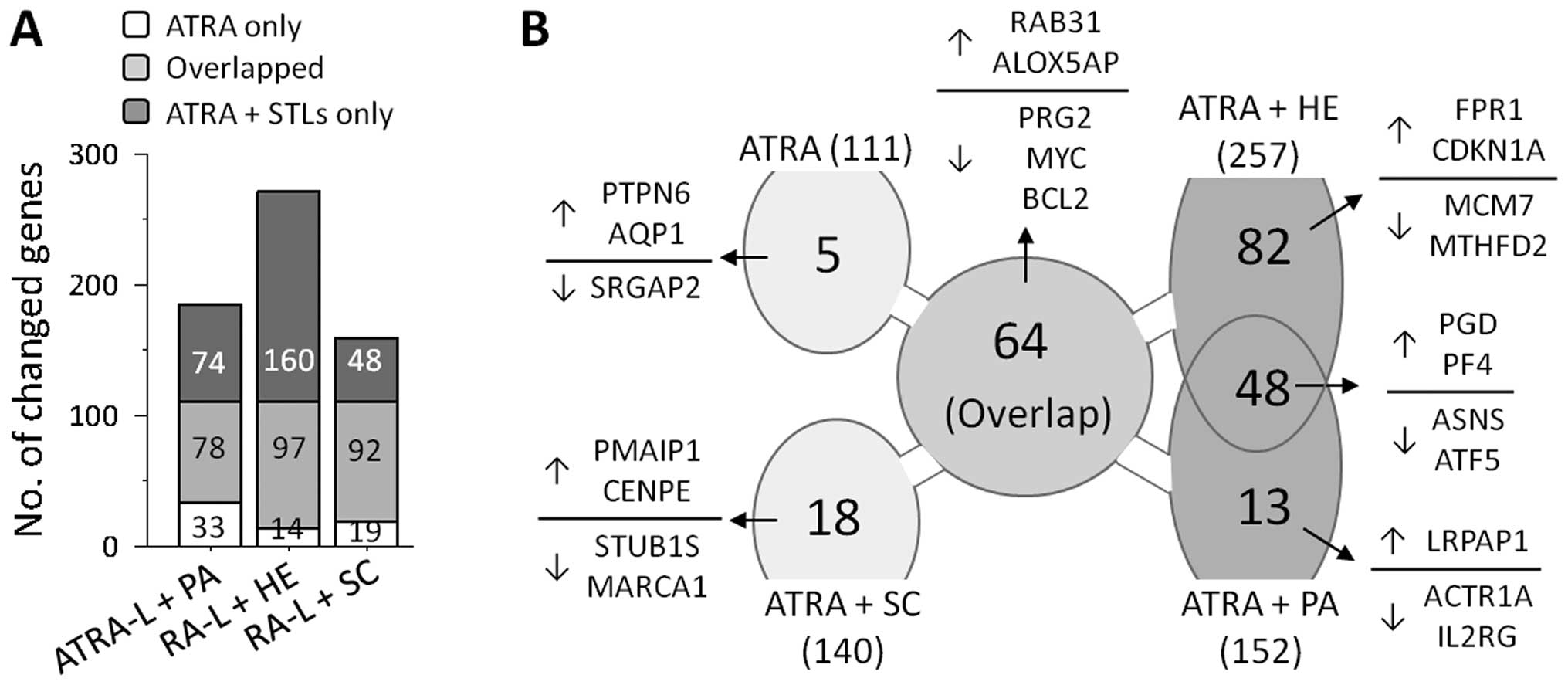
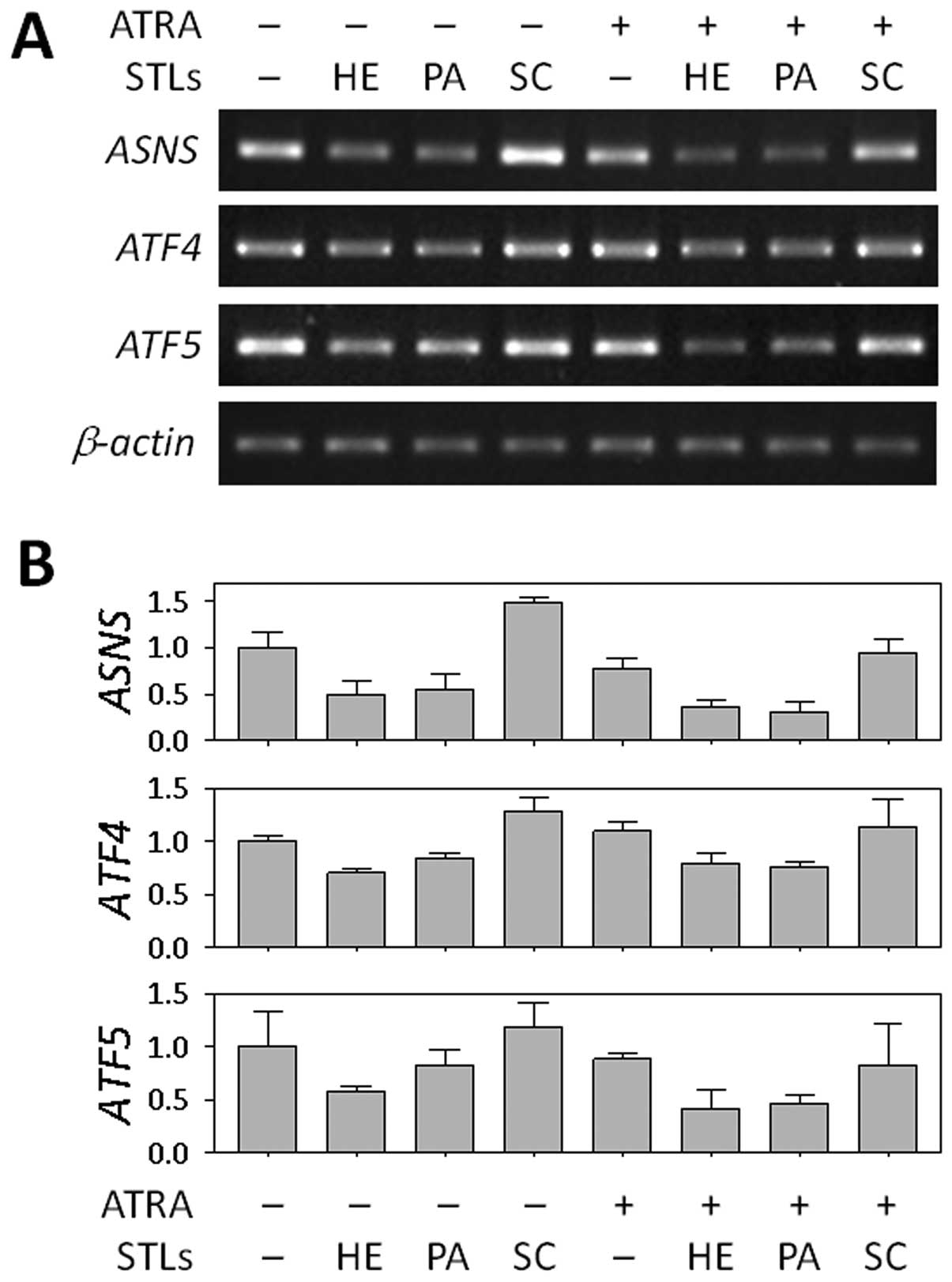
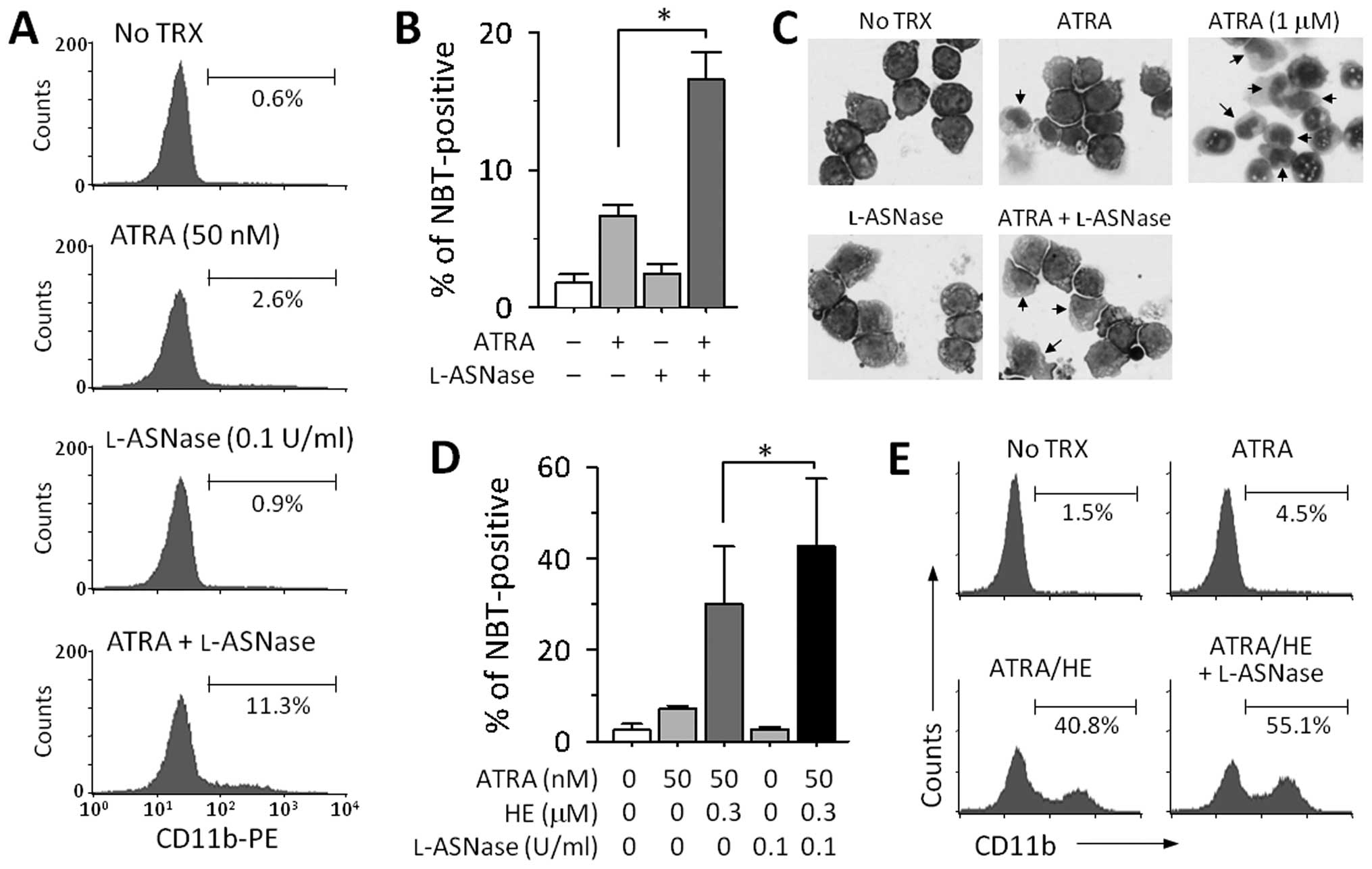
All-trans retinoic acid (ATRA) is one of the most useful drugs in the treatment for acute promyelocytic leukemia (APL), but its adverse effects, which include drug resistance and hypercalcemia are obstacles to achieving complete remission. Our previous study showed that some sesquiterpene lactones (STLs), i.e., helenalin (HE) and parthenolide (PA) but not sclareolide (SC), enhance ATRA-induced differentiation of HL-60 APL cells with no unexpected effects, but the precise mechanism on underlying this synergism is not yet fully understood. In this study, we investigated the distinctive transcriptional profile of cells treated with effective STL compounds, which were identified by comparing the profile with that of cells treated with SC. Genome-wide approaches using cDNA microarrays showed that co-treatment with the differentiation-enhancing STLs HE and PA maximized the transcriptional variation regulated by the suboptimal concentration of ATRA in HL-60 cells. Of the genes of interest, asparagine synthetase was remarkably downregulated by ATRA co-treated with either HE or PA, but not with SC. In an additional analysis for the role of asparagine synthetase, ATRA-mediated HL-60 cell differentiation was enhanced when asparagine in the culture media was depleted by an addition of L-asparaginase, indicating that downregulation of asparagine synthetase gene expression may be involved in the enhanced cell differentiation by STL compounds. These results provide useful insight into differentiation-inducing therapy in the treatment of leukemia.
View Figures

Figure 1

Figure 2

Figure 3

Figure 4

View References

1. 

Breitman TR, Selonick SE and Collins SJ: Induction of differentiation of the human promyelocytic leukemia cell line (HL-60) by retinoic acid. Proc Natl Acad Sci USA. 77:2936–2940. 1980. View Article : Google Scholar

2. 

Breitman TR, Collins SJ and Keene BR: Terminal differentiation of human promyelocytic leukemic cells in primary culture in response to retinoic acid. Blood. 57:1000–1004. 1981.PubMed/NCBI

3. 

Flynn PJ, Miller WJ, Weisdorf DJ, Arthur DC, Brunning R and Branda RF: Retinoic acid treatment of acute promyelocytic leukemia: in vitro and in vivo observations. Blood. 62:1211–1217. 1983.PubMed/NCBI

4. 

Huang ME, Ye YC, Chen SR, et al: Use of all-trans retinoic acid in the treatment of acute promyelocytic leukemia. Blood. 72:567–572. 1988.

5. 

Collins SJ, Robertson KA and Mueller L: Retinoic acid-induced granulocytic differentiation of HL-60 myeloid leukemia cells is mediated directly through the retinoic acid receptor (RAR-alpha). Mol Cell Biol. 10:2154–2163. 1990.PubMed/NCBI

6. 

Duprez E, Wagner K, Koch H and Tenen DG: C/EBPbeta: a major PML-RARA-responsive gene in retinoic acid-induced differentiation of APL cells. EMBO J. 22:5806–5816. 2003. View Article : Google Scholar : PubMed/NCBI

7. 

Matikainen S, Ronni T, Hurme M, Pine R and Julkunen I: Retinoic acid activates interferon regulatory factor-1 gene expression in myeloid cells. Blood. 88:114–123. 1996.PubMed/NCBI

8. 

Bennett MT, Sirrs S, Yeung JK and Smith CA: Hypercalcemia due to all trans retinoic acid in the treatment of acute promyelocytic leukemia potentiated by voriconazole. Leuk Lymphoma. 46:1829–1831. 2005.

9. 

Imaizumi M, Suzuki H, Yoshinari M, et al: Mutations in the E-domain of RAR portion of the PML/RAR chimeric gene may confer clinical resistance to all-trans retinoic acid in acute promyelocytic leukemia. Blood. 92:374–382. 1998.PubMed/NCBI

10. 

Montesinos P, Bergua JM, Vellenga E, et al: Differentiation syndrome in patients with acute promyelocytic leukemia treated with all-trans retinoic acid and anthracycline chemotherapy: characteristics, outcome, and prognostic factors. Blood. 113:775–783. 2009. View Article : Google Scholar : PubMed/NCBI

11. 

Shao W, Benedetti L, Lamph WW, Nervi C and Miller WH Jr: A retinoid-resistant acute promyelocytic leukemia subclone expresses a dominant negative PML-RAR alpha mutation. Blood. 89:4282–4289. 1997.PubMed/NCBI

12. 

Lengfelder E, Saussele S, Weisser A, Büchner T and Hehlmann R: Treatment concepts of acute promyelocytic leukemia. Crit Rev Oncol Hematol. 56:261–274. 2005. View Article : Google Scholar

13. 

Hehner SP, Hofmann TG, Dröge W and Schmitz ML: The antiinflammatory sesquiterpene lactone parthenolide inhibits NF-kappa B by targeting the I kappa B kinase complex. J Immunol. 163:5617–5623. 1999.PubMed/NCBI

14. 

Sobota R, Szwed M, Kasza A, Bugno M and Kordula T: Parthenolide inhibits activation of signal transducers and activators of transcription (STATs) induced by cytokines of the IL-6 family. Biochem Biophys Res Commun. 267:329–333. 2000. View Article : Google Scholar : PubMed/NCBI

15. 

Oka D, Nishimura K, Shiba M, et al: Sesquiterpene lactone parthenolide suppresses tumor growth in a xenograft model of renal cell carcinoma by inhibiting the activation of NF-kappaB. Int J Cancer. 120:2576–2581. 2007. View Article : Google Scholar : PubMed/NCBI

16. 

Sohma I, Fujiwara Y, Sugita Y, et al: Parthenolide, an NF-κB inhibitor, suppresses tumor growth and enhances response to chemotherapy in gastric cancer. Cancer Genomics Proteomics. 8:39–47. 2011.

17. 

Hoffmann R, von Schwarzenberg K, López-Antón N, Rudy A, Wanner G, Dirsch VM and Vollmar AM: Helenalin bypasses Bcl-2-mediated cell death resistance by inhibiting NF-κB and promoting reactive oxygen species generation. Biochem Pharmacol. 82:453–463. 2011.PubMed/NCBI

18. 

Kassuya CA, Cremoneze A, Barros LF, et al: Antipyretic and anti-inflammatory properties of the ethanolic extract, dichloromethane fraction and costunolide from Magnolia ovata (Magnoliaceae). J Ethnopharmacol. 124:369–376. 2009. View Article : Google Scholar : PubMed/NCBI

19. 

Lyss G, Knorre A, Schmidt TJ, Pahl HL and Merfort I: The anti-inflammatory sesquiterpene lactone helenalin inhibits the transcription factor NF-kappaB by directly targeting p65. J Biol Chem. 273:33508–33516. 1998. View Article : Google Scholar : PubMed/NCBI

20. 

Rasul A, Bao R, Malhi M, Zhao B, Tsuji I, Li J and Li X: Induction of apoptosis by costunolide in bladder cancer cells is mediated through ROS generation and mitochondrial dysfunction. Molecules. 18:1418–1433. 2013. View Article : Google Scholar : PubMed/NCBI

21. 

Ferrari FC, Ferreira LC, Souza MR, Grabe-Guimarães A, Paula CA, Rezende SA and Saúde-Guimarães DA: Anti-inflammatory sesquiterpene lactones from Lychnophora trichocarpha Spreng. (Brazilian Arnica). Phytother Res. 27:384–389. 2013.PubMed/NCBI

22. 

Kretschmer N, Rinner B, Stuendl N, et al: Effect of costunolide and dehydrocostus lactone on cell cycle, apoptosis, and ABC transporter expression in human soft tissue sarcoma cells. Planta Med. 78:1749–1756. 2012. View Article : Google Scholar : PubMed/NCBI

23. 

Piornedo Rdos R, de Souza P, Stefanello ME, Strapasson RL, Zampronio AR and Kassuya CA: Anti-inflammatory activity of extracts and 11,13-dihydrozaluzanin C from Gochnatia polymorpha ssp floccosa trunk bark in mice. J Ethnopharmacol. 133:1077–1084. 2011.PubMed/NCBI

24. 

Collins SJ, Ruscetti FW, Gallagher RE and Gallo RC: Terminal differentiation of human promyelocytic leukemia cells induced by dimethyl sulfoxide and other polar compounds. Proc Natl Acad Sci USA. 75:2458–2462. 1978. View Article : Google Scholar

25. 

Tanaka H, Abe E, Miyaura C, Shiina Y and Suda T: 1 alpha,25-dihydroxyvitamin D3 induces differentiation of human promyelocytic leukemia cells (HL-60) into monocytemacrophages, but not into granulocytes. Biochem Biophys Res Commun. 117:86–92. 1983. View Article : Google Scholar : PubMed/NCBI

26. 

Kim SH, Danilenko M and Kim TS: Differential enhancement of leukaemia cell differentiation without elevation of intracellular calcium by plant-derived sesquiterpene lactone compounds. Br J Pharmacol. 155:814–825. 2008. View Article : Google Scholar

27. 

Song JH, Kim HJ, Lee CH, Kim SJ, Hwang SY and Kim TS: Identification of gene expression signatures for molecular classification in human leukemia cells. Int J Oncol. 29:57–64. 2006.PubMed/NCBI

28. 

Pan Y, Chen H, Siu F and Kilberg MS: Amino acid deprivation and endoplasmic reticulum stress induce expression of multiple activating transcription factor-3 mRNA species that, when over-expressed in HepG2 cells, modulate transcription by the human asparagine synthetase promoter. J Biol Chem. 278:38402–38412. 2003. View Article : Google Scholar

29. 

Rousseau J, Gagné V, Labuda M, et al: ATF5 polymorphisms influence ATF function and response to treatment in children with childhood acute lymphoblastic leukemia. Blood. 118:5883–5890. 2011. View Article : Google Scholar : PubMed/NCBI

30. 

Kang SN, Kim SH, Chung SW, Lee MH, Kim HJ and Kim TS: Enhancement of 1 alpha,25-dihydroxyvitamin D(3)-induced differentiation of human leukaemia HL-60 cells into monocytes by parthenolide via inhibition of NF-kappa B activity. Br J Pharmacol. 135:1235–1244. 2002. View Article : Google Scholar : PubMed/NCBI

31. 

Gutierrez JA, Pan YX, Koroniak L, Hiratake J, Kilberg MS and Richards NG: An inhibitor of human asparagine synthetase suppresses proliferation of an L-asparaginase-resistant leukemia cell line. Chem Biol. 13:1339–1347. 2006. View Article : Google Scholar : PubMed/NCBI

32. 

Lorenzi PL, Reinhold WC, Rudelius M, et al: Asparagine synthetase as a causal, predictive biomarker for L-asparaginase activity in ovarian cancer cells. Mol Cancer Ther. 5:2613–2623. 2006. View Article : Google Scholar : PubMed/NCBI

33. 

Clavell LA, Gelber RD, Cohen HJ, et al: Four-agent induction and intensive asparaginase therapy for treatment of childhood acute lymphoblastic leukemia. N Engl J Med. 315:657–663. 1986. View Article : Google Scholar : PubMed/NCBI

34. 

Ortega JA, Nesbit ME Jr, Donaldson MH, Hittle RE, Weiner J, Karon M and Hammond D: L-Asparaginase, vincristine, and prednisone for induction of first remission in acute lymphocytic leukemia. Cancer Res. 37:535–540. 1977.PubMed/NCBI

35. 

Hongo S, Sakagami H and Sato T: Decrease in asparagine synthetase activity during cell differentiation of mouse and human leukemia cell lines. Leukemia. 4:708–711. 1990.PubMed/NCBI

36. 

Hashimoto K, Suzuki F and Sakagami H: Declined asparagine synthetase mRNA expression and enhanced sensitivity to asparaginase in HL-60 cells committed to monocytic differentiation. Anticancer Res. 29:1303–1308. 2009.PubMed/NCBI

Related Articles

  • Abstract
  • View
  • Download
  • Twitter
Copy and paste a formatted citation
Spandidos Publications style
Song JH, Kim SH, Cho K, Hwang SY, Kim H and Kim TS: Analysis of gene profiles involved in the enhancement of all-trans retinoic acid-induced HL-60 cell differentiation by sesquiterpene lactones identifies asparagine synthetase as a novel target for differentiation-inducing therapy. Int J Oncol 44: 970-976, 2014.
APA
Song, J.H., Kim, S.H., Cho, K., Hwang, S.Y., Kim, H., & Kim, T.S. (2014). Analysis of gene profiles involved in the enhancement of all-trans retinoic acid-induced HL-60 cell differentiation by sesquiterpene lactones identifies asparagine synthetase as a novel target for differentiation-inducing therapy. International Journal of Oncology, 44, 970-976. https://doi.org/10.3892/ijo.2013.2241
MLA
Song, J. H., Kim, S. H., Cho, K., Hwang, S. Y., Kim, H., Kim, T. S."Analysis of gene profiles involved in the enhancement of all-trans retinoic acid-induced HL-60 cell differentiation by sesquiterpene lactones identifies asparagine synthetase as a novel target for differentiation-inducing therapy". International Journal of Oncology 44.3 (2014): 970-976.
Chicago
Song, J. H., Kim, S. H., Cho, K., Hwang, S. Y., Kim, H., Kim, T. S."Analysis of gene profiles involved in the enhancement of all-trans retinoic acid-induced HL-60 cell differentiation by sesquiterpene lactones identifies asparagine synthetase as a novel target for differentiation-inducing therapy". International Journal of Oncology 44, no. 3 (2014): 970-976. https://doi.org/10.3892/ijo.2013.2241
Copy and paste a formatted citation
x
Spandidos Publications style
Song JH, Kim SH, Cho K, Hwang SY, Kim H and Kim TS: Analysis of gene profiles involved in the enhancement of all-trans retinoic acid-induced HL-60 cell differentiation by sesquiterpene lactones identifies asparagine synthetase as a novel target for differentiation-inducing therapy. Int J Oncol 44: 970-976, 2014.
APA
Song, J.H., Kim, S.H., Cho, K., Hwang, S.Y., Kim, H., & Kim, T.S. (2014). Analysis of gene profiles involved in the enhancement of all-trans retinoic acid-induced HL-60 cell differentiation by sesquiterpene lactones identifies asparagine synthetase as a novel target for differentiation-inducing therapy. International Journal of Oncology, 44, 970-976. https://doi.org/10.3892/ijo.2013.2241
MLA
Song, J. H., Kim, S. H., Cho, K., Hwang, S. Y., Kim, H., Kim, T. S."Analysis of gene profiles involved in the enhancement of all-trans retinoic acid-induced HL-60 cell differentiation by sesquiterpene lactones identifies asparagine synthetase as a novel target for differentiation-inducing therapy". International Journal of Oncology 44.3 (2014): 970-976.
Chicago
Song, J. H., Kim, S. H., Cho, K., Hwang, S. Y., Kim, H., Kim, T. S."Analysis of gene profiles involved in the enhancement of all-trans retinoic acid-induced HL-60 cell differentiation by sesquiterpene lactones identifies asparagine synthetase as a novel target for differentiation-inducing therapy". International Journal of Oncology 44, no. 3 (2014): 970-976. https://doi.org/10.3892/ijo.2013.2241
Follow us
  • Twitter
  • LinkedIn
  • Facebook
About
  • Spandidos Publications
  • Careers
  • Cookie Policy
  • Privacy Policy
How can we help?
  • Help
  • Live Chat
  • Contact
  • Email to our Support Team