Spandidos Publications Logo
  • About
    • About Spandidos
    • Aims and Scopes
    • Abstracting and Indexing
    • Editorial Policies
    • Reprints and Permissions
    • Job Opportunities
    • Terms and Conditions
    • Contact
  • Journals
    • All Journals
    • Oncology Letters
      • Oncology Letters
      • Information for Authors
      • Editorial Policies
      • Editorial Board
      • Aims and Scope
      • Abstracting and Indexing
      • Bibliographic Information
      • Archive
    • International Journal of Oncology
      • International Journal of Oncology
      • Information for Authors
      • Editorial Policies
      • Editorial Board
      • Aims and Scope
      • Abstracting and Indexing
      • Bibliographic Information
      • Archive
    • Molecular and Clinical Oncology
      • Molecular and Clinical Oncology
      • Information for Authors
      • Editorial Policies
      • Editorial Board
      • Aims and Scope
      • Abstracting and Indexing
      • Bibliographic Information
      • Archive
    • Experimental and Therapeutic Medicine
      • Experimental and Therapeutic Medicine
      • Information for Authors
      • Editorial Policies
      • Editorial Board
      • Aims and Scope
      • Abstracting and Indexing
      • Bibliographic Information
      • Archive
    • International Journal of Molecular Medicine
      • International Journal of Molecular Medicine
      • Information for Authors
      • Editorial Policies
      • Editorial Board
      • Aims and Scope
      • Abstracting and Indexing
      • Bibliographic Information
      • Archive
    • Biomedical Reports
      • Biomedical Reports
      • Information for Authors
      • Editorial Policies
      • Editorial Board
      • Aims and Scope
      • Abstracting and Indexing
      • Bibliographic Information
      • Archive
    • Oncology Reports
      • Oncology Reports
      • Information for Authors
      • Editorial Policies
      • Editorial Board
      • Aims and Scope
      • Abstracting and Indexing
      • Bibliographic Information
      • Archive
    • Molecular Medicine Reports
      • Molecular Medicine Reports
      • Information for Authors
      • Editorial Policies
      • Editorial Board
      • Aims and Scope
      • Abstracting and Indexing
      • Bibliographic Information
      • Archive
    • World Academy of Sciences Journal
      • World Academy of Sciences Journal
      • Information for Authors
      • Editorial Policies
      • Editorial Board
      • Aims and Scope
      • Abstracting and Indexing
      • Bibliographic Information
      • Archive
    • International Journal of Functional Nutrition
      • International Journal of Functional Nutrition
      • Information for Authors
      • Editorial Policies
      • Editorial Board
      • Aims and Scope
      • Abstracting and Indexing
      • Bibliographic Information
      • Archive
    • International Journal of Epigenetics
      • International Journal of Epigenetics
      • Information for Authors
      • Editorial Policies
      • Editorial Board
      • Aims and Scope
      • Abstracting and Indexing
      • Bibliographic Information
      • Archive
    • Medicine International
      • Medicine International
      • Information for Authors
      • Editorial Policies
      • Editorial Board
      • Aims and Scope
      • Abstracting and Indexing
      • Bibliographic Information
      • Archive
  • Articles
  • Information
    • Information for Authors
    • Information for Reviewers
    • Information for Librarians
    • Information for Advertisers
    • Conferences
  • Language Editing
Spandidos Publications Logo
  • About
    • About Spandidos
    • Aims and Scopes
    • Abstracting and Indexing
    • Editorial Policies
    • Reprints and Permissions
    • Job Opportunities
    • Terms and Conditions
    • Contact
  • Journals
    • All Journals
    • Biomedical Reports
      • Information for Authors
      • Editorial Policies
      • Editorial Board
      • Aims and Scope
      • Abstracting and Indexing
      • Bibliographic Information
      • Archive
    • Experimental and Therapeutic Medicine
      • Information for Authors
      • Editorial Policies
      • Editorial Board
      • Aims and Scope
      • Abstracting and Indexing
      • Bibliographic Information
      • Archive
    • International Journal of Epigenetics
      • Information for Authors
      • Editorial Policies
      • Editorial Board
      • Aims and Scope
      • Abstracting and Indexing
      • Bibliographic Information
      • Archive
    • International Journal of Functional Nutrition
      • Information for Authors
      • Editorial Policies
      • Editorial Board
      • Aims and Scope
      • Abstracting and Indexing
      • Bibliographic Information
      • Archive
    • International Journal of Molecular Medicine
      • Information for Authors
      • Editorial Policies
      • Editorial Board
      • Aims and Scope
      • Abstracting and Indexing
      • Bibliographic Information
      • Archive
    • International Journal of Oncology
      • Information for Authors
      • Editorial Policies
      • Editorial Board
      • Aims and Scope
      • Abstracting and Indexing
      • Bibliographic Information
      • Archive
    • Medicine International
      • Information for Authors
      • Editorial Policies
      • Editorial Board
      • Aims and Scope
      • Abstracting and Indexing
      • Bibliographic Information
      • Archive
    • Molecular and Clinical Oncology
      • Information for Authors
      • Editorial Policies
      • Editorial Board
      • Aims and Scope
      • Abstracting and Indexing
      • Bibliographic Information
      • Archive
    • Molecular Medicine Reports
      • Information for Authors
      • Editorial Policies
      • Editorial Board
      • Aims and Scope
      • Abstracting and Indexing
      • Bibliographic Information
      • Archive
    • Oncology Letters
      • Information for Authors
      • Editorial Policies
      • Editorial Board
      • Aims and Scope
      • Abstracting and Indexing
      • Bibliographic Information
      • Archive
    • Oncology Reports
      • Information for Authors
      • Editorial Policies
      • Editorial Board
      • Aims and Scope
      • Abstracting and Indexing
      • Bibliographic Information
      • Archive
    • World Academy of Sciences Journal
      • Information for Authors
      • Editorial Policies
      • Editorial Board
      • Aims and Scope
      • Abstracting and Indexing
      • Bibliographic Information
      • Archive
  • Articles
  • Information
    • For Authors
    • For Reviewers
    • For Librarians
    • For Advertisers
    • Conferences
  • Language Editing
Login Register Submit
  • This site uses cookies
  • You can change your cookie settings at any time by following the instructions in our Cookie Policy. To find out more, you may read our Privacy Policy.

    I agree
Search articles by DOI, keyword, author or affiliation
Search
Advanced Search
presentation
International Journal of Oncology
Join Editorial Board Propose a Special Issue
Print ISSN: 1019-6439 Online ISSN: 1791-2423
Journal Cover
June-2014 Volume 44 Issue 6

Full Size Image

Cover Legend PDF

Sign up for eToc alerts
Recommend to Library

Journals

International Journal of Molecular Medicine

International Journal of Molecular Medicine

International Journal of Molecular Medicine is an international journal devoted to molecular mechanisms of human disease.

International Journal of Oncology

International Journal of Oncology

International Journal of Oncology is an international journal devoted to oncology research and cancer treatment.

Molecular Medicine Reports

Molecular Medicine Reports

Covers molecular medicine topics such as pharmacology, pathology, genetics, neuroscience, infectious diseases, molecular cardiology, and molecular surgery.

Oncology Reports

Oncology Reports

Oncology Reports is an international journal devoted to fundamental and applied research in Oncology.

Experimental and Therapeutic Medicine

Experimental and Therapeutic Medicine

Experimental and Therapeutic Medicine is an international journal devoted to laboratory and clinical medicine.

Oncology Letters

Oncology Letters

Oncology Letters is an international journal devoted to Experimental and Clinical Oncology.

Biomedical Reports

Biomedical Reports

Explores a wide range of biological and medical fields, including pharmacology, genetics, microbiology, neuroscience, and molecular cardiology.

Molecular and Clinical Oncology

Molecular and Clinical Oncology

International journal addressing all aspects of oncology research, from tumorigenesis and oncogenes to chemotherapy and metastasis.

World Academy of Sciences Journal

World Academy of Sciences Journal

Multidisciplinary open-access journal spanning biochemistry, genetics, neuroscience, environmental health, and synthetic biology.

International Journal of Functional Nutrition

International Journal of Functional Nutrition

Open-access journal combining biochemistry, pharmacology, immunology, and genetics to advance health through functional nutrition.

International Journal of Epigenetics

International Journal of Epigenetics

Publishes open-access research on using epigenetics to advance understanding and treatment of human disease.

Medicine International

Medicine International

An International Open Access Journal Devoted to General Medicine.

Journal Cover
June-2014 Volume 44 Issue 6

Full Size Image

Cover Legend PDF

Sign up for eToc alerts
Recommend to Library

  • Article
  • Citations
    • Cite This Article
    • Download Citation
    • Create Citation Alert
    • Remove Citation Alert
    • Cited By
  • Similar Articles
    • Related Articles (in Spandidos Publications)
    • Similar Articles (Google Scholar)
    • Similar Articles (PubMed)
  • Download PDF
  • Download XML
  • View XML
Article

p63 regulates growth of esophageal squamous carcinoma cells via the Akt signaling pathway

  • Authors:
    • Shuai Ye
    • Kwang Bok Lee
    • Man Hee Park
    • Ju-Seog Lee
    • Soo Mi Kim
  • View Affiliations / Copyright

    Affiliations: Department of Orthopedic Surgery, Chonbuk National University Medical School and Hospital, Jeonju, Republic of Korea, Catholic University of Pusan, Busan, Republic of Korea, Department of Systems Biology, University of Texas M.D. Anderson Cancer Center, Houston, TX, USA, Department of Physiology, Institute for Medical Sciences, Chonbuk National University Medical School, Jeonju, Republic of Korea
  • Pages: 2153-2159
    |
    Published online on: April 9, 2014
       https://doi.org/10.3892/ijo.2014.2374
  • Expand metrics +
Metrics: Total Views: 0 (Spandidos Publications: | PMC Statistics: )
Metrics: Total PDF Downloads: 0 (Spandidos Publications: | PMC Statistics: )
Cited By (CrossRef): 0 citations Loading Articles...

This article is mentioned in:


Abstract

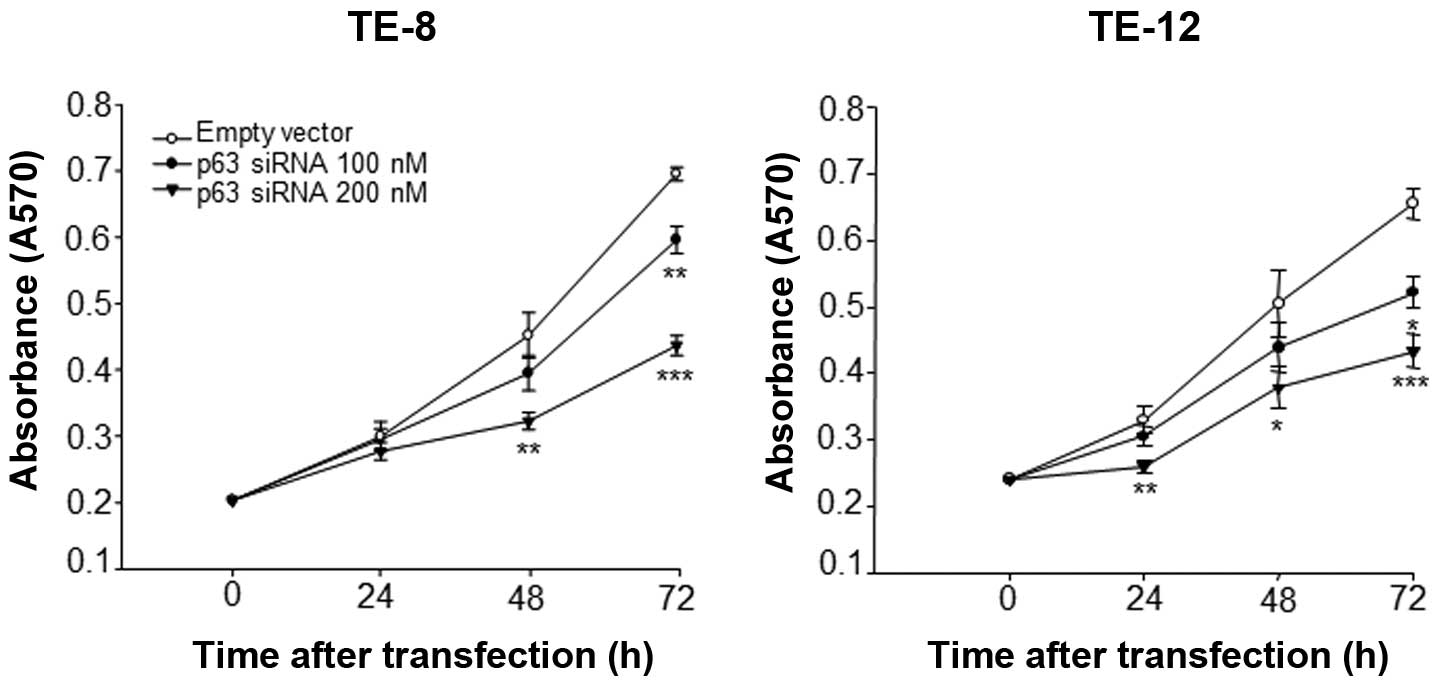
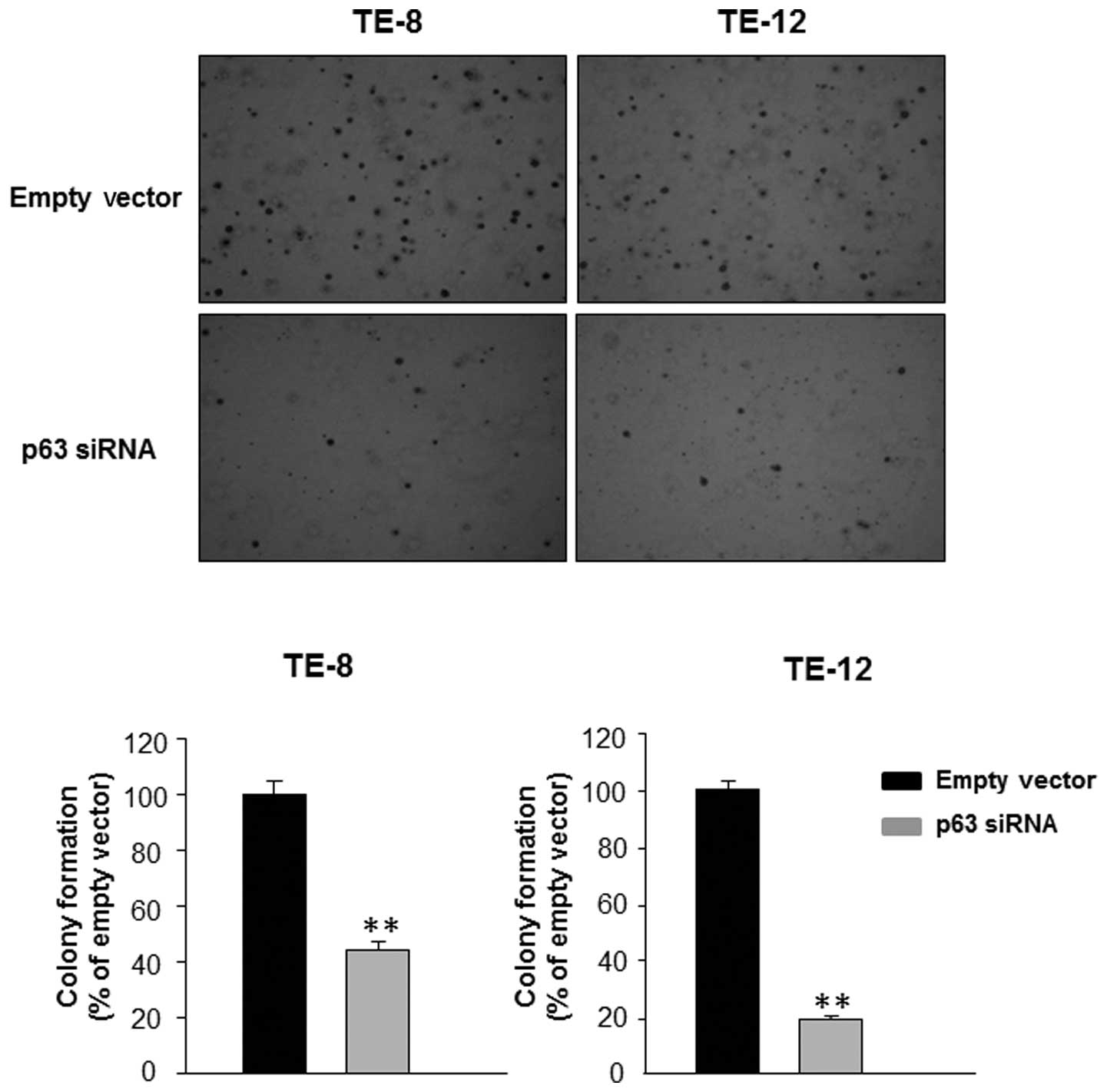
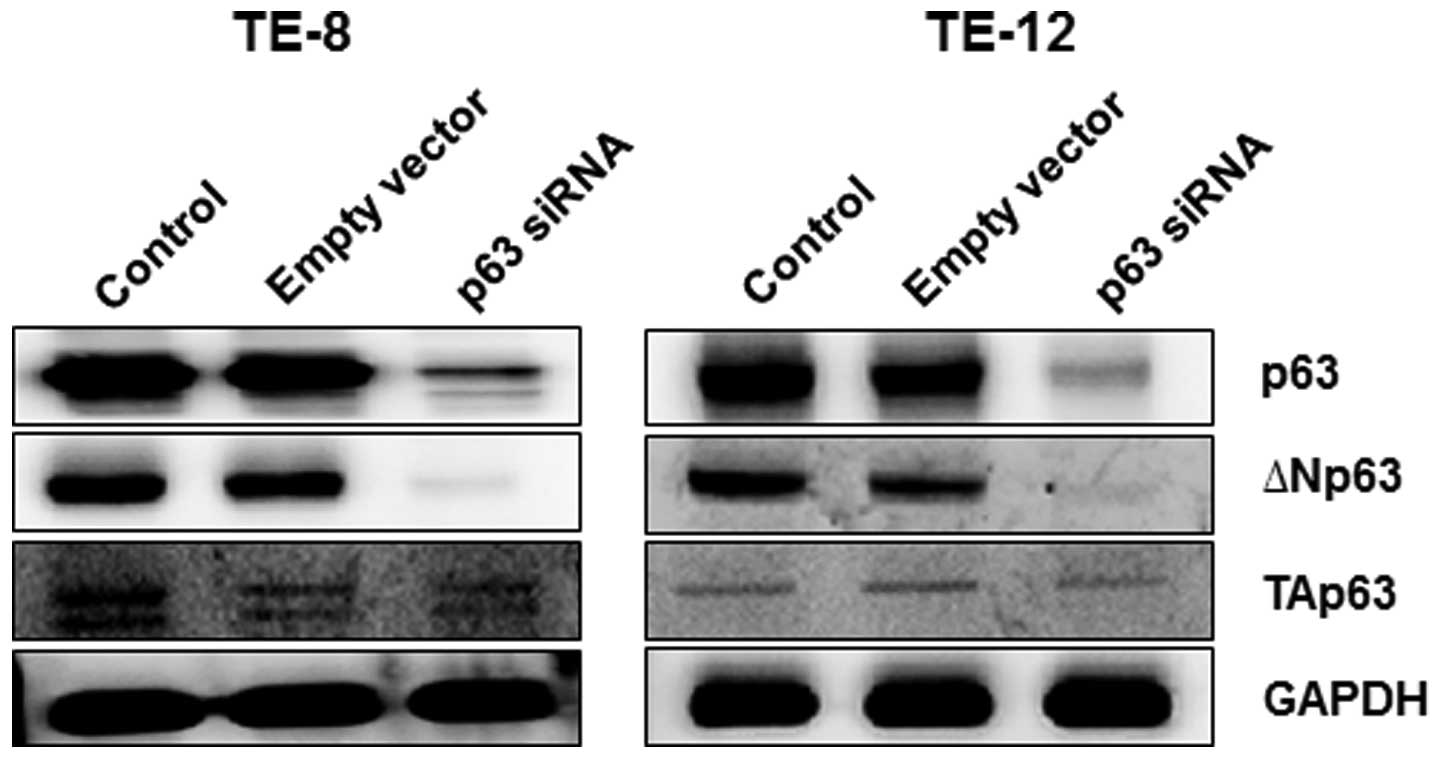
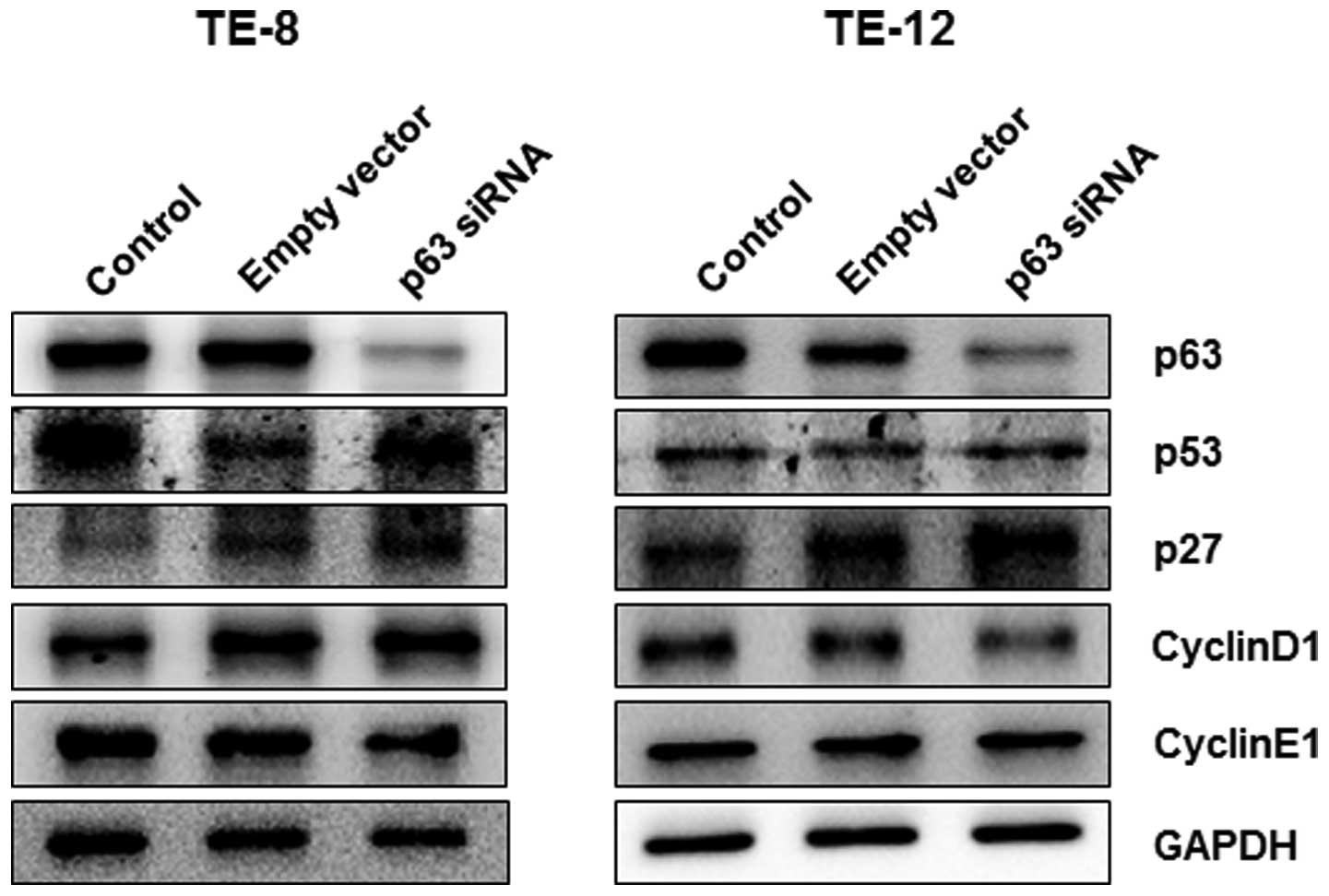
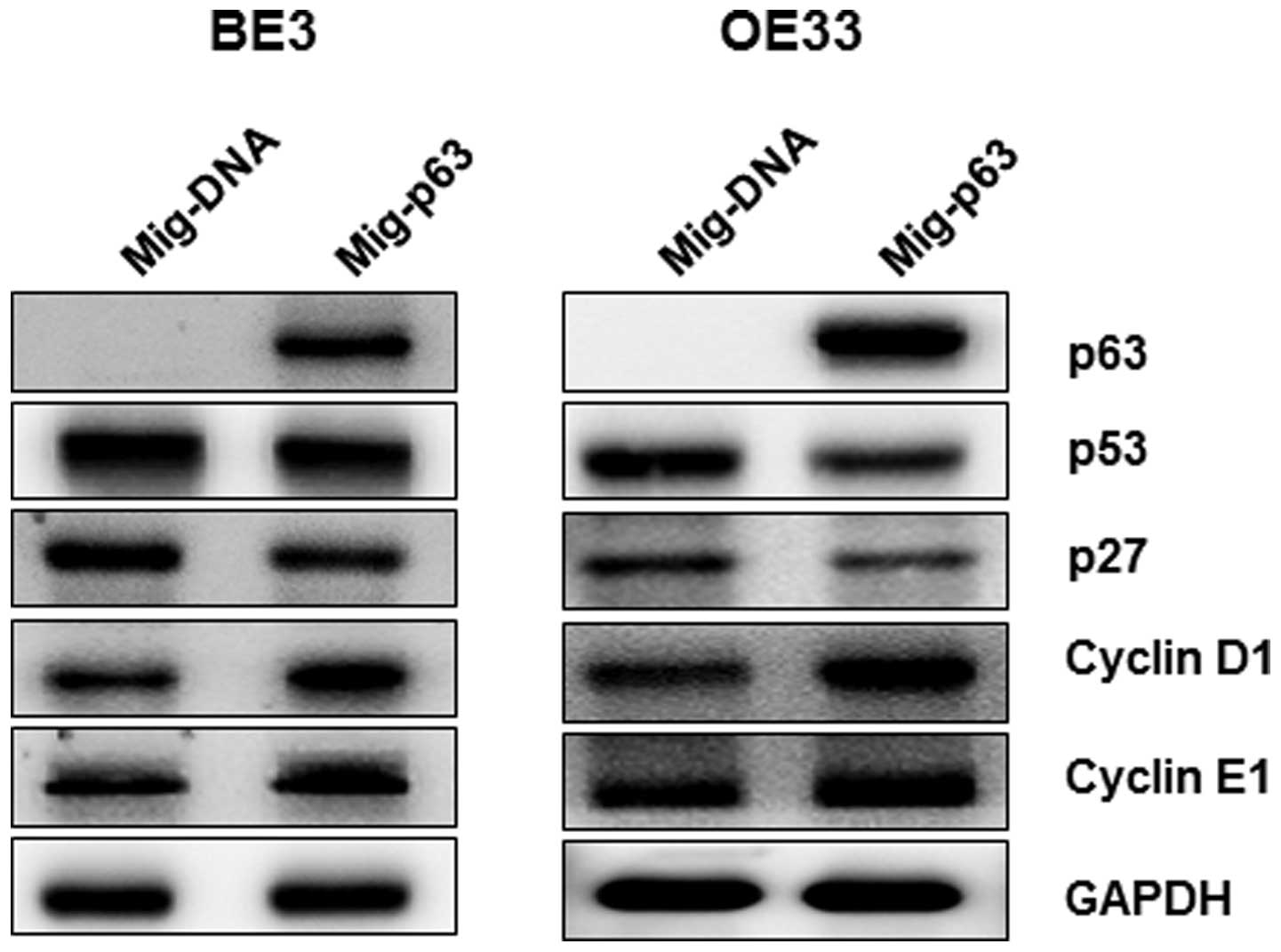
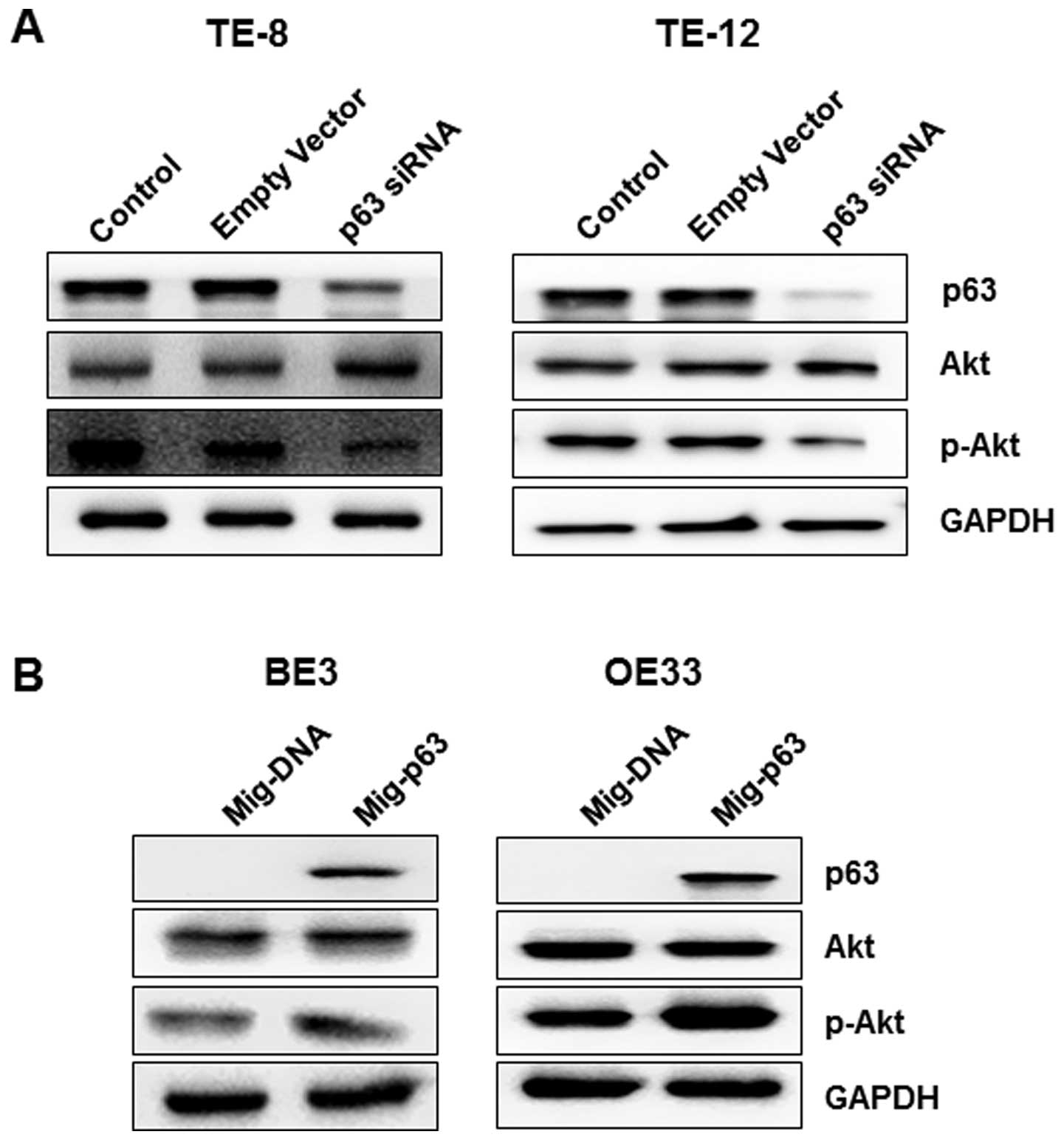
p63 is a member of the p53 protein family and plays a crucial role in epithelial development. p63 is expressed in many types of tumors including esophageal cancer; however, its function in cancer is controversial and its role in esophageal cancer has not been clearly established. In the present study, we aimed to identify the mechanisms by which p63 promotes proliferation of esophageal squamous carcinoma cells. Four human esophageal cancer cell lines (TE-8, TE-12, BE3 and OE33) were used in this study. We found that ΔNp63 was the predominantly expressed p63 isoform in esophageal squamous cancer cells. Silencing of p63 mRNA in the esopha­geal cancer cell lines TE-8 and TE-12 resulted in significant inhibition of cell proliferation in a dose-dependent manner. A colony formation assay also showed that colony formation by TE-8 and TE-12 cells was significantly inhibited by p63 siRNA. Furthermore, p63 siRNA significantly suppressed p-Akt and induced Akt expression in esophageal squamous carcinoma cell lines. On the other hand, overexpression of p63 in the esophageal cell lines BE3 and OE33 increased p-Akt expression. Silencing of p63 in TE-8 and TE-12 cell lines induced p53 and p27 expression and suppressed cyclin D1 and cyclin E1 expression, whereas overexpression of p63 in BE3 and OE33 cell lines resulted in decreased levels of p53 and p27 and increased levels of cyclin D1 and cyclin E1. Taken together, our results suggest that p63 may play a pivotal role in the progression of esophageal squamous carcinoma cells through regulation of the cell cycle via the Akt signaling pathway.
View Figures

Figure 1

Figure 2

Figure 3

Figure 4

Figure 5

Figure 6

View References

1. 

Guo W and Jiang YG: Current gene expression studies in esophageal carcinoma. Curr Genomics. 10:534–539. 2009. View Article : Google Scholar : PubMed/NCBI

2. 

Scott RB, Harrison J, Boulton C, et al: Global attentional-executive sequelae following surgical lesions to globus pallidus interna. Brain. 125:562–574. 2002. View Article : Google Scholar : PubMed/NCBI

3. 

Enzinger PC and Mayer RJ: Esophageal cancer. N Engl J Med. 349:2241–2252. 2003. View Article : Google Scholar : PubMed/NCBI

4. 

Bergholz J and Xiao ZX: Role of p63 in development, tumorigenesis and cancer progression. Cancer Microenviron. 5:311–322. 2012. View Article : Google Scholar : PubMed/NCBI

5. 

Wu N, Rollin J, Masse I, Lamartine J and Gidrol X: p63 regulates human keratinocyte proliferation via MYC-regulated gene network and differentiation commitment through cell adhesion-related gene network. J Biol Chem. 287:5627–5638. 2012. View Article : Google Scholar : PubMed/NCBI

6. 

Celli J, Duijf P, Hamel BC, et al: Heterozygous germline mutations in the p53 homolog p63 are the cause of EEC syndrome. Cell. 99:143–153. 1999. View Article : Google Scholar : PubMed/NCBI

7. 

Mills AA, Zheng B, Wang XJ, Vogel H, Roop DR and Bradley A: p63 is a p53 homologue required for limb and epidermal morphogenesis. Nature. 398:708–713. 1999. View Article : Google Scholar : PubMed/NCBI

8. 

Yang A, Schweitzer R, Sun D, et al: p63 is essential for regenerative proliferation in limb, craniofacial and epithelial development. Nature. 398:714–718. 1999. View Article : Google Scholar : PubMed/NCBI

9. 

Higashikawa K, Yoneda S, Tobiume K, Taki M, Shigeishi H and Kamata N: Snail-induced down-regulation of DeltaNp63alpha acquires invasive phenotype of human squamous cell carcinoma. Cancer Res. 67:9207–9213. 2007. View Article : Google Scholar

10. 

Deyoung MP and Ellisen LW: p63 and p73 in human cancer: defining the network. Oncogene. 26:5169–5183. 2007. View Article : Google Scholar : PubMed/NCBI

11. 

Danilov AV, Neupane D, Nagaraja AS, et al: DeltaNp63alpha-mediated induction of epidermal growth factor receptor promotes pancreatic cancer cell growth and chemoresistance. PloS One. 6:e268152011. View Article : Google Scholar : PubMed/NCBI

12. 

Lee HH, Ye S, Li XJ, Lee KB, Park MH and Kim SM: Combination treatment with paclitaxel and doxorubicin inhibits growth of human esophageal squamous cancer cells by inactivation of Akt. Oncol Rep. 31:183–188. 2014.PubMed/NCBI

13. 

Kim AH, Khursigara G, Sun X, Franke TF and Chao MV: Akt phosphorylates and negatively regulates apoptosis signal-regulating kinase 1. Mol Cell Biol. 21:893–901. 2001. View Article : Google Scholar : PubMed/NCBI

14. 

Zhang HB, Lu P, Guo QY, Zhang ZH and Meng XY: Baicalein induces apoptosis in esophageal squamous cell carcinoma cells through modulation of the PI3K/Akt pathway. Oncol Lett. 5:722–728. 2013.PubMed/NCBI

15. 

Lin ML, Lu YC, Chen HY, Lee CC, Chung JG and Chen SS: Suppressing the formation of lipid raft-associated Rac1/PI3K/Akt signaling complexes by curcumin inhibits SDF-1α-induced invasion of human esophageal carcinoma cells. Mol Carcinog. 53:360–379. 2014.PubMed/NCBI

16. 

Li XJ, Park ES, Park MH and Kim SM: 3,3′-Diindolylmethane suppresses the growth of gastric cancer cells via activation of the Hippo signaling pathway. Oncol Rep. 30:2419–2426. 2013.

17. 

Li XJ, Leem SH, Park MH and Kim SM: Regulation of YAP through an Akt-dependent process by 3,3′-diindolylmethane in human colon cancer cells. Int J Oncol. 43:1992–1998. 2013.PubMed/NCBI

18. 

Yang A, Kaghad M, Wang Y, et al: p63, a p53 homolog at 3q27–29, encodes multiple products with transactivating, death-inducing, and dominant-negative activities. Mol Cell. 2:305–316. 1998.

19. 

Di Como CJ, Urist MJ, Babayan I, et al: p63 expression profiles in human normal and tumor tissues. Clin Cancer Res. 8:494–501. 2002.PubMed/NCBI

20. 

Parsa R, Yang A, McKeon F and Green H: Association of p63 with proliferative potential in normal and neoplastic human keratinocytes. J Invest Dermatol. 113:1099–1105. 1999. View Article : Google Scholar : PubMed/NCBI

21. 

Leonard MK, Kommagani R, Payal V, Mayo LD, Shamma HN and Kadakia MP: DeltaNp63alpha regulates keratinocyte proliferation by controlling PTEN expression and localization. Cell Death Differ. 18:1924–1933. 2011. View Article : Google Scholar : PubMed/NCBI

22. 

Hara T, Kijima H, Yamamoto S, et al: Ubiquitous p63 expression in human esophageal squamous cell carcinoma. Int J Mol Med. 14:169–173. 2004.PubMed/NCBI

23. 

Perou CM, Sorlie T, Eisen MB, et al: Molecular portraits of human breast tumours. Nature. 406:747–752. 2000. View Article : Google Scholar : PubMed/NCBI

24. 

Matos I, Dufloth R, Alvarenga M, Zeferino LC and Schmitt F: p63, cytokeratin 5, and P-cadherin: three molecular markers to distinguish basal phenotype in breast carcinomas. Virchows Arch. 447:688–694. 2005. View Article : Google Scholar : PubMed/NCBI

25. 

Hu H, Xia SH, Li AD, et al: Elevated expression of p63 protein in human esophageal squamous cell carcinomas. Int J Cancer. 102:580–583. 2002. View Article : Google Scholar : PubMed/NCBI

26. 

Sniezek JC, Matheny KE, Westfall MD and Pietenpol JA: Dominant negative p63 isoform expression in head and neck squamous cell carcinoma. Laryngoscope. 114:2063–2072. 2004. View Article : Google Scholar : PubMed/NCBI

27. 

Massion PP, Taflan PM, Jamshedur Rahman SM, et al: Significance of p63 amplification and overexpression in lung cancer development and prognosis. Cancer Res. 63:7113–7121. 2003.PubMed/NCBI

28. 

Weber A, Bellmann U, Bootz F, Wittekind C and Tannapfel A: Expression of p53 and its homologues in primary and recurrent squamous cell carcinomas of the head and neck. Int J Cancer. 99:22–28. 2002. View Article : Google Scholar : PubMed/NCBI

29. 

Chatterjee A, Chang X, Sen T, Ravi R, Bedi A and Sidransky D: Regulation of p53 family member isoform DeltaNp63alpha by the nuclear factor-kappaB targeting kinase IkappaB kinase beta. Cancer Res. 70:1419–1429. 2010. View Article : Google Scholar : PubMed/NCBI

30. 

Westfall MD, Mays DJ, Sniezek JC and Pietenpol JA: The Delta Np63 alpha phosphoprotein binds the p21 and 14-3-3 sigma promoters in vivo and has transcriptional repressor activity that is reduced by Hay-Wells syndrome-derived mutations. Mol Cell Biol. 23:2264–2276. 2003. View Article : Google Scholar

31. 

Truong AB, Kretz M, Ridky TW, Kimmel R and Khavari PA: p63 regulates proliferation and differentiation of developmentally mature keratinocytes. Genes Dev. 20:3185–3197. 2006. View Article : Google Scholar : PubMed/NCBI

32. 

DeYoung MP, Johannessen CM, Leong CO, Faquin W, Rocco JW and Ellisen LW: Tumor-specific p73 up-regulation mediates p63 dependence in squamous cell carcinoma. Cancer Res. 66:9362–9368. 2006. View Article : Google Scholar : PubMed/NCBI

33. 

Ha L, Ponnamperuma RM, Jay S, Ricci MS and Weinberg WC: Dysregulated DeltaNp63alpha inhibits expression of Ink4a/arf, blocks senescence, and promotes malignant conversion of keratinocytes. PloS One. 6:e218772011. View Article : Google Scholar : PubMed/NCBI

Related Articles

  • Abstract
  • View
  • Download
  • Twitter
Copy and paste a formatted citation
Spandidos Publications style
Ye S, Lee KB, Park MH, Lee J and Kim SM: p63 regulates growth of esophageal squamous carcinoma cells via the Akt signaling pathway. Int J Oncol 44: 2153-2159, 2014.
APA
Ye, S., Lee, K.B., Park, M.H., Lee, J., & Kim, S.M. (2014). p63 regulates growth of esophageal squamous carcinoma cells via the Akt signaling pathway. International Journal of Oncology, 44, 2153-2159. https://doi.org/10.3892/ijo.2014.2374
MLA
Ye, S., Lee, K. B., Park, M. H., Lee, J., Kim, S. M."p63 regulates growth of esophageal squamous carcinoma cells via the Akt signaling pathway". International Journal of Oncology 44.6 (2014): 2153-2159.
Chicago
Ye, S., Lee, K. B., Park, M. H., Lee, J., Kim, S. M."p63 regulates growth of esophageal squamous carcinoma cells via the Akt signaling pathway". International Journal of Oncology 44, no. 6 (2014): 2153-2159. https://doi.org/10.3892/ijo.2014.2374
Copy and paste a formatted citation
x
Spandidos Publications style
Ye S, Lee KB, Park MH, Lee J and Kim SM: p63 regulates growth of esophageal squamous carcinoma cells via the Akt signaling pathway. Int J Oncol 44: 2153-2159, 2014.
APA
Ye, S., Lee, K.B., Park, M.H., Lee, J., & Kim, S.M. (2014). p63 regulates growth of esophageal squamous carcinoma cells via the Akt signaling pathway. International Journal of Oncology, 44, 2153-2159. https://doi.org/10.3892/ijo.2014.2374
MLA
Ye, S., Lee, K. B., Park, M. H., Lee, J., Kim, S. M."p63 regulates growth of esophageal squamous carcinoma cells via the Akt signaling pathway". International Journal of Oncology 44.6 (2014): 2153-2159.
Chicago
Ye, S., Lee, K. B., Park, M. H., Lee, J., Kim, S. M."p63 regulates growth of esophageal squamous carcinoma cells via the Akt signaling pathway". International Journal of Oncology 44, no. 6 (2014): 2153-2159. https://doi.org/10.3892/ijo.2014.2374
Follow us
  • Twitter
  • LinkedIn
  • Facebook
About
  • Spandidos Publications
  • Careers
  • Cookie Policy
  • Privacy Policy
How can we help?
  • Help
  • Live Chat
  • Contact
  • Email to our Support Team