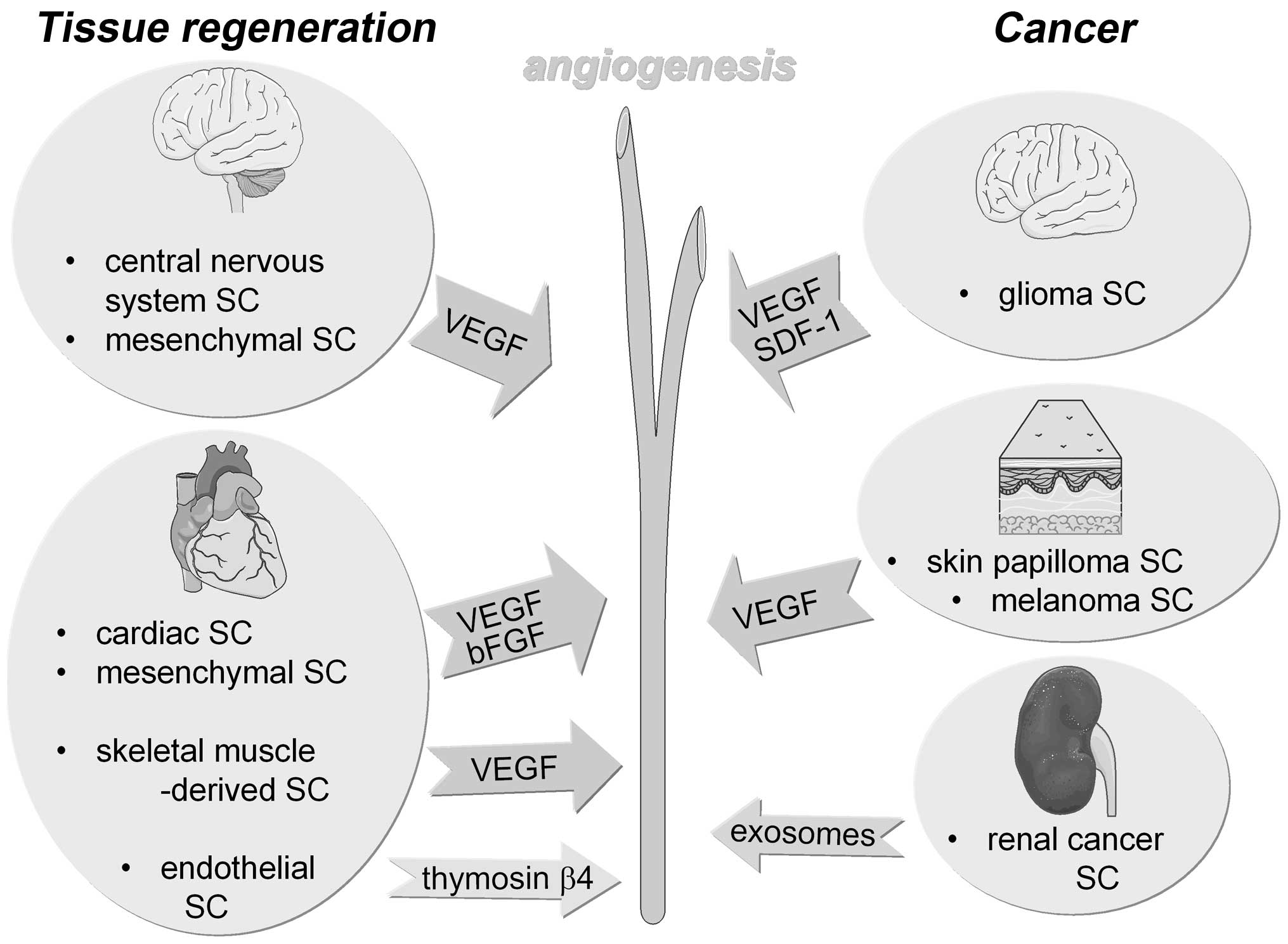
|
1.
|
Fuchs E and Chen T: A matter of life and
death: self-renewal in stem cells. EMBO Rep. 14:39–48. 2013.
View Article : Google Scholar
|
|
2.
|
Hsu YC and Fuchs E: A family business:
stem cell progeny join the niche to regulate homeostasis. Nat Rev
Mol Cell Biol. 13:103–114. 2012. View
Article : Google Scholar : PubMed/NCBI
|
|
3.
|
Chun Q and Liang LS: Stem cell research,
repairing, and regeneration medicine. Int J Low Extrem Wounds.
11:180–183. 2012. View Article : Google Scholar
|
|
4.
|
Fuchs Y, Brown S, Gorenc T, Rodriguez J,
Fuchs E and Steller H: Sept4/ARTS regulates stem cell apoptosis and
skin regeneration. Science. 341:286–289. 2013. View Article : Google Scholar : PubMed/NCBI
|
|
5.
|
Crisostomo PR, Wang M, Markel TA, Lahm T,
Abarbanell AM, Herrmann JL and Meldrum DR: Stem cell mechanisms and
paracrine effects: potential in cardiac surgery. Shock. 28:375–383.
2007. View Article : Google Scholar : PubMed/NCBI
|
|
6.
|
Friedenstein AJ, Piatetzky S II and
Petrakova KV: Osteogenesis in transplants of bone marrow cells. J
Embryol Exp Morphol. 16:381–390. 1966.PubMed/NCBI
|
|
7.
|
Zuk PA, Zhu M, Ashjian P, De Ugarte DA,
Huang JI, Mizuno H, Alfonso ZC, Fraser JK, Benhaim P and Hedrick
MH: Human adipose tissue is a source of multipotent stem cells. Mol
Biol Cell. 13:4279–4295. 2002.
|
|
8.
|
Dominici M, Le Blanc K, Mueller I,
Slaper-Cortenbach I, Marini F, Krause D, Deans R, Keating A,
Prockop D and Horwitz E: Minimal criteria for defining multipotent
mesenchymal stromal cells. The International Society for Cellular
Therapy position statement. Cytotherapy. 8:315–317. 2006.
View Article : Google Scholar
|
|
9.
|
Friedenstein AJ, Chailakhyan RK, Latsinik
NV, Panasyuk AF and Keiliss-Borok IV: Stromal cells responsible for
transferring the microenvironment of the hemopoietic tissues.
Cloning in vitro and retransplantation in vivo. Transplantation.
17:331–340. 1974. View Article : Google Scholar : PubMed/NCBI
|
|
10.
|
Brooke G, Cook M, Blair C, Han R,
Heazlewood C, Jones B, Kambouris M, Kollar K, McTaggart S,
Pelekanos R, Rice A, Rossetti T and Atkinson K: Therapeutic
applications of mesenchymal stromal cells. Semin Cell Dev Biol.
18:846–858. 2007. View Article : Google Scholar : PubMed/NCBI
|
|
11.
|
Bluguermann C, Wu L, Petrigliano F,
McAllister D, Miriuka S and Evseenko DA: Novel aspects of
parenchymal-mesenchymal interactions: from cell types to molecules
and beyond. Cell Biochem Funct. 31:271–280. 2013. View Article : Google Scholar : PubMed/NCBI
|
|
12.
|
Chen J, Li Y, Wang L, Zhang Z, Lu D, Lu M
and Chopp M: Therapeutic benefit of intravenous administration of
bone marrow stromal cells after cerebral ischemia in rats. Stroke.
32:1005–1011. 2001. View Article : Google Scholar : PubMed/NCBI
|
|
13.
|
Ortiz LA, Gambelli F, McBride C, Gaupp D,
Baddoo M, Kaminski N and Phinney DG: Mesenchymal stem cell
engraftment in lung is enhanced in response to bleomycin exposure
and ameliorates its fibrotic effects. Proc Natl Acad Sci USA.
100:8407–8411. 2003. View Article : Google Scholar : PubMed/NCBI
|
|
14.
|
Park KS, Jung KH, Kim SH, Kim KS, Choi MR,
Kim Y and Chai YG: Functional expression of ion channels in
mesenchymal stem cells derived from umbilical cord vein. Stem
Cells. 25:2044–2052. 2007. View Article : Google Scholar : PubMed/NCBI
|
|
15.
|
Rojas M, Xu J, Woods CR, Mora AL, Spears
W, Roman J and Brigham KL: Bone marrow-derived mesenchymal stem
cells in repair of the injured lung. Am J Respir Cell Mol Biol.
33:145–152. 2005. View Article : Google Scholar : PubMed/NCBI
|
|
16.
|
Baraniak PR and McDevitt TC: Stem cell
paracrine actions and tissue regeneration. Regen Med. 5:121–143.
2010. View Article : Google Scholar : PubMed/NCBI
|
|
17.
|
Kassis I, Vaknin-Dembinsky A and Karussis
D: Bone marrow mesenchymal stem cells: agents of immunomodulation
and neuroprotection. Curr Stem Cell Res Ther. 6:63–68. 2011.
View Article : Google Scholar : PubMed/NCBI
|
|
18.
|
Clevers H: The cancer stem cell: premises,
promises and challenges. Nat Med. 17:313–319. 2011. View Article : Google Scholar : PubMed/NCBI
|
|
19.
|
Gupta PB, Chaffer CL and Weinberg RA:
Cancer stem cells: mirage or reality? Nat Med. 15:1010–1012. 2009.
View Article : Google Scholar : PubMed/NCBI
|
|
20.
|
Visvader JE and Lindeman GJ: Cancer stem
cells in solid tumours: accumulating evidence and unresolved
questions. Nat Rev Cancer. 8:755–768. 2008. View Article : Google Scholar : PubMed/NCBI
|
|
21.
|
Dittmer J and Rody A: Stem cells in breast
cancer. Histol Histopathol. 28:827–838. 2013.
|
|
22.
|
Dvorak HF: Tumors: wounds that do not
heal. Similarities between tumor stroma generation and wound
healing. N Engl J Med. 315:1650–1659. 1986. View Article : Google Scholar
|
|
23.
|
Kidd S, Spaeth E, Klopp A, Andreeff M,
Hall B and Marini FC: The (in) auspicious role of mesenchymal
stromal cells in cancer: be it friend or foe. Cytotherapy.
10:657–667. 2008. View Article : Google Scholar : PubMed/NCBI
|
|
24.
|
Gupta PB, Fillmore CM, Jiang G, Shapira
SD, Tao K, Kuperwasser C and Lander ES: Stochastic state
transitions give rise to phenotypic equilibrium in populations of
cancer cells. Cell. 146:633–644. 2011. View Article : Google Scholar : PubMed/NCBI
|
|
25.
|
Ren G, Chen X, Dong F, Li W, Ren X, Zhang
Y and Shi Y: Concise review: mesenchymal stem cells and
translational medicine: emerging issues. Stem Cells Transl Med.
1:51–58. 2012. View Article : Google Scholar : PubMed/NCBI
|
|
26.
|
Cuiffo BG and Karnoub AE: Mesenchymal stem
cells in tumor development: emerging roles and concepts. Cell Adh
Migr. 6:220–230. 2012. View Article : Google Scholar : PubMed/NCBI
|
|
27.
|
Tetta C, Consiglio AL, Bruno S, Tetta E,
Gatti E, Dobreva M, Cremonesi F and Camussi G: The role of
microvesicles derived from mesenchymal stem cells in tissue
regeneration; a dream for tendon repair? Muscles Ligaments Tendons
J. 2:212–221. 2012.PubMed/NCBI
|
|
28.
|
Zimmerlin L, Park TS, Zambidis ET,
Donnenberg VS and Donnenberg AD: Mesenchymal stem cell secretome
and regenerative therapy after cancer. Biochimie. 95:2235–2245.
2013. View Article : Google Scholar : PubMed/NCBI
|
|
29.
|
Paul G and Anisimov SV: The secretome of
mesenchymal stem cells: Potential implications for
neuroregeneration. Biochimie. 95:2246–2256. 2013. View Article : Google Scholar : PubMed/NCBI
|
|
30.
|
Frenette PS, Pinho S, Lucas D and
Scheiermann C: Mesenchymal stem cell: keystone of the hematopoietic
stem cell niche and a stepping-stone for regenerative medicine.
Annu Rev Immunol. 31:285–316. 2013. View Article : Google Scholar : PubMed/NCBI
|
|
31.
|
Parekkadan B, van Poll D, Suganuma K,
Carter EA, Berthiaume F, Tilles AW and Yarmush ML: Mesenchymal stem
cell-derived molecules reverse fulminant hepatic failure. PLoS One.
2:e9412007. View Article : Google Scholar : PubMed/NCBI
|
|
32.
|
Agrawal GK, Jwa NS, Lebrun MH, Job D and
Rakwal R: Plant secretome: unlocking secrets of the secreted
proteins. Proteomics. 10:799–827. 2010. View Article : Google Scholar : PubMed/NCBI
|
|
33.
|
Camussi G, Deregibus MC, Bruno S,
Cantaluppi V and Biancone L: Exosomes/microvesicles as a mechanism
of cell-to-cell communication. Kidney Int. 78:838–848. 2010.
View Article : Google Scholar : PubMed/NCBI
|
|
34.
|
Muralidharan-Chari V, Clancy JW, Sedgwick
A and D'Souza-Schorey C: Microvesicles: mediators of extracellular
communication during cancer progression. J Cell Sci. 123:1603–1611.
2010. View Article : Google Scholar : PubMed/NCBI
|
|
35.
|
Meckes DG Jr and Raab-Traub N:
Microvesicles and viral infection. J Virol. 85:12844–12854. 2011.
View Article : Google Scholar : PubMed/NCBI
|
|
36.
|
Kim HS, Choi DY, Yun SJ, Choi SM, Kang JW,
Jung JW, Hwang D, Kim KP and Kim DW: Proteomic analysis of
microvesicles derived from human mesenchymal stem cells. J Proteome
Res. 11:839–849. 2012. View Article : Google Scholar : PubMed/NCBI
|
|
37.
|
Collino F, Deregibus MC, Bruno S, Sterpone
L, Aghemo G, Viltono L, Tetta C and Camussi G: Microvesicles
derived from adult human bone marrow and tissue specific
mesenchymal stem cells shuttle selected pattern of miRNAs. PLoS
One. 5:e118032010. View Article : Google Scholar : PubMed/NCBI
|
|
38.
|
Yuan A, Farber EL, Rapoport AL, Tejada D,
Deniskin R, Akhmedov NB and Farber DB: Transfer of microRNAs by
embryonic stem cell microvesicles. PLoS One. 4:e47222009.
View Article : Google Scholar : PubMed/NCBI
|
|
39.
|
Valadi H, Ekstrom K, Bossios A, Sjostrand
M, Lee JJ and Lotvall JO: Exosome-mediated transfer of mRNAs and
microRNAs is a novel mechanism of genetic exchange between cells.
Nat Cell Biol. 9:654–659. 2007. View Article : Google Scholar : PubMed/NCBI
|
|
40.
|
Bruno S, Grange C, Deregibus MC, Calogero
RA, Saviozzi S, Collino F, Morando L, Busca A, Falda M, Bussolati
B, Tetta C and Camussi G: Mesenchymal stem cell-derived
microvesicles protect against acute tubular injury. J Am Soc
Nephrol. 20:1053–1067. 2009. View Article : Google Scholar
|
|
41.
|
Gatti S, Bruno S, Deregibus MC, Sordi A,
Cantaluppi V, Tetta C and Camussi G: Microvesicles derived from
human adult mesenchymal stem cells protect against
ischaemiareperfusion-induced acute and chronic kidney injury.
Nephrol Dial Transplant. 26:1474–1483. 2011. View Article : Google Scholar : PubMed/NCBI
|
|
42.
|
Ratajczak J, Miekus K, Kucia M, Zhang J,
Reca R, Dvorak P and Ratajczak MZ: Embryonic stem cell-derived
microvesicles reprogram hematopoietic progenitors: evidence for
horizontal transfer of mRNA and protein delivery. Leukemia.
20:847–856. 2006. View Article : Google Scholar : PubMed/NCBI
|
|
43.
|
Ardoin SP, Shanahan JC and Pisetsky DS:
The role of microparticles in inflammation and thrombosis. Scand J
Immunol. 66:159–165. 2007. View Article : Google Scholar : PubMed/NCBI
|
|
44.
|
Huang C, Gu H, Yu Q, Manukyan MC, Poynter
JA and Wang M: Sca-1+ cardiac stem cells mediate acute
cardioprotection via paracrine factor SDF-1 following myocardial
ischemia/reperfusion. PLoS One. 6:e292462011.
|
|
45.
|
Askari AT, Unzek S, Popovic ZB, Goldman
CK, Forudi F, Kiedrowski M, Rovner A, Ellis SG, Thomas JD,
DiCorleto PE, Topol EJ and Penn MS: Effect of stromal-cell-derived
factor 1 on stem-cell homing and tissue regeneration in ischaemic
cardiomyopathy. Lancet. 362:697–703. 2003. View Article : Google Scholar : PubMed/NCBI
|
|
46.
|
Hu X, Dai S, Wu WJ, Tan W, Zhu X, Mu J,
Guo Y, Bolli R and Rokosh G: Stromal cell derived factor-1 alpha
confers protection against myocardial ischemia/reperfusion injury:
role of the cardiac stromal cell derived factor-1 alpha CXCR4 axis.
Circulation. 116:654–663. 2007. View Article : Google Scholar : PubMed/NCBI
|
|
47.
|
Linke A, Muller P, Nurzynska D, Casarsa C,
Torella D, Nascimbene A, Castaldo C, Cascapera S, Bohm M, Quaini F,
Urbanek K, Leri A, Hintze TH, Kajstura J and Anversa P: Stem cells
in the dog heart are self-renewing, clonogenic, and multi-potent
and regenerate infarcted myocardium, improving cardiac function.
Proc Natl Acad Sci USA. 102:8966–8971. 2005. View Article : Google Scholar
|
|
48.
|
Nesselmann C, Ma N, Bieback K, Wagner W,
Ho A, Konttinen YT, Zhang H, Hinescu ME and Steinhoff G:
Mesenchymal stem cells and cardiac repair. J Cell Mol Med.
12:1795–1810. 2008. View Article : Google Scholar : PubMed/NCBI
|
|
49.
|
Noiseux N, Gnecchi M, Lopez-Ilasaca M,
Zhang L, Solomon SD, Deb A, Dzau VJ and Pratt RE: Mesenchymal stem
cells over-expressing Akt dramatically repair infarcted myocardium
and improve cardiac function despite infrequent cellular fusion or
differentiation. Mol Ther. 14:840–850. 2006. View Article : Google Scholar
|
|
50.
|
Uemura R, Xu M, Ahmad N and Ashraf M: Bone
marrow stem cells prevent left ventricular remodeling of ischemic
heart through paracrine signaling. Circ Res. 98:1414–1421. 2006.
View Article : Google Scholar : PubMed/NCBI
|
|
51.
|
Wang Y, Abarbanell AM, Herrmann JL, Weil
BR, Manukyan MC, Poynter JA and Meldrum DR: TLR4 inhibits
mesenchymal stem cell (MSC) STAT3 activation and thereby exerts
deleterious effects on MSC-mediated cardioprotection. PLoS One.
5:e142062010. View Article : Google Scholar : PubMed/NCBI
|
|
52.
|
Tang JM, Wang JN, Zhang L, Zheng F, Yang
JY, Kong X, Guo LY, Chen L, Huang YZ, Wan Y and Chen SY: VEGF/SDF-1
promotes cardiac stem cell mobilization and myocardial repair in
the infarcted heart. Cardiovasc Res. 91:402–411. 2011. View Article : Google Scholar : PubMed/NCBI
|
|
53.
|
Timmers L, Lim SK, Arslan F, Armstrong JS,
Hoefer IE, Doevendans PA, Piek JJ, El Oakley RM, Choo A, Lee CN,
Pasterkamp G and de Kleijn DP: Reduction of myocardial infarct size
by human mesenchymal stem cell conditioned medium. Stem Cell Res.
1:129–137. 2007. View Article : Google Scholar : PubMed/NCBI
|
|
54.
|
Lai RC, Tan SS, Teh BJ, Sze SK, Arslan F,
de Kleijn DP, Choo A and Lim SK: Proteolytic potential of the MSC
exosome proteome: Implications for an exosome-mediated delivery of
therapeutic proteasome. Int J Proteomics.
2012:9719072012.PubMed/NCBI
|
|
55.
|
Xu M, Uemura R, Dai Y, Wang Y, Pasha Z and
Ashraf M: In vitro and in vivo effects of bone marrow stem cells on
cardiac structure and function. J Mol Cell Cardiol. 42:441–448.
2007. View Article : Google Scholar : PubMed/NCBI
|
|
56.
|
Timmers L, Lim SK, Hoefer IE, Arslan F,
Lai RC, van Oorschot AA, Goumans MJ, Strijder C, Sze SK, Choo A,
Piek JJ, Doevendans PA, Pasterkamp G and de Kleijn DP: Human
mesenchymal stem cell-conditioned medium improves cardiac function
following myocardial infarction. Stem Cell Res. 6:206–214. 2011.
View Article : Google Scholar : PubMed/NCBI
|
|
57.
|
Gnecchi M, He H, Noiseux N, Liang OD,
Zhang L, Morello F, Mu H, Melo LG, Pratt RE, Ingwall JS and Dzau
VJ: Evidence supporting paracrine hypothesis for Akt-modified
mesenchymal stem cell-mediated cardiac protection and functional
improvement. FASEB J. 20:661–669. 2006. View Article : Google Scholar : PubMed/NCBI
|
|
58.
|
Kinnaird T, Stabile E, Burnett MS, Shou M,
Lee CW, Barr S, Fuchs S and Epstein SE: Local delivery of
marrow-derived stromal cells augments collateral perfusion through
paracrine mechanisms. Circulation. 109:1543–1549. 2004. View Article : Google Scholar : PubMed/NCBI
|
|
59.
|
Estrada R, Li N, Sarojini H, An J, Lee MJ
and Wang E: Secretome from mesenchymal stem cells induces
angiogenesis via Cyr61. J Cell Physiol. 219:563–571. 2009.
View Article : Google Scholar : PubMed/NCBI
|
|
60.
|
Ohnishi S, Sumiyoshi H, Kitamura S and
Nagaya N: Mesenchymal stem cells attenuate cardiac fibroblast
proliferation and collagen synthesis through paracrine actions.
FEBS Lett. 581:3961–3966. 2007. View Article : Google Scholar : PubMed/NCBI
|
|
61.
|
Xu X, Xu Z, Xu Y and Cui G: Effects of
mesenchymal stem cell transplantation on extracellular matrix after
myocardial infarction in rats. Coron Artery Dis. 16:245–255. 2005.
View Article : Google Scholar : PubMed/NCBI
|
|
62.
|
Cho HJ, Lee N, Lee JY, Choi YJ, Ii M,
Wecker A, Jeong JO, Curry C, Qin G and Yoon YS: Role of host
tissues for sustained humoral effects after endothelial progenitor
cell transplantation into the ischemic heart. J Exp Med.
204:3257–3269. 2007. View Article : Google Scholar : PubMed/NCBI
|
|
63.
|
Oshima H, Payne TR, Urish KL, Sakai T,
Ling Y, Gharaibeh B, Tobita K, Keller BB, Cummins JH and Huard J:
Differential myocardial infarct repair with muscle stem cells
compared to myoblasts. Mol Ther. 12:1130–1141. 2005. View Article : Google Scholar : PubMed/NCBI
|
|
64.
|
Kupatt C, Bock-Marquette I and Boekstegers
P: Embryonic endothelial progenitor cell-mediated cardioprotection
requires thymosin beta4. Trends Cardiovasc Med. 18:205–210. 2008.
View Article : Google Scholar : PubMed/NCBI
|
|
65.
|
Payne TR, Oshima H, Okada M, Momoi N,
Tobita K, Keller BB, Peng H and Huard J: A relationship between
vascular endothelial growth factor, angiogenesis, and cardiac
repair after muscle stem cell transplantation into ischemic hearts.
J Am Coll Cardiol. 50:1677–1684. 2007. View Article : Google Scholar
|
|
66.
|
Wu G, Rana JS, Wykrzykowska J, Du Z, Ke Q,
Kang P, Li J and Laham RJ: Exercise-induced expression of VEGF and
salvation of myocardium in the early stage of myocardial
infarction. Am J Physiol Heart Circ Physiol. 296:H389–H395. 2009.
View Article : Google Scholar : PubMed/NCBI
|
|
67.
|
Ambrosio F, Wolf SL, Delitto A, Fitzgerald
GK, Badylak SF, Boninger ML and Russell AJ: The emerging
relationship between regenerative medicine and physical
therapeutics. Phys Ther. 90:1807–1814. 2010. View Article : Google Scholar : PubMed/NCBI
|
|
68.
|
Li TS, Cheng K, Malliaras K, Smith RR,
Zhang Y, Sun B, Matsushita N, Blusztajn A, Terrovitis J, Kusuoka H,
Marban L and Marban E: Direct comparison of different stem cell
types and subpopulations reveals superior paracrine potency and
myocardial repair efficacy with cardiosphere-derived cells. J Am
Coll Cardiol. 59:942–953. 2012. View Article : Google Scholar : PubMed/NCBI
|
|
69.
|
Duran JM, Makarewich CA, Sharp TE,
Starosta T, Zhu F, Hoffman NE, Chiba Y, Madesh M, Berretta RM, Kubo
H and Houser SR: Bone-derived stem cells repair the heart after
myocardial infarction through transdifferentiation and paracrine
signaling mechanisms. Circ Res. 113:539–552. 2013. View Article : Google Scholar : PubMed/NCBI
|
|
70.
|
Horie N, Pereira MP, Niizuma K, Sun G,
Keren-Gill H, Encarnacion A, Shamloo M, Hamilton SA, Jiang K, Huhn
S, Palmer TD, Bliss TM and Steinberg GK: Transplanted stem
cell-secreted vascular endothelial growth factor effects
post-stroke recovery, inflammation, and vascular repair. Stem
Cells. 29:274–285. 2011. View Article : Google Scholar : PubMed/NCBI
|
|
71.
|
Andres RH, Horie N, Slikker W, Keren-Gill
H, Zhan K, Sun G, Manley NC, Pereira MP, Sheikh LA, McMillan EL,
Schaar BT, Svendsen CN, Bliss TM and Steinberg GK: Human neural
stem cells enhance structural plasticity and axonal transport in
the ischaemic brain. Brain. 134:1777–1789. 2011. View Article : Google Scholar : PubMed/NCBI
|
|
72.
|
Liauw J, Hoang S, Choi M, Eroglu C, Sun
GH, Percy M, Wildman-Tobriner B, Bliss T, Guzman RG, Barres BA and
Steinberg GK: Thrombospondins 1 and 2 are necessary for synaptic
plasticity and functional recovery after stroke. J Cereb Blood Flow
Metab. 28:1722–1732. 2008. View Article : Google Scholar : PubMed/NCBI
|
|
73.
|
Lu P, Jones LL, Snyder EY and Tuszynski
MH: Neural stem cells constitutively secrete neurotrophic factors
and promote extensive host axonal growth after spinal cord injury.
Exp Neurol. 181:115–129. 2003. View Article : Google Scholar : PubMed/NCBI
|
|
74.
|
Cantinieaux D, Quertainmont R, Blacher S,
Rossi L, Wanet T, Noel A, Brook G, Schoenen J and Franzen R:
Conditioned medium from bone marrow-derived mesenchymal stem cells
improves recovery after spinal cord injury in rats: an original
strategy to avoid cell transplantation. PLoS One. 8:e695152013.
View Article : Google Scholar
|
|
75.
|
Crigler L, Robey RC, Asawachaicharn A,
Gaupp D and Phinney DG: Human mesenchymal stem cell subpopulations
express a variety of neuro-regulatory molecules and promote
neuronal cell survival and neuritogenesis. Exp Neurol. 198:54–64.
2006. View Article : Google Scholar : PubMed/NCBI
|
|
76.
|
Sallustio F, Costantino V, Cox SN, Loverre
A, Divella C, Rizzi M and Schena FP: Human renal stem/progenitor
cells repair tubular epithelial cell injury through TLR2-driven
inhibin-A and microvesicle-shuttled decorin. Kidney Int.
83:392–403. 2013. View Article : Google Scholar : PubMed/NCBI
|
|
77.
|
Maeshima A, Zhang YQ, Furukawa M, Naruse T
and Kojima I: Hepatocyte growth factor induces branching
tubulogenesis in MDCK cells by modulating the activin-follistatin
system. Kidney Int. 58:1511–1522. 2000. View Article : Google Scholar : PubMed/NCBI
|
|
78.
|
Togel F, Weiss K, Yang Y, Hu Z, Zhang P
and Westenfelder C: Vasculotropic, paracrine actions of infused
mesenchymal stem cells are important to the recovery from acute
kidney injury. Am J Physiol Renal Physiol. 292:F1626–1635. 2007.
View Article : Google Scholar
|
|
79.
|
Imberti B, Morigi M, Tomasoni S, Rota C,
Corna D, Longaretti L, Rottoli D, Valsecchi F, Benigni A, Wang J,
Abbate M, Zoja C and Remuzzi G: Insulin-like growth factor-1
sustains stem cell mediated renal repair. J Am Soc Nephrol.
18:2921–2928. 2007. View Article : Google Scholar : PubMed/NCBI
|
|
80.
|
Van Koppen A, Joles JA, van Balkom BW, Lim
SK, de Kleijn D, Giles RH and Verhaar MC: Human embryonic
mesenchymal stem cell-derived conditioned medium rescues kidney
function in rats with established chronic kidney disease. PLoS One.
7:e387462012.PubMed/NCBI
|
|
81.
|
Mintz PJ, Huang KW, Reebye V, Nteliopoulos
G, Lai HS, Saetrom P, Kasahara N, Jensen S, Pai M, Gordon MY,
Marley SB, Behan R, Spalding DR, Haoudi A, Emara MM, Nicholls J,
Rossi JJ and Habib NA: Exploiting human CD34 stem cell-conditioned
medium for tissue repair. Mol Ther. 22:149–159. 2014.PubMed/NCBI
|
|
82.
|
Hogaboam CM, Bone-Larson CL, Steinhauser
ML, Lukacs NW, Colletti LM, Simpson KJ, Strieter RM and Kunkel SL:
Novel CXCR2-dependent liver regenerative qualities of
ELR-containing CXC chemokines. FASEB J. 13:1565–1574.
1999.PubMed/NCBI
|
|
83.
|
Wei J, Barr J, Kong LY, Wang Y, Wu A,
Sharma AK, Gumin J, Henry V, Colman H, Priebe W, Sawaya R, Lang FF
and Heimberger AB: Glioblastoma cancer-initiating cells inhibit
T-cell proliferation and effector responses by the signal
transducers and activators of transcription 3 pathway. Mol Cancer
Ther. 9:67–78. 2010. View Article : Google Scholar : PubMed/NCBI
|
|
84.
|
Wei J, Barr J, Kong LY, Wang Y, Wu A,
Sharma AK, Gumin J, Henry V, Colman H, Sawaya R, Lang FF and
Heimberger AB: Glioma-associated cancer-initiating cells induce
immunosuppression. Clin Cancer Res. 16:461–473. 2010. View Article : Google Scholar : PubMed/NCBI
|
|
85.
|
Peng W, Wang HY, Miyahara Y, Peng G and
Wang RF: Tumor-associated galectin-3 modulates the function of
tumor-reactive T cells. Cancer Res. 68:7228–7236. 2008. View Article : Google Scholar : PubMed/NCBI
|
|
86.
|
Kuklinski S, Pesheva P, Heimann C, Urschel
S, Gloor S, Graeber S, Herzog V, Pietsch T, Wiestler OD and
Probstmeier R: Expression pattern of galectin-3 in neural tumor
cell lines. J Neurosci Res. 60:45–57. 2000. View Article : Google Scholar
|
|
87.
|
Bao S, Wu Q, Sathornsumetee S, Hao Y, Li
Z, Hjelmeland AB, Shi Q, McLendon RE, Bigner DD and Rich JN: Stem
cell-like glioma cells promote tumor angiogenesis through vascular
endothelial growth factor. Cancer Res. 66:7843–7848. 2006.
View Article : Google Scholar : PubMed/NCBI
|
|
88.
|
Oka N, Soeda A, Inagaki A, Onodera M,
Maruyama H, Hara A, Kunisada T, Mori H and Iwama T: VEGF promotes
tumorigenesis and angiogenesis of human glioblastoma stem cells.
Biochem Biophys Res Commun. 360:553–559. 2007. View Article : Google Scholar : PubMed/NCBI
|
|
89.
|
Folkins C, Shaked Y, Man S, Tang T, Lee
CR, Zhu Z, Hoffman RM and Kerbel RS: Glioma tumor stem-like cells
promote tumor angiogenesis and vasculogenesis via vascular
endothelial growth factor and stromal-derived factor 1. Cancer Res.
69:7243–7551. 2009. View Article : Google Scholar : PubMed/NCBI
|
|
90.
|
Ping YF, Yao XH, Jiang JY, Zhao LT, Yu SC,
Jiang T, Lin MC, Chen JH, Wang B, Zhang R, Cui YH, Qian C, Wang J
and Bian XW: The chemokine CXCL12 and its receptor CXCR4 promote
glioma stem cell-mediated VEGF production and tumour angiogenesis
via PI3K/AKT signalling. J Pathol. 224:344–354. 2011. View Article : Google Scholar : PubMed/NCBI
|
|
91.
|
Lin G, Yang R, Banie L, Wang G, Ning H, Li
LC, Lue TF and Lin CS: Effects of transplantation of adipose
tissue-derived stem cells on prostate tumor. Prostate.
70:1066–1173. 2010. View Article : Google Scholar : PubMed/NCBI
|
|
92.
|
Ho IA, Toh HC, Ng WH, Teo YL, Guo CM, Hui
KM and Lam PY: Human bone marrow-derived mesenchymal stem cells
suppress human glioma growth through inhibition of angiogenesis.
Stem Cells. 31:146–155. 2013. View Article : Google Scholar : PubMed/NCBI
|
|
93.
|
Kong BH, Shin HD, Kim SH, Mok HS, Shim JK,
Lee JH, Shin HJ, Huh YM, Kim EH, Park EK, Chang JH, Kim DS, Hong
YK, Lee SJ and Kang SG: Increased in vivo angiogenic effect
of glioma stromal mesenchymal stem-like cells on glioma cancer stem
cells from patients with glioblastoma. Int J Oncol. 42:1754–1762.
2013.
|
|
94.
|
Akimoto K, Kimura K, Nagano M, Takano S,
To'a Salazar G, Yamashita T and Ohneda O: Umbilical cord
blood-derived mesenchymal stem cells inhibit, but adipose
tissue-derived mesenchymal stem cells promote, glioblastoma
multiforme proliferation. Stem Cells Dev. 22:1370–1386. 2013.
View Article : Google Scholar
|
|
95.
|
Bussolati B, Dekel B, Azzarone B and
Camussi G: Human renal cancer stem cells. Cancer Lett. 338:141–146.
2013. View Article : Google Scholar : PubMed/NCBI
|
|
96.
|
Grange C, Tapparo M, Collino F, Vitillo L,
Damasco C, Deregibus MC, Tetta C, Bussolati B and Camussi G:
Microvesicles released from human renal cancer stem cells stimulate
angiogenesis and formation of lung premetastatic niche. Cancer Res.
71:5346–5356. 2011. View Article : Google Scholar : PubMed/NCBI
|
|
97.
|
Todaro M, Alea MP, Di Stefano AB,
Cammareri P, Vermeulen L, Iovino F, Tripodo C, Russo A, Gulotta G,
Medema JP and Stassi G: Colon cancer stem cells dictate tumor
growth and resist cell death by production of interleukin-4. Cell
Stem Cell. 1:389–402. 2007. View Article : Google Scholar : PubMed/NCBI
|
|
98.
|
Francipane MG, Alea MP, Lombardo Y, Todaro
M, Medema JP and Stassi G: Crucial role of interleukin-4 in the
survival of colon cancer stem cells. Cancer Res. 68:4022–4025.
2008. View Article : Google Scholar : PubMed/NCBI
|
|
99.
|
Conticello C, Pedini F, Zeuner A, Patti M,
Zerilli M, Stassi G, Messina A, Peschle C and De Maria R: IL-4
protects tumor cells from anti-CD95 and chemotherapeutic agents via
up-regulation of antiapoptotic proteins. J Immunol. 172:5467–5477.
2004. View Article : Google Scholar : PubMed/NCBI
|
|
100.
|
Todaro M, Zerilli M, Ricci-Vitiani L, Bini
M, Perez Alea M, Maria Florena A, Miceli L, Condorelli G, Bonventre
S, Di Gesu G, De Maria R and Stassi G: Autocrine production of
interleukin-4 and interleukin-10 is required for survival and
growth of thyroid cancer cells. Cancer Res. 66:1491–1499. 2006.
View Article : Google Scholar : PubMed/NCBI
|
|
101.
|
Emmink BL, Verheem A, Van Houdt WJ,
Steller EJ, Govaert KM, Pham TV, Piersma SR, Borel Rinkes IH,
Jimenez CR and Kranenburg O: The secretome of colon cancer stem
cells contains drug-metabolizing enzymes. J Proteomics. 2013.84–96.
2013. View Article : Google Scholar : PubMed/NCBI
|
|
102.
|
Long H, Xie R, Xiang T, Zhao Z, Lin S,
Liang Z, Chen Z and Zhu B: Autocrine CCL5 signaling promotes
invasion and migration of CD133+ ovarian cancer
stem-like cells via NF-kappaB-mediated MMP-9 upregulation. Stem
Cells. 30:2309–2319. 2012.PubMed/NCBI
|
|
103.
|
Karnoub AE, Dash AB, Vo AP, Sullivan A,
Brooks MW, Bell GW, Richardson AL, Polyak K, Tubo R and Weinberg
RA: Mesenchymal stem cells within tumour stroma promote breast
cancer metastasis. Nature. 449:557–563. 2007. View Article : Google Scholar : PubMed/NCBI
|
|
104.
|
Dittmer J, Oerlecke I and Leyh B:
Involvement of mesenchymal stem cells in breast cancer progression.
Breast Cancer-Focusing Tumor Microenvironment, Stem Cells and
Metastasis. Gunduz M and Gunduz E: INTECH Open Access Publisher;
Rijeka: pp. 247–272. 2011
|
|
105.
|
Liu S, Ginestier C, Ou SJ, Clouthier SG,
Patel SH, Monville F, Korkaya H, Heath A, Dutcher J, Kleer CG, Jung
Y, Dontu G, Taichman R and Wicha MS: Breast cancer stem cells are
regulated by mesenchymal stem cells through cytokine networks.
Cancer Res. 71:614–624. 2011. View Article : Google Scholar : PubMed/NCBI
|
|
106.
|
Devarajan E, Song YH, Krishnappa S and Alt
E: Epithelialmesenchymal transition in breast cancer lines is
mediated through PDGF-D released by tissue-resident stem cells. Int
J Cancer. 131:1023–1031. 2012. View Article : Google Scholar : PubMed/NCBI
|
|
107.
|
Shipitsin M, Campbell LL, Argani P,
Weremowicz S, Bloushtain-Qimron N, Yao J, Nikolskaya T,
Serebryiskaya T, Beroukhim R, Hu M, Halushka MK, Sukumar S, Parker
LM, Anderson KS, Harris LN, Garber JE, Richardson AL, Schnitt SJ,
Nikolsky Y, Gelman RS and Polyak K: Molecular definition of breast
tumor heterogeneity. Cancer Cell. 11:259–273. 2007. View Article : Google Scholar : PubMed/NCBI
|
|
108.
|
Hardt O, Wild S, Oerlecke I, Hofmann K,
Luo S, Wiencek Y, Kantelhardt E, Vess C, Smith GP, Schroth GP,
Bosio A and Dittmer J: Highly sensitive profiling of
CD44(+)/CD24(−) breast cancer stem cells by combining global mRNA
amplification and next generation sequencing: Evidence for a
hyperactive PI3K pathway. Cancer Lett. 325:165–174. 2012.
|
|
109.
|
Harbeck N, Schmitt M, Meisner C, Friedel
C, Untch M, Schmidt M, Sweep CG, Lisboa BW, Lux MP, Beck T,
Hasmuller S, Kiechle M, Janicke F and Thomssen C: Ten-year analysis
of the prospective multicentre Chemo-N0 trial validates American
Society of Clinical Oncology (ASCO)-recommended biomarkers uPA and
PAI-1 for therapy decision making in node-negative breast cancer
patients. Eur J Cancer. 49:1825–1835. 2013.
|
|
110.
|
Dellas C and Loskutoff DJ: Historical
analysis of PAI-1 from its discovery to its potential role in cell
motility and disease. Thromb Haemost. 93:631–640. 2005.PubMed/NCBI
|
|
111.
|
Czekay RP, Wilkins-Port CE, Higgins SP,
Freytag J, Overstreet JM, Klein RM, Higgins CE, Samarakoon R and
Higgins PJ: PAI-1: An integrator of cell signaling and migration.
Int J Cell Biol. 2011:5624812011. View Article : Google Scholar : PubMed/NCBI
|
|
112.
|
Hogan NM, Joyce MR, Murphy JM, Barry FP,
O'Brien T, Kerin MJ and Dwyer RM: Impact of mesenchymal stem cell
secreted PAI-1 on colon cancer cell migration and proliferation.
Biochem Biophys Res Commun. 435:574–579. 2013. View Article : Google Scholar : PubMed/NCBI
|
|
113.
|
Beck B, Driessens G, Goossens S, Youssef
KK, Kuchnio A, Caauwe A, Sotiropoulou PA, Loges S, Lapouge G, Candi
A, Mascre G, Drogat B, Dekoninck S, Haigh JJ, Carmeliet P and
Blanpain C: A vascular niche and a VEGF-Nrp1 loop regulate the
initiation and stemness of skin tumours. Nature. 478:399–403. 2011.
View Article : Google Scholar : PubMed/NCBI
|
|
114.
|
Monzani E, Facchetti F, Galmozzi E,
Corsini E, Benetti A, Cavazzin C, Gritti A, Piccinini A, Porro D,
Santinami M, Invernici G, Parati E, Alessandri G and La Porta CA:
Melanoma contains CD133 and ABCG2 positive cells with enhanced
tumourigenic potential. Eur J Cancer. 43:935–946. 2007. View Article : Google Scholar : PubMed/NCBI
|
|
115.
|
Maeda S, Shinchi H, Kurahara H, Mataki Y,
Maemura K, Sato M, Natsugoe S, Aikou T and Takao S: CD133
expression is correlated with lymph node metastasis and vascular
endothelial growth factor-C expression in pancreatic cancer. Br J
Cancer. 98:1389–1397. 2008. View Article : Google Scholar : PubMed/NCBI
|
|
116.
|
Romagnani P and Anders HJ: What can
tubular progenitor cultures teach us about kidney regeneration?
Kidney Int. 83:351–353. 2013. View Article : Google Scholar : PubMed/NCBI
|
|
117.
|
Calabrese C, Poppleton H, Kocak M, Hogg
TL, Fuller C, Hamner B, Oh EY, Gaber MW, Finklestein D, Allen M,
Frank A, Bayazitov IT, Zakharenko SS, Gajjar A, Davidoff A and
Gilbertson RJ: A perivascular niche for brain tumor stem cells.
Cancer Cell. 11:69–82. 2007. View Article : Google Scholar : PubMed/NCBI
|
|
118.
|
Eyler CE and Rich JN: Survival of the
fittest: cancer stem cells in therapeutic resistance and
angiogenesis. J Clin Oncol. 26:2839–2845. 2008. View Article : Google Scholar : PubMed/NCBI
|
|
119.
|
Ghajar CM, Peinado H, Mori H, Matei IR,
Evason KJ, Brazier H, Almeida D, Koller A, Hajjar KA, Stainier DY,
Chen EI, Lyden D and Bissell MJ: The perivascular niche regulates
breast tumour dormancy. Nat Cell Biol. 15:807–617. 2013. View Article : Google Scholar : PubMed/NCBI
|
|
120.
|
Descot A and Oskarsson T: The molecular
composition of the metastatic niche. Exp Cell Res. 319:1679–1686.
2013. View Article : Google Scholar : PubMed/NCBI
|
|
121.
|
Gupta PB, Onder TT, Jiang G, Tao K,
Kuperwasser C, Weinberg RA and Lander ES: Identification of
selective inhibitors of cancer stem cells by high-throughput
screening. Cell. 138:645–659. 2009. View Article : Google Scholar : PubMed/NCBI
|
|
122.
|
Bottos A and Bardelli A: Oncogenes and
angiogenesis: a way to personalize anti-angiogenic therapy? Cell
Mol Life Sci. 70:4131–4140. 2013. View Article : Google Scholar : PubMed/NCBI
|