Spandidos Publications Logo
  • About
    • About Spandidos
    • Aims and Scopes
    • Abstracting and Indexing
    • Editorial Policies
    • Reprints and Permissions
    • Job Opportunities
    • Terms and Conditions
    • Contact
  • Journals
    • All Journals
    • Oncology Letters
      • Oncology Letters
      • Information for Authors
      • Editorial Policies
      • Editorial Board
      • Aims and Scope
      • Abstracting and Indexing
      • Bibliographic Information
      • Archive
    • International Journal of Oncology
      • International Journal of Oncology
      • Information for Authors
      • Editorial Policies
      • Editorial Board
      • Aims and Scope
      • Abstracting and Indexing
      • Bibliographic Information
      • Archive
    • Molecular and Clinical Oncology
      • Molecular and Clinical Oncology
      • Information for Authors
      • Editorial Policies
      • Editorial Board
      • Aims and Scope
      • Abstracting and Indexing
      • Bibliographic Information
      • Archive
    • Experimental and Therapeutic Medicine
      • Experimental and Therapeutic Medicine
      • Information for Authors
      • Editorial Policies
      • Editorial Board
      • Aims and Scope
      • Abstracting and Indexing
      • Bibliographic Information
      • Archive
    • International Journal of Molecular Medicine
      • International Journal of Molecular Medicine
      • Information for Authors
      • Editorial Policies
      • Editorial Board
      • Aims and Scope
      • Abstracting and Indexing
      • Bibliographic Information
      • Archive
    • Biomedical Reports
      • Biomedical Reports
      • Information for Authors
      • Editorial Policies
      • Editorial Board
      • Aims and Scope
      • Abstracting and Indexing
      • Bibliographic Information
      • Archive
    • Oncology Reports
      • Oncology Reports
      • Information for Authors
      • Editorial Policies
      • Editorial Board
      • Aims and Scope
      • Abstracting and Indexing
      • Bibliographic Information
      • Archive
    • Molecular Medicine Reports
      • Molecular Medicine Reports
      • Information for Authors
      • Editorial Policies
      • Editorial Board
      • Aims and Scope
      • Abstracting and Indexing
      • Bibliographic Information
      • Archive
    • World Academy of Sciences Journal
      • World Academy of Sciences Journal
      • Information for Authors
      • Editorial Policies
      • Editorial Board
      • Aims and Scope
      • Abstracting and Indexing
      • Bibliographic Information
      • Archive
    • International Journal of Functional Nutrition
      • International Journal of Functional Nutrition
      • Information for Authors
      • Editorial Policies
      • Editorial Board
      • Aims and Scope
      • Abstracting and Indexing
      • Bibliographic Information
      • Archive
    • International Journal of Epigenetics
      • International Journal of Epigenetics
      • Information for Authors
      • Editorial Policies
      • Editorial Board
      • Aims and Scope
      • Abstracting and Indexing
      • Bibliographic Information
      • Archive
    • Medicine International
      • Medicine International
      • Information for Authors
      • Editorial Policies
      • Editorial Board
      • Aims and Scope
      • Abstracting and Indexing
      • Bibliographic Information
      • Archive
  • Articles
  • Information
    • Information for Authors
    • Information for Reviewers
    • Information for Librarians
    • Information for Advertisers
    • Conferences
  • Language Editing
Spandidos Publications Logo
  • About
    • About Spandidos
    • Aims and Scopes
    • Abstracting and Indexing
    • Editorial Policies
    • Reprints and Permissions
    • Job Opportunities
    • Terms and Conditions
    • Contact
  • Journals
    • All Journals
    • Biomedical Reports
      • Information for Authors
      • Editorial Policies
      • Editorial Board
      • Aims and Scope
      • Abstracting and Indexing
      • Bibliographic Information
      • Archive
    • Experimental and Therapeutic Medicine
      • Information for Authors
      • Editorial Policies
      • Editorial Board
      • Aims and Scope
      • Abstracting and Indexing
      • Bibliographic Information
      • Archive
    • International Journal of Epigenetics
      • Information for Authors
      • Editorial Policies
      • Editorial Board
      • Aims and Scope
      • Abstracting and Indexing
      • Bibliographic Information
      • Archive
    • International Journal of Functional Nutrition
      • Information for Authors
      • Editorial Policies
      • Editorial Board
      • Aims and Scope
      • Abstracting and Indexing
      • Bibliographic Information
      • Archive
    • International Journal of Molecular Medicine
      • Information for Authors
      • Editorial Policies
      • Editorial Board
      • Aims and Scope
      • Abstracting and Indexing
      • Bibliographic Information
      • Archive
    • International Journal of Oncology
      • Information for Authors
      • Editorial Policies
      • Editorial Board
      • Aims and Scope
      • Abstracting and Indexing
      • Bibliographic Information
      • Archive
    • Medicine International
      • Information for Authors
      • Editorial Policies
      • Editorial Board
      • Aims and Scope
      • Abstracting and Indexing
      • Bibliographic Information
      • Archive
    • Molecular and Clinical Oncology
      • Information for Authors
      • Editorial Policies
      • Editorial Board
      • Aims and Scope
      • Abstracting and Indexing
      • Bibliographic Information
      • Archive
    • Molecular Medicine Reports
      • Information for Authors
      • Editorial Policies
      • Editorial Board
      • Aims and Scope
      • Abstracting and Indexing
      • Bibliographic Information
      • Archive
    • Oncology Letters
      • Information for Authors
      • Editorial Policies
      • Editorial Board
      • Aims and Scope
      • Abstracting and Indexing
      • Bibliographic Information
      • Archive
    • Oncology Reports
      • Information for Authors
      • Editorial Policies
      • Editorial Board
      • Aims and Scope
      • Abstracting and Indexing
      • Bibliographic Information
      • Archive
    • World Academy of Sciences Journal
      • Information for Authors
      • Editorial Policies
      • Editorial Board
      • Aims and Scope
      • Abstracting and Indexing
      • Bibliographic Information
      • Archive
  • Articles
  • Information
    • For Authors
    • For Reviewers
    • For Librarians
    • For Advertisers
    • Conferences
  • Language Editing
Login Register Submit
  • This site uses cookies
  • You can change your cookie settings at any time by following the instructions in our Cookie Policy. To find out more, you may read our Privacy Policy.

    I agree
Search articles by DOI, keyword, author or affiliation
Search
Advanced Search
presentation
International Journal of Oncology
Join Editorial Board Propose a Special Issue
Print ISSN: 1019-6439 Online ISSN: 1791-2423
Journal Cover
October 2014 Volume 45 Issue 4

Full Size Image

Cover Legend PDF

Sign up for eToc alerts
Recommend to Library

Journals

International Journal of Molecular Medicine

International Journal of Molecular Medicine

International Journal of Molecular Medicine is an international journal devoted to molecular mechanisms of human disease.

International Journal of Oncology

International Journal of Oncology

International Journal of Oncology is an international journal devoted to oncology research and cancer treatment.

Molecular Medicine Reports

Molecular Medicine Reports

Covers molecular medicine topics such as pharmacology, pathology, genetics, neuroscience, infectious diseases, molecular cardiology, and molecular surgery.

Oncology Reports

Oncology Reports

Oncology Reports is an international journal devoted to fundamental and applied research in Oncology.

Experimental and Therapeutic Medicine

Experimental and Therapeutic Medicine

Experimental and Therapeutic Medicine is an international journal devoted to laboratory and clinical medicine.

Oncology Letters

Oncology Letters

Oncology Letters is an international journal devoted to Experimental and Clinical Oncology.

Biomedical Reports

Biomedical Reports

Explores a wide range of biological and medical fields, including pharmacology, genetics, microbiology, neuroscience, and molecular cardiology.

Molecular and Clinical Oncology

Molecular and Clinical Oncology

International journal addressing all aspects of oncology research, from tumorigenesis and oncogenes to chemotherapy and metastasis.

World Academy of Sciences Journal

World Academy of Sciences Journal

Multidisciplinary open-access journal spanning biochemistry, genetics, neuroscience, environmental health, and synthetic biology.

International Journal of Functional Nutrition

International Journal of Functional Nutrition

Open-access journal combining biochemistry, pharmacology, immunology, and genetics to advance health through functional nutrition.

International Journal of Epigenetics

International Journal of Epigenetics

Publishes open-access research on using epigenetics to advance understanding and treatment of human disease.

Medicine International

Medicine International

An International Open Access Journal Devoted to General Medicine.

Journal Cover
October 2014 Volume 45 Issue 4

Full Size Image

Cover Legend PDF

Sign up for eToc alerts
Recommend to Library

  • Article
  • Citations
    • Cite This Article
    • Download Citation
    • Create Citation Alert
    • Remove Citation Alert
    • Cited By
  • Similar Articles
    • Related Articles (in Spandidos Publications)
    • Similar Articles (Google Scholar)
    • Similar Articles (PubMed)
  • Download PDF
  • Download XML
  • View XML
Article

USP22 promotes the G1/S phase transition by upregulating FoxM1 expression via β-catenin nuclear localization and is associated with poor prognosis in stage II pancreatic ductal adenocarcinoma

  • Authors:
    • Zhen Ning
    • Aman Wang
    • Jinxiao Liang
    • Yunpeng Xie
    • Jiwei Liu
    • Lu Feng
    • Qiu Yan
    • Zhongyu Wang
  • View Affiliations / Copyright

    Affiliations: Department of General Surgery, The First Affiliated Hospital of Dalian Medical University, Dalian 116011, P.R. China, Department of Oncology, The First Affiliated Hospital of Dalian Medical University, Dalian 116011, P.R. China, Department of Pathology, The First Affiliated Hospital of Dalian Medical University, Dalian 116011, P.R. China, Department of Biochemistry and Molecular Biology, Dalian Medical University, Dalian 116044, P.R. China
  • Pages: 1594-1608
    |
    Published online on: July 3, 2014
       https://doi.org/10.3892/ijo.2014.2531
  • Expand metrics +
Metrics: Total Views: 0 (Spandidos Publications: | PMC Statistics: )
Metrics: Total PDF Downloads: 0 (Spandidos Publications: | PMC Statistics: )
Cited By (CrossRef): 0 citations Loading Articles...

This article is mentioned in:


Abstract

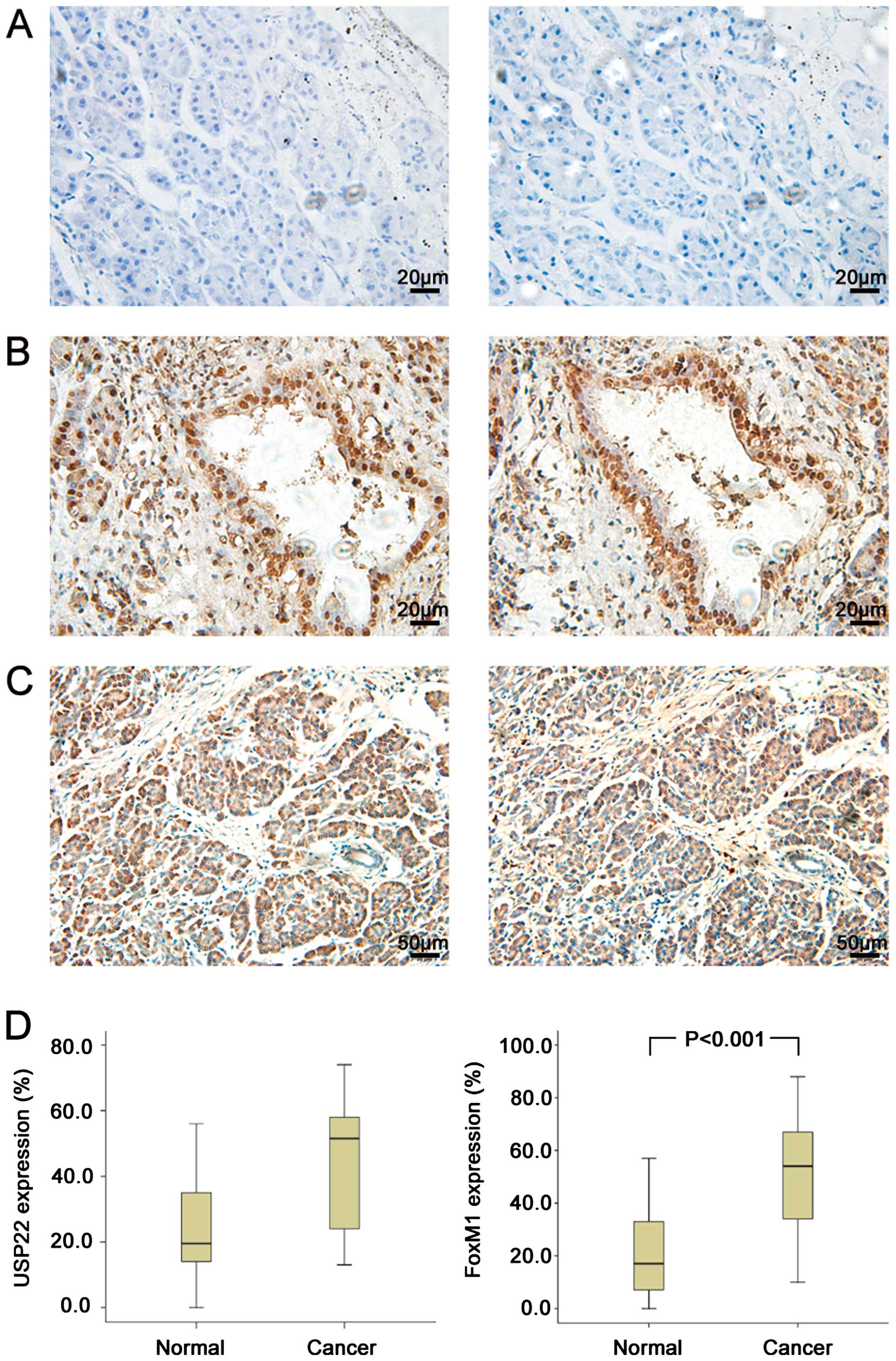
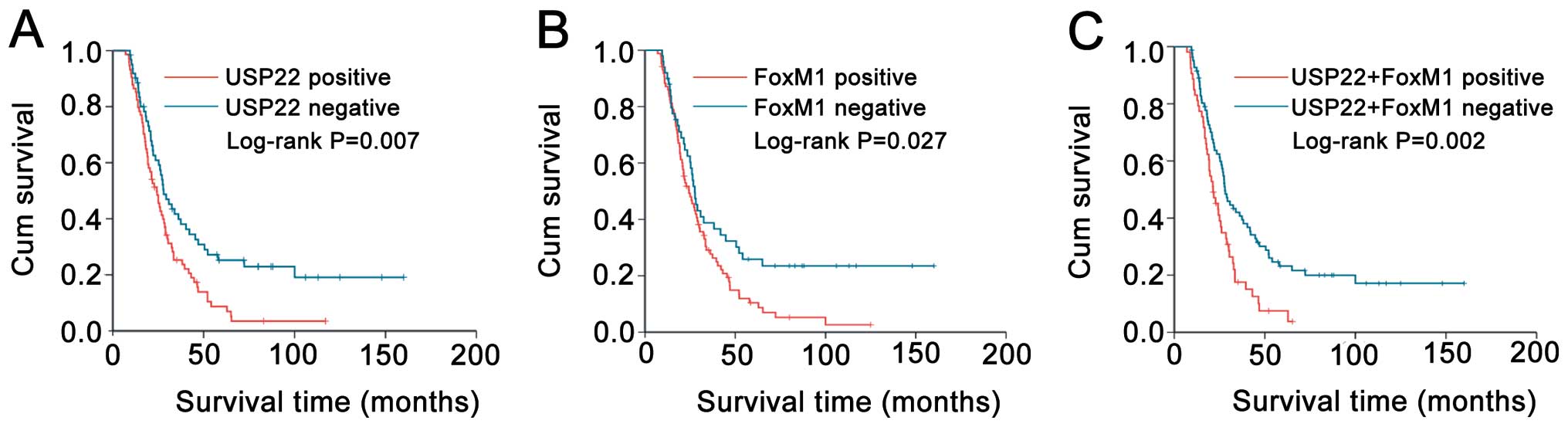
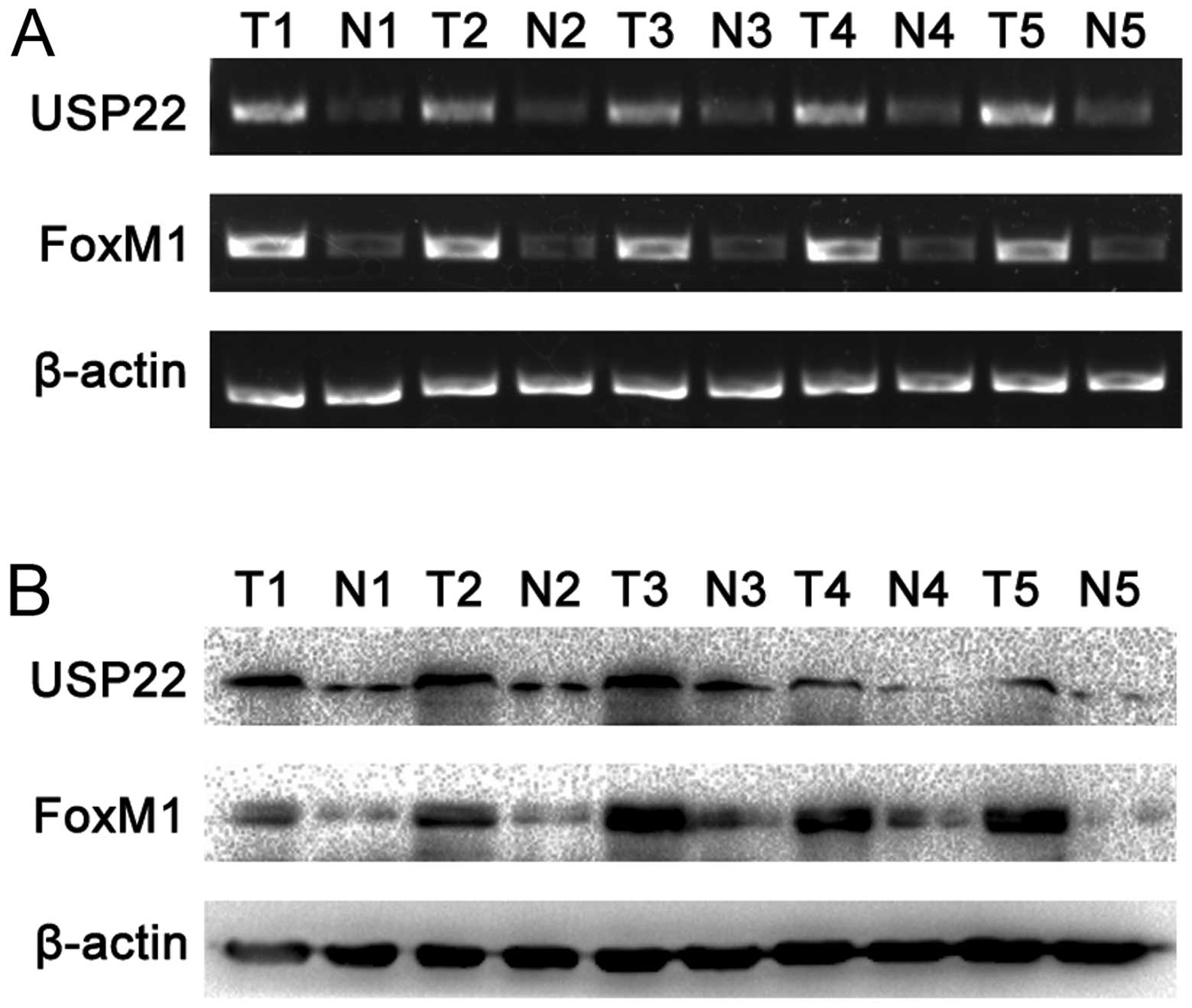
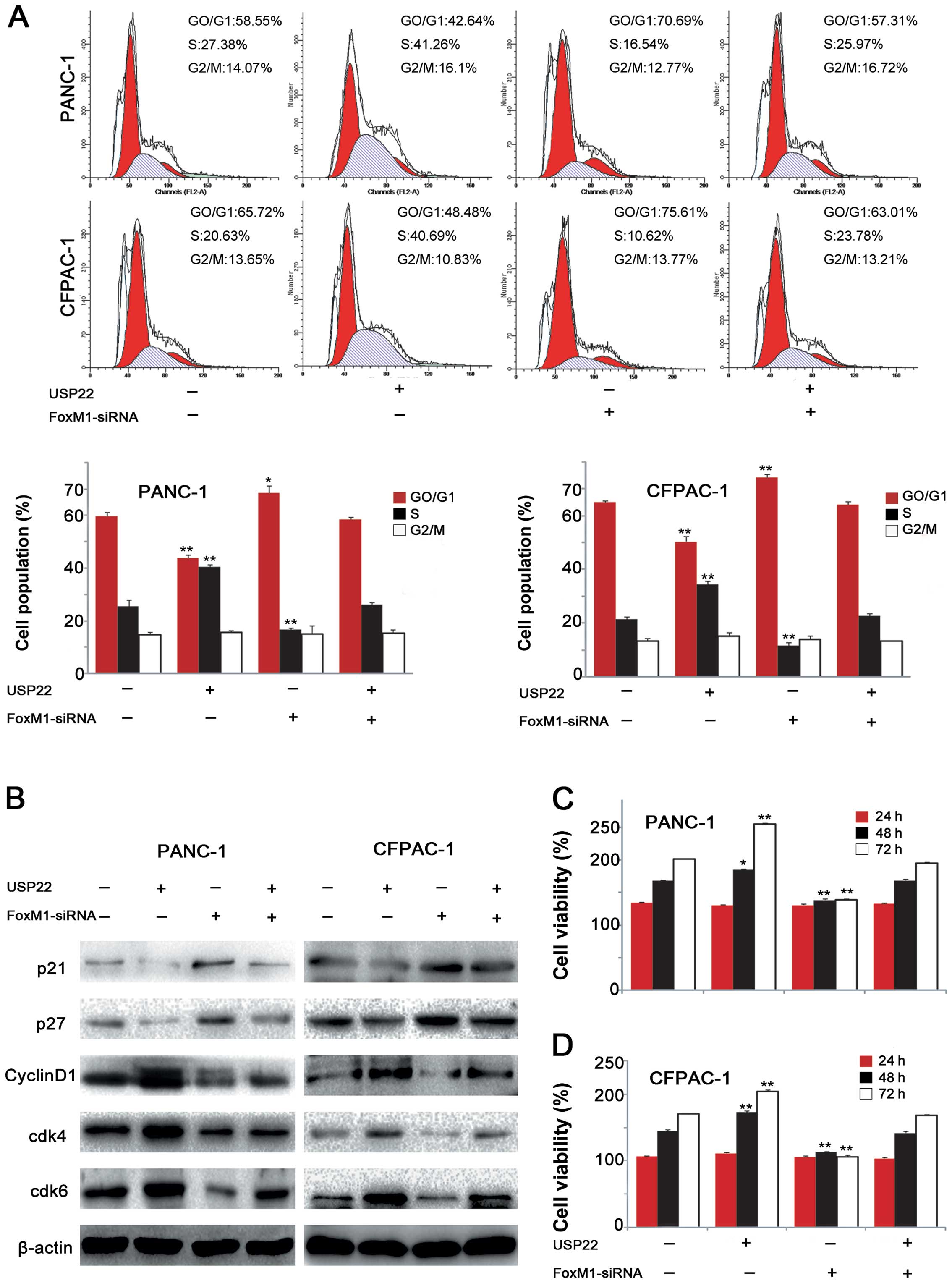
Ubiquitin-specific protease 22 (USP22), a newly discovered member of ubiquitin hydrolase family, exhibits a critical function in cell cycle progression and tumorigenesis. The forkhead box M1 (FoxM1) transcription factor plays a crucial role in cell proliferation, differentiation and transformation. However, the expression and functions of USP22 in pancreatic ductal adenocarcinoma (PDA) and whether FoxM1 is involved in USP22-mediated cell cycle regulation have not been studied. We examined the expression of USP22 and FoxM1 in 136 stage II PDA tissues by immunohistochemistry. Clinical significance was analyzed by multivariate Cox regression analysis, Kaplan-Meier curves and log-rank test. RT-PCR, western blot analysis, luciferase and immunofluorescence assays were used to investigate the molecular function of USP22 and FoxM1 in PDA fresh tissues and cell lines. USP22 and FoxM1 were significantly upregulated in PDA tissues compared with the paired normal carcinoma-adjacent tissues. A statistical correlation was observed between USP22 and FoxM1 expression. The expression of USP/FoxM1 and co-expression of both factors correlated with tumor size, lymph node metastasis and overall survival. Multivariate Cox regression analysis revealed that the expression of USP22/FoxM1, especially the co-expression of both factors, is an independent, unfavorable prognostic factor. USP22 overexpression is accompanied by an increase in FoxM1 expression and USP22 increases FoxM1 expression to promote G1/S transition and cell proliferation through promoting β-catenin nuclear translocation in PDA cell lines. USP22 promotes the G1/S phase transition by upregulating FoxM1 expression via promoting β-catenin nuclear localization. USP22 and FoxM1 may act as prognostic markers and potential targets for PDA.
View Figures

Figure 1

Figure 2

Figure 3

Figure 4

Figure 5

Figure 6

Figure 7

View References

1 

Jemal A, Bray F, Center MM, Ferlay J, Ward E and Forman D: Global cancer statistics. CA Cancer J Clin. 61:69–90. 2011. View Article : Google Scholar

2 

Hidalgo M: Pancreatic cancer. N Engl J Med. 362:1605–1617. 2010. View Article : Google Scholar

3 

Singh P, Srinivasan R and Wig JD: Major molecular markers in pancreatic ductal adenocarcinoma and their roles in screening, diagnosis, prognosis, and treatment. Pancreas. 40:644–652. 2011. View Article : Google Scholar : PubMed/NCBI

4 

Lee HJ, Kim MS, Shin JM, Park TJ, Chung HM and Baek KH: The expression patterns of deubiquitinating enzymes, USP22 and Usp22. Gene Expr Patterns. 6:277–284. 2006. View Article : Google Scholar : PubMed/NCBI

5 

Zhang XY, Varthi M, Sykes SM, et al: The putative cancer stem cell marker USP22 is a subunit of the human SAGA complex required for activated transcription and cell-cycle progression. Mol Cell. 29:102–111. 2008. View Article : Google Scholar : PubMed/NCBI

6 

Lin Z, Yang H, Kong Q, et al: USP22 antagonizes p53 transcriptional activation by deubiquitinating Sirt1 to suppress cell apoptosis and is required for mouse embryonic development. Mol Cell. 46:484–494. 2012. View Article : Google Scholar : PubMed/NCBI

7 

Atanassov BS, Evrard YA, Multani AS, et al: Gcn5 and SAGA regulate shelterin protein turnover and telomere maintenance. Mol Cell. 35:352–364. 2009. View Article : Google Scholar : PubMed/NCBI

8 

Xu H, Liu YL, Yang YM and Dong XS: Knock-down of ubiquitin-specific protease 22 by micro-RNA interference inhibits colorectal cancer growth. Int J Colorectal Dis. 27:21–30. 2012. View Article : Google Scholar : PubMed/NCBI

9 

Lv L, Xiao XY, Gu ZH, Zeng FQ, Huang LQ and Jiang GS: Silencing USP22 by asymmetric structure of interfering RNA inhibits proliferation and induces cell cycle arrest in bladder cancer cells. Mol Cell Biochem. 346:11–21. 2011. View Article : Google Scholar : PubMed/NCBI

10 

Ling SB, Sun DG, Tang B, et al: Knock-down of USP22 by small interfering RNA interference inhibits HepG2 cell proliferation and induces cell cycle arrest. Cell Mol Biol (Noisy-le-grand). 58:L1803–L1808. 2012.PubMed/NCBI

11 

Glinsky GV: Genomic models of metastatic cancer: functional analysis of death-from-cancer signature genes reveals aneuploid, anoikis-resistant, metastasis-enabling phenotype with altered cell cycle control and activated Polycomb Group (PcG) protein chromatin silencing pathway. Cell Cycle. 5:1208–1216. 2006.

12 

Glinsky GV, Berezovska O and Glinskii AB: Microarray analysis identifies a death-from-cancer signature predicting therapy failure in patients with multiple types of cancer. J Clin Invest. 115:1503–1521. 2005. View Article : Google Scholar : PubMed/NCBI

13 

Jackson BC, Carpenter C, Nebert DW and Vasiliou V: Update of human and mouse forkhead box (FOX) gene families. Hum Genomics. 4:345–352. 2010.PubMed/NCBI

14 

Laoukili J, Kooistra MR, Bras A, et al: FoxM1 is required for execution of the mitotic programme and chromosome stability. Nat Cell Biol. 7:126–136. 2005. View Article : Google Scholar : PubMed/NCBI

15 

Wierstra I and Alves J: FOXM1, a typical proliferation-associated transcription factor. Biol Chem. 388:1257–1274. 2007. View Article : Google Scholar : PubMed/NCBI

16 

Luscher-Firzlaff JM, Lilischkis R and Luscher B: Regulation of the transcription factor FOXM1c by Cyclin E/CDK2. FEBS Lett. 580:1716–1722. 2006. View Article : Google Scholar : PubMed/NCBI

17 

Major ML, Lepe R and Costa RH: Forkhead box M1B transcriptional activity requires binding of Cdk-cyclin complexes for phosphorylation-dependent recruitment of p300/CBP coactivators. Mol Cell Biol. 24:2649–2661. 2004. View Article : Google Scholar : PubMed/NCBI

18 

Wang X, Hung NJ and Costa RH: Earlier expression of the transcription factor HFH-11B diminishes induction of p21(CIP1/WAF1) levels and accelerates mouse hepatocyte entry into S-phase following carbon tetrachloride liver injury. Hepatology. 33:1404–1414. 2001. View Article : Google Scholar

19 

Wang X, Krupczak-Hollis K, Tan Y, Dennewitz MB, Adami GR and Costa RH: Increased hepatic Forkhead Box M1B (FoxM1B) levels in old-aged mice stimulated liver regeneration through diminished p27Kip1 protein levels and increased Cdc25B expression. J Biol Chem. 277:44310–44316. 2002. View Article : Google Scholar : PubMed/NCBI

20 

Laoukili J, Stahl M and Medema RH: FoxM1: at the crossroads of ageing and cancer. Biochim Biophys Acta. 1775:92–102. 2007.PubMed/NCBI

21 

Wang Z, Ahmad A, Banerjee S, et al: FoxM1 is a novel target of a natural agent in pancreatic cancer. Pharm Res. 27:1159–1168. 2010. View Article : Google Scholar : PubMed/NCBI

22 

Wang Z, Banerjee S, Kong D, Li Y and Sarkar FH: Down-regulation of Forkhead Box M1 transcription factor leads to the inhibition of invasion and angiogenesis of pancreatic cancer cells. Cancer Res. 67:8293–8300. 2007. View Article : Google Scholar : PubMed/NCBI

23 

Bao B, Wang Z, Ali S, et al: Over-expression of FoxM1 leads to epithelial-mesenchymal transition and cancer stem cell phenotype in pancreatic cancer cells. J Cell Biochem. 112:2296–2306. 2011. View Article : Google Scholar : PubMed/NCBI

24 

Li X, Qiu W, Liu B, et al: Forkhead box transcription factor 1 expression in gastric cancer: FOXM1 is a poor prognostic factor and mediates resistance to docetaxel. J Transl Med. 11:2042013. View Article : Google Scholar : PubMed/NCBI

25 

Wang Y, Wen L, Zhao SH, Ai ZH, Guo JZ and Liu WC: FoxM1 expression is significantly associated with cisplatin-based chemotherapy resistance and poor prognosis in advanced non-small cell lung cancer patients. Lung Cancer. 79:173–179. 2013. View Article : Google Scholar : PubMed/NCBI

26 

Xia JT, Wang H, Liang LJ, et al: Overexpression of FOXM1 is associated with poor prognosis and clinicopathologic stage of pancreatic ductal adenocarcinoma. Pancreas. 41:629–635. 2012. View Article : Google Scholar : PubMed/NCBI

27 

Huang H and He X: Wnt/beta-catenin signaling: new (and old) players and new insights. Curr Opin Cell Biol. 20:119–125. 2008. View Article : Google Scholar : PubMed/NCBI

28 

Karayiannakis AJ, Syrigos KN, Polychronidis A and Simopoulos C: Expression patterns of alpha-, beta- and gamma-catenin in pancreatic cancer: correlation with E-cadherin expression, pathological features and prognosis. Anticancer Res. 21:4127–4134. 2001.PubMed/NCBI

29 

Lowy AM, Fenoglio-Preiser C, Kim OJ, et al: Dysregulation of beta-catenin expression correlates with tumor differentiation in pancreatic duct adenocarcinoma. Ann Surg Oncol. 10:284–290. 2003. View Article : Google Scholar : PubMed/NCBI

30 

Pasca DMM, Biankin AV, Heiser PW, et al: Common activation of canonical Wnt signaling in pancreatic adenocarcinoma. PLoS One. 2:e11552007. View Article : Google Scholar : PubMed/NCBI

31 

Zhang N, Wei P, Gong A, et al: FoxM1 promotes beta-catenin nuclear localization and controls Wnt target-gene expression and glioma tumorigenesis. Cancer Cell. 20:427–442. 2011. View Article : Google Scholar : PubMed/NCBI

32 

Deer EL, Gonzalez-Hernandez J, Coursen JD, et al: Phenotype and genotype of pancreatic cancer cell lines. Pancreas. 39:425–435. 2010. View Article : Google Scholar : PubMed/NCBI

33 

Yang DD, Cui BB, Sun LY, et al: The co-expression of USP22 and BMI-1 may promote cancer progression and predict therapy failure in gastric carcinoma. Cell Biochem Biophys. 61:703–710. 2011. View Article : Google Scholar : PubMed/NCBI

34 

Wang H, Li YP, Chen JH, et al: Prognostic significance of USP22 as an oncogene in papillary thyroid carcinoma. Tumour Biol. 34:1635–1639. 2013. View Article : Google Scholar : PubMed/NCBI

35 

Zhang Y, Yao L, Zhang X, et al: Elevated expression of USP22 in correlation with poor prognosis in patients with invasive breast cancer. J Cancer Res Clin Oncol. 137:1245–1253. 2011. View Article : Google Scholar : PubMed/NCBI

36 

Hu J, Liu YL, Piao SL, Yang DD, Yang YM and Cai L: Expression patterns of USP22 and potential targets BMI-1, PTEN, p-AKT in non-small-cell lung cancer. Lung Cancer. 77:593–599. 2012. View Article : Google Scholar : PubMed/NCBI

37 

Li J, Wang Z and Li Y: USP22 nuclear expression is significantly associated with progression and unfavorable clinical outcome in human esophageal squamous cell carcinoma. J Cancer Res Clin Oncol. 138:1291–1297. 2012. View Article : Google Scholar

38 

Liu Y, Yang Y, Xu H and Dong X: Implication of USP22 in the regulation of BMI-1, c-Myc, p16INK4a, p14ARF, and cyclin D2 expression in primary colorectal carcinomas. Diagn Mol Pathol. 19:194–200. 2010. View Article : Google Scholar : PubMed/NCBI

39 

Nagy Z, Riss A, Romier C, et al: The human SPT20-containing SAGA complex plays a direct role in the regulation of endoplasmic reticulum stress-induced genes. Mol Cell Biol. 29:1649–1660. 2009. View Article : Google Scholar : PubMed/NCBI

40 

Nagy Z and Tora L: Distinct GCN5/PCAF-containing complexes function as co-activators and are involved in transcription factor and global histone acetylation. Oncogene. 26:5341–5357. 2007. View Article : Google Scholar : PubMed/NCBI

41 

Zhang XY, Pfeiffer HK, Thorne AW and McMahon SB: USP22, an hSAGA subunit and potential cancer stem cell marker, reverses the polycomb-catalyzed ubiquitylation of histone H2A. Cell Cycle. 7:1522–1524. 2008. View Article : Google Scholar : PubMed/NCBI

42 

Atanassov BS and Dent SY: USP22 regulates cell proliferation by deubiquitinating the transcriptional regulator FBP1. EMBO Rep. 12:924–930. 2011. View Article : Google Scholar : PubMed/NCBI

43 

Fu Z, Malureanu L, Huang J, et al: Plk1-dependent phosphorylation of FoxM1 regulates a transcriptional programme required for mitotic progression. Nat Cell Biol. 10:1076–1082. 2008. View Article : Google Scholar : PubMed/NCBI

44 

Anders L, Ke N, Hydbring P, et al: A systematic screen for CDK4/6 substrates links FOXM1 phosphorylation to senescence suppression in cancer cells. Cancer Cell. 20:620–634. 2011. View Article : Google Scholar : PubMed/NCBI

45 

Wang X, Bhattacharyya D, Dennewitz MB, et al: Rapid hepatocyte nuclear translocation of the Forkhead Box M1B (FoxM1B) transcription factor caused a transient increase in size of regenerating transgenic hepatocytes. Gene Expr. 11:149–162. 2003. View Article : Google Scholar

46 

Wang IC, Chen YJ, Hughes D, et al: Forkhead box M1 regulates the transcriptional network of genes essential for mitotic progression and genes encoding the SCF (Skp2-Cks1) ubiquitin ligase. Mol Cell Biol. 25:10875–10894. 2005. View Article : Google Scholar : PubMed/NCBI

47 

Allende-Vega N and Saville MK: Targeting the ubiquitin-proteasome system to activate wild-type p53 for cancer therapy. Semin Cancer Biol. 20:29–39. 2010. View Article : Google Scholar : PubMed/NCBI

48 

Clurman BE, Sheaff RJ, Thress K, Groudine M and Roberts JM: Turnover of cyclin E by the ubiquitin-proteasome pathway is regulated by cdk2 binding and cyclin phosphorylation. Genes Dev. 10:1979–1990. 1996. View Article : Google Scholar : PubMed/NCBI

49 

Bae Y, Choi D, Rhim H and Kang S: Hip2 interacts with cyclin B1 and promotes its degradation through the ubiquitin proteasome pathway. FEBS Lett. 584:4505–4510. 2010. View Article : Google Scholar : PubMed/NCBI

50 

Pagano M, Tam SW, Theodoras AM, et al: Role of the ubiquitin-proteasome pathway in regulating abundance of the cyclin-dependent kinase inhibitor p27. Science. 269:682–685. 1995. View Article : Google Scholar

51 

Ding GX, Liu J, Feng CC, Jiang HW, Xu JF and Ding Q: Slug regulates Cyclin D1 expression by ubiquitin-proteasome pathway in prostate cancer cells. Panminerva Med. 54:219–223. 2012.PubMed/NCBI

52 

Mandal S, Freije WA, Guptan P and Banerjee U: Metabolic control of G1-S transition: cyclin E degradation by p53-induced activation of the ubiquitin-proteasome system. J Cell Biol. 188:473–479. 2010. View Article : Google Scholar : PubMed/NCBI

53 

Wang IC, Chen YJ, Hughes DE, et al: FoxM1 regulates transcription of JNK1 to promote the G1/S transition and tumor cell invasiveness. J Biol Chem. 283:20770–20778. 2008. View Article : Google Scholar : PubMed/NCBI

54 

Nakamura S, Hirano I, Okinaka K, et al: The FOXM1 transcriptional factor promotes the proliferation of leukemia cells through modulation of cell cycle progression in acute myeloid leukemia. Carcinogenesis. 31:2012–2021. 2010. View Article : Google Scholar : PubMed/NCBI

55 

Priller M, Poschl J, Abrao L, et al: Expression of FoxM1 is required for the proliferation of medulloblastoma cells and indicates worse survival of patients. Clin Cancer Res. 17:6791–6801. 2011. View Article : Google Scholar : PubMed/NCBI

56 

He SY, Shen HW, Xu L, et al: FOXM1 promotes tumor cell invasion and correlates with poor prognosis in early-stage cervical cancer. Gynecol Oncol. 127:601–610. 2012. View Article : Google Scholar : PubMed/NCBI

57 

Wierstra I and Alves J: FOXM1c transactivates the human c-myc promoter directly via the two TATA boxes P1 and P2. FEBS J. 273:4645–4667. 2006. View Article : Google Scholar : PubMed/NCBI

58 

De Boer VC, de Goffau MC, Arts IC, Hollman PC and Keijer J: SIRT1 stimulation by polyphenols is affected by their stability and metabolism. Mech Ageing Dev. 127:618–627. 2006.PubMed/NCBI

59 

Zhu GY, Shi BZ and Li Y: FoxM1 regulates Sirt1 expression in glioma cells. Eur Rev Med Pharmacol Sci. 18:205–211. 2014.PubMed/NCBI

60 

Jiang L, Li J and Song L: Bmi-1, stem cells and cancer. Acta Biochim Biophys Sin (Shanghai). 41:527–534. 2009. View Article : Google Scholar : PubMed/NCBI

61 

Liu YL, Jiang SX, Yang YM, Xu H, Liu JL and Wang XS: USP22 acts as an oncogene by the activation of BMI-1-mediated INK4a/ARF pathway and Akt pathway. Cell Biochem Biophys. 62:229–235. 2012. View Article : Google Scholar : PubMed/NCBI

62 

Li SK, Smith DK, Leung WY, et al: FoxM1c counteracts oxidative stress-induced senescence and stimulates Bmi-1 expression. J Biol Chem. 283:16545–16553. 2008. View Article : Google Scholar : PubMed/NCBI

63 

Katoh M and Katoh M: WNT signaling pathway and stem cell signaling network. Clin Cancer Res. 13:4042–4045. 2007. View Article : Google Scholar : PubMed/NCBI

64 

Heiser PW, Lau J, Taketo MM, Herrera PL and Hebrok M: Stabilization of beta-catenin impacts pancreas growth. Development. 133:2023–2032. 2006. View Article : Google Scholar : PubMed/NCBI

65 

Rulifson IC, Karnik SK, Heiser PW, et al: Wnt signaling regulates pancreatic beta cell proliferation. Proc Natl Acad Sci USA. 104:6247–6252. 2007. View Article : Google Scholar : PubMed/NCBI

66 

Heiser PW, Cano DA, Landsman L, et al: Stabilization of beta-catenin induces pancreas tumor formation. Gastroenterology. 135:1288–1300. 2008. View Article : Google Scholar : PubMed/NCBI

67 

Zhang Y, Morris JT, Yan W, et al: Canonical wnt signaling is required for pancreatic carcinogenesis. Cancer Res. 73:4909–4922. 2013. View Article : Google Scholar : PubMed/NCBI

68 

Ripka S, Konig A, Buchholz M, et al: WNT5A - target of CUTL1 and potent modulator of tumor cell migration and invasion in pancreatic cancer. Carcinogenesis. 28:1178–1187. 2007. View Article : Google Scholar : PubMed/NCBI

69 

Griesmann H, Ripka S, Pralle M, et al: WNT5A-NFAT signaling mediates resistance to apoptosis in pancreatic cancer. Neoplasia. 15:11–22. 2013.PubMed/NCBI

70 

Bowman A and Nusse R: Location, location, location: FoxM1 mediates beta-catenin nuclear translocation and promotes glioma tumorigenesis. Cancer Cell. 20:415–416. 2011. View Article : Google Scholar : PubMed/NCBI

Related Articles

  • Abstract
  • View
  • Download
  • Twitter
Copy and paste a formatted citation
Spandidos Publications style
Ning Z, Wang A, Liang J, Xie Y, Liu J, Feng L, Yan Q and Wang Z: USP22 promotes the G1/S phase transition by upregulating FoxM1 expression via β-catenin nuclear localization and is associated with poor prognosis in stage II pancreatic ductal adenocarcinoma. Int J Oncol 45: 1594-1608, 2014.
APA
Ning, Z., Wang, A., Liang, J., Xie, Y., Liu, J., Feng, L. ... Wang, Z. (2014). USP22 promotes the G1/S phase transition by upregulating FoxM1 expression via β-catenin nuclear localization and is associated with poor prognosis in stage II pancreatic ductal adenocarcinoma. International Journal of Oncology, 45, 1594-1608. https://doi.org/10.3892/ijo.2014.2531
MLA
Ning, Z., Wang, A., Liang, J., Xie, Y., Liu, J., Feng, L., Yan, Q., Wang, Z."USP22 promotes the G1/S phase transition by upregulating FoxM1 expression via β-catenin nuclear localization and is associated with poor prognosis in stage II pancreatic ductal adenocarcinoma". International Journal of Oncology 45.4 (2014): 1594-1608.
Chicago
Ning, Z., Wang, A., Liang, J., Xie, Y., Liu, J., Feng, L., Yan, Q., Wang, Z."USP22 promotes the G1/S phase transition by upregulating FoxM1 expression via β-catenin nuclear localization and is associated with poor prognosis in stage II pancreatic ductal adenocarcinoma". International Journal of Oncology 45, no. 4 (2014): 1594-1608. https://doi.org/10.3892/ijo.2014.2531
Copy and paste a formatted citation
x
Spandidos Publications style
Ning Z, Wang A, Liang J, Xie Y, Liu J, Feng L, Yan Q and Wang Z: USP22 promotes the G1/S phase transition by upregulating FoxM1 expression via β-catenin nuclear localization and is associated with poor prognosis in stage II pancreatic ductal adenocarcinoma. Int J Oncol 45: 1594-1608, 2014.
APA
Ning, Z., Wang, A., Liang, J., Xie, Y., Liu, J., Feng, L. ... Wang, Z. (2014). USP22 promotes the G1/S phase transition by upregulating FoxM1 expression via β-catenin nuclear localization and is associated with poor prognosis in stage II pancreatic ductal adenocarcinoma. International Journal of Oncology, 45, 1594-1608. https://doi.org/10.3892/ijo.2014.2531
MLA
Ning, Z., Wang, A., Liang, J., Xie, Y., Liu, J., Feng, L., Yan, Q., Wang, Z."USP22 promotes the G1/S phase transition by upregulating FoxM1 expression via β-catenin nuclear localization and is associated with poor prognosis in stage II pancreatic ductal adenocarcinoma". International Journal of Oncology 45.4 (2014): 1594-1608.
Chicago
Ning, Z., Wang, A., Liang, J., Xie, Y., Liu, J., Feng, L., Yan, Q., Wang, Z."USP22 promotes the G1/S phase transition by upregulating FoxM1 expression via β-catenin nuclear localization and is associated with poor prognosis in stage II pancreatic ductal adenocarcinoma". International Journal of Oncology 45, no. 4 (2014): 1594-1608. https://doi.org/10.3892/ijo.2014.2531
Follow us
  • Twitter
  • LinkedIn
  • Facebook
About
  • Spandidos Publications
  • Careers
  • Cookie Policy
  • Privacy Policy
How can we help?
  • Help
  • Live Chat
  • Contact
  • Email to our Support Team