Spandidos Publications Logo
  • About
    • About Spandidos
    • Aims and Scopes
    • Abstracting and Indexing
    • Editorial Policies
    • Reprints and Permissions
    • Job Opportunities
    • Terms and Conditions
    • Contact
  • Journals
    • All Journals
    • Oncology Letters
      • Oncology Letters
      • Information for Authors
      • Editorial Policies
      • Editorial Board
      • Aims and Scope
      • Abstracting and Indexing
      • Bibliographic Information
      • Archive
    • International Journal of Oncology
      • International Journal of Oncology
      • Information for Authors
      • Editorial Policies
      • Editorial Board
      • Aims and Scope
      • Abstracting and Indexing
      • Bibliographic Information
      • Archive
    • Molecular and Clinical Oncology
      • Molecular and Clinical Oncology
      • Information for Authors
      • Editorial Policies
      • Editorial Board
      • Aims and Scope
      • Abstracting and Indexing
      • Bibliographic Information
      • Archive
    • Experimental and Therapeutic Medicine
      • Experimental and Therapeutic Medicine
      • Information for Authors
      • Editorial Policies
      • Editorial Board
      • Aims and Scope
      • Abstracting and Indexing
      • Bibliographic Information
      • Archive
    • International Journal of Molecular Medicine
      • International Journal of Molecular Medicine
      • Information for Authors
      • Editorial Policies
      • Editorial Board
      • Aims and Scope
      • Abstracting and Indexing
      • Bibliographic Information
      • Archive
    • Biomedical Reports
      • Biomedical Reports
      • Information for Authors
      • Editorial Policies
      • Editorial Board
      • Aims and Scope
      • Abstracting and Indexing
      • Bibliographic Information
      • Archive
    • Oncology Reports
      • Oncology Reports
      • Information for Authors
      • Editorial Policies
      • Editorial Board
      • Aims and Scope
      • Abstracting and Indexing
      • Bibliographic Information
      • Archive
    • Molecular Medicine Reports
      • Molecular Medicine Reports
      • Information for Authors
      • Editorial Policies
      • Editorial Board
      • Aims and Scope
      • Abstracting and Indexing
      • Bibliographic Information
      • Archive
    • World Academy of Sciences Journal
      • World Academy of Sciences Journal
      • Information for Authors
      • Editorial Policies
      • Editorial Board
      • Aims and Scope
      • Abstracting and Indexing
      • Bibliographic Information
      • Archive
    • International Journal of Functional Nutrition
      • International Journal of Functional Nutrition
      • Information for Authors
      • Editorial Policies
      • Editorial Board
      • Aims and Scope
      • Abstracting and Indexing
      • Bibliographic Information
      • Archive
    • International Journal of Epigenetics
      • International Journal of Epigenetics
      • Information for Authors
      • Editorial Policies
      • Editorial Board
      • Aims and Scope
      • Abstracting and Indexing
      • Bibliographic Information
      • Archive
    • Medicine International
      • Medicine International
      • Information for Authors
      • Editorial Policies
      • Editorial Board
      • Aims and Scope
      • Abstracting and Indexing
      • Bibliographic Information
      • Archive
  • Articles
  • Information
    • Information for Authors
    • Information for Reviewers
    • Information for Librarians
    • Information for Advertisers
    • Conferences
  • Language Editing
Spandidos Publications Logo
  • About
    • About Spandidos
    • Aims and Scopes
    • Abstracting and Indexing
    • Editorial Policies
    • Reprints and Permissions
    • Job Opportunities
    • Terms and Conditions
    • Contact
  • Journals
    • All Journals
    • Biomedical Reports
      • Information for Authors
      • Editorial Policies
      • Editorial Board
      • Aims and Scope
      • Abstracting and Indexing
      • Bibliographic Information
      • Archive
    • Experimental and Therapeutic Medicine
      • Information for Authors
      • Editorial Policies
      • Editorial Board
      • Aims and Scope
      • Abstracting and Indexing
      • Bibliographic Information
      • Archive
    • International Journal of Epigenetics
      • Information for Authors
      • Editorial Policies
      • Editorial Board
      • Aims and Scope
      • Abstracting and Indexing
      • Bibliographic Information
      • Archive
    • International Journal of Functional Nutrition
      • Information for Authors
      • Editorial Policies
      • Editorial Board
      • Aims and Scope
      • Abstracting and Indexing
      • Bibliographic Information
      • Archive
    • International Journal of Molecular Medicine
      • Information for Authors
      • Editorial Policies
      • Editorial Board
      • Aims and Scope
      • Abstracting and Indexing
      • Bibliographic Information
      • Archive
    • International Journal of Oncology
      • Information for Authors
      • Editorial Policies
      • Editorial Board
      • Aims and Scope
      • Abstracting and Indexing
      • Bibliographic Information
      • Archive
    • Medicine International
      • Information for Authors
      • Editorial Policies
      • Editorial Board
      • Aims and Scope
      • Abstracting and Indexing
      • Bibliographic Information
      • Archive
    • Molecular and Clinical Oncology
      • Information for Authors
      • Editorial Policies
      • Editorial Board
      • Aims and Scope
      • Abstracting and Indexing
      • Bibliographic Information
      • Archive
    • Molecular Medicine Reports
      • Information for Authors
      • Editorial Policies
      • Editorial Board
      • Aims and Scope
      • Abstracting and Indexing
      • Bibliographic Information
      • Archive
    • Oncology Letters
      • Information for Authors
      • Editorial Policies
      • Editorial Board
      • Aims and Scope
      • Abstracting and Indexing
      • Bibliographic Information
      • Archive
    • Oncology Reports
      • Information for Authors
      • Editorial Policies
      • Editorial Board
      • Aims and Scope
      • Abstracting and Indexing
      • Bibliographic Information
      • Archive
    • World Academy of Sciences Journal
      • Information for Authors
      • Editorial Policies
      • Editorial Board
      • Aims and Scope
      • Abstracting and Indexing
      • Bibliographic Information
      • Archive
  • Articles
  • Information
    • For Authors
    • For Reviewers
    • For Librarians
    • For Advertisers
    • Conferences
  • Language Editing
Login Register Submit
  • This site uses cookies
  • You can change your cookie settings at any time by following the instructions in our Cookie Policy. To find out more, you may read our Privacy Policy.

    I agree
Search articles by DOI, keyword, author or affiliation
Search
Advanced Search
presentation
International Journal of Oncology
Join Editorial Board Propose a Special Issue
Print ISSN: 1019-6439 Online ISSN: 1791-2423
Journal Cover
January-2015 Volume 46 Issue 1

Full Size Image

Cover Legend PDF

Sign up for eToc alerts
Recommend to Library

Journals

International Journal of Molecular Medicine

International Journal of Molecular Medicine

International Journal of Molecular Medicine is an international journal devoted to molecular mechanisms of human disease.

International Journal of Oncology

International Journal of Oncology

International Journal of Oncology is an international journal devoted to oncology research and cancer treatment.

Molecular Medicine Reports

Molecular Medicine Reports

Covers molecular medicine topics such as pharmacology, pathology, genetics, neuroscience, infectious diseases, molecular cardiology, and molecular surgery.

Oncology Reports

Oncology Reports

Oncology Reports is an international journal devoted to fundamental and applied research in Oncology.

Experimental and Therapeutic Medicine

Experimental and Therapeutic Medicine

Experimental and Therapeutic Medicine is an international journal devoted to laboratory and clinical medicine.

Oncology Letters

Oncology Letters

Oncology Letters is an international journal devoted to Experimental and Clinical Oncology.

Biomedical Reports

Biomedical Reports

Explores a wide range of biological and medical fields, including pharmacology, genetics, microbiology, neuroscience, and molecular cardiology.

Molecular and Clinical Oncology

Molecular and Clinical Oncology

International journal addressing all aspects of oncology research, from tumorigenesis and oncogenes to chemotherapy and metastasis.

World Academy of Sciences Journal

World Academy of Sciences Journal

Multidisciplinary open-access journal spanning biochemistry, genetics, neuroscience, environmental health, and synthetic biology.

International Journal of Functional Nutrition

International Journal of Functional Nutrition

Open-access journal combining biochemistry, pharmacology, immunology, and genetics to advance health through functional nutrition.

International Journal of Epigenetics

International Journal of Epigenetics

Publishes open-access research on using epigenetics to advance understanding and treatment of human disease.

Medicine International

Medicine International

An International Open Access Journal Devoted to General Medicine.

Journal Cover
January-2015 Volume 46 Issue 1

Full Size Image

Cover Legend PDF

Sign up for eToc alerts
Recommend to Library

  • Article
  • Citations
    • Cite This Article
    • Download Citation
    • Create Citation Alert
    • Remove Citation Alert
    • Cited By
  • Similar Articles
    • Related Articles (in Spandidos Publications)
    • Similar Articles (Google Scholar)
    • Similar Articles (PubMed)
  • Download PDF
  • Download XML
  • View XML
Article

Cks1 proteasomal turnover is a predominant mode of regulation in breast cancer cells: Role of key tyrosines and lysines

  • Authors:
    • Vinayak Khattar
    • Jaideep V. Thottassery
  • View Affiliations / Copyright

    Affiliations: Southern Research Institute, Birmingham, AL, USA
  • Pages: 395-406
    |
    Published online on: October 23, 2014
       https://doi.org/10.3892/ijo.2014.2728
  • Expand metrics +
Metrics: Total Views: 0 (Spandidos Publications: | PMC Statistics: )
Metrics: Total PDF Downloads: 0 (Spandidos Publications: | PMC Statistics: )
Cited By (CrossRef): 0 citations Loading Articles...

This article is mentioned in:


Abstract

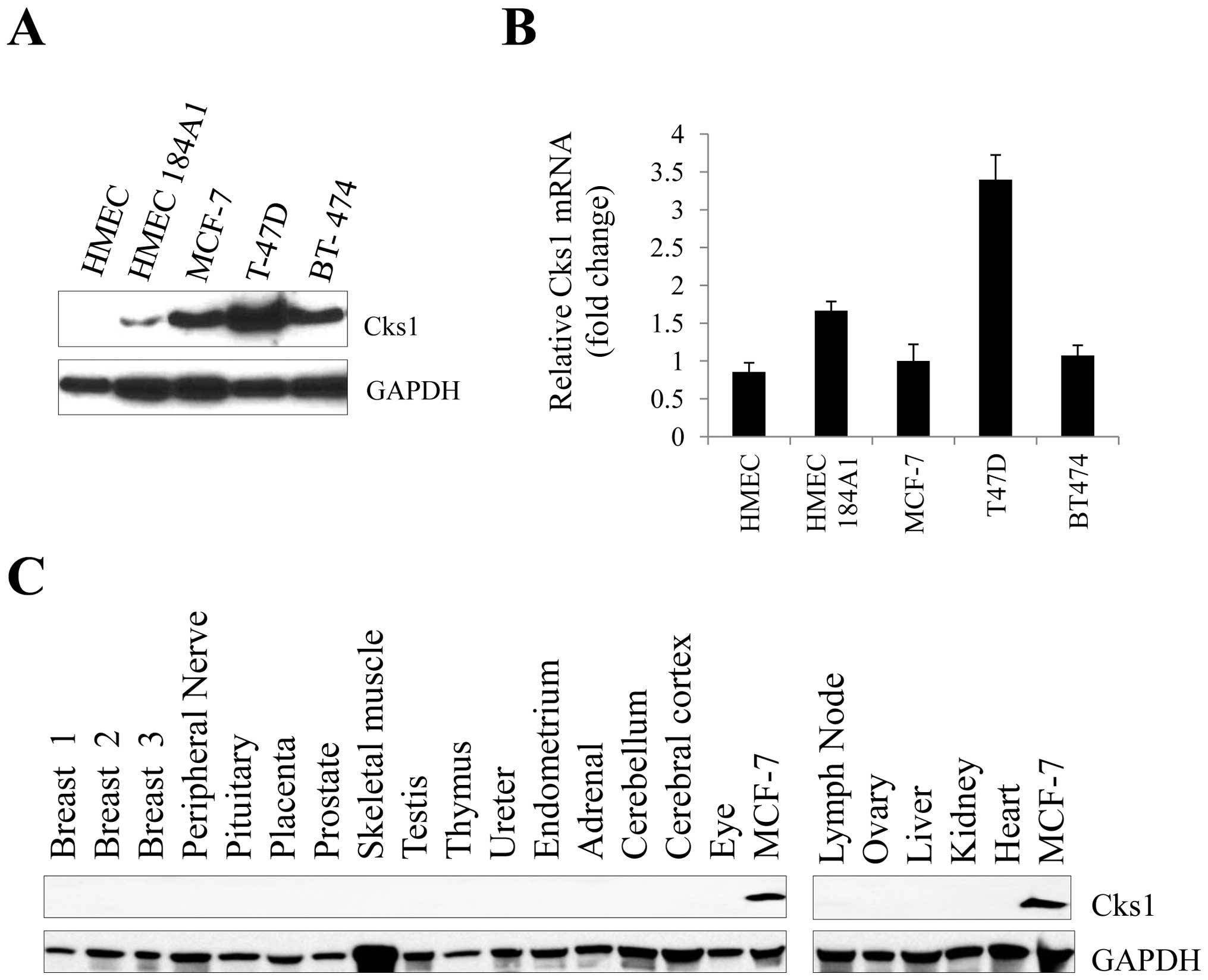
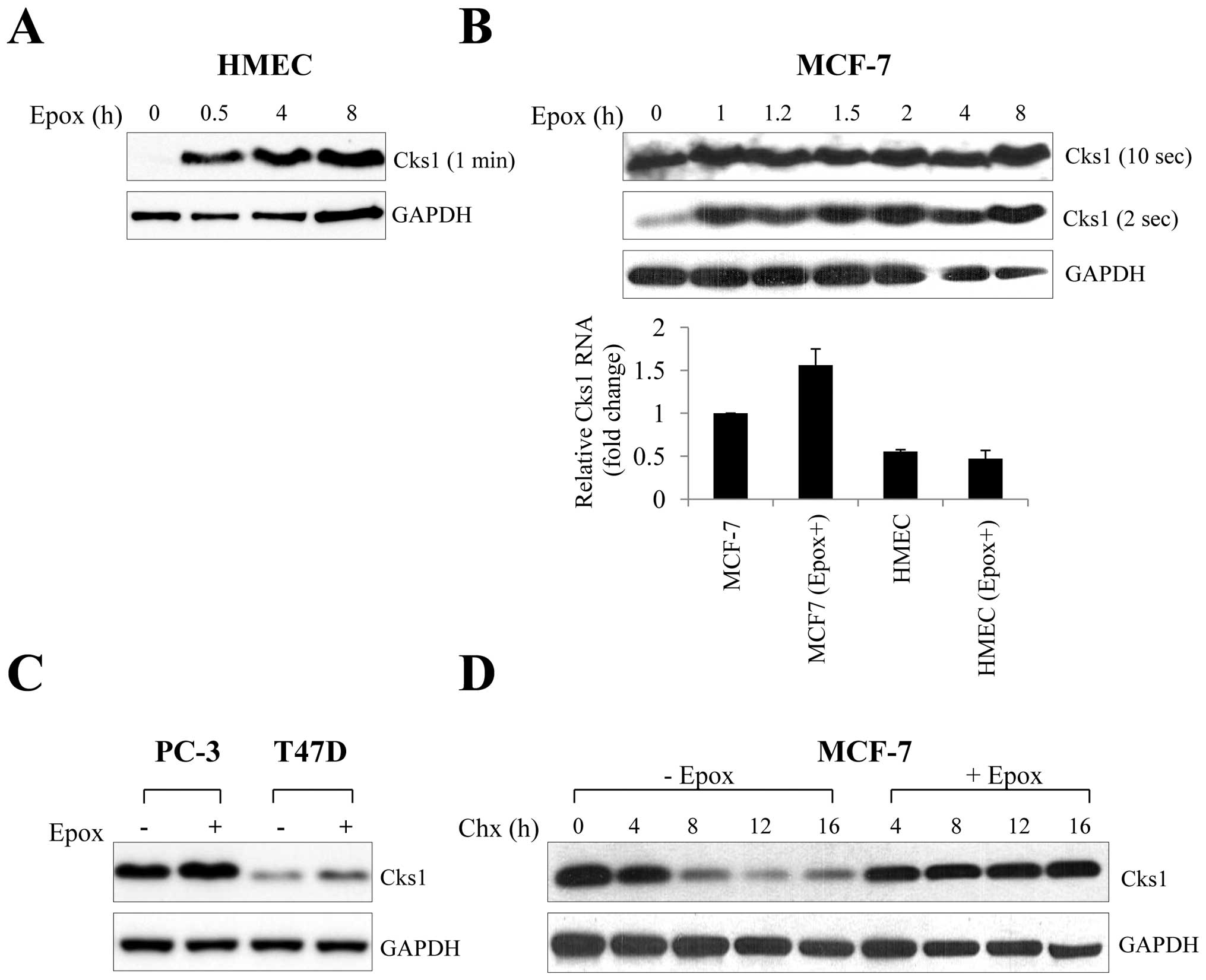
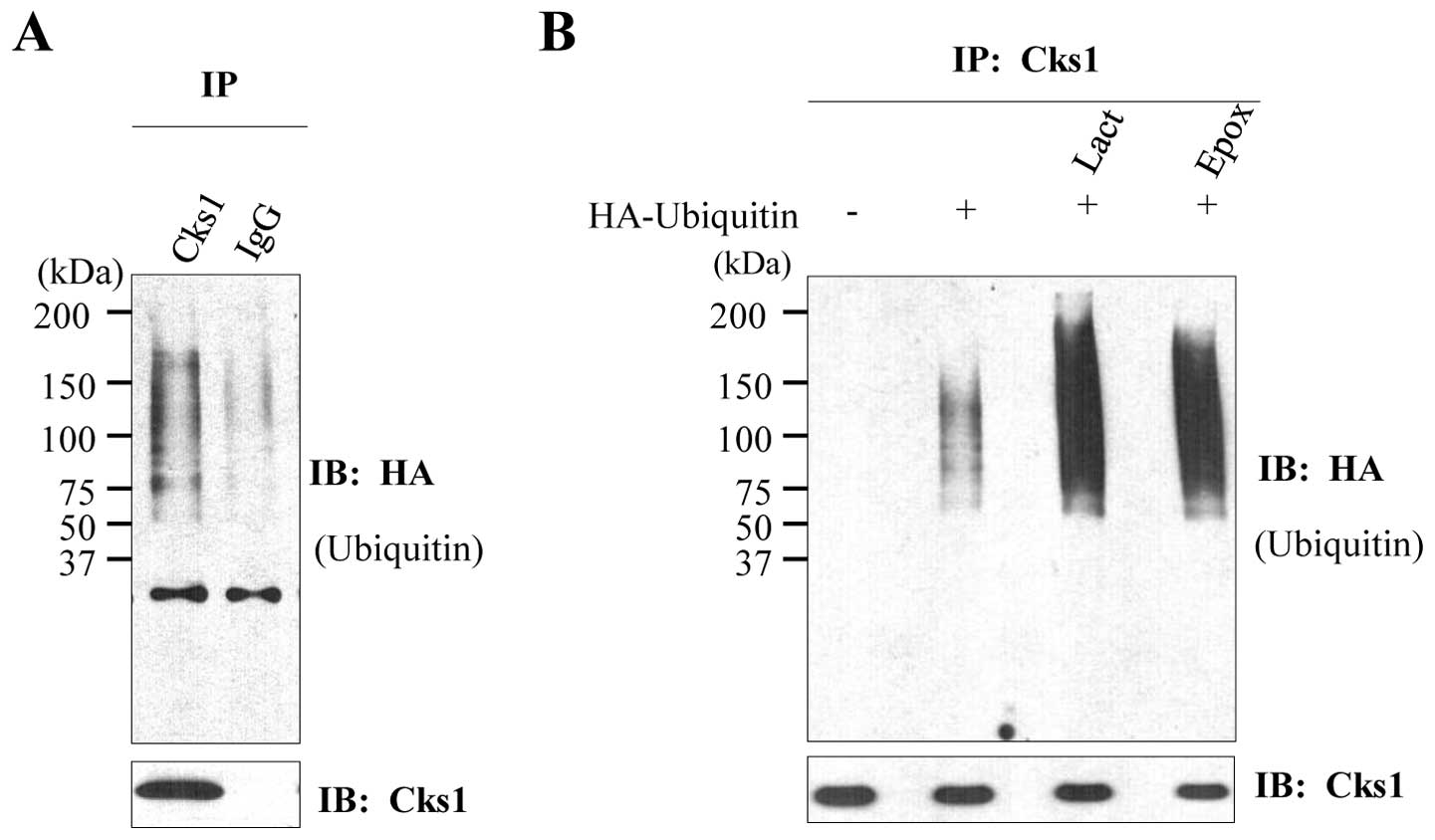
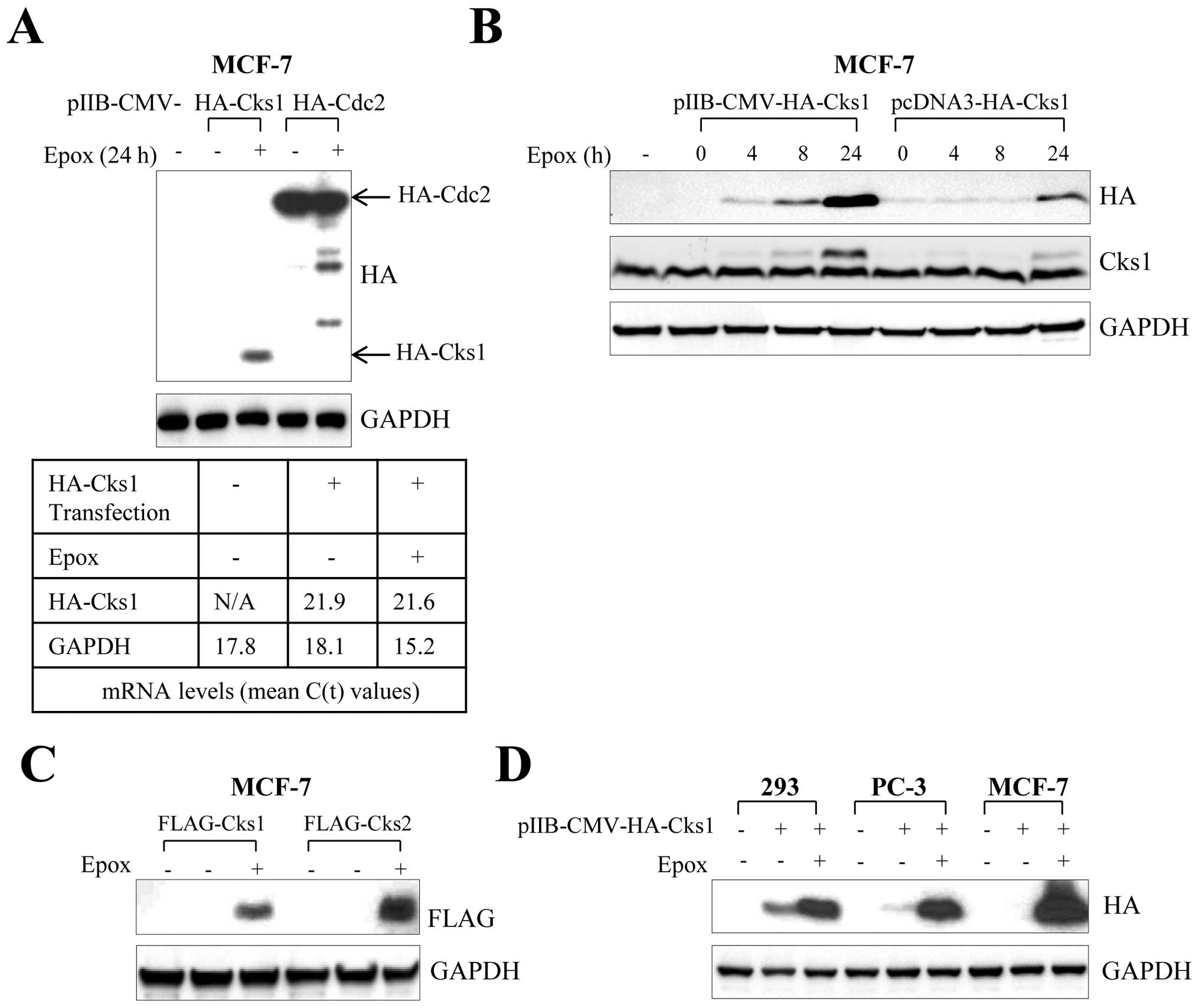
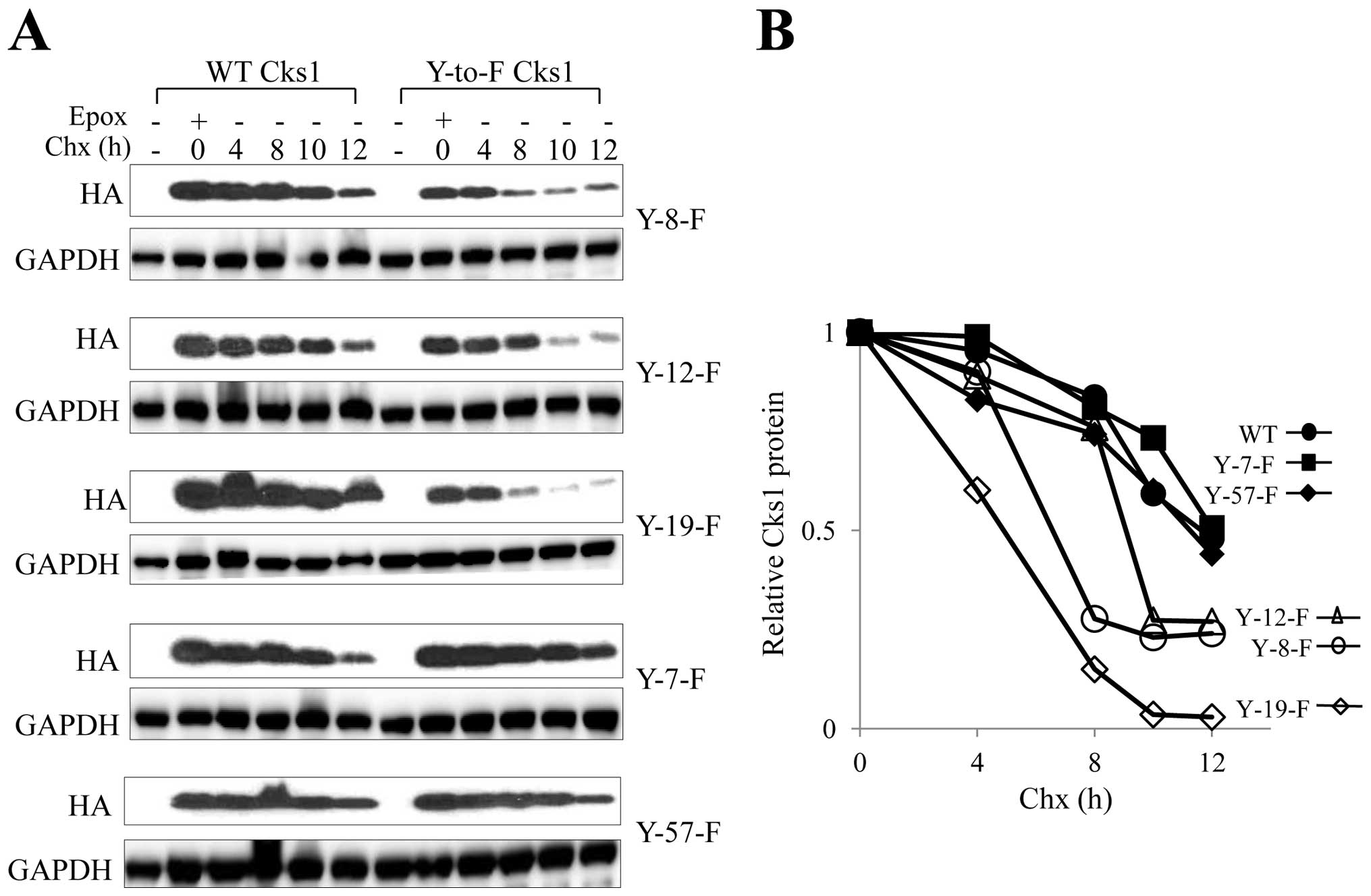
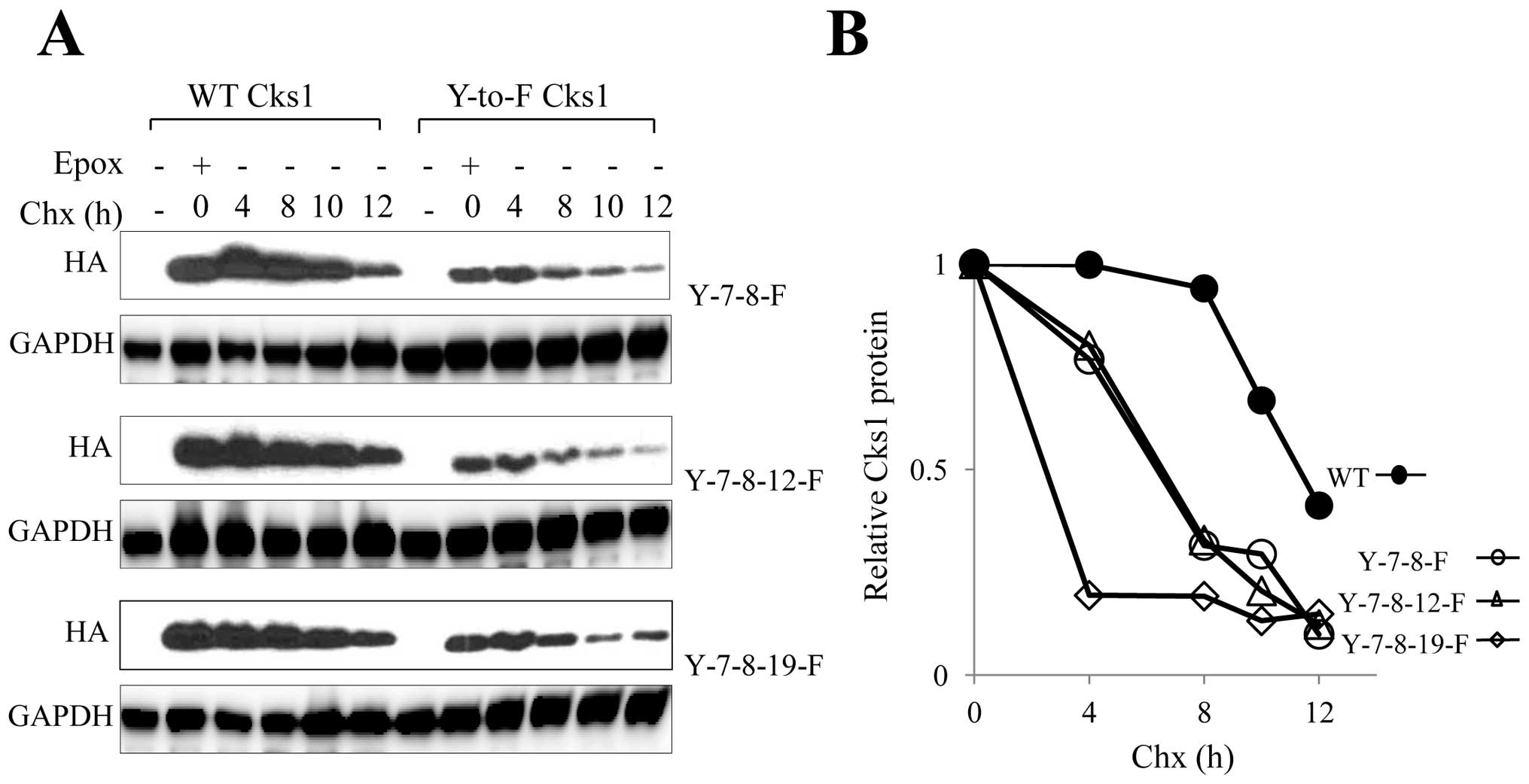
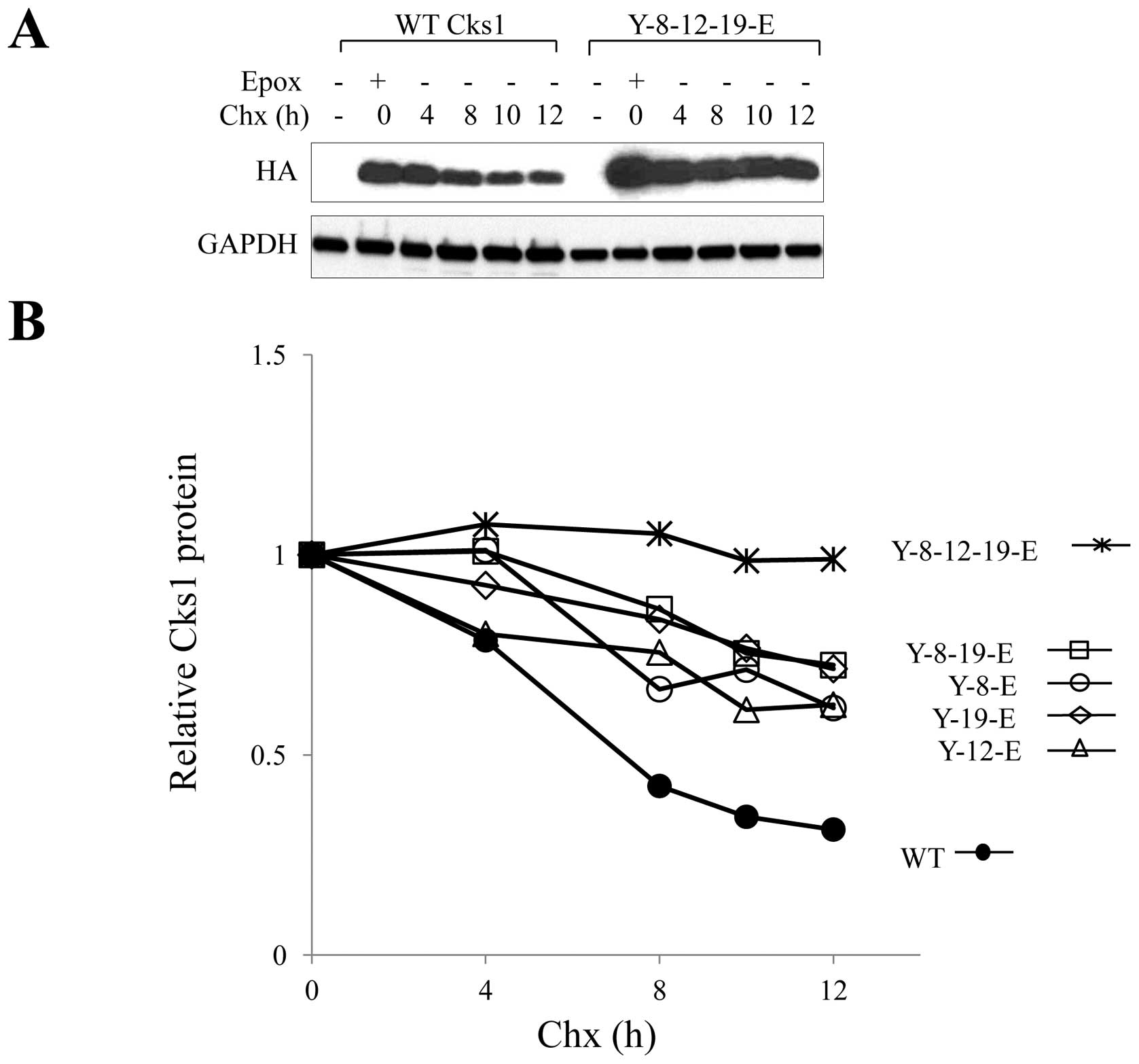
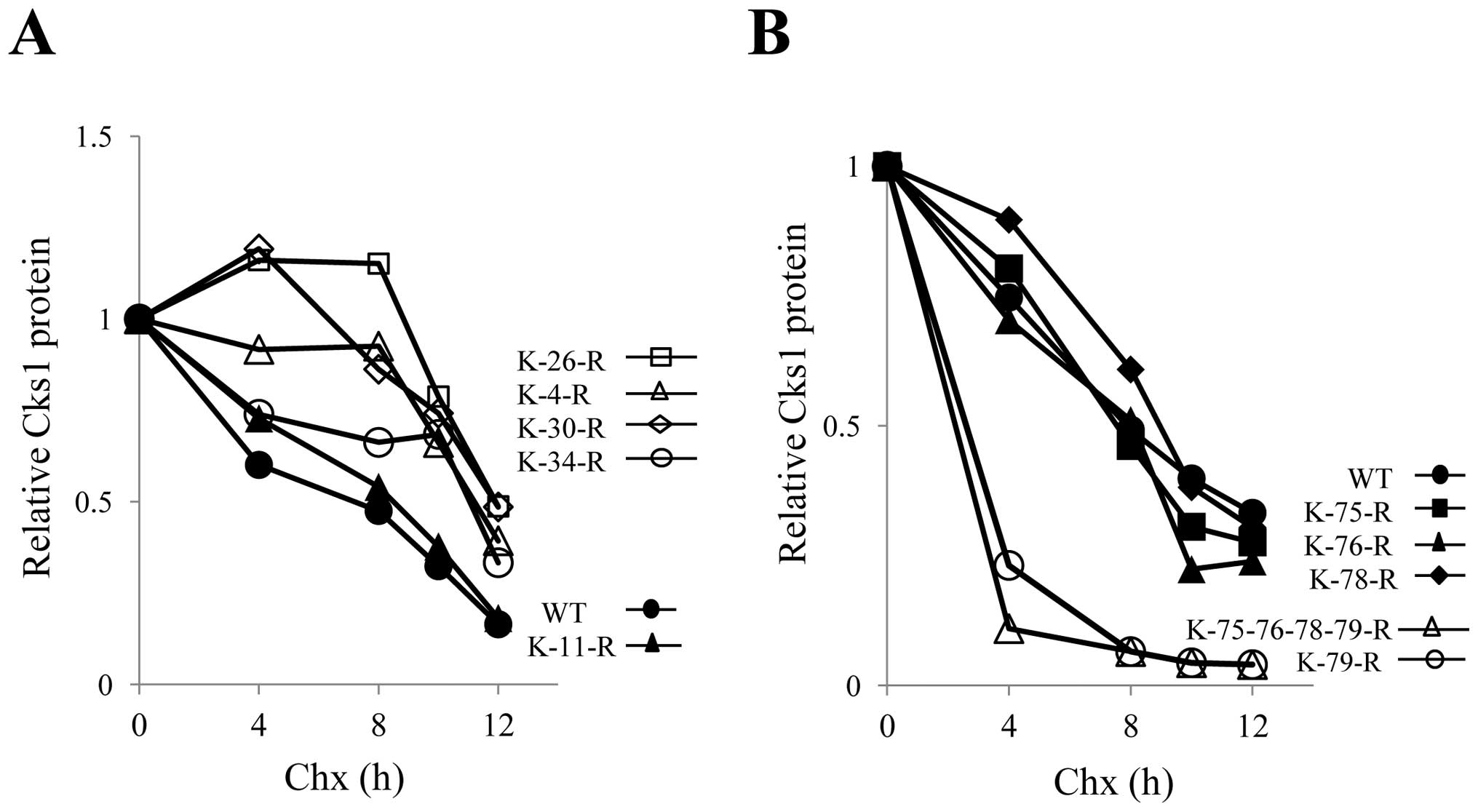
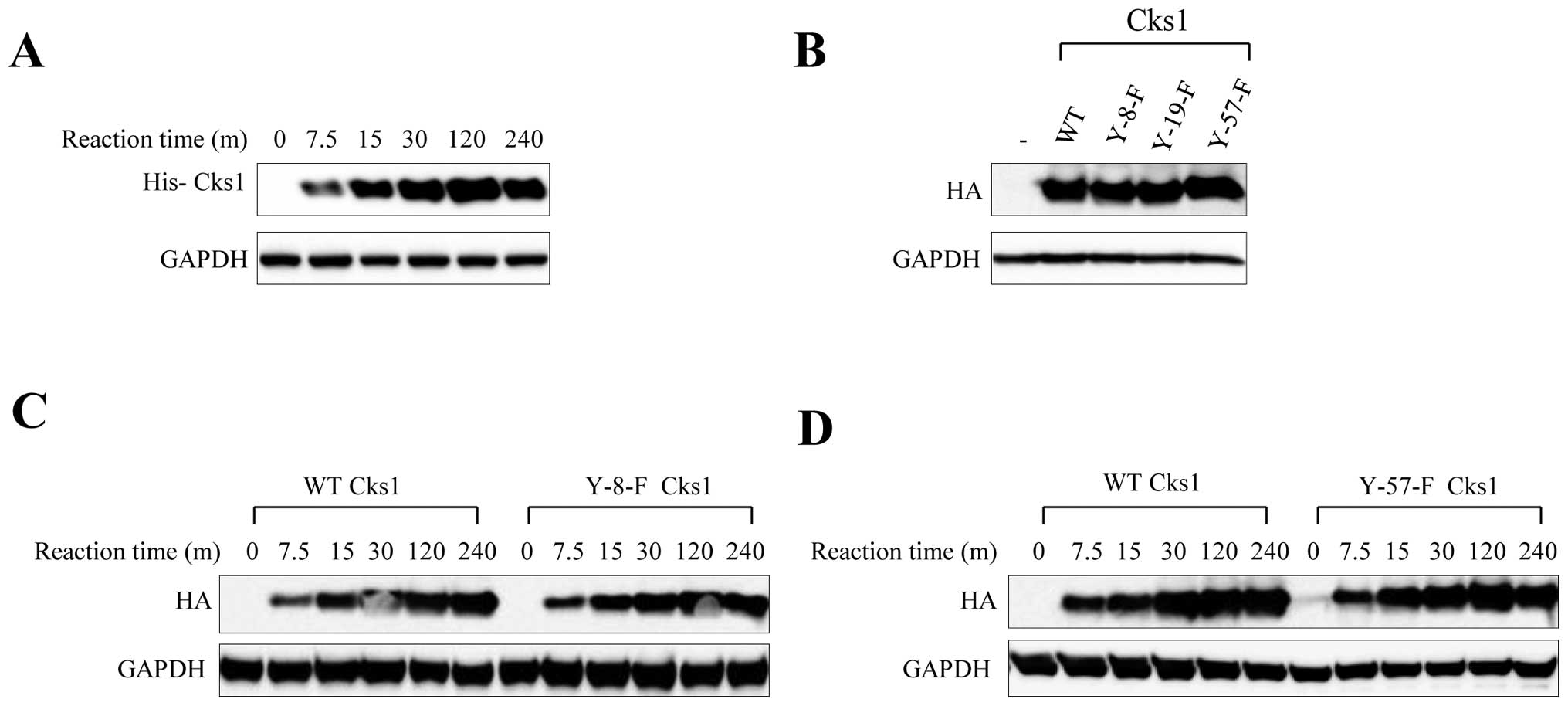
Constitutive levels of Cks1 protein are very high in mammary carcinoma tissue and in breast tumor cell lines. However, despite being transcribed at relatively high levels, Cks1 protein is very low in normal mammary tissue. Also, basal Cks1 is barely detectable in primary human mammary epithelial cells (HMECs). Epoximicin, a proteasome inhibitor, induced detectable endogenous Cks1 in HMECs, and upregulated it above the basal level in MCF-7 breast cancer cells. Interestingly, transiently transfected Cks1 is remarkably unstable and accumulates only upon proteasomal blockade in multiple cell lines even when driven by the strong CMV promoter-enhancer. We examined the stability of site-directed Cks1 mutants in order to identify the structural determinants of its turnover in cancer cells. Since protein turnover is regulated by phosphorylation, and phosphoproteomic studies reveal phosphorylated tyrosines in Cks1, we replaced its five conserved tyrosines (Y) with phenylalanine (F), both individually and in combinations. We find that like wild-type, all transiently transfected mutant Cks1 vectors, even when driven by the CMV promoter-enhancer, expressed detectable protein only in cells treated with epoximicin. However, turnover of the Y8F, Y12F and Y19F Cks1 mutants was more rapid than that of wild-type, Y7F and Y57F. Since lysines are modified by ubiquitination or acetylation we also examined the consequences of lysine to arginine (K-R) substitutions on Cks1 proteasomal turnover. We found that the individual mutations K4R, K26R, K30R, and K34R slowed Cks1 turnover, while the K79R mutation or the combined mutation K75-76-78-79R increased turnover. Taken together, regulation of Cks1 protein stability is crucially dependent on specific tyrosine and lysine residues which are potential sites for post-translational modifications.
View Figures

Figure 1

Figure 2

Figure 3

Figure 4

Figure 5

Figure 6

Figure 7

Figure 8

Figure 9

View References

1 

Khattar V and Thottassery JV: Cks1: structure, emerging roles and implications in multiple cancers. J Cancer Ther. 4:1341–1354. 2013. View Article : Google Scholar : PubMed/NCBI

2 

Ganoth D, Bornstein G, Ko TK, Larsen B, Tyers M, Pagano M and Hershko A: The cell-cycle regulatory protein Cks1 is required for SCF(Skp2)-mediated ubiquitinylation of p27. Nat Cell Biol. 3:321–324. 2001. View Article : Google Scholar : PubMed/NCBI

3 

Spruck C, Strohmaier H, Watson M, et al: A CDK-independent function of mammalian Cks1: targeting of SCF(Skp2) to the CDK inhibitor p27Kip1. Mol Cell. 7:639–650. 2001. View Article : Google Scholar : PubMed/NCBI

4 

Westbrook L, Manuvakhova M, Kern FG, Estes NR, Ramanathan HN and Thottassery JV: Cks1 regulates cdk1 expression: a novel role during mitotic entry in breast cancer cells. Cancer Res. 67:11393–11401. 2007. View Article : Google Scholar : PubMed/NCBI

5 

Hoellein A, Graf S, Bassermann F, et al: Cks1 promotion of S phase entry and proliferation is independent of p27Kip1 suppression. Mol Cell Biol. 32:2416–2427. 2012. View Article : Google Scholar : PubMed/NCBI

6 

Liberal V, Martinsson-Ahlzen HS, Liberal J, Spruck CH, Widschwendter M, McGowan CH and Reed SI: Cyclin-dependent kinase subunit (Cks) 1 or Cks2 overexpression overrides the DNA damage response barrier triggered by activated oncoproteins. Proc Natl Acad Sci USA. 109:2754–2759. 2012. View Article : Google Scholar : PubMed/NCBI

7 

Westbrook L, Ramanathan HN, Isayeva T, et al: High Cks1 expression in transgenic and carcinogen-initiated mammary tumors is not always accompanied by reduction in p27Kip1. Int J Oncol. 34:1425–1431. 2009.PubMed/NCBI

8 

Slotky M, Shapira M, Ben-Izhak O, Linn S, Futerman B, Tsalic M and Hershko DD: The expression of the ubiquitin ligase subunit Cks1 in human breast cancer. Breast Cancer Res. 7:R737–R744. 2005. View Article : Google Scholar : PubMed/NCBI

9 

Shapira M, Ben-Izhak O, Slotky M, Goldin O, Lahav-Baratz S and Hershko DD: Expression of the ubiquitin ligase subunit cyclin kinase subunit 1 and its relationship to S-phase kinase protein 2 and p27Kip1 in prostate cancer. J Urol. 176:2285–2289. 2006. View Article : Google Scholar : PubMed/NCBI

10 

Lee SW, Kang SB, Lee DS and Lee JU: Akt and Cks1 are related with lymph node metastasis in gastric adenocarcinoma. Hepatogastroenterology. 60:932–937. 2013.PubMed/NCBI

11 

Nagler RM, Ben-Izhak O, Ostrovsky D, Golz A and Hershko DD: The expression and prognostic significance of Cks1 in salivary cancer. Cancer Invest. 27:512–520. 2009. View Article : Google Scholar : PubMed/NCBI

12 

Calvisi DF, Ladu S, Pinna F, et al: SKP2 and CKS1 promote degradation of cell cycle regulators and are associated with hepatocellular carcinoma prognosis. Gastroenterology. 137:1816–1826. 2009. View Article : Google Scholar : PubMed/NCBI

13 

Chang H, Jiang N, Jiang H, Saha MN, Qi C, Xu W and Reece D: CKS1B nuclear expression is inversely correlated with p27Kip1 expression and is predictive of an adverse survival in patients with multiple myeloma. Haematologica. 95:1542–1547. 2010. View Article : Google Scholar : PubMed/NCBI

14 

Pardo I, Lillemoe HA, Blosser RJ, et al: Next-generation transcriptome sequencing of the premenopausal breast epithelium using specimens from a normal human breast tissue bank. Breast Cancer Res. 16:R262014. View Article : Google Scholar

15 

Hershko A and Ciechanover A: The ubiquitin system for protein degradation. Annu Rev Biochem. 61:761–807. 1992. View Article : Google Scholar

16 

Hattori T, Kitagawa K, Uchida C, Oda T and Kitagawa M: Cks1 is degraded via the ubiquitin-proteasome pathway in a cell cycle-dependent manner. Genes Cells. 8:889–896. 2003. View Article : Google Scholar : PubMed/NCBI

17 

Bashir T, Dorrello NV, Amador V, Guardavaccaro D and Pagano M: Control of the SCF (Skp2-Cks1) ubiquitin ligase by the APC/C (Cdh1) ubiquitin ligase. Nature. 428:190–193. 2004. View Article : Google Scholar : PubMed/NCBI

18 

Hunter T: The age of crosstalk: phosphorylation, ubiquitination, and beyond. Mol Cell. 28:730–738. 2007. View Article : Google Scholar : PubMed/NCBI

19 

Ungureanu D, Saharinen P, Junttila I, Hilton DJ and Silvennoinen O: Regulation of Jak2 through the ubiquitin-proteasome pathway involves phosphorylation of Jak2 on Y1007 and interaction with SOCS-1. Mol Cell Biol. 22:3316–3326. 2002. View Article : Google Scholar : PubMed/NCBI

20 

Ali S, Nouhi Z, Chughtai N and Ali S: SHP-2 regulates SOCS-1-mediated Janus kinase-2 ubiquitination/degradation downstream of the prolactin receptor. J Biol Chem. 278:52021–52031. 2003. View Article : Google Scholar : PubMed/NCBI

21 

He G, Zhang YW, Lee JH, et al: AMP-activated protein kinase induces p53 by phosphorylating MDMX and inhibiting its activity. Mol Cell Biol. 34:148–157. 2014. View Article : Google Scholar : PubMed/NCBI

22 

Nalavadi VC, Muddashetty RS, Gross C and Bassell GJ: Dephosphorylation-induced ubiquitination and degradation of FMRP in dendrites: a role in immediate early mGluR-stimulated translation. J Neurosci. 32:2582–2587. 2012. View Article : Google Scholar : PubMed/NCBI

23 

Wolf-Yadlin A, Kumar N, Zhang Y, et al: Effects of HER2 over-expression on cell signaling networks governing proliferation and migration. Mol Syst Biol. 2:542006. View Article : Google Scholar : PubMed/NCBI

24 

Hornbeck PV, Kornhauser JM, Tkachev S, Zhang B, Skrzypek E, Murray B, Latham V and Sullivan M: PhosphoSitePlus: a comprehensive resource for investigating the structure and function of experimentally determined post-translational modifications in man and mouse. Nucleic Acids Res. 40:D261–D270. 2012.PubMed/NCBI

25 

Wu F, Wang P, Young LC, Lai R and Li L: Proteome-wide identification of novel binding partners to the oncogenic fusion gene protein, NPM-ALK, using tandem affinity purification and mass spectrometry. Am J Pathol. 174:361–370. 2009. View Article : Google Scholar : PubMed/NCBI

26 

Olsen JV, Vermeulen M, Santamaria A, et al: Quantitative phosphoproteomics reveals widespread full phosphorylation site occupancy during mitosis. Sci Signal. 3:ra32010. View Article : Google Scholar : PubMed/NCBI

27 

Shirayama M, Soto MC, Ishidate T, et al: The conserved kinases CDK-1, GSK-3, KIN-19, and MBK-2 promote OMA-1 destruction to regulate the oocyte-to-embryo transition in C. elegans. Curr Biol. 16:47–55. 2006. View Article : Google Scholar : PubMed/NCBI

28 

Arvai AS, Bourne Y, Hickey MJ and Tainer JA: Crystal structure of the human cell cycle protein CksHs1: single domain fold with similarity to kinase N-lobe domain. J Mol Biol. 249:835–842. 1995. View Article : Google Scholar : PubMed/NCBI

29 

Choudhary C, Kumar C, Gnad F, et al: Lysine acetylation targets protein complexes and co-regulates major cellular functions. Science. 325:834–840. 2009. View Article : Google Scholar : PubMed/NCBI

30 

Kim W, Bennett EJ, Huttlin EL, et al: Systematic and quantitative assessment of the ubiquitin-modified proteome. Mol Cell. 44:325–340. 2011. View Article : Google Scholar : PubMed/NCBI

31 

Pfaffl MW: A new mathematical model for relative quantification in real-time RT-PCR. Nucleic Acids Res. 29:e452001. View Article : Google Scholar : PubMed/NCBI

32 

Holt LJ: Regulatory modules: coupling protein stability to phosphoregulation during cell division. FEBS Lett. 586:2773–2777. 2012. View Article : Google Scholar : PubMed/NCBI

33 

Hu Y, Sun H, Drake J, et al: From mice to humans: identification of commonly deregulated genes in mammary cancer via comparative SAGE studies. Cancer Res. 64:7748–7755. 2004. View Article : Google Scholar : PubMed/NCBI

34 

Kaneko T, Joshi R, Feller SM and Li SS: Phosphotyrosine recognition domains: the typical, the atypical and the versatile. Cell Commun Signal. 10:322012. View Article : Google Scholar : PubMed/NCBI

35 

Burshtyn DN, Yang W, Yi T and Long EO: A novel phosphotyrosine motif with a critical amino acid at position -2 for the SH2 domain-mediated activation of the tyrosine phosphatase SHP-1. J Biol Chem. 272:13066–13072. 1997. View Article : Google Scholar : PubMed/NCBI

36 

Songyang Z: Recognition and regulation of primary-sequence motifs by signaling modular domains. Prog Biophys Mol Biol. 71:359–372. 1999. View Article : Google Scholar : PubMed/NCBI

37 

Heo WD, Inoue T, Park WS, Kim ML, Park BO, Wandless TJ and Meyer T: PI(3,4,5)P3 and PI(4,5)P2 lipids target proteins with polybasic clusters to the plasma membrane. Science. 314:1458–1461. 2006. View Article : Google Scholar : PubMed/NCBI

Related Articles

  • Abstract
  • View
  • Download
  • Twitter
Copy and paste a formatted citation
Spandidos Publications style
Khattar V and Thottassery JV: Cks1 proteasomal turnover is a predominant mode of regulation in breast cancer cells: Role of key tyrosines and lysines. Int J Oncol 46: 395-406, 2015.
APA
Khattar, V., & Thottassery, J.V. (2015). Cks1 proteasomal turnover is a predominant mode of regulation in breast cancer cells: Role of key tyrosines and lysines. International Journal of Oncology, 46, 395-406. https://doi.org/10.3892/ijo.2014.2728
MLA
Khattar, V., Thottassery, J. V."Cks1 proteasomal turnover is a predominant mode of regulation in breast cancer cells: Role of key tyrosines and lysines". International Journal of Oncology 46.1 (2015): 395-406.
Chicago
Khattar, V., Thottassery, J. V."Cks1 proteasomal turnover is a predominant mode of regulation in breast cancer cells: Role of key tyrosines and lysines". International Journal of Oncology 46, no. 1 (2015): 395-406. https://doi.org/10.3892/ijo.2014.2728
Copy and paste a formatted citation
x
Spandidos Publications style
Khattar V and Thottassery JV: Cks1 proteasomal turnover is a predominant mode of regulation in breast cancer cells: Role of key tyrosines and lysines. Int J Oncol 46: 395-406, 2015.
APA
Khattar, V., & Thottassery, J.V. (2015). Cks1 proteasomal turnover is a predominant mode of regulation in breast cancer cells: Role of key tyrosines and lysines. International Journal of Oncology, 46, 395-406. https://doi.org/10.3892/ijo.2014.2728
MLA
Khattar, V., Thottassery, J. V."Cks1 proteasomal turnover is a predominant mode of regulation in breast cancer cells: Role of key tyrosines and lysines". International Journal of Oncology 46.1 (2015): 395-406.
Chicago
Khattar, V., Thottassery, J. V."Cks1 proteasomal turnover is a predominant mode of regulation in breast cancer cells: Role of key tyrosines and lysines". International Journal of Oncology 46, no. 1 (2015): 395-406. https://doi.org/10.3892/ijo.2014.2728
Follow us
  • Twitter
  • LinkedIn
  • Facebook
About
  • Spandidos Publications
  • Careers
  • Cookie Policy
  • Privacy Policy
How can we help?
  • Help
  • Live Chat
  • Contact
  • Email to our Support Team