Spandidos Publications Logo
  • About
    • About Spandidos
    • Aims and Scopes
    • Abstracting and Indexing
    • Editorial Policies
    • Reprints and Permissions
    • Job Opportunities
    • Terms and Conditions
    • Contact
  • Journals
    • All Journals
    • Oncology Letters
      • Oncology Letters
      • Information for Authors
      • Editorial Policies
      • Editorial Board
      • Aims and Scope
      • Abstracting and Indexing
      • Bibliographic Information
      • Archive
    • International Journal of Oncology
      • International Journal of Oncology
      • Information for Authors
      • Editorial Policies
      • Editorial Board
      • Aims and Scope
      • Abstracting and Indexing
      • Bibliographic Information
      • Archive
    • Molecular and Clinical Oncology
      • Molecular and Clinical Oncology
      • Information for Authors
      • Editorial Policies
      • Editorial Board
      • Aims and Scope
      • Abstracting and Indexing
      • Bibliographic Information
      • Archive
    • Experimental and Therapeutic Medicine
      • Experimental and Therapeutic Medicine
      • Information for Authors
      • Editorial Policies
      • Editorial Board
      • Aims and Scope
      • Abstracting and Indexing
      • Bibliographic Information
      • Archive
    • International Journal of Molecular Medicine
      • International Journal of Molecular Medicine
      • Information for Authors
      • Editorial Policies
      • Editorial Board
      • Aims and Scope
      • Abstracting and Indexing
      • Bibliographic Information
      • Archive
    • Biomedical Reports
      • Biomedical Reports
      • Information for Authors
      • Editorial Policies
      • Editorial Board
      • Aims and Scope
      • Abstracting and Indexing
      • Bibliographic Information
      • Archive
    • Oncology Reports
      • Oncology Reports
      • Information for Authors
      • Editorial Policies
      • Editorial Board
      • Aims and Scope
      • Abstracting and Indexing
      • Bibliographic Information
      • Archive
    • Molecular Medicine Reports
      • Molecular Medicine Reports
      • Information for Authors
      • Editorial Policies
      • Editorial Board
      • Aims and Scope
      • Abstracting and Indexing
      • Bibliographic Information
      • Archive
    • World Academy of Sciences Journal
      • World Academy of Sciences Journal
      • Information for Authors
      • Editorial Policies
      • Editorial Board
      • Aims and Scope
      • Abstracting and Indexing
      • Bibliographic Information
      • Archive
    • International Journal of Functional Nutrition
      • International Journal of Functional Nutrition
      • Information for Authors
      • Editorial Policies
      • Editorial Board
      • Aims and Scope
      • Abstracting and Indexing
      • Bibliographic Information
      • Archive
    • International Journal of Epigenetics
      • International Journal of Epigenetics
      • Information for Authors
      • Editorial Policies
      • Editorial Board
      • Aims and Scope
      • Abstracting and Indexing
      • Bibliographic Information
      • Archive
    • Medicine International
      • Medicine International
      • Information for Authors
      • Editorial Policies
      • Editorial Board
      • Aims and Scope
      • Abstracting and Indexing
      • Bibliographic Information
      • Archive
  • Articles
  • Information
    • Information for Authors
    • Information for Reviewers
    • Information for Librarians
    • Information for Advertisers
    • Conferences
  • Language Editing
Spandidos Publications Logo
  • About
    • About Spandidos
    • Aims and Scopes
    • Abstracting and Indexing
    • Editorial Policies
    • Reprints and Permissions
    • Job Opportunities
    • Terms and Conditions
    • Contact
  • Journals
    • All Journals
    • Biomedical Reports
      • Information for Authors
      • Editorial Policies
      • Editorial Board
      • Aims and Scope
      • Abstracting and Indexing
      • Bibliographic Information
      • Archive
    • Experimental and Therapeutic Medicine
      • Information for Authors
      • Editorial Policies
      • Editorial Board
      • Aims and Scope
      • Abstracting and Indexing
      • Bibliographic Information
      • Archive
    • International Journal of Epigenetics
      • Information for Authors
      • Editorial Policies
      • Editorial Board
      • Aims and Scope
      • Abstracting and Indexing
      • Bibliographic Information
      • Archive
    • International Journal of Functional Nutrition
      • Information for Authors
      • Editorial Policies
      • Editorial Board
      • Aims and Scope
      • Abstracting and Indexing
      • Bibliographic Information
      • Archive
    • International Journal of Molecular Medicine
      • Information for Authors
      • Editorial Policies
      • Editorial Board
      • Aims and Scope
      • Abstracting and Indexing
      • Bibliographic Information
      • Archive
    • International Journal of Oncology
      • Information for Authors
      • Editorial Policies
      • Editorial Board
      • Aims and Scope
      • Abstracting and Indexing
      • Bibliographic Information
      • Archive
    • Medicine International
      • Information for Authors
      • Editorial Policies
      • Editorial Board
      • Aims and Scope
      • Abstracting and Indexing
      • Bibliographic Information
      • Archive
    • Molecular and Clinical Oncology
      • Information for Authors
      • Editorial Policies
      • Editorial Board
      • Aims and Scope
      • Abstracting and Indexing
      • Bibliographic Information
      • Archive
    • Molecular Medicine Reports
      • Information for Authors
      • Editorial Policies
      • Editorial Board
      • Aims and Scope
      • Abstracting and Indexing
      • Bibliographic Information
      • Archive
    • Oncology Letters
      • Information for Authors
      • Editorial Policies
      • Editorial Board
      • Aims and Scope
      • Abstracting and Indexing
      • Bibliographic Information
      • Archive
    • Oncology Reports
      • Information for Authors
      • Editorial Policies
      • Editorial Board
      • Aims and Scope
      • Abstracting and Indexing
      • Bibliographic Information
      • Archive
    • World Academy of Sciences Journal
      • Information for Authors
      • Editorial Policies
      • Editorial Board
      • Aims and Scope
      • Abstracting and Indexing
      • Bibliographic Information
      • Archive
  • Articles
  • Information
    • For Authors
    • For Reviewers
    • For Librarians
    • For Advertisers
    • Conferences
  • Language Editing
Login Register Submit
  • This site uses cookies
  • You can change your cookie settings at any time by following the instructions in our Cookie Policy. To find out more, you may read our Privacy Policy.

    I agree
Search articles by DOI, keyword, author or affiliation
Search
Advanced Search
presentation
International Journal of Oncology
Join Editorial Board Propose a Special Issue
Print ISSN: 1019-6439 Online ISSN: 1791-2423
Journal Cover
January-2015 Volume 46 Issue 1

Full Size Image

Cover Legend PDF

Sign up for eToc alerts
Recommend to Library

Journals

International Journal of Molecular Medicine

International Journal of Molecular Medicine

International Journal of Molecular Medicine is an international journal devoted to molecular mechanisms of human disease.

International Journal of Oncology

International Journal of Oncology

International Journal of Oncology is an international journal devoted to oncology research and cancer treatment.

Molecular Medicine Reports

Molecular Medicine Reports

Covers molecular medicine topics such as pharmacology, pathology, genetics, neuroscience, infectious diseases, molecular cardiology, and molecular surgery.

Oncology Reports

Oncology Reports

Oncology Reports is an international journal devoted to fundamental and applied research in Oncology.

Experimental and Therapeutic Medicine

Experimental and Therapeutic Medicine

Experimental and Therapeutic Medicine is an international journal devoted to laboratory and clinical medicine.

Oncology Letters

Oncology Letters

Oncology Letters is an international journal devoted to Experimental and Clinical Oncology.

Biomedical Reports

Biomedical Reports

Explores a wide range of biological and medical fields, including pharmacology, genetics, microbiology, neuroscience, and molecular cardiology.

Molecular and Clinical Oncology

Molecular and Clinical Oncology

International journal addressing all aspects of oncology research, from tumorigenesis and oncogenes to chemotherapy and metastasis.

World Academy of Sciences Journal

World Academy of Sciences Journal

Multidisciplinary open-access journal spanning biochemistry, genetics, neuroscience, environmental health, and synthetic biology.

International Journal of Functional Nutrition

International Journal of Functional Nutrition

Open-access journal combining biochemistry, pharmacology, immunology, and genetics to advance health through functional nutrition.

International Journal of Epigenetics

International Journal of Epigenetics

Publishes open-access research on using epigenetics to advance understanding and treatment of human disease.

Medicine International

Medicine International

An International Open Access Journal Devoted to General Medicine.

Journal Cover
January-2015 Volume 46 Issue 1

Full Size Image

Cover Legend PDF

Sign up for eToc alerts
Recommend to Library

  • Article
  • Citations
    • Cite This Article
    • Download Citation
    • Create Citation Alert
    • Remove Citation Alert
    • Cited By
  • Similar Articles
    • Related Articles (in Spandidos Publications)
    • Similar Articles (Google Scholar)
    • Similar Articles (PubMed)
  • Download PDF
  • Download XML
  • View XML
Article Open Access

Programmed death-1 blockade enhances the antitumor effects of peptide vaccine-induced peptide-specific cytotoxic T lymphocytes

  • Authors:
    • Yu Sawada
    • Toshiaki Yoshikawa
    • Manami Shimomura
    • Tatsuaki Iwama
    • Itaru Endo
    • Tetsuya Nakatsura
  • View Affiliations / Copyright

    Affiliations: Division of Cancer Immunotherapy, Exploratory Oncology Research and Clinical Trial Center, National Cancer Center, Kashiwa, Chiba 277-8577, Japan, Department of Gastroenterological Surgery, Yokohama City University Graduate School of Medicine, Kanazawa-ku, Yokohama 236-0004, Japan
    Copyright: © Sawada et al. This is an open access article distributed under the terms of Creative Commons Attribution License [CC BY_NC 3.0].
  • Pages: 28-36
    |
    Published online on: October 30, 2014
       https://doi.org/10.3892/ijo.2014.2737
  • Expand metrics +
Metrics: Total Views: 0 (Spandidos Publications: | PMC Statistics: )
Metrics: Total PDF Downloads: 0 (Spandidos Publications: | PMC Statistics: )
Cited By (CrossRef): 0 citations Loading Articles...

This article is mentioned in:


Abstract

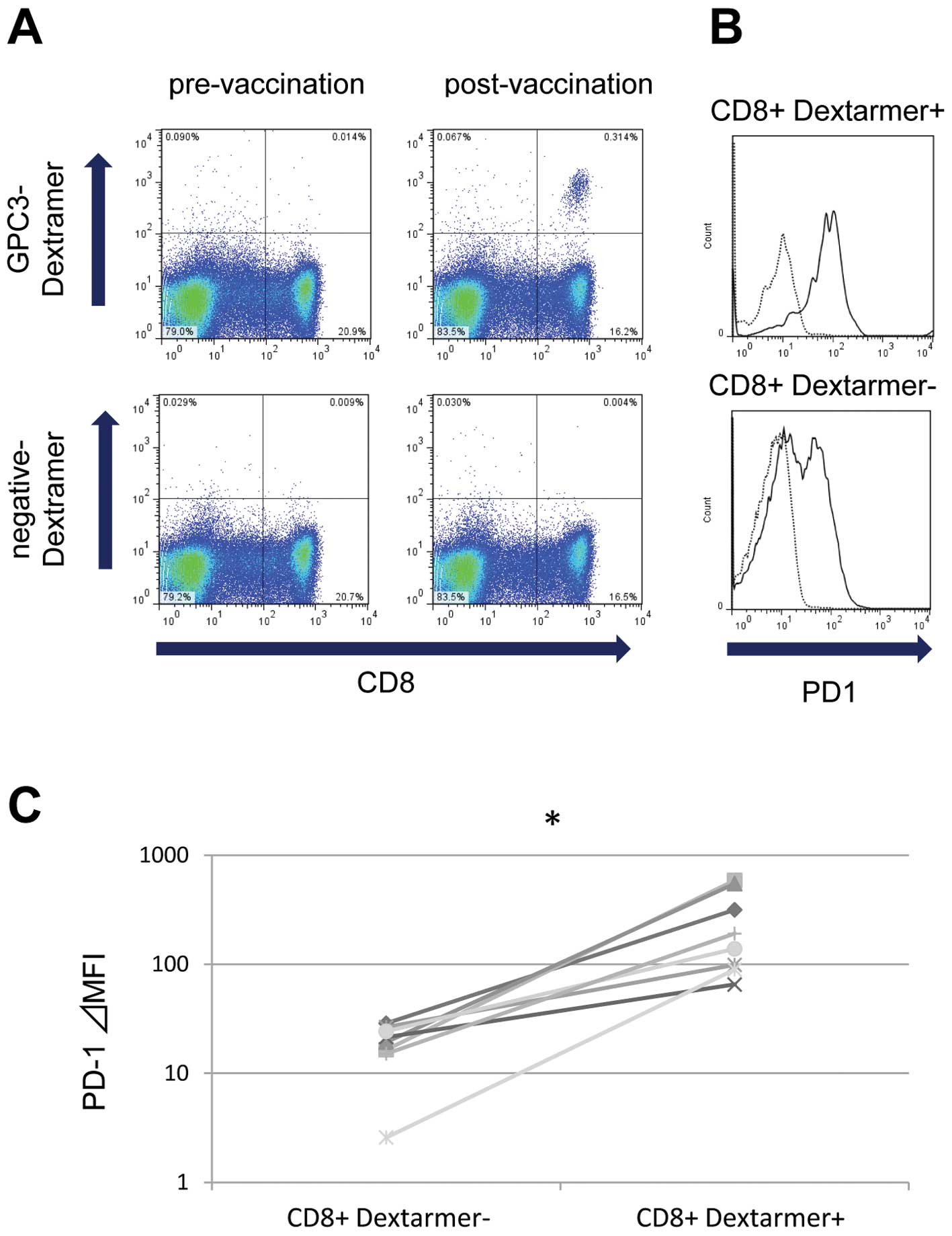
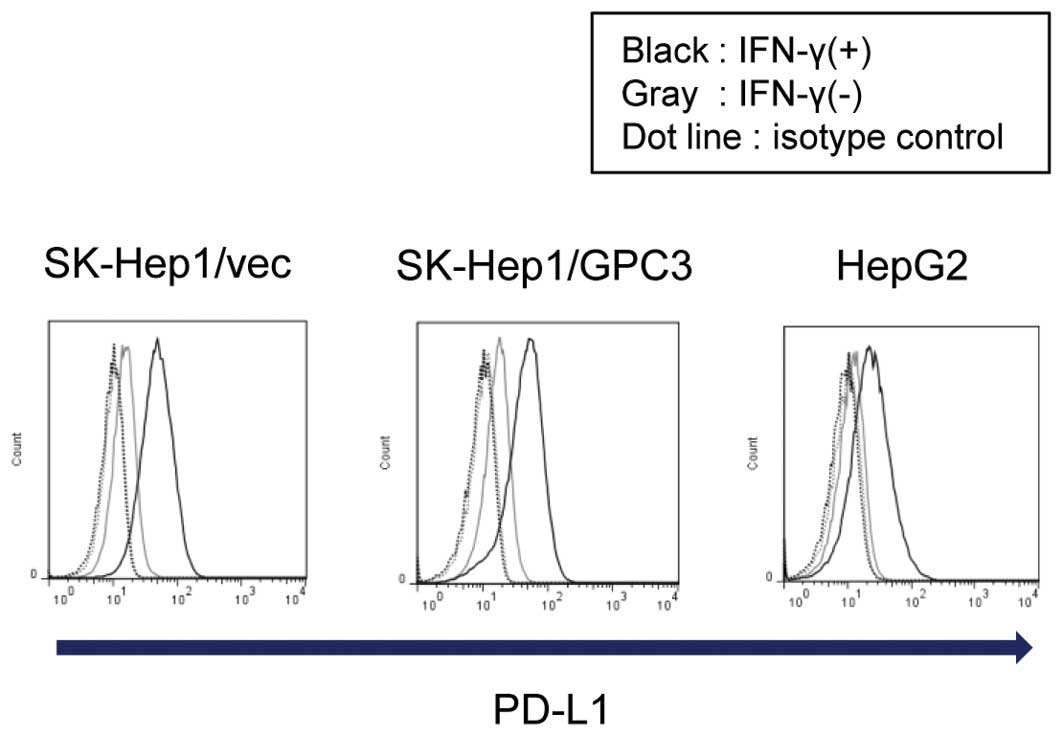
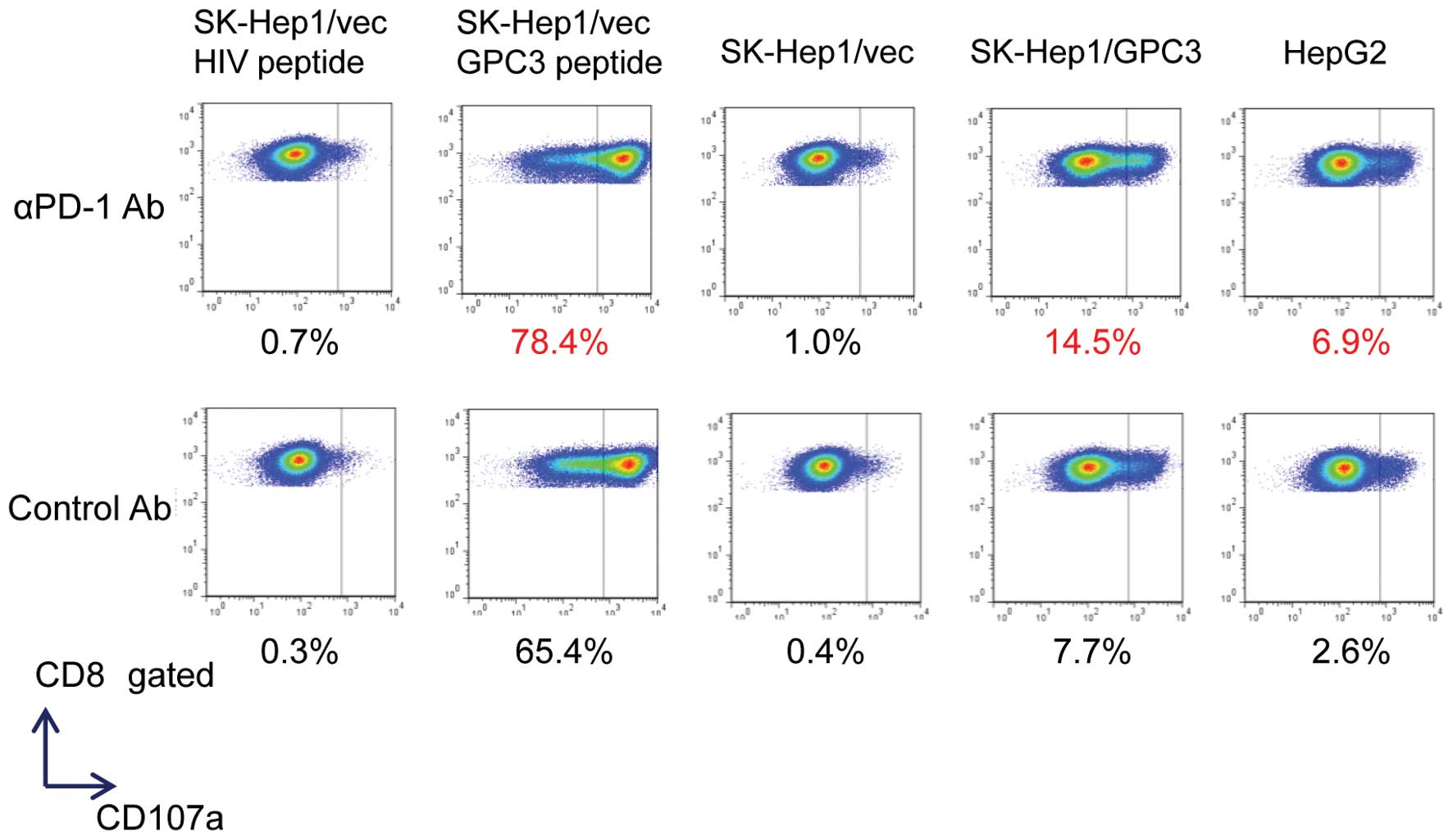
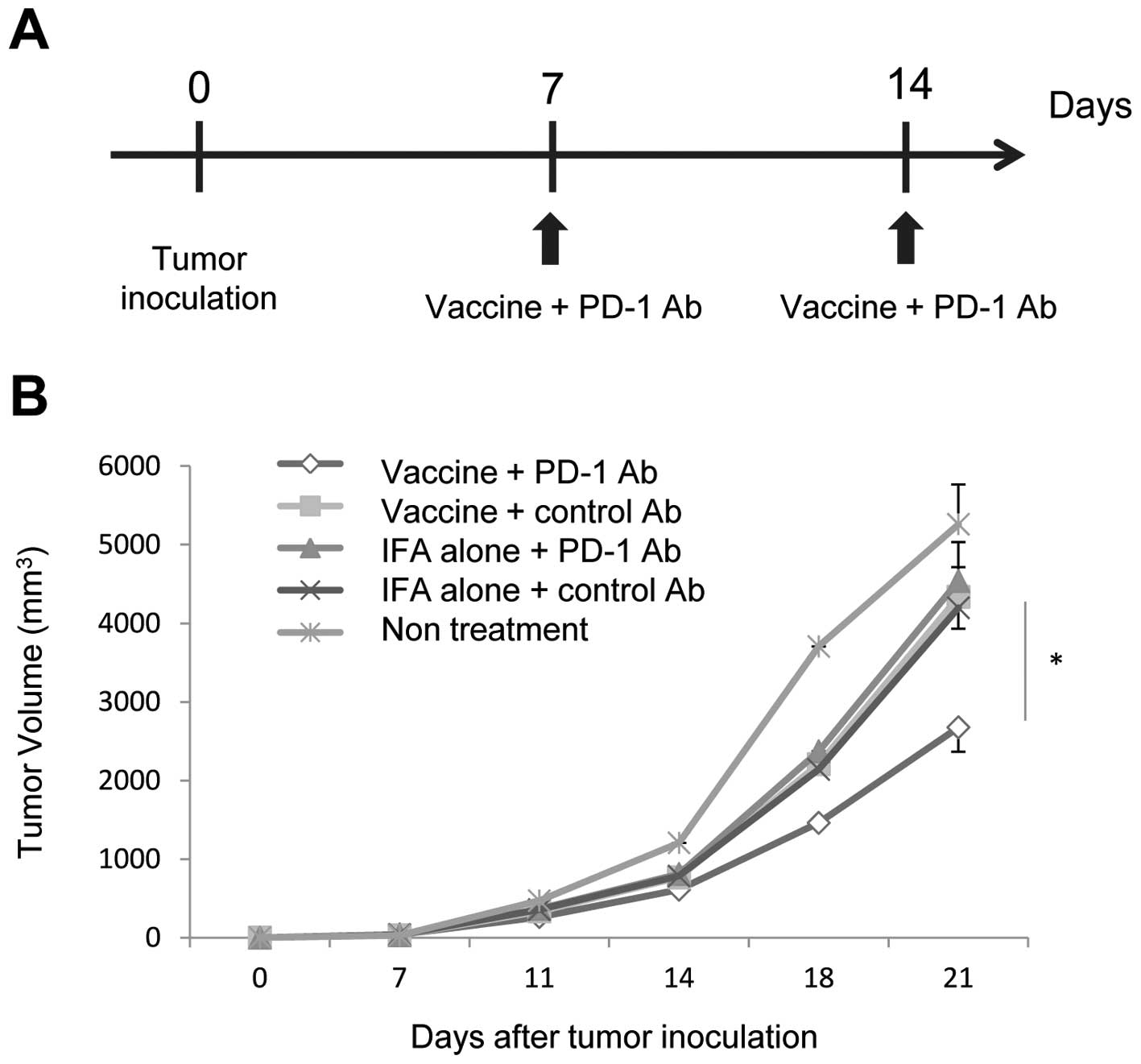
Novel treatment modalities are required urgently in patients with hepatocellular carcinoma (HCC). A vaccine that induces cytotoxic T lymphocytes (CTLs) is an ideal strategy for cancer, and glypican-3 (GPC3) is a potential option for HCC. Blocking the programmed death-1 (PD-1)/PD-L1 pathway is a rational strategy to overcome tumor escape and tolerance toward CTLs. In the present study, we investigated whether anti-PD-1 blocking antibodies (αPD-1 Ab) enhanced the number of vaccine-induced peptide-specific CTLs in peripheral blood mononuclear cells (PBMCs) following the administration of GPC3 peptide vaccine to both patients and in a mouse model. The inhibitory receptor PD-1 was highly expressed in ex vivo GPC3-specific CTLs isolated from the PBMCs of vaccinated HCC patients. In vitro, interferon-γ induced PD-L1 expression in liver cancer cell lines. In addition, PD-1 blockade increased the number of GPC3-specific CTLs, which degranulate against liver cancer cell lines. In vivo experiments using tumor-bearing mouse models showed that the combination therapy of peptide vaccine and αPD-1 Ab suppressed tumor growth synergistically. PD-1 blockade increased the number of peptide-specific tumor-infiltrating T cells (TILs) and decreased the expression of inhibitory receptors on TILs. This study demonstrated that PD-1/PD-L1 blockade augmented the antitumor effects of a peptide vaccine by increasing the immune response of vaccine-induced CTLs, and provided a foundation for the clinical development of a combination therapy using a GPC3 peptide vaccine and αPD-1 Ab.
View Figures

Figure 1

Figure 2

Figure 3

Figure 4

Figure 5

Figure 6

View References

1 

Breous E and Thimme R: Potential of immunotherapy for hepatocellular carcinoma. J Hepatol. 54:830–834. 2011. View Article : Google Scholar

2 

Greten TF, Manns MP and Korangy F: Immunotherapy of hepatocellular carcinoma. J Hepatol. 45:868–878. 2006. View Article : Google Scholar : PubMed/NCBI

3 

Nakatsura T, Yoshitake Y, Senju S, et al: Glypican-3, overexpressed specifically in human hepatocellular carcinoma, is a novel tumor marker. Biochem Biophys Res Commun. 306:16–25. 2003. View Article : Google Scholar : PubMed/NCBI

4 

Capurro M, Wanless IR, Sherman M, et al: Glypican-3: a novel serum and histochemical marker for hepatocellular carcinoma. Gastroenterology. 125:89–97. 2003. View Article : Google Scholar : PubMed/NCBI

5 

Nakatsura T, Komori H, Kubo T, et al: Mouse homologue of a novel human oncofetal antigen, glypican-3, evokes T-cell-mediated tumor rejection without autoimmune reactions in mice. Clin Cancer Res. 10:8630–8640. 2004. View Article : Google Scholar

6 

Komori H, Nakatsura T, Senju S, et al: Identification of HLA-A2- or HLA-A24-restricted CTL epitopes possibly useful for glypican-3-specific immunotherapy of hepatocellular carcinoma. Clin Cancer Res. 12:2689–2697. 2006. View Article : Google Scholar : PubMed/NCBI

7 

Shirakawa H, Suzuki H, Shimomura M, et al: Glypican-3 expression is correlated with poor prognosis in hepatocellular carcinoma. Cancer Sci. 100:1403–1407. 2009. View Article : Google Scholar : PubMed/NCBI

8 

Sawada Y, Yoshikawa T, Nobuoka D, et al: Phase I trial of a glypican-3-derived peptide vaccine for advanced hepatocellular carcinoma: immunologic evidence and potential for improving overall survival. Clin Cancer Res. 18:3686–3696. 2012. View Article : Google Scholar

9 

Yoshikawa T, Nakatsugawa M, Suzuki S, et al: HLA-A2-restricted glypican-3 peptide-specific CTL clones induced by peptide vaccine show high avidity and antigen-specific killing activity against tumor cells. Cancer Sci. 102:918–925. 2011. View Article : Google Scholar

10 

Agata Y, Kawasaki A, Nishimura H, et al: Expression of the PD-1 antigen on the surface of stimulated mouse T and B lymphocytes. Int Immunol. 8:765–772. 1996. View Article : Google Scholar : PubMed/NCBI

11 

Freeman GJ, Long AJ, Iwai Y, et al: Engagement of the PD-1 immunoinhibitory receptor by a novel B7 family member leads to negative regulation of lymphocyte activation. J Exp Med. 192:1027–1034. 2000. View Article : Google Scholar : PubMed/NCBI

12 

Iwai Y, Ishida M, Tanaka Y, Okazaki T, Honjo T and Minato N: Invovement of PD-L1 on tumor cells in the escape from host immune system and tumor immunotherapy by PD-L1 blockade. Proc Natl Acad Sci USA. 99:12294–12297. 2002.PubMed/NCBI

13 

Iwai Y, Terawaki S and Honjo T: PD-1 blockade inhibits hematogenous spread of poorly immunogenic tumor cells by enhanced recruitment of effector T cells. Int Immunol. 17:133–144. 2005. View Article : Google Scholar : PubMed/NCBI

14 

Topalian SL, Hodi FS, Brahmer JR, et al: Safety, activity, and immune correlates of anti-PD-1 antibody in cancer. N Engl J Med. 366:2443–2454. 2012. View Article : Google Scholar : PubMed/NCBI

15 

Wolchok JD, Kluger H, Callahan MK, et al: Nivolumab plus ipilimumab in advanced melanoma. N Engl J Med. 369:122–133. 2013. View Article : Google Scholar : PubMed/NCBI

16 

Shi F, Shi M, Zeng Z, et al: PD-1 and PD-L1 upregulation promotes CD8(+) T-cell apoptosis and postoperative recurrence in hepatocellular carcinoma patients. Int J Cancer. 128:887–896. 2011. View Article : Google Scholar : PubMed/NCBI

17 

Gao Q, Wang XY, Qiu SJ, et al: Overexpression of PD-L1 significantly associates with tumor aggressiveness and postoperative recurrence in human hepatocellular carcinoma. Clin Cancer Res. 15:971–979. 2009. View Article : Google Scholar : PubMed/NCBI

18 

McGray AJ, Bernard D, Hallett R, et al: Combined vaccination and immunostimulatory antibodies provides durable cure of murine melanoma and induces transcriptional changes associated with positive outcome in human melanoma patients. Oncoimmunology. 1:419–431. 2012. View Article : Google Scholar

19 

Mkrtichyan M, Najjar YG, Raulfs EC, et al: Anti-PD-1 synergizes with cyclophosphamide to induce potent antitumor vaccine effects through novel mechanisms. Eur J Immunol. 41:2977–2986. 2011. View Article : Google Scholar : PubMed/NCBI

20 

Duraiswamy J, Kaluza KM, Freeman GJ and Coukos G: Dual blockade of PD-1 and CTLA-4 combined with tumor vaccine efficacy restorres T cell rejection function in tumors. Cancer Res. 73:3591–3603. 2013. View Article : Google Scholar : PubMed/NCBI

21 

Fourcade J, Sun Z, Pagliano O, et al: PD-1 and Tim-3 regulate the expansion of tumor antigen-specific CD8+ T cells induced by melanoma vaccines. Cancer Res. 74:1045–1055. 2014. View Article : Google Scholar : PubMed/NCBI

22 

Nobuoka D, Yoshikawa T, Takahashi M, et al: Intratumoral peptide injection enhances tumor cell antigenicity recognized by cytotoxic T lymphocytes: a potential option for improvement in antigen-specific cancer immunotherapy. Cancer Immunol Immunother. 62:639–652. 2013. View Article : Google Scholar

23 

Li B, VanRoey M, Wang C, Chen TH, Korman A and Jooss K: Anti-programmed death-1 synergizes with granulocyte macrophage colony-stimulating factor - secreting tumor cell immunotherapy providing therapeutic benefit to mice with established tumors. Clin Cancer Res. 15:1623–1634. 2009. View Article : Google Scholar

24 

Iwama T, Horie K, Yoshikawa T, et al: Identification of an H2-Kb or H2-Db restricted and glypican-3-derived cytotoxic T-lymphocyte epitope peptide. Int J Oncol. 42:831–838. 2013.

25 

Peng W, Liu C, Xu C, et al: PD-1 blockade enhances T-cell migration to tumors by elevating IFN-γ inducible chemokines. Cancer Res. 72:5209–5218. 2012. View Article : Google Scholar : PubMed/NCBI

26 

Tada Y, Yoshikawa T, Shimomura M, et al: Analysis of cytotoxic T lymphocytes from a patient with hepatocellular carcinoma who showed a clinical response to vaccination with a glypican-3-derived peptide. Int J Oncol. 43:1019–1026. 2013.

27 

Wong RM, Scotland RR, Lau RL, et al: Programmed death-1 blockade enhances expansion and functional capacity of human melanoma antigen-specific CTLs. Int Immunol. 19:1223–1234. 2007. View Article : Google Scholar : PubMed/NCBI

28 

Mizukoshi E, Nakamoto Y, Arai K, et al: Comparative analysis of various tumor-associated antigen-specific T-cell responses in patients with hepatocellular carcinoma. Hepatology. 53:1206–1216. 2011. View Article : Google Scholar : PubMed/NCBI

29 

Butterfield LH, Ribas A, Meng WS, et al: T-cell responses to HLA-A*0201 immunodominant peptides derived from alpha-fetoprotein in patients with hepatocellular cancer. Clin Cancer Res. 9:5902–5908. 2003.PubMed/NCBI

30 

Butterfield LH, Ribas A, Dissette VB, et al: A phase I/II trial testing immunization of hepatocellular carcinoma patients with dendritic cells pulsed with four alpha-fetoprotein peptides. Clin Cancer Res. 12:2817–2825. 2006. View Article : Google Scholar

31 

Greten TF, Forner A, Korangy F, et al: A phase II open trial evaluating safety and efficacy of a telomerase peptide vaccination in patients with advanced hepatocellular carcinoma. BMC Cancer. 10:2092010. View Article : Google Scholar : PubMed/NCBI

32 

Capurro MI, Xiang YY, Lobe C and Filmus J: Glypican-3 promotes the growth of hepatocellular carcinoma by stimulating canonical Wnt signaling. Cancer Res. 65:6245–6254. 2005. View Article : Google Scholar : PubMed/NCBI

33 

Feng M, Gao W, Wang R, et al: Therapeutically targeting glypican-3 via a conformation-specific single-domain antibody in hepatocellular carcinoma. Proc Natl Acad Sci USA. 110:E1083–E1091. 2013. View Article : Google Scholar : PubMed/NCBI

34 

Nagao M, Nakajima Y, Hisanaga M, et al: The alteration of Fas receptor and ligand system in hepatocellular carcinomas: how do hepatoma cells escape from the host immune surveillance in vivo? Hepatology. 30:413–421. 1999. View Article : Google Scholar : PubMed/NCBI

35 

Chen C, Zhang C, Zhuang G, et al: Decoy receptor 3 overexpression and immunologic tolerance in hepatocellular carcinoma (HCC) development. Cancer Invest. 26:965–974. 2008. View Article : Google Scholar : PubMed/NCBI

36 

Xu Y, Li H, Gao RL, Adeyemo O, Itkin M and Kaplan DE: Expansion of interferon-gamma-producing multifunctional CD4+ T-cells and dysfunctional CD8+ T-cells by glypican-3 peptide library in hepatocellular carcinoma patients. Clin Immunol. 139:302–313. 2011. View Article : Google Scholar : PubMed/NCBI

37 

Hailemichael Y, Dai Z, Jaffarzad N, et al: Persistent antigen at vaccination sites induces tumor-specific CD8(+) T cell sequestration, dysfunction and deletion. Nat Med. 19:465–472. 2013. View Article : Google Scholar : PubMed/NCBI

38 

Woo SR, Turnis ME, Goldberg MV, et al: Immune inhibitory molecules LAG-3 and PD-1 synergistically regulate T-cell function to promote tumoral immune escape. Cancer Res. 72:917–927. 2012. View Article : Google Scholar : PubMed/NCBI

39 

Matsuzaki J, Gnjatic S, Mhawech-Fauceglia P, et al: Tumor-infiltrating NY-ESO-1-specific CD8+ T cells are negatively regulated by LAG-3 and PD-1 in human ovarian cancer. Proc Natl Acad Sci USA. 107:7875–7880. 2010. View Article : Google Scholar : PubMed/NCBI

40 

Sierro SR, Donda A, Perret R, et al: Combination of lentivector immunization and low-dose chemotherapy or PD-1/PD-L1 blocking primes self-reactive T cells and induces antitumor immunity. Eur J Immunol. 41:2217–2228. 2011. View Article : Google Scholar : PubMed/NCBI

Related Articles

  • Abstract
  • View
  • Download
  • Twitter
Copy and paste a formatted citation
Spandidos Publications style
Sawada Y, Yoshikawa T, Shimomura M, Iwama T, Endo I and Nakatsura T: Programmed death-1 blockade enhances the antitumor effects of peptide vaccine-induced peptide-specific cytotoxic T lymphocytes. Int J Oncol 46: 28-36, 2015.
APA
Sawada, Y., Yoshikawa, T., Shimomura, M., Iwama, T., Endo, I., & Nakatsura, T. (2015). Programmed death-1 blockade enhances the antitumor effects of peptide vaccine-induced peptide-specific cytotoxic T lymphocytes. International Journal of Oncology, 46, 28-36. https://doi.org/10.3892/ijo.2014.2737
MLA
Sawada, Y., Yoshikawa, T., Shimomura, M., Iwama, T., Endo, I., Nakatsura, T."Programmed death-1 blockade enhances the antitumor effects of peptide vaccine-induced peptide-specific cytotoxic T lymphocytes". International Journal of Oncology 46.1 (2015): 28-36.
Chicago
Sawada, Y., Yoshikawa, T., Shimomura, M., Iwama, T., Endo, I., Nakatsura, T."Programmed death-1 blockade enhances the antitumor effects of peptide vaccine-induced peptide-specific cytotoxic T lymphocytes". International Journal of Oncology 46, no. 1 (2015): 28-36. https://doi.org/10.3892/ijo.2014.2737
Copy and paste a formatted citation
x
Spandidos Publications style
Sawada Y, Yoshikawa T, Shimomura M, Iwama T, Endo I and Nakatsura T: Programmed death-1 blockade enhances the antitumor effects of peptide vaccine-induced peptide-specific cytotoxic T lymphocytes. Int J Oncol 46: 28-36, 2015.
APA
Sawada, Y., Yoshikawa, T., Shimomura, M., Iwama, T., Endo, I., & Nakatsura, T. (2015). Programmed death-1 blockade enhances the antitumor effects of peptide vaccine-induced peptide-specific cytotoxic T lymphocytes. International Journal of Oncology, 46, 28-36. https://doi.org/10.3892/ijo.2014.2737
MLA
Sawada, Y., Yoshikawa, T., Shimomura, M., Iwama, T., Endo, I., Nakatsura, T."Programmed death-1 blockade enhances the antitumor effects of peptide vaccine-induced peptide-specific cytotoxic T lymphocytes". International Journal of Oncology 46.1 (2015): 28-36.
Chicago
Sawada, Y., Yoshikawa, T., Shimomura, M., Iwama, T., Endo, I., Nakatsura, T."Programmed death-1 blockade enhances the antitumor effects of peptide vaccine-induced peptide-specific cytotoxic T lymphocytes". International Journal of Oncology 46, no. 1 (2015): 28-36. https://doi.org/10.3892/ijo.2014.2737
Follow us
  • Twitter
  • LinkedIn
  • Facebook
About
  • Spandidos Publications
  • Careers
  • Cookie Policy
  • Privacy Policy
How can we help?
  • Help
  • Live Chat
  • Contact
  • Email to our Support Team