Spandidos Publications Logo
  • About
    • About Spandidos
    • Aims and Scopes
    • Abstracting and Indexing
    • Editorial Policies
    • Reprints and Permissions
    • Job Opportunities
    • Terms and Conditions
    • Contact
  • Journals
    • All Journals
    • Oncology Letters
      • Oncology Letters
      • Information for Authors
      • Editorial Policies
      • Editorial Board
      • Aims and Scope
      • Abstracting and Indexing
      • Bibliographic Information
      • Archive
    • International Journal of Oncology
      • International Journal of Oncology
      • Information for Authors
      • Editorial Policies
      • Editorial Board
      • Aims and Scope
      • Abstracting and Indexing
      • Bibliographic Information
      • Archive
    • Molecular and Clinical Oncology
      • Molecular and Clinical Oncology
      • Information for Authors
      • Editorial Policies
      • Editorial Board
      • Aims and Scope
      • Abstracting and Indexing
      • Bibliographic Information
      • Archive
    • Experimental and Therapeutic Medicine
      • Experimental and Therapeutic Medicine
      • Information for Authors
      • Editorial Policies
      • Editorial Board
      • Aims and Scope
      • Abstracting and Indexing
      • Bibliographic Information
      • Archive
    • International Journal of Molecular Medicine
      • International Journal of Molecular Medicine
      • Information for Authors
      • Editorial Policies
      • Editorial Board
      • Aims and Scope
      • Abstracting and Indexing
      • Bibliographic Information
      • Archive
    • Biomedical Reports
      • Biomedical Reports
      • Information for Authors
      • Editorial Policies
      • Editorial Board
      • Aims and Scope
      • Abstracting and Indexing
      • Bibliographic Information
      • Archive
    • Oncology Reports
      • Oncology Reports
      • Information for Authors
      • Editorial Policies
      • Editorial Board
      • Aims and Scope
      • Abstracting and Indexing
      • Bibliographic Information
      • Archive
    • Molecular Medicine Reports
      • Molecular Medicine Reports
      • Information for Authors
      • Editorial Policies
      • Editorial Board
      • Aims and Scope
      • Abstracting and Indexing
      • Bibliographic Information
      • Archive
    • World Academy of Sciences Journal
      • World Academy of Sciences Journal
      • Information for Authors
      • Editorial Policies
      • Editorial Board
      • Aims and Scope
      • Abstracting and Indexing
      • Bibliographic Information
      • Archive
    • International Journal of Functional Nutrition
      • International Journal of Functional Nutrition
      • Information for Authors
      • Editorial Policies
      • Editorial Board
      • Aims and Scope
      • Abstracting and Indexing
      • Bibliographic Information
      • Archive
    • International Journal of Epigenetics
      • International Journal of Epigenetics
      • Information for Authors
      • Editorial Policies
      • Editorial Board
      • Aims and Scope
      • Abstracting and Indexing
      • Bibliographic Information
      • Archive
    • Medicine International
      • Medicine International
      • Information for Authors
      • Editorial Policies
      • Editorial Board
      • Aims and Scope
      • Abstracting and Indexing
      • Bibliographic Information
      • Archive
  • Articles
  • Information
    • Information for Authors
    • Information for Reviewers
    • Information for Librarians
    • Information for Advertisers
    • Conferences
  • Language Editing
Spandidos Publications Logo
  • About
    • About Spandidos
    • Aims and Scopes
    • Abstracting and Indexing
    • Editorial Policies
    • Reprints and Permissions
    • Job Opportunities
    • Terms and Conditions
    • Contact
  • Journals
    • All Journals
    • Biomedical Reports
      • Information for Authors
      • Editorial Policies
      • Editorial Board
      • Aims and Scope
      • Abstracting and Indexing
      • Bibliographic Information
      • Archive
    • Experimental and Therapeutic Medicine
      • Information for Authors
      • Editorial Policies
      • Editorial Board
      • Aims and Scope
      • Abstracting and Indexing
      • Bibliographic Information
      • Archive
    • International Journal of Epigenetics
      • Information for Authors
      • Editorial Policies
      • Editorial Board
      • Aims and Scope
      • Abstracting and Indexing
      • Bibliographic Information
      • Archive
    • International Journal of Functional Nutrition
      • Information for Authors
      • Editorial Policies
      • Editorial Board
      • Aims and Scope
      • Abstracting and Indexing
      • Bibliographic Information
      • Archive
    • International Journal of Molecular Medicine
      • Information for Authors
      • Editorial Policies
      • Editorial Board
      • Aims and Scope
      • Abstracting and Indexing
      • Bibliographic Information
      • Archive
    • International Journal of Oncology
      • Information for Authors
      • Editorial Policies
      • Editorial Board
      • Aims and Scope
      • Abstracting and Indexing
      • Bibliographic Information
      • Archive
    • Medicine International
      • Information for Authors
      • Editorial Policies
      • Editorial Board
      • Aims and Scope
      • Abstracting and Indexing
      • Bibliographic Information
      • Archive
    • Molecular and Clinical Oncology
      • Information for Authors
      • Editorial Policies
      • Editorial Board
      • Aims and Scope
      • Abstracting and Indexing
      • Bibliographic Information
      • Archive
    • Molecular Medicine Reports
      • Information for Authors
      • Editorial Policies
      • Editorial Board
      • Aims and Scope
      • Abstracting and Indexing
      • Bibliographic Information
      • Archive
    • Oncology Letters
      • Information for Authors
      • Editorial Policies
      • Editorial Board
      • Aims and Scope
      • Abstracting and Indexing
      • Bibliographic Information
      • Archive
    • Oncology Reports
      • Information for Authors
      • Editorial Policies
      • Editorial Board
      • Aims and Scope
      • Abstracting and Indexing
      • Bibliographic Information
      • Archive
    • World Academy of Sciences Journal
      • Information for Authors
      • Editorial Policies
      • Editorial Board
      • Aims and Scope
      • Abstracting and Indexing
      • Bibliographic Information
      • Archive
  • Articles
  • Information
    • For Authors
    • For Reviewers
    • For Librarians
    • For Advertisers
    • Conferences
  • Language Editing
Login Register Submit
  • This site uses cookies
  • You can change your cookie settings at any time by following the instructions in our Cookie Policy. To find out more, you may read our Privacy Policy.

    I agree
Search articles by DOI, keyword, author or affiliation
Search
Advanced Search
presentation
International Journal of Oncology
Join Editorial Board Propose a Special Issue
Print ISSN: 1019-6439 Online ISSN: 1791-2423
Journal Cover
March-2015 Volume 46 Issue 3

Full Size Image

Cover Legend PDF

Sign up for eToc alerts
Recommend to Library

Journals

International Journal of Molecular Medicine

International Journal of Molecular Medicine

International Journal of Molecular Medicine is an international journal devoted to molecular mechanisms of human disease.

International Journal of Oncology

International Journal of Oncology

International Journal of Oncology is an international journal devoted to oncology research and cancer treatment.

Molecular Medicine Reports

Molecular Medicine Reports

Covers molecular medicine topics such as pharmacology, pathology, genetics, neuroscience, infectious diseases, molecular cardiology, and molecular surgery.

Oncology Reports

Oncology Reports

Oncology Reports is an international journal devoted to fundamental and applied research in Oncology.

Experimental and Therapeutic Medicine

Experimental and Therapeutic Medicine

Experimental and Therapeutic Medicine is an international journal devoted to laboratory and clinical medicine.

Oncology Letters

Oncology Letters

Oncology Letters is an international journal devoted to Experimental and Clinical Oncology.

Biomedical Reports

Biomedical Reports

Explores a wide range of biological and medical fields, including pharmacology, genetics, microbiology, neuroscience, and molecular cardiology.

Molecular and Clinical Oncology

Molecular and Clinical Oncology

International journal addressing all aspects of oncology research, from tumorigenesis and oncogenes to chemotherapy and metastasis.

World Academy of Sciences Journal

World Academy of Sciences Journal

Multidisciplinary open-access journal spanning biochemistry, genetics, neuroscience, environmental health, and synthetic biology.

International Journal of Functional Nutrition

International Journal of Functional Nutrition

Open-access journal combining biochemistry, pharmacology, immunology, and genetics to advance health through functional nutrition.

International Journal of Epigenetics

International Journal of Epigenetics

Publishes open-access research on using epigenetics to advance understanding and treatment of human disease.

Medicine International

Medicine International

An International Open Access Journal Devoted to General Medicine.

Journal Cover
March-2015 Volume 46 Issue 3

Full Size Image

Cover Legend PDF

Sign up for eToc alerts
Recommend to Library

  • Article
  • Citations
    • Cite This Article
    • Download Citation
    • Create Citation Alert
    • Remove Citation Alert
    • Cited By
  • Similar Articles
    • Related Articles (in Spandidos Publications)
    • Similar Articles (Google Scholar)
    • Similar Articles (PubMed)
  • Download PDF
  • Download XML
  • View XML
Article

Parthenolide enhances sensitivity of colorectal cancer cells to TRAIL by inducing death receptor 5 and promotes TRAIL-induced apoptosis

  • Authors:
    • Se-Lim Kim
    • Yu-Chuan Liu
    • Young Ran Park
    • Seung Young Seo
    • Seong Hun Kim
    • In Hee Kim
    • Seung Ok Lee
    • Soo Teik Lee
    • Dae-Ghon Kim
    • Sang-Wook Kim
  • View Affiliations / Copyright

    Affiliations: Department of Internal Medicine, Chonbuk National University Hospital, Chonbuk National University Medical School, Jeonju, Republic of Korea
  • Pages: 1121-1130
    |
    Published online on: December 12, 2014
       https://doi.org/10.3892/ijo.2014.2795
  • Expand metrics +
Metrics: Total Views: 0 (Spandidos Publications: | PMC Statistics: )
Metrics: Total PDF Downloads: 0 (Spandidos Publications: | PMC Statistics: )
Cited By (CrossRef): 0 citations Loading Articles...

This article is mentioned in:


Abstract

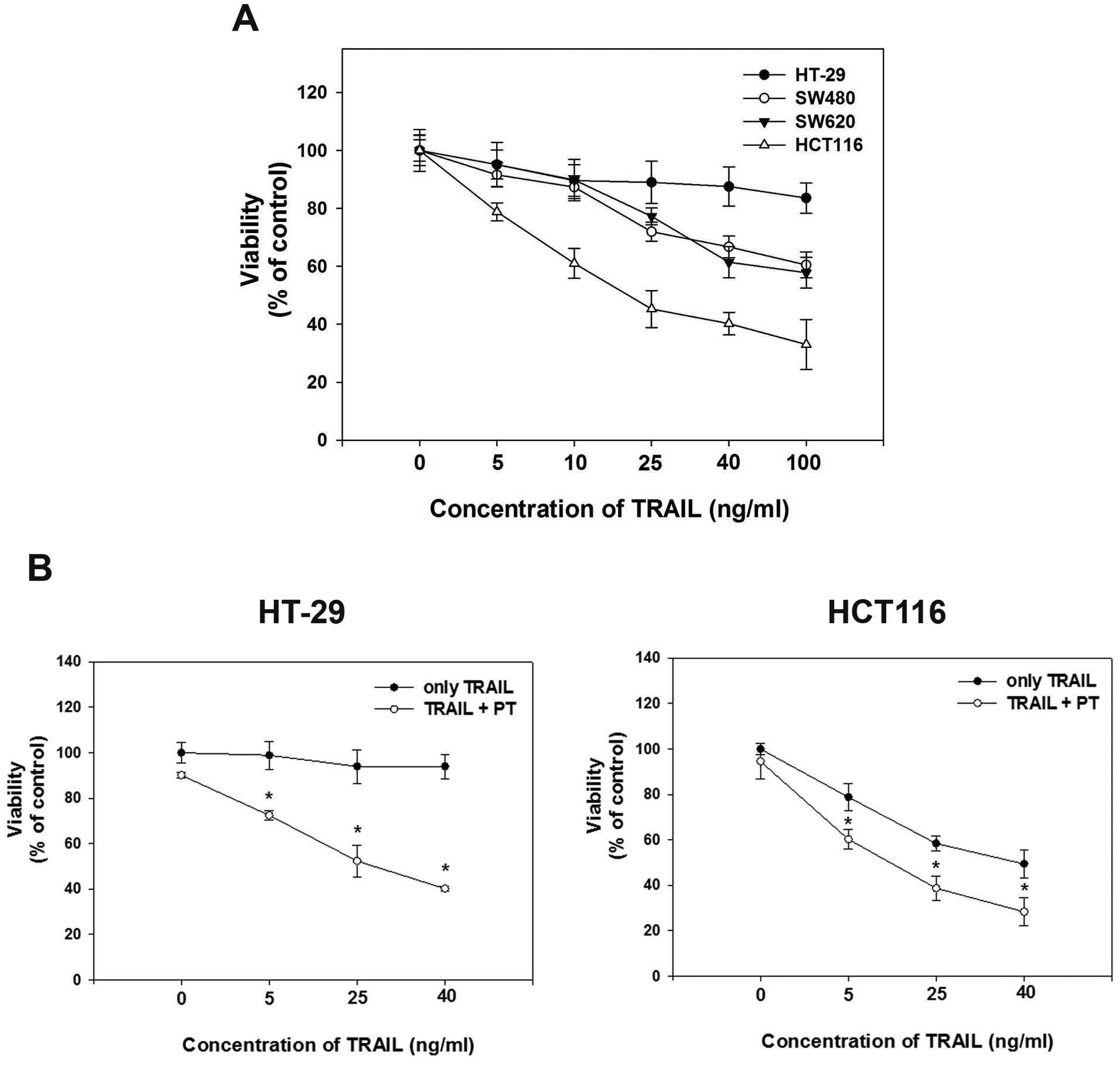
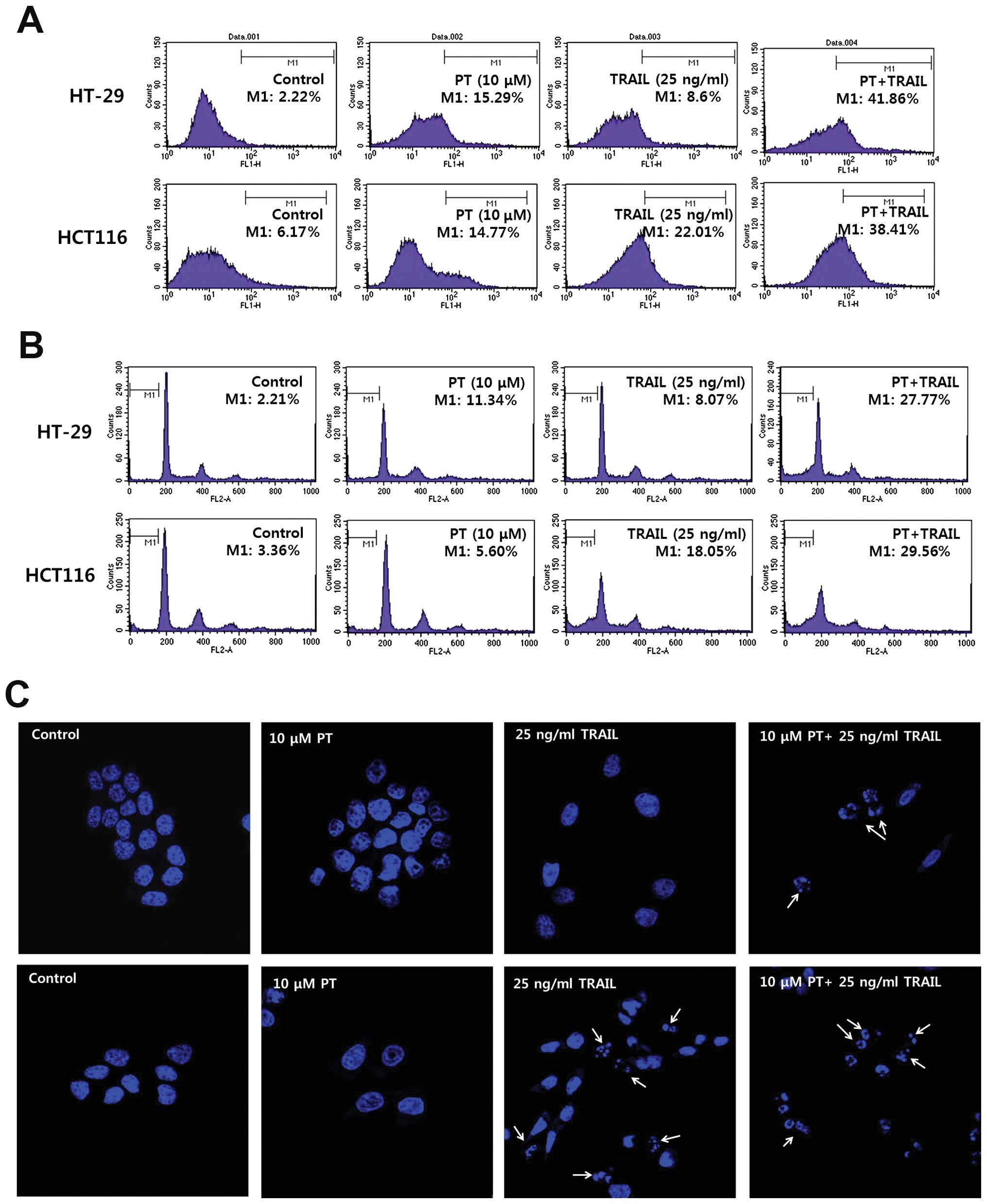
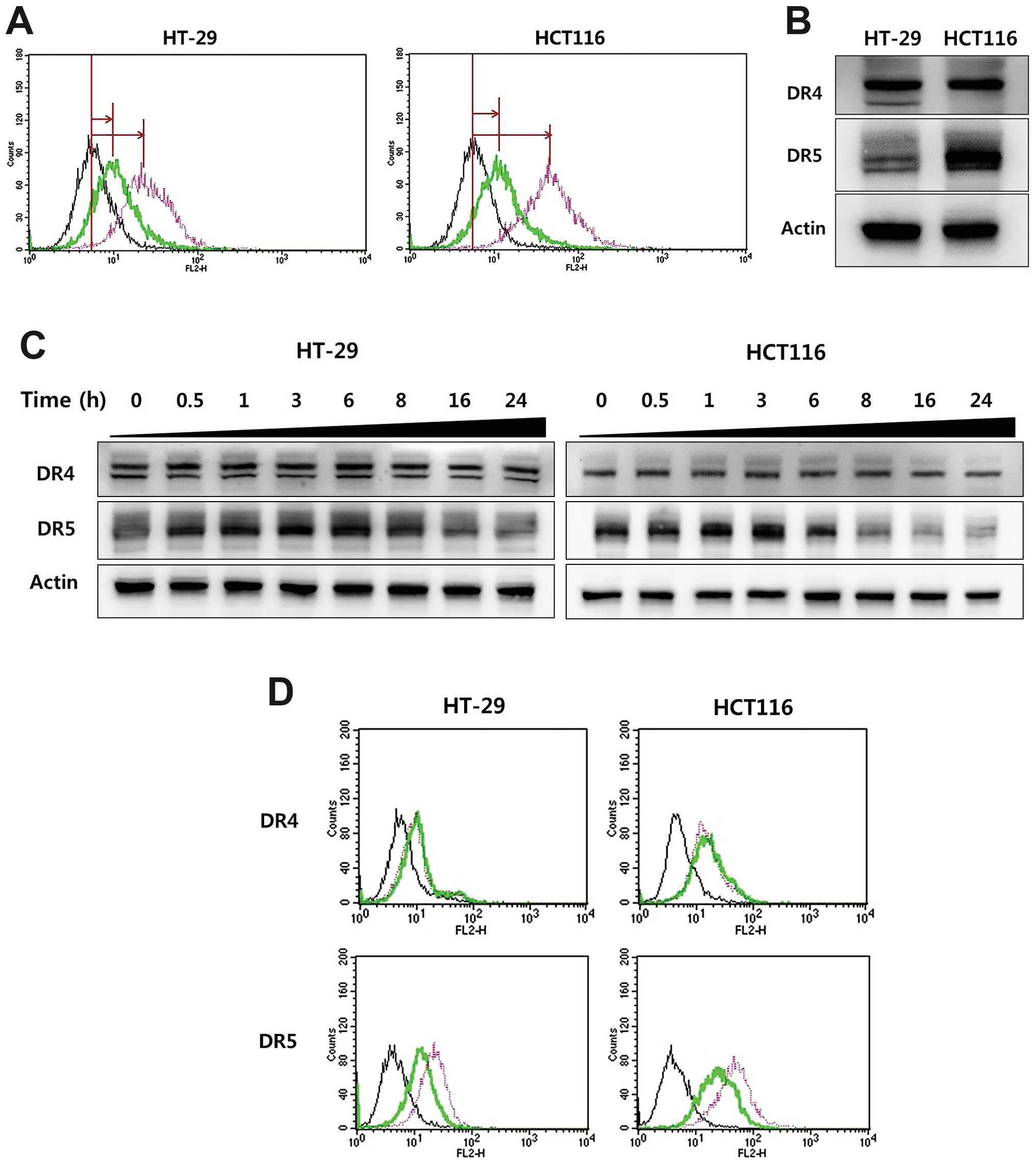
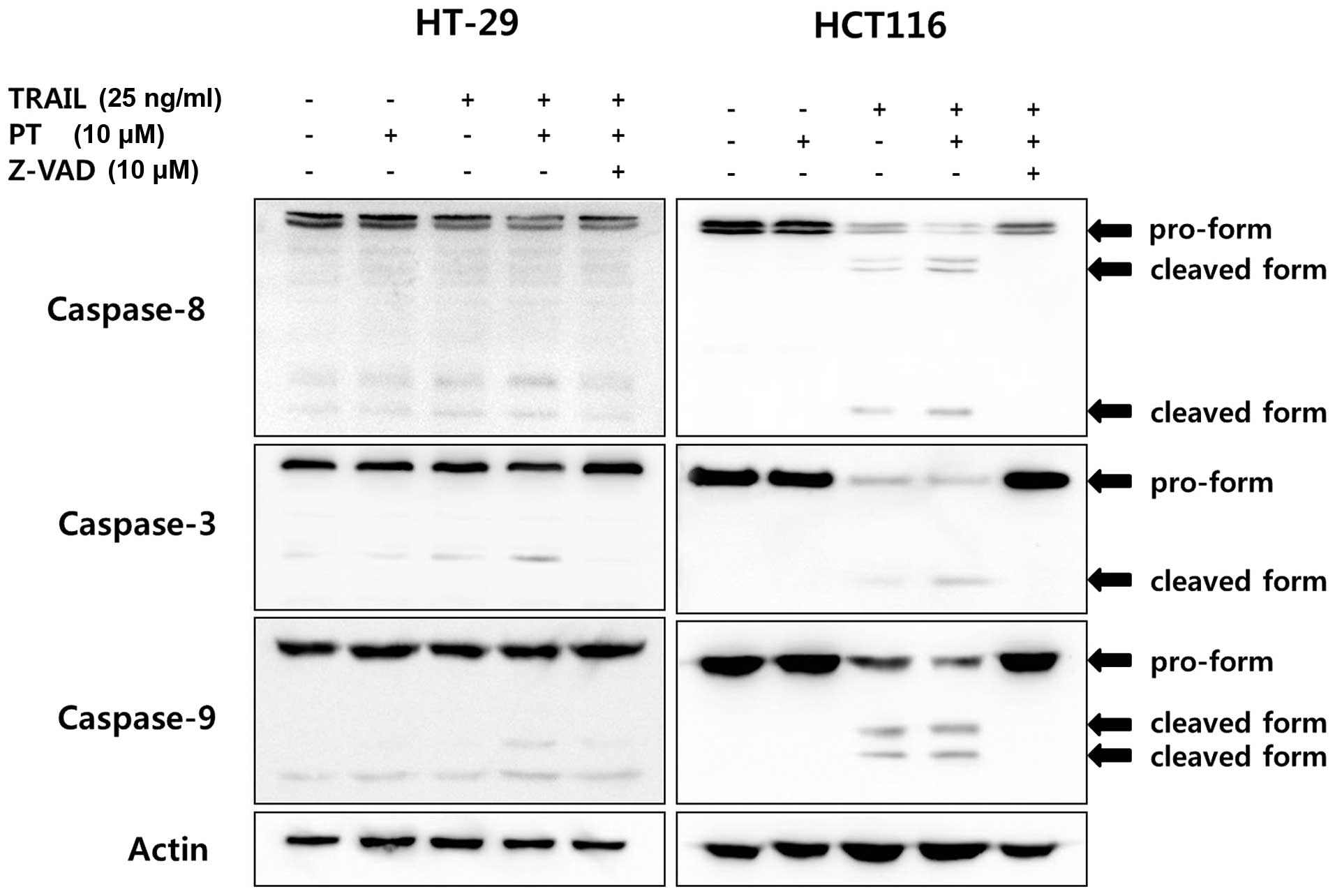
Tumor necrosis factor-related apoptosis-inducing ligand (TRAIL) is a promising cancer therapeutic agent. Recombinant human TRAIL has been evaluated in clinical trials, however, various malignant tumors are resistant to TRAIL. Parthenolide (PT) has recently been demonstrated as a highly effective anticancer agent and has been suggested to be used for combination therapy with other anticancer agents. In this study, we investigate the molecular mechanisms by which PT sensitizes colorectal cancer (CRC) cells to TRAIL-induced apoptosis. HT-29 (TRAIL-resistant) and HCT116 (TRAIL-sensitive) cells were treated with PT and/or TRAIL. The results demonstrated that combined treatment induced apoptosis which was determined using MTT, cell cycle analysis, Annexin V assay and Hoechst 33258 staining. Interestingly, we confirmed that HCT116 cells have much higher death receptor (DR) 5 than HT-29 cells and PT upregulates DR5 protein level and surface expression in both cell lines. Apoptosis through the mitochondrial pathway was confirmed by detecting regulation of Bcl-2 family members, p53 cytochrome C release, and caspase cascades. These results suggest that PT sensitizes TRAIL-induced apoptosis via upregulation of DR5 and mitochondria-dependent pathway. Combination treatment using PT and TRAIL may offer an effective strategy to overcome TRAIL resistance of certain CRC cells.
View Figures

Figure 1

Figure 2

Figure 3

Figure 4

View References

1 

Johnstone RW, Frew AJ and Smyth MJ: The TRAIL apoptotic pathway in cancer onset, progression and therapy. Nat Rev Cancer. 8:782–798. 2008. View Article : Google Scholar : PubMed/NCBI

2 

Koschny R, Walczak H and Ganten TM: The promise of TRAIL - potential and risks of a novel anticancer therapy. J Mol Med (Berl). 85:923–935. 2007. View Article : Google Scholar

3 

Walczak H, Miller RE, Ariail K, et al: Tumoricidal activity of tumor necrosis factor-related apoptosis-inducing ligand in vivo. Nat Med. 5:157–163. 1999. View Article : Google Scholar : PubMed/NCBI

4 

Gonzalvez F and Ashkenazi A: New insights into apoptosis signaling by Apo2L/TRAIL. Oncogene. 29:4752–4765. 2010. View Article : Google Scholar : PubMed/NCBI

5 

Shi Y: Mechanisms of caspase activation and inhibition during apoptosis. Mol Cell. 9:459–470. 2002. View Article : Google Scholar : PubMed/NCBI

6 

Ashkenazi A, Holland P and Eckhardt SG: Ligand-based targeting of apoptosis in cancer: the potential of recombinant human apoptosis ligand 2/Tumor necrosis factor-related apoptosis-inducing ligand (rhApo2L/TRAIL). J Clin Oncol. 26:3621–3630. 2008. View Article : Google Scholar : PubMed/NCBI

7 

Pan Y, Xu R, Peach M, et al: Evaluation of pharmacodynamic biomarkers in a Phase 1a trial of dulanermin (rhApo2L/TRAIL) in patients with advanced tumours. Br J Cancer. 105:1830–1838. 2011. View Article : Google Scholar : PubMed/NCBI

8 

Wiezorek J, Holland P and Graves J: Death receptor agonists as a targeted therapy for cancer. Clin Cancer Res. 16:1701–1708. 2010. View Article : Google Scholar : PubMed/NCBI

9 

Dimberg LY, Anderson CK, Camidge R, Behbakht K, Thorburn A and Ford HL: On the TRAIL to successful cancer therapy? Predicting and counteracting resistance against TRAIL-based therapeutics. Oncogene. 32:1341–1350. 2013. View Article : Google Scholar

10 

Zhang L and Fang B: Mechanisms of resistance to TRAIL-induced apoptosis in cancer. Cancer Gene Ther. 12:228–237. 2005. View Article : Google Scholar

11 

Jin Z, McDonald ER III, Dicker DT and El-Deiry WS: Deficient tumor necrosis factor-related apoptosis-inducing ligand (TRAIL) death receptor transport to the cell surface in human colon cancer cells selected for resistance to TRAIL-induced apoptosis. J Biol Chem. 279:35829–35839. 2004. View Article : Google Scholar : PubMed/NCBI

12 

Kim HS, Lee JW, Soung YH, et al: Inactivating mutations of caspase-8 gene in colorectal carcinomas. Gastroenterology. 125:708–715. 2003. View Article : Google Scholar : PubMed/NCBI

13 

Hernandez A, Wang QD, Schwartz SA and Evers BM: Sensitization of human colon cancer cells to TRAIL-mediated apoptosis. J Gastrointest Surg. 5:56–65. 2001. View Article : Google Scholar : PubMed/NCBI

14 

Burns TF and El-Deiry WS: Identification of inhibitors of TRAIL-induced death (ITIDs) in the TRAIL-sensitive colon carcinoma cell line SW480 using a genetic approach. J Biol Chem. 276:37879–37886. 2001.PubMed/NCBI

15 

Cummins JM, Kohli M, Rago C, Kinzler KW, Vogelstein B and Bunz F: X-linked inhibitor of apoptosis protein (XIAP) is a nonredundant modulator of tumor necrosis factor-related apoptosis-inducing ligand (TRAIL)-mediated apoptosis in human cancer cells. Cancer Res. 64:3006–3008. 2004. View Article : Google Scholar : PubMed/NCBI

16 

Murphy JJ, Heptinstall S and Mitchell JR: Randomised double-blind placebo-controlled trial of feverfew in migraine prevention. Lancet. 2:189–192. 1988. View Article : Google Scholar : PubMed/NCBI

17 

Hehner SP, Heinrich M, Bork PM, et al: Sesquiterpene lactones specifically inhibit activation of NF-kappa B by preventing the degradation of I kappa B-alpha and I kappa B-beta. J Biol Chem. 273:1288–1297. 1998. View Article : Google Scholar : PubMed/NCBI

18 

Lyss G, Knorre A, Schmidt TJ, Pahl HL and Merfort I: The anti-inflammatory sesquiterpene lactone helenalin inhibits the transcription factor NF-kappaB by directly targeting p65. J Biol Chem. 273:33508–33516. 1998. View Article : Google Scholar : PubMed/NCBI

19 

Zhang S, Ong CN and Shen HM: Involvement of proapoptotic Bcl-2 family members in parthenolide-induced mitochondrial dysfunction and apoptosis. Cancer Lett. 211:175–188. 2004. View Article : Google Scholar : PubMed/NCBI

20 

Kim SL, Trang KT, Kim SH, et al: Parthenolide suppresses tumor growth in a xenograft model of colorectal cancer cells by inducing mitochondrial dysfunction and apoptosis. Int J Oncol. 41:1547–1553. 2012.PubMed/NCBI

21 

Wen J, You KR, Lee SY, Song CH and Kim DG: Oxidative stress-mediated apoptosis. The anticancer effect of the sesquiterpene lactone parthenolide. J Biol Chem. 277:38954–38964. 2002. View Article : Google Scholar : PubMed/NCBI

22 

Zhang S, Ong CN and Shen HM: Critical roles of intracellular thiols and calcium in parthenolide-induced apoptosis in human colorectal cancer cells. Cancer Lett. 208:143–153. 2004. View Article : Google Scholar : PubMed/NCBI

23 

Pajak B, Gajkowska B and Orzechowski A: Molecular basis of parthenolide-dependent proapoptotic activity in cancer cells. Folia Histochem Cytobiol. 46:129–135. 2008.PubMed/NCBI

24 

Dai Y, Guzman ML, Chen S, et al: The NF (Nuclear factor)-kappaB inhibitor parthenolide interacts with histone deacetylase inhibitors to induce MKK7/JNK1-dependent apoptosis in human acute myeloid leukaemia cells. Br J Haematol. 151:70–83. 2010. View Article : Google Scholar : PubMed/NCBI

25 

Sun Y, St Clair DK, Xu Y, Crooks PA and St Clair WH: A NADPH oxidase-dependent redox signaling pathway mediates the selective radiosensitization effect of parthenolide in prostate cancer cells. Cancer Res. 70:2880–2890. 2010. View Article : Google Scholar : PubMed/NCBI

26 

Sobota R, Szwed M, Kasza A, Bugno M and Kordula T: Parthenolide inhibits activation of signal transducers and activators of transcription (STATs) induced by cytokines of the IL-6 family. Biochem Biophys Res Commun. 267:329–333. 2000. View Article : Google Scholar : PubMed/NCBI

27 

Kim SL, Lee ST, Trang KT, et al: Parthenolide exerts inhibitory effects on angiogenesis through the downregulation of VEGF/VEGFRs in colorectal cancer. Int J Mol Med. 33:1261–1267. 2014.PubMed/NCBI

28 

Carlisi D, D’Anneo A, Angileri L, et al: Parthenolide sensitizes hepatocellular carcinoma cells to TRAIL by inducing the expression of death receptors through inhibition of STAT3 activation. J Cell Physiol. 226:1632–1641. 2011. View Article : Google Scholar : PubMed/NCBI

29 

Fang LJ, Shao XT, Wang S, Lu GH, Xu T and Zhou JY: Sesquiterpene lactone parthenolide markedly enhances sensitivity of human A549 cells to low-dose oxaliplatin via inhibition of NF-kappaB activation and induction of apoptosis. Planta Med. 76:258–264. 2010. View Article : Google Scholar

30 

Gao ZW, Zhang DL and Guo CB: Paclitaxel efficacy is increased by parthenolide via nuclear factor-kappaB pathways in in vitro and in vivo human non-small cell lung cancer models. Curr Cancer Drug Targets. 10:705–715. 2010. View Article : Google Scholar : PubMed/NCBI

31 

Yun BR, Lee MJ, Kim JH, Kim IH, Yu GR and Kim DG: Enhancement of parthenolide-induced apoptosis by a PKC-alpha inhibition through heme oxygenase-1 blockage in cholangiocarcinoma cells. Exp Mol Med. 42:787–797. 2010. View Article : Google Scholar : PubMed/NCBI

32 

Lee CS, Kim YJ, Lee SA, Myung SC and Kim W: Combined effect of Hsp90 inhibitor geldanamycin and parthenolide via reactive oxygen species-mediated apoptotic process on epithelial ovarian cancer cells. Basic Clin Pharmacol Toxicol. 111:173–181. 2012.PubMed/NCBI

33 

Yip-Schneider MT, Nakshatri H, Sweeney CJ, Marshall MS, Wiebke EA and Schmidt CM: Parthenolide and sulindac cooperate to mediate growth suppression and inhibit the nuclear factor-kappa B pathway in pancreatic carcinoma cells. Mol Cancer Ther. 4:587–594. 2005. View Article : Google Scholar : PubMed/NCBI

34 

Kim SL, Kim SH, Trang KT, et al: Synergistic antitumor effect of 5-fluorouracil in combination with parthenolide in human colorectal cancer. Cancer Lett. 335:479–486. 2013. View Article : Google Scholar : PubMed/NCBI

35 

Fulda S and Debatin KM: Death receptor signaling in cancer therapy. Curr Med Chem Anticancer Agents. 3:253–262. 2003. View Article : Google Scholar : PubMed/NCBI

36 

Fearon ER and Vogelstein B: A genetic model for colorectal tumorigenesis. Cell. 61:759–767. 1990. View Article : Google Scholar : PubMed/NCBI

37 

Bates RC, Edwards NS, Burns GF and Fisher DE: A CD44 survival pathway triggers chemoresistance via lyn kinase and phosphoinositide 3-kinase/Akt in colon carcinoma cells. Cancer Res. 61:5275–5283. 2001.PubMed/NCBI

38 

Woynarowski JM and Konopa J: Inhibition of DNA biosynthesis in HeLa cells by cytotoxic and antitumor sesquiterpene lactones. Mol Pharmacol. 19:97–102. 1981.PubMed/NCBI

39 

Nakshatri H, Rice SE and Bhat-Nakshatri P: Antitumor agent parthenolide reverses resistance of breast cancer cells to tumor necrosis factor-related apoptosis-inducing ligand through sustained activation of c-Jun N-terminal kinase. Oncogene. 23:7330–7344. 2004. View Article : Google Scholar : PubMed/NCBI

40 

Vasilevskaya IA and O’Dwyer PJ: 17-Allylamino-17-demethoxygeldanamycin overcomes TRAIL resistance in colon cancer cell lines. Biochem Pharmacol. 70:580–589. 2005. View Article : Google Scholar : PubMed/NCBI

41 

Galligan L, Longley DB, McEwan M, Wilson TR, McLaughlin K and Johnston PG: Chemotherapy and TRAIL-mediated colon cancer cell death: the roles of p53, TRAIL receptors, and c-FLIP. Mol Cancer Ther. 4:2026–2036. 2005. View Article : Google Scholar : PubMed/NCBI

42 

Saturno G, Valenti M, De Haven Brandon A, et al: Combining trail with PI3 kinase or HSP90 inhibitors enhances apoptosis in colorectal cancer cells via suppression of survival signaling. Oncotarget. 4:1185–1198. 2013.PubMed/NCBI

43 

Ashkenazi A and Herbst RS: To kill a tumor cell: the potential of proapoptotic receptor agonists. J Clin Invest. 118:1979–1990. 2008. View Article : Google Scholar : PubMed/NCBI

44 

Eberle J, Fecker LF, Forschner T, Ulrich C, Rowert-Huber J and Stockfleth E: Apoptosis pathways as promising targets for skin cancer therapy. Br J Dermatol. 156(Suppl 3): 18–24. 2007. View Article : Google Scholar : PubMed/NCBI

45 

Pennarun B, Meijer A, de Vries EG, Kleibeuker JH, Kruyt F and de Jong S: Playing the DISC: turning on TRAIL death receptor-mediated apoptosis in cancer. Biochim Biophys Acta. 1805:123–140. 2010.

46 

Jung YH, Heo J, Lee YJ, Kwon TK and Kim YH: Quercetin enhances TRAIL-induced apoptosis in prostate cancer cells via increased protein stability of death receptor 5. Life Sci. 86:351–357. 2010. View Article : Google Scholar : PubMed/NCBI

47 

Prasad S, Ravindran J, Sung B, Pandey MK and Aggarwal BB: Garcinol potentiates TRAIL-induced apoptosis through modulation of death receptors and antiapoptotic proteins. Mol Cancer Ther. 9:856–868. 2010. View Article : Google Scholar : PubMed/NCBI

48 

Kim YH, Lee DH, Jeong JH, Guo ZS and Lee YJ: Quercetin augments TRAIL-induced apoptotic death: involvement of the ERK signal transduction pathway. Biochem Pharmacol. 75:1946–1958. 2008. View Article : Google Scholar : PubMed/NCBI

49 

Psahoulia FH, Drosopoulos KG, Doubravska L, Andera L and Pintzas A: Quercetin enhances TRAIL-mediated apoptosis in colon cancer cells by inducing the accumulation of death receptors in lipid rafts. Mol Cancer Ther. 6:2591–2599. 2007. View Article : Google Scholar : PubMed/NCBI

50 

Sung B, Park B, Yadav VR and Aggarwal BB: Celastrol, a triterpene, enhances TRAIL-induced apoptosis through the down-regulation of cell survival proteins and up-regulation of death receptors. J Biol Chem. 285:11498–11507. 2010. View Article : Google Scholar : PubMed/NCBI

51 

Park MH, Jo M, Won D, Song HS, Song MJ and Hong JT: Snake venom toxin from Vipera lebetina turanica sensitizes cancer cells to TRAIL through ROS- and JNK-mediated upregulation of death receptors and downregulation of survival proteins. Apoptosis. 17:1316–1326. 2012. View Article : Google Scholar : PubMed/NCBI

52 

Fernandes-Alnemri T, Litwack G and Alnemri ES: CPP32, a novel human apoptotic protein with homology to Caenorhabditis elegans cell death protein Ced-3 and mammalian interleukin-1 beta-converting enzyme. J Biol Chem. 269:30761–30764. 1994.PubMed/NCBI

53 

Teitz T, Wei T, Valentine MB, et al: Caspase 8 is deleted or silenced preferentially in childhood neuroblastomas with amplification of MYCN. Nat Med. 6:529–535. 2000. View Article : Google Scholar : PubMed/NCBI

54 

Mignotte B and Vayssiere JL: Mitochondria and apoptosis. Eur J Biochem. 252:1–15. 1998. View Article : Google Scholar : PubMed/NCBI

55 

Reed JC: Double identity for proteins of the Bcl-2 family. Nature. 387:773–776. 1997. View Article : Google Scholar : PubMed/NCBI

56 

De Angelis PM, Stokke T, Thorstensen L, Lothe RA and Clausen OP: Apoptosis and expression of Bax, Bcl-x, and Bcl-2 apoptotic regulatory proteins in colorectal carcinomas, and association with p53 genotype/phenotype. Mol Pathol. 51:254–261. 1998. View Article : Google Scholar

57 

Maurer CA, Friess H, Buhler SS, et al: Apoptosis inhibiting factor Bcl-xL might be the crucial member of the Bcl-2 gene family in colorectal cancer. Dig Dis Sci. 43:2641–2648. 1998. View Article : Google Scholar

58 

Rampino N, Yamamoto H, Ionov Y, et al: Somatic frameshift mutations in the BAX gene in colon cancers of the microsatellite mutator phenotype. Science. 275:967–969. 1997. View Article : Google Scholar : PubMed/NCBI

59 

Sionov RV and Haupt Y: The cellular response to p53: the decision between life and death. Oncogene. 18:6145–6157. 1999. View Article : Google Scholar : PubMed/NCBI

Related Articles

  • Abstract
  • View
  • Download
  • Twitter
Copy and paste a formatted citation
Spandidos Publications style
Kim S, Liu Y, Park YR, Seo SY, Kim SH, Kim IH, Lee SO, Lee ST, Kim D, Kim S, Kim S, et al: Parthenolide enhances sensitivity of colorectal cancer cells to TRAIL by inducing death receptor 5 and promotes TRAIL-induced apoptosis. Int J Oncol 46: 1121-1130, 2015.
APA
Kim, S., Liu, Y., Park, Y.R., Seo, S.Y., Kim, S.H., Kim, I.H. ... Kim, S. (2015). Parthenolide enhances sensitivity of colorectal cancer cells to TRAIL by inducing death receptor 5 and promotes TRAIL-induced apoptosis. International Journal of Oncology, 46, 1121-1130. https://doi.org/10.3892/ijo.2014.2795
MLA
Kim, S., Liu, Y., Park, Y. R., Seo, S. Y., Kim, S. H., Kim, I. H., Lee, S. O., Lee, S. T., Kim, D., Kim, S."Parthenolide enhances sensitivity of colorectal cancer cells to TRAIL by inducing death receptor 5 and promotes TRAIL-induced apoptosis". International Journal of Oncology 46.3 (2015): 1121-1130.
Chicago
Kim, S., Liu, Y., Park, Y. R., Seo, S. Y., Kim, S. H., Kim, I. H., Lee, S. O., Lee, S. T., Kim, D., Kim, S."Parthenolide enhances sensitivity of colorectal cancer cells to TRAIL by inducing death receptor 5 and promotes TRAIL-induced apoptosis". International Journal of Oncology 46, no. 3 (2015): 1121-1130. https://doi.org/10.3892/ijo.2014.2795
Copy and paste a formatted citation
x
Spandidos Publications style
Kim S, Liu Y, Park YR, Seo SY, Kim SH, Kim IH, Lee SO, Lee ST, Kim D, Kim S, Kim S, et al: Parthenolide enhances sensitivity of colorectal cancer cells to TRAIL by inducing death receptor 5 and promotes TRAIL-induced apoptosis. Int J Oncol 46: 1121-1130, 2015.
APA
Kim, S., Liu, Y., Park, Y.R., Seo, S.Y., Kim, S.H., Kim, I.H. ... Kim, S. (2015). Parthenolide enhances sensitivity of colorectal cancer cells to TRAIL by inducing death receptor 5 and promotes TRAIL-induced apoptosis. International Journal of Oncology, 46, 1121-1130. https://doi.org/10.3892/ijo.2014.2795
MLA
Kim, S., Liu, Y., Park, Y. R., Seo, S. Y., Kim, S. H., Kim, I. H., Lee, S. O., Lee, S. T., Kim, D., Kim, S."Parthenolide enhances sensitivity of colorectal cancer cells to TRAIL by inducing death receptor 5 and promotes TRAIL-induced apoptosis". International Journal of Oncology 46.3 (2015): 1121-1130.
Chicago
Kim, S., Liu, Y., Park, Y. R., Seo, S. Y., Kim, S. H., Kim, I. H., Lee, S. O., Lee, S. T., Kim, D., Kim, S."Parthenolide enhances sensitivity of colorectal cancer cells to TRAIL by inducing death receptor 5 and promotes TRAIL-induced apoptosis". International Journal of Oncology 46, no. 3 (2015): 1121-1130. https://doi.org/10.3892/ijo.2014.2795
Follow us
  • Twitter
  • LinkedIn
  • Facebook
About
  • Spandidos Publications
  • Careers
  • Cookie Policy
  • Privacy Policy
How can we help?
  • Help
  • Live Chat
  • Contact
  • Email to our Support Team