Spandidos Publications Logo
  • About
    • About Spandidos
    • Aims and Scopes
    • Abstracting and Indexing
    • Editorial Policies
    • Reprints and Permissions
    • Job Opportunities
    • Terms and Conditions
    • Contact
  • Journals
    • All Journals
    • Oncology Letters
      • Oncology Letters
      • Information for Authors
      • Editorial Policies
      • Editorial Board
      • Aims and Scope
      • Abstracting and Indexing
      • Bibliographic Information
      • Archive
    • International Journal of Oncology
      • International Journal of Oncology
      • Information for Authors
      • Editorial Policies
      • Editorial Board
      • Aims and Scope
      • Abstracting and Indexing
      • Bibliographic Information
      • Archive
    • Molecular and Clinical Oncology
      • Molecular and Clinical Oncology
      • Information for Authors
      • Editorial Policies
      • Editorial Board
      • Aims and Scope
      • Abstracting and Indexing
      • Bibliographic Information
      • Archive
    • Experimental and Therapeutic Medicine
      • Experimental and Therapeutic Medicine
      • Information for Authors
      • Editorial Policies
      • Editorial Board
      • Aims and Scope
      • Abstracting and Indexing
      • Bibliographic Information
      • Archive
    • International Journal of Molecular Medicine
      • International Journal of Molecular Medicine
      • Information for Authors
      • Editorial Policies
      • Editorial Board
      • Aims and Scope
      • Abstracting and Indexing
      • Bibliographic Information
      • Archive
    • Biomedical Reports
      • Biomedical Reports
      • Information for Authors
      • Editorial Policies
      • Editorial Board
      • Aims and Scope
      • Abstracting and Indexing
      • Bibliographic Information
      • Archive
    • Oncology Reports
      • Oncology Reports
      • Information for Authors
      • Editorial Policies
      • Editorial Board
      • Aims and Scope
      • Abstracting and Indexing
      • Bibliographic Information
      • Archive
    • Molecular Medicine Reports
      • Molecular Medicine Reports
      • Information for Authors
      • Editorial Policies
      • Editorial Board
      • Aims and Scope
      • Abstracting and Indexing
      • Bibliographic Information
      • Archive
    • World Academy of Sciences Journal
      • World Academy of Sciences Journal
      • Information for Authors
      • Editorial Policies
      • Editorial Board
      • Aims and Scope
      • Abstracting and Indexing
      • Bibliographic Information
      • Archive
    • International Journal of Functional Nutrition
      • International Journal of Functional Nutrition
      • Information for Authors
      • Editorial Policies
      • Editorial Board
      • Aims and Scope
      • Abstracting and Indexing
      • Bibliographic Information
      • Archive
    • International Journal of Epigenetics
      • International Journal of Epigenetics
      • Information for Authors
      • Editorial Policies
      • Editorial Board
      • Aims and Scope
      • Abstracting and Indexing
      • Bibliographic Information
      • Archive
    • Medicine International
      • Medicine International
      • Information for Authors
      • Editorial Policies
      • Editorial Board
      • Aims and Scope
      • Abstracting and Indexing
      • Bibliographic Information
      • Archive
  • Articles
  • Information
    • Information for Authors
    • Information for Reviewers
    • Information for Librarians
    • Information for Advertisers
    • Conferences
  • Language Editing
Spandidos Publications Logo
  • About
    • About Spandidos
    • Aims and Scopes
    • Abstracting and Indexing
    • Editorial Policies
    • Reprints and Permissions
    • Job Opportunities
    • Terms and Conditions
    • Contact
  • Journals
    • All Journals
    • Biomedical Reports
      • Information for Authors
      • Editorial Policies
      • Editorial Board
      • Aims and Scope
      • Abstracting and Indexing
      • Bibliographic Information
      • Archive
    • Experimental and Therapeutic Medicine
      • Information for Authors
      • Editorial Policies
      • Editorial Board
      • Aims and Scope
      • Abstracting and Indexing
      • Bibliographic Information
      • Archive
    • International Journal of Epigenetics
      • Information for Authors
      • Editorial Policies
      • Editorial Board
      • Aims and Scope
      • Abstracting and Indexing
      • Bibliographic Information
      • Archive
    • International Journal of Functional Nutrition
      • Information for Authors
      • Editorial Policies
      • Editorial Board
      • Aims and Scope
      • Abstracting and Indexing
      • Bibliographic Information
      • Archive
    • International Journal of Molecular Medicine
      • Information for Authors
      • Editorial Policies
      • Editorial Board
      • Aims and Scope
      • Abstracting and Indexing
      • Bibliographic Information
      • Archive
    • International Journal of Oncology
      • Information for Authors
      • Editorial Policies
      • Editorial Board
      • Aims and Scope
      • Abstracting and Indexing
      • Bibliographic Information
      • Archive
    • Medicine International
      • Information for Authors
      • Editorial Policies
      • Editorial Board
      • Aims and Scope
      • Abstracting and Indexing
      • Bibliographic Information
      • Archive
    • Molecular and Clinical Oncology
      • Information for Authors
      • Editorial Policies
      • Editorial Board
      • Aims and Scope
      • Abstracting and Indexing
      • Bibliographic Information
      • Archive
    • Molecular Medicine Reports
      • Information for Authors
      • Editorial Policies
      • Editorial Board
      • Aims and Scope
      • Abstracting and Indexing
      • Bibliographic Information
      • Archive
    • Oncology Letters
      • Information for Authors
      • Editorial Policies
      • Editorial Board
      • Aims and Scope
      • Abstracting and Indexing
      • Bibliographic Information
      • Archive
    • Oncology Reports
      • Information for Authors
      • Editorial Policies
      • Editorial Board
      • Aims and Scope
      • Abstracting and Indexing
      • Bibliographic Information
      • Archive
    • World Academy of Sciences Journal
      • Information for Authors
      • Editorial Policies
      • Editorial Board
      • Aims and Scope
      • Abstracting and Indexing
      • Bibliographic Information
      • Archive
  • Articles
  • Information
    • For Authors
    • For Reviewers
    • For Librarians
    • For Advertisers
    • Conferences
  • Language Editing
Login Register Submit
  • This site uses cookies
  • You can change your cookie settings at any time by following the instructions in our Cookie Policy. To find out more, you may read our Privacy Policy.

    I agree
Search articles by DOI, keyword, author or affiliation
Search
Advanced Search
presentation
International Journal of Oncology
Join Editorial Board Propose a Special Issue
Print ISSN: 1019-6439 Online ISSN: 1791-2423
Journal Cover
March-2015 Volume 46 Issue 3

Full Size Image

Cover Legend PDF

Sign up for eToc alerts
Recommend to Library

Journals

International Journal of Molecular Medicine

International Journal of Molecular Medicine

International Journal of Molecular Medicine is an international journal devoted to molecular mechanisms of human disease.

International Journal of Oncology

International Journal of Oncology

International Journal of Oncology is an international journal devoted to oncology research and cancer treatment.

Molecular Medicine Reports

Molecular Medicine Reports

Covers molecular medicine topics such as pharmacology, pathology, genetics, neuroscience, infectious diseases, molecular cardiology, and molecular surgery.

Oncology Reports

Oncology Reports

Oncology Reports is an international journal devoted to fundamental and applied research in Oncology.

Experimental and Therapeutic Medicine

Experimental and Therapeutic Medicine

Experimental and Therapeutic Medicine is an international journal devoted to laboratory and clinical medicine.

Oncology Letters

Oncology Letters

Oncology Letters is an international journal devoted to Experimental and Clinical Oncology.

Biomedical Reports

Biomedical Reports

Explores a wide range of biological and medical fields, including pharmacology, genetics, microbiology, neuroscience, and molecular cardiology.

Molecular and Clinical Oncology

Molecular and Clinical Oncology

International journal addressing all aspects of oncology research, from tumorigenesis and oncogenes to chemotherapy and metastasis.

World Academy of Sciences Journal

World Academy of Sciences Journal

Multidisciplinary open-access journal spanning biochemistry, genetics, neuroscience, environmental health, and synthetic biology.

International Journal of Functional Nutrition

International Journal of Functional Nutrition

Open-access journal combining biochemistry, pharmacology, immunology, and genetics to advance health through functional nutrition.

International Journal of Epigenetics

International Journal of Epigenetics

Publishes open-access research on using epigenetics to advance understanding and treatment of human disease.

Medicine International

Medicine International

An International Open Access Journal Devoted to General Medicine.

Journal Cover
March-2015 Volume 46 Issue 3

Full Size Image

Cover Legend PDF

Sign up for eToc alerts
Recommend to Library

  • Article
  • Citations
    • Cite This Article
    • Download Citation
    • Create Citation Alert
    • Remove Citation Alert
    • Cited By
  • Similar Articles
    • Related Articles (in Spandidos Publications)
    • Similar Articles (Google Scholar)
    • Similar Articles (PubMed)
  • Download PDF
  • Download XML
  • View XML
Article

Autophagy facilitates the development of resistance to the tumor necrosis factor superfamily member TRAIL in breast cancer

  • Authors:
    • Shangge Lv
    • Xiaolong Wang
    • Ning Zhang
    • Mingjuan Sun
    • Wenwen Qi
    • Yaming Li
    • Qifeng Yang
  • View Affiliations / Copyright

    Affiliations: Department of Breast Surgery, Qilu Hospital, Shandong University, Jinan, Shandong 250012, P.R. China, School of Medicine, Shandong University, Jinan, Shandong 250012, P.R. China
  • Pages: 1286-1294
    |
    Published online on: December 30, 2014
       https://doi.org/10.3892/ijo.2014.2812
  • Expand metrics +
Metrics: Total Views: 0 (Spandidos Publications: | PMC Statistics: )
Metrics: Total PDF Downloads: 0 (Spandidos Publications: | PMC Statistics: )
Cited By (CrossRef): 0 citations Loading Articles...

This article is mentioned in:


Abstract

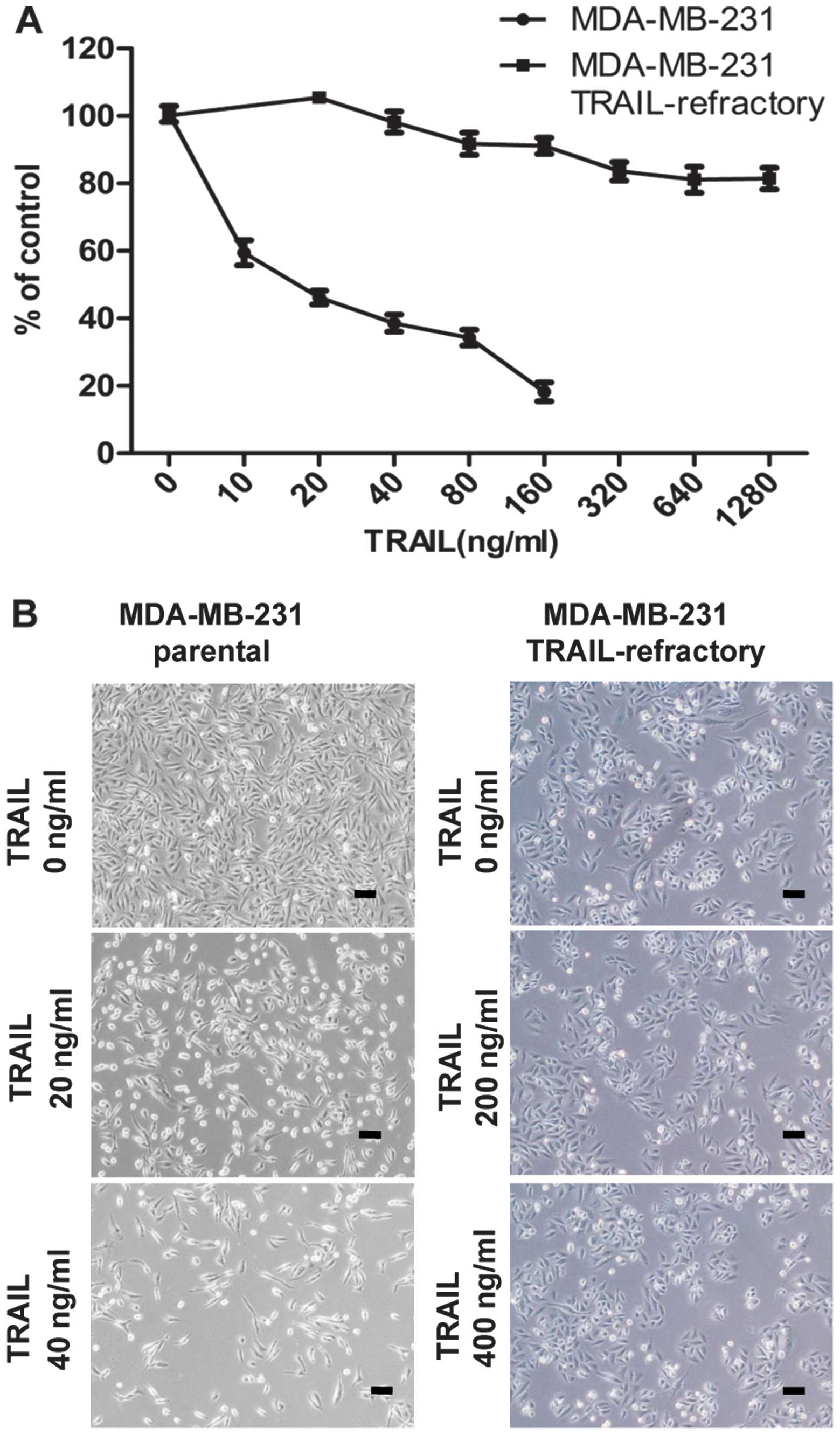
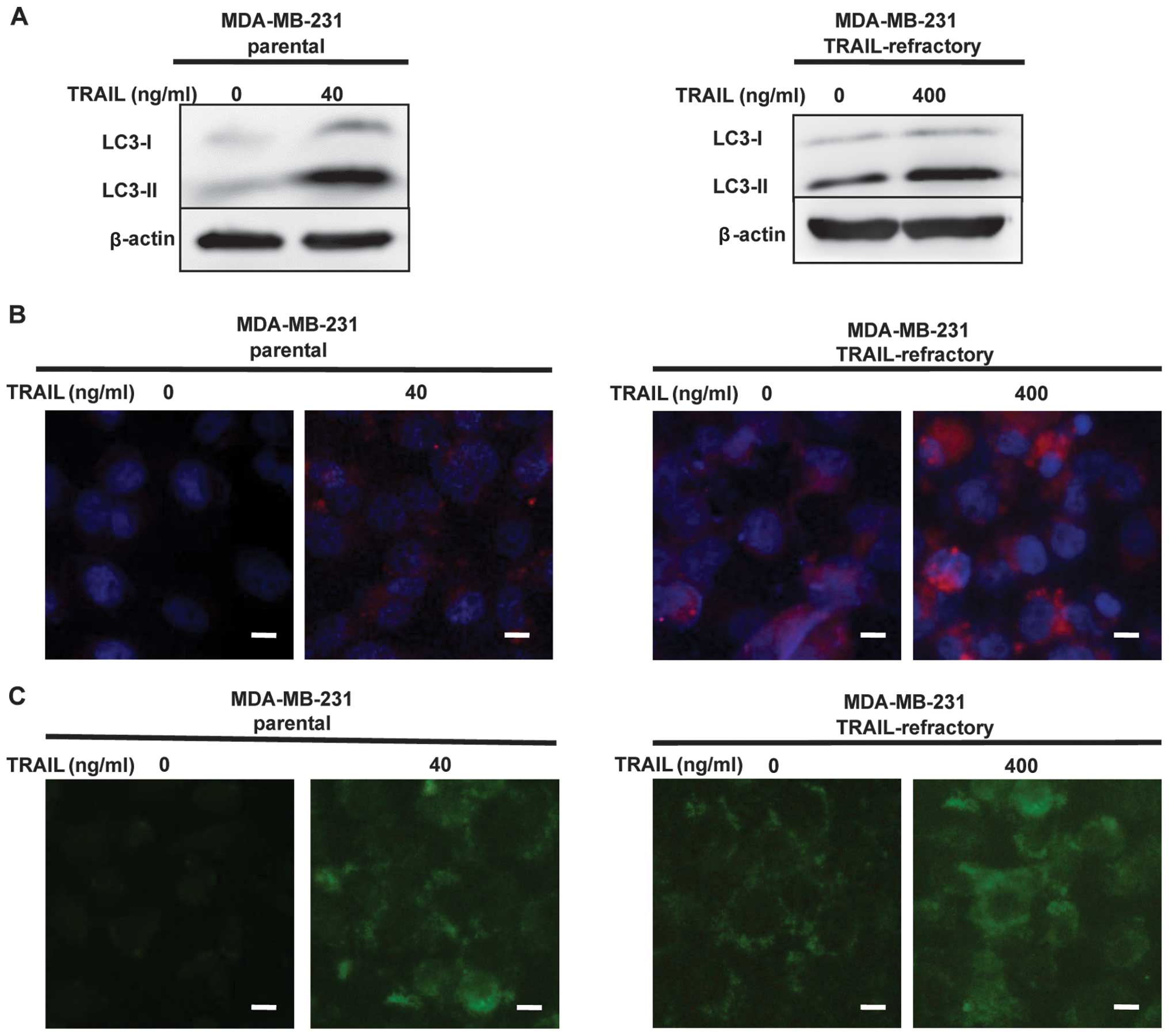
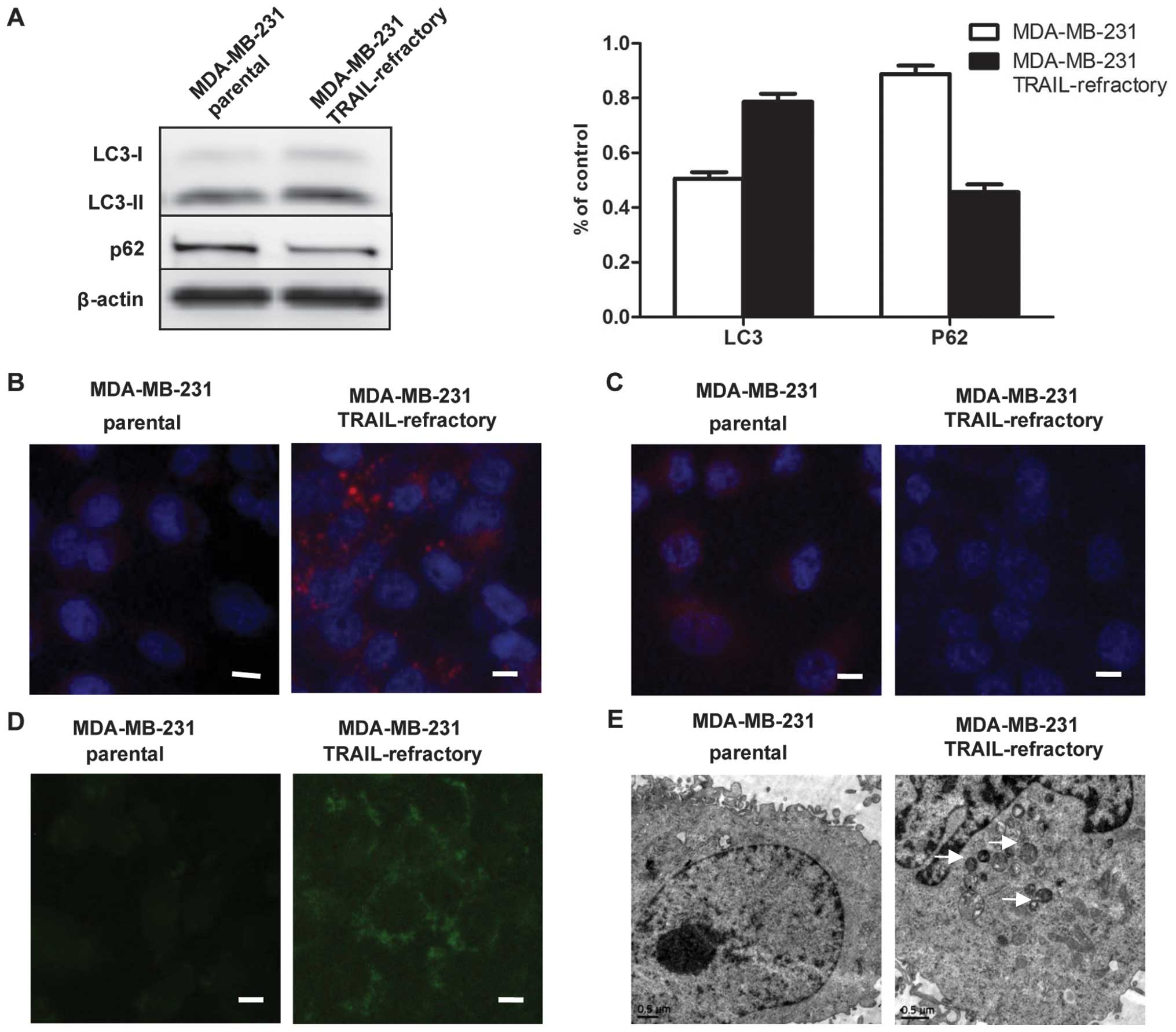
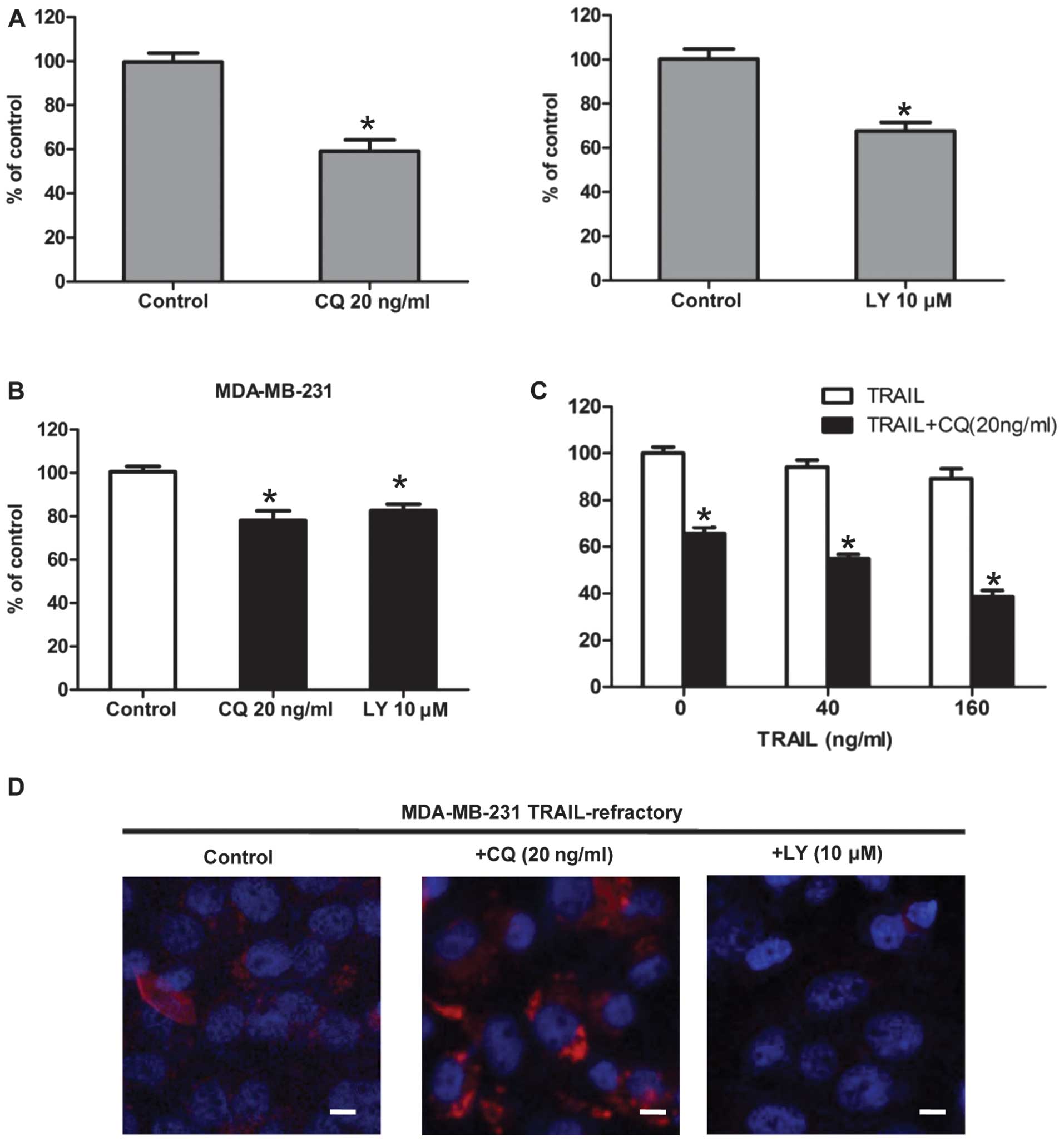
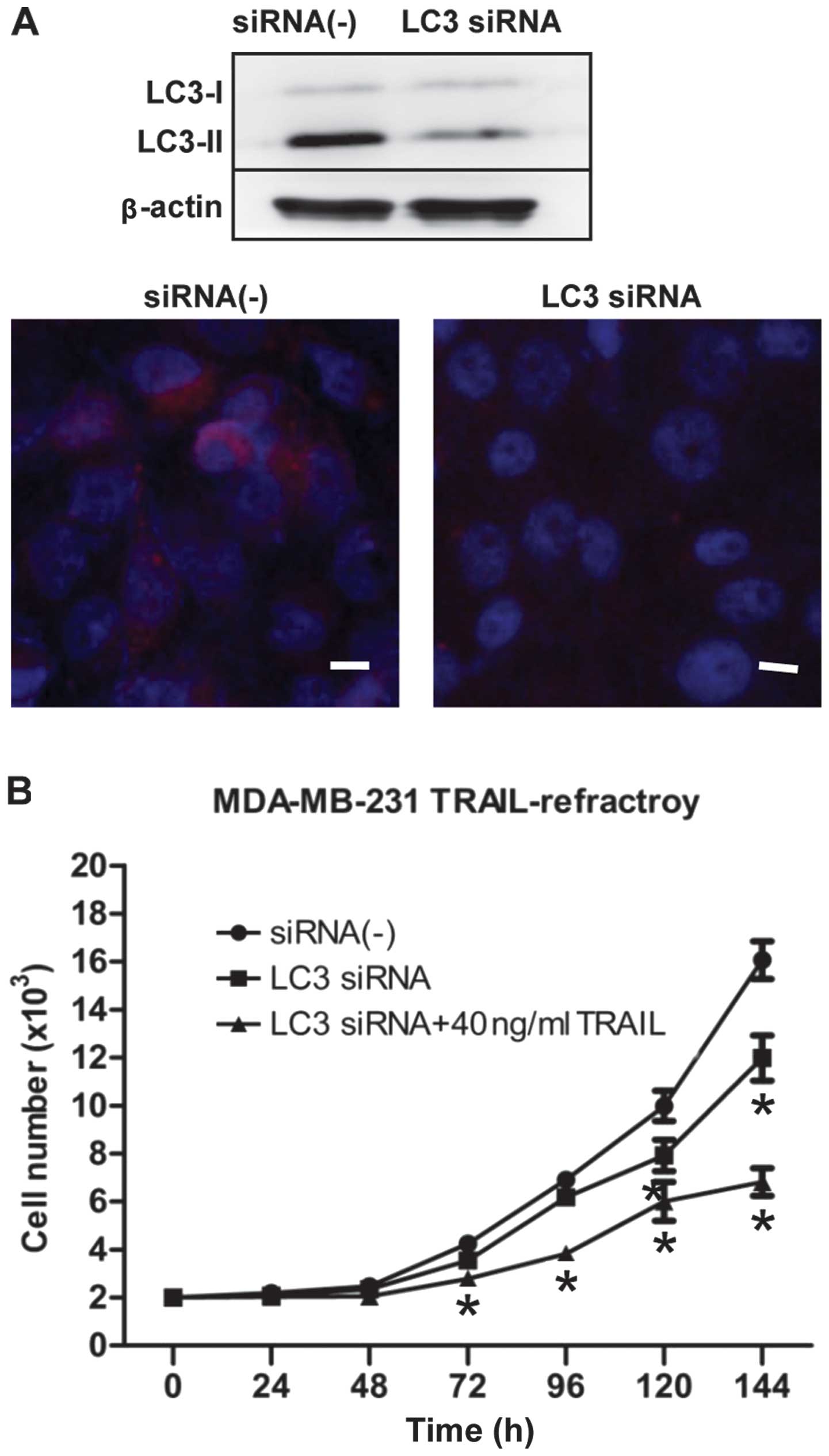
Autophagy, an important homeostatic cellular recycling mechanism, has emerged as a novel cytoprotective mechanism to increase tumor cell survival through escaping chemotherapy‑induced cell death. To explore whether autophagy plays a protective role in the resistance to the tumor necrosis factor‑related apoptosis‑inducing ligand (TRAIL), we evaluated the autophagy levels in TRAIL‑sensitive MDA‑MB‑231 breast cancer cell lines and in TRAIL‑refractory MDA‑MB‑231 cells before and after TRAIL treatment. After treatment with 40 ng/ml TRAIL, TRAIL‑sensitized MDA‑MB‑231 parental cells expressed higher level of LC3B protein and accumulated more autophagic vacuoles. Compared with TRAIL‑sensitive MDA‑MB‑231, MDA‑MB‑231 TRAIL‑refractory cells showed higher levels of the lipidated form of LC3B and decreased p62/SQSTM1 protein expression, characterizing the occurrence of increased autophagic flux in TRAIL‑refractory cells. Electron microscopy and monodansylcadaverine (MDC) autophagy‑specific fluorescence staining analyses also revealed that the accumulation of autophagic vacuoles was drastically higher in TRAIL‑refractory MDA‑MB‑231 parental cells. We demonstrated that chloroquine (CQ) and 2‑(4‑morpholinyl)‑8‑phenylchromone (LY294002) could effectively reduce TRAIL‑refractory breast cancer cell viability. Combination of TRAIL with CQ could effectively reverse the resistance of MDA‑MB‑231 TRAIL‑refractory cells to TRAIL. Knockdown of light chain 3 (LC3) expression via small interfering RNA (siRNA) similarly resulted in reduced TRAIL‑refractory cell proliferation and re‑sensitizing to TRAIL. This is the first report showing that breast cancer cells chronically exposed to TRAIL exhibit upregulation of the autophagic activity, indicating that autophagy efficiently protects breast cancer cells from TRAIL. Therapeutic targeting of autophagosome formation could be a novel molecular avenue to reduce the resistance of TRAIL in breast cancer.
View Figures

Figure 1

Figure 2

Figure 3

Figure 4

Figure 5

View References

1 

Mizushima N: Physiological functions of autophagy. Curr Top Microbiol Immunol. 335:71–84. 2009.PubMed/NCBI

2 

Mathew R, Karantza-Wadsworth V and White E: Role of autophagy in cancer. Nat Rev Cancer. 7:961–967. 2007. View Article : Google Scholar : PubMed/NCBI

3 

Levine B and Kroemer G: Autophagy in the pathogenesis of disease. Cell. 132:27–42. 2008. View Article : Google Scholar : PubMed/NCBI

4 

Eskelinen EL: The dual role of autophagy in cancer. Curr Opin Pharmacol. 11:294–300. 2011. View Article : Google Scholar : PubMed/NCBI

5 

Degenhardt K, Mathew R, Beaudoin B, et al: Autophagy promotes tumor cell survival and restricts necrosis, inflammation, and tumorigenesis. Cancer Cell. 10:51–64. 2006. View Article : Google Scholar : PubMed/NCBI

6 

Amaravadi RK, Lippincott-Schwartz J, Yin XM, et al: Principles and current strategies for targeting autophagy for cancer treatment. Clin Cancer Res. 17:654–666. 2011. View Article : Google Scholar : PubMed/NCBI

7 

Qadir MA, Kwok B, Dragowska WH, et al: Macroautophagy inhibition sensitizes tamoxifen-resistant breast cancer cells and enhances mitochondrial depolarization. Breast Cancer Res Treat. 112:389–403. 2008. View Article : Google Scholar : PubMed/NCBI

8 

Wiley SR, Schooley K, Smolak PJ, et al: Identification and characterization of a new member of the TNF family that induces apoptosis. Immunity. 3:673–682. 1995. View Article : Google Scholar : PubMed/NCBI

9 

Ashkenazi A, Pai RC, Fong S, et al: Safety and antitumor activity of recombinant soluble Apo2 ligand. J Clin Invest. 104:155–162. 1999. View Article : Google Scholar : PubMed/NCBI

10 

Walczak H, Miller RE, Ariail K, et al: Tumoricidal activity of tumor necrosis factor-related apoptosis-inducing ligand in vivo. Nat Med. 5:157–163. 1999. View Article : Google Scholar : PubMed/NCBI

11 

Mahalingam D, Szegezdi E, Keane M, de Jong S and Samali A: TRAIL receptor signalling and modulation: are we on the right TRAIL? Cancer Treat Rev. 35:280–288. 2009. View Article : Google Scholar : PubMed/NCBI

12 

Abdulghani J and El-Deiry WS: TRAIL receptor signaling and therapeutics. Expert Opin Ther Targets. 14:1091–1108. 2010. View Article : Google Scholar : PubMed/NCBI

13 

Menke C, Bin L, Thorburn J, Behbakht K, Ford HL and Thorburn A: Distinct TRAIL resistance mechanisms can be overcome by proteasome inhibition but not generally by synergizing agents. Cancer Res. 71:1883–1892. 2011. View Article : Google Scholar : PubMed/NCBI

14 

Keane MM, Ettenberg SA, Nau MM, Russell EK and Lipkowitz S: Chemotherapy augments TRAIL-induced apoptosis in breast cell lines. Cancer Res. 59:734–741. 1999.PubMed/NCBI

15 

Yoshida T, Zhang Y, Rivera Rosado LA and Zhang B: Repeated treatment with subtoxic doses of TRAIL induces resistance to apoptosis through its death receptors in MDA-MB-231 breast cancer cells. Mol Cancer Res. 7:1835–1844. 2009. View Article : Google Scholar : PubMed/NCBI

16 

Rahman M, Davis SR, Pumphrey JG, et al: TRAIL induces apoptosis in triple-negative breast cancer cells with a mesenchymal phenotype. Breast Cancer Res Treat. 113:217–230. 2009. View Article : Google Scholar :

17 

Bossen C, Tardivel A, Willen L, et al: Mutation of the BAFF furin cleavage site impairs B-cell homeostasis and antibody responses. Eur J Immunol. 41:787–797. 2011. View Article : Google Scholar : PubMed/NCBI

18 

Kim SH, Kim K, Kwagh JG, et al: Death induction by recombinant native TRAIL and its prevention by a caspase 9 inhibitor in primary human esophageal epithelial cells. J Biol Chem. 279:40044–40052. 2004. View Article : Google Scholar : PubMed/NCBI

19 

Biederbick A, Kern HF and Elsässer HP: Monodansylcadaverine (MDC) is a specific in vivo marker for autophagic vacuoles. Eur J Cell Biol. 66:3–14. 1995.PubMed/NCBI

20 

Mariño G, Ugalde AP, Salvador-Montoliu N, et al: Premature aging in mice activates a systemic metabolic response involving autophagy induction. Hum Mol Genet. 17:2196–2211. 2008. View Article : Google Scholar : PubMed/NCBI

21 

Zhang N, Wang X, Huo Q, et al: The oncogene metadherin modulates the apoptotic pathway based on the tumor necrosis factor superfamily member TRAIL (Tumor Necrosis Factor-related Apoptosis-inducing Ligand) in breast cancer. J Biol Chem. 288:9396–9407. 2013. View Article : Google Scholar : PubMed/NCBI

22 

Klionsky DJ and Emr SD: Autophagy as a regulated pathway of cellular degradation. Science. 290:1717–1721. 2000. View Article : Google Scholar : PubMed/NCBI

23 

Kelekar A: Introduction to the review series Autophagy in Higher Eukaryotes - a matter of survival or death. Autophagy. 4:555–556. 2008. View Article : Google Scholar : PubMed/NCBI

24 

Pankiv S, Clausen TH, Lamark T, et al: p62/SQSTM1 binds directly to Atg8/LC3 to facilitate degradation of ubiquitinated protein aggregates by autophagy. J Biol Chem. 282:24131–24145. 2007. View Article : Google Scholar : PubMed/NCBI

25 

Valentim L, Laurence KM, Townsend PA, et al: Urocortin inhibits Beclin1-mediated autophagic cell death in cardiac myocytes exposed to ischaemia/reperfusion injury. J Mol Cell Cardiol. 40:846–852. 2006. View Article : Google Scholar : PubMed/NCBI

26 

Mizushima N, Yoshimori T and Levine B: Methods in mammalian autophagy research. Cell. 140:313–326. 2010. View Article : Google Scholar : PubMed/NCBI

27 

Sternberg CN, Donat SM, Bellmunt J, et al: Chemotherapy for bladder cancer: treatment guidelines for neoadjuvant chemotherapy, bladder preservation, adjuvant chemotherapy, and metastatic cancer. Urology. 69(Suppl 1): S62–S79. 2007. View Article : Google Scholar

28 

Yang ZJ, Chee CE, Huang S and Sinicrope FA: The role of autophagy in cancer: therapeutic implications. Mol Cancer Ther. 10:1533–1541. 2011. View Article : Google Scholar : PubMed/NCBI

Related Articles

  • Abstract
  • View
  • Download
  • Twitter
Copy and paste a formatted citation
Spandidos Publications style
Lv S, Wang X, Zhang N, Sun M, Qi W, Li Y and Yang Q: Autophagy facilitates the development of resistance to the tumor necrosis factor superfamily member TRAIL in breast cancer. Int J Oncol 46: 1286-1294, 2015.
APA
Lv, S., Wang, X., Zhang, N., Sun, M., Qi, W., Li, Y., & Yang, Q. (2015). Autophagy facilitates the development of resistance to the tumor necrosis factor superfamily member TRAIL in breast cancer. International Journal of Oncology, 46, 1286-1294. https://doi.org/10.3892/ijo.2014.2812
MLA
Lv, S., Wang, X., Zhang, N., Sun, M., Qi, W., Li, Y., Yang, Q."Autophagy facilitates the development of resistance to the tumor necrosis factor superfamily member TRAIL in breast cancer". International Journal of Oncology 46.3 (2015): 1286-1294.
Chicago
Lv, S., Wang, X., Zhang, N., Sun, M., Qi, W., Li, Y., Yang, Q."Autophagy facilitates the development of resistance to the tumor necrosis factor superfamily member TRAIL in breast cancer". International Journal of Oncology 46, no. 3 (2015): 1286-1294. https://doi.org/10.3892/ijo.2014.2812
Copy and paste a formatted citation
x
Spandidos Publications style
Lv S, Wang X, Zhang N, Sun M, Qi W, Li Y and Yang Q: Autophagy facilitates the development of resistance to the tumor necrosis factor superfamily member TRAIL in breast cancer. Int J Oncol 46: 1286-1294, 2015.
APA
Lv, S., Wang, X., Zhang, N., Sun, M., Qi, W., Li, Y., & Yang, Q. (2015). Autophagy facilitates the development of resistance to the tumor necrosis factor superfamily member TRAIL in breast cancer. International Journal of Oncology, 46, 1286-1294. https://doi.org/10.3892/ijo.2014.2812
MLA
Lv, S., Wang, X., Zhang, N., Sun, M., Qi, W., Li, Y., Yang, Q."Autophagy facilitates the development of resistance to the tumor necrosis factor superfamily member TRAIL in breast cancer". International Journal of Oncology 46.3 (2015): 1286-1294.
Chicago
Lv, S., Wang, X., Zhang, N., Sun, M., Qi, W., Li, Y., Yang, Q."Autophagy facilitates the development of resistance to the tumor necrosis factor superfamily member TRAIL in breast cancer". International Journal of Oncology 46, no. 3 (2015): 1286-1294. https://doi.org/10.3892/ijo.2014.2812
Follow us
  • Twitter
  • LinkedIn
  • Facebook
About
  • Spandidos Publications
  • Careers
  • Cookie Policy
  • Privacy Policy
How can we help?
  • Help
  • Live Chat
  • Contact
  • Email to our Support Team