Spandidos Publications Logo
  • About
    • About Spandidos
    • Aims and Scopes
    • Abstracting and Indexing
    • Editorial Policies
    • Reprints and Permissions
    • Job Opportunities
    • Terms and Conditions
    • Contact
  • Journals
    • All Journals
    • Oncology Letters
      • Oncology Letters
      • Information for Authors
      • Editorial Policies
      • Editorial Board
      • Aims and Scope
      • Abstracting and Indexing
      • Bibliographic Information
      • Archive
    • International Journal of Oncology
      • International Journal of Oncology
      • Information for Authors
      • Editorial Policies
      • Editorial Board
      • Aims and Scope
      • Abstracting and Indexing
      • Bibliographic Information
      • Archive
    • Molecular and Clinical Oncology
      • Molecular and Clinical Oncology
      • Information for Authors
      • Editorial Policies
      • Editorial Board
      • Aims and Scope
      • Abstracting and Indexing
      • Bibliographic Information
      • Archive
    • Experimental and Therapeutic Medicine
      • Experimental and Therapeutic Medicine
      • Information for Authors
      • Editorial Policies
      • Editorial Board
      • Aims and Scope
      • Abstracting and Indexing
      • Bibliographic Information
      • Archive
    • International Journal of Molecular Medicine
      • International Journal of Molecular Medicine
      • Information for Authors
      • Editorial Policies
      • Editorial Board
      • Aims and Scope
      • Abstracting and Indexing
      • Bibliographic Information
      • Archive
    • Biomedical Reports
      • Biomedical Reports
      • Information for Authors
      • Editorial Policies
      • Editorial Board
      • Aims and Scope
      • Abstracting and Indexing
      • Bibliographic Information
      • Archive
    • Oncology Reports
      • Oncology Reports
      • Information for Authors
      • Editorial Policies
      • Editorial Board
      • Aims and Scope
      • Abstracting and Indexing
      • Bibliographic Information
      • Archive
    • Molecular Medicine Reports
      • Molecular Medicine Reports
      • Information for Authors
      • Editorial Policies
      • Editorial Board
      • Aims and Scope
      • Abstracting and Indexing
      • Bibliographic Information
      • Archive
    • World Academy of Sciences Journal
      • World Academy of Sciences Journal
      • Information for Authors
      • Editorial Policies
      • Editorial Board
      • Aims and Scope
      • Abstracting and Indexing
      • Bibliographic Information
      • Archive
    • International Journal of Functional Nutrition
      • International Journal of Functional Nutrition
      • Information for Authors
      • Editorial Policies
      • Editorial Board
      • Aims and Scope
      • Abstracting and Indexing
      • Bibliographic Information
      • Archive
    • International Journal of Epigenetics
      • International Journal of Epigenetics
      • Information for Authors
      • Editorial Policies
      • Editorial Board
      • Aims and Scope
      • Abstracting and Indexing
      • Bibliographic Information
      • Archive
    • Medicine International
      • Medicine International
      • Information for Authors
      • Editorial Policies
      • Editorial Board
      • Aims and Scope
      • Abstracting and Indexing
      • Bibliographic Information
      • Archive
  • Articles
  • Information
    • Information for Authors
    • Information for Reviewers
    • Information for Librarians
    • Information for Advertisers
    • Conferences
  • Language Editing
Spandidos Publications Logo
  • About
    • About Spandidos
    • Aims and Scopes
    • Abstracting and Indexing
    • Editorial Policies
    • Reprints and Permissions
    • Job Opportunities
    • Terms and Conditions
    • Contact
  • Journals
    • All Journals
    • Biomedical Reports
      • Information for Authors
      • Editorial Policies
      • Editorial Board
      • Aims and Scope
      • Abstracting and Indexing
      • Bibliographic Information
      • Archive
    • Experimental and Therapeutic Medicine
      • Information for Authors
      • Editorial Policies
      • Editorial Board
      • Aims and Scope
      • Abstracting and Indexing
      • Bibliographic Information
      • Archive
    • International Journal of Epigenetics
      • Information for Authors
      • Editorial Policies
      • Editorial Board
      • Aims and Scope
      • Abstracting and Indexing
      • Bibliographic Information
      • Archive
    • International Journal of Functional Nutrition
      • Information for Authors
      • Editorial Policies
      • Editorial Board
      • Aims and Scope
      • Abstracting and Indexing
      • Bibliographic Information
      • Archive
    • International Journal of Molecular Medicine
      • Information for Authors
      • Editorial Policies
      • Editorial Board
      • Aims and Scope
      • Abstracting and Indexing
      • Bibliographic Information
      • Archive
    • International Journal of Oncology
      • Information for Authors
      • Editorial Policies
      • Editorial Board
      • Aims and Scope
      • Abstracting and Indexing
      • Bibliographic Information
      • Archive
    • Medicine International
      • Information for Authors
      • Editorial Policies
      • Editorial Board
      • Aims and Scope
      • Abstracting and Indexing
      • Bibliographic Information
      • Archive
    • Molecular and Clinical Oncology
      • Information for Authors
      • Editorial Policies
      • Editorial Board
      • Aims and Scope
      • Abstracting and Indexing
      • Bibliographic Information
      • Archive
    • Molecular Medicine Reports
      • Information for Authors
      • Editorial Policies
      • Editorial Board
      • Aims and Scope
      • Abstracting and Indexing
      • Bibliographic Information
      • Archive
    • Oncology Letters
      • Information for Authors
      • Editorial Policies
      • Editorial Board
      • Aims and Scope
      • Abstracting and Indexing
      • Bibliographic Information
      • Archive
    • Oncology Reports
      • Information for Authors
      • Editorial Policies
      • Editorial Board
      • Aims and Scope
      • Abstracting and Indexing
      • Bibliographic Information
      • Archive
    • World Academy of Sciences Journal
      • Information for Authors
      • Editorial Policies
      • Editorial Board
      • Aims and Scope
      • Abstracting and Indexing
      • Bibliographic Information
      • Archive
  • Articles
  • Information
    • For Authors
    • For Reviewers
    • For Librarians
    • For Advertisers
    • Conferences
  • Language Editing
Login Register Submit
  • This site uses cookies
  • You can change your cookie settings at any time by following the instructions in our Cookie Policy. To find out more, you may read our Privacy Policy.

    I agree
Search articles by DOI, keyword, author or affiliation
Search
Advanced Search
presentation
International Journal of Oncology
Join Editorial Board Propose a Special Issue
Print ISSN: 1019-6439 Online ISSN: 1791-2423
Journal Cover
March-2015 Volume 46 Issue 3

Full Size Image

Cover Legend PDF

Sign up for eToc alerts
Recommend to Library

Journals

International Journal of Molecular Medicine

International Journal of Molecular Medicine

International Journal of Molecular Medicine is an international journal devoted to molecular mechanisms of human disease.

International Journal of Oncology

International Journal of Oncology

International Journal of Oncology is an international journal devoted to oncology research and cancer treatment.

Molecular Medicine Reports

Molecular Medicine Reports

Covers molecular medicine topics such as pharmacology, pathology, genetics, neuroscience, infectious diseases, molecular cardiology, and molecular surgery.

Oncology Reports

Oncology Reports

Oncology Reports is an international journal devoted to fundamental and applied research in Oncology.

Experimental and Therapeutic Medicine

Experimental and Therapeutic Medicine

Experimental and Therapeutic Medicine is an international journal devoted to laboratory and clinical medicine.

Oncology Letters

Oncology Letters

Oncology Letters is an international journal devoted to Experimental and Clinical Oncology.

Biomedical Reports

Biomedical Reports

Explores a wide range of biological and medical fields, including pharmacology, genetics, microbiology, neuroscience, and molecular cardiology.

Molecular and Clinical Oncology

Molecular and Clinical Oncology

International journal addressing all aspects of oncology research, from tumorigenesis and oncogenes to chemotherapy and metastasis.

World Academy of Sciences Journal

World Academy of Sciences Journal

Multidisciplinary open-access journal spanning biochemistry, genetics, neuroscience, environmental health, and synthetic biology.

International Journal of Functional Nutrition

International Journal of Functional Nutrition

Open-access journal combining biochemistry, pharmacology, immunology, and genetics to advance health through functional nutrition.

International Journal of Epigenetics

International Journal of Epigenetics

Publishes open-access research on using epigenetics to advance understanding and treatment of human disease.

Medicine International

Medicine International

An International Open Access Journal Devoted to General Medicine.

Journal Cover
March-2015 Volume 46 Issue 3

Full Size Image

Cover Legend PDF

Sign up for eToc alerts
Recommend to Library

  • Article
  • Citations
    • Cite This Article
    • Download Citation
    • Create Citation Alert
    • Remove Citation Alert
    • Cited By
  • Similar Articles
    • Related Articles (in Spandidos Publications)
    • Similar Articles (Google Scholar)
    • Similar Articles (PubMed)
  • Download PDF
  • Download XML
  • View XML
Article

SIAH1-induced p34SEI-1 polyubiquitination/degradation mediates p53 preferential vitamin C cytotoxicity

  • Authors:
    • Soonduck Lee
    • Jinsun Kim
    • Samil Jung
    • Chengping Li
    • Young Yang
    • Keun Il Kim
    • Jong-Seok Lim
    • Yonghwan Kim
    • Choong-Il Cheon
    • Myeong-Sok Lee
  • View Affiliations / Copyright

    Affiliations: Department of Life Systems, Sookmyung Women's University, Seoul 140-742, Republic of Korea
  • Pages: 1377-1384
    |
    Published online on: January 13, 2015
       https://doi.org/10.3892/ijo.2015.2840
  • Expand metrics +
Metrics: Total Views: 0 (Spandidos Publications: | PMC Statistics: )
Metrics: Total PDF Downloads: 0 (Spandidos Publications: | PMC Statistics: )
Cited By (CrossRef): 0 citations Loading Articles...

This article is mentioned in:


Abstract

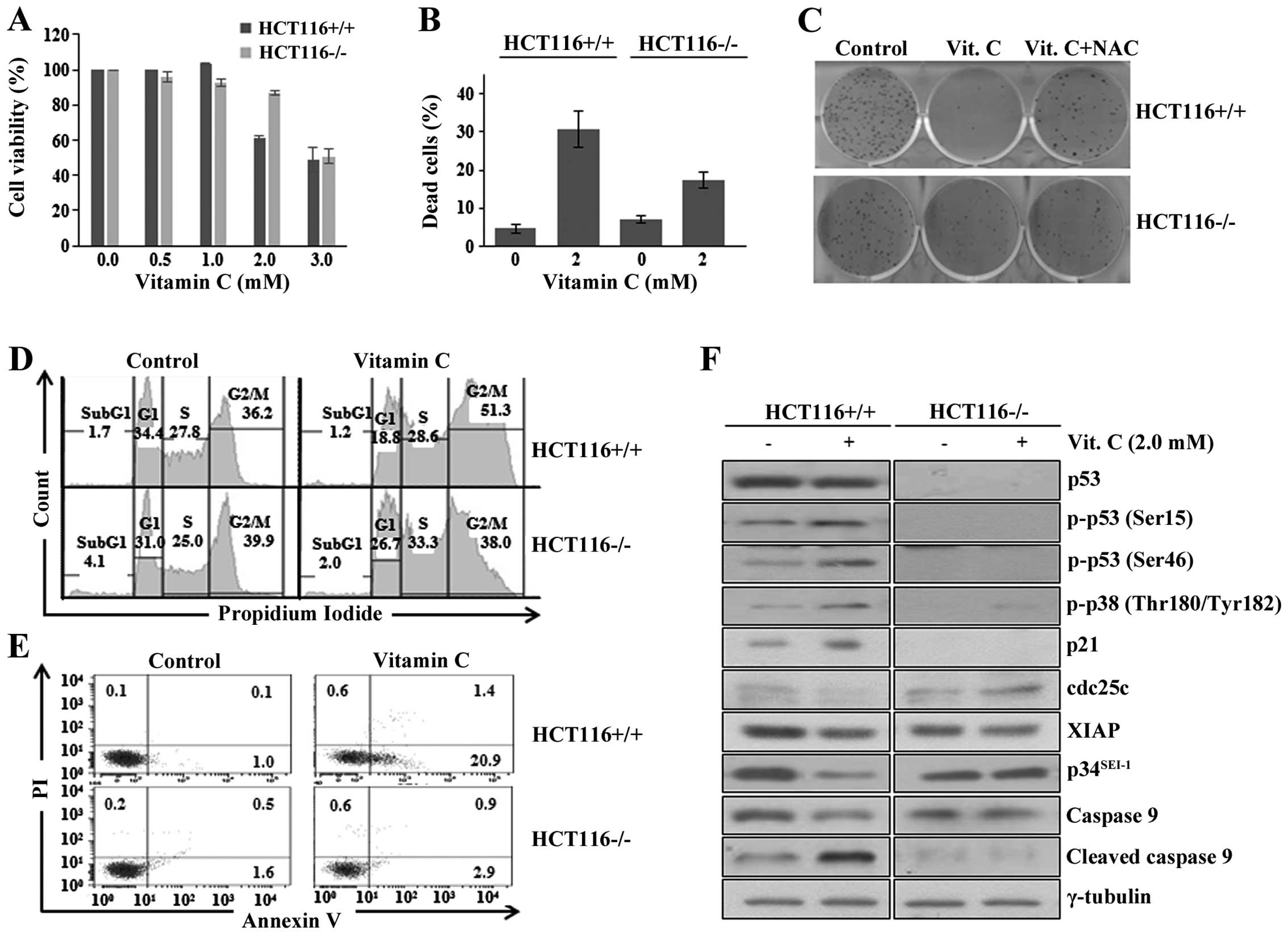
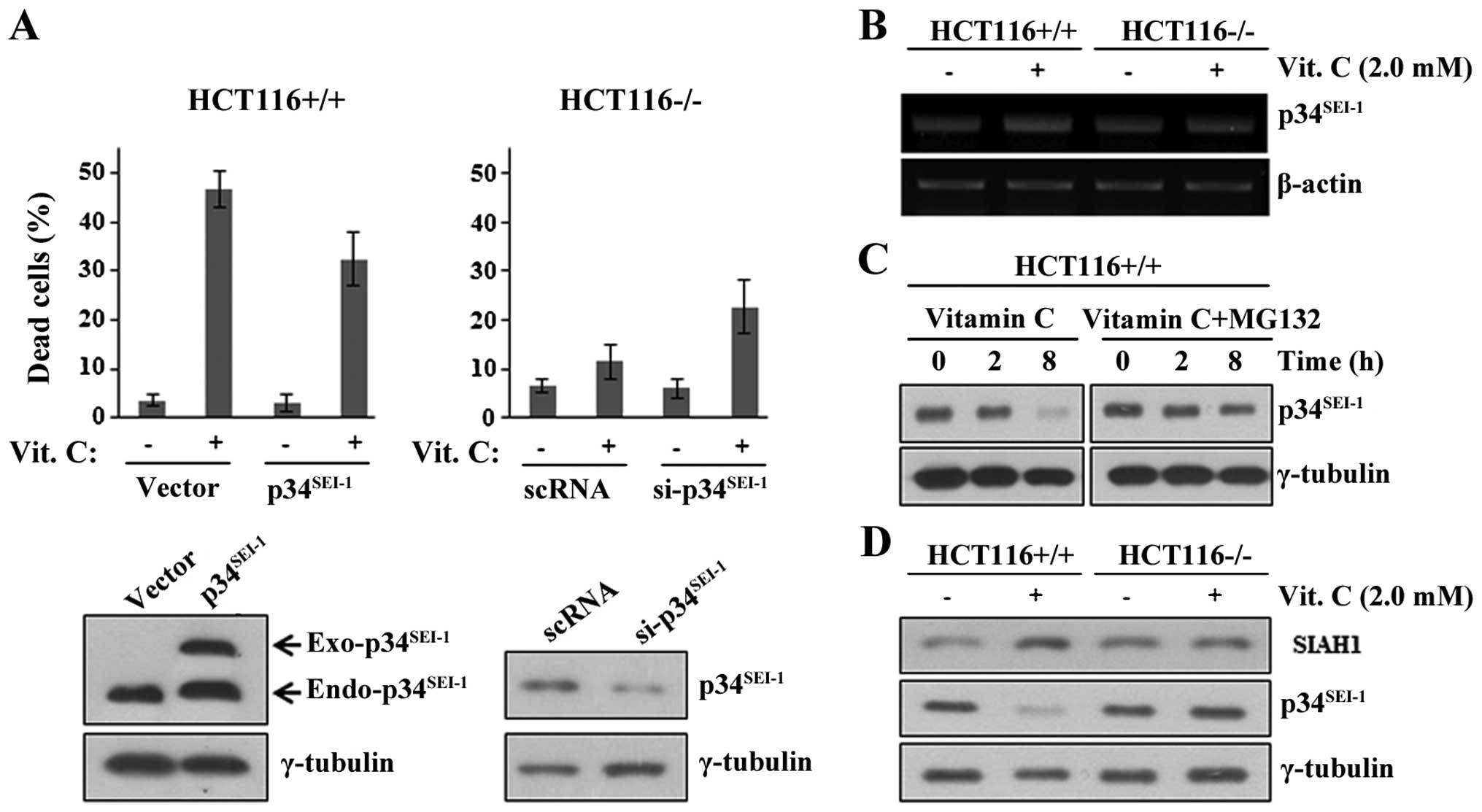
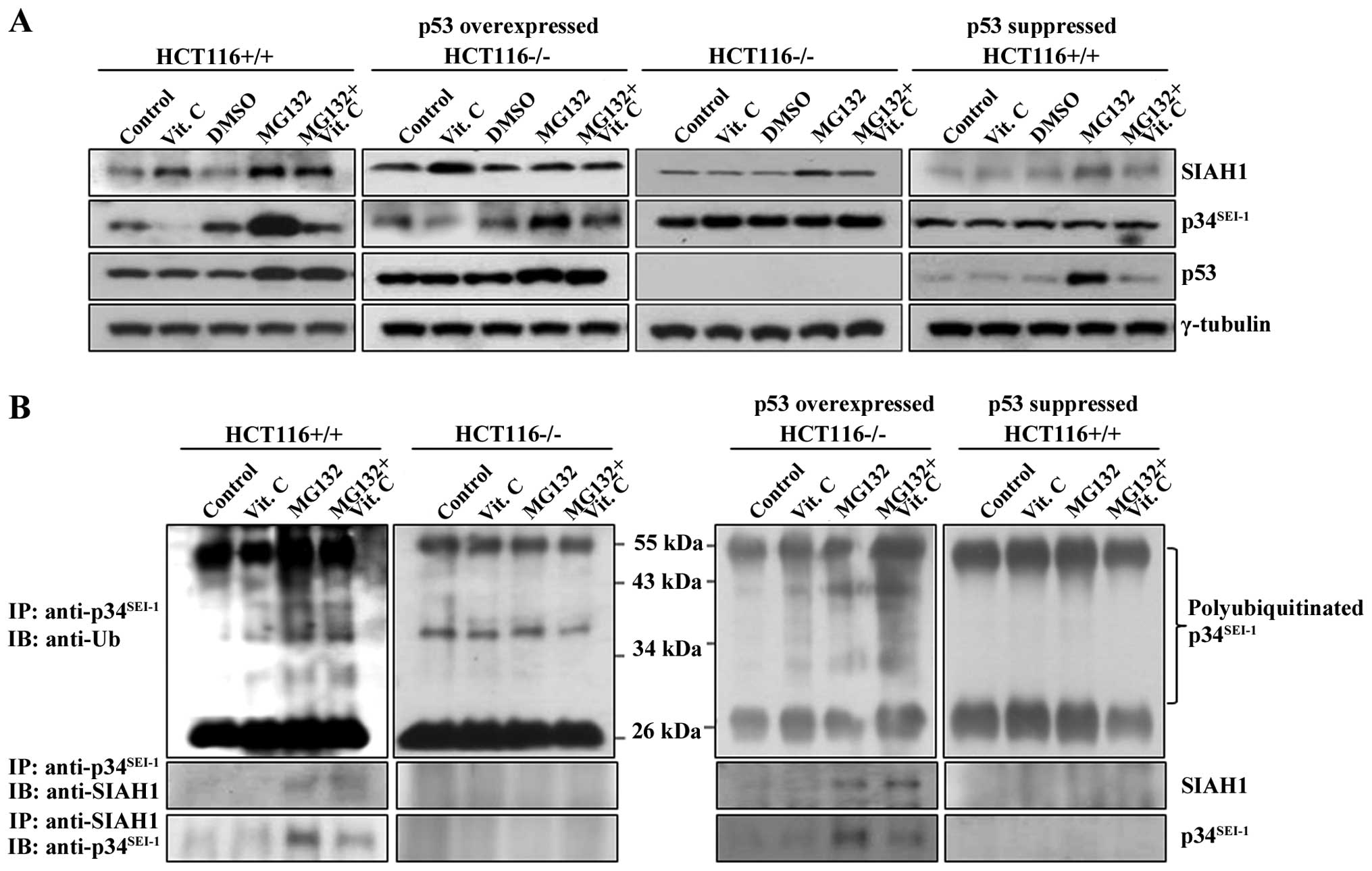
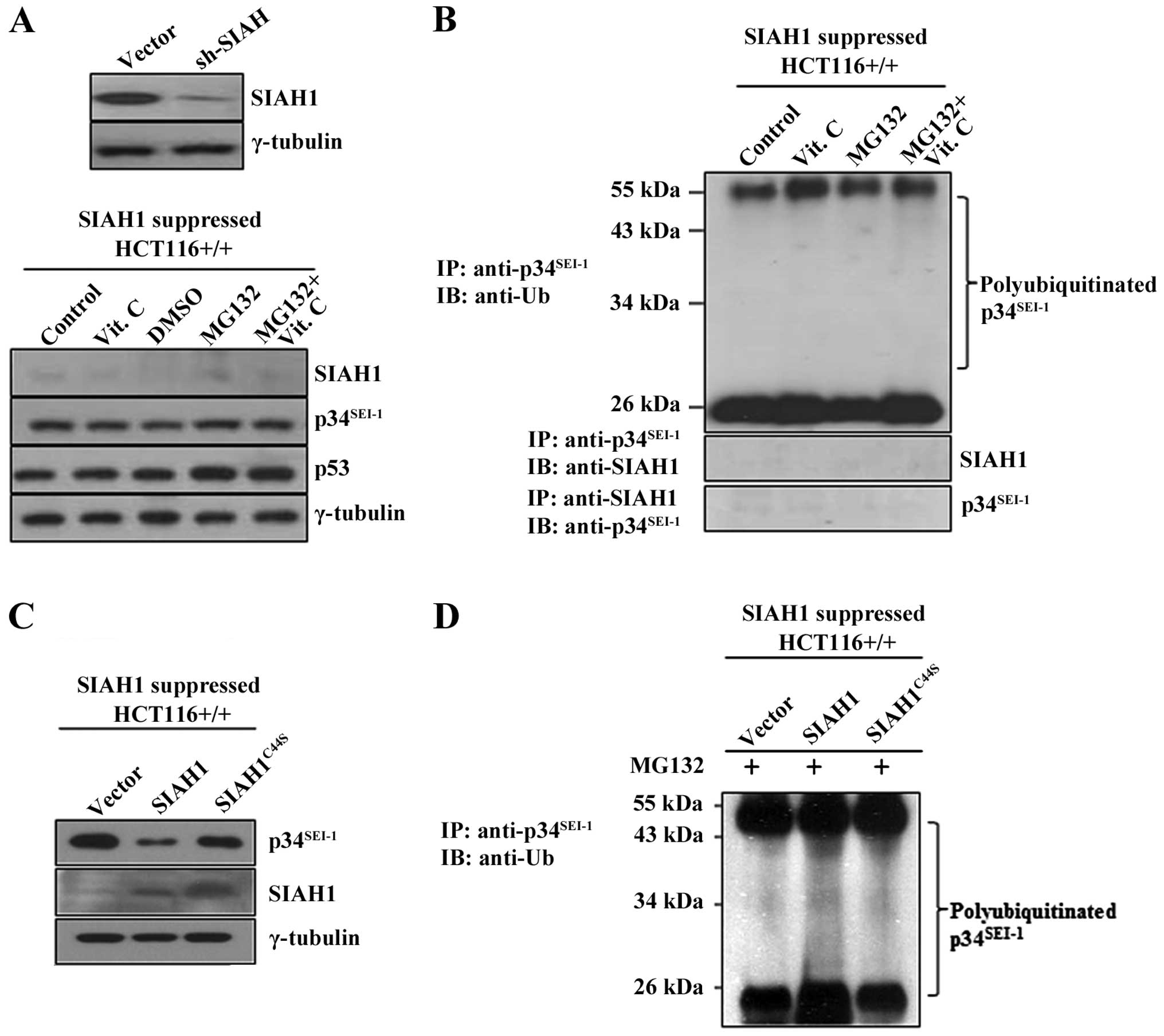
Vitamin C is considered as an important anticancer therapeutic agent although this view is debatable. In this study, we introduce a physiological mechanism demonstrating how vitamin C exerts anticancer activity that induces cell cycle arrest and apoptosis. Our previous and current data reveal that p53 tumor suppressor is the prerequisite factor for stronger anticancer effects of vitamin C. In addition, vitamin C-mediated cancer cell cytotoxicity appears to be achieved at least partly through the downregulation of the p34SEI-1 oncoprotein. Our previous study showed that p34SEI-1 increases the survival of various types of cancer cells by inhibiting their apoptosis. Present data suggest that vitamin C treatment decreases the p34SEI-1 expression at the protein level and therefore alleviates its anti-apoptotic activity. Of note, SIAH1, E3 ubiquitin ligase, appears to be responsible for the p34SEI-1 polyubiquitination and its subsequent degradation, which is dependent on p53. In summary, vitamin C increases cancer cell death by inducing SIAH1-mediated polyubiquitination/degradation of the p34SEI-1 oncoprotein in a p53-dependent manner.
View Figures

Figure 1

Figure 2

Figure 3

Figure 4

View References

1 

Du J, Cullen JJ and Buettner GR: Ascorbic acid: chemistry, biology and the treatment of cancer. Biochim Biophys Acta. 1826:443–457. 2012.PubMed/NCBI

2 

Head KA: Ascorbic acid in the prevention and treatment of cancer. Altern Med Rev. 3:174–186. 1998.PubMed/NCBI

3 

Cameron E and Pauling L: Supplemental ascorbate in the supportive treatment of cancer: prolongation of survival times in terminal human cancer. Proc Natl Acad Sci USA. 73:3685–3689. 1976. View Article : Google Scholar : PubMed/NCBI

4 

Chen Q, Espey MG, Sun AY, et al: Pharmacologic doses of ascorbate act as a prooxidant and decrease growth of aggressive tumor xenografts in mice. Proc Natl Acad Sci USA. 105:11105–11109. 2008. View Article : Google Scholar : PubMed/NCBI

5 

De Laurenzi V, Melino G, Savini I, Annicchiarico-Petruzzelli M, Finazzi-Agro A and Avigliano L: Cell death by oxidative stress and ascorbic acid regeneration in human neuroectodermal cell lines. Eur J Cancer. 31A:463–466. 1995. View Article : Google Scholar : PubMed/NCBI

6 

Verrax J and Calderon PB: Pharmacologic concentrations of ascorbate are achieved by parenteral administration and exhibit antitumoral effects. Free Radic Biol Med. 47:32–40. 2009. View Article : Google Scholar : PubMed/NCBI

7 

Chen Q, Espey MG, Krishna MC, et al: Pharmacologic ascorbic acid concentrations selectively kill cancer cells: action as a pro-drug to deliver hydrogen peroxide to tissues. Proc Natl Acad Sci USA. 102:13604–13609. 2005. View Article : Google Scholar : PubMed/NCBI

8 

Hoffer LJ, Levine M, Assouline S, et al: Phase I clinical trial of i.v ascorbic acid in advanced malignancy. Ann Oncol. 19:1969–1974. 2008. View Article : Google Scholar : PubMed/NCBI

9 

Park S, Ahn ES, Lee S, et al: Proteomic analysis reveals upregulation of RKIP in S-180 implanted BALB/C mouse after treatment with ascorbic acid. J Cell Biochem. 106:1136–1145. 2009. View Article : Google Scholar

10 

Belin S, Kaya F, Duisit G, Giacometti S, Ciccolini J and Fontes M: Antiproliferative effect of ascorbic acid is associated with the inhibition of genes necessary to cell cycle progression. PLoS One. 4:e44092009. View Article : Google Scholar : PubMed/NCBI

11 

Chen Q, Espey MG, Sun AY, et al: Ascorbate in pharmacologic concentrations selectively generates ascorbate radical and hydrogen peroxide in extracellular fluid in vivo. Proc Natl Acad Sci USA. 104:8749–8754. 2007. View Article : Google Scholar : PubMed/NCBI

12 

Hong SW, Jin DH, Hahm ES, et al: Ascorbate (vitamin C) induces cell death through the apoptosis-inducing factor in human breast cancer cells. Oncol Rep. 18:811–815. 2007.PubMed/NCBI

13 

Kim J, Lee SD, Chang B, et al: Enhanced antitumor activity of vitamin C via p53 in cancer cells. Free Radic Biol Med. 53:1607–1615. 2012. View Article : Google Scholar : PubMed/NCBI

14 

Hsu SI, Yang CM, Sim KG, Hentschel DM, O’Leary E and Bonventre JV: TRIP-Br: a novel family of PHD zinc finger- and bromodomain-interacting proteins that regulate the transcriptional activity of E2F-1/DP-1. EMBO J. 20:2273–2285. 2001. View Article : Google Scholar : PubMed/NCBI

15 

Li J, Muscarella P, Joo SH, et al: Dissection of CDK4-binding and transactivation activities of p34(SEI-1) and comparison between functions of p34(SEI-1) and p16(INK4A). Biochemistry. 44:13246–13256. 2005. View Article : Google Scholar : PubMed/NCBI

16 

Ried T, Petersen I, Holtgreve-Grez H, et al: Mapping of multiple DNA gains and losses in primary small cell lung carcinomas by comparative genomic hybridization. Cancer Res. 54:1801–1806. 1994.PubMed/NCBI

17 

Tang TC, Sham JS, Xie D, et al: Identification of a candidate oncogene SEI-1 within a minimal amplified region at 19q13.1 in ovarian cancer cell lines. Cancer Res. 62:7157–7161. 2002.PubMed/NCBI

18 

Hong SW, Shin JS, Lee YM, et al: p34 (SEI-1) inhibits ROS-induced cell death through suppression of ASK1. Cancer Biol Ther. 12:421–426. 2011. View Article : Google Scholar : PubMed/NCBI

19 

Hong SW, Kim CJ, Park WS, et al: p34SEI-1 inhibits apoptosis through the stabilization of the X-linked inhibitor of apoptosis protein: p34SEI-1 as a novel target for anti-breast cancer strategies. Cancer Res. 69:741–746. 2009. View Article : Google Scholar : PubMed/NCBI

20 

Roos-Mattjus P and Sistonen L: The ubiquitin-proteasome pathway. Ann Med. 36:285–295. 2004. View Article : Google Scholar : PubMed/NCBI

21 

Ciechanover A and Schwartz AL: The ubiquitin system: pathogenesis of human diseases and drug targeting. Biochim Biophys Acta. 1695:3–17. 2004. View Article : Google Scholar : PubMed/NCBI

22 

Komander D and Rape M: The ubiquitin code. Annu Rev Biochem. 81:203–229. 2012. View Article : Google Scholar : PubMed/NCBI

23 

Berkers CR and Ovaa H: Drug discovery and assay development in the ubiquitin-proteasome system. Biochem Soc Trans. 38:14–20. 2010. View Article : Google Scholar : PubMed/NCBI

24 

Matsuzawa S, Takayama S, Froesch BA, Zapata JM and Reed JC: p53-inducible human homologue of Drosophila seven in absentia (Siah) inhibits cell growth: suppression by BAG-1. EMBO J. 17:2736–2747. 1998. View Article : Google Scholar : PubMed/NCBI

25 

Roperch JP, Lethrone F, Prieur S, et al: SIAH-1 promotes apoptosis and tumor suppression through a network involving the regulation of protein folding, unfolding, and trafficking: identification of common effectors with p53 and p21(Waf1). Proc Natl Acad Sci USA. 96:8070–8073. 1999. View Article : Google Scholar : PubMed/NCBI

26 

Qi J, Kim H, Scortegagna M and Ronai ZA: Regulators and effectors of Siah ubiquitin ligases. Cell Biochem Biophys. 67:15–24. 2013. View Article : Google Scholar : PubMed/NCBI

27 

Nemani M, Linares-Cruz G, Bruzzoni-Giovanelli H, et al: Activation of the human homologue of the Drosophila sina gene in apoptosis and tumor suppression. Proc Natl Acad Sci USA. 93:9039–9042. 1996. View Article : Google Scholar : PubMed/NCBI

28 

Telerman A and Amson R: The molecular programme of tumour reversion: the steps beyond malignant transformation. Nat Rev Cancer. 9:206–216. 2009. View Article : Google Scholar : PubMed/NCBI

29 

Wu H, Lin Y, Shi Y, et al: SIAH-1 interacts with mammalian polyhomeotic homologues HPH2 and affects its stability via the ubiquitin-proteasome pathway. Biochem Biophys Res Commun. 397:391–396. 2010. View Article : Google Scholar : PubMed/NCBI

30 

Yoshibayashi H, Okabe H, Satoh S, et al: SIAH1 causes growth arrest and apoptosis in hepatoma cells through beta-catenin degradation-dependent and -independent mechanisms. Oncol Rep. 17:549–556. 2007.PubMed/NCBI

31 

Kim SY, Choi DW, Kim EA and Choi CY: Stabilization of HIPK2 by escape from proteasomal degradation mediated by the E3 ubiquitin ligase Siah1. Cancer Lett. 279:177–184. 2009. View Article : Google Scholar : PubMed/NCBI

32 

Matsuzawa SI and Reed JC: Siah-1, SIP, and Ebi collaborate in a novel pathway for beta-catenin degradation linked to p53 responses. Mol Cell. 7:915–926. 2001. View Article : Google Scholar : PubMed/NCBI

33 

Matsuo K, Satoh S, Okabe H, et al: SIAH1 inactivation correlates with tumor progression in hepatocellular carcinomas. Genes Chromosomes Cancer. 36:283–291. 2003. View Article : Google Scholar : PubMed/NCBI

34 

Winter M, Sombroek D, Dauth I, et al: Control of HIPK2 stability by ubiquitin ligase Siah-1 and checkpoint kinases ATM and ATR. Nat Cell Biol. 10:812–824. 2008. View Article : Google Scholar : PubMed/NCBI

35 

Herst PM, Broadley KW, Harper JL and McConnell MJ: Pharmacological concentrations of ascorbate radiosensitize glioblastoma multiforme primary cells by increasing oxidative DNA damage and inhibiting G2/M arrest. Free Radic Biol Med. 52:1486–1493. 2012. View Article : Google Scholar : PubMed/NCBI

36 

Kang JS, Cho D, Kim YI, et al: Sodium ascorbate (vitamin C) induces apoptosis in melanoma cells via the down-regulation of transferrin receptor dependent iron uptake. J Cell Physiol. 204:192–197. 2005. View Article : Google Scholar : PubMed/NCBI

37 

Thomas CG, Vezyraki PE, Kalfakakou VP and Evangelou AM: Vitamin C transiently arrests cancer cell cycle progression in S phase and G2/M boundary by modulating the kinetics of activation and the subcellular localization of Cdc25C phosphatase. J Cell Physiol. 205:310–318. 2005. View Article : Google Scholar : PubMed/NCBI

38 

Khanna KK, Keating KE, Kozlov S, et al: ATM associates with and phosphorylates p53: mapping the region of interaction. Nat Genet. 20:398–400. 1998. View Article : Google Scholar : PubMed/NCBI

39 

Oda K, Arakawa H, Tanaka T, et al: p53AIP1, a potential mediator of p53-dependent apoptosis, and its regulation by Ser-46-phosphorylated p53. Cell. 102:849–862. 2000. View Article : Google Scholar : PubMed/NCBI

40 

Perfettini JL, Castedo M, Nardacci R, et al: Essential role of p53 phosphorylation by p38 MAPK in apoptosis induction by the HIV-1 envelope. J Exp Med. 201:279–289. 2005. View Article : Google Scholar : PubMed/NCBI

41 

Kim JE, Jin DH, Lee SD, et al: Vitamin C inhibits p53-induced replicative senescence through suppression of ROS production and p38 MAPK activity. Int J Mol Med. 22:651–655. 2008.PubMed/NCBI

42 

Cheung HH, LaCasse EC and Korneluk RG: X-linked inhibitor of apoptosis antagonism: strategies in cancer treatment. Clin Cancer Res. 12:3238–3242. 2006. View Article : Google Scholar : PubMed/NCBI

43 

Schimmer AD, Dalili S, Batey RA and Riedl SJ: Targeting XIAP for the treatment of malignancy. Cell Death Differ. 13:179–188. 2006. View Article : Google Scholar

44 

Fraser M, Leung BM, Yan X, Dan HC, Cheng JQ and Tsang BK: p53 is a determinant of X-linked inhibitor of apoptosis protein/Akt-mediated chemoresistance in human ovarian cancer cells. Cancer Res. 63:7081–7088. 2003.PubMed/NCBI

45 

Srinivasula SM, Hegde R, Saleh A, et al: A conserved XIAP-interaction motif in caspase-9 and Smac/DIABLO regulates caspase activity and apoptosis. Nature. 410:112–116. 2001. View Article : Google Scholar : PubMed/NCBI

46 

Datta R, Oki E, Endo K, Biedermann V, Ren J and Kufe D: XIAP regulates DNA damage-induced apoptosis downstream of caspase-9 cleavage. J Biol Chem. 275:31733–31738. 2000. View Article : Google Scholar : PubMed/NCBI

47 

Frew IJ, Dickins RA, Cuddihy AR, et al: Normal p53 function in primary cells deficient for Siah genes. Mol Cell Biol. 22:8155–8164. 2002. View Article : Google Scholar : PubMed/NCBI

48 

Cardaci S, Filomeni G, Rotilio G and Ciriolo MR: Reactive oxygen species mediate p53 activation and apoptosis induced by sodium nitroprusside in SH-SY5Y cells. Mol Pharmacol. 74:1234–1245. 2008. View Article : Google Scholar : PubMed/NCBI

49 

Guo J, Wu G, Bao J, Hao W, Lu J and Chen X: Cucurbitacin B induced ATM-mediated DNA damage causes G2/M cell cycle arrest in a ROS-dependent manner. PLoS One. 9:e881402014. View Article : Google Scholar : PubMed/NCBI

50 

Yang J, Wu LJ, Tashino S, Onodera S and Ikejima T: Protein tyrosine kinase pathway-derived ROS/NO productions contribute to G2/M cell cycle arrest in evodiamine-treated human cervix carcinoma HeLa cells. Free Radic Res. 44:792–802. 2010. View Article : Google Scholar : PubMed/NCBI

Related Articles

  • Abstract
  • View
  • Download
  • Twitter
Copy and paste a formatted citation
Spandidos Publications style
Lee S, Kim J, Jung S, Li C, Yang Y, Kim KI, Lim J, Kim Y, Cheon C, Lee M, Lee M, et al: SIAH1-induced p34SEI-1 polyubiquitination/degradation mediates p53 preferential vitamin C cytotoxicity. Int J Oncol 46: 1377-1384, 2015.
APA
Lee, S., Kim, J., Jung, S., Li, C., Yang, Y., Kim, K.I. ... Lee, M. (2015). SIAH1-induced p34SEI-1 polyubiquitination/degradation mediates p53 preferential vitamin C cytotoxicity. International Journal of Oncology, 46, 1377-1384. https://doi.org/10.3892/ijo.2015.2840
MLA
Lee, S., Kim, J., Jung, S., Li, C., Yang, Y., Kim, K. I., Lim, J., Kim, Y., Cheon, C., Lee, M."SIAH1-induced p34SEI-1 polyubiquitination/degradation mediates p53 preferential vitamin C cytotoxicity". International Journal of Oncology 46.3 (2015): 1377-1384.
Chicago
Lee, S., Kim, J., Jung, S., Li, C., Yang, Y., Kim, K. I., Lim, J., Kim, Y., Cheon, C., Lee, M."SIAH1-induced p34SEI-1 polyubiquitination/degradation mediates p53 preferential vitamin C cytotoxicity". International Journal of Oncology 46, no. 3 (2015): 1377-1384. https://doi.org/10.3892/ijo.2015.2840
Copy and paste a formatted citation
x
Spandidos Publications style
Lee S, Kim J, Jung S, Li C, Yang Y, Kim KI, Lim J, Kim Y, Cheon C, Lee M, Lee M, et al: SIAH1-induced p34SEI-1 polyubiquitination/degradation mediates p53 preferential vitamin C cytotoxicity. Int J Oncol 46: 1377-1384, 2015.
APA
Lee, S., Kim, J., Jung, S., Li, C., Yang, Y., Kim, K.I. ... Lee, M. (2015). SIAH1-induced p34SEI-1 polyubiquitination/degradation mediates p53 preferential vitamin C cytotoxicity. International Journal of Oncology, 46, 1377-1384. https://doi.org/10.3892/ijo.2015.2840
MLA
Lee, S., Kim, J., Jung, S., Li, C., Yang, Y., Kim, K. I., Lim, J., Kim, Y., Cheon, C., Lee, M."SIAH1-induced p34SEI-1 polyubiquitination/degradation mediates p53 preferential vitamin C cytotoxicity". International Journal of Oncology 46.3 (2015): 1377-1384.
Chicago
Lee, S., Kim, J., Jung, S., Li, C., Yang, Y., Kim, K. I., Lim, J., Kim, Y., Cheon, C., Lee, M."SIAH1-induced p34SEI-1 polyubiquitination/degradation mediates p53 preferential vitamin C cytotoxicity". International Journal of Oncology 46, no. 3 (2015): 1377-1384. https://doi.org/10.3892/ijo.2015.2840
Follow us
  • Twitter
  • LinkedIn
  • Facebook
About
  • Spandidos Publications
  • Careers
  • Cookie Policy
  • Privacy Policy
How can we help?
  • Help
  • Live Chat
  • Contact
  • Email to our Support Team