Spandidos Publications Logo
  • About
    • About Spandidos
    • Aims and Scopes
    • Abstracting and Indexing
    • Editorial Policies
    • Reprints and Permissions
    • Job Opportunities
    • Terms and Conditions
    • Contact
  • Journals
    • All Journals
    • Oncology Letters
      • Oncology Letters
      • Information for Authors
      • Editorial Policies
      • Editorial Board
      • Aims and Scope
      • Abstracting and Indexing
      • Bibliographic Information
      • Archive
    • International Journal of Oncology
      • International Journal of Oncology
      • Information for Authors
      • Editorial Policies
      • Editorial Board
      • Aims and Scope
      • Abstracting and Indexing
      • Bibliographic Information
      • Archive
    • Molecular and Clinical Oncology
      • Molecular and Clinical Oncology
      • Information for Authors
      • Editorial Policies
      • Editorial Board
      • Aims and Scope
      • Abstracting and Indexing
      • Bibliographic Information
      • Archive
    • Experimental and Therapeutic Medicine
      • Experimental and Therapeutic Medicine
      • Information for Authors
      • Editorial Policies
      • Editorial Board
      • Aims and Scope
      • Abstracting and Indexing
      • Bibliographic Information
      • Archive
    • International Journal of Molecular Medicine
      • International Journal of Molecular Medicine
      • Information for Authors
      • Editorial Policies
      • Editorial Board
      • Aims and Scope
      • Abstracting and Indexing
      • Bibliographic Information
      • Archive
    • Biomedical Reports
      • Biomedical Reports
      • Information for Authors
      • Editorial Policies
      • Editorial Board
      • Aims and Scope
      • Abstracting and Indexing
      • Bibliographic Information
      • Archive
    • Oncology Reports
      • Oncology Reports
      • Information for Authors
      • Editorial Policies
      • Editorial Board
      • Aims and Scope
      • Abstracting and Indexing
      • Bibliographic Information
      • Archive
    • Molecular Medicine Reports
      • Molecular Medicine Reports
      • Information for Authors
      • Editorial Policies
      • Editorial Board
      • Aims and Scope
      • Abstracting and Indexing
      • Bibliographic Information
      • Archive
    • World Academy of Sciences Journal
      • World Academy of Sciences Journal
      • Information for Authors
      • Editorial Policies
      • Editorial Board
      • Aims and Scope
      • Abstracting and Indexing
      • Bibliographic Information
      • Archive
    • International Journal of Functional Nutrition
      • International Journal of Functional Nutrition
      • Information for Authors
      • Editorial Policies
      • Editorial Board
      • Aims and Scope
      • Abstracting and Indexing
      • Bibliographic Information
      • Archive
    • International Journal of Epigenetics
      • International Journal of Epigenetics
      • Information for Authors
      • Editorial Policies
      • Editorial Board
      • Aims and Scope
      • Abstracting and Indexing
      • Bibliographic Information
      • Archive
    • Medicine International
      • Medicine International
      • Information for Authors
      • Editorial Policies
      • Editorial Board
      • Aims and Scope
      • Abstracting and Indexing
      • Bibliographic Information
      • Archive
  • Articles
  • Information
    • Information for Authors
    • Information for Reviewers
    • Information for Librarians
    • Information for Advertisers
    • Conferences
  • Language Editing
Spandidos Publications Logo
  • About
    • About Spandidos
    • Aims and Scopes
    • Abstracting and Indexing
    • Editorial Policies
    • Reprints and Permissions
    • Job Opportunities
    • Terms and Conditions
    • Contact
  • Journals
    • All Journals
    • Biomedical Reports
      • Information for Authors
      • Editorial Policies
      • Editorial Board
      • Aims and Scope
      • Abstracting and Indexing
      • Bibliographic Information
      • Archive
    • Experimental and Therapeutic Medicine
      • Information for Authors
      • Editorial Policies
      • Editorial Board
      • Aims and Scope
      • Abstracting and Indexing
      • Bibliographic Information
      • Archive
    • International Journal of Epigenetics
      • Information for Authors
      • Editorial Policies
      • Editorial Board
      • Aims and Scope
      • Abstracting and Indexing
      • Bibliographic Information
      • Archive
    • International Journal of Functional Nutrition
      • Information for Authors
      • Editorial Policies
      • Editorial Board
      • Aims and Scope
      • Abstracting and Indexing
      • Bibliographic Information
      • Archive
    • International Journal of Molecular Medicine
      • Information for Authors
      • Editorial Policies
      • Editorial Board
      • Aims and Scope
      • Abstracting and Indexing
      • Bibliographic Information
      • Archive
    • International Journal of Oncology
      • Information for Authors
      • Editorial Policies
      • Editorial Board
      • Aims and Scope
      • Abstracting and Indexing
      • Bibliographic Information
      • Archive
    • Medicine International
      • Information for Authors
      • Editorial Policies
      • Editorial Board
      • Aims and Scope
      • Abstracting and Indexing
      • Bibliographic Information
      • Archive
    • Molecular and Clinical Oncology
      • Information for Authors
      • Editorial Policies
      • Editorial Board
      • Aims and Scope
      • Abstracting and Indexing
      • Bibliographic Information
      • Archive
    • Molecular Medicine Reports
      • Information for Authors
      • Editorial Policies
      • Editorial Board
      • Aims and Scope
      • Abstracting and Indexing
      • Bibliographic Information
      • Archive
    • Oncology Letters
      • Information for Authors
      • Editorial Policies
      • Editorial Board
      • Aims and Scope
      • Abstracting and Indexing
      • Bibliographic Information
      • Archive
    • Oncology Reports
      • Information for Authors
      • Editorial Policies
      • Editorial Board
      • Aims and Scope
      • Abstracting and Indexing
      • Bibliographic Information
      • Archive
    • World Academy of Sciences Journal
      • Information for Authors
      • Editorial Policies
      • Editorial Board
      • Aims and Scope
      • Abstracting and Indexing
      • Bibliographic Information
      • Archive
  • Articles
  • Information
    • For Authors
    • For Reviewers
    • For Librarians
    • For Advertisers
    • Conferences
  • Language Editing
Login Register Submit
  • This site uses cookies
  • You can change your cookie settings at any time by following the instructions in our Cookie Policy. To find out more, you may read our Privacy Policy.

    I agree
Search articles by DOI, keyword, author or affiliation
Search
Advanced Search
presentation
International Journal of Oncology
Join Editorial Board Propose a Special Issue
Print ISSN: 1019-6439 Online ISSN: 1791-2423
Journal Cover
April-2015 Volume 46 Issue 4

Full Size Image

Cover Legend PDF

Sign up for eToc alerts
Recommend to Library

Journals

International Journal of Molecular Medicine

International Journal of Molecular Medicine

International Journal of Molecular Medicine is an international journal devoted to molecular mechanisms of human disease.

International Journal of Oncology

International Journal of Oncology

International Journal of Oncology is an international journal devoted to oncology research and cancer treatment.

Molecular Medicine Reports

Molecular Medicine Reports

Covers molecular medicine topics such as pharmacology, pathology, genetics, neuroscience, infectious diseases, molecular cardiology, and molecular surgery.

Oncology Reports

Oncology Reports

Oncology Reports is an international journal devoted to fundamental and applied research in Oncology.

Experimental and Therapeutic Medicine

Experimental and Therapeutic Medicine

Experimental and Therapeutic Medicine is an international journal devoted to laboratory and clinical medicine.

Oncology Letters

Oncology Letters

Oncology Letters is an international journal devoted to Experimental and Clinical Oncology.

Biomedical Reports

Biomedical Reports

Explores a wide range of biological and medical fields, including pharmacology, genetics, microbiology, neuroscience, and molecular cardiology.

Molecular and Clinical Oncology

Molecular and Clinical Oncology

International journal addressing all aspects of oncology research, from tumorigenesis and oncogenes to chemotherapy and metastasis.

World Academy of Sciences Journal

World Academy of Sciences Journal

Multidisciplinary open-access journal spanning biochemistry, genetics, neuroscience, environmental health, and synthetic biology.

International Journal of Functional Nutrition

International Journal of Functional Nutrition

Open-access journal combining biochemistry, pharmacology, immunology, and genetics to advance health through functional nutrition.

International Journal of Epigenetics

International Journal of Epigenetics

Publishes open-access research on using epigenetics to advance understanding and treatment of human disease.

Medicine International

Medicine International

An International Open Access Journal Devoted to General Medicine.

Journal Cover
April-2015 Volume 46 Issue 4

Full Size Image

Cover Legend PDF

Sign up for eToc alerts
Recommend to Library

  • Article
  • Citations
    • Cite This Article
    • Download Citation
    • Create Citation Alert
    • Remove Citation Alert
    • Cited By
  • Similar Articles
    • Related Articles (in Spandidos Publications)
    • Similar Articles (Google Scholar)
    • Similar Articles (PubMed)
  • Download PDF
  • Download XML
  • View XML
Article

Generation of an anti-EpCAM antibody and epigenetic regulation of EpCAM in colorectal cancer

  • Authors:
    • Mei-Ying Liao
    • Mark Yen-Ping Kuo
    • Tung-Ying Lu
    • Yi-Ping Wang
    • Han-Chung Wu
  • View Affiliations / Copyright

    Affiliations: Graduate Institute of Clinical Dentistry, School of Dentistry, National Taiwan University, Taipei, Taiwan, R.O.C., Institute of Cellular and Organismic Biology, Academia Sinica, Taipei 115, Taiwan, R.O.C.
  • Pages: 1788-1800
    |
    Published online on: February 5, 2015
       https://doi.org/10.3892/ijo.2015.2876
  • Expand metrics +
Metrics: Total Views: 0 (Spandidos Publications: | PMC Statistics: )
Metrics: Total PDF Downloads: 0 (Spandidos Publications: | PMC Statistics: )
Cited By (CrossRef): 0 citations Loading Articles...

This article is mentioned in:


Abstract

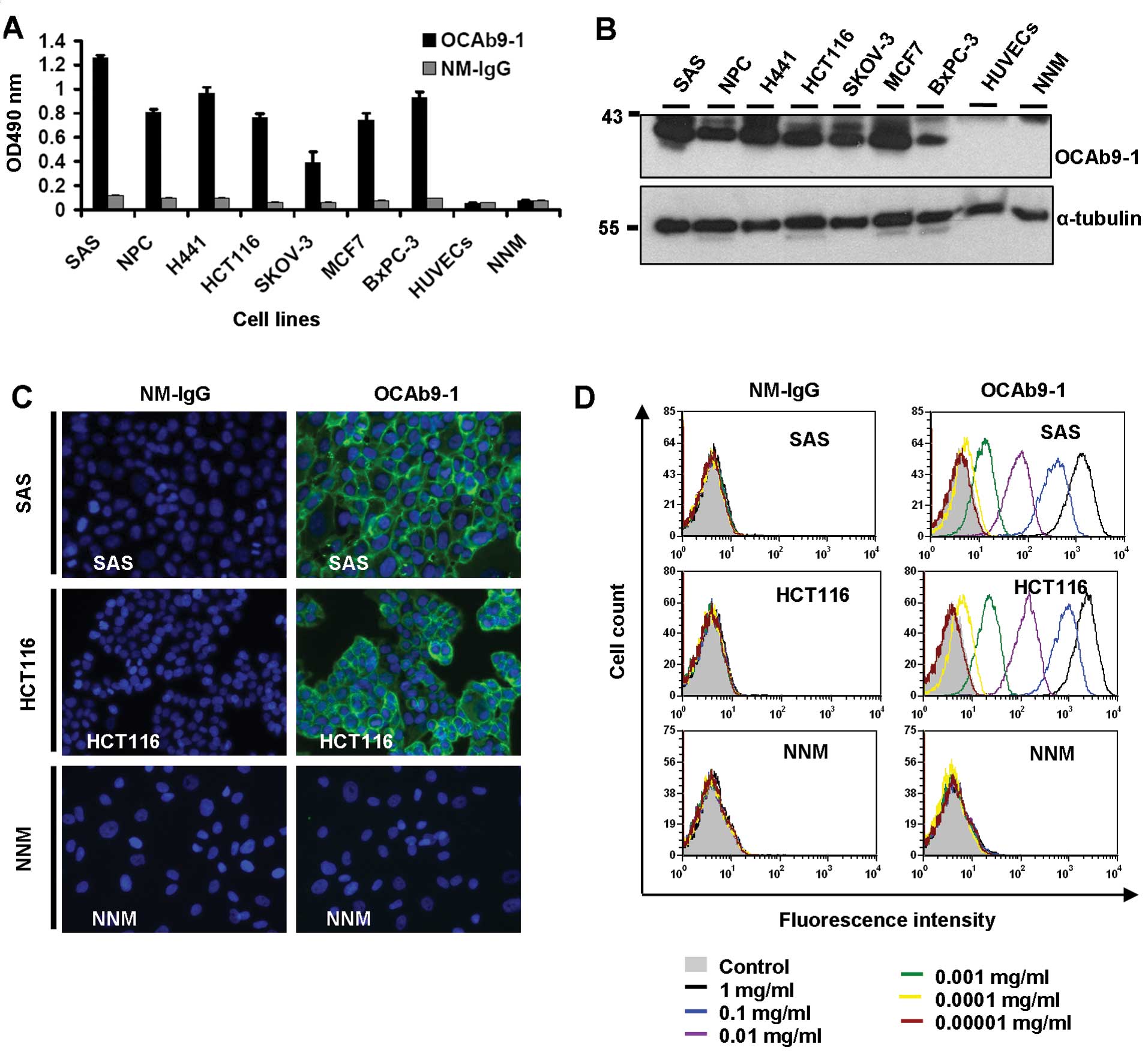
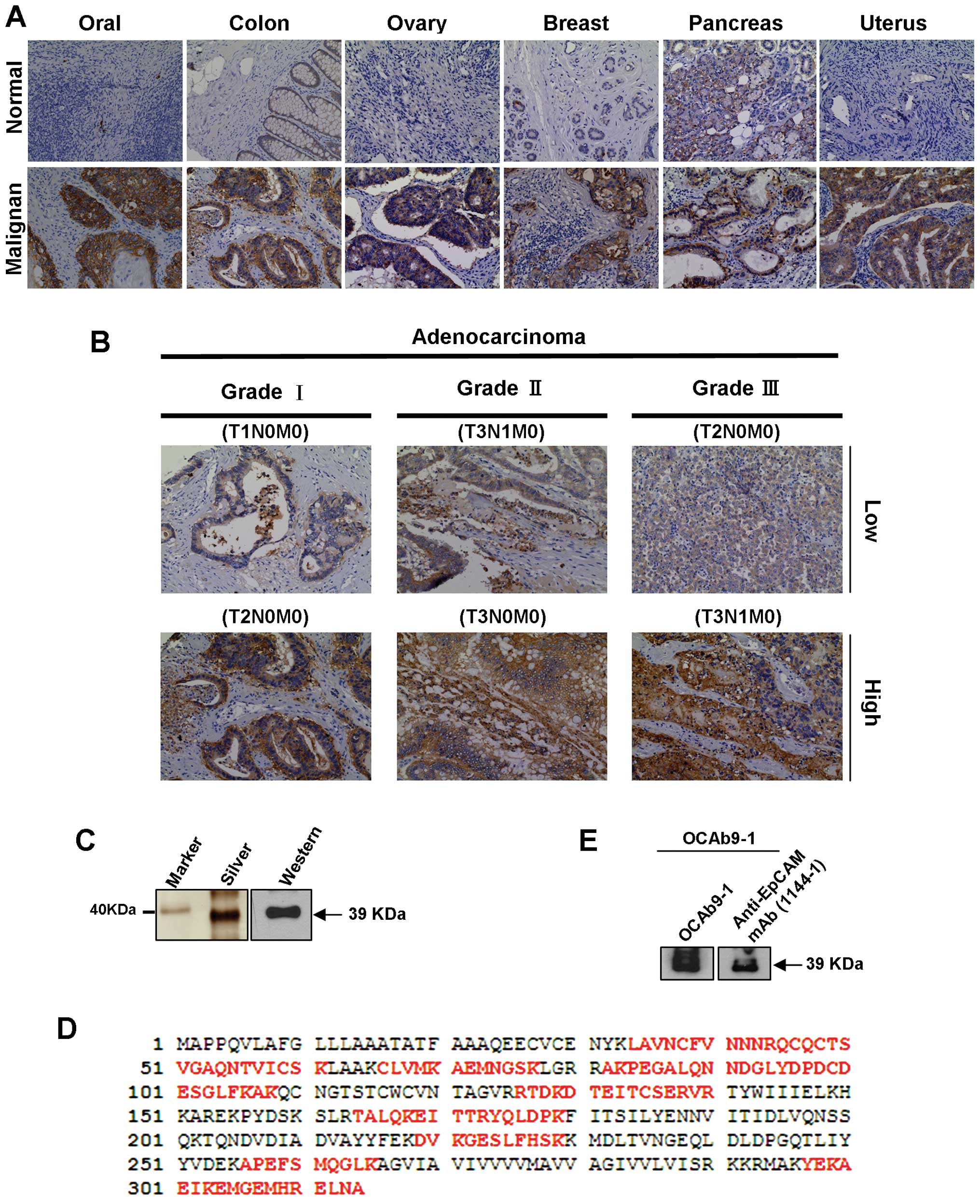
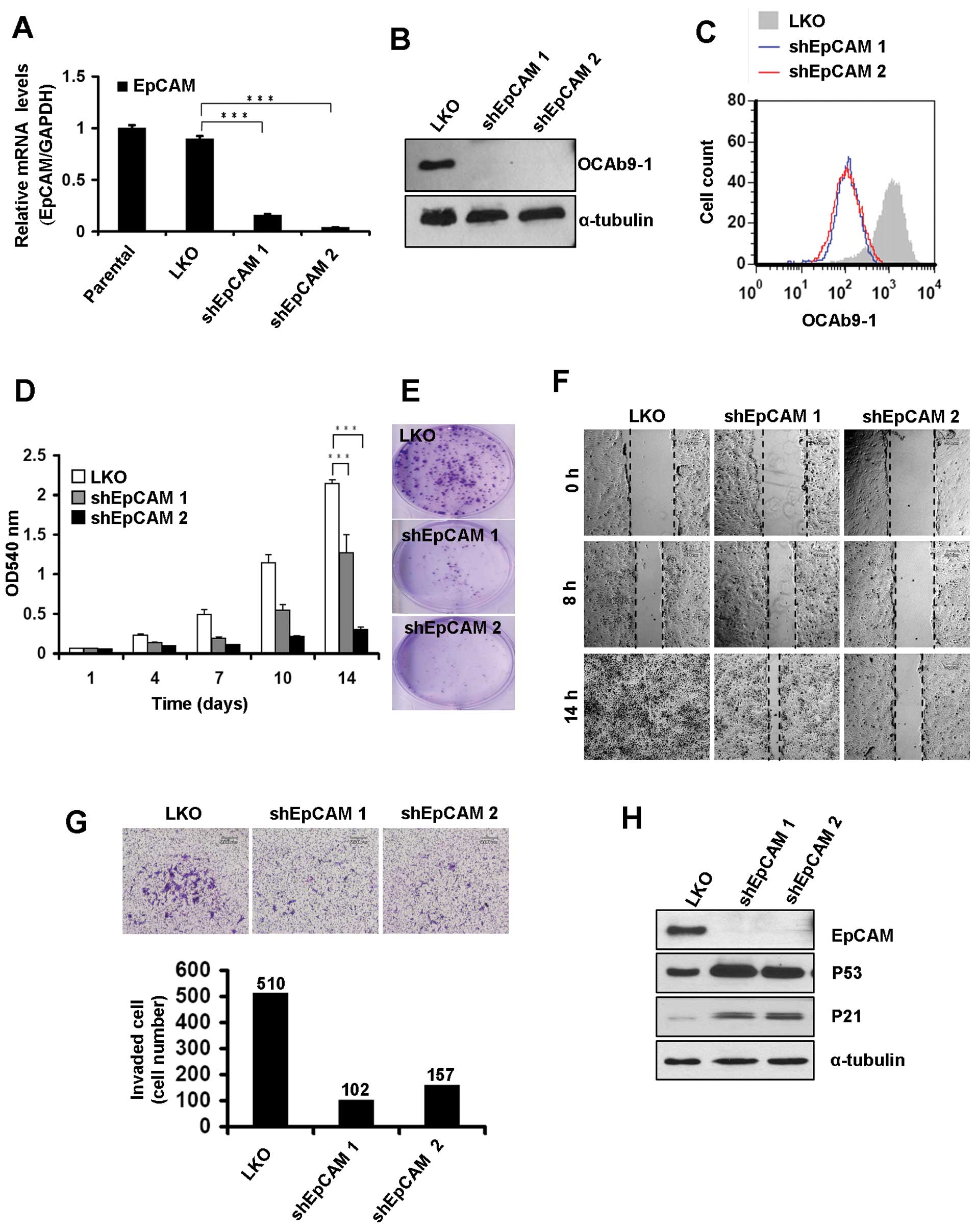
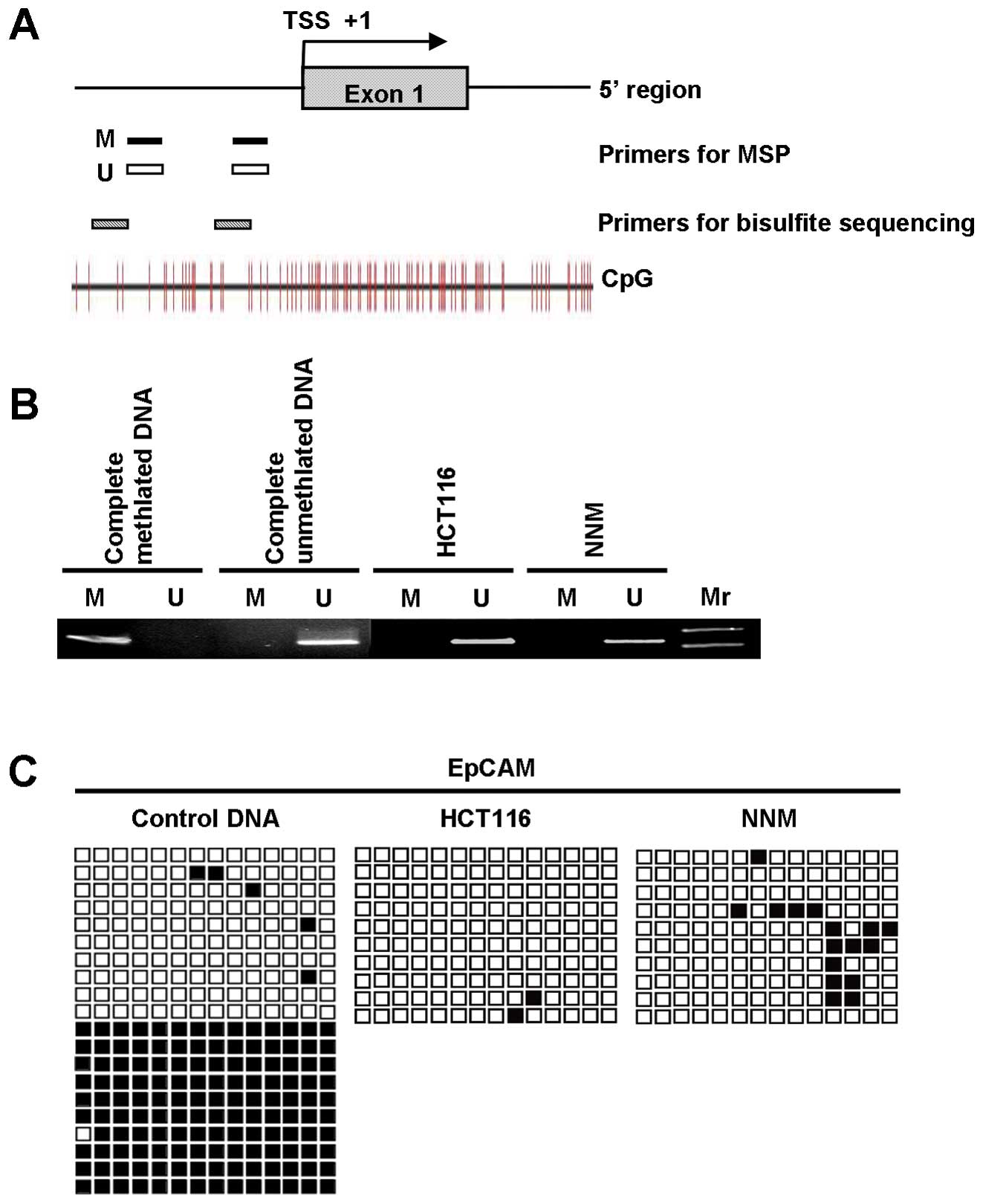
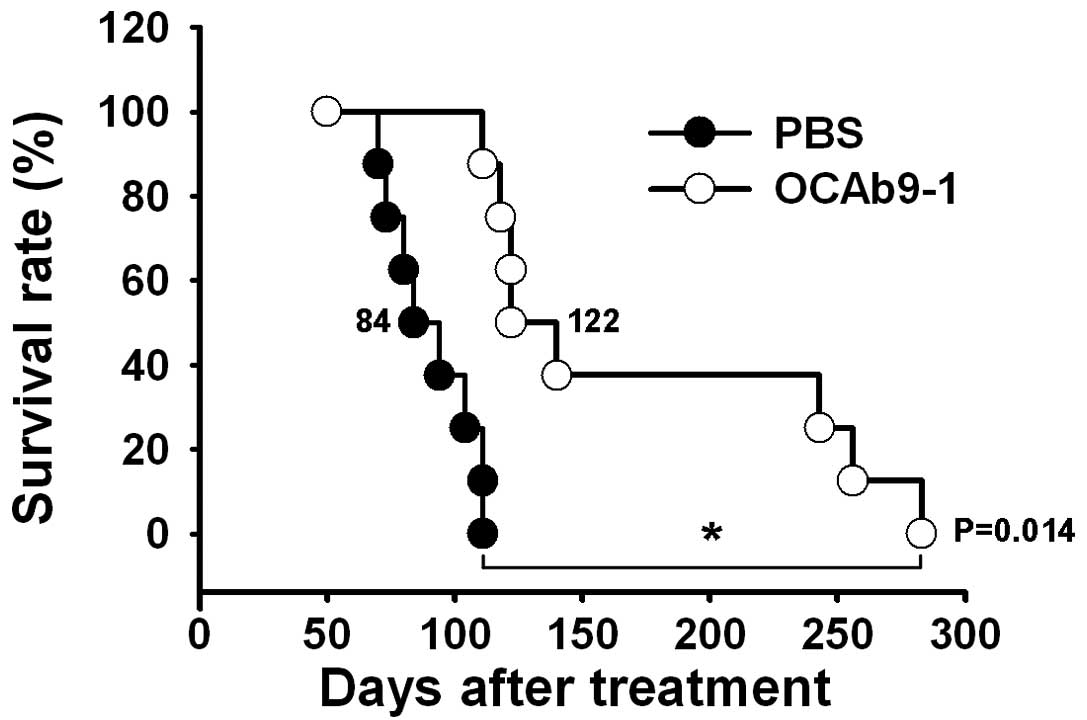
We have generated a novel monoclonal antibody (mAb), OCAb9-1, which specifically binds to various types of cancer cell lines, but not to normal cells. According to the results of immunoaffinity chromatography, LC-MS/MS analysis, co-immunoprecipitation, and RNA interference studies, the target protein of OCAb9-1 is the epithelial cell adhesion molecule (EpCAM). EpCAM is a type I transmembrane glycoprotein which is highly expressed in epithelial-transformed neoplasia and tumor-initiating cells (TICs). However, regulation of EpCAM gene expression in tumors and its role in tumorigenesis are not fully understood. In the present study, we show that EpCAM expression is elevated in several cancer cell lines and tumor tissues. Loss-of-function experiments were performed to demonstrate that EpCAM negatively regulates expression of p53 and p21, and promotes tumor cell growth, colony formation, migration and invasion. The median overall survival of tumor-bearing mice treated with OCAb9-1 was significantly higher than that of PBS-treated mice. Moreover, we report that the interplay between SUZ12 and JMJD3 results in dynamic regulation of lysine 27 trimethylation of histone 3 (H3K27me3). Taken together, our findings suggest that the anti-EpCAM mAb may be suitable for use in cancer diagnosis, prognosis, imaging and therapy. Furthermore, EpCAM overexpression in cancer cells is strongly associated with tumor progression, and may be regulated by epigenetic mechanisms.
View Figures

Figure 1

Figure 2

Figure 3

Figure 4

Figure 5

Figure 6

View References

1 

Peto J: Cancer epidemiology in the last century and the next decade. Nature. 411:390–395. 2001. View Article : Google Scholar : PubMed/NCBI

2 

Jemal A, Bray F, Center MM, et al: Global cancer statistics. CA Cancer J Clin. 61:69–90. 2011. View Article : Google Scholar : PubMed/NCBI

3 

van der Gun BT, Melchers LJ, Ruiters MH, et al: EpCAM in carcinogenesis: the good, the bad or the ugly. Carcinogenesis. 31:1913–1921. 2010. View Article : Google Scholar : PubMed/NCBI

4 

Visvader JE and Lindeman GJ: Cancer stem cells in solid tumours: accumulating evidence and unresolved questions. Nat Rev Cancer. 8:755–768. 2008. View Article : Google Scholar : PubMed/NCBI

5 

Litvinov SV, Velders MP, Bakker HA, et al: a human epithelial antigen is a homophilic cell-cell adhesion molecule. J Cell Biol. 125:437–446. 1994. View Article : Google Scholar : PubMed/NCBI

6 

Litvinov SV, Balzar M, Winter MJ, et al: Epithelial cell adhesion molecule (Ep-CAM) modulates cell-cell interactions mediated by classic cadherins. J Cell Biol. 139:1337–1348. 1997. View Article : Google Scholar

7 

Balzar M, Prins FA, Bakker HA, et al: The structural analysis of adhesions mediated by Ep-CAM. Exp Cell Res. 246:108–121. 1999. View Article : Google Scholar : PubMed/NCBI

8 

de Boer CJ, van Krieken JH, Janssen-van Rhijn CM, et al: Expression of Ep-CAM in normal, regenerating, metaplastic, and neoplastic liver. J Pathol. 188:201–206. 1999. View Article : Google Scholar : PubMed/NCBI

9 

Litvinov SV, van Driel W, van Rhijn CM, et al: Expression of Ep-CAM in cervical squamous epithelia correlates with an increased proliferation and the disappearance of markers for terminal differentiation. Am J Pathol. 148:865–875. 1996.PubMed/NCBI

10 

Maetzel D, Denzel S, Mack B, et al: Nuclear signalling by tumour-associated antigen EpCAM. Nat Cell Biol. 11:162–171. 2009. View Article : Google Scholar : PubMed/NCBI

11 

Al-Hajj M, Wicha MS, Benito-Hernandez A, et al: Prospective identification of tumorigenic breast cancer cells. Proc Natl Acad Sci USA. 100:3983–3988. 2003. View Article : Google Scholar : PubMed/NCBI

12 

Dalerba P, Dylla SJ, Park IK, et al: Phenotypic characterization of human colorectal cancer stem cells. Proc Natl Acad Sci USA. 104:10158–10163. 2007. View Article : Google Scholar : PubMed/NCBI

13 

Schmelzer E, Wauthier E and Reid LM: The phenotypes of pluripotent human hepatic progenitors. Stem Cells. 24:1852–1858. 2006. View Article : Google Scholar : PubMed/NCBI

14 

Dan YY, Riehle KJ, Lazaro C, et al: Isolation of multipotent progenitor cells from human fetal liver capable of differentiating into liver and mesenchymal lineages. Proc Natl Acad Sci USA. 103:9912–9917. 2006. View Article : Google Scholar : PubMed/NCBI

15 

Schmelzer E, Zhang L, Bruce A, et al: Human hepatic stem cells from fetal and postnatal donors. J Exp Med. 204:1973–1987. 2007. View Article : Google Scholar : PubMed/NCBI

16 

Anderson R, Schaible K, Heasman J, et al: Expression of the homophilic adhesion molecule, Ep-CAM, in the mammalian germ line. J Reprod Fertil. 116:379–384. 1999. View Article : Google Scholar

17 

Stingl J, Raouf A, Emerman JT, et al: Epithelial progenitors in the normal human mammary gland. J Mammary Gland Biol Neoplasia. 10:49–59. 2005. View Article : Google Scholar : PubMed/NCBI

18 

Moldenhauer G, Salnikov AV, Luttgau S, et al: Therapeutic potential of amanitin-conjugated anti-epithelial cell adhesion molecule monoclonal antibody against pancreatic carcinoma. J Natl Cancer Inst. 104:622–634. 2012. View Article : Google Scholar : PubMed/NCBI

19 

Simon M, Stefan N, Pluckthun A, et al: Epithelial cell adhesion molecule-targeted drug delivery for cancer therapy. Expert Opin Drug Deliv. 10:451–468. 2013. View Article : Google Scholar : PubMed/NCBI

20 

Punt CJ, Nagy A, Douillard JY, et al: Edrecolomab alone or in combination with fluorouracil and folinic acid in the adjuvant treatment of stage III colon cancer: a randomised study. Lancet. 360:671–677. 2002. View Article : Google Scholar : PubMed/NCBI

21 

Schmidt M, Scheulen ME, Dittrich C, et al: An open-label, randomized phase II study of adecatumumab, a fully human anti-EpCAM antibody, as monotherapy in patients with metastatic breast cancer. Ann Oncol. 21:275–282. 2010. View Article : Google Scholar

22 

Went P, Vasei M, Bubendorf L, et al: Frequent high-level expression of the immunotherapeutic target Ep-CAM in colon, stomach, prostate and lung cancers. Br J Cancer. 94:128–135. 2006. View Article : Google Scholar : PubMed/NCBI

23 

MacDonald GC, Rasamoelisolo M, Entwistle J, et al: A phase I clinical study of VB4-845: weekly intratumoral administration of an anti-EpCAM recombinant fusion protein in patients with squamous cell carcinoma of the head and neck. Drug Des Devel Ther. 2:105–114. 2009.PubMed/NCBI

24 

Migliore L, Migheli F, Spisni R, et al: Genetics, cytogenetics, and epigenetics of colorectal cancer. J Biomed Biotechnol. 2011:7923622011. View Article : Google Scholar : PubMed/NCBI

25 

Coppede F: Epigenetic biomarkers of colorectal cancer: focus on DNA methylation. Cancer Lett. 342:238–247. 2014. View Article : Google Scholar

26 

Tai KY, Shiah SG, Shieh YS, et al: DNA methylation and histone modification regulate silencing of epithelial cell adhesion molecule for tumor invasion and progression. Oncogene. 26:3989–3997. 2007. View Article : Google Scholar : PubMed/NCBI

27 

Spizzo G, Gastl G, Obrist P, et al: Methylation status of the Ep-CAM promoter region in human breast cancer cell lines and breast cancer tissue. Cancer Lett. 246:253–261. 2007. View Article : Google Scholar

28 

Yu G, Zhang X, Wang H, et al: CpG island methylation status in the EpCAM promoter region and gene expression. Oncol Rep. 20:1061–1067. 2008.PubMed/NCBI

29 

Shiah SG, Chang LC, Tai KY, et al: The involvement of promoter methylation and DNA methyltransferase-1 in the regulation of EpCAM expression in oral squamous cell carcinoma. Oral Oncol. 45:e1–8. 2009. View Article : Google Scholar

30 

van der Gun BT, Wasserkort R, Monami A, et al: Persistent downregulation of the pancarcinoma-associated epithelial cell adhesion molecule via active intranuclear methylation. Int J Cancer. 123:484–489. 2008. View Article : Google Scholar : PubMed/NCBI

31 

Heyn H and Esteller M: DNA methylation profiling in the clinic: applications and challenges. Nat Rev Genet. 13:679–692. 2012. View Article : Google Scholar : PubMed/NCBI

32 

Lin CT, Chan WY, Chen W, et al: Characterization of seven newly established nasopharyngeal carcinoma cell lines. Lab Invest. 68:716–727. 1993.PubMed/NCBI

33 

Oefinger PE, Bronson DL and Dreesman GR: Induction of hepatitis B surface antigen in human hepatoma-derived cell lines. J Gen Virol. 53:105–113. 1981. View Article : Google Scholar : PubMed/NCBI

34 

Lo A, Lin CT and Wu HC: Hepatocellular carcinoma cell-specific peptide ligand for targeted drug delivery. Mol Cancer Ther. 7:579–589. 2008. View Article : Google Scholar : PubMed/NCBI

35 

Lee TY, Wu HC, Tseng YL, et al: A novel peptide specifically binding to nasopharyngeal carcinoma for targeted drug delivery. Cancer Res. 64:8002–8008. 2004. View Article : Google Scholar : PubMed/NCBI

36 

Kohler G and Milstein C: Continuous cultures of fused cells secreting antibody of predefined specificity. Nature. 256:495–497. 1975. View Article : Google Scholar : PubMed/NCBI

37 

Liu IJ, Chiu CY, Chen YC, et al: Molecular mimicry of human endothelial cell antigen by autoantibodies to nonstructural protein 1 of dengue virus. J Biol Chem. 286:9726–9736. 2011. View Article : Google Scholar : PubMed/NCBI

38 

Tung KH, Lin CW, Kuo CC, et al: CHC promotes tumor growth and angiogenesis through regulation of HIF-1alpha and VEGF signaling. Cancer Lett. 331:58–67. 2013. View Article : Google Scholar

39 

Spizzo G, Went P, Dirnhofer S, et al: High Ep-CAM expression is associated with poor prognosis in node-positive breast cancer. Breast Cancer Res Treat. 86:207–213. 2004. View Article : Google Scholar : PubMed/NCBI

40 

Lu TY, Kao CF, Lin CT, et al: DNA methylation and histone modification regulate silencing of OPG during tumor progression. J Cell Biochem. 108:315–325. 2009. View Article : Google Scholar : PubMed/NCBI

41 

Huang HP, Chen PH, Yu CY, et al: Epithelial cell adhesion molecule (EpCAM) complex proteins promote transcription factor-mediated pluripotency reprogramming. J Biol Chem. 286:33520–33532. 2011. View Article : Google Scholar : PubMed/NCBI

42 

Esteller M: Epigenetics in cancer. N Engl J Med. 358:1148–1159. 2008. View Article : Google Scholar : PubMed/NCBI

43 

Bernstein BE, Kamal M, Lindblad-Toh K, et al: Genomic maps and comparative analysis of histone modifications in human and mouse. Cell. 120:169–181. 2005. View Article : Google Scholar : PubMed/NCBI

44 

Barski A, Cuddapah S, Cui K, et al: High-resolution profiling of histone methylations in the human genome. Cell. 129:823–837. 2007. View Article : Google Scholar : PubMed/NCBI

45 

Mutskov V and Felsenfeld G: Silencing of transgene transcription precedes methylation of promoter DNA and histone H3 lysine 9. EMBO J. 23:138–149. 2004. View Article : Google Scholar

46 

Munz M, Baeuerle PA and Gires O: The emerging role of EpCAM in cancer and stem cell signaling. Cancer Res. 69:5627–5629. 2009. View Article : Google Scholar : PubMed/NCBI

47 

Gires O, Klein CA and Baeuerle PA: On the abundance of EpCAM on cancer stem cells. Nat Rev Cancer. 9:143author reply 143. 2009. View Article : Google Scholar : PubMed/NCBI

48 

Saltz LB, Cox JV, Blanke C, et al: Irinotecan plus fluorouracil and leucovorin for metastatic colorectal cancer. Irinotecan Study Group. N Engl J Med. 343:905–914. 2000. View Article : Google Scholar : PubMed/NCBI

49 

Fields AL, Keller A, Schwartzberg L, et al: Adjuvant therapy with the monoclonal antibody Edrecolomab plus fluorouracil-based therapy does not improve overall survival of patients with stage III colon cancer. J Clin Oncol. 27:1941–1947. 2009. View Article : Google Scholar : PubMed/NCBI

50 

de Bono JS, Tolcher AW, Forero A, et al: ING-1, a monoclonal antibody targeting Ep-CAM in patients with advanced adenocarcinomas. Clin Cancer Res. 10:7555–7565. 2004. View Article : Google Scholar : PubMed/NCBI

51 

Goel S, Bauer RJ, Desai K, et al: Pharmacokinetic and safety study of subcutaneously administered weekly ING-1, a human engineere monoclonal antibody targeting human EpCAM, in patients with advanced solid tumors. Ann Oncol. 18:1704–1707. 2007. View Article : Google Scholar : PubMed/NCBI

52 

Lin CW, Liao MY, Lin WW, et al: Epithelial cell adhesion molecule regulates tumor initiation and tumorigenesis via activating reprogramming factors and epithelial-mesenchymal transition gene expression in colon cancer. J Biol Chem. 287:39449–39459. 2012. View Article : Google Scholar : PubMed/NCBI

53 

Schuettengruber B, Chourrout D, Vervoort M, et al: Genome regulation by polycomb and trithorax proteins. Cell. 128:735–745. 2007. View Article : Google Scholar : PubMed/NCBI

54 

Schwartz YB and Pirrotta V: Polycomb silencing mechanisms and the management of genomic programmes. Nat Rev Genet. 8:9–22. 2007. View Article : Google Scholar

55 

Cao R and Zhang Y: SUZ12 is required for both the histone methyltransferase activity and the silencing function of the EED-EZH2 complex. Mol Cell. 15:57–67. 2004. View Article : Google Scholar : PubMed/NCBI

56 

Pasini D, Bracken AP, Jensen MR, et al: Suz12 is essential for mouse development and for EZH2 histone methyltransferase activity. EMBO J. 23:4061–4071. 2004. View Article : Google Scholar : PubMed/NCBI

57 

Swigut T and Wysocka J: H3K27 demethylases, at long last. Cell. 131:29–32. 2007. View Article : Google Scholar : PubMed/NCBI

58 

Agger K, Cloos PA, Christensen J, et al: UTX and JMJD3 are histone H3K27 demethylases involved in HOX gene regulation and development. Nature. 449:731–734. 2007. View Article : Google Scholar : PubMed/NCBI

59 

Boyer LA, Plath K, Zeitlinger J, et al: Polycomb complexes repress developmental regulators in murine embryonic stem cells. Nature. 441:349–353. 2006. View Article : Google Scholar : PubMed/NCBI

Related Articles

  • Abstract
  • View
  • Download
  • Twitter
Copy and paste a formatted citation
Spandidos Publications style
Liao M, Kuo MY, Lu T, Wang Y and Wu H: Generation of an anti-EpCAM antibody and epigenetic regulation of EpCAM in colorectal cancer. Int J Oncol 46: 1788-1800, 2015.
APA
Liao, M., Kuo, M.Y., Lu, T., Wang, Y., & Wu, H. (2015). Generation of an anti-EpCAM antibody and epigenetic regulation of EpCAM in colorectal cancer. International Journal of Oncology, 46, 1788-1800. https://doi.org/10.3892/ijo.2015.2876
MLA
Liao, M., Kuo, M. Y., Lu, T., Wang, Y., Wu, H."Generation of an anti-EpCAM antibody and epigenetic regulation of EpCAM in colorectal cancer". International Journal of Oncology 46.4 (2015): 1788-1800.
Chicago
Liao, M., Kuo, M. Y., Lu, T., Wang, Y., Wu, H."Generation of an anti-EpCAM antibody and epigenetic regulation of EpCAM in colorectal cancer". International Journal of Oncology 46, no. 4 (2015): 1788-1800. https://doi.org/10.3892/ijo.2015.2876
Copy and paste a formatted citation
x
Spandidos Publications style
Liao M, Kuo MY, Lu T, Wang Y and Wu H: Generation of an anti-EpCAM antibody and epigenetic regulation of EpCAM in colorectal cancer. Int J Oncol 46: 1788-1800, 2015.
APA
Liao, M., Kuo, M.Y., Lu, T., Wang, Y., & Wu, H. (2015). Generation of an anti-EpCAM antibody and epigenetic regulation of EpCAM in colorectal cancer. International Journal of Oncology, 46, 1788-1800. https://doi.org/10.3892/ijo.2015.2876
MLA
Liao, M., Kuo, M. Y., Lu, T., Wang, Y., Wu, H."Generation of an anti-EpCAM antibody and epigenetic regulation of EpCAM in colorectal cancer". International Journal of Oncology 46.4 (2015): 1788-1800.
Chicago
Liao, M., Kuo, M. Y., Lu, T., Wang, Y., Wu, H."Generation of an anti-EpCAM antibody and epigenetic regulation of EpCAM in colorectal cancer". International Journal of Oncology 46, no. 4 (2015): 1788-1800. https://doi.org/10.3892/ijo.2015.2876
Follow us
  • Twitter
  • LinkedIn
  • Facebook
About
  • Spandidos Publications
  • Careers
  • Cookie Policy
  • Privacy Policy
How can we help?
  • Help
  • Live Chat
  • Contact
  • Email to our Support Team