Spandidos Publications Logo
  • About
    • About Spandidos
    • Aims and Scopes
    • Abstracting and Indexing
    • Editorial Policies
    • Reprints and Permissions
    • Job Opportunities
    • Terms and Conditions
    • Contact
  • Journals
    • All Journals
    • Oncology Letters
      • Oncology Letters
      • Information for Authors
      • Editorial Policies
      • Editorial Board
      • Aims and Scope
      • Abstracting and Indexing
      • Bibliographic Information
      • Archive
    • International Journal of Oncology
      • International Journal of Oncology
      • Information for Authors
      • Editorial Policies
      • Editorial Board
      • Aims and Scope
      • Abstracting and Indexing
      • Bibliographic Information
      • Archive
    • Molecular and Clinical Oncology
      • Molecular and Clinical Oncology
      • Information for Authors
      • Editorial Policies
      • Editorial Board
      • Aims and Scope
      • Abstracting and Indexing
      • Bibliographic Information
      • Archive
    • Experimental and Therapeutic Medicine
      • Experimental and Therapeutic Medicine
      • Information for Authors
      • Editorial Policies
      • Editorial Board
      • Aims and Scope
      • Abstracting and Indexing
      • Bibliographic Information
      • Archive
    • International Journal of Molecular Medicine
      • International Journal of Molecular Medicine
      • Information for Authors
      • Editorial Policies
      • Editorial Board
      • Aims and Scope
      • Abstracting and Indexing
      • Bibliographic Information
      • Archive
    • Biomedical Reports
      • Biomedical Reports
      • Information for Authors
      • Editorial Policies
      • Editorial Board
      • Aims and Scope
      • Abstracting and Indexing
      • Bibliographic Information
      • Archive
    • Oncology Reports
      • Oncology Reports
      • Information for Authors
      • Editorial Policies
      • Editorial Board
      • Aims and Scope
      • Abstracting and Indexing
      • Bibliographic Information
      • Archive
    • Molecular Medicine Reports
      • Molecular Medicine Reports
      • Information for Authors
      • Editorial Policies
      • Editorial Board
      • Aims and Scope
      • Abstracting and Indexing
      • Bibliographic Information
      • Archive
    • World Academy of Sciences Journal
      • World Academy of Sciences Journal
      • Information for Authors
      • Editorial Policies
      • Editorial Board
      • Aims and Scope
      • Abstracting and Indexing
      • Bibliographic Information
      • Archive
    • International Journal of Functional Nutrition
      • International Journal of Functional Nutrition
      • Information for Authors
      • Editorial Policies
      • Editorial Board
      • Aims and Scope
      • Abstracting and Indexing
      • Bibliographic Information
      • Archive
    • International Journal of Epigenetics
      • International Journal of Epigenetics
      • Information for Authors
      • Editorial Policies
      • Editorial Board
      • Aims and Scope
      • Abstracting and Indexing
      • Bibliographic Information
      • Archive
    • Medicine International
      • Medicine International
      • Information for Authors
      • Editorial Policies
      • Editorial Board
      • Aims and Scope
      • Abstracting and Indexing
      • Bibliographic Information
      • Archive
  • Articles
  • Information
    • Information for Authors
    • Information for Reviewers
    • Information for Librarians
    • Information for Advertisers
    • Conferences
  • Language Editing
Spandidos Publications Logo
  • About
    • About Spandidos
    • Aims and Scopes
    • Abstracting and Indexing
    • Editorial Policies
    • Reprints and Permissions
    • Job Opportunities
    • Terms and Conditions
    • Contact
  • Journals
    • All Journals
    • Biomedical Reports
      • Information for Authors
      • Editorial Policies
      • Editorial Board
      • Aims and Scope
      • Abstracting and Indexing
      • Bibliographic Information
      • Archive
    • Experimental and Therapeutic Medicine
      • Information for Authors
      • Editorial Policies
      • Editorial Board
      • Aims and Scope
      • Abstracting and Indexing
      • Bibliographic Information
      • Archive
    • International Journal of Epigenetics
      • Information for Authors
      • Editorial Policies
      • Editorial Board
      • Aims and Scope
      • Abstracting and Indexing
      • Bibliographic Information
      • Archive
    • International Journal of Functional Nutrition
      • Information for Authors
      • Editorial Policies
      • Editorial Board
      • Aims and Scope
      • Abstracting and Indexing
      • Bibliographic Information
      • Archive
    • International Journal of Molecular Medicine
      • Information for Authors
      • Editorial Policies
      • Editorial Board
      • Aims and Scope
      • Abstracting and Indexing
      • Bibliographic Information
      • Archive
    • International Journal of Oncology
      • Information for Authors
      • Editorial Policies
      • Editorial Board
      • Aims and Scope
      • Abstracting and Indexing
      • Bibliographic Information
      • Archive
    • Medicine International
      • Information for Authors
      • Editorial Policies
      • Editorial Board
      • Aims and Scope
      • Abstracting and Indexing
      • Bibliographic Information
      • Archive
    • Molecular and Clinical Oncology
      • Information for Authors
      • Editorial Policies
      • Editorial Board
      • Aims and Scope
      • Abstracting and Indexing
      • Bibliographic Information
      • Archive
    • Molecular Medicine Reports
      • Information for Authors
      • Editorial Policies
      • Editorial Board
      • Aims and Scope
      • Abstracting and Indexing
      • Bibliographic Information
      • Archive
    • Oncology Letters
      • Information for Authors
      • Editorial Policies
      • Editorial Board
      • Aims and Scope
      • Abstracting and Indexing
      • Bibliographic Information
      • Archive
    • Oncology Reports
      • Information for Authors
      • Editorial Policies
      • Editorial Board
      • Aims and Scope
      • Abstracting and Indexing
      • Bibliographic Information
      • Archive
    • World Academy of Sciences Journal
      • Information for Authors
      • Editorial Policies
      • Editorial Board
      • Aims and Scope
      • Abstracting and Indexing
      • Bibliographic Information
      • Archive
  • Articles
  • Information
    • For Authors
    • For Reviewers
    • For Librarians
    • For Advertisers
    • Conferences
  • Language Editing
Login Register Submit
  • This site uses cookies
  • You can change your cookie settings at any time by following the instructions in our Cookie Policy. To find out more, you may read our Privacy Policy.

    I agree
Search articles by DOI, keyword, author or affiliation
Search
Advanced Search
presentation
International Journal of Oncology
Join Editorial Board Propose a Special Issue
Print ISSN: 1019-6439 Online ISSN: 1791-2423
Journal Cover
April-2015 Volume 46 Issue 4

Full Size Image

Cover Legend PDF

Sign up for eToc alerts
Recommend to Library

Journals

International Journal of Molecular Medicine

International Journal of Molecular Medicine

International Journal of Molecular Medicine is an international journal devoted to molecular mechanisms of human disease.

International Journal of Oncology

International Journal of Oncology

International Journal of Oncology is an international journal devoted to oncology research and cancer treatment.

Molecular Medicine Reports

Molecular Medicine Reports

Covers molecular medicine topics such as pharmacology, pathology, genetics, neuroscience, infectious diseases, molecular cardiology, and molecular surgery.

Oncology Reports

Oncology Reports

Oncology Reports is an international journal devoted to fundamental and applied research in Oncology.

Experimental and Therapeutic Medicine

Experimental and Therapeutic Medicine

Experimental and Therapeutic Medicine is an international journal devoted to laboratory and clinical medicine.

Oncology Letters

Oncology Letters

Oncology Letters is an international journal devoted to Experimental and Clinical Oncology.

Biomedical Reports

Biomedical Reports

Explores a wide range of biological and medical fields, including pharmacology, genetics, microbiology, neuroscience, and molecular cardiology.

Molecular and Clinical Oncology

Molecular and Clinical Oncology

International journal addressing all aspects of oncology research, from tumorigenesis and oncogenes to chemotherapy and metastasis.

World Academy of Sciences Journal

World Academy of Sciences Journal

Multidisciplinary open-access journal spanning biochemistry, genetics, neuroscience, environmental health, and synthetic biology.

International Journal of Functional Nutrition

International Journal of Functional Nutrition

Open-access journal combining biochemistry, pharmacology, immunology, and genetics to advance health through functional nutrition.

International Journal of Epigenetics

International Journal of Epigenetics

Publishes open-access research on using epigenetics to advance understanding and treatment of human disease.

Medicine International

Medicine International

An International Open Access Journal Devoted to General Medicine.

Journal Cover
April-2015 Volume 46 Issue 4

Full Size Image

Cover Legend PDF

Sign up for eToc alerts
Recommend to Library

  • Article
  • Citations
    • Cite This Article
    • Download Citation
    • Create Citation Alert
    • Remove Citation Alert
    • Cited By
  • Similar Articles
    • Related Articles (in Spandidos Publications)
    • Similar Articles (Google Scholar)
    • Similar Articles (PubMed)
  • Download PDF
  • Download XML
  • View XML
Article

Ginsenoside Rg3-induced EGFR/MAPK pathway deactivation inhibits melanoma cell proliferation by decreasing FUT4/LeY expression

  • Authors:
    • Xiu Shan
    • Faisal Aziz
    • Li Li Tian
    • Xiao Qi Wang
    • Qiu Yan
    • Ji Wei Liu
  • View Affiliations / Copyright

    Affiliations: Department of Oncology, The First Affiliated Hospital of Dalian Medical University, Dalian 116011, P.R. China, Department of Biochemistry and Molecular Biology, Liaoning Provincial Core Laboratory of Glycobiology and Glycoengineering, Dalian Medical University, Dalian 116044, Liaoning, P.R. China, Department of Dermatology, Northwestern University, Feinberg School of Medicine, Chicago, IL 60611, USA
  • Pages: 1667-1676
    |
    Published online on: February 10, 2015
       https://doi.org/10.3892/ijo.2015.2886
  • Expand metrics +
Metrics: Total Views: 0 (Spandidos Publications: | PMC Statistics: )
Metrics: Total PDF Downloads: 0 (Spandidos Publications: | PMC Statistics: )
Cited By (CrossRef): 0 citations Loading Articles...

This article is mentioned in:


Abstract

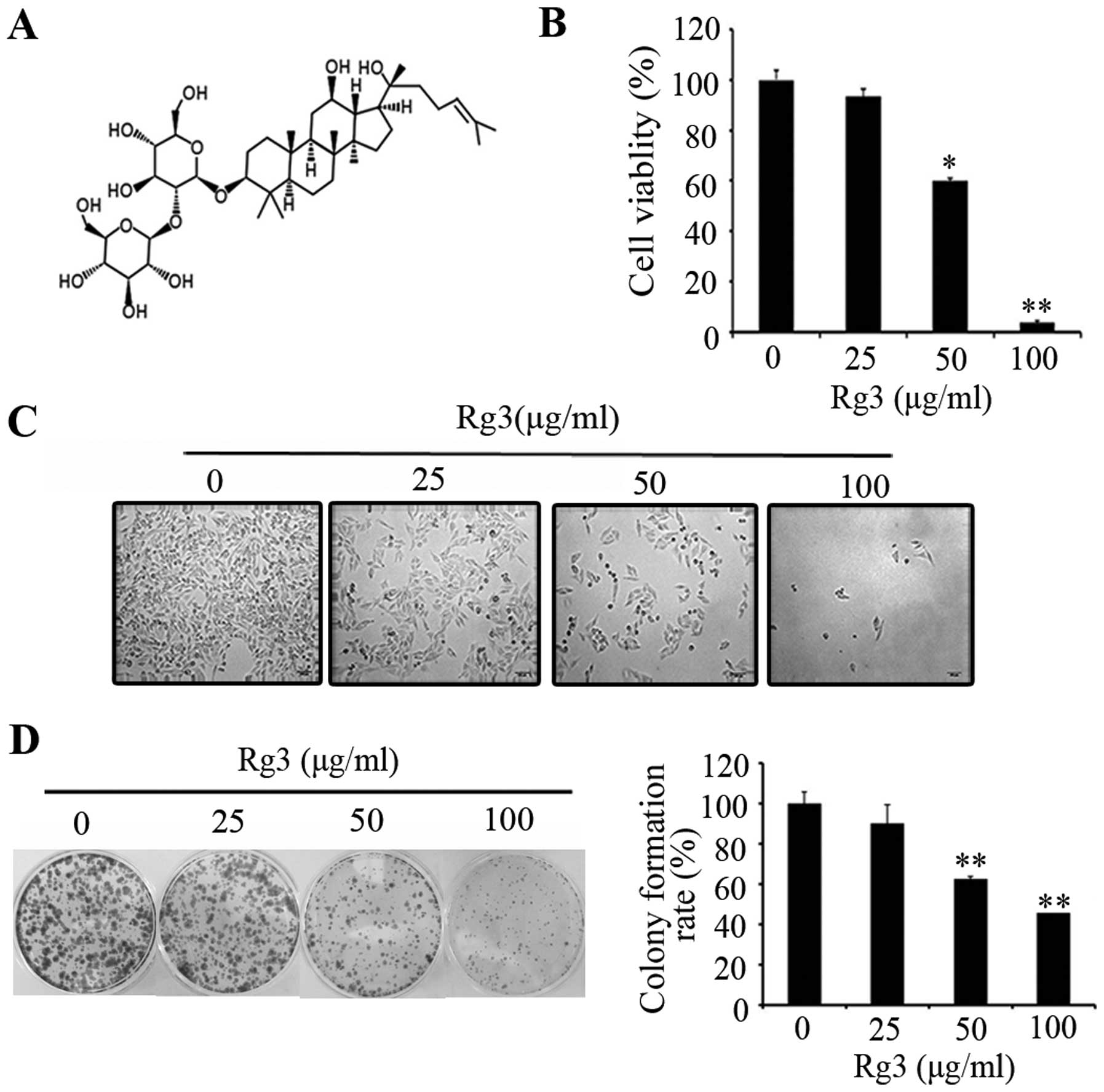
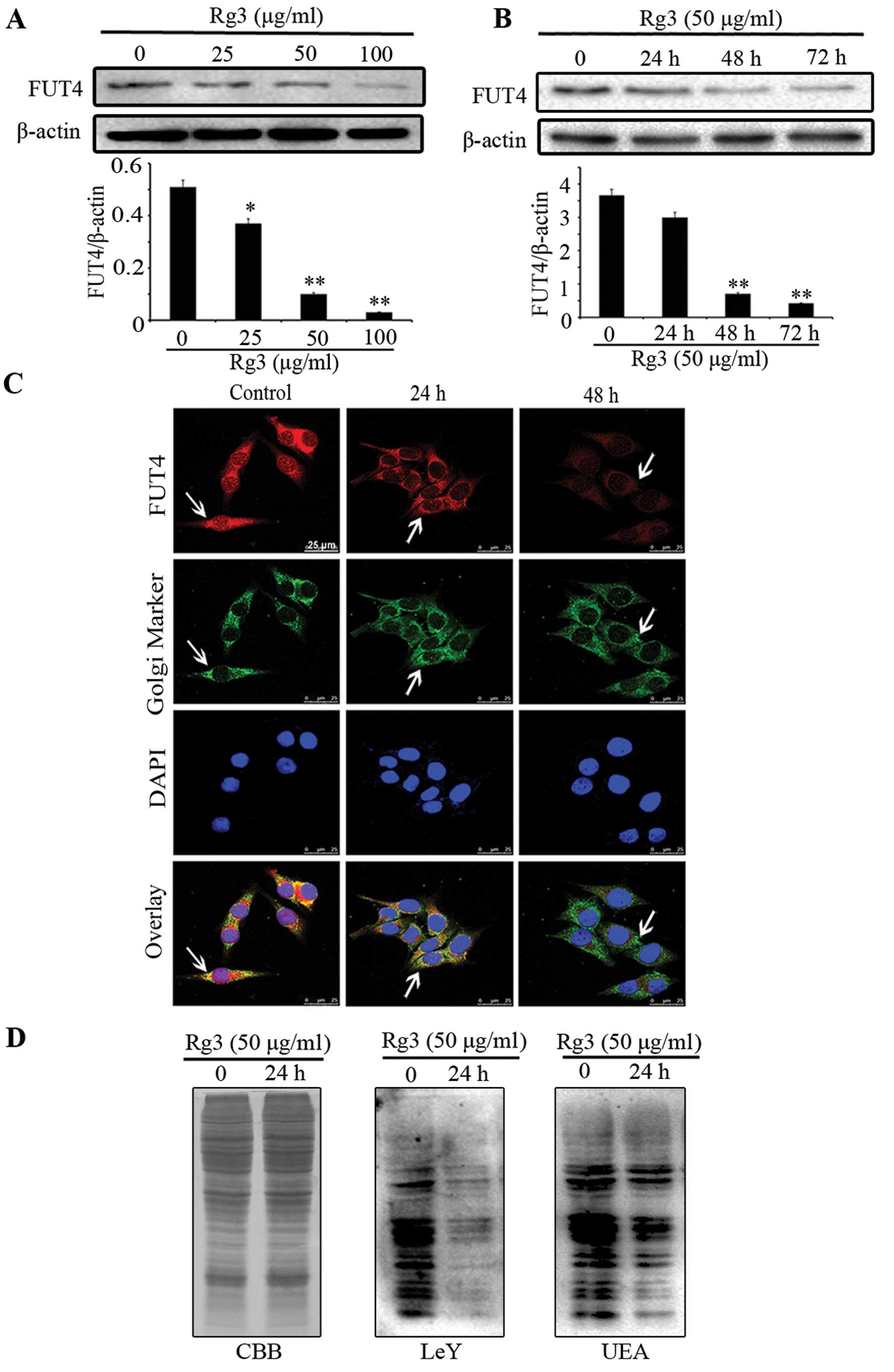
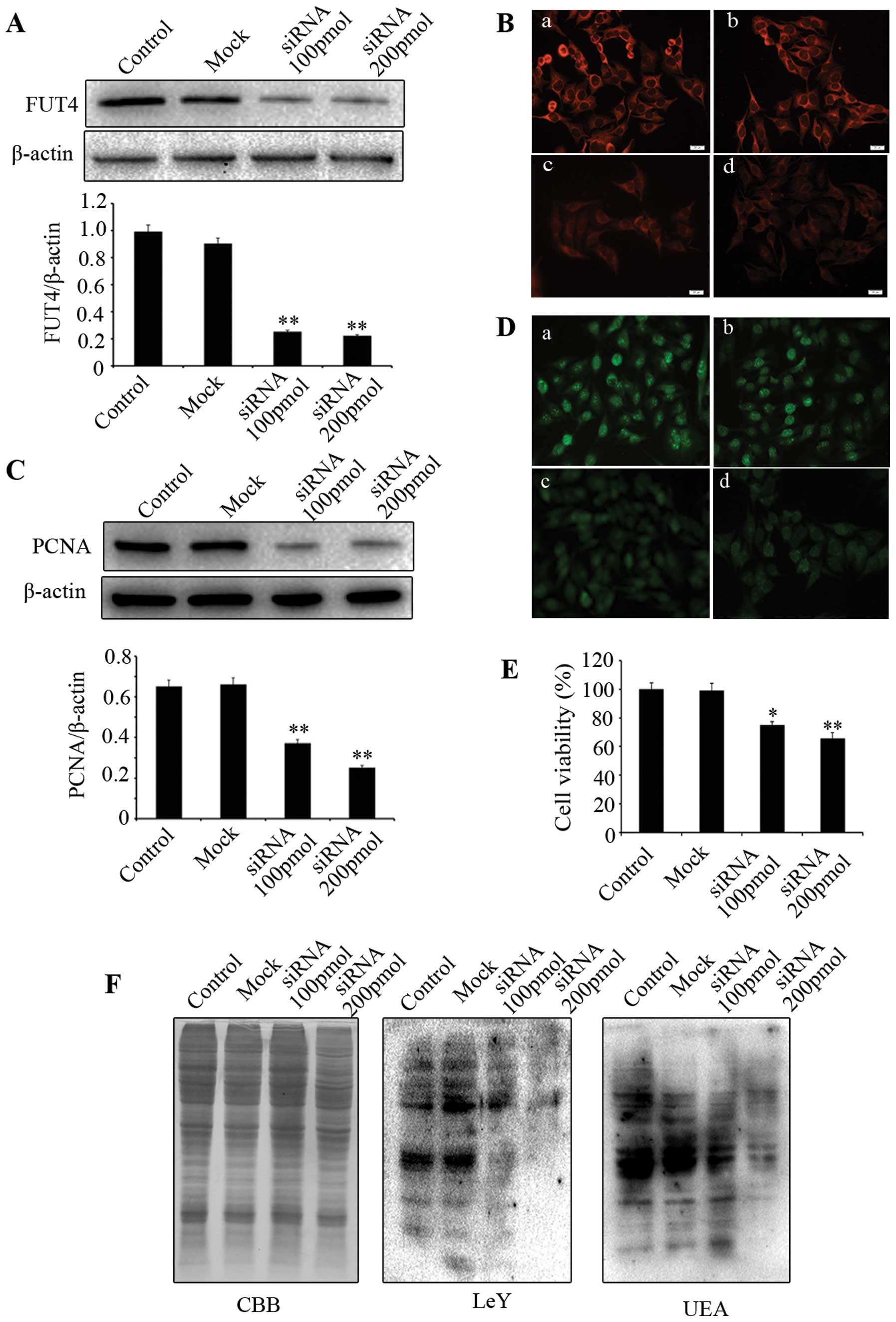
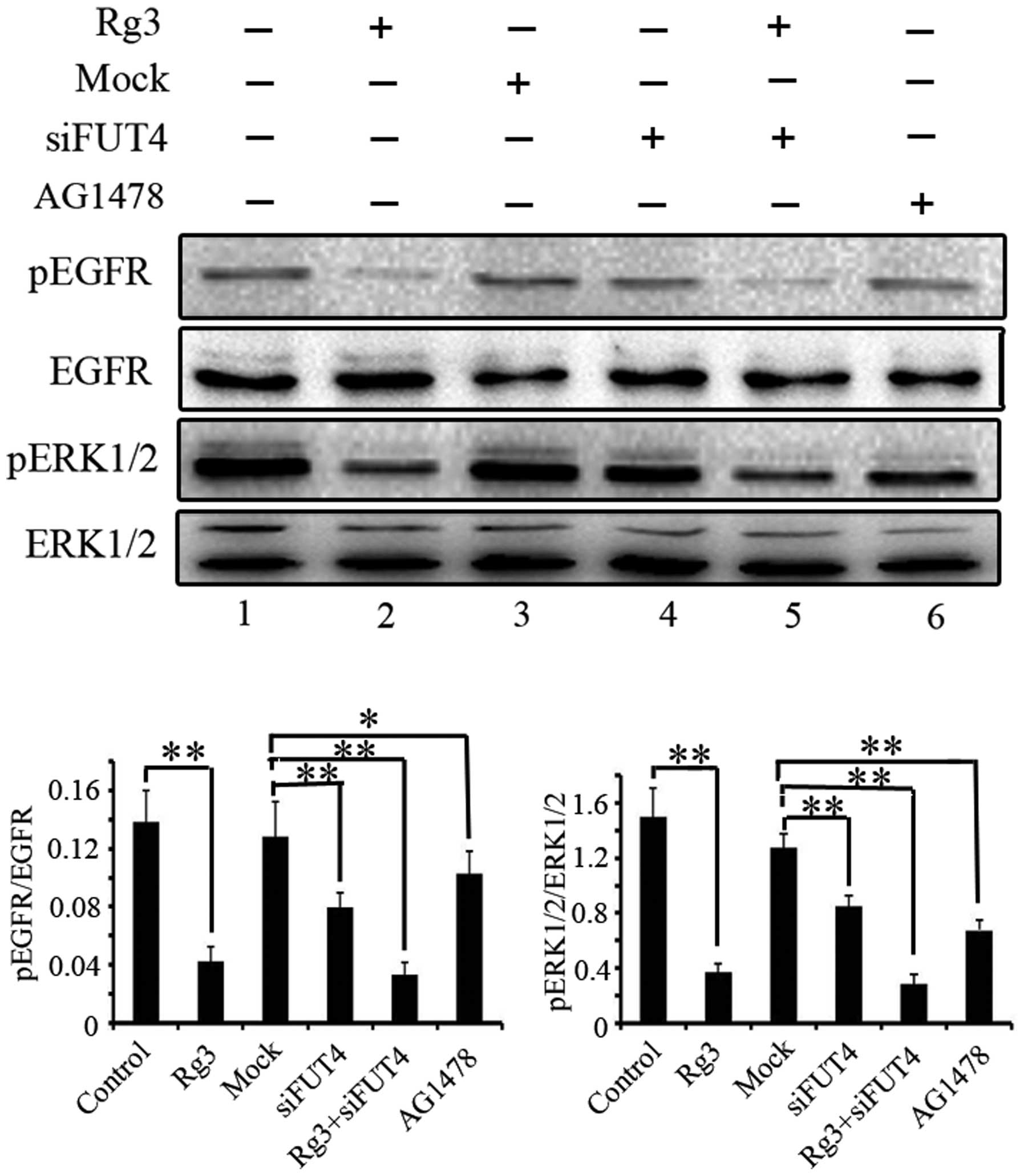
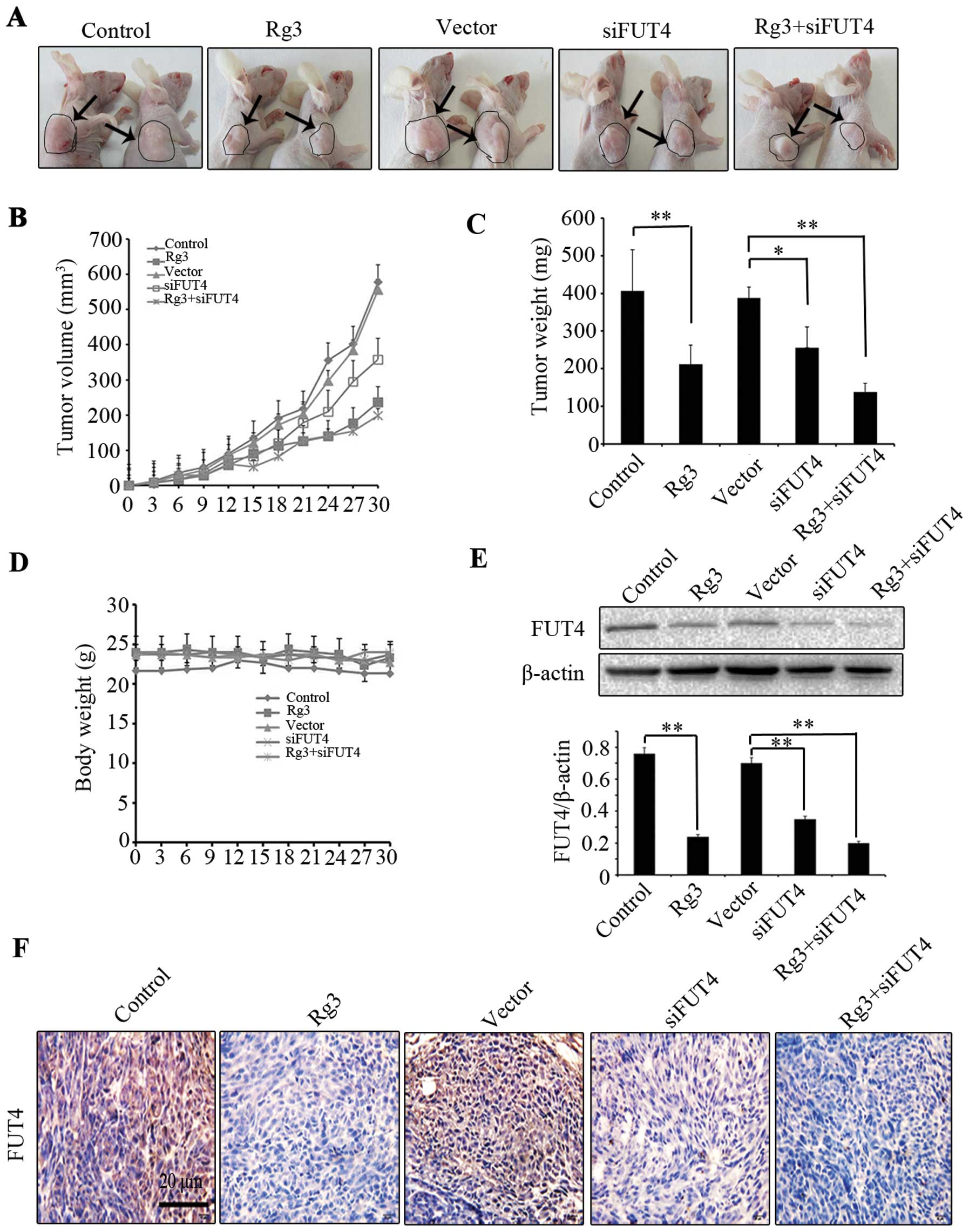
Malignant melanoma is a destructive and lethal form of skin cancer with poor prognosis. An effective treatment for melanoma is greatly needed. Ginsenoside Rg3 is a herbal medicine with high antitumor activity. It is reported that abnormal glycosylation is correlated with the tumor cell growth. However, the antitumor effect of Rg3 on melanoma and its mechanism on regulating glycosylation are unknown. We found that Rg3 did not only inhibit A375 melanoma cell proliferation in a dose-dependent manner, but also decreased the expression of fucosyltransferase IV (FUT4) and its synthetic product Lewis Y (LeY), a tumor-associated carbohydrate antigen (TACA). Knocking down FUT4 expression by siRNA dramatically reduced FUT4/LeY level and inhibited cell proliferation through preventing the activation of EGFR/MAPK pathway. Consistently, the inhibitory effect of the Rg3 and FUT4 knockdown on melanoma growth was also seen in a xenograft melanoma mouse model. In conclusion, Rg3 effectively inhibited melanoma cell growth by downregulating FUT4 both in vitro and in vivo. Targeting FUT4/LeY mediated fucosylation by Rg3 inhibited the activation of EGFR/MAPK pathway and prevented melanoma growth. Results from this study suggest Rg3 is a potential novel therapy agent for melanoma treatment.
View Figures

Figure 1

Figure 2

Figure 3

Figure 4

Figure 5

View References

1 

Ives NJ, Stowe RL, Lorigan P and Wheatley K: Chemotherapy compared with biochemotherapy for the treatment of metastatic melanoma: a meta-analysis of 18 trials involving 2,621 patients. J Clin Oncol. 25:5426–5434. 2007. View Article : Google Scholar : PubMed/NCBI

2 

Balch CM, Gershenwald JE, Soong SJ, et al: Final version of 2009 AJCC melanoma staging and classification. J Clin Oncol. 27:6199–6206. 2009. View Article : Google Scholar : PubMed/NCBI

3 

Menzies AM and Lon GV: Recent advances in melanoma systemic therapy, BRAF inhibitors, CTLA4 antibodies and beyond. Eur J Cancer. 49:3229–3241. 2013. View Article : Google Scholar : PubMed/NCBI

4 

Ma C and Armstrong AW: Severe adverse events from the treatment of advanced melanoma: a systematic review of severe side effects associated with ipilimumab, vemurafenib, interferon alfa-2b, dacarbazine and interleukin-2. J Dermatolog Treat. 25:401–408. 2014. View Article : Google Scholar

5 

Menaa F: Latest approved therapies for metastatic melanoma: what comes next? J Skin Cancer. 1:1–10. 2013. View Article : Google Scholar

6 

Zhang S, Zhang HS, Cordon-Cardo C, Reuter VE, Singhal AK, Lioyd KO and Livingston PO: Selection of tumor antigens as targets for immune attack using immunohistochemistry: II. Blood group-related antigens. Int J Cancer. 73:50–56. 1997. View Article : Google Scholar : PubMed/NCBI

7 

Cao Y, Merling A, Karsten U and Schwartz-Albiez R: The fucosylated histoblood group antigens H type 2 (blood group O, CD173) and Lewis Y (CD174) are expressed on CD34+ hematopoietic progenitors but absent on mature lymphocytes. Glycobiology. 11:677–683. 2001. View Article : Google Scholar : PubMed/NCBI

8 

Escrevente C, Machado E, Brito C, Reis CA, Stoeck A, Runz S, Marmé A, Altevogt P and Costa J: Different expression levels of alpha3/4 fucosyltransferases and Lewis determinants in ovarian carcinoma tissues and cell lines. Int J Oncol. 29:557–566. 2006.PubMed/NCBI

9 

Zhang Z, Sun P, Liu J, Fu L and Yan Q: Suppression of FUT1/FUT4 expression by siRNA inhibits tumor growth. Biochim Biophys Acta. 1783:287–296. 2008. View Article : Google Scholar

10 

Wang YF, Liu JJ, Lin B, Wang CZ, Li Q, Liu S, Yan L, Zhang S and Iwamori M: Study on the expression and clinical significances of Lewis y antigen and integrin αv, β3 in epithelial ovarian tumors. Int J Mol Sci. 12:3409–3421. 2011. View Article : Google Scholar

11 

Kuo CH, Chen PK, Chang BI, Sung MC, Shi CS, Lee JS, Chang CF, Shi JY and Wu HL: The recombinant lectin-like domain of thrombomodulin inhibits angiogenesis through interaction with Lewis Y antigen. Blood. 119:1302–1313. 2012. View Article : Google Scholar

12 

Gao J, Hu ZH, Liu JJ, Liu DW, Wang Y, Cai M, Zhang D, Tan M and Lin B: Expression of CD147 and Lewis y antigen in ovarian cancer and their relationship to drug resistance. Med Oncol. 31:920–929. 2014. View Article : Google Scholar : PubMed/NCBI

13 

Hu ZH, Gao J, Liu B, et al: High expression of Lewis y antigen and CD44 is correlated with resistance to chemotherapy in epithelial ovarian cancers. PLoS One. 8:e572502013. View Article : Google Scholar : PubMed/NCBI

14 

Noble P, Spendlove I, Harding S, Parsons T and Durrant LG: Durrant therapeutic targeting of Lewisy and Lewisb with a novel monoclonal antibody 692/29. PLoS One. 8:e548922013. View Article : Google Scholar

15 

Zandi R, Larsen AB, Anderse P, Stockhausen MT and Poulsen HS: Mechanism for oncogenic activation of the epidermal growth factor receptor. Cell Signal. 19:2013–2023. 2007. View Article : Google Scholar : PubMed/NCBI

16 

Weston BW, Nair RP, Larsen RD and Lowe JB: Isolation of a novel human alpha (1,3)-fucosyltransferase gene and molecular comparison to the human Lewis blood group alpha (1,3/1,4) fucosyltransferase gene. Syntenic, homologous, nonallelic genes encoding enzymes with distinct acceptor substrate specificities. J Biol Chem. 267:4152–4160. 1992.PubMed/NCBI

17 

Weston BW, Smith PL, Kelly RJ and Lowe JB: Molecular cloning of a fourth member of a human alpha (1,3)-fucosyltransferase gene family. Multiple homologous sequences that determine expression of the Lewis x, sialyl Lewis x, and difucosylsialyl Lewis x epitopes. J Biol Chem. 267:24575–24584. 1992.PubMed/NCBI

18 

Petretti T, Schulze B, Schlag PM and Kemmner W: Altered mRNA expression of glycosyltransferases in human gastric carcinomas. Biochim Biophys Acta. 1428:209–218. 1999. View Article : Google Scholar : PubMed/NCBI

19 

Ito H, Hiraiwa N, Kannaqi R, et al: Altered mRNA expression of specific molecular species of fucosyl- and sialyl-transferases in human colorectal cancer tissues. Int J Cancer. 71:556–564. 1997. View Article : Google Scholar : PubMed/NCBI

20 

Ogawa J, Inoue H and Koide S: Expression of alpha-1, 3-fucosyltransferase type IV and VII genes is related to poor prognosis in lung cancer. Cancer Res. 56:325–329. 1996.PubMed/NCBI

21 

Li HY, Tong SM, Liu JW, Han L, Hou H, Yan Q and Wang XQ: Differential fucosyltransferase IV expression in squamous carcinoma cells is regulated by promoter methylation. Cell Mol Biol Lett. 17:206–216. 2012. View Article : Google Scholar : PubMed/NCBI

22 

Yang X, Zhang Z, Jia S, Liu Y, Wang X and Yan Q: Overexpression of fucosyltransferase IV in A431 cell line increases cell proliferation. Int J Biochem Cell Biol. 39:1722–1730. 2007. View Article : Google Scholar : PubMed/NCBI

23 

Park EH, Kim YJ, Kang KS, et al: Stereo specific anticancer effects of ginsenoside Rg3 epimers isolated from heat-processed American ginseng on human gastric cancer cell. J Ginseng Res. 38:22–27. 2014. View Article : Google Scholar : PubMed/NCBI

24 

Chen XP, Qian LL, Hong JH and Chen JH: Ginsenoside Rg3 inhibits CXCR4 expression and related migrations in a breast cancer cell line. Int J Clin Oncol. 16:519–523. 2011. View Article : Google Scholar : PubMed/NCBI

25 

Lee SY, Kim GT, Roh SH, Song JS, Kim HJ, Hong SS, Kwon SW and Park JH: Proteomic analysis of the anti-cancer effect of 20S-Ginsenoside Rg3 in human colon cancer cell lines. Biosci Biotechnol Biochem. 73:811–816. 2009. View Article : Google Scholar : PubMed/NCBI

26 

Zhang C, Liu LJ, Yu Y, Chen B, Tang C and Li X: Antitumor effects of ginsenoside Rg3 on human hepatocellular carcinoma cells. Mol Med Rep. 5:1295–1298. 2012.PubMed/NCBI

27 

Kim JW, Jung SY, Kwon YH, Lee JH, Lee YM, Lee BY and Kwon SM: Ginsenoside Rg3 attenuates tumor angiogenesis via inhibiting bioactivities of endothelial progenitor cells. Cancer Biol Ther. 13:504–515. 2012. View Article : Google Scholar : PubMed/NCBI

28 

Kim YJ, Choi WI, Ko H, et al: Stereo specific effects of ginsenoside 20-Rg3 inhibits TGF1-induced epithelial-mesenchymal transition and suppresses lung cancer migration, invasion and anoikis resistance. Toxicology. 322:23–33. 2014. View Article : Google Scholar : PubMed/NCBI

29 

Kim DG, Jung KH, Kim YS, et al: 20 (S)-Ginsenoside Rg3 is a novel inhibitor of autophagy and sensitizes hepatocellular carcinoma to doxorubicin. Oncotarget. 5:4438–4451. 2014.PubMed/NCBI

30 

He BC, Gao JL, Zhou BQ, et al: Ginsenoside Rg3 inhibits colorectal tumor growth through the down-regulation of Wnt/β-catenin signaling. Int J Oncol. 38:437–445. 2011. View Article : Google Scholar

31 

Kim SM, Lee SY, Yuk DY, Moon DC, Choi SS, Kim Y, Han SB, Oh KW and Hong JT: Inhibition of NF-κB by ginsenoside Rg3 enhances the susceptibility of colon cancer cells to docetaxel. Arch Pharm Res. 32:755–765. 2009. View Article : Google Scholar : PubMed/NCBI

32 

Yang XS, Liu S, Liu YJ, Liu JW, Liu TJ, Wang XQ and Yan Q: Overexpression of fucosyltransferase IV promotes A431 cell proliferation through activating MAPK and PI3K/Akt signaling pathways. J Cell Physiol. 225:612–619. 2010. View Article : Google Scholar : PubMed/NCBI

33 

Yang XS, Liu YJ, Liu JW, Wang XQ and Yan Q: Cyclophosphamide-induced apoptosis in A431 cells is inhibited by fucosyltransferase IV. J Cell Biochem. 112:1376–1383. 2011. View Article : Google Scholar : PubMed/NCBI

34 

Ciolczyk-Wierzbicka D, Bodzioch M, Gil D, Zmudzinska D, Dembinska-Kiec A and Laidler P: Expression of fucosyltransferases contributes to melanoma invasive phenotype. Med Chem. 3:418–424. 2007. View Article : Google Scholar : PubMed/NCBI

35 

Azuma Y, Ito M, Taniguchi A and Matsumoto K: Expression of cell surface Lewis X and Y antigens and FUT4 mRNA is increased in Jurkat cells undergoing apoptosis. Biochim Biophys Acta. 1672:157–163. 2004. View Article : Google Scholar : PubMed/NCBI

36 

Madjd Z, Parsons T, Watson N, Spendlove I, Ellis I and Durrant LG: High expression of Lewisy/b antigens is associated with decreased survival in lymph node negative breast carcinomas. Breast Cancer Res. 7:780–787. 2005. View Article : Google Scholar

37 

Hu ZH, Gao S, Lin B, et al: Elevated levels of Lewis Y and integrin α5β1 correlate with chemotherapeutic drug resistance in epithelial ovarian carcinoma. Int J Mol Sci. 13:15588–15600. 2012. View Article : Google Scholar

38 

Farhan H, Schuster C, Kircheis R, et al: Inhibition of xenograft tumor growth and down-regulation of ErbB receptors by an antibody directed against Lewis Y antigen. J Pharmacology Exp Ther. 319:1459–1466. 2006. View Article : Google Scholar

Related Articles

  • Abstract
  • View
  • Download
  • Twitter
Copy and paste a formatted citation
Spandidos Publications style
Shan X, Aziz F, Tian LL, Wang XQ, Yan Q and Liu JW: Ginsenoside Rg3-induced EGFR/MAPK pathway deactivation inhibits melanoma cell proliferation by decreasing FUT4/LeY expression. Int J Oncol 46: 1667-1676, 2015.
APA
Shan, X., Aziz, F., Tian, L.L., Wang, X.Q., Yan, Q., & Liu, J.W. (2015). Ginsenoside Rg3-induced EGFR/MAPK pathway deactivation inhibits melanoma cell proliferation by decreasing FUT4/LeY expression. International Journal of Oncology, 46, 1667-1676. https://doi.org/10.3892/ijo.2015.2886
MLA
Shan, X., Aziz, F., Tian, L. L., Wang, X. Q., Yan, Q., Liu, J. W."Ginsenoside Rg3-induced EGFR/MAPK pathway deactivation inhibits melanoma cell proliferation by decreasing FUT4/LeY expression". International Journal of Oncology 46.4 (2015): 1667-1676.
Chicago
Shan, X., Aziz, F., Tian, L. L., Wang, X. Q., Yan, Q., Liu, J. W."Ginsenoside Rg3-induced EGFR/MAPK pathway deactivation inhibits melanoma cell proliferation by decreasing FUT4/LeY expression". International Journal of Oncology 46, no. 4 (2015): 1667-1676. https://doi.org/10.3892/ijo.2015.2886
Copy and paste a formatted citation
x
Spandidos Publications style
Shan X, Aziz F, Tian LL, Wang XQ, Yan Q and Liu JW: Ginsenoside Rg3-induced EGFR/MAPK pathway deactivation inhibits melanoma cell proliferation by decreasing FUT4/LeY expression. Int J Oncol 46: 1667-1676, 2015.
APA
Shan, X., Aziz, F., Tian, L.L., Wang, X.Q., Yan, Q., & Liu, J.W. (2015). Ginsenoside Rg3-induced EGFR/MAPK pathway deactivation inhibits melanoma cell proliferation by decreasing FUT4/LeY expression. International Journal of Oncology, 46, 1667-1676. https://doi.org/10.3892/ijo.2015.2886
MLA
Shan, X., Aziz, F., Tian, L. L., Wang, X. Q., Yan, Q., Liu, J. W."Ginsenoside Rg3-induced EGFR/MAPK pathway deactivation inhibits melanoma cell proliferation by decreasing FUT4/LeY expression". International Journal of Oncology 46.4 (2015): 1667-1676.
Chicago
Shan, X., Aziz, F., Tian, L. L., Wang, X. Q., Yan, Q., Liu, J. W."Ginsenoside Rg3-induced EGFR/MAPK pathway deactivation inhibits melanoma cell proliferation by decreasing FUT4/LeY expression". International Journal of Oncology 46, no. 4 (2015): 1667-1676. https://doi.org/10.3892/ijo.2015.2886
Follow us
  • Twitter
  • LinkedIn
  • Facebook
About
  • Spandidos Publications
  • Careers
  • Cookie Policy
  • Privacy Policy
How can we help?
  • Help
  • Live Chat
  • Contact
  • Email to our Support Team