Spandidos Publications Logo
  • About
    • About Spandidos
    • Aims and Scopes
    • Abstracting and Indexing
    • Editorial Policies
    • Reprints and Permissions
    • Job Opportunities
    • Terms and Conditions
    • Contact
  • Journals
    • All Journals
    • Oncology Letters
      • Oncology Letters
      • Information for Authors
      • Editorial Policies
      • Editorial Board
      • Aims and Scope
      • Abstracting and Indexing
      • Bibliographic Information
      • Archive
    • International Journal of Oncology
      • International Journal of Oncology
      • Information for Authors
      • Editorial Policies
      • Editorial Board
      • Aims and Scope
      • Abstracting and Indexing
      • Bibliographic Information
      • Archive
    • Molecular and Clinical Oncology
      • Molecular and Clinical Oncology
      • Information for Authors
      • Editorial Policies
      • Editorial Board
      • Aims and Scope
      • Abstracting and Indexing
      • Bibliographic Information
      • Archive
    • Experimental and Therapeutic Medicine
      • Experimental and Therapeutic Medicine
      • Information for Authors
      • Editorial Policies
      • Editorial Board
      • Aims and Scope
      • Abstracting and Indexing
      • Bibliographic Information
      • Archive
    • International Journal of Molecular Medicine
      • International Journal of Molecular Medicine
      • Information for Authors
      • Editorial Policies
      • Editorial Board
      • Aims and Scope
      • Abstracting and Indexing
      • Bibliographic Information
      • Archive
    • Biomedical Reports
      • Biomedical Reports
      • Information for Authors
      • Editorial Policies
      • Editorial Board
      • Aims and Scope
      • Abstracting and Indexing
      • Bibliographic Information
      • Archive
    • Oncology Reports
      • Oncology Reports
      • Information for Authors
      • Editorial Policies
      • Editorial Board
      • Aims and Scope
      • Abstracting and Indexing
      • Bibliographic Information
      • Archive
    • Molecular Medicine Reports
      • Molecular Medicine Reports
      • Information for Authors
      • Editorial Policies
      • Editorial Board
      • Aims and Scope
      • Abstracting and Indexing
      • Bibliographic Information
      • Archive
    • World Academy of Sciences Journal
      • World Academy of Sciences Journal
      • Information for Authors
      • Editorial Policies
      • Editorial Board
      • Aims and Scope
      • Abstracting and Indexing
      • Bibliographic Information
      • Archive
    • International Journal of Functional Nutrition
      • International Journal of Functional Nutrition
      • Information for Authors
      • Editorial Policies
      • Editorial Board
      • Aims and Scope
      • Abstracting and Indexing
      • Bibliographic Information
      • Archive
    • International Journal of Epigenetics
      • International Journal of Epigenetics
      • Information for Authors
      • Editorial Policies
      • Editorial Board
      • Aims and Scope
      • Abstracting and Indexing
      • Bibliographic Information
      • Archive
    • Medicine International
      • Medicine International
      • Information for Authors
      • Editorial Policies
      • Editorial Board
      • Aims and Scope
      • Abstracting and Indexing
      • Bibliographic Information
      • Archive
  • Articles
  • Information
    • Information for Authors
    • Information for Reviewers
    • Information for Librarians
    • Information for Advertisers
    • Conferences
  • Language Editing
Spandidos Publications Logo
  • About
    • About Spandidos
    • Aims and Scopes
    • Abstracting and Indexing
    • Editorial Policies
    • Reprints and Permissions
    • Job Opportunities
    • Terms and Conditions
    • Contact
  • Journals
    • All Journals
    • Biomedical Reports
      • Information for Authors
      • Editorial Policies
      • Editorial Board
      • Aims and Scope
      • Abstracting and Indexing
      • Bibliographic Information
      • Archive
    • Experimental and Therapeutic Medicine
      • Information for Authors
      • Editorial Policies
      • Editorial Board
      • Aims and Scope
      • Abstracting and Indexing
      • Bibliographic Information
      • Archive
    • International Journal of Epigenetics
      • Information for Authors
      • Editorial Policies
      • Editorial Board
      • Aims and Scope
      • Abstracting and Indexing
      • Bibliographic Information
      • Archive
    • International Journal of Functional Nutrition
      • Information for Authors
      • Editorial Policies
      • Editorial Board
      • Aims and Scope
      • Abstracting and Indexing
      • Bibliographic Information
      • Archive
    • International Journal of Molecular Medicine
      • Information for Authors
      • Editorial Policies
      • Editorial Board
      • Aims and Scope
      • Abstracting and Indexing
      • Bibliographic Information
      • Archive
    • International Journal of Oncology
      • Information for Authors
      • Editorial Policies
      • Editorial Board
      • Aims and Scope
      • Abstracting and Indexing
      • Bibliographic Information
      • Archive
    • Medicine International
      • Information for Authors
      • Editorial Policies
      • Editorial Board
      • Aims and Scope
      • Abstracting and Indexing
      • Bibliographic Information
      • Archive
    • Molecular and Clinical Oncology
      • Information for Authors
      • Editorial Policies
      • Editorial Board
      • Aims and Scope
      • Abstracting and Indexing
      • Bibliographic Information
      • Archive
    • Molecular Medicine Reports
      • Information for Authors
      • Editorial Policies
      • Editorial Board
      • Aims and Scope
      • Abstracting and Indexing
      • Bibliographic Information
      • Archive
    • Oncology Letters
      • Information for Authors
      • Editorial Policies
      • Editorial Board
      • Aims and Scope
      • Abstracting and Indexing
      • Bibliographic Information
      • Archive
    • Oncology Reports
      • Information for Authors
      • Editorial Policies
      • Editorial Board
      • Aims and Scope
      • Abstracting and Indexing
      • Bibliographic Information
      • Archive
    • World Academy of Sciences Journal
      • Information for Authors
      • Editorial Policies
      • Editorial Board
      • Aims and Scope
      • Abstracting and Indexing
      • Bibliographic Information
      • Archive
  • Articles
  • Information
    • For Authors
    • For Reviewers
    • For Librarians
    • For Advertisers
    • Conferences
  • Language Editing
Login Register Submit
  • This site uses cookies
  • You can change your cookie settings at any time by following the instructions in our Cookie Policy. To find out more, you may read our Privacy Policy.

    I agree
Search articles by DOI, keyword, author or affiliation
Search
Advanced Search
presentation
International Journal of Oncology
Join Editorial Board Propose a Special Issue
Print ISSN: 1019-6439 Online ISSN: 1791-2423
Journal Cover
January-2016 Volume 48 Issue 1

Full Size Image

Cover Legend PDF

Sign up for eToc alerts
Recommend to Library

Journals

International Journal of Molecular Medicine

International Journal of Molecular Medicine

International Journal of Molecular Medicine is an international journal devoted to molecular mechanisms of human disease.

International Journal of Oncology

International Journal of Oncology

International Journal of Oncology is an international journal devoted to oncology research and cancer treatment.

Molecular Medicine Reports

Molecular Medicine Reports

Covers molecular medicine topics such as pharmacology, pathology, genetics, neuroscience, infectious diseases, molecular cardiology, and molecular surgery.

Oncology Reports

Oncology Reports

Oncology Reports is an international journal devoted to fundamental and applied research in Oncology.

Experimental and Therapeutic Medicine

Experimental and Therapeutic Medicine

Experimental and Therapeutic Medicine is an international journal devoted to laboratory and clinical medicine.

Oncology Letters

Oncology Letters

Oncology Letters is an international journal devoted to Experimental and Clinical Oncology.

Biomedical Reports

Biomedical Reports

Explores a wide range of biological and medical fields, including pharmacology, genetics, microbiology, neuroscience, and molecular cardiology.

Molecular and Clinical Oncology

Molecular and Clinical Oncology

International journal addressing all aspects of oncology research, from tumorigenesis and oncogenes to chemotherapy and metastasis.

World Academy of Sciences Journal

World Academy of Sciences Journal

Multidisciplinary open-access journal spanning biochemistry, genetics, neuroscience, environmental health, and synthetic biology.

International Journal of Functional Nutrition

International Journal of Functional Nutrition

Open-access journal combining biochemistry, pharmacology, immunology, and genetics to advance health through functional nutrition.

International Journal of Epigenetics

International Journal of Epigenetics

Publishes open-access research on using epigenetics to advance understanding and treatment of human disease.

Medicine International

Medicine International

An International Open Access Journal Devoted to General Medicine.

Journal Cover
January-2016 Volume 48 Issue 1

Full Size Image

Cover Legend PDF

Sign up for eToc alerts
Recommend to Library

  • Article
  • Citations
    • Cite This Article
    • Download Citation
    • Create Citation Alert
    • Remove Citation Alert
    • Cited By
  • Similar Articles
    • Related Articles (in Spandidos Publications)
    • Similar Articles (Google Scholar)
    • Similar Articles (PubMed)
  • Download PDF
  • Download XML
  • View XML
Article Open Access

Macrolides sensitize EGFR-TKI-induced non-apoptotic cell death via blocking autophagy flux in pancreatic cancer cell lines

  • Authors:
    • Shuntaro Mukai
    • Shota Moriya
    • Masaki Hiramoto
    • Hiromi Kazama
    • Hiroko Kokuba
    • Xiao-Fang Che
    • Tomohisa Yokoyama
    • Satoshi Sakamoto
    • Akihiro Sugawara
    • Toshiaki Sunazuka
    • Satoshi Ōmura
    • Hiroshi Handa
    • Takao Itoi
    • Keisuke Miyazawa
  • View Affiliations / Copyright

    Affiliations: Department of Gastroenterology and Hepatology, Tokyo Medical University, Tokyo, Japan, Department of Biochemistry, Tokyo Medical University, Tokyo, Japan, Laboratory of Electron Microscopy, Tokyo Medical University, Tokyo, Japan, Department of Clinical Oncology, Tokyo Medical University, Tokyo, Japan, Department of Biological Information, Graduate School of Bioscience and Biotechnology, Tokyo Institute of Technology, Yokohama, Japan, Kitasato Institute for Life Sciences and Graduate School of Infection Control Sciences, Kitasato University, Tokyo, Japan, Department of Nanoparticle Translational Research, Tokyo Medical University, Tokyo, Japan
    Copyright: © Mukai et al. This is an open access article distributed under the terms of Creative Commons Attribution License.
  • Pages: 45-54
    |
    Published online on: November 9, 2015
       https://doi.org/10.3892/ijo.2015.3237
  • Expand metrics +
Metrics: Total Views: 0 (Spandidos Publications: | PMC Statistics: )
Metrics: Total PDF Downloads: 0 (Spandidos Publications: | PMC Statistics: )
Cited By (CrossRef): 0 citations Loading Articles...

This article is mentioned in:


Abstract

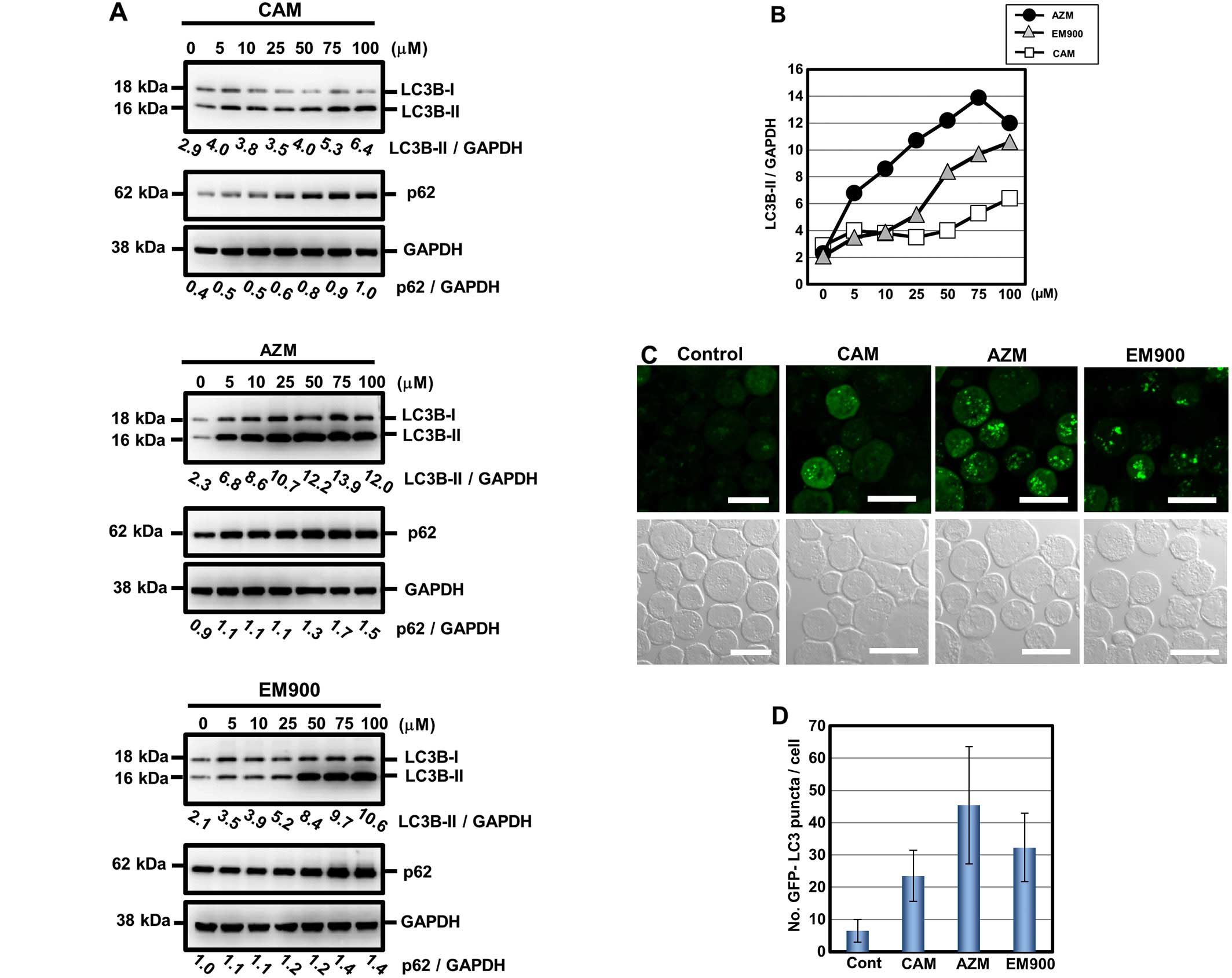
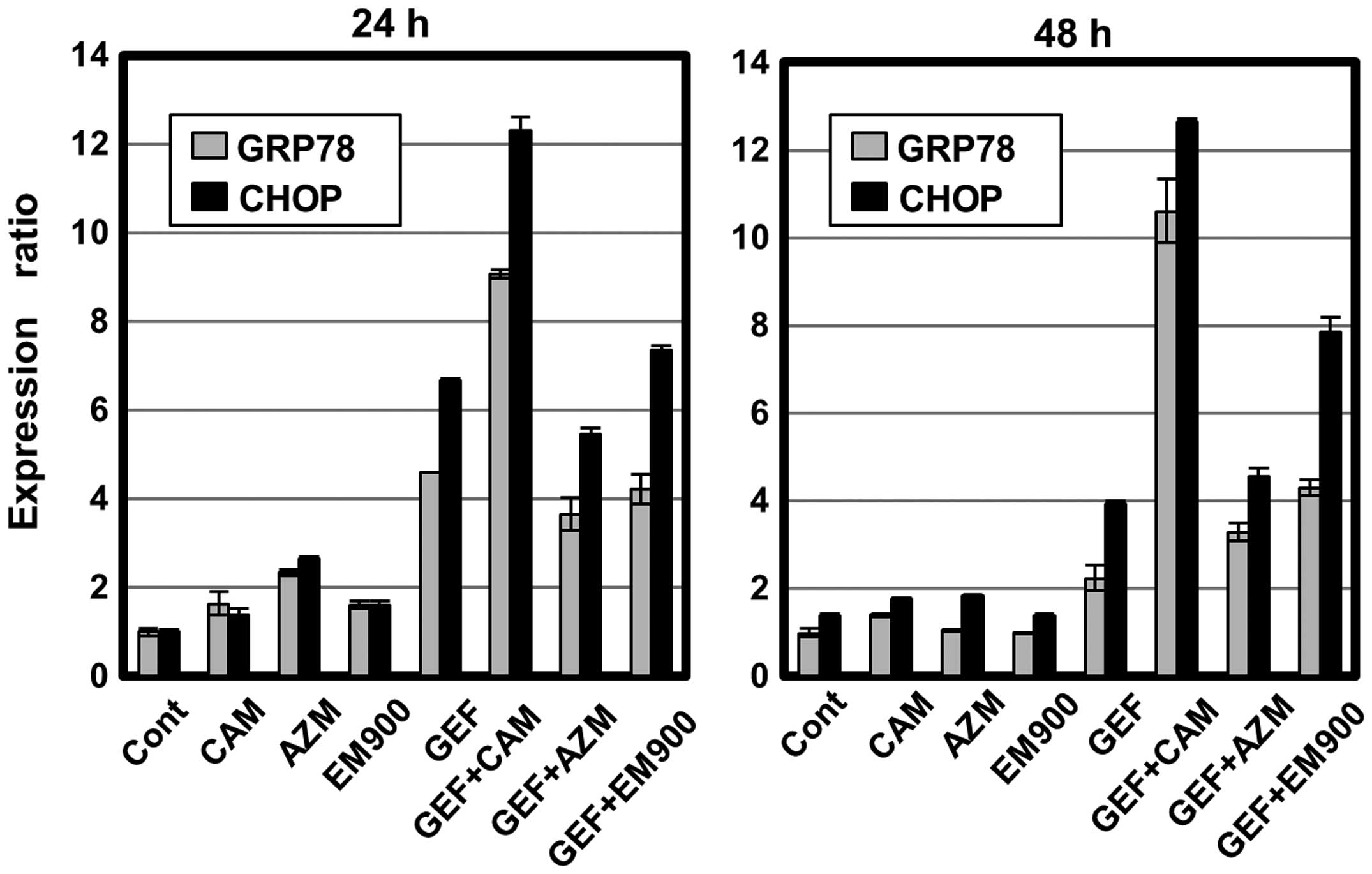
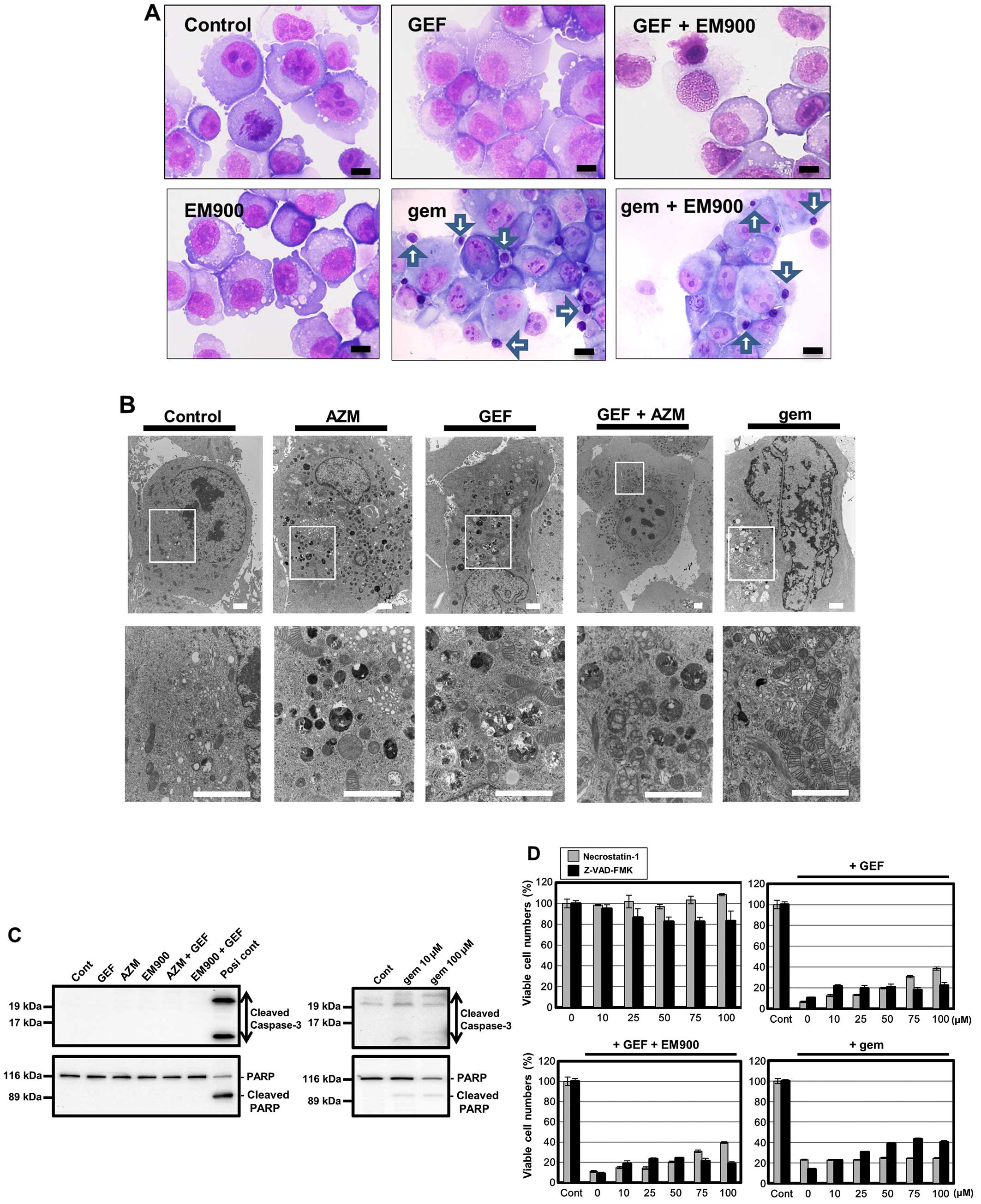
Pancreatic cancer is one of the most difficult types of cancer to treat because of its high mortality rate due to chemotherapy resistance. We previously reported that combined treatment with gefitinib (GEF) and clarithromycin (CAM) results in enhanced cytotoxicity of GEF along with endoplasmic reticulum (ER) stress loading in non-small cell lung cancer cell lines. An epidermal growth factor receptor tyrosine kinase inhibitor (EGFR-TKI) such as GEF induces autophagy in a pro-survival role, whereas CAM inhibits autophagy flux in various cell lines. Pronounced GEF-induced cytotoxicity therefore appears to depend on the efficacy of autophagy inhibition. In the present study, we compared the effect on autophagy inhibition among such macrolides as CAM, azithromycin (AZM), and EM900, a novel 12-membered non-antibiotic macrolide. We then assessed the enhanced GEF-induced cytotoxic effect on pancreatic cancer cell lines BxPC-3 and PANC-1. Autophagy flux analysis indicated that AZM is the most effective autophagy inhibitor of the three macrolides. CAM exhibits an inhibitory effect but less than AZM and EM900. Notably, the enhancing effect of GEF-induced cytotoxicity by combining macrolides correlated well with their efficient autophagy inhibition. However, this pronounced cytotoxicity was not due to upregulation of apoptosis induction, but was at least partially mediated through necroptosis. Our data suggest the possibility of using macrolides as ‘chemosensitizers’ for EGFR-TKI therapy in pancreatic cancer patients to enhance non-apoptotic tumor cell death induction.
View Figures

Figure 1

Figure 2

Figure 3

Figure 4

Figure 5

Figure 6

Figure 7

View References

1 

Gresham GK, Wells GA, Gill S, Cameron C and Jonker DJ: Chemotherapy regimens for advanced pancreatic cancer: A systematic review and network meta-analysis. BMC Cancer. 14:4712014. View Article : Google Scholar : PubMed/NCBI

2 

Von Hoff DD, Ervin T, Arena FP, Chiorean EG, Infante J, Moore M, Seay T, Tjulandin SA, Ma WW, Saleh MN, et al: Increased survival in pancreatic cancer with nab-paclitaxel plus gemcitabine. N Engl J Med. 369:1691–1703. 2013. View Article : Google Scholar : PubMed/NCBI

3 

Ueda S, Ogata S, Tsuda H, Kawarabayashi N, Kimura M, Sugiura Y, Tamai S, Matsubara O, Hatsuse K and Mochizuki H: The correlation between cytoplasmic overexpression of epidermal growth factor receptor and tumor aggressiveness: Poor prognosis in patients with pancreatic ductal adenocarcinoma. Pancreas. 29:e1–e8. 2004. View Article : Google Scholar : PubMed/NCBI

4 

Moore MJ, Goldstein D, Hamm J, Figer A, Hecht JR, Gallinger S, Au HJ, Murawa P, Walde D, Wolff RA, et al; National Cancer Institute of Canada Clinical Trials Group. Erlotinib plus gemcitabine compared with gemcitabine alone in patients with advanced pancreatic cancer: A phase III trial of the National Cancer Institute of Canada Clinical Trials Group. J Clin Oncol. 25:1960–1966. 2007. View Article : Google Scholar : PubMed/NCBI

5 

Yang ZY, Yuan JQ, Di MY, Zheng DY, Chen JZ, Ding H, Wu XY, Huang YF, Mao C and Tang JL: Gemcitabine plus erlotinib for advanced pancreatic cancer: A systematic review with meta-analysis. PLoS One. 8:e575282013. View Article : Google Scholar : PubMed/NCBI

6 

Diaz Beveridge R, Alcolea V, Aparicio J, Segura Á, García J, Corbellas M, Fonfría M, Giménez A and Montalar J: Management of advanced pancreatic cancer with gemcitabine plus erlotinib: Efficacy and safety results in clinical practice. JOP. 15:19–24. 2014.PubMed/NCBI

7 

Mizushima N, Levine B, Cuervo AM and Klionsky DJ: Autophagy fights disease through cellular self-digestion. Nature. 451:1069–1075. 2008. View Article : Google Scholar : PubMed/NCBI

8 

Galluzzi L, Pietrocola F, Levine B and Kroemer G: Metabolic control of autophagy. Cell. 159:1263–1276. 2014. View Article : Google Scholar : PubMed/NCBI

9 

White E: Deconvoluting the context-dependent role for autophagy in cancer. Nat Rev Cancer. 12:401–410. 2012. View Article : Google Scholar : PubMed/NCBI

10 

Ciardiello F and Tortora G: EGFR antagonists in cancer treatment. N Engl J Med. 358:1160–1174. 2008. View Article : Google Scholar : PubMed/NCBI

11 

Han W, Pan H, Chen Y, Sun J, Wang Y, Li J, Ge W, Feng L, Lin X, Wang X, et al: EGFR tyrosine kinase inhibitors activate autophagy as a cytoprotective response in human lung cancer cells. PLoS One. 6:e186912011. View Article : Google Scholar : PubMed/NCBI

12 

Jutten B and Rouschop KM: EGFR signaling and autophagy dependence for growth, survival, and therapy resistance. Cell Cycle. 13:42–51. 2014. View Article : Google Scholar :

13 

Fung C, Chen X, Grandis JR and Duvvuri U: EGFR tyrosine kinase inhibition induces autophagy in cancer cells. Cancer Biol Ther. 13:1417–1424. 2012. View Article : Google Scholar : PubMed/NCBI

14 

Kim YC and Guan KL: mTOR: A pharmacologic target for autophagy regulation. J Clin Invest. 125:25–32. 2015. View Article : Google Scholar : PubMed/NCBI

15 

Wei Y, Zou Z, Becker N, Anderson M, Sumpter R, Xiao G, Kinch L, Koduru P, Christudass CS, Veltri RW, et al: EGFR-mediated Beclin 1 phosphorylation in autophagy suppression, tumor progression, and tumor chemoresistance. Cell. 154:1269–1284. 2013. View Article : Google Scholar : PubMed/NCBI

16 

Tan X, Thapa N, Sun Y and Anderson RA: A kinase-independent role for EGF receptor in autophagy initiation. Cell. 160:145–160. 2015. View Article : Google Scholar : PubMed/NCBI

17 

Nakamura M, Kikukawa Y, Takeya M, Mitsuya H and Hata H: Clarithromycin attenuates autophagy in myeloma cells. Int J Oncol. 37:815–820. 2010.PubMed/NCBI

18 

Renna M, Schaffner C, Brown K, Shang S, Tamayo MH, Hegyi K, Grimsey NJ, Cusens D, Coulter S, Cooper J, et al: Azithromycin blocks autophagy and may predispose cystic fibrosis patients to mycobacterial infection. J Clin Invest. 121:3554–3563. 2011. View Article : Google Scholar : PubMed/NCBI

19 

Moriya S, Che XF, Komatsu S, Abe A, Kawaguchi T, Gotoh A, Inazu M, Tomoda A and Miyazawa K: Macrolide antibiotics block autophagy flux and sensitize to bortezomib via endoplasmic reticulum stress-mediated CHOP induction in myeloma cells. Int J Oncol. 42:1541–1550. 2013.PubMed/NCBI

20 

Moriya S, Komatsu S, Yamasaki K, Kawai Y, Kokuba H, Hirota A, Che XF, Inazu M, Gotoh A, Hiramoto M, et al: Targeting the integrated networks of aggresome formation, proteasome, and autophagy potentiates ER stress-mediated cell death in multiple myeloma cells. Int J Oncol. 46:474–486. 2015.

21 

Verfaillie T, Salazar M, Velasco G and Agostinis P: Linking ER stress to autophagy: Potential implications for cancer therapy. Int J Cell Biol. 2010:9305092010. View Article : Google Scholar : PubMed/NCBI

22 

Wang M and Kaufman RJ: The impact of the endoplasmic reticulum protein-folding environment on cancer development. Nat Rev Cancer. 14:581–597. 2014. View Article : Google Scholar : PubMed/NCBI

23 

Tabas I and Ron D: Integrating the mechanisms of apoptosis induced by endoplasmic reticulum stress. Nat Cell Biol. 13:184–190. 2011. View Article : Google Scholar : PubMed/NCBI

24 

Sugita S, Ito K, Yamashiro Y, Moriya S, Che XF, Yokoyama T, Hiramoto M and Miyazawa K: EGFR-independent autophagy induction with gefitinib and enhancement of its cytotoxic effect by targeting autophagy with clarithromycin in non-small cell lung cancer cells. Biochem Biophys Res Commun. 461:28–34. 2015. View Article : Google Scholar : PubMed/NCBI

25 

Sugawara A, Sueki A, Hirose T, Nagai K, Gouda H, Hirono S, Shima H, Akagawa KS, Omura S and Sunazuka T: Novel 12-membered non-antibiotic macrolides from erythromycin A; EM900 series as novel leads for anti-inflammatory and/or immunomodulatory agents. Bioorg Med Chem Lett. 21:3373–3376. 2011. View Article : Google Scholar : PubMed/NCBI

26 

Dragowska WH, Weppler SA, Wang JC, Wong LY, Kapanen AI, Rawji JS, Warburton C, Qadir MA, Donohue E, Roberge M, et al: Induction of autophagy is an early response to gefitinib and a potential therapeutic target in breast cancer. PLoS One. 8:e765032013. View Article : Google Scholar : PubMed/NCBI

27 

Mizushima N and Yoshimori T: How to interpret LC3 immunoblotting. Autophagy. 3:542–545. 2007. View Article : Google Scholar : PubMed/NCBI

28 

Jiang P and Mizushima N: LC3- and p62-based biochemical methods for the analysis of autophagy progression in mammalian cells. Methods. 75:13–18. 2015. View Article : Google Scholar

29 

Degterev A, Hitomi J, Germscheid M, Ch'en IL, Korkina O, Teng X, Abbott D, Cuny GD, Yuan C, Wagner G, et al: Identification of RIP1 kinase as a specific cellular target of necrostatins. Nat Chem Biol. 4:313–321. 2008. View Article : Google Scholar : PubMed/NCBI

30 

Sui X, Kong N, Zhu M, Wang X, Lou F, Han W and Pan H: Cotargeting EGFR and autophagy signaling: A novel therapeutic strategy for non-small-cell lung cancer. Mol Clin Oncol. 2:8–12. 2014.PubMed/NCBI

31 

Mindell JA: Lysosomal acidification mechanisms. Annu Rev Physiol. 74:69–86. 2012. View Article : Google Scholar : PubMed/NCBI

32 

Harada M, Sakisaka S, Yoshitake M, Kin M, Ohishi M, Shakado S, Mimura Y, Noguchi K, Sata M and Tanikawa K: Bafilomycin A1, a specific inhibitor of vacuolar-type H(+)-ATPases, inhibits the receptor-mediated endocytosis of asialoglycoproteins in isolated rat hepatocytes. J Hepatol. 24:594–603. 1996. View Article : Google Scholar : PubMed/NCBI

33 

Nujić K, Smith M, Lee M, Belamarić D, Tomašković L, Alihodžić S, Malnar I, Polančec D, Schneider K and Eraković Haber V: Valosin containing protein (VCP) interacts with macrolide antibiotics without mediating their anti-inflammatory activities. Eur J Pharmacol. 677:163–172. 2012. View Article : Google Scholar

34 

Watts GD, Wymer J, Kovach MJ, Mehta SG, Mumm S, Darvish D, Pestronk A, Whyte MP and Kimonis VE: Inclusion body myopathy associated with Paget disease of bone and frontotemporal dementia is caused by mutant valosin-containing protein. Nat Genet. 36:377–381. 2004. View Article : Google Scholar : PubMed/NCBI

35 

Meyer H and Weihl CC: The VCP/p97 system at a glance: Connecting cellular function to disease pathogenesis. J Cell Sci. 127:3877–3883. 2014. View Article : Google Scholar : PubMed/NCBI

36 

Meyer H, Bug M and Bremer S: Emerging functions of the VCP/p97 AAA-ATPase in the ubiquitin system. Nat Cell Biol. 14:117–123. 2012. View Article : Google Scholar : PubMed/NCBI

37 

Gonzalez MA, Feely SM, Speziani F, Strickland AV, Danzi M, Bacon C, Lee Y, Chou TF, Blanton SH, Weihl CC, et al: A novel mutation in VCP causes Charcot-Marie-Tooth Type 2 disease. Brain. 137:2897–2902. 2014. View Article : Google Scholar : PubMed/NCBI

38 

Nikoletopoulou V, Markaki M, Palikaras K and Tavernarakis N: Crosstalk between apoptosis, necrosis and autophagy. Biochim Biophys Acta. 1833.3448–3459. 2013.

39 

Vanden Berghe T, Linkermann A, Jouan-Lanhouet S, Walczak H and Vandenabeele P: Regulated necrosis: The expanding network of non-apoptotic cell death pathways. Nat Rev Mol Cell Biol. 15:135–147. 2014. View Article : Google Scholar : PubMed/NCBI

40 

Feoktistova M and Leverkus M: Programmed necrosis and necroptosis signalling. FEBS J. 282:19–31. 2015. View Article : Google Scholar

41 

Bray K, Mathew R, Lau A, Kamphorst JJ, Fan J, Chen J, Chen HY, Ghavami A, Stein M, DiPaola RS, et al: Autophagy suppresses RIP kinase-dependent necrosis enabling survival to mTOR inhibition. PLoS One. 7:e418312012. View Article : Google Scholar : PubMed/NCBI

Related Articles

  • Abstract
  • View
  • Download
  • Twitter
Copy and paste a formatted citation
Spandidos Publications style
Mukai S, Moriya S, Hiramoto M, Kazama H, Kokuba H, Che X, Yokoyama T, Sakamoto S, Sugawara A, Sunazuka T, Sunazuka T, et al: Macrolides sensitize EGFR-TKI-induced non-apoptotic cell death via blocking autophagy flux in pancreatic cancer cell lines. Int J Oncol 48: 45-54, 2016.
APA
Mukai, S., Moriya, S., Hiramoto, M., Kazama, H., Kokuba, H., Che, X. ... Miyazawa, K. (2016). Macrolides sensitize EGFR-TKI-induced non-apoptotic cell death via blocking autophagy flux in pancreatic cancer cell lines. International Journal of Oncology, 48, 45-54. https://doi.org/10.3892/ijo.2015.3237
MLA
Mukai, S., Moriya, S., Hiramoto, M., Kazama, H., Kokuba, H., Che, X., Yokoyama, T., Sakamoto, S., Sugawara, A., Sunazuka, T., Ōmura, S., Handa, H., Itoi, T., Miyazawa, K."Macrolides sensitize EGFR-TKI-induced non-apoptotic cell death via blocking autophagy flux in pancreatic cancer cell lines". International Journal of Oncology 48.1 (2016): 45-54.
Chicago
Mukai, S., Moriya, S., Hiramoto, M., Kazama, H., Kokuba, H., Che, X., Yokoyama, T., Sakamoto, S., Sugawara, A., Sunazuka, T., Ōmura, S., Handa, H., Itoi, T., Miyazawa, K."Macrolides sensitize EGFR-TKI-induced non-apoptotic cell death via blocking autophagy flux in pancreatic cancer cell lines". International Journal of Oncology 48, no. 1 (2016): 45-54. https://doi.org/10.3892/ijo.2015.3237
Copy and paste a formatted citation
x
Spandidos Publications style
Mukai S, Moriya S, Hiramoto M, Kazama H, Kokuba H, Che X, Yokoyama T, Sakamoto S, Sugawara A, Sunazuka T, Sunazuka T, et al: Macrolides sensitize EGFR-TKI-induced non-apoptotic cell death via blocking autophagy flux in pancreatic cancer cell lines. Int J Oncol 48: 45-54, 2016.
APA
Mukai, S., Moriya, S., Hiramoto, M., Kazama, H., Kokuba, H., Che, X. ... Miyazawa, K. (2016). Macrolides sensitize EGFR-TKI-induced non-apoptotic cell death via blocking autophagy flux in pancreatic cancer cell lines. International Journal of Oncology, 48, 45-54. https://doi.org/10.3892/ijo.2015.3237
MLA
Mukai, S., Moriya, S., Hiramoto, M., Kazama, H., Kokuba, H., Che, X., Yokoyama, T., Sakamoto, S., Sugawara, A., Sunazuka, T., Ōmura, S., Handa, H., Itoi, T., Miyazawa, K."Macrolides sensitize EGFR-TKI-induced non-apoptotic cell death via blocking autophagy flux in pancreatic cancer cell lines". International Journal of Oncology 48.1 (2016): 45-54.
Chicago
Mukai, S., Moriya, S., Hiramoto, M., Kazama, H., Kokuba, H., Che, X., Yokoyama, T., Sakamoto, S., Sugawara, A., Sunazuka, T., Ōmura, S., Handa, H., Itoi, T., Miyazawa, K."Macrolides sensitize EGFR-TKI-induced non-apoptotic cell death via blocking autophagy flux in pancreatic cancer cell lines". International Journal of Oncology 48, no. 1 (2016): 45-54. https://doi.org/10.3892/ijo.2015.3237
Follow us
  • Twitter
  • LinkedIn
  • Facebook
About
  • Spandidos Publications
  • Careers
  • Cookie Policy
  • Privacy Policy
How can we help?
  • Help
  • Live Chat
  • Contact
  • Email to our Support Team