Spandidos Publications Logo
  • About
    • About Spandidos
    • Aims and Scopes
    • Abstracting and Indexing
    • Editorial Policies
    • Reprints and Permissions
    • Job Opportunities
    • Terms and Conditions
    • Contact
  • Journals
    • All Journals
    • Oncology Letters
      • Oncology Letters
      • Information for Authors
      • Editorial Policies
      • Editorial Board
      • Aims and Scope
      • Abstracting and Indexing
      • Bibliographic Information
      • Archive
    • International Journal of Oncology
      • International Journal of Oncology
      • Information for Authors
      • Editorial Policies
      • Editorial Board
      • Aims and Scope
      • Abstracting and Indexing
      • Bibliographic Information
      • Archive
    • Molecular and Clinical Oncology
      • Molecular and Clinical Oncology
      • Information for Authors
      • Editorial Policies
      • Editorial Board
      • Aims and Scope
      • Abstracting and Indexing
      • Bibliographic Information
      • Archive
    • Experimental and Therapeutic Medicine
      • Experimental and Therapeutic Medicine
      • Information for Authors
      • Editorial Policies
      • Editorial Board
      • Aims and Scope
      • Abstracting and Indexing
      • Bibliographic Information
      • Archive
    • International Journal of Molecular Medicine
      • International Journal of Molecular Medicine
      • Information for Authors
      • Editorial Policies
      • Editorial Board
      • Aims and Scope
      • Abstracting and Indexing
      • Bibliographic Information
      • Archive
    • Biomedical Reports
      • Biomedical Reports
      • Information for Authors
      • Editorial Policies
      • Editorial Board
      • Aims and Scope
      • Abstracting and Indexing
      • Bibliographic Information
      • Archive
    • Oncology Reports
      • Oncology Reports
      • Information for Authors
      • Editorial Policies
      • Editorial Board
      • Aims and Scope
      • Abstracting and Indexing
      • Bibliographic Information
      • Archive
    • Molecular Medicine Reports
      • Molecular Medicine Reports
      • Information for Authors
      • Editorial Policies
      • Editorial Board
      • Aims and Scope
      • Abstracting and Indexing
      • Bibliographic Information
      • Archive
    • World Academy of Sciences Journal
      • World Academy of Sciences Journal
      • Information for Authors
      • Editorial Policies
      • Editorial Board
      • Aims and Scope
      • Abstracting and Indexing
      • Bibliographic Information
      • Archive
    • International Journal of Functional Nutrition
      • International Journal of Functional Nutrition
      • Information for Authors
      • Editorial Policies
      • Editorial Board
      • Aims and Scope
      • Abstracting and Indexing
      • Bibliographic Information
      • Archive
    • International Journal of Epigenetics
      • International Journal of Epigenetics
      • Information for Authors
      • Editorial Policies
      • Editorial Board
      • Aims and Scope
      • Abstracting and Indexing
      • Bibliographic Information
      • Archive
    • Medicine International
      • Medicine International
      • Information for Authors
      • Editorial Policies
      • Editorial Board
      • Aims and Scope
      • Abstracting and Indexing
      • Bibliographic Information
      • Archive
  • Articles
  • Information
    • Information for Authors
    • Information for Reviewers
    • Information for Librarians
    • Information for Advertisers
    • Conferences
  • Language Editing
Spandidos Publications Logo
  • About
    • About Spandidos
    • Aims and Scopes
    • Abstracting and Indexing
    • Editorial Policies
    • Reprints and Permissions
    • Job Opportunities
    • Terms and Conditions
    • Contact
  • Journals
    • All Journals
    • Biomedical Reports
      • Information for Authors
      • Editorial Policies
      • Editorial Board
      • Aims and Scope
      • Abstracting and Indexing
      • Bibliographic Information
      • Archive
    • Experimental and Therapeutic Medicine
      • Information for Authors
      • Editorial Policies
      • Editorial Board
      • Aims and Scope
      • Abstracting and Indexing
      • Bibliographic Information
      • Archive
    • International Journal of Epigenetics
      • Information for Authors
      • Editorial Policies
      • Editorial Board
      • Aims and Scope
      • Abstracting and Indexing
      • Bibliographic Information
      • Archive
    • International Journal of Functional Nutrition
      • Information for Authors
      • Editorial Policies
      • Editorial Board
      • Aims and Scope
      • Abstracting and Indexing
      • Bibliographic Information
      • Archive
    • International Journal of Molecular Medicine
      • Information for Authors
      • Editorial Policies
      • Editorial Board
      • Aims and Scope
      • Abstracting and Indexing
      • Bibliographic Information
      • Archive
    • International Journal of Oncology
      • Information for Authors
      • Editorial Policies
      • Editorial Board
      • Aims and Scope
      • Abstracting and Indexing
      • Bibliographic Information
      • Archive
    • Medicine International
      • Information for Authors
      • Editorial Policies
      • Editorial Board
      • Aims and Scope
      • Abstracting and Indexing
      • Bibliographic Information
      • Archive
    • Molecular and Clinical Oncology
      • Information for Authors
      • Editorial Policies
      • Editorial Board
      • Aims and Scope
      • Abstracting and Indexing
      • Bibliographic Information
      • Archive
    • Molecular Medicine Reports
      • Information for Authors
      • Editorial Policies
      • Editorial Board
      • Aims and Scope
      • Abstracting and Indexing
      • Bibliographic Information
      • Archive
    • Oncology Letters
      • Information for Authors
      • Editorial Policies
      • Editorial Board
      • Aims and Scope
      • Abstracting and Indexing
      • Bibliographic Information
      • Archive
    • Oncology Reports
      • Information for Authors
      • Editorial Policies
      • Editorial Board
      • Aims and Scope
      • Abstracting and Indexing
      • Bibliographic Information
      • Archive
    • World Academy of Sciences Journal
      • Information for Authors
      • Editorial Policies
      • Editorial Board
      • Aims and Scope
      • Abstracting and Indexing
      • Bibliographic Information
      • Archive
  • Articles
  • Information
    • For Authors
    • For Reviewers
    • For Librarians
    • For Advertisers
    • Conferences
  • Language Editing
Login Register Submit
  • This site uses cookies
  • You can change your cookie settings at any time by following the instructions in our Cookie Policy. To find out more, you may read our Privacy Policy.

    I agree
Search articles by DOI, keyword, author or affiliation
Search
Advanced Search
presentation
International Journal of Oncology
Join Editorial Board Propose a Special Issue
Print ISSN: 1019-6439 Online ISSN: 1791-2423
Journal Cover
January-2016 Volume 48 Issue 1

Full Size Image

Cover Legend PDF

Sign up for eToc alerts
Recommend to Library

Journals

International Journal of Molecular Medicine

International Journal of Molecular Medicine

International Journal of Molecular Medicine is an international journal devoted to molecular mechanisms of human disease.

International Journal of Oncology

International Journal of Oncology

International Journal of Oncology is an international journal devoted to oncology research and cancer treatment.

Molecular Medicine Reports

Molecular Medicine Reports

Covers molecular medicine topics such as pharmacology, pathology, genetics, neuroscience, infectious diseases, molecular cardiology, and molecular surgery.

Oncology Reports

Oncology Reports

Oncology Reports is an international journal devoted to fundamental and applied research in Oncology.

Experimental and Therapeutic Medicine

Experimental and Therapeutic Medicine

Experimental and Therapeutic Medicine is an international journal devoted to laboratory and clinical medicine.

Oncology Letters

Oncology Letters

Oncology Letters is an international journal devoted to Experimental and Clinical Oncology.

Biomedical Reports

Biomedical Reports

Explores a wide range of biological and medical fields, including pharmacology, genetics, microbiology, neuroscience, and molecular cardiology.

Molecular and Clinical Oncology

Molecular and Clinical Oncology

International journal addressing all aspects of oncology research, from tumorigenesis and oncogenes to chemotherapy and metastasis.

World Academy of Sciences Journal

World Academy of Sciences Journal

Multidisciplinary open-access journal spanning biochemistry, genetics, neuroscience, environmental health, and synthetic biology.

International Journal of Functional Nutrition

International Journal of Functional Nutrition

Open-access journal combining biochemistry, pharmacology, immunology, and genetics to advance health through functional nutrition.

International Journal of Epigenetics

International Journal of Epigenetics

Publishes open-access research on using epigenetics to advance understanding and treatment of human disease.

Medicine International

Medicine International

An International Open Access Journal Devoted to General Medicine.

Journal Cover
January-2016 Volume 48 Issue 1

Full Size Image

Cover Legend PDF

Sign up for eToc alerts
Recommend to Library

  • Article
  • Citations
    • Cite This Article
    • Download Citation
    • Create Citation Alert
    • Remove Citation Alert
    • Cited By
  • Similar Articles
    • Related Articles (in Spandidos Publications)
    • Similar Articles (Google Scholar)
    • Similar Articles (PubMed)
  • Download PDF
  • Download XML
  • View XML
Article

Diallyl trisulfide induces apoptosis by suppressing NF-κB signaling through destabilization of TRAF6 in primary effusion lymphoma

  • Authors:
    • Zenpei Shigemi
    • Yoshiki Furukawa
    • Kohei Hosokawa
    • Setsuya Minami
    • Jumpei Matsuhiro
    • Shiori Nakata
    • Tadashi Watanabe
    • Hiroki Kagawa
    • Koji Nakagawa
    • Hiroshi Takeda
    • Masahiro Fujimuro
  • View Affiliations / Copyright

    Affiliations: Department of Cell Biology, Kyoto Pharmaceutical University, Yamashinaku, Kyoto 607-8412, Japan, Department of Pathophysiology and Therapeutics, Faculty of Pharmaceutical Sciences, Hokkaido University, Kitaku, Sapporo 060-0812, Japan
  • Pages: 293-304
    |
    Published online on: November 17, 2015
       https://doi.org/10.3892/ijo.2015.3247
  • Expand metrics +
Metrics: Total Views: 0 (Spandidos Publications: | PMC Statistics: )
Metrics: Total PDF Downloads: 0 (Spandidos Publications: | PMC Statistics: )
Cited By (CrossRef): 0 citations Loading Articles...

This article is mentioned in:


Abstract

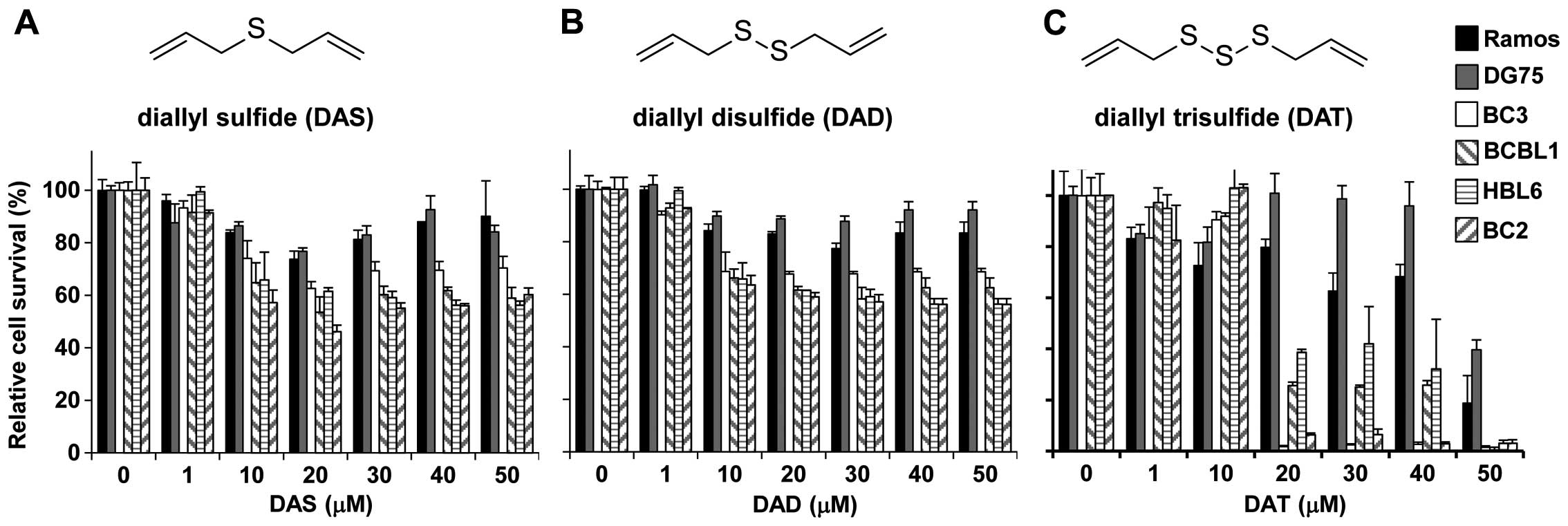
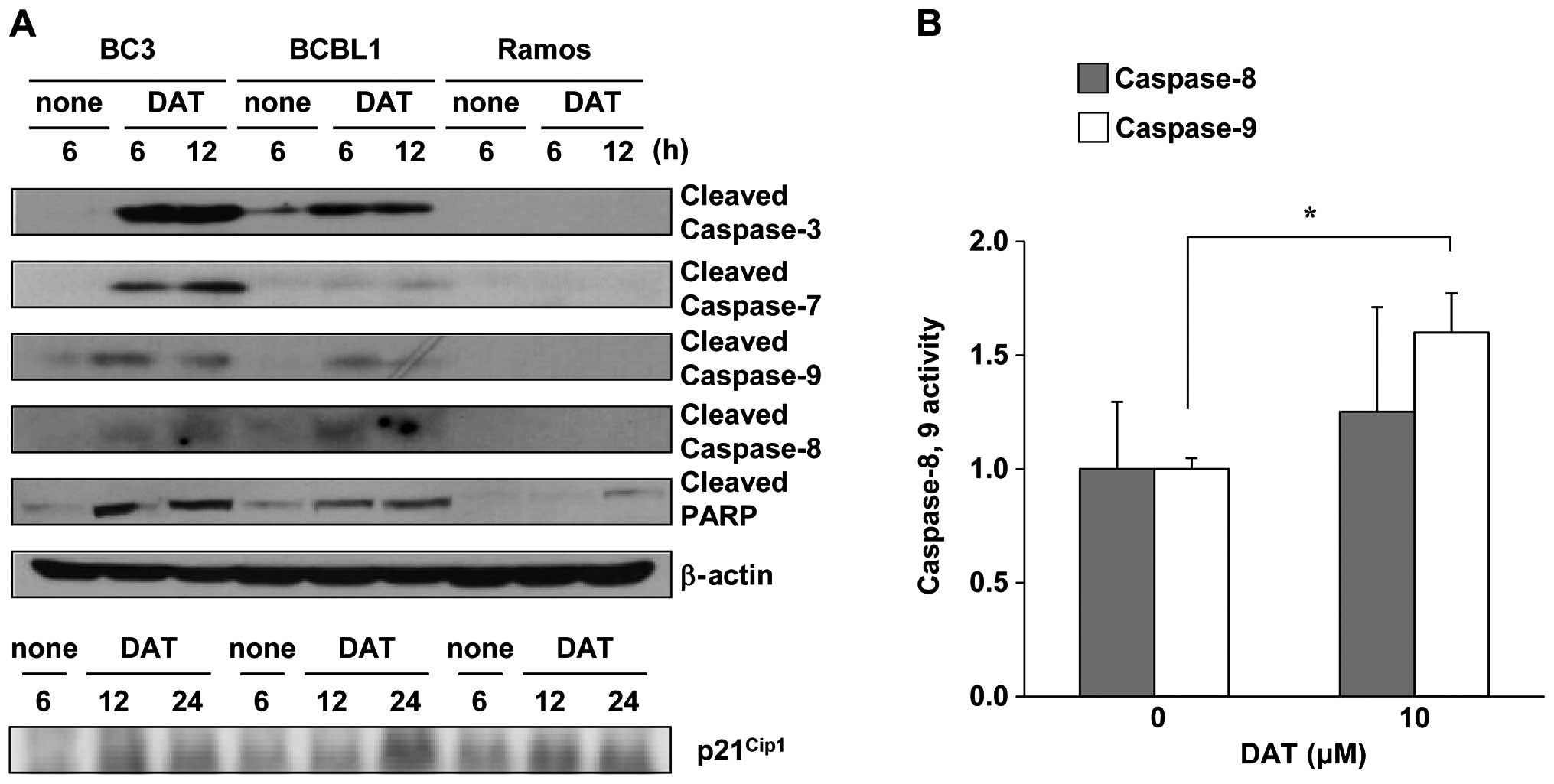
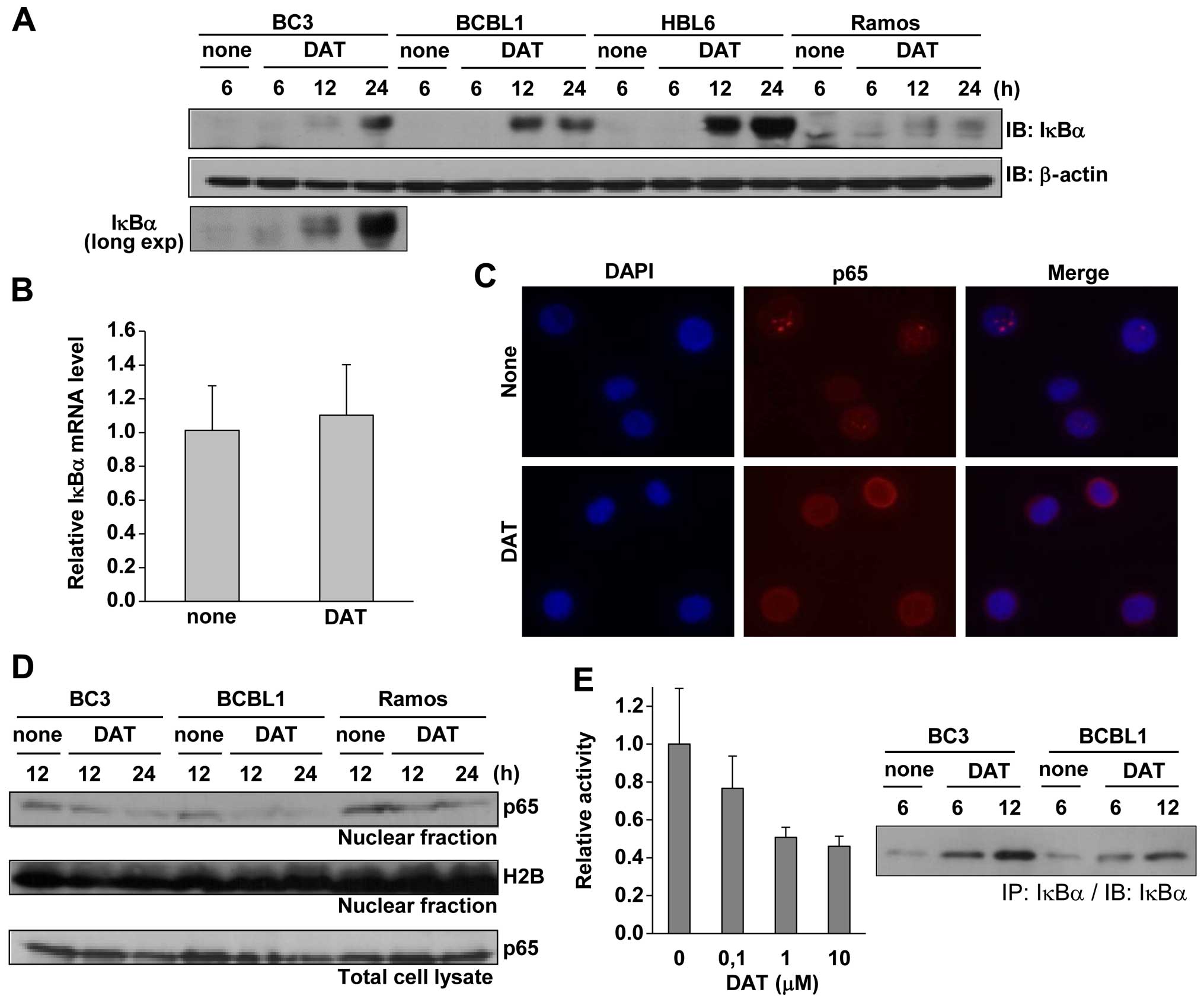
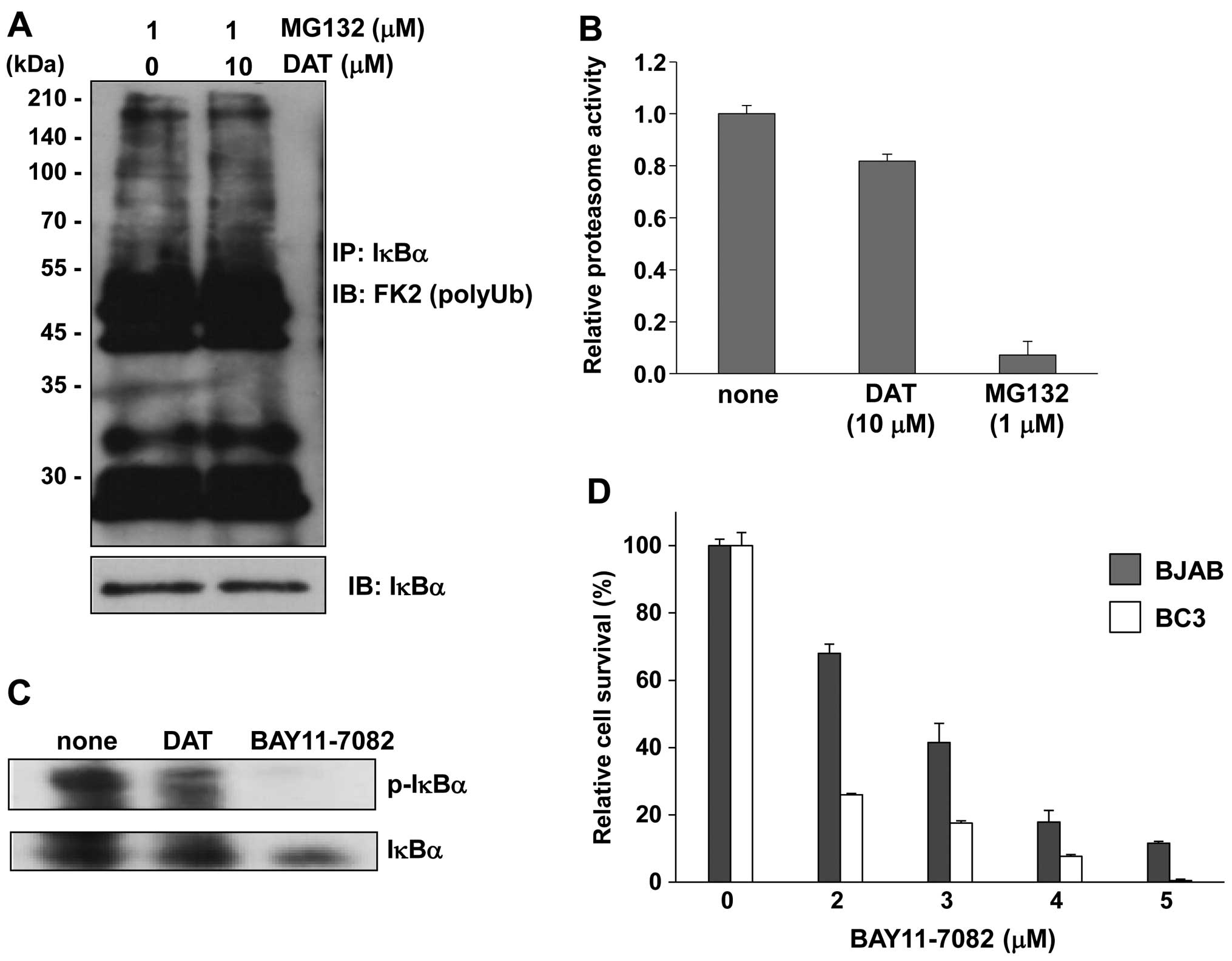
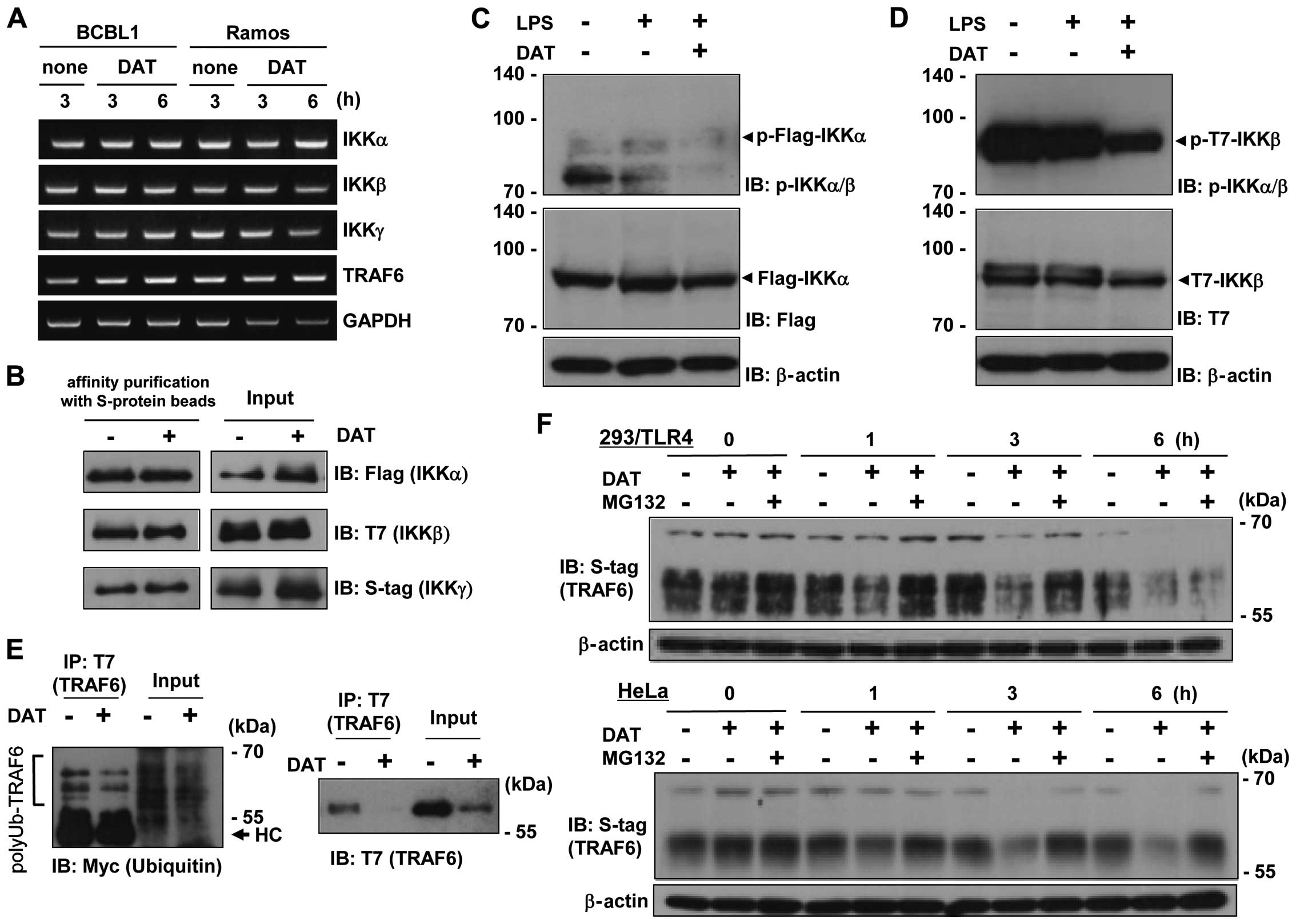
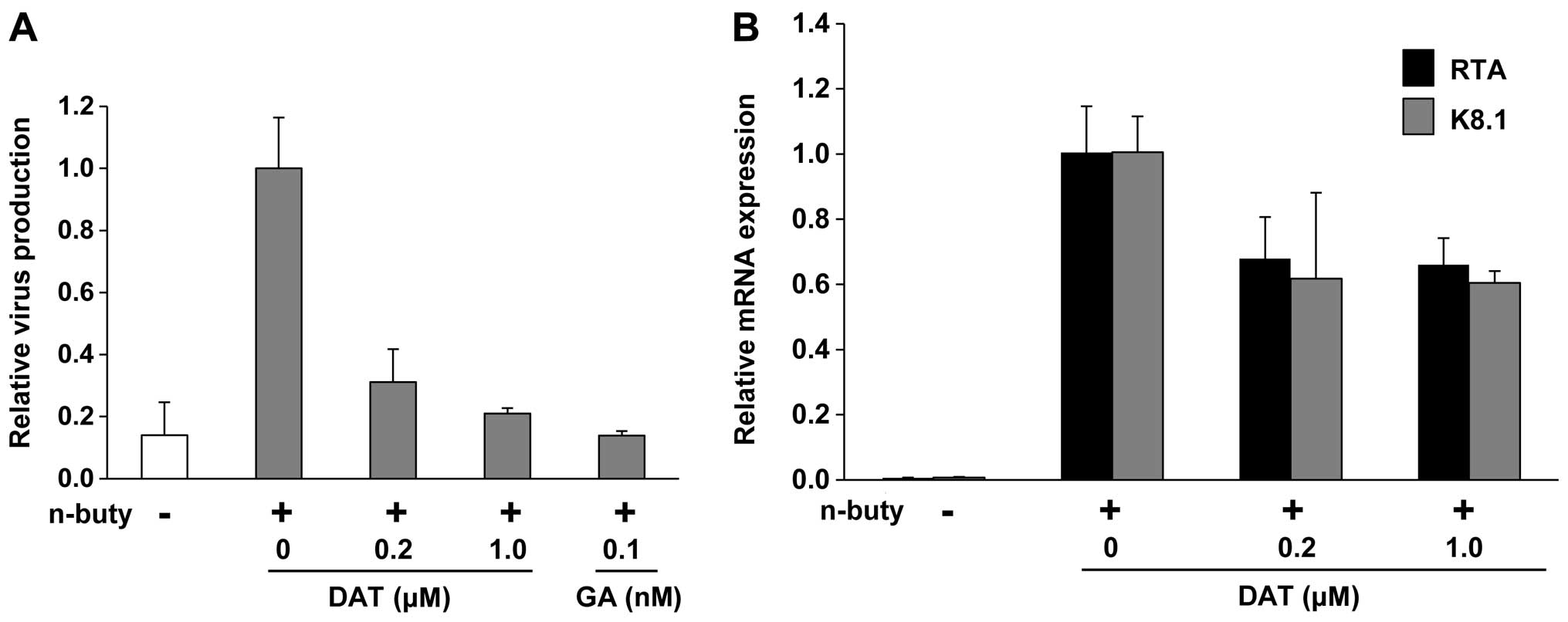
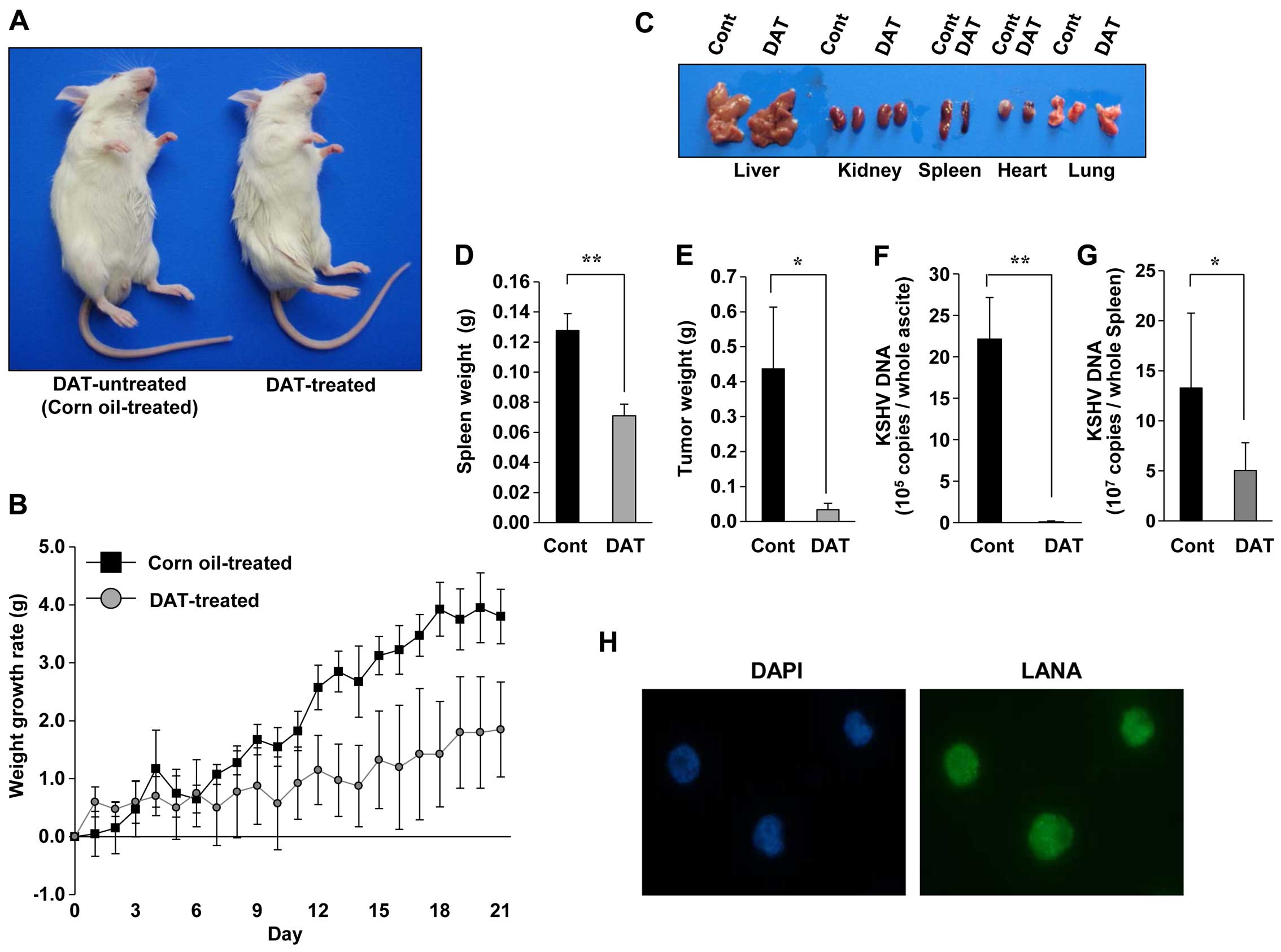
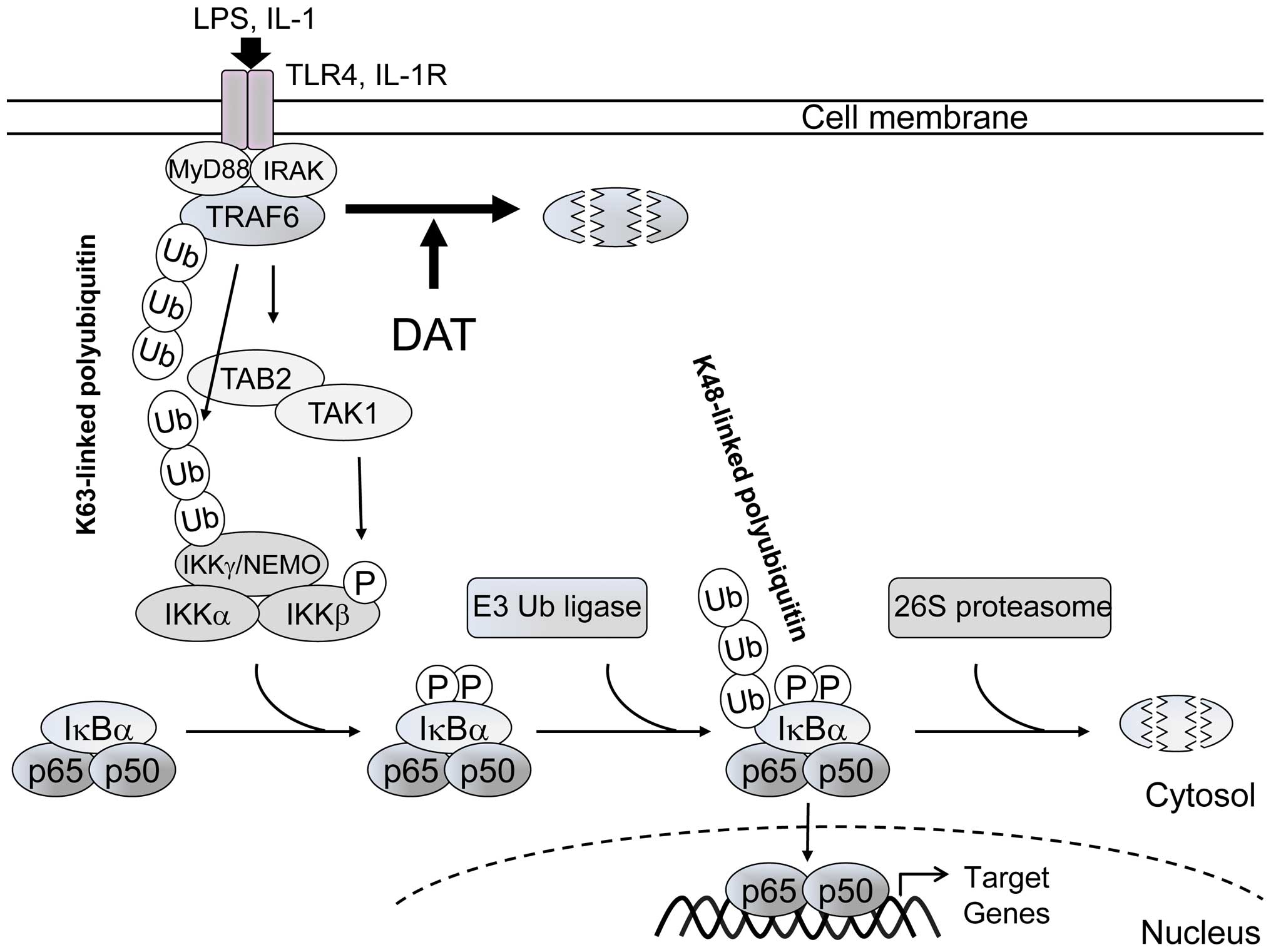
The allyl sulfides, including diallyl sulfide (DAS), diallyl disulfide (DAD), and diallyl trisulfide (DAT), contained in garlic and members of the Allium family, have a variety of pharmacological activities. Therefore, allyl sulfides have been evaluated as potential novel chemotherapeutic agents. Here, we found that DAT inhibited nuclear factor-κB (NF-κB) signaling and induced apoptosis in primary effusion lymphoma (PEL), a subtype of non-Hodgkin's B-cell lymphoma caused by Kaposi's sarcoma-associated herpesvirus (KSHV). We examined the cytotoxic effects of DAS, DAD and DAT on PEL cells. DAT significantly reduced the viability of PEL cells compared with uninfected B-lymphoma cells, and induced the apoptosis of PEL cells by activating caspase-9. DAT induced stabilization of IκBα, and suppressed NF-κB transcriptional activity in PEL cells. We examined the mechanism underlying DAT-mediated IκBα stabilization. The results indicated that DAT stabilized IκBα by inhibiting the phosphorylation of IκBα by the IκB kinase (IKK) complex. Furthermore, DAT induced proteasomal degradation of TRAF6, and DAT suppressed IKKβ-phosphorylation through downregulation of TRAF6. It is known that activation of NF-κB is essential for survival of PEL cells. In fact, the NF-κB inhibitor BAY11-7082 induced apoptosis in PEL cells. In addition, DAT suppressed the production of progeny virus from PEL cells. The administration of DAT suppressed the development of PEL cells and ascites in SCID mice xenografted with PEL cells. These findings provide evidence that DAT has antitumor activity against PEL cells in vitro and in vivo, suggesting it to be a novel therapeutic agent for the treatment of PEL.
View Figures

Figure 1

Figure 2

Figure 3

Figure 4

Figure 5

Figure 6

Figure 7

Figure 8

View References

1 

Russo JJ, Bohenzky RA, Chien MC, Chen J, Yan M, Maddalena D, Parry JP, Peruzzi D, Edelman IS, Chang Y, et al: Nucleotide sequence of the Kaposi sarcoma-associated herpesvirus (HHV8). Proc Natl Acad Sci USA. 93:14862–14867. 1996. View Article : Google Scholar : PubMed/NCBI

2 

Nador RG, Cesarman E, Chadburn A, Dawson DB, Ansari MQ, Sald J and Knowles DM: Primary effusion lymphoma: A distinct clinicopathologic entity associated with the Kaposi's sarcoma-associated herpes virus. Blood. 88:645–656. 1996.PubMed/NCBI

3 

Chang Y, Cesarman E, Pessin MS, Lee F, Culpepper J, Knowles DM and Moore PS: Identification of herpesvirus-like DNA sequences in AIDS-associated Kaposi's sarcoma. Science. 266:1865–1869. 1994. View Article : Google Scholar : PubMed/NCBI

4 

Järviluoma A and Ojala PM: Cell signaling pathways engaged by KSHV. Biochim Biophys Acta. 1766:140–158. 2006.PubMed/NCBI

5 

Fujimuro M, Wu FY, ApRhys C, Kajumbula H, Young DB, Hayward GS and Hayward SD: A novel viral mechanism for dysregulation of beta-catenin in Kaposi's sarcoma-associated herpesvirus latency. Nat Med. 9:300–306. 2003. View Article : Google Scholar : PubMed/NCBI

6 

Ashizawa A, Higashi C, Masuda K, Ohga R, Taira T and Fujimuro M: The ubiquitin system and Kaposi's sarcoma-associated herpesvirus. Front Microbiol. 3:662012. View Article : Google Scholar : PubMed/NCBI

7 

Chaudhary PM, Jasmin A, Eby MT and Hood L: Modulation of the NF-κB pathway by virally encoded death effector domains-containing proteins. Oncogene. 18:5738–5746. 1999. View Article : Google Scholar : PubMed/NCBI

8 

Keller SA, Schattner EJ and Cesarman E: Inhibition of NF-kappaB induces apoptosis of KSHV-infected primary effusion lymphoma cells. Blood. 96:2537–2542. 2000.PubMed/NCBI

9 

Keller SA, Hernandez-Hopkins D, Vider J, Ponomarev V, Hyjek E, Schattner EJ and Cesarman E: NF-kappaB is essential for the progression of KSHV- and EBV-infected lymphomas in vivo. Blood. 107:3295–3302. 2006. View Article : Google Scholar

10 

Saji C, Higashi C, Niinaka Y, Yamada K, Noguchi K and Fujimuro M: Proteasome inhibitors induce apoptosis and reduce viral replication in primary effusion lymphoma cells. Biochem Biophys Res Commun. 415:573–578. 2011. View Article : Google Scholar : PubMed/NCBI

11 

Higashi C, Saji C, Yamada K, Kagawa H, Ohga R, Taira T and Fujimuro M: The effects of heat shock protein 90 inhibitors on apoptosis and viral replication in primary effusion lymphoma cells. Biol Pharm Bull. 35:725–730. 2012. View Article : Google Scholar : PubMed/NCBI

12 

Wang G, Gao Y, Li L, Jin G, Cai Z, Chao JI and Lin HK: K63-linked ubiquitination in kinase activation and cancer. Front Oncol. 2:52012. View Article : Google Scholar : PubMed/NCBI

13 

Chen ZJ: Ubiquitination in signaling to and activation of IKK. Immunol Rev. 246:95–106. 2012. View Article : Google Scholar : PubMed/NCBI

14 

Skaug B, Jiang X and Chen ZJ: The role of ubiquitin in NF-kappaB regulatory pathways. Annu Rev Biochem. 78:769–796. 2009. View Article : Google Scholar : PubMed/NCBI

15 

Calvo-Gómez O, Morales-López J and López MG: Solid-phase microextraction-gas chromatographic-mass spectrometric analysis of garlic oil obtained by hydrodistillation. J Chromatogr A. 1036:91–93. 2004. View Article : Google Scholar : PubMed/NCBI

16 

Lawson LD, Wang ZJ and Hughes BG: Identification and HPLC quantitation of the sulfides and dialk(en)yl thiosulfinates in commercial garlic products. Planta Med. 57:363–370. 1991. View Article : Google Scholar : PubMed/NCBI

17 

Yi L and Su Q: Molecular mechanisms for the anti-cancer effects of diallyl disulfide. Food Chem Toxicol. 57:362–370. 2013. View Article : Google Scholar : PubMed/NCBI

18 

Wang HC, Pao J, Lin SY and Sheen LY: Molecular mechanisms of garlic-derived allyl sulfides in the inhibition of skin cancer progression. Ann N Y Acad Sci. 1271:44–52. 2012. View Article : Google Scholar : PubMed/NCBI

19 

You S, Nakanishi E, Kuwata H, Chen J, Nakasone Y, He X, He J, Liu X, Zhang S, Zhang B, et al: Inhibitory effects and molecular mechanisms of garlic organosulfur compounds on the production of inflammatory mediators. Mol Nutr Food Res. 57:2049–2060. 2013. View Article : Google Scholar : PubMed/NCBI

20 

Das A, Banik NL and Ray SK: Garlic compounds generate reactive oxygen species leading to activation of stress kinases and cysteine proteases for apoptosis in human glioblastoma T98G and U87MG cells. Cancer. 110:1083–1095. 2007. View Article : Google Scholar : PubMed/NCBI

21 

Chandra-Kuntal K, Lee J and Singh SV: Critical role for reactive oxygen species in apoptosis induction and cell migration inhibition by diallyl trisulfide, a cancer chemopreventive component of garlic. Breast Cancer Res Treat. 138:69–79. 2013. View Article : Google Scholar : PubMed/NCBI

22 

Wang HC, Hsieh SC, Yang JH, Lin SY and Sheen LY: Diallyl trisulfide induces apoptosis of human basal cell carcinoma cells via endoplasmic reticulum stress and the mitochondrial pathway. Nutr Cancer. 64:770–780. 2012. View Article : Google Scholar : PubMed/NCBI

23 

Filomeni G, Rotilio G and Ciriolo MR: Molecular transduction mechanisms of the redox network underlying the antiproliferative effects of allyl compounds from garlic. J Nutr. 138:2053–2057. 2008.PubMed/NCBI

24 

Lee HJ, Lee HG, Choi KS, Surh YJ and Na HK: Diallyl trisulfide suppresses dextran sodium sulfate-induced mouse colitis: NF-κB and STAT3 as potential targets. Biochem Biophys Res Commun. 437:267–273. 2013. View Article : Google Scholar : PubMed/NCBI

25 

Shin DY, Kim GY, Hwang HJ, Kim WJ and Choi YH: Diallyl trisulfide-induced apoptosis of bladder cancer cells is caspase-dependent and regulated by PI3K/Akt and JNK pathways. Environ Toxicol Pharmacol. 37:74–83. 2014. View Article : Google Scholar

26 

Okada S, Goto H and Yotsumoto M: Current status of treatment for primary effusion lymphoma. Intractable Rare Dis Res. 3:65–74. 2014. View Article : Google Scholar : PubMed/NCBI

27 

Wakao K, Watanabe T, Takadama T, Ui S, Shigemi Z, Kagawa H, Higashi C, Ohga R, Taira T and Fujimuro M: Sangivamycin induces apoptosis by suppressing Erk signaling in primary effusion lymphoma cells. Biochem Biophys Res Commun. 444:135–140. 2014. View Article : Google Scholar : PubMed/NCBI

28 

Fujimuro M, Liu J, Zhu J, Yokosawa H and Hayward SD: Regulation of the interaction between glycogen synthase kinase 3 and the Kaposi's sarcoma-associated herpesvirus latency-associated nuclear antigen. J Virol. 79:10429–10441. 2005. View Article : Google Scholar : PubMed/NCBI

29 

Fujimuro M, Sawada H and Yokosawa H: Production and characterization of monoclonal antibodies specific to multi-ubiquitin chains of polyubiquitinated proteins. FEBS Lett. 349:173–180. 1994. View Article : Google Scholar : PubMed/NCBI

30 

Chen C and Okayama H: High-efficiency transformation of mammalian cells by plasmid DNA. Mol Cell Biol. 7:2745–2752. 1987. View Article : Google Scholar : PubMed/NCBI

31 

Milner JA: A historical perspective on garlic and cancer. J Nutr. 131(Suppl 3): 1027S–1031S. 2001.PubMed/NCBI

32 

Xiao D, Choi S, Johnson DE, Vogel VG, Johnson CS, Trump DL, Lee YJ and Singh SV: Diallyl trisulfide-induced apoptosis in human prostate cancer cells involves c-Jun N-terminal kinase and extracellular-signal regulated kinase-mediated phosphorylation of Bcl-2. Oncogene. 23:5594–5606. 2004. View Article : Google Scholar : PubMed/NCBI

33 

Antosiewicz J, Herman-Antosiewicz A, Marynowski SW and Singh SV: c-Jun NH(2)-terminal kinase signaling axis regulates diallyl trisulfide-induced generation of reactive oxygen species and cell cycle arrest in human prostate cancer cells. Cancer Res. 66:5379–5386. 2006. View Article : Google Scholar : PubMed/NCBI

34 

Murai M, Inoue T, Suzuki-Karasaki M, Ochiai T, Ra C, Nishida S and Suzuki-Karasaki Y: Diallyl trisulfide sensitizes human melanoma cells to TRAIL-induced cell death by promoting endoplasmic reticulum-mediated apoptosis. Int J Oncol. 41:2029–2037. 2012.PubMed/NCBI

35 

Liu KL, Chen HW, Wang RY, Lei YP, Sheen LY and Lii CK: DATS reduces LPS-induced iNOS expression, NO production, oxidative stress, and NF-kappaB activation in RAW 264.7 macrophages. J Agric Food Chem. 54:3472–3478. 2006. View Article : Google Scholar : PubMed/NCBI

36 

Kuo WW, Wang WJ, Tsai CY, Way CL, Hsu HH and Chen LM: Diallyl trisufide (DATS) suppresses high glucose-induced cardiomyocyte apoptosis by inhibiting JNK/NFκB signaling via attenuating ROS generation. Int J Cardiol. 168:270–280. 2013. View Article : Google Scholar

37 

Wang Z, Xia Q, Cui J, Diao Y and Li J: Reversion of P-glycoprotein-mediated multidrug resistance by diallyl trisulfide in a human osteosarcoma cell line. Oncol Rep. 31:2720–2726. 2014.PubMed/NCBI

38 

Nakayama KI and Nakayama K: Ubiquitin ligases: Cell-cycle control and cancer. Nat Rev Cancer. 6:369–381. 2006. View Article : Google Scholar : PubMed/NCBI

39 

Hershko A and Ciechanover A: The ubiquitin system for protein degradation. Annu Rev Biochem. 61:761–807. 1992. View Article : Google Scholar : PubMed/NCBI

40 

Choi YB and Harhaj EW: HTLV-1 tax stabilizes MCL-1 via TRAF6-dependent K63-linked polyubiquitination to promote cell survival and transformation. PLoS Pathog. 10:e10044582014. View Article : Google Scholar : PubMed/NCBI

41 

Yang WL, Wang J, Chan CH, Lee SW, Campos AD, Lamothe B, Hur L, Grabiner BC, Lin X, Darnay BG, et al: The E3 ligase TRAF6 regulates Akt ubiquitination and activation. Science. 325:1134–1138. 2009. View Article : Google Scholar : PubMed/NCBI

Related Articles

  • Abstract
  • View
  • Download
  • Twitter
Copy and paste a formatted citation
Spandidos Publications style
Shigemi Z, Furukawa Y, Hosokawa K, Minami S, Matsuhiro J, Nakata S, Watanabe T, Kagawa H, Nakagawa K, Takeda H, Takeda H, et al: Diallyl trisulfide induces apoptosis by suppressing NF-κB signaling through destabilization of TRAF6 in primary effusion lymphoma. Int J Oncol 48: 293-304, 2016.
APA
Shigemi, Z., Furukawa, Y., Hosokawa, K., Minami, S., Matsuhiro, J., Nakata, S. ... Fujimuro, M. (2016). Diallyl trisulfide induces apoptosis by suppressing NF-κB signaling through destabilization of TRAF6 in primary effusion lymphoma. International Journal of Oncology, 48, 293-304. https://doi.org/10.3892/ijo.2015.3247
MLA
Shigemi, Z., Furukawa, Y., Hosokawa, K., Minami, S., Matsuhiro, J., Nakata, S., Watanabe, T., Kagawa, H., Nakagawa, K., Takeda, H., Fujimuro, M."Diallyl trisulfide induces apoptosis by suppressing NF-κB signaling through destabilization of TRAF6 in primary effusion lymphoma". International Journal of Oncology 48.1 (2016): 293-304.
Chicago
Shigemi, Z., Furukawa, Y., Hosokawa, K., Minami, S., Matsuhiro, J., Nakata, S., Watanabe, T., Kagawa, H., Nakagawa, K., Takeda, H., Fujimuro, M."Diallyl trisulfide induces apoptosis by suppressing NF-κB signaling through destabilization of TRAF6 in primary effusion lymphoma". International Journal of Oncology 48, no. 1 (2016): 293-304. https://doi.org/10.3892/ijo.2015.3247
Copy and paste a formatted citation
x
Spandidos Publications style
Shigemi Z, Furukawa Y, Hosokawa K, Minami S, Matsuhiro J, Nakata S, Watanabe T, Kagawa H, Nakagawa K, Takeda H, Takeda H, et al: Diallyl trisulfide induces apoptosis by suppressing NF-κB signaling through destabilization of TRAF6 in primary effusion lymphoma. Int J Oncol 48: 293-304, 2016.
APA
Shigemi, Z., Furukawa, Y., Hosokawa, K., Minami, S., Matsuhiro, J., Nakata, S. ... Fujimuro, M. (2016). Diallyl trisulfide induces apoptosis by suppressing NF-κB signaling through destabilization of TRAF6 in primary effusion lymphoma. International Journal of Oncology, 48, 293-304. https://doi.org/10.3892/ijo.2015.3247
MLA
Shigemi, Z., Furukawa, Y., Hosokawa, K., Minami, S., Matsuhiro, J., Nakata, S., Watanabe, T., Kagawa, H., Nakagawa, K., Takeda, H., Fujimuro, M."Diallyl trisulfide induces apoptosis by suppressing NF-κB signaling through destabilization of TRAF6 in primary effusion lymphoma". International Journal of Oncology 48.1 (2016): 293-304.
Chicago
Shigemi, Z., Furukawa, Y., Hosokawa, K., Minami, S., Matsuhiro, J., Nakata, S., Watanabe, T., Kagawa, H., Nakagawa, K., Takeda, H., Fujimuro, M."Diallyl trisulfide induces apoptosis by suppressing NF-κB signaling through destabilization of TRAF6 in primary effusion lymphoma". International Journal of Oncology 48, no. 1 (2016): 293-304. https://doi.org/10.3892/ijo.2015.3247
Follow us
  • Twitter
  • LinkedIn
  • Facebook
About
  • Spandidos Publications
  • Careers
  • Cookie Policy
  • Privacy Policy
How can we help?
  • Help
  • Live Chat
  • Contact
  • Email to our Support Team