Spandidos Publications Logo
  • About
    • About Spandidos
    • Aims and Scopes
    • Abstracting and Indexing
    • Editorial Policies
    • Reprints and Permissions
    • Job Opportunities
    • Terms and Conditions
    • Contact
  • Journals
    • All Journals
    • Oncology Letters
      • Oncology Letters
      • Information for Authors
      • Editorial Policies
      • Editorial Board
      • Aims and Scope
      • Abstracting and Indexing
      • Bibliographic Information
      • Archive
    • International Journal of Oncology
      • International Journal of Oncology
      • Information for Authors
      • Editorial Policies
      • Editorial Board
      • Aims and Scope
      • Abstracting and Indexing
      • Bibliographic Information
      • Archive
    • Molecular and Clinical Oncology
      • Molecular and Clinical Oncology
      • Information for Authors
      • Editorial Policies
      • Editorial Board
      • Aims and Scope
      • Abstracting and Indexing
      • Bibliographic Information
      • Archive
    • Experimental and Therapeutic Medicine
      • Experimental and Therapeutic Medicine
      • Information for Authors
      • Editorial Policies
      • Editorial Board
      • Aims and Scope
      • Abstracting and Indexing
      • Bibliographic Information
      • Archive
    • International Journal of Molecular Medicine
      • International Journal of Molecular Medicine
      • Information for Authors
      • Editorial Policies
      • Editorial Board
      • Aims and Scope
      • Abstracting and Indexing
      • Bibliographic Information
      • Archive
    • Biomedical Reports
      • Biomedical Reports
      • Information for Authors
      • Editorial Policies
      • Editorial Board
      • Aims and Scope
      • Abstracting and Indexing
      • Bibliographic Information
      • Archive
    • Oncology Reports
      • Oncology Reports
      • Information for Authors
      • Editorial Policies
      • Editorial Board
      • Aims and Scope
      • Abstracting and Indexing
      • Bibliographic Information
      • Archive
    • Molecular Medicine Reports
      • Molecular Medicine Reports
      • Information for Authors
      • Editorial Policies
      • Editorial Board
      • Aims and Scope
      • Abstracting and Indexing
      • Bibliographic Information
      • Archive
    • World Academy of Sciences Journal
      • World Academy of Sciences Journal
      • Information for Authors
      • Editorial Policies
      • Editorial Board
      • Aims and Scope
      • Abstracting and Indexing
      • Bibliographic Information
      • Archive
    • International Journal of Functional Nutrition
      • International Journal of Functional Nutrition
      • Information for Authors
      • Editorial Policies
      • Editorial Board
      • Aims and Scope
      • Abstracting and Indexing
      • Bibliographic Information
      • Archive
    • International Journal of Epigenetics
      • International Journal of Epigenetics
      • Information for Authors
      • Editorial Policies
      • Editorial Board
      • Aims and Scope
      • Abstracting and Indexing
      • Bibliographic Information
      • Archive
    • Medicine International
      • Medicine International
      • Information for Authors
      • Editorial Policies
      • Editorial Board
      • Aims and Scope
      • Abstracting and Indexing
      • Bibliographic Information
      • Archive
  • Articles
  • Information
    • Information for Authors
    • Information for Reviewers
    • Information for Librarians
    • Information for Advertisers
    • Conferences
  • Language Editing
Spandidos Publications Logo
  • About
    • About Spandidos
    • Aims and Scopes
    • Abstracting and Indexing
    • Editorial Policies
    • Reprints and Permissions
    • Job Opportunities
    • Terms and Conditions
    • Contact
  • Journals
    • All Journals
    • Biomedical Reports
      • Information for Authors
      • Editorial Policies
      • Editorial Board
      • Aims and Scope
      • Abstracting and Indexing
      • Bibliographic Information
      • Archive
    • Experimental and Therapeutic Medicine
      • Information for Authors
      • Editorial Policies
      • Editorial Board
      • Aims and Scope
      • Abstracting and Indexing
      • Bibliographic Information
      • Archive
    • International Journal of Epigenetics
      • Information for Authors
      • Editorial Policies
      • Editorial Board
      • Aims and Scope
      • Abstracting and Indexing
      • Bibliographic Information
      • Archive
    • International Journal of Functional Nutrition
      • Information for Authors
      • Editorial Policies
      • Editorial Board
      • Aims and Scope
      • Abstracting and Indexing
      • Bibliographic Information
      • Archive
    • International Journal of Molecular Medicine
      • Information for Authors
      • Editorial Policies
      • Editorial Board
      • Aims and Scope
      • Abstracting and Indexing
      • Bibliographic Information
      • Archive
    • International Journal of Oncology
      • Information for Authors
      • Editorial Policies
      • Editorial Board
      • Aims and Scope
      • Abstracting and Indexing
      • Bibliographic Information
      • Archive
    • Medicine International
      • Information for Authors
      • Editorial Policies
      • Editorial Board
      • Aims and Scope
      • Abstracting and Indexing
      • Bibliographic Information
      • Archive
    • Molecular and Clinical Oncology
      • Information for Authors
      • Editorial Policies
      • Editorial Board
      • Aims and Scope
      • Abstracting and Indexing
      • Bibliographic Information
      • Archive
    • Molecular Medicine Reports
      • Information for Authors
      • Editorial Policies
      • Editorial Board
      • Aims and Scope
      • Abstracting and Indexing
      • Bibliographic Information
      • Archive
    • Oncology Letters
      • Information for Authors
      • Editorial Policies
      • Editorial Board
      • Aims and Scope
      • Abstracting and Indexing
      • Bibliographic Information
      • Archive
    • Oncology Reports
      • Information for Authors
      • Editorial Policies
      • Editorial Board
      • Aims and Scope
      • Abstracting and Indexing
      • Bibliographic Information
      • Archive
    • World Academy of Sciences Journal
      • Information for Authors
      • Editorial Policies
      • Editorial Board
      • Aims and Scope
      • Abstracting and Indexing
      • Bibliographic Information
      • Archive
  • Articles
  • Information
    • For Authors
    • For Reviewers
    • For Librarians
    • For Advertisers
    • Conferences
  • Language Editing
Login Register Submit
  • This site uses cookies
  • You can change your cookie settings at any time by following the instructions in our Cookie Policy. To find out more, you may read our Privacy Policy.

    I agree
Search articles by DOI, keyword, author or affiliation
Search
Advanced Search
presentation
International Journal of Oncology
Join Editorial Board Propose a Special Issue
Print ISSN: 1019-6439 Online ISSN: 1791-2423
Journal Cover
February-2016 Volume 48 Issue 2

Full Size Image

Cover Legend PDF

Sign up for eToc alerts
Recommend to Library

Journals

International Journal of Molecular Medicine

International Journal of Molecular Medicine

International Journal of Molecular Medicine is an international journal devoted to molecular mechanisms of human disease.

International Journal of Oncology

International Journal of Oncology

International Journal of Oncology is an international journal devoted to oncology research and cancer treatment.

Molecular Medicine Reports

Molecular Medicine Reports

Covers molecular medicine topics such as pharmacology, pathology, genetics, neuroscience, infectious diseases, molecular cardiology, and molecular surgery.

Oncology Reports

Oncology Reports

Oncology Reports is an international journal devoted to fundamental and applied research in Oncology.

Experimental and Therapeutic Medicine

Experimental and Therapeutic Medicine

Experimental and Therapeutic Medicine is an international journal devoted to laboratory and clinical medicine.

Oncology Letters

Oncology Letters

Oncology Letters is an international journal devoted to Experimental and Clinical Oncology.

Biomedical Reports

Biomedical Reports

Explores a wide range of biological and medical fields, including pharmacology, genetics, microbiology, neuroscience, and molecular cardiology.

Molecular and Clinical Oncology

Molecular and Clinical Oncology

International journal addressing all aspects of oncology research, from tumorigenesis and oncogenes to chemotherapy and metastasis.

World Academy of Sciences Journal

World Academy of Sciences Journal

Multidisciplinary open-access journal spanning biochemistry, genetics, neuroscience, environmental health, and synthetic biology.

International Journal of Functional Nutrition

International Journal of Functional Nutrition

Open-access journal combining biochemistry, pharmacology, immunology, and genetics to advance health through functional nutrition.

International Journal of Epigenetics

International Journal of Epigenetics

Publishes open-access research on using epigenetics to advance understanding and treatment of human disease.

Medicine International

Medicine International

An International Open Access Journal Devoted to General Medicine.

Journal Cover
February-2016 Volume 48 Issue 2

Full Size Image

Cover Legend PDF

Sign up for eToc alerts
Recommend to Library

  • Article
  • Citations
    • Cite This Article
    • Download Citation
    • Create Citation Alert
    • Remove Citation Alert
    • Cited By
  • Similar Articles
    • Related Articles (in Spandidos Publications)
    • Similar Articles (Google Scholar)
    • Similar Articles (PubMed)
  • Download PDF
  • Download XML
  • View XML
Article

Targeting hedgehog signalling by arsenic trioxide reduces cell growth and induces apoptosis in rhabdomyosarcoma

  • Authors:
    • Karen A. Boehme
    • Julian J. Zaborski
    • Rosa Riester
    • Sabrina K. Schweiss
    • Ulrike Hopp
    • Frank Traub
    • Torsten Kluba
    • Rupert Handgretinger
    • Sabine B. Schleicher
  • View Affiliations / Copyright

    Affiliations: Laboratory of Cell Biology, Department of Orthopaedic Surgery, Eberhard Karls University Tuebingen, Tuebingen, Germany, Department of Orthopaedic Surgery, Eberhard Karls University, Tuebingen, Germany, Department of Haematology and Oncology, Children's Hospital, Eberhard Karls University Tuebingen, Tuebingen, Germany
  • Pages: 801-812
    |
    Published online on: December 15, 2015
       https://doi.org/10.3892/ijo.2015.3293
  • Expand metrics +
Metrics: Total Views: 0 (Spandidos Publications: | PMC Statistics: )
Metrics: Total PDF Downloads: 0 (Spandidos Publications: | PMC Statistics: )
Cited By (CrossRef): 0 citations Loading Articles...

This article is mentioned in:


Abstract

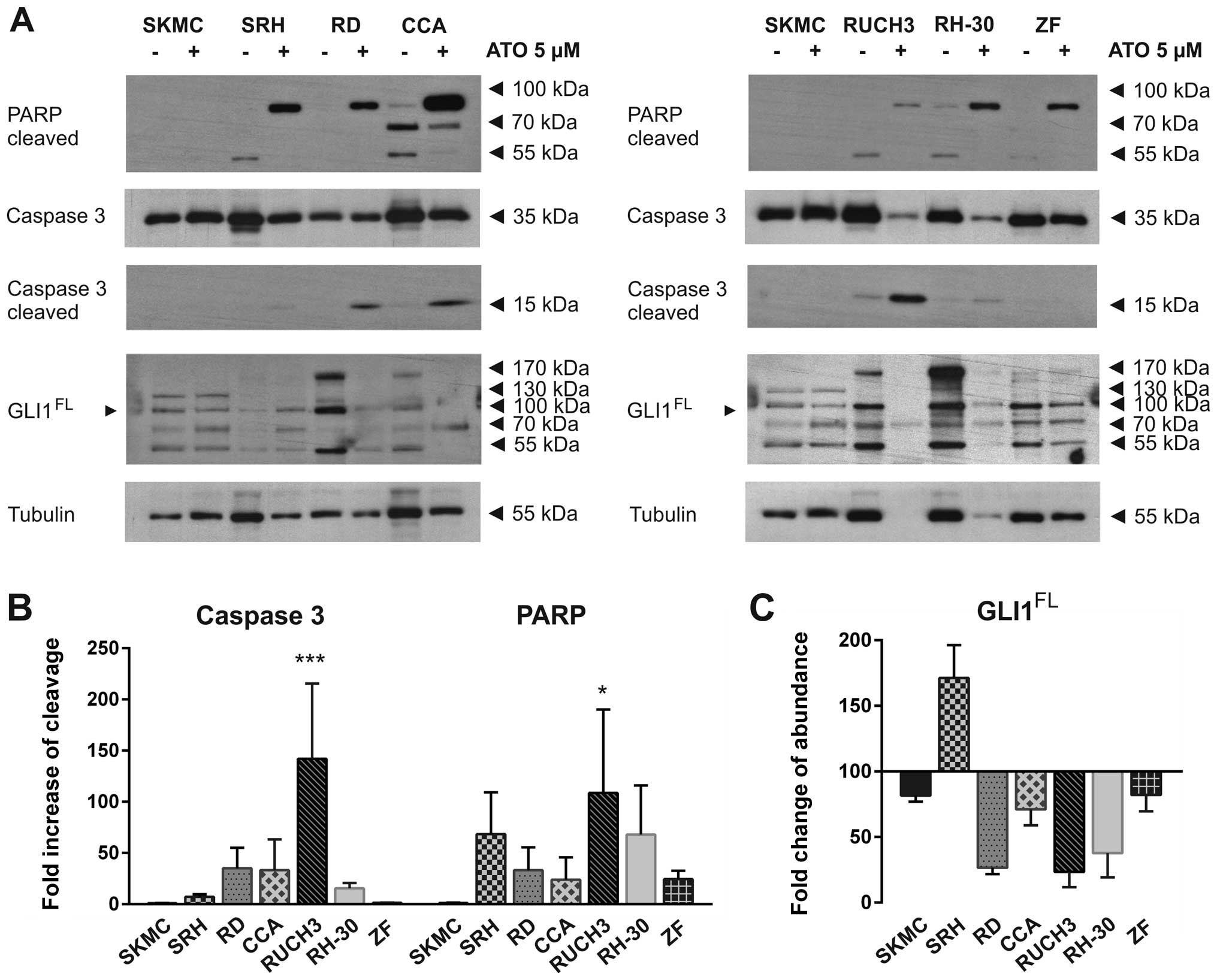
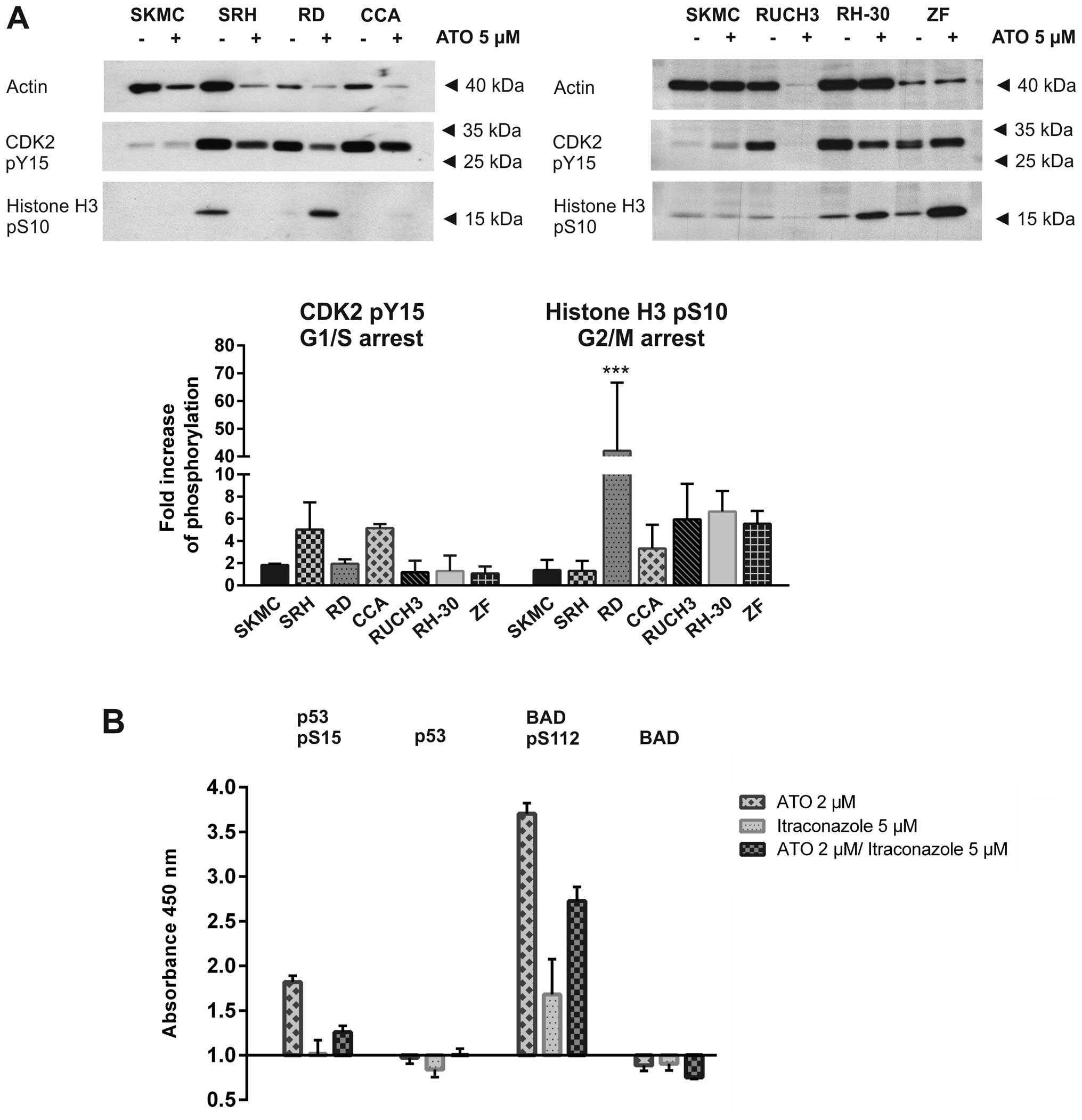
Rhabdomyosarcomas (RMS) are soft tissue tumours treated with a combination of surgery and chemotherapy. However, mortality rates remain high in case of recurrences and metastatic disease due to drug resistance and failure to undergo apoptosis. Therefore, innovative approaches targeting specific signalling pathways are urgently needed. We analysed the impact of different hedgehog (Hh) pathway inhibitors on growth and survival of six RMS cell lines using MTS assay, colony formation assay, 3D spheroid cultures, flow cytometry and western blotting. Especially the glioma-associated oncogene family (GLI) inhibitor arsenic trioxide (ATO) effectively reduced viability as well as clonal growth and induced cell death in RMS cell lines of embryonal, alveolar and sclerosing, spindle cell subtype, whereas normal skeletal muscle cells were hardly compromised by ATO. Combination of ATO with itraconazole potentiated the reduction of colony formation and spheroid size. These results show that ATO is a promising substance for treatment of relapsed and refractory RMS by directly targeting GLI transcription factors. The combination with itraconazole or other chemotherapeutic drugs has the opportunity to enforce the treatment efficiency of resistant and recurrent RMS.
View Figures

Figure 1

Figure 2

Figure 3

Figure 4

Figure 5

Figure 6

View References

1 

Tostar U, Toftgård R, Zaphiropoulos PG and Shimokawa T: Reduction of human embryonal rhabdomyosarcoma tumor growth by inhibition of the hedgehog signaling pathway. Genes Cancer. 1:941–951. 2010. View Article : Google Scholar

2 

Egas-Bejar D and Huh WW: Rhabdomyosarcoma in adolescent and young adult patients: Current perspectives. Adolesc Health Med Ther. 5:115–125. 2014.PubMed/NCBI

3 

Ferrari A, Dileo P, Casanova M, Bertulli R, Meazza C, Gandola L, Navarria P, Collini P, Gronchi A, Olmi P, et al: Rhabdomyosarcoma in adults. A retrospective analysis of 171 patients treated at a single institution. Cancer. 98:571–580. 2003. View Article : Google Scholar : PubMed/NCBI

4 

Agaram NP, Chen CL, Zhang L, LaQuaglia MP, Wexler L and Antonescu CR: Recurrent MYOD1 mutations in pediatric and adult sclerosing and spindle cell rhabdomyosarcomas: Evidence for a common pathogenesis. Genes Chromosomes Cancer. 53:779–787. 2014. View Article : Google Scholar : PubMed/NCBI

5 

Nascimento AF and Fletcher CD: Spindle cell rhabdomyosarcoma in adults. Am J Surg Pathol. 29:1106–1113. 2005.PubMed/NCBI

6 

Hawkins DS, Gupta AA and Rudzinski ER: What is new in the biology and treatment of pediatric rhabdomyosarcoma? Curr Opin Pediatr. 26:50–56. 2014. View Article : Google Scholar :

7 

Eichenmüller M, Hemmerlein B, von Schweinitz D and Kappler R: Betulinic acid induces apoptosis and inhibits hedgehog signalling in rhabdomyosarcoma. Br J Cancer. 103:43–51. 2010. View Article : Google Scholar : PubMed/NCBI

8 

Petrova R and Joyner AL: Roles for Hedgehog signaling in adult organ homeostasis and repair. Development. 141:3445–3457. 2014. View Article : Google Scholar : PubMed/NCBI

9 

Amakye D, Jagani Z and Dorsch M: Unraveling the therapeutic potential of the Hedgehog pathway in cancer. Nat Med. 19:1410–1422. 2013. View Article : Google Scholar : PubMed/NCBI

10 

Kelleher FC, Cain JE, Healy JM, Watkins DN and Thomas DM: Prevailing importance of the hedgehog signaling pathway and the potential for treatment advancement in sarcoma. Pharmacol Ther. 136:153–168. 2012. View Article : Google Scholar : PubMed/NCBI

11 

Nakamura S, Nagano S, Nagao H, Ishidou Y, Yokouchi M, Abematsu M, Yamamoto T, Komiya S and Setoguchi T: Arsenic trioxide prevents osteosarcoma growth by inhibition of GLI transcription via DNA damage accumulation. PLoS One. 8:e694662013. View Article : Google Scholar : PubMed/NCBI

12 

Aberger F, Aberger F and Ruiz I Altaba A: Context-dependent signal integration by the GLI code: The oncogenic load, pathways, modifiers and implications for cancer therapy. Semin Cell Dev Biol. 33:93–104. 2014. View Article : Google Scholar : PubMed/NCBI

13 

Kasper M, Regl G, Frischauf AM and Aberger F: GLI transcription factors: Mediators of oncogenic Hedgehog signalling. Eur J Cancer. 42:437–445. 2006. View Article : Google Scholar : PubMed/NCBI

14 

Roberts WM, Douglass EC, Peiper SC, Houghton PJ and Look AT: Amplification of the gli gene in childhood sarcomas. Cancer Res. 49:5407–5413. 1989.PubMed/NCBI

15 

Lynn M, Shah N, Conroy J, Ennis S, Morris T, Betts D and O'Sullivan M: A study of alveolar rhabdomyosarcoma copy number alterations by single nucleotide polymorphism analysis. Appl Immunohistochem Mol Morphol. 22:213–221. 2014. View Article : Google Scholar : PubMed/NCBI

16 

Matsumoto T, Tabata K and Suzuki T: The GANT61, a GLI inhibitor, induces caspase-independent apoptosis of SK-N-LO cells. Biol Pharm Bull. 37:633–641. 2014. View Article : Google Scholar : PubMed/NCBI

17 

Lin TL and Matsui W: Hedgehog pathway as a drug target: Smoothened inhibitors in development. Onco Targets Ther. 5:47–58. 2012. View Article : Google Scholar : PubMed/NCBI

18 

Ruat M, Hoch L, Faure H and Rognan D: Targeting of Smoothened for therapeutic gain. Trends Pharmacol Sci. 35:237–246. 2014. View Article : Google Scholar : PubMed/NCBI

19 

Pan S, Wu X, Jiang J, Gao W, Wan Y, Cheng D, Han D, Liu J, Englund NP, Wang Y, et al: Discovery of NVP-LDE225, a Potent and Selective Smoothened Antagonist. ACS Med Chem Lett. 1:130–134. 2010. View Article : Google Scholar : PubMed/NCBI

20 

Kim J, Tang JY, Gong R, Kim J, Lee JJ, Clemons KV, Chong CR, Chang KS, Fereshteh M, Gardner D, et al: Itraconazole, a commonly used antifungal that inhibits Hedgehog pathway activity and cancer growth. Cancer Cell. 17:388–399. 2010. View Article : Google Scholar : PubMed/NCBI

21 

Watts JM and Tallman MS: Acute promyelocytic leukemia: What is the new standard of care? Blood Rev. 28:205–212. 2014. View Article : Google Scholar : PubMed/NCBI

22 

Kim J, Lee JJ, Kim J, Gardner D and Beachy PA: Arsenic antagonizes the Hedgehog pathway by preventing ciliary accumulation and reducing stability of the Gli2 transcriptional effector. Proc Natl Acad Sci USA. 107:13432–13437. 2010. View Article : Google Scholar : PubMed/NCBI

23 

Lauth M, Bergström A, Shimokawa T and Toftgård R: Inhibition of GLI-mediated transcription and tumor cell growth by small-molecule antagonists. Proc Natl Acad Sci USA. 104:8455–8460. 2007. View Article : Google Scholar : PubMed/NCBI

24 

Laurendeau I, Ferrer M, Garrido D, D'Haene N, Ciavarelli P, Basso A, Vidaud M, Bieche I, Salmon I and Szijan I: Gene expression profiling of the hedgehog signaling pathway in human meningiomas. Mol Med. 16:262–270. 2010. View Article : Google Scholar : PubMed/NCBI

25 

Forus A, Florenes VA, Maelandsmo GM, Meltzer PS, Fodstad O and Myklebost O: Mapping of amplification units in the q13–14 region of chromosome 12 in human sarcomas: some amplica do not include MDM2. Cell Growth Differ. 4:1065–1070. 1993.PubMed/NCBI

26 

Prigent C and Dimitrov S: Phosphorylation of serine 10 in histone H3, what for? J Cell Sci. 116:3677–3685. 2003. View Article : Google Scholar : PubMed/NCBI

27 

Gu Y, Rosenblatt J and Morgan DO: Cell cycle regulation of CDK2 activity by phosphorylation of Thr160 and Tyr15. EMBO J. 11:3995–4005. 1992.PubMed/NCBI

28 

Loughery J, Cox M, Smith LM and Meek DW: Critical role for p53-serine 15 phosphorylation in stimulating transactivation at p53-responsive promoters. Nucleic Acids Res. 42:7666–7680. 2014. View Article : Google Scholar : PubMed/NCBI

29 

Soussi T and Béroud C: Significance of TP53 mutations in human cancer: A critical analysis of mutations at CpG dinucleotides. Hum Mutat. 21:192–200. 2003. View Article : Google Scholar : PubMed/NCBI

30 

Burlacu A: Regulation of apoptosis by Bcl-2 family proteins. J Cell Mol Med. 7:249–257. 2003. View Article : Google Scholar : PubMed/NCBI

31 

Hyman JM, Firestone AJ, Heine VM, Zhao Y, Ocasio CA, Han K, Sun M, Rack PG, Sinha S, Wu JJ, et al: Small-molecule inhibitors reveal multiple strategies for Hedgehog pathway blockade. Proc Natl Acad Sci USA. 106:14132–14137. 2009. View Article : Google Scholar : PubMed/NCBI

32 

Ragazzini P, Gamberi G, Pazzaglia L, Serra M, Magagnoli G, Ponticelli F, Ferrari C, Ghinelli C, Alberghini M, Bertoni F, et al: Amplification of CDK4, MDM2, SAS and GLI genes in leiomyosarcoma, alveolar and embryonal rhabdomyosarcoma. Histol Histopathol. 19:401–411. 2004.PubMed/NCBI

33 

Graab U, Hahn H and Fulda S: Identification of a novel synthetic lethality of combined inhibition of hedgehog and PI3K signaling in rhabdomyosarcoma. Oncotarget. 6:8722–8735. 2015. View Article : Google Scholar : PubMed/NCBI

34 

Raju GP: Arsenic: A potentially useful poison for Hedgehog-driven cancers. J Clin Invest. 121:14–16. 2011. View Article : Google Scholar :

35 

Kim J, Aftab BT, Tang JY, Kim D, Lee AH, Rezaee M, Kim J, Chen B, King EM, Borodovsky A, et al: Itraconazole and arsenic trioxide inhibit Hedgehog pathway activation and tumor growth associated with acquired resistance to smoothened antagonists. Cancer Cell. 23:23–34. 2013. View Article : Google Scholar : PubMed/NCBI

36 

Au WY, Tam S, Fong BM and Kwong YL: Determinants of cerebrospinal fluid arsenic concentration in patients with acute promyelocytic leukemia on oral arsenic trioxide therapy. Blood. 112:3587–3590. 2008. View Article : Google Scholar : PubMed/NCBI

37 

Liu Q, Hilsenbeck S and Gazitt Y: Arsenic trioxide-induced apoptosis in myeloma cells: p53-dependent G1 or G2/M cell cycle arrest, activation of caspase-8 or caspase-9, and synergy with APO2/TRAIL. Blood. 101:4078–4087. 2003. View Article : Google Scholar : PubMed/NCBI

38 

Lunghi P, Tabilio A, Lo-Coco F, Pelicci PG and Bonati A: Arsenic trioxide (ATO) and MEK1 inhibition synergize to induce apoptosis in acute promyelocytic leukemia cells. Leukemia. 19:234–244. 2005. View Article : Google Scholar

39 

Downward J: How BAD phosphorylation is good for survival. Nat Cell Biol. 1:E33–E35. 1999. View Article : Google Scholar : PubMed/NCBI

40 

Zha J, Harada H, Yang E, Jockel J and Korsmeyer SJ: Serine phosphorylation of death agonist BAD in response to survival factor results in binding to 14-3-3 not BCL-X(L). Cell. 87:619–628. 1996. View Article : Google Scholar : PubMed/NCBI

41 

Han YH, Kim SZ, Kim SH and Park WH: Arsenic trioxide inhibits the growth of Calu-6 cells via inducing a G2 arrest of the cell cycle and apoptosis accompanied with the depletion of GSH. Cancer Lett. 270:40–55. 2008. View Article : Google Scholar : PubMed/NCBI

42 

Jiang L, Wang L, Chen L, Cai GH, Ren QY, Chen JZ, Shi HJ and Xie YH: As2O3 induces apoptosis in human hepatocellular carcinoma HepG2 cells through a ROS-mediated mitochondrial pathway and activation of caspases. Int J Clin Exp Med. 8:2190–2196. 2015.

43 

Lu TH, Su CC, Chen YW, Yang CY, Wu CC, Hung DZ, Chen CH, Cheng PW, Liu SH and Huang CF: Arsenic induces pancreatic β-cell apoptosis via the oxidative stress-regulated mitochondria-dependent and endoplasmic reticulum stress-triggered signaling pathways. Toxicol Lett. 201:15–26. 2011. View Article : Google Scholar

44 

Wu X, Shi J, Wu Y, Tao Y, Hou J, Meng X, Hu X, Han Y, Jiang W, Tang S, et al: Arsenic trioxide-mediated growth inhibition of myeloma cells is associated with an extrinsic or intrinsic signaling pathway through activation of TRAIL or TRAIL receptor 2. Cancer Biol Ther. 10:1201–1214. 2010. View Article : Google Scholar : PubMed/NCBI

Related Articles

  • Abstract
  • View
  • Download
  • Twitter
Copy and paste a formatted citation
Spandidos Publications style
Boehme KA, Zaborski JJ, Riester R, Schweiss SK, Hopp U, Traub F, Kluba T, Handgretinger R and Schleicher SB: Targeting hedgehog signalling by arsenic trioxide reduces cell growth and induces apoptosis in rhabdomyosarcoma. Int J Oncol 48: 801-812, 2016.
APA
Boehme, K.A., Zaborski, J.J., Riester, R., Schweiss, S.K., Hopp, U., Traub, F. ... Schleicher, S.B. (2016). Targeting hedgehog signalling by arsenic trioxide reduces cell growth and induces apoptosis in rhabdomyosarcoma. International Journal of Oncology, 48, 801-812. https://doi.org/10.3892/ijo.2015.3293
MLA
Boehme, K. A., Zaborski, J. J., Riester, R., Schweiss, S. K., Hopp, U., Traub, F., Kluba, T., Handgretinger, R., Schleicher, S. B."Targeting hedgehog signalling by arsenic trioxide reduces cell growth and induces apoptosis in rhabdomyosarcoma". International Journal of Oncology 48.2 (2016): 801-812.
Chicago
Boehme, K. A., Zaborski, J. J., Riester, R., Schweiss, S. K., Hopp, U., Traub, F., Kluba, T., Handgretinger, R., Schleicher, S. B."Targeting hedgehog signalling by arsenic trioxide reduces cell growth and induces apoptosis in rhabdomyosarcoma". International Journal of Oncology 48, no. 2 (2016): 801-812. https://doi.org/10.3892/ijo.2015.3293
Copy and paste a formatted citation
x
Spandidos Publications style
Boehme KA, Zaborski JJ, Riester R, Schweiss SK, Hopp U, Traub F, Kluba T, Handgretinger R and Schleicher SB: Targeting hedgehog signalling by arsenic trioxide reduces cell growth and induces apoptosis in rhabdomyosarcoma. Int J Oncol 48: 801-812, 2016.
APA
Boehme, K.A., Zaborski, J.J., Riester, R., Schweiss, S.K., Hopp, U., Traub, F. ... Schleicher, S.B. (2016). Targeting hedgehog signalling by arsenic trioxide reduces cell growth and induces apoptosis in rhabdomyosarcoma. International Journal of Oncology, 48, 801-812. https://doi.org/10.3892/ijo.2015.3293
MLA
Boehme, K. A., Zaborski, J. J., Riester, R., Schweiss, S. K., Hopp, U., Traub, F., Kluba, T., Handgretinger, R., Schleicher, S. B."Targeting hedgehog signalling by arsenic trioxide reduces cell growth and induces apoptosis in rhabdomyosarcoma". International Journal of Oncology 48.2 (2016): 801-812.
Chicago
Boehme, K. A., Zaborski, J. J., Riester, R., Schweiss, S. K., Hopp, U., Traub, F., Kluba, T., Handgretinger, R., Schleicher, S. B."Targeting hedgehog signalling by arsenic trioxide reduces cell growth and induces apoptosis in rhabdomyosarcoma". International Journal of Oncology 48, no. 2 (2016): 801-812. https://doi.org/10.3892/ijo.2015.3293
Follow us
  • Twitter
  • LinkedIn
  • Facebook
About
  • Spandidos Publications
  • Careers
  • Cookie Policy
  • Privacy Policy
How can we help?
  • Help
  • Live Chat
  • Contact
  • Email to our Support Team