Spandidos Publications Logo
  • About
    • About Spandidos
    • Aims and Scopes
    • Abstracting and Indexing
    • Editorial Policies
    • Reprints and Permissions
    • Job Opportunities
    • Terms and Conditions
    • Contact
  • Journals
    • All Journals
    • Oncology Letters
      • Oncology Letters
      • Information for Authors
      • Editorial Policies
      • Editorial Board
      • Aims and Scope
      • Abstracting and Indexing
      • Bibliographic Information
      • Archive
    • International Journal of Oncology
      • International Journal of Oncology
      • Information for Authors
      • Editorial Policies
      • Editorial Board
      • Aims and Scope
      • Abstracting and Indexing
      • Bibliographic Information
      • Archive
    • Molecular and Clinical Oncology
      • Molecular and Clinical Oncology
      • Information for Authors
      • Editorial Policies
      • Editorial Board
      • Aims and Scope
      • Abstracting and Indexing
      • Bibliographic Information
      • Archive
    • Experimental and Therapeutic Medicine
      • Experimental and Therapeutic Medicine
      • Information for Authors
      • Editorial Policies
      • Editorial Board
      • Aims and Scope
      • Abstracting and Indexing
      • Bibliographic Information
      • Archive
    • International Journal of Molecular Medicine
      • International Journal of Molecular Medicine
      • Information for Authors
      • Editorial Policies
      • Editorial Board
      • Aims and Scope
      • Abstracting and Indexing
      • Bibliographic Information
      • Archive
    • Biomedical Reports
      • Biomedical Reports
      • Information for Authors
      • Editorial Policies
      • Editorial Board
      • Aims and Scope
      • Abstracting and Indexing
      • Bibliographic Information
      • Archive
    • Oncology Reports
      • Oncology Reports
      • Information for Authors
      • Editorial Policies
      • Editorial Board
      • Aims and Scope
      • Abstracting and Indexing
      • Bibliographic Information
      • Archive
    • Molecular Medicine Reports
      • Molecular Medicine Reports
      • Information for Authors
      • Editorial Policies
      • Editorial Board
      • Aims and Scope
      • Abstracting and Indexing
      • Bibliographic Information
      • Archive
    • World Academy of Sciences Journal
      • World Academy of Sciences Journal
      • Information for Authors
      • Editorial Policies
      • Editorial Board
      • Aims and Scope
      • Abstracting and Indexing
      • Bibliographic Information
      • Archive
    • International Journal of Functional Nutrition
      • International Journal of Functional Nutrition
      • Information for Authors
      • Editorial Policies
      • Editorial Board
      • Aims and Scope
      • Abstracting and Indexing
      • Bibliographic Information
      • Archive
    • International Journal of Epigenetics
      • International Journal of Epigenetics
      • Information for Authors
      • Editorial Policies
      • Editorial Board
      • Aims and Scope
      • Abstracting and Indexing
      • Bibliographic Information
      • Archive
    • Medicine International
      • Medicine International
      • Information for Authors
      • Editorial Policies
      • Editorial Board
      • Aims and Scope
      • Abstracting and Indexing
      • Bibliographic Information
      • Archive
  • Articles
  • Information
    • Information for Authors
    • Information for Reviewers
    • Information for Librarians
    • Information for Advertisers
    • Conferences
  • Language Editing
Spandidos Publications Logo
  • About
    • About Spandidos
    • Aims and Scopes
    • Abstracting and Indexing
    • Editorial Policies
    • Reprints and Permissions
    • Job Opportunities
    • Terms and Conditions
    • Contact
  • Journals
    • All Journals
    • Biomedical Reports
      • Information for Authors
      • Editorial Policies
      • Editorial Board
      • Aims and Scope
      • Abstracting and Indexing
      • Bibliographic Information
      • Archive
    • Experimental and Therapeutic Medicine
      • Information for Authors
      • Editorial Policies
      • Editorial Board
      • Aims and Scope
      • Abstracting and Indexing
      • Bibliographic Information
      • Archive
    • International Journal of Epigenetics
      • Information for Authors
      • Editorial Policies
      • Editorial Board
      • Aims and Scope
      • Abstracting and Indexing
      • Bibliographic Information
      • Archive
    • International Journal of Functional Nutrition
      • Information for Authors
      • Editorial Policies
      • Editorial Board
      • Aims and Scope
      • Abstracting and Indexing
      • Bibliographic Information
      • Archive
    • International Journal of Molecular Medicine
      • Information for Authors
      • Editorial Policies
      • Editorial Board
      • Aims and Scope
      • Abstracting and Indexing
      • Bibliographic Information
      • Archive
    • International Journal of Oncology
      • Information for Authors
      • Editorial Policies
      • Editorial Board
      • Aims and Scope
      • Abstracting and Indexing
      • Bibliographic Information
      • Archive
    • Medicine International
      • Information for Authors
      • Editorial Policies
      • Editorial Board
      • Aims and Scope
      • Abstracting and Indexing
      • Bibliographic Information
      • Archive
    • Molecular and Clinical Oncology
      • Information for Authors
      • Editorial Policies
      • Editorial Board
      • Aims and Scope
      • Abstracting and Indexing
      • Bibliographic Information
      • Archive
    • Molecular Medicine Reports
      • Information for Authors
      • Editorial Policies
      • Editorial Board
      • Aims and Scope
      • Abstracting and Indexing
      • Bibliographic Information
      • Archive
    • Oncology Letters
      • Information for Authors
      • Editorial Policies
      • Editorial Board
      • Aims and Scope
      • Abstracting and Indexing
      • Bibliographic Information
      • Archive
    • Oncology Reports
      • Information for Authors
      • Editorial Policies
      • Editorial Board
      • Aims and Scope
      • Abstracting and Indexing
      • Bibliographic Information
      • Archive
    • World Academy of Sciences Journal
      • Information for Authors
      • Editorial Policies
      • Editorial Board
      • Aims and Scope
      • Abstracting and Indexing
      • Bibliographic Information
      • Archive
  • Articles
  • Information
    • For Authors
    • For Reviewers
    • For Librarians
    • For Advertisers
    • Conferences
  • Language Editing
Login Register Submit
  • This site uses cookies
  • You can change your cookie settings at any time by following the instructions in our Cookie Policy. To find out more, you may read our Privacy Policy.

    I agree
Search articles by DOI, keyword, author or affiliation
Search
Advanced Search
presentation
International Journal of Oncology
Join Editorial Board Propose a Special Issue
Print ISSN: 1019-6439 Online ISSN: 1791-2423
Journal Cover
April-2016 Volume 48 Issue 4

Full Size Image

Cover Legend PDF

Sign up for eToc alerts
Recommend to Library

Journals

International Journal of Molecular Medicine

International Journal of Molecular Medicine

International Journal of Molecular Medicine is an international journal devoted to molecular mechanisms of human disease.

International Journal of Oncology

International Journal of Oncology

International Journal of Oncology is an international journal devoted to oncology research and cancer treatment.

Molecular Medicine Reports

Molecular Medicine Reports

Covers molecular medicine topics such as pharmacology, pathology, genetics, neuroscience, infectious diseases, molecular cardiology, and molecular surgery.

Oncology Reports

Oncology Reports

Oncology Reports is an international journal devoted to fundamental and applied research in Oncology.

Experimental and Therapeutic Medicine

Experimental and Therapeutic Medicine

Experimental and Therapeutic Medicine is an international journal devoted to laboratory and clinical medicine.

Oncology Letters

Oncology Letters

Oncology Letters is an international journal devoted to Experimental and Clinical Oncology.

Biomedical Reports

Biomedical Reports

Explores a wide range of biological and medical fields, including pharmacology, genetics, microbiology, neuroscience, and molecular cardiology.

Molecular and Clinical Oncology

Molecular and Clinical Oncology

International journal addressing all aspects of oncology research, from tumorigenesis and oncogenes to chemotherapy and metastasis.

World Academy of Sciences Journal

World Academy of Sciences Journal

Multidisciplinary open-access journal spanning biochemistry, genetics, neuroscience, environmental health, and synthetic biology.

International Journal of Functional Nutrition

International Journal of Functional Nutrition

Open-access journal combining biochemistry, pharmacology, immunology, and genetics to advance health through functional nutrition.

International Journal of Epigenetics

International Journal of Epigenetics

Publishes open-access research on using epigenetics to advance understanding and treatment of human disease.

Medicine International

Medicine International

An International Open Access Journal Devoted to General Medicine.

Journal Cover
April-2016 Volume 48 Issue 4

Full Size Image

Cover Legend PDF

Sign up for eToc alerts
Recommend to Library

  • Article
  • Citations
    • Cite This Article
    • Download Citation
    • Create Citation Alert
    • Remove Citation Alert
    • Cited By
  • Similar Articles
    • Related Articles (in Spandidos Publications)
    • Similar Articles (Google Scholar)
    • Similar Articles (PubMed)
  • Download PDF
  • Download XML
  • View XML
Article

Placenta growth factor and neuropilin-1 collaborate in promoting melanoma aggressiveness

  • Authors:
    • Elena Pagani
    • Federica Ruffini
    • Gian Carlo Antonini Cappellini
    • Alessandro Scoppola
    • Cristina Fortes
    • Paolo Marchetti
    • Grazia Graziani
    • Stefania D'Atri
    • Pedro Miguel Lacal
  • View Affiliations / Copyright

    Affiliations: Laboratory of Molecular Oncology, ‘Istituto Dermopatico dell'Immacolata’- IRCCS, Rome, Italy, Department of Oncology and Dermatological Oncology, ‘Istituto Dermopatico dell'Immacolata’- IRCCS, Rome, Italy, Epidemiology Unit, ‘Istituto Dermopatico dell'Immacolata’- IRCCS, Rome, Italy, Department of Oncology, Sant'Andrea Hospital, University of Rome ‘La Sapienza’, Rome, Italy, Department of Systems Medicine, University of Rome ‘Tor Vergata’, Rome, Italy
  • Pages: 1581-1589
    |
    Published online on: January 29, 2016
       https://doi.org/10.3892/ijo.2016.3362
  • Expand metrics +
Metrics: Total Views: 0 (Spandidos Publications: | PMC Statistics: )
Metrics: Total PDF Downloads: 0 (Spandidos Publications: | PMC Statistics: )
Cited By (CrossRef): 0 citations Loading Articles...

This article is mentioned in:


Abstract

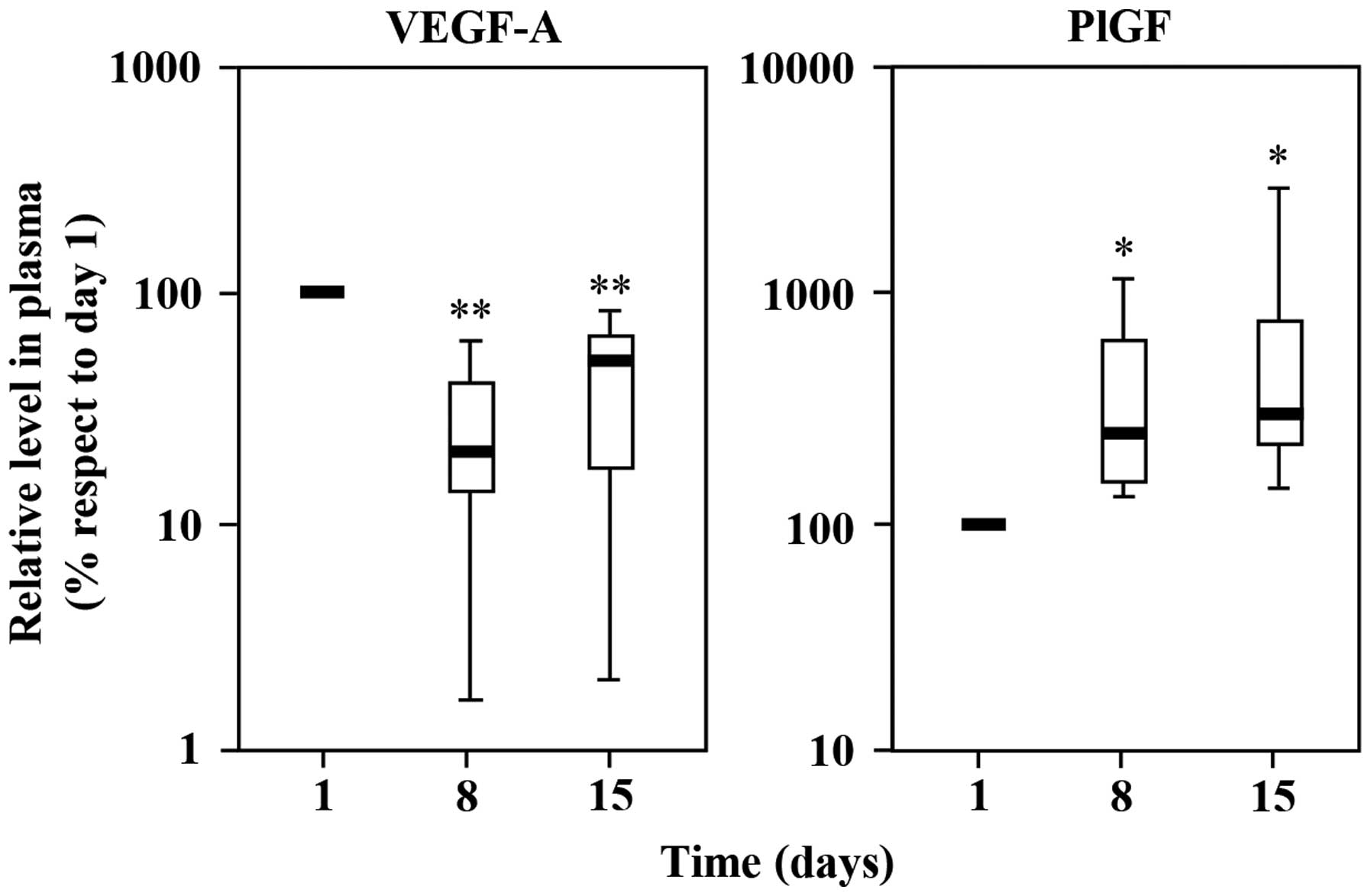
The placenta growth factor (PlGF) is a member of the vascular endothelial growth factor (VEGF) family, which shares with VEGF-A the tyrosine kinase receptor VEGFR-1 and the co-receptor neuropilin-1 (NRP-1). In melanoma models, PlGF enhances tumour growth and neovessel formation, whereas NRP-1 promotes the metastatic process. Increased secretion of PlGF and expression of NRP-1 have also been involved in intrinsic or acquired resistance to anti‑angiogenic therapies. In this study we investigated whether PlGF and NRP-1 cooperate in promoting melanoma aggressiveness independently of VEGFR-1. For this purpose, the melanoma cell clones M14-N, expressing NRP-1 and lacking VEGFR-1, and M14-C, devoid of both receptors, were used. M14-N cells are characterized by an invasive phenotype and vasculogenic mimicry, whereas M14-C cells possess a negligible invasive capacity. The results indicated that M14-N cells secrete higher levels of PlGF than M14-C cells and that PlGF is involved in the invasion of the extracellular matrix (ECM) and vasculogenic mimicry of M14-N cells. In fact, neutralizing antibodies against PlGF reverted ECM invasion in response to PlGF and markedly reduced the formation of tubule-like structures. Moreover, M14-N cells migrated in response to PlGF and chemotaxis was specifically abrogated by anti-NRP-1 antibodies, demonstrating that PlGF directly activates NRP-1 in the absence of VEGFR-1. We also compared the levels of PlGF in the plasma of patients affected by metastatic melanoma with those of healthy donors and evaluated whether PlGF levels could be affected by a bevacizumab-containing chemotherapy regimen. Melanoma patients showed a 20-fold increase in plasma PlGF and the bevacizumab-containing regimen induced a reduction of VEGF-A and in a further increase of PlGF. In conclusion, our studies suggest that the activation of NRP-1 by PlGF directly contributes to melanoma aggressiveness and represents a potential compensatory pro-angiogenic mechanism that may contribute to the resistance to therapies targeting VEGF-A.
View Figures

Figure 1

Figure 2

Figure 3

Figure 4

Figure 5

View References

1 

Fischer C, Mazzone M, Jonckx B and Carmeliet P: FLT1 and its ligands VEGFB and PlGF: drug targets for anti-angiogenic therapy? Nat Rev Cancer. 8:942–956. 2008. View Article : Google Scholar : PubMed/NCBI

2 

Roskoski R Jr: VEGF receptor protein-tyrosine kinases: structure and regulation. Biochem Biophys Res Commun. 375:287–291. 2008. View Article : Google Scholar : PubMed/NCBI

3 

Lohela M, Bry M, Tammela T and Alitalo K: VEGFs and receptors involved in angiogenesis versus lymphangiogenesis. Curr Opin Cell Biol. 21:154–165. 2009. View Article : Google Scholar : PubMed/NCBI

4 

Dewerchin M and Carmeliet P: Placental growth factor in cancer. Expert Opin Ther Targets. 18:1339–1354. 2014. View Article : Google Scholar : PubMed/NCBI

5 

Kim KJ, Cho CS and Kim WU: Role of placenta growth factor in cancer and inflammation. Exp Mol Med. 44:10–19. 2012. View Article : Google Scholar : PubMed/NCBI

6 

Autiero M, Waltenberger J, Communi D, Kranz A, Moons L, Lambrechts D, Kroll J, Plaisance S, De Mol M, Bono F, et al: Role of PlGF in the intra- and intermolecular cross talk between the VEGF receptors Flt1 and Flk1. Nat Med. 9:936–943. 2003. View Article : Google Scholar : PubMed/NCBI

7 

Marcellini M, De Luca N, Riccioni T, Ciucci A, Orecchia A, Lacal PM, Ruffini F, Pesce M, Cianfarani F, Zambruno G, et al: Increased melanoma growth and metastasis spreading in mice overexpressing placenta growth factor. Am J Pathol. 169:643–654. 2006. View Article : Google Scholar : PubMed/NCBI

8 

Levati L, Ruffini F, Muzi A, Umezawa K, Graziani G, D'Atri S and Lacal PM: Placenta growth factor induces melanoma resistance to temozolomide through a mechanism that involves the activation of the transcription factor NF-κB. Int J Oncol. 38:241–247. 2011.

9 

Schwartz JD, Rowinsky EK, Youssoufian H, Pytowski B and Wu Y: Vascular endothelial growth factor receptor-1 in human cancer: concise review and rationale for development of IMC-18F1 (Human antibody targeting vascular endothelial growth factor receptor-1). Cancer. 116(Suppl): 1027–1032. 2010. View Article : Google Scholar : PubMed/NCBI

10 

Adini A, Kornaga T, Firoozbakht F and Benjamin LE: Placental growth factor is a survival factor for tumor endothelial cells and macrophages. Cancer Res. 62:2749–2752. 2002.PubMed/NCBI

11 

Zhou Y, Bellingard V, Feng K-T, McMaster M and Fisher SJ: Human cytotrophoblasts promote endothelial survival and vascular remodeling through secretion of Ang2, PlGF, and VEGF-C. Dev Biol. 263:114–125. 2003. View Article : Google Scholar : PubMed/NCBI

12 

Wu Y, Hooper AT, Zhong Z, Witte L, Bohlen P, Rafii S and Hicklin DJ: The vascular endothelial growth factor receptor (VEGFR-1) supports growth and survival of human breast carcinoma. Int J Cancer. 119:1519–1529. 2006. View Article : Google Scholar : PubMed/NCBI

13 

Wu Y, Zhong Z, Huber J, Bassi R, Finnerty B, Corcoran E, Li H, Navarro E, Balderes P, Jimenez X, et al: Anti-vascular endothelial growth factor receptor-1 antagonist antibody as a therapeutic agent for cancer. Clin Cancer Res. 12:6573–6584. 2006. View Article : Google Scholar : PubMed/NCBI

14 

Fragoso R, Pereira T, Wu Y, Zhu Z, Cabeçadas J and Dias S: VEGFR-1 (FLT-1) activation modulates acute lymphoblastic leukemia localization and survival within the bone marrow, determining the onset of extramedullary disease. Blood. 107:1608–1616. 2006. View Article : Google Scholar

15 

Lacal PM, Failla CM, Pagani E, Odorisio T, Schietroma C, Falcinelli S, Zambruno G and D'Atri S: Human melanoma cells secrete and respond to placenta growth factor and vascular endothelial growth factor. J Invest Dermatol. 115:1000–1007. 2000. View Article : Google Scholar : PubMed/NCBI

16 

Graells J, Vinyals A, Figueras A, Llorens A, Moreno A, Marcoval J, Gonzalez FJ and Fabra A: Overproduction of VEGF concomitantly expressed with its receptors promotes growth and survival of melanoma cells through MAPK and PI3K signaling. J Invest Dermatol. 123:1151–1161. 2004. View Article : Google Scholar : PubMed/NCBI

17 

Graeven U, Fiedler W, Karpinski S, Ergün S, Kilic N, Rodeck U, Schmiegel W and Hossfeld DK: Melanoma-associated expression of vascular endothelial growth factor and its receptors FLT-1 and KDR. J Cancer Res Clin Oncol. 125:621–629. 1999. View Article : Google Scholar : PubMed/NCBI

18 

Lacal PM, Ruffini F, Pagani E and D'Atri S: An autocrine loop directed by the vascular endothelial growth factor promotes invasiveness of human melanoma cells. Int J Oncol. 27:1625–1632. 2005.PubMed/NCBI

19 

Grünewald FS, Prota AE, Giese A and Ballmer-Hofer K: Structure-function analysis of VEGF receptor activation and the role of coreceptors in angiogenic signaling. Biochim Biophys Acta. 1804:567–580. 2010. View Article : Google Scholar

20 

Neagoe PE, Lemieux C and Sirois MG: Vascular endothelial growth factor (VEGF)-A165-induced prostacyclin synthesis requires the activation of VEGF receptor-1 and -2 heterodimer. J Biol Chem. 280:9904–9912. 2005. View Article : Google Scholar : PubMed/NCBI

21 

Allain B, Jarray R, Borriello L, Leforban B, Dufour S, Liu WQ, Pamonsinlapatham P, Bianco S, Larghero J, Hadj-Slimane R, et al: Neuropilin-1 regulates a new VEGF-induced gene, Phactr-1, which controls tubulogenesis and modulates lamel-lipodial dynamics in human endothelial cells. Cell Signal. 24:214–223. 2012. View Article : Google Scholar

22 

Chittenden TW, Claes F, Lanahan AA, Autiero M, Palac RT, Tkachenko EV, Elfenbein A, Ruiz de Almodovar C, Dedkov E, Tomanek R, et al: Selective regulation of arterial branching morphogenesis by synectin. Dev Cell. 10:783–795. 2006. View Article : Google Scholar : PubMed/NCBI

23 

Snuderl M, Batista A, Kirkpatrick ND, Ruiz de Almodovar C, Riedemann L, Walsh EC, Anolik R, Huang Y, Martin JD, Kamoun W, et al: Targeting placental growth factor/neuropilin 1 pathway inhibits growth and spread of medulloblastoma. Cell. 152:1065–1076. 2013. View Article : Google Scholar : PubMed/NCBI

24 

Ellis LM: The role of neuropilins in cancer. Mol Cancer Ther. 5:1099–1107. 2006. View Article : Google Scholar : PubMed/NCBI

25 

Holmes K, Roberts OL, Thomas AM and Cross MJ: Vascular endothelial growth factor receptor-2: structure, function, intra-cellular signalling and therapeutic inhibition. Cell Signal. 19:2003–2012. 2007. View Article : Google Scholar : PubMed/NCBI

26 

van Beijnum JR, Nowak-Sliwinska P, Huijbers EJ, Thijssen VL and Griffioen AW: The great escape; the hallmarks of resistance to antiangiogenic therapy. Pharmacol Rev. 67:441–461. 2015. View Article : Google Scholar : PubMed/NCBI

27 

Lambrechts D, Lenz HJ, de Haas S, Carmeliet P and Scherer SJ: Markers of response for the antiangiogenic agent bevacizumab. J Clin Oncol. 31:1219–1230. 2013. View Article : Google Scholar : PubMed/NCBI

28 

Ruffini F, D'Atri S and Lacal PM: Neuropilin-1 expression promotes invasiveness of melanoma cells through vascular endothelial growth factor receptor-2-dependent and -independent mechanisms. Int J Oncol. 43:297–306. 2013.PubMed/NCBI

29 

Ruffini F, Graziani G, Levati L, Tentori L, D'Atri S and Lacal PM: Cilengitide downmodulates invasiveness and vasculogenic mimicry of neuropilin 1 expressing melanoma cells through the inhibition of αvβ5 integrin. Int J Cancer. 136:E545–E558. 2015. View Article : Google Scholar

30 

Orecchia A, Lacal PM, Schietroma C, Morea V, Zambruno G and Failla CM: Vascular endothelial growth factor receptor-1 is deposited in the extracellular matrix by endothelial cells and is a ligand for the alpha 5 beta 1 integrin. J Cell Sci. 116:3479–3489. 2003. View Article : Google Scholar : PubMed/NCBI

31 

Ruffini F, Tentori L, Dorio AS, Arcelli D, D'Amati G, D'Atri S, Graziani G and Lacal PM: Platelet-derived growth factor C and calpain-3 are modulators of human melanoma cell invasiveness. Oncol Rep. 30:2887–2896. 2013.PubMed/NCBI

32 

Seftor RE, Hess AR, Seftor EA, Kirschmann DA, Hardy KM, Margaryan NV and Hendrix MJ: Tumor cell vasculogenic mimicry: From controversy to therapeutic promise. Am J Pathol. 181:1115–1125. 2012. View Article : Google Scholar : PubMed/NCBI

33 

Escudero-Esparza A, Martin TA, Douglas-Jones A, Mansel RE and Jiang WG: PGF isoforms, PLGF-1 and PGF-2 and the PGF receptor, neuropilin, in human breast cancer: prognostic significance. Oncol Rep. 23:537–544. 2010.PubMed/NCBI

34 

Banerjee S, Sengupta K, Dhar K, Mehta S, D'Amore PA, Dhar G and Banerjee SK: Breast cancer cells secreted platelet-derived growth factor-induced motility of vascular smooth muscle cells is mediated through neuropilin-1. Mol Carcinog. 45:871–880. 2006. View Article : Google Scholar : PubMed/NCBI

35 

Dhar K, Dhar G, Majumder M, Haque I, Mehta S, Van Veldhuizen PJ, Banerjee SK and Banerjee S: Tumor cell-derived PDGF-B potentiates mouse mesenchymal stem cells-pericytes transition and recruitment through an interaction with NRP-1. Mol Cancer. 9:2092010. View Article : Google Scholar : PubMed/NCBI

36 

Pellet-Many C, Frankel P, Evans IM, Herzog B, Jünemann-Ramírez M and Zachary IC: Neuropilin-1 mediates PDGF stimulation of vascular smooth muscle cell migration and signalling via p130Cas. Biochem J. 435:609–618. 2011. View Article : Google Scholar : PubMed/NCBI

37 

Frank A, David V, Aurelie TR, Florent G, William H and Philippe B: Regulation of MMPs during melanoma progression: from genetic to epigenetic. Anticancer Agents Med Chem. 12:773–782. 2012. View Article : Google Scholar : PubMed/NCBI

38 

Tamiya M, Tamiya A, Yamadori T, Nakao K, Asami K, Yasue T, Otsuka T, Shiroyama T, Morishita N, Suzuki H, et al: Phase2 study of bevacizumab with carboplatin-paclitaxel for non-small cell lung cancer with malignant pleural effusion. Med Oncol. 30:6762013. View Article : Google Scholar : PubMed/NCBI

39 

Jayasinghe C, Simiantonaki N and Kirkpatrick CJ: Cell type- and tumor zone-specific expression of pVEGFR-1 and its ligands influence colon cancer metastasis. BMC Cancer. 15:1042015. View Article : Google Scholar : PubMed/NCBI

40 

Bagley RG, Ren Y, Weber W, Yao M, Kurtzberg L, Pinckney J, Bangari D, Nguyen C, Brondyk W, Kaplan J, et al: Placental growth factor upregulation is a host response to antiangiogenic therapy. Clin Cancer Res. 17:976–988. 2011. View Article : Google Scholar : PubMed/NCBI

41 

Fischer C, Jonckx B, Mazzone M, Zacchigna S, Loges S, Pattarini L, Chorianopoulos E, Liesenborghs L, Koch M, De Mol M, et al: Anti-PlGF inhibits growth of VEGF(R)-inhibitor-resistant tumors without affecting healthy vessels. Cell. 131:463–475. 2007. View Article : Google Scholar : PubMed/NCBI

42 

Liang WC, Dennis MS, Stawicki S, Chanthery Y, Pan Q, Chen Y, Eigenbrot C, Yin J, Koch AW, Wu X, et al: Function blocking antibodies to neuropilin-1 generated from a designed human synthetic antibody phage library. J Mol Biol. 366:815–829. 2007. View Article : Google Scholar : PubMed/NCBI

43 

Pan Q, Chanthery Y, Liang WC, Stawicki S, Mak J, Rathore N, Tong RK, Kowalski J, Yee SF, Pacheco G, et al: Blocking neuropilin-1 function has an additive effect with anti-VEGF to inhibit tumor growth. Cancer Cell. 11:53–67. 2007. View Article : Google Scholar : PubMed/NCBI

44 

Xin Y, Li J, Wu J, Kinard R, Weekes CD, Patnaik A, Lorusso P, Brachmann R, Tong RK, Yan Y, et al: Pharmacokinetic and pharmacodynamic analysis of circulating biomarkers of anti-NRP1, a novel antiangiogenesis agent, in two phase I trials in patients with advanced solid tumors. Clin Cancer Res. 18:6040–6048. 2012. View Article : Google Scholar : PubMed/NCBI

45 

Jia H, Cheng L, Tickner M, Bagherzadeh A, Selwood D and Zachary I: Neuropilin-1 antagonism in human carcinoma cells inhibits migration and enhances chemosensitivity. Br J Cancer. 102:541–552. 2010. View Article : Google Scholar : PubMed/NCBI

46 

Zeng F, Luo F, Lv S, Zhang H, Cao C, Chen X, Wang S, Li Z, Wang X, Dou X, et al: A monoclonal antibody targeting neuropilin-1 inhibits adhesion of MCF7 breast cancer cells to fibronectin by suppressing the FAK/p130cas signaling pathway. Anticancer Drugs. 25:663–672. 2014.PubMed/NCBI

47 

Graziani G and Lacal PM: Neuropilin-1 as therapeutic target for malignant melanoma. Front Oncol. 5:1252015. View Article : Google Scholar : PubMed/NCBI

Related Articles

  • Abstract
  • View
  • Download
  • Twitter
Copy and paste a formatted citation
Spandidos Publications style
Pagani E, Ruffini F, Antonini Cappellini GC, Scoppola A, Fortes C, Marchetti P, Graziani G, D'Atri S and Lacal PM: Placenta growth factor and neuropilin-1 collaborate in promoting melanoma aggressiveness. Int J Oncol 48: 1581-1589, 2016.
APA
Pagani, E., Ruffini, F., Antonini Cappellini, G.C., Scoppola, A., Fortes, C., Marchetti, P. ... Lacal, P.M. (2016). Placenta growth factor and neuropilin-1 collaborate in promoting melanoma aggressiveness. International Journal of Oncology, 48, 1581-1589. https://doi.org/10.3892/ijo.2016.3362
MLA
Pagani, E., Ruffini, F., Antonini Cappellini, G. C., Scoppola, A., Fortes, C., Marchetti, P., Graziani, G., D'Atri, S., Lacal, P. M."Placenta growth factor and neuropilin-1 collaborate in promoting melanoma aggressiveness". International Journal of Oncology 48.4 (2016): 1581-1589.
Chicago
Pagani, E., Ruffini, F., Antonini Cappellini, G. C., Scoppola, A., Fortes, C., Marchetti, P., Graziani, G., D'Atri, S., Lacal, P. M."Placenta growth factor and neuropilin-1 collaborate in promoting melanoma aggressiveness". International Journal of Oncology 48, no. 4 (2016): 1581-1589. https://doi.org/10.3892/ijo.2016.3362
Copy and paste a formatted citation
x
Spandidos Publications style
Pagani E, Ruffini F, Antonini Cappellini GC, Scoppola A, Fortes C, Marchetti P, Graziani G, D'Atri S and Lacal PM: Placenta growth factor and neuropilin-1 collaborate in promoting melanoma aggressiveness. Int J Oncol 48: 1581-1589, 2016.
APA
Pagani, E., Ruffini, F., Antonini Cappellini, G.C., Scoppola, A., Fortes, C., Marchetti, P. ... Lacal, P.M. (2016). Placenta growth factor and neuropilin-1 collaborate in promoting melanoma aggressiveness. International Journal of Oncology, 48, 1581-1589. https://doi.org/10.3892/ijo.2016.3362
MLA
Pagani, E., Ruffini, F., Antonini Cappellini, G. C., Scoppola, A., Fortes, C., Marchetti, P., Graziani, G., D'Atri, S., Lacal, P. M."Placenta growth factor and neuropilin-1 collaborate in promoting melanoma aggressiveness". International Journal of Oncology 48.4 (2016): 1581-1589.
Chicago
Pagani, E., Ruffini, F., Antonini Cappellini, G. C., Scoppola, A., Fortes, C., Marchetti, P., Graziani, G., D'Atri, S., Lacal, P. M."Placenta growth factor and neuropilin-1 collaborate in promoting melanoma aggressiveness". International Journal of Oncology 48, no. 4 (2016): 1581-1589. https://doi.org/10.3892/ijo.2016.3362
Follow us
  • Twitter
  • LinkedIn
  • Facebook
About
  • Spandidos Publications
  • Careers
  • Cookie Policy
  • Privacy Policy
How can we help?
  • Help
  • Live Chat
  • Contact
  • Email to our Support Team