Spandidos Publications Logo
  • About
    • About Spandidos
    • Aims and Scopes
    • Abstracting and Indexing
    • Editorial Policies
    • Reprints and Permissions
    • Job Opportunities
    • Terms and Conditions
    • Contact
  • Journals
    • All Journals
    • Oncology Letters
      • Oncology Letters
      • Information for Authors
      • Editorial Policies
      • Editorial Board
      • Aims and Scope
      • Abstracting and Indexing
      • Bibliographic Information
      • Archive
    • International Journal of Oncology
      • International Journal of Oncology
      • Information for Authors
      • Editorial Policies
      • Editorial Board
      • Aims and Scope
      • Abstracting and Indexing
      • Bibliographic Information
      • Archive
    • Molecular and Clinical Oncology
      • Molecular and Clinical Oncology
      • Information for Authors
      • Editorial Policies
      • Editorial Board
      • Aims and Scope
      • Abstracting and Indexing
      • Bibliographic Information
      • Archive
    • Experimental and Therapeutic Medicine
      • Experimental and Therapeutic Medicine
      • Information for Authors
      • Editorial Policies
      • Editorial Board
      • Aims and Scope
      • Abstracting and Indexing
      • Bibliographic Information
      • Archive
    • International Journal of Molecular Medicine
      • International Journal of Molecular Medicine
      • Information for Authors
      • Editorial Policies
      • Editorial Board
      • Aims and Scope
      • Abstracting and Indexing
      • Bibliographic Information
      • Archive
    • Biomedical Reports
      • Biomedical Reports
      • Information for Authors
      • Editorial Policies
      • Editorial Board
      • Aims and Scope
      • Abstracting and Indexing
      • Bibliographic Information
      • Archive
    • Oncology Reports
      • Oncology Reports
      • Information for Authors
      • Editorial Policies
      • Editorial Board
      • Aims and Scope
      • Abstracting and Indexing
      • Bibliographic Information
      • Archive
    • Molecular Medicine Reports
      • Molecular Medicine Reports
      • Information for Authors
      • Editorial Policies
      • Editorial Board
      • Aims and Scope
      • Abstracting and Indexing
      • Bibliographic Information
      • Archive
    • World Academy of Sciences Journal
      • World Academy of Sciences Journal
      • Information for Authors
      • Editorial Policies
      • Editorial Board
      • Aims and Scope
      • Abstracting and Indexing
      • Bibliographic Information
      • Archive
    • International Journal of Functional Nutrition
      • International Journal of Functional Nutrition
      • Information for Authors
      • Editorial Policies
      • Editorial Board
      • Aims and Scope
      • Abstracting and Indexing
      • Bibliographic Information
      • Archive
    • International Journal of Epigenetics
      • International Journal of Epigenetics
      • Information for Authors
      • Editorial Policies
      • Editorial Board
      • Aims and Scope
      • Abstracting and Indexing
      • Bibliographic Information
      • Archive
    • Medicine International
      • Medicine International
      • Information for Authors
      • Editorial Policies
      • Editorial Board
      • Aims and Scope
      • Abstracting and Indexing
      • Bibliographic Information
      • Archive
  • Articles
  • Information
    • Information for Authors
    • Information for Reviewers
    • Information for Librarians
    • Information for Advertisers
    • Conferences
  • Language Editing
Spandidos Publications Logo
  • About
    • About Spandidos
    • Aims and Scopes
    • Abstracting and Indexing
    • Editorial Policies
    • Reprints and Permissions
    • Job Opportunities
    • Terms and Conditions
    • Contact
  • Journals
    • All Journals
    • Biomedical Reports
      • Information for Authors
      • Editorial Policies
      • Editorial Board
      • Aims and Scope
      • Abstracting and Indexing
      • Bibliographic Information
      • Archive
    • Experimental and Therapeutic Medicine
      • Information for Authors
      • Editorial Policies
      • Editorial Board
      • Aims and Scope
      • Abstracting and Indexing
      • Bibliographic Information
      • Archive
    • International Journal of Epigenetics
      • Information for Authors
      • Editorial Policies
      • Editorial Board
      • Aims and Scope
      • Abstracting and Indexing
      • Bibliographic Information
      • Archive
    • International Journal of Functional Nutrition
      • Information for Authors
      • Editorial Policies
      • Editorial Board
      • Aims and Scope
      • Abstracting and Indexing
      • Bibliographic Information
      • Archive
    • International Journal of Molecular Medicine
      • Information for Authors
      • Editorial Policies
      • Editorial Board
      • Aims and Scope
      • Abstracting and Indexing
      • Bibliographic Information
      • Archive
    • International Journal of Oncology
      • Information for Authors
      • Editorial Policies
      • Editorial Board
      • Aims and Scope
      • Abstracting and Indexing
      • Bibliographic Information
      • Archive
    • Medicine International
      • Information for Authors
      • Editorial Policies
      • Editorial Board
      • Aims and Scope
      • Abstracting and Indexing
      • Bibliographic Information
      • Archive
    • Molecular and Clinical Oncology
      • Information for Authors
      • Editorial Policies
      • Editorial Board
      • Aims and Scope
      • Abstracting and Indexing
      • Bibliographic Information
      • Archive
    • Molecular Medicine Reports
      • Information for Authors
      • Editorial Policies
      • Editorial Board
      • Aims and Scope
      • Abstracting and Indexing
      • Bibliographic Information
      • Archive
    • Oncology Letters
      • Information for Authors
      • Editorial Policies
      • Editorial Board
      • Aims and Scope
      • Abstracting and Indexing
      • Bibliographic Information
      • Archive
    • Oncology Reports
      • Information for Authors
      • Editorial Policies
      • Editorial Board
      • Aims and Scope
      • Abstracting and Indexing
      • Bibliographic Information
      • Archive
    • World Academy of Sciences Journal
      • Information for Authors
      • Editorial Policies
      • Editorial Board
      • Aims and Scope
      • Abstracting and Indexing
      • Bibliographic Information
      • Archive
  • Articles
  • Information
    • For Authors
    • For Reviewers
    • For Librarians
    • For Advertisers
    • Conferences
  • Language Editing
Login Register Submit
  • This site uses cookies
  • You can change your cookie settings at any time by following the instructions in our Cookie Policy. To find out more, you may read our Privacy Policy.

    I agree
Search articles by DOI, keyword, author or affiliation
Search
Advanced Search
presentation
International Journal of Oncology
Join Editorial Board Propose a Special Issue
Print ISSN: 1019-6439 Online ISSN: 1791-2423
Journal Cover
June-2016 Volume 48 Issue 6

Full Size Image

Cover Legend PDF

Sign up for eToc alerts
Recommend to Library

Journals

International Journal of Molecular Medicine

International Journal of Molecular Medicine

International Journal of Molecular Medicine is an international journal devoted to molecular mechanisms of human disease.

International Journal of Oncology

International Journal of Oncology

International Journal of Oncology is an international journal devoted to oncology research and cancer treatment.

Molecular Medicine Reports

Molecular Medicine Reports

Covers molecular medicine topics such as pharmacology, pathology, genetics, neuroscience, infectious diseases, molecular cardiology, and molecular surgery.

Oncology Reports

Oncology Reports

Oncology Reports is an international journal devoted to fundamental and applied research in Oncology.

Experimental and Therapeutic Medicine

Experimental and Therapeutic Medicine

Experimental and Therapeutic Medicine is an international journal devoted to laboratory and clinical medicine.

Oncology Letters

Oncology Letters

Oncology Letters is an international journal devoted to Experimental and Clinical Oncology.

Biomedical Reports

Biomedical Reports

Explores a wide range of biological and medical fields, including pharmacology, genetics, microbiology, neuroscience, and molecular cardiology.

Molecular and Clinical Oncology

Molecular and Clinical Oncology

International journal addressing all aspects of oncology research, from tumorigenesis and oncogenes to chemotherapy and metastasis.

World Academy of Sciences Journal

World Academy of Sciences Journal

Multidisciplinary open-access journal spanning biochemistry, genetics, neuroscience, environmental health, and synthetic biology.

International Journal of Functional Nutrition

International Journal of Functional Nutrition

Open-access journal combining biochemistry, pharmacology, immunology, and genetics to advance health through functional nutrition.

International Journal of Epigenetics

International Journal of Epigenetics

Publishes open-access research on using epigenetics to advance understanding and treatment of human disease.

Medicine International

Medicine International

An International Open Access Journal Devoted to General Medicine.

Journal Cover
June-2016 Volume 48 Issue 6

Full Size Image

Cover Legend PDF

Sign up for eToc alerts
Recommend to Library

  • Article
  • Citations
    • Cite This Article
    • Download Citation
    • Create Citation Alert
    • Remove Citation Alert
    • Cited By
  • Similar Articles
    • Related Articles (in Spandidos Publications)
    • Similar Articles (Google Scholar)
    • Similar Articles (PubMed)
  • Download PDF
  • Download XML
  • View XML
Article

An asymmetrically dimethylarginated nuclear 90 kDa protein (p90aDMA) induced by interleukin (IL)-2, IL-4 or IL-6 in the tumor microenvironment is selectively degraded by autophagy

  • Authors:
    • Lei Sun
    • Wu-Yan Xia
    • Shao-Hua Zhao
    • Ning Liu
    • Shan-Shan Liu
    • Peng Xiu
    • Lin-Feng Li
    • Xue-Lei Cao
    • Jian-Xin Gao
  • View Affiliations / Copyright

    Affiliations: State Key Laboratory of Oncogenes and Related Genes, Renji-Med X Clinical Stem Cell Research Center, Ren Ji Hospital, School of Medicine, Shanghai Jiao Tong University, Shanghai 200127, P.R. China, Department of Geriatric Cardiology, Qi Lu Hospital of Shandong University, Jinan, Shandong 250012, P.R. China, Department of Biliary-Pancreatic Surgery, Ren Ji Hospital, School of Medicine, Shanghai Jiao Tong University, Shanghai 200127, P.R. China, Department of Clinical Laboratory, Qi Lu Hospital of Shandong University, Jinan, Shandong 250012, P.R. China
  • Pages: 2461-2471
    |
    Published online on: March 23, 2016
       https://doi.org/10.3892/ijo.2016.3450
  • Expand metrics +
Metrics: Total Views: 0 (Spandidos Publications: | PMC Statistics: )
Metrics: Total PDF Downloads: 0 (Spandidos Publications: | PMC Statistics: )
Cited By (CrossRef): 0 citations Loading Articles...

This article is mentioned in:


Abstract

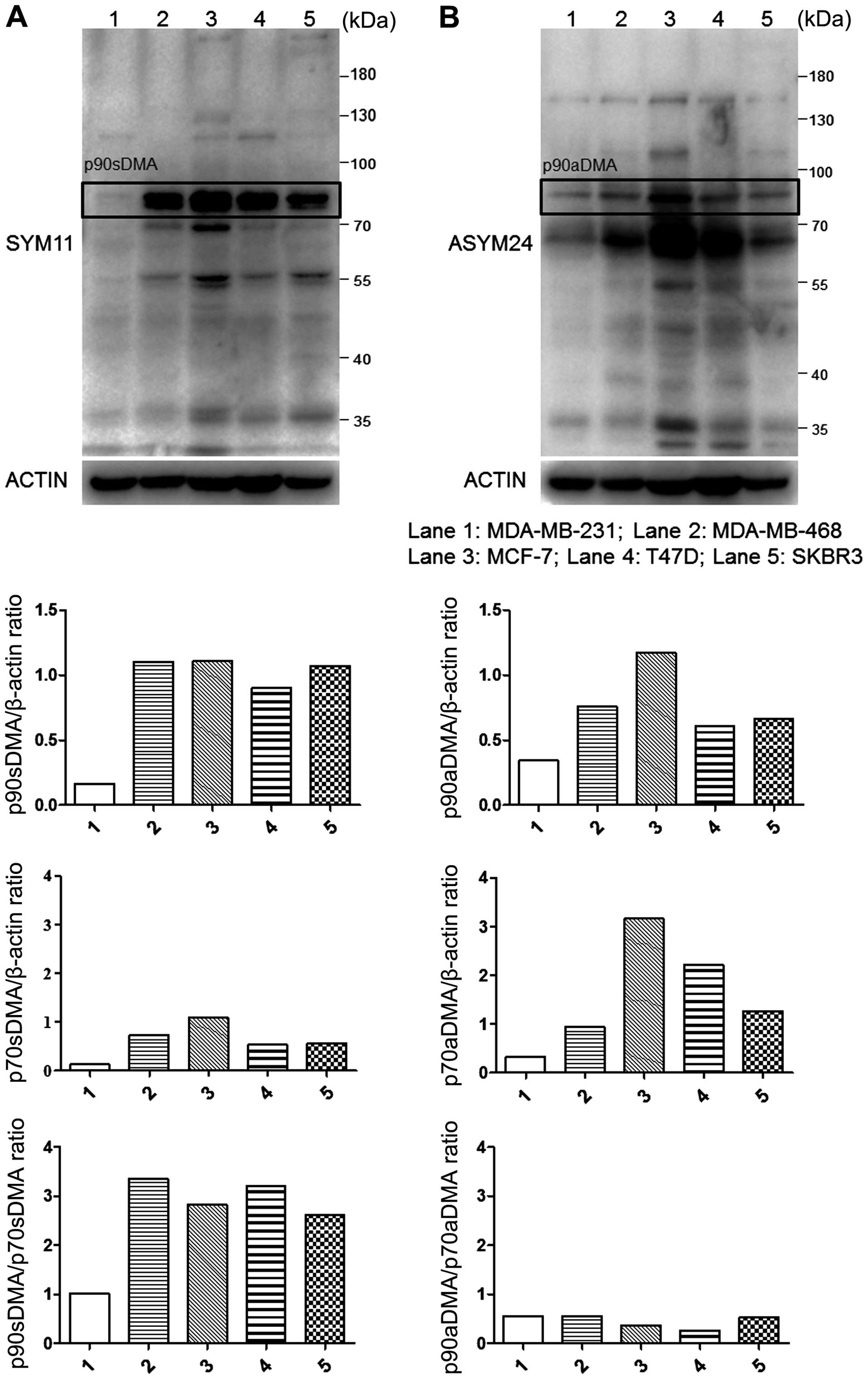
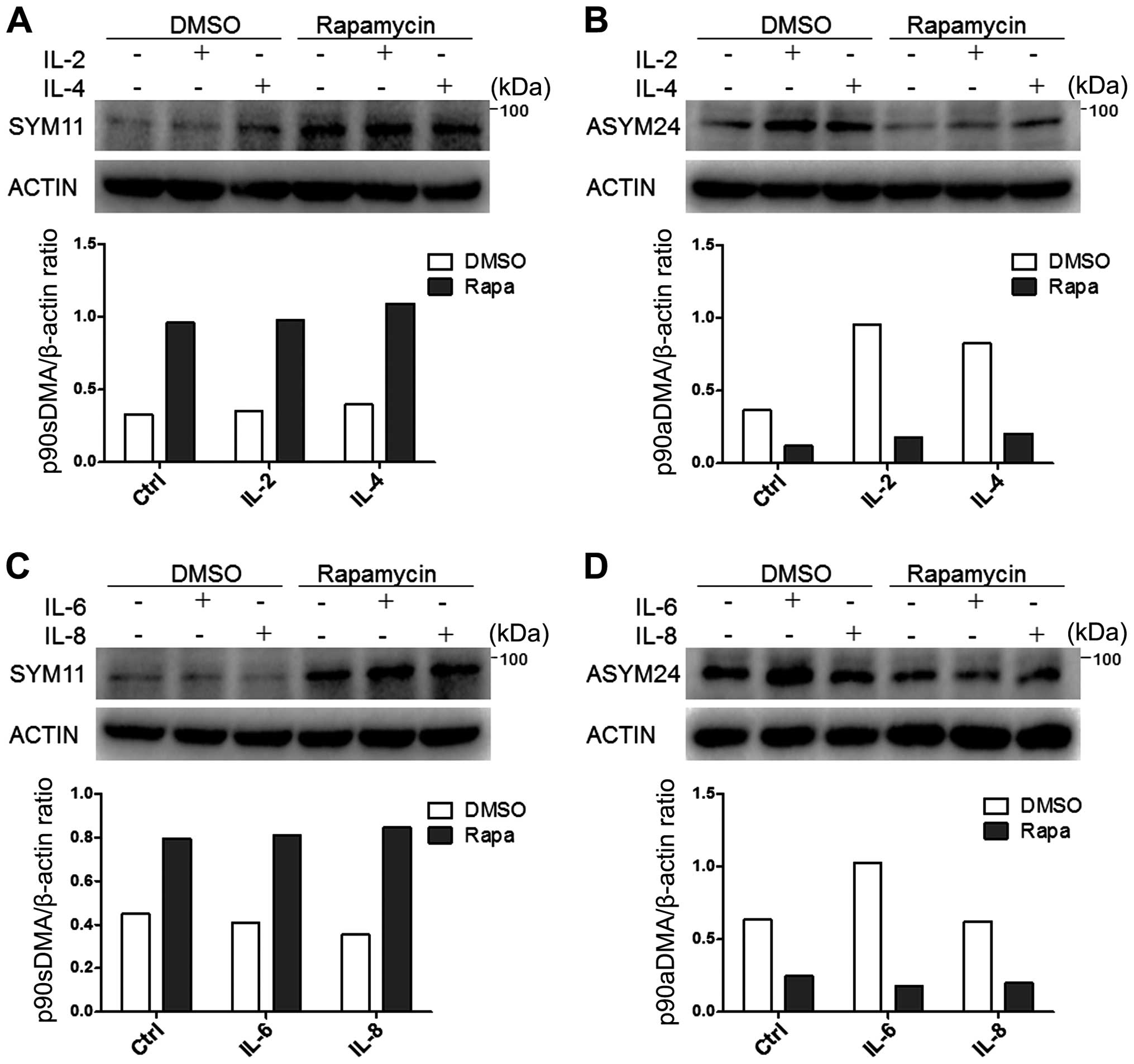
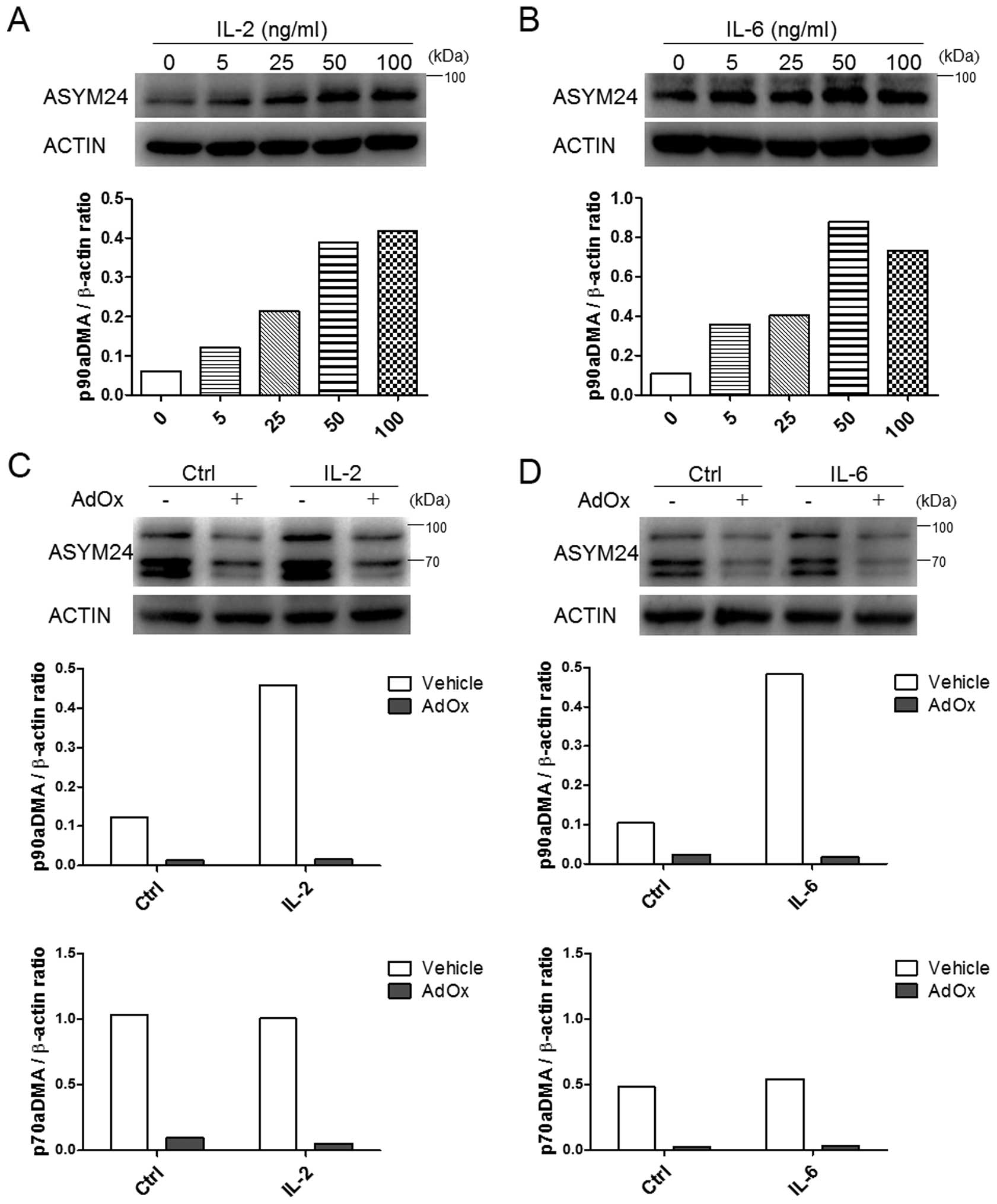
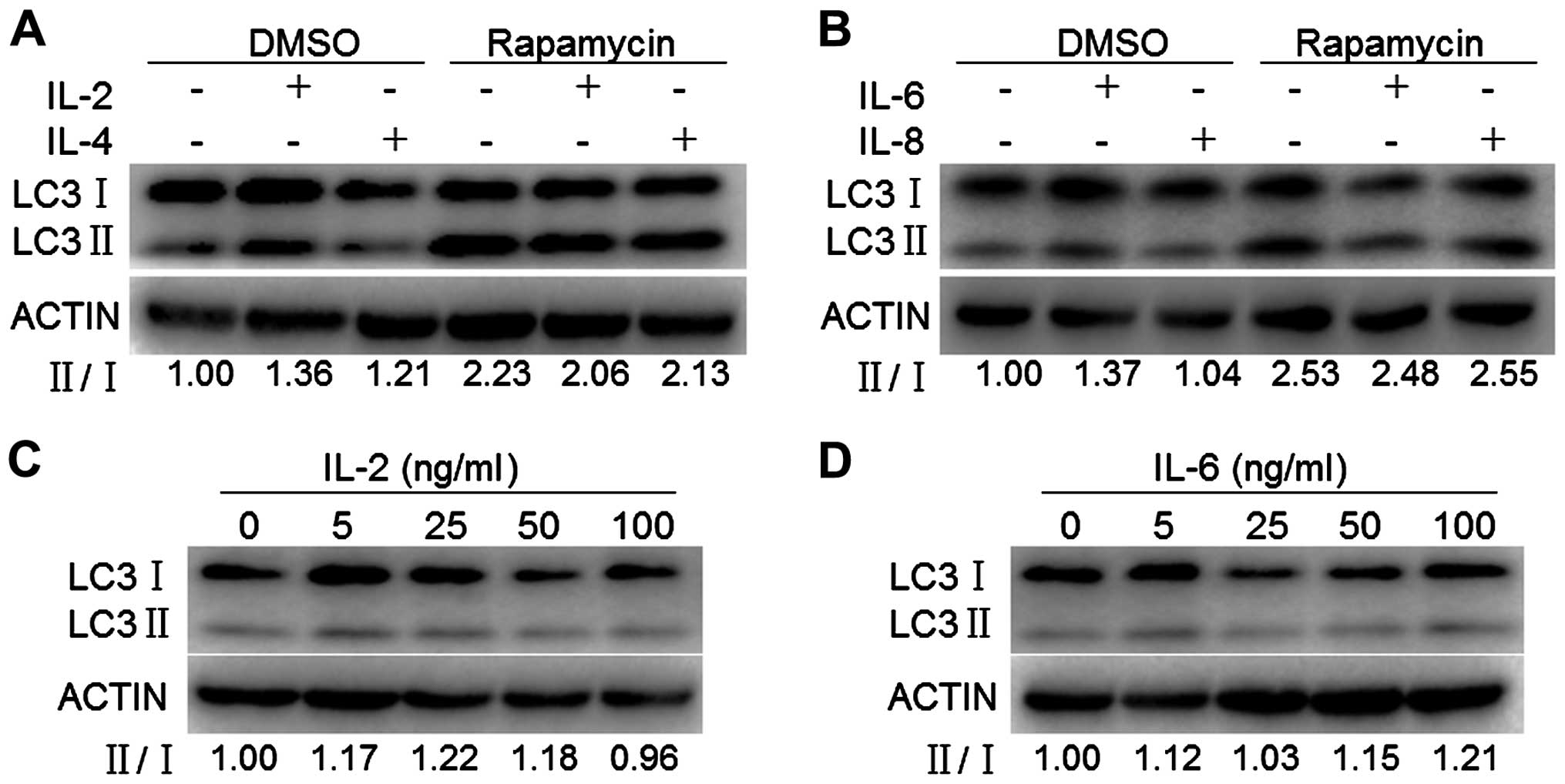
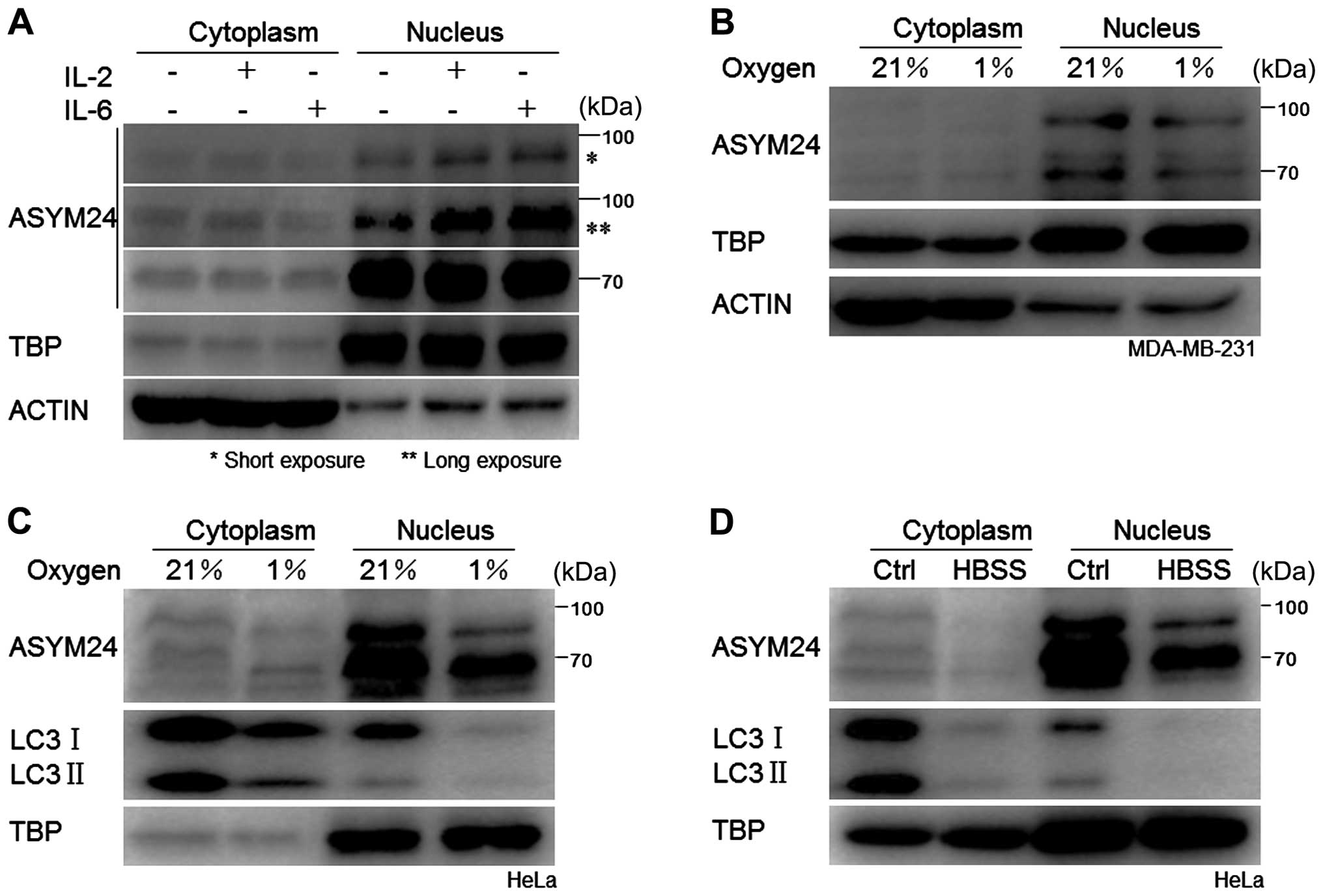
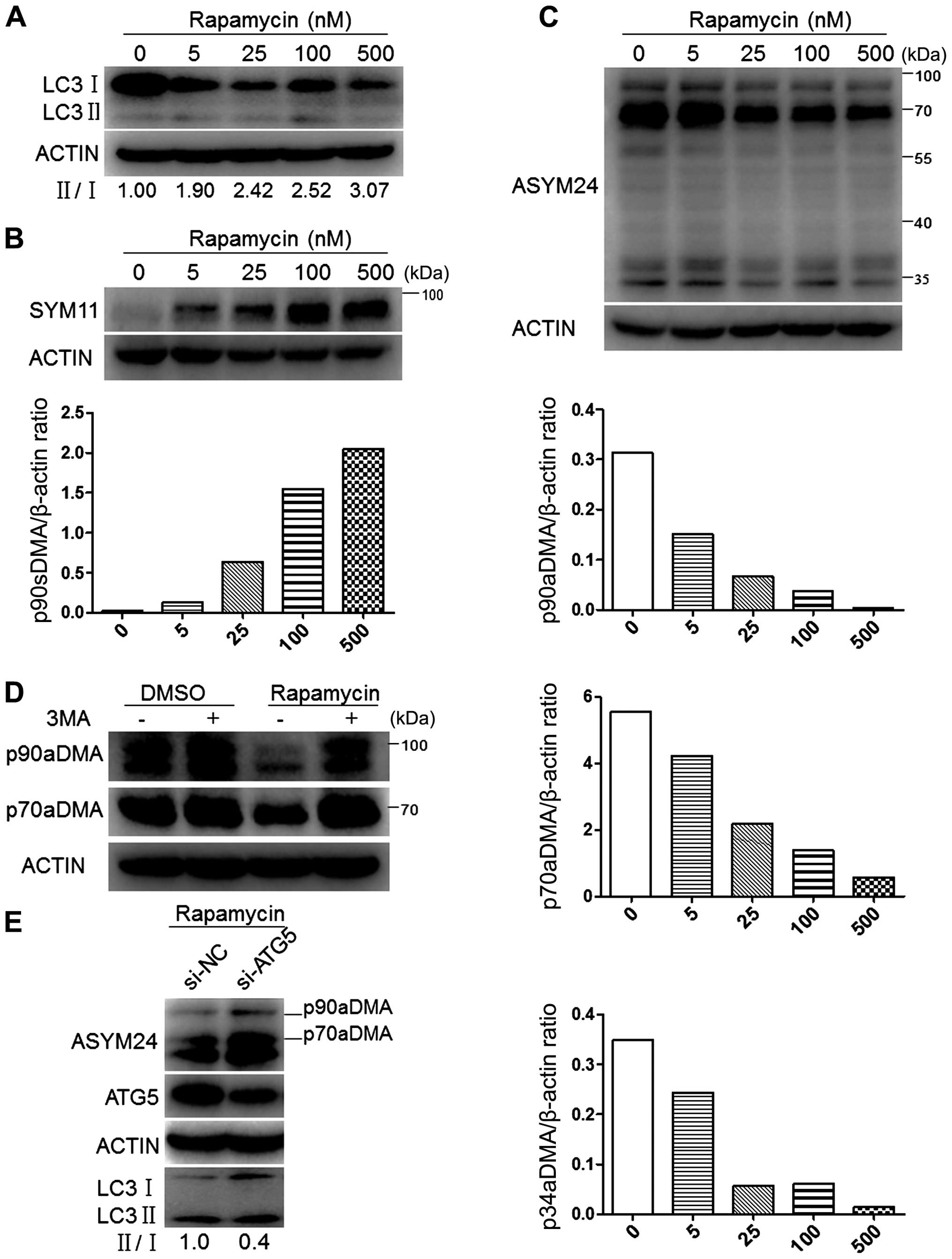
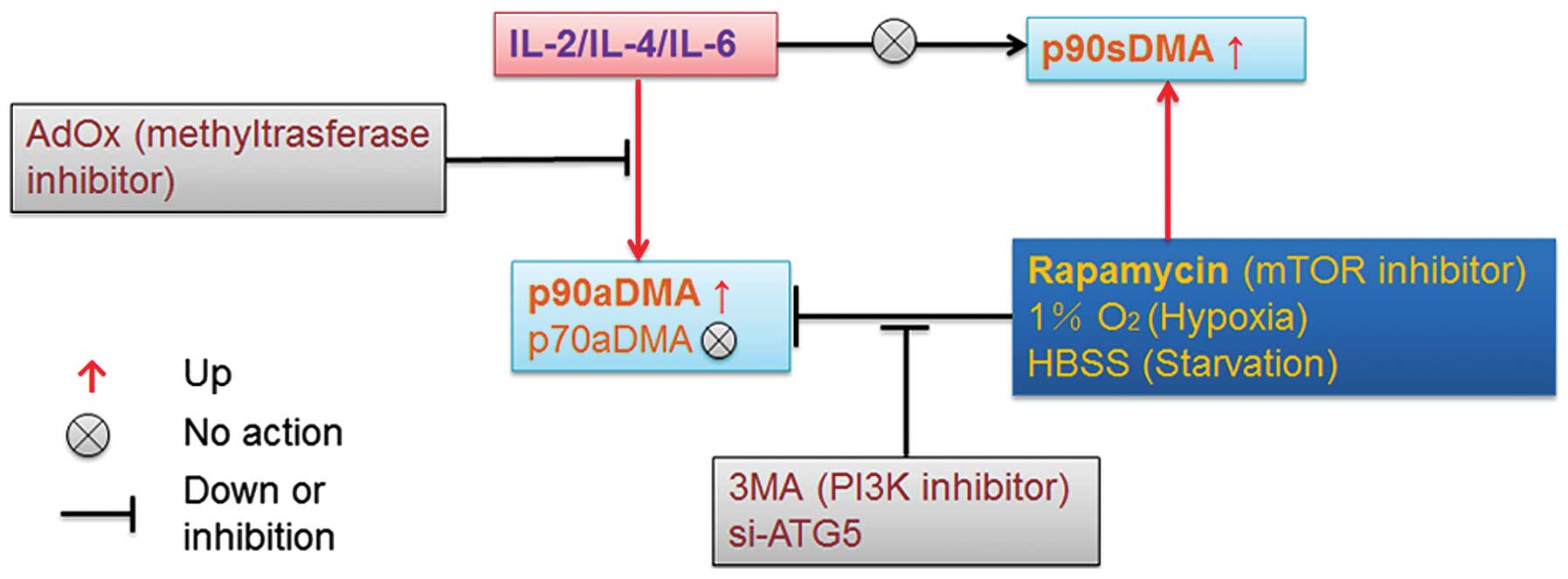
Protein arginine methylation is a common posttranslational modification resulting in the generation of asymmetric dimethylarginine (aDMA) and symmetric dimethylarginine (sDMA). Currently, the regulation of aDMA or sDMA by hypoxia, nutrient stavation or cytokines in the tumor microenvironment remains largely unknown. Here we show that p90aDMA, p70aDMA and p90sDMA, endogenous proteins containing aDMA or sDMA with mass 70 or 90 kDa, were widely and dominantly expressed in breast cancer cell lines. Notably, it was p90aDMA rather than p90sDMA that accumulated in the nucleus upon stimulation of cancer cells with interleukin (IL)-2, IL-4, IL-6 but not IL-8. In addition, the p90aDMA accumulation could be inhibited after treatment with a global methyltrasferase inhibitor, adenosine-2',3'-dialdehyde (AdOx). It seemed that some endogenous proteins in cancer cells were asymmetrically arginine-methylated upon exposure to some cytokines.. Furthermore, endogenous proteins of aDMA, such as p90aDMA and p70aDMA, were degraded in response to hypoxia, nutrient starvation and rapamycin treatment in breast and cervical cancer cells. IL-2/4/6 slightly increased basal autophagy but slightly decreased the rapamycin‑induced autophagy in cancer cells, suggesting that IL-2/4/6 and autophagy inducers play distinct roles in the regulation of aDMA of proteins. Conversely, rapamycin accumulated p90sDMA in MDA-MB‑231 and MCF-7 cells. Taken together, our results add a new dimension to the complexity of arginine methylated regulation in response to various stimuli and provide the first evidence that aDMA serves as one specific degradation signal of selective autophagy.
View Figures

Figure 1

Figure 2

Figure 3

Figure 4

Figure 5

Figure 6

Figure 7

View References

1 

Semenza GL: The hypoxic tumor microenvironment: A driving force for breast cancer progression. Biochim Biophys Acta. S0167-4889(15)00192-5. 2015.PubMed/NCBI

2 

Johansson A, Hamzah J and Ganss R: More than a scaffold: Stromal modulation of tumor immunity. Biochim Biophys Acta. S0304-419X(15)00044-X. 2015.PubMed/NCBI

3 

Pitt LA, Tikhonova AN, Hu H, Trimarchi T, King B, Gong Y, Sanchez-Martin M, Tsirigos A, Littman DR, Ferrando AA, et al: CXCL12-producing vascular endothelial niches control acute T cell leukemia maintenance. Cancer Cell. 27:755–768. 2015. View Article : Google Scholar : PubMed/NCBI

4 

Dranoff G: Cytokines in cancer pathogenesis and cancer therapy. Nat Rev Cancer. 4:11–22. 2004. View Article : Google Scholar : PubMed/NCBI

5 

Van der Jeught K, Bialkowski L, Daszkiewicz L, Broos K, Goyvaerts C, Renmans D, Van Lint S, Heirman C, Thielemans K and Breckpot K: Targeting the tumor microenvironment to enhance antitumor immune responses. Oncotarget. 6:1359–1381. 2015. View Article : Google Scholar : PubMed/NCBI

6 

Rosenberg SA: IL-2: The first effective immunotherapy for human cancer. J Immunol. 192:5451–5458. 2014. View Article : Google Scholar : PubMed/NCBI

7 

Blagosklonny MV: Hypoxia, MTOR and autophagy: Converging on senescence or quiescence. Autophagy. 9:260–262. 2013. View Article : Google Scholar :

8 

Kim YC and Guan K-L: mTOR: A pharmacologic target for autophagy regulation. J Clin Invest. 125:25–32. 2015. View Article : Google Scholar : PubMed/NCBI

9 

Sun L, Li T, Wei Q, Zhang Y, Jia X, Wan Z and Han L: Upregulation of BNIP3 mediated by ERK/HIF-1α pathway induces autophagy and contributes to anoikis resistance of hepatocellular carcinoma cells. Future Oncol. 10:1387–1398. 2014. View Article : Google Scholar : PubMed/NCBI

10 

Mochida K, Oikawa Y, Kimura Y, Kirisako H, Hirano H, Ohsumi Y and Nakatogawa H: Receptor-mediated selective autophagy degrades the endoplasmic reticulum and the nucleus. Nature. 522:359–362. 2015. View Article : Google Scholar : PubMed/NCBI

11 

Stolz A, Ernst A and Dikic I: Cargo recognition and trafficking in selective autophagy. Nat Cell Biol. 16:495–501. 2014. View Article : Google Scholar : PubMed/NCBI

12 

Wild P, McEwan DG and Dikic I: The LC3 interactome at a glance. J Cell Sci. 127:3–9. 2014. View Article : Google Scholar

13 

Wilkinson DS, Jariwala JS, Anderson E, Mitra K, Meisenhelder J, Chang JT, Ideker T, Hunter T, Nizet V, Dillin A, et al: Phosphorylation of LC3 by the Hippo kinases STK3/STK4 is essential for autophagy. Mol Cell. 57:55–68. 2015. View Article : Google Scholar :

14 

Xie Y, Kang R, Sun X, Zhong M, Huang J, Klionsky DJ and Tang D: Posttranslational modification of autophagy-related proteins in macroautophagy. Autophagy. 11:28–45. 2015. View Article : Google Scholar :

15 

Hunter T: The age of crosstalk: Phosphorylation, ubiquitination, and beyond. Mol Cell. 28:730–738. 2007. View Article : Google Scholar : PubMed/NCBI

16 

Lazarou M, Sliter DA, Kane LA, Sarraf SA, Wang C, Burman JL, Sideris DP, Fogel AI and Youle RJ: The ubiquitin kinase PINK1 recruits autophagy receptors to induce mitophagy. Nature. 524:309–314. 2015. View Article : Google Scholar : PubMed/NCBI

17 

Birgisdottir AB, Lamark T and Johansen T: The LIR motif - crucial for selective autophagy. J Cell Sci. 126:3237–3247. 2013.PubMed/NCBI

18 

Wild P, Farhan H, McEwan DG, Wagner S, Rogov VV, Brady NR, Richter B, Korac J, Waidmann O, Choudhary C, et al: Phosphorylation of the autophagy receptor optineurin restricts Salmonella growth. Science. 333:228–233. 2011. View Article : Google Scholar : PubMed/NCBI

19 

Jo C, Gundemir S, Pritchard S, Jin YN, Rahman I and Johnson GV: Nrf2 reduces levels of phosphorylated tau protein by inducing autophagy adaptor protein NDP52. Nat Commun. 5:34962014. View Article : Google Scholar : PubMed/NCBI

20 

Zhu J, Blenis J and Yuan J: Activation of PI3K/Akt and MAPK pathways regulates Myc-mediated transcription by phosphorylating and promoting the degradation of Mad1. Proc Natl Acad Sci USA. 105:6584–6589. 2008. View Article : Google Scholar : PubMed/NCBI

21 

Li S, Yang P, Tian E and Zhang H: Arginine methylation modulates autophagic degradation of PGL granules in C. elegans. Mol Cell. 52:421–433. 2013. View Article : Google Scholar : PubMed/NCBI

22 

Pahlich S, Zakaryan RP and Gehring H: Protein arginine methylation: Cellular functions and methods of analysis. Biochim Biophys Acta. 1764:1890–1903. 2006. View Article : Google Scholar : PubMed/NCBI

23 

Yagoub D, Hart-Smith G, Moecking J, Erce MA and Wilkins MR: Yeast proteins Gar1p, Nop1p, Npl3p, Nsr1p, and Rps2p are natively methylated and are substrates of the arginine methyltransferase Hmt1p. Proteomics. 15:3209–3218. 2015. View Article : Google Scholar : PubMed/NCBI

24 

McBride AE and Silver PA: State of the arg: Protein methylation at arginine comes of age. Cell. 106:5–8. 2001. View Article : Google Scholar : PubMed/NCBI

25 

Yang Y and Bedford MT: Protein arginine methyltransferases and cancer. Nat Rev Cancer. 13:37–50. 2013. View Article : Google Scholar

26 

Bedford MT and Clarke SG: Protein arginine methylation in mammals: Who, what, and why. Mol Cell. 33:1–13. 2009. View Article : Google Scholar : PubMed/NCBI

27 

Gao WW, Xiao RQ, Peng BL, Xu HT, Shen HF, Huang MF, Shi TT, Yi J, Zhang WJ, Wu XN, et al: Arginine methylation of HSP70 regulates retinoid acid-mediated RARβ2 gene activation. Proc Natl Acad Sci USA. 112:E3327–E3336. 2015. View Article : Google Scholar

28 

Kao J, Salari K, Bocanegra M, Choi YL, Girard L, Gandhi J, Kwei KA, Hernandez-Boussard T, Wang P, Gazdar AF, et al: Molecular profiling of breast cancer cell lines defines relevant tumor models and provides a resource for cancer gene discovery. PLoS One. 4:e61462009. View Article : Google Scholar : PubMed/NCBI

29 

Lin WW and Karin M: A cytokine-mediated link between innate immunity, inflammation, and cancer. J Clin Invest. 117:1175–1183. 2007. View Article : Google Scholar : PubMed/NCBI

30 

Shirakawa T, Kako K, Shimada T, Nagashima Y, Nakamura A, Ishida J and Fukamizu A: Production of free methylarginines via the proteasome and autophagy pathways in cultured cells. Mol Med Rep. 4:615–620. 2011.PubMed/NCBI

31 

Dou Z, Xu C, Donahue G, Shimi T, Pan JA, Zhu J, Ivanov A, Capell BC, Drake AM, Shah PP, et al: Autophagy mediates degradation of nuclear lamina. Nature. 527:105–109. 2015. View Article : Google Scholar : PubMed/NCBI

32 

Klionsky DJ, Abdalla FC, Abeliovich H, Abraham RT, Acevedo-Arozena A, Adeli K, Agholme L, Agnello M, Agostinis P, Aguirre-Ghiso JA, et al: Guidelines for the use and interpretation of assays for monitoring autophagy. Autophagy. 8:445–544. 2012. View Article : Google Scholar : PubMed/NCBI

33 

Sun L, Liu N, Liu S, Xia W, Liu M, Li L and Gao J: Beclin-1-independent autophagy mediates programmed cancer cell death through interplays with endoplasmic reticulum and/or mitochondria in colbat chloride-induced hypoxia. Am J Cancer Res. 5:2626–2642. 2015.PubMed/NCBI

34 

Huang R, Xu Y, Wan W, Shou X, Qian J, You Z, Liu B, Chang C, Zhou T, Lippincott-Schwartz J, et al: Deacetylation of nuclear LC3 drives autophagy initiation under starvation. Mol Cell. 57:456–466. 2015. View Article : Google Scholar : PubMed/NCBI

35 

Blommaart EF, Krause U, Schellens JP, Vreeling-Sindelarova H and Meijer AJ: The phosphatidylinositol 3-kinase inhibitors wortmannin and LY294002 inhibit autophagy in isolated rat hepatocytes. Eur J Biochem. 243:240–246. 1997. View Article : Google Scholar : PubMed/NCBI

36 

Chang B, Chen Y, Zhao Y and Bruick RK: JMJD6 is a histone arginine demethylase. Science. 318:444–447. 2007. View Article : Google Scholar : PubMed/NCBI

37 

Wang H, Huang ZQ, Xia L, Feng Q, Erdjument-Bromage H, Strahl BD, Briggs SD, Allis CD, Wong J, Tempst P, et al: Methylation of histone H4 at arginine 3 facilitating transcriptional activation by nuclear hormone receptor. Science. 293:853–857. 2001. View Article : Google Scholar : PubMed/NCBI

38 

Buchert M, Burns CJ and Ernst M: Targeting JAK kinase in solid tumors: Emerging opportunities and challenges. Oncogene. May 18–2015.(Epub ahead of print). View Article : Google Scholar : 2015. PubMed/NCBI

39 

Bowman T, Garcia R, Turkson J and Jove R: STATs in oncogenesis. Oncogene. 19:2474–2488. 2000. View Article : Google Scholar : PubMed/NCBI

40 

Hirahara K, Onodera A, Villarino AV, Bonelli M, Sciumè G, Laurence A, Sun HW, Brooks SR, Vahedi G, Shih HY, et al: Asymmetric action of STAT transcription factors drives transcriptional outputs and cytokine specificity. Immunity. 42:877–889. 2015. View Article : Google Scholar : PubMed/NCBI

41 

Mowen KA, Tang J, Zhu W, Schurter BT, Shuai K, Herschman HR and David M: Arginine methylation of STAT1 modulates IFNalpha/beta-induced transcription. Cell. 104:731–741. 2001. View Article : Google Scholar : PubMed/NCBI

42 

Zhu W, Mustelin T and David M: Arginine methylation of STAT1 regulates its dephosphorylation by T cell protein tyrosine phosphatase. J Biol Chem. 277:35787–35790. 2002. View Article : Google Scholar : PubMed/NCBI

43 

Melen K, Kinnunen L and Julkunen I: Arginine/lysine-rich structural element is involved in interferon-induced nuclear import of STATs. J Biol Chem. 276:16447–16455. 2001. View Article : Google Scholar : PubMed/NCBI

44 

Sugawara K, Suzuki NN, Fujioka Y, Mizushima N, Ohsumi Y and Inagaki F: The crystal structure of microtubule-associated protein light chain 3, a mammalian homologue of Saccharomyces cerevisiae Atg8. Genes Cells. 9:611–618. 2004. View Article : Google Scholar : PubMed/NCBI

45 

Pei B, Zhao M, Miller BC, Véla JL, Bruinsma MW, Virgin HW and Kronenberg M: Invariant NKT cells require autophagy to coordinate proliferation and survival signals during differentiation. J Immunol. 194:5872–5884. 2015. View Article : Google Scholar : PubMed/NCBI

46 

Kanayama M, He YW and Shinohara ML: The lung is protected from spontaneous inflammation by autophagy in myeloid cells. J Immunol. 194:5465–5471. 2015. View Article : Google Scholar : PubMed/NCBI

47 

Schlie K, Westerback A, DeVorkin L, Hughson LR, Brandon JM, MacPherson S, Gadawski I, Townsend KN, Poon VI, Elrick MA, et al: Survival of effector CD8+ T cells during influenza infection is dependent on autophagy. J Immunol. 194:4277–4286. 2015. View Article : Google Scholar : PubMed/NCBI

48 

Michaud M, Martins I, Sukkurwala AQ, Adjemian S, Ma Y, Pellegatti P, Shen S, Kepp O, Scoazec M, Mignot G, et al: Autophagy-dependent anticancer immune responses induced by chemotherapeutic agents in mice. Science. 334:1573–1577. 2011. View Article : Google Scholar : PubMed/NCBI

49 

Konno H, Konno K and Barber GN: Cyclic dinucleotides trigger ULK1 (ATG1) phosphorylation of STING to prevent sustained innate immune signaling. Cell. 155:688–698. 2013. View Article : Google Scholar : PubMed/NCBI

50 

Guo ML, Liao K, Periyasamy P, Yang L, Cai Y, Callen SE and Buch S: Cocaine mediated microglial activation involves the ER stress-autophagy axis. Autophagy. 11:995–1009. 2015. View Article : Google Scholar

51 

Deretic V: Autophagy as an innate immunity paradigm: Expanding the scope and repertoire of pattern recognition receptors. Curr Opin Immunol. 24:21–31. 2012. View Article : Google Scholar :

52 

Chang KH, Sengupta A, Nayak RC, Duran A, Lee SJ, Pratt RG, Wellendorf AM, Hill SE, Watkins M, Gonzalez-Nieto D, et al: p62 is required for stem cell/progenitor retention through inhibition of IKK/NF-κB/Ccl4 signaling at the bone marrow macrophage-osteoblast niche. Cell Rep. 9:2084–2097. 2014. View Article : Google Scholar : PubMed/NCBI

53 

Cho MH, Cho K, Kang HJ, Jeon EY, Kim HS, Kwon HJ, Kim HM, Kim DH and Yoon SY: Autophagy in microglia degrades extracellular β-amyloid fibrils and regulates the NLRP3 inflammasome. Autophagy. 10:1761–1775. 2014. View Article : Google Scholar : PubMed/NCBI

54 

Liu L, Yang M, Kang R, Dai Y, Yu Y, Gao F, Wang H, Sun X, Li X, Li J, et al: HMGB1-DNA complex-induced autophagy limits AIM2 inflammasome activation through RAGE. Biochem Biophys Res Commun. 450:851–856. 2014. View Article : Google Scholar : PubMed/NCBI

55 

Meunier E, Dick MS, Dreier RF, Schürmann N, Kenzelmann Broz D, Warming S, Roose-Girma M, Bumann D, Kayagaki N, Takeda K, et al: Caspase-11 activation requires lysis of pathogen-containing vacuoles by IFN-induced GTPases. Nature. 509:366–370. 2014. View Article : Google Scholar : PubMed/NCBI

56 

Wildenberg ME, Vos AC, Wolfkamp SC, Duijvestein M, Verhaar AP, Te Velde AA, van den Brink GR and Hommes DW: Autophagy attenuates the adaptive immune response by destabilizing the immunologic synapse. Gastroenterology. 142:1493–1503 e1496. 2012. View Article : Google Scholar : PubMed/NCBI

57 

Lévy J, Cacheux W, Bara MA, L'Hermitte A, Lepage P, Fraudeau M, Trentesaux C, Lemarchand J, Durand A, Crain AM, et al: Intestinal inhibition of Atg7 prevents tumour initiation through a microbiome-influenced immune response and suppresses tumour growth. Nat Cell Biol. 17:1062–1073. 2015. View Article : Google Scholar : PubMed/NCBI

58 

Colotta F, Allavena P, Sica A, Garlanda C and Mantovani A: Cancer-related inflammation, the seventh hallmark of cancer: Links to genetic instability. Carcinogenesis. 30:1073–1081. 2009. View Article : Google Scholar : PubMed/NCBI

59 

Mantovani A, Allavena P, Sica A and Balkwill F: Cancer-related inflammation. Nature. 454:436–444. 2008. View Article : Google Scholar : PubMed/NCBI

Related Articles

  • Abstract
  • View
  • Download
  • Twitter
Copy and paste a formatted citation
Spandidos Publications style
Sun L, Xia W, Zhao S, Liu N, Liu S, Xiu P, Li L, Cao X and Gao J: An asymmetrically dimethylarginated nuclear 90 kDa protein (p90aDMA) induced by interleukin (IL)-2, IL-4 or IL-6 in the tumor microenvironment is selectively degraded by autophagy. Int J Oncol 48: 2461-2471, 2016.
APA
Sun, L., Xia, W., Zhao, S., Liu, N., Liu, S., Xiu, P. ... Gao, J. (2016). An asymmetrically dimethylarginated nuclear 90 kDa protein (p90aDMA) induced by interleukin (IL)-2, IL-4 or IL-6 in the tumor microenvironment is selectively degraded by autophagy. International Journal of Oncology, 48, 2461-2471. https://doi.org/10.3892/ijo.2016.3450
MLA
Sun, L., Xia, W., Zhao, S., Liu, N., Liu, S., Xiu, P., Li, L., Cao, X., Gao, J."An asymmetrically dimethylarginated nuclear 90 kDa protein (p90aDMA) induced by interleukin (IL)-2, IL-4 or IL-6 in the tumor microenvironment is selectively degraded by autophagy". International Journal of Oncology 48.6 (2016): 2461-2471.
Chicago
Sun, L., Xia, W., Zhao, S., Liu, N., Liu, S., Xiu, P., Li, L., Cao, X., Gao, J."An asymmetrically dimethylarginated nuclear 90 kDa protein (p90aDMA) induced by interleukin (IL)-2, IL-4 or IL-6 in the tumor microenvironment is selectively degraded by autophagy". International Journal of Oncology 48, no. 6 (2016): 2461-2471. https://doi.org/10.3892/ijo.2016.3450
Copy and paste a formatted citation
x
Spandidos Publications style
Sun L, Xia W, Zhao S, Liu N, Liu S, Xiu P, Li L, Cao X and Gao J: An asymmetrically dimethylarginated nuclear 90 kDa protein (p90aDMA) induced by interleukin (IL)-2, IL-4 or IL-6 in the tumor microenvironment is selectively degraded by autophagy. Int J Oncol 48: 2461-2471, 2016.
APA
Sun, L., Xia, W., Zhao, S., Liu, N., Liu, S., Xiu, P. ... Gao, J. (2016). An asymmetrically dimethylarginated nuclear 90 kDa protein (p90aDMA) induced by interleukin (IL)-2, IL-4 or IL-6 in the tumor microenvironment is selectively degraded by autophagy. International Journal of Oncology, 48, 2461-2471. https://doi.org/10.3892/ijo.2016.3450
MLA
Sun, L., Xia, W., Zhao, S., Liu, N., Liu, S., Xiu, P., Li, L., Cao, X., Gao, J."An asymmetrically dimethylarginated nuclear 90 kDa protein (p90aDMA) induced by interleukin (IL)-2, IL-4 or IL-6 in the tumor microenvironment is selectively degraded by autophagy". International Journal of Oncology 48.6 (2016): 2461-2471.
Chicago
Sun, L., Xia, W., Zhao, S., Liu, N., Liu, S., Xiu, P., Li, L., Cao, X., Gao, J."An asymmetrically dimethylarginated nuclear 90 kDa protein (p90aDMA) induced by interleukin (IL)-2, IL-4 or IL-6 in the tumor microenvironment is selectively degraded by autophagy". International Journal of Oncology 48, no. 6 (2016): 2461-2471. https://doi.org/10.3892/ijo.2016.3450
Follow us
  • Twitter
  • LinkedIn
  • Facebook
About
  • Spandidos Publications
  • Careers
  • Cookie Policy
  • Privacy Policy
How can we help?
  • Help
  • Live Chat
  • Contact
  • Email to our Support Team