Spandidos Publications Logo
  • About
    • About Spandidos
    • Aims and Scopes
    • Abstracting and Indexing
    • Editorial Policies
    • Reprints and Permissions
    • Job Opportunities
    • Terms and Conditions
    • Contact
  • Journals
    • All Journals
    • Oncology Letters
      • Oncology Letters
      • Information for Authors
      • Editorial Policies
      • Editorial Board
      • Aims and Scope
      • Abstracting and Indexing
      • Bibliographic Information
      • Archive
    • International Journal of Oncology
      • International Journal of Oncology
      • Information for Authors
      • Editorial Policies
      • Editorial Board
      • Aims and Scope
      • Abstracting and Indexing
      • Bibliographic Information
      • Archive
    • Molecular and Clinical Oncology
      • Molecular and Clinical Oncology
      • Information for Authors
      • Editorial Policies
      • Editorial Board
      • Aims and Scope
      • Abstracting and Indexing
      • Bibliographic Information
      • Archive
    • Experimental and Therapeutic Medicine
      • Experimental and Therapeutic Medicine
      • Information for Authors
      • Editorial Policies
      • Editorial Board
      • Aims and Scope
      • Abstracting and Indexing
      • Bibliographic Information
      • Archive
    • International Journal of Molecular Medicine
      • International Journal of Molecular Medicine
      • Information for Authors
      • Editorial Policies
      • Editorial Board
      • Aims and Scope
      • Abstracting and Indexing
      • Bibliographic Information
      • Archive
    • Biomedical Reports
      • Biomedical Reports
      • Information for Authors
      • Editorial Policies
      • Editorial Board
      • Aims and Scope
      • Abstracting and Indexing
      • Bibliographic Information
      • Archive
    • Oncology Reports
      • Oncology Reports
      • Information for Authors
      • Editorial Policies
      • Editorial Board
      • Aims and Scope
      • Abstracting and Indexing
      • Bibliographic Information
      • Archive
    • Molecular Medicine Reports
      • Molecular Medicine Reports
      • Information for Authors
      • Editorial Policies
      • Editorial Board
      • Aims and Scope
      • Abstracting and Indexing
      • Bibliographic Information
      • Archive
    • World Academy of Sciences Journal
      • World Academy of Sciences Journal
      • Information for Authors
      • Editorial Policies
      • Editorial Board
      • Aims and Scope
      • Abstracting and Indexing
      • Bibliographic Information
      • Archive
    • International Journal of Functional Nutrition
      • International Journal of Functional Nutrition
      • Information for Authors
      • Editorial Policies
      • Editorial Board
      • Aims and Scope
      • Abstracting and Indexing
      • Bibliographic Information
      • Archive
    • International Journal of Epigenetics
      • International Journal of Epigenetics
      • Information for Authors
      • Editorial Policies
      • Editorial Board
      • Aims and Scope
      • Abstracting and Indexing
      • Bibliographic Information
      • Archive
    • Medicine International
      • Medicine International
      • Information for Authors
      • Editorial Policies
      • Editorial Board
      • Aims and Scope
      • Abstracting and Indexing
      • Bibliographic Information
      • Archive
  • Articles
  • Information
    • Information for Authors
    • Information for Reviewers
    • Information for Librarians
    • Information for Advertisers
    • Conferences
  • Language Editing
Spandidos Publications Logo
  • About
    • About Spandidos
    • Aims and Scopes
    • Abstracting and Indexing
    • Editorial Policies
    • Reprints and Permissions
    • Job Opportunities
    • Terms and Conditions
    • Contact
  • Journals
    • All Journals
    • Biomedical Reports
      • Information for Authors
      • Editorial Policies
      • Editorial Board
      • Aims and Scope
      • Abstracting and Indexing
      • Bibliographic Information
      • Archive
    • Experimental and Therapeutic Medicine
      • Information for Authors
      • Editorial Policies
      • Editorial Board
      • Aims and Scope
      • Abstracting and Indexing
      • Bibliographic Information
      • Archive
    • International Journal of Epigenetics
      • Information for Authors
      • Editorial Policies
      • Editorial Board
      • Aims and Scope
      • Abstracting and Indexing
      • Bibliographic Information
      • Archive
    • International Journal of Functional Nutrition
      • Information for Authors
      • Editorial Policies
      • Editorial Board
      • Aims and Scope
      • Abstracting and Indexing
      • Bibliographic Information
      • Archive
    • International Journal of Molecular Medicine
      • Information for Authors
      • Editorial Policies
      • Editorial Board
      • Aims and Scope
      • Abstracting and Indexing
      • Bibliographic Information
      • Archive
    • International Journal of Oncology
      • Information for Authors
      • Editorial Policies
      • Editorial Board
      • Aims and Scope
      • Abstracting and Indexing
      • Bibliographic Information
      • Archive
    • Medicine International
      • Information for Authors
      • Editorial Policies
      • Editorial Board
      • Aims and Scope
      • Abstracting and Indexing
      • Bibliographic Information
      • Archive
    • Molecular and Clinical Oncology
      • Information for Authors
      • Editorial Policies
      • Editorial Board
      • Aims and Scope
      • Abstracting and Indexing
      • Bibliographic Information
      • Archive
    • Molecular Medicine Reports
      • Information for Authors
      • Editorial Policies
      • Editorial Board
      • Aims and Scope
      • Abstracting and Indexing
      • Bibliographic Information
      • Archive
    • Oncology Letters
      • Information for Authors
      • Editorial Policies
      • Editorial Board
      • Aims and Scope
      • Abstracting and Indexing
      • Bibliographic Information
      • Archive
    • Oncology Reports
      • Information for Authors
      • Editorial Policies
      • Editorial Board
      • Aims and Scope
      • Abstracting and Indexing
      • Bibliographic Information
      • Archive
    • World Academy of Sciences Journal
      • Information for Authors
      • Editorial Policies
      • Editorial Board
      • Aims and Scope
      • Abstracting and Indexing
      • Bibliographic Information
      • Archive
  • Articles
  • Information
    • For Authors
    • For Reviewers
    • For Librarians
    • For Advertisers
    • Conferences
  • Language Editing
Login Register Submit
  • This site uses cookies
  • You can change your cookie settings at any time by following the instructions in our Cookie Policy. To find out more, you may read our Privacy Policy.

    I agree
Search articles by DOI, keyword, author or affiliation
Search
Advanced Search
presentation
International Journal of Oncology
Join Editorial Board Propose a Special Issue
Print ISSN: 1019-6439 Online ISSN: 1791-2423
Journal Cover
June-2016 Volume 48 Issue 6

Full Size Image

Cover Legend PDF

Sign up for eToc alerts
Recommend to Library

Journals

International Journal of Molecular Medicine

International Journal of Molecular Medicine

International Journal of Molecular Medicine is an international journal devoted to molecular mechanisms of human disease.

International Journal of Oncology

International Journal of Oncology

International Journal of Oncology is an international journal devoted to oncology research and cancer treatment.

Molecular Medicine Reports

Molecular Medicine Reports

Covers molecular medicine topics such as pharmacology, pathology, genetics, neuroscience, infectious diseases, molecular cardiology, and molecular surgery.

Oncology Reports

Oncology Reports

Oncology Reports is an international journal devoted to fundamental and applied research in Oncology.

Experimental and Therapeutic Medicine

Experimental and Therapeutic Medicine

Experimental and Therapeutic Medicine is an international journal devoted to laboratory and clinical medicine.

Oncology Letters

Oncology Letters

Oncology Letters is an international journal devoted to Experimental and Clinical Oncology.

Biomedical Reports

Biomedical Reports

Explores a wide range of biological and medical fields, including pharmacology, genetics, microbiology, neuroscience, and molecular cardiology.

Molecular and Clinical Oncology

Molecular and Clinical Oncology

International journal addressing all aspects of oncology research, from tumorigenesis and oncogenes to chemotherapy and metastasis.

World Academy of Sciences Journal

World Academy of Sciences Journal

Multidisciplinary open-access journal spanning biochemistry, genetics, neuroscience, environmental health, and synthetic biology.

International Journal of Functional Nutrition

International Journal of Functional Nutrition

Open-access journal combining biochemistry, pharmacology, immunology, and genetics to advance health through functional nutrition.

International Journal of Epigenetics

International Journal of Epigenetics

Publishes open-access research on using epigenetics to advance understanding and treatment of human disease.

Medicine International

Medicine International

An International Open Access Journal Devoted to General Medicine.

Journal Cover
June-2016 Volume 48 Issue 6

Full Size Image

Cover Legend PDF

Sign up for eToc alerts
Recommend to Library

  • Article
  • Citations
    • Cite This Article
    • Download Citation
    • Create Citation Alert
    • Remove Citation Alert
    • Cited By
  • Similar Articles
    • Related Articles (in Spandidos Publications)
    • Similar Articles (Google Scholar)
    • Similar Articles (PubMed)
  • Download PDF
  • Download XML
  • View XML
Article

Histone deacetylase inhibitor-induced cell death in bladder cancer is associated with chromatin modification and modifying protein expression: A proteomic approach

  • Authors:
    • Qingdi Quentin Li
    • Jian-Jiang Hao
    • Zheng Zhang
    • Iawen Hsu
    • Yi Liu
    • Zhen Tao
    • Keidren Lewi
    • Adam R. Metwalli
    • Piyush K. Agarwal
  • View Affiliations / Copyright

    Affiliations: Urologic Oncology Branch, Center for Cancer Research, National Cancer Institute, National Institutes of Health, Bethesda, MD 20892, USA, Poochon Scientific, Frederick, MD 21704, USA
  • Pages: 2591-2607
    |
    Published online on: April 7, 2016
       https://doi.org/10.3892/ijo.2016.3478
  • Expand metrics +
Metrics: Total Views: 0 (Spandidos Publications: | PMC Statistics: )
Metrics: Total PDF Downloads: 0 (Spandidos Publications: | PMC Statistics: )
Cited By (CrossRef): 0 citations Loading Articles...

This article is mentioned in:


Abstract

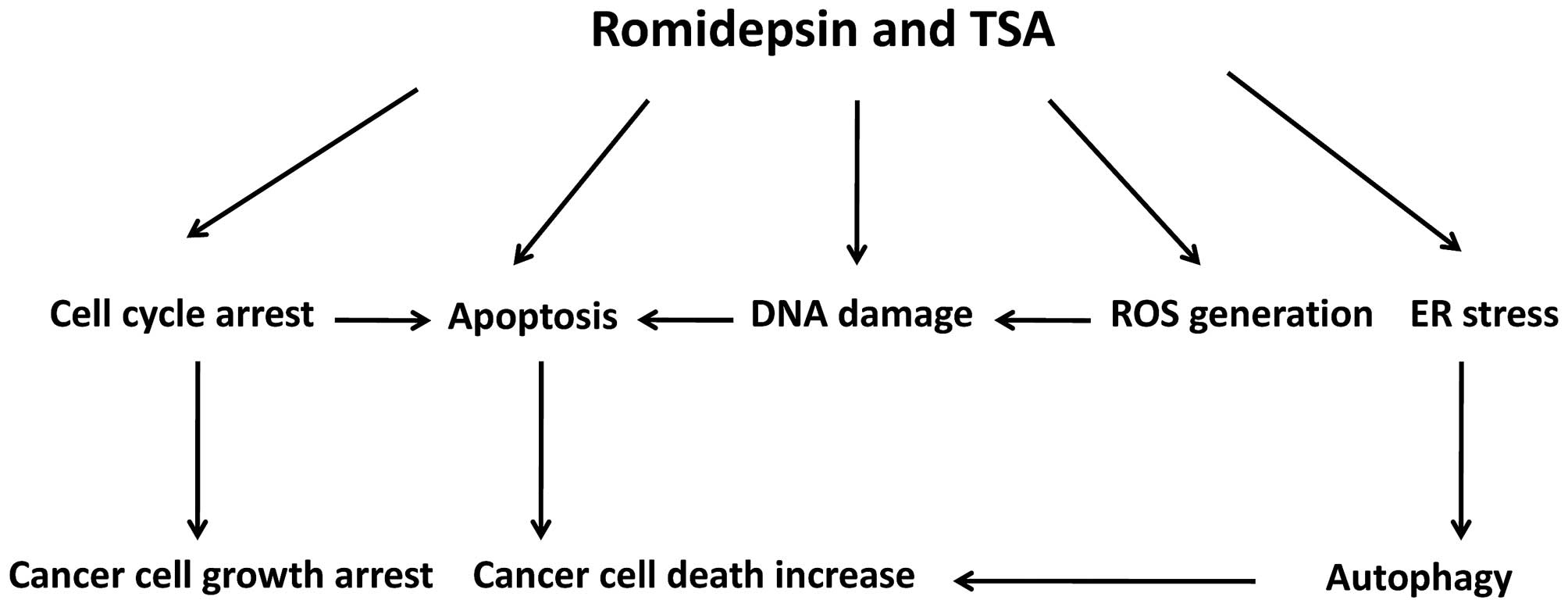
The Cancer Genome Atlas (TCGA) project recently identified the importance of mutations in chromatin remodeling genes in human carcinomas. These findings imply that epigenetic modulators might have a therapeutic role in urothelial cancers. To exploit histone deacetylases (HDACs) as targets for cancer therapy, we investigated the HDAC inhibitors (HDACIs) romidepsin, trichostatin A, and vorinostat as potential chemotherapeutic agents for bladder cancer. We demonstrate that the three HDACIs suppressed cell growth and induced cell death in the bladder cancer cell line 5637. To identify potential mechanisms associated with the anti-proliferative and cytotoxic effects of the HDACIs, we used quantitative proteomics to determine the proteins potentially involved in these processes. Our proteome studies identified a total of 6003 unique proteins. Of these, 2472 proteins were upregulated and 2049 proteins were downregulated in response to HDACI exposure compared to the untreated controls (P<0.05). Bioinformatic analysis further revealed that those differentially expressed proteins were involved in multiple biological functions and enzyme-regulated pathways, including cell cycle progression, apoptosis, autophagy, free radical generation and DNA damage repair. HDACIs also altered the acetylation status of histones and non-histone proteins, as well as the levels of chromatin modification proteins, suggesting that HDACIs exert multiple cytotoxic actions in bladder cancer cells by inhibiting HDAC activity or altering the structure of chromatin. We conclude that HDACIs are effective in the inhibition of cell proliferation and the induction of apoptosis in the 5637 bladder cancer cells through multiple cell death-associated pathways. These observations support the notion that HDACIs provide new therapeutic options for bladder cancer treatment and thus warrant further preclinical exploration.
View Figures

Figure 1

Figure 2

Figure 3

Figure 4

Figure 5

View References

1 

Siegel RL, Miller KD and Jemal A: Cancer statistics, 2016. CA Cancer J Clin. 66:7–30. 2016. View Article : Google Scholar : PubMed/NCBI

2 

Kaufman DS, Shipley WU and Feldman AS: Bladder cancer. Lancet. 374:239–249. 2009. View Article : Google Scholar : PubMed/NCBI

3 

Weintraub MD, Li QQ and Agarwal PK: Advances in intravesical therapy for the treatment of non-muscle invasive bladder cancer (Review). Mol Clin Oncol. 2:656–660. 2014.PubMed/NCBI

4 

Stenzl A, Cowan NC, De Santis M, Kuczyk MA, Merseburger AS, Ribal MJ, Sherif A and Witjes JA; European Association of Urology (EAU). Treatment of muscle-invasive and metastatic bladder cancer: Update of the EAU guidelines. Eur Urol. 59:1009–1018. 2011. View Article : Google Scholar : PubMed/NCBI

5 

Marks P, Rifkind RA, Richon VM, Breslow R, Miller T and Kelly WK: Histone deacetylases and cancer: Causes and therapies. Nat Rev Cancer. 1:194–202. 2001. View Article : Google Scholar

6 

Xu WS, Parmigiani RB and Marks PA: Histone deacetylase inhibitors: Molecular mechanisms of action. Oncogene. 26:5541–5552. 2007. View Article : Google Scholar : PubMed/NCBI

7 

Marks PA and Xu WS: Histone deacetylase inhibitors: Potential in cancer therapy. J Cell Biochem. 107:600–608. 2009. View Article : Google Scholar : PubMed/NCBI

8 

Schrump DS: Cytotoxicity mediated by histone deacetylase inhibitors in cancer cells: Mechanisms and potential clinical implications. Clin Cancer Res. 15:3947–3957. 2009. View Article : Google Scholar : PubMed/NCBI

9 

Nakagawa M, Oda Y, Eguchi T, Aishima S, Yao T, Hosoi F, Basaki Y, Ono M, Kuwano M, Tanaka M, et al: Expression profile of class I histone deacetylases in human cancer tissues. Oncol Rep. 18:769–774. 2007.PubMed/NCBI

10 

Zhang Z, Yamashita H, Toyama T, Sugiura H, Ando Y, Mita K, Hamaguchi M, Hara Y, Kobayashi S and Iwase H: Quantitation of HDAC1 mRNA expression in invasive carcinoma of the breast. Breast Cancer Res Treat. 94:11–16. 2005. View Article : Google Scholar : PubMed/NCBI

11 

Marquard L, Poulsen CB, Gjerdrum LM, de Nully Brown P, Christensen IJ, Jensen PB, Sehested M, Johansen P and Ralfkiaer E: Histone deacetylase 1, 2, 6 and acetylated histone H4 in B- and T-cell lymphomas. Histopathology. 54:688–698. 2009. View Article : Google Scholar : PubMed/NCBI

12 

Witt O, Deubzer HE, Milde T and Oehme I: HDAC family: What are the cancer relevant targets? Cancer Lett. 277:8–21. 2009. View Article : Google Scholar

13 

Ozawa A, Tanji N, Kikugawa T, Sasaki T, Yanagihara Y, Miura N and Yokoyama M: Inhibition of bladder tumour growth by histone deacetylase inhibitor. BJU Int. 105:1181–1186. 2010. View Article : Google Scholar

14 

Bolden JE, Peart MJ and Johnstone RW: Anticancer activities of histone deacetylase inhibitors. Nat Rev Drug Discov. 5:769–784. 2006. View Article : Google Scholar : PubMed/NCBI

15 

Minucci S and Pelicci PG: Histone deacetylase inhibitors and the promise of epigenetic (and more) treatments for cancer. Nat Rev Cancer. 6:38–51. 2006. View Article : Google Scholar : PubMed/NCBI

16 

Yoshida M, Kijima M, Akita M and Beppu T: Potent and specific inhibition of mammalian histone deacetylase both in vivo and in vitro by trichostatin A. J Biol Chem. 265:17174–17179. 1990.PubMed/NCBI

17 

Tan J, Cang S, Ma Y, Petrillo RL and Liu D: Novel histone deacetylase inhibitors in clinical trials as anti-cancer agents. J Hematol Oncol. 3:52010. View Article : Google Scholar : PubMed/NCBI

18 

McGraw AL: Romidepsin for the treatment of T-cell lymphomas. Am J Health Syst Pharm. 70:1115–1122. 2013. View Article : Google Scholar : PubMed/NCBI

19 

Li QQ, Wang G, Liang H, Li JM, Huang F, Agarwal PK, Zhong Y and Reed E: β-Elemene promotes cisplatin-induced cell death in human bladder cancer and other carcinomas. Anticancer Res. 33:1421–1428. 2013.PubMed/NCBI

20 

Florens L, Carozza MJ, Swanson SK, Fournier M, Coleman MK, Workman JL and Washburn MP: Analyzing chromatin remodeling complexes using shotgun proteomics and normalized spectral abundance factors. Methods. 40:303–311. 2006. View Article : Google Scholar : PubMed/NCBI

21 

Paoletti AC, Parmely TJ, Tomomori-Sato C, Sato S, Zhu D, Conaway RC, Conaway JW, Florens L and Washburn MP: Quantitative proteomic analysis of distinct mammalian Mediator complexes using normalized spectral abundance factors. Proc Natl Acad Sci USA. 103:18928–18933. 2006. View Article : Google Scholar : PubMed/NCBI

22 

Ou JN, Torrisani J, Unterberger A, Provençal N, Shikimi K, Karimi M, Ekström TJ and Szyf M: Histone deacetylase inhibitor Trichostatin A induces global and gene-specific DNA demethylation in human cancer cell lines. Biochem Pharmacol. 73:1297–1307. 2007. View Article : Google Scholar : PubMed/NCBI

23 

Swanton C: Cell-cycle targeted therapies. Lancet Oncol. 5:27–36. 2004. View Article : Google Scholar : PubMed/NCBI

24 

Morgan DO: Principles of CDK regulation. Nature. 374:131–134. 1995. View Article : Google Scholar : PubMed/NCBI

25 

Sherr CJ: Cancer cell cycles. Science. 274:1672–1677. 1996. View Article : Google Scholar : PubMed/NCBI

26 

Dynlacht BD: Regulation of transcription by proteins that control the cell cycle. Nature. 389:149–152. 1997. View Article : Google Scholar : PubMed/NCBI

27 

Wesierska-Gadek J, Gueorguieva M and Horky M: Dual action of cyclin-dependent kinase inhibitors: Induction of cell cycle arrest and apoptosis. A comparison of the effects exerted by roscovitine and cisplatin. Pol J Pharmacol. 55:895–902. 2003.

28 

Parker LL, Sylvestre PJ, Byrnes MJ III, Liu F and Piwnica-Worms H: Identification of a 95-kDa WEE1-like tyrosine kinase in HeLa cells. Proc Natl Acad Sci USA. 92:9638–9642. 1995. View Article : Google Scholar : PubMed/NCBI

29 

Mitra J and Enders GH: Cyclin A/Cdk2 complexes regulate activation of Cdk1 and Cdc25 phosphatases in human cells. Oncogene. 23:3361–3367. 2004. View Article : Google Scholar : PubMed/NCBI

30 

Fisher DE: Apoptosis in cancer therapy: Crossing the threshold. Cell. 78:539–542. 1994. View Article : Google Scholar : PubMed/NCBI

31 

Haldar S, Chintapalli J and Croce CM: Taxol induces bcl-2 phosphorylation and death of prostate cancer cells. Cancer Res. 56:1253–1255. 1996.PubMed/NCBI

32 

Blagosklonny MV, Schulte T, Nguyen P, Trepel J and Neckers LM: Taxol-induced apoptosis and phosphorylation of Bcl-2 protein involves c-Raf-1 and represents a novel c-Raf-1 signal transduction pathway. Cancer Res. 56:1851–1854. 1996.PubMed/NCBI

33 

Blagosklonny MV, Giannakakou P, el-Deiry WS, Kingston DG, Higgs PI, Neckers L and Fojo T: Raf-1/bcl-2 phosphorylation: A step from microtubule damage to cell death. Cancer Res. 57:130–135. 1997.PubMed/NCBI

34 

Haldar S, Basu A and Croce CM: Bcl2 is the guardian of microtubule integrity. Cancer Res. 57:229–233. 1997.PubMed/NCBI

35 

Haldar S, Basu A and Croce CM: Serine-70 is one of the critical sites for drug-induced Bcl2 phosphorylation in cancer cells. Cancer Res. 58:1609–1615. 1998.PubMed/NCBI

36 

Chang BS, Minn AJ, Muchmore SW, Fesik SW and Thompson CB: Identification of a novel regulatory domain in Bcl-X(L) and Bcl-2. EMBO J. 16:968–977. 1997. View Article : Google Scholar : PubMed/NCBI

37 

Roos WP, Thomas AD and Kaina B: DNA damage and the balance between survival and death in cancer biology. Nat Rev Cancer. 16:20–33. 2016. View Article : Google Scholar

38 

Friedberg EC, Walker GC, Siede W and Schultz RA: DNA Repair and Mutagenesis. 2nd edition. ASM Press; Washington, DC: 2006

39 

Halliwell B: Free radicals, antioxidants, and human disease: Curiosity, cause, or consequence? Lancet. 344:721–724. 1994. View Article : Google Scholar : PubMed/NCBI

40 

Brot N, Weissbach L, Werth J and Weissbach H: Enzymatic reduction of protein-bound methionine sulfoxide. Proc Natl Acad Sci USA. 78:2155–2158. 1981. View Article : Google Scholar : PubMed/NCBI

41 

Demple B and Linn S: 5,6-Saturated thymine lesions in DNA: Production by ultraviolet light or hydrogen peroxide. Nucleic Acids Res. 10:3781–3789. 1982. View Article : Google Scholar : PubMed/NCBI

42 

Xia T, Kovochich M, Brant J, Hotze M, Sempf J, Oberley T, Sioutas C, Yeh JI, Wiesner MR and Nel AE: Comparison of the abilities of ambient and manufactured nanoparticles to induce cellular toxicity according to an oxidative stress paradigm. Nano Lett. 6:1794–1807. 2006. View Article : Google Scholar : PubMed/NCBI

43 

Feng R, Oton A, Mapara MY, Anderson G, Belani C and Lentzsch S: The histone deacetylase inhibitor, PXD101, potentiates bortezomib-induced anti-multiple myeloma effect by induction of oxidative stress and DNA damage. Br J Haematol. 139:385–397. 2007. View Article : Google Scholar : PubMed/NCBI

44 

Rosato RR, Maggio SC, Almenara JA, Payne SG, Atadja P, Spiegel S, Dent P and Grant S: The histone deacetylase inhibitor LAQ824 induces human leukemia cell death through a process involving XIAP down-regulation, oxidative injury, and the acid sphingomyelinase-dependent generation of ceramide. Mol Pharmacol. 69:216–225. 2006.

45 

Feng R, Ma H, Hassig CA, Payne JE, Smith ND, Mapara MY, Hager JH and Lentzsch S: KD5170, a novel mercaptoketone-based histone deacetylase inhibitor, exerts antimyeloma effects by DNA damage and mitochondrial signaling. Mol Cancer Ther. 7:1494–1505. 2008. View Article : Google Scholar : PubMed/NCBI

46 

Rosato RR, Almenara JA, Maggio SC, Coe S, Atadja P, Dent P and Grant S: Role of histone deacetylase inhibitor-induced reactive oxygen species and DNA damage in LAQ-824/fludarabine antileukemic interactions. Mol Cancer Ther. 7:3285–3297. 2008. View Article : Google Scholar : PubMed/NCBI

47 

Orrenius S, Gogvadze V and Zhivotovsky B: Mitochondrial oxidative stress: Implications for cell death. Annu Rev Pharmacol Toxicol. 47:143–183. 2007. View Article : Google Scholar

48 

Rao R, Nalluri S, Fiskus W, Savoie A, Buckley KM, Ha K, Balusu R, Joshi A, Coothankandaswamy V, Tao J, et al: Role of CAAT/enhancer binding protein homologous protein in panobinostat-mediated potentiation of bortezomib-induced lethal endoplasmic reticulum stress in mantle cell lymphoma cells. Clin Cancer Res. 16:4742–4754. 2010. View Article : Google Scholar : PubMed/NCBI

49 

Rao R, Nalluri S, Kolhe R, Yang Y, Fiskus W, Chen J, Ha K, Buckley KM, Balusu R, Coothankandaswamy V, et al: Treatment with panobinostat induces glucose-regulated protein 78 acetylation and endoplasmic reticulum stress in breast cancer cells. Mol Cancer Ther. 9:942–952. 2010. View Article : Google Scholar : PubMed/NCBI

50 

Kahali S, Sarcar B, Prabhu A, Seto E and Chinnaiyan P: Class I histone deacetylases localize to the endoplasmic reticulum and modulate the unfolded protein response. FASEB J. 26:2437–2445. 2012. View Article : Google Scholar : PubMed/NCBI

51 

Yi C, Ma M, Ran L, Zheng J, Tong J, Zhu J, Ma C, Sun Y, Zhang S, Feng W, et al: Function and molecular mechanism of acetylation in autophagy regulation. Science. 336:474–477. 2012. View Article : Google Scholar : PubMed/NCBI

52 

Hassler MR and Egger G: Epigenomics of cancer - emerging new concepts. Biochimie. 94:2219–2230. 2012. View Article : Google Scholar : PubMed/NCBI

53 

Jerónimo C and Henrique R: Epigenetic biomarkers in urological tumors: A systematic review. Cancer Lett. 342:264–274. 2014. View Article : Google Scholar

54 

Bannister AJ and Kouzarides T: Regulation of chromatin by histone modifications. Cell Res. 21:381–395. 2011. View Article : Google Scholar : PubMed/NCBI

55 

Abbosh PH, McConkey DJ and Plimack ER: Targeting signaling transduction pathways in bladder cancer. Curr Oncol Rep. 17:582015. View Article : Google Scholar : PubMed/NCBI

56 

O'Rourke CJ, Knabben V, Bolton E, Moran D, Lynch T, Hollywood D and Perry AS: Manipulating the epigenome for the treatment of urological malignancies. Pharmacol Ther. 138:185–196. 2013. View Article : Google Scholar : PubMed/NCBI

Related Articles

  • Abstract
  • View
  • Download
  • Twitter
Copy and paste a formatted citation
Spandidos Publications style
Li QQ, Hao J, Zhang Z, Hsu I, Liu Y, Tao Z, Lewi K, Metwalli AR and Agarwal PK: Histone deacetylase inhibitor-induced cell death in bladder cancer is associated with chromatin modification and modifying protein expression: A proteomic approach. Int J Oncol 48: 2591-2607, 2016.
APA
Li, Q.Q., Hao, J., Zhang, Z., Hsu, I., Liu, Y., Tao, Z. ... Agarwal, P.K. (2016). Histone deacetylase inhibitor-induced cell death in bladder cancer is associated with chromatin modification and modifying protein expression: A proteomic approach. International Journal of Oncology, 48, 2591-2607. https://doi.org/10.3892/ijo.2016.3478
MLA
Li, Q. Q., Hao, J., Zhang, Z., Hsu, I., Liu, Y., Tao, Z., Lewi, K., Metwalli, A. R., Agarwal, P. K."Histone deacetylase inhibitor-induced cell death in bladder cancer is associated with chromatin modification and modifying protein expression: A proteomic approach". International Journal of Oncology 48.6 (2016): 2591-2607.
Chicago
Li, Q. Q., Hao, J., Zhang, Z., Hsu, I., Liu, Y., Tao, Z., Lewi, K., Metwalli, A. R., Agarwal, P. K."Histone deacetylase inhibitor-induced cell death in bladder cancer is associated with chromatin modification and modifying protein expression: A proteomic approach". International Journal of Oncology 48, no. 6 (2016): 2591-2607. https://doi.org/10.3892/ijo.2016.3478
Copy and paste a formatted citation
x
Spandidos Publications style
Li QQ, Hao J, Zhang Z, Hsu I, Liu Y, Tao Z, Lewi K, Metwalli AR and Agarwal PK: Histone deacetylase inhibitor-induced cell death in bladder cancer is associated with chromatin modification and modifying protein expression: A proteomic approach. Int J Oncol 48: 2591-2607, 2016.
APA
Li, Q.Q., Hao, J., Zhang, Z., Hsu, I., Liu, Y., Tao, Z. ... Agarwal, P.K. (2016). Histone deacetylase inhibitor-induced cell death in bladder cancer is associated with chromatin modification and modifying protein expression: A proteomic approach. International Journal of Oncology, 48, 2591-2607. https://doi.org/10.3892/ijo.2016.3478
MLA
Li, Q. Q., Hao, J., Zhang, Z., Hsu, I., Liu, Y., Tao, Z., Lewi, K., Metwalli, A. R., Agarwal, P. K."Histone deacetylase inhibitor-induced cell death in bladder cancer is associated with chromatin modification and modifying protein expression: A proteomic approach". International Journal of Oncology 48.6 (2016): 2591-2607.
Chicago
Li, Q. Q., Hao, J., Zhang, Z., Hsu, I., Liu, Y., Tao, Z., Lewi, K., Metwalli, A. R., Agarwal, P. K."Histone deacetylase inhibitor-induced cell death in bladder cancer is associated with chromatin modification and modifying protein expression: A proteomic approach". International Journal of Oncology 48, no. 6 (2016): 2591-2607. https://doi.org/10.3892/ijo.2016.3478
Follow us
  • Twitter
  • LinkedIn
  • Facebook
About
  • Spandidos Publications
  • Careers
  • Cookie Policy
  • Privacy Policy
How can we help?
  • Help
  • Live Chat
  • Contact
  • Email to our Support Team