Spandidos Publications Logo
  • About
    • About Spandidos
    • Aims and Scopes
    • Abstracting and Indexing
    • Editorial Policies
    • Reprints and Permissions
    • Job Opportunities
    • Terms and Conditions
    • Contact
  • Journals
    • All Journals
    • Oncology Letters
      • Oncology Letters
      • Information for Authors
      • Editorial Policies
      • Editorial Board
      • Aims and Scope
      • Abstracting and Indexing
      • Bibliographic Information
      • Archive
    • International Journal of Oncology
      • International Journal of Oncology
      • Information for Authors
      • Editorial Policies
      • Editorial Board
      • Aims and Scope
      • Abstracting and Indexing
      • Bibliographic Information
      • Archive
    • Molecular and Clinical Oncology
      • Molecular and Clinical Oncology
      • Information for Authors
      • Editorial Policies
      • Editorial Board
      • Aims and Scope
      • Abstracting and Indexing
      • Bibliographic Information
      • Archive
    • Experimental and Therapeutic Medicine
      • Experimental and Therapeutic Medicine
      • Information for Authors
      • Editorial Policies
      • Editorial Board
      • Aims and Scope
      • Abstracting and Indexing
      • Bibliographic Information
      • Archive
    • International Journal of Molecular Medicine
      • International Journal of Molecular Medicine
      • Information for Authors
      • Editorial Policies
      • Editorial Board
      • Aims and Scope
      • Abstracting and Indexing
      • Bibliographic Information
      • Archive
    • Biomedical Reports
      • Biomedical Reports
      • Information for Authors
      • Editorial Policies
      • Editorial Board
      • Aims and Scope
      • Abstracting and Indexing
      • Bibliographic Information
      • Archive
    • Oncology Reports
      • Oncology Reports
      • Information for Authors
      • Editorial Policies
      • Editorial Board
      • Aims and Scope
      • Abstracting and Indexing
      • Bibliographic Information
      • Archive
    • Molecular Medicine Reports
      • Molecular Medicine Reports
      • Information for Authors
      • Editorial Policies
      • Editorial Board
      • Aims and Scope
      • Abstracting and Indexing
      • Bibliographic Information
      • Archive
    • World Academy of Sciences Journal
      • World Academy of Sciences Journal
      • Information for Authors
      • Editorial Policies
      • Editorial Board
      • Aims and Scope
      • Abstracting and Indexing
      • Bibliographic Information
      • Archive
    • International Journal of Functional Nutrition
      • International Journal of Functional Nutrition
      • Information for Authors
      • Editorial Policies
      • Editorial Board
      • Aims and Scope
      • Abstracting and Indexing
      • Bibliographic Information
      • Archive
    • International Journal of Epigenetics
      • International Journal of Epigenetics
      • Information for Authors
      • Editorial Policies
      • Editorial Board
      • Aims and Scope
      • Abstracting and Indexing
      • Bibliographic Information
      • Archive
    • Medicine International
      • Medicine International
      • Information for Authors
      • Editorial Policies
      • Editorial Board
      • Aims and Scope
      • Abstracting and Indexing
      • Bibliographic Information
      • Archive
  • Articles
  • Information
    • Information for Authors
    • Information for Reviewers
    • Information for Librarians
    • Information for Advertisers
    • Conferences
  • Language Editing
Spandidos Publications Logo
  • About
    • About Spandidos
    • Aims and Scopes
    • Abstracting and Indexing
    • Editorial Policies
    • Reprints and Permissions
    • Job Opportunities
    • Terms and Conditions
    • Contact
  • Journals
    • All Journals
    • Biomedical Reports
      • Information for Authors
      • Editorial Policies
      • Editorial Board
      • Aims and Scope
      • Abstracting and Indexing
      • Bibliographic Information
      • Archive
    • Experimental and Therapeutic Medicine
      • Information for Authors
      • Editorial Policies
      • Editorial Board
      • Aims and Scope
      • Abstracting and Indexing
      • Bibliographic Information
      • Archive
    • International Journal of Epigenetics
      • Information for Authors
      • Editorial Policies
      • Editorial Board
      • Aims and Scope
      • Abstracting and Indexing
      • Bibliographic Information
      • Archive
    • International Journal of Functional Nutrition
      • Information for Authors
      • Editorial Policies
      • Editorial Board
      • Aims and Scope
      • Abstracting and Indexing
      • Bibliographic Information
      • Archive
    • International Journal of Molecular Medicine
      • Information for Authors
      • Editorial Policies
      • Editorial Board
      • Aims and Scope
      • Abstracting and Indexing
      • Bibliographic Information
      • Archive
    • International Journal of Oncology
      • Information for Authors
      • Editorial Policies
      • Editorial Board
      • Aims and Scope
      • Abstracting and Indexing
      • Bibliographic Information
      • Archive
    • Medicine International
      • Information for Authors
      • Editorial Policies
      • Editorial Board
      • Aims and Scope
      • Abstracting and Indexing
      • Bibliographic Information
      • Archive
    • Molecular and Clinical Oncology
      • Information for Authors
      • Editorial Policies
      • Editorial Board
      • Aims and Scope
      • Abstracting and Indexing
      • Bibliographic Information
      • Archive
    • Molecular Medicine Reports
      • Information for Authors
      • Editorial Policies
      • Editorial Board
      • Aims and Scope
      • Abstracting and Indexing
      • Bibliographic Information
      • Archive
    • Oncology Letters
      • Information for Authors
      • Editorial Policies
      • Editorial Board
      • Aims and Scope
      • Abstracting and Indexing
      • Bibliographic Information
      • Archive
    • Oncology Reports
      • Information for Authors
      • Editorial Policies
      • Editorial Board
      • Aims and Scope
      • Abstracting and Indexing
      • Bibliographic Information
      • Archive
    • World Academy of Sciences Journal
      • Information for Authors
      • Editorial Policies
      • Editorial Board
      • Aims and Scope
      • Abstracting and Indexing
      • Bibliographic Information
      • Archive
  • Articles
  • Information
    • For Authors
    • For Reviewers
    • For Librarians
    • For Advertisers
    • Conferences
  • Language Editing
Login Register Submit
  • This site uses cookies
  • You can change your cookie settings at any time by following the instructions in our Cookie Policy. To find out more, you may read our Privacy Policy.

    I agree
Search articles by DOI, keyword, author or affiliation
Search
Advanced Search
presentation
International Journal of Oncology
Join Editorial Board Propose a Special Issue
Print ISSN: 1019-6439 Online ISSN: 1791-2423
Journal Cover
December-2016 Volume 49 Issue 6

Full Size Image

Cover Legend PDF

Sign up for eToc alerts
Recommend to Library

Journals

International Journal of Molecular Medicine

International Journal of Molecular Medicine

International Journal of Molecular Medicine is an international journal devoted to molecular mechanisms of human disease.

International Journal of Oncology

International Journal of Oncology

International Journal of Oncology is an international journal devoted to oncology research and cancer treatment.

Molecular Medicine Reports

Molecular Medicine Reports

Covers molecular medicine topics such as pharmacology, pathology, genetics, neuroscience, infectious diseases, molecular cardiology, and molecular surgery.

Oncology Reports

Oncology Reports

Oncology Reports is an international journal devoted to fundamental and applied research in Oncology.

Experimental and Therapeutic Medicine

Experimental and Therapeutic Medicine

Experimental and Therapeutic Medicine is an international journal devoted to laboratory and clinical medicine.

Oncology Letters

Oncology Letters

Oncology Letters is an international journal devoted to Experimental and Clinical Oncology.

Biomedical Reports

Biomedical Reports

Explores a wide range of biological and medical fields, including pharmacology, genetics, microbiology, neuroscience, and molecular cardiology.

Molecular and Clinical Oncology

Molecular and Clinical Oncology

International journal addressing all aspects of oncology research, from tumorigenesis and oncogenes to chemotherapy and metastasis.

World Academy of Sciences Journal

World Academy of Sciences Journal

Multidisciplinary open-access journal spanning biochemistry, genetics, neuroscience, environmental health, and synthetic biology.

International Journal of Functional Nutrition

International Journal of Functional Nutrition

Open-access journal combining biochemistry, pharmacology, immunology, and genetics to advance health through functional nutrition.

International Journal of Epigenetics

International Journal of Epigenetics

Publishes open-access research on using epigenetics to advance understanding and treatment of human disease.

Medicine International

Medicine International

An International Open Access Journal Devoted to General Medicine.

Journal Cover
December-2016 Volume 49 Issue 6

Full Size Image

Cover Legend PDF

Sign up for eToc alerts
Recommend to Library

  • Article
  • Citations
    • Cite This Article
    • Download Citation
    • Create Citation Alert
    • Remove Citation Alert
    • Cited By
  • Similar Articles
    • Related Articles (in Spandidos Publications)
    • Similar Articles (Google Scholar)
    • Similar Articles (PubMed)
  • Download PDF
  • Download XML
  • View XML
Article

An indolylquinoline derivative activates DNA damage response and apoptosis in human hepatocellular carcinoma cells

  • Authors:
    • Chun-Yen Liu
    • Chang-Hung Hsieh
    • Seung-Hun Kim
    • Jing-Ping Wang
    • Yu-Lin Ni
    • Chun-Li Su
    • Ching-Fa Yao
    • Kang Fang
  • View Affiliations / Copyright

    Affiliations: Department of Life Science, National Taiwan Normal University, Taipei 116, Taiwan, R.O.C., Department of Human Development and Family Studies, National Taiwan Normal University, Taipei 116, Taiwan, R.O.C., Department of Chemistry, National Taiwan Normal University, Taipei 116, Taiwan, R.O.C.
  • Pages: 2431-2441
    |
    Published online on: October 5, 2016
       https://doi.org/10.3892/ijo.2016.3717
  • Expand metrics +
Metrics: Total Views: 0 (Spandidos Publications: | PMC Statistics: )
Metrics: Total PDF Downloads: 0 (Spandidos Publications: | PMC Statistics: )
Cited By (CrossRef): 0 citations Loading Articles...

This article is mentioned in:


Abstract

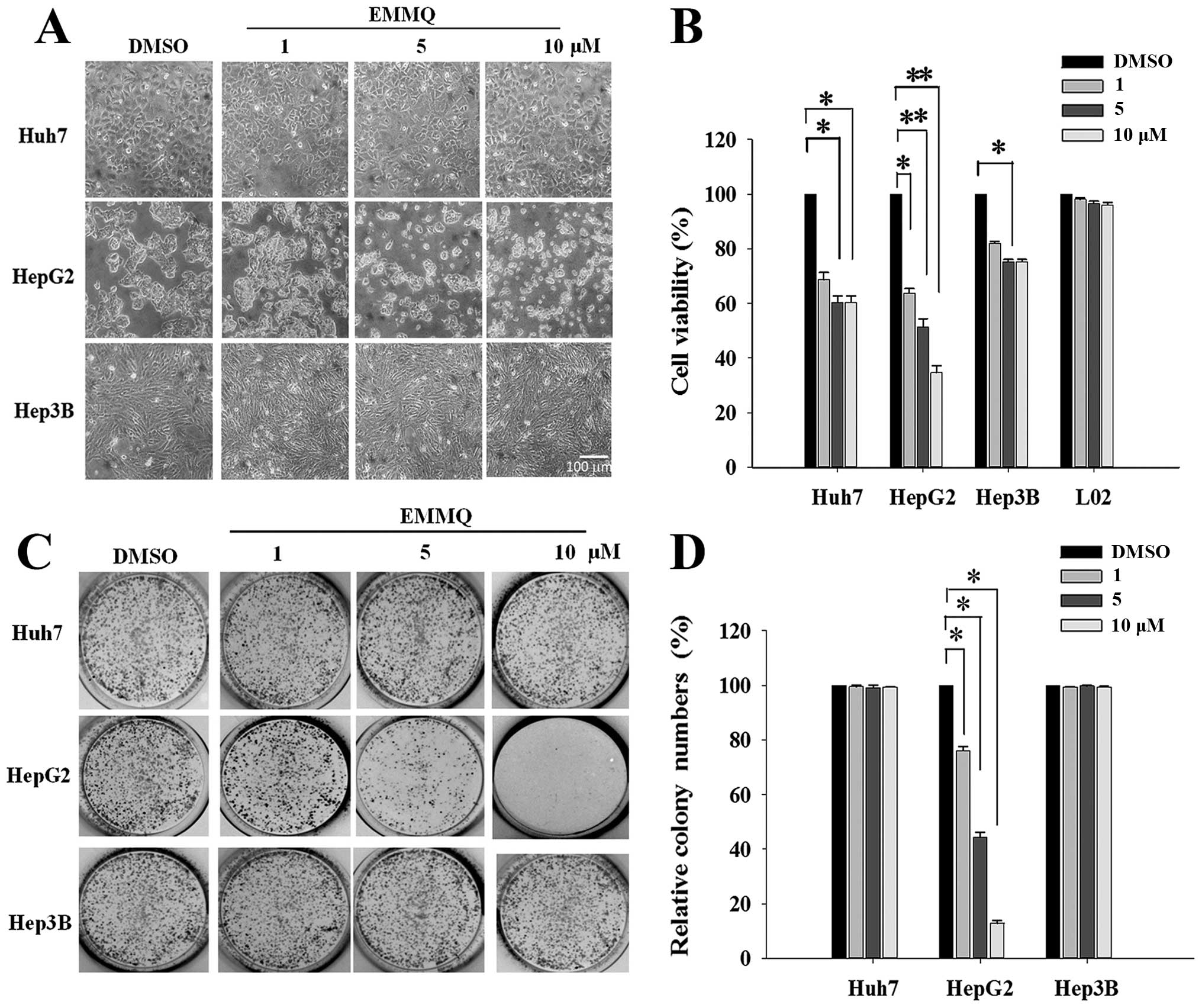
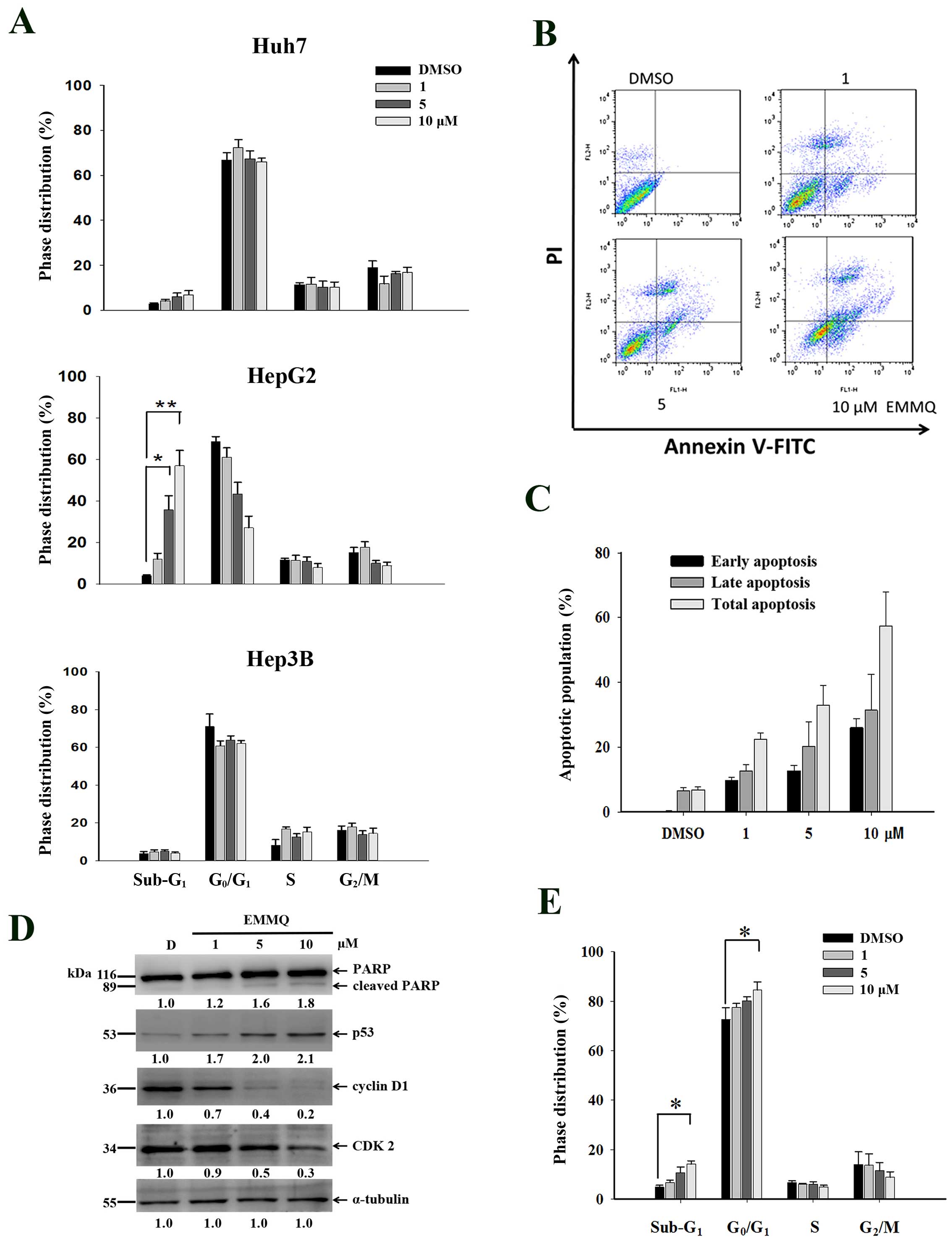
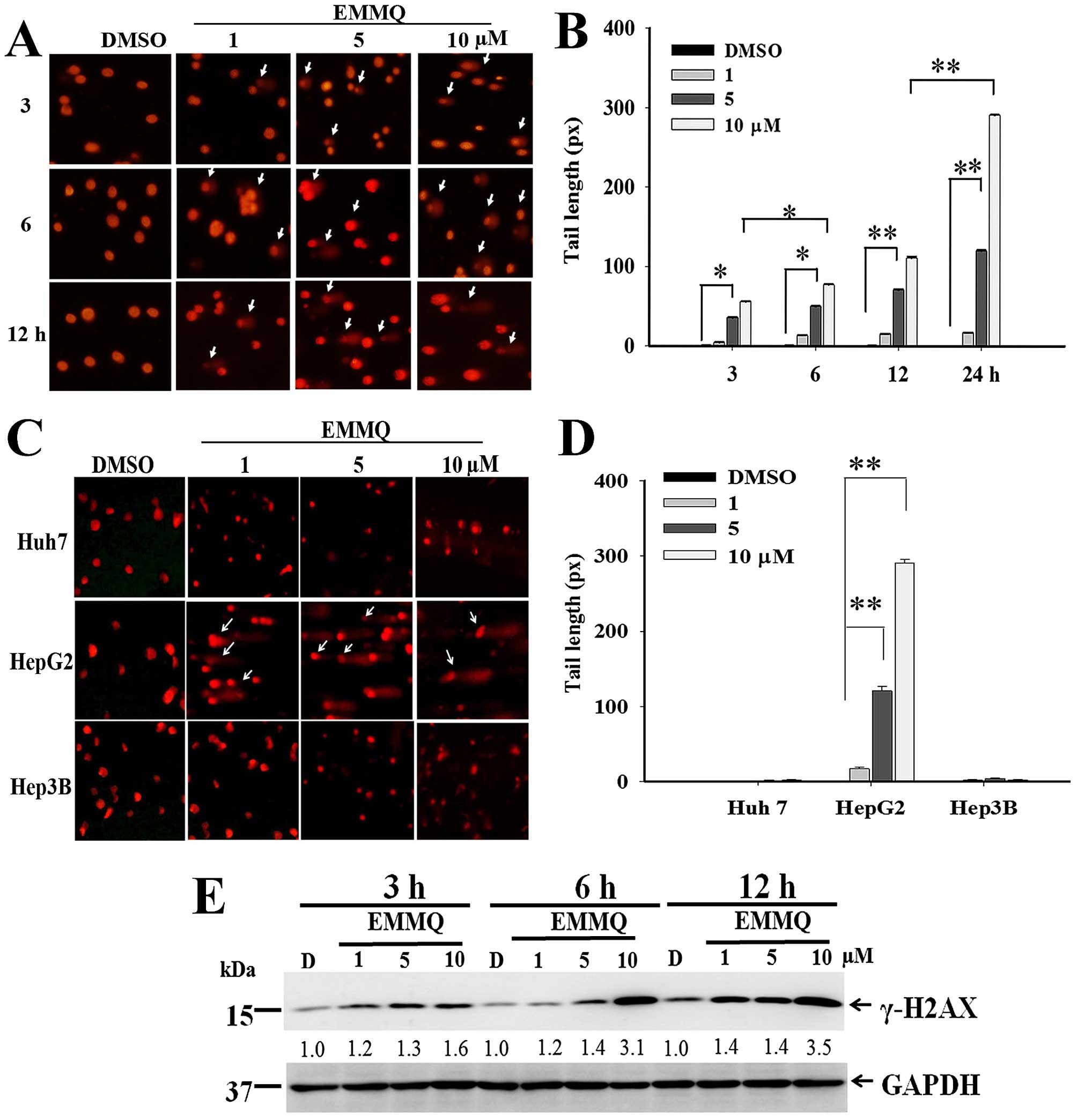
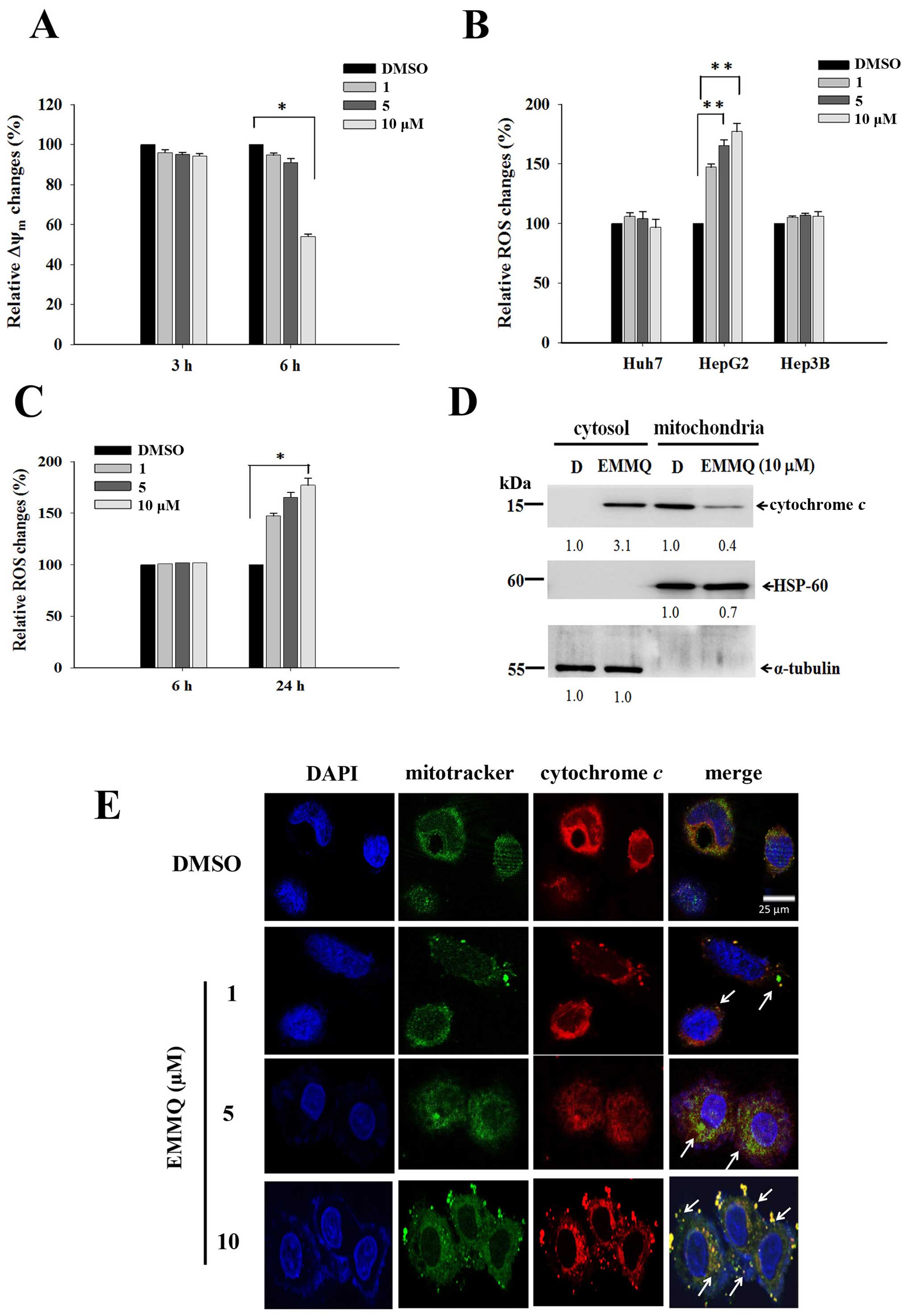
Human liver cancer is one of the most frequently diagnosed cancers worldwide. The development of resistance to therapy limits the application against the disease. To improve treatment, new effective anticancer agents are constantly pursued. Previously, we reported that an indolylquinoline, 3-((7-ethyl-1H-indol-3-yl)-methyl)-2-methylquinoline (EMMQ), is effective in suppressing the growth of human lung cancer by impairing mitochondria functions. The present study revealed that EMMQ inhibited cell growth and induced apoptosis in liver cancer cells, but not in normal cells. This study demonstrated that EMMQ induced DNA damage by activating p53 and γ-H2AX and cell arrest by suppressing cyclin D1 and CDK2. Damaged DNA injured mitochondrial functions by lowering the membrane potential and producing reactive oxygen species. The subsequent mitochondrial cytochrome c release attenuated pro-survival signals and increased apoptotic characteristics. Introduction of p53 shRNA abrogated drug effects by reducing DNA damage while maintaining mitochondria integrity. In brief, the study demonstrates that the effectiveness of EMMQ accentuated apoptosis of hepatocarcinoma cells by activating p53. Based on these collective findings, the study offered a new perspective of EMMQ that was shown to be a promising candidate to treat liver cancer.
View Figures

Figure 1

Figure 2

Figure 3

Figure 4

Figure 5

Figure 6

Figure 7

View References

1 

Jemal A, Bray F, Center MM, Ferlay J, Ward E and Forman D: Global cancer statistics. CA Cancer J Clin. 61:69–90. 2011. View Article : Google Scholar : PubMed/NCBI

2 

Ferlay J, Soerjomataram I, Dikshit R, Eser S, Mathers C, Rebelo M, Parkin DM, Forman D and Bray F: Cancer incidence and mortality worldwide: Sources, methods and major patterns in GLOBOCAN 2012. Int J Cancer. 136:E359–E386. 2015. View Article : Google Scholar

3 

Kumar M, Zhao X and Wang XW: Molecular carcinogenesis of hepatocellular carcinoma and intrahepatic cholangiocarcinoma: One step closer to personalized medicine? Cell Biosci. 1:52011. View Article : Google Scholar : PubMed/NCBI

4 

Brown KS: Chemotherapy and other systemic therapies for hepatocellular carcinoma and liver metastases. Semin Intervent Radiol. 23:99–108. 2006. View Article : Google Scholar : PubMed/NCBI

5 

Cao H, Phan H and Yang LX: Improved chemotherapy for hepatocellular carcinoma. Anticancer Res. 32:1379–1386. 2012.PubMed/NCBI

6 

Terazawa T, Kondo S, Hosoi H, Morizane C, Shimizu S, Mitsunaga S, Ikeda M, Ueno H and Okusaka T: Transarterial infusion chemotherapy with cisplatin plus S-1 for hepatocellular carcinoma treatment: A phase I trial. BMC Cancer. 14:3012014. View Article : Google Scholar : PubMed/NCBI

7 

Jiang L, Zhang Q, Ren H, Ma S, Lu C, Liu B, Liu J, Liang J, Li M and Zhu R: Dihydromyricetin enhances the chemo-sensitivity of nedaplatin via regulation of the p53/Bcl-2 pathway in hepatocellular carcinoma cells. PLoS One. 10:e01249942015. View Article : Google Scholar : PubMed/NCBI

8 

Liu CY, Wu PT, Wang JP, Fan PW, Hsieh CH, Su CL, Chiu CC, Yao CF and Fang K: An indolylquinoline derivative promotes apoptosis in human lung cancer cells by impairing mitochondrial functions. Apoptosis. 20:1471–1482. 2015. View Article : Google Scholar : PubMed/NCBI

9 

Lee WY, Cheung CC, Liu KW, Fung KP, Wong J, Lai PB and Yeung JH: Cytotoxic effects of tanshinones from Salvia miltior-rhiza on doxorubicin-resistant human liver cancer cells. J Nat Prod. 73:854–859. 2010. View Article : Google Scholar : PubMed/NCBI

10 

Gauthier A and Ho M: Role of sorafenib in the treatment of advanced hepatocellular carcinoma: An update. Hepatol Res. 43:147–154. 2013. View Article : Google Scholar

11 

Hartmann JT and Kanz L: Sunitinib and periodic hair depigmentation due to temporary c-KIT inhibition. Arch Dermatol. 144:1525–1526. 2008. View Article : Google Scholar : PubMed/NCBI

12 

Sukowati CH, Rosso N, Crocè LS and Tiribelli C: Hepatic cancer stem cells and drug resistance: Relevance in targeted therapies for hepatocellular carcinoma. World J Hepatol. 2:114–126. 2010.PubMed/NCBI

13 

Banin S, Moyal L, Shieh S, Taya Y, Anderson CW, Chessa L, Smorodinsky NI, Prives C, Reiss Y, Shiloh Y, et al: Enhanced phosphorylation of p53 by ATM in response to DNA damage. Science. 281:1674–1677. 1998. View Article : Google Scholar : PubMed/NCBI

14 

Hamer G, Roepers-Gajadien HL, van Duyn-Goedhart A, Gademan IS, Kal HB, van Buul PP and de Rooij DG: DNA double-strand breaks and gamma-H2AX signaling in the testis. Biol Reprod. 68:628–634. 2003. View Article : Google Scholar : PubMed/NCBI

15 

Yuan J and Chen J: MRE11-RAD50-NBS1 complex dictates DNA repair independent of H2AX. J Biol Chem. 285:1097–1104. 2010. View Article : Google Scholar :

16 

Di Leonardo A, Linke SP, Clarkin K and Wahl GM: DNA damage triggers a prolonged p53-dependent G1 arrest and long-term induction of Cip1 in normal human fibroblasts. Genes Dev. 8:2540–2551. 1994. View Article : Google Scholar : PubMed/NCBI

17 

Agarwal ML, Agarwal A, Taylor WR and Stark GR: p53 controls both the G2/M and the G1 cell cycle checkpoints and mediates reversible growth arrest in human fibroblasts. Proc Natl Acad Sci USA. 92:8493–8497. 1995. View Article : Google Scholar : PubMed/NCBI

18 

Innocente SA, Abrahamson JL, Cogswell JP and Lee JM: p53 regulates a G2 checkpoint through cyclin B1. Proc Natl Acad Sci USA. 96:2147–2152. 1999. View Article : Google Scholar : PubMed/NCBI

19 

Lakin ND and Jackson SP: Regulation of p53 in response to DNA damage. Oncogene. 18:7644–7655. 1999. View Article : Google Scholar

20 

Assunção Guimarães C and Linden R: Programmed cell deaths. Apoptosis and alternative death styles. Eur J Biochem. 271:1638–1650. 2004. View Article : Google Scholar

21 

Shi A, Nguyen TA, Battina SK, Rana S, Takemoto DJ, Chiang PK and Hua DH: Synthesis and anti-breast cancer activities of substituted quinolines. Bioorg Med Chem Lett. 18:3364–3368. 2008. View Article : Google Scholar : PubMed/NCBI

22 

Ding Y and Nguyen TA: PQ1, a quinoline derivative, induces apoptosis in T47D breast cancer cells through activation of caspase-8 and caspase-9. Apoptosis. 18:1071–1082. 2013. View Article : Google Scholar : PubMed/NCBI

23 

Bernzweig J, Heiniger B, Prasain K, Lu J, Hua DH and Nguyen TA: Anti-breast cancer agents, quinolines, targeting gap junction. Med Chem. 7:448–453. 2011. View Article : Google Scholar : PubMed/NCBI

24 

Nakamura Y, Yogosawa S, Izutani Y, Watanabe H, Otsuji E and Sakai T: A combination of indol-3-carbinol and genistein synergistically induces apoptosis in human colon cancer HT-29 cells by inhibiting Akt phosphorylation and progression of autophagy. Mol Cancer. 8:1002009. View Article : Google Scholar : PubMed/NCBI

25 

Chakrabarti G, Basu A, Manna PP, Mahato SB, Mandal NB and Bandyopadhyay S: Indolylquinoline derivatives are cytotoxic to Leishmania donovani promastigotes and amastigotes in vitro and are effective in treating murine visceral leishmaniasis. J Antimicrob Chemother. 43:359–366. 1999. View Article : Google Scholar : PubMed/NCBI

26 

Pal C, Raha M, Basu A, Roy KC, Gupta A, Ghosh M, Sahu NP, Banerjee S, Mandal NB and Bandyopadhyay S: Combination therapy with indolylquinoline derivative and sodium antimony gluconate cures established visceral leishmaniasis in hamsters. Antimicrob Agents Chemother. 46:259–261. 2002. View Article : Google Scholar

27 

Brambilla E and Negoescu A: Analysis of Bax and Bcl-2 expression in p53-immunopositive breast cancers. Clin Cancer Res. 3:2181–2183. 1997.

28 

Vaseva AV and Moll UM: The mitochondrial p53 pathway. Biochimica et Biophysica Acta. 1787:414–420. 2009. View Article : Google Scholar

29 

Baker SJ, Fearon ER, Nigro JM, Hamilton SR, Preisinger AC, Jessup JM, vanTuinen P, Ledbetter DH, Barker DF, Nakamura Y, et al: Chromosome 17 deletions and p53 gene mutations in colorectal carcinomas. Science. 244:217–221. 1989. View Article : Google Scholar : PubMed/NCBI

30 

Linke SP, Clarkin KC, Di Leonardo A, Tsou A and Wahl GM: A reversible, p53-dependent G0/G1 cell cycle arrest induced by ribo-nucleotide depletion in the absence of detectable DNA damage. Genes Dev. 10:934–947. 1996. View Article : Google Scholar : PubMed/NCBI

31 

Saha S, Bhattacharjee P, Mukherjee S, Mazumdar M, Chakraborty S, Khurana A, Nayak D, Manchanda R, Chakrabarty R, Das T, et al: Contribution of the ROS-p53 feedback loop in thuja-induced apoptosis of mammary epithelial carcinoma cells. Oncol Rep. 31:1589–1598. 2014.PubMed/NCBI

32 

Macip S, Igarashi M, Berggren P, Yu J, Lee SW and Aaronson SA: Influence of induced reactive oxygen species in p53-mediated cell fate decisions. Mol Cell Biol. 23:8576–8585. 2003. View Article : Google Scholar : PubMed/NCBI

33 

Raha S and Robinson BH: Mitochondria, oxygen free radicals, disease and ageing. Trends Biochem Sci. 25:502–508. 2000. View Article : Google Scholar : PubMed/NCBI

34 

Holley AK and St Clair DK: Watching the watcher: Regulation of p53 by mitochondria. Future Oncol. 5:117–130. 2009. View Article : Google Scholar : PubMed/NCBI

35 

Mihara M, Erster S, Zaika A, Petrenko O, Chittenden T, Pancoska P and Moll UM: p53 has a direct apoptogenic role at the mitochondria. Mol Cell. 11:577–590. 2003. View Article : Google Scholar : PubMed/NCBI

36 

Ji H, Ding Z, Hawke D, Xing D, Jiang BH, Mills GB and Lu Z: AKT-dependent phosphorylation of Niban regulates nucleo-phosmin- and MDM2-mediated p53 stability and cell apoptosis. EMBO Rep. 13:554–560. 2012. View Article : Google Scholar : PubMed/NCBI

37 

Qian J, Zou Y, Rahman JS, Lu B and Massion PP: Synergy between phosphatidylinositol 3-kinase/Akt pathway and Bcl-xL in the control of apoptosis in adenocarcinoma cells of the lung. Mol Cancer Ther. 8:101–109. 2009. View Article : Google Scholar : PubMed/NCBI

38 

Malki A and El Ashry S: In vitro and in vivo efficacy of a novel quinuclidinone derivative against breast cancer. Anticancer Res. 34:1367–1376. 2014.PubMed/NCBI

Related Articles

  • Abstract
  • View
  • Download
  • Twitter
Copy and paste a formatted citation
Spandidos Publications style
Liu C, Hsieh C, Kim S, Wang J, Ni Y, Su C, Yao C and Fang K: An indolylquinoline derivative activates DNA damage response and apoptosis in human hepatocellular carcinoma cells. Int J Oncol 49: 2431-2441, 2016.
APA
Liu, C., Hsieh, C., Kim, S., Wang, J., Ni, Y., Su, C. ... Fang, K. (2016). An indolylquinoline derivative activates DNA damage response and apoptosis in human hepatocellular carcinoma cells. International Journal of Oncology, 49, 2431-2441. https://doi.org/10.3892/ijo.2016.3717
MLA
Liu, C., Hsieh, C., Kim, S., Wang, J., Ni, Y., Su, C., Yao, C., Fang, K."An indolylquinoline derivative activates DNA damage response and apoptosis in human hepatocellular carcinoma cells". International Journal of Oncology 49.6 (2016): 2431-2441.
Chicago
Liu, C., Hsieh, C., Kim, S., Wang, J., Ni, Y., Su, C., Yao, C., Fang, K."An indolylquinoline derivative activates DNA damage response and apoptosis in human hepatocellular carcinoma cells". International Journal of Oncology 49, no. 6 (2016): 2431-2441. https://doi.org/10.3892/ijo.2016.3717
Copy and paste a formatted citation
x
Spandidos Publications style
Liu C, Hsieh C, Kim S, Wang J, Ni Y, Su C, Yao C and Fang K: An indolylquinoline derivative activates DNA damage response and apoptosis in human hepatocellular carcinoma cells. Int J Oncol 49: 2431-2441, 2016.
APA
Liu, C., Hsieh, C., Kim, S., Wang, J., Ni, Y., Su, C. ... Fang, K. (2016). An indolylquinoline derivative activates DNA damage response and apoptosis in human hepatocellular carcinoma cells. International Journal of Oncology, 49, 2431-2441. https://doi.org/10.3892/ijo.2016.3717
MLA
Liu, C., Hsieh, C., Kim, S., Wang, J., Ni, Y., Su, C., Yao, C., Fang, K."An indolylquinoline derivative activates DNA damage response and apoptosis in human hepatocellular carcinoma cells". International Journal of Oncology 49.6 (2016): 2431-2441.
Chicago
Liu, C., Hsieh, C., Kim, S., Wang, J., Ni, Y., Su, C., Yao, C., Fang, K."An indolylquinoline derivative activates DNA damage response and apoptosis in human hepatocellular carcinoma cells". International Journal of Oncology 49, no. 6 (2016): 2431-2441. https://doi.org/10.3892/ijo.2016.3717
Follow us
  • Twitter
  • LinkedIn
  • Facebook
About
  • Spandidos Publications
  • Careers
  • Cookie Policy
  • Privacy Policy
How can we help?
  • Help
  • Live Chat
  • Contact
  • Email to our Support Team