International Journal of Molecular Medicine is an international journal devoted to molecular mechanisms of human disease.
International Journal of Oncology is an international journal devoted to oncology research and cancer treatment.
Covers molecular medicine topics such as pharmacology, pathology, genetics, neuroscience, infectious diseases, molecular cardiology, and molecular surgery.
Oncology Reports is an international journal devoted to fundamental and applied research in Oncology.
Experimental and Therapeutic Medicine is an international journal devoted to laboratory and clinical medicine.
Oncology Letters is an international journal devoted to Experimental and Clinical Oncology.
Explores a wide range of biological and medical fields, including pharmacology, genetics, microbiology, neuroscience, and molecular cardiology.
International journal addressing all aspects of oncology research, from tumorigenesis and oncogenes to chemotherapy and metastasis.
Multidisciplinary open-access journal spanning biochemistry, genetics, neuroscience, environmental health, and synthetic biology.
Open-access journal combining biochemistry, pharmacology, immunology, and genetics to advance health through functional nutrition.
Publishes open-access research on using epigenetics to advance understanding and treatment of human disease.
An International Open Access Journal Devoted to General Medicine.
Int J Oncol 42: [Related article:] 690–698, 2013
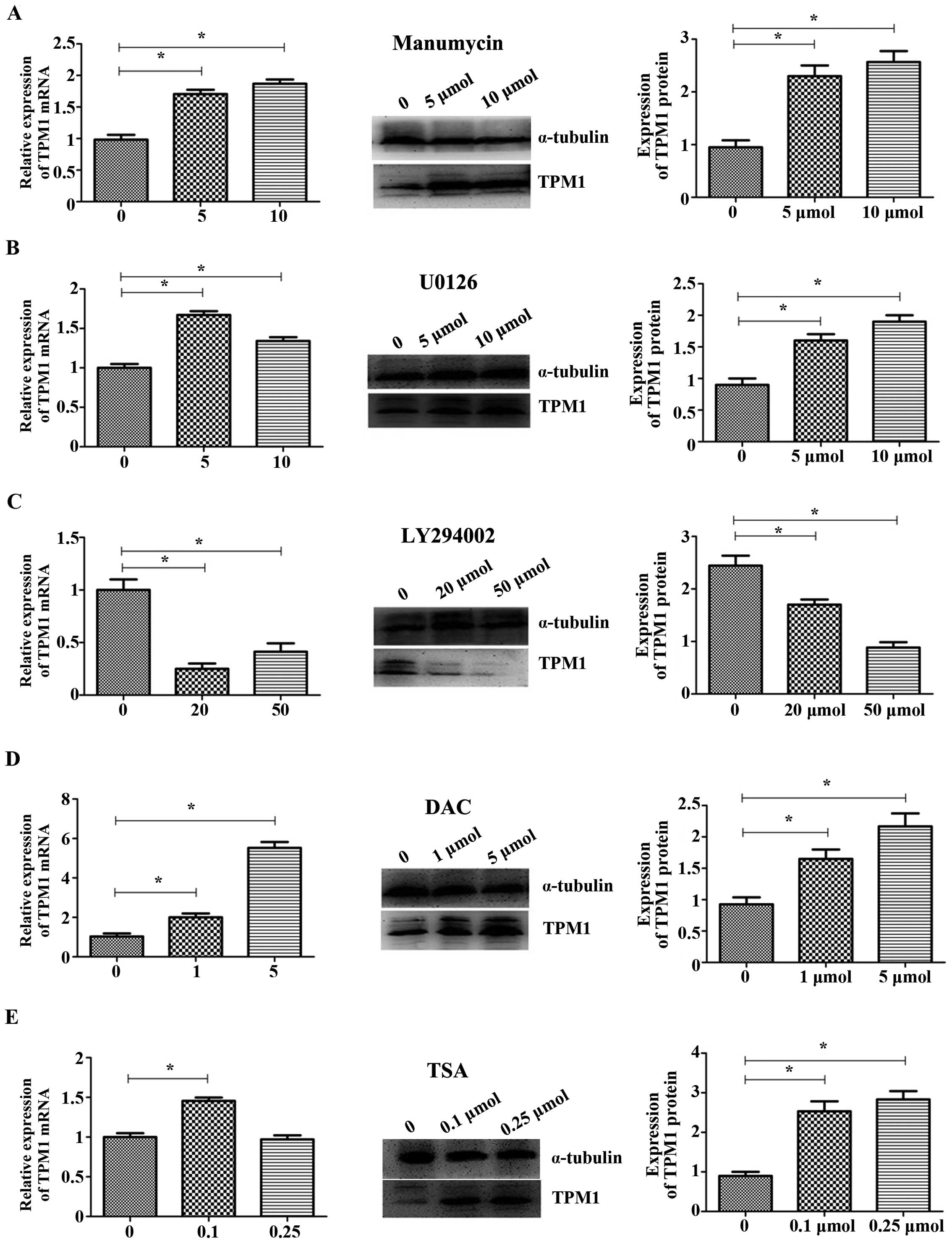
Following the publication of this article, an interested reader drew to our attention anomalies associated with the data shown in Fig. 2, which presented the mRNA and protein expression levels of tropomyosin 1 (TPM1) in HuCCT1 cells. Essentially, the control bands for α-tubulin had been duplicated across from Fig. 2A to Fig. 2B, and from Fig. 2D to Fig. 2E [the experiments showing treatment of the cells with (A) manumycin A, (B) U0126, (D) 5-aza-2-deoxycytidine (DAC) and (E) trichostatin A (TSA)], respectively. After having re-examined our original data, we realize that the figure was compiled incorrectly, and have returned to our source data. A corrected version of Fig. 2 is presented here, showing the correct control α-tubulin data for Fig. 2A and E, as they ought to have appeared. This error did not overall affect the conclusions reported in the study. We sincerely apologize for this mistake, and thank the reader of our article who drew this matter to our attention. Furthermore, we regret any inconvenience this mistake has caused.