Spandidos Publications Logo
  • About
    • About Spandidos
    • Aims and Scopes
    • Abstracting and Indexing
    • Editorial Policies
    • Reprints and Permissions
    • Job Opportunities
    • Terms and Conditions
    • Contact
  • Journals
    • All Journals
    • Oncology Letters
      • Oncology Letters
      • Information for Authors
      • Editorial Policies
      • Editorial Board
      • Aims and Scope
      • Abstracting and Indexing
      • Bibliographic Information
      • Archive
    • International Journal of Oncology
      • International Journal of Oncology
      • Information for Authors
      • Editorial Policies
      • Editorial Board
      • Aims and Scope
      • Abstracting and Indexing
      • Bibliographic Information
      • Archive
    • Molecular and Clinical Oncology
      • Molecular and Clinical Oncology
      • Information for Authors
      • Editorial Policies
      • Editorial Board
      • Aims and Scope
      • Abstracting and Indexing
      • Bibliographic Information
      • Archive
    • Experimental and Therapeutic Medicine
      • Experimental and Therapeutic Medicine
      • Information for Authors
      • Editorial Policies
      • Editorial Board
      • Aims and Scope
      • Abstracting and Indexing
      • Bibliographic Information
      • Archive
    • International Journal of Molecular Medicine
      • International Journal of Molecular Medicine
      • Information for Authors
      • Editorial Policies
      • Editorial Board
      • Aims and Scope
      • Abstracting and Indexing
      • Bibliographic Information
      • Archive
    • Biomedical Reports
      • Biomedical Reports
      • Information for Authors
      • Editorial Policies
      • Editorial Board
      • Aims and Scope
      • Abstracting and Indexing
      • Bibliographic Information
      • Archive
    • Oncology Reports
      • Oncology Reports
      • Information for Authors
      • Editorial Policies
      • Editorial Board
      • Aims and Scope
      • Abstracting and Indexing
      • Bibliographic Information
      • Archive
    • Molecular Medicine Reports
      • Molecular Medicine Reports
      • Information for Authors
      • Editorial Policies
      • Editorial Board
      • Aims and Scope
      • Abstracting and Indexing
      • Bibliographic Information
      • Archive
    • World Academy of Sciences Journal
      • World Academy of Sciences Journal
      • Information for Authors
      • Editorial Policies
      • Editorial Board
      • Aims and Scope
      • Abstracting and Indexing
      • Bibliographic Information
      • Archive
    • International Journal of Functional Nutrition
      • International Journal of Functional Nutrition
      • Information for Authors
      • Editorial Policies
      • Editorial Board
      • Aims and Scope
      • Abstracting and Indexing
      • Bibliographic Information
      • Archive
    • International Journal of Epigenetics
      • International Journal of Epigenetics
      • Information for Authors
      • Editorial Policies
      • Editorial Board
      • Aims and Scope
      • Abstracting and Indexing
      • Bibliographic Information
      • Archive
    • Medicine International
      • Medicine International
      • Information for Authors
      • Editorial Policies
      • Editorial Board
      • Aims and Scope
      • Abstracting and Indexing
      • Bibliographic Information
      • Archive
  • Articles
  • Information
    • Information for Authors
    • Information for Reviewers
    • Information for Librarians
    • Information for Advertisers
    • Conferences
  • Language Editing
Spandidos Publications Logo
  • About
    • About Spandidos
    • Aims and Scopes
    • Abstracting and Indexing
    • Editorial Policies
    • Reprints and Permissions
    • Job Opportunities
    • Terms and Conditions
    • Contact
  • Journals
    • All Journals
    • Biomedical Reports
      • Information for Authors
      • Editorial Policies
      • Editorial Board
      • Aims and Scope
      • Abstracting and Indexing
      • Bibliographic Information
      • Archive
    • Experimental and Therapeutic Medicine
      • Information for Authors
      • Editorial Policies
      • Editorial Board
      • Aims and Scope
      • Abstracting and Indexing
      • Bibliographic Information
      • Archive
    • International Journal of Epigenetics
      • Information for Authors
      • Editorial Policies
      • Editorial Board
      • Aims and Scope
      • Abstracting and Indexing
      • Bibliographic Information
      • Archive
    • International Journal of Functional Nutrition
      • Information for Authors
      • Editorial Policies
      • Editorial Board
      • Aims and Scope
      • Abstracting and Indexing
      • Bibliographic Information
      • Archive
    • International Journal of Molecular Medicine
      • Information for Authors
      • Editorial Policies
      • Editorial Board
      • Aims and Scope
      • Abstracting and Indexing
      • Bibliographic Information
      • Archive
    • International Journal of Oncology
      • Information for Authors
      • Editorial Policies
      • Editorial Board
      • Aims and Scope
      • Abstracting and Indexing
      • Bibliographic Information
      • Archive
    • Medicine International
      • Information for Authors
      • Editorial Policies
      • Editorial Board
      • Aims and Scope
      • Abstracting and Indexing
      • Bibliographic Information
      • Archive
    • Molecular and Clinical Oncology
      • Information for Authors
      • Editorial Policies
      • Editorial Board
      • Aims and Scope
      • Abstracting and Indexing
      • Bibliographic Information
      • Archive
    • Molecular Medicine Reports
      • Information for Authors
      • Editorial Policies
      • Editorial Board
      • Aims and Scope
      • Abstracting and Indexing
      • Bibliographic Information
      • Archive
    • Oncology Letters
      • Information for Authors
      • Editorial Policies
      • Editorial Board
      • Aims and Scope
      • Abstracting and Indexing
      • Bibliographic Information
      • Archive
    • Oncology Reports
      • Information for Authors
      • Editorial Policies
      • Editorial Board
      • Aims and Scope
      • Abstracting and Indexing
      • Bibliographic Information
      • Archive
    • World Academy of Sciences Journal
      • Information for Authors
      • Editorial Policies
      • Editorial Board
      • Aims and Scope
      • Abstracting and Indexing
      • Bibliographic Information
      • Archive
  • Articles
  • Information
    • For Authors
    • For Reviewers
    • For Librarians
    • For Advertisers
    • Conferences
  • Language Editing
Login Register Submit
  • This site uses cookies
  • You can change your cookie settings at any time by following the instructions in our Cookie Policy. To find out more, you may read our Privacy Policy.

    I agree
Search articles by DOI, keyword, author or affiliation
Search
Advanced Search
presentation
International Journal of Oncology
Join Editorial Board Propose a Special Issue
Print ISSN: 1019-6439 Online ISSN: 1791-2423
Journal Cover
January-2017 Volume 50 Issue 1

Full Size Image

Cover Legend PDF

Sign up for eToc alerts
Recommend to Library

Journals

International Journal of Molecular Medicine

International Journal of Molecular Medicine

International Journal of Molecular Medicine is an international journal devoted to molecular mechanisms of human disease.

International Journal of Oncology

International Journal of Oncology

International Journal of Oncology is an international journal devoted to oncology research and cancer treatment.

Molecular Medicine Reports

Molecular Medicine Reports

Covers molecular medicine topics such as pharmacology, pathology, genetics, neuroscience, infectious diseases, molecular cardiology, and molecular surgery.

Oncology Reports

Oncology Reports

Oncology Reports is an international journal devoted to fundamental and applied research in Oncology.

Experimental and Therapeutic Medicine

Experimental and Therapeutic Medicine

Experimental and Therapeutic Medicine is an international journal devoted to laboratory and clinical medicine.

Oncology Letters

Oncology Letters

Oncology Letters is an international journal devoted to Experimental and Clinical Oncology.

Biomedical Reports

Biomedical Reports

Explores a wide range of biological and medical fields, including pharmacology, genetics, microbiology, neuroscience, and molecular cardiology.

Molecular and Clinical Oncology

Molecular and Clinical Oncology

International journal addressing all aspects of oncology research, from tumorigenesis and oncogenes to chemotherapy and metastasis.

World Academy of Sciences Journal

World Academy of Sciences Journal

Multidisciplinary open-access journal spanning biochemistry, genetics, neuroscience, environmental health, and synthetic biology.

International Journal of Functional Nutrition

International Journal of Functional Nutrition

Open-access journal combining biochemistry, pharmacology, immunology, and genetics to advance health through functional nutrition.

International Journal of Epigenetics

International Journal of Epigenetics

Publishes open-access research on using epigenetics to advance understanding and treatment of human disease.

Medicine International

Medicine International

An International Open Access Journal Devoted to General Medicine.

Journal Cover
January-2017 Volume 50 Issue 1

Full Size Image

Cover Legend PDF

Sign up for eToc alerts
Recommend to Library

  • Article
  • Citations
    • Cite This Article
    • Download Citation
    • Create Citation Alert
    • Remove Citation Alert
    • Cited By
  • Similar Articles
    • Related Articles (in Spandidos Publications)
    • Similar Articles (Google Scholar)
    • Similar Articles (PubMed)
  • Download PDF
  • Download XML
  • View XML
Article

2'-Hydroxycinnamaldehyde induces apoptosis through HSF1-mediated BAG3 expression

  • Authors:
    • Hai-Anh Nguyen
    • Soo-A Kim
  • View Affiliations / Copyright

    Affiliations: Department of Biochemistry, Dongguk University College of Oriental Medicine, Gyeongju 780-714, Republic of Korea
  • Pages: 283-289
    |
    Published online on: December 6, 2016
       https://doi.org/10.3892/ijo.2016.3790
  • Expand metrics +
Metrics: Total Views: 0 (Spandidos Publications: | PMC Statistics: )
Metrics: Total PDF Downloads: 0 (Spandidos Publications: | PMC Statistics: )
Cited By (CrossRef): 0 citations Loading Articles...

This article is mentioned in:


Abstract

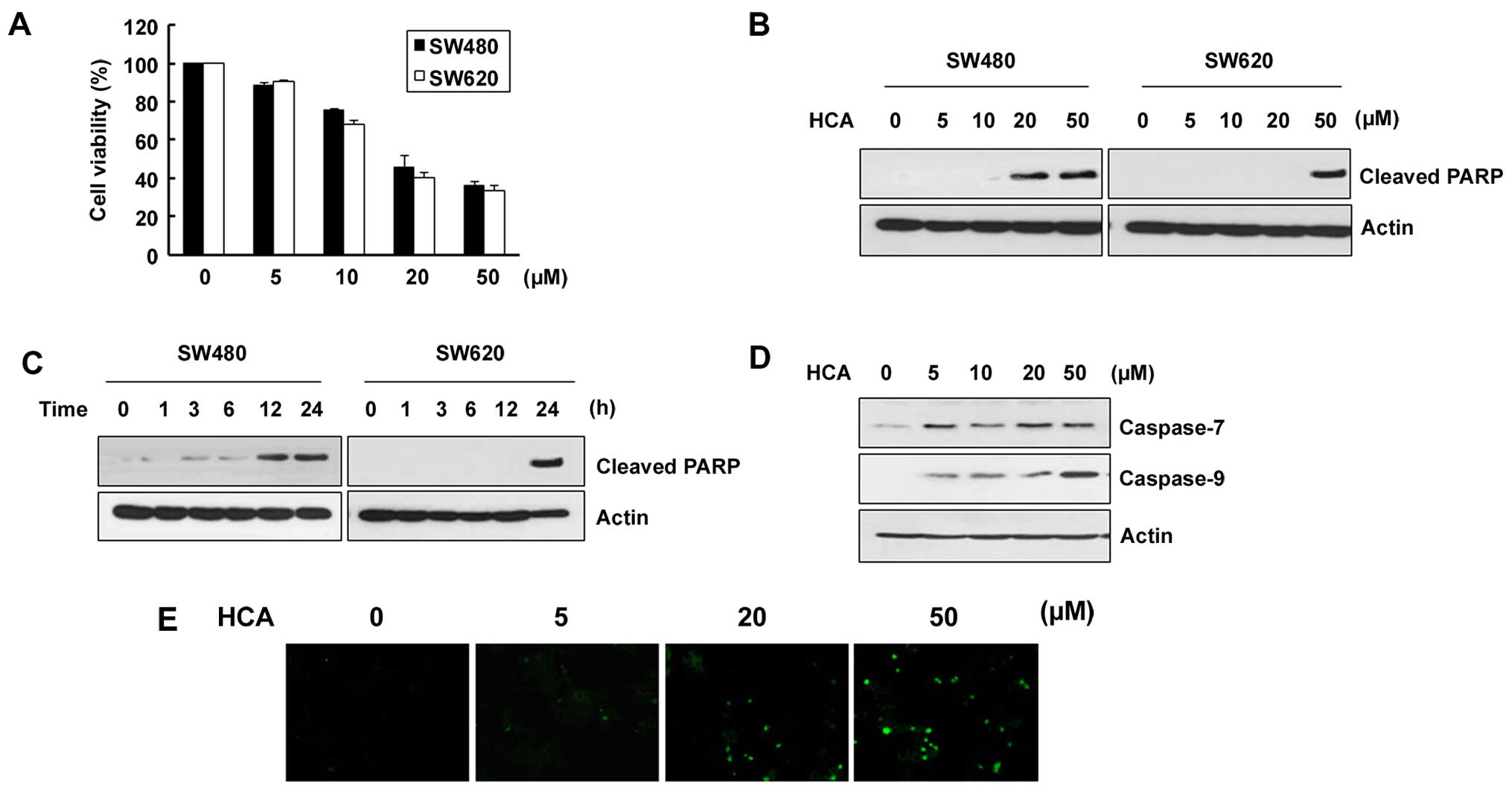
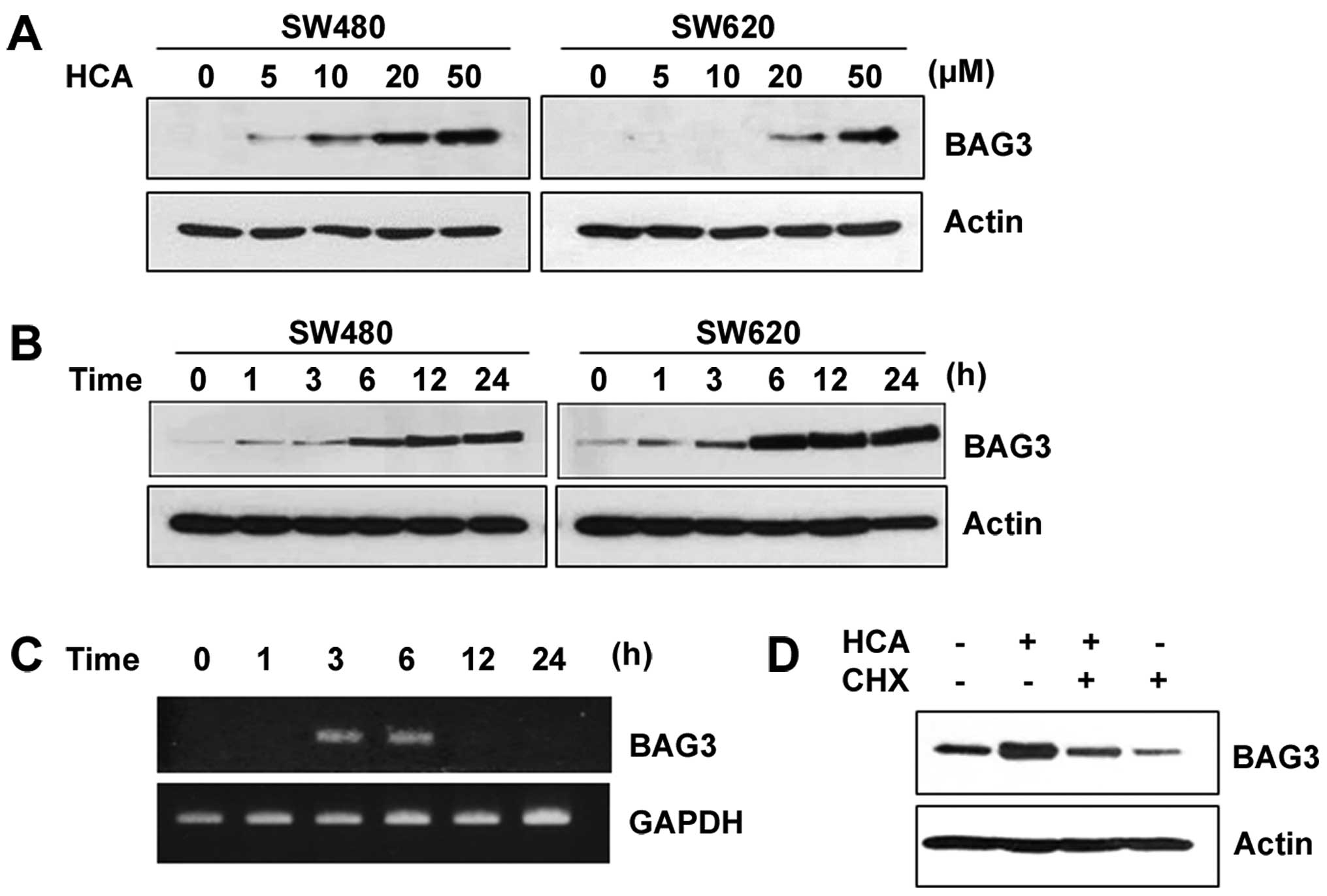
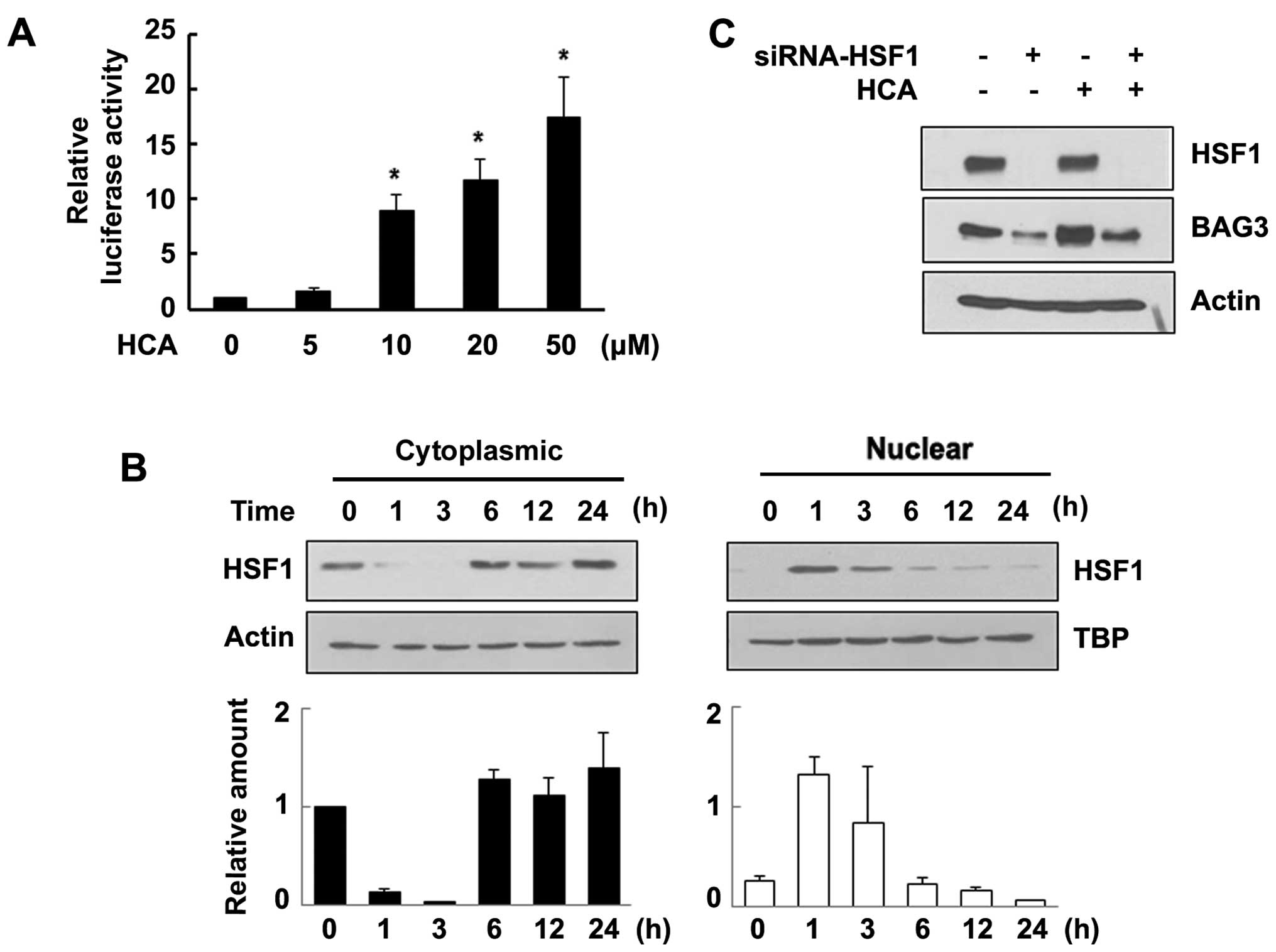
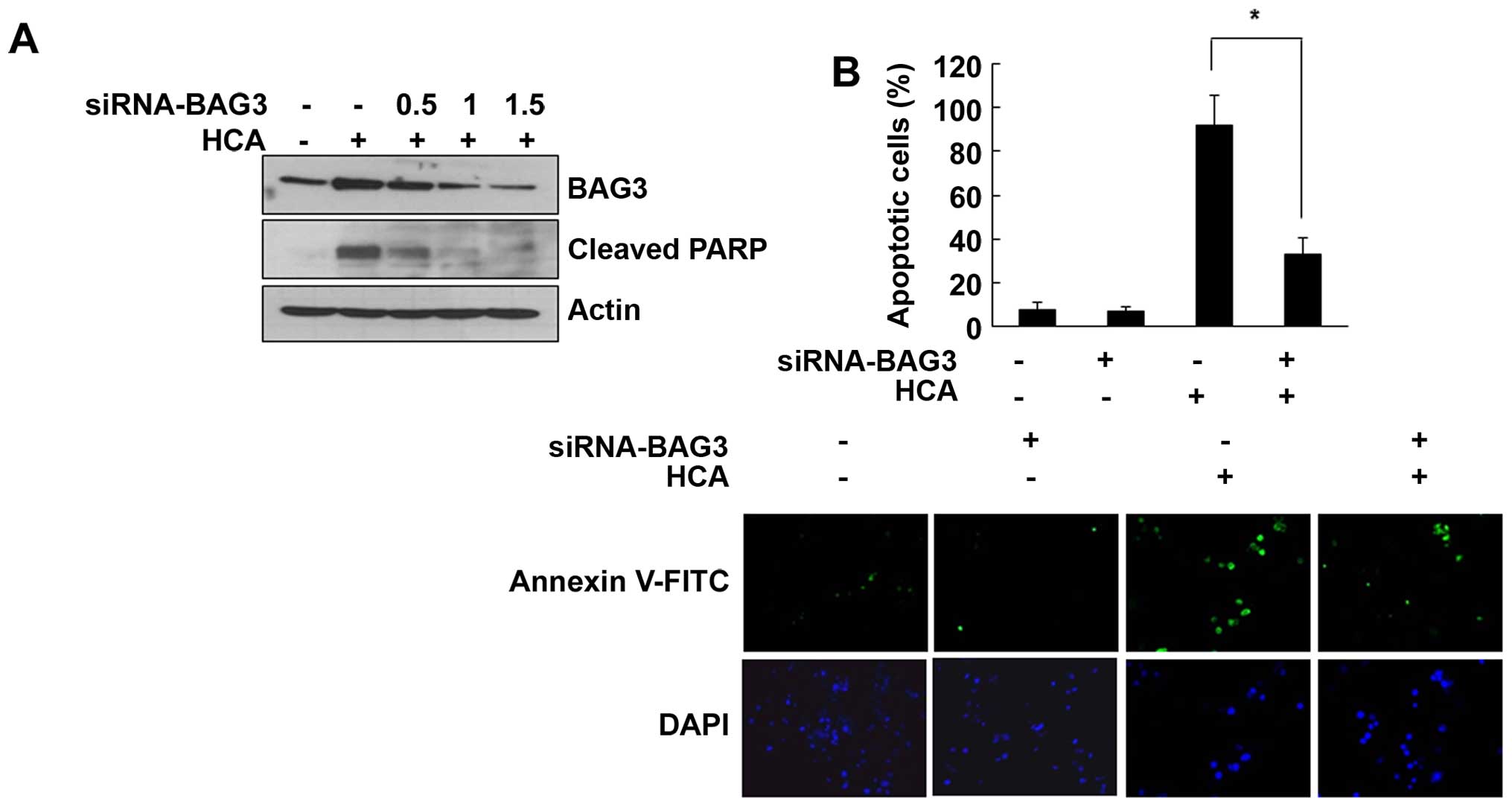
BAG3, a member of BAG co-chaperone family, is induced by stressful stimuli such as heat shock and heavy metals. Through interaction with various binding partners, BAG3 is thought to play a role in cellular adaptive responses against stressful conditions in normal and neoplastic cells. 2'-Hydroxycinnamaldehyde (HCA) is a natural derivative of cinnamaldehyde and has antitumor activity in various cancer cells. In the present study, for the first time, we identified that HCA induced BAG3 expression and BAG3-mediated apoptosis in cancer cells. The apoptotic cell death induced by HCA was demonstrated by caspase-7, -9 and PARP activation, and confirmed by Annexin V staining in both SW480 and SW620 colon cancer cells. Notably, both the mRNA and protein levels of BAG3 were largely induced by HCA in a dose- and time-dependent manner. By showing transcription factor HSF1 activation, we demonstrated that HCA induces the expression of BAG3 through HSF1 activation. More importantly, knockdown of BAG3 expression using siRNA largely inhibited HCA-induced apoptosis, suggesting that BAG3 is actively involved in HCA-induced cancer cell death. Considering the importance of the stress response mechanism in cancer progression, our results strongly suggest that BAG3 could be a potential target for anticancer therapy.
View Figures

Figure 1

Figure 2

Figure 3

Figure 4

Figure 5

Figure 6

View References

1 

Parsell DA and Lindquist S: The function of heat-shock proteins in stress tolerance: Degradation and reactivation of damaged proteins. Annu Rev Genet. 27:437–496. 1993. View Article : Google Scholar : PubMed/NCBI

2 

Kaufman RJ: Molecular chaperones and the heat shock response. Sponsored by Cold Spring Harbor Laboratory, 6–10 May 1998. Biochim Biophys Acta. 1423:R13–R27. 1999.PubMed/NCBI

3 

Morimoto RI: Regulation of the heat shock transcriptional response: Cross talk between a family of heat shock factors, molecular chaperones, and negative regulators. Genes Dev. 12:3788–3796. 1998. View Article : Google Scholar : PubMed/NCBI

4 

Pirkkala L, Nykänen P and Sistonen L: Roles of the heat shock transcription factors in regulation of the heat shock response and beyond. FASEB J. 15:1118–1131. 2001. View Article : Google Scholar : PubMed/NCBI

5 

Kabbage M and Dickman MB: The BAG proteins: A ubiquitous family of chaperone regulators. Cell Mol Life Sci. 65:1390–1402. 2008. View Article : Google Scholar : PubMed/NCBI

6 

Rosati A, Graziano V, De Laurenzi V, Pascale M and Turco MC: BAG3: A multifaceted protein that regulates major cell pathways. Cell Death Dis. 2:e1412011. View Article : Google Scholar : PubMed/NCBI

7 

Doong H, Price J, Kim YS, Gasbarre C, Probst J, Liotta LA, Blanchette J, Rizzo K and Kohn E: CAIR-1/BAG-3 forms an EGF-regulated ternary complex with phospholipase C-gamma and Hsp70/Hsc70. Oncogene. 19:4385–4395. 2000. View Article : Google Scholar : PubMed/NCBI

8 

McCollum AK, Casagrande G and Kohn EC: Caught in the middle: The role of Bag3 in disease. Biochem J. 425:e1–e3. 2009. View Article : Google Scholar : PubMed/NCBI

9 

Shi H, Xu H, Li Z, Zhen Y, Wang B, Huo S, Xiao R and Xu Z: BAG3 regulates cell proliferation, migration, and invasion in human colorectal cancer. Tumour Biol. 37:5591–5597. 2016. View Article : Google Scholar

10 

Suzuki M, Iwasaki M, Sugio A, Hishiya A, Tanaka R, Endo T, Takayama S and Saito T: BAG3 (BCL2-associated athanogene 3) interacts with MMP-2 to positively regulate invasion by ovarian carcinoma cells. Cancer Lett. 303:65–71. 2011. View Article : Google Scholar : PubMed/NCBI

11 

Behl C: BAG3 and friends: Co-chaperones in selective autophagy during aging and disease. Autophagy. 7:795–798. 2011. View Article : Google Scholar : PubMed/NCBI

12 

Pagliuca MG, Lerose R, Cigliano S and Leone A: Regulation by heavy metals and temperature of the human BAG-3 gene, a modulator of Hsp70 activity. FEBS Lett. 541:11–15. 2003. View Article : Google Scholar : PubMed/NCBI

13 

Rosati A, Di Salle E, Luberto L, Quinto I, Scala G, Turco MC and Pascale M: Identification of a Btk-BAG3 complex induced by oxidative stress. Leukemia. 23:823–824. 2009. View Article : Google Scholar : PubMed/NCBI

14 

Rosati A, Leone A, Del Valle L, Amini S, Khalili K and Turco MC: Evidence for BAG3 modulation of HIV-1 gene transcription. J Cell Physiol. 210:676–683. 2007. View Article : Google Scholar

15 

Franceschelli S, Rosati A, Lerose R, De Nicola S, Turco MC and Pascale M: Bag3 gene expression is regulated by heat shock factor 1. J Cell Physiol. 215:575–577. 2008. View Article : Google Scholar : PubMed/NCBI

16 

Jin YH, Ahn SG and Kim SA: BAG3 affects the nucleocytoplasmic shuttling of HSF1 upon heat stress. Biochem Biophys Res Commun. 464:561–567. 2015. View Article : Google Scholar : PubMed/NCBI

17 

Festa M, Del Valle L, Khalili K, Franco R, Scognamiglio G, Graziano V, De Laurenzi V, Turco MC and Rosati A: BAG3 protein is overexpressed in human glioblastoma and is a potential target for therapy. Am J Pathol. 178:2504–2512. 2011. View Article : Google Scholar : PubMed/NCBI

18 

Zhu H, Wu W, Fu Y, Shen W, Miao K, Hong M, Xu W, Young KH, Liu P and Li J: Overexpressed BAG3 is a potential therapeutic target in chronic lymphocytic leukemia. Ann Hematol. 93:425–435. 2014. View Article : Google Scholar

19 

Ammirante M, De Laurenzi V, Graziano V, Turco MC and Rosati A: BAG3 is required for IKKα nuclear translocation and emergence of castration resistant prostate cancer. Cell Death Dis. 2:e1392011. View Article : Google Scholar

20 

Liao Q, Ozawa F, Friess H, Zimmermann A, Takayama S, Reed JC, Kleeff J and Büchler MW: The anti-apoptotic protein BAG-3 is overexpressed in pancreatic cancer and induced by heat stress in pancreatic cancer cell lines. FEBS Lett. 503:151–157. 2001. View Article : Google Scholar : PubMed/NCBI

21 

Shen Y, Jia LN, Honma N, Hosono T, Ariga T and Seki T: Beneficial effects of cinnamon on the metabolic syndrome, inflammation, and pain, and mechanisms underlying these effects - a review. J Tradit Complement Med. 2:27–32. 2012. View Article : Google Scholar : PubMed/NCBI

22 

Kwon JA, Yu CB and Park HD: Bacteriocidal effects and inhibition of cell separation of cinnamic aldehyde on Bacillus cereus. Lett Appl Microbiol. 37:61–65. 2003. View Article : Google Scholar : PubMed/NCBI

23 

Cheng SS, Liu JY, Chang EH and Chang ST: Antifungal activity of cinnamaldehyde and eugenol congeners against wood-rot fungi. Bioresour Technol. 99:5145–5149. 2008. View Article : Google Scholar

24 

Chao LK, Hua KF, Hsu HY, Cheng SS, Lin IF, Chen CJ, Chen ST and Chang ST: Cinnamaldehyde inhibits pro-inflammatory cytokines secretion from monocytes/macrophages through suppression of intracellular signaling. Food Chem Toxicol. 46:220–231. 2008. View Article : Google Scholar

25 

Jeong HW, Han DC, Son KH, Han MY, Lim JS, Ha JH, Lee CW, Kim HM, Kim HC and Kwon BM: Antitumor effect of the cinnamaldehyde derivative CB403 through the arrest of cell cycle progression in the G2/M phase. Biochem Pharmacol. 65:1343–1350. 2003. View Article : Google Scholar : PubMed/NCBI

26 

Lee SH, Lee CW, Lee JW, Choi MS, Son DJ, Chung YB, Lee CK, Oh KW, Moon DC, Kwon BM, et al: Induction of apoptotic cell death by 2′-hydroxycinnamaldehyde is involved with ERK-dependent inactivation of NF-kappaB in TNF-α-treated SW620 colon cancer cells. Biochem Pharmacol. 70:1147–1157. 2005. View Article : Google Scholar : PubMed/NCBI

27 

Hong SH, Kim J, Kim JM, Lee SY, Shin DS, Son KH, Han DC, Sung YK and Kwon BM: Apoptosis induction of 2′-hydroxycinnamaldehyde as a proteasome inhibitor is associated with ER stress and mitochondrial perturbation in cancer cells. Biochem Pharmacol. 74:557–565. 2007. View Article : Google Scholar : PubMed/NCBI

28 

Lee CW, Lee SH, Lee JW, Ban JO, Lee SY, Yoo HS, Jung JK, Moon DC, Oh KW and Hong JT: 2-hydroxycinnamaldehyde inhibits SW620 colon cancer cell growth through AP-1 inactivation. J Pharmacol Sci. 104:19–28. 2007. View Article : Google Scholar : PubMed/NCBI

29 

Kim SA, Sung YK, Kwon BM, Yoon JH, Lee H, Ahn SG and Hong SH: 2′-Hydroxycinnamaldehyde shows antitumor activity against oral cancer in vitro and in vivo in a rat tumor model. Anticancer Res. 30:489–494. 2010.PubMed/NCBI

30 

Ahn SG, Jin YH, Yoon JH and Kim SA: The anticancer mechanism of 2′-hydroxycinnamaldehyde in human head and neck cancer cells. Int J Oncol. 47:1793–1800. 2015.PubMed/NCBI

31 

Dai C, Whitesell L, Rogers AB and Lindquist S: Heat shock factor 1 is a powerful multifaceted modifier of carcinogenesis. Cell. 130:1005–1018. 2007. View Article : Google Scholar : PubMed/NCBI

32 

Sherman MY and Gabai VL: Hsp70 in cancer: Back to the future. Oncogene. 34:4153–4161. 2015. View Article : Google Scholar :

33 

Liu P, Xu B, Li J and Lu H: BAG3 gene silencing sensitizes leukemic cells to Bortezomib-induced apoptosis. FEBS Lett. 583:401–406. 2009. View Article : Google Scholar

34 

Mani J, Antonietti P, Rakel S, Blaheta R, Bartsch G, Haferkamp A and Kögel D: Knockdown of BAG3 sensitizes bladder cancer cells to treatment with the BH3 mimetic ABT-737. World J Urol. 34:197–205. 2016. View Article : Google Scholar

Related Articles

  • Abstract
  • View
  • Download
  • Twitter
Copy and paste a formatted citation
Spandidos Publications style
Nguyen H and Kim S: 2'-Hydroxycinnamaldehyde induces apoptosis through HSF1-mediated BAG3 expression. Int J Oncol 50: 283-289, 2017.
APA
Nguyen, H., & Kim, S. (2017). 2'-Hydroxycinnamaldehyde induces apoptosis through HSF1-mediated BAG3 expression. International Journal of Oncology, 50, 283-289. https://doi.org/10.3892/ijo.2016.3790
MLA
Nguyen, H., Kim, S."2'-Hydroxycinnamaldehyde induces apoptosis through HSF1-mediated BAG3 expression". International Journal of Oncology 50.1 (2017): 283-289.
Chicago
Nguyen, H., Kim, S."2'-Hydroxycinnamaldehyde induces apoptosis through HSF1-mediated BAG3 expression". International Journal of Oncology 50, no. 1 (2017): 283-289. https://doi.org/10.3892/ijo.2016.3790
Copy and paste a formatted citation
x
Spandidos Publications style
Nguyen H and Kim S: 2'-Hydroxycinnamaldehyde induces apoptosis through HSF1-mediated BAG3 expression. Int J Oncol 50: 283-289, 2017.
APA
Nguyen, H., & Kim, S. (2017). 2'-Hydroxycinnamaldehyde induces apoptosis through HSF1-mediated BAG3 expression. International Journal of Oncology, 50, 283-289. https://doi.org/10.3892/ijo.2016.3790
MLA
Nguyen, H., Kim, S."2'-Hydroxycinnamaldehyde induces apoptosis through HSF1-mediated BAG3 expression". International Journal of Oncology 50.1 (2017): 283-289.
Chicago
Nguyen, H., Kim, S."2'-Hydroxycinnamaldehyde induces apoptosis through HSF1-mediated BAG3 expression". International Journal of Oncology 50, no. 1 (2017): 283-289. https://doi.org/10.3892/ijo.2016.3790
Follow us
  • Twitter
  • LinkedIn
  • Facebook
About
  • Spandidos Publications
  • Careers
  • Cookie Policy
  • Privacy Policy
How can we help?
  • Help
  • Live Chat
  • Contact
  • Email to our Support Team