Spandidos Publications Logo
  • About
    • About Spandidos
    • Aims and Scopes
    • Abstracting and Indexing
    • Editorial Policies
    • Reprints and Permissions
    • Job Opportunities
    • Terms and Conditions
    • Contact
  • Journals
    • All Journals
    • Oncology Letters
      • Oncology Letters
      • Information for Authors
      • Editorial Policies
      • Editorial Board
      • Aims and Scope
      • Abstracting and Indexing
      • Bibliographic Information
      • Archive
    • International Journal of Oncology
      • International Journal of Oncology
      • Information for Authors
      • Editorial Policies
      • Editorial Board
      • Aims and Scope
      • Abstracting and Indexing
      • Bibliographic Information
      • Archive
    • Molecular and Clinical Oncology
      • Molecular and Clinical Oncology
      • Information for Authors
      • Editorial Policies
      • Editorial Board
      • Aims and Scope
      • Abstracting and Indexing
      • Bibliographic Information
      • Archive
    • Experimental and Therapeutic Medicine
      • Experimental and Therapeutic Medicine
      • Information for Authors
      • Editorial Policies
      • Editorial Board
      • Aims and Scope
      • Abstracting and Indexing
      • Bibliographic Information
      • Archive
    • International Journal of Molecular Medicine
      • International Journal of Molecular Medicine
      • Information for Authors
      • Editorial Policies
      • Editorial Board
      • Aims and Scope
      • Abstracting and Indexing
      • Bibliographic Information
      • Archive
    • Biomedical Reports
      • Biomedical Reports
      • Information for Authors
      • Editorial Policies
      • Editorial Board
      • Aims and Scope
      • Abstracting and Indexing
      • Bibliographic Information
      • Archive
    • Oncology Reports
      • Oncology Reports
      • Information for Authors
      • Editorial Policies
      • Editorial Board
      • Aims and Scope
      • Abstracting and Indexing
      • Bibliographic Information
      • Archive
    • Molecular Medicine Reports
      • Molecular Medicine Reports
      • Information for Authors
      • Editorial Policies
      • Editorial Board
      • Aims and Scope
      • Abstracting and Indexing
      • Bibliographic Information
      • Archive
    • World Academy of Sciences Journal
      • World Academy of Sciences Journal
      • Information for Authors
      • Editorial Policies
      • Editorial Board
      • Aims and Scope
      • Abstracting and Indexing
      • Bibliographic Information
      • Archive
    • International Journal of Functional Nutrition
      • International Journal of Functional Nutrition
      • Information for Authors
      • Editorial Policies
      • Editorial Board
      • Aims and Scope
      • Abstracting and Indexing
      • Bibliographic Information
      • Archive
    • International Journal of Epigenetics
      • International Journal of Epigenetics
      • Information for Authors
      • Editorial Policies
      • Editorial Board
      • Aims and Scope
      • Abstracting and Indexing
      • Bibliographic Information
      • Archive
    • Medicine International
      • Medicine International
      • Information for Authors
      • Editorial Policies
      • Editorial Board
      • Aims and Scope
      • Abstracting and Indexing
      • Bibliographic Information
      • Archive
  • Articles
  • Information
    • Information for Authors
    • Information for Reviewers
    • Information for Librarians
    • Information for Advertisers
    • Conferences
  • Language Editing
Spandidos Publications Logo
  • About
    • About Spandidos
    • Aims and Scopes
    • Abstracting and Indexing
    • Editorial Policies
    • Reprints and Permissions
    • Job Opportunities
    • Terms and Conditions
    • Contact
  • Journals
    • All Journals
    • Biomedical Reports
      • Information for Authors
      • Editorial Policies
      • Editorial Board
      • Aims and Scope
      • Abstracting and Indexing
      • Bibliographic Information
      • Archive
    • Experimental and Therapeutic Medicine
      • Information for Authors
      • Editorial Policies
      • Editorial Board
      • Aims and Scope
      • Abstracting and Indexing
      • Bibliographic Information
      • Archive
    • International Journal of Epigenetics
      • Information for Authors
      • Editorial Policies
      • Editorial Board
      • Aims and Scope
      • Abstracting and Indexing
      • Bibliographic Information
      • Archive
    • International Journal of Functional Nutrition
      • Information for Authors
      • Editorial Policies
      • Editorial Board
      • Aims and Scope
      • Abstracting and Indexing
      • Bibliographic Information
      • Archive
    • International Journal of Molecular Medicine
      • Information for Authors
      • Editorial Policies
      • Editorial Board
      • Aims and Scope
      • Abstracting and Indexing
      • Bibliographic Information
      • Archive
    • International Journal of Oncology
      • Information for Authors
      • Editorial Policies
      • Editorial Board
      • Aims and Scope
      • Abstracting and Indexing
      • Bibliographic Information
      • Archive
    • Medicine International
      • Information for Authors
      • Editorial Policies
      • Editorial Board
      • Aims and Scope
      • Abstracting and Indexing
      • Bibliographic Information
      • Archive
    • Molecular and Clinical Oncology
      • Information for Authors
      • Editorial Policies
      • Editorial Board
      • Aims and Scope
      • Abstracting and Indexing
      • Bibliographic Information
      • Archive
    • Molecular Medicine Reports
      • Information for Authors
      • Editorial Policies
      • Editorial Board
      • Aims and Scope
      • Abstracting and Indexing
      • Bibliographic Information
      • Archive
    • Oncology Letters
      • Information for Authors
      • Editorial Policies
      • Editorial Board
      • Aims and Scope
      • Abstracting and Indexing
      • Bibliographic Information
      • Archive
    • Oncology Reports
      • Information for Authors
      • Editorial Policies
      • Editorial Board
      • Aims and Scope
      • Abstracting and Indexing
      • Bibliographic Information
      • Archive
    • World Academy of Sciences Journal
      • Information for Authors
      • Editorial Policies
      • Editorial Board
      • Aims and Scope
      • Abstracting and Indexing
      • Bibliographic Information
      • Archive
  • Articles
  • Information
    • For Authors
    • For Reviewers
    • For Librarians
    • For Advertisers
    • Conferences
  • Language Editing
Login Register Submit
  • This site uses cookies
  • You can change your cookie settings at any time by following the instructions in our Cookie Policy. To find out more, you may read our Privacy Policy.

    I agree
Search articles by DOI, keyword, author or affiliation
Search
Advanced Search
presentation
International Journal of Oncology
Join Editorial Board Propose a Special Issue
Print ISSN: 1019-6439 Online ISSN: 1791-2423
Journal Cover
February-2017 Volume 50 Issue 2

Full Size Image

Cover Legend PDF

Sign up for eToc alerts
Recommend to Library

Journals

International Journal of Molecular Medicine

International Journal of Molecular Medicine

International Journal of Molecular Medicine is an international journal devoted to molecular mechanisms of human disease.

International Journal of Oncology

International Journal of Oncology

International Journal of Oncology is an international journal devoted to oncology research and cancer treatment.

Molecular Medicine Reports

Molecular Medicine Reports

Covers molecular medicine topics such as pharmacology, pathology, genetics, neuroscience, infectious diseases, molecular cardiology, and molecular surgery.

Oncology Reports

Oncology Reports

Oncology Reports is an international journal devoted to fundamental and applied research in Oncology.

Experimental and Therapeutic Medicine

Experimental and Therapeutic Medicine

Experimental and Therapeutic Medicine is an international journal devoted to laboratory and clinical medicine.

Oncology Letters

Oncology Letters

Oncology Letters is an international journal devoted to Experimental and Clinical Oncology.

Biomedical Reports

Biomedical Reports

Explores a wide range of biological and medical fields, including pharmacology, genetics, microbiology, neuroscience, and molecular cardiology.

Molecular and Clinical Oncology

Molecular and Clinical Oncology

International journal addressing all aspects of oncology research, from tumorigenesis and oncogenes to chemotherapy and metastasis.

World Academy of Sciences Journal

World Academy of Sciences Journal

Multidisciplinary open-access journal spanning biochemistry, genetics, neuroscience, environmental health, and synthetic biology.

International Journal of Functional Nutrition

International Journal of Functional Nutrition

Open-access journal combining biochemistry, pharmacology, immunology, and genetics to advance health through functional nutrition.

International Journal of Epigenetics

International Journal of Epigenetics

Publishes open-access research on using epigenetics to advance understanding and treatment of human disease.

Medicine International

Medicine International

An International Open Access Journal Devoted to General Medicine.

Journal Cover
February-2017 Volume 50 Issue 2

Full Size Image

Cover Legend PDF

Sign up for eToc alerts
Recommend to Library

  • Article
  • Citations
    • Cite This Article
    • Download Citation
    • Create Citation Alert
    • Remove Citation Alert
    • Cited By
  • Similar Articles
    • Related Articles (in Spandidos Publications)
    • Similar Articles (Google Scholar)
    • Similar Articles (PubMed)
  • Download PDF
  • Download XML
  • View XML
Article

The anti-angiogenic role of soluble-form VEGF receptor in malignant gliomas

  • Authors:
    • Shingo Takano
    • Eiichi Ishikawa
    • Masahide Matsuda
    • Noriaki Sakamoto
    • Hiroyoshi Akutsu
    • Tetsuya Yamamoto
    • Akira Matsumura
  • View Affiliations / Copyright

    Affiliations: Department of Neurosurgery, Faculty of Medicine, University of Tsukuba, Tsukuba, Ibaraki 305-8575, Japan
  • Pages: 515-524
    |
    Published online on: December 19, 2016
       https://doi.org/10.3892/ijo.2016.3810
  • Expand metrics +
Metrics: Total Views: 0 (Spandidos Publications: | PMC Statistics: )
Metrics: Total PDF Downloads: 0 (Spandidos Publications: | PMC Statistics: )
Cited By (CrossRef): 0 citations Loading Articles...

This article is mentioned in:


Abstract

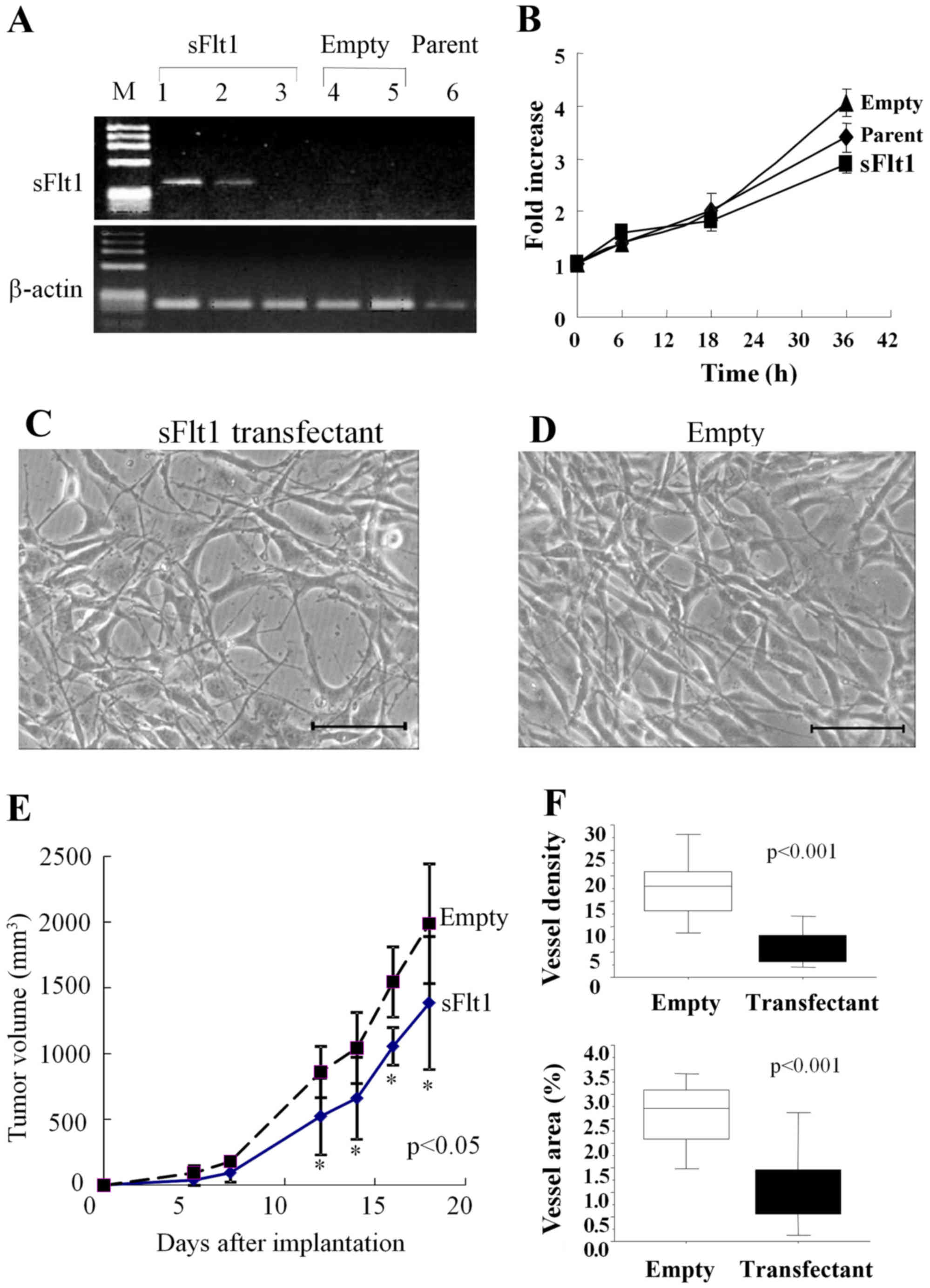
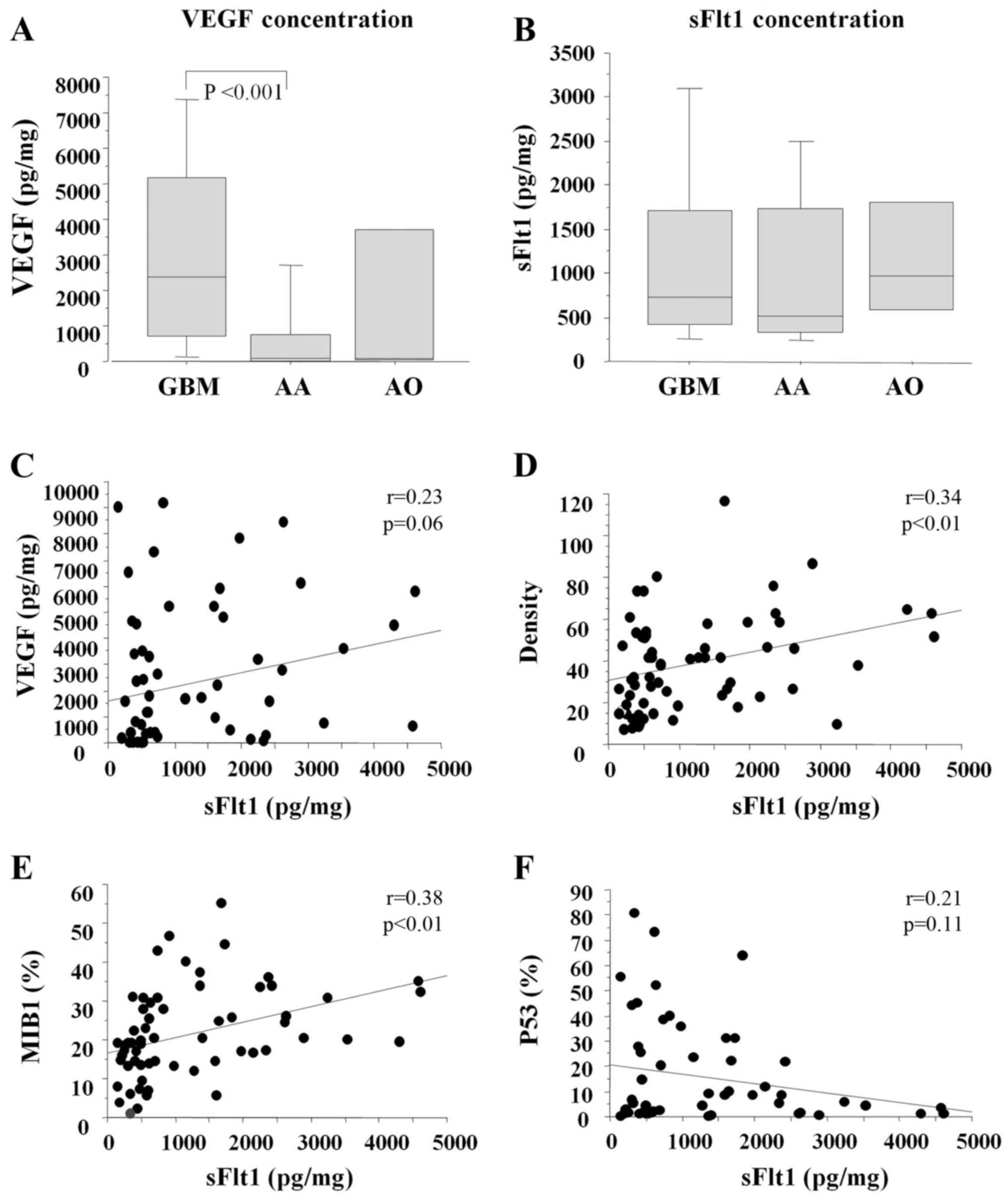
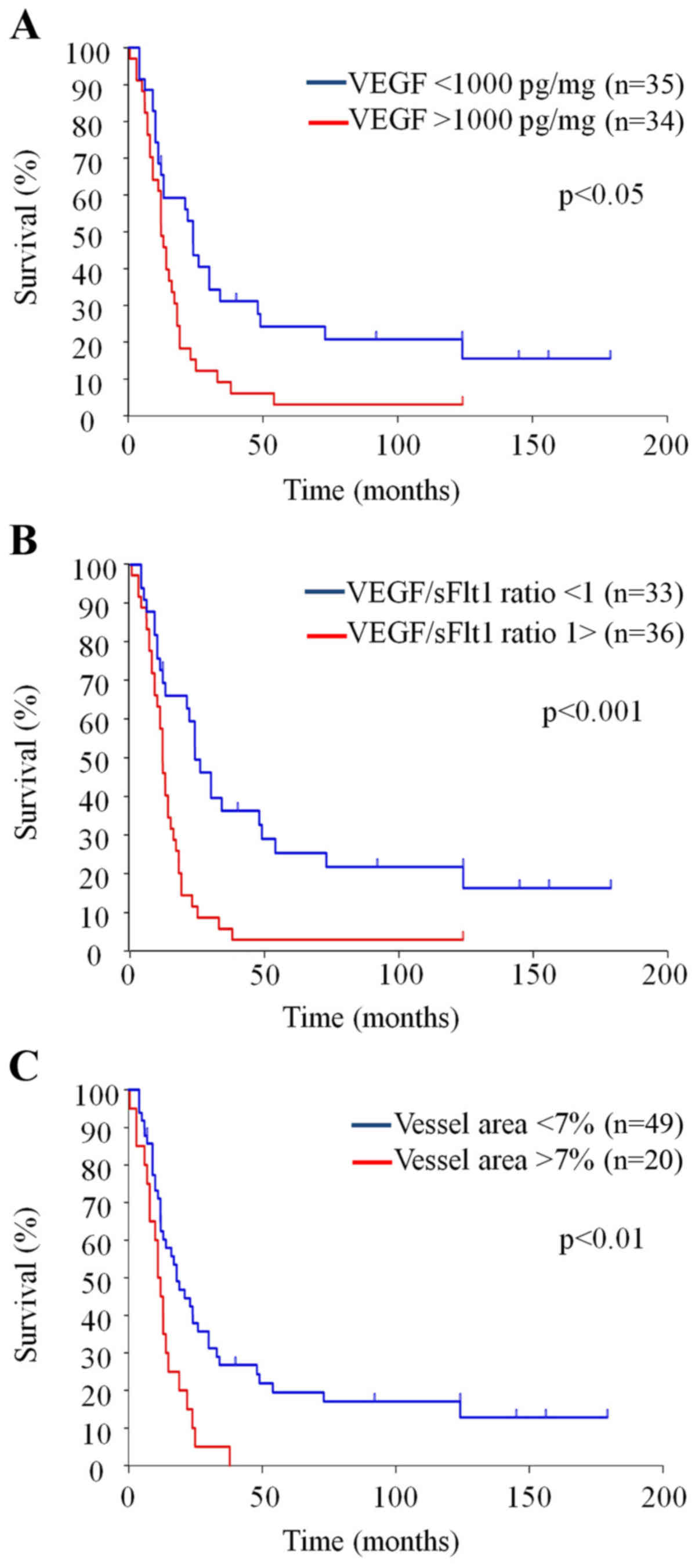
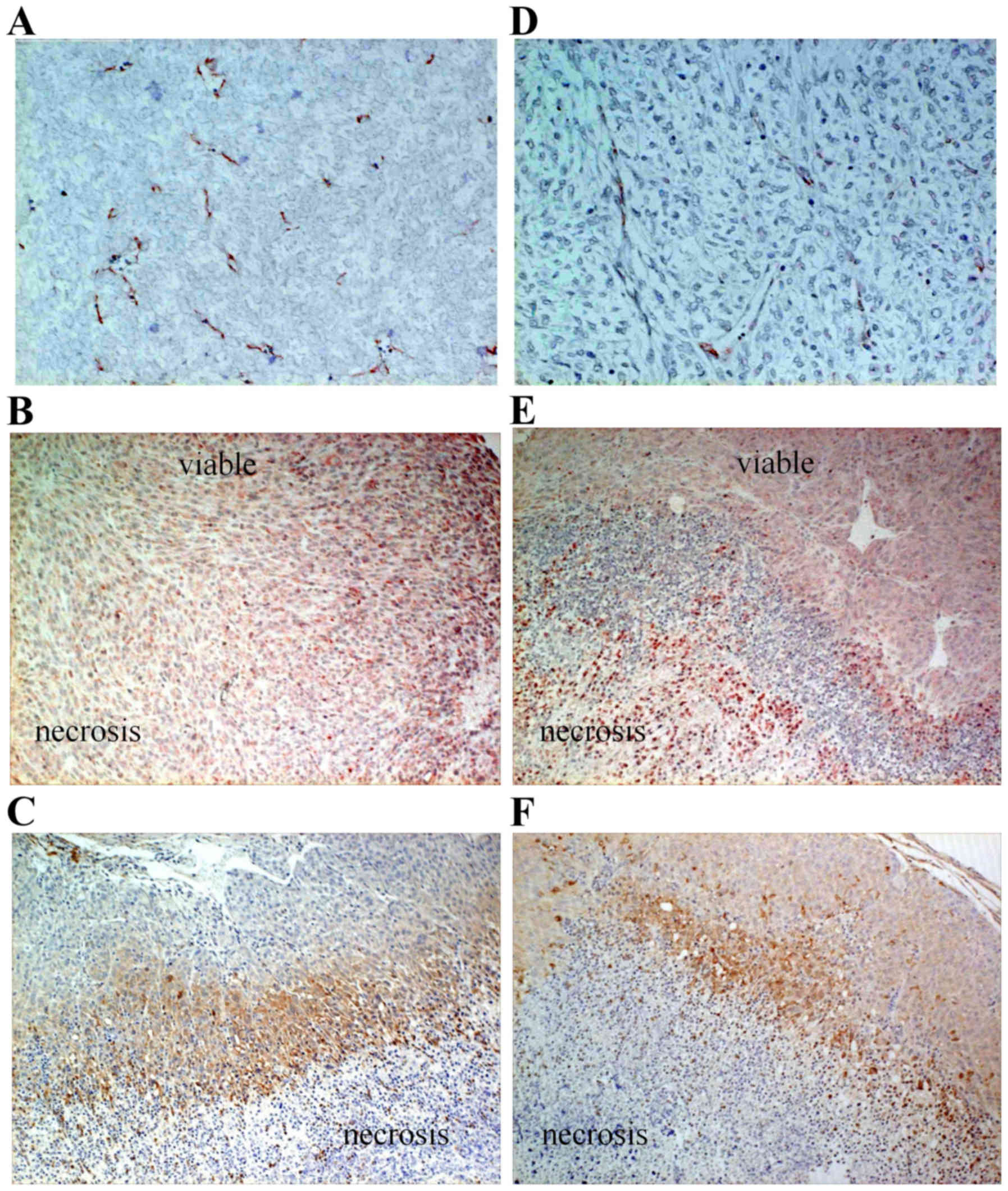
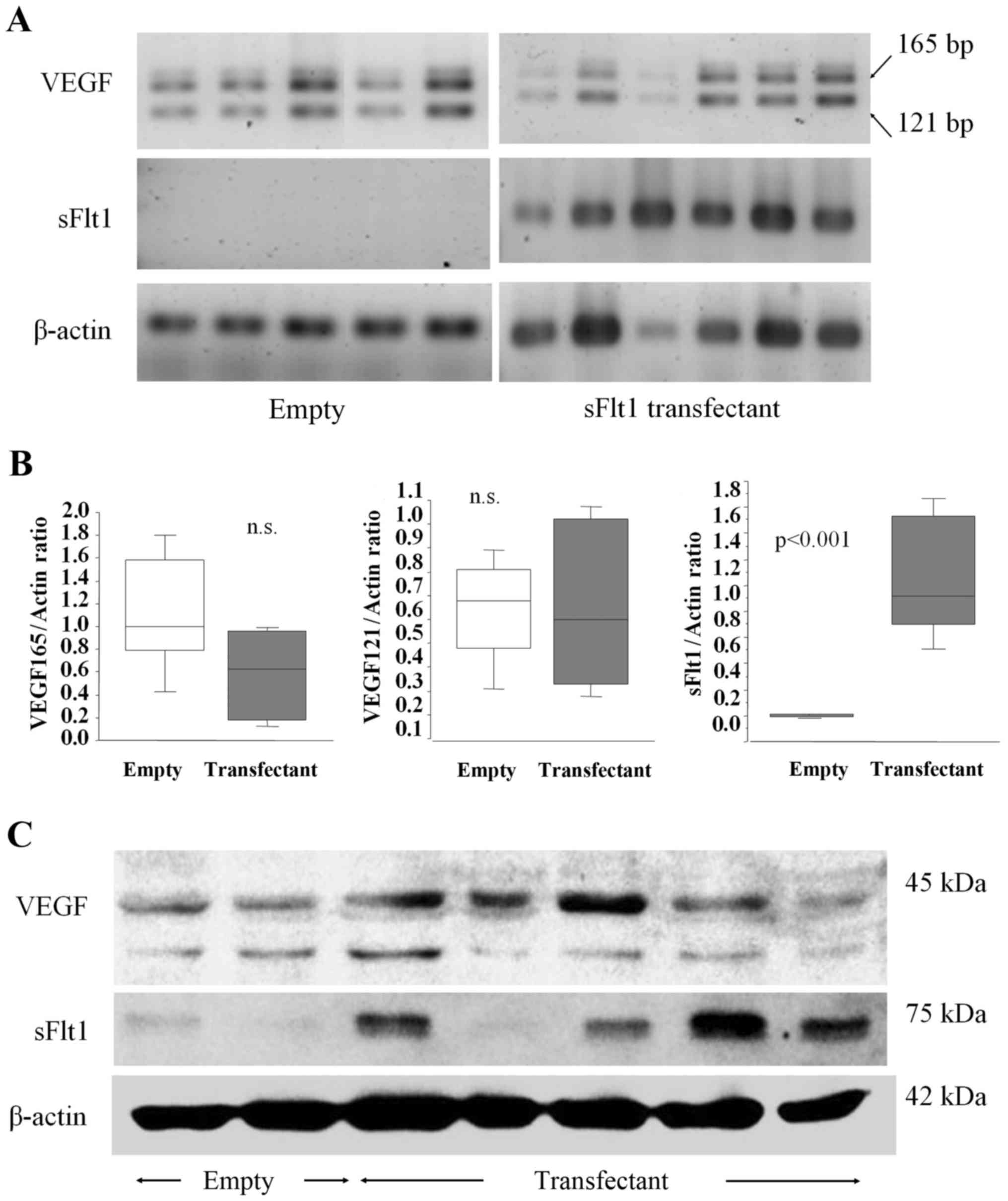
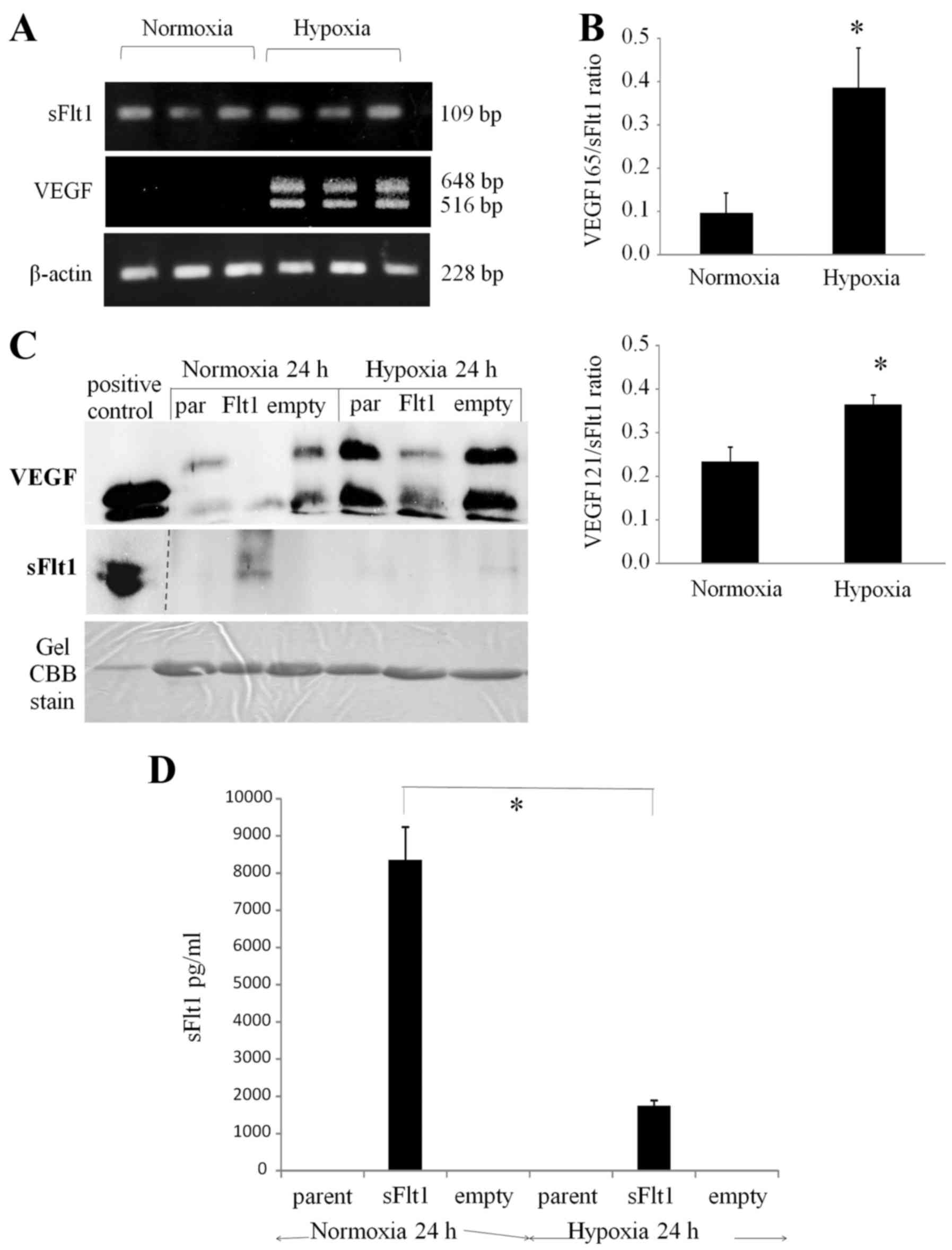
Anti-angiogenic therapy represents a promising, new therapeutic modality for malignant gliomas. The present study was designed to define the malignant glioma cases most suitable for anti-angiogenic therapy and to demonstrate the efficacy of anti-angiogenic therapy using soluble-form Flt1 (sFlt1) gene delivery in mice. In human malignant glioma samples (39 glioblastomas, 21 anaplastic astrocytomas and 4 anaplastic oligoastrocytomas), protein expression of VEGF, and its specific natural inhibitor, sFlt1, as well as vessel architecture were assessed. Among these variables, VEGF >1000 ng/ml, VEGF/sFlt1 ratio >1, vessel density >30, and vessel area >7% were prognostic factors for malignant gliomas. VEGF/sFlt1 ratio >1 was the most powerful prognostic marker for survival in multivariate analysis. The sFlt1 gene was also successfully introduced into U87 glioma cells in vitro, resulting in 31% tumor growth inhibition in vivo. sFlt1-transfected tumor demonstrated high sFlt-1 expression along with diminished vessel density and area compared with the control tumor. In transfected tumor, VEGF expression was decreased in the viable area, but still high in the hypoxic area. sFlt1 and VEGF expression was re-evaluated in vitro using glioma cells under normoxic and hypoxic conditions. For sFlt1-transfected cells, VEGF expression was upregulated, but sFlt1 expression was downregulated, resulting in an increase of VEGF/sFlt1 ratio in hypoxic conditions. We conclude that malignant gliomas with a high VEGF/sFlt1 ratio and large vessel area are good candidates for anti-angiogenic therapy. Soluble Flt1 gene delivery was demonstrated to inhibit glioma growth, but this was limited in hypoxic areas.
View Figures

Figure 1

Figure 2

Figure 3

Figure 4

Figure 5

Figure 6

View References

1 

Chinot OL, Wick W, Mason W, Henriksson R, Saran F, Nishikawa R, Carpentier AF, Hoang-Xuan K, Kavan P, Cernea D, et al: Bevacizumab plus radiotherapy-temozolomide for newly diagnosed glioblastoma. N Engl J Med. 370:709–722. 2014. View Article : Google Scholar : PubMed/NCBI

2 

Gilbert MR, Dignam JJ, Armstrong TS, Wefel JS, Blumenthal DT, Vogelbaum MA, Colman H, Chakravarti A, Pugh S, Won M, et al: A randomized trial of bevacizumab for newly diagnosed glioblastoma. N Engl J Med. 370:699–708. 2014. View Article : Google Scholar : PubMed/NCBI

3 

Lu-Emerson C, Duda DG, Emblem KE, Taylor JW, Gerstner ER, Loeffler JS, Batchelor TT and Jain RK: Lessons from anti-vascular endothelial growth factor and anti-vascular endothelial growth factor receptor trials in patients with glioblastoma. J Clin Oncol. 33:1197–1213. 2015. View Article : Google Scholar : PubMed/NCBI

4 

Shivakumar S, Prabhakar BT, Jayashree K, Rajan MG and Salimath BP: Evaluation of serum vascular endothelial growth factor (VEGF) and microvessel density (MVD) as prognostic indicators in carcinoma breast. J Cancer Res Clin Oncol. 135:627–636. 2009. View Article : Google Scholar

5 

Botelho F, Pina F and Lunet N: VEGF and prostatic cancer: A systematic review. Eur J Cancer Prev. 19:385–392. 2010. View Article : Google Scholar : PubMed/NCBI

6 

Nishikawa R, Saran F, Mason W, Wick W, Cloughesy TF, Henriksson R, Hilton M, Garcia J, Vogt T, Pallaud C, et al: Biomarker (BM) evaluations in the phase III AVAglio study of bevacizumab (Bv) plus standard radiotherapy (RT) and temozolomide (T) for newly diagnosed glioblastoma (GBM). J Clin Oncol. 31:20232013.

7 

Batchelor TT, Reardon DA, de Groot JF, Wick W and Weller M: Antiangiogenic therapy for glioblastoma: Current status and future prospects. Clin Cancer Res. 20:5612–5619. 2014. View Article : Google Scholar : PubMed/NCBI

8 

Hanahan D and Folkman J: Patterns and emerging mechanisms of the angiogenic switch during tumorigenesis. Cell. 86:353–364. 1996. View Article : Google Scholar : PubMed/NCBI

9 

Jain RK: Normalization of tumor vasculature: An emerging concept in antiangiogenic therapy. Science. 307:58–62. 2005. View Article : Google Scholar : PubMed/NCBI

10 

Prea SM, Chan EC, Dusting GJ, Vingrys AJ, Bui BV and Liu GS: Gene therapy with endogenous inhibitors of angiogenesis for neovascular age-related macular degeneration: Beyond anti-VEGF therapy. J Ophthalmol. 2015:2017262015. View Article : Google Scholar : PubMed/NCBI

11 

Rao N, Lee YF and Ge R: Novel endogenous angiogenesis inhibitors and their therapeutic potential. Acta Pharmacol Sin. 36:1177–1190. 2015. View Article : Google Scholar : PubMed/NCBI

12 

Volpert OV, Zaichuk T, Zhou W, Reiher F, Ferguson TA, Stuart PM, Amin M and Bouck NP: Inducer-stimulated Fas targets activated endothelium for destruction by anti-angiogenic thrombospondin-1 and pigment epithelium-derived factor. Nat Med. 8:349–357. 2002. View Article : Google Scholar : PubMed/NCBI

13 

Beerepoot LV, Witteveen EO, Groenewegen G, Fogler WE, Sim BK, Sidor C, Zonnenberg BA, Schramel F, Gebbink MF and Voest EE: Recombinant human angiostatin by twice-daily subcutaneous injection in advanced cancer: A pharmacokinetic and long-term safety study. Clin Cancer Res. 9:4025–4033. 2003.PubMed/NCBI

14 

Kurup A, Lin C, Murry DJ, Dobrolecki L, Estes D, Yiannoutsos CT, Mariano L, Sidor C, Hickey R and Hanna N: Recombinant human angiostatin (rhAngiostatin) in combination with paclitaxel and carboplatin in patients with advanced non-small-cell lung cancer: A phase II study from Indiana University. Ann Oncol. 17:97–103. 2006. View Article : Google Scholar

15 

Rong B, Yang S, Li W, Zhang W and Ming Z: Systematic review and meta-analysis of Endostar (rh-endostatin) combined with chemotherapy versus chemotherapy alone for treating advanced non-small cell lung cancer. World J Surg Oncol. 10:1702012. View Article : Google Scholar : PubMed/NCBI

16 

Uronis HE, Cushman SM, Bendell JC, Blobe GC, Morse MA, Nixon AB, Dellinger A, Starr MD, Li H, Meadows K, et al: A phase I study of ABT-510 plus bevacizumab in advanced solid tumors. Cancer Med. 2:316–324. 2013. View Article : Google Scholar : PubMed/NCBI

17 

Westphal JR: Technology evaluation: ABT-510, Abbott. Curr Opin Mol Ther. 6:451–457. 2004.PubMed/NCBI

18 

Cui C, Mao L, Chi Z, Si L, Sheng X, Kong Y, Li S, Lian B, Gu K, Tao M, et al: A phase II, randomized, double-blind, placebo-controlled multicenter trial of Endostar in patients with metastatic melanoma. Mol Ther. 21:1456–1463. 2013. View Article : Google Scholar : PubMed/NCBI

19 

Davis-Smyth T, Chen H, Park J, Presta LG and Ferrara N: The second immunoglobulin-like domain of the VEGF tyrosine kinase receptor Flt-1 determines ligand binding and may initiate a signal transduction cascade. EMBO J. 15:4919–4927. 1996.PubMed/NCBI

20 

Kuo CJ, Farnebo F, Yu EY, Christofferson R, Swearingen RA, Carter R, von Recum HA, Yuan J, Kamihara J, Flynn E, et al: Comparative evaluation of the antitumor activity of antiangiogenic proteins delivered by gene transfer. Proc Natl Acad Sci USA. 98:4605–4610. 2001. View Article : Google Scholar : PubMed/NCBI

21 

Takano S, Yoshii Y, Kondo S, Suzuki H, Maruno T, Shirai S and Nose T: Concentration of vascular endothelial growth factor in the serum and tumor tissue of brain tumor patients. Cancer Res. 56:2185–2190. 1996.PubMed/NCBI

22 

Takano S, Kamiyama H, Mashiko R, Osuka S, Ishikawa E and Matsumura A: Metronomic treatment of malignant glioma xenografts with irinotecan (CPT-11) inhibits angiogenesis and tumor growth. J Neurooncol. 99:177–185. 2010. View Article : Google Scholar : PubMed/NCBI

23 

Levin VA, Uhm JH, Jaeckle KA, Choucair A, Flynn PJ, Prados MD, Bruner JM, Chang SM, Kyritsis AP, Gleason MJ, et al: Yung WKA: Phase III randomized study of postradiotherapy chemotherapy with alpha-difluoromethylornithine-procarbazine, N-(2-chloroethyl)-N′-cyclohexyl-N-nitrosurea, vincristine (DFMO-PCV) versus PCV for glioblastoma multiforme. Clin Cancer Res. 6:3878–3884. 2000.PubMed/NCBI

24 

Tsuboi K, Saijo K, Ishikawa E, Tsurushima H, Takano S, Morishita Y and Ohno T: Effects of local injection of ex vivo expanded autologous tumor-specific T lymphocytes in cases with recurrent malignant gliomas. Clin Cancer Res. 9:3294–3302. 2003.PubMed/NCBI

25 

Lamszus K, Ulbricht U, Matschke J, Brockmann MA, Fillbrandt R and Westphal M: Levels of soluble vascular endothelial growth factor (VEGF) receptor 1 in astrocytic tumors and its relation to malignancy, vascularity, and VEGF-A. Clin Cancer Res. 9:1399–1405. 2003.PubMed/NCBI

26 

Sathornsumetee S, Cao Y, Marcello JE, Herndon JE II, McLendon RE, Desjardins A, Friedman HS, Dewhirst MW, Vredenburgh JJ and Rich JN: Tumor angiogenic and hypoxic profiles predict radiographic response and survival in malignant astrocytoma patients treated with bevacizumab and irinotecan. J Clin Oncol. 26:271–278. 2008. View Article : Google Scholar : PubMed/NCBI

27 

Hasselbalch B, Eriksen JG, Broholm H, Christensen IJ, Grunnet K, Horsman MR, Poulsen HS, Stockhausen MT and Lassen U: Prospective evaluation of angiogenic, hypoxic and EGFR-related biomarkers in recurrent glioblastoma multiforme treated with cetuximab, bevacizumab and irinotecan. APMIS. 118:585–594. 2010.PubMed/NCBI

28 

Lu-Emerson C, Snuderl M, Kirkpatrick ND, Goveia J, Davidson C, Huang Y, Riedemann L, Taylor J, Ivy P, Duda DG, et al: Increase in tumor-associated macrophages after antiangiogenic therapy is associated with poor survival among patients with recurrent glioblastoma. Neuro Oncol. 15:1079–1087. 2013. View Article : Google Scholar : PubMed/NCBI

29 

Duda DG, Willett CG, Ancukiewicz M, di Tomaso E, Shah M, Czito BG, Bentley R, Poleski M, Lauwers GY, Carroll M, et al: Plasma soluble VEGFR-1 is a potential dual biomarker of response and toxicity for bevacizumab with chemoradiation in locally advanced rectal cancer. Oncologist. 15:577–583. 2010. View Article : Google Scholar : PubMed/NCBI

30 

Batchelor TT, Sorensen AG, di Tomaso E, Zhang WT, Duda DG, Cohen KS, Kozak KR, Cahill DP, Chen PJ, Zhu M, et al: AZD2171, a pan-VEGF receptor tyrosine kinase inhibitor, normalizes tumor vasculature and alleviates edema in glioblastoma patients. Cancer Cell. 11:83–95. 2007. View Article : Google Scholar : PubMed/NCBI

31 

Batchelor TT, Duda DG, di Tomaso E, Ancukiewicz M, Plotkin SR, Gerstner E, Eichler AF, Drappatz J, Hochberg FH, Benner T, et al: Phase II study of cediranib, an oral pan-vascular endothelial growth factor receptor tyrosine kinase inhibitor, in patients with recurrent glioblastoma. J Clin Oncol. 28:2817–2823. 2010. View Article : Google Scholar : PubMed/NCBI

32 

Gerstner ER, Eichler AF, Plotkin SR, Drappatz J, Doyle CL, Xu L, Duda DG, Wen PY, Jain RK and Batchelor TT: Phase I trial with biomarker studies of vatalanib (PTK787) in patients with newly diagnosed glioblastoma treated with enzyme inducing anti-epileptic drugs and standard radiation and temozolomide. J Neurooncol. 103:325–332. 2011. View Article : Google Scholar

33 

Quant EC, Batchelor T, Lassman AB, Schiff D, Kaley TJ, Wong E, Mikkelsen T, Drappatz J, Norden AD, Beroukhim R, et al: Preliminary results from a multicenter, phase II, randomized, noncomparative clinical trial of radiation and temozolomide with or without vandetanib in newly diagnosed glioblastoma. J Clin Oncol. 29:20692011.

34 

Shiose S, Sakamoto T, Yoshikawa H, Hata Y, Kawano Y, Ishibashi T, Inomata H, Takayama K and Ueno H: Gene transfer of a soluble receptor of VEGF inhibits the growth of experimental eyelid malignant melanoma. Invest Ophthalmol Vis Sci. 41:2395–2403. 2000.PubMed/NCBI

35 

Takayama K, Ueno H, Nakanishi Y, Sakamoto T, Inoue K, Shimizu K, Oohashi H and Hara N: Suppression of tumor angiogenesis and growth by gene transfer of a soluble form of vascular endothelial growth factor receptor into a remote organ. Cancer Res. 60:2169–2177. 2000.PubMed/NCBI

36 

Ye C, Feng C, Wang S, Wang KZQ, Huang N, Liu X, Lin Y and Li M: sFlt-1 gene therapy of follicular thyroid carcinoma. Endocrinology. 145:817–822. 2004. View Article : Google Scholar

37 

Mahasreshti PJ, Kataram M, Wang MH, Stockard CR, Grizzle WE, Carey D, Siegal GP, Haisma HJ, Alvarez RD and Curiel DT: Intravenous delivery of adenovirus-mediated soluble FLT-1 results in liver toxicity. Clin Cancer Res. 9:2701–2710. 2003.PubMed/NCBI

38 

Goldman CK, Kendall RL, Cabrera G, Soroceanu L, Heike Y, Gillespie GY, Siegal GP, Mao X, Bett AJ, Huckle WR, et al: Paracrine expression of a native soluble vascular endothelial growth factor receptor inhibits tumor growth, metastasis, and mortality rate. Proc Natl Acad Sci USA. 95:8795–8800. 1998. View Article : Google Scholar : PubMed/NCBI

39 

Ikeda T, Sun L, Tsuruoka N, Ishigaki Y, Yoshitomi Y, Yoshitake Y and Yonekura H: Hypoxia down-regulates sFlt-1 (sVEGFR-1) expression in human microvascular endothelial cells by a mechanism involving mRNA alternative processing. Biochem J. 436:399–407. 2011. View Article : Google Scholar : PubMed/NCBI

40 

Jain RK: Antiangiogenesis strategies revisited: From starving tumors to alleviating hypoxia. Cancer Cell. 26:605–622. 2014. View Article : Google Scholar : PubMed/NCBI

41 

Mashiko R, Takano S, Ishikawa E, Yamamoto T, Nakai K and Matsumura A: Hypoxia-inducible factor 1α expression is a prognostic biomarker in patients with astrocytic tumors associated with necrosis on MR image. J Neurooncol. 102:43–50. 2011. View Article : Google Scholar

42 

Kung AL, Wang S, Klco JM, Kaelin WG and Livingston DM: Suppression of tumor growth through disruption of hypoxia-inducible transcription. Nat Med. 6:1335–1340. 2000. View Article : Google Scholar : PubMed/NCBI

43 

Hu B, Kou L, Li C, Zhu LP, Fan YR, Wu ZW, Wang JJ and Xu GX: Bifidobacterium longum as a delivery system of TRAIL and endostatin cooperates with chemotherapeutic drugs to inhibit hypoxic tumor growth. Cancer Gene Ther. 16:655–663. 2009. View Article : Google Scholar : PubMed/NCBI

44 

Zhu H, Li Z, Mao S, Ma B, Zhou S, Deng L, Liu T, Cui D, Zhao Y, He J, et al: Antitumor effect of sFlt-1 gene therapy system mediated by Bifidobacterium Infantis on Lewis lung cancer in mice. Cancer Gene Ther. 18:884–896. 2011. View Article : Google Scholar : PubMed/NCBI

45 

Biswal MR, Prentice HM, Dorey CK and Blanks JC: A hypoxia-responsive glial cell-specific gene therapy vector for targeting retinal neovascularization. Invest Ophthalmol Vis Sci. 55:8044–8053. 2014. View Article : Google Scholar : PubMed/NCBI

46 

Perche F, Biswas S, Patel NR and Torchilin VP: Hypoxia-responsive copolymer for siRNA delivery. Methods Mol Biol. 1372:139–162. 2016. View Article : Google Scholar

Related Articles

  • Abstract
  • View
  • Download
  • Twitter
Copy and paste a formatted citation
Spandidos Publications style
Takano S, Ishikawa E, Matsuda M, Sakamoto N, Akutsu H, Yamamoto T and Matsumura A: The anti-angiogenic role of soluble-form VEGF receptor in malignant gliomas. Int J Oncol 50: 515-524, 2017.
APA
Takano, S., Ishikawa, E., Matsuda, M., Sakamoto, N., Akutsu, H., Yamamoto, T., & Matsumura, A. (2017). The anti-angiogenic role of soluble-form VEGF receptor in malignant gliomas. International Journal of Oncology, 50, 515-524. https://doi.org/10.3892/ijo.2016.3810
MLA
Takano, S., Ishikawa, E., Matsuda, M., Sakamoto, N., Akutsu, H., Yamamoto, T., Matsumura, A."The anti-angiogenic role of soluble-form VEGF receptor in malignant gliomas". International Journal of Oncology 50.2 (2017): 515-524.
Chicago
Takano, S., Ishikawa, E., Matsuda, M., Sakamoto, N., Akutsu, H., Yamamoto, T., Matsumura, A."The anti-angiogenic role of soluble-form VEGF receptor in malignant gliomas". International Journal of Oncology 50, no. 2 (2017): 515-524. https://doi.org/10.3892/ijo.2016.3810
Copy and paste a formatted citation
x
Spandidos Publications style
Takano S, Ishikawa E, Matsuda M, Sakamoto N, Akutsu H, Yamamoto T and Matsumura A: The anti-angiogenic role of soluble-form VEGF receptor in malignant gliomas. Int J Oncol 50: 515-524, 2017.
APA
Takano, S., Ishikawa, E., Matsuda, M., Sakamoto, N., Akutsu, H., Yamamoto, T., & Matsumura, A. (2017). The anti-angiogenic role of soluble-form VEGF receptor in malignant gliomas. International Journal of Oncology, 50, 515-524. https://doi.org/10.3892/ijo.2016.3810
MLA
Takano, S., Ishikawa, E., Matsuda, M., Sakamoto, N., Akutsu, H., Yamamoto, T., Matsumura, A."The anti-angiogenic role of soluble-form VEGF receptor in malignant gliomas". International Journal of Oncology 50.2 (2017): 515-524.
Chicago
Takano, S., Ishikawa, E., Matsuda, M., Sakamoto, N., Akutsu, H., Yamamoto, T., Matsumura, A."The anti-angiogenic role of soluble-form VEGF receptor in malignant gliomas". International Journal of Oncology 50, no. 2 (2017): 515-524. https://doi.org/10.3892/ijo.2016.3810
Follow us
  • Twitter
  • LinkedIn
  • Facebook
About
  • Spandidos Publications
  • Careers
  • Cookie Policy
  • Privacy Policy
How can we help?
  • Help
  • Live Chat
  • Contact
  • Email to our Support Team