Spandidos Publications Logo
  • About
    • About Spandidos
    • Aims and Scopes
    • Abstracting and Indexing
    • Editorial Policies
    • Reprints and Permissions
    • Job Opportunities
    • Terms and Conditions
    • Contact
  • Journals
    • All Journals
    • Oncology Letters
      • Oncology Letters
      • Information for Authors
      • Editorial Policies
      • Editorial Board
      • Aims and Scope
      • Abstracting and Indexing
      • Bibliographic Information
      • Archive
    • International Journal of Oncology
      • International Journal of Oncology
      • Information for Authors
      • Editorial Policies
      • Editorial Board
      • Aims and Scope
      • Abstracting and Indexing
      • Bibliographic Information
      • Archive
    • Molecular and Clinical Oncology
      • Molecular and Clinical Oncology
      • Information for Authors
      • Editorial Policies
      • Editorial Board
      • Aims and Scope
      • Abstracting and Indexing
      • Bibliographic Information
      • Archive
    • Experimental and Therapeutic Medicine
      • Experimental and Therapeutic Medicine
      • Information for Authors
      • Editorial Policies
      • Editorial Board
      • Aims and Scope
      • Abstracting and Indexing
      • Bibliographic Information
      • Archive
    • International Journal of Molecular Medicine
      • International Journal of Molecular Medicine
      • Information for Authors
      • Editorial Policies
      • Editorial Board
      • Aims and Scope
      • Abstracting and Indexing
      • Bibliographic Information
      • Archive
    • Biomedical Reports
      • Biomedical Reports
      • Information for Authors
      • Editorial Policies
      • Editorial Board
      • Aims and Scope
      • Abstracting and Indexing
      • Bibliographic Information
      • Archive
    • Oncology Reports
      • Oncology Reports
      • Information for Authors
      • Editorial Policies
      • Editorial Board
      • Aims and Scope
      • Abstracting and Indexing
      • Bibliographic Information
      • Archive
    • Molecular Medicine Reports
      • Molecular Medicine Reports
      • Information for Authors
      • Editorial Policies
      • Editorial Board
      • Aims and Scope
      • Abstracting and Indexing
      • Bibliographic Information
      • Archive
    • World Academy of Sciences Journal
      • World Academy of Sciences Journal
      • Information for Authors
      • Editorial Policies
      • Editorial Board
      • Aims and Scope
      • Abstracting and Indexing
      • Bibliographic Information
      • Archive
    • International Journal of Functional Nutrition
      • International Journal of Functional Nutrition
      • Information for Authors
      • Editorial Policies
      • Editorial Board
      • Aims and Scope
      • Abstracting and Indexing
      • Bibliographic Information
      • Archive
    • International Journal of Epigenetics
      • International Journal of Epigenetics
      • Information for Authors
      • Editorial Policies
      • Editorial Board
      • Aims and Scope
      • Abstracting and Indexing
      • Bibliographic Information
      • Archive
    • Medicine International
      • Medicine International
      • Information for Authors
      • Editorial Policies
      • Editorial Board
      • Aims and Scope
      • Abstracting and Indexing
      • Bibliographic Information
      • Archive
  • Articles
  • Information
    • Information for Authors
    • Information for Reviewers
    • Information for Librarians
    • Information for Advertisers
    • Conferences
  • Language Editing
Spandidos Publications Logo
  • About
    • About Spandidos
    • Aims and Scopes
    • Abstracting and Indexing
    • Editorial Policies
    • Reprints and Permissions
    • Job Opportunities
    • Terms and Conditions
    • Contact
  • Journals
    • All Journals
    • Biomedical Reports
      • Information for Authors
      • Editorial Policies
      • Editorial Board
      • Aims and Scope
      • Abstracting and Indexing
      • Bibliographic Information
      • Archive
    • Experimental and Therapeutic Medicine
      • Information for Authors
      • Editorial Policies
      • Editorial Board
      • Aims and Scope
      • Abstracting and Indexing
      • Bibliographic Information
      • Archive
    • International Journal of Epigenetics
      • Information for Authors
      • Editorial Policies
      • Editorial Board
      • Aims and Scope
      • Abstracting and Indexing
      • Bibliographic Information
      • Archive
    • International Journal of Functional Nutrition
      • Information for Authors
      • Editorial Policies
      • Editorial Board
      • Aims and Scope
      • Abstracting and Indexing
      • Bibliographic Information
      • Archive
    • International Journal of Molecular Medicine
      • Information for Authors
      • Editorial Policies
      • Editorial Board
      • Aims and Scope
      • Abstracting and Indexing
      • Bibliographic Information
      • Archive
    • International Journal of Oncology
      • Information for Authors
      • Editorial Policies
      • Editorial Board
      • Aims and Scope
      • Abstracting and Indexing
      • Bibliographic Information
      • Archive
    • Medicine International
      • Information for Authors
      • Editorial Policies
      • Editorial Board
      • Aims and Scope
      • Abstracting and Indexing
      • Bibliographic Information
      • Archive
    • Molecular and Clinical Oncology
      • Information for Authors
      • Editorial Policies
      • Editorial Board
      • Aims and Scope
      • Abstracting and Indexing
      • Bibliographic Information
      • Archive
    • Molecular Medicine Reports
      • Information for Authors
      • Editorial Policies
      • Editorial Board
      • Aims and Scope
      • Abstracting and Indexing
      • Bibliographic Information
      • Archive
    • Oncology Letters
      • Information for Authors
      • Editorial Policies
      • Editorial Board
      • Aims and Scope
      • Abstracting and Indexing
      • Bibliographic Information
      • Archive
    • Oncology Reports
      • Information for Authors
      • Editorial Policies
      • Editorial Board
      • Aims and Scope
      • Abstracting and Indexing
      • Bibliographic Information
      • Archive
    • World Academy of Sciences Journal
      • Information for Authors
      • Editorial Policies
      • Editorial Board
      • Aims and Scope
      • Abstracting and Indexing
      • Bibliographic Information
      • Archive
  • Articles
  • Information
    • For Authors
    • For Reviewers
    • For Librarians
    • For Advertisers
    • Conferences
  • Language Editing
Login Register Submit
  • This site uses cookies
  • You can change your cookie settings at any time by following the instructions in our Cookie Policy. To find out more, you may read our Privacy Policy.

    I agree
Search articles by DOI, keyword, author or affiliation
Search
Advanced Search
presentation
International Journal of Oncology
Join Editorial Board Propose a Special Issue
Print ISSN: 1019-6439 Online ISSN: 1791-2423
Journal Cover
January-2018 Volume 52 Issue 1

Full Size Image

Cover Legend PDF

Sign up for eToc alerts
Recommend to Library

Journals

International Journal of Molecular Medicine

International Journal of Molecular Medicine

International Journal of Molecular Medicine is an international journal devoted to molecular mechanisms of human disease.

International Journal of Oncology

International Journal of Oncology

International Journal of Oncology is an international journal devoted to oncology research and cancer treatment.

Molecular Medicine Reports

Molecular Medicine Reports

Covers molecular medicine topics such as pharmacology, pathology, genetics, neuroscience, infectious diseases, molecular cardiology, and molecular surgery.

Oncology Reports

Oncology Reports

Oncology Reports is an international journal devoted to fundamental and applied research in Oncology.

Experimental and Therapeutic Medicine

Experimental and Therapeutic Medicine

Experimental and Therapeutic Medicine is an international journal devoted to laboratory and clinical medicine.

Oncology Letters

Oncology Letters

Oncology Letters is an international journal devoted to Experimental and Clinical Oncology.

Biomedical Reports

Biomedical Reports

Explores a wide range of biological and medical fields, including pharmacology, genetics, microbiology, neuroscience, and molecular cardiology.

Molecular and Clinical Oncology

Molecular and Clinical Oncology

International journal addressing all aspects of oncology research, from tumorigenesis and oncogenes to chemotherapy and metastasis.

World Academy of Sciences Journal

World Academy of Sciences Journal

Multidisciplinary open-access journal spanning biochemistry, genetics, neuroscience, environmental health, and synthetic biology.

International Journal of Functional Nutrition

International Journal of Functional Nutrition

Open-access journal combining biochemistry, pharmacology, immunology, and genetics to advance health through functional nutrition.

International Journal of Epigenetics

International Journal of Epigenetics

Publishes open-access research on using epigenetics to advance understanding and treatment of human disease.

Medicine International

Medicine International

An International Open Access Journal Devoted to General Medicine.

Journal Cover
January-2018 Volume 52 Issue 1

Full Size Image

Cover Legend PDF

Sign up for eToc alerts
Recommend to Library

  • Article
  • Citations
    • Cite This Article
    • Download Citation
    • Create Citation Alert
    • Remove Citation Alert
    • Cited By
  • Similar Articles
    • Related Articles (in Spandidos Publications)
    • Similar Articles (Google Scholar)
    • Similar Articles (PubMed)
  • Download PDF
  • Download XML
  • View XML
Article

Loss of the clock gene PER2 is associated with cancer development and altered expression of important tumor-related genes in oral cancer

  • Authors:
    • Honggang Xiong
    • Yixin Yang
    • Kai Yang
    • Dan Zhao
    • Hong Tang
    • Xiongwen Ran
  • View Affiliations / Copyright

    Affiliations: Department of Oral and Maxillofacial Surgery, The First Affiliated Hospital of Chongqing Medical University, Chongqing 400016, P.R. China
  • Pages: 279-287
    |
    Published online on: October 31, 2017
       https://doi.org/10.3892/ijo.2017.4180
  • Expand metrics +
Metrics: Total Views: 0 (Spandidos Publications: | PMC Statistics: )
Metrics: Total PDF Downloads: 0 (Spandidos Publications: | PMC Statistics: )
Cited By (CrossRef): 0 citations Loading Articles...

This article is mentioned in:


Abstract

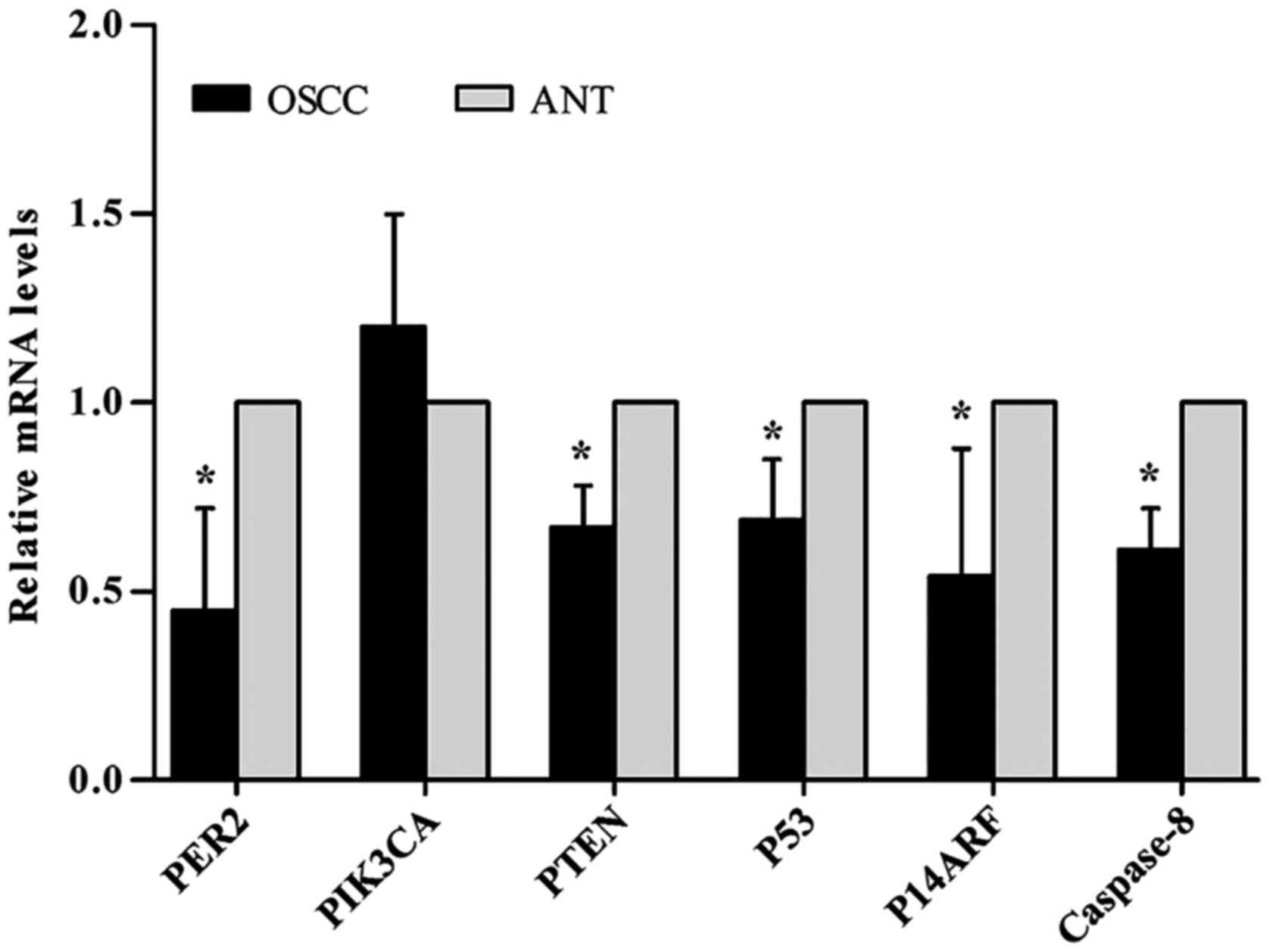
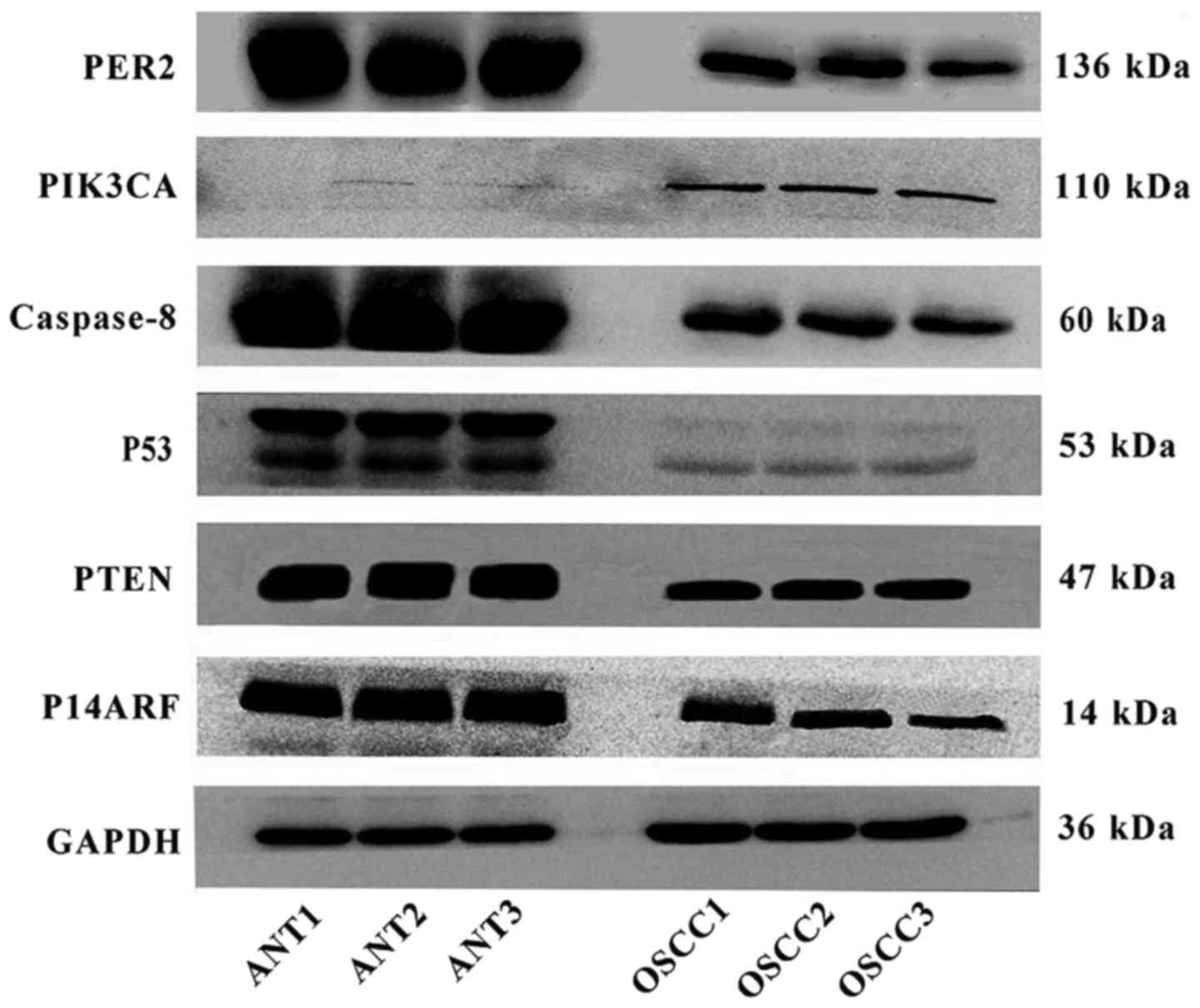
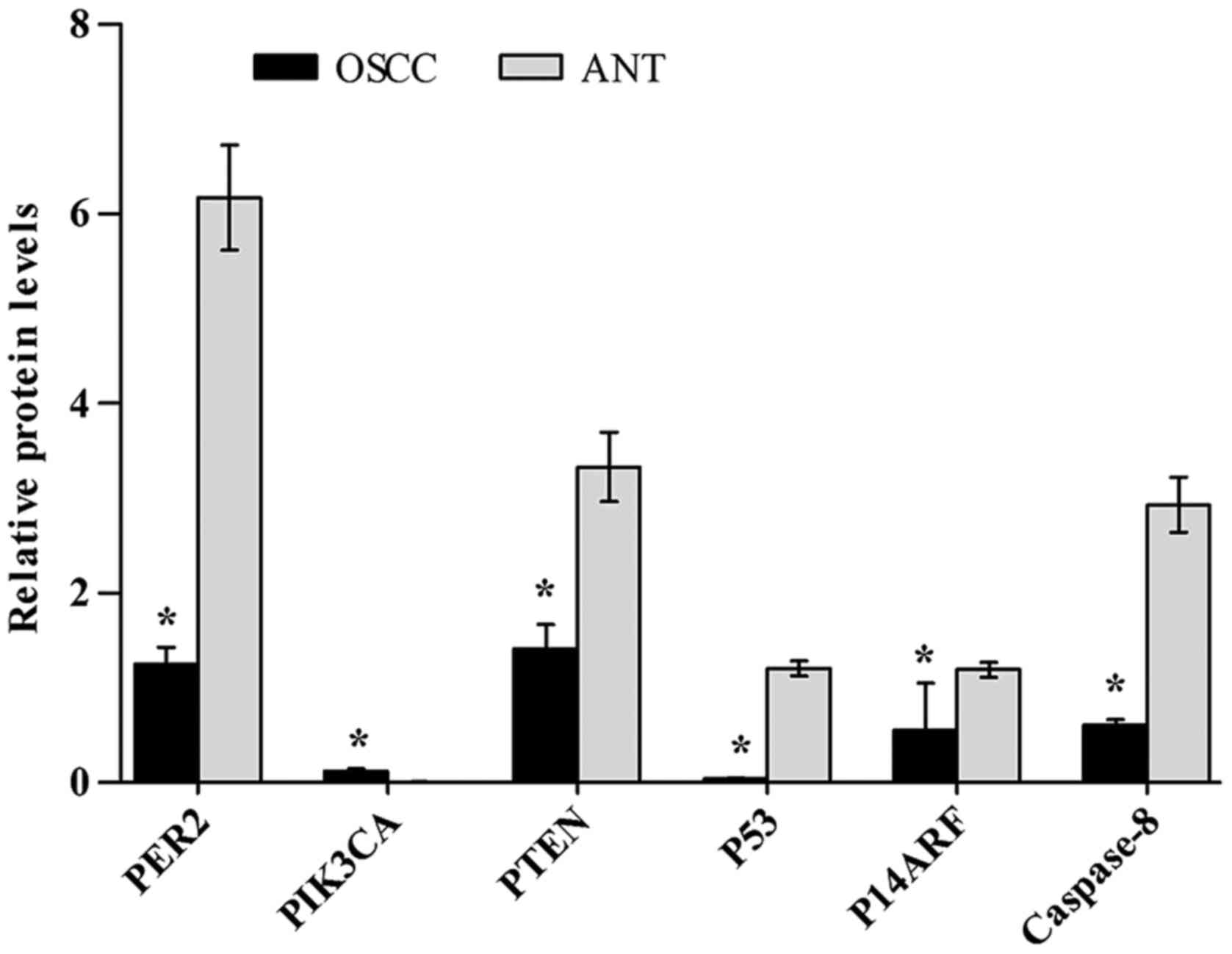
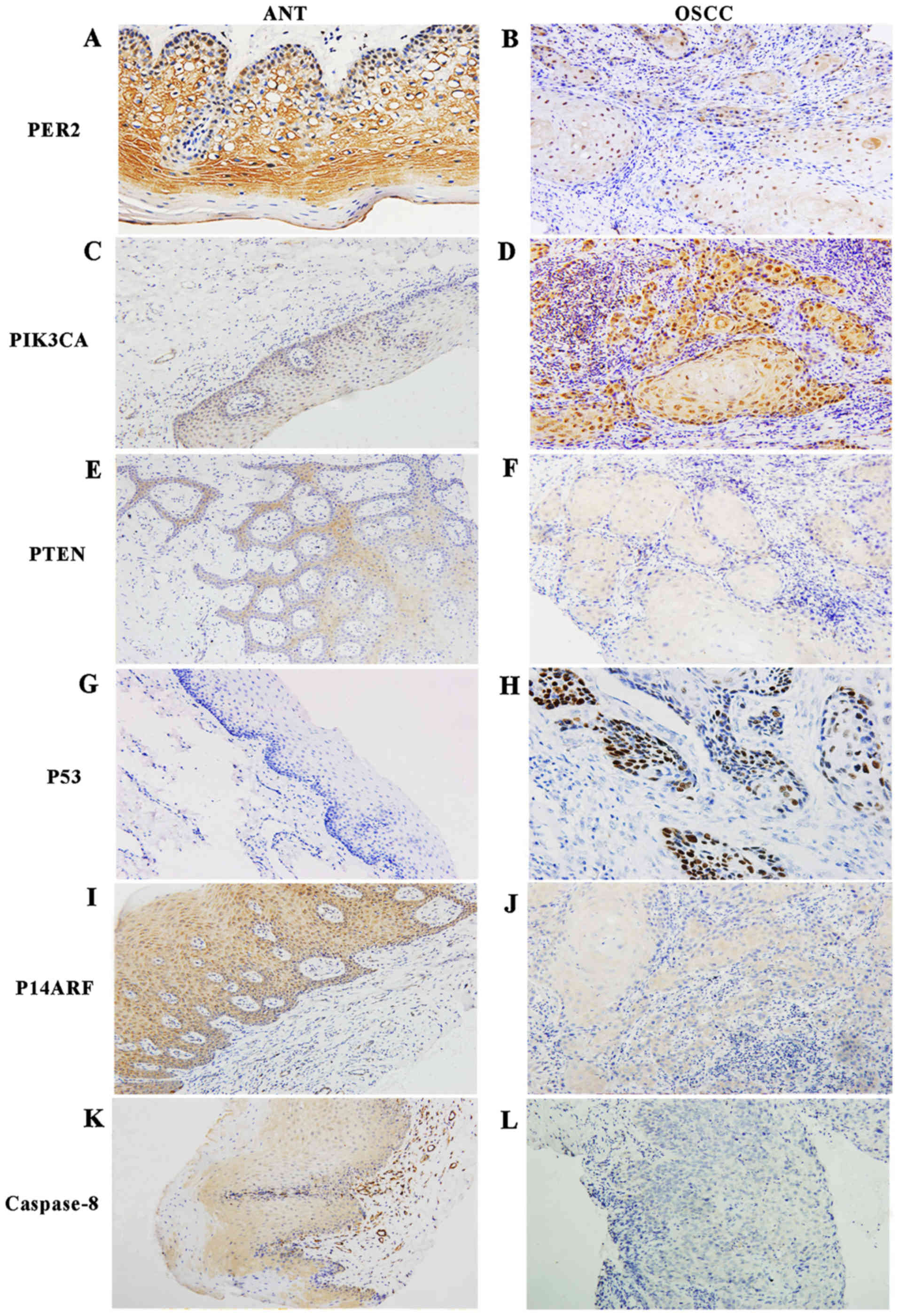
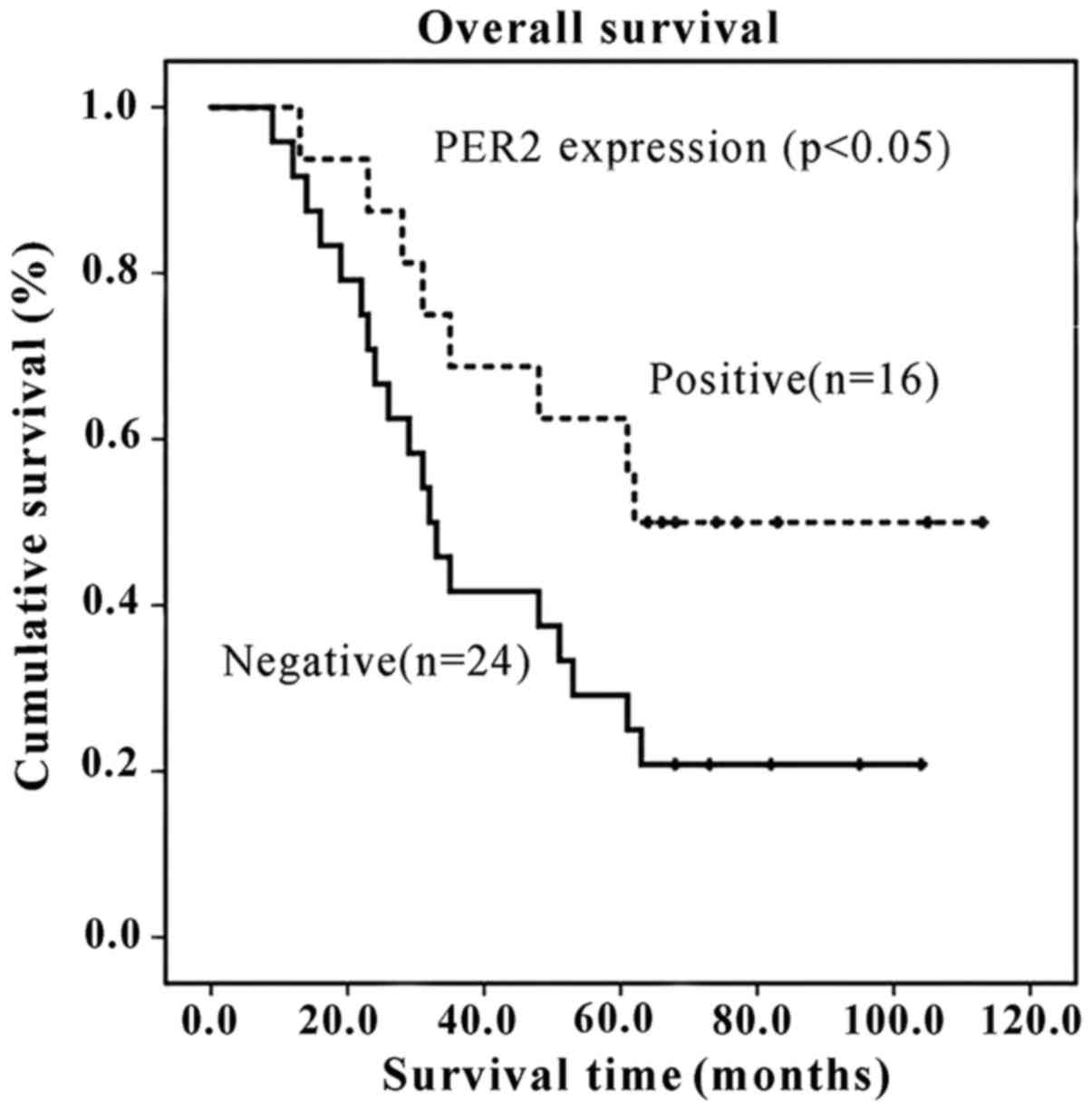
Recent studies have demonstrated that abnormal expression of the clock gene PER2 is closely associated with the development of a variety of cancer types. However, the expression of PER2 in oral squamous cell carcinoma (OSCC), a common malignant tumor in humans, and its correlations with the clinicopathological parameters and survival time of OSCC patients and the altered expression of important tumor-related genes remain unclear. In the present study, we detected the mRNA and protein expression levels of PER2, PIK3CA, PTEN, P53, P14ARF and caspase‑8 in OSCC tissues and cancer-adjacent oral mucosa by reverse transcription-quantitative PCR (RT-qPCR), western blotting and immunohistochemistry. The results showed that the PER2, PTEN, P53, P14ARF and caspase‑8 mRNA and protein expression levels in OSCC were significantly reduced compared with those in cancer-adjacent tissues. Additionally, the PIK3CA protein expression level was significantly increased in OSCC tissues, whereas the mRNA level was not. Decreased expression of PER2 was significantly associated with advanced clinical stage and the presence of lymphatic metastasis in OSCC patients. Patients with PER2‑negative expression had a significantly shorter survival time than those with PER2‑positive expression. PER2 expression was negatively correlated with PIK3CA and P53 levels, and positively correlated with PTEN, P14ARF and caspase‑8 levels. In summary, the results of this study suggest that loss of PER2 expression is closely associated with the genesis and development of OSCC and that PER2 may be an important prognostic biomarker in OSCC. PER2 may serve an antitumor role via the P53/P14ARF, PIK3CA/AKT and caspase‑8 pathways.
View Figures

Figure 1

Figure 2

Figure 3

Figure 4

Figure 5

View References

1 

Dibner C, Schibler U and Albrecht U: The mammalian circadian timing system: Organization and coordination of central and peripheral clocks. Annu Rev Physiol. 72:517–549. 2010. View Article : Google Scholar : PubMed/NCBI

2 

Welsh DK, Yoo SH, Liu AC, Takahashi JS and Kay SA: Bioluminescence imaging of individual fibroblasts reveals persistent, independently phased circadian rhythms of clock gene expression. Curr Biol. 14:2289–2295. 2004. View Article : Google Scholar : PubMed/NCBI

3 

Takahashi JS: Transcriptional architecture of the mammalian circadian clock. Nat Rev Genet. 18:164–179. 2017. View Article : Google Scholar

4 

Miller BH, McDearmon EL, Panda S, Hayes KR, Zhang J, Andrews JL, Antoch MP, Walker JR, Esser KA, Hogenesch JB, et al: Circadian and CLOCK-controlled regulation of the mouse transcriptome and cell proliferation. Proc Natl Acad Sci USA. 104:3342–3347. 2007. View Article : Google Scholar : PubMed/NCBI

5 

Matsuo T, Yamaguchi S, Mitsui S, Emi A, Shimoda F and Okamura H: Control mechanism of the circadian clock for timing of cell division in vivo. Science. 302:255–259. 2003. View Article : Google Scholar : PubMed/NCBI

6 

Zhu Z, Hua B, Shang Z, Yuan G, Xu L, Li E, Li X, Sun N, Yan Z, Qian R, et al: Altered clock and lipid metabolism-related genes in atherosclerotic mice kept with abnormal lighting condition. BioMed Res Int. 2016:54385892016. View Article : Google Scholar : PubMed/NCBI

7 

Di Cara F and King-Jones K: The circadian clock is a key driver of steroid hormone production in Drosophila. Curr Biol. 26:2469–2477. 2016. View Article : Google Scholar : PubMed/NCBI

8 

Li J, Terry EE, Fejer E, Gamba D, Hartmann N, Logsdon J, Michalski D, Rois LE, Scuderi MJ, Kunst M, et al: Achilles is a circadian clock-controlled gene that regulates immune function in Drosophila. Brain Behav Immun. 61:127–136. 2017. View Article : Google Scholar

9 

Tao H, Li X, Qiu JF, Cui WZ, Sima YH and Xu SQ: Inhibition of expression of the circadian clock gene period causes metabolic abnormalities including repression of glycometabolism in Bombyx mori cells. Sci Rep. 7:462582017. View Article : Google Scholar : PubMed/NCBI

10 

Vieira E, Ruano E, Figueroa AL, Aranda G, Momblan D, Carmona F, Gomis R, Vidal J and Hanzu FA: Altered clock gene expression in obese visceral adipose tissue is associated with metabolic syndrome. PLoS One. 9:e1116782014. View Article : Google Scholar : PubMed/NCBI

11 

Akashi M, Matsumura R, Matsuo T, Kubo Y, Komoda H and Node K: Hypercholesterolemia causes circadian dysfunction: A potential risk factor for cardiovascular disease. EBioMedicine. 20:127–136. 2017. View Article : Google Scholar : PubMed/NCBI

12 

Wood PA, Yang X and Hrushesky WJ: Clock genes and cancer. Integr Cancer Ther. 8:303–308. 2009. View Article : Google Scholar

13 

Zheng B, Larkin DW, Albrecht U, Sun ZS, Sage M, Eichele G, Lee CC and Bradley A: The mPer2 gene encodes a functional component of the mammalian circadian clock. Nature. 400:169–173. 1999. View Article : Google Scholar : PubMed/NCBI

14 

Albrecht U, Bordon A, Schmutz I and Ripperger J: The multiple facets of Per2. Cold Spring Harb Symp Quant Biol. 72:95–104. 2007. View Article : Google Scholar

15 

Toh KL, Jones CR, He Y, Eide EJ, Hinz WA, Virshup DM, Ptácek LJ and Fu YH: An hPer2 phosphorylation site mutation in familial advanced sleep phase syndrome. Science. 291:1040–1043. 2001. View Article : Google Scholar : PubMed/NCBI

16 

Fu L, Pelicano H, Liu J, Huang P and Lee C: The circadian gene Period2 plays an important role in tumor suppression and DNA damage response in vivo. Cell. 111:41–50. 2002. View Article : Google Scholar : PubMed/NCBI

17 

Wood PA, Yang X, Taber A, Oh EY, Ansell C, Ayers SE, Al-Assaad Z, Carnevale K, Berger FG, Peña MM, et al: Period 2 mutation accelerates ApcMin/+ tumorigenesis. Mol Cancer Res. 6:1786–1793. 2008. View Article : Google Scholar : PubMed/NCBI

18 

Zhao H, Zeng ZL, Yang J, Jin Y, Qiu MZ, Hu XY, Han J, Liu KY, Liao JW, Xu RH, et al: Prognostic relevance of Period1 (Per1) and Period2 (Per2) expression in human gastric cancer. Int J Clin Exp Pathol. 7:619–630. 2014.PubMed/NCBI

19 

Lin YM, Chang JH, Yeh KT, Yang MY, Liu TC, Lin SF, Su WW and Chang JG: Disturbance of circadian gene expression in hepatocellular carcinoma. Mol Carcinog. 47:925–933. 2008. View Article : Google Scholar : PubMed/NCBI

20 

Wang Y, Hua L, Lu C and Chen Z: Expression of circadian clock gene human Period2 (hPer2) in human colorectal carcinoma. World J Surg Oncol. 9:1662011. View Article : Google Scholar : PubMed/NCBI

21 

Hsu CM, Lin SF, Lu CT, Lin PM and Yang MY: Altered expression of circadian clock genes in head and neck squamous cell carcinoma. Tumour Biol. 33:149–155. 2012. View Article : Google Scholar

22 

Hua H, Wang Y, Wan C, Liu Y, Zhu B, Yang C, Wang X, Wang Z, Cornelissen-Guillaume G and Halberg F: Circadian gene mPer2 overexpression induces cancer cell apoptosis. Cancer Sci. 97:589–596. 2006. View Article : Google Scholar : PubMed/NCBI

23 

Cheng AY, Zhang Y, Mei HJ, Fang S, Ji P, Yang J, Yu L and Guo WC: Construction of a plasmid for overexpression of human circadian gene period2 and its biological activity in osteosarcoma cells. Tumour Biol. 36:3735–3743. 2015. View Article : Google Scholar : PubMed/NCBI

24 

Oda A, Katayose Y, Yabuuchi S, Yamamoto K, Mizuma M, Shirasou S, Onogawa T, Ohtsuka H, Yoshida H, Hayashi H, et al: Clock gene mouse period2 overexpression inhibits growth of human pancreatic cancer cells and has synergistic effect with cisplatin. Anticancer Res. 29:1201–1209. 2009.PubMed/NCBI

25 

Wang Q, Ao Y, Yang K, Tang H and Chen D: Circadian clock gene Per2 plays an important role in cell proliferation, apoptosis and cell cycle progression in human oral squamous cell carcinoma. Oncol Rep. 35:3387–3394. 2016. View Article : Google Scholar : PubMed/NCBI

26 

Su X, Chen D, Yang K, Zhao Q, Zhao D, Lv X and Ao Y: The circadian clock gene PER2 plays an important role in tumor suppression through regulating tumor-associated genes in human oral squamous cell carcinoma. Oncol Rep. 38:472–480. 2017. View Article : Google Scholar : PubMed/NCBI

27 

Chi AC, Day TA and Neville BW: Oral cavity and oropharyngeal squamous cell carcinoma - an update. CA Cancer J Clin. 65:401–421. 2015. View Article : Google Scholar : PubMed/NCBI

28 

Wan X, Li X, Yang J, Lv W, Wang Q, Chen Y and Li Y: Genetic association between PIK3CA gene and oral squamous cell carcinoma: A case control study conducted in Chongqing, China. Int J Clin Exp Pathol. 8:13360–13366. 2015.

29 

Chen Y, Hou Q, Yan W, Luo J, Chen D, Liu Z, He S and Ding X: PIK3CA is critical for the proliferation, invasiveness, and drug resistance of human tongue carcinoma cells. Oncol Res. 19:563–571. 2011. View Article : Google Scholar : PubMed/NCBI

30 

Jasphin SS, Desai D, Pandit S, Gonsalves NM, Nayak PB and Iype A: Immunohistochemical expression of phosphatase and tensin homolog in histologic gradings of oral squamous cell carcinoma. Contemp Clin Dent. 7:524–528. 2016. View Article : Google Scholar : PubMed/NCBI

31 

Rahmani A, Alzohairy M, Babiker AY, Rizvi MA and Elkarimahmad HG: Clinicopathological significance of PTEN and bcl2 expressions in oral squamous cell carcinoma. Int J Clin Exp Pathol. 5:965–971. 2012.PubMed/NCBI

32 

Mao C, Lu Y, Lai Q, Xia Y and Yang C: Expression of p53 gene in oral squamous cell carcinoma and its relation with clinical and pathological parameters and prognosis of patients. Chin Med Sci J. 10:199–203. 1995.PubMed/NCBI

33 

Shintani S, Nakahara Y, Mihara M, Ueyama Y and Matsumura T: Inactivation of the p14(ARF), p15(INK4B) and p16(INK4A) genes is a frequent event in human oral squamous cell carcinomas. Oral Oncol. 37:498–504. 2001. View Article : Google Scholar : PubMed/NCBI

34 

Elrod HA, Fan S, Muller S, Chen GZ, Pan L, Tighiouart M, Shin DM, Khuri FR and Sun SY: Analysis of death receptor 5 and caspase-8 expression in primary and metastatic head and neck squamous cell carcinoma and their prognostic impact. PLoS One. 5:e121782010. View Article : Google Scholar : PubMed/NCBI

35 

Lin J and Zhu MH: Interactive pathway of ARF-mdm2-p53. Ai Zheng. 22:328–330. 2003.In Chinese. PubMed/NCBI

36 

Liu J, Zhang C and Feng Z: Tumor suppressor p53 and its gain-of-function mutants in cancer. Acta Biochim Biophys Sin (Shanghai). 46:170–179. 2014. View Article : Google Scholar

37 

Gröbe A, Hanken H, Al-Dam A, Cachovan G, Smeets R, Krohn A, Clauditz T, Grob T, Simon R, Sauter G, et al: P53 immunohistochemical expression does not correlate with clinical features in 207 carcinomas of the oral cavity and in the head and neck region. Clin Oral Investig. 18:211–217. 2014. View Article : Google Scholar

38 

Friedrich RE, Giese M, Riethdorf S and Loning T: P53-mutation in smears of oral squamous cell carcinoma. Anticancer Res. 20D:4927–4930. 2000.

39 

Takami H, Yoshida A, Fukushima S, Arita H, Matsushita Y, Nakamura T, Ohno M, Miyakita Y, Shibui S, Narita Y, et al: Revisiting TP53 mutations and immunohistochemistry - A comparative study in 157 diffuse gliomas. Brain Pathol. 25:256–265. 2015. View Article : Google Scholar

40 

Lai K, Killingsworth MC and Lee CS: Gene of month: PIK3CA. J Clin Pathol. 68:253–257. 2015. View Article : Google Scholar : PubMed/NCBI

41 

Lee JO, Yang H, Georgescu MM, Di Cristofano A, Maehama T, Shi Y, Dixon JE, Pandolfi P and Pavletich NP: Crystal structure of the PTEN tumor suppressor: Implications for its phosphoinositide phosphatase activity and membrane association. Cell. 99:323–334. 1999. View Article : Google Scholar : PubMed/NCBI

42 

Di Cristofano A and Pandolfi PP: The multiple roles of PTEN in tumor suppression. Cell. 100:387–390. 2000. View Article : Google Scholar : PubMed/NCBI

43 

Chen B, Tan Y, Liang Y, Li Y, Chen L, Wu S, Xu W, Wang Y, Zhao W and Wu J: Per2 participates in AKT-mediated drug resistance in A549/DDP lung adenocarcinoma cells. Oncol Lett. 13:423–428. 2017.PubMed/NCBI

44 

Wang Z, Li L and Wang Y: Effects of Per2 overexpression on growth inhibition and metastasis, and on MTA1, nm23-H1 and the autophagy-associated PI3K/PKB signaling pathway in nude mice xenograft models of ovarian cancer. Mol Med Rep. 13:4561–4568. 2016. View Article : Google Scholar : PubMed/NCBI

45 

Fulda S: Caspase-8 in cancer biology and therapy. Cancer Lett. 281:128–133. 2009. View Article : Google Scholar

46 

Wang X, Fu Z, Chen Y and Liu L: Fas expression is downregulated in gastric cancer. Mol Med Rep. 15:627–634. 2017. View Article : Google Scholar :

Related Articles

  • Abstract
  • View
  • Download
  • Twitter
Copy and paste a formatted citation
Spandidos Publications style
Xiong H, Yang Y, Yang K, Zhao D, Tang H and Ran X: Loss of the clock gene PER2 is associated with cancer development and altered expression of important tumor-related genes in oral cancer. Int J Oncol 52: 279-287, 2018.
APA
Xiong, H., Yang, Y., Yang, K., Zhao, D., Tang, H., & Ran, X. (2018). Loss of the clock gene PER2 is associated with cancer development and altered expression of important tumor-related genes in oral cancer. International Journal of Oncology, 52, 279-287. https://doi.org/10.3892/ijo.2017.4180
MLA
Xiong, H., Yang, Y., Yang, K., Zhao, D., Tang, H., Ran, X."Loss of the clock gene PER2 is associated with cancer development and altered expression of important tumor-related genes in oral cancer". International Journal of Oncology 52.1 (2018): 279-287.
Chicago
Xiong, H., Yang, Y., Yang, K., Zhao, D., Tang, H., Ran, X."Loss of the clock gene PER2 is associated with cancer development and altered expression of important tumor-related genes in oral cancer". International Journal of Oncology 52, no. 1 (2018): 279-287. https://doi.org/10.3892/ijo.2017.4180
Copy and paste a formatted citation
x
Spandidos Publications style
Xiong H, Yang Y, Yang K, Zhao D, Tang H and Ran X: Loss of the clock gene PER2 is associated with cancer development and altered expression of important tumor-related genes in oral cancer. Int J Oncol 52: 279-287, 2018.
APA
Xiong, H., Yang, Y., Yang, K., Zhao, D., Tang, H., & Ran, X. (2018). Loss of the clock gene PER2 is associated with cancer development and altered expression of important tumor-related genes in oral cancer. International Journal of Oncology, 52, 279-287. https://doi.org/10.3892/ijo.2017.4180
MLA
Xiong, H., Yang, Y., Yang, K., Zhao, D., Tang, H., Ran, X."Loss of the clock gene PER2 is associated with cancer development and altered expression of important tumor-related genes in oral cancer". International Journal of Oncology 52.1 (2018): 279-287.
Chicago
Xiong, H., Yang, Y., Yang, K., Zhao, D., Tang, H., Ran, X."Loss of the clock gene PER2 is associated with cancer development and altered expression of important tumor-related genes in oral cancer". International Journal of Oncology 52, no. 1 (2018): 279-287. https://doi.org/10.3892/ijo.2017.4180
Follow us
  • Twitter
  • LinkedIn
  • Facebook
About
  • Spandidos Publications
  • Careers
  • Cookie Policy
  • Privacy Policy
How can we help?
  • Help
  • Live Chat
  • Contact
  • Email to our Support Team