Spandidos Publications Logo
  • About
    • About Spandidos
    • Aims and Scopes
    • Abstracting and Indexing
    • Editorial Policies
    • Reprints and Permissions
    • Job Opportunities
    • Terms and Conditions
    • Contact
  • Journals
    • All Journals
    • Oncology Letters
      • Oncology Letters
      • Information for Authors
      • Editorial Policies
      • Editorial Board
      • Aims and Scope
      • Abstracting and Indexing
      • Bibliographic Information
      • Archive
    • International Journal of Oncology
      • International Journal of Oncology
      • Information for Authors
      • Editorial Policies
      • Editorial Board
      • Aims and Scope
      • Abstracting and Indexing
      • Bibliographic Information
      • Archive
    • Molecular and Clinical Oncology
      • Molecular and Clinical Oncology
      • Information for Authors
      • Editorial Policies
      • Editorial Board
      • Aims and Scope
      • Abstracting and Indexing
      • Bibliographic Information
      • Archive
    • Experimental and Therapeutic Medicine
      • Experimental and Therapeutic Medicine
      • Information for Authors
      • Editorial Policies
      • Editorial Board
      • Aims and Scope
      • Abstracting and Indexing
      • Bibliographic Information
      • Archive
    • International Journal of Molecular Medicine
      • International Journal of Molecular Medicine
      • Information for Authors
      • Editorial Policies
      • Editorial Board
      • Aims and Scope
      • Abstracting and Indexing
      • Bibliographic Information
      • Archive
    • Biomedical Reports
      • Biomedical Reports
      • Information for Authors
      • Editorial Policies
      • Editorial Board
      • Aims and Scope
      • Abstracting and Indexing
      • Bibliographic Information
      • Archive
    • Oncology Reports
      • Oncology Reports
      • Information for Authors
      • Editorial Policies
      • Editorial Board
      • Aims and Scope
      • Abstracting and Indexing
      • Bibliographic Information
      • Archive
    • Molecular Medicine Reports
      • Molecular Medicine Reports
      • Information for Authors
      • Editorial Policies
      • Editorial Board
      • Aims and Scope
      • Abstracting and Indexing
      • Bibliographic Information
      • Archive
    • World Academy of Sciences Journal
      • World Academy of Sciences Journal
      • Information for Authors
      • Editorial Policies
      • Editorial Board
      • Aims and Scope
      • Abstracting and Indexing
      • Bibliographic Information
      • Archive
    • International Journal of Functional Nutrition
      • International Journal of Functional Nutrition
      • Information for Authors
      • Editorial Policies
      • Editorial Board
      • Aims and Scope
      • Abstracting and Indexing
      • Bibliographic Information
      • Archive
    • International Journal of Epigenetics
      • International Journal of Epigenetics
      • Information for Authors
      • Editorial Policies
      • Editorial Board
      • Aims and Scope
      • Abstracting and Indexing
      • Bibliographic Information
      • Archive
    • Medicine International
      • Medicine International
      • Information for Authors
      • Editorial Policies
      • Editorial Board
      • Aims and Scope
      • Abstracting and Indexing
      • Bibliographic Information
      • Archive
  • Articles
  • Information
    • Information for Authors
    • Information for Reviewers
    • Information for Librarians
    • Information for Advertisers
    • Conferences
  • Language Editing
Spandidos Publications Logo
  • About
    • About Spandidos
    • Aims and Scopes
    • Abstracting and Indexing
    • Editorial Policies
    • Reprints and Permissions
    • Job Opportunities
    • Terms and Conditions
    • Contact
  • Journals
    • All Journals
    • Biomedical Reports
      • Information for Authors
      • Editorial Policies
      • Editorial Board
      • Aims and Scope
      • Abstracting and Indexing
      • Bibliographic Information
      • Archive
    • Experimental and Therapeutic Medicine
      • Information for Authors
      • Editorial Policies
      • Editorial Board
      • Aims and Scope
      • Abstracting and Indexing
      • Bibliographic Information
      • Archive
    • International Journal of Epigenetics
      • Information for Authors
      • Editorial Policies
      • Editorial Board
      • Aims and Scope
      • Abstracting and Indexing
      • Bibliographic Information
      • Archive
    • International Journal of Functional Nutrition
      • Information for Authors
      • Editorial Policies
      • Editorial Board
      • Aims and Scope
      • Abstracting and Indexing
      • Bibliographic Information
      • Archive
    • International Journal of Molecular Medicine
      • Information for Authors
      • Editorial Policies
      • Editorial Board
      • Aims and Scope
      • Abstracting and Indexing
      • Bibliographic Information
      • Archive
    • International Journal of Oncology
      • Information for Authors
      • Editorial Policies
      • Editorial Board
      • Aims and Scope
      • Abstracting and Indexing
      • Bibliographic Information
      • Archive
    • Medicine International
      • Information for Authors
      • Editorial Policies
      • Editorial Board
      • Aims and Scope
      • Abstracting and Indexing
      • Bibliographic Information
      • Archive
    • Molecular and Clinical Oncology
      • Information for Authors
      • Editorial Policies
      • Editorial Board
      • Aims and Scope
      • Abstracting and Indexing
      • Bibliographic Information
      • Archive
    • Molecular Medicine Reports
      • Information for Authors
      • Editorial Policies
      • Editorial Board
      • Aims and Scope
      • Abstracting and Indexing
      • Bibliographic Information
      • Archive
    • Oncology Letters
      • Information for Authors
      • Editorial Policies
      • Editorial Board
      • Aims and Scope
      • Abstracting and Indexing
      • Bibliographic Information
      • Archive
    • Oncology Reports
      • Information for Authors
      • Editorial Policies
      • Editorial Board
      • Aims and Scope
      • Abstracting and Indexing
      • Bibliographic Information
      • Archive
    • World Academy of Sciences Journal
      • Information for Authors
      • Editorial Policies
      • Editorial Board
      • Aims and Scope
      • Abstracting and Indexing
      • Bibliographic Information
      • Archive
  • Articles
  • Information
    • For Authors
    • For Reviewers
    • For Librarians
    • For Advertisers
    • Conferences
  • Language Editing
Login Register Submit
  • This site uses cookies
  • You can change your cookie settings at any time by following the instructions in our Cookie Policy. To find out more, you may read our Privacy Policy.

    I agree
Search articles by DOI, keyword, author or affiliation
Search
Advanced Search
presentation
International Journal of Oncology
Join Editorial Board Propose a Special Issue
Print ISSN: 1019-6439 Online ISSN: 1791-2423
Journal Cover
June-2018 Volume 52 Issue 6

Full Size Image

Cover Legend PDF

Sign up for eToc alerts
Recommend to Library

Journals

International Journal of Molecular Medicine

International Journal of Molecular Medicine

International Journal of Molecular Medicine is an international journal devoted to molecular mechanisms of human disease.

International Journal of Oncology

International Journal of Oncology

International Journal of Oncology is an international journal devoted to oncology research and cancer treatment.

Molecular Medicine Reports

Molecular Medicine Reports

Covers molecular medicine topics such as pharmacology, pathology, genetics, neuroscience, infectious diseases, molecular cardiology, and molecular surgery.

Oncology Reports

Oncology Reports

Oncology Reports is an international journal devoted to fundamental and applied research in Oncology.

Experimental and Therapeutic Medicine

Experimental and Therapeutic Medicine

Experimental and Therapeutic Medicine is an international journal devoted to laboratory and clinical medicine.

Oncology Letters

Oncology Letters

Oncology Letters is an international journal devoted to Experimental and Clinical Oncology.

Biomedical Reports

Biomedical Reports

Explores a wide range of biological and medical fields, including pharmacology, genetics, microbiology, neuroscience, and molecular cardiology.

Molecular and Clinical Oncology

Molecular and Clinical Oncology

International journal addressing all aspects of oncology research, from tumorigenesis and oncogenes to chemotherapy and metastasis.

World Academy of Sciences Journal

World Academy of Sciences Journal

Multidisciplinary open-access journal spanning biochemistry, genetics, neuroscience, environmental health, and synthetic biology.

International Journal of Functional Nutrition

International Journal of Functional Nutrition

Open-access journal combining biochemistry, pharmacology, immunology, and genetics to advance health through functional nutrition.

International Journal of Epigenetics

International Journal of Epigenetics

Publishes open-access research on using epigenetics to advance understanding and treatment of human disease.

Medicine International

Medicine International

An International Open Access Journal Devoted to General Medicine.

Journal Cover
June-2018 Volume 52 Issue 6

Full Size Image

Cover Legend PDF

Sign up for eToc alerts
Recommend to Library

  • Article
  • Citations
    • Cite This Article
    • Download Citation
    • Create Citation Alert
    • Remove Citation Alert
    • Cited By
  • Similar Articles
    • Related Articles (in Spandidos Publications)
    • Similar Articles (Google Scholar)
    • Similar Articles (PubMed)
  • Download PDF
  • Download XML
  • View XML
Article

Silencing of ASPP2 promotes the proliferation, migration and invasion of triple-negative breast cancer cells via the PI3K/AKT pathway

  • Authors:
    • Tianqi Wu
    • Hongming Song
    • Dan Xie
    • Bingkun Zhao
    • Hui Xu
    • Chenyang Wu
    • Kaiyao Hua
    • Yijun Deng
    • Changle Ji
    • Jiashu Hu
    • Lin Fang
  • View Affiliations / Copyright

    Affiliations: Department of Breast and Thyroid Surgery, Shanghai Tenth People's Hospital, Tongji University School of Medicine, Shanghai 200072, P.R. China
  • Pages: 2001-2010
    |
    Published online on: March 20, 2018
       https://doi.org/10.3892/ijo.2018.4331
  • Expand metrics +
Metrics: Total Views: 0 (Spandidos Publications: | PMC Statistics: )
Metrics: Total PDF Downloads: 0 (Spandidos Publications: | PMC Statistics: )
Cited By (CrossRef): 0 citations Loading Articles...

This article is mentioned in:


Abstract

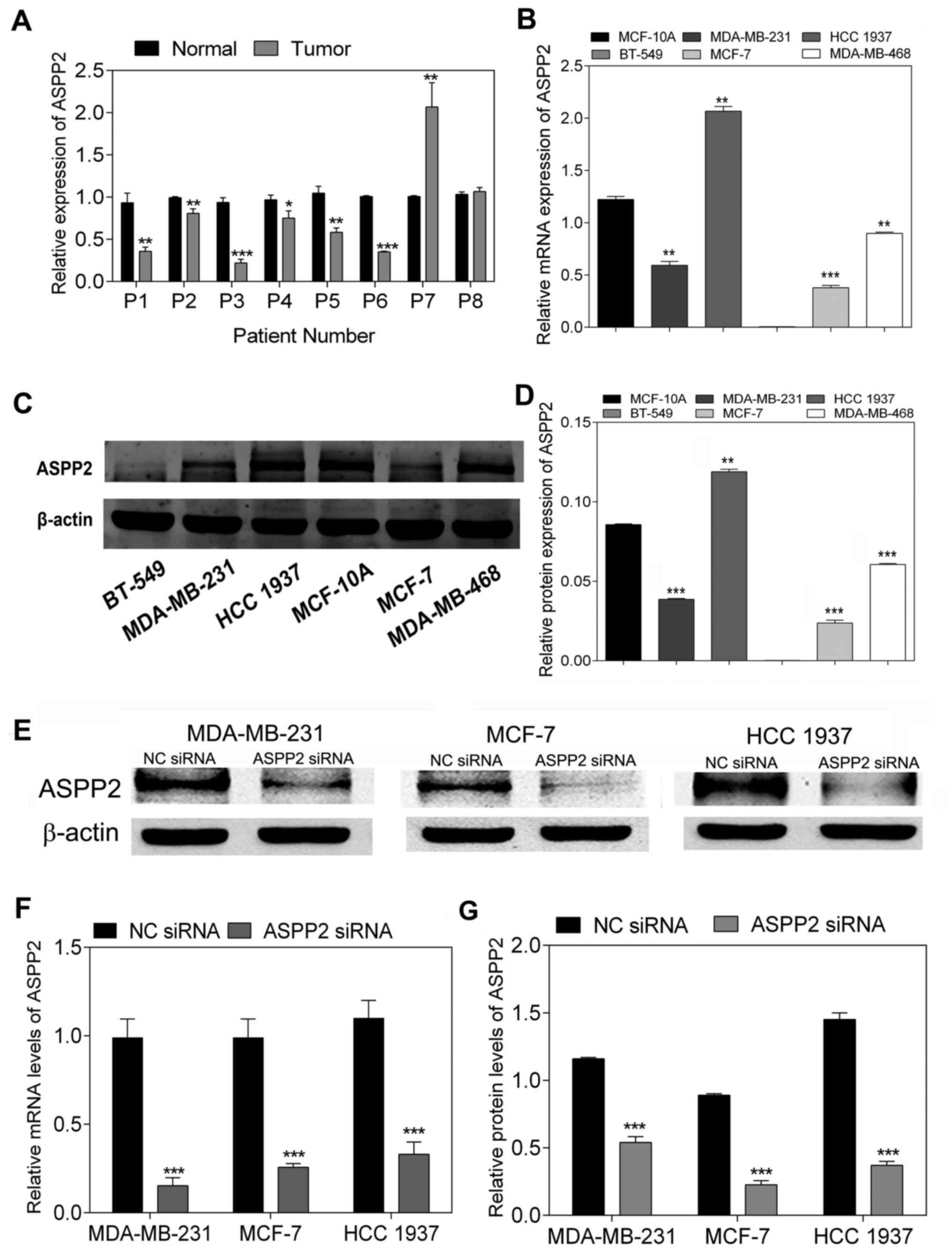
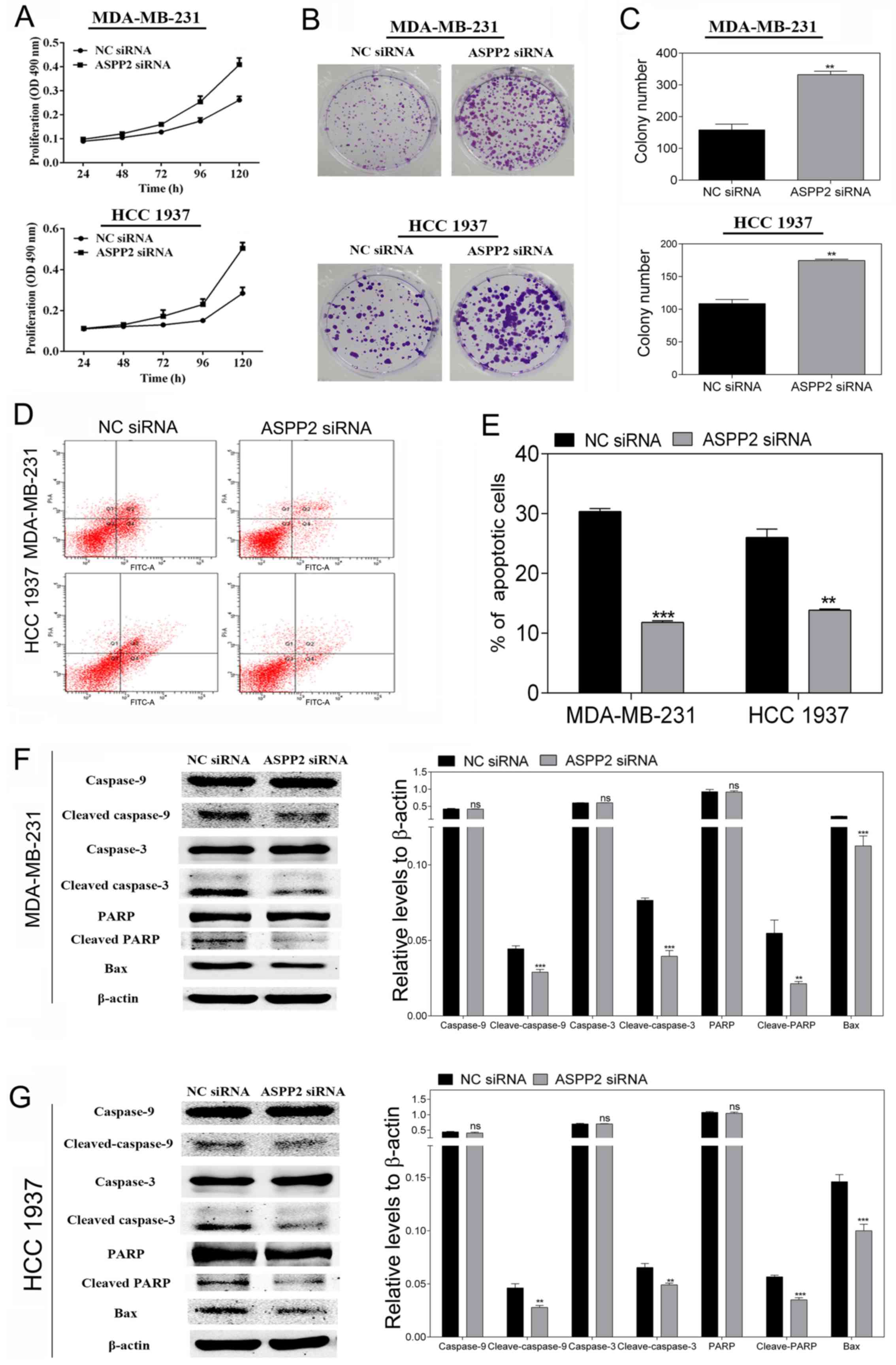
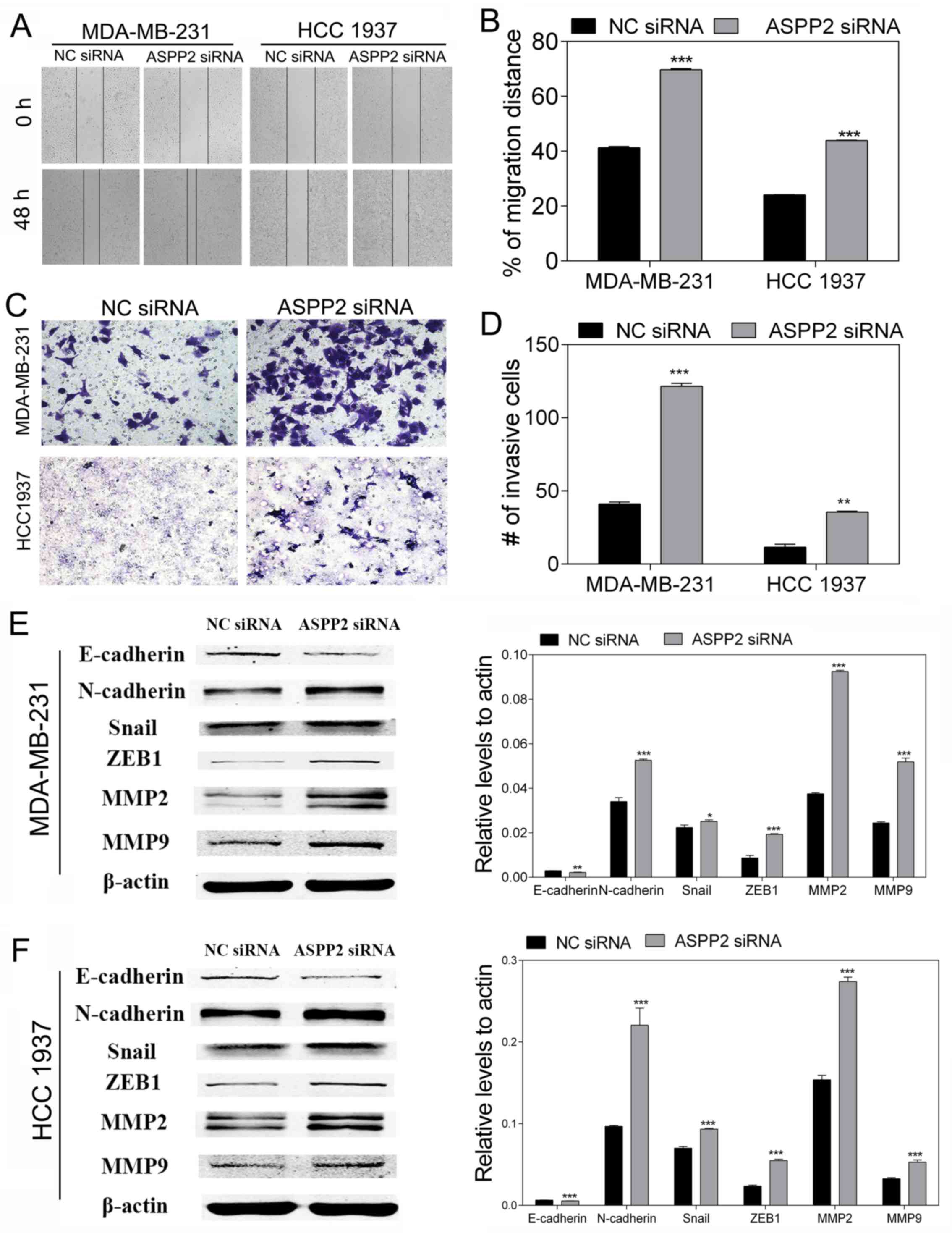
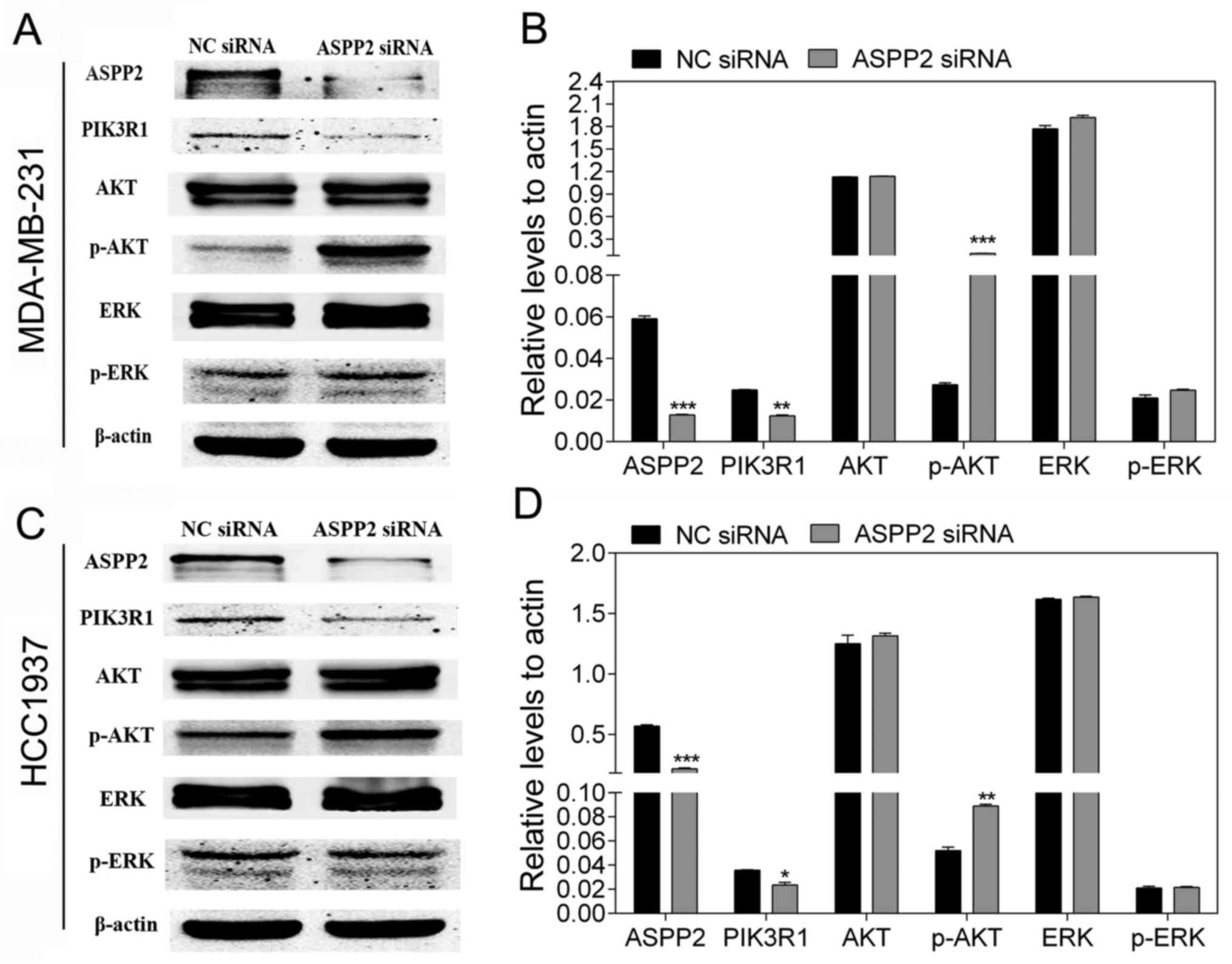
Apoptosis-stimulating p53 protein 2 (ASPP2) is an apoptosis inducer that acts via binding with p53 and then enhancing the transcriptional activities toward pro‑apoptosis genes. ASPP2 has recently been reported to serve a major role in p53‑independent pathways. Triple‑negative breast cancer (TNBC) is a type of breast cancer that is more aggressive and highly lethal when p53 is mutated. In the present study, the mRNA level of ASPP2 was found to be suppressed in breast tumors compared with that in adjacent normal breast tissues, and the expression of ASPP2 was also decreased in a series of breast cancer cell lines compared with that in MCF‑10A normal breast cells. Downregulation of ASPP2 by specific small interfering RNA (siRNA) transfection was able to promote cell growth, reduce cell apoptosis, and contribute to cell migration and invasion. Furthermore, downregulation of ASPP2 promoted cell epithelial‑mesenchymal transition (EMT) in MDA‑MB‑231 and HCC‑1937 TNBC cells. Furthermore, it was found that when ASPP2 siRNA was transfected into MDA‑MB‑231 and HCC‑1937 cells, the expression of phosphoinositide‑3‑kinase regulatory subunit 1 (p85α) decreased and phosphorylation of protein kinase B (AKT) increased, which are key molecular regulators in the phosphatidylinositol 3-kinase (PI3K)/AKT pathway. In conclusion, the present data indicated that ASPP2 had a crucial influence on the proliferation and metastasis in TNBC, and that the functional mechanism may be p53‑independent to a great extent. ASPP2 and its link with the PI3K/AKT pathway deserve further investigation and may provide novel insights into therapeutic targets for TNBC.
View Figures

Figure 1

Figure 2

Figure 3

Figure 4

View References

1 

Miller KD, Siegel RL, Lin CC, Mariotto AB, Kramer JL, Rowland JH, Stein KD, Alteri R and Jemal A: Cancer treatment and survivorship statistics, 2016. CA Cancer J Clin. 66:271–289. 2016. View Article : Google Scholar

2 

Pal SK, Childs BH and Pegram M: Triple negative breast cancer: Unmet medical needs. Breast Cancer Res Treat. 125:627–636. 2011. View Article : Google Scholar

3 

Mayer IA, Abramson VG, Lehmann BD and Pietenpol JA: New strategies for triple-negative breast cancer–deciphering the heterogeneity. Clin Cancer Res. 20:782–790. 2014. View Article : Google Scholar

4 

Perou CM: Molecular stratification of triple-negative breast cancers. Oncologist. 16(Suppl 1): 61–70. 2011. View Article : Google Scholar

5 

Takahashi N, Kobayashi S, Jiang X, Kitagori K, Imai K, Hibi Y and Okamoto T: Expression of 53BP2 and ASPP2 proteins from TP53BP2 gene by alternative splicing. Biochem Biophys Res Commun. 315:434–438. 2004. View Article : Google Scholar

6 

Samuels-Lev Y, O’Connor DJ, Bergamaschi D, Trigiante G, Hsieh JK, Zhong S, Campargue I, Naumovski L, Crook T and Lu X: ASPP proteins specifically stimulate the apoptotic function of p53. Mol Cell. 8:781–794. 2001. View Article : Google Scholar

7 

Ahn J, Byeon IJ, Byeon CH and Gronenborn AM: Insight into the structural basis of pro- and antiapoptotic p53 modulation by ASPP proteins. J Biol Chem. 284:13812–13822. 2009. View Article : Google Scholar

8 

Trigiante G and Lu X: ASPP [corrected] and cancer. Nat Rev Cancer. 6:217–226. 2006. View Article : Google Scholar

9 

Wang Z, Liu Y, Takahashi M, Van Hook K, Kampa-Schittenhelm KM, Sheppard BC, Sears RC, Stork PJ and Lopez CD: N terminus of ASPP2 binds to Ras and enhances Ras/Raf/MEK/ERK activation to promote oncogene-induced senescence. Proc Natl Acad Sci USA. 110:312–317. 2013. View Article : Google Scholar

10 

Liu Z, Qiao L, Zhang Y, Zang Y, Shi Y, Liu K, Zhang X, Lu X, Yuan L, Su B, et al: ASPP2 plays a dual role in gp120-induced autophagy and apoptosis of neuroblastoma cells. Front Neurosci. 11:1502017. View Article : Google Scholar

11 

Royer C, Koch S, Qin X, Zak J, Buti L, Dudziec E, Zhong S, Ratnayaka I, Srinivas S and Lu X: ASPP2 links the apical lateral polarity complex to the regulation of YAP activity in epithelial cells. PLoS One. 9:e1113842014. View Article : Google Scholar

12 

Wang Y, Bu F, Royer C, Serres S, Larkin JR, Soto MS, Sibson NR, Salter V, Fritzsche F, Turnquist C, et al: ASPP2 controls epithelial plasticity and inhibits metastasis through β-catenin-dependent regulation of ZEB1. Nat Cell Biol. 16:1092–1104. 2014. View Article : Google Scholar

13 

Zhao J, Wu G, Bu F, Lu B, Liang A, Cao L, Tong X, Lu X, Wu M and Guo Y: Epigenetic silence of ankyrin-repeat-containing, SH3-domain-containing, and proline-rich-region- containing protein 1 (ASPP1) and ASPP2 genes promotes tumor growth in hepatitis B virus-positive hepatocellular carcinoma. Hepatology. 51:142–153. 2010. View Article : Google Scholar

14 

Wang X, Yu M, Zhao K, He M, Ge W, Sun Y, Wang Y, Sun H and Hu Y: Upregulation of MiR-205 under hypoxia promotes epithelial-mesenchymal transition by targeting ASPP2. Cell Death Dis. 7:e25172016. View Article : Google Scholar

15 

Song B, Bian Q, Zhang YJ, Shao CH, Li G, Liu AA, Jing W, Liu R, Zhou YQ, Jin G, et al: Downregulation of ASPP2 in pancreatic cancer cells contributes to increased resistance to gemcitabine through autophagy activation. Mol Cancer. 14:1772015. View Article : Google Scholar

16 

Jabbour-Leung NA, Chen X, Bui T, Jiang Y, Yang D, Vijayaraghavan S, McArthur MJ, Hunt KK and Keyomarsi K: Sequential combination therapy of CDK inhibition and doxo-rubicin is synthetically lethal in p53-mutant triple-negative breast cancer. Mol Cancer Ther. 15:593–607. 2016. View Article : Google Scholar

17 

Slee EA and Lu X: The ASPP family: deciding between life and death after DNA damage. Toxicol Lett. 139:81–87. 2003. View Article : Google Scholar

18 

Joerger AC, Ang HC, Veprintsev DB, Blair CM and Fersht AR: Structures of p53 cancer mutants and mechanism of rescue by second-site suppressor mutations. J Biol Chem. 280:16030–16037. 2005. View Article : Google Scholar

19 

Barnes L, Eveson JW, Reichart P and Sidransky D: WHO Classification of Tumours. 2005

20 

Livak KJ and Schmittgen TD: Analysis of relative gene expression data using real-time quantitative PCR and the 2(−ΔΔC(T)) method. Methods. 25:402–408. 2001. View Article : Google Scholar

21 

Bratton SB and Salvesen GS: Regulation of the Apaf-1-caspase-9 apoptosome. J Cell Sci. 123:3209–3214. 2010. View Article : Google Scholar

22 

Gross A, McDonnell JM and Korsmeyer SJ: BCL-2 family members and the mitochondria in apoptosis. Genes Dev. 13:1899–1911. 1999. View Article : Google Scholar

23 

Azim HA, Kassem L, Treilleux I, Wang Q, El Enein MA, Anis SE and Bachelot T: Analysis of PI3K/mTOR pathway biomarkers and their prognostic value in women with hormone receptor-positive, HER2-Negative Early Breast Cancer. Transl Oncol. 9:114–123. 2016. View Article : Google Scholar

24 

Luo J and Cantley LC: The negative regulation of phos-phoinositide 3-kinase signaling by p85 and it’s implication in cancer. Cell Cycle. 4:1309–1312. 2005. View Article : Google Scholar

25 

Van Hook K, Wang Z, Chen D, Nold C, Zhu Z, Anur P, Lee HJ, Yu Z, Sheppard B, Dai MS, et al: ΔN-ASPP2, a novel isoform of the ASPP2 tumor suppressor, promotes cellular survival. Biochem Biophys Res Commun. 482:1271–1277. 2017. View Article : Google Scholar

26 

Yoshida K and Miki Y: Role of BRCA1 and BRCA2 as regulators of DNA repair, transcription, and cell cycle in response to DNA damage. Cancer Sci. 95:866–871. 2004. View Article : Google Scholar

27 

Slee EA and Lu X: The ASPP family: Deciding between life and death after DNA damage. Toxicol Lett. 139:81–87. 2003. View Article : Google Scholar

28 

Bergamaschi D, Samuels Y, Jin B, Duraisingham S, Crook T and Lu X: ASPP1 and ASPP2: Common activators of p53 family members. Mol Cell Biol. 24:1341–1350. 2004. View Article : Google Scholar

29 

Liu ZJ, Lu X, Zhang Y, Zhong S, Gu SZ, Zhang XB, Yang X and Xin HM: Downregulated mRNA expression of ASPP and the hypermethylation of the 5’-untranslated region in cancer cell lines retaining wild-type p53. FEBS Lett. 579:1587–1590. 2005. View Article : Google Scholar

30 

Song Q, Song J, Wang Q, Ma Y, Sun N, Ma J, Chen Q, Xia G, Huo Y, Yang L, et al: miR-548d-3p/TP53BP2 axis regulates the proliferation and apoptosis of breast cancer cells. Cancer Med. 5:315–324. 2016. View Article : Google Scholar

31 

Shi Y, Han Y, Xie F, Wang A, Feng X, Li N, Guo H and Chen D: ASPP2 enhances oxaliplatin (L-OHP)-induced colorectal cancer cell apoptosis in a p53-independent manner by inhibiting cell autophagy. J Cell Mol Med. 19:535–543. 2015. View Article : Google Scholar

32 

Hengartner MO: The biochemistry of apoptosis. Nature. 407:770–776. 2000. View Article : Google Scholar

33 

Liu K, Jiang T, Ouyang Y, Shi Y, Zang Y, Li N, Lu S and Chen D: Nuclear EGFR impairs ASPP2-p53 complex-induced apoptosis by inducing SOS1 expression in hepatocellular carcinoma. Oncotarget. 6:16507–16516. 2015.

34 

Sarrió D, Rodriguez-Pinilla SM, Hardisson D, Cano A, Moreno-Bueno G and Palacios J: Epithelial-mesenchymal transition in breast cancer relates to the basal-like phenotype. Cancer Res. 68:989–997. 2008. View Article : Google Scholar

35 

Wu B, Guo BM, Kang J, Deng XZ, Fan YB, Zhang XP and Ai KX: PPM1D exerts its oncogenic properties in human pancreatic cancer through multiple mechanisms. Apoptosis. 21:365–378. 2016. View Article : Google Scholar

36 

Yuan TL and Cantley LC: PI3K pathway alterations in cancer: Variations on a theme. Oncogene. 27:5497–5510. 2008. View Article : Google Scholar

37 

Moestue SA, Dam CG, Gorad SS, Kristian A, Bofin A, Mælandsmo GM, Engebråten O, Gribbestad IS and Bjørkøy G: Metabolic biomarkers for response to PI3K inhibition in basal-like breast cancer. Breast Cancer Res. 15:R162013. View Article : Google Scholar

38 

Song X, Du J, Zhu W, Jin P and Ma F: Identification and characterization of an apoptosis-stimulating protein of p53 (ASPP) gene from Branchiostoma belcheri: Insights into evolution of ASPP gene family. Fish Shellfish Immunol. 49:268–274. 2016. View Article : Google Scholar

39 

Gao K, An J, Zhang Y, Jin X, Ma J, Peng J, Tang Y, Yu L, Zhang P and Wang C: The E3 ubiquitin ligase Itch and Yap1 have antagonistic roles in the regulation of ASPP2 protein stability. FEBS Lett. 589:94–101. 2015. View Article : Google Scholar

40 

Liu CY, Lv X, Li T, Xu Y, Zhou X, Zhao S, Xiong Y, Lei QY and Guan KL: PP1 cooperates with ASPP2 to dephosphorylate and activate TAZ. J Biol Chem. 286:5558–5566. 2011. View Article : Google Scholar

41 

Yan LX, Liu YH, Xiang JW, Wu QN, Xu LB, Luo XL, Zhu XL, Liu C, Xu FP, Luo DL, et al: PIK3R1 targeting by miR-21 suppresses tumor cell migration and invasion by reducing PI3K/AKT signaling and reversing EMT, and predicts clinical outcome of breast cancer. Int J Oncol. 48:471–484. 2016. View Article : Google Scholar

Related Articles

  • Abstract
  • View
  • Download
  • Twitter
Copy and paste a formatted citation
Spandidos Publications style
Wu T, Song H, Xie D, Zhao B, Xu H, Wu C, Hua K, Deng Y, Ji C, Hu J, Hu J, et al: Silencing of ASPP2 promotes the proliferation, migration and invasion of triple-negative breast cancer cells via the PI3K/AKT pathway. Int J Oncol 52: 2001-2010, 2018.
APA
Wu, T., Song, H., Xie, D., Zhao, B., Xu, H., Wu, C. ... Fang, L. (2018). Silencing of ASPP2 promotes the proliferation, migration and invasion of triple-negative breast cancer cells via the PI3K/AKT pathway. International Journal of Oncology, 52, 2001-2010. https://doi.org/10.3892/ijo.2018.4331
MLA
Wu, T., Song, H., Xie, D., Zhao, B., Xu, H., Wu, C., Hua, K., Deng, Y., Ji, C., Hu, J., Fang, L."Silencing of ASPP2 promotes the proliferation, migration and invasion of triple-negative breast cancer cells via the PI3K/AKT pathway". International Journal of Oncology 52.6 (2018): 2001-2010.
Chicago
Wu, T., Song, H., Xie, D., Zhao, B., Xu, H., Wu, C., Hua, K., Deng, Y., Ji, C., Hu, J., Fang, L."Silencing of ASPP2 promotes the proliferation, migration and invasion of triple-negative breast cancer cells via the PI3K/AKT pathway". International Journal of Oncology 52, no. 6 (2018): 2001-2010. https://doi.org/10.3892/ijo.2018.4331
Copy and paste a formatted citation
x
Spandidos Publications style
Wu T, Song H, Xie D, Zhao B, Xu H, Wu C, Hua K, Deng Y, Ji C, Hu J, Hu J, et al: Silencing of ASPP2 promotes the proliferation, migration and invasion of triple-negative breast cancer cells via the PI3K/AKT pathway. Int J Oncol 52: 2001-2010, 2018.
APA
Wu, T., Song, H., Xie, D., Zhao, B., Xu, H., Wu, C. ... Fang, L. (2018). Silencing of ASPP2 promotes the proliferation, migration and invasion of triple-negative breast cancer cells via the PI3K/AKT pathway. International Journal of Oncology, 52, 2001-2010. https://doi.org/10.3892/ijo.2018.4331
MLA
Wu, T., Song, H., Xie, D., Zhao, B., Xu, H., Wu, C., Hua, K., Deng, Y., Ji, C., Hu, J., Fang, L."Silencing of ASPP2 promotes the proliferation, migration and invasion of triple-negative breast cancer cells via the PI3K/AKT pathway". International Journal of Oncology 52.6 (2018): 2001-2010.
Chicago
Wu, T., Song, H., Xie, D., Zhao, B., Xu, H., Wu, C., Hua, K., Deng, Y., Ji, C., Hu, J., Fang, L."Silencing of ASPP2 promotes the proliferation, migration and invasion of triple-negative breast cancer cells via the PI3K/AKT pathway". International Journal of Oncology 52, no. 6 (2018): 2001-2010. https://doi.org/10.3892/ijo.2018.4331
Follow us
  • Twitter
  • LinkedIn
  • Facebook
About
  • Spandidos Publications
  • Careers
  • Cookie Policy
  • Privacy Policy
How can we help?
  • Help
  • Live Chat
  • Contact
  • Email to our Support Team