Spandidos Publications Logo
  • About
    • About Spandidos
    • Aims and Scopes
    • Abstracting and Indexing
    • Editorial Policies
    • Reprints and Permissions
    • Job Opportunities
    • Terms and Conditions
    • Contact
  • Journals
    • All Journals
    • Oncology Letters
      • Oncology Letters
      • Information for Authors
      • Editorial Policies
      • Editorial Board
      • Aims and Scope
      • Abstracting and Indexing
      • Bibliographic Information
      • Archive
    • International Journal of Oncology
      • International Journal of Oncology
      • Information for Authors
      • Editorial Policies
      • Editorial Board
      • Aims and Scope
      • Abstracting and Indexing
      • Bibliographic Information
      • Archive
    • Molecular and Clinical Oncology
      • Molecular and Clinical Oncology
      • Information for Authors
      • Editorial Policies
      • Editorial Board
      • Aims and Scope
      • Abstracting and Indexing
      • Bibliographic Information
      • Archive
    • Experimental and Therapeutic Medicine
      • Experimental and Therapeutic Medicine
      • Information for Authors
      • Editorial Policies
      • Editorial Board
      • Aims and Scope
      • Abstracting and Indexing
      • Bibliographic Information
      • Archive
    • International Journal of Molecular Medicine
      • International Journal of Molecular Medicine
      • Information for Authors
      • Editorial Policies
      • Editorial Board
      • Aims and Scope
      • Abstracting and Indexing
      • Bibliographic Information
      • Archive
    • Biomedical Reports
      • Biomedical Reports
      • Information for Authors
      • Editorial Policies
      • Editorial Board
      • Aims and Scope
      • Abstracting and Indexing
      • Bibliographic Information
      • Archive
    • Oncology Reports
      • Oncology Reports
      • Information for Authors
      • Editorial Policies
      • Editorial Board
      • Aims and Scope
      • Abstracting and Indexing
      • Bibliographic Information
      • Archive
    • Molecular Medicine Reports
      • Molecular Medicine Reports
      • Information for Authors
      • Editorial Policies
      • Editorial Board
      • Aims and Scope
      • Abstracting and Indexing
      • Bibliographic Information
      • Archive
    • World Academy of Sciences Journal
      • World Academy of Sciences Journal
      • Information for Authors
      • Editorial Policies
      • Editorial Board
      • Aims and Scope
      • Abstracting and Indexing
      • Bibliographic Information
      • Archive
    • International Journal of Functional Nutrition
      • International Journal of Functional Nutrition
      • Information for Authors
      • Editorial Policies
      • Editorial Board
      • Aims and Scope
      • Abstracting and Indexing
      • Bibliographic Information
      • Archive
    • International Journal of Epigenetics
      • International Journal of Epigenetics
      • Information for Authors
      • Editorial Policies
      • Editorial Board
      • Aims and Scope
      • Abstracting and Indexing
      • Bibliographic Information
      • Archive
    • Medicine International
      • Medicine International
      • Information for Authors
      • Editorial Policies
      • Editorial Board
      • Aims and Scope
      • Abstracting and Indexing
      • Bibliographic Information
      • Archive
  • Articles
  • Information
    • Information for Authors
    • Information for Reviewers
    • Information for Librarians
    • Information for Advertisers
    • Conferences
  • Language Editing
Spandidos Publications Logo
  • About
    • About Spandidos
    • Aims and Scopes
    • Abstracting and Indexing
    • Editorial Policies
    • Reprints and Permissions
    • Job Opportunities
    • Terms and Conditions
    • Contact
  • Journals
    • All Journals
    • Biomedical Reports
      • Information for Authors
      • Editorial Policies
      • Editorial Board
      • Aims and Scope
      • Abstracting and Indexing
      • Bibliographic Information
      • Archive
    • Experimental and Therapeutic Medicine
      • Information for Authors
      • Editorial Policies
      • Editorial Board
      • Aims and Scope
      • Abstracting and Indexing
      • Bibliographic Information
      • Archive
    • International Journal of Epigenetics
      • Information for Authors
      • Editorial Policies
      • Editorial Board
      • Aims and Scope
      • Abstracting and Indexing
      • Bibliographic Information
      • Archive
    • International Journal of Functional Nutrition
      • Information for Authors
      • Editorial Policies
      • Editorial Board
      • Aims and Scope
      • Abstracting and Indexing
      • Bibliographic Information
      • Archive
    • International Journal of Molecular Medicine
      • Information for Authors
      • Editorial Policies
      • Editorial Board
      • Aims and Scope
      • Abstracting and Indexing
      • Bibliographic Information
      • Archive
    • International Journal of Oncology
      • Information for Authors
      • Editorial Policies
      • Editorial Board
      • Aims and Scope
      • Abstracting and Indexing
      • Bibliographic Information
      • Archive
    • Medicine International
      • Information for Authors
      • Editorial Policies
      • Editorial Board
      • Aims and Scope
      • Abstracting and Indexing
      • Bibliographic Information
      • Archive
    • Molecular and Clinical Oncology
      • Information for Authors
      • Editorial Policies
      • Editorial Board
      • Aims and Scope
      • Abstracting and Indexing
      • Bibliographic Information
      • Archive
    • Molecular Medicine Reports
      • Information for Authors
      • Editorial Policies
      • Editorial Board
      • Aims and Scope
      • Abstracting and Indexing
      • Bibliographic Information
      • Archive
    • Oncology Letters
      • Information for Authors
      • Editorial Policies
      • Editorial Board
      • Aims and Scope
      • Abstracting and Indexing
      • Bibliographic Information
      • Archive
    • Oncology Reports
      • Information for Authors
      • Editorial Policies
      • Editorial Board
      • Aims and Scope
      • Abstracting and Indexing
      • Bibliographic Information
      • Archive
    • World Academy of Sciences Journal
      • Information for Authors
      • Editorial Policies
      • Editorial Board
      • Aims and Scope
      • Abstracting and Indexing
      • Bibliographic Information
      • Archive
  • Articles
  • Information
    • For Authors
    • For Reviewers
    • For Librarians
    • For Advertisers
    • Conferences
  • Language Editing
Login Register Submit
  • This site uses cookies
  • You can change your cookie settings at any time by following the instructions in our Cookie Policy. To find out more, you may read our Privacy Policy.

    I agree
Search articles by DOI, keyword, author or affiliation
Search
Advanced Search
presentation
International Journal of Oncology
Join Editorial Board Propose a Special Issue
Print ISSN: 1019-6439 Online ISSN: 1791-2423
Journal Cover
June-2018 Volume 52 Issue 6

Full Size Image

Cover Legend PDF

Sign up for eToc alerts
Recommend to Library

Journals

International Journal of Molecular Medicine

International Journal of Molecular Medicine

International Journal of Molecular Medicine is an international journal devoted to molecular mechanisms of human disease.

International Journal of Oncology

International Journal of Oncology

International Journal of Oncology is an international journal devoted to oncology research and cancer treatment.

Molecular Medicine Reports

Molecular Medicine Reports

Covers molecular medicine topics such as pharmacology, pathology, genetics, neuroscience, infectious diseases, molecular cardiology, and molecular surgery.

Oncology Reports

Oncology Reports

Oncology Reports is an international journal devoted to fundamental and applied research in Oncology.

Experimental and Therapeutic Medicine

Experimental and Therapeutic Medicine

Experimental and Therapeutic Medicine is an international journal devoted to laboratory and clinical medicine.

Oncology Letters

Oncology Letters

Oncology Letters is an international journal devoted to Experimental and Clinical Oncology.

Biomedical Reports

Biomedical Reports

Explores a wide range of biological and medical fields, including pharmacology, genetics, microbiology, neuroscience, and molecular cardiology.

Molecular and Clinical Oncology

Molecular and Clinical Oncology

International journal addressing all aspects of oncology research, from tumorigenesis and oncogenes to chemotherapy and metastasis.

World Academy of Sciences Journal

World Academy of Sciences Journal

Multidisciplinary open-access journal spanning biochemistry, genetics, neuroscience, environmental health, and synthetic biology.

International Journal of Functional Nutrition

International Journal of Functional Nutrition

Open-access journal combining biochemistry, pharmacology, immunology, and genetics to advance health through functional nutrition.

International Journal of Epigenetics

International Journal of Epigenetics

Publishes open-access research on using epigenetics to advance understanding and treatment of human disease.

Medicine International

Medicine International

An International Open Access Journal Devoted to General Medicine.

Journal Cover
June-2018 Volume 52 Issue 6

Full Size Image

Cover Legend PDF

Sign up for eToc alerts
Recommend to Library

  • Article
  • Citations
    • Cite This Article
    • Download Citation
    • Create Citation Alert
    • Remove Citation Alert
    • Cited By
  • Similar Articles
    • Related Articles (in Spandidos Publications)
    • Similar Articles (Google Scholar)
    • Similar Articles (PubMed)
  • Download PDF
  • Download XML
  • View XML
Article

Arsenic disulfide‑induced apoptosis and its potential mechanism in two‑ and three‑dimensionally cultured human breast cancer MCF‑7 cells

  • Authors:
    • Yuxue Zhao
    • Kenji Onda
    • Bo Yuan
    • Sachiko Tanaka
    • Anna Kiyomi
    • Kentaro Sugiyama
    • Munetoshi Sugiura
    • Norio Takagi
    • Toshihiko Hirano
  • View Affiliations / Copyright

    Affiliations: Department of Clinical Pharmacology, School of Pharmacy, Tokyo University of Pharmacy and Life Sciences, Hachioji, Tokyo 192‑0392, Japan, Department of Applied Biochemistry, School of Pharmacy, Tokyo University of Pharmacy and Life Sciences, Hachioji, Tokyo 192-0392, Japan, Department of Drug Safety and Risk Management, School of Pharmacy, Tokyo University of Pharmacy and Life Sciences, Hachioji, Tokyo 192-0392, Japan
  • Pages: 1959-1971
    |
    Published online on: April 4, 2018
       https://doi.org/10.3892/ijo.2018.4357
  • Expand metrics +
Metrics: Total Views: 0 (Spandidos Publications: | PMC Statistics: )
Metrics: Total PDF Downloads: 0 (Spandidos Publications: | PMC Statistics: )
Cited By (CrossRef): 0 citations Loading Articles...

This article is mentioned in:


Abstract

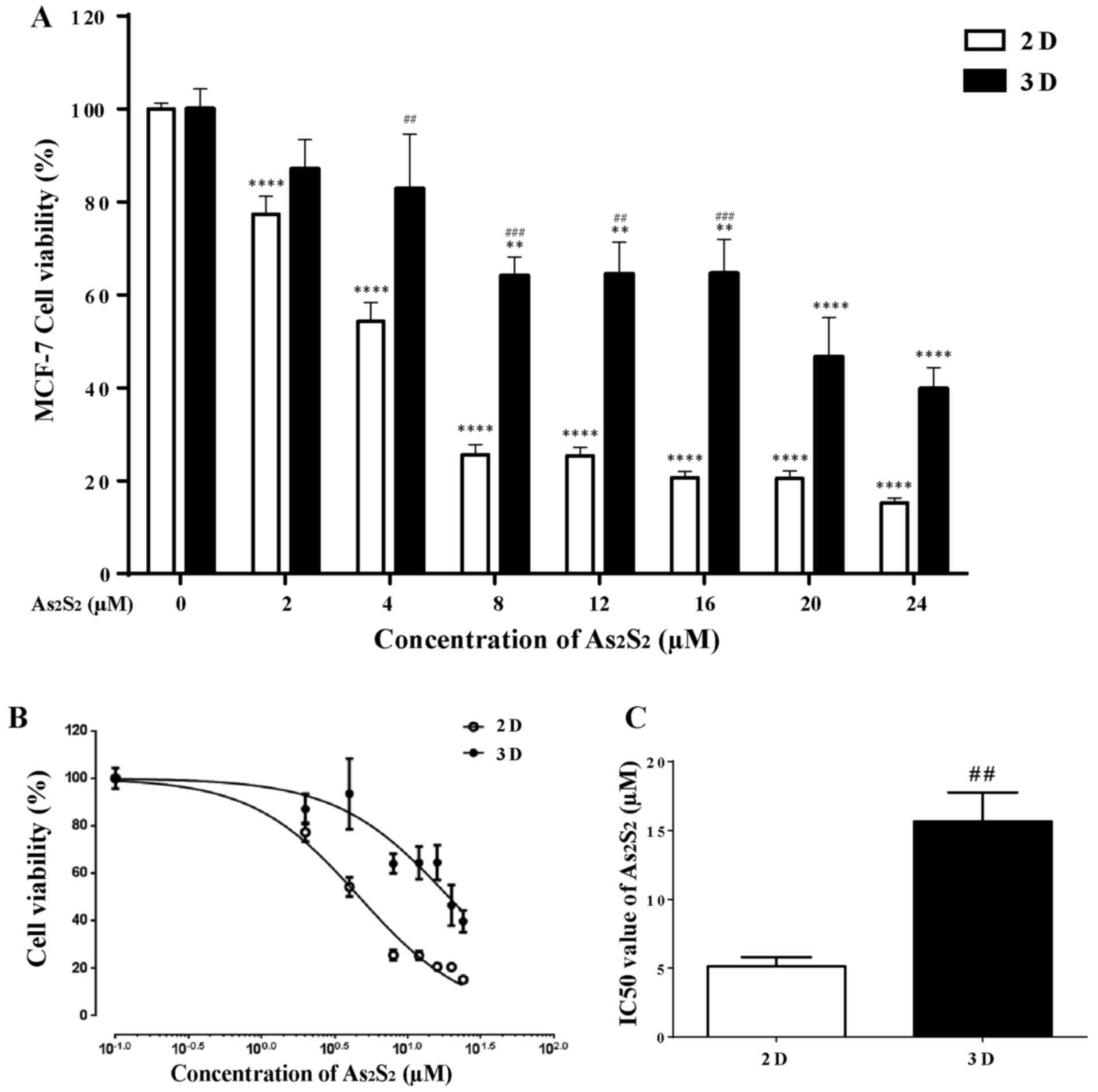
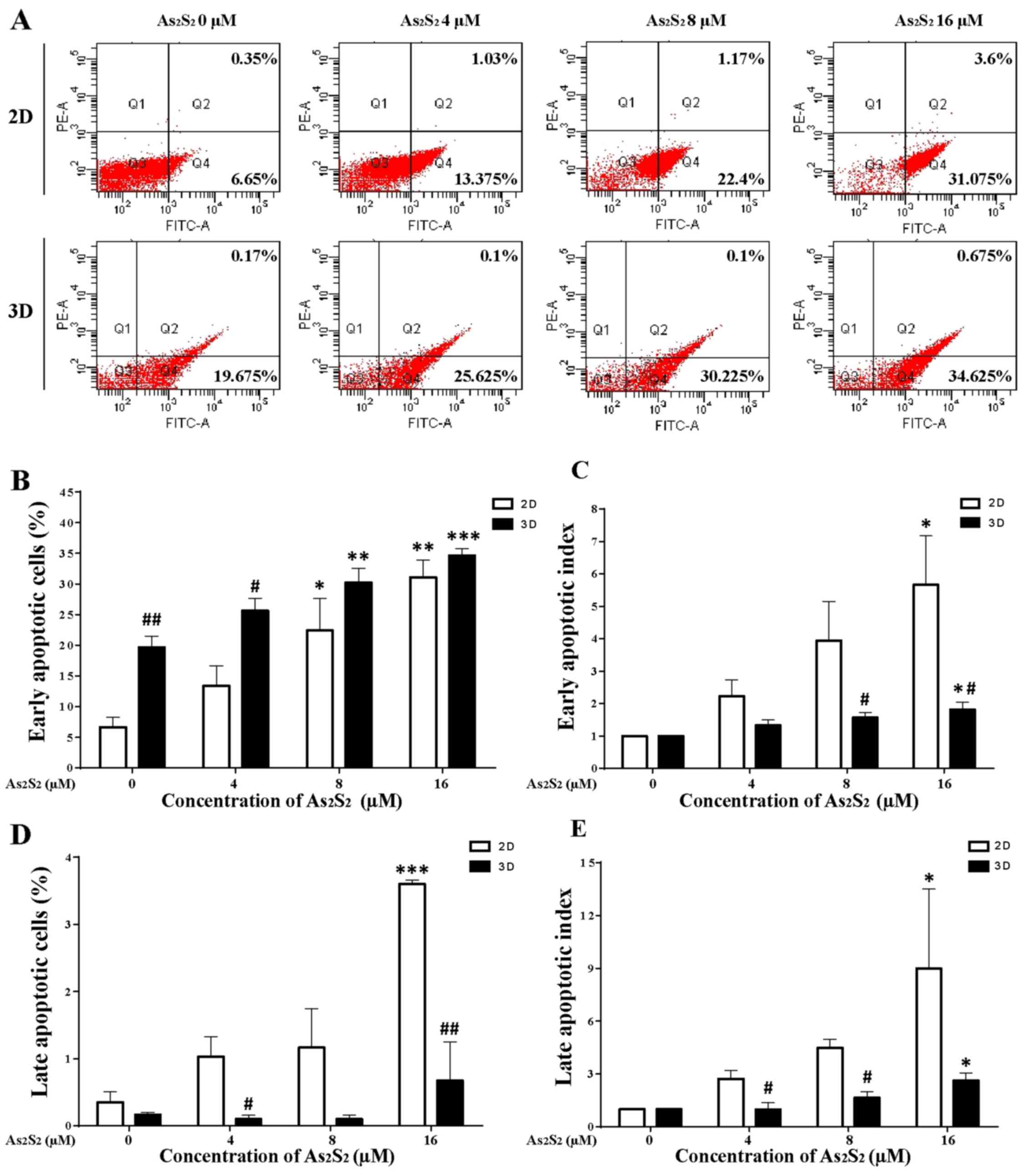
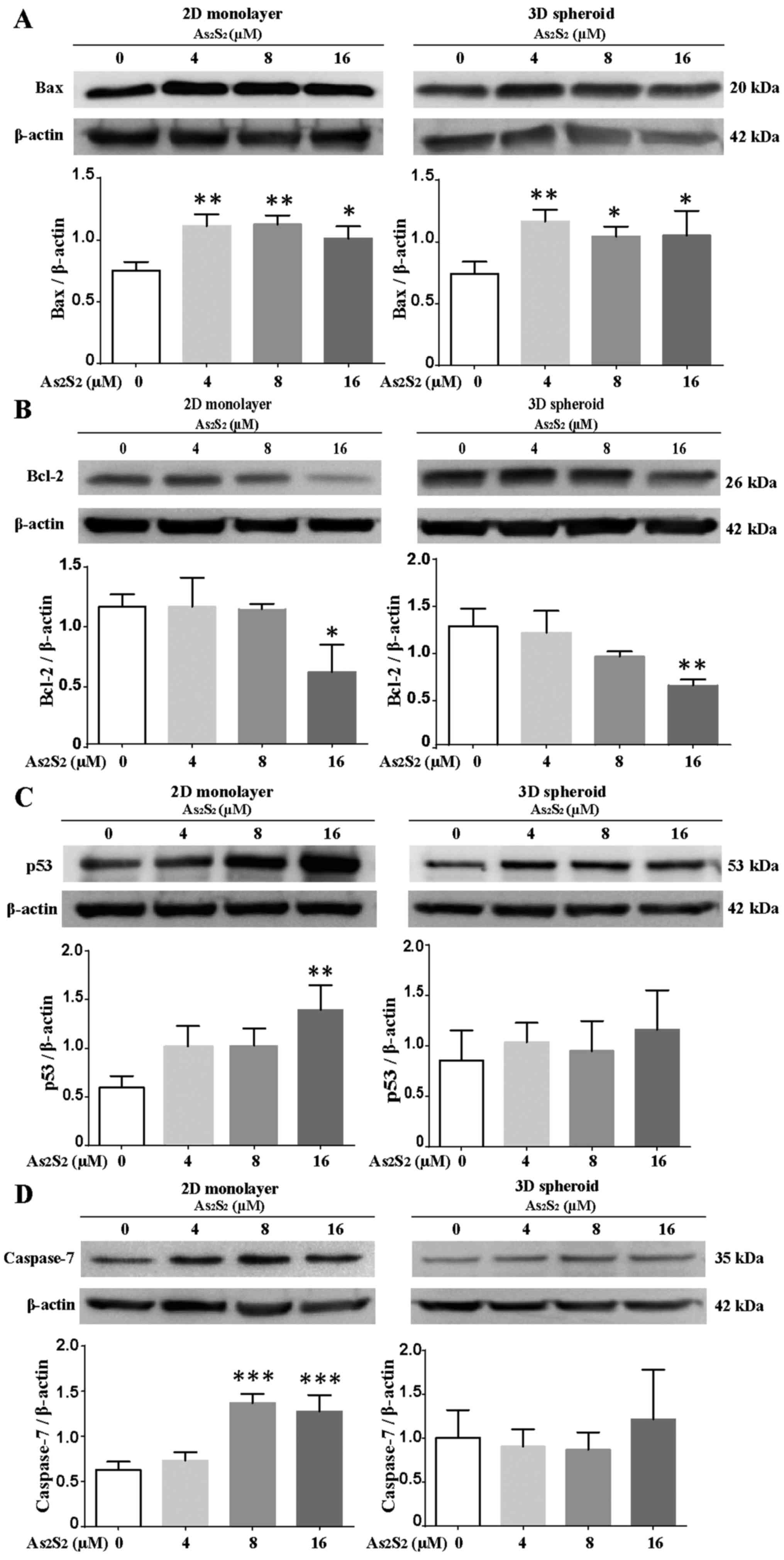
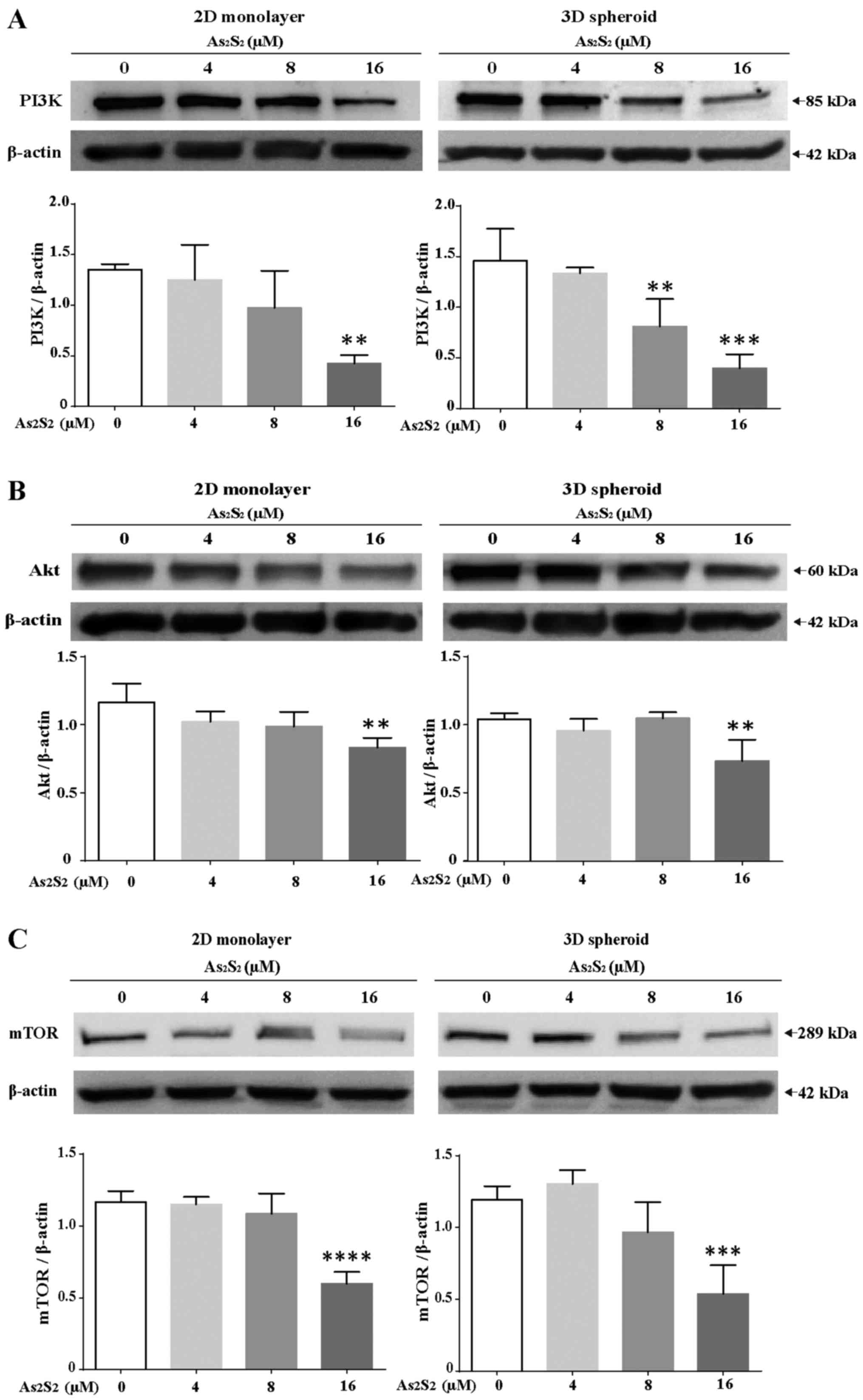
In China, arsenic disulfide (As2S2) has been used for the treatment of hematological malignancies. The present study aimed to evaluate the effects of As2S2 on the human breast cancer MCF‑7 cell line cultured in both two‑dimensional (2D) monolayers and three‑dimensional (3D) spheroids to explore its therapeutic potential in breast cancer treatment. Cellular viability and the induction of apoptosis were examined with a cell counting kit‑8 (CCK‑8) assay and flow cytometric analysis, respectively. Alterations in the expression levels of apoptosis‑associated proteins, including Bcl‑2‑associated X protein (Bax), B‑cell lymphoma 2 (Bcl‑2), p53, and caspase‑7, as well as the cell survival‑associated proteins, phosphatidylinositol 3‑kinase (PI3K), Akt, and mammalian target of rapamycin (mTOR), were assessed by western blotting. Although a dose‑dependent reduction in cell viability, which occurred in association with the induction of apoptosis triggered by the addition of 2‑24 µM As2S2, was observed in both 2D‑ and 3D‑culture systems, 3D spheroids were less sensitive to the cytotoxic effect of As2S2 compared with the 2D cultured cells. A significant increase in the expression levels of Bax, p53, and caspase‑7 was observed in treated 2D‑cultured cells, whereas a similar increase in the expression levels of Bax was only confirmed in treated 3D spheroids, although there was a trend towards the increased expression of p53 and caspase‑7 in the 3D spheroids. These results suggested that these molecules are closely associated with As2S2‑mediated cytotoxicity in the two culture systems, and further suggested that the difference in the sensitivity to As2S2 between 2D monolayers and 3D spheroids may be attributed to the differential alterations in the expression levels of proteins associated with cell mortality. Significant downregulation of the expression levels of Bcl‑2, PI3K, Akt and mTOR was observed in the two culture systems. Taken together, the results of the present study demonstrated that As2S2 inhibits cell viability and induces apoptosis in both 2D‑ and 3D‑ cultured MCF‑7 cells, which may be associated with activation of the pro‑apoptotic pathway and the inhibition of pro‑survival signaling. These results have provided novel insights into clinical applications of As2S2 in the treatment of patients with breast cancer.
View Figures

Figure 1

Figure 2

Figure 3

Figure 4

Figure 5

Figure 6

Figure 7

View References

1 

Kamangar F, Dores GM and Anderson WF: Patterns of cancer incidence, mortality, and prevalence across five continents: Defining priorities to reduce cancer disparities in different geographic regions of the world. J Clin Oncol. 24:2137–2150. 2006. View Article : Google Scholar

2 

Parkin DM, Bray F, Ferlay J and Pisani P: Global cancer statistics, 2002. CA Cancer J Clin. 55:74–108. 2005. View Article : Google Scholar

3 

Recht A, Come SE, Henderson IC, Gelman RS, Silver B, Hayes DF, Shulman LN and Harris JR: The sequencing of chemotherapy and radiation therapy after conservative surgery for early-stage breast cancer. N Engl J Med. 334:1356–1361. 1996. View Article : Google Scholar

4 

Rojewski MT, Körper S and Schrezenmeier H: Arsenic trioxide therapy in acute promyelocytic leukemia and beyond: From bench to bedside. Leuk Lymphoma. 45:2387–2401. 2004. View Article : Google Scholar

5 

Cicconi L and Lo-Coco F: Current management of newly diagnosed acute promyelocytic leukemia. Ann Oncol. 27:1474–1481. 2016. View Article : Google Scholar

6 

Miller WH Jr, Schipper HM, Lee JS, Singer J and Waxman S: Mechanisms of action of arsenic trioxide. Cancer Res. 62:3893–3903. 2002.

7 

Chow SK, Chan JY and Fung KP: Suppression of cell proliferation and regulation of estrogen receptor alpha signaling pathway by arsenic trioxide on human breast cancer MCF-7 cells. J Endocrinol. 182:325–337. 2004. View Article : Google Scholar

8 

Yao M, Yuan B, Wang X, Sato A, Sakuma K, Kaneko K, Komuro H, Okazaki A, Hayashi H, Toyoda H, et al: Synergistic cytotoxic effects of arsenite and tetrandrine in human breast cancer cell line MCF-7. Int J Oncol. 51:587–598. 2017. View Article : Google Scholar

9 

Soria EA, Bongiovanni GA, Luján CD and Eynard AR: Effect of arsenite on nitrosative stress in human breast cancer cells and its modulation by flavonoids. Nutr Cancer. 67:659–663. 2015. View Article : Google Scholar

10 

Wu JZ and Ho PC: Comparing the relative oxidative DNA damage caused by various arsenic species by quantifying urinary levels of 8-hydroxy-2′-deoxyguanosine with isotope-dilution liquid chromatography/mass spectrometry. Pharm Res. 26:1525–1533. 2009. View Article : Google Scholar

11 

Horibe Y, Adachi S, Yasuda I, Yamauchi T, Kawaguchi J, Kozawa O, Shimizu M and Moriwaki H: Anticancer effect of arsenite on cell migration, cell cycle and apoptosis in human pancreatic cancer cells. Oncol Lett. 12:177–182. 2016. View Article : Google Scholar

12 

Dangleben NL, Skibola CF and Smith MT: Arsenic immunotoxicity: A review. Environ Health. 12:732013. View Article : Google Scholar

13 

Lu DP, Qiu JY, Jiang B, Wang Q, Liu KY, Liu YR and Chen SS: Tetra-arsenic tetra-sulfide for the treatment of acute promyelocytic leukemia: A pilot report. Blood. 99:3136–3143. 2002. View Article : Google Scholar

14 

Lu YF, Yan JW, Wu Q, Shi JZ, Liu J and Shi JS: Realgar- and cinnabar-containing an-gong-niu-huang wan (AGNH) is much less acutely toxic than sodium arsenite and mercuric chloride. Chem Biol Interact. 189:134–140. 2011. View Article : Google Scholar

15 

Liu J, Liang SX, Lu YF, Miao JW, Wu Q and Shi JS: Realgar and realgar-containing Liu-Shen-Wan are less acutely toxic than arsenite and arsenate. J Ethnopharmacol. 134:26–31. 2011. View Article : Google Scholar

16 

Wang L, Zhou GB, Liu P, Song JH, Liang Y, Yan XJ, Xu F, Wang BS, Mao JH, Shen ZX, et al: Dissection of mechanisms of Chinese medicinal formula Realgar-Indigo naturalis as an effective treatment for promyelocytic leukemia. Proc Natl Acad Sci USA. 105:4826–4831. 2008. View Article : Google Scholar

17 

Zhang QY, Mao JH, Liu P, Huang QH, Lu J, Xie YY, Weng L, Zhang Y, Chen Q, Chen SJ, et al: A systems biology understanding of the synergistic effects of arsenic sulfide and Imatinib in BCR/ABL-associated leukemia. Proc Natl Acad Sci USA. 106:3378–3383. 2009. View Article : Google Scholar

18 

Liu Y, He P, Cheng X and Zhang M: Long-term outcome of 31 cases of refractory acute promyelocytic leukemia treated with compound realgar natural indigo tablets administered alternately with chemotherapy. Oncol Lett. 10:1184–1190. 2015. View Article : Google Scholar

19 

Wu F, Wu D, Ren Y, Duan C, Chen S and Xu A: Bayesian network meta-analysis comparing five contemporary treatment strategies for newly diagnosed acute promyelocytic leukaemia. Oncotarget. 7:47319–47331. 2016.

20 

Wang L, Liu X, Li X, Lv X, Lu K, Chen N, Li P and Wang X: Arsenic disulfide induces apoptosis of human diffuse large B cell lymphoma cells involving Bax cleavage. Oncol Rep. 30:2427–2434. 2013. View Article : Google Scholar

21 

Cheng YX, Liu R, Wang Q, Li BS, Xu XX, Hu M, Chen L, Fu Q, Pu DM and Hong L: Realgar-induced apoptosis of cervical cancer cell line Siha via cytochrome c release and caspase-3 and caspase-9 activation. Chin J Integr Med. 18:359–365. 2012. View Article : Google Scholar

22 

Song P, Chen P, Wang D, Wu Z, Gao Q, Wang A, Zhu R, Wang Y, Wang X, Zhao L, et al: Realgar transforming solution displays anticancer potential against human hepatocellular carcinoma HepG2 cells by inducing ROS. Int J Oncol. 50:660–670. 2017. View Article : Google Scholar

23 

Wang G, Zhang T, Sun W, Wang H, Yin F, Wang Z, Zuo D, Sun M, Zhou Z, Lin B, et al: Arsenic sulfide induces apoptosis and autophagy through the activation of ROS/JNK and suppression of Akt/mTOR signaling pathways in osteosarcoma. Free Radic Biol Med. 106:24–37. 2017. View Article : Google Scholar

24 

Tian Y, Wang X, Xi R, Pan W, Jiang S, Li Z, Zhao Y, Gao G and Liu D: Enhanced antitumor activity of realgar mediated by milling it to nanosize. Int J Nanomedicine. 9:745–757. 2014.

25 

Breslin S and O’Driscoll L: Three-dimensional cell culture: The missing link in drug discovery. Drug Discov Today. 18:240–249. 2013. View Article : Google Scholar

26 

Yamada KM and Cukierman E: Modeling tissue morphogenesis and cancer in 3D. Cell. 130:601–610. 2007. View Article : Google Scholar

27 

Weigelt B, Ghajar CM and Bissell MJ: The need for complex 3D culture models to unravel novel pathways and identify accurate biomarkers in breast cancer. Adv Drug Deliv Rev. 69–70:42–51. 2014. View Article : Google Scholar

28 

Rimann M and Graf-Hausner U: Synthetic 3D multicellular systems for drug development. Curr Opin Biotechnol. 23:803–809. 2012. View Article : Google Scholar

29 

Kiyomi A, Makita M, Ozeki T, Li N, Satomura A, Tanaka S, Onda K, Sugiyama K, Iwase T and Hirano T: Characterization and clinical implication of Th1/Th2/Th17 cytokines produced from three-dimensionally cultured tumor tissues resected from breast cancer patients. Transl Oncol. 8:318–326. 2015. View Article : Google Scholar

30 

Dubois V, Jardé T, Delort L, Billard H, Bernard-Gallon D, Berger E, Geloen A, Vasson MP and Caldefie-Chezet F: Leptin induces a proliferative response in breast cancer cells but not in normal breast cells. Nutr Cancer. 66:645–655. 2014. View Article : Google Scholar

31 

Alcolea V, Plano D, Encío I, Palop JA, Sharma AK and Sanmartín C: Chalcogen containing heterocyclic scaffolds: New hybrids with antitumoral activity. Eur J Med Chem. 123:407–418. 2016. View Article : Google Scholar

32 

Ciruelos Gil EM: Targeting the PI3K/AKT/mTOR pathway in estrogen receptor-positive breast cancer. Cancer Treat Rev. 40:862–871. 2014. View Article : Google Scholar

33 

Shaw RJ and Cantley LC: Ras, PI(3)K and mTOR signalling controls tumour cell growth. Nature. 441:424–430. 2006. View Article : Google Scholar

34 

Yun SM, Woo SH, Oh ST, Hong SE, Choe TB, Ye SK, Kim EK, Seong MK, Kim HA, Noh WC, et al: Melatonin enhances arsenic trioxide-induced cell death via sustained upregulation of Redd1 expression in breast cancer cells. Mol Cell Endocrinol. 422:64–73. 2016. View Article : Google Scholar

35 

Zhang S, Ma C, Pang H, Zeng F, Cheng L, Fang B, Ma J, Shi Y, Hong H, Chen J, et al: Arsenic trioxide suppresses cell growth and migration via inhibition of miR-27a in breast cancer cells. Biochem Biophys Res Commun. 469:55–61. 2016. View Article : Google Scholar

36 

Zhang YF, Zhang M, Huang XL, Fu YJ, Jiang YH, Bao LL, Maimaitiyiming Y, Zhang GJ, Wang QQ and Naranmandura H: The combination of arsenic and cryptotanshinone induces apoptosis through induction of endoplasmic reticulum stress-reactive oxygen species in breast cancer cells. Metallomics. 7:165–173. 2015. View Article : Google Scholar

37 

Kasukabe T, Okabe-Kado J, Kato N, Honma Y and Kumakura S: Cotylenin A and arsenic trioxide cooperatively suppress cell proliferation and cell invasion activity in human breast cancer cells. Int J Oncol. 46:841–848. 2015. View Article : Google Scholar

38 

Luo XQ, Ke ZY, Huang LB, Guan XQ, Zhang YC and Zhang XL: Improved outcome for Chinese children with acute promyelocytic leukemia: A comparison of two protocols. Pediatr Blood Cancer. 53:325–328. 2009. View Article : Google Scholar

39 

Zhu HH, Wu DP, Jin J, Li JY, Ma J, Wang JX, Jiang H, Chen SJ and Huang XJ: Oral tetra-arsenic tetra-sulfide formula versus intravenous arsenic trioxide as first-line treatment of acute promyelocytic leukemia: A multicenter randomized controlled trial. J Clin Oncol. 31:4215–4221. 2013. View Article : Google Scholar

40 

Xiang-Xin L, Lu-Qun W, Hao L, Xiao-Peng H, Fang-Lin L, Ling-Ling W, Xue-Liang C and Ming H: Clinical study on prospective efficacy of all-trans Acid, realgar-indigo naturalis formula combined with chemotherapy as maintenance treatment of acute promyelocytic leukemia. Evid Based Complement Alternat Med. 2014:9875602014. View Article : Google Scholar

41 

Wu JZ and Ho PC: Evaluation of the in vitro activity and in vivo bioavailability of realgar nanoparticles prepared by cryogrinding. Eur J Pharm Sci. 29:35–44. 2006. View Article : Google Scholar

42 

Wang H, Liu Z, Gou Y, Qin Y, Xu Y, Liu J and Wu JZ: Apoptosis and necrosis induced by novel realgar quantum dots in human endometrial cancer cells via endoplasmic reticulum stress signaling pathway. Int J Nanomedicine. 10:5505–5512. 2015. View Article : Google Scholar

43 

Ding W, Zhang L, Kim S, Tian W, Tong Y, Liu J, Ma Y and Chen S: Arsenic sulfide as a potential anti cancer drug. Mol Med Rep. 11:968–974. 2015. View Article : Google Scholar

44 

Tsukikawa S, Matsuoka H, Kurahashi Y, Konno Y, Satoh K, Satoh R, Isogai A, Kimura K, Watanabe Y, Nakano S, et al: A new method to prepare multicellular spheroids in cancer cell lines using a thermo-reversible gelation polymer. Artif Organs. 27:598–604. 2003. View Article : Google Scholar

45 

Khaitan D, Chandna S, Arya MB and Dwarakanath BS: Establishment and characterization of multicellular spheroids from a human glioma cell line; Implications for tumor therapy. J Transl Med. 4:122006. View Article : Google Scholar

46 

Edmondson R, Broglie JJ, Adcock AF and Yang L: Three-dimensional cell culture systems and their applications in drug discovery and cell-based biosensors. Assay Drug Dev Technol. 12:207–218. 2014. View Article : Google Scholar

47 

Biswas DK, Shi Q, Baily S, Strickland I, Ghosh S, Pardee AB and Iglehart JD: NF-kappa B activation in human breast cancer specimens and its role in cell proliferation and apoptosis. Proc Natl Acad Sci USA. 101:10137–10142. 2004. View Article : Google Scholar

48 

Vermeulen K, Berneman ZN and Van Bockstaele DR: Cell cycle and apoptosis. Cell Prolif. 36:165–175. 2003. View Article : Google Scholar

49 

Fischbach C, Chen R, Matsumoto T, Schmelzle T, Brugge JS, Polverini PJ and Mooney DJ: Engineering tumors with 3D scaffolds. Nat Methods. 4:855–860. 2007. View Article : Google Scholar

50 

Debnath J and Brugge JS: Modelling glandular epithelial cancers in three-dimensional cultures. Nat Rev Cancer. 5:675–688. 2005. View Article : Google Scholar

51 

Breslin S and O’Driscoll L: The relevance of using 3D cell cultures, in addition to 2D monolayer cultures, when evaluating breast cancer drug sensitivity and resistance. Oncotarget. 7:45745–45756. 2016. View Article : Google Scholar

52 

Zeng H, Sun M, Zhou C, Yin F, Wang Z, Hua Y and Cai Z: Hematoporphyrin monomethyl ether-mediated photodynamic therapy selectively kills sarcomas by inducing apoptosis. PLoS One. 8:e777272013. View Article : Google Scholar

53 

Akeda K, Nishimura A, Satonaka H, Shintani K, Kusuzaki K, Matsumine A, Kasai Y, Masuda K and Uchida A: Three-dimensional alginate spheroid culture system of murine osteosarcoma. Oncol Rep. 22:997–1003. 2009. View Article : Google Scholar

54 

Chandrasekaran S, Marshall JR, Messing JA, Hsu JW and King MR: TRAIL-mediated apoptosis in breast cancer cells cultured as 3D spheroids. PLoS One. 9:e1114872014. View Article : Google Scholar

55 

Sodek KL, Murphy KJ, Brown TJ and Ringuette MJ: Cell-cell and cell-matrix dynamics in intraperitoneal cancer metastasis. Cancer Metastasis Rev. 31:397–414. 2012. View Article : Google Scholar

56 

Daubriac J, Fleury-Feith J, Kheuang L, Galipon J, Saint-Albin A, Renier A, Giovannini M, Galateau-Sallé F and Jaurand MC: Malignant pleural mesothelioma cells resist anoikis as quiescent pluricellular aggregates. Cell Death Differ. 16:1146–1155. 2009. View Article : Google Scholar

57 

Khairul I, Wang QQ, Jiang YH, Wang C and Naranmandura H: Metabolism, toxicity and anticancer activities of arsenic compounds. Oncotarget. 8:23905–23926. 2017. View Article : Google Scholar

58 

Boehme KA, Nitsch J, Riester R, Handgretinger R, Schleicher SB, Kluba T and Traub F: Arsenic trioxide potentiates the effectiveness of etoposide in Ewing sarcomas. Int J Oncol. 49:2135–2146. 2016. View Article : Google Scholar

59 

Kadam CY and Abhang SA: Apoptosis markers in breast cancer therapy. Adv Clin Chem. 74:143–193. 2016. View Article : Google Scholar

60 

Earnshaw WC, Martins LM and Kaufmann SH: Mammalian caspases: Structure, activation, substrates, and functions during apoptosis. Annu Rev Biochem. 68:383–424. 1999. View Article : Google Scholar

61 

Kurokawa H, Nishio K, Fukumoto H, Tomonari A, Suzuki T and Saijo N: Alteration of caspase-3 (CPP32/Yama/apopain) in wild-type MCF-7, breast cancer cells. Oncol Rep. 6:33–37. 1999.

62 

Simstein R, Burow M, Parker A, Weldon C and Beckman B: Apoptosis, chemoresistance, and breast cancer: Insights from the MCF-7 cell model system. Exp Biol Med (Maywood). 228:995–1003. 2003. View Article : Google Scholar

63 

Wang X, Simpson ER and Brown KA: p53: Protection against tumor growth beyond effects on cell cycle and apoptosis. Cancer Res. 75:5001–5007. 2015. View Article : Google Scholar

64 

Pietsch EC, Sykes SM, McMahon SB and Murphy ME: The p53 family and programmed cell death. Oncogene. 27:6507–6521. 2008. View Article : Google Scholar

65 

Thorpe LM, Yuzugullu H and Zhao JJ: PI3K in cancer: Divergent roles of isoforms, modes of activation and therapeutic targeting. Nat Rev Cancer. 15:7–24. 2015. View Article : Google Scholar

66 

Miller TW, Rexer BN, Garrett JT and Arteaga CL: Mutations in the phosphatidylinositol 3-kinase pathway: Role in tumor progression and therapeutic implications in breast cancer. Breast Cancer Res. 13:2242011. View Article : Google Scholar

Related Articles

  • Abstract
  • View
  • Download
  • Twitter
Copy and paste a formatted citation
Spandidos Publications style
Zhao Y, Onda K, Yuan B, Tanaka S, Kiyomi A, Sugiyama K, Sugiura M, Takagi N and Hirano T: Arsenic disulfide‑induced apoptosis and its potential mechanism in two‑ and three‑dimensionally cultured human breast cancer MCF‑7 cells. Int J Oncol 52: 1959-1971, 2018.
APA
Zhao, Y., Onda, K., Yuan, B., Tanaka, S., Kiyomi, A., Sugiyama, K. ... Hirano, T. (2018). Arsenic disulfide‑induced apoptosis and its potential mechanism in two‑ and three‑dimensionally cultured human breast cancer MCF‑7 cells. International Journal of Oncology, 52, 1959-1971. https://doi.org/10.3892/ijo.2018.4357
MLA
Zhao, Y., Onda, K., Yuan, B., Tanaka, S., Kiyomi, A., Sugiyama, K., Sugiura, M., Takagi, N., Hirano, T."Arsenic disulfide‑induced apoptosis and its potential mechanism in two‑ and three‑dimensionally cultured human breast cancer MCF‑7 cells". International Journal of Oncology 52.6 (2018): 1959-1971.
Chicago
Zhao, Y., Onda, K., Yuan, B., Tanaka, S., Kiyomi, A., Sugiyama, K., Sugiura, M., Takagi, N., Hirano, T."Arsenic disulfide‑induced apoptosis and its potential mechanism in two‑ and three‑dimensionally cultured human breast cancer MCF‑7 cells". International Journal of Oncology 52, no. 6 (2018): 1959-1971. https://doi.org/10.3892/ijo.2018.4357
Copy and paste a formatted citation
x
Spandidos Publications style
Zhao Y, Onda K, Yuan B, Tanaka S, Kiyomi A, Sugiyama K, Sugiura M, Takagi N and Hirano T: Arsenic disulfide‑induced apoptosis and its potential mechanism in two‑ and three‑dimensionally cultured human breast cancer MCF‑7 cells. Int J Oncol 52: 1959-1971, 2018.
APA
Zhao, Y., Onda, K., Yuan, B., Tanaka, S., Kiyomi, A., Sugiyama, K. ... Hirano, T. (2018). Arsenic disulfide‑induced apoptosis and its potential mechanism in two‑ and three‑dimensionally cultured human breast cancer MCF‑7 cells. International Journal of Oncology, 52, 1959-1971. https://doi.org/10.3892/ijo.2018.4357
MLA
Zhao, Y., Onda, K., Yuan, B., Tanaka, S., Kiyomi, A., Sugiyama, K., Sugiura, M., Takagi, N., Hirano, T."Arsenic disulfide‑induced apoptosis and its potential mechanism in two‑ and three‑dimensionally cultured human breast cancer MCF‑7 cells". International Journal of Oncology 52.6 (2018): 1959-1971.
Chicago
Zhao, Y., Onda, K., Yuan, B., Tanaka, S., Kiyomi, A., Sugiyama, K., Sugiura, M., Takagi, N., Hirano, T."Arsenic disulfide‑induced apoptosis and its potential mechanism in two‑ and three‑dimensionally cultured human breast cancer MCF‑7 cells". International Journal of Oncology 52, no. 6 (2018): 1959-1971. https://doi.org/10.3892/ijo.2018.4357
Follow us
  • Twitter
  • LinkedIn
  • Facebook
About
  • Spandidos Publications
  • Careers
  • Cookie Policy
  • Privacy Policy
How can we help?
  • Help
  • Live Chat
  • Contact
  • Email to our Support Team