Spandidos Publications Logo
  • About
    • About Spandidos
    • Aims and Scopes
    • Abstracting and Indexing
    • Editorial Policies
    • Reprints and Permissions
    • Job Opportunities
    • Terms and Conditions
    • Contact
  • Journals
    • All Journals
    • Oncology Letters
      • Oncology Letters
      • Information for Authors
      • Editorial Policies
      • Editorial Board
      • Aims and Scope
      • Abstracting and Indexing
      • Bibliographic Information
      • Archive
    • International Journal of Oncology
      • International Journal of Oncology
      • Information for Authors
      • Editorial Policies
      • Editorial Board
      • Aims and Scope
      • Abstracting and Indexing
      • Bibliographic Information
      • Archive
    • Molecular and Clinical Oncology
      • Molecular and Clinical Oncology
      • Information for Authors
      • Editorial Policies
      • Editorial Board
      • Aims and Scope
      • Abstracting and Indexing
      • Bibliographic Information
      • Archive
    • Experimental and Therapeutic Medicine
      • Experimental and Therapeutic Medicine
      • Information for Authors
      • Editorial Policies
      • Editorial Board
      • Aims and Scope
      • Abstracting and Indexing
      • Bibliographic Information
      • Archive
    • International Journal of Molecular Medicine
      • International Journal of Molecular Medicine
      • Information for Authors
      • Editorial Policies
      • Editorial Board
      • Aims and Scope
      • Abstracting and Indexing
      • Bibliographic Information
      • Archive
    • Biomedical Reports
      • Biomedical Reports
      • Information for Authors
      • Editorial Policies
      • Editorial Board
      • Aims and Scope
      • Abstracting and Indexing
      • Bibliographic Information
      • Archive
    • Oncology Reports
      • Oncology Reports
      • Information for Authors
      • Editorial Policies
      • Editorial Board
      • Aims and Scope
      • Abstracting and Indexing
      • Bibliographic Information
      • Archive
    • Molecular Medicine Reports
      • Molecular Medicine Reports
      • Information for Authors
      • Editorial Policies
      • Editorial Board
      • Aims and Scope
      • Abstracting and Indexing
      • Bibliographic Information
      • Archive
    • World Academy of Sciences Journal
      • World Academy of Sciences Journal
      • Information for Authors
      • Editorial Policies
      • Editorial Board
      • Aims and Scope
      • Abstracting and Indexing
      • Bibliographic Information
      • Archive
    • International Journal of Functional Nutrition
      • International Journal of Functional Nutrition
      • Information for Authors
      • Editorial Policies
      • Editorial Board
      • Aims and Scope
      • Abstracting and Indexing
      • Bibliographic Information
      • Archive
    • International Journal of Epigenetics
      • International Journal of Epigenetics
      • Information for Authors
      • Editorial Policies
      • Editorial Board
      • Aims and Scope
      • Abstracting and Indexing
      • Bibliographic Information
      • Archive
    • Medicine International
      • Medicine International
      • Information for Authors
      • Editorial Policies
      • Editorial Board
      • Aims and Scope
      • Abstracting and Indexing
      • Bibliographic Information
      • Archive
  • Articles
  • Information
    • Information for Authors
    • Information for Reviewers
    • Information for Librarians
    • Information for Advertisers
    • Conferences
  • Language Editing
Spandidos Publications Logo
  • About
    • About Spandidos
    • Aims and Scopes
    • Abstracting and Indexing
    • Editorial Policies
    • Reprints and Permissions
    • Job Opportunities
    • Terms and Conditions
    • Contact
  • Journals
    • All Journals
    • Biomedical Reports
      • Information for Authors
      • Editorial Policies
      • Editorial Board
      • Aims and Scope
      • Abstracting and Indexing
      • Bibliographic Information
      • Archive
    • Experimental and Therapeutic Medicine
      • Information for Authors
      • Editorial Policies
      • Editorial Board
      • Aims and Scope
      • Abstracting and Indexing
      • Bibliographic Information
      • Archive
    • International Journal of Epigenetics
      • Information for Authors
      • Editorial Policies
      • Editorial Board
      • Aims and Scope
      • Abstracting and Indexing
      • Bibliographic Information
      • Archive
    • International Journal of Functional Nutrition
      • Information for Authors
      • Editorial Policies
      • Editorial Board
      • Aims and Scope
      • Abstracting and Indexing
      • Bibliographic Information
      • Archive
    • International Journal of Molecular Medicine
      • Information for Authors
      • Editorial Policies
      • Editorial Board
      • Aims and Scope
      • Abstracting and Indexing
      • Bibliographic Information
      • Archive
    • International Journal of Oncology
      • Information for Authors
      • Editorial Policies
      • Editorial Board
      • Aims and Scope
      • Abstracting and Indexing
      • Bibliographic Information
      • Archive
    • Medicine International
      • Information for Authors
      • Editorial Policies
      • Editorial Board
      • Aims and Scope
      • Abstracting and Indexing
      • Bibliographic Information
      • Archive
    • Molecular and Clinical Oncology
      • Information for Authors
      • Editorial Policies
      • Editorial Board
      • Aims and Scope
      • Abstracting and Indexing
      • Bibliographic Information
      • Archive
    • Molecular Medicine Reports
      • Information for Authors
      • Editorial Policies
      • Editorial Board
      • Aims and Scope
      • Abstracting and Indexing
      • Bibliographic Information
      • Archive
    • Oncology Letters
      • Information for Authors
      • Editorial Policies
      • Editorial Board
      • Aims and Scope
      • Abstracting and Indexing
      • Bibliographic Information
      • Archive
    • Oncology Reports
      • Information for Authors
      • Editorial Policies
      • Editorial Board
      • Aims and Scope
      • Abstracting and Indexing
      • Bibliographic Information
      • Archive
    • World Academy of Sciences Journal
      • Information for Authors
      • Editorial Policies
      • Editorial Board
      • Aims and Scope
      • Abstracting and Indexing
      • Bibliographic Information
      • Archive
  • Articles
  • Information
    • For Authors
    • For Reviewers
    • For Librarians
    • For Advertisers
    • Conferences
  • Language Editing
Login Register Submit
  • This site uses cookies
  • You can change your cookie settings at any time by following the instructions in our Cookie Policy. To find out more, you may read our Privacy Policy.

    I agree
Search articles by DOI, keyword, author or affiliation
Search
Advanced Search
presentation
International Journal of Oncology
Join Editorial Board Propose a Special Issue
Print ISSN: 1019-6439 Online ISSN: 1791-2423
Journal Cover
October-2018 Volume 53 Issue 4

Full Size Image

Cover Legend PDF

Sign up for eToc alerts
Recommend to Library

Journals

International Journal of Molecular Medicine

International Journal of Molecular Medicine

International Journal of Molecular Medicine is an international journal devoted to molecular mechanisms of human disease.

International Journal of Oncology

International Journal of Oncology

International Journal of Oncology is an international journal devoted to oncology research and cancer treatment.

Molecular Medicine Reports

Molecular Medicine Reports

Covers molecular medicine topics such as pharmacology, pathology, genetics, neuroscience, infectious diseases, molecular cardiology, and molecular surgery.

Oncology Reports

Oncology Reports

Oncology Reports is an international journal devoted to fundamental and applied research in Oncology.

Experimental and Therapeutic Medicine

Experimental and Therapeutic Medicine

Experimental and Therapeutic Medicine is an international journal devoted to laboratory and clinical medicine.

Oncology Letters

Oncology Letters

Oncology Letters is an international journal devoted to Experimental and Clinical Oncology.

Biomedical Reports

Biomedical Reports

Explores a wide range of biological and medical fields, including pharmacology, genetics, microbiology, neuroscience, and molecular cardiology.

Molecular and Clinical Oncology

Molecular and Clinical Oncology

International journal addressing all aspects of oncology research, from tumorigenesis and oncogenes to chemotherapy and metastasis.

World Academy of Sciences Journal

World Academy of Sciences Journal

Multidisciplinary open-access journal spanning biochemistry, genetics, neuroscience, environmental health, and synthetic biology.

International Journal of Functional Nutrition

International Journal of Functional Nutrition

Open-access journal combining biochemistry, pharmacology, immunology, and genetics to advance health through functional nutrition.

International Journal of Epigenetics

International Journal of Epigenetics

Publishes open-access research on using epigenetics to advance understanding and treatment of human disease.

Medicine International

Medicine International

An International Open Access Journal Devoted to General Medicine.

Journal Cover
October-2018 Volume 53 Issue 4

Full Size Image

Cover Legend PDF

Sign up for eToc alerts
Recommend to Library

  • Article
  • Citations
    • Cite This Article
    • Download Citation
    • Create Citation Alert
    • Remove Citation Alert
    • Cited By
  • Similar Articles
    • Related Articles (in Spandidos Publications)
    • Similar Articles (Google Scholar)
    • Similar Articles (PubMed)
  • Download PDF
  • Download XML
  • View XML
Article

2,3,7,8‑Tetrachlorodibenzo‑p‑dioxin suppresses the growth of human liver cancer HepG2 cells in vitro: Involvement of cell signaling factors

  • Authors:
    • Masayoshi Yamaguchi
    • Oliver Hankinson
  • View Affiliations / Copyright

    Affiliations: Department of Pathology and Laboratory Medicine, David Geffen School of Medicine, University of California, Los Angeles (UCLA), Los Angeles, CA 90095‑1723, USA
  • Pages: 1657-1666
    |
    Published online on: July 27, 2018
       https://doi.org/10.3892/ijo.2018.4507
  • Expand metrics +
Metrics: Total Views: 0 (Spandidos Publications: | PMC Statistics: )
Metrics: Total PDF Downloads: 0 (Spandidos Publications: | PMC Statistics: )
Cited By (CrossRef): 0 citations Loading Articles...

This article is mentioned in:


Abstract

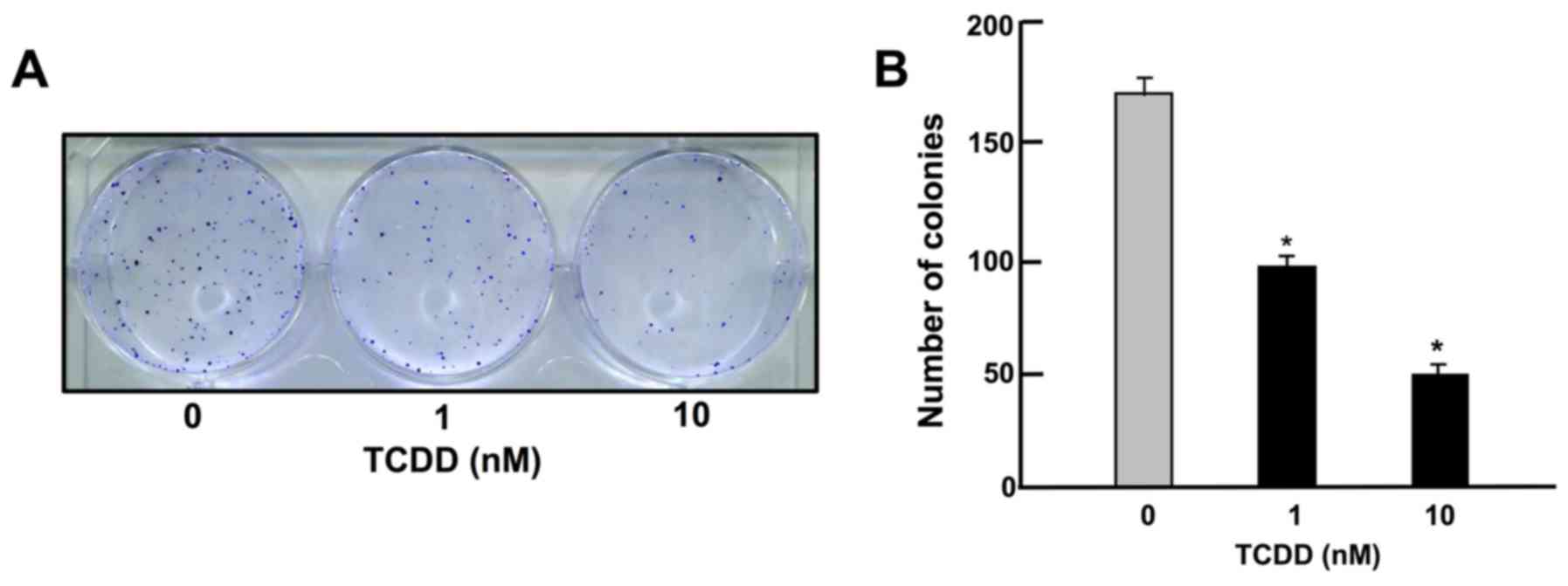
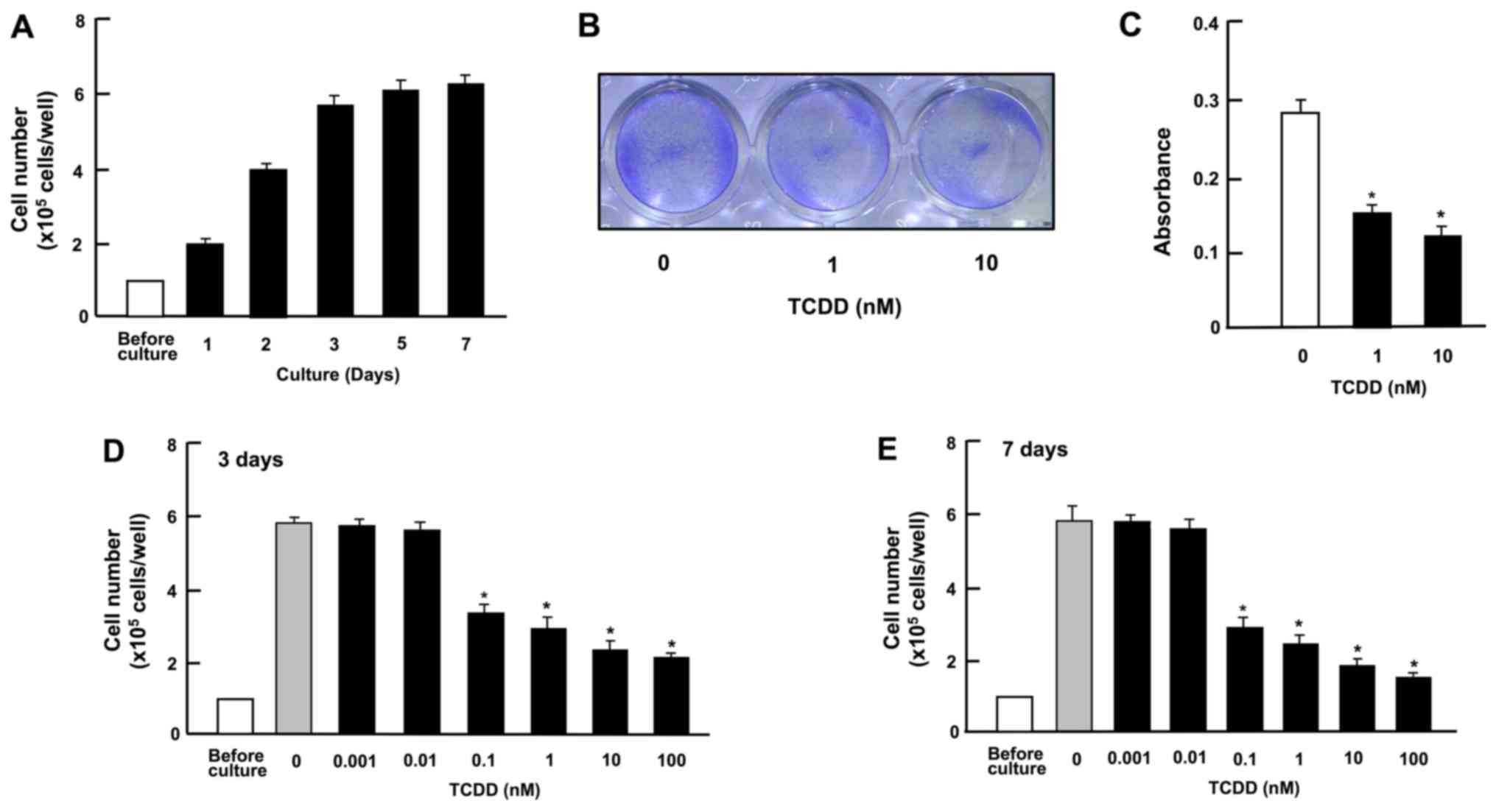
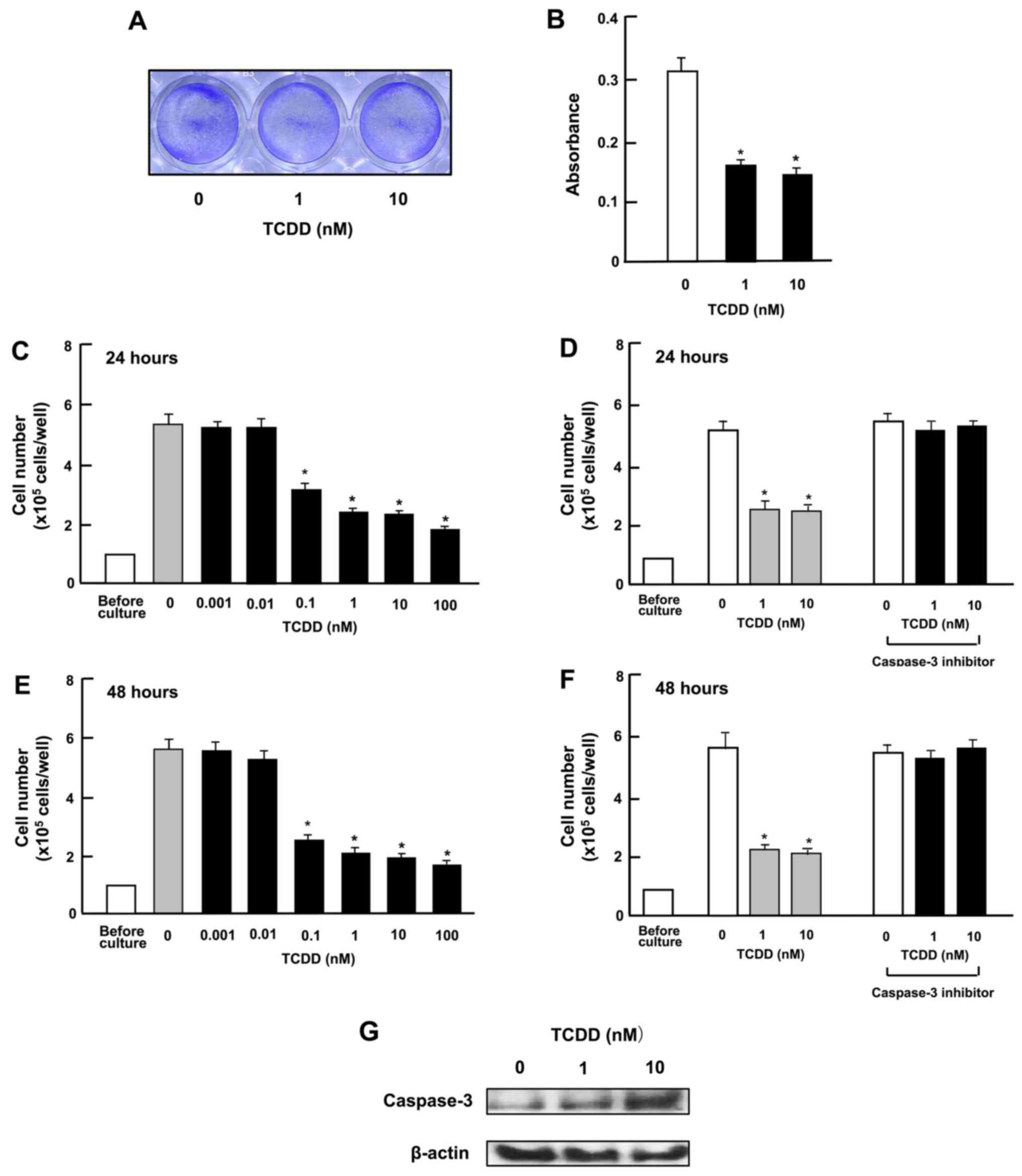
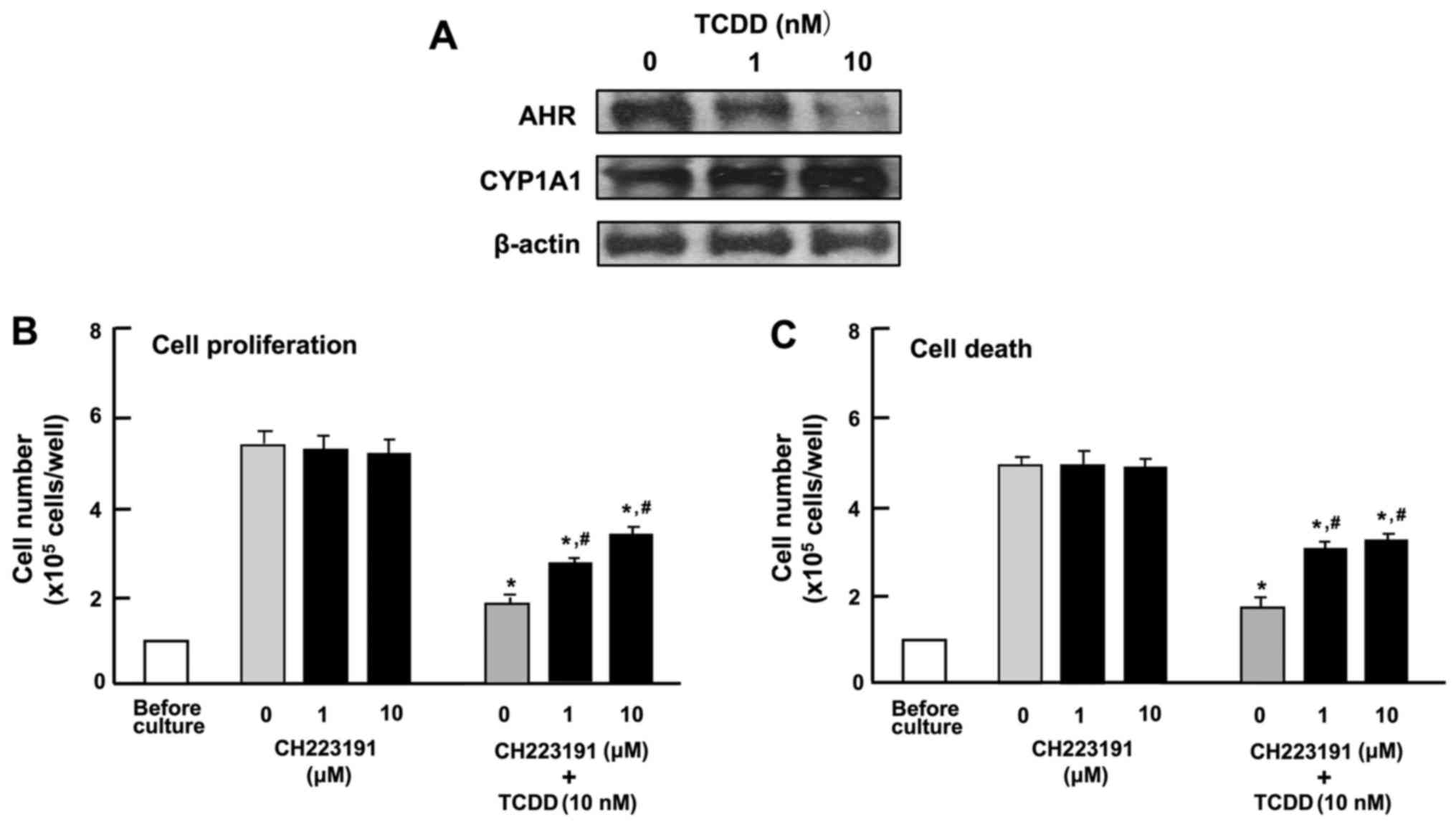
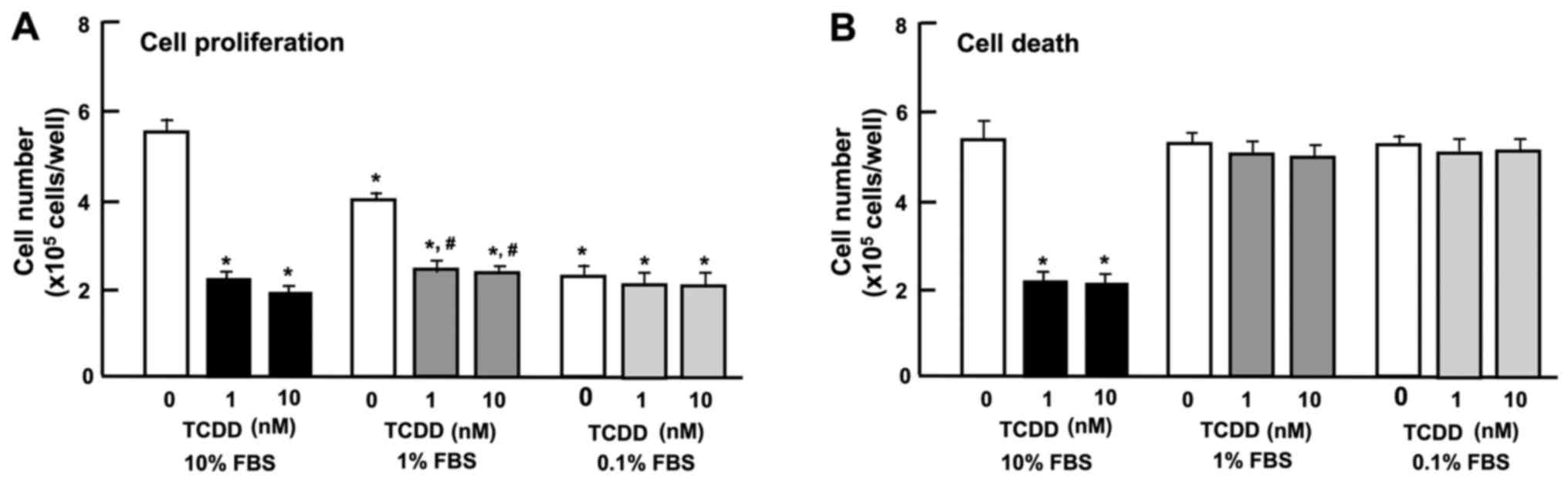
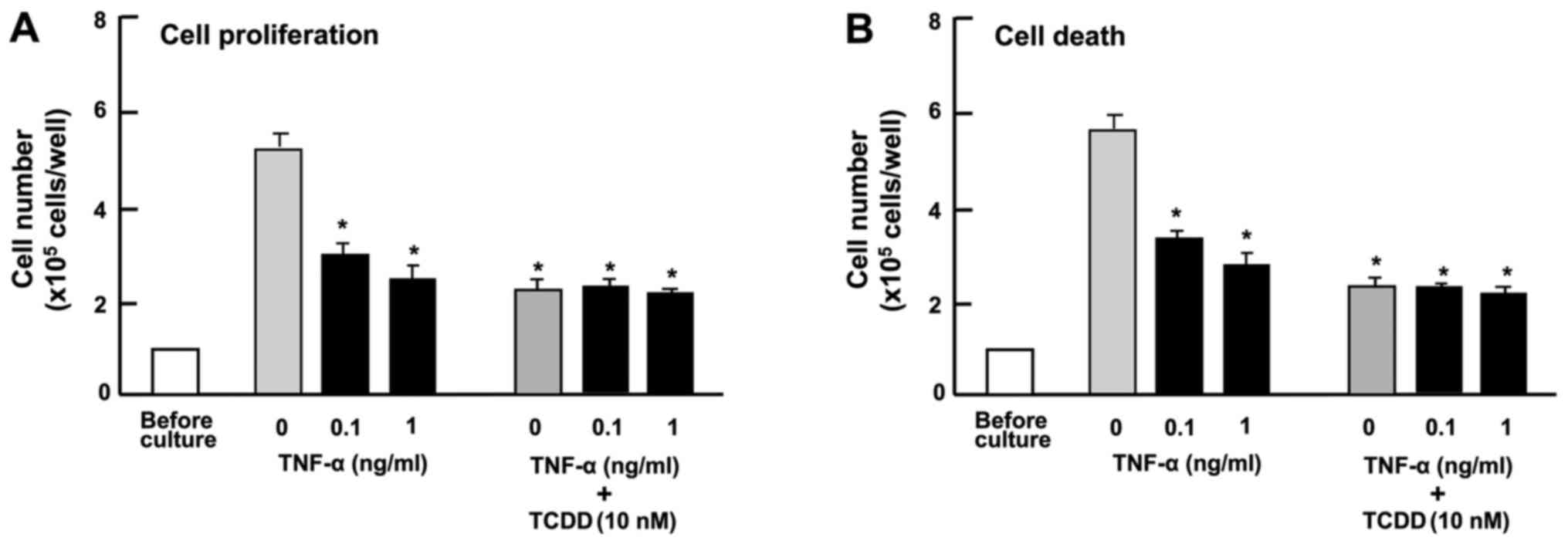
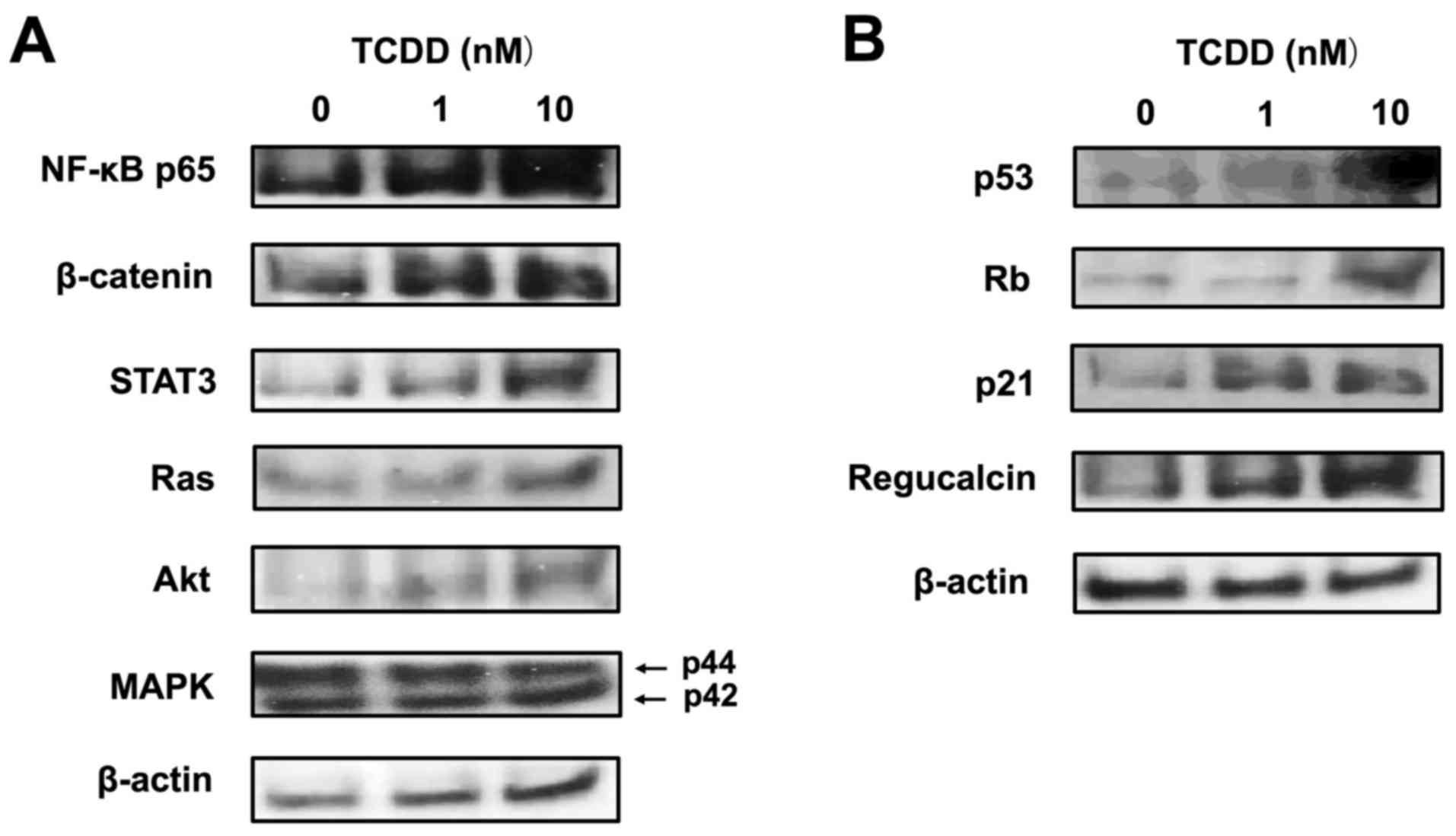
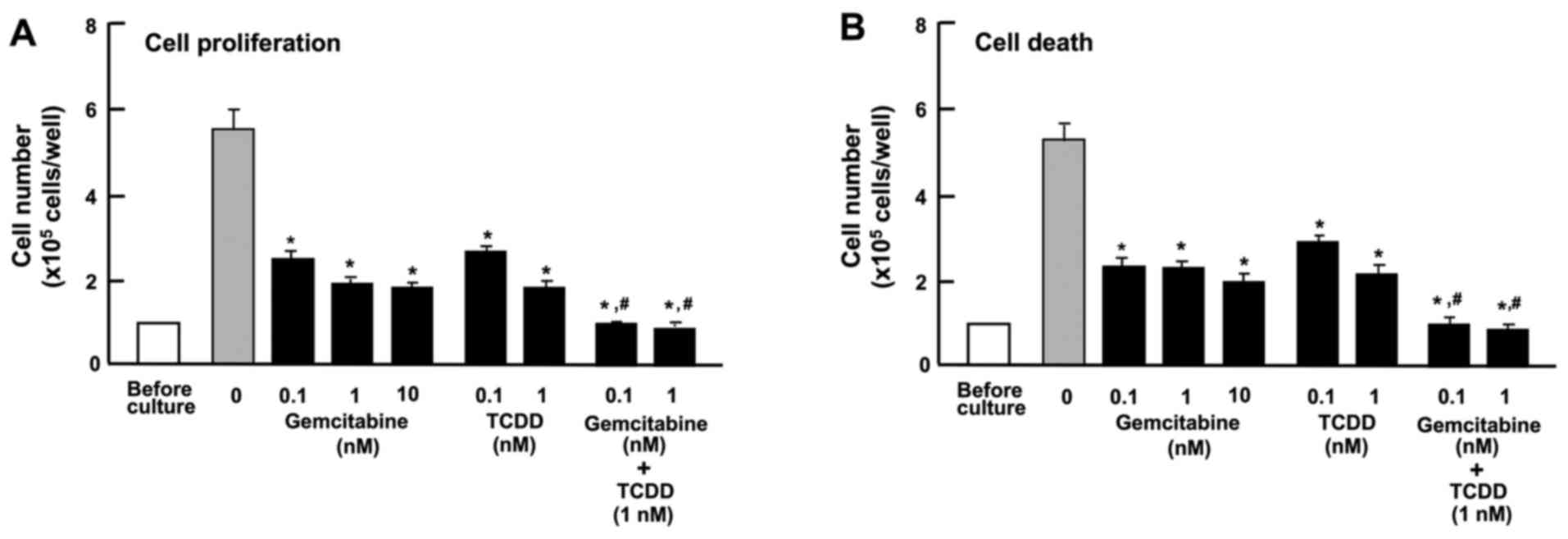
The aryl hydrocarbon receptor (AHR) is transcriptionally active in the form of a heterodimer with the AHR nuclear translocator, which then binds to the xenobiotic responsive element. AHR was originally discovered via its ligand, the polychlorinated hydrocarbon, 2,3,7,8‑tetrachlorodibenzo‑p‑dioxin (TCDD). In this study, we investigated whether TCDD regulates the growth of human liver cancer HepG2 cells in vitro. TCDD (0.1‑100 nM) was found to exert suppressive effects on the colony formation and proliferation of HepG2 cells, and stimulatory effects on the death of HepG2 cells when the cells reached subconfluence. The effects of TCDD on the HepG2 cells were abolished by culture with CH223191, an inhibitor of AHR signaling. The effects of TCDD were dependent on the concentration of serum, which contains various signaling factors. The effects of TCDD were not potentiated by culture with tumor necrosis factor‑α, which activates the signaling of nuclear factor‑κB (NF‑κB). The results of western blot analysis revealed that TCDD increased the protein levels of p53, Rb, p21, and regucalcin, which are suppressors of the growth of tumor cells. Moreover, TCDD enhanced the NF‑κB p65, β‑catenin, signal transducer and activator of transcription 3 (STAT3), Ras and Akt levels. Thus, the findings of this study indicate that TCDD may suppress liver cancer cell growth through various signaling pathways, mediated by AHR and its‑related co‑factors. Of note, the effects of TCDD were found to be potentiated by gemcitabine, which induces nuclear DNA damage in cancer cells, suggesting that their combined use may have potential as a suppressor of tumor cell growth.
View Figures

Figure 1

Figure 2

Figure 3

Figure 4

Figure 5

Figure 6

Figure 7

Figure 8

View References

1 

Hankinson O: The aryl hydrocarbon receptor complex. Annu Rev Pharmacol Toxicol. 35:307–340. 1995. View Article : Google Scholar : PubMed/NCBI

2 

Hankinson O: Role of coactivators in transcriptional activation by the aryl hydrocarbon receptor. Arch Biochem Biophys. 433:379–386. 2005. View Article : Google Scholar

3 

Kamenickova A, Anzenbacherova E, Pavek P, Soshilov AA, Denison MS, Anzenbacher P and Dvorak Z: Pelargonidin activates the AhR and induces CYP1A1 in primary human hepatocytes and human cancer cell lines HepG2 and LS174T. Toxicol Lett. 218:253–259. 2013. View Article : Google Scholar : PubMed/NCBI

4 

Kamenickova A, Anzenbacherova E, Pavek P, Soshilov AA, Denison MS, Zapletalova M, Anzenbacher P and Dvorak Z: Effects of anthocyanins on the AhR-CYP1A1 signaling pathway in human hepatocytes and human cancer cell lines. Toxicol Lett. 221:1–8. 2013. View Article : Google Scholar : PubMed/NCBI

5 

Dvorak Z, Vrzal R, Henklova P, Jancova P, Anzenbacherova E, Maurel P, Svecova L, Pavek P, Ehrmann J, Havlik R, et al: JNK inhibitor SP600125 is a partial agonist of human aryl hydrocarbon receptor and induces CYP1A1 and CYP1A2 genes in primary human hepatocytes. Biochem Pharmacol. 75:580–588. 2008. View Article : Google Scholar

6 

Pastorková B, Vrzalová A, Bachleda P and Dvořák Z: Hydroxystilbenes and methoxystilbenes activate human aryl hydrocarbon receptor and induce CYP1A genes in human hepatoma cells and human hepatocytes. Food Chem Toxicol. 103:122–132. 2017. View Article : Google Scholar : PubMed/NCBI

7 

Palermo CM, Hernando JI, Dertinger SD, Kende AS and Gasiewicz TA: Identification of potential aryl hydrocarbon receptor antagonists in green tea. Chem Res Toxicol. 16:865–872. 2003. View Article : Google Scholar : PubMed/NCBI

8 

Go RE, Hwang KA and Choi KC: Cytochrome P450 1 family and cancers. J Steroid Biochem Mol Biol. 147:24–30. 2015. View Article : Google Scholar

9 

Stejskalova L and Pavek P: The function of cytochrome P450 1A1 enzyme (CYP1A1) and aryl hydrocarbon receptor (AhR) in the placenta. Curr Pharm Biotechnol. 12:715–730. 2011. View Article : Google Scholar : PubMed/NCBI

10 

Forrester AR, Elias MS, Woodward EL, Graham M, Williams FM and Reynolds NJ: Induction of a chloracne phenotype in an epidermal equivalent model by 2,3,7,8-tetrachlorodibenzo-p-dioxin (TCDD) is dependent on aryl hydrocarbon receptor activation and is not reproduced by aryl hydrocarbon receptor knock down. J Dermatol Sci. 73:10–22. 2014. View Article : Google Scholar :

11 

Pierre S, Chevallier A, Teixeira-Clerc F, Ambolet-Camoit A, Bui LC, Bats AS, Fournet JC, Fernandez-Salguero P, Aggerbeck M, Lotersztajn S, et al: Aryl hydrocarbon receptor-dependent induction of liver fibrosis by dioxin. Toxicol Sci. 137:114–124. 2014. View Article : Google Scholar

12 

Wu D, Nishimura N, Kuo V, Fiehn O, Shahbaz S, Van Winkle L, Matsumura F and Vogel CF: Activation of aryl hydrocarbon receptor induces vascular inflammation and promotes atherosclerosis in apolipoprotein E−/− mice. Arterioscler Thromb Vasc Biol. 31:1260–1267. 2011. View Article : Google Scholar : PubMed/NCBI

13 

Roh E, Kwak SH, Jung HS, Cho YM, Pak YK, Park KS, Kim SY and Lee HK: Serum aryl hydrocarbon receptor ligand activity is associated with insulin resistance and resulting type 2 diabetes. Acta Diabetol. 52:489–495. 2015. View Article : Google Scholar

14 

Brito JS, Borges NA, Esgalhado M, Magliano DC, Soulage CO and Mafra D: Aryl hydrocarbon receptor activation in chronic kidney disease: Role of uremic toxins. Nephron. 137:1–7. 2017. View Article : Google Scholar : PubMed/NCBI

15 

Esser C: The aryl hydrocarbon receptor in immunity: Tools and potential. Methods Mol Biol. 1371:239–257. 2016. View Article : Google Scholar

16 

Murray IA, Patterson AD and Perdew GH: Aryl hydrocarbon receptor ligands in cancer: Friend and foe. Nat Rev Cancer. 14:801–814. 2014. View Article : Google Scholar

17 

Nukaya M, Moran S and Bradfield CA: The role of the dioxin-responsive element cluster between the Cyp1a1 and Cyp1a2 loci in aryl hydrocarbon receptor biology. Proc Natl Acad Sci USA. 106:4923–4928. 2009. View Article : Google Scholar : PubMed/NCBI

18 

Uno S, Dalton TP, Sinclair PR, Gorman N, Wang B, Smith AG, Miller MI, Shertzer HG and Nebert DW: Cyp1a1(−/−) male mice: Protection against high-dose TCDD-induced lethality and wasting syndrome, and resistance to intrahepatocyte lipid accumulation and uroporphyria. Toxicol Appl Pharmacol. 196:410–421. 2004. View Article : Google Scholar : PubMed/NCBI

19 

Singh KP, Garrett RW, Casado FL and Gasiewicz TA: Aryl hydrocarbon receptor-null allele mice have hematopoietic stem/progenitor cells with abnormal characteristics and functions. Stem Cells Dev. 20:769–784. 2011. View Article : Google Scholar :

20 

Barouki R, Coumoul X and Fernandez-Salguero PM: The aryl hydrocarbon receptor, more than a xenobiotic-interacting protein. FEBS Lett. 581:3608–3615. 2007. View Article : Google Scholar : PubMed/NCBI

21 

Mulero-Navarro S and Fernandez-Salguero PM: New trends in aryl hydrocarbon receptor biology. Front Cell Dev Biol. 4:452016. View Article : Google Scholar : PubMed/NCBI

22 

Moennikes O, Loeppen S, Buchmann A, Andersson P, Ittrich C, Poellinger L and Schwarz M: A constitutively active dioxin/aryl hydrocarbon receptor promotes hepatocarcinogenesis in mice. Cancer Res. 64:4707–4710. 2004. View Article : Google Scholar : PubMed/NCBI

23 

Fan Y, Boivin GP, Knudsen ES, Nebert DW, Xia Y and Puga A: The aryl hydrocarbon receptor functions as a tumor suppressor of liver carcinogenesis. Cancer Res. 70:212–220. 2010. View Article : Google Scholar

24 

Corchero J, Martín-Partido G, Dallas SL and Fernández-Salguero PM: Liver portal fibrosis in dioxin receptor-null mice that overexpress the latent transforming growth factor-beta-binding protein-1. Int J Exp Pathol. 85:295–302. 2004. View Article : Google Scholar : PubMed/NCBI

25 

Schmidt JV, Su GH-T, Reddy JK, Simon MC and Bradfield CA: Characterization of a murine Ahr null allele: Involvement of the Ah receptor in hepatic growth and development. Proc Natl Acad Sci USA. 93:6731–6736. 1996. View Article : Google Scholar : PubMed/NCBI

26 

Lahvis GP, Lindell SL, Thomas RS, McCuskey RS, Murphy C, Glover E, Bentz M, Southard J and Bradfield CA: Portosystemic shunting and persistent fetal vascular structures in aryl hydrocarbon receptor-deficient mice. Proc Natl Acad Sci USA. 97:10442–10447. 2000. View Article : Google Scholar : PubMed/NCBI

27 

Jackson DP, Li H, Mitchell KA, Joshi AD and Elferink CJ: Ah receptor-mediated suppression of liver regeneration through NC-XRE-driven p21Cip1 expression. Mol Pharmacol. 85:533–541. 2014. View Article : Google Scholar : PubMed/NCBI

28 

Mathew LK, Simonich MT and Tanguay RL: AHR-dependent misregulation of Wnt signaling disrupts tissue regeneration. Biochem Pharmacol. 77:498–507. 2009. View Article : Google Scholar :

29 

Moreno-Marín N, Barrasa E, Morales-Hernández A, Paniagua B, Blanco-Fernández G, Merino JM and Fernández-Salguero PM: Dioxin receptor adjust liver regeneration after acute toxic injury and protects against liver carcinogenesis. Sci Rep. 7:104202017. View Article : Google Scholar

30 

Knowles BB, Howe CC and Aden DP: Human hepatocellular carcinoma cell lines secrete the major plasma proteins and hepatitis B surface antigen. Science. 209:497–499. 1980. View Article : Google Scholar : PubMed/NCBI

31 

Choi EY, Lee H, Dingle RWC, Kim KB and Swanson HI: Development of novel CH223191-based antagonists of the aryl hydrocarbon receptor. Mol Pharmacol. 81:3–11. 2012. View Article : Google Scholar :

32 

Fang Z, Tang Y, Fang J, Zhou Z, Xing Z, Guo Z, Guo X, Wang W, Jiao W, Xu Z and Liu Z: See comment in PubMed Commons belowSimvastatin inhibits renal cancer cell growth and metastasis via AKT/mTOR, ERK and JAK2/STAT3 pathway. PLoS One. 8:e628232013. View Article : Google Scholar

33 

Wang K, Li Y, Jiang YZ, Dai CF, Patankar MS, Song JS and Zheng J: An endogenous aryl hydrocarbon receptor ligand inhibits proliferation and migration of human ovarian cancer cells. Cancer Lett. 340:63–71. 2013. View Article : Google Scholar : PubMed/NCBI

34 

Yamaguchi M and Daimon Y: Overexpression of regucalcin suppresses cell proliferation in cloned rat hepatoma H4-II-E cells: Involvement of intracellular signaling factors and cell cycle-related genes. J Cell Biochem. 95:1169–1177. 2005. View Article : Google Scholar : PubMed/NCBI

35 

Izumi T and Yamaguchi M: Overexpression of regucalcin suppresses cell death in cloned rat hepatoma H4-II-E cells induced by tumor necrosis factor-alpha or thapsigargin. J Cell Biochem. 92:296–306. 2004. View Article : Google Scholar : PubMed/NCBI

36 

Yamaguchi M, Osuka S, Weitzmann MN, El-Rayes BF, Shoji M and Murata T: Prolonged survival in pancreatic cancer patients with increased regucalcin gene expression: Overexpression of regucalcin suppresses the proliferation in human pancreatic cancer MIA PaCa-2 cells in vitro. Int J Oncol. 48:1955–1964. 2016. View Article : Google Scholar : PubMed/NCBI

37 

Yamaguchi M and Isogai M: Tissue concentration of calcium-binding protein regucalcin in rats by enzyme-linked immunoadsorbent assay. Mol Cell Biochem. 122:65–68. 1993. View Article : Google Scholar : PubMed/NCBI

38 

Vaziri C, Schneider A, Sherr DH and Faller DV: Expression of AHR is regulated by serum and mitogenic growth factors in murine 3T3 fibroblasts. J Biol Chem. 271:25921–25927. 1996. View Article : Google Scholar : PubMed/NCBI

39 

Umannová L, Zatloukalová J, Machala M, Krcmár P, Májková Z, Hennig B, Kozubík A and Vondrácek J: Tumor necrosis factor-α modulates effects of aryl hydrocarbon receptor ligands on cell proliferation and expression of cytochrome P450 enzymes in rat liver 'stem-like' cells. Toxicol Sci. 99:79–89. 2007. View Article : Google Scholar

40 

Tsurusaki Y and Yamaguchi M: Role of regucalcin in liver nuclear function: Binding of regucalcin to nuclear protein or DNA and modulation of tumor-related gene expression. Int J Mol Med. 14:277–281. 2004.PubMed/NCBI

41 

Yamaguchi M: Suppressive role of regucalcin in liver cell proliferation: Involvement in carcinogenesis. Cell Prolif. 46:243–253. 2013. View Article : Google Scholar : PubMed/NCBI

42 

Tang SC and Chen YC: Novel therapeutic targets for pancreatic cancer. World J Gastroenterol. 20:10825–10844. 2014. View Article : Google Scholar : PubMed/NCBI

43 

Vogel CFA, Wu D, Goth SR, Baek J, Lollies A, Domhardt R, Grindel A and Pessah IN: Aryl hydrocarbon receptor signaling regulates NF-κB RelB activation during dendritic-cell differentiation. Immunol Cell Biol. 91:568–575. 2013. View Article : Google Scholar : PubMed/NCBI

44 

Han M, Liu X, Liu S, Su G, Fan X, Chen J, Yuan Q and Xu G: 2,3,7,8-Tetrachlorodibenzo-p-dioxin (TCDD) induces hepatic stellate cell (HSC) activation and liver fibrosis in C57BL6 mouse via activating Akt and NF-κB signaling pathways. Toxicol Lett. 273:10–19. 2017. View Article : Google Scholar : PubMed/NCBI

45 

Jennen D, Ruiz-Aracama A, Magkoufopoulou C, Peijnenburg A, Lommen A, van Delft J and Kleinjans J: Integrating transcriptomics and metabonomics to unravel modes-of-action of 2,3,7,8-tetrachlorodibenzo-p-dioxin (TCDD) in HepG2 cells. BMC Syst Biol. 5:1392011. View Article : Google Scholar : PubMed/NCBI

46 

Nejak-Bowen KN, Zeng G, Tan X, Cieply B and Monga SP: Beta-catenin regulates vitamin C biosynthesis and cell survival in murine liver. J Biol Chem. 284:28115–28127. 2009. View Article : Google Scholar : PubMed/NCBI

47 

Yamaguchi M, Osuka S, Weitzmann MN, El-Rayes BF, Shoji M and Murata T: Prolonged survival in hepatocarcinoma patients with increased regucalcin gene expression: HepG2 cell proliferation is suppressed by overexpression of regucalcin in vitro. Int J Oncol. 49:1686–1694. 2016. View Article : Google Scholar : PubMed/NCBI

Related Articles

  • Abstract
  • View
  • Download
  • Twitter
Copy and paste a formatted citation
Spandidos Publications style
Yamaguchi M and Hankinson O: 2,3,7,8‑Tetrachlorodibenzo‑p‑dioxin suppresses the growth of human liver cancer HepG2 cells in vitro: Involvement of cell signaling factors. Int J Oncol 53: 1657-1666, 2018.
APA
Yamaguchi, M., & Hankinson, O. (2018). 2,3,7,8‑Tetrachlorodibenzo‑p‑dioxin suppresses the growth of human liver cancer HepG2 cells in vitro: Involvement of cell signaling factors. International Journal of Oncology, 53, 1657-1666. https://doi.org/10.3892/ijo.2018.4507
MLA
Yamaguchi, M., Hankinson, O."2,3,7,8‑Tetrachlorodibenzo‑p‑dioxin suppresses the growth of human liver cancer HepG2 cells in vitro: Involvement of cell signaling factors". International Journal of Oncology 53.4 (2018): 1657-1666.
Chicago
Yamaguchi, M., Hankinson, O."2,3,7,8‑Tetrachlorodibenzo‑p‑dioxin suppresses the growth of human liver cancer HepG2 cells in vitro: Involvement of cell signaling factors". International Journal of Oncology 53, no. 4 (2018): 1657-1666. https://doi.org/10.3892/ijo.2018.4507
Copy and paste a formatted citation
x
Spandidos Publications style
Yamaguchi M and Hankinson O: 2,3,7,8‑Tetrachlorodibenzo‑p‑dioxin suppresses the growth of human liver cancer HepG2 cells in vitro: Involvement of cell signaling factors. Int J Oncol 53: 1657-1666, 2018.
APA
Yamaguchi, M., & Hankinson, O. (2018). 2,3,7,8‑Tetrachlorodibenzo‑p‑dioxin suppresses the growth of human liver cancer HepG2 cells in vitro: Involvement of cell signaling factors. International Journal of Oncology, 53, 1657-1666. https://doi.org/10.3892/ijo.2018.4507
MLA
Yamaguchi, M., Hankinson, O."2,3,7,8‑Tetrachlorodibenzo‑p‑dioxin suppresses the growth of human liver cancer HepG2 cells in vitro: Involvement of cell signaling factors". International Journal of Oncology 53.4 (2018): 1657-1666.
Chicago
Yamaguchi, M., Hankinson, O."2,3,7,8‑Tetrachlorodibenzo‑p‑dioxin suppresses the growth of human liver cancer HepG2 cells in vitro: Involvement of cell signaling factors". International Journal of Oncology 53, no. 4 (2018): 1657-1666. https://doi.org/10.3892/ijo.2018.4507
Follow us
  • Twitter
  • LinkedIn
  • Facebook
About
  • Spandidos Publications
  • Careers
  • Cookie Policy
  • Privacy Policy
How can we help?
  • Help
  • Live Chat
  • Contact
  • Email to our Support Team