Spandidos Publications Logo
  • About
    • About Spandidos
    • Aims and Scopes
    • Abstracting and Indexing
    • Editorial Policies
    • Reprints and Permissions
    • Job Opportunities
    • Terms and Conditions
    • Contact
  • Journals
    • All Journals
    • Oncology Letters
      • Oncology Letters
      • Information for Authors
      • Editorial Policies
      • Editorial Board
      • Aims and Scope
      • Abstracting and Indexing
      • Bibliographic Information
      • Archive
    • International Journal of Oncology
      • International Journal of Oncology
      • Information for Authors
      • Editorial Policies
      • Editorial Board
      • Aims and Scope
      • Abstracting and Indexing
      • Bibliographic Information
      • Archive
    • Molecular and Clinical Oncology
      • Molecular and Clinical Oncology
      • Information for Authors
      • Editorial Policies
      • Editorial Board
      • Aims and Scope
      • Abstracting and Indexing
      • Bibliographic Information
      • Archive
    • Experimental and Therapeutic Medicine
      • Experimental and Therapeutic Medicine
      • Information for Authors
      • Editorial Policies
      • Editorial Board
      • Aims and Scope
      • Abstracting and Indexing
      • Bibliographic Information
      • Archive
    • International Journal of Molecular Medicine
      • International Journal of Molecular Medicine
      • Information for Authors
      • Editorial Policies
      • Editorial Board
      • Aims and Scope
      • Abstracting and Indexing
      • Bibliographic Information
      • Archive
    • Biomedical Reports
      • Biomedical Reports
      • Information for Authors
      • Editorial Policies
      • Editorial Board
      • Aims and Scope
      • Abstracting and Indexing
      • Bibliographic Information
      • Archive
    • Oncology Reports
      • Oncology Reports
      • Information for Authors
      • Editorial Policies
      • Editorial Board
      • Aims and Scope
      • Abstracting and Indexing
      • Bibliographic Information
      • Archive
    • Molecular Medicine Reports
      • Molecular Medicine Reports
      • Information for Authors
      • Editorial Policies
      • Editorial Board
      • Aims and Scope
      • Abstracting and Indexing
      • Bibliographic Information
      • Archive
    • World Academy of Sciences Journal
      • World Academy of Sciences Journal
      • Information for Authors
      • Editorial Policies
      • Editorial Board
      • Aims and Scope
      • Abstracting and Indexing
      • Bibliographic Information
      • Archive
    • International Journal of Functional Nutrition
      • International Journal of Functional Nutrition
      • Information for Authors
      • Editorial Policies
      • Editorial Board
      • Aims and Scope
      • Abstracting and Indexing
      • Bibliographic Information
      • Archive
    • International Journal of Epigenetics
      • International Journal of Epigenetics
      • Information for Authors
      • Editorial Policies
      • Editorial Board
      • Aims and Scope
      • Abstracting and Indexing
      • Bibliographic Information
      • Archive
    • Medicine International
      • Medicine International
      • Information for Authors
      • Editorial Policies
      • Editorial Board
      • Aims and Scope
      • Abstracting and Indexing
      • Bibliographic Information
      • Archive
  • Articles
  • Information
    • Information for Authors
    • Information for Reviewers
    • Information for Librarians
    • Information for Advertisers
    • Conferences
  • Language Editing
Spandidos Publications Logo
  • About
    • About Spandidos
    • Aims and Scopes
    • Abstracting and Indexing
    • Editorial Policies
    • Reprints and Permissions
    • Job Opportunities
    • Terms and Conditions
    • Contact
  • Journals
    • All Journals
    • Biomedical Reports
      • Information for Authors
      • Editorial Policies
      • Editorial Board
      • Aims and Scope
      • Abstracting and Indexing
      • Bibliographic Information
      • Archive
    • Experimental and Therapeutic Medicine
      • Information for Authors
      • Editorial Policies
      • Editorial Board
      • Aims and Scope
      • Abstracting and Indexing
      • Bibliographic Information
      • Archive
    • International Journal of Epigenetics
      • Information for Authors
      • Editorial Policies
      • Editorial Board
      • Aims and Scope
      • Abstracting and Indexing
      • Bibliographic Information
      • Archive
    • International Journal of Functional Nutrition
      • Information for Authors
      • Editorial Policies
      • Editorial Board
      • Aims and Scope
      • Abstracting and Indexing
      • Bibliographic Information
      • Archive
    • International Journal of Molecular Medicine
      • Information for Authors
      • Editorial Policies
      • Editorial Board
      • Aims and Scope
      • Abstracting and Indexing
      • Bibliographic Information
      • Archive
    • International Journal of Oncology
      • Information for Authors
      • Editorial Policies
      • Editorial Board
      • Aims and Scope
      • Abstracting and Indexing
      • Bibliographic Information
      • Archive
    • Medicine International
      • Information for Authors
      • Editorial Policies
      • Editorial Board
      • Aims and Scope
      • Abstracting and Indexing
      • Bibliographic Information
      • Archive
    • Molecular and Clinical Oncology
      • Information for Authors
      • Editorial Policies
      • Editorial Board
      • Aims and Scope
      • Abstracting and Indexing
      • Bibliographic Information
      • Archive
    • Molecular Medicine Reports
      • Information for Authors
      • Editorial Policies
      • Editorial Board
      • Aims and Scope
      • Abstracting and Indexing
      • Bibliographic Information
      • Archive
    • Oncology Letters
      • Information for Authors
      • Editorial Policies
      • Editorial Board
      • Aims and Scope
      • Abstracting and Indexing
      • Bibliographic Information
      • Archive
    • Oncology Reports
      • Information for Authors
      • Editorial Policies
      • Editorial Board
      • Aims and Scope
      • Abstracting and Indexing
      • Bibliographic Information
      • Archive
    • World Academy of Sciences Journal
      • Information for Authors
      • Editorial Policies
      • Editorial Board
      • Aims and Scope
      • Abstracting and Indexing
      • Bibliographic Information
      • Archive
  • Articles
  • Information
    • For Authors
    • For Reviewers
    • For Librarians
    • For Advertisers
    • Conferences
  • Language Editing
Login Register Submit
  • This site uses cookies
  • You can change your cookie settings at any time by following the instructions in our Cookie Policy. To find out more, you may read our Privacy Policy.

    I agree
Search articles by DOI, keyword, author or affiliation
Search
Advanced Search
presentation
International Journal of Oncology
Join Editorial Board Propose a Special Issue
Print ISSN: 1019-6439 Online ISSN: 1791-2423
Journal Cover
April-2019 Volume 54 Issue 4

Full Size Image

Cover Legend PDF

Sign up for eToc alerts
Recommend to Library

Journals

International Journal of Molecular Medicine

International Journal of Molecular Medicine

International Journal of Molecular Medicine is an international journal devoted to molecular mechanisms of human disease.

International Journal of Oncology

International Journal of Oncology

International Journal of Oncology is an international journal devoted to oncology research and cancer treatment.

Molecular Medicine Reports

Molecular Medicine Reports

Covers molecular medicine topics such as pharmacology, pathology, genetics, neuroscience, infectious diseases, molecular cardiology, and molecular surgery.

Oncology Reports

Oncology Reports

Oncology Reports is an international journal devoted to fundamental and applied research in Oncology.

Experimental and Therapeutic Medicine

Experimental and Therapeutic Medicine

Experimental and Therapeutic Medicine is an international journal devoted to laboratory and clinical medicine.

Oncology Letters

Oncology Letters

Oncology Letters is an international journal devoted to Experimental and Clinical Oncology.

Biomedical Reports

Biomedical Reports

Explores a wide range of biological and medical fields, including pharmacology, genetics, microbiology, neuroscience, and molecular cardiology.

Molecular and Clinical Oncology

Molecular and Clinical Oncology

International journal addressing all aspects of oncology research, from tumorigenesis and oncogenes to chemotherapy and metastasis.

World Academy of Sciences Journal

World Academy of Sciences Journal

Multidisciplinary open-access journal spanning biochemistry, genetics, neuroscience, environmental health, and synthetic biology.

International Journal of Functional Nutrition

International Journal of Functional Nutrition

Open-access journal combining biochemistry, pharmacology, immunology, and genetics to advance health through functional nutrition.

International Journal of Epigenetics

International Journal of Epigenetics

Publishes open-access research on using epigenetics to advance understanding and treatment of human disease.

Medicine International

Medicine International

An International Open Access Journal Devoted to General Medicine.

Journal Cover
April-2019 Volume 54 Issue 4

Full Size Image

Cover Legend PDF

Sign up for eToc alerts
Recommend to Library

  • Article
  • Citations
    • Cite This Article
    • Download Citation
    • Create Citation Alert
    • Remove Citation Alert
    • Cited By
  • Similar Articles
    • Related Articles (in Spandidos Publications)
    • Similar Articles (Google Scholar)
    • Similar Articles (PubMed)
  • Download PDF
  • Download XML
  • View XML
Article Open Access

Silencing of COPB2 inhibits the proliferation of gastric cancer cells and induces apoptosis via suppression of the RTK signaling pathway

  • Authors:
    • Caixia An
    • Hailong Li
    • Xueyan Zhang
    • Jing Wang
    • Yi Qiang
    • Xinhua Ye
    • Qiang Li
    • Quanlin Guan
    • Yongning Zhou
  • View Affiliations / Copyright

    Affiliations: Department of Gastroenterology, The First Hospital of Lanzhou University, Lanzhou, Gansu 730000, P.R. China, Department of Clinical Laboratory Diagnosis, School of Clinical Medicine, Gansu University of Chinese Medicine, Lanzhou, Gansu 730000, P.R. China, Division of Cardiac Surgery, Gansu Provincial Maternal and Child Health Hospital, Lanzhou, Gansu 730050, P.R. China, Department of Pediatrics, The First Hospital of Lanzhou University, Lanzhou, Gansu 730000, P.R. China, Division of Neurosurgery, Second Hospital of Lanzhou University, Lanzhou, Gansu 730000, P.R. China, Department of Surgical Oncology, The First Hospital of Lanzhou University, Lanzhou, Gansu 730000, P.R. China
    Copyright: © An et al. This is an open access article distributed under the terms of Creative Commons Attribution License.
  • Pages: 1195-1208
    |
    Published online on: February 18, 2019
       https://doi.org/10.3892/ijo.2019.4717
  • Expand metrics +
Metrics: Total Views: 0 (Spandidos Publications: | PMC Statistics: )
Metrics: Total PDF Downloads: 0 (Spandidos Publications: | PMC Statistics: )
Cited By (CrossRef): 0 citations Loading Articles...

This article is mentioned in:


Abstract

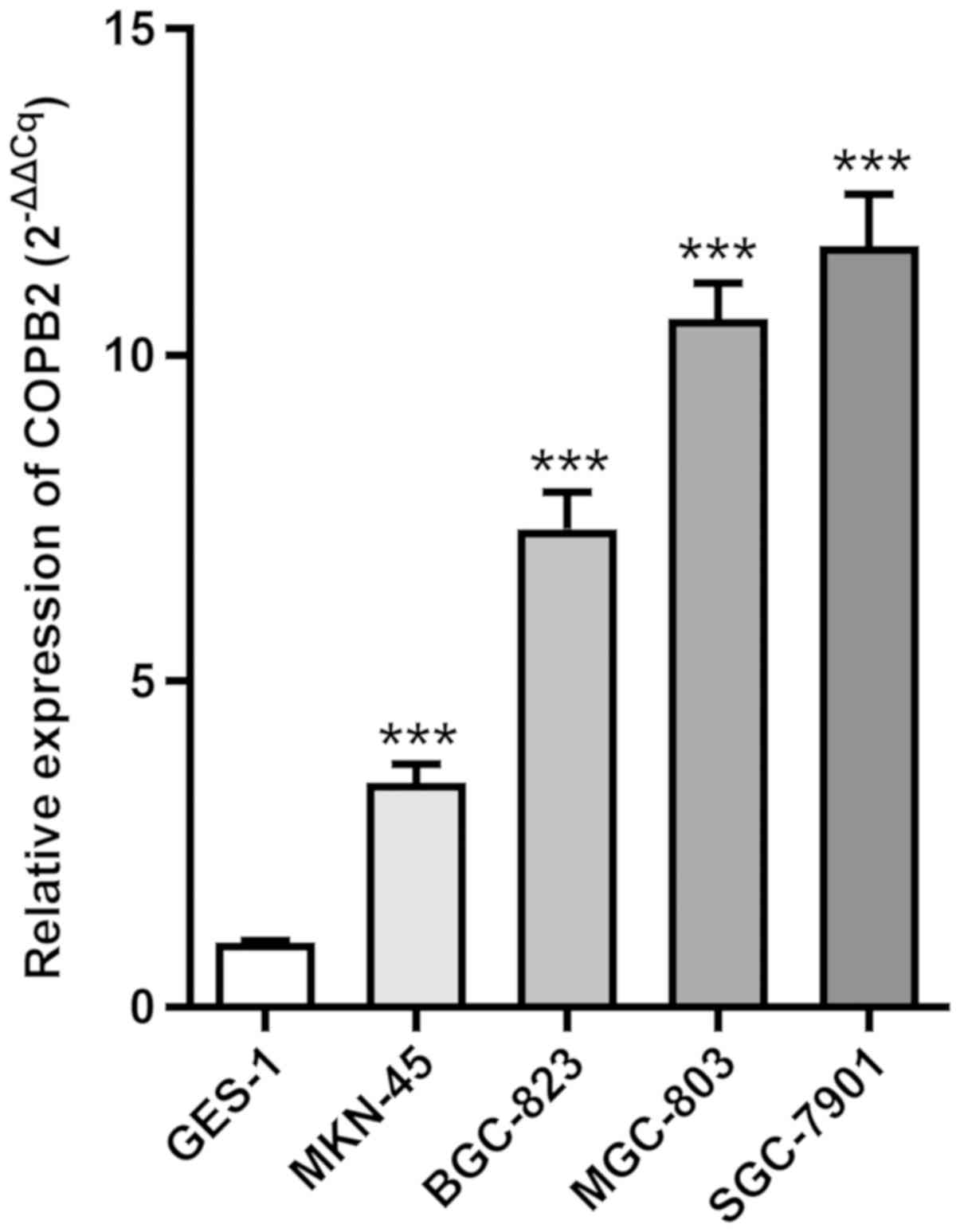
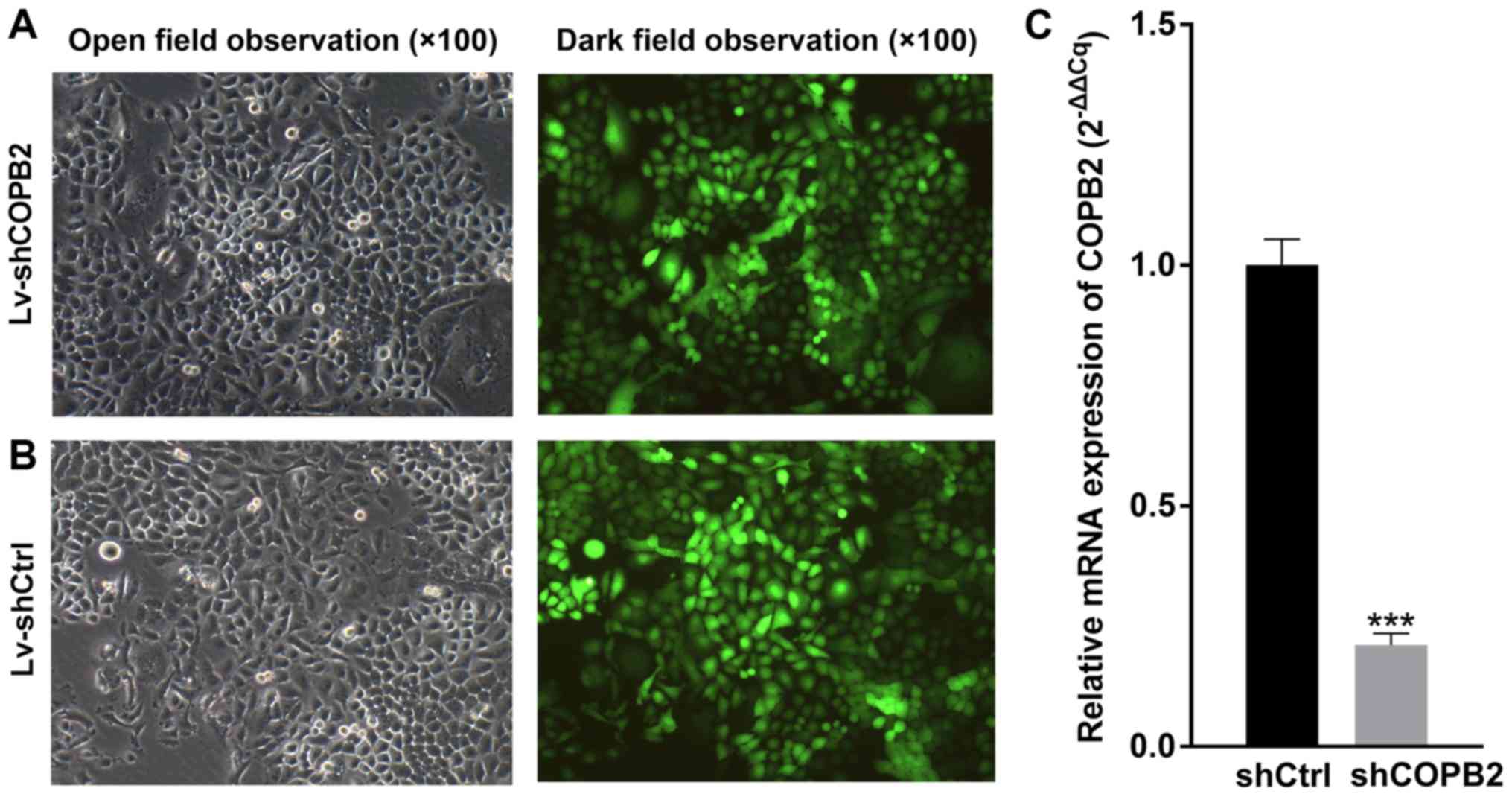
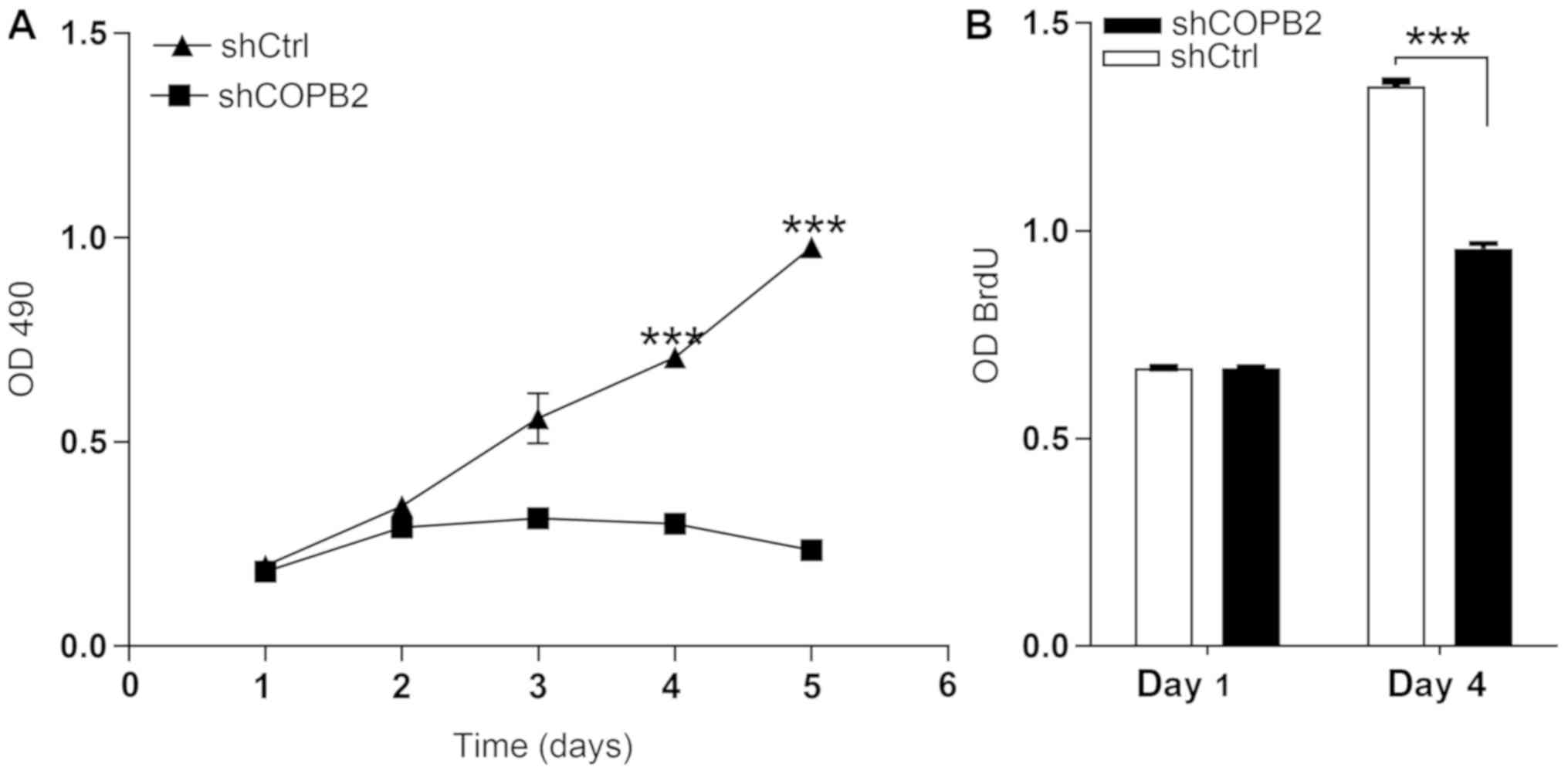
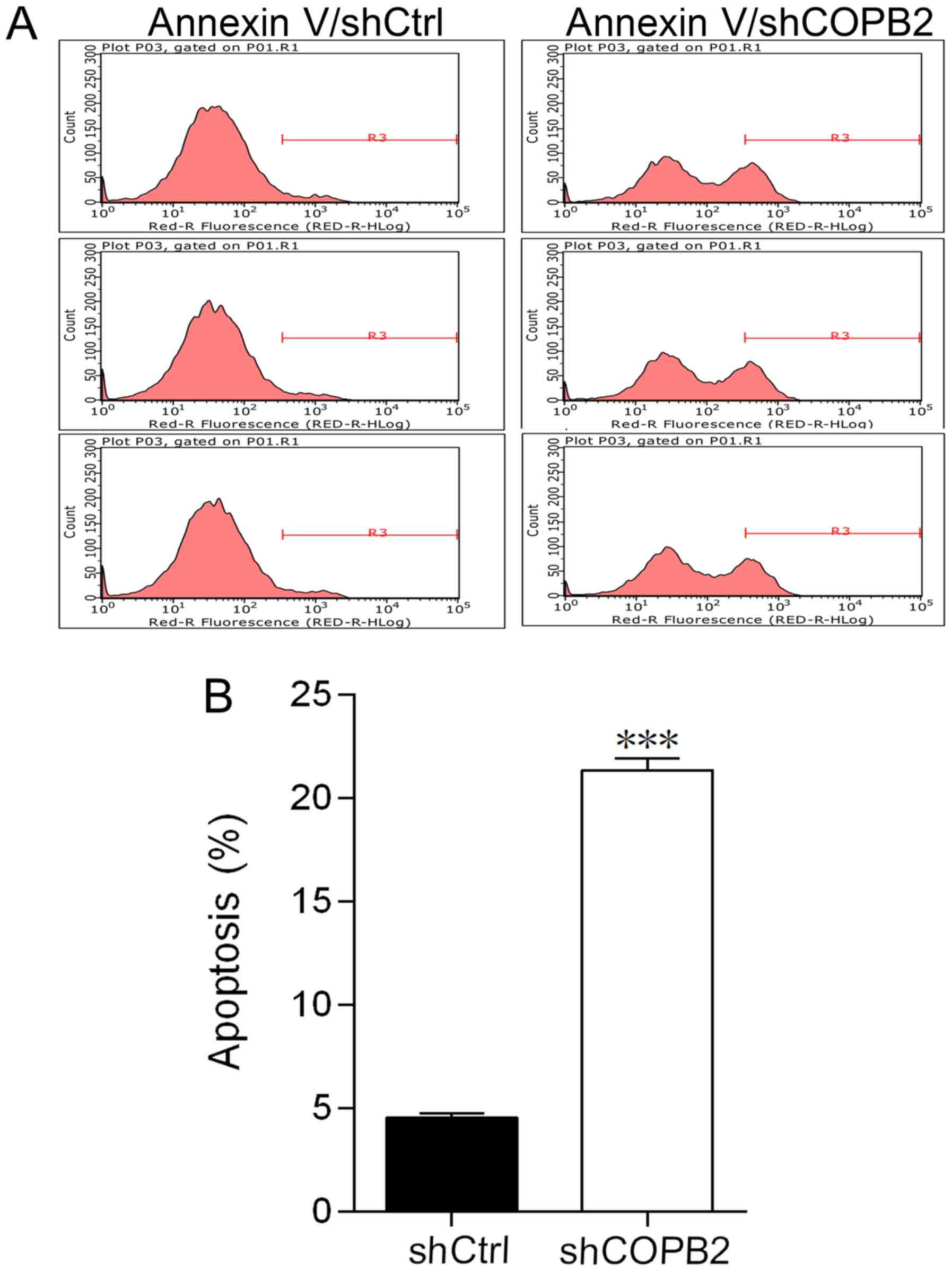
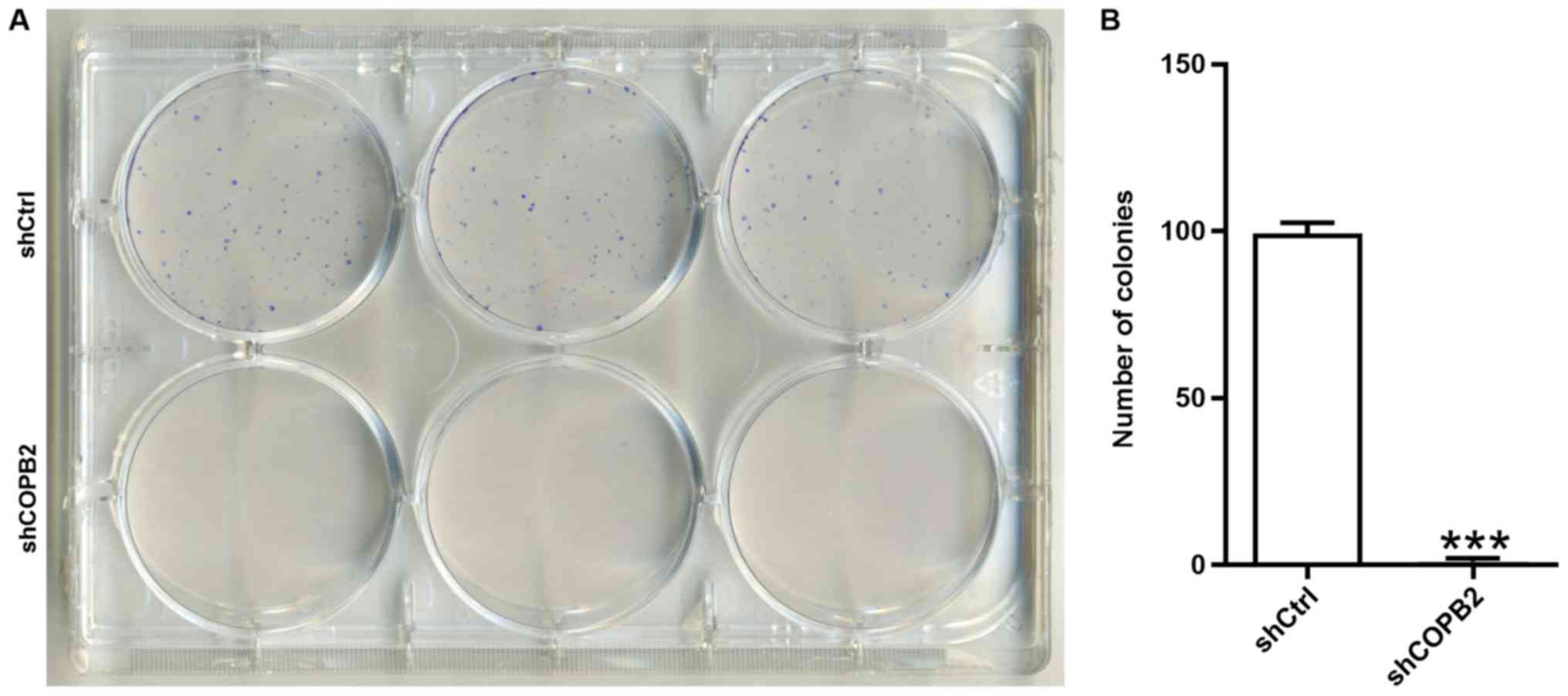
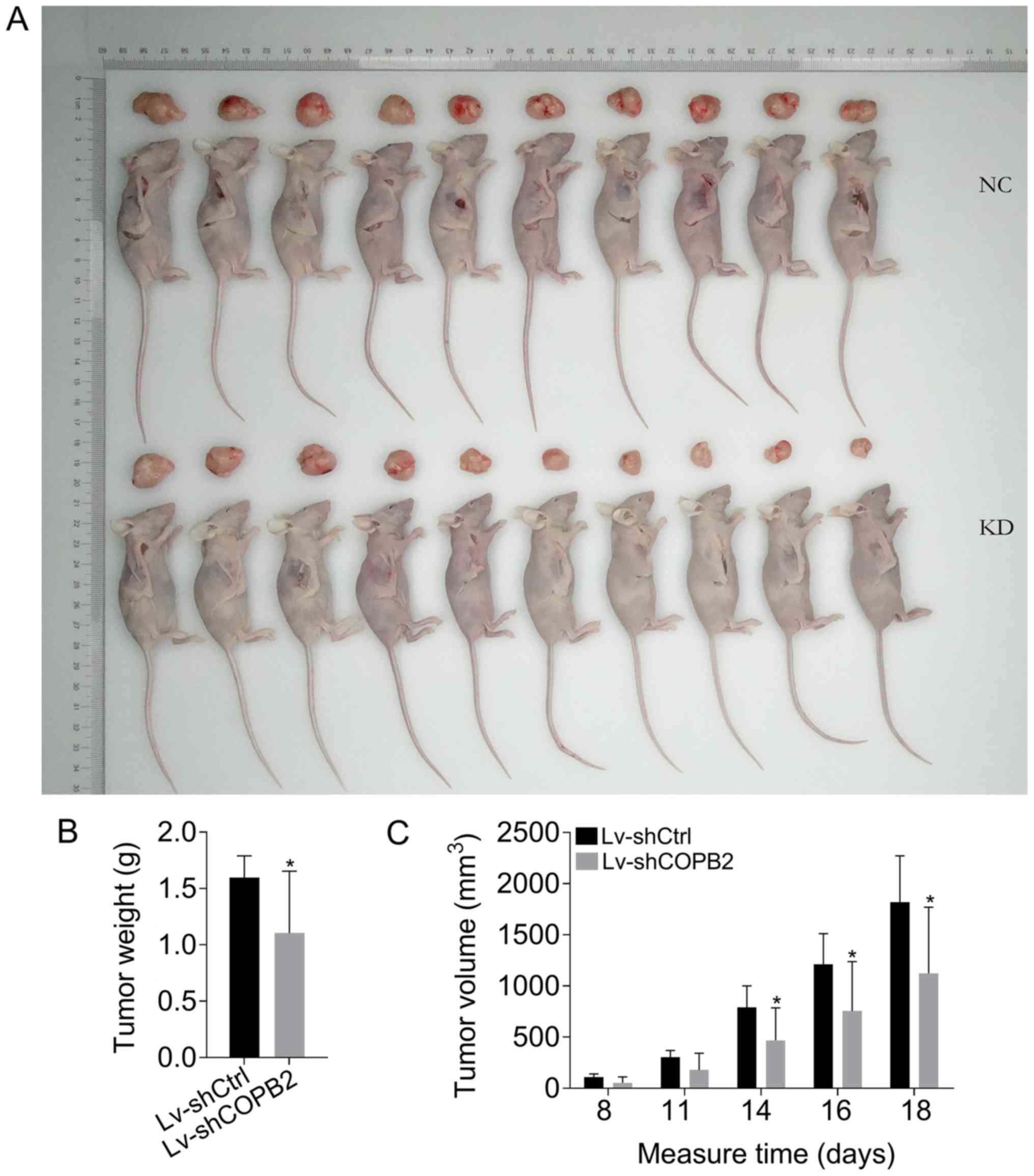
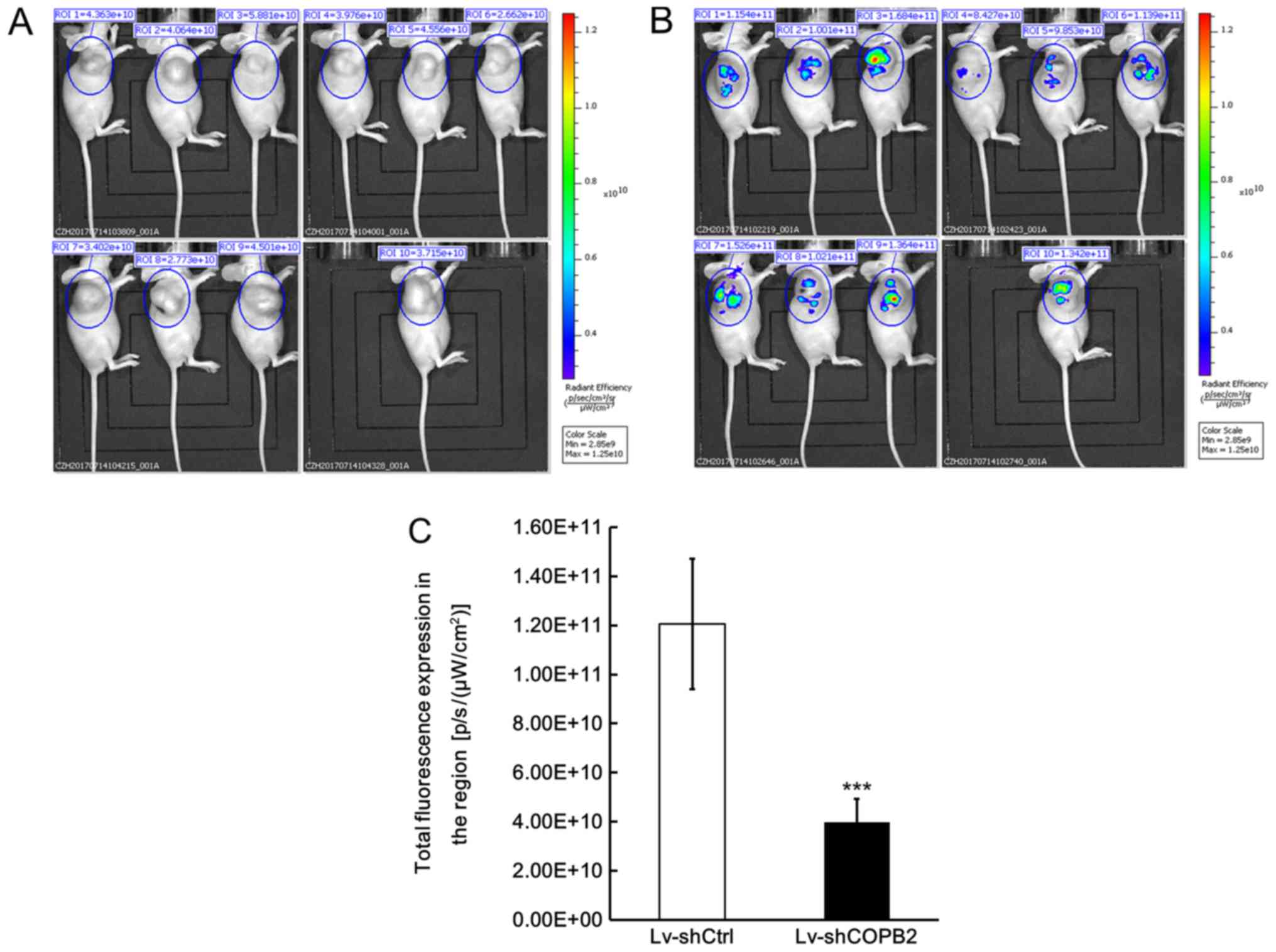
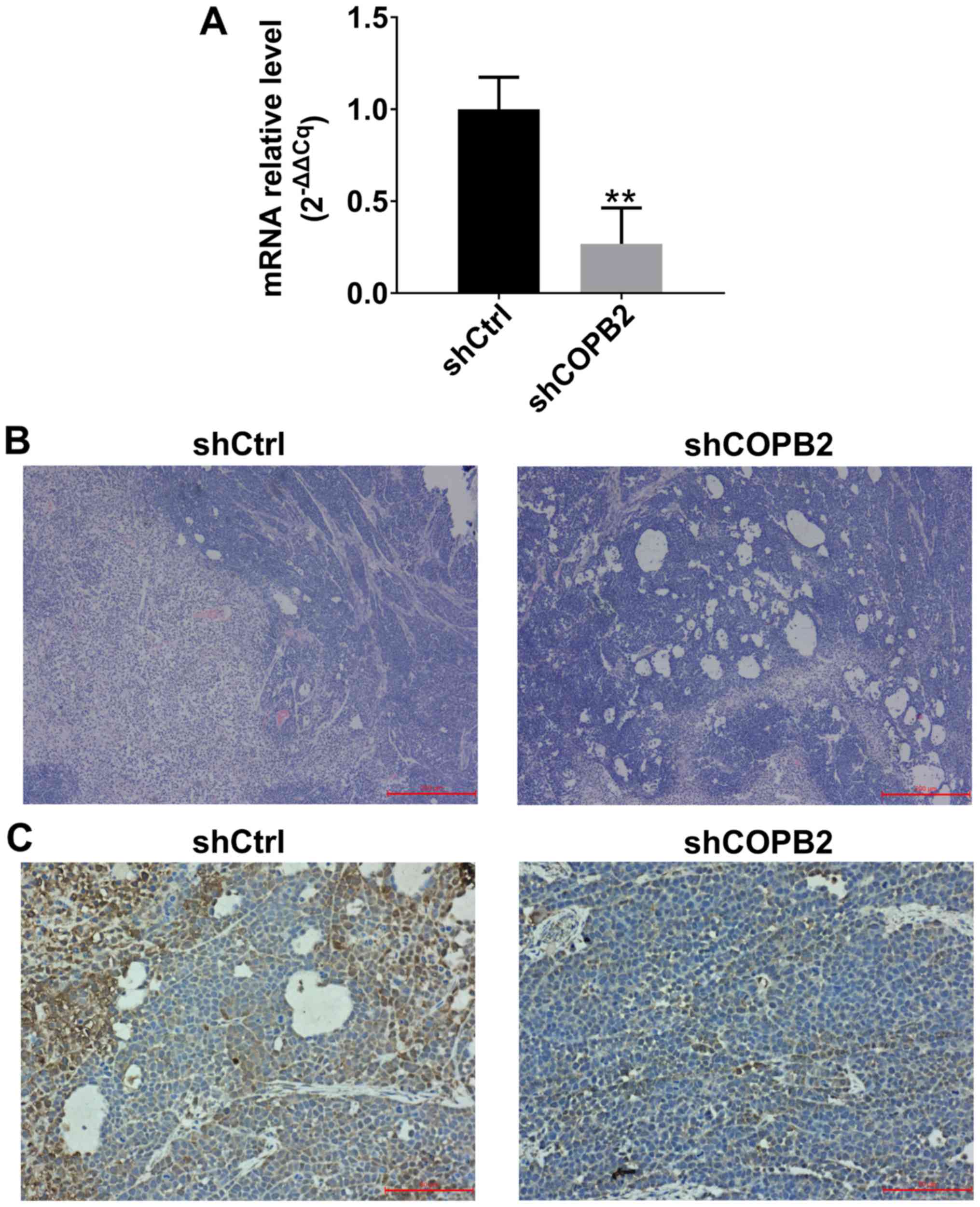
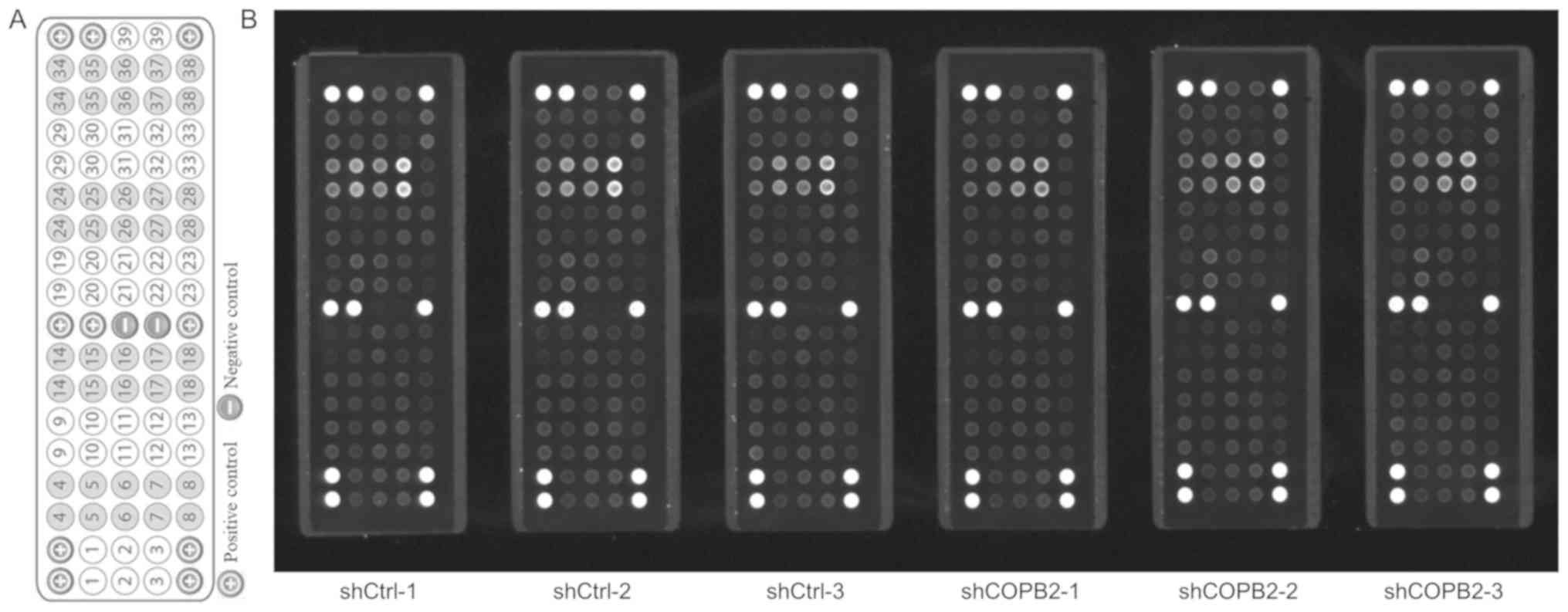
Emerging studies have reported that coatomer protein complex subunit β2 (COPB2) is overexpressed in several types of malignant tumor; however, to the best of our knowledge, no studies regarding COPB2 in gastric cancer have been published thus far. Therefore, the present study aimed to determine the significance and function of COPB2 in gastric cancer. COPB2 expression in gastric cancer cell lines was measured using reverse transcription‑quantitative polymerase chain reaction (RT‑qPCR) analysis. In addition, lentivirus‑short hairpin RNA (shRNA) COPB2 (Lv‑shCOPB2) was generated and used to infect BGC‑823 cells to analyze the effects of COPB2 on the cancerous phenotype. The effects of shRNA‑mediated COPB2 knockdown on cell proliferation were detected using MTT, 5‑bromo‑2‑deoxyuridine and colony formation assays. In addition, the effects of COPB2 knockdown on apoptosis were analyzed by flow cytometry. Nude mice and fluorescence imaging were used to characterize the regulation of tumor growth in vivo, and qPCR and immunohistochemistry were subsequently conducted to analyze COPB2 expression in xenograft tumor tissues. Furthermore, a receptor tyrosine kinase (RTK) signaling pathway antibody array was used to explore the relevant molecular mechanisms underlying the effects of COPB2 knockdown. The results revealed that COPB2 mRNA was abundantly overexpressed in gastric cancer cell lines, whereas knockdown of COPB2 significantly inhibited cell growth and colony formation ability, and led to increased cell apoptosis in vitro. The tumorigenicity assay revealed that knockdown of COPB2 reduced tumor growth in nude mice, and fluorescence imaging indicated that the total radiant efficiency of mice in the Lv‑shCOPB2‑infected group was markedly reduced compared with the mice in the Lv‑shRNA control‑infected group in vivo. The antibody array assay revealed that the levels of phosphorylation in 23 target RTKs were significantly reduced: In conclusion, COPB2 was highly expressed in gastric cancer cell lines, and knockdown suppressed colony formation and promoted cell apoptosis via inhibiting the RTK signaling and its downstream signaling cascade molecules. Therefore, COPB2 may present a valuable target for gene silencing strategy in gastric cancer.
View Figures

Figure 1

Figure 2

Figure 3

Figure 4

Figure 5

Figure 6

Figure 7

Figure 8

Figure 9

View References

1 

Yang BH, Parkin DM, Cai L and Zhang ZF: Cancer burden and trends in the Asian Pacific Rim region. Asian Pac J Cancer Prev. 5:96–117. 2004.PubMed/NCBI

2 

Zheng R, Zeng H, Zhang S and Chen W: Estimates of cancer incidence and mortality in China, 2013. Chin J Cancer. 36:662017. View Article : Google Scholar : PubMed/NCBI

3 

Jim MA, Pinheiro PS, Carreira H, Espey DK, Wiggins CL and Weir HK: Stomach cancer survival in the United States by race and stage (2001–2009): Findings from the CONCORD-2 study. Cancer. 123(Suppl 24): 4994–5013. 2017. View Article : Google Scholar

4 

Beck R, Rawet M, Wieland FT and Cassel D: The COPI system: Molecular mechanisms and function. FEBS Lett. 583:2701–2709. 2009. View Article : Google Scholar : PubMed/NCBI

5 

Mi Y, Yu M, Zhang L, Sun C, Wei B, Ding W, Zhu Y, Tang J, Xia G and Zhu L: COPB2 is upregulated in prostate cancer and regulates PC-3 cell proliferation, cell cycle, and apoptosis. Arch Med Res. 47:411–418. 2016. View Article : Google Scholar : PubMed/NCBI

6 

Erdogan E, Klee EW, Thompson EA and Fields AP: Meta-analysis of oncogenic protein kinase Ciota signaling in lung adenocarcinoma. Clin Cancer Res. 15:1527–1533. 2009. View Article : Google Scholar : PubMed/NCBI

7 

Wang Y, Chai Z, Wang M, Jin Y, Yang A and Li M: COPB2 suppresses cell proliferation and induces cell cycle arrest in human colon cancer by regulating cell cycle-related proteins. Exp Ther Med. 15:777–784. 2018.PubMed/NCBI

8 

Livak KJ and Schmittgen TD: Analysis of relative gene expression data using real-time quantitative PCR and the 2(−Delta Delta C(T)) Method. Methods. 25:402–408. 2001. View Article : Google Scholar

9 

Committee for the Update of the Guide for the Care and Use of Laboratory Animals, Institute for Laboratory Animal Research, Division on Earth and Life Studies, National Research Council of The National Academies: Guide For The Care And Use Of Laboratory Animals. 8th edition. The National Academies Press; Washington, DC: 2011

10 

Schuster C, Malinowsky K, Liebmann S, Berg D, Wolff C, Tran K, Schott C, Reu S, Neumann J, Faber C, et al: Antibody validation by combining immunohistochemistry and protein extraction from formalin-fixed paraffin-embedded tissues. Histopathology. 60(6B): E37–E50. 2012. View Article : Google Scholar : PubMed/NCBI

11 

Wang J, Yu S, Cui L, Wang W, Li J, Wang K and Lao X: Role of SMC1A overexpression as a predictor of poor prognosis in late stage colorectal cancer. BMC Cancer. 15:902015. View Article : Google Scholar : PubMed/NCBI

12 

Song S, Rosen KM and Corfas G: Biological function of nuclear receptor tyrosine kinase action. Cold Spring Harb Perspect Biol. 5:52013. View Article : Google Scholar

13 

Bennasroune A, Gardin A, Aunis D, Crémel G and Hubert P: Tyrosine kinase receptors as attractive targets of cancer therapy. Crit Rev Oncol Hematol. 50:23–38. 2004. View Article : Google Scholar : PubMed/NCBI

14 

Choura M and Rebaï A: Receptor tyrosine kinases: From biology to pathology. J Recept Signal Transduct Res. 31:387–394. 2011. View Article : Google Scholar : PubMed/NCBI

15 

Pytel D, Sliwinski T, Poplawski T, Ferriola D and Majsterek I: Tyrosine kinase blockers: New hope for successful cancer therapy. Anticancer Agents Med Chem. 9:66–76. 2009. View Article : Google Scholar : PubMed/NCBI

16 

Cripps C, Winquist E, Devries MC, Stys-Norman D and Gilbert R; Head and Neck Cancer Disease Site Group: Epidermal growth factor receptor targeted therapy in stages III and IV head and neck cancer. Curr Oncol. 17:37–48. 2010. View Article : Google Scholar : PubMed/NCBI

17 

Qing L and Qing W: Development of epidermal growth factor receptor targeted therapy in pancreatic cancer. Minerva Chir. 73:488–496. 2018. View Article : Google Scholar : PubMed/NCBI

18 

Tiseo M, Loprevite M and Ardizzoni A: Epidermal growth factor receptor inhibitors: A new prospective in the treatment of lung cancer. Curr Med Chem Anticancer Agents. 4:139–148. 2004. View Article : Google Scholar : PubMed/NCBI

19 

Bellmunt J, Hussain M and Dinney CP: Novel approaches with targeted therapies in bladder cancer. Therapy of bladder cancer by blockade of the epidermal growth factor receptor family. Crit Rev Oncol Hematol. 46(Suppl): S85–S104. 2003. View Article : Google Scholar : PubMed/NCBI

20 

Ye Y, Jiang D, Li J, Wang M, Han C, Zhang X, Zhao C, Wen J and Kan Q: Silencing of FGFR4 could influence the biological features of gastric cancer cells and its therapeutic value in gastric cancer. Tumour Biol. 37:3185–3195. 2016. View Article : Google Scholar

21 

Ireton RC and Chen J: EphA2 receptor tyrosine kinase as a promising target for cancer therapeutics. Curr Cancer Drug Targets. 5:149–157. 2005. View Article : Google Scholar : PubMed/NCBI

22 

Durrant DE and Morrison DK: Targeting the Raf kinases in human cancer: The Raf dimer dilemma. Br J Cancer. 118:3–8. 2018. View Article : Google Scholar :

23 

Nikitakis NG, Siavash H and Sauk JJ: Targeting the STAT pathway in head and neck cancer: Recent advances and future prospects. Curr Cancer Drug Targets. 4:637–651. 2004. View Article : Google Scholar : PubMed/NCBI

24 

Turkson J and Jove R: STAT proteins: Novel molecular targets for cancer drug discovery. Oncogene. 19:6613–6626. 2000. View Article : Google Scholar

25 

Heidegger I, Kern J, Ofer P, Klocker H and Massoner P: Oncogenic functions of IGF1R and INSR in prostate cancer include enhanced tumor growth, cell migration and angiogenesis. Oncotarget. 5:2723–2735. 2014. View Article : Google Scholar : PubMed/NCBI

26 

Ofer P, Heidegger I, Eder IE, Schöpf B, Neuwirt H, Geley S, Klocker H and Massoner P: Both IGF1R and INSR knockdown exert antitumorigenic effects in prostate cancer in vitro and in vivo. Mol Endocrinol. 29:1694–1707. 2015. View Article : Google Scholar : PubMed/NCBI

27 

Zhang Z, Wang J, Ji D, Wang C, Liu R, Wu Z, Liu L, Zhu D, Chang J, Geng R, et al: Functional genetic approach identifies MET, HER3, IGF1R, INSR pathways as determinants of lapatinib unresponsiveness in HER2-positive gastric cancer. Clin Cancer Res. 20:4559–4573. 2014. View Article : Google Scholar : PubMed/NCBI

28 

Kamiya A, Inokuchi M, Otsuki S, Sugita H, Kato K, Uetake H, Sugihara K, Takagi Y and Kojima K: Prognostic value of tropomyosin-related kinases A, B, and C in gastric cancer. Clin Transl Oncol. 18:599–607. 2016. View Article : Google Scholar

29 

Kim MS, Suh KW, Hong S and Jin W: TrkC promotes colorectal cancer growth and metastasis. Oncotarget. 8:41319–41333. 2017.PubMed/NCBI

30 

Meldolesi J: Neurotrophin Trk receptors: New targets for cancer therapy. Rev Physiol Biochem Pharmacol. 174:67–79. 2018. View Article : Google Scholar

31 

Yang SY, Nguyen TT, Ung TT and Jung YD: Role of recepteur d'origine nantais on gastric cancer development and progression. Chonnam Med J. 53:178–186. 2017. View Article : Google Scholar : PubMed/NCBI

32 

Song YA, Park YL, Kim KY, Myung E, Chung CY, Cho SB, Lee WS, Jung YD, Kweon SS and Joo YE: RON is associated with tumor progression via the inhibition of apoptosis and cell cycle arrest in human gastric cancer. Pathol Int. 62:127–136. 2012. View Article : Google Scholar : PubMed/NCBI

33 

Richardson DS, Lai AZ and Mulligan LM: RET ligand-induced internalization and its consequences for downstream signaling. Oncogene. 25:3206–3211. 2006. View Article : Google Scholar : PubMed/NCBI

34 

Plaza-Menacho I, Mologni L and McDonald NQ: Mechanisms of RET signaling in cancer: Current and future implications for targeted therapy. Cell Signal. 26:1743–1752. 2014. View Article : Google Scholar : PubMed/NCBI

35 

Ali S and Ali S: Role of c-kit/SCF in cause and treatment of gastrointestinal stromal tumors (GIST). Gene. 401:38–45. 2007. View Article : Google Scholar : PubMed/NCBI

36 

Fletcher JA: KIT oncogenic mutations: Biologic insights, therapeutic advances, and future directions. Cancer Res. 76:6140–6142. 2016. View Article : Google Scholar : PubMed/NCBI

37 

Kiyoi H and Naoe T: Biology, clinical relevance, and molecularly targeted therapy in acute leukemia with FLT3 mutation. Int J Hematol. 83:301–308. 2006. View Article : Google Scholar : PubMed/NCBI

38 

Schmidt-Arras D, Schwäble J, Böhmer FD and Serve H: Flt3 receptor tyrosine kinase as a drug target in leukemia. Curr Pharm Des. 10:1867–1883. 2004. View Article : Google Scholar : PubMed/NCBI

39 

He Y, Sun L, Xu Y, Fu L, Li Y, Bao X, Fu H, Xie C and Lou L: Combined inhibition of PI3Kδ and FLT3 signaling exerts synergistic antitumor activity and overcomes acquired drug resistance in FLT3-activated acute myeloid leukemia. Cancer Lett. 420:49–59. 2018. View Article : Google Scholar : PubMed/NCBI

40 

Charmsaz S and Boyd AW: Eph receptors as oncotargets. Oncotarget. 8:81727–81728. 2017. View Article : Google Scholar : PubMed/NCBI

41 

Bhatia S, Baig NA, Timofeeva O, Pasquale EB, Hirsch K, MacDonald TJ, Dritschilo A, Lee YC, Henkemeyer M, Rood B, et al: Knockdown of EphB1 receptor decreases medul-loblastoma cell growth and migration and increases cellular radiosensitization. Oncotarget. 6:8929–8946. 2015. View Article : Google Scholar : PubMed/NCBI

42 

Nasreen N, Mohammed KA and Antony VB: Silencing the receptor EphA2 suppresses the growth and haptotaxis of malignant mesothelioma cells. Cancer. 107:2425–2435. 2006. View Article : Google Scholar : PubMed/NCBI

43 

Yuan W, Chen Z, Chen Z, Wu S, Guo J, Ge J, Yang P and Huang J: Silencing of EphA2 inhibits invasion of human gastric cancer SGC-7901 cells in vitro and in vivo. Neoplasma. 59:105–113. 2012. View Article : Google Scholar

44 

Becerikli M, Merwart B, Lam MC, Suppelna P, Rittig A, Mirmohammedsadegh A, Stricker I, Theiss C, Singer BB, Jacobsen F, et al: EPHB4 tyrosine-kinase receptor expression and biological significance in soft tissue sarcoma. Int J Cancer. 136:1781–1791. 2015. View Article : Google Scholar

45 

Katoh M: Therapeutics targeting FGF signaling network in human diseases. Trends Pharmacol Sci. 37:1081–1096. 2016. View Article : Google Scholar : PubMed/NCBI

46 

Chien CW, Hou PC, Wu HC, Chang YL, Lin SC, Lin SC, Lin BW, Lee JC, Chang YJ, Sun HS, et al: Targeting TYRO3 inhibits epithelial-mesenchymal transition and increases drug sensitivity in colon cancer. Oncogene. 35:5872–5881. 2016. View Article : Google Scholar : PubMed/NCBI

47 

Schmitz R, Valls AF, Yerbes R, von Richter S, Kahlert C, Loges S, Weitz J, Schneider M, Ruiz de Almodovar C, Ulrich A, et al: TAM receptors Tyro3 and Mer as novel targets in colorectal cancer. Oncotarget. 7:56355–56370. 2016. View Article : Google Scholar : PubMed/NCBI

48 

Duan Y, Wong W, Chua SC, Wee HL, Lim SG, Chua BT and Ho HK: Overexpression of Tyro3 and its implications on hepato-cellular carcinoma progression. Int J Oncol. 48:358–366. 2016. View Article : Google Scholar

49 

Ekyalongo RC, Mukohara T, Funakoshi Y, Tomioka H, Kataoka Y, Shimono Y, Chayahara N, Toyoda M, Kiyota N and Minami H: TYRO3 as a potential therapeutic target in breast cancer. Anticancer Res. 34:3337–3345. 2014.PubMed/NCBI

50 

Koundouros N and Poulogiannis G: Phosphoinositide 3-kinase/Akt signaling and redox metabolism in cancer. Front Oncol. 8:1602018. View Article : Google Scholar : PubMed/NCBI

51 

Faes S and Dormond O: PI3K and AKT: Unfaithful partners in cancer. Int J Mol Sci. 16:21138–21152. 2015. View Article : Google Scholar : PubMed/NCBI

52 

Sasaki T, Kuniyasu H, Luo Y, Kitayoshi M, Tanabe E, Kato D, Shinya S, Fujii K, Ohmori H and Yamashita Y: AKT activation and telomerase reverse transcriptase expression are concurrently associated with prognosis of gastric cancer. Pathobiology. 81:36–41. 2014. View Article : Google Scholar

53 

Zhou Y, Yamada N, Tanaka T, Hori T, Yokoyama S, Hayakawa Y, Yano S, Fukuoka J, Koizumi K, Saiki I, et al: Crucial roles of RSK in cell motility by catalysing serine phosphorylation of EphA2. Nat Commun. 6:76792015. View Article : Google Scholar : PubMed/NCBI

54 

Hamaoka Y, Negishi M and Katoh H: EphA2 is a key effector of the MEK/ERK/RSK pathway regulating glioblastoma cell proliferation. Cell Signal. 28:937–945. 2016. View Article : Google Scholar : PubMed/NCBI

55 

Ma Q, Guin S, Padhye SS, Zhou YQ, Zhang RW and Wang MH: Ribosomal protein S6 kinase (RSK)-2 as a central effector molecule in RON receptor tyrosine kinase mediated epithelial to mesenchymal transition induced by macrophage-stimulating protein. Mol Cancer. 10:662011. View Article : Google Scholar : PubMed/NCBI

56 

Srinivasan D, Kaetzel DM and Plattner R: Reciprocal regulation of Abl and receptor tyrosine kinases. Cell Signal. 21:1143–1150. 2009. View Article : Google Scholar : PubMed/NCBI

57 

Yezhelyev MV, Koehl G, Guba M, Brabletz T, Jauch KW, Ryan A, Barge A, Green T, Fennell M and Bruns CJ: Inhibition of SRC tyrosine kinase as treatment for human pancreatic cancer growing orthotopically in nude mice. Clin Cancer Res. 10:8028–8036. 2004. View Article : Google Scholar : PubMed/NCBI

58 

Bieerkehazhi S, Chen Z, Zhao Y, Yu Y, Zhang H, Vasudevan SA, Woodfield SE, Tao L, Yi JS, Muscal JA, et al: Novel Src/Abl tyrosine kinase inhibitor bosutinib suppresses neuroblastoma growth via inhibiting Src/Abl signaling. Oncotarget. 8:1469–1480. 2017. View Article : Google Scholar :

59 

Kong L, Deng Z, Zhao Y, Wang Y, Sarkar FH and Zhang Y: Down-regulation of phospho-non-receptor Src tyrosine kinases contributes to growth inhibition of cervical cancer cells. Med Oncol. 28:1495–1506. 2011. View Article : Google Scholar

60 

Harr MW, Caimi PF, McColl KS, Zhong F, Patel SN, Barr PM and Distelhorst CW: Inhibition of Lck enhances glucocorticoid sensitivity and apoptosis in lymphoid cell lines and in chronic lymphocytic leukemia. Cell Death Differ. 17:1381–1391. 2010. View Article : Google Scholar : PubMed/NCBI

61 

Kim MJ, Park MT, Yoon CH, Byun JY and Lee SJ: Activation of Lck is critically required for sphingosine-induced conformational activation of Bak and mitochondrial cell death. Biochem Biophys Res Commun. 370:353–358. 2008. View Article : Google Scholar : PubMed/NCBI

62 

Kanda N, Seno H, Konda Y, Marusawa H, Kanai M, Nakajima T, Kawashima T, Nanakin A, Sawabu T, Uenoyama Y, et al: STAT3 is constitutively activated and supports cell survival in association with survivin expression in gastric cancer cells. Oncogene. 23:4921–4929. 2004. View Article : Google Scholar : PubMed/NCBI

63 

Murone M, Vaslin Chessex A, Attinger A, Ramachandra R, Shetty SJ, Daginakatte G, Sengupta S, Marappan S, Dhodheri S, Rigotti S, et al: Debio 0617B inhibits growth of STAT3-driven solid tumors through combined inhibition of JAK, SRC, and class III/V receptor tyrosine kinases. Mol Cancer Ther. 15:2334–2343. 2016. View Article : Google Scholar : PubMed/NCBI

64 

Leong PL, Andrews GA, Johnson DE, Dyer KF, Xi S, Mai JC, Robbins PD, Gadiparthi S, Burke NA, Watkins SF, et al: Targeted inhibition of Stat3 with a decoy oligonucleotide abrogates head and neck cancer cell growth. Proc Natl Acad Sci USA. 100:4138–4143. 2003. View Article : Google Scholar : PubMed/NCBI

65 

Gu J, Li G, Sun T, Su Y, Zhang X, Shen J, Tian Z and Zhang J: Blockage of the STAT3 signaling pathway with a decoy oligo-nucleotide suppresses growth of human malignant glioma cells. J Neurooncol. 89:9–17. 2008. View Article : Google Scholar : PubMed/NCBI

66 

Mora LB, Buettner R, Seigne J, Diaz J, Ahmad N, Garcia R, Bowman T, Falcone R, Fairclough R, Cantor A, et al: Constitutive activation of Stat3 in human prostate tumors and cell lines: Direct inhibition of Stat3 signaling induces apoptosis of prostate cancer cells. Cancer Res. 62:6659–6666. 2002.PubMed/NCBI

67 

Kim C, Kim JH, Oh EY, Nam D, Lee SG, Lee J, Kim SH, Shim BS and Ahn KS: Blockage of STAT3 signaling pathway by morusin induces apoptosis and inhibits invasion in human pancreatic tumor cells. Pancreas. 45:409–419. 2016. View Article : Google Scholar

68 

Sun Y, Guo BF, Xu LB, Zhong JT, Liu ZW, Liang H, Wen NY, Yun WJ, Zhang L and Zhao XJ: Stat3-siRNA inhibits the growth of gastric cancer in vitro and in vivo. Cell Biochem Funct. 33:495–502. 2015. View Article : Google Scholar : PubMed/NCBI

Related Articles

  • Abstract
  • View
  • Download
  • Twitter
Copy and paste a formatted citation
Spandidos Publications style
An C, Li H, Zhang X, Wang J, Qiang Y, Ye X, Li Q, Guan Q and Zhou Y: Silencing of COPB2 inhibits the proliferation of gastric cancer cells and induces apoptosis via suppression of the RTK signaling pathway. Int J Oncol 54: 1195-1208, 2019.
APA
An, C., Li, H., Zhang, X., Wang, J., Qiang, Y., Ye, X. ... Zhou, Y. (2019). Silencing of COPB2 inhibits the proliferation of gastric cancer cells and induces apoptosis via suppression of the RTK signaling pathway. International Journal of Oncology, 54, 1195-1208. https://doi.org/10.3892/ijo.2019.4717
MLA
An, C., Li, H., Zhang, X., Wang, J., Qiang, Y., Ye, X., Li, Q., Guan, Q., Zhou, Y."Silencing of COPB2 inhibits the proliferation of gastric cancer cells and induces apoptosis via suppression of the RTK signaling pathway". International Journal of Oncology 54.4 (2019): 1195-1208.
Chicago
An, C., Li, H., Zhang, X., Wang, J., Qiang, Y., Ye, X., Li, Q., Guan, Q., Zhou, Y."Silencing of COPB2 inhibits the proliferation of gastric cancer cells and induces apoptosis via suppression of the RTK signaling pathway". International Journal of Oncology 54, no. 4 (2019): 1195-1208. https://doi.org/10.3892/ijo.2019.4717
Copy and paste a formatted citation
x
Spandidos Publications style
An C, Li H, Zhang X, Wang J, Qiang Y, Ye X, Li Q, Guan Q and Zhou Y: Silencing of COPB2 inhibits the proliferation of gastric cancer cells and induces apoptosis via suppression of the RTK signaling pathway. Int J Oncol 54: 1195-1208, 2019.
APA
An, C., Li, H., Zhang, X., Wang, J., Qiang, Y., Ye, X. ... Zhou, Y. (2019). Silencing of COPB2 inhibits the proliferation of gastric cancer cells and induces apoptosis via suppression of the RTK signaling pathway. International Journal of Oncology, 54, 1195-1208. https://doi.org/10.3892/ijo.2019.4717
MLA
An, C., Li, H., Zhang, X., Wang, J., Qiang, Y., Ye, X., Li, Q., Guan, Q., Zhou, Y."Silencing of COPB2 inhibits the proliferation of gastric cancer cells and induces apoptosis via suppression of the RTK signaling pathway". International Journal of Oncology 54.4 (2019): 1195-1208.
Chicago
An, C., Li, H., Zhang, X., Wang, J., Qiang, Y., Ye, X., Li, Q., Guan, Q., Zhou, Y."Silencing of COPB2 inhibits the proliferation of gastric cancer cells and induces apoptosis via suppression of the RTK signaling pathway". International Journal of Oncology 54, no. 4 (2019): 1195-1208. https://doi.org/10.3892/ijo.2019.4717
Follow us
  • Twitter
  • LinkedIn
  • Facebook
About
  • Spandidos Publications
  • Careers
  • Cookie Policy
  • Privacy Policy
How can we help?
  • Help
  • Live Chat
  • Contact
  • Email to our Support Team