Spandidos Publications Logo
  • About
    • About Spandidos
    • Aims and Scopes
    • Abstracting and Indexing
    • Editorial Policies
    • Reprints and Permissions
    • Job Opportunities
    • Terms and Conditions
    • Contact
  • Journals
    • All Journals
    • Oncology Letters
      • Oncology Letters
      • Information for Authors
      • Editorial Policies
      • Editorial Board
      • Aims and Scope
      • Abstracting and Indexing
      • Bibliographic Information
      • Archive
    • International Journal of Oncology
      • International Journal of Oncology
      • Information for Authors
      • Editorial Policies
      • Editorial Board
      • Aims and Scope
      • Abstracting and Indexing
      • Bibliographic Information
      • Archive
    • Molecular and Clinical Oncology
      • Molecular and Clinical Oncology
      • Information for Authors
      • Editorial Policies
      • Editorial Board
      • Aims and Scope
      • Abstracting and Indexing
      • Bibliographic Information
      • Archive
    • Experimental and Therapeutic Medicine
      • Experimental and Therapeutic Medicine
      • Information for Authors
      • Editorial Policies
      • Editorial Board
      • Aims and Scope
      • Abstracting and Indexing
      • Bibliographic Information
      • Archive
    • International Journal of Molecular Medicine
      • International Journal of Molecular Medicine
      • Information for Authors
      • Editorial Policies
      • Editorial Board
      • Aims and Scope
      • Abstracting and Indexing
      • Bibliographic Information
      • Archive
    • Biomedical Reports
      • Biomedical Reports
      • Information for Authors
      • Editorial Policies
      • Editorial Board
      • Aims and Scope
      • Abstracting and Indexing
      • Bibliographic Information
      • Archive
    • Oncology Reports
      • Oncology Reports
      • Information for Authors
      • Editorial Policies
      • Editorial Board
      • Aims and Scope
      • Abstracting and Indexing
      • Bibliographic Information
      • Archive
    • Molecular Medicine Reports
      • Molecular Medicine Reports
      • Information for Authors
      • Editorial Policies
      • Editorial Board
      • Aims and Scope
      • Abstracting and Indexing
      • Bibliographic Information
      • Archive
    • World Academy of Sciences Journal
      • World Academy of Sciences Journal
      • Information for Authors
      • Editorial Policies
      • Editorial Board
      • Aims and Scope
      • Abstracting and Indexing
      • Bibliographic Information
      • Archive
    • International Journal of Functional Nutrition
      • International Journal of Functional Nutrition
      • Information for Authors
      • Editorial Policies
      • Editorial Board
      • Aims and Scope
      • Abstracting and Indexing
      • Bibliographic Information
      • Archive
    • International Journal of Epigenetics
      • International Journal of Epigenetics
      • Information for Authors
      • Editorial Policies
      • Editorial Board
      • Aims and Scope
      • Abstracting and Indexing
      • Bibliographic Information
      • Archive
    • Medicine International
      • Medicine International
      • Information for Authors
      • Editorial Policies
      • Editorial Board
      • Aims and Scope
      • Abstracting and Indexing
      • Bibliographic Information
      • Archive
  • Articles
  • Information
    • Information for Authors
    • Information for Reviewers
    • Information for Librarians
    • Information for Advertisers
    • Conferences
  • Language Editing
Spandidos Publications Logo
  • About
    • About Spandidos
    • Aims and Scopes
    • Abstracting and Indexing
    • Editorial Policies
    • Reprints and Permissions
    • Job Opportunities
    • Terms and Conditions
    • Contact
  • Journals
    • All Journals
    • Biomedical Reports
      • Information for Authors
      • Editorial Policies
      • Editorial Board
      • Aims and Scope
      • Abstracting and Indexing
      • Bibliographic Information
      • Archive
    • Experimental and Therapeutic Medicine
      • Information for Authors
      • Editorial Policies
      • Editorial Board
      • Aims and Scope
      • Abstracting and Indexing
      • Bibliographic Information
      • Archive
    • International Journal of Epigenetics
      • Information for Authors
      • Editorial Policies
      • Editorial Board
      • Aims and Scope
      • Abstracting and Indexing
      • Bibliographic Information
      • Archive
    • International Journal of Functional Nutrition
      • Information for Authors
      • Editorial Policies
      • Editorial Board
      • Aims and Scope
      • Abstracting and Indexing
      • Bibliographic Information
      • Archive
    • International Journal of Molecular Medicine
      • Information for Authors
      • Editorial Policies
      • Editorial Board
      • Aims and Scope
      • Abstracting and Indexing
      • Bibliographic Information
      • Archive
    • International Journal of Oncology
      • Information for Authors
      • Editorial Policies
      • Editorial Board
      • Aims and Scope
      • Abstracting and Indexing
      • Bibliographic Information
      • Archive
    • Medicine International
      • Information for Authors
      • Editorial Policies
      • Editorial Board
      • Aims and Scope
      • Abstracting and Indexing
      • Bibliographic Information
      • Archive
    • Molecular and Clinical Oncology
      • Information for Authors
      • Editorial Policies
      • Editorial Board
      • Aims and Scope
      • Abstracting and Indexing
      • Bibliographic Information
      • Archive
    • Molecular Medicine Reports
      • Information for Authors
      • Editorial Policies
      • Editorial Board
      • Aims and Scope
      • Abstracting and Indexing
      • Bibliographic Information
      • Archive
    • Oncology Letters
      • Information for Authors
      • Editorial Policies
      • Editorial Board
      • Aims and Scope
      • Abstracting and Indexing
      • Bibliographic Information
      • Archive
    • Oncology Reports
      • Information for Authors
      • Editorial Policies
      • Editorial Board
      • Aims and Scope
      • Abstracting and Indexing
      • Bibliographic Information
      • Archive
    • World Academy of Sciences Journal
      • Information for Authors
      • Editorial Policies
      • Editorial Board
      • Aims and Scope
      • Abstracting and Indexing
      • Bibliographic Information
      • Archive
  • Articles
  • Information
    • For Authors
    • For Reviewers
    • For Librarians
    • For Advertisers
    • Conferences
  • Language Editing
Login Register Submit
  • This site uses cookies
  • You can change your cookie settings at any time by following the instructions in our Cookie Policy. To find out more, you may read our Privacy Policy.

    I agree
Search articles by DOI, keyword, author or affiliation
Search
Advanced Search
presentation
International Journal of Oncology
Join Editorial Board Propose a Special Issue
Print ISSN: 1019-6439 Online ISSN: 1791-2423
Journal Cover
May-2019 Volume 54 Issue 5

Full Size Image

Cover Legend PDF

Sign up for eToc alerts
Recommend to Library

Journals

International Journal of Molecular Medicine

International Journal of Molecular Medicine

International Journal of Molecular Medicine is an international journal devoted to molecular mechanisms of human disease.

International Journal of Oncology

International Journal of Oncology

International Journal of Oncology is an international journal devoted to oncology research and cancer treatment.

Molecular Medicine Reports

Molecular Medicine Reports

Covers molecular medicine topics such as pharmacology, pathology, genetics, neuroscience, infectious diseases, molecular cardiology, and molecular surgery.

Oncology Reports

Oncology Reports

Oncology Reports is an international journal devoted to fundamental and applied research in Oncology.

Experimental and Therapeutic Medicine

Experimental and Therapeutic Medicine

Experimental and Therapeutic Medicine is an international journal devoted to laboratory and clinical medicine.

Oncology Letters

Oncology Letters

Oncology Letters is an international journal devoted to Experimental and Clinical Oncology.

Biomedical Reports

Biomedical Reports

Explores a wide range of biological and medical fields, including pharmacology, genetics, microbiology, neuroscience, and molecular cardiology.

Molecular and Clinical Oncology

Molecular and Clinical Oncology

International journal addressing all aspects of oncology research, from tumorigenesis and oncogenes to chemotherapy and metastasis.

World Academy of Sciences Journal

World Academy of Sciences Journal

Multidisciplinary open-access journal spanning biochemistry, genetics, neuroscience, environmental health, and synthetic biology.

International Journal of Functional Nutrition

International Journal of Functional Nutrition

Open-access journal combining biochemistry, pharmacology, immunology, and genetics to advance health through functional nutrition.

International Journal of Epigenetics

International Journal of Epigenetics

Publishes open-access research on using epigenetics to advance understanding and treatment of human disease.

Medicine International

Medicine International

An International Open Access Journal Devoted to General Medicine.

Journal Cover
May-2019 Volume 54 Issue 5

Full Size Image

Cover Legend PDF

Sign up for eToc alerts
Recommend to Library

  • Article
  • Citations
    • Cite This Article
    • Download Citation
    • Create Citation Alert
    • Remove Citation Alert
    • Cited By
  • Similar Articles
    • Related Articles (in Spandidos Publications)
    • Similar Articles (Google Scholar)
    • Similar Articles (PubMed)
  • Download PDF
  • Download XML
  • View XML
Article

Tubastatin A, an inhibitor of HDAC6, enhances temozolomide‑induced apoptosis and reverses the malignant phenotype of glioblastoma cells

  • Authors:
    • Alejandro Urdiciain
    • Elena Erausquin
    • Bárbara Meléndez
    • Juan A. Rey
    • Miguel A. Idoate
    • Javier S. Castresana
  • View Affiliations / Copyright

    Affiliations: Department of Biochemistry and Genetics, University of Navarra School of Sciences, 31008 Pamplona, Spain, Molecular Pathology Research Unit, Virgen de la Salud Hospital, 45071 Toledo, Spain, IdiPaz Research Unit, La Paz University Hospital, 28046 Madrid, Spain, Department of Pathology, University of Navarra Clinic, 31008 Pamplona, Spain
  • Pages: 1797-1808
    |
    Published online on: March 1, 2019
       https://doi.org/10.3892/ijo.2019.4739
  • Expand metrics +
Metrics: Total Views: 0 (Spandidos Publications: | PMC Statistics: )
Metrics: Total PDF Downloads: 0 (Spandidos Publications: | PMC Statistics: )
Cited By (CrossRef): 0 citations Loading Articles...

This article is mentioned in:


Abstract

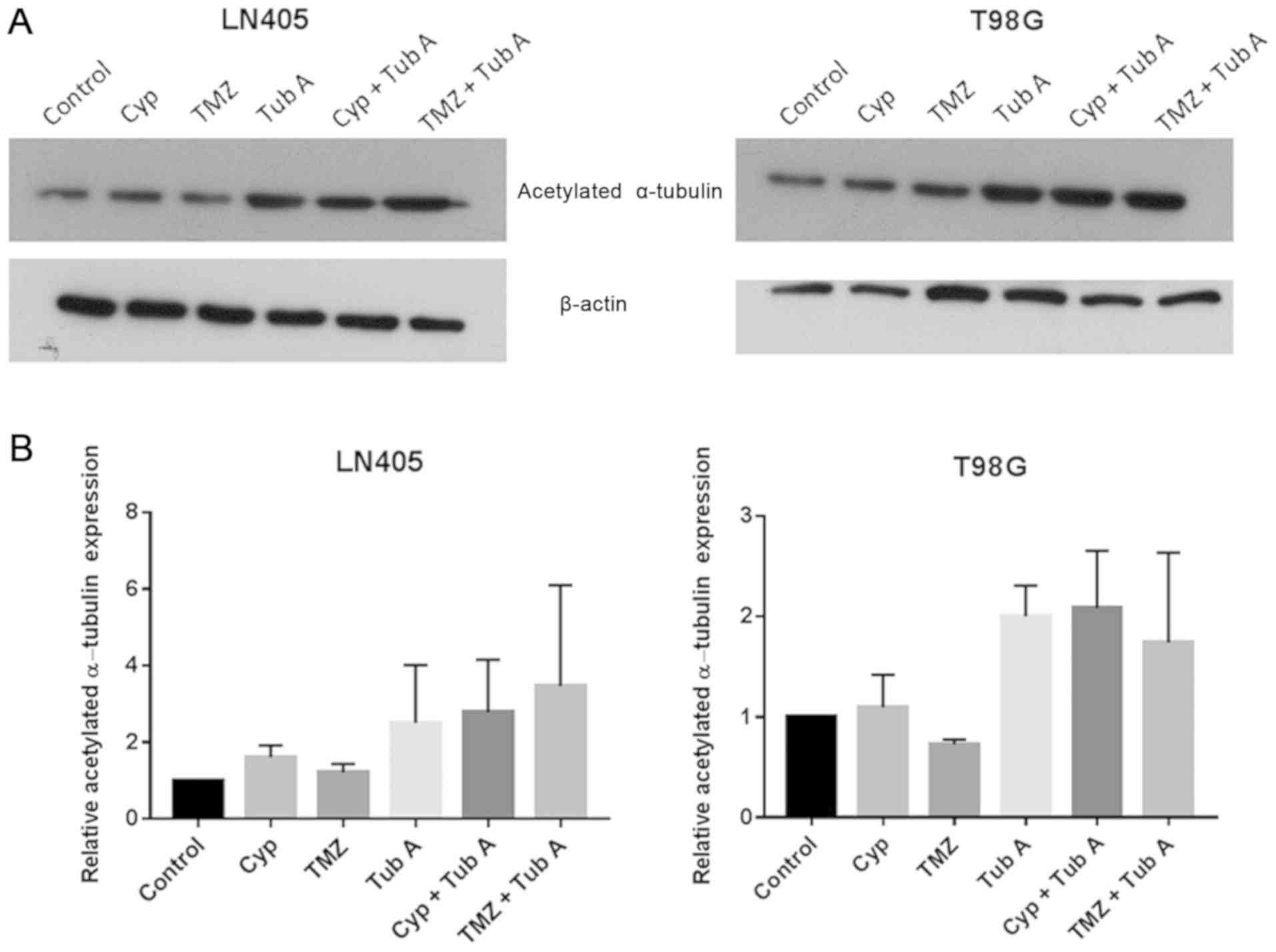
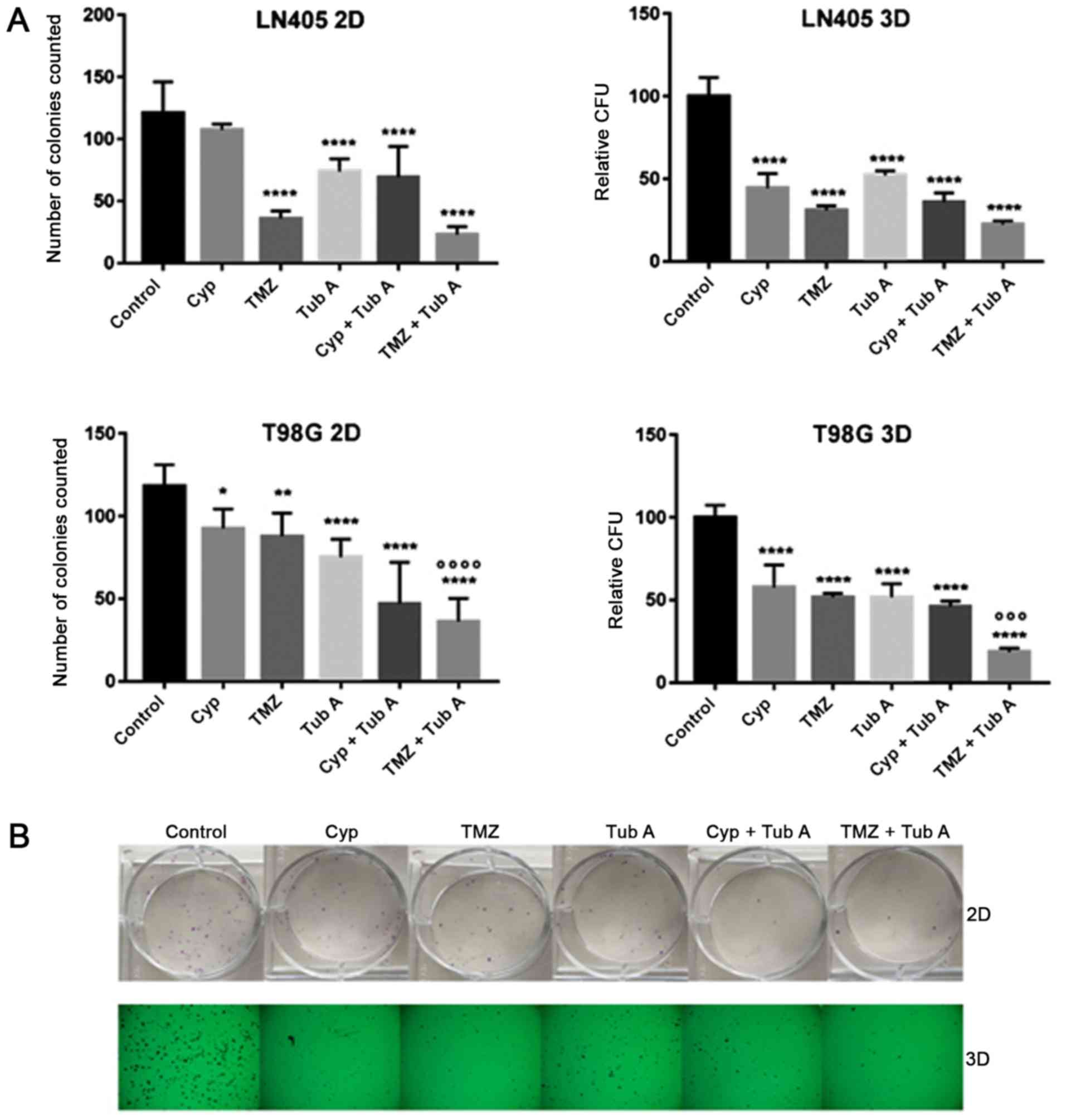
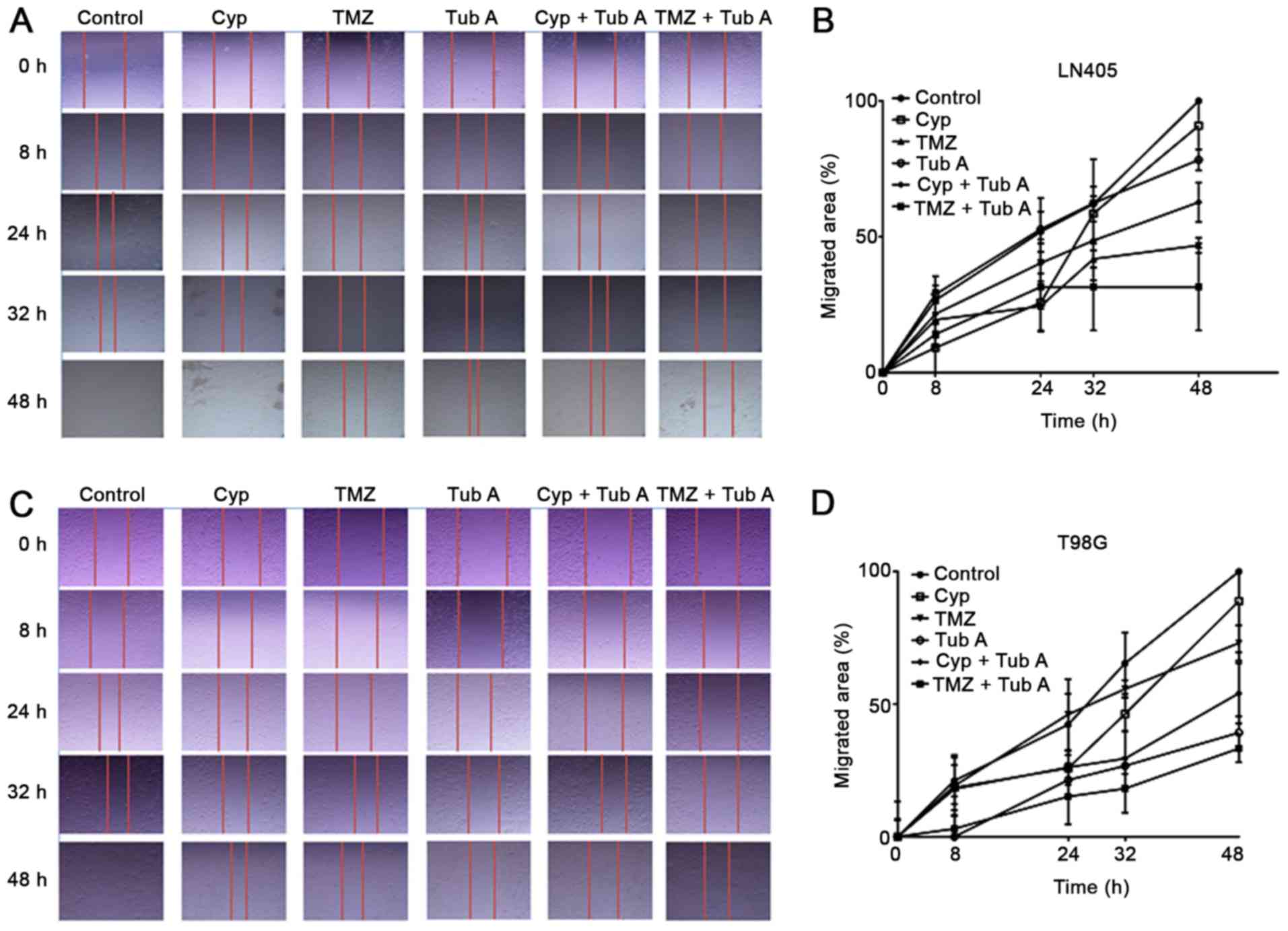
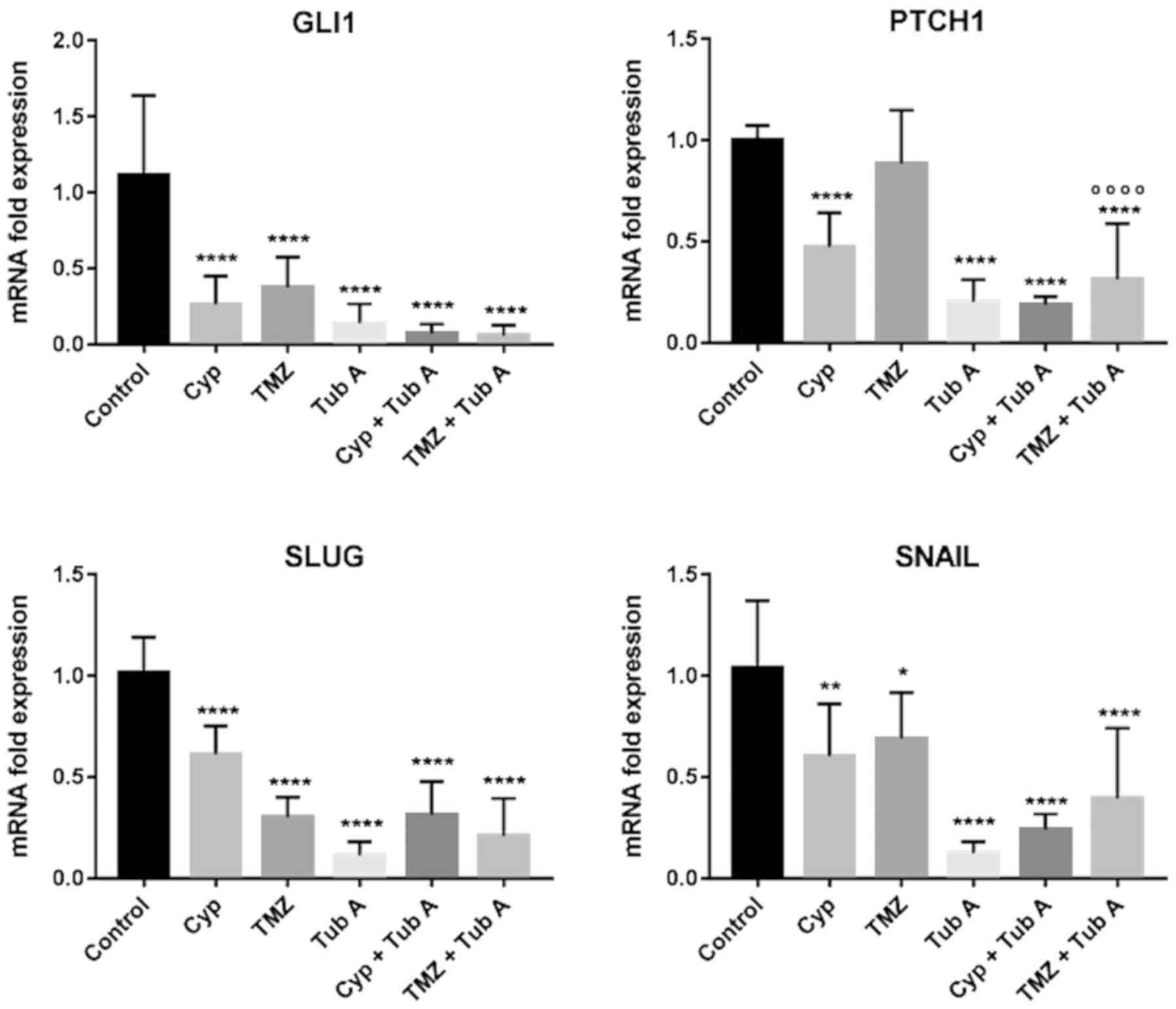
Glioblastoma or grade IV astrocytoma is the most common and lethal form of glioma. Current glioblastoma treatment strategies use surgery followed by chemotherapy with temozolomide. Despite this, numerous glioblastoma cases develop resistance to temozolomide treatments, resulting in a poor prognosis for the patients. Novel approaches are being investigated, including the inhibition of histone deacetylase 6 (HDAC6), an enzyme that deacetylates α‑tubulin, and whose overexpression in glioblastoma is associated with the loss of primary cilia. The aim of the present study was to treat glioblastoma cells with a selective HDAC6 inhibitor, tubastatin A, to determine if the malignant phenotype may be reverted. The results demonstrated a notable increase in acetylated α‑tubulin levels in treated cells, which associated with downregulation of the sonic hedgehog pathway, and may hypothetically promote ciliogenesis in those cells. Treatment with tubastatin A also reduced glioblastoma clonogenicity and migration capacities, and accelerated temozolomide‑induced apoptosis. Finally, HDAC6 inhibition decreased the expression of mesenchymal markers, contributing to reverse epithelial‑mesenchymal transition in glioblastoma cells.
View Figures

Figure 1

Figure 2

Figure 3

Figure 4

Figure 5

Figure 6

Figure 7

View References

1 

Jovčevska I, Kočevar N and Komel R: Glioma and glioblastoma - how much do we (not) know? Mol Clin Oncol. 1:935–941. 2013.

2 

Bleeker FE, Molenaar RJ and Leenstra S: Recent advances in the molecular understanding of glioblastoma. J Neurooncol. 108:11–27. 2012.

3 

Thomas A, Tanaka M, Trepel J, Reinhold WC, Rajapakse VN and Pommier Y: Temozolomide in the era of precision medicine. Cancer Res. 77:823–826. 2017.

4 

Perry J, Laperriere N, Zuraw L, Chambers A, Spithoff K and Cairncross JG; Neuro-oncology Disease Site Group; Cancer Care Ontario Program in Evidence-Based Care: Adjuvant chemotherapy for adults with malignant glioma: A systematic review. Can J Neurol Sci. 34:402–410. 2007.

5 

Stupp R, Mason WP, van den Bent MJ, Weller M, Fisher B, Taphoorn MJ, Belanger K, Brandes AA, Marosi C, Bogdahn U, et al European Organisation for Research and Treatment of Cancer Brain Tumor and Radiotherapy Groups; National Cancer Institute of Canada Clinical Trials Group: Radiotherapy plus concomitant and adjuvant temozolomide for glioblastoma. N Engl J Med. 352:987–996. 2005.

6 

Kitange GJ, Carlson BL, Schroeder MA, Grogan PT, Lamont JD, Decker PA, Wu W, James CD and Sarkaria JN: Induction of MGMT expression is associated with temozolomide resistance in glioblastoma xenografts. Neuro-oncol. 11:281–291. 2009.

7 

Qiu ZK, Shen D, Chen YS, Yang QY, Guo CC, Feng BH and Chen ZP: Enhanced MGMT expression contributes to temozolomide resistance in glioma stem-like cells. Chin J Cancer. 33:115–122. 2014.

8 

Hegi ME, Diserens AC, Gorlia T, Hamou MF, de Tribolet N, Weller M, Kros JM, Hainfellner JA, Mason W, Mariani L, et al: MGMT gene silencing and benefit from temozolomide in glioblastoma. N Engl J Med. 352:997–1003. 2005.

9 

Kondo N, Takahashi A, Ono K and Ohnishi T: DNA damage induced by alkylating agents and repair pathways. J Nucleic Acids. 2010:5435312010.

10 

Aldana-Masangkay GI and Sakamoto KM: The role of HDAC6 in cancer. J Biomed Biotechnol. 2011:8758242011.

11 

Seidel C, Schnekenburger M, Dicato M and Diederich M: Histone deacetylase 6 in health and disease. Epigenomics. 7:103–118. 2015.

12 

Smith Q, Macklin B, Chan XY, Jones H, Trempel M, Yoder MC and Gerecht S: Differential HDAC6 activity modulates ciliogenesis and subsequent mechanosensing of endothelial cells derived from pluripotent stem cells. Cell Rep. 24:895–908.e6. 2018.

13 

Li S, Liu X, Chen X, Zhang L and Wang X: Histone deacetylase 6 promotes growth of glioblastoma through inhibition of SMAD2 signaling. Tumour Biol. 36:9661–9665. 2015.

14 

Moser JJ, Fritzler MJ and Rattner JB: Primary ciliogenesis defects are associated with human astrocytoma/glioblastoma cells. BMC Cancer. 9:4482009.

15 

Wang Z, Hu P, Tang F, Lian H, Chen X, Zhang Y, He X, Liu W and Xie C: HDAC6 promotes cell proliferation and confers resistance to temozolomide in glioblastoma. Cancer Lett. 379:134–142. 2016.

16 

Corbit KC, Aanstad P, Singla V, Norman AR, Stainier DY and Reiter JF: Vertebrate Smoothened functions at the primary cilium. Nature. 437:1018–1021. 2005.

17 

Haycraft CJ, Banizs B, Aydin-Son Y, Zhang Q, Michaud EJ and Yoder BK: Gli2 and Gli3 localize to cilia and require the intraflagellar transport protein polaris for processing and function. PLoS Genet. 1:e532005.

18 

Simons M, Gloy J, Ganner A, Bullerkotte A, Bashkurov M, Krönig C, Schermer B, Benzing T, Cabello OA, Jenny A, et al: Inversin, the gene product mutated in nephronophthisis type II, functions as a molecular switch between Wnt signaling pathways. Nat Genet. 37:537–543. 2005.

19 

Goetz SC and Anderson KV: The primary cilium: A signalling centre during vertebrate development. Nat Rev Genet. 11:331–344. 2010.

20 

Braun S, Oppermann H, Mueller A, Renner C, Hovhannisyan A, Baran-Schmidt R, Gebhardt R, Hipkiss A, Thiery J, Meixensberger J, et al: Hedgehog signaling in glioblastoma multiforme. Cancer Biol Ther. 13:487–495. 2012.

21 

Hassounah NB, Bunch TA and McDermott KM: Molecular pathways: The role of primary cilia in cancer progression and therapeutics with a focus on Hedgehog signaling. Clin Cancer Res. 18:2429–2435. 2012.

22 

Pasca di Magliano M and Hebrok M: Hedgehog signalling in cancer formation and maintenance. Nat Rev Cancer. 3:903–911. 2003.

23 

Liu YJ, Ma YC, Zhang WJ, Yang ZZ, Liang DS, Wu ZF and Qi XR: Combination therapy with micellarized cyclopamine and temozolomide attenuate glioblastoma growth through Gli1 down-regulation. Oncotarget. 8:42495–42509. 2017.

24 

Kalluri R and Weinberg RA: The basics of epithelial-mesenchymal transition. J Clin Invest. 119:1420–1428. 2009.

25 

Skrypek N, Goossens S, De Smedt E, Vandamme N and Berx G: Epithelial-to-mesenchymal transition: Epigenetic reprogramming driving cellular plasticity. Trends Genet. 33:943–959. 2017.

26 

Zeisberg M and Neilson EG: Biomarkers for epithelial-mesenchymal transitions. J Clin Invest. 119:1429–1437. 2009.

27 

Ramos FS, Wons L, Cavalli IJ and Ribeiro EMSF: Epithelial-mesenchymal transition in cancer: An overview. Integr Cancer Sci Ther. 4:1–5. 2017.

28 

Iwadate Y: Epithelial-mesenchymal transition in glioblastoma progression. Oncol Lett. 11:1615–1620. 2016.

29 

Kahlert UD, Maciaczyk D, Doostkam S, Orr BA, Simons B, Bogiel T, Reithmeier T, Prinz M, Schubert J, Niedermann G, et al: Activation of canonical WNT/β-catenin signaling enhances in vitro motility of glioblastoma cells by activation of ZEB1 and other activators of epithelial-to-mesenchymal transition. Cancer Lett. 325:42–53. 2012.

30 

Xu L, Liu N, Gu H, Wang H, Shi Y, Ma X, Ma S, Ni J, Tao M, Qiu A, et al: Histone deacetylase 6 inhibition counteracts the epithelial-mesenchymal transition of peritoneal mesothelial cells and prevents peritoneal fibrosis. Oncotarget. 8:88730–88750. 2017.

31 

Dunigan DD, Waters SB and Owen TC: Aqueous soluble tetrazolium/formazan MTS as an indicator of NADH- and NADPH-dependent dehydrogenase activity. Biotechniques. 19:640–649. 1995.

32 

Geissmann Q: OpenCFU, a new free and open-source software to count cell colonies and other circular objects. PLoS One. 8:e540722013.

33 

Schmittgen TD and Livak KJ: Analyzing real-time PCR data by the comparative C(T) method. Nat Protoc. 3:1101–1108. 2008.

34 

Urdiciain A, Meléndez B, Rey JA, Idoate MA and Castresana JS: Panobinostat potentiates temozolomide effects and reverses epithelial–mesenchymal transition in glioblastoma cells. Epigenomes. 2:52018.

35 

Yang W, Liu Y, Gao R, Yu H and Sun T: HDAC6 inhibition induces glioma stem cells differentiation and enhances cellular radiation sensitivity through the SHH/Gli1 signaling pathway. Cancer Lett. 415:164–176. 2018.

36 

Gradilone SA, Radtke BN, Bogert PS, Huang BQ, Gajdos GB and LaRusso NF: HDAC6 inhibition restores ciliary expression and decreases tumor growth. Cancer Res. 73:2259–2270. 2013.

37 

Han SP, Kim JH, Han ME, Sim HE, Kim KS, Yoon S, Baek SY, Kim BS and Oh SO: SNAI1 is involved in the proliferation and migration of glioblastoma cells. Cell Mol Neurobiol. 31:489–496. 2011.

38 

Myung JK, Choi SA, Kim SK, Wang KC and Park SH: Snail plays an oncogenic role in glioblastoma by promoting epithelial mesenchymal transition. Int J Clin Exp Pathol. 7:1977–1987. 2014.

39 

Stepanenko AA, Andreieva SV, Korets KV, Mykytenko DO, Baklaushev VP, Huleyuk NL, Kovalova OA, Kotsarenko KV, Chekhonin VP, Vassetzky YS, et al: Temozolomide promotes genomic and phenotypic changes in glioblastoma cells. Cancer Cell Int. 16:362016.

40 

Gu S, Liu Y, Zhu B, Ding K, Yao TP, Chen F, Zhan L, Xu P, Ehrlich M, Liang T, et al: Loss of α-tubulin acetylation is associated with TGF-β-induced epithelial-mesenchymal transition. J Biol Chem. 291:5396–5405. 2016.

41 

Dong J, Zheng N, Wang X, Tang C, Yan P, Zhou HB and Huang J: A novel HDAC6 inhibitor exerts an anti-cancer effect by triggering cell cycle arrest and apoptosis in gastric cancer. Eur J Pharmacol. 828:67–79. 2018.

42 

Li ZY, Zhang C, Zhang Y, Chen L, Chen BD, Li QZ, Zhang XJ and Li WP: A novel HDAC6 inhibitor Tubastatin A: Controls HDAC6-p97/VCP-mediated ubiquitination-autophagy turnover and reverses Temozolomide-induced ER stress-tolerance in GBM cells. Cancer Lett. 391:89–99. 2017.

43 

Ryu HW, Shin DH, Lee DH, Choi J, Han G, Lee KY and Kwon SH: HDAC6 deacetylates p53 at lysines 381/382 and differentially coordinates p53-induced apoptosis. Cancer Lett. 391:162–171. 2017.

44 

Sarkisian MR, Siebzehnrubl D, Hoang-Minh L, Deleyrolle L, Silver DJ, Siebzehnrubl FA, Guadiana SM, Srivinasan G, Semple-Rowland S, Harrison JK, et al: Detection of primary cilia in human glioblastoma. J Neurooncol. 117:15–24. 2014.

45 

Menzl I, Lebeau L, Pandey R, Hassounah NB, Li FW, Nagle R, Weihs K and McDermott KM: Loss of primary cilia occurs early in breast cancer development. Cilia. 3:72014.

46 

Kim J, Dabiri S and Seeley ES: Primary cilium depletion typifies cutaneous melanoma in situ and malignant melanoma. PLoS One. 6:e274102011.

47 

Schraml P, Frew IJ, Thoma CR, Boysen G, Struckmann K, Krek W and Moch H: Sporadic clear cell renal cell carcinoma but not the papillary type is characterized by severely reduced frequency of primary cilia. Mod Pathol. 22:31–36. 2009.

48 

Liu Z, Rebowe RE, Wang Z, Li Y, Wang Z, DePaolo JS, Guo J, Qian C and Liu W: KIF3a promotes proliferation and invasion via Wnt signaling in advanced prostate cancer. Mol Cancer Res. 12:491–503. 2014.

49 

Kim M, Suh YA, Oh JH, Lee BR, Kim J and Jang SJ: KIF3A binds to β-arrestin for suppressing Wnt/β-catenin signalling independently of primary cilia in lung cancer. Sci Rep. 6:327702016.

50 

Emoto K, Masugi Y, Yamazaki K, Effendi K, Tsujikawa H, Tanabe M, Kitagawa Y and Sakamoto M: Presence of primary cilia in cancer cells correlates with prognosis of pancreatic ductal adenocarcinoma. Hum Pathol. 45:817–825. 2014.

51 

Barakat MT, Humke EW and Scott MP: Kif3a is necessary for initiation and maintenance of medulloblastoma. Carcinogenesis. 34:1382–1392. 2013.

52 

Lai SW, Huang BR, Liu YS, Lin HY, Chen CC, Tsai CF, Lu DY and Lin C: Differential characterization of temozolomide-resistant human glioma cells. Int J Mol Sci. 19:1272018.

Related Articles

  • Abstract
  • View
  • Download
  • Twitter
Copy and paste a formatted citation
Spandidos Publications style
Urdiciain A, Erausquin E, Meléndez B, Rey JA, Idoate MA and Castresana JS: Tubastatin A, an inhibitor of HDAC6, enhances temozolomide‑induced apoptosis and reverses the malignant phenotype of glioblastoma cells. Int J Oncol 54: 1797-1808, 2019.
APA
Urdiciain, A., Erausquin, E., Meléndez, B., Rey, J.A., Idoate, M.A., & Castresana, J.S. (2019). Tubastatin A, an inhibitor of HDAC6, enhances temozolomide‑induced apoptosis and reverses the malignant phenotype of glioblastoma cells. International Journal of Oncology, 54, 1797-1808. https://doi.org/10.3892/ijo.2019.4739
MLA
Urdiciain, A., Erausquin, E., Meléndez, B., Rey, J. A., Idoate, M. A., Castresana, J. S."Tubastatin A, an inhibitor of HDAC6, enhances temozolomide‑induced apoptosis and reverses the malignant phenotype of glioblastoma cells". International Journal of Oncology 54.5 (2019): 1797-1808.
Chicago
Urdiciain, A., Erausquin, E., Meléndez, B., Rey, J. A., Idoate, M. A., Castresana, J. S."Tubastatin A, an inhibitor of HDAC6, enhances temozolomide‑induced apoptosis and reverses the malignant phenotype of glioblastoma cells". International Journal of Oncology 54, no. 5 (2019): 1797-1808. https://doi.org/10.3892/ijo.2019.4739
Copy and paste a formatted citation
x
Spandidos Publications style
Urdiciain A, Erausquin E, Meléndez B, Rey JA, Idoate MA and Castresana JS: Tubastatin A, an inhibitor of HDAC6, enhances temozolomide‑induced apoptosis and reverses the malignant phenotype of glioblastoma cells. Int J Oncol 54: 1797-1808, 2019.
APA
Urdiciain, A., Erausquin, E., Meléndez, B., Rey, J.A., Idoate, M.A., & Castresana, J.S. (2019). Tubastatin A, an inhibitor of HDAC6, enhances temozolomide‑induced apoptosis and reverses the malignant phenotype of glioblastoma cells. International Journal of Oncology, 54, 1797-1808. https://doi.org/10.3892/ijo.2019.4739
MLA
Urdiciain, A., Erausquin, E., Meléndez, B., Rey, J. A., Idoate, M. A., Castresana, J. S."Tubastatin A, an inhibitor of HDAC6, enhances temozolomide‑induced apoptosis and reverses the malignant phenotype of glioblastoma cells". International Journal of Oncology 54.5 (2019): 1797-1808.
Chicago
Urdiciain, A., Erausquin, E., Meléndez, B., Rey, J. A., Idoate, M. A., Castresana, J. S."Tubastatin A, an inhibitor of HDAC6, enhances temozolomide‑induced apoptosis and reverses the malignant phenotype of glioblastoma cells". International Journal of Oncology 54, no. 5 (2019): 1797-1808. https://doi.org/10.3892/ijo.2019.4739
Follow us
  • Twitter
  • LinkedIn
  • Facebook
About
  • Spandidos Publications
  • Careers
  • Cookie Policy
  • Privacy Policy
How can we help?
  • Help
  • Live Chat
  • Contact
  • Email to our Support Team