Spandidos Publications Logo
  • About
    • About Spandidos
    • Aims and Scopes
    • Abstracting and Indexing
    • Editorial Policies
    • Reprints and Permissions
    • Job Opportunities
    • Terms and Conditions
    • Contact
  • Journals
    • All Journals
    • Oncology Letters
      • Oncology Letters
      • Information for Authors
      • Editorial Policies
      • Editorial Board
      • Aims and Scope
      • Abstracting and Indexing
      • Bibliographic Information
      • Archive
    • International Journal of Oncology
      • International Journal of Oncology
      • Information for Authors
      • Editorial Policies
      • Editorial Board
      • Aims and Scope
      • Abstracting and Indexing
      • Bibliographic Information
      • Archive
    • Molecular and Clinical Oncology
      • Molecular and Clinical Oncology
      • Information for Authors
      • Editorial Policies
      • Editorial Board
      • Aims and Scope
      • Abstracting and Indexing
      • Bibliographic Information
      • Archive
    • Experimental and Therapeutic Medicine
      • Experimental and Therapeutic Medicine
      • Information for Authors
      • Editorial Policies
      • Editorial Board
      • Aims and Scope
      • Abstracting and Indexing
      • Bibliographic Information
      • Archive
    • International Journal of Molecular Medicine
      • International Journal of Molecular Medicine
      • Information for Authors
      • Editorial Policies
      • Editorial Board
      • Aims and Scope
      • Abstracting and Indexing
      • Bibliographic Information
      • Archive
    • Biomedical Reports
      • Biomedical Reports
      • Information for Authors
      • Editorial Policies
      • Editorial Board
      • Aims and Scope
      • Abstracting and Indexing
      • Bibliographic Information
      • Archive
    • Oncology Reports
      • Oncology Reports
      • Information for Authors
      • Editorial Policies
      • Editorial Board
      • Aims and Scope
      • Abstracting and Indexing
      • Bibliographic Information
      • Archive
    • Molecular Medicine Reports
      • Molecular Medicine Reports
      • Information for Authors
      • Editorial Policies
      • Editorial Board
      • Aims and Scope
      • Abstracting and Indexing
      • Bibliographic Information
      • Archive
    • World Academy of Sciences Journal
      • World Academy of Sciences Journal
      • Information for Authors
      • Editorial Policies
      • Editorial Board
      • Aims and Scope
      • Abstracting and Indexing
      • Bibliographic Information
      • Archive
    • International Journal of Functional Nutrition
      • International Journal of Functional Nutrition
      • Information for Authors
      • Editorial Policies
      • Editorial Board
      • Aims and Scope
      • Abstracting and Indexing
      • Bibliographic Information
      • Archive
    • International Journal of Epigenetics
      • International Journal of Epigenetics
      • Information for Authors
      • Editorial Policies
      • Editorial Board
      • Aims and Scope
      • Abstracting and Indexing
      • Bibliographic Information
      • Archive
    • Medicine International
      • Medicine International
      • Information for Authors
      • Editorial Policies
      • Editorial Board
      • Aims and Scope
      • Abstracting and Indexing
      • Bibliographic Information
      • Archive
  • Articles
  • Information
    • Information for Authors
    • Information for Reviewers
    • Information for Librarians
    • Information for Advertisers
    • Conferences
  • Language Editing
Spandidos Publications Logo
  • About
    • About Spandidos
    • Aims and Scopes
    • Abstracting and Indexing
    • Editorial Policies
    • Reprints and Permissions
    • Job Opportunities
    • Terms and Conditions
    • Contact
  • Journals
    • All Journals
    • Biomedical Reports
      • Information for Authors
      • Editorial Policies
      • Editorial Board
      • Aims and Scope
      • Abstracting and Indexing
      • Bibliographic Information
      • Archive
    • Experimental and Therapeutic Medicine
      • Information for Authors
      • Editorial Policies
      • Editorial Board
      • Aims and Scope
      • Abstracting and Indexing
      • Bibliographic Information
      • Archive
    • International Journal of Epigenetics
      • Information for Authors
      • Editorial Policies
      • Editorial Board
      • Aims and Scope
      • Abstracting and Indexing
      • Bibliographic Information
      • Archive
    • International Journal of Functional Nutrition
      • Information for Authors
      • Editorial Policies
      • Editorial Board
      • Aims and Scope
      • Abstracting and Indexing
      • Bibliographic Information
      • Archive
    • International Journal of Molecular Medicine
      • Information for Authors
      • Editorial Policies
      • Editorial Board
      • Aims and Scope
      • Abstracting and Indexing
      • Bibliographic Information
      • Archive
    • International Journal of Oncology
      • Information for Authors
      • Editorial Policies
      • Editorial Board
      • Aims and Scope
      • Abstracting and Indexing
      • Bibliographic Information
      • Archive
    • Medicine International
      • Information for Authors
      • Editorial Policies
      • Editorial Board
      • Aims and Scope
      • Abstracting and Indexing
      • Bibliographic Information
      • Archive
    • Molecular and Clinical Oncology
      • Information for Authors
      • Editorial Policies
      • Editorial Board
      • Aims and Scope
      • Abstracting and Indexing
      • Bibliographic Information
      • Archive
    • Molecular Medicine Reports
      • Information for Authors
      • Editorial Policies
      • Editorial Board
      • Aims and Scope
      • Abstracting and Indexing
      • Bibliographic Information
      • Archive
    • Oncology Letters
      • Information for Authors
      • Editorial Policies
      • Editorial Board
      • Aims and Scope
      • Abstracting and Indexing
      • Bibliographic Information
      • Archive
    • Oncology Reports
      • Information for Authors
      • Editorial Policies
      • Editorial Board
      • Aims and Scope
      • Abstracting and Indexing
      • Bibliographic Information
      • Archive
    • World Academy of Sciences Journal
      • Information for Authors
      • Editorial Policies
      • Editorial Board
      • Aims and Scope
      • Abstracting and Indexing
      • Bibliographic Information
      • Archive
  • Articles
  • Information
    • For Authors
    • For Reviewers
    • For Librarians
    • For Advertisers
    • Conferences
  • Language Editing
Login Register Submit
  • This site uses cookies
  • You can change your cookie settings at any time by following the instructions in our Cookie Policy. To find out more, you may read our Privacy Policy.

    I agree
Search articles by DOI, keyword, author or affiliation
Search
Advanced Search
presentation
International Journal of Oncology
Join Editorial Board Propose a Special Issue
Print ISSN: 1019-6439 Online ISSN: 1791-2423
Journal Cover
June-2019 Volume 54 Issue 6

Full Size Image

Cover Legend PDF

Sign up for eToc alerts
Recommend to Library

Journals

International Journal of Molecular Medicine

International Journal of Molecular Medicine

International Journal of Molecular Medicine is an international journal devoted to molecular mechanisms of human disease.

International Journal of Oncology

International Journal of Oncology

International Journal of Oncology is an international journal devoted to oncology research and cancer treatment.

Molecular Medicine Reports

Molecular Medicine Reports

Covers molecular medicine topics such as pharmacology, pathology, genetics, neuroscience, infectious diseases, molecular cardiology, and molecular surgery.

Oncology Reports

Oncology Reports

Oncology Reports is an international journal devoted to fundamental and applied research in Oncology.

Experimental and Therapeutic Medicine

Experimental and Therapeutic Medicine

Experimental and Therapeutic Medicine is an international journal devoted to laboratory and clinical medicine.

Oncology Letters

Oncology Letters

Oncology Letters is an international journal devoted to Experimental and Clinical Oncology.

Biomedical Reports

Biomedical Reports

Explores a wide range of biological and medical fields, including pharmacology, genetics, microbiology, neuroscience, and molecular cardiology.

Molecular and Clinical Oncology

Molecular and Clinical Oncology

International journal addressing all aspects of oncology research, from tumorigenesis and oncogenes to chemotherapy and metastasis.

World Academy of Sciences Journal

World Academy of Sciences Journal

Multidisciplinary open-access journal spanning biochemistry, genetics, neuroscience, environmental health, and synthetic biology.

International Journal of Functional Nutrition

International Journal of Functional Nutrition

Open-access journal combining biochemistry, pharmacology, immunology, and genetics to advance health through functional nutrition.

International Journal of Epigenetics

International Journal of Epigenetics

Publishes open-access research on using epigenetics to advance understanding and treatment of human disease.

Medicine International

Medicine International

An International Open Access Journal Devoted to General Medicine.

Journal Cover
June-2019 Volume 54 Issue 6

Full Size Image

Cover Legend PDF

Sign up for eToc alerts
Recommend to Library

  • Article
  • Citations
    • Cite This Article
    • Download Citation
    • Create Citation Alert
    • Remove Citation Alert
    • Cited By
  • Similar Articles
    • Related Articles (in Spandidos Publications)
    • Similar Articles (Google Scholar)
    • Similar Articles (PubMed)
  • Download PDF
  • Download XML
  • View XML

  • Supplementary Files
    • Supplementary_Data.pdf
Article Open Access

Harmine induces anticancer activity in breast cancer cells via targeting TAZ

  • Authors:
    • Yu Ding
    • Jinrong He
    • Juan Huang
    • Tong Yu
    • Xiaoyan Shi
    • Tianzhu Zhang
    • Ge Yan
    • Shanshan Chen
    • Caixia Peng
  • View Affiliations / Copyright

    Affiliations: Key Laboratory for Molecular Diagnosis of Hubei Province, The Central Hospital of Wuhan, Tongji Medical College, Huazhong University of Science and Technology, Wuhan, Hubei 430014, P.R. China, Department of Nephrology, The Central Hospital of Wuhan, Tongji Medical College, Huazhong University of Science and Technology, Wuhan, Hubei 430014, P.R. China, Department of Traditional Chinese Medicine, Humanwell Healthcare (Group) Co., Ltd., Wuhan, Hubei 430075, P.R. China
    Copyright: © Ding et al. This is an open access article distributed under the terms of Creative Commons Attribution License.
  • Pages: 1995-2004
    |
    Published online on: April 9, 2019
       https://doi.org/10.3892/ijo.2019.4777
  • Expand metrics +
Metrics: Total Views: 0 (Spandidos Publications: | PMC Statistics: )
Metrics: Total PDF Downloads: 0 (Spandidos Publications: | PMC Statistics: )
Cited By (CrossRef): 0 citations Loading Articles...

This article is mentioned in:


Abstract

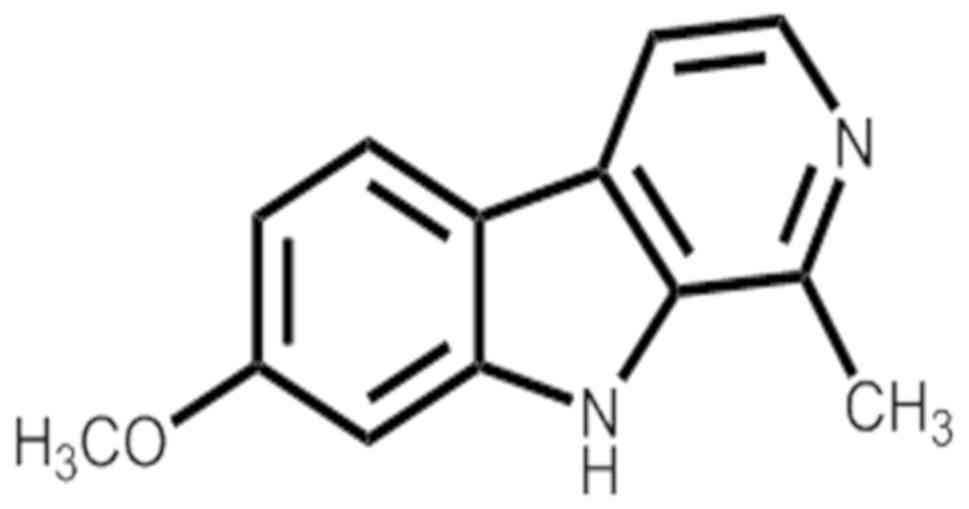
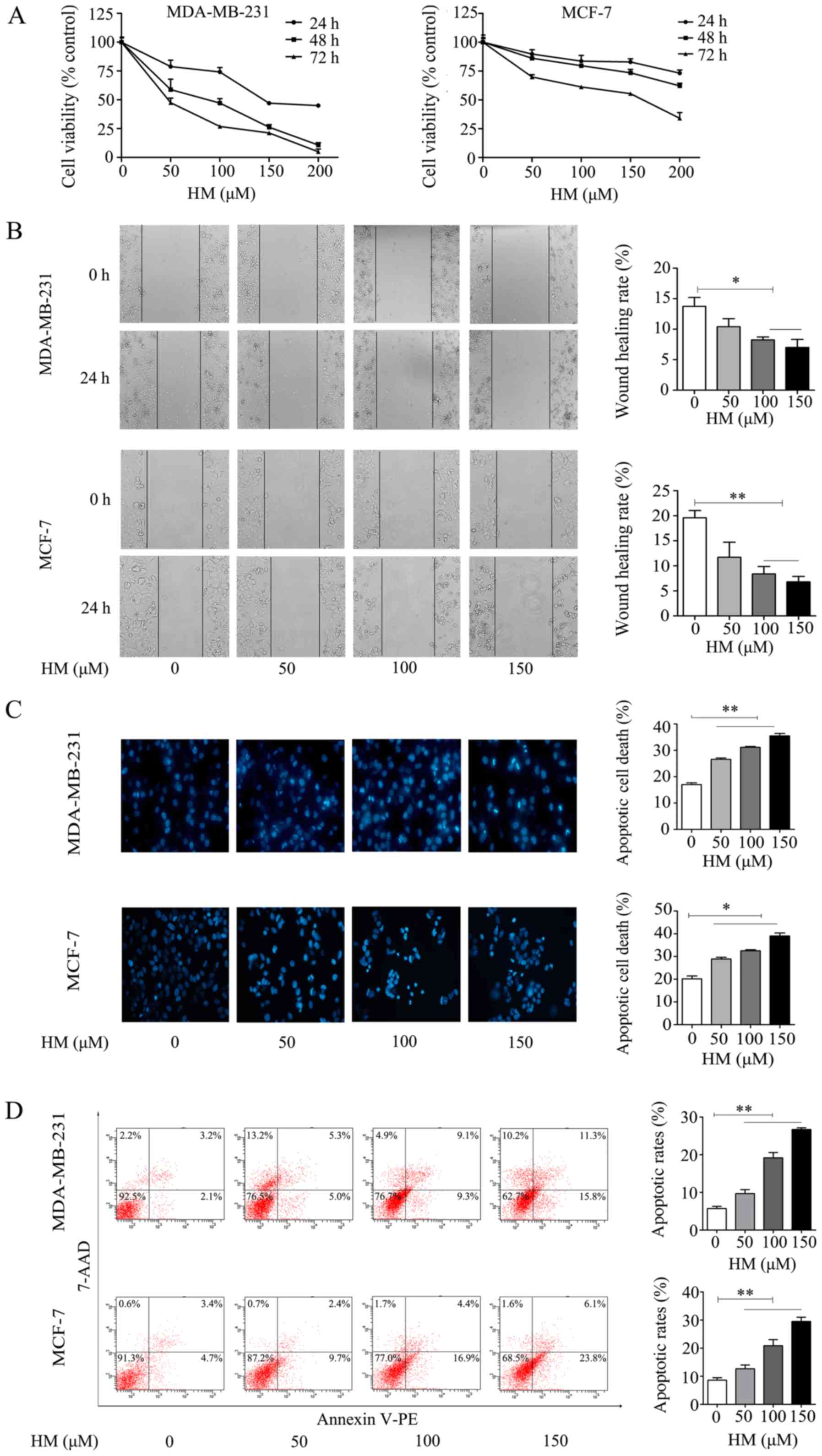
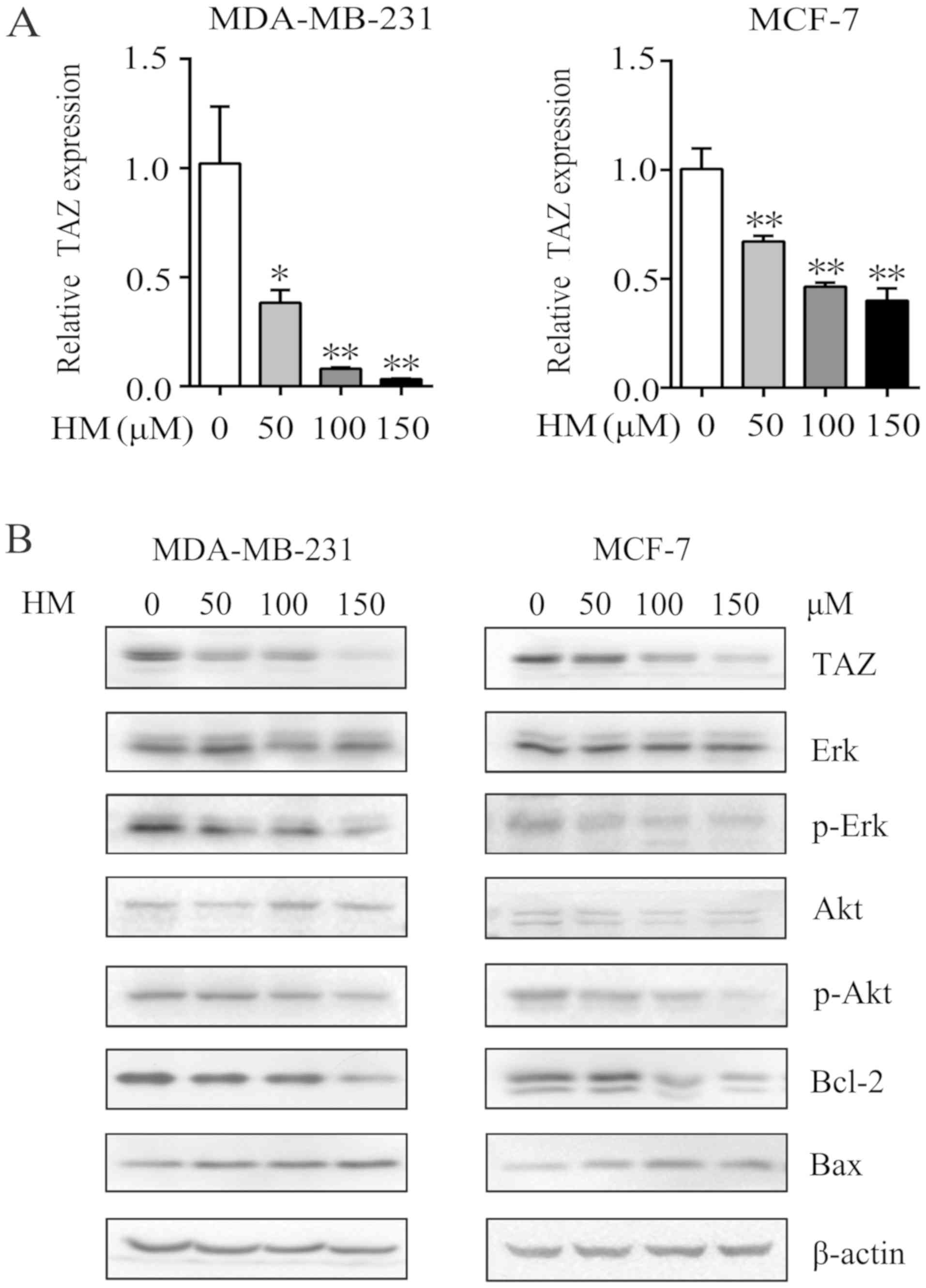
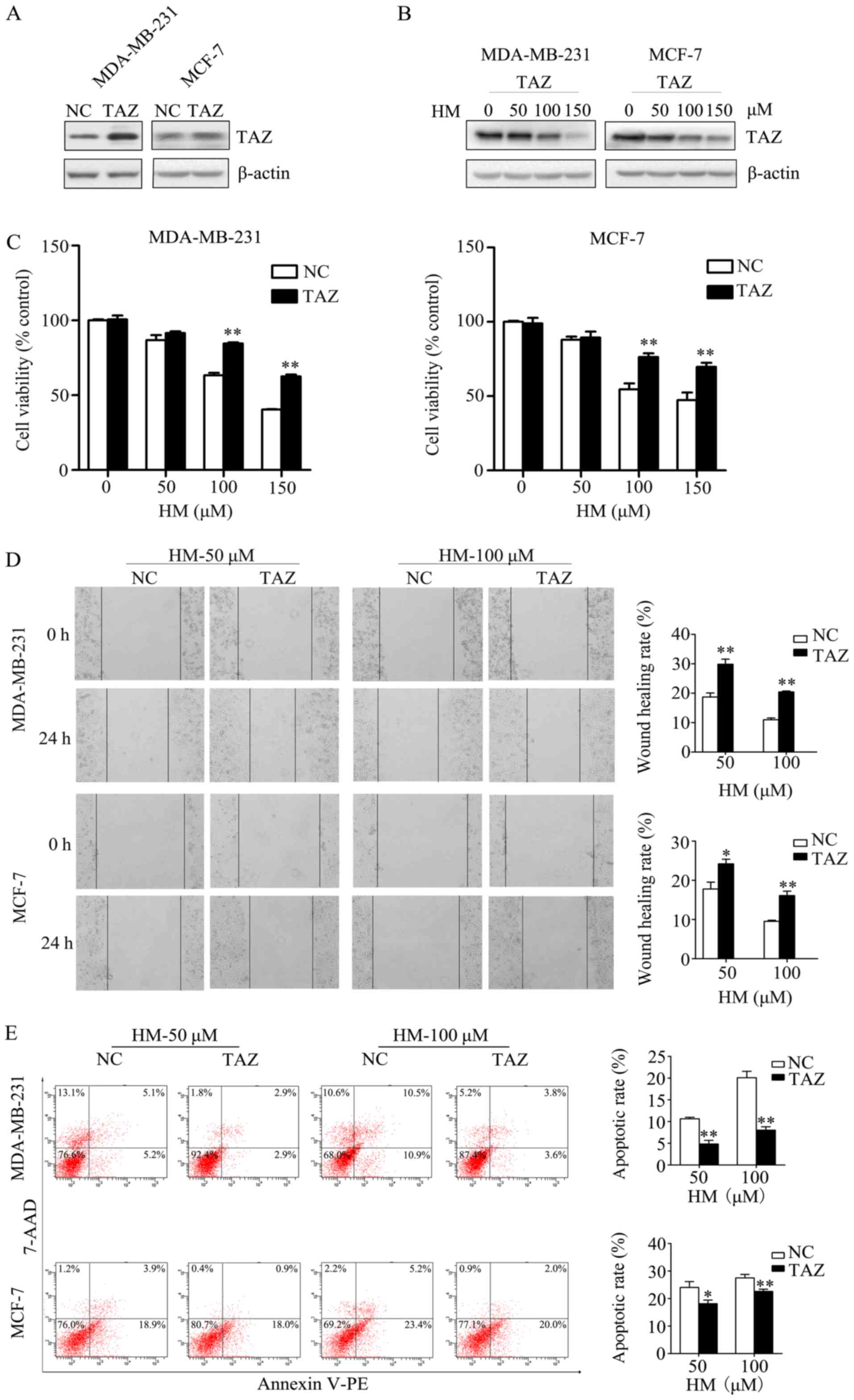
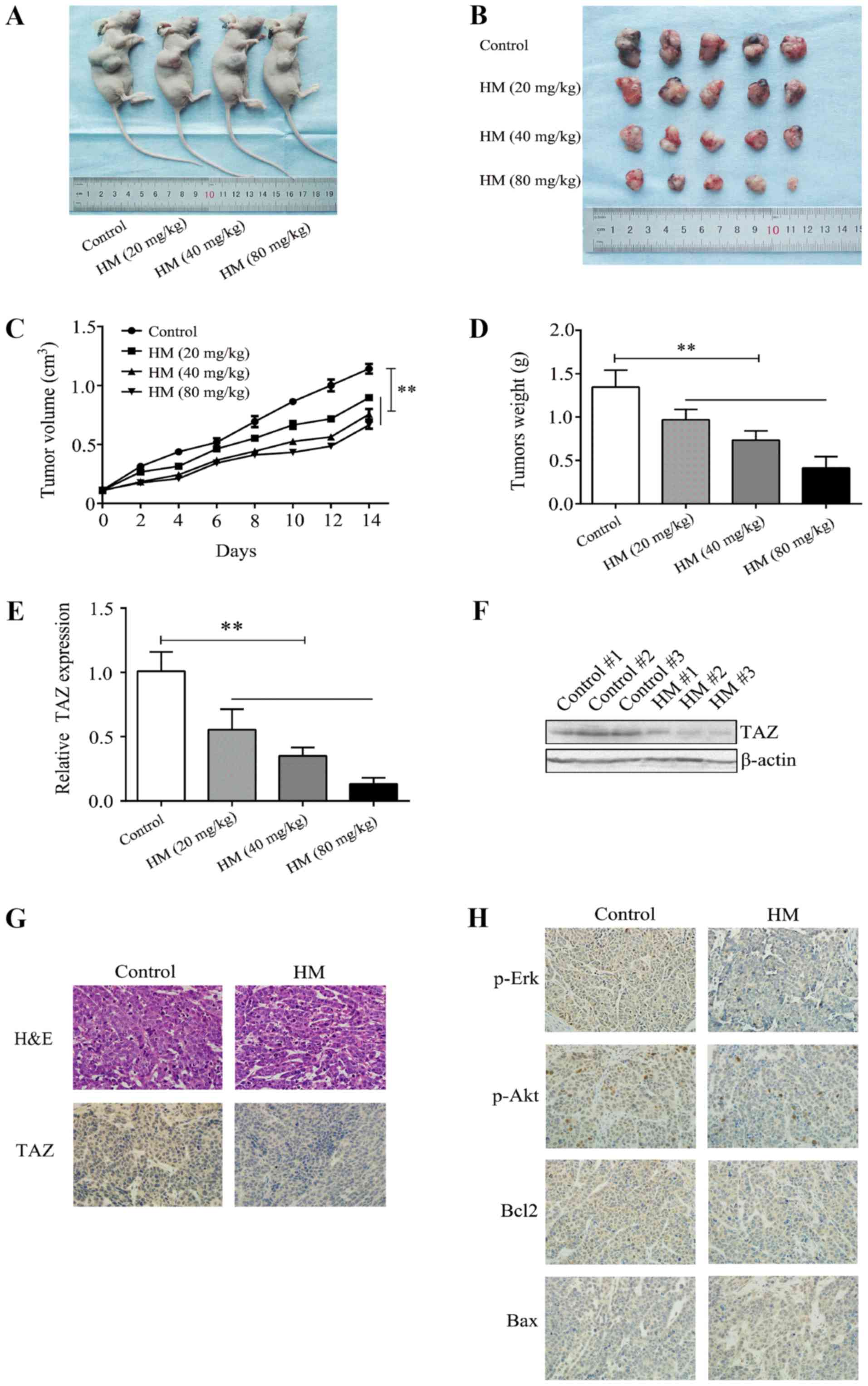
Harmine (HM) is a β‑carboline alkaloid found in multiple medicinal plants. It has been used in folk medicine for anticancer therapy; however, the molecular mechanism of HM on human breast cancer remains unclear. Transcriptional co‑activator with PDZ‑binding motif (TAZ), also known as WW domain‑containing transcription regulator 1, serves an important role in the carcinogenesis and progression of breast cancer. The aim of the present study was to elucidate the potential anticancer activity and mechanism of HM in breast cancer, in vitro and in vivo. Cell proliferation was measured using a CCK‑8 assay, apoptotic activity was detected by flow cytometry and DAPI staining, and cell migration was examined using a wound healing assay. The expression of proteins, including extracellular signal‑regulate kinase (Erk), phosphorylated (p‑) Erk, protein kinase B (Akt), p‑Akt, B‑cell lymphoma 2 (Bcl‑2) and Bcl‑2‑associated X protein (Bax), were determined by western blotting. The mRNA expression of TAZ was detected using reverse transcription‑quantitative polymerase chain reaction analysis. The expression of proteins in mouse tumor tissues were examined by immunohistochemistry. HM significantly suppressed cellular proliferation and migration, promoted apoptosis in vitro and inhibited tumor growth in vivo. In addition, HM significantly decreased the expression of TAZ, p‑Erk, p‑Akt and Bcl‑2, but increased that of Bax. The overexpression of TAZ in breast cancer cells inhibited the antitumor effect of HM. In conclusion, HM was found to induce apoptosis and prevent the proliferation and migration of human breast cancer cell lines, possibly via the downregulation of TAZ.
View Figures

Figure 1

Figure 2

Figure 3

Figure 4

Figure 5

View References

1 

Siegel RL, Miller KD and Jemal A: Cancer statistics, 2016. CA Cancer J Clin. 66:7–30. 2016. View Article : Google Scholar : PubMed/NCBI

2 

Chang L, Weiner LS, Hartman SJ, Horvath S, Jeste D, Mischel PS and Kado DM: Breast cancer treatment and its effects on aging. J Geriatr Oncol. 10:346–355. 2019. View Article : Google Scholar

3 

Nathanson KL and Domchek SM: Therapeutic approaches for women predisposed to breast cancer. Annu Rev Med. 62:295–306. 2011. View Article : Google Scholar

4 

Patel K, Gadewar M, Tripathi R, Prasad SK and Patel DK: A review on medicinal importance, pharmacological activity and bioanalytical aspects of beta-carboline alkaloid ‘Harmine’. Asian Pac J Trop Biomed. 2:660–664. 2012. View Article : Google Scholar

5 

Berrougui H, Martín-Cordero C, Khalil A, Hmamouchi M, Ettaib A, Marhuenda E and Herrera MD: Vasorelaxant effects of harmine and harmaline extracted from Peganum harmala L. seeds in isolated rat aorta. Pharmacol Res. 54:150–157. 2006. View Article : Google Scholar : PubMed/NCBI

6 

Chen Q, Chao R, Chen H, Hou X, Yan H, Zhou S, Peng W and Xu A: Antitumor and neurotoxic effects of novel harmine derivatives and structure-activity relationship analysis. Int J Cancer. 114:675–682. 2005. View Article : Google Scholar

7 

Zhang H, Sun K, Ding J, Xu H, Zhu L, Zhang K, Li X and Sun W: Harmine induces apoptosis and inhibits tumor cell proliferation, migration and invasion through down-regulation of cyclo-oxygenase-2 expression in gastric cancer. Phytomedicine. 21:348–355. 2014. View Article : Google Scholar

8 

Dai F, Chen Y, Song Y, Huang L, Zhai D, Dong Y, Lai L, Zhang T, Li D, Pang X, et al: A natural small molecule harmine inhibits angiogenesis and suppresses tumour growth through activation of p53 in endothelial cells. PLoS One. 7:e521622012. View Article : Google Scholar

9 

Li C, Wang Y, Wang C, Yi X, Li M and He X: Anticancer activities of harmine by inducing a pro-death autophagy and apoptosis in human gastric cancer cells. Phytomedicine. 28:10–18. 2017. View Article : Google Scholar : PubMed/NCBI

10 

Abe A and Yamada H: Harmol induces apoptosis by caspase-8 activation independently of Fas/Fas ligand interaction in human lung carcinoma H596 cells. Anticancer Drugs. 20:373–381. 2009. View Article : Google Scholar : PubMed/NCBI

11 

Hashemi Sheikh, Shabani S, Seyed Hasan, Tehrani S, Rabiei Z, Tahmasebi Enferadi S and Vannozzi GP: Peganum harmala L.'s anti-growth effect on a breast cancer cell line. Biotechnol Rep (Amst). 8:138–143. 2015. View Article : Google Scholar

12 

Zhang L, Zhang F, Zhang W, Chen L, Gao N, Men Y, Xu X and Jiang Y: Harmine suppresses homologous recombination repair and inhibits proliferation of hepatoma cells. Cancer Biol Ther. 16:1585–1592. 2015. View Article : Google Scholar : PubMed/NCBI

13 

Hamsa TP and Kuttan G: Harmine activates intrinsic and extrinsic pathways of apoptosis in B16F-10 melanoma. Chin Med. 6:112011. View Article : Google Scholar : PubMed/NCBI

14 

Song Y, Kesuma D, Wang J, Deng Y, Duan J, Wang JH and Qi RZ: Specific inhibition of cyclin-dependent kinases and cell proliferation by harmine. Biochem Biophys Res Commun. 317:128–132. 2004. View Article : Google Scholar : PubMed/NCBI

15 

Zou N, Wei Y, Li F, Yang Y, Cheng X and Wang C: The inhibitory effects of compound Muniziqi granule against B16 cells and harmine induced autophagy and apoptosis by inhibiting Akt/mTOR pathway. BMC Complement Altern Med. 17:5172017. View Article : Google Scholar : PubMed/NCBI

16 

Hamsa TP and Kuttan G: Harmine inhibits tumour specific neo-vessel formation by regulating VEGF, MMP, TIMP and pro-inflammatory mediators both in vivo and in vitro. Eur J Pharmacol. 649:64–73. 2010. View Article : Google Scholar : PubMed/NCBI

17 

Zhou X and Lei QY: Regulation of TAZ in cancer. Protein Cell. 7:548–561. 2016. View Article : Google Scholar : PubMed/NCBI

18 

Park KS, Whitsett JA, Di Palma T, Hong JH, Yaffe MB and Zannini M: TAZ interacts with TTF-1 and regulates expression of surfactant protein-C. J Biol Chem. 279:17384–17390. 2004. View Article : Google Scholar : PubMed/NCBI

19 

Jeong H, Bae S, An SY, Byun MR, Hwang JH, Yaffe MB, Hong JH and Hwang ES: TAZ as a novel enhancer of MyoD-mediated myogenic differentiation. FASEB J. 24:3310–3320. 2010. View Article : Google Scholar : PubMed/NCBI

20 

Varelas X, Samavarchi-Tehrani P, Narimatsu M, Weiss A, Cockburn K, Larsen BG, Rossant J and Wrana JL: The Crumbs complex couples cell density sensing to Hippo-dependent control of the TGF-β-SMAD pathway. Dev Cell. 19:831–844. 2010. View Article : Google Scholar : PubMed/NCBI

21 

Cui CB, Cooper LF, Yang X, Karsenty G and Aukhil I: Transcriptional coactivation of bone-specific transcription factor Cbfa1 by TAZ. Mol Cell Biol. 23:1004–1013. 2003. View Article : Google Scholar : PubMed/NCBI

22 

Mahoney WM Jr, Hong JH, Yaffe MB and Farrance IK: The transcriptional co-activator TAZ interacts differentially with transcriptional enhancer factor-1 (TEF-1) family members. Biochem J. 388:217–225. 2005. View Article : Google Scholar : PubMed/NCBI

23 

Hong JH, Hwang ES, McManus MT, Amsterdam A, Tian Y, Kalmukova R, Mueller E, Benjamin T, Spiegelman BM, Sharp PA, et al: TAZ, a transcriptional modulator of mesenchymal stem cell differentiation. Science. 309:1074–1078. 2005. View Article : Google Scholar : PubMed/NCBI

24 

Zhang H, Liu CY, Zha ZY, Zhao B, Yao J, Zhao S, Xiong Y, Lei QY and Guan KL: TEAD transcription factors mediate the function of TAZ in cell growth and epithelial-mesenchymal transition. J Biol Chem. 284:13355–13362. 2009. View Article : Google Scholar : PubMed/NCBI

25 

Hong JH and Yaffe MB: TAZ: A beta-catenin-like molecule that regulates mesenchymal stem cell differentiation. Cell Cycle. 5:176–179. 2006. View Article : Google Scholar : PubMed/NCBI

26 

Zhou Z, Hao Y, Liu N, Raptis L, Tsao MS and Yang X: TAZ is a novel oncogene in non-small cell lung cancer. Oncogene. 30:2181–2186. 2011. View Article : Google Scholar : PubMed/NCBI

27 

Wang L, Shi S, Guo Z, Zhang X, Han S, Yang A, Wen W and Zhu Q: Overexpression of YAP and TAZ is an independent predictor of prognosis in colorectal cancer and related to the proliferation and metastasis of colon cancer cells. PLoS One. 8:e655392013. View Article : Google Scholar : PubMed/NCBI

28 

Bhat KP, Salazar KL, Balasubramaniyan V, Wani K, Heathcock L, Hollingsworth F, James JD, Gumin J, Diefes KL, Kim SH, et al: The transcriptional coactivator TAZ regulates mesenchymal differentiation in malignant glioma. Genes Dev. 25:2594–2609. 2011. View Article : Google Scholar : PubMed/NCBI

29 

Zhou X, Wang S, Wang Z, Feng X, Liu P, Lv XB, Li F, Yu FX, Sun Y, Yuan H, et al: Estrogen regulates Hippo signaling via GPER in breast cancer. J Clin Invest. 125:2123–2135. 2015. View Article : Google Scholar : PubMed/NCBI

30 

Cordenonsi M, Zanconato F, Azzolin L, Forcato M, Rosato A, Frasson C, Inui M, Montagner M, Parenti AR, Poletti A, et al: The Hippo transducer TAZ confers cancer stem cell-related traits on breast cancer cells. Cell. 147:759–772. 2011. View Article : Google Scholar : PubMed/NCBI

31 

Yang N, Morrison CD, Liu P, Miecznikowski J, Bshara W, Han S, Zhu Q, Omilian AR, Li X and Zhang J: TAZ induces growth factor-independent proliferation through activation of EGFR ligand amphiregulin. Cell Cycle. 11:2922–2930. 2012. View Article : Google Scholar : PubMed/NCBI

32 

Xu W, Wei Y, Wu S, Wang Y, Wang Z, Sun Y, Cheng SY and Wu J: Up-regulation of the Hippo pathway effector TAZ renders lung adenocarcinoma cells harboring EGFR-T790M mutation resistant to gefitinib. Cell Biosci. 5:72015. View Article : Google Scholar : PubMed/NCBI

33 

Yuen HF, McCrudden CM, Huang YH, Tham JM, Zhang X, Zeng Q, Zhang SD and Hong W: TAZ expression as a prognostic indicator in colorectal cancer. PLoS One. 8:e542112013. View Article : Google Scholar : PubMed/NCBI

34 

Chan SW, Lim CJ, Guo K, Ng CP, Lee I, Hunziker W, Zeng Q and Hong W: A role for TAZ in migration, invasion, and tumori-genesis of breast cancer cells. Cancer Res. 68:2592–2598. 2008. View Article : Google Scholar : PubMed/NCBI

35 

Livak KJ and Schmittgen TD: Analysis of relative gene expression data using real-time quantitative PCR and the 2(-Delta Delta C(T)) Method. Methods. 25:402–408. 2001. View Article : Google Scholar

36 

Chen H, Zhu G, Li Y, Padia RN, Dong Z, Pan ZK, Liu K and Huang S: Extracellular signal-regulated kinase signaling pathway regulates breast cancer cell migration by maintaining slug expression. Cancer Res. 69:9228–9235. 2009. View Article : Google Scholar : PubMed/NCBI

37 

Pal I and Mandal M: PI3K and Akt as molecular targets for cancer therapy: Current clinical outcomes. Acta Pharmacol Sin. 33:1441–1458. 2012. View Article : Google Scholar : PubMed/NCBI

38 

Geng X, Ren Y, Wang F, Tian D, Yao X, Zhang Y and Tang J: Harmines inhibit cancer cell growth through coordinated activation of apoptosis and inhibition of autophagy. Biochem Biophys Res Commun. 498:99–104. 2018. View Article : Google Scholar : PubMed/NCBI

39 

Cao MR, Li Q, Liu ZL, Liu HH, Wang W, Liao XL, Pan YL and Jiang JW: Harmine induces apoptosis in HepG2 cells via mitochondrial signaling pathway. Hepatobiliary Pancreat Dis Int. 10:599–604. 2011. View Article : Google Scholar : PubMed/NCBI

40 

Uhl KL, Schultz CR, Geerts D and Bachmann AS: Harmine, a dual-specificity tyrosine phosphorylation-regulated kinase (DYRK) inhibitor induces caspase-mediated apoptosis in neuroblastoma. Cancer Cell Int. 18:822018. View Article : Google Scholar : PubMed/NCBI

41 

Sasaki H: Roles and regulations of Hippo signaling during preimplantation mouse development. Dev Growth Differ. 59:12–20. 2017. View Article : Google Scholar

42 

He J, Bao Q, Yan M, Liang J, Zhu Y, Wang C and Ai D: The role of Hippo/yes-associated protein signalling in vascular remodelling associated with cardiovascular disease. Br J Pharmacol. 175:1354–1361. 2018. View Article : Google Scholar

43 

Patel SH, Camargo FD and Yimlamai D: Hippo Signaling in the Liver Regulates Organ Size, Cell Fate, and Carcinogenesis. Gastroenterology. 152:533–545. 2017. View Article : Google Scholar :

44 

Gregorieff A and Wrana JL: Hippo signalling in intestinal regeneration and cancer. Curr Opin Cell Biol. 48:17–25. 2017. View Article : Google Scholar : PubMed/NCBI

45 

Watt KI, Harvey KF and Gregorevic P: Regulation of Tissue Growth by the Mammalian Hippo Signaling Pathway. Front Physiol. 8:9422017. View Article : Google Scholar : PubMed/NCBI

46 

Kim W and Jho EH: The history and regulatory mechanism of the Hippo pathway. BMB Rep. 51:106–118. 2018. View Article : Google Scholar : PubMed/NCBI

47 

Yuan M, Tomlinson V, Lara R, Holliday D, Chelala C, Harada T, Gangeswaran R, Manson-Bishop C, Smith P, Danovi SA, et al: Yes-associated protein (YAP) functions as a tumor suppressor in breast. Cell Death Differ. 15:1752–1759. 2008. View Article : Google Scholar : PubMed/NCBI

48 

Yu X, Long YC and Shen HM: Differential regulatory functions of three classes of phosphatidylinositol and phosphoinositide 3-kinases in autophagy. Autophagy. 11:1711–1728. 2015. View Article : Google Scholar : PubMed/NCBI

49 

Tang D, Chen QB, Xin XL and Aisa HA: Anti-diabetic effect of three new norditerpenoid alkaloids in vitro and potential mechanism via PI3K/Akt signaling pathway. Biomed Pharmacother. 87:145–152. 2017. View Article : Google Scholar : PubMed/NCBI

50 

Lynch JT, McEwen R, Crafter C, McDermott U, Garnett MJ, Barry ST and Davies BR: Identification of differential PI3K pathway target dependencies in T-cell acute lymphoblastic leukemia through a large cancer cell panel screen. Oncotarget. 7:22128–22139. 2016. View Article : Google Scholar : PubMed/NCBI

51 

Li YH, Fu HL, Tian ML, Wang YQ, Chen W, Cai LL, Zhou XH and Yuan HB: Neuron-derived FGF10 ameliorates cerebral ischemia injury via inh+ibiting NF-κB-dependent neuroinflammation and activating PI3K/Akt survival signaling pathway in mice. Sci Rep. 6:198692016. View Article : Google Scholar

52 

Fujimori Y, Inokuchi M, Takagi Y, Kato K, Kojima K and Sugihara K: Prognostic value of RKIP and p-ERK in gastric cancer. J Exp Clin Cancer Res. 31:302012. View Article : Google Scholar : PubMed/NCBI

53 

Roos DH, Puntel RL, Lugokenski TH, Ineu RP, Bohrer D, Burger ME, Franco JL, Farina M, Aschner M, Rocha JB, et al: Complex methylmercury-cysteine alters mercury accumulation in different tissues of mice. Basic Clin Pharmacol Toxicol. 107:789–792. 2010. View Article : Google Scholar : PubMed/NCBI

Related Articles

  • Abstract
  • View
  • Download
  • Twitter
Copy and paste a formatted citation
Spandidos Publications style
Ding Y, He J, Huang J, Yu T, Shi X, Zhang T, Yan G, Chen S and Peng C: Harmine induces anticancer activity in breast cancer cells via targeting TAZ. Int J Oncol 54: 1995-2004, 2019.
APA
Ding, Y., He, J., Huang, J., Yu, T., Shi, X., Zhang, T. ... Peng, C. (2019). Harmine induces anticancer activity in breast cancer cells via targeting TAZ. International Journal of Oncology, 54, 1995-2004. https://doi.org/10.3892/ijo.2019.4777
MLA
Ding, Y., He, J., Huang, J., Yu, T., Shi, X., Zhang, T., Yan, G., Chen, S., Peng, C."Harmine induces anticancer activity in breast cancer cells via targeting TAZ". International Journal of Oncology 54.6 (2019): 1995-2004.
Chicago
Ding, Y., He, J., Huang, J., Yu, T., Shi, X., Zhang, T., Yan, G., Chen, S., Peng, C."Harmine induces anticancer activity in breast cancer cells via targeting TAZ". International Journal of Oncology 54, no. 6 (2019): 1995-2004. https://doi.org/10.3892/ijo.2019.4777
Copy and paste a formatted citation
x
Spandidos Publications style
Ding Y, He J, Huang J, Yu T, Shi X, Zhang T, Yan G, Chen S and Peng C: Harmine induces anticancer activity in breast cancer cells via targeting TAZ. Int J Oncol 54: 1995-2004, 2019.
APA
Ding, Y., He, J., Huang, J., Yu, T., Shi, X., Zhang, T. ... Peng, C. (2019). Harmine induces anticancer activity in breast cancer cells via targeting TAZ. International Journal of Oncology, 54, 1995-2004. https://doi.org/10.3892/ijo.2019.4777
MLA
Ding, Y., He, J., Huang, J., Yu, T., Shi, X., Zhang, T., Yan, G., Chen, S., Peng, C."Harmine induces anticancer activity in breast cancer cells via targeting TAZ". International Journal of Oncology 54.6 (2019): 1995-2004.
Chicago
Ding, Y., He, J., Huang, J., Yu, T., Shi, X., Zhang, T., Yan, G., Chen, S., Peng, C."Harmine induces anticancer activity in breast cancer cells via targeting TAZ". International Journal of Oncology 54, no. 6 (2019): 1995-2004. https://doi.org/10.3892/ijo.2019.4777
Follow us
  • Twitter
  • LinkedIn
  • Facebook
About
  • Spandidos Publications
  • Careers
  • Cookie Policy
  • Privacy Policy
How can we help?
  • Help
  • Live Chat
  • Contact
  • Email to our Support Team