Spandidos Publications Logo
  • About
    • About Spandidos
    • Aims and Scopes
    • Abstracting and Indexing
    • Editorial Policies
    • Reprints and Permissions
    • Job Opportunities
    • Terms and Conditions
    • Contact
  • Journals
    • All Journals
    • Oncology Letters
      • Oncology Letters
      • Information for Authors
      • Editorial Policies
      • Editorial Board
      • Aims and Scope
      • Abstracting and Indexing
      • Bibliographic Information
      • Archive
    • International Journal of Oncology
      • International Journal of Oncology
      • Information for Authors
      • Editorial Policies
      • Editorial Board
      • Aims and Scope
      • Abstracting and Indexing
      • Bibliographic Information
      • Archive
    • Molecular and Clinical Oncology
      • Molecular and Clinical Oncology
      • Information for Authors
      • Editorial Policies
      • Editorial Board
      • Aims and Scope
      • Abstracting and Indexing
      • Bibliographic Information
      • Archive
    • Experimental and Therapeutic Medicine
      • Experimental and Therapeutic Medicine
      • Information for Authors
      • Editorial Policies
      • Editorial Board
      • Aims and Scope
      • Abstracting and Indexing
      • Bibliographic Information
      • Archive
    • International Journal of Molecular Medicine
      • International Journal of Molecular Medicine
      • Information for Authors
      • Editorial Policies
      • Editorial Board
      • Aims and Scope
      • Abstracting and Indexing
      • Bibliographic Information
      • Archive
    • Biomedical Reports
      • Biomedical Reports
      • Information for Authors
      • Editorial Policies
      • Editorial Board
      • Aims and Scope
      • Abstracting and Indexing
      • Bibliographic Information
      • Archive
    • Oncology Reports
      • Oncology Reports
      • Information for Authors
      • Editorial Policies
      • Editorial Board
      • Aims and Scope
      • Abstracting and Indexing
      • Bibliographic Information
      • Archive
    • Molecular Medicine Reports
      • Molecular Medicine Reports
      • Information for Authors
      • Editorial Policies
      • Editorial Board
      • Aims and Scope
      • Abstracting and Indexing
      • Bibliographic Information
      • Archive
    • World Academy of Sciences Journal
      • World Academy of Sciences Journal
      • Information for Authors
      • Editorial Policies
      • Editorial Board
      • Aims and Scope
      • Abstracting and Indexing
      • Bibliographic Information
      • Archive
    • International Journal of Functional Nutrition
      • International Journal of Functional Nutrition
      • Information for Authors
      • Editorial Policies
      • Editorial Board
      • Aims and Scope
      • Abstracting and Indexing
      • Bibliographic Information
      • Archive
    • International Journal of Epigenetics
      • International Journal of Epigenetics
      • Information for Authors
      • Editorial Policies
      • Editorial Board
      • Aims and Scope
      • Abstracting and Indexing
      • Bibliographic Information
      • Archive
    • Medicine International
      • Medicine International
      • Information for Authors
      • Editorial Policies
      • Editorial Board
      • Aims and Scope
      • Abstracting and Indexing
      • Bibliographic Information
      • Archive
  • Articles
  • Information
    • Information for Authors
    • Information for Reviewers
    • Information for Librarians
    • Information for Advertisers
    • Conferences
  • Language Editing
Spandidos Publications Logo
  • About
    • About Spandidos
    • Aims and Scopes
    • Abstracting and Indexing
    • Editorial Policies
    • Reprints and Permissions
    • Job Opportunities
    • Terms and Conditions
    • Contact
  • Journals
    • All Journals
    • Biomedical Reports
      • Information for Authors
      • Editorial Policies
      • Editorial Board
      • Aims and Scope
      • Abstracting and Indexing
      • Bibliographic Information
      • Archive
    • Experimental and Therapeutic Medicine
      • Information for Authors
      • Editorial Policies
      • Editorial Board
      • Aims and Scope
      • Abstracting and Indexing
      • Bibliographic Information
      • Archive
    • International Journal of Epigenetics
      • Information for Authors
      • Editorial Policies
      • Editorial Board
      • Aims and Scope
      • Abstracting and Indexing
      • Bibliographic Information
      • Archive
    • International Journal of Functional Nutrition
      • Information for Authors
      • Editorial Policies
      • Editorial Board
      • Aims and Scope
      • Abstracting and Indexing
      • Bibliographic Information
      • Archive
    • International Journal of Molecular Medicine
      • Information for Authors
      • Editorial Policies
      • Editorial Board
      • Aims and Scope
      • Abstracting and Indexing
      • Bibliographic Information
      • Archive
    • International Journal of Oncology
      • Information for Authors
      • Editorial Policies
      • Editorial Board
      • Aims and Scope
      • Abstracting and Indexing
      • Bibliographic Information
      • Archive
    • Medicine International
      • Information for Authors
      • Editorial Policies
      • Editorial Board
      • Aims and Scope
      • Abstracting and Indexing
      • Bibliographic Information
      • Archive
    • Molecular and Clinical Oncology
      • Information for Authors
      • Editorial Policies
      • Editorial Board
      • Aims and Scope
      • Abstracting and Indexing
      • Bibliographic Information
      • Archive
    • Molecular Medicine Reports
      • Information for Authors
      • Editorial Policies
      • Editorial Board
      • Aims and Scope
      • Abstracting and Indexing
      • Bibliographic Information
      • Archive
    • Oncology Letters
      • Information for Authors
      • Editorial Policies
      • Editorial Board
      • Aims and Scope
      • Abstracting and Indexing
      • Bibliographic Information
      • Archive
    • Oncology Reports
      • Information for Authors
      • Editorial Policies
      • Editorial Board
      • Aims and Scope
      • Abstracting and Indexing
      • Bibliographic Information
      • Archive
    • World Academy of Sciences Journal
      • Information for Authors
      • Editorial Policies
      • Editorial Board
      • Aims and Scope
      • Abstracting and Indexing
      • Bibliographic Information
      • Archive
  • Articles
  • Information
    • For Authors
    • For Reviewers
    • For Librarians
    • For Advertisers
    • Conferences
  • Language Editing
Login Register Submit
  • This site uses cookies
  • You can change your cookie settings at any time by following the instructions in our Cookie Policy. To find out more, you may read our Privacy Policy.

    I agree
Search articles by DOI, keyword, author or affiliation
Search
Advanced Search
presentation
International Journal of Oncology
Join Editorial Board Propose a Special Issue
Print ISSN: 1019-6439 Online ISSN: 1791-2423
Journal Cover
October-2020 Volume 57 Issue 4

Full Size Image

Cover Legend PDF

Sign up for eToc alerts
Recommend to Library

Journals

International Journal of Molecular Medicine

International Journal of Molecular Medicine

International Journal of Molecular Medicine is an international journal devoted to molecular mechanisms of human disease.

International Journal of Oncology

International Journal of Oncology

International Journal of Oncology is an international journal devoted to oncology research and cancer treatment.

Molecular Medicine Reports

Molecular Medicine Reports

Covers molecular medicine topics such as pharmacology, pathology, genetics, neuroscience, infectious diseases, molecular cardiology, and molecular surgery.

Oncology Reports

Oncology Reports

Oncology Reports is an international journal devoted to fundamental and applied research in Oncology.

Experimental and Therapeutic Medicine

Experimental and Therapeutic Medicine

Experimental and Therapeutic Medicine is an international journal devoted to laboratory and clinical medicine.

Oncology Letters

Oncology Letters

Oncology Letters is an international journal devoted to Experimental and Clinical Oncology.

Biomedical Reports

Biomedical Reports

Explores a wide range of biological and medical fields, including pharmacology, genetics, microbiology, neuroscience, and molecular cardiology.

Molecular and Clinical Oncology

Molecular and Clinical Oncology

International journal addressing all aspects of oncology research, from tumorigenesis and oncogenes to chemotherapy and metastasis.

World Academy of Sciences Journal

World Academy of Sciences Journal

Multidisciplinary open-access journal spanning biochemistry, genetics, neuroscience, environmental health, and synthetic biology.

International Journal of Functional Nutrition

International Journal of Functional Nutrition

Open-access journal combining biochemistry, pharmacology, immunology, and genetics to advance health through functional nutrition.

International Journal of Epigenetics

International Journal of Epigenetics

Publishes open-access research on using epigenetics to advance understanding and treatment of human disease.

Medicine International

Medicine International

An International Open Access Journal Devoted to General Medicine.

Journal Cover
October-2020 Volume 57 Issue 4

Full Size Image

Cover Legend PDF

Sign up for eToc alerts
Recommend to Library

  • Article
  • Citations
    • Cite This Article
    • Download Citation
    • Create Citation Alert
    • Remove Citation Alert
    • Cited By
  • Similar Articles
    • Related Articles (in Spandidos Publications)
    • Similar Articles (Google Scholar)
    • Similar Articles (PubMed)
  • Download PDF
  • Download XML
  • View XML

  • Supplementary Files
    • Supplementary_Data.pdf
Article

Mortalin peptides exert antitumor activities and act as adjuvants to antibody-mediated complement-dependent cytotoxicity

  • Authors:
    • Ritta Jubran
    • Moran Saar-Ray
    • Anna Wawruszak
    • Lea Ziporen
    • Natalie Donin
    • Osnat Bairey
    • Zvi Fishelson
  • View Affiliations / Copyright

    Affiliations: Department of Cell and Developmental Biology, Sackler Faculty of Medicine, Tel Aviv University, Tel Aviv 69978, Israel, Department of Biochemistry and Molecular Biology, Medical University of Lublin, Lublin 20-093, Poland, Institute of Hematology, Davidoff Cancer Center, Rabin Medical Center - Beilinson Hospital, Petach Tikva 49100, and the Sackler Faculty of Medicine, Tel Aviv University, Tel Aviv 69978, Israel
  • Pages: 1013-1026
    |
    Published online on: July 16, 2020
       https://doi.org/10.3892/ijo.2020.5101
  • Expand metrics +
Metrics: Total Views: 0 (Spandidos Publications: | PMC Statistics: )
Metrics: Total PDF Downloads: 0 (Spandidos Publications: | PMC Statistics: )
Cited By (CrossRef): 0 citations Loading Articles...

This article is mentioned in:


Abstract

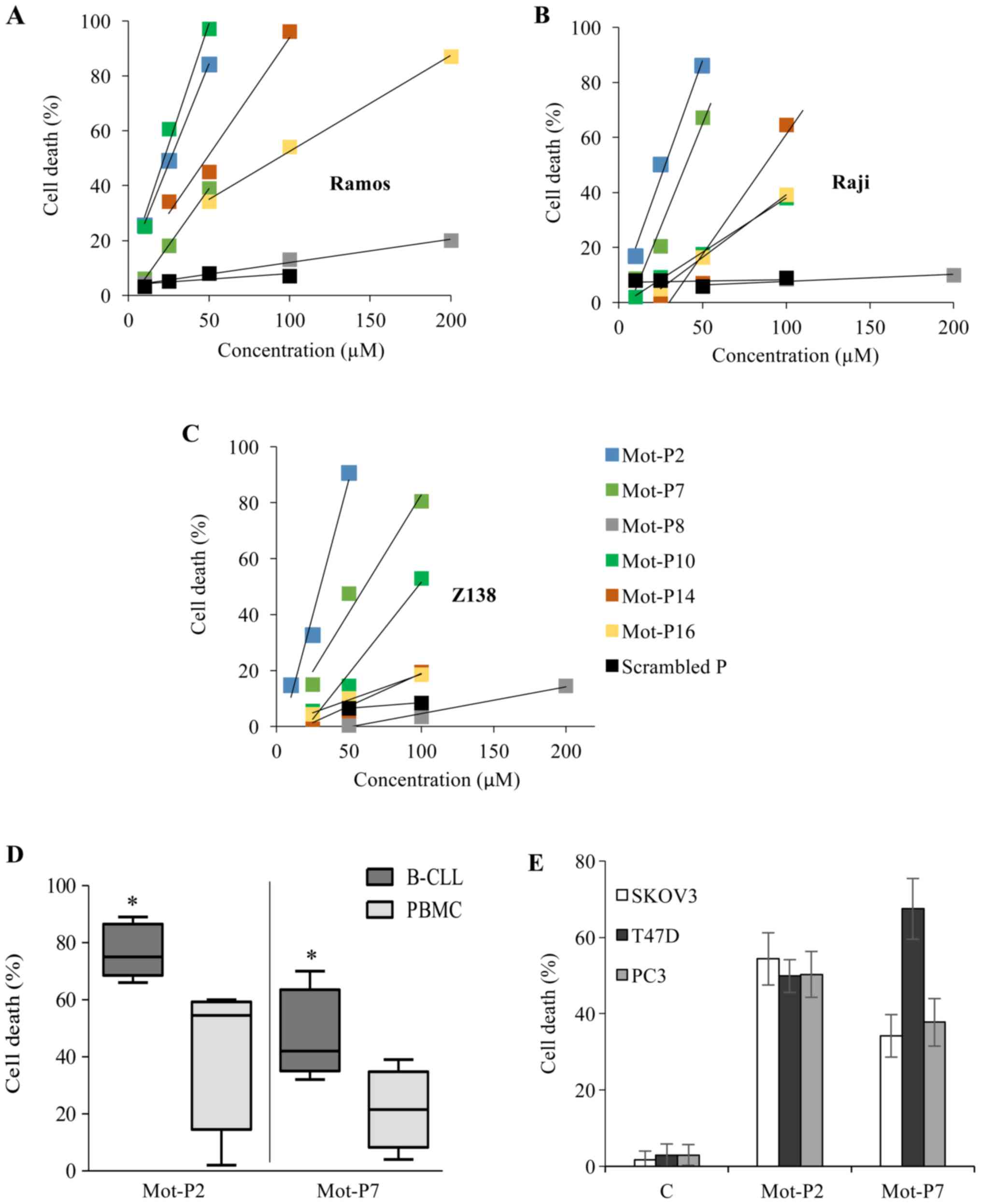
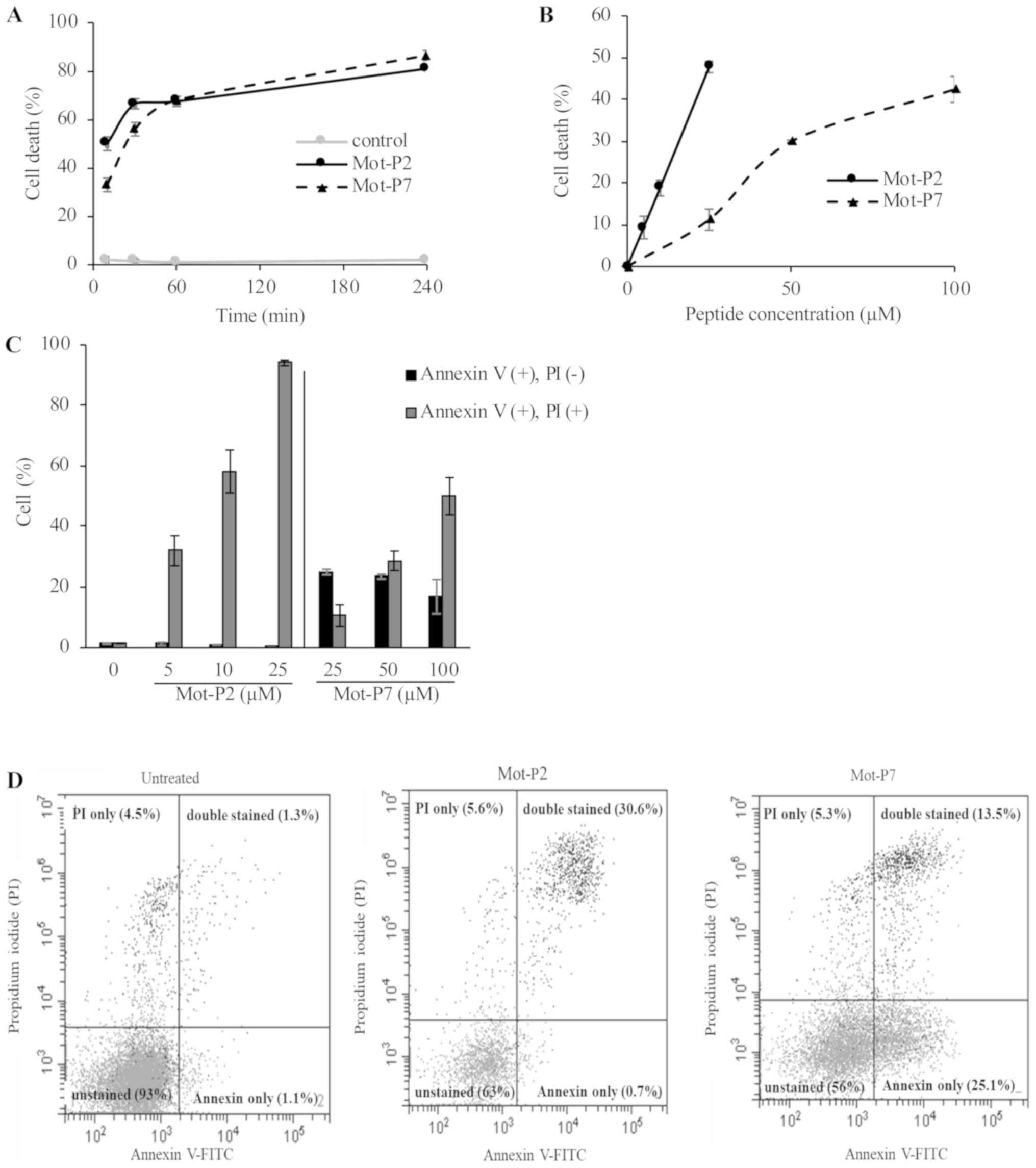
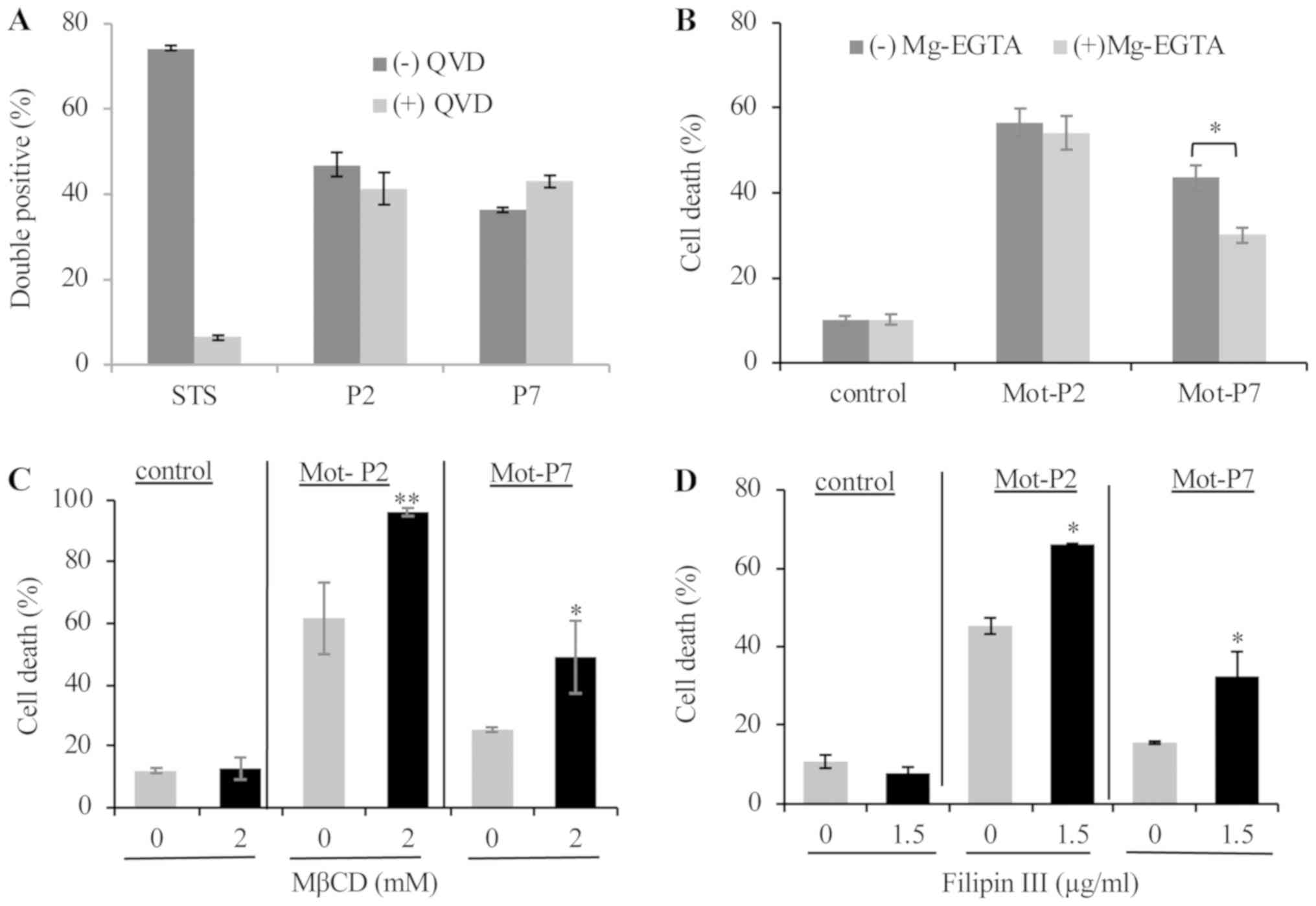
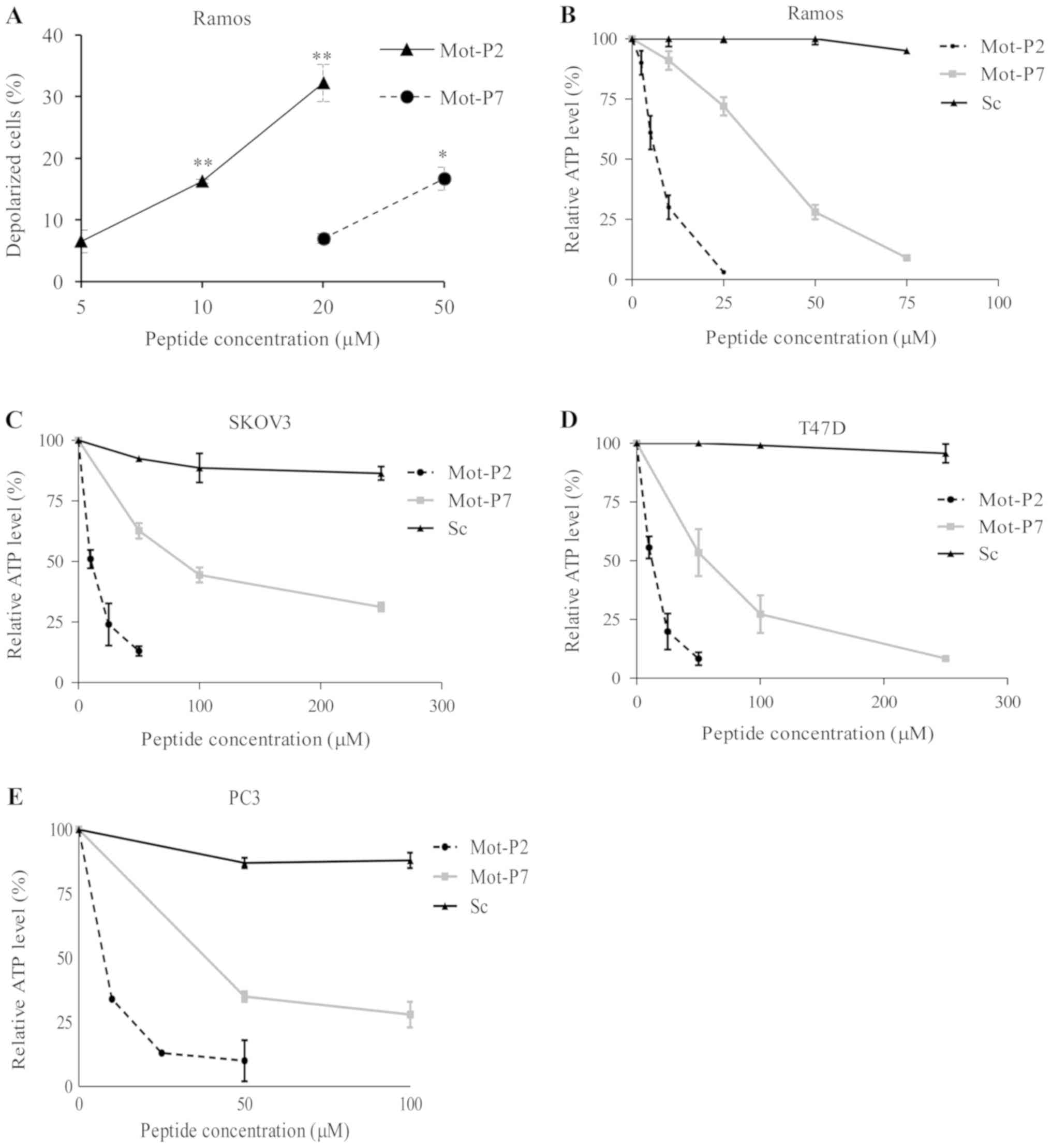
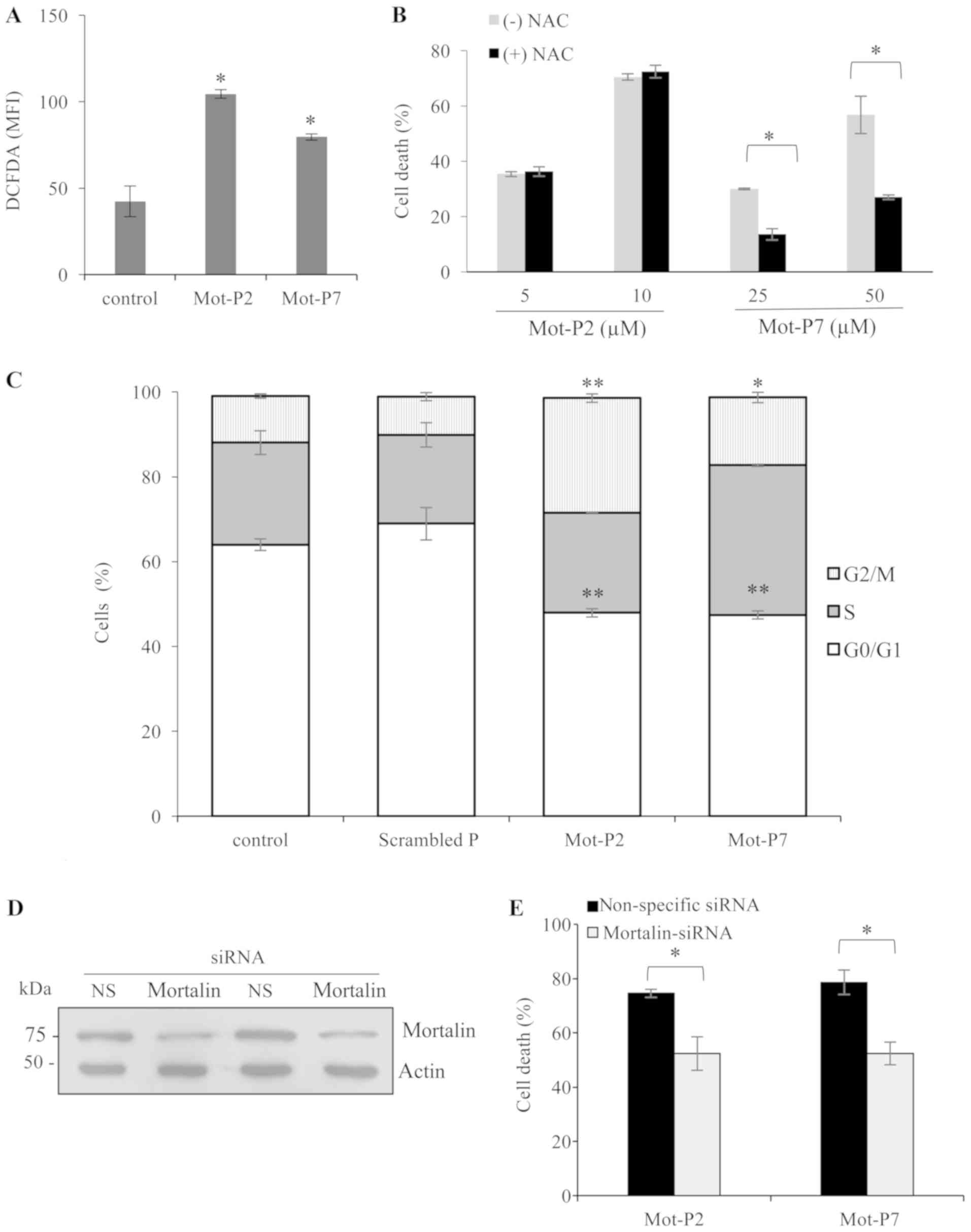
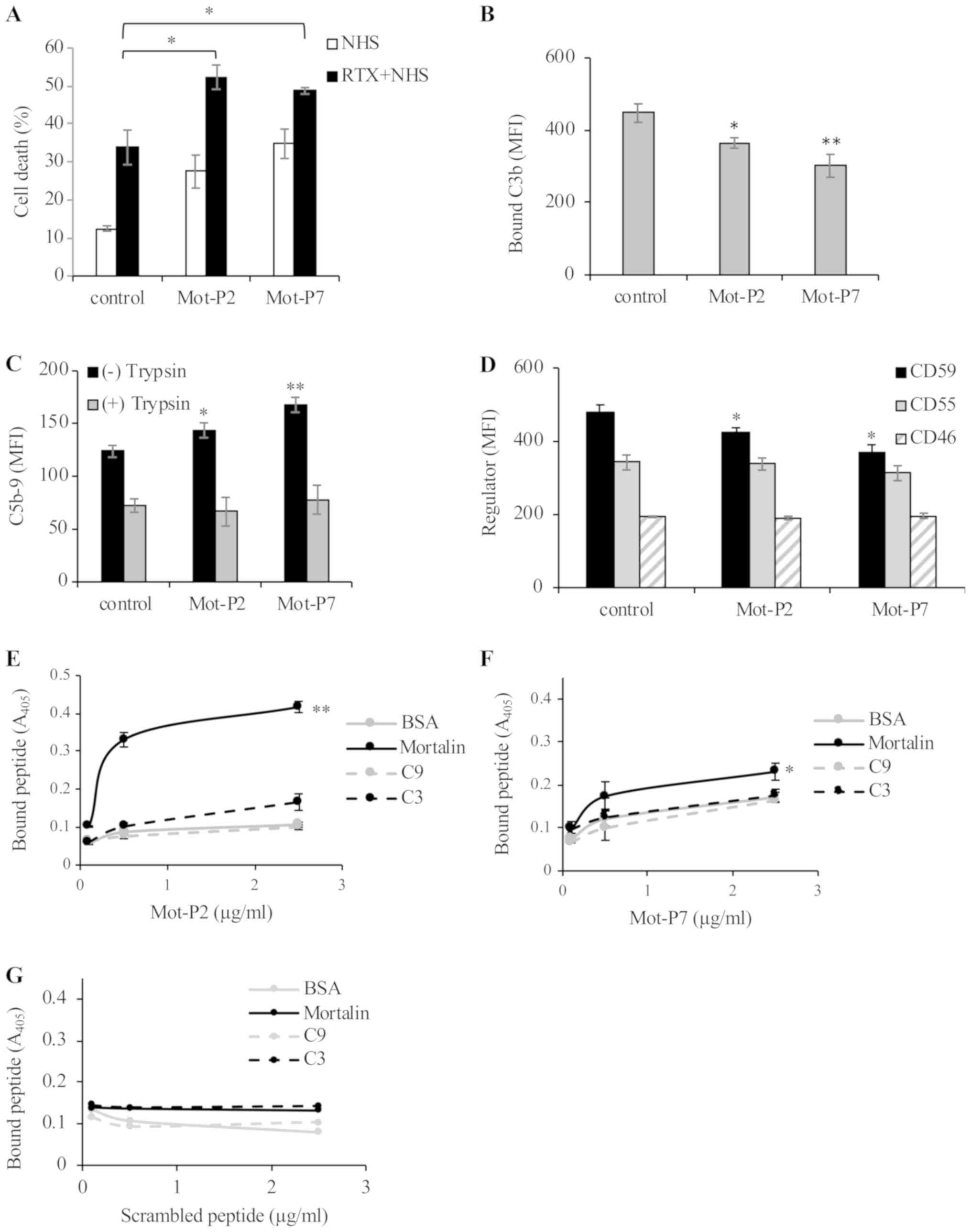
Cancer cells have developed numerous strategies to maintain their proliferative capacity and to withstand different kinds of stress. The mitochondrial stress‑70 protein named glucose regulated protein 75 (GRP75), also known as mortalin, is an intriguing cancer pro‑survival factor. It is constitutively expressed in normal tissues but is upregulated in many tumors, and was shown to be a cancer prognostic biomarker. Mortalin is an inhibitor of complement‑dependent cytotoxicity (CDC) and may therefore protect cells from antibody‑based immunotherapy. To target mortalin for cancer therapy, our laboratory designed several mortalin mimetic peptides with sequences predicted to be involved in mortalin binding to its client proteins. The peptides were synthesized with a C‑terminal transactivator of transcription sequence. By using cell death methodologies, the mechanism of action of the mortalin mimetic peptides on cancer cells was studied. Two peptides in particular, Mot‑P2 and Mot‑P7, were found to be highly toxic to lymphoma and ovarian, breast and prostate carcinoma cells. The analysis of their mode of action revealed that they may induce, within minutes, plasma membrane perturbations and mitochondrial stress. Furthermore, Mot‑P2 and Mot‑P7 activated necrotic cell death, leading to plasma membrane perforation, mitochondrial inner membrane depolarization and decrease in ATP level. In addition, Mot‑P7, but not Mot‑P2, required extracellular calcium ions to fully mediate cell death and was partially inhibited by plasma membrane cholesterol. At sub‑toxic concentrations, the two peptides moderately inhibited cancer cell proliferation and blocked cell cycle at G2/M. Both peptides may bind intracellularly to mortalin and/or a mortalin‑binding protein, hence knocking down mortalin expression reduced cell death. Combining treatment with Mot‑P2 or Mot‑P7 and CDC resulted in increased cell death. This study identified highly cytotoxic mortalin mimetic peptides that may be used as monotherapy or combined with complement‑activating antibody therapy to target mortalin for precision cancer therapy.
View Figures

Figure 1

Figure 2

Figure 3

Figure 4

Figure 5

Figure 6

View References

1 

Hanahan D and Weinberg RA: Hallmarks of cancer: The next generation. Cell. 144:646–674. 2011. View Article : Google Scholar : PubMed/NCBI

2 

Ran Q, Wadhwa R, Kawai R, Kaul SC, Sifers RN, Bick RJ, Smith JR and Pereira-Smith OM: Extramitochondrial localization of mortalin/mthsp70/PBP74/GRP75. Biochem Biophys Res Commun. 275:174–179. 2000. View Article : Google Scholar : PubMed/NCBI

3 

Wadhwa R, Yaguchi T, Hasan MK, Mitsui Y, Reddel RR and Kaul SC: Hsp70 family member, mot-2/mthsp70/GRP75, binds to the cytoplasmic sequestration domain of the p53 protein. Exp Cell Res. 274:246–253. 2002. View Article : Google Scholar : PubMed/NCBI

4 

Dundas SR, Lawrie LC, Rooney PH and Murray GI: Mortalin is over-expressed by colorectal adenocarcinomas and correlates with poor survival. J Pathol. 205:74–81. 2005. View Article : Google Scholar

5 

Takano S, Wadhwa R, Yoshii Y, Nose T, Kaul SC and Mitsui Y: Elevated levels of mortalin expression in human brain tumors. Exp Cell Res. 237:38–45. 1997. View Article : Google Scholar

6 

Ando K, Oki E, Zhao Y, Ikawa-Yoshida A, Kitao H, Saeki H, Kimura Y, Ida S, Morita M, Kusumoto T, et al: Mortalin is a prognostic factor of gastric cancer with normal p53 function. Gastric Cancer. 17:255–262. 2014. View Article : Google Scholar

7 

Wadhwa R, Takano S, Kaur K, Deocaris CC, Pereira-Smith OM, Reddel RR and Kaul SC: Upregulation of mortalin/mthsp70/Grp75 contributes to human carcinogenesis. Int J Cancer. 118:2973–2980. 2006. View Article : Google Scholar : PubMed/NCBI

8 

Rozenberg P, Kocsis J, Saar M, Prohászka Z, Füst G and Fishelson Z: Elevated levels of mitochondrial mortalin and cytosolic HSP70 in blood as risk factors in patients with colorectal cancer. Int J Cancer. 133:514–518. 2013. View Article : Google Scholar : PubMed/NCBI

9 

Jubran R, Kocsis J, Garam N, Maláti É, Gombos T, Barabás L, Gráf L, Prohászka Z and Fishelson Z: Circulating mitochondrial stress 70 protein/mortalin and cytosolic Hsp70 in blood: Risk indicators in colorectal cancer. Int J Cancer. 141:2329–2335. 2017. View Article : Google Scholar : PubMed/NCBI

10 

Kaul SC, Deocaris CC and Wadhwa R: Three faces of mortalin: A housekeeper, guardian and killer. Exp Gerontol. 42:263–274. 2007. View Article : Google Scholar

11 

Voisine C, Craig EA, Zufall N, von Ahsen O, Pfanner N and Voos W: The protein import motor of mitochondria: Unfolding and trapping of preproteins are distinct and separable functions of matrix Hsp70. Cell. 97:565–574. 1999. View Article : Google Scholar : PubMed/NCBI

12 

Pilzer D and Fishelson Z: Mortalin/GRP75 promotes release of membrane vesicles from immune attacked cells and protection from complement-mediated lysis. Int Immunol. 17:1239–1248. 2005. View Article : Google Scholar : PubMed/NCBI

13 

Pilzer D, Saar M, Koya K and Fishelson Z: Mortalin inhibitors sensitize K562 leukemia cells to complement-dependent cytotoxicity. Int J Cancer. 126:1428–1435. 2010.

14 

Saar Ray M, Moskovich O, Iosefson O and Fishelson Z: Mortalin/GRP75 binds to complement C9 and plays a role in resistance to complement-dependent cytotoxicity. J Biol Chem. 289:15014–15022. 2014. View Article : Google Scholar : PubMed/NCBI

15 

Frankel AD and Pabo CO: Cellular uptake of the tat protein from human immunodeficiency virus. Cell. 55:1189–1193. 1988. View Article : Google Scholar : PubMed/NCBI

16 

Raucher D and Ryu JS: Cell-penetrating peptides: Strategies for anticancer treatment. Trends Mol Med. 21:560–570. 2015. View Article : Google Scholar : PubMed/NCBI

17 

Darzynkiewicz Z, Juan G and Bedner E: Determining cell cycle stages by flow cytometry. Curr Protoc Cell Biol Chapter. 8(Unit 8): 42001.

18 

Smiley ST, Reers M, Mottola-Hartshorn C, Lin M, Chen A, Smith TW, Steele GD Jr and Chen LB: Intracellular heterogeneity in mito-chondrial membrane potentials revealed by a J-aggregate-forming lipophilic cation JC-1. Proc Natl Acad Sci USA. 88:3671–3675. 1991. View Article : Google Scholar

19 

Vivès E, Brodin P and Lebleu B: A truncated HIV-1 Tat protein basic domain rapidly translocates through the plasma membrane and accumulates in the cell nucleus. J Biol Chem. 272:16010–16017. 1997. View Article : Google Scholar : PubMed/NCBI

20 

Nagata S: Apoptosis and Clearance of Apoptotic Cells. Annu Rev Immunol. 36:489–517. 2018. View Article : Google Scholar : PubMed/NCBI

21 

Hirt UA and Leist M: Rapid, noninflammatory and PS-dependent phagocytic clearance of necrotic cells. Cell Death Differ. 10:1156–1164. 2003. View Article : Google Scholar : PubMed/NCBI

22 

Caserta TM, Smith AN, Gultice AD, Reedy MA and Brown TL: Q-VD-OPh, a broad spectrum caspase inhibitor with potent antiapoptotic properties. Apoptosis. 8:345–352. 2003. View Article : Google Scholar : PubMed/NCBI

23 

Zhivotovsky B and Orrenius S: Calcium and cell death mechanisms: A perspective from the cell death community. Cell Calcium. 50:211–221. 2011. View Article : Google Scholar : PubMed/NCBI

24 

Mason AJ, Marquette A and Bechinger B: Zwitterionic phospholipids and sterols modulate antimicrobial peptide-induced membrane destabilization. Biophys J. 93:4289–4299. 2007. View Article : Google Scholar : PubMed/NCBI

25 

Prenner EJ, Lewis RNAH, Jelokhani-Niaraki M, Hodges RS and McElhaney RN: Cholesterol attenuates the interaction of the antimicrobial peptide gramicidin S with phospholipid bilayer membranes. Biochim Biophys Acta. 1510:83–92. 2001. View Article : Google Scholar : PubMed/NCBI

26 

Moskovich O, Herzog LO, Ehrlich M and Fishelson Z: Caveolin-1 and dynamin-2 are essential for removal of the complement C5b-9 complex via endocytosis. J Biol Chem. 287:19904–19915. 2012. View Article : Google Scholar : PubMed/NCBI

27 

Liu Y, Liu W, Song XD and Zuo J: Effect of GRP75/mthsp70/PBP74/mortalin overexpression on intracellular ATP level, mitochondrial membrane potential and ROS accumulation following glucose deprivation in PC12 cells. Mol Cell Biochem. 268:45–51. 2005. View Article : Google Scholar : PubMed/NCBI

28 

Sun SY: N-acetylcysteine, reactive oxygen species and beyond. Cancer Biol Ther. 9:109–110. 2010. View Article : Google Scholar

29 

Moskovich O and Fishelson Z: Quantification of complement C5b-9 binding to cells by flow cytometry. The Complement System: Methods and Protocols. 1100th edition. Gadjeva M: Humana Press; Totowa, NJ: pp. 103–108. 2014, View Article : Google Scholar

30 

Bhakdi S, Tranum-Jensen J and Klump O: The terminal membrane C5b-9 complex of human complement. Evidence for the existence of multiple protease-resistant polypeptides that form the trans-membrane complement channel. J Immunol. 124:2451–2457. 1980.PubMed/NCBI

31 

Koya K, Li Y, Wang H, Ukai T, Tatsuta N, Kawakami M, Shishido and Chen LB: MKT-077, a novel rhodacyanine dye in clinical trials, exhibits anticarcinoma activity in preclinical studies based on selective mitochondrial accumulation. Cancer Res. 56:538–543. 1996.PubMed/NCBI

32 

Kunzelmann-Marche C, Freyssinet JM and Martínez MC: Regulation of phosphatidylserine transbilayer redistribution by store-operated Ca2+ entry: Role of actin cytoskeleton. J Biol Chem. 276:5134–5139. 2001. View Article : Google Scholar

33 

Heuck AP, Moe PC and Johnson BB: The cholesterol-dependent cytolysin family of gram-positive bacterial toxins. Subcell Biochem. 51:551–577. 2010. View Article : Google Scholar : PubMed/NCBI

34 

Won A, Ruscito A and Ianoul A: Imaging the membrane lytic activity of bioactive peptide latarcin 2a. Biochim Biophys Acta. 1818:3072–3080. 2012. View Article : Google Scholar : PubMed/NCBI

35 

Del Gaizo V, MacKenzie JA and Payne RM: Targeting proteins to mitochondria using TAT. Mol Genet Metab. 80:170–180. 2003. View Article : Google Scholar : PubMed/NCBI

36 

Palmer AC and Sorger PK: Combination cancer therapy can confer benefit via patient-topatient variability without drug additivity or synergy. Cell. 171:1678–1691.e13. 2017. View Article : Google Scholar

37 

Foucquier J and Guedj M: Analysis of drug combinations: Current methodological landscape. Pharmacol Res Perspect. 3:e001492015. View Article : Google Scholar : PubMed/NCBI

38 

Kurrikoff K, Aphkhazava D and Langel Ü: The future of peptides in cancer treatment. Curr Opin Pharmacol. 47:27–32. 2019. View Article : Google Scholar : PubMed/NCBI

39 

Guidotti G, Brambilla L and Rossi D: Peptides in clinical development for the treatment of brain tumors. Curr Opin Pharmacol. 47:102–109. 2019. View Article : Google Scholar : PubMed/NCBI

40 

Bayat Mokhtari R, Homayouni TS, Baluch N, Morgatskaya E, Kumar S, Das B and Yeger H: Combination therapy in combating cancer. Oncotarget. 8:38022–38043. 2017. View Article : Google Scholar : PubMed/NCBI

Related Articles

  • Abstract
  • View
  • Download
  • Twitter
Copy and paste a formatted citation
Spandidos Publications style
Jubran R, Saar-Ray M, Wawruszak A, Ziporen L, Donin N, Bairey O and Fishelson Z: Mortalin peptides exert antitumor activities and act as adjuvants to antibody-mediated complement-dependent cytotoxicity. Int J Oncol 57: 1013-1026, 2020.
APA
Jubran, R., Saar-Ray, M., Wawruszak, A., Ziporen, L., Donin, N., Bairey, O., & Fishelson, Z. (2020). Mortalin peptides exert antitumor activities and act as adjuvants to antibody-mediated complement-dependent cytotoxicity. International Journal of Oncology, 57, 1013-1026. https://doi.org/10.3892/ijo.2020.5101
MLA
Jubran, R., Saar-Ray, M., Wawruszak, A., Ziporen, L., Donin, N., Bairey, O., Fishelson, Z."Mortalin peptides exert antitumor activities and act as adjuvants to antibody-mediated complement-dependent cytotoxicity". International Journal of Oncology 57.4 (2020): 1013-1026.
Chicago
Jubran, R., Saar-Ray, M., Wawruszak, A., Ziporen, L., Donin, N., Bairey, O., Fishelson, Z."Mortalin peptides exert antitumor activities and act as adjuvants to antibody-mediated complement-dependent cytotoxicity". International Journal of Oncology 57, no. 4 (2020): 1013-1026. https://doi.org/10.3892/ijo.2020.5101
Copy and paste a formatted citation
x
Spandidos Publications style
Jubran R, Saar-Ray M, Wawruszak A, Ziporen L, Donin N, Bairey O and Fishelson Z: Mortalin peptides exert antitumor activities and act as adjuvants to antibody-mediated complement-dependent cytotoxicity. Int J Oncol 57: 1013-1026, 2020.
APA
Jubran, R., Saar-Ray, M., Wawruszak, A., Ziporen, L., Donin, N., Bairey, O., & Fishelson, Z. (2020). Mortalin peptides exert antitumor activities and act as adjuvants to antibody-mediated complement-dependent cytotoxicity. International Journal of Oncology, 57, 1013-1026. https://doi.org/10.3892/ijo.2020.5101
MLA
Jubran, R., Saar-Ray, M., Wawruszak, A., Ziporen, L., Donin, N., Bairey, O., Fishelson, Z."Mortalin peptides exert antitumor activities and act as adjuvants to antibody-mediated complement-dependent cytotoxicity". International Journal of Oncology 57.4 (2020): 1013-1026.
Chicago
Jubran, R., Saar-Ray, M., Wawruszak, A., Ziporen, L., Donin, N., Bairey, O., Fishelson, Z."Mortalin peptides exert antitumor activities and act as adjuvants to antibody-mediated complement-dependent cytotoxicity". International Journal of Oncology 57, no. 4 (2020): 1013-1026. https://doi.org/10.3892/ijo.2020.5101
Follow us
  • Twitter
  • LinkedIn
  • Facebook
About
  • Spandidos Publications
  • Careers
  • Cookie Policy
  • Privacy Policy
How can we help?
  • Help
  • Live Chat
  • Contact
  • Email to our Support Team