Spandidos Publications Logo
  • About
    • About Spandidos
    • Aims and Scopes
    • Abstracting and Indexing
    • Editorial Policies
    • Reprints and Permissions
    • Job Opportunities
    • Terms and Conditions
    • Contact
  • Journals
    • All Journals
    • Oncology Letters
      • Oncology Letters
      • Information for Authors
      • Editorial Policies
      • Editorial Board
      • Aims and Scope
      • Abstracting and Indexing
      • Bibliographic Information
      • Archive
    • International Journal of Oncology
      • International Journal of Oncology
      • Information for Authors
      • Editorial Policies
      • Editorial Board
      • Aims and Scope
      • Abstracting and Indexing
      • Bibliographic Information
      • Archive
    • Molecular and Clinical Oncology
      • Molecular and Clinical Oncology
      • Information for Authors
      • Editorial Policies
      • Editorial Board
      • Aims and Scope
      • Abstracting and Indexing
      • Bibliographic Information
      • Archive
    • Experimental and Therapeutic Medicine
      • Experimental and Therapeutic Medicine
      • Information for Authors
      • Editorial Policies
      • Editorial Board
      • Aims and Scope
      • Abstracting and Indexing
      • Bibliographic Information
      • Archive
    • International Journal of Molecular Medicine
      • International Journal of Molecular Medicine
      • Information for Authors
      • Editorial Policies
      • Editorial Board
      • Aims and Scope
      • Abstracting and Indexing
      • Bibliographic Information
      • Archive
    • Biomedical Reports
      • Biomedical Reports
      • Information for Authors
      • Editorial Policies
      • Editorial Board
      • Aims and Scope
      • Abstracting and Indexing
      • Bibliographic Information
      • Archive
    • Oncology Reports
      • Oncology Reports
      • Information for Authors
      • Editorial Policies
      • Editorial Board
      • Aims and Scope
      • Abstracting and Indexing
      • Bibliographic Information
      • Archive
    • Molecular Medicine Reports
      • Molecular Medicine Reports
      • Information for Authors
      • Editorial Policies
      • Editorial Board
      • Aims and Scope
      • Abstracting and Indexing
      • Bibliographic Information
      • Archive
    • World Academy of Sciences Journal
      • World Academy of Sciences Journal
      • Information for Authors
      • Editorial Policies
      • Editorial Board
      • Aims and Scope
      • Abstracting and Indexing
      • Bibliographic Information
      • Archive
    • International Journal of Functional Nutrition
      • International Journal of Functional Nutrition
      • Information for Authors
      • Editorial Policies
      • Editorial Board
      • Aims and Scope
      • Abstracting and Indexing
      • Bibliographic Information
      • Archive
    • International Journal of Epigenetics
      • International Journal of Epigenetics
      • Information for Authors
      • Editorial Policies
      • Editorial Board
      • Aims and Scope
      • Abstracting and Indexing
      • Bibliographic Information
      • Archive
    • Medicine International
      • Medicine International
      • Information for Authors
      • Editorial Policies
      • Editorial Board
      • Aims and Scope
      • Abstracting and Indexing
      • Bibliographic Information
      • Archive
  • Articles
  • Information
    • Information for Authors
    • Information for Reviewers
    • Information for Librarians
    • Information for Advertisers
    • Conferences
  • Language Editing
Spandidos Publications Logo
  • About
    • About Spandidos
    • Aims and Scopes
    • Abstracting and Indexing
    • Editorial Policies
    • Reprints and Permissions
    • Job Opportunities
    • Terms and Conditions
    • Contact
  • Journals
    • All Journals
    • Biomedical Reports
      • Information for Authors
      • Editorial Policies
      • Editorial Board
      • Aims and Scope
      • Abstracting and Indexing
      • Bibliographic Information
      • Archive
    • Experimental and Therapeutic Medicine
      • Information for Authors
      • Editorial Policies
      • Editorial Board
      • Aims and Scope
      • Abstracting and Indexing
      • Bibliographic Information
      • Archive
    • International Journal of Epigenetics
      • Information for Authors
      • Editorial Policies
      • Editorial Board
      • Aims and Scope
      • Abstracting and Indexing
      • Bibliographic Information
      • Archive
    • International Journal of Functional Nutrition
      • Information for Authors
      • Editorial Policies
      • Editorial Board
      • Aims and Scope
      • Abstracting and Indexing
      • Bibliographic Information
      • Archive
    • International Journal of Molecular Medicine
      • Information for Authors
      • Editorial Policies
      • Editorial Board
      • Aims and Scope
      • Abstracting and Indexing
      • Bibliographic Information
      • Archive
    • International Journal of Oncology
      • Information for Authors
      • Editorial Policies
      • Editorial Board
      • Aims and Scope
      • Abstracting and Indexing
      • Bibliographic Information
      • Archive
    • Medicine International
      • Information for Authors
      • Editorial Policies
      • Editorial Board
      • Aims and Scope
      • Abstracting and Indexing
      • Bibliographic Information
      • Archive
    • Molecular and Clinical Oncology
      • Information for Authors
      • Editorial Policies
      • Editorial Board
      • Aims and Scope
      • Abstracting and Indexing
      • Bibliographic Information
      • Archive
    • Molecular Medicine Reports
      • Information for Authors
      • Editorial Policies
      • Editorial Board
      • Aims and Scope
      • Abstracting and Indexing
      • Bibliographic Information
      • Archive
    • Oncology Letters
      • Information for Authors
      • Editorial Policies
      • Editorial Board
      • Aims and Scope
      • Abstracting and Indexing
      • Bibliographic Information
      • Archive
    • Oncology Reports
      • Information for Authors
      • Editorial Policies
      • Editorial Board
      • Aims and Scope
      • Abstracting and Indexing
      • Bibliographic Information
      • Archive
    • World Academy of Sciences Journal
      • Information for Authors
      • Editorial Policies
      • Editorial Board
      • Aims and Scope
      • Abstracting and Indexing
      • Bibliographic Information
      • Archive
  • Articles
  • Information
    • For Authors
    • For Reviewers
    • For Librarians
    • For Advertisers
    • Conferences
  • Language Editing
Login Register Submit
  • This site uses cookies
  • You can change your cookie settings at any time by following the instructions in our Cookie Policy. To find out more, you may read our Privacy Policy.

    I agree
Search articles by DOI, keyword, author or affiliation
Search
Advanced Search
presentation
International Journal of Oncology
Join Editorial Board Propose a Special Issue
Print ISSN: 1019-6439 Online ISSN: 1791-2423
Journal Cover
August-2022 Volume 61 Issue 2

Full Size Image

Cover Legend PDF

Sign up for eToc alerts
Recommend to Library

Journals

International Journal of Molecular Medicine

International Journal of Molecular Medicine

International Journal of Molecular Medicine is an international journal devoted to molecular mechanisms of human disease.

International Journal of Oncology

International Journal of Oncology

International Journal of Oncology is an international journal devoted to oncology research and cancer treatment.

Molecular Medicine Reports

Molecular Medicine Reports

Covers molecular medicine topics such as pharmacology, pathology, genetics, neuroscience, infectious diseases, molecular cardiology, and molecular surgery.

Oncology Reports

Oncology Reports

Oncology Reports is an international journal devoted to fundamental and applied research in Oncology.

Experimental and Therapeutic Medicine

Experimental and Therapeutic Medicine

Experimental and Therapeutic Medicine is an international journal devoted to laboratory and clinical medicine.

Oncology Letters

Oncology Letters

Oncology Letters is an international journal devoted to Experimental and Clinical Oncology.

Biomedical Reports

Biomedical Reports

Explores a wide range of biological and medical fields, including pharmacology, genetics, microbiology, neuroscience, and molecular cardiology.

Molecular and Clinical Oncology

Molecular and Clinical Oncology

International journal addressing all aspects of oncology research, from tumorigenesis and oncogenes to chemotherapy and metastasis.

World Academy of Sciences Journal

World Academy of Sciences Journal

Multidisciplinary open-access journal spanning biochemistry, genetics, neuroscience, environmental health, and synthetic biology.

International Journal of Functional Nutrition

International Journal of Functional Nutrition

Open-access journal combining biochemistry, pharmacology, immunology, and genetics to advance health through functional nutrition.

International Journal of Epigenetics

International Journal of Epigenetics

Publishes open-access research on using epigenetics to advance understanding and treatment of human disease.

Medicine International

Medicine International

An International Open Access Journal Devoted to General Medicine.

Journal Cover
August-2022 Volume 61 Issue 2

Full Size Image

Cover Legend PDF

Sign up for eToc alerts
Recommend to Library

  • Article
  • Citations
    • Cite This Article
    • Download Citation
    • Create Citation Alert
    • Remove Citation Alert
    • Cited By
  • Similar Articles
    • Related Articles (in Spandidos Publications)
    • Similar Articles (Google Scholar)
    • Similar Articles (PubMed)
  • Download PDF
  • Download XML
  • View XML

  • Supplementary Files
    • Supplementary_Data.pdf
Article Open Access

MELK predicts poor prognosis and promotes metastasis in esophageal squamous cell carcinoma via activating the NF‑κB pathway

  • Authors:
    • Jiecheng Ye
    • Wanying Deng
    • Ying Zhong
    • Hui Liu
    • Baoyin Guo
    • Zixi Qin
    • Peiwen Li
    • Xueyun Zhong
    • Lihui Wang
  • View Affiliations / Copyright

    Affiliations: Department of Pathology, Medical College, Jinan University, Guangzhou, Guangdong 510632, P.R. China
    Copyright: © Ye et al. This is an open access article distributed under the terms of Creative Commons Attribution License.
  • Article Number: 94
    |
    Published online on: June 21, 2022
       https://doi.org/10.3892/ijo.2022.5384
  • Expand metrics +
Metrics: Total Views: 0 (Spandidos Publications: | PMC Statistics: )
Metrics: Total PDF Downloads: 0 (Spandidos Publications: | PMC Statistics: )
Cited By (CrossRef): 0 citations Loading Articles...

This article is mentioned in:


Abstract

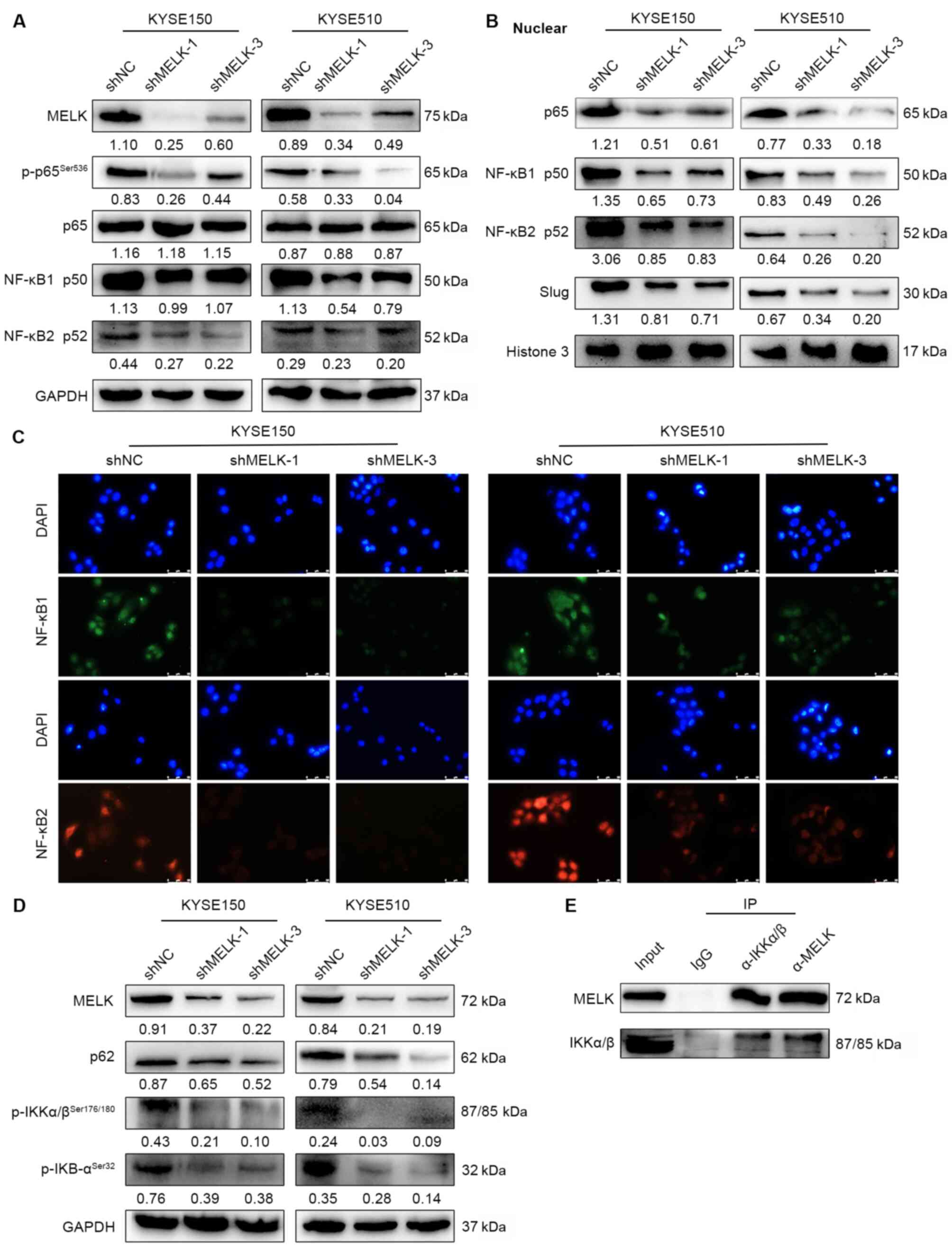
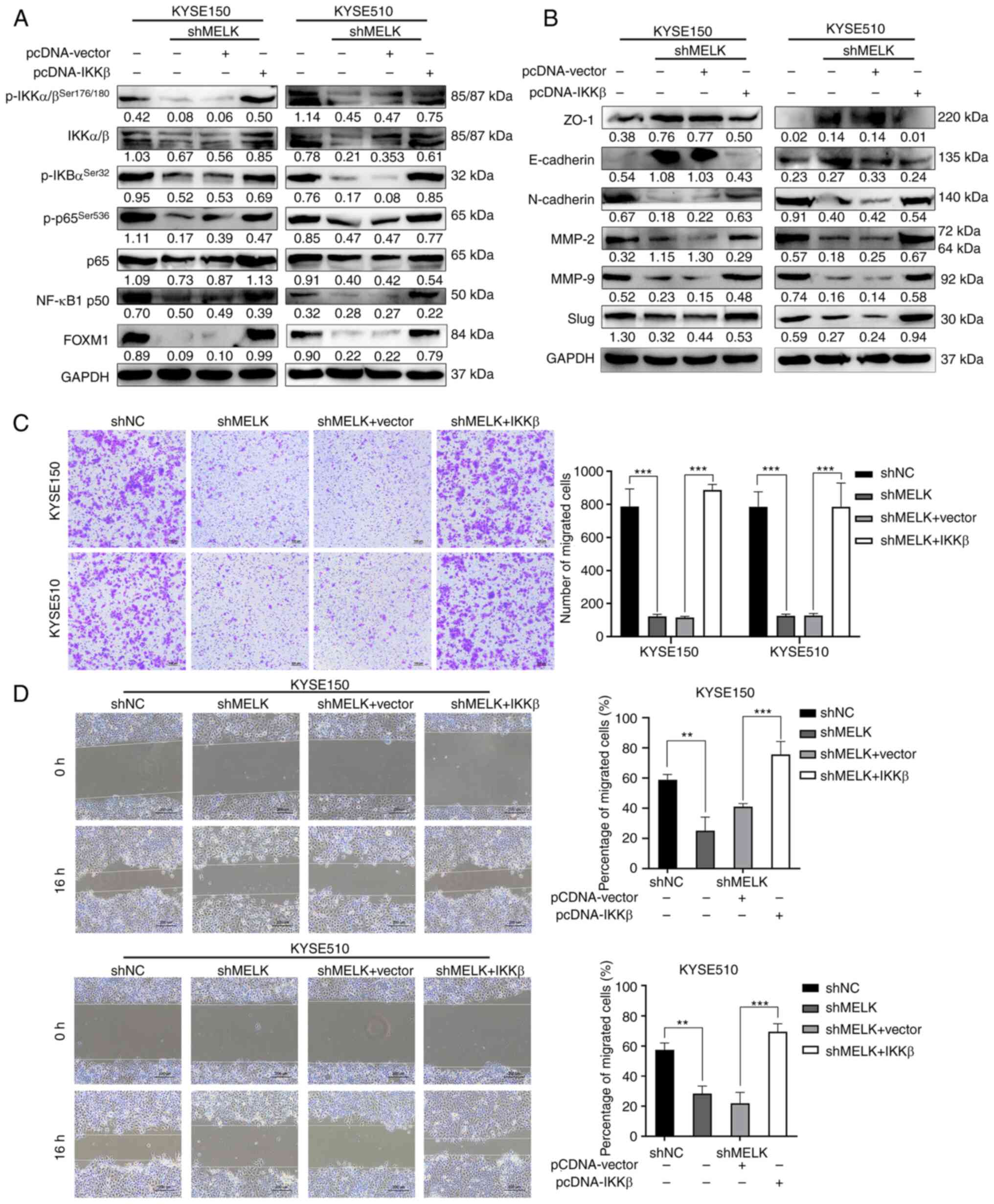
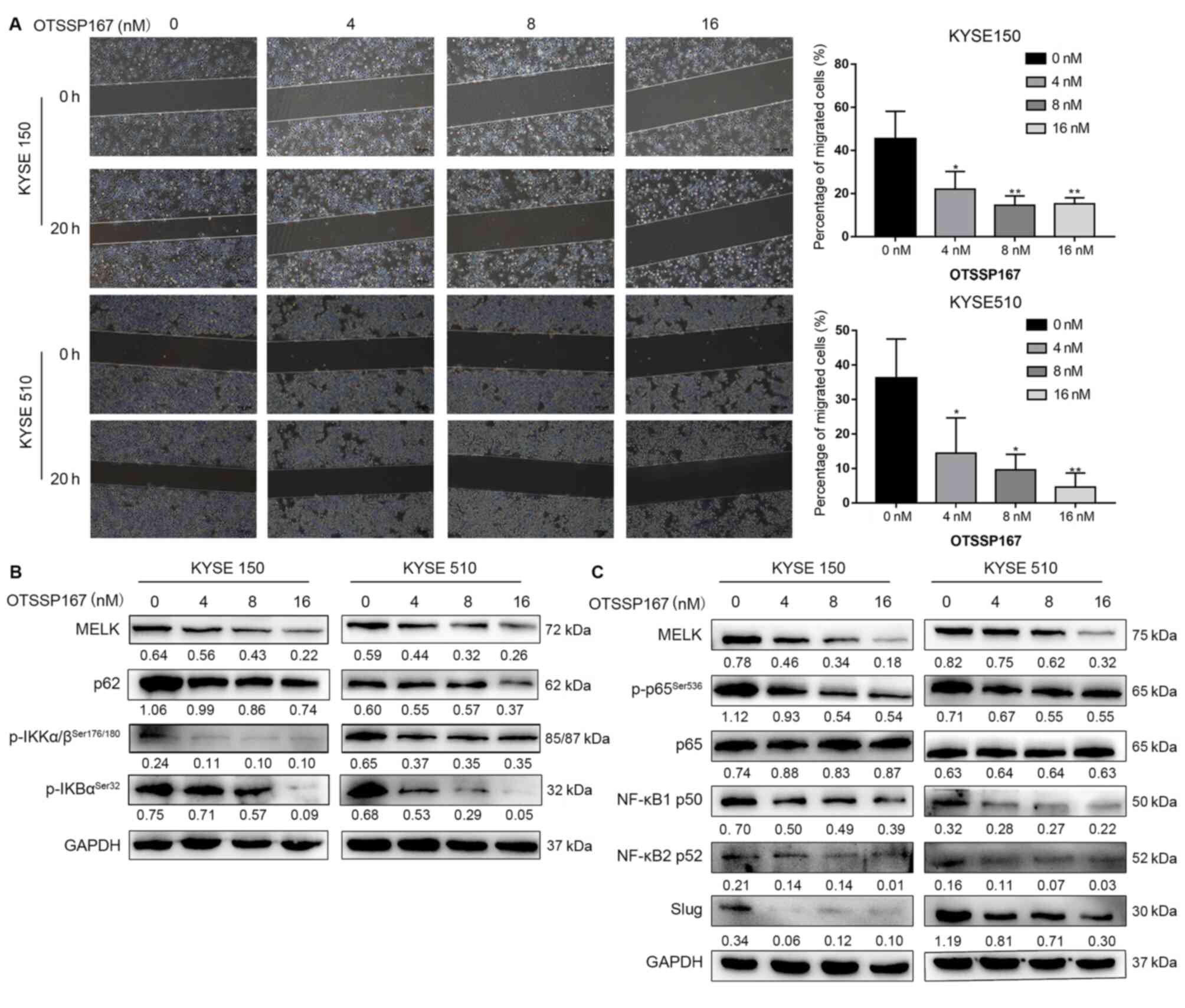
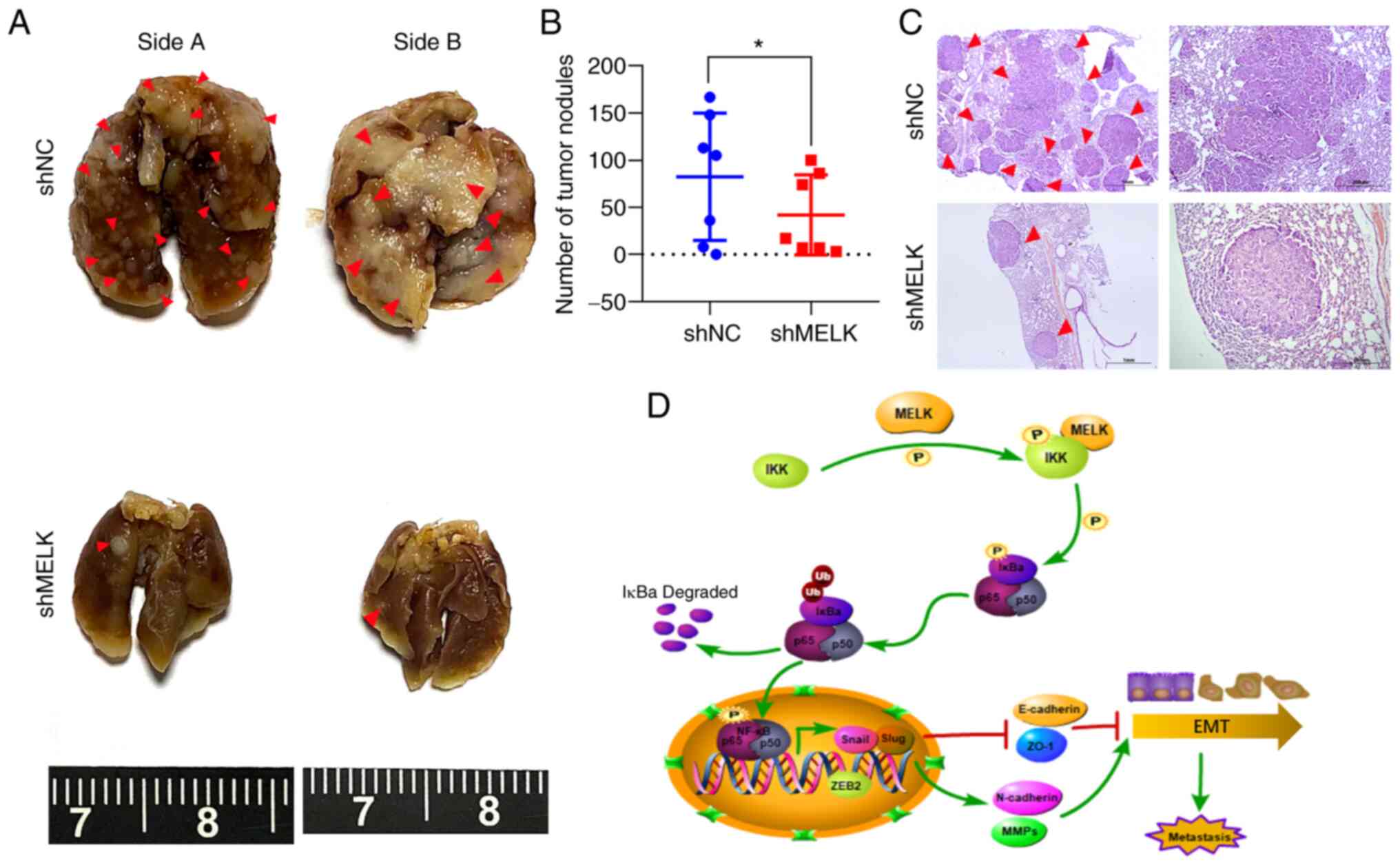
Esophageal squamous cell carcinoma (ESCC) is one of the most common malignancies worldwide with a low 5‑year survival rate due to the lack of effective therapeutic strategies. Accumulating evidence has indicated that maternal embryonic leucine zipper kinase (MELK) is highly expressed in several tumors and associated with tumor development. However, the biological effects of MELK in ESCC remain unknown. In the present study, cell phenotypical experiments and animal metastasis assays were performed to detect the influence of MELK knockdown in vitro and in vivo. The potential molecular mechanism of MELK‑mediated ESCC metastasis was further investigated by western blotting and immunofluorescence staining. The results revealed that the expression of MELK in human ESCC tissues was higher than that in adjacent normal tissues and was positively associated with the poor prognosis of patients. Reducing MELK expression resulted in growth inhibition and suppression of the invasive ability of ESCC cells in vitro and in vivo. MELK inhibition induced alterations of epithelial‑mesenchymal transition‑associated proteins. Mechanistically, MELK interacted with IκB kinase (IKK) and promoted the phosphorylation of IKK, by which MELK regulated activation of the NF‑κB pathway. Collectively, the present study revealed the function and mechanism of MELK in the cell metastasis of ESCC, which may be a potential therapeutic target for ESCC.
View Figures

Figure 1

Figure 2

Figure 3

Figure 4

Figure 5

Figure 6

Figure 7

Figure 8

View References

1 

Sung H, Ferlay J, Siegel RL, Laversanne M, Soerjomataram I, Jemal A and Bray F: Global cancer statistics 2020: GLOBOCAN estimates of incidence and mortality worldwide for 36 cancers in 185 countries. CA Cancer J Clin. 71:209–249. 2021. View Article : Google Scholar : PubMed/NCBI

2 

Chen MF, Yang YH, Lai CH, Chen PC and Chen WC: Outcome of patients with esophageal cancer: A nationwide analysis. Ann Surg Oncol. 20:3023–3030. 2013. View Article : Google Scholar : PubMed/NCBI

3 

Zeng H, Zheng R, Guo Y, Zhang S, Zou X, Wang N, Zhang L, Tang J, Chen J, Wei K, et al: Cancer survival in China, 2003-2005: A population-based study. Int J Cancer. 136:1921–1930. 2015. View Article : Google Scholar

4 

Zeng H, Chen W, Zheng R, Zhang S, Ji JS, Zou X, Xia C, Sun K, Yang Z, Li H, et al: Changing cancer survival in China during 2003-15: A pooled analysis of 17 population-based cancer registries. Lancet Glob Health. 6:e555–e567. 2018. View Article : Google Scholar : PubMed/NCBI

5 

Pennathur A, Farkas A, Krasinskas AM, Ferson PF, Gooding WE, Gibson MK, Schuchert MJ, Landreneau RJ and Luketich JD: Esophagectomy for T1 esophageal cancer: Outcomes in 100 patients and implications for endoscopic therapy. Ann Thorac Surg. 87:1048–1054. 2009. View Article : Google Scholar : PubMed/NCBI

6 

Rustgi A and El-Serag HB: Esophageal carcinoma. N Engl J Med. 372:1472–1473. 2015.PubMed/NCBI

7 

Diepenbruck M and Christofori G: Epithelial-mesenchymal transition (EMT) and metastasis: Yes, no, maybe? Curr Opin Cell Biol. 43:7–13. 2016. View Article : Google Scholar : PubMed/NCBI

8 

Heyer BS, Warsowe J, Solter D, Knowles BB and Ackerman SL: New member of the Snf1/AMPK kinase family, Melk, is expressed in the mouse egg and preimplantation embryo. Mol Reprod Dev. 47:148–156. 1997. View Article : Google Scholar : PubMed/NCBI

9 

Nakano I, Paucar AA, Bajpai R, Dougherty JD, Zewail A, Kelly TK, Kim KJ, Ou J, Groszer M, Imura T, et al: Maternal embryonic leucine zipper kinase (MELK) regulates multipotent neural progenitor proliferation. J Cell Biol. 170:413–427. 2005. View Article : Google Scholar : PubMed/NCBI

10 

Wang Y, Begley M, Li Q, Huang HT, Lako A, Eck MJ, Gray NS, Mitchison TJ, Cantley LC and Zhao JJ: Mitotic MELK-eIF4B signaling controls protein synthesis and tumor cell survival. Proc Natl Acad Sci USA. 113:9810–9815. 2016. View Article : Google Scholar : PubMed/NCBI

11 

Du T, Qu Y, Li J, Li H, Su L, Zhou Q, Yan M, Li C, Zhu Z and Liu B: Maternal embryonic leucine zipper kinase enhances gastric cancer progression via the FAK/Paxillin pathway. Mol Cancer. 13:1002014. View Article : Google Scholar : PubMed/NCBI

12 

Janostiak R, Rauniyar N, Lam TT, Ou J, Zhu LJ, Green MR and Wajapeyee N: MELK promotes melanoma growth by stimulating the NF-κB pathway. Cell Rep. 21:2829–2841. 2017. View Article : Google Scholar : PubMed/NCBI

13 

Wang Y, Lee YM, Baitsch L, Huang A, Xiang Y, Tong H, Lako A, Von T, Choi C, Lim E, et al: MELK is an oncogenic kinase essential for mitotic progression in basal-like breast cancer cells. Elife. 3:e017632014. View Article : Google Scholar : PubMed/NCBI

14 

Kuner R, Falth M, Pressinotti NC, Brase JC, Puig SB, Metzger J, Gade S, Schäfer G, Bartsch G, Steiner E, et al: The maternal embryonic leucine zipper kinase (MELK) is upregulated in high-grade prostate cancer. J Mol Med (Berl). 91:237–248. 2013. View Article : Google Scholar

15 

Kig C, Beullens M, Beke L, Van Eynde A, Linders JT, Brehmer D and Bollen M: Maternal embryonic leucine zipper kinase (MELK) reduces replication stress in glioblastoma cells. J Biol Chem. 292:127862017. View Article : Google Scholar : PubMed/NCBI

16 

Xu Q, Ge Q, Zhou Y, Yang B, Yang Q, Jiang S, Jiang R, Ai Z, Zhang Z and Teng Y: MELK promotes endometrial carcinoma progression via activating mTOR signaling pathway. EBioMedicine. 51:1026092020. View Article : Google Scholar : PubMed/NCBI

17 

Pitner MK, Taliaferro JM, Dalby KN and Bartholomeusz C: MELK: A potential novel therapeutic target for TNBC and other aggressive malignancies. Expert Opin Ther Targets. 21:849–859. 2017. View Article : Google Scholar : PubMed/NCBI

18 

Guan S, Lu J, Zhao Y, Yu Y, Li H, Chen Z, Shi Z, Liang H, Wang M, Guo K, et al: MELK is a novel therapeutic target in high-risk neuroblastoma. Oncotarget. 9:2591–2602. 2018. View Article : Google Scholar : PubMed/NCBI

19 

Ikeda Y, Sato S, Yabuno A, Shintani D, Ogasawara A, Miwa M, Zewde M, Miyamoto T, Fujiwara K, Nakamura Y and Hasegawa K: High expression of maternal embryonic leucine-zipper kinase (MELK) impacts clinical outcomes in patients with ovarian cancer and its inhibition suppresses ovarian cancer cells growth ex vivo. J Gynecol Oncol. 31:e932020. View Article : Google Scholar : PubMed/NCBI

20 

Liu H, Sun Q, Sun Y, Zhang J, Yuan H, Pang S, Qi X, Wang H, Zhang M, Zhang H, et al: MELK and EZH2 cooperate to regulate medulloblastoma cancer stem-like cell proliferation and differentiation. Mol Cancer Res. 15:1275–1286. 2017. View Article : Google Scholar : PubMed/NCBI

21 

Chen S, Zhou Q, Guo Z, Wang Y, Wang L, Liu X, Lu M, Ju L, Xiao Y and Wang X: Inhibition of MELK produces potential anti-tumour effects in bladder cancer by inducing G1/S cell cycle arrest via the ATM/CHK2/p53 pathway. J Cell Mol Med. 24:1804–1821. 2020. View Article : Google Scholar

22 

Kohler RS, Kettelhack H, Knipprath-Meszaros AM, Fedier A, Schoetzau A, Jacob F and Heinzelmann-Schwarz V: MELK expression in ovarian cancer correlates with poor outcome and its inhibition by OTSSP167 abrogates proliferation and viability of ovarian cancer cells. Gynecol Oncol. 145:159–166. 2017. View Article : Google Scholar : PubMed/NCBI

23 

Chen L, Wei Q, Bi S and Xie S: Maternal embryonic leucine zipper kinase promotes tumor growth and metastasis via stimulating FOXM1 signaling in esophageal squamous cell carcinoma. Front Oncol. 10:102020. View Article : Google Scholar : PubMed/NCBI

24 

Dongre A and Weinberg RA: New insights into the mechanisms of epithelial-mesenchymal transition and implications for cancer. Nat Rev Mol Cell Biol. 20:69–84. 2019. View Article : Google Scholar

25 

Pastushenko I and Blanpain C: EMT transition states during tumor progression and metastasis. Trends Cell Biol. 29:212–226. 2019. View Article : Google Scholar

26 

Yamini B: NF-κB, mesenchymal differentiation and glioblastoma. Cells. 7:1252018. View Article : Google Scholar

27 

Zhang Q, Lenardo MJ and Baltimore D: 30 years of NF-κB: A blossoming of relevance to human pathobiology. Cell. 168:37–57. 2017. View Article : Google Scholar : PubMed/NCBI

28 

Greene FL, Page DL, Fleming ID, Fritz AG, Balch CM and Haller DG: AJCC cancer staging manual. Springer; New York, NY: pp. 91–98. 2002

29 

Livak KJ and Schmittgen TD: Analysis of relative gene expression data using real-time quantitative PCR and the 2(-Delta Delta C(T)) method. Methods. 25:402–408. 2001. View Article : Google Scholar

30 

Hu N, Clifford RJ, Yang HH, Wang C, Goldstein AM, Ding T, Taylor PR and Lee MP: Genome wide analysis of DNA copy number neutral loss of heterozygosity (CNNLOH) and its relation to gene expression in esophageal squamous cell carcinoma. BMC Genomics. 11:5762010. View Article : Google Scholar : PubMed/NCBI

31 

Su H, Hu N, Yang HH, Wang C, Takikita M, Wang QH, Giffen C, Clifford R, Hewitt SM, Shou JZ, et al: Global gene expression profiling and validation in esophageal squamous cell carcinoma and its association with clinical phenotypes. Clin Cancer Res. 17:2955–2966. 2011. View Article : Google Scholar : PubMed/NCBI

32 

Rickman DS, Millon R, De Reynies A, Thomas E, Wasylyk C, Muller D, Abecassis J and Wasylyk B: Prediction of future metastasis and molecular characterization of head and neck squamous-cell carcinoma based on transcriptome and genome analysis by microarrays. Oncogene. 27:6607–6622. 2008. View Article : Google Scholar : PubMed/NCBI

33 

Sarrio D, Rodriguez-Pinilla SM, Hardisson D, Cano A, Moreno-Bueno G and Palacios J: Epithelial-mesenchymal transition in breast cancer relates to the basal-like phenotype. Cancer Res. 68:989–997. 2008. View Article : Google Scholar : PubMed/NCBI

34 

Liberzon A, Birger C, Thorvaldsdottir H, Ghandi M, Mesirov JP and Tamayo P: The molecular signatures database (MSigDB) hallmark gene set collection. Cell Syst. 1:417–425. 2015. View Article : Google Scholar

35 

Shimada Y, Imamura M, Wagata T, Yamaguchi N and Tobe T: Characterization of 21 newly established esophageal cancer cell lines. Cancer. 69:277–284. 1992. View Article : Google Scholar : PubMed/NCBI

36 

Pires BR, Mencalha AL, Ferreira GM, de Souza WF, Morgado-Díaz JA, Maia AM, Corrêa S and Abdelhay ESF: NF-kappaB is involved in the regulation of EMT genes in breast cancer cells. PLoS One. 12:e01696222017. View Article : Google Scholar : PubMed/NCBI

37 

Hoesel B and Schmid JA: The complexity of NF-κB signaling in inflammation and cancer. Mol Cancer. 12:862013. View Article : Google Scholar

38 

Li Y, Lu L, Tu J, Zhang J, Xiong T, Fan W, Wang J, Li M, Chen Y, Steggerda J, et al: Reciprocal regulation between forkhead box M1/NF-κB and methionine adenosyltransferase 1A drives liver cancer. Hepatology. 72:1682–1700. 2020. View Article : Google Scholar : PubMed/NCBI

39 

Zhang Y, Zhou X, Li Y, Xu Y, Lu K, Li P and Wang X: Inhibition of maternal embryonic leucine zipper kinase with OTSSP167 displays potent anti-leukemic effects in chronic lymphocytic leukemia. Oncogene. 37:5520–5533. 2018. View Article : Google Scholar : PubMed/NCBI

40 

Cho YS, Kang Y, Kim K, Cha YJ and Cho HS: The crystal structure of MPK38 in complex with OTSSP167, an orally administrative MELK selective inhibitor. Biochem Biophys Res Commun. 447:7–11. 2014. View Article : Google Scholar : PubMed/NCBI

41 

Li G, Yang M, Zuo L and Wang MX: MELK as a potential target to control cell proliferation in triple-negative breast cancer MDA-MB-231 cells. Oncol Lett. 15:9934–9940. 2018.PubMed/NCBI

42 

Li Y, Li Y, Chen Y, Xie Q, Dong N, Gao Y, Deng H, Lu C and Wang S: Correction to: MicroRNA-214-3p inhibits proliferation and cell cycle progression by targeting MELK in hepatocellular carcinoma and correlates cancer prognosis. Cancer Cell Int. 18:552018. View Article : Google Scholar : PubMed/NCBI

43 

Bollu LR, Shepherd J, Zhao D, Ma Y, Tahaney W, Speers C, Mazumdar A, Mills GB and Brown PH: Mutant P53 induces MELK expression by release of wild-type P53-dependent suppression of FOXM1. NPJ Breast Cancer. 6:22020. View Article : Google Scholar : PubMed/NCBI

44 

Oliva M, Munoz-Aguirre M, Kim-Hellmuth S, Wucher V, Gewirtz ADH, Cotter DJ, Parsana P, Kasela S, Balliu B, Viñuela A, et al: The impact of sex on gene expression across human tissues. Science. 369:eaba30662020. View Article : Google Scholar : PubMed/NCBI

45 

Ren L, Deng B, Saloura V, Park JH and Nakamura Y: MELK inhibition targets cancer stem cells through downregulation of SOX2 expression in head and neck cancer cells. Oncol Rep. 41:2540–2548. 2019.PubMed/NCBI

46 

Wang K, Zhu X, Yao Y, Yang M, Zhou F and Zhu L: Corosolic acid induces cell cycle arrest and cell apoptosis in human retinoblastoma Y-79 cells via disruption of MELK-FoxM1 signaling. Oncol Rep. 39:2777–2786. 2018.PubMed/NCBI

47 

Speers C, Zhao SG, Kothari V, Santola A, Liu M, Wilder-Romans K, Evans J, Batra N, Bartelink H, Hayes DF, et al: Maternal embryonic leucine zipper kinase (MELK) as a novel mediator and biomarker of radioresistance in human breast cancer. Clin Cancer Res. 22:5864–5875. 2016. View Article : Google Scholar : PubMed/NCBI

48 

Tian JH, Mu LJ, Wang MY, Zeng J, Long QZ, Guan B, Wang W, Jiang YM, Bai XJ and Du YF: BUB1B promotes proliferation of prostate cancer via transcriptional regulation of MELK. Anticancer Agents Med Chem. 20:1140–1146. 2020. View Article : Google Scholar : PubMed/NCBI

49 

Mierke CT: The matrix environmental and cell mechanical properties regulate cell migration and contribute to the invasive phenotype of cancer cells. Rep Prog Phys. 82:0646022019. View Article : Google Scholar : PubMed/NCBI

50 

Seong HA, Manoharan R and Ha H: Zinc finger protein ZPR9 functions as an activator of AMPK-related serine/threonine kinase MPK38/MELK involved in ASK1/TGF-beta/p53 signaling pathways. Sci Rep. 7:425022017. View Article : Google Scholar

51 

Gu C, Banasavadi-Siddegowda YK, Joshi K, Nakamura Y, Kurt H, Gupta S and Nakano I: Tumor-specific activation of the C-JUN/MELK pathway regulates glioma stem cell growth in a p53-dependent manner. Stem Cells. 31:870–881. 2013. View Article : Google Scholar : PubMed/NCBI

52 

Ren D, Yang Q, Dai Y, Guo W, Du H, Song L and Peng X: Oncogenic miR-210-3p promotes prostate cancer cell EMT and bone metastasis via NF-κB signaling pathway. Mol Cancer. 16:1172017. View Article : Google Scholar

53 

Jin B, Wang C, Li J, Du X, Ding K and Pan J: Anthelmintic niclosamide disrupts the interplay of p65 and FOXM1/β-catenin and eradicates leukemia stem cells in chronic myelogenous leukemia. Clin Cancer Res. 23:789–803. 2017. View Article : Google Scholar

Related Articles

  • Abstract
  • View
  • Download
  • Twitter
Copy and paste a formatted citation
Spandidos Publications style
Ye J, Deng W, Zhong Y, Liu H, Guo B, Qin Z, Li P, Zhong X and Wang L: MELK predicts poor prognosis and promotes metastasis in esophageal squamous cell carcinoma via activating the NF‑κB pathway. Int J Oncol 61: 94, 2022.
APA
Ye, J., Deng, W., Zhong, Y., Liu, H., Guo, B., Qin, Z. ... Wang, L. (2022). MELK predicts poor prognosis and promotes metastasis in esophageal squamous cell carcinoma via activating the NF‑κB pathway. International Journal of Oncology, 61, 94. https://doi.org/10.3892/ijo.2022.5384
MLA
Ye, J., Deng, W., Zhong, Y., Liu, H., Guo, B., Qin, Z., Li, P., Zhong, X., Wang, L."MELK predicts poor prognosis and promotes metastasis in esophageal squamous cell carcinoma via activating the NF‑κB pathway". International Journal of Oncology 61.2 (2022): 94.
Chicago
Ye, J., Deng, W., Zhong, Y., Liu, H., Guo, B., Qin, Z., Li, P., Zhong, X., Wang, L."MELK predicts poor prognosis and promotes metastasis in esophageal squamous cell carcinoma via activating the NF‑κB pathway". International Journal of Oncology 61, no. 2 (2022): 94. https://doi.org/10.3892/ijo.2022.5384
Copy and paste a formatted citation
x
Spandidos Publications style
Ye J, Deng W, Zhong Y, Liu H, Guo B, Qin Z, Li P, Zhong X and Wang L: MELK predicts poor prognosis and promotes metastasis in esophageal squamous cell carcinoma via activating the NF‑κB pathway. Int J Oncol 61: 94, 2022.
APA
Ye, J., Deng, W., Zhong, Y., Liu, H., Guo, B., Qin, Z. ... Wang, L. (2022). MELK predicts poor prognosis and promotes metastasis in esophageal squamous cell carcinoma via activating the NF‑κB pathway. International Journal of Oncology, 61, 94. https://doi.org/10.3892/ijo.2022.5384
MLA
Ye, J., Deng, W., Zhong, Y., Liu, H., Guo, B., Qin, Z., Li, P., Zhong, X., Wang, L."MELK predicts poor prognosis and promotes metastasis in esophageal squamous cell carcinoma via activating the NF‑κB pathway". International Journal of Oncology 61.2 (2022): 94.
Chicago
Ye, J., Deng, W., Zhong, Y., Liu, H., Guo, B., Qin, Z., Li, P., Zhong, X., Wang, L."MELK predicts poor prognosis and promotes metastasis in esophageal squamous cell carcinoma via activating the NF‑κB pathway". International Journal of Oncology 61, no. 2 (2022): 94. https://doi.org/10.3892/ijo.2022.5384
Follow us
  • Twitter
  • LinkedIn
  • Facebook
About
  • Spandidos Publications
  • Careers
  • Cookie Policy
  • Privacy Policy
How can we help?
  • Help
  • Live Chat
  • Contact
  • Email to our Support Team