Spandidos Publications Logo
  • About
    • About Spandidos
    • Aims and Scopes
    • Abstracting and Indexing
    • Editorial Policies
    • Reprints and Permissions
    • Job Opportunities
    • Terms and Conditions
    • Contact
  • Journals
    • All Journals
    • Oncology Letters
      • Oncology Letters
      • Information for Authors
      • Editorial Policies
      • Editorial Board
      • Aims and Scope
      • Abstracting and Indexing
      • Bibliographic Information
      • Archive
    • International Journal of Oncology
      • International Journal of Oncology
      • Information for Authors
      • Editorial Policies
      • Editorial Board
      • Aims and Scope
      • Abstracting and Indexing
      • Bibliographic Information
      • Archive
    • Molecular and Clinical Oncology
      • Molecular and Clinical Oncology
      • Information for Authors
      • Editorial Policies
      • Editorial Board
      • Aims and Scope
      • Abstracting and Indexing
      • Bibliographic Information
      • Archive
    • Experimental and Therapeutic Medicine
      • Experimental and Therapeutic Medicine
      • Information for Authors
      • Editorial Policies
      • Editorial Board
      • Aims and Scope
      • Abstracting and Indexing
      • Bibliographic Information
      • Archive
    • International Journal of Molecular Medicine
      • International Journal of Molecular Medicine
      • Information for Authors
      • Editorial Policies
      • Editorial Board
      • Aims and Scope
      • Abstracting and Indexing
      • Bibliographic Information
      • Archive
    • Biomedical Reports
      • Biomedical Reports
      • Information for Authors
      • Editorial Policies
      • Editorial Board
      • Aims and Scope
      • Abstracting and Indexing
      • Bibliographic Information
      • Archive
    • Oncology Reports
      • Oncology Reports
      • Information for Authors
      • Editorial Policies
      • Editorial Board
      • Aims and Scope
      • Abstracting and Indexing
      • Bibliographic Information
      • Archive
    • Molecular Medicine Reports
      • Molecular Medicine Reports
      • Information for Authors
      • Editorial Policies
      • Editorial Board
      • Aims and Scope
      • Abstracting and Indexing
      • Bibliographic Information
      • Archive
    • World Academy of Sciences Journal
      • World Academy of Sciences Journal
      • Information for Authors
      • Editorial Policies
      • Editorial Board
      • Aims and Scope
      • Abstracting and Indexing
      • Bibliographic Information
      • Archive
    • International Journal of Functional Nutrition
      • International Journal of Functional Nutrition
      • Information for Authors
      • Editorial Policies
      • Editorial Board
      • Aims and Scope
      • Abstracting and Indexing
      • Bibliographic Information
      • Archive
    • International Journal of Epigenetics
      • International Journal of Epigenetics
      • Information for Authors
      • Editorial Policies
      • Editorial Board
      • Aims and Scope
      • Abstracting and Indexing
      • Bibliographic Information
      • Archive
    • Medicine International
      • Medicine International
      • Information for Authors
      • Editorial Policies
      • Editorial Board
      • Aims and Scope
      • Abstracting and Indexing
      • Bibliographic Information
      • Archive
  • Articles
  • Information
    • Information for Authors
    • Information for Reviewers
    • Information for Librarians
    • Information for Advertisers
    • Conferences
  • Language Editing
Spandidos Publications Logo
  • About
    • About Spandidos
    • Aims and Scopes
    • Abstracting and Indexing
    • Editorial Policies
    • Reprints and Permissions
    • Job Opportunities
    • Terms and Conditions
    • Contact
  • Journals
    • All Journals
    • Biomedical Reports
      • Information for Authors
      • Editorial Policies
      • Editorial Board
      • Aims and Scope
      • Abstracting and Indexing
      • Bibliographic Information
      • Archive
    • Experimental and Therapeutic Medicine
      • Information for Authors
      • Editorial Policies
      • Editorial Board
      • Aims and Scope
      • Abstracting and Indexing
      • Bibliographic Information
      • Archive
    • International Journal of Epigenetics
      • Information for Authors
      • Editorial Policies
      • Editorial Board
      • Aims and Scope
      • Abstracting and Indexing
      • Bibliographic Information
      • Archive
    • International Journal of Functional Nutrition
      • Information for Authors
      • Editorial Policies
      • Editorial Board
      • Aims and Scope
      • Abstracting and Indexing
      • Bibliographic Information
      • Archive
    • International Journal of Molecular Medicine
      • Information for Authors
      • Editorial Policies
      • Editorial Board
      • Aims and Scope
      • Abstracting and Indexing
      • Bibliographic Information
      • Archive
    • International Journal of Oncology
      • Information for Authors
      • Editorial Policies
      • Editorial Board
      • Aims and Scope
      • Abstracting and Indexing
      • Bibliographic Information
      • Archive
    • Medicine International
      • Information for Authors
      • Editorial Policies
      • Editorial Board
      • Aims and Scope
      • Abstracting and Indexing
      • Bibliographic Information
      • Archive
    • Molecular and Clinical Oncology
      • Information for Authors
      • Editorial Policies
      • Editorial Board
      • Aims and Scope
      • Abstracting and Indexing
      • Bibliographic Information
      • Archive
    • Molecular Medicine Reports
      • Information for Authors
      • Editorial Policies
      • Editorial Board
      • Aims and Scope
      • Abstracting and Indexing
      • Bibliographic Information
      • Archive
    • Oncology Letters
      • Information for Authors
      • Editorial Policies
      • Editorial Board
      • Aims and Scope
      • Abstracting and Indexing
      • Bibliographic Information
      • Archive
    • Oncology Reports
      • Information for Authors
      • Editorial Policies
      • Editorial Board
      • Aims and Scope
      • Abstracting and Indexing
      • Bibliographic Information
      • Archive
    • World Academy of Sciences Journal
      • Information for Authors
      • Editorial Policies
      • Editorial Board
      • Aims and Scope
      • Abstracting and Indexing
      • Bibliographic Information
      • Archive
  • Articles
  • Information
    • For Authors
    • For Reviewers
    • For Librarians
    • For Advertisers
    • Conferences
  • Language Editing
Login Register Submit
  • This site uses cookies
  • You can change your cookie settings at any time by following the instructions in our Cookie Policy. To find out more, you may read our Privacy Policy.

    I agree
Search articles by DOI, keyword, author or affiliation
Search
Advanced Search
presentation
International Journal of Oncology
Join Editorial Board Propose a Special Issue
Print ISSN: 1019-6439 Online ISSN: 1791-2423
Journal Cover
April-2024 Volume 64 Issue 4

Full Size Image

Cover Legend PDF

Sign up for eToc alerts
Recommend to Library

Journals

International Journal of Molecular Medicine

International Journal of Molecular Medicine

International Journal of Molecular Medicine is an international journal devoted to molecular mechanisms of human disease.

International Journal of Oncology

International Journal of Oncology

International Journal of Oncology is an international journal devoted to oncology research and cancer treatment.

Molecular Medicine Reports

Molecular Medicine Reports

Covers molecular medicine topics such as pharmacology, pathology, genetics, neuroscience, infectious diseases, molecular cardiology, and molecular surgery.

Oncology Reports

Oncology Reports

Oncology Reports is an international journal devoted to fundamental and applied research in Oncology.

Experimental and Therapeutic Medicine

Experimental and Therapeutic Medicine

Experimental and Therapeutic Medicine is an international journal devoted to laboratory and clinical medicine.

Oncology Letters

Oncology Letters

Oncology Letters is an international journal devoted to Experimental and Clinical Oncology.

Biomedical Reports

Biomedical Reports

Explores a wide range of biological and medical fields, including pharmacology, genetics, microbiology, neuroscience, and molecular cardiology.

Molecular and Clinical Oncology

Molecular and Clinical Oncology

International journal addressing all aspects of oncology research, from tumorigenesis and oncogenes to chemotherapy and metastasis.

World Academy of Sciences Journal

World Academy of Sciences Journal

Multidisciplinary open-access journal spanning biochemistry, genetics, neuroscience, environmental health, and synthetic biology.

International Journal of Functional Nutrition

International Journal of Functional Nutrition

Open-access journal combining biochemistry, pharmacology, immunology, and genetics to advance health through functional nutrition.

International Journal of Epigenetics

International Journal of Epigenetics

Publishes open-access research on using epigenetics to advance understanding and treatment of human disease.

Medicine International

Medicine International

An International Open Access Journal Devoted to General Medicine.

Journal Cover
April-2024 Volume 64 Issue 4

Full Size Image

Cover Legend PDF

Sign up for eToc alerts
Recommend to Library

  • Article
  • Citations
    • Cite This Article
    • Download Citation
    • Create Citation Alert
    • Remove Citation Alert
    • Cited By
  • Similar Articles
    • Related Articles (in Spandidos Publications)
    • Similar Articles (Google Scholar)
    • Similar Articles (PubMed)
  • Download PDF
  • Download XML
  • View XML

  • Supplementary Files
    • Supplementary_Data.pdf
Article Open Access

GBP2 enhances paclitaxel sensitivity in triple‑negative breast cancer by promoting autophagy in combination with ATG2 and inhibiting the PI3K/AKT/mTOR pathway

  • Authors:
    • Weidan Zhang
    • Xin Tang
    • Yang Peng
    • Yingkun Xu
    • Li Liu
    • Shengchun Liu
  • View Affiliations / Copyright

    Affiliations: Department of Breast and Thyroid Surgery, The First Affiliated Hospital of Chongqing Medical University, Chongqing 400016, P.R. China, Department of Rehabilitation Medicine, The People's Hospital of Tongliang, Chongqing 402560, P.R. China
    Copyright: © Zhang et al. This is an open access article distributed under the terms of Creative Commons Attribution License.
  • Article Number: 34
    |
    Published online on: February 6, 2024
       https://doi.org/10.3892/ijo.2024.5622
  • Expand metrics +
Metrics: Total Views: 0 (Spandidos Publications: | PMC Statistics: )
Metrics: Total PDF Downloads: 0 (Spandidos Publications: | PMC Statistics: )
Cited By (CrossRef): 0 citations Loading Articles...

This article is mentioned in:


Abstract

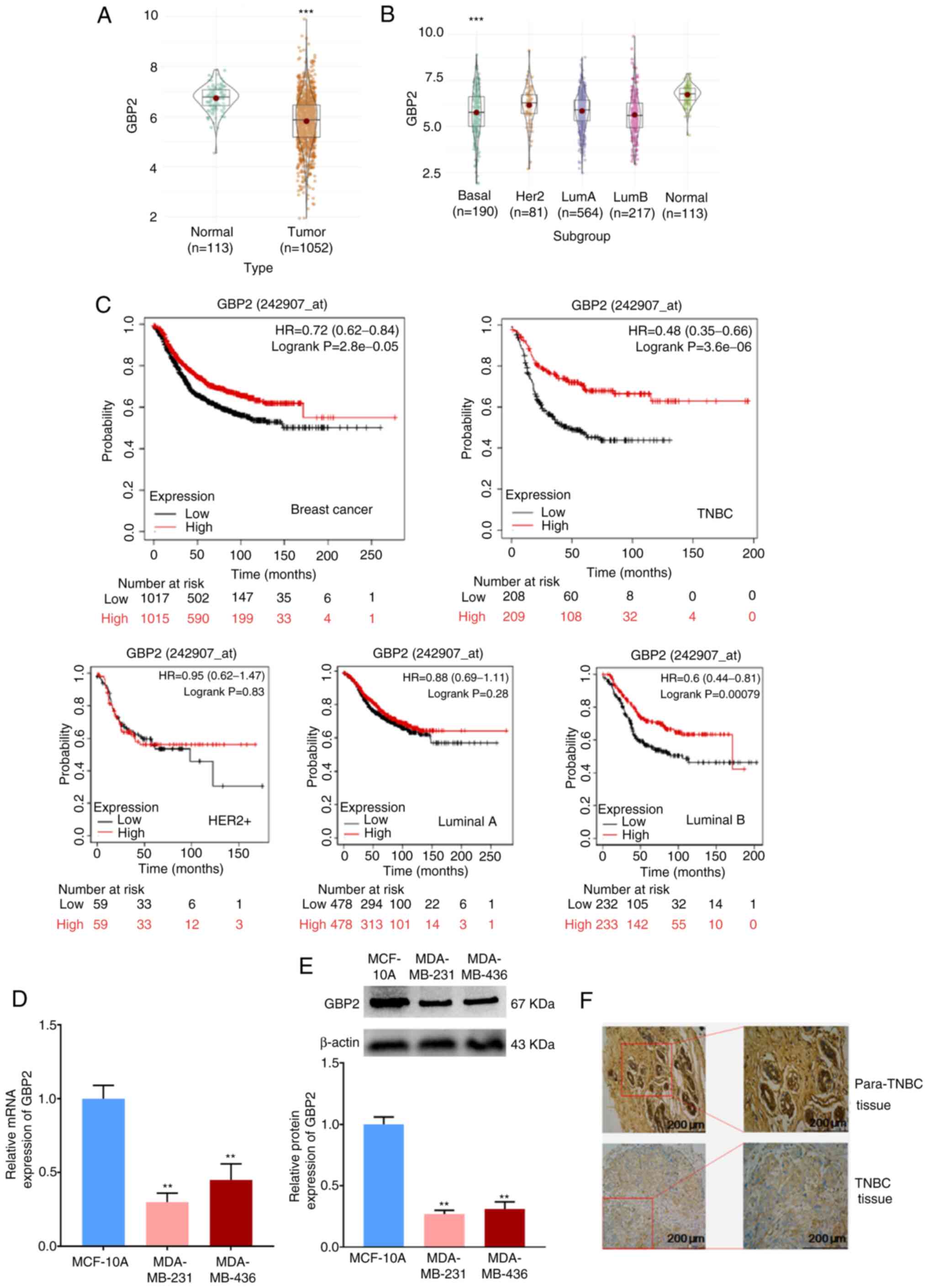
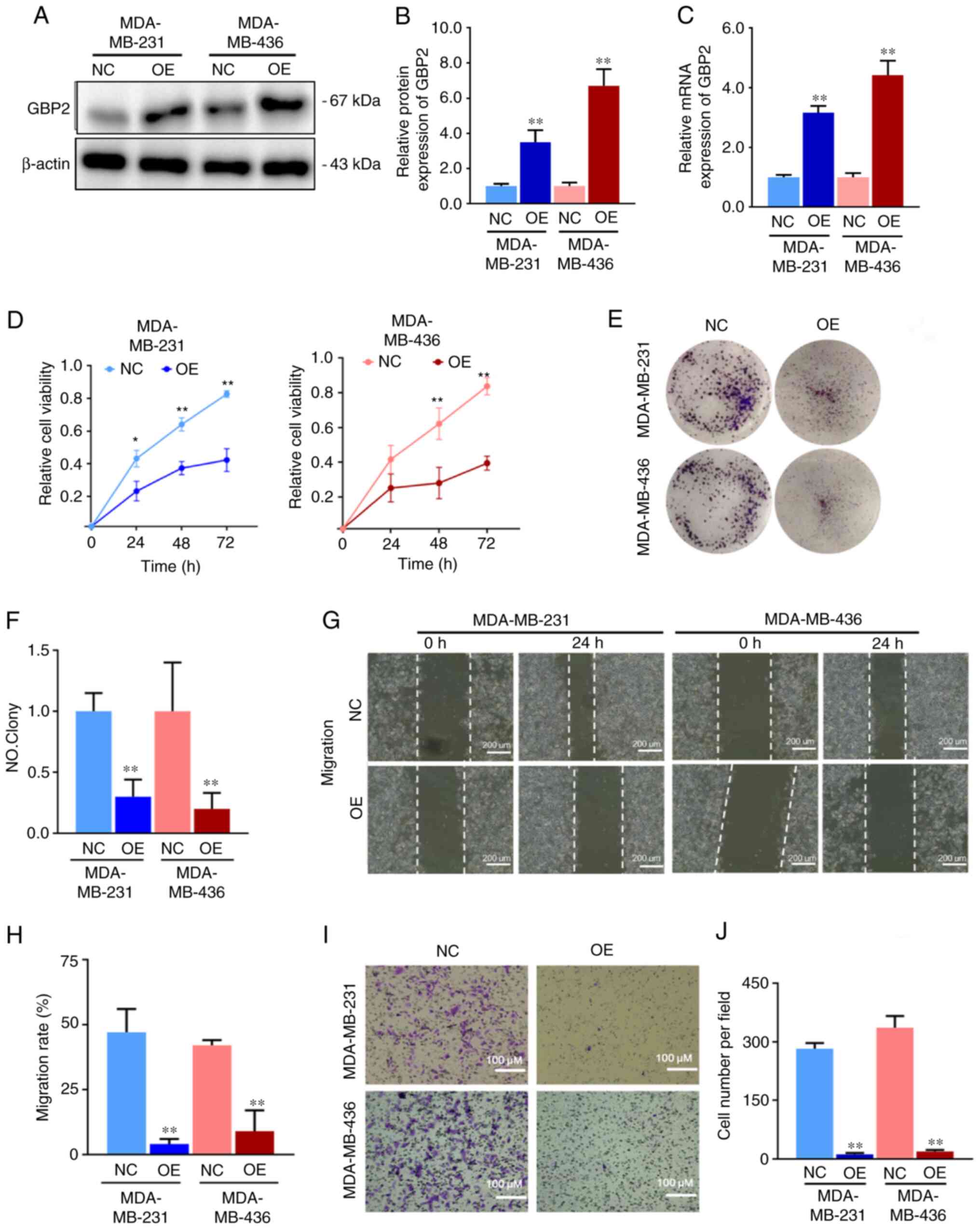
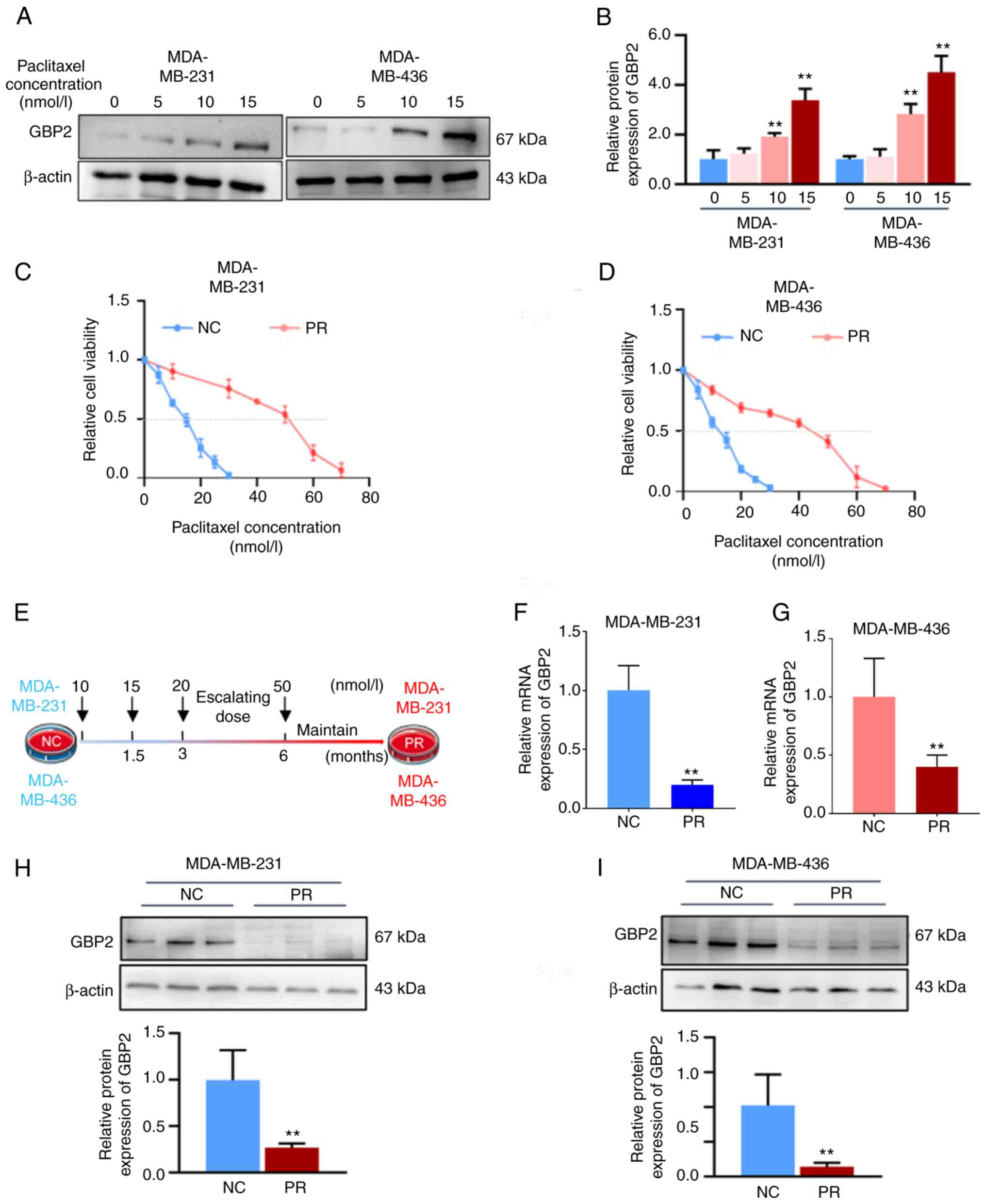
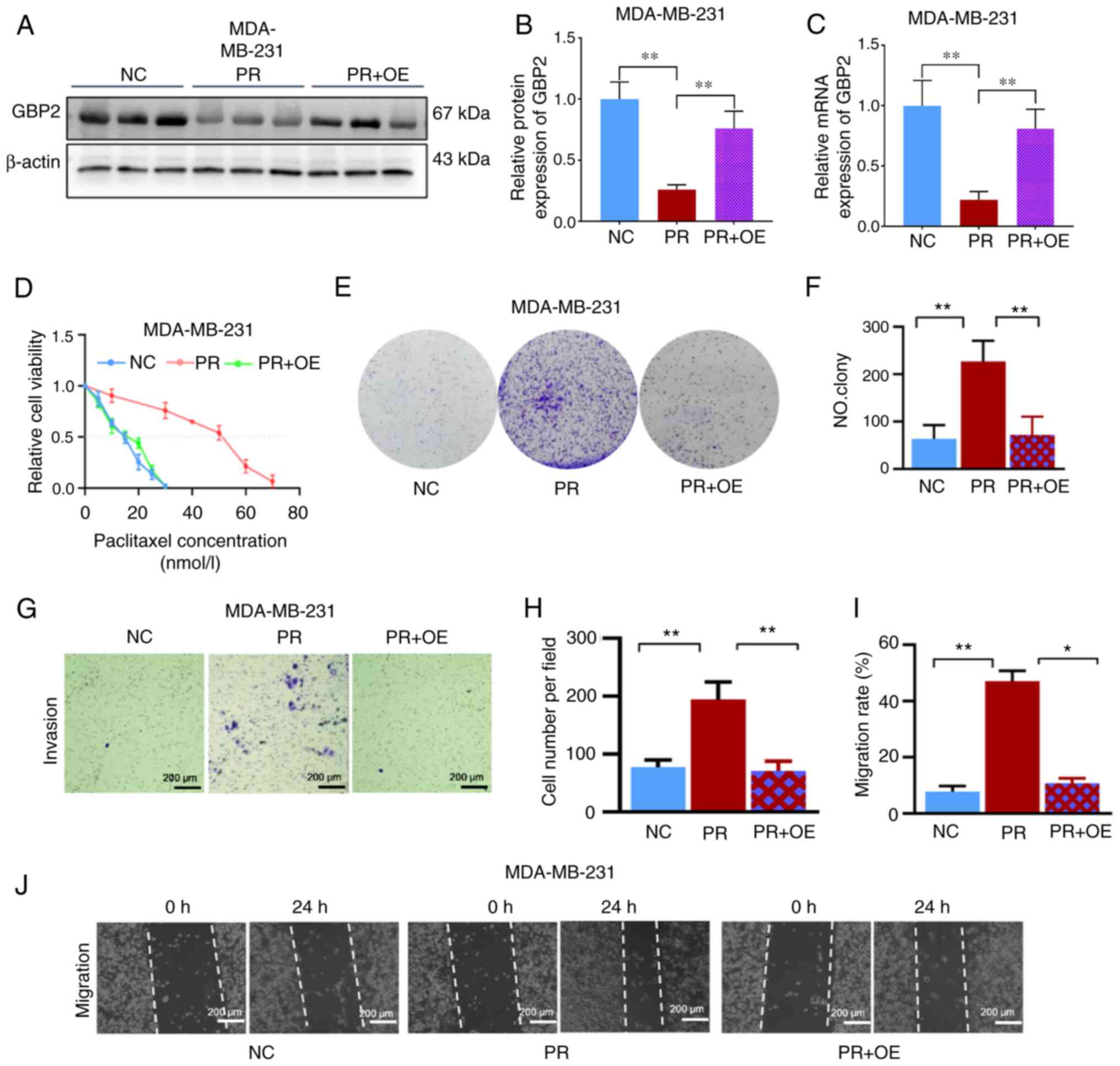
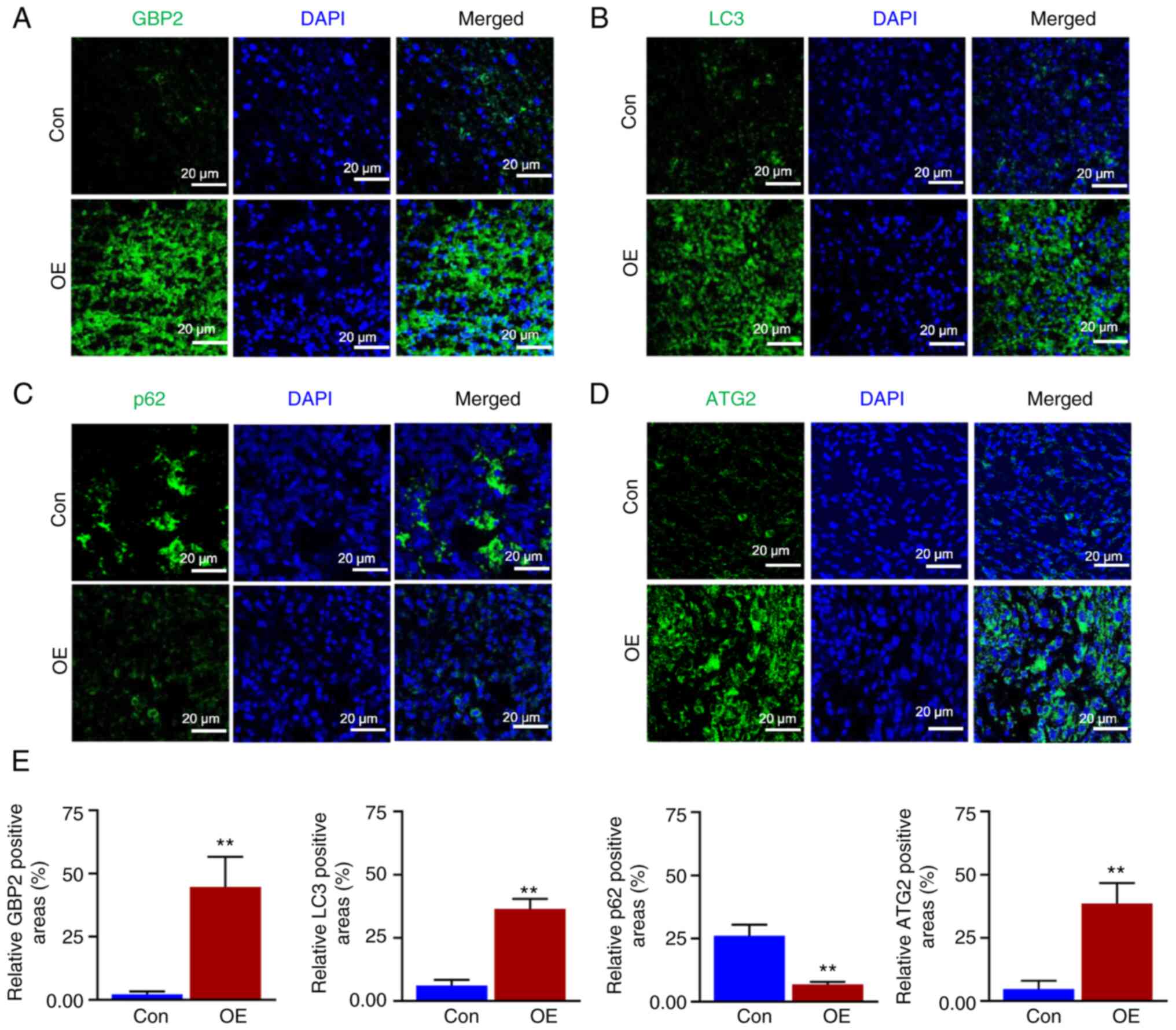
Chemoresistance is a major challenge in treating triple‑negative breast cancer (TNBC); chemotherapy remains the primary approach. The present study aimed to elucidate the role of guanylate‑binding protein 2 (GBP2) in activating autophagy in TNBC and its impact on the sensitivity of TNBC cells to paclitaxel (PTX). Transfection with lentivirus was performed to establish TNBC cell lines with stable, high GBP2 expression. The mRNA and protein levels of GBP2 expression were evaluated utilizing reverse transcription‑quantitative PCR and western blotting, respectively. Autophagy in TNBC cells was evaluated using immunoblotting, transmission electron microscopy and fluorescence microscopy. The PI3K/AKT/mTOR pathway proteins and their phosphorylation were detected by immunoblotting, and fluorescence co‑localization analysis was performed to evaluate the association between GBP2 and autophagy‑related protein 2 (ATG2). BALB/c NUDE mice were subcutaneously injected with GBP2 wild‑type/overexpressing MDA‑MB‑231 cells. Low GBP2 expression was detected in TNBC, which was associated with a poor prognosis. Overexpression of GBP2 suppressed cell growth, and especially enhanced autophagy in TNBC. Forced expression of GBP2 significantly increased the PTX sensitivity of TNBC cells, and the addition of autophagy inhibitors reversed this effect. GBP2 serves as a prognostic marker and exerts a notable inhibitory impact on TNBC. It functions as a critical regulator of activated autophagy by co‑acting with ATG2 and inhibiting the PI3K/AKT/mTOR pathway, which contributes to increasing sensitivity of TNBC cells to PTX. Therefore, GBP2 is a promising therapeutic target for enhancing TNBC treatment.
View Figures

Figure 1

Figure 2

Figure 3

Figure 4

Figure 5

Figure 6

Figure 7

Figure 8

Figure 9

View References

1 

International Agency for Research on Cancer (IARC): Global Cancer Observatory. IARC; Lyon: 2020

2 

Smolarz B, Nowak AZ and Romanowicz H: Breast cancer-epidemiology, classification, pathogenesis and treatment (review of literature). Cancers (Basel). 14:25692022.

3 

da Silva JL, Cardoso Nunes NC, Izetti P, de Mesquita GG and de Melo AC: Triple negative breast cancer: A thorough review of biomarkers. Crit Rev Oncol Hematol. 145:1028552020.

4 

M Braden A, V Stankowski R, M Engel J and A Onitilo A: Breast cancer biomarkers: risk assessment, diagnosis, prognosis, prediction of treatment efficacy and toxicity, and recurrence. Curr Pharm Des. 20:4879–4898. 2014.

5 

Vestal DJ and Jeyaratnam JA: The guanylate-binding proteins: emerging insights into the biochemical properties and functions of this family of large interferon-induced guanosine triphosphatase. J Interferon Cytokine Res. 31:89–97. 2011.

6 

Guimarães DP, Oliveira IM, de Moraes E, Paiva GR, Souza DM, Barnas C, Olmedo DB, Pinto CE, Faria PA, De Moura Gallo CV, et al: Interferon-inducible guanylate binding protein (GBP)-2: A novel p53-regulated tumor marker in esophageal squamous cell carcinomas. Int J Cancer. 124:272–279. 2009.

7 

Yu S, Yu X, Sun L, Zheng Y, Chen L, Xu H, Jin J, Lan Q, Chen CC and Li M: GBP2 enhances glioblastoma invasion through Stat3/fibronectin pathway. Oncogene. 39:5042–5055. 2020.

8 

Ye S, Li S, Qin L, Zheng W, Liu B, Li X, Ren Z, Zhao H, Hu X, Ye N and Li G: GBP2 promotes clear cell renal cell carcinoma progression through immune infiltration and regulation of PD-L1 expression via STAT1 signaling. Oncol Rep. 49:492023.

9 

Wang J, Min H, Hu B, Xue X and Liu Y: Guanylate-binding protein-2 inhibits colorectal cancer cell growth and increases the sensitivity to paclitaxel of paclitaxel-resistant colorectal cancer cells by interfering Wnt signaling. J Cell Biochem. 121:1250–1259. 2020.

10 

Zhang S, Chen K, Zhao Z, Zhang X, Xu L, Liu T and Yu S: Lower expression of GBP2 associated with less immune cell infiltration and poor prognosis in skin cutaneous melanoma (SKCM). J Immunother. 45:274–283. 2022.

11 

Godoy P, Cadenas C, Hellwig B, Marchan R, Stewart J, Reif R, Lohr M, Gehrmann M, Rahnenführer J, Schmidt M and Hengstler JG: Interferon-inducible guanylate binding protein (GBP2) is associated with better prognosis in breast cancer and indicates an efficient T cell response. Breast Cancer. 21:491–499. 2014.

12 

Nyabuto GO, Wilson JP, Heilman SA, Kalb RC, Kopacz JP, Abnave AV and Vestal DJ: The large GTPase, GBP-2, regulates Rho family GTPases to inhibit migration and invadosome formation in breast cancer cells. Cancers (Basel). 13:56322021.

13 

Zhang J, Zhang Y, Wu W, Wang F, Liu X, Shui G and Nie C: Guanylate-binding protein 2 regulates Drp1-mediated mitochondrial fission to suppress breast cancer cell invasion. Cell Death Dis. 8:e31512017.

14 

Škubník J, Jurášek M, Ruml T and Rimpelová S: Mitotic poisons in research and medicine. Molecules. 25:46322020.

15 

Alqahtani FY, Aleanizy FS, El Tahir E, Alkahtani HM and AlQuadeib BT: Paclitaxel. Profiles Drug Subst Excip Relat Methodol. 44:205–238. 2019.

16 

Wang H, Vo T, Hajar A, Li S, Chen X, Parissenti AM, Brindley DN and Wang Z: Multiple mechanisms underlying acquired resistance to taxanes in selected docetaxel-resistant MCF-7 breast cancer cells. BMC Cancer. 14:372014.

17 

McGrogan BT, Gilmartin B, Carney DN and McCann A: Taxanes, microtubules and chemoresistant breast cancer. Biochim Biophys Acta. 1785:96–132. 2008.

18 

Wang J, Yang M, Li Y and Han B: The role of MicroRNAs in the chemoresistance of breast cancer. Drug Dev Res. 76:368–374. 2015.

19 

Ho CJ and Gorski SM: Molecular mechanisms underlying autophagy-mediated treatment resistance in cancer. Cancers (Basel). 11:17752019.

20 

Hashemi M, Paskeh MDA, Orouei S, Abbasi P, Khorrami R, Dehghanpour A, Esmaeili N, Ghahremanzade A, Zandieh MA, Peymani M, et al: Towards dual function of autophagy in breast cancer: A potent regulator of tumor progression and therapy response. Biomed Pharmacother. 161:1145462023.

21 

Škubník J, Svobodová Pavlíčková V, Ruml T and Rimpelová S: Autophagy in cancer resistance to paclitaxel: Development of combination strategies. Biomed Pharmacother. 161:1144582023.

22 

Dunn LA, Fury MG, Xiao H, Baxi SS, Sherman EJ, Korte S, Pfister C, Haque S, Katabi N, Ho AL and Pfister DG: A phase II study of temsirolimus added to low-dose weekly carboplatin and paclitaxel for patients with recurrent and/or metastatic (R/M) head and neck squamous cell carcinoma (HNSCC). Ann Oncol. 28:2533–2538. 2017.

23 

Li S and De Souza P: Ras isoprenylation and pAkt inhibition by zoledronic acid and fluvastatin enhances paclitaxel activity in T24 bladder cancer cells. Cancers (Basel). 3:662–674. 2011.

24 

Hama Y, Ogasawara Y and Noda NN: Autophagy and cancer: Basic mechanisms and inhibitor development. Cancer Sci. 114:2699–2708. 2023.

25 

Osawa T, Kotani T, Kawaoka T, Hirata E, Suzuki K, Nakatogawa H, Ohsumi Y and Noda NN: Atg2 mediates direct lipid transfer between membranes for autophagosome formation. Nat Struct Mol Biol. 26:281–288. 2019.

26 

Xiao W, Wang J, Wang X, Cai S, Guo Y, Ye L, Li D, Hu A, Jin S, Yuan B, et al: Therapeutic targeting of the USP2-E2F4 axis inhibits autophagic machinery essential for zinc homeostasis in cancer progression. Autophagy. 18:2615–2635. 2022.

27 

Liu N, Luo T, Zhang J, Han LN, Duan WQ, Lu WX, Qiu H, Lin Y, Wu YM, Zhang H, et al: YF343, a novel histone deacetylase inhibitor, combined with CQ to inhibit-autophagy, contributes to increased apoptosis in triple-negative breast cancer. Curr Med Chem. 30:4605–4621. 2023.

28 

Li Q, Ni Y, Zhang L, Jiang R, Xu J, Yang H, Hu Y, Qiu J, Pu L, Tang J and Wang X: HIF-1α-induced expression of m6A reader YTHDF1 drives hypoxia-induced autophagy and malignancy of hepatocellular carcinoma by promoting ATG2A and ATG14 translation. Signal Transduct Target Ther. 6:762021.

29 

Niklaus NJ, Tokarchuk I, Zbinden M, Schläfli AM, Maycotte P and Tschan MP: The multifaceted functions of autophagy in breast cancer development and treatment. Cells. 10:14472021.

30 

Livak KJ and Schmittgen TD: Analysis of relative gene expression data using real-time quantitative PCR and the 2(-Delta Delta C(T)) method. Methods. 25:402–408. 2001.

31 

Dunn KW, Kamocka MM and McDonald JH: A practical guide to evaluating colocalization in biological microscopy. Am J Physiol Cell Physiol. 300:C723–C742. 2011.

32 

Abd El-Aziz YS, Gillson J, Jansson PJ and Sahni S: Autophagy: A promising target for triple negative breast cancers. Pharmacol Res. 175:1060062022.

33 

Folkerts H, Hilgendorf S, Vellenga E, Bremer E and Wiersma VR: The multifaceted role of autophagy in cancer and the microenvironment. Med Res Rev. 39:517–560. 2019.

34 

Chen W, Bai Y, Patel C and Geng F: Autophagy promotes triple negative breast cancer metastasis via YAP nuclear localization. Biochem Biophys Res Commun. 520:263–268. 2019.

35 

Wang J, Dang MN and Day ES: Inhibition of Wnt signaling by Frizzled7 antibody-coated nanoshells sensitizes triple-negative breast cancer cells to the autophagy regulator chloroquine. Nano Res. 13:1693–1703. 2020.

36 

Wang M, Zhang J, Huang Y, Ji S, Shao G, Feng S, Chen D, Zhao K, Wang Z and Wu A: Cancer-associated fibroblasts autophagy enhances progression of triple-negative breast cancer cells. Med Sci Monit. 23:3904–3912. 2017.

37 

Li M, Liu J, Li S, Feng Y, Yi F, Wang L, Wei S and Cao L: Autophagy-related 7 modulates tumor progression in triple-negative breast cancer. Lab Invest. 99:1266–1274. 2019.

38 

Qiao Z, Li X, Kang N, Yang Y, Chen C, Wu T, Zhao M, Liu Y and Ji X: A novel specific anti-CD73 antibody inhibits triple-negative breast cancer cell motility by regulating autophagy. Int J Mol Sci. 20:10572019.

39 

Chen Y, Azad MB and Gibson SB: Methods for detecting autophagy and determining autophagy-induced cell death. Can J Physiol Pharmacol. 88:285–295. 2010.

40 

Chen C, Gao H and Su X: Autophagy-related signaling pathways are involved in cancer (review). Exp Ther Med. 22:7102021.

41 

Ciccarese F, Zulato E and Indraccolo S: LKB1/AMPK pathway and drug response in cancer: A therapeutic perspective. Oxid Med Cell Longev. 2019:87308162019.

42 

Lu C, Wang W, Jia Y, Liu X, Tong Z and Li B: Inhibition of AMPK/autophagy potentiates parthenolide-induced apoptosis in human breast cancer cells. J Cell Biochem. 115:1458–1466. 2014.

43 

Zhou YY, Li Y, Jiang WQ and Zhou LF: MAPK/JNK signaling: A potential autophagy regulation pathway. Biosci Rep. 35:e001992015.

44 

Lorzadeh S, Kohan L, Ghavami S and Azarpira N: Autophagy and the Wnt signaling pathway: A focus on Wnt/β-catenin signaling. Biochim Biophys Acta Mol Cell Res. 1868:1189262021.

45 

Ravikumar B, Sarkar S, Davies JE, Futter M, Garcia-Arencibia M, Green-Thompson ZW, Jimenez-Sanchez M, Korolchuk VI, Lichtenberg M, Luo S, et al: Regulation of mammalian autophagy in physiology and pathophysiology. Physiol Rev. 90:1383–1435. 2010.

46 

Wang Y and Zhang H: Regulation of autophagy by mTOR signaling pathway. Adv Exp Med Biol. 1206:67–83. 2019.

47 

Li L, Tong M, Fu Y, Chen F, Zhang S, Chen H, Ma X, Li D, Liu X and Zhong Q: Lipids and membrane-associated proteins in autophagy. Protein Cell. 12:520–544. 2021.

48 

Cheng SW, Chen PC, Ger TR, Chiu HW and Lin YF: GBP5 serves as a potential marker to predict a favorable response in triple-negative breast cancer patients receiving a taxane-based chemotherapy. J Pers Med. 11:1972021.

49 

Peng Y, Yu H, Jin Y, Qu F, Ren H, Tang Z, Zhang Y, Qu C, Zong B and Liu S: Construction and validation of an immune infiltration-related gene signature for the prediction of prognosis and therapeutic response in breast cancer. Front Immunol. 12:6661372021.

50 

Muller R: Systemic toxicity of chloroquine and hydroxychloroquine: Prevalence, mechanisms, risk factors, prognostic and screening possibilities. Rheumatol Int. 41:1189–1202. 2021.

51 

Wu Y, Yan B, Xu W, Guo L, Wang Z, Li G, Hou N, Zhang J and Ling R: Compound C enhances the anticancer effect of aspirin in HER-2-positive breast cancer by regulating lipid metabolism in an AMPK-independent pathway. Int J Biol Sci. 16:583–597. 2020.

52 

Milošević Z, Banković J, Dinić J, Tsimplouli C, Sereti E, Dragoj M, Paunović V, Milovanović Z, Stepanović M, Tanić N, et al: Potential of the dual mTOR kinase inhibitor AZD2014 to overcome paclitaxel resistance in anaplastic thyroid carcinoma. Cell Oncol (Dordr). 41:409–426. 2018.

53 

Park GB, Jeong JY and Kim D: Gliotoxin enhances autophagic cell death via the DAPK1-TAp63 signaling pathway in paclitaxel-resistant ovarian cancer cells. Mar Drugs. 17:4122019.

54 

Guo Y, Yuan J, Yin S, Wang X, Shuai R and Kang J: MAP2K6-FP enhances the sensitiveness of paclitaxel for ovarian cancer via inducing autophagy. Int J Gynecol Cancer. 27:1082–1087. 2017.

55 

Song H, Pan B, Yi J and Chen L: Featured article: Autophagic activation with nimotuzumab enhanced chemosensitivity and radiosensitivity of esophageal squamous cell carcinoma. Exp Biol Med (Maywood). 239:529–541. 2014.

56 

Lian B, Pei YC, Jiang YZ, Xue MZ, Li DQ, Li XG, Zheng YZ, Liu XY, Qiao F, Sun WL, et al: Truncated HDAC9 identified by integrated genome-wide screen as the key modulator for paclitaxel resistance in triple-negative breast cancer. Theranostics. 10:11092–11109. 2020.

57 

Oudin MJ, Barbier L, Schäfer C, Kosciuk T, Miller MA, Han S, Jonas O, Lauffenburger DA and Gertler FB: MENA confers resistance to paclitaxel in triple-negative breast cancer. Mol Cancer Ther. 16:143–155. 2017.

58 

Wang Y, Sui Y and Tao Y: Gambogic acid increases the sensitivity to paclitaxel in drug-resistant triple-negative breast cancer via the SHH signaling pathway. Mol Med Rep. 20:4515–4522. 2019.

Related Articles

  • Abstract
  • View
  • Download
  • Twitter
Copy and paste a formatted citation
Spandidos Publications style
Zhang W, Tang X, Peng Y, Xu Y, Liu L and Liu S: GBP2 enhances paclitaxel sensitivity in triple‑negative breast cancer by promoting autophagy in combination with ATG2 and inhibiting the PI3K/AKT/mTOR pathway. Int J Oncol 64: 34, 2024.
APA
Zhang, W., Tang, X., Peng, Y., Xu, Y., Liu, L., & Liu, S. (2024). GBP2 enhances paclitaxel sensitivity in triple‑negative breast cancer by promoting autophagy in combination with ATG2 and inhibiting the PI3K/AKT/mTOR pathway. International Journal of Oncology, 64, 34. https://doi.org/10.3892/ijo.2024.5622
MLA
Zhang, W., Tang, X., Peng, Y., Xu, Y., Liu, L., Liu, S."GBP2 enhances paclitaxel sensitivity in triple‑negative breast cancer by promoting autophagy in combination with ATG2 and inhibiting the PI3K/AKT/mTOR pathway". International Journal of Oncology 64.4 (2024): 34.
Chicago
Zhang, W., Tang, X., Peng, Y., Xu, Y., Liu, L., Liu, S."GBP2 enhances paclitaxel sensitivity in triple‑negative breast cancer by promoting autophagy in combination with ATG2 and inhibiting the PI3K/AKT/mTOR pathway". International Journal of Oncology 64, no. 4 (2024): 34. https://doi.org/10.3892/ijo.2024.5622
Copy and paste a formatted citation
x
Spandidos Publications style
Zhang W, Tang X, Peng Y, Xu Y, Liu L and Liu S: GBP2 enhances paclitaxel sensitivity in triple‑negative breast cancer by promoting autophagy in combination with ATG2 and inhibiting the PI3K/AKT/mTOR pathway. Int J Oncol 64: 34, 2024.
APA
Zhang, W., Tang, X., Peng, Y., Xu, Y., Liu, L., & Liu, S. (2024). GBP2 enhances paclitaxel sensitivity in triple‑negative breast cancer by promoting autophagy in combination with ATG2 and inhibiting the PI3K/AKT/mTOR pathway. International Journal of Oncology, 64, 34. https://doi.org/10.3892/ijo.2024.5622
MLA
Zhang, W., Tang, X., Peng, Y., Xu, Y., Liu, L., Liu, S."GBP2 enhances paclitaxel sensitivity in triple‑negative breast cancer by promoting autophagy in combination with ATG2 and inhibiting the PI3K/AKT/mTOR pathway". International Journal of Oncology 64.4 (2024): 34.
Chicago
Zhang, W., Tang, X., Peng, Y., Xu, Y., Liu, L., Liu, S."GBP2 enhances paclitaxel sensitivity in triple‑negative breast cancer by promoting autophagy in combination with ATG2 and inhibiting the PI3K/AKT/mTOR pathway". International Journal of Oncology 64, no. 4 (2024): 34. https://doi.org/10.3892/ijo.2024.5622
Follow us
  • Twitter
  • LinkedIn
  • Facebook
About
  • Spandidos Publications
  • Careers
  • Cookie Policy
  • Privacy Policy
How can we help?
  • Help
  • Live Chat
  • Contact
  • Email to our Support Team