Spandidos Publications Logo
  • About
    • About Spandidos
    • Aims and Scopes
    • Abstracting and Indexing
    • Editorial Policies
    • Reprints and Permissions
    • Job Opportunities
    • Terms and Conditions
    • Contact
  • Journals
    • All Journals
    • Oncology Letters
      • Oncology Letters
      • Information for Authors
      • Editorial Policies
      • Editorial Board
      • Aims and Scope
      • Abstracting and Indexing
      • Bibliographic Information
      • Archive
    • International Journal of Oncology
      • International Journal of Oncology
      • Information for Authors
      • Editorial Policies
      • Editorial Board
      • Aims and Scope
      • Abstracting and Indexing
      • Bibliographic Information
      • Archive
    • Molecular and Clinical Oncology
      • Molecular and Clinical Oncology
      • Information for Authors
      • Editorial Policies
      • Editorial Board
      • Aims and Scope
      • Abstracting and Indexing
      • Bibliographic Information
      • Archive
    • Experimental and Therapeutic Medicine
      • Experimental and Therapeutic Medicine
      • Information for Authors
      • Editorial Policies
      • Editorial Board
      • Aims and Scope
      • Abstracting and Indexing
      • Bibliographic Information
      • Archive
    • International Journal of Molecular Medicine
      • International Journal of Molecular Medicine
      • Information for Authors
      • Editorial Policies
      • Editorial Board
      • Aims and Scope
      • Abstracting and Indexing
      • Bibliographic Information
      • Archive
    • Biomedical Reports
      • Biomedical Reports
      • Information for Authors
      • Editorial Policies
      • Editorial Board
      • Aims and Scope
      • Abstracting and Indexing
      • Bibliographic Information
      • Archive
    • Oncology Reports
      • Oncology Reports
      • Information for Authors
      • Editorial Policies
      • Editorial Board
      • Aims and Scope
      • Abstracting and Indexing
      • Bibliographic Information
      • Archive
    • Molecular Medicine Reports
      • Molecular Medicine Reports
      • Information for Authors
      • Editorial Policies
      • Editorial Board
      • Aims and Scope
      • Abstracting and Indexing
      • Bibliographic Information
      • Archive
    • World Academy of Sciences Journal
      • World Academy of Sciences Journal
      • Information for Authors
      • Editorial Policies
      • Editorial Board
      • Aims and Scope
      • Abstracting and Indexing
      • Bibliographic Information
      • Archive
    • International Journal of Functional Nutrition
      • International Journal of Functional Nutrition
      • Information for Authors
      • Editorial Policies
      • Editorial Board
      • Aims and Scope
      • Abstracting and Indexing
      • Bibliographic Information
      • Archive
    • International Journal of Epigenetics
      • International Journal of Epigenetics
      • Information for Authors
      • Editorial Policies
      • Editorial Board
      • Aims and Scope
      • Abstracting and Indexing
      • Bibliographic Information
      • Archive
    • Medicine International
      • Medicine International
      • Information for Authors
      • Editorial Policies
      • Editorial Board
      • Aims and Scope
      • Abstracting and Indexing
      • Bibliographic Information
      • Archive
  • Articles
  • Information
    • Information for Authors
    • Information for Reviewers
    • Information for Librarians
    • Information for Advertisers
    • Conferences
  • Language Editing
Spandidos Publications Logo
  • About
    • About Spandidos
    • Aims and Scopes
    • Abstracting and Indexing
    • Editorial Policies
    • Reprints and Permissions
    • Job Opportunities
    • Terms and Conditions
    • Contact
  • Journals
    • All Journals
    • Biomedical Reports
      • Information for Authors
      • Editorial Policies
      • Editorial Board
      • Aims and Scope
      • Abstracting and Indexing
      • Bibliographic Information
      • Archive
    • Experimental and Therapeutic Medicine
      • Information for Authors
      • Editorial Policies
      • Editorial Board
      • Aims and Scope
      • Abstracting and Indexing
      • Bibliographic Information
      • Archive
    • International Journal of Epigenetics
      • Information for Authors
      • Editorial Policies
      • Editorial Board
      • Aims and Scope
      • Abstracting and Indexing
      • Bibliographic Information
      • Archive
    • International Journal of Functional Nutrition
      • Information for Authors
      • Editorial Policies
      • Editorial Board
      • Aims and Scope
      • Abstracting and Indexing
      • Bibliographic Information
      • Archive
    • International Journal of Molecular Medicine
      • Information for Authors
      • Editorial Policies
      • Editorial Board
      • Aims and Scope
      • Abstracting and Indexing
      • Bibliographic Information
      • Archive
    • International Journal of Oncology
      • Information for Authors
      • Editorial Policies
      • Editorial Board
      • Aims and Scope
      • Abstracting and Indexing
      • Bibliographic Information
      • Archive
    • Medicine International
      • Information for Authors
      • Editorial Policies
      • Editorial Board
      • Aims and Scope
      • Abstracting and Indexing
      • Bibliographic Information
      • Archive
    • Molecular and Clinical Oncology
      • Information for Authors
      • Editorial Policies
      • Editorial Board
      • Aims and Scope
      • Abstracting and Indexing
      • Bibliographic Information
      • Archive
    • Molecular Medicine Reports
      • Information for Authors
      • Editorial Policies
      • Editorial Board
      • Aims and Scope
      • Abstracting and Indexing
      • Bibliographic Information
      • Archive
    • Oncology Letters
      • Information for Authors
      • Editorial Policies
      • Editorial Board
      • Aims and Scope
      • Abstracting and Indexing
      • Bibliographic Information
      • Archive
    • Oncology Reports
      • Information for Authors
      • Editorial Policies
      • Editorial Board
      • Aims and Scope
      • Abstracting and Indexing
      • Bibliographic Information
      • Archive
    • World Academy of Sciences Journal
      • Information for Authors
      • Editorial Policies
      • Editorial Board
      • Aims and Scope
      • Abstracting and Indexing
      • Bibliographic Information
      • Archive
  • Articles
  • Information
    • For Authors
    • For Reviewers
    • For Librarians
    • For Advertisers
    • Conferences
  • Language Editing
Login Register Submit
  • This site uses cookies
  • You can change your cookie settings at any time by following the instructions in our Cookie Policy. To find out more, you may read our Privacy Policy.

    I agree
Search articles by DOI, keyword, author or affiliation
Search
Advanced Search
presentation
International Journal of Oncology
Join Editorial Board Propose a Special Issue
Print ISSN: 1019-6439 Online ISSN: 1791-2423
Journal Cover
January-2026 Volume 68 Issue 1

Full Size Image

Cover Legend PDF

Sign up for eToc alerts
Recommend to Library

Journals

International Journal of Molecular Medicine

International Journal of Molecular Medicine

International Journal of Molecular Medicine is an international journal devoted to molecular mechanisms of human disease.

International Journal of Oncology

International Journal of Oncology

International Journal of Oncology is an international journal devoted to oncology research and cancer treatment.

Molecular Medicine Reports

Molecular Medicine Reports

Covers molecular medicine topics such as pharmacology, pathology, genetics, neuroscience, infectious diseases, molecular cardiology, and molecular surgery.

Oncology Reports

Oncology Reports

Oncology Reports is an international journal devoted to fundamental and applied research in Oncology.

Experimental and Therapeutic Medicine

Experimental and Therapeutic Medicine

Experimental and Therapeutic Medicine is an international journal devoted to laboratory and clinical medicine.

Oncology Letters

Oncology Letters

Oncology Letters is an international journal devoted to Experimental and Clinical Oncology.

Biomedical Reports

Biomedical Reports

Explores a wide range of biological and medical fields, including pharmacology, genetics, microbiology, neuroscience, and molecular cardiology.

Molecular and Clinical Oncology

Molecular and Clinical Oncology

International journal addressing all aspects of oncology research, from tumorigenesis and oncogenes to chemotherapy and metastasis.

World Academy of Sciences Journal

World Academy of Sciences Journal

Multidisciplinary open-access journal spanning biochemistry, genetics, neuroscience, environmental health, and synthetic biology.

International Journal of Functional Nutrition

International Journal of Functional Nutrition

Open-access journal combining biochemistry, pharmacology, immunology, and genetics to advance health through functional nutrition.

International Journal of Epigenetics

International Journal of Epigenetics

Publishes open-access research on using epigenetics to advance understanding and treatment of human disease.

Medicine International

Medicine International

An International Open Access Journal Devoted to General Medicine.

Journal Cover
January-2026 Volume 68 Issue 1

Full Size Image

Cover Legend PDF

Sign up for eToc alerts
Recommend to Library

  • Article
  • Citations
    • Cite This Article
    • Download Citation
    • Create Citation Alert
    • Remove Citation Alert
    • Cited By
  • Similar Articles
    • Related Articles (in Spandidos Publications)
    • Similar Articles (Google Scholar)
    • Similar Articles (PubMed)
  • Download PDF
  • Download XML
  • View XML

  • Supplementary Files
    • Supplementary_Data.pdf
Article Open Access

Ephrin‑B2 promotes gastric cancer growth by inhibiting apoptosis and regulating the cell cycle via the Wnt/β‑catenin signaling pathway

  • Authors:
    • Ding Ding
    • Xiaoshan Wang
    • Ran Xuan
    • Rui Li
    • Yalu Zhang
    • Zhengguang Wang
  • View Affiliations / Copyright

    Affiliations: Department of General Surgery, The First Affiliated Hospital of Anhui Medical University, Hefei, Anhui 230022, P.R. China, Department of General Surgery, The Third Affiliated Hospital of Anhui Medical University (The First People's Hospital of Hefei), Hefei, Anhui 230061, P.R. China, Department of General Surgery, The First Affiliated Hospital of University of Science and Technology of China, Division of Life Science and Medicine, University of Science and Technology of China, Hefei, Anhui 230001, P.R. China
    Copyright: © Ding et al. This is an open access article distributed under the terms of Creative Commons Attribution License.
  • Article Number: 8
    |
    Published online on: November 18, 2025
       https://doi.org/10.3892/ijo.2025.5821
  • Expand metrics +
Metrics: Total Views: 0 (Spandidos Publications: | PMC Statistics: )
Metrics: Total PDF Downloads: 0 (Spandidos Publications: | PMC Statistics: )
Cited By (CrossRef): 0 citations Loading Articles...

This article is mentioned in:


Abstract

Gastric cancer (GC) ranks among the most prevalent malignancies worldwide and is associated with high mortality rates. Ephrin‑B2 (EFNB2), a membrane‑bound ligand that interacts with Eph receptor tyrosine kinases, has been implicated in various cancer‑related biological processes; however, its precise role in GC remains poorly understood. By integrating data from multiple public databases with immunohistochemical analyses of tissue microarrays, significant upregulation of EFNB2 expression in GC specimens compared with paired adjacent normal tissue was demonstrated. Elevated EFNB2 levels were associated with the poor overall survival and disease‑free survival in patients with GC. EFNB2 knockdown inhibited cellular proliferation and viability, increased apoptosis, and induced cell cycle arrest at the G0/G1 phase in GC cells. By contrast, EFNB2 overexpression resulted in the opposite oncogenic effects. Mechanistically, rescue experiments identified the Wnt/β‑catenin signaling cascade as the primary molecular pathway mediating EFNB2‑driven tumorigenic effects. These results were further validated in vivo using cell‑derived xenograft models, which confirmed the key role of Wnt/β‑catenin pathway activation in EFNB2‑induced tumor progression. Collectively, these results suggested that EFNB2 represents a promising molecular target for therapeutic intervention in GC.
View Figures

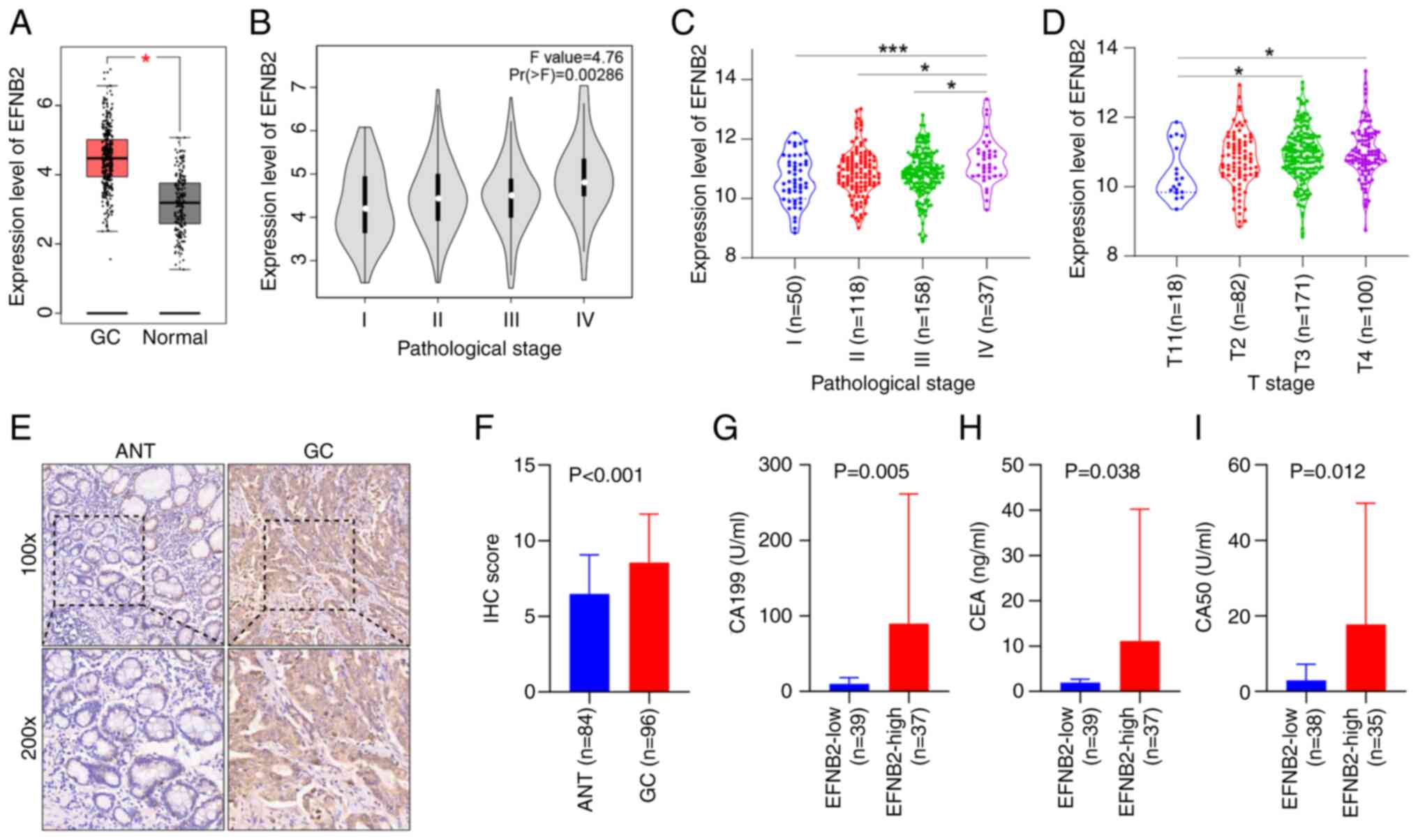
Figure 1

EFNB2 is highly expressed in GC
tissues and is associated with tumor markers. (A) Expression levels
of EFNB2 in GC tissues (n=408) and normal gastric mucosa tissues
(n=211) in the GEPIA database (unpaired Student's t-test). (B)
Analysis of data from the GEPIA database indicated the levels of
EFNB2 in different pathological stages of GC (one-way ANOVA). The
expression levels of EFNB2 in different (C) pathological stages and
(D) T stages of GC analyzed using the Linkedomics database (one-way
ANOVA). (E) Representative IHC staining images for EFNB2 in ANT and
GC tissues. The magnification is indicated in the figure (×100 or
×200). (F) IHC scores of EFNB2 were evaluated in 96 GC tissues and
84 ANTs (Mann-Whitney U test). The levels of different tumor
markers were compared between the EFNB2-high expression group and
the EFNB2-low expression group, including (G) CA199, (H) CEA and
(I) CA50 (Mann-Whitney U test). *P<0.05,
***P<0.001. GC, gastric cancer; GEPIA, Gene
Expression Profiling Interactive Analysis; IHC,
immunohistochemical; ANT, adjacent normal tissue; EFNB2,
ephrin-B2.

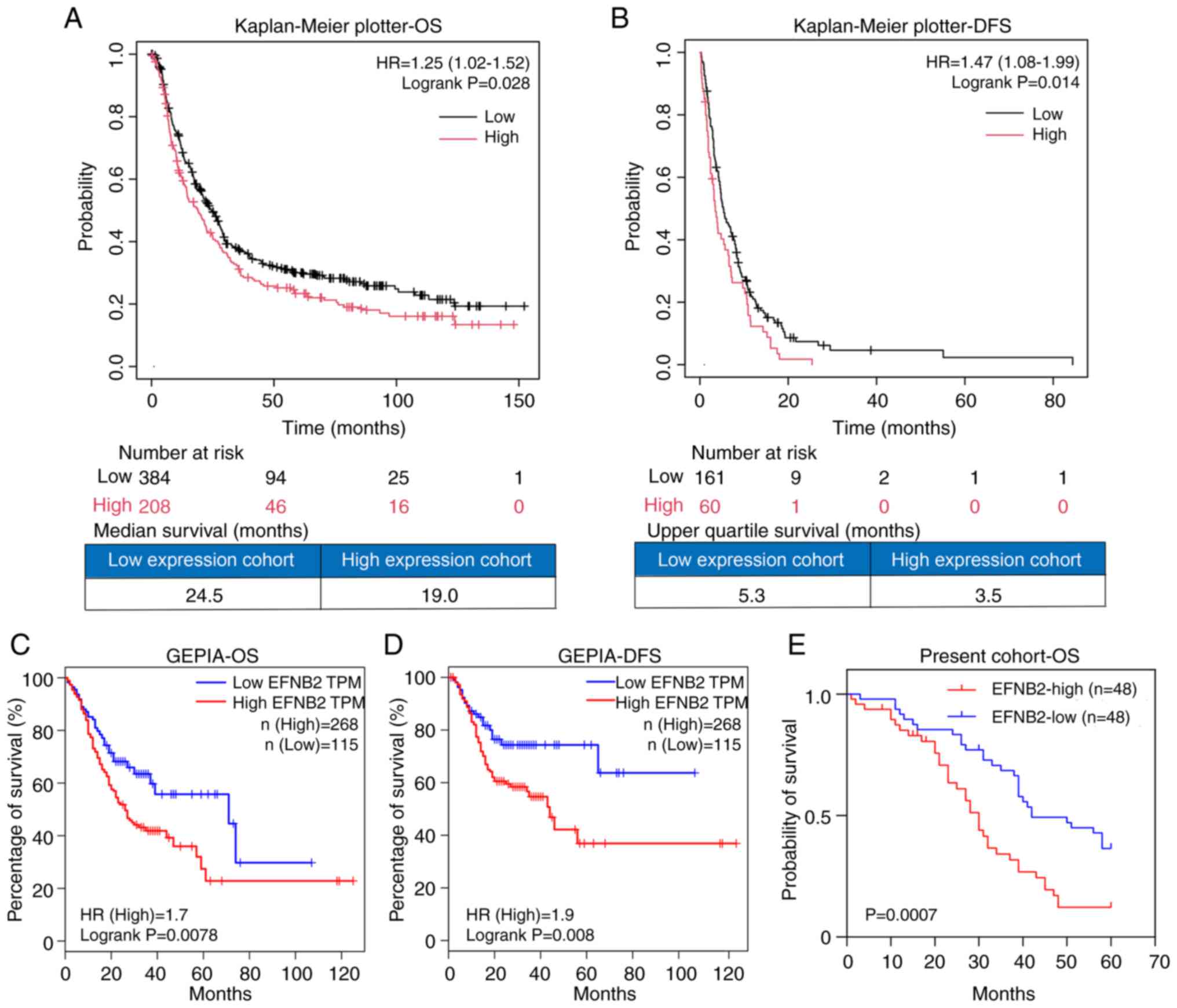
Figure 2

Upregulated EFNB2 expression is
associated with poor prognosis of patients with GC. The
Kaplan-Meier plotter demonstrated that EFNB2 was not only
associated with (A) OS (P=0.028), but also served as a negative
factor for (B) DFS in GC (P=0.014), when excluding the dataset
GSE62254. In the GEPIA database, the EFNB2-high expression group
exhibited shorter (C) OS and (D) DFS compared with the EFNB2-low
expression group, with the conditions set as 'Cutoff-High vs.
Cutoff-Low: 30 vs. 30' (P=0.0078 and 0.008, respectively). (E)
Analysis of the cohort of patients whose samples were included in
the tissue microarray (n=96) demonstrated that patients with GC
with high EFNB2 expression had a worse clinical outcome compared
with those with low EFNB2 expression (P=0.0007). OS, overall
survival; DFS, disease-free survival; HR, hazard ratio; EFNB2,
ephrin-B2; GC, gastric cancer; GEPIA, Gene Expression Profiling
Interactive Analysis; TPM, transcript per million.

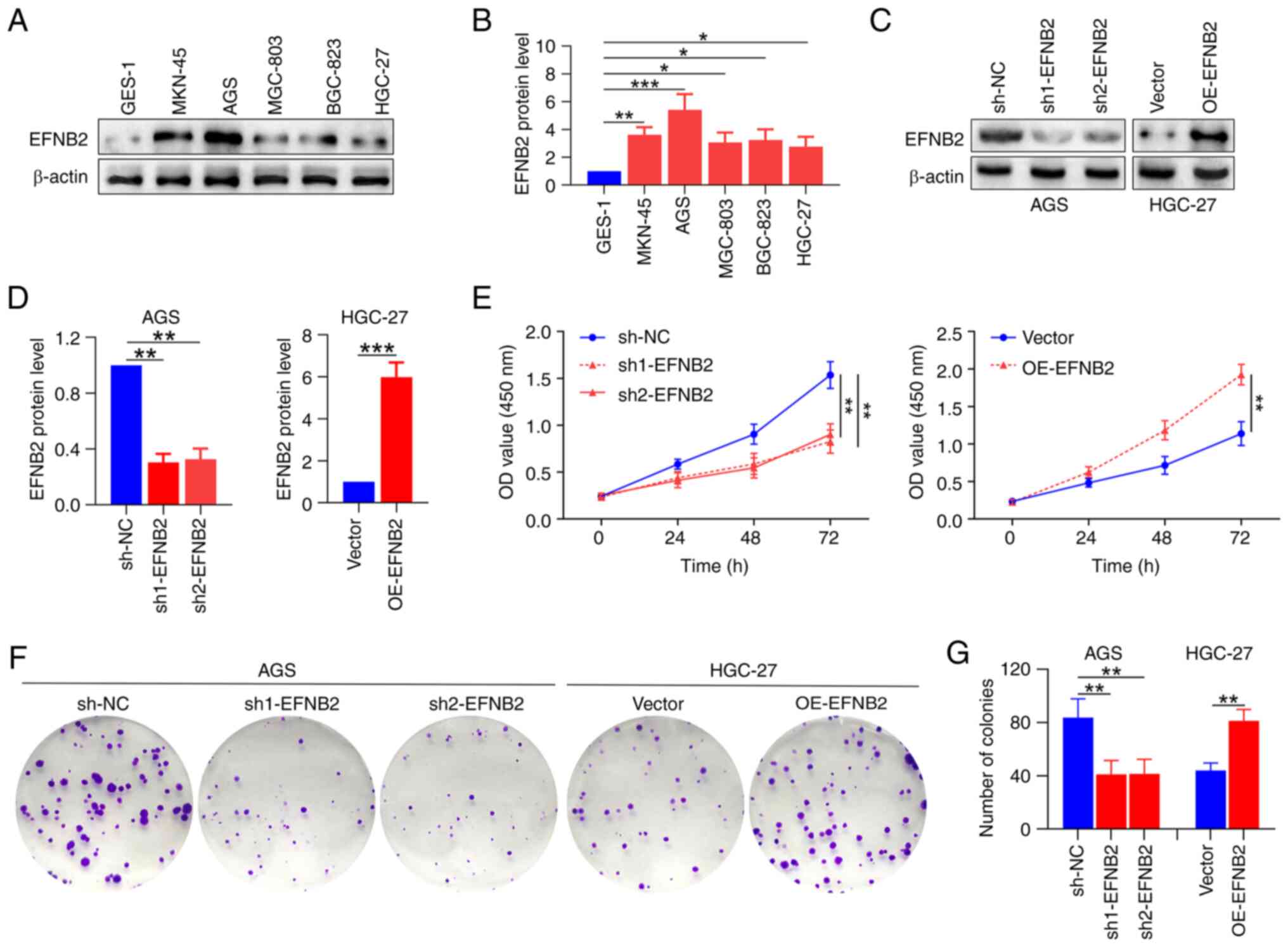
Figure 3

EFNB2 promotes the proliferation and
viability of GC cells in vitro. (A) Representative western
blot bands. (B) Expression levels of EFNB2 were detected in
multiple GC cell lines and human GES-1 normal gastric mucosal
epithelial cells using western blotting (one-way ANOVA). (C)
Representative western blot bands. (D) The effects of EFNB2
knockdown and overexpression were verified by western blotting
(one-way ANOVA for AGS cells; unpaired Student's test for HGC-27
cells). (E) Cell Counting Kit-8 assays revealed the OD values at
450 nm after 0, 24, 48 and 72 h (one-way ANOVA). (F) Representative
colony formation assay images. (G) Colony formation was assessed by
counting the number of colonies in various groups (one-way ANOVA
for AGS cells; unpaired Student's test for HGC-27 cells). Data are
presented as the mean ± SD. *P<0.05,
**P<0.01, ***P<0.001. GC, gastric
cancer; EFNB2, ephrin-B2; OD, optical density; OE, overexpression
vector; sh, short hairpin RNA; NC, negative control.

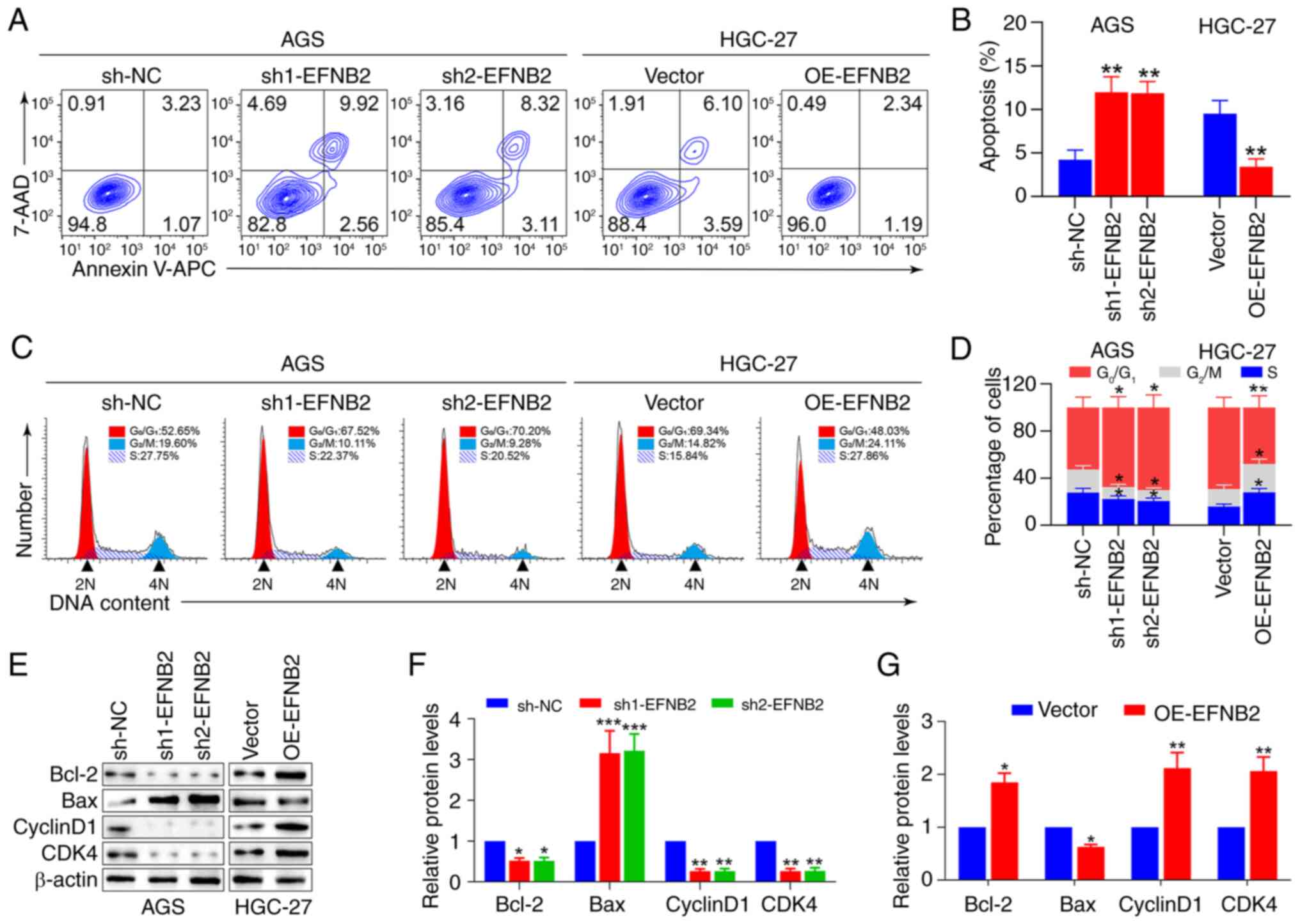
Figure 4

EFNB2 inhibits apoptosis and alters
the cell cycle distribution in gastric cancer cells in
vitro. (A) Representative flow cytometry plots and (B)
quantification of apoptosis in AGS and HGC-27 cells (one-way ANOVA
for AGS cells; unpaired Student's test for HGC-27 cells). (C)
Representative cell cycle distribution plots and (D) quantification
for the EFNB2 knockdown and overexpression groups as assessed by
flow cytometry (one-way ANOVA). (E) Representative western blot
bands and semi-quantification of protein expression levels of
apoptosis-related proteins (Bcl-2 and Bax) and cell cycle-related
proteins (CyclinD1 and CDK4) detected in the context of EFNB2 (F)
knockdown or (G) overexpression (one-way ANOVA for AGS cells;
unpaired Student's test for HGC-27 cells). Data are presented as
the mean ± SD. *P<0.05, **P<0.01,
***P<0.001 vs. sh-NC or vector group. EFNB2,
ephrin-B2; AAD, amino-actinomycin D; APC, allophycocyanin; OE,
overexpression vector; sh, short hairpin RNA; NC, negative
control.

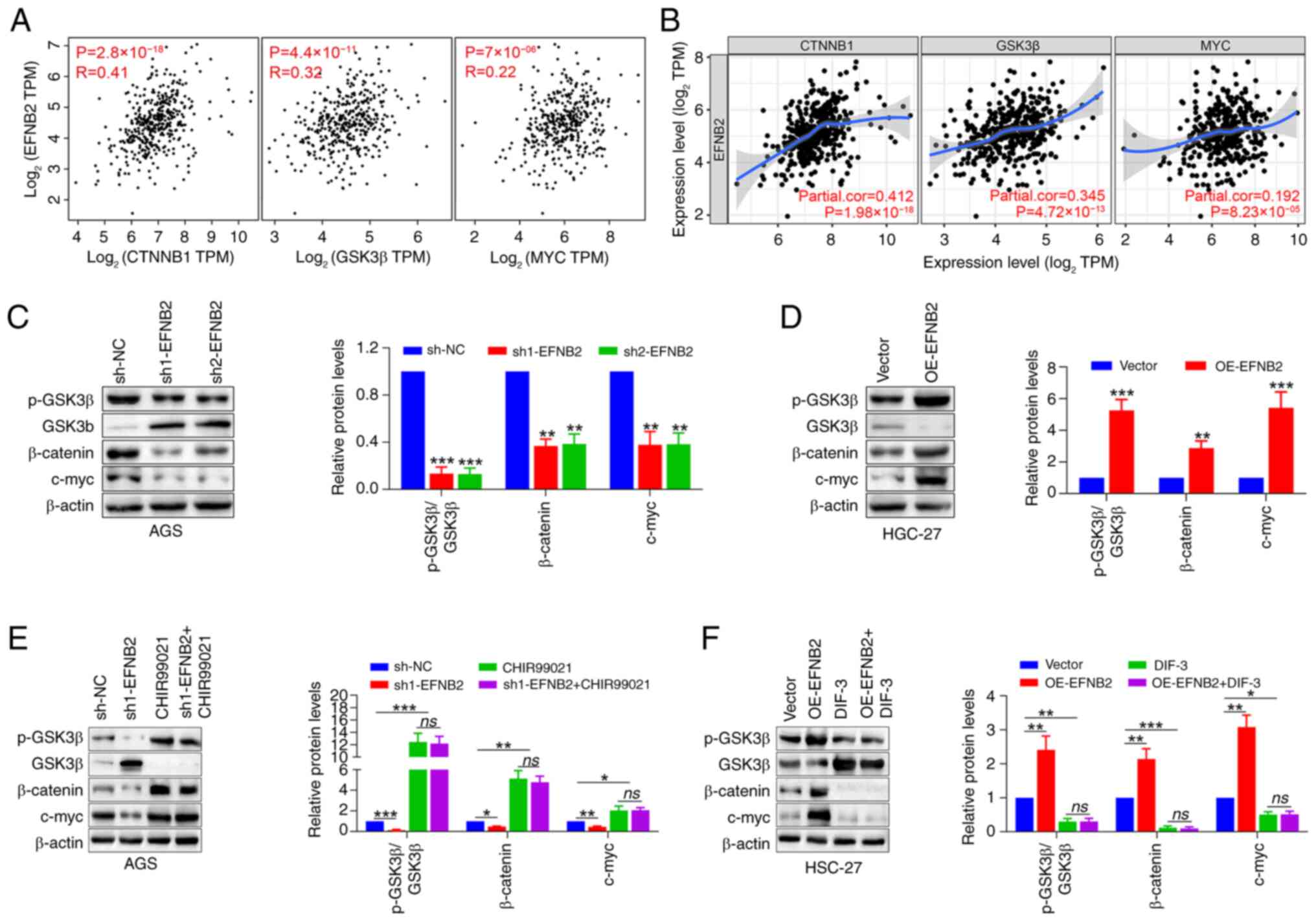
Figure 5

Wnt/β-catenin signaling pathway is
responsible for EFNB2-mediated biological effects in gastric cancer
cells. (A) Gene Expression Profiling Interactive Analysis and (B)
Tumor Immune Estimation Resource databases were employed to explore
the transcriptional correlation between EFNB2 and CTNNB1, GSK3β and
downstream MYC (Spearman). Representative western blot bands and
semi-quantification of protein expression levels of p-GSK3β, GSK3β,
β-catenin and c-myc detected under the condition of EFNB2 (C)
knockdown and (D) overexpression (one-way ANOVA for AGS cells;
unpaired Student's test for HGC-27 cells). Representative western
blot bands and semi-quantification of protein expression levels in
the presence of (E) an agonist (CHIR99021) and (F) an inhibitor
(DIF-3) of the Wnt/β-catenin signaling pathway in the EFNB2
knockdown or overexpression groups, respectively. Protein levels of
p-GSK3β, GSK3β, β-catenin and c-myc were detected by western
blotting (one-way ANOVA). Data are presented as the mean ± SD.
*P<0.05, **P<0.01,
***P<0.001 vs. sh-NC or vector group. ns, not
significant; NC, negative control; DIF-3, differentiation-inducing
factor-3; p-, phosphorylated; OE, overexpression vector; sh, short
hairpin RNA; CTNNB1, catenin β1; TPM, transcript per million;
EFNB2, ephrin-B2.

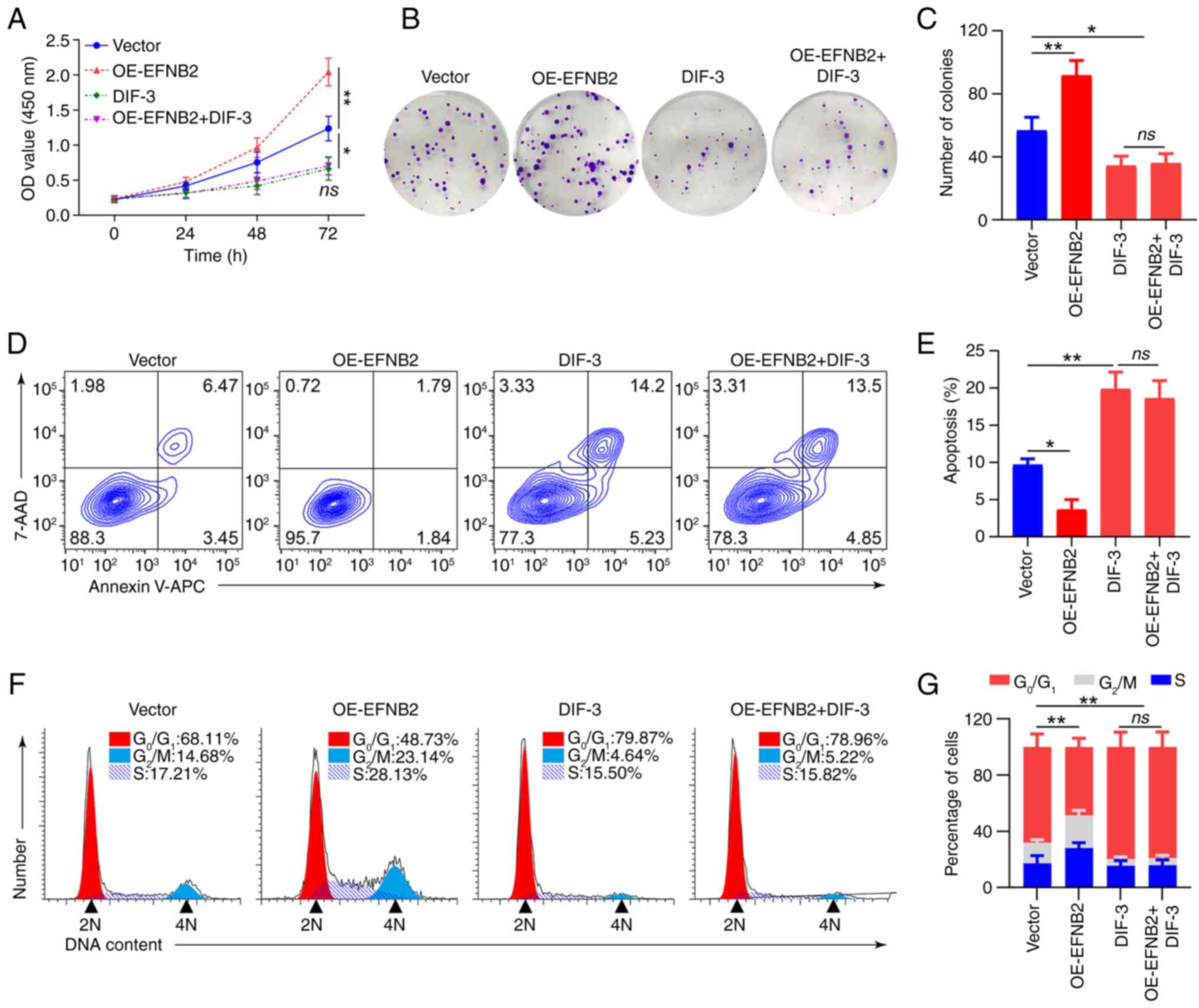
Figure 6

DIF-3 abrogates EFNB2-mediated
biological effects in gastric cancer cells. (A) A Cell Counting
Kit-8 was used to assess the impact of DIF-3 on HGC-27 cells
transfected with EFNB2 overexpression vector in terms of
proliferation (one-way ANOVA). (B) Representative images of colony
formation assays. (C) Quantitative analysis of colony formation was
performed to evaluate the effect of DIF-3 on EFNB2-overexpressing
cells. (D and F) Representative flow cytometry plots and
quantification of (E) apoptosis and (G) cell cycle distribution for
the evaluation of the effect of DIF-3 on EFNB2-overexpressing cells
(one-way ANOVA). Data are presented as the mean ± SD.
*P<0.05, **P<0.01 vs. vector; ns, DIF-3
vs. OE-EFNB2 + DIF-3. ns, not significant; EFNB2, ephrin-B2; AAD,
amino-actinomycin D; APC, allophycocyanin; DIF-3,
differentiation-inducing factor-3; OD, optical density; OE,
overexpression vector.

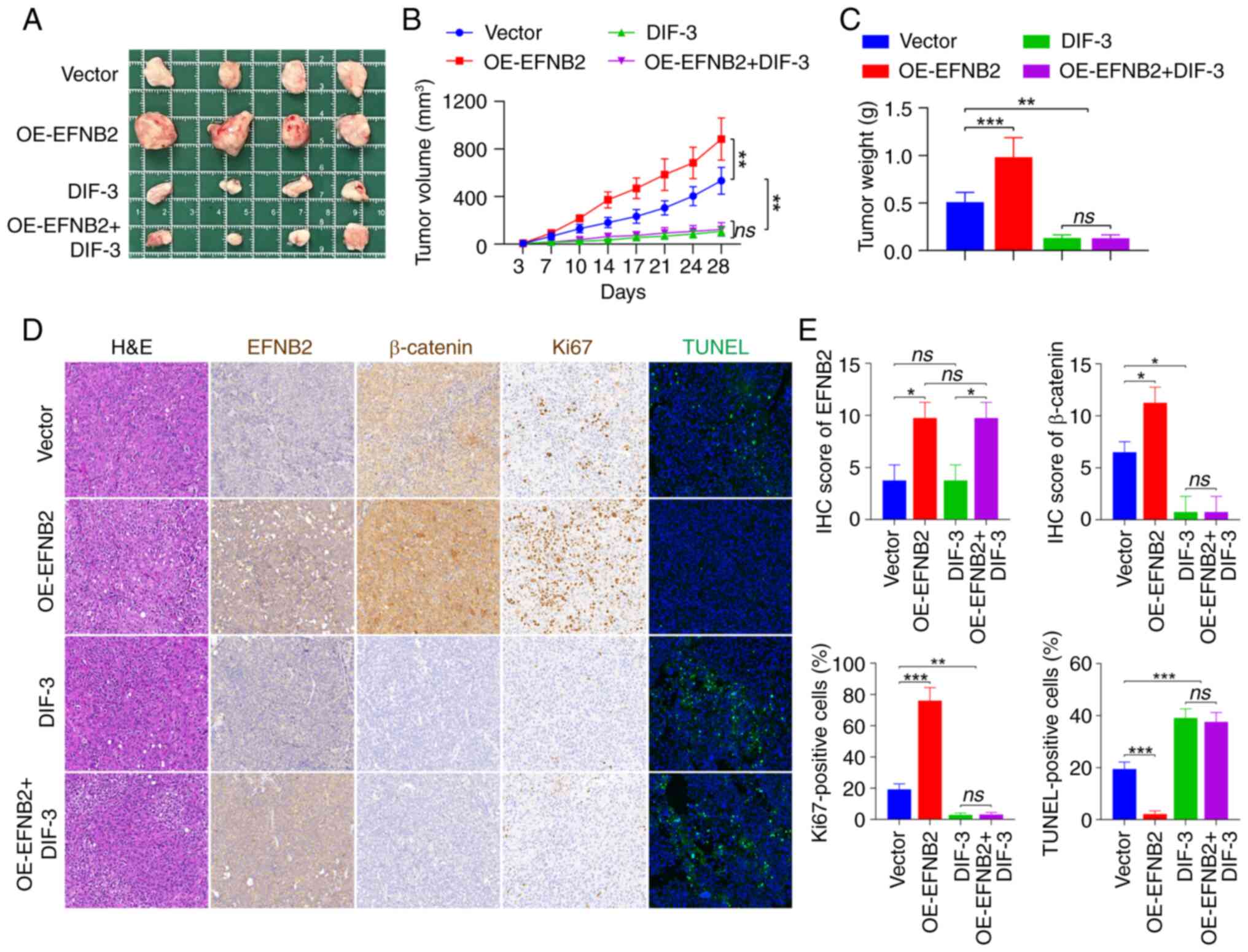
Figure 7

EFNB2 promotes the tumor growth of
gastric cancer via the Wnt/β-catenin signaling pathway in
vivo. (A) Tumors from the immunodeficient nude mice in the four
experimental groups were excised and imaged. (B) Subcutaneous tumor
growth (mm3) was measured every 3-4 days following
various treatments (one-way ANOVA). (C) Excised tumor masses (g)
were weighed and compared across groups (one-way ANOVA). (D)
Histopathological evaluation of xenograft tumors included H&E
staining to examine tissue morphology, IHC analysis of EFNB2,
β-catenin and Ki67 expression, and TUNEL staining for apoptotic
cell evaluation. All images were captured at a magnification of
×200. (E) Quantification of IHC scores for EFNB2 and β-catenin, and
the percentage of positive cells for Ki67 and TUNEL staining
(Kruskal-Wallis H test for EFNB2 and β-catenin; one-way ANOVA for
Ki67 and TUNEL staining). Data are presented as the mean ± SD.
*P<0.05, **P<0.01,
***P<0.001. ns, not significant; EFNB2, ephrin-B2;
DIF-3, differentiation-inducing factor-3; OE, overexpression
vector; IHC, immunohistochemical.
View References

1 

Bray F, Laversanne M, Sung H, Ferlay J, Siegel RL, Soerjomataram I and Jemal A: Global cancer statistics 2022: GLOBOCAN estimates of incidence and mortality worldwide for 36 cancers in 185 countries. CA Cancer J Clin. 74:229–263. 2024.PubMed/NCBI

2 

Chen YC, Malfertheiner P, Yu HT, Kuo CL, Chang YY, Meng FT, Wu YX, Hsiao JL, Chen MJ, Lin KP, et al: Global prevalence of helicobacter pylori infection and incidence of gastric cancer between 1980 and 2022. Gastroenterology. 166:605–619. 2024. View Article : Google Scholar

3 

Onoyama T, Ishikawa S and Isomoto H: Gastric cancer and genomics: Review of literature. J Gastroenterol. 57:505–516. 2022. View Article : Google Scholar

4 

Qiu H, Cao S and Xu R: Cancer incidence, mortality, and burden in China: A time-trend analysis and comparison with the United States and United Kingdom based on the global epidemiological data released in 2020. Cancer Commun (Lond). 41:1037–1048. 2021. View Article : Google Scholar

5 

Guan WL, He Y and Xu RH: Gastric cancer treatment: Recent progress and future perspectives. J Hematol Oncol. 16:572023. View Article : Google Scholar : PubMed/NCBI

6 

Pasquale EB: Eph receptors and ephrins in cancer: Bidirectional signalling and beyond. Nat Rev Cancer. 10:165–180. 2010. View Article : Google Scholar : PubMed/NCBI

7 

Iida H, Honda M, Kawai HF, Yamashita T, Shirota Y, Wang BC, Miao H and Kaneko S: Ephrin-A1 expression contributes to the malignant characteristics of {alpha}-fetoprotein producing hepatocellular carcinoma. Gut. 54:843–851. 2005. View Article : Google Scholar

8 

Nakada M, Drake KL, Nakada S, Niska JA and Berens ME: Ephrin-B3 ligand promotes glioma invasion through activation of Rac1. Cancer Res. 66:8492–8500. 2006. View Article : Google Scholar

9 

Hirai H, Maru Y, Hagiwara K, Nishida J and Takaku F: A novel putative tyrosine kinase receptor encoded by the eph gene. Science. 238:1717–1720. 1987. View Article : Google Scholar : PubMed/NCBI

10 

Piffko A, Uhl C, Vajkoczy P, Czabanka M and Broggini T: EphrinB2-EphB4 signaling in neurooncological disease. Int J Mol Sci. 23:16792022. View Article : Google Scholar : PubMed/NCBI

11 

Rutkowski R, Mertens-Walker I, Lisle JE, Herington AC and Stephenson SA: Evidence for a dual function of EphB4 as tumor promoter and suppressor regulated by the absence or presence of the ephrin-B2 ligand. Int J Cancer. 131:E614–E624. 2012. View Article : Google Scholar

12 

Piffko A, Broggini T, Harms C, Adams RH, Vajkoczy P and Czabanka M: Ligand-dependent and ligand-independent effects of Ephrin-B2-EphB4 signaling in melanoma metastatic spine disease. Int J Mol Sci. 22:80282021. View Article : Google Scholar

13 

Dai B, Shi X, Ma N, Ma W, Zhang Y, Yang T, Zhang J and He L: HMQ-T-B10 induces human liver cell apoptosis by competitively targeting EphrinB2 and regulating its pathway. J Cell Mol Med. 22:5231–5243. 2018. View Article : Google Scholar

14 

Zhong S, Pei D, Shi L, Cui Y and Hong Z: Ephrin-B2 inhibits Aβ25-35-induced apoptosis by alleviating endoplasmic reticulum stress and promoting autophagy in HT22 cells. Neurosci Lett. 704:50–56. 2019. View Article : Google Scholar : PubMed/NCBI

15 

Alam SK, Yadav VK, Bajaj S, Datta A, Dutta SK, Bhattacharyya M, Bhattacharya S, Debnath S, Roy S, Boardman LA, et al: DNA damage-induced ephrin-B2 reverse signaling promotes chemoresistance and drives EMT in colorectal carcinoma harboring mutant p53. Cell Death Differ. 23:707–722. 2016. View Article : Google Scholar :

16 

Zhu F, Dai SN, Xu DL, Hou CQ, Liu TT, Chen QY, Wu JL and Miao Y: EFNB2 facilitates cell proliferation, migration, and invasion in pancreatic ductal adenocarcinoma via the p53/p21 pathway and EMT. Biomed Pharmacother. 125:1099722020. View Article : Google Scholar

17 

Magic Z, Sandström J and Perez-Tenorio G: Ephrin-B2 inhibits cell proliferation and motility in vitro and predicts longer metastasis-free survival in breast cancer. Int J Oncol. 55:1275–1286. 2019.

18 

Zhang Y, Zhang R, Ding X and Ai K: EFNB2 acts as the target of miR-557 to facilitate cell proliferation, migration and invasion in pancreatic ductal adenocarcinoma by bioinformatics analysis and verification. Am J Transl Res. 10:3514–3528. 2018.

19 

Akhavanfar R, Shafagh SG, Mohammadpour B, Farahmand Y, Lotfalizadeh MH, Kookli K, Adili A, Siri G and Eshagh Hosseini SM: A comprehensive insight into the correlation between ncRNAs and the Wnt/β-catenin signalling pathway in gastric cancer pathogenesis. Cell Commun Signal. 21:1662023. View Article : Google Scholar

20 

Clevers H: Wnt/beta-catenin signaling in development and disease. Cell. 127:469–480. 2006. View Article : Google Scholar : PubMed/NCBI

21 

Mirabelli CK, Nusse R, Tuveson DA and Williams BO: Perspectives on the role of Wnt biology in cancer. Sci Signal. 12:eaay44942019. View Article : Google Scholar : PubMed/NCBI

22 

Lien WH and Fuchs E: Wnt some lose some: Transcriptional governance of stem cells by Wnt/β-catenin signaling. Genes Dev. 28:1517–1532. 2014. View Article : Google Scholar : PubMed/NCBI

23 

Tang Z, Li C, Kang B, Gao G, Li C and Zhang Z: GEPIA: A web server for cancer and normal gene expression profiling and interactive analyses. Nucleic Acids Res. 45:W98–W102. 2017. View Article : Google Scholar

24 

Vasaikar SV, Straub P, Wang J and Zhang B: LinkedOmics: Analyzing multi-omics data within and across 32 cancer types. Nucleic Acids Res. 46:D956–D963. 2018. View Article : Google Scholar

25 

Győrffy B: Survival analysis across the entire transcriptome identifies biomarkers with the highest prognostic power in breast cancer. Comput Struct Biotechnol J. 19:4101–4109. 2021. View Article : Google Scholar

26 

Li T, Fan J, Wang B, Traugh N, Chen Q, Liu JS, Li B and Liu XS: TIMER: A web server for comprehensive analysis of tumor-infiltrating immune cells. Cancer Res. 77:e108–e110. 2017. View Article : Google Scholar

27 

Cristescu R, Lee J, Nebozhyn M, Kim KM, Ting JC, Wong SS, Liu J, Yue YG, Wang J, Yu K, et al: Molecular analysis of gastric cancer identifies subtypes associated with distinct clinical outcomes. Nat Med. 21:449–456. 2015. View Article : Google Scholar : PubMed/NCBI

28 

Kim HK, Choi IJ, Kim CG, Kim HS, Oshima A, Michalowski A and Green JE: A gene expression signature of acquired chemoresistance to cisplatin and fluorouracil combination chemotherapy in gastric cancer patients. PLoS One. 6:e166942011. View Article : Google Scholar : PubMed/NCBI

29 

Ooi CH, Ivanova T, Wu J, Lee M, Tan IB, Tao J, Ward L, Koo JH, Gopalakrishnan V, Zhu Y, et al: Oncogenic pathway combinations predict clinical prognosis in gastric cancer. PLoS Genet. 5:e10006762009. View Article : Google Scholar :

30 

Förster S, Gretschel S, Jöns T, Yashiro M and Kemmner W: THBS4, a novel stromal molecule of diffuse-type gastric adenocarcinomas, identified by transcriptome-wide expression profiling. Mod Pathol. 24:1390–1403. 2011. View Article : Google Scholar

31 

Wang G, Hu N, Yang HH, Wang L, Su H, Wang C, Clifford R, Dawsey EM, Li JM, Ding T, et al: Comparison of global gene expression of gastric cardia and noncardia cancers from a high-risk population in china. PLoS One. 8:e638262013. View Article : Google Scholar

32 

Busuttil RA, George J, Tothill RW, Ioculano K, Kowalczyk A, Mitchell C, Lade S, Tan P, Haviv I and Boussioutas A: A signature predicting poor prognosis in gastric and ovarian cancer represents a coordinated macrophage and stromal response. Clin Cancer Res. 20:2761–2772. 2014. View Article : Google Scholar : PubMed/NCBI

33 

Cheng L, Yang S, Yang Y, Zhang W, Xiao H, Gao H, Deng X and Zhang Q: Global gene expression and functional network analysis of gastric cancer identify extended pathway maps and GPRC5A as a potential biomarker. Cancer Lett. 326:105–113. 2012. View Article : Google Scholar

34 

Lou S, Zhang J, Yin X, Zhang Y, Fang T, Wang Y and Xue Y: Comprehensive characterization of tumor purity and its clinical implications in gastric cancer. Front Cell Dev Biol. 9:7825292022. View Article : Google Scholar :

35 

Fang C, Wang W, Deng JY, Sun Z, Seeruttun SR, Wang ZN, Xu HM, Liang H and Zhou ZW: Proposal and validation of a modified staging system to improve the prognosis predictive performance of the 8th AJCC/UICC pTNM staging system for gastric adenocarcinoma: A multicenter study with external validation. Cancer Commun (Lond). 38:672018.PubMed/NCBI

36 

Liu Q, Li Y, Niu Z, Zong Y, Wang M, Yao L, Lu Z, Liao Q and Zhao Y: Atorvastatin (Lipitor) attenuates the effects of aspirin on pancreatic cancerogenesis and the chemotherapeutic efficacy of gemcitabine on pancreatic cancer by promoting M2 polarized tumor associated macrophages. J Exp Clin Cancer Res. 35:332016. View Article : Google Scholar

37 

Shen J, Cao B, Wang Y, Ma C, Zeng Z, Liu L, Li X, Tao D, Gong J and Xie D: Hippo component YAP promotes focal adhesion and tumour aggressiveness via transcriptionally activating THBS1/FAK signalling in breast cancer. J Exp Clin Cancer Res. 37:1752018. View Article : Google Scholar : PubMed/NCBI

38 

Zhang Y, Liu Q, Liu J and Liao Q: Upregulated CD58 is associated with clinicopathological characteristics and poor prognosis of patients with pancreatic ductal adenocarcinoma. Cancer Cell Int. 21:3272021. View Article : Google Scholar :

39 

Zhang Y, Liu Q, Yang S and Liao Q: Knockdown of LRRN1 inhibits malignant phenotypes through the regulation of HIF-1α/notch pathway in pancreatic ductal adenocarcinoma. Mol Ther Oncolytics. 23:51–64. 2021. View Article : Google Scholar : PubMed/NCBI

40 

Zhang Y, Zhang R, Luo G and Ai K: Long noncoding RNA SNHG1 promotes cell proliferation through PI3K/AKT signaling pathway in pancreatic ductal adenocarcinoma. J Cancer. 9:2713–2722. 2018. View Article : Google Scholar : PubMed/NCBI

41 

Han R, Yang J, Zhu Y and Gan R: Wnt signaling in gastric cancer: Current progress and future prospects. Front Oncol. 14:14105132024. View Article : Google Scholar : PubMed/NCBI

42 

Oweida A, Bhatia S, Hirsch K, Calame D, Griego A, Keysar S, Pitts T, Sharma J, Eckhardt G, Jimeno A, et al: Ephrin-B2 overexpression predicts for poor prognosis and response to therapy in solid tumors. Mol Carcinog. 56:1189–1196. 2017. View Article : Google Scholar

43 

Ni Q, Chen P, Zhu B, Li J, Xie D and Ma X: Expression levels of EPHB4, EFNB2 and caspase-8 are associated with clinicopathological features and progression of esophageal squamous cell cancer. Oncol Lett. 19:917–929. 2020.

44 

Krusche B, Ottone C, Clements MP, Johnstone ER, Goetsch K, Lieven H, Mota SG, Singh P, Khadayate S, Ashraf A, et al: EphrinB2 drives perivascular invasion and proliferation of glioblastoma stem-like cells. Elife. 5:e148452016. View Article : Google Scholar : PubMed/NCBI

45 

Takai N, Miyazaki T, Fujisawa K, Nasu K and Miyakawa I: Expression of receptor tyrosine kinase EphB4 and its ligand ephrin-B2 is associated with malignant potential in endometrial cancer. Oncol Rep. 8:567–573. 2001.

46 

Wang L, Peng Q, Sai B, Zheng L, Xu J, Yin N, Feng X and Xiang J: Ligand-independent EphB1 signaling mediates TGF-β-activated CDH2 and promotes lung cancer cell invasion and migration. J Cancer. 11:4123–4131. 2020. View Article : Google Scholar :

47 

Peña-Blanco A and García-Sáez AJ: Bax, Bak and beyond-mitochondrial performance in apoptosis. FEBS J. 285:416–431. 2018. View Article : Google Scholar

48 

Tchakarska G and Sola B: The double dealing of cyclin D1. Cell Cycle. 19:163–178. 2020. View Article : Google Scholar

49 

Ziegler DV, Parashar K and Fajas L: Beyond cell cycle regulation: The pleiotropic function of CDK4 in cancer. Semin Cancer Biol. 98:51–63. 2024. View Article : Google Scholar

50 

Koushyar S, Powell AG, Vincan E and Phesse TJ: Targeting Wnt signaling for the treatment of gastric cancer. Int J Mol Sci. 21:39272020. View Article : Google Scholar : PubMed/NCBI

51 

Liu J, Xiao Q, Xiao J, Niu C, Li Y, Zhang X, Zhou Z, Shu G and Yin G: Wnt/β-catenin signalling: Function, biological mechanisms, and therapeutic opportunities. Signal Transduct Target Ther. 7:32022. View Article : Google Scholar

52 

Zhang Y and Wang X: Targeting the Wnt/β-catenin signaling pathway in cancer. J Hematol Oncol. 13:1652020. View Article : Google Scholar

53 

Madden SK, de Araujo AD, Gerhardt M, Fairlie DP and Mason JM: Taking the Myc out of cancer: Toward therapeutic strategies to directly inhibit c-Myc. Mol Cancer. 20:32021. View Article : Google Scholar : PubMed/NCBI

54 

Xue W, Yang L, Chen C, Ashrafizadeh M, Tian Y and Sun R: Wnt/β-catenin-driven EMT regulation in human cancers. Cell Mol Life Sci. 81:792024. View Article : Google Scholar

55 

Wu C, Zhuang Y, Jiang S, Liu S, Zhou J, Wu J, Teng Y, Xia B, Wang R and Zou X: Interaction between Wnt/β-catenin pathway and microRNAs regulates epithelial-mesenchymal transition in gastric cancer (review). Int J Oncol. 48:2236–2246. 2016. View Article : Google Scholar

Related Articles

  • Abstract
  • View
  • Download
  • Twitter
Copy and paste a formatted citation
Spandidos Publications style
Ding D, Wang X, Xuan R, Li R, Zhang Y and Wang Z: Ephrin‑B2 promotes gastric cancer growth by inhibiting apoptosis and regulating the cell cycle via the Wnt/&beta;‑catenin signaling pathway. Int J Oncol 68: 8, 2026.
APA
Ding, D., Wang, X., Xuan, R., Li, R., Zhang, Y., & Wang, Z. (2026). Ephrin‑B2 promotes gastric cancer growth by inhibiting apoptosis and regulating the cell cycle via the Wnt/&beta;‑catenin signaling pathway. International Journal of Oncology, 68, 8. https://doi.org/10.3892/ijo.2025.5821
MLA
Ding, D., Wang, X., Xuan, R., Li, R., Zhang, Y., Wang, Z."Ephrin‑B2 promotes gastric cancer growth by inhibiting apoptosis and regulating the cell cycle via the Wnt/&beta;‑catenin signaling pathway". International Journal of Oncology 68.1 (2026): 8.
Chicago
Ding, D., Wang, X., Xuan, R., Li, R., Zhang, Y., Wang, Z."Ephrin‑B2 promotes gastric cancer growth by inhibiting apoptosis and regulating the cell cycle via the Wnt/&beta;‑catenin signaling pathway". International Journal of Oncology 68, no. 1 (2026): 8. https://doi.org/10.3892/ijo.2025.5821
Copy and paste a formatted citation
x
Spandidos Publications style
Ding D, Wang X, Xuan R, Li R, Zhang Y and Wang Z: Ephrin‑B2 promotes gastric cancer growth by inhibiting apoptosis and regulating the cell cycle via the Wnt/&beta;‑catenin signaling pathway. Int J Oncol 68: 8, 2026.
APA
Ding, D., Wang, X., Xuan, R., Li, R., Zhang, Y., & Wang, Z. (2026). Ephrin‑B2 promotes gastric cancer growth by inhibiting apoptosis and regulating the cell cycle via the Wnt/&beta;‑catenin signaling pathway. International Journal of Oncology, 68, 8. https://doi.org/10.3892/ijo.2025.5821
MLA
Ding, D., Wang, X., Xuan, R., Li, R., Zhang, Y., Wang, Z."Ephrin‑B2 promotes gastric cancer growth by inhibiting apoptosis and regulating the cell cycle via the Wnt/&beta;‑catenin signaling pathway". International Journal of Oncology 68.1 (2026): 8.
Chicago
Ding, D., Wang, X., Xuan, R., Li, R., Zhang, Y., Wang, Z."Ephrin‑B2 promotes gastric cancer growth by inhibiting apoptosis and regulating the cell cycle via the Wnt/&beta;‑catenin signaling pathway". International Journal of Oncology 68, no. 1 (2026): 8. https://doi.org/10.3892/ijo.2025.5821
Follow us
  • Twitter
  • LinkedIn
  • Facebook
About
  • Spandidos Publications
  • Careers
  • Cookie Policy
  • Privacy Policy
How can we help?
  • Help
  • Live Chat
  • Contact
  • Email to our Support Team