Spandidos Publications Logo
  • About
    • About Spandidos
    • Aims and Scopes
    • Abstracting and Indexing
    • Editorial Policies
    • Reprints and Permissions
    • Job Opportunities
    • Terms and Conditions
    • Contact
  • Journals
    • All Journals
    • Oncology Letters
      • Oncology Letters
      • Information for Authors
      • Editorial Policies
      • Editorial Board
      • Aims and Scope
      • Abstracting and Indexing
      • Bibliographic Information
      • Archive
    • International Journal of Oncology
      • International Journal of Oncology
      • Information for Authors
      • Editorial Policies
      • Editorial Board
      • Aims and Scope
      • Abstracting and Indexing
      • Bibliographic Information
      • Archive
    • Molecular and Clinical Oncology
      • Molecular and Clinical Oncology
      • Information for Authors
      • Editorial Policies
      • Editorial Board
      • Aims and Scope
      • Abstracting and Indexing
      • Bibliographic Information
      • Archive
    • Experimental and Therapeutic Medicine
      • Experimental and Therapeutic Medicine
      • Information for Authors
      • Editorial Policies
      • Editorial Board
      • Aims and Scope
      • Abstracting and Indexing
      • Bibliographic Information
      • Archive
    • International Journal of Molecular Medicine
      • International Journal of Molecular Medicine
      • Information for Authors
      • Editorial Policies
      • Editorial Board
      • Aims and Scope
      • Abstracting and Indexing
      • Bibliographic Information
      • Archive
    • Biomedical Reports
      • Biomedical Reports
      • Information for Authors
      • Editorial Policies
      • Editorial Board
      • Aims and Scope
      • Abstracting and Indexing
      • Bibliographic Information
      • Archive
    • Oncology Reports
      • Oncology Reports
      • Information for Authors
      • Editorial Policies
      • Editorial Board
      • Aims and Scope
      • Abstracting and Indexing
      • Bibliographic Information
      • Archive
    • Molecular Medicine Reports
      • Molecular Medicine Reports
      • Information for Authors
      • Editorial Policies
      • Editorial Board
      • Aims and Scope
      • Abstracting and Indexing
      • Bibliographic Information
      • Archive
    • World Academy of Sciences Journal
      • World Academy of Sciences Journal
      • Information for Authors
      • Editorial Policies
      • Editorial Board
      • Aims and Scope
      • Abstracting and Indexing
      • Bibliographic Information
      • Archive
    • International Journal of Functional Nutrition
      • International Journal of Functional Nutrition
      • Information for Authors
      • Editorial Policies
      • Editorial Board
      • Aims and Scope
      • Abstracting and Indexing
      • Bibliographic Information
      • Archive
    • International Journal of Epigenetics
      • International Journal of Epigenetics
      • Information for Authors
      • Editorial Policies
      • Editorial Board
      • Aims and Scope
      • Abstracting and Indexing
      • Bibliographic Information
      • Archive
    • Medicine International
      • Medicine International
      • Information for Authors
      • Editorial Policies
      • Editorial Board
      • Aims and Scope
      • Abstracting and Indexing
      • Bibliographic Information
      • Archive
  • Articles
  • Information
    • Information for Authors
    • Information for Reviewers
    • Information for Librarians
    • Information for Advertisers
    • Conferences
  • Language Editing
Spandidos Publications Logo
  • About
    • About Spandidos
    • Aims and Scopes
    • Abstracting and Indexing
    • Editorial Policies
    • Reprints and Permissions
    • Job Opportunities
    • Terms and Conditions
    • Contact
  • Journals
    • All Journals
    • Biomedical Reports
      • Information for Authors
      • Editorial Policies
      • Editorial Board
      • Aims and Scope
      • Abstracting and Indexing
      • Bibliographic Information
      • Archive
    • Experimental and Therapeutic Medicine
      • Information for Authors
      • Editorial Policies
      • Editorial Board
      • Aims and Scope
      • Abstracting and Indexing
      • Bibliographic Information
      • Archive
    • International Journal of Epigenetics
      • Information for Authors
      • Editorial Policies
      • Editorial Board
      • Aims and Scope
      • Abstracting and Indexing
      • Bibliographic Information
      • Archive
    • International Journal of Functional Nutrition
      • Information for Authors
      • Editorial Policies
      • Editorial Board
      • Aims and Scope
      • Abstracting and Indexing
      • Bibliographic Information
      • Archive
    • International Journal of Molecular Medicine
      • Information for Authors
      • Editorial Policies
      • Editorial Board
      • Aims and Scope
      • Abstracting and Indexing
      • Bibliographic Information
      • Archive
    • International Journal of Oncology
      • Information for Authors
      • Editorial Policies
      • Editorial Board
      • Aims and Scope
      • Abstracting and Indexing
      • Bibliographic Information
      • Archive
    • Medicine International
      • Information for Authors
      • Editorial Policies
      • Editorial Board
      • Aims and Scope
      • Abstracting and Indexing
      • Bibliographic Information
      • Archive
    • Molecular and Clinical Oncology
      • Information for Authors
      • Editorial Policies
      • Editorial Board
      • Aims and Scope
      • Abstracting and Indexing
      • Bibliographic Information
      • Archive
    • Molecular Medicine Reports
      • Information for Authors
      • Editorial Policies
      • Editorial Board
      • Aims and Scope
      • Abstracting and Indexing
      • Bibliographic Information
      • Archive
    • Oncology Letters
      • Information for Authors
      • Editorial Policies
      • Editorial Board
      • Aims and Scope
      • Abstracting and Indexing
      • Bibliographic Information
      • Archive
    • Oncology Reports
      • Information for Authors
      • Editorial Policies
      • Editorial Board
      • Aims and Scope
      • Abstracting and Indexing
      • Bibliographic Information
      • Archive
    • World Academy of Sciences Journal
      • Information for Authors
      • Editorial Policies
      • Editorial Board
      • Aims and Scope
      • Abstracting and Indexing
      • Bibliographic Information
      • Archive
  • Articles
  • Information
    • For Authors
    • For Reviewers
    • For Librarians
    • For Advertisers
    • Conferences
  • Language Editing
Login Register Submit
  • This site uses cookies
  • You can change your cookie settings at any time by following the instructions in our Cookie Policy. To find out more, you may read our Privacy Policy.

    I agree
Search articles by DOI, keyword, author or affiliation
Search
Advanced Search
presentation
International Journal of Oncology
Join Editorial Board Propose a Special Issue
Print ISSN: 1019-6439 Online ISSN: 1791-2423
Journal Cover
January-2026 Volume 68 Issue 1

Full Size Image

Cover Legend PDF

Sign up for eToc alerts
Recommend to Library

Journals

International Journal of Molecular Medicine

International Journal of Molecular Medicine

International Journal of Molecular Medicine is an international journal devoted to molecular mechanisms of human disease.

International Journal of Oncology

International Journal of Oncology

International Journal of Oncology is an international journal devoted to oncology research and cancer treatment.

Molecular Medicine Reports

Molecular Medicine Reports

Covers molecular medicine topics such as pharmacology, pathology, genetics, neuroscience, infectious diseases, molecular cardiology, and molecular surgery.

Oncology Reports

Oncology Reports

Oncology Reports is an international journal devoted to fundamental and applied research in Oncology.

Experimental and Therapeutic Medicine

Experimental and Therapeutic Medicine

Experimental and Therapeutic Medicine is an international journal devoted to laboratory and clinical medicine.

Oncology Letters

Oncology Letters

Oncology Letters is an international journal devoted to Experimental and Clinical Oncology.

Biomedical Reports

Biomedical Reports

Explores a wide range of biological and medical fields, including pharmacology, genetics, microbiology, neuroscience, and molecular cardiology.

Molecular and Clinical Oncology

Molecular and Clinical Oncology

International journal addressing all aspects of oncology research, from tumorigenesis and oncogenes to chemotherapy and metastasis.

World Academy of Sciences Journal

World Academy of Sciences Journal

Multidisciplinary open-access journal spanning biochemistry, genetics, neuroscience, environmental health, and synthetic biology.

International Journal of Functional Nutrition

International Journal of Functional Nutrition

Open-access journal combining biochemistry, pharmacology, immunology, and genetics to advance health through functional nutrition.

International Journal of Epigenetics

International Journal of Epigenetics

Publishes open-access research on using epigenetics to advance understanding and treatment of human disease.

Medicine International

Medicine International

An International Open Access Journal Devoted to General Medicine.

Journal Cover
January-2026 Volume 68 Issue 1

Full Size Image

Cover Legend PDF

Sign up for eToc alerts
Recommend to Library

  • Article
  • Citations
    • Cite This Article
    • Download Citation
    • Create Citation Alert
    • Remove Citation Alert
    • Cited By
  • Similar Articles
    • Related Articles (in Spandidos Publications)
    • Similar Articles (Google Scholar)
    • Similar Articles (PubMed)
  • Download PDF
  • Download XML
  • View XML

  • Supplementary Files
    • Supplementary_Data.pdf
Article Open Access

Discovery of the late autophagy inhibitor FZU‑0045‑053 and its anti‑breast cancer and immunomodulatory effects

  • Authors:
    • Jinlan Luo
    • Yi Yang
    • Lulu Cheng
    • Fangting Cheng
    • Huangwenlong Zhuang
    • Shanshan Chen
    • Panpan Qiao
    • Yinbin Liang
    • Li Chen
    • Yang Sun
    • Haijun Chen
    • Qinying Liu
  • View Affiliations / Copyright

    Affiliations: Fujian Provincial Key Laboratory of Tumor Biotherapy, Clinical Oncology School of Fujian Medical University, Fujian Cancer Hospital, Fuzhou, Fujian 350014, P.R. China, Fujian Provincial Key Laboratory of Medical Instrument and Pharmaceutical Technology, College of Biological Science and Technology, Fuzhou University, Fuzhou, Fujian 350108, P.R. China, Key Laboratory of Molecule Synthesis and Function Discovery, College of Chemistry, Fuzhou University, Fuzhou, Fujian 350108, P.R. China
    Copyright: © Luo et al. This is an open access article distributed under the terms of Creative Commons Attribution License.
  • Article Number: 10
    |
    Published online on: November 26, 2025
       https://doi.org/10.3892/ijo.2025.5823
  • Expand metrics +
Metrics: Total Views: 0 (Spandidos Publications: | PMC Statistics: )
Metrics: Total PDF Downloads: 0 (Spandidos Publications: | PMC Statistics: )
Cited By (CrossRef): 0 citations Loading Articles...

This article is mentioned in:


Abstract

Breast cancer is characterized by notable heterogeneity and remains one of the leading causes of cancer‑related death among women. Autophagy, a process by which cells use lysosomes to degrade cytoplasmic proteins and damaged organelles, is not only associated with chemotherapy resistance, but is also involved in immune‑mediated tumor cell killing and immune evasion, making it a promising target for cancer therapy. Pharmacological inhibition of autophagy in breast cancer cells suppresses tumor progression. In the present study, the small molecular compound FZU‑0045‑053 (053) was identified, which exhibited autophagic and immunomodulatory effects. The effect of 053 on autophagy regulation in breast cancer cells was evaluated using transmission electron microscopy, an mRFP‑GFP‑ microtubule‑associated protein 1 light chain 3 (LC3) tandem fluorescent adenovirus, the CYTO‑ID Autophagy Detection Kit and western blot analysis. Cell viability was subsequently assessed with proliferation assay and ATP assay kits. Apoptosis induction and the expression of immune‑related molecules were measured by flow cytometry. Furthermore, a triple‑negative breast cancer mouse model was established to validate the antitumor and autophagy‑modulating effects of 053 in vivo using immunofluorescence and immunohistochemical staining. Finally, a 4T1 syngeneic mouse model was utilized to corroborate the immunomodulatory effects of 053 in vivo through immunohistochemistry and flow cytometric analysis. The findings indicated that 053 regulated autophagy in the breast cancer cell lines MDA‑MB‑231 and MCF‑7, similar to the late autophagy inhibitor chloroquine. This regulation resulted in the accumulation of autophagic substrates, specifically LC3‑II and sequestosome 1, by blocking autophagic flux. By blocking autophagy flux, 053 suppressed proliferation, induced apoptosis and ultimately restored chemosensitivity in MDA‑MB‑231 cells. In addition, the MDA‑MB‑231 xenograft model indicated that 053 inhibited autophagy by blocking autophagic flux, which lead to the accumulation of LC3 and sequestosome 1. 053 also negatively regulated the expression of programmed death‑ligand 1 (PD‑L1) in tumor cells. The 4T1 xenograft model showed that 053 had a notable immune‑promoting effect, whereby it not only negatively regulated the expression of PD‑L1 in tumor cells but also modulated T cell activation and proliferation by downregulating the expression of co‑inhibitory molecules (T‑cell immunoglobulin and mucin‑domain containing‑3 and programmed cell death protein 1) on T cells and upregulating co‑stimulatory molecules (4‑1BB, OX40 and inducible T‑cell co‑stimulator). In vivo xenograft models demonstrated that 053 had notable antitumor effects and high biosafety, with improved antitumor efficacy when combined with the chemotherapy drug gemcitabine. In summary, 053 can block autophagy and promote antitumor immune responses, showing promise as a new generation of adjuvant drugs for tumor chemotherapy and immunotherapy.
View Figures

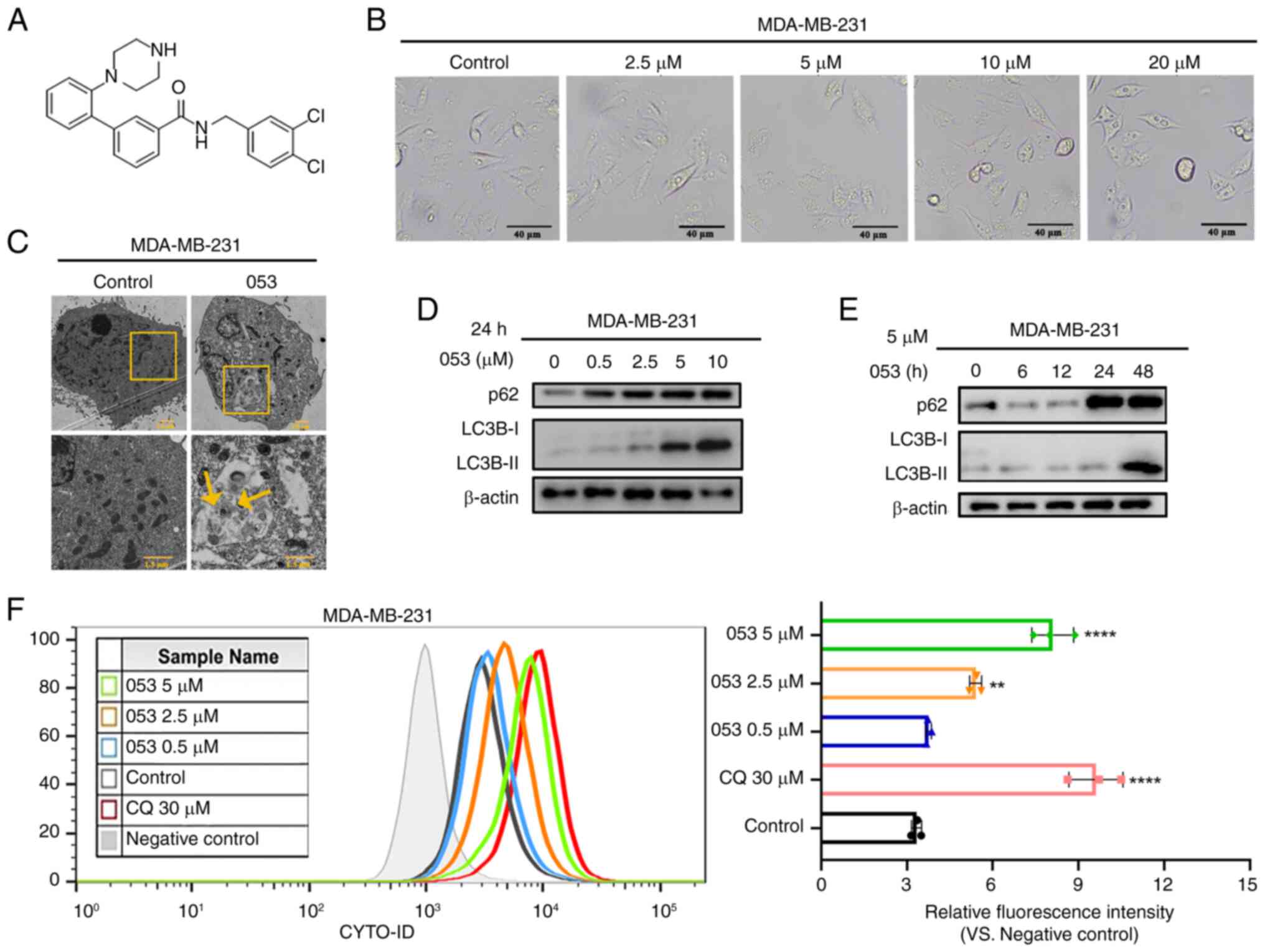
Figure 1

Compound 053 inhibits late autophagy
in MDA-MB-231 cells. (A) Chemical structural formula of 053. The
relative molecular mass of 053 is 440.37 g/mol. (B) Representative
microscope images of MDA-MB-231 cells treated with different
concentrations of 053 (0-20 μM) for 24 h. Scale bar, 40
μm. (C) Internal structure of MDA-MB-231 cells under
transmission electron microscopy after treatment with 5 μM
053 for 24 h. The lower image is a magnified view of the yellow box
in the image above. Scale bar, 1.5 μm. (D) Protein levels of
p62 and LC3B-Ⅰ/Ⅱ in MDA-MB-231 cells were analyzed by western
blotting after treatment with 053 (0-10 μM) for 24 h. (E)
MDA-MB-231 cells were treated with 5 μM 053 for different
times (0, 6, 12, 24 and 48 h), and the protein levels of p62 and
LC3B-Ⅰ/Ⅱ were analyzed by western blotting. (F) Flow cytometry was
used to detect the fluorescence intensity of autophagy-related
vesicles stained with CYTO-ID in MDA-MB-231 cells. Cells were
treated with 053 (0-5 μM) or CQ (30 μM) for 24 h. The
bar graph shows quantitative analysis of relative fluorescence
intensity. Data are presented as mean ± SEM (n=3). Statistical
significance was determined by one-way ANOVA followed by Dunnett's
multiple comparisons test to compare all experimental groups
against a single control group. **P<0.01 and
****P<0.0001 vs. Control. 053, FZU-0045-053;
p62/SQSTM1, sequestosome 1; LC3B, microtubule-associated protein
1A/1B-light chain 3B; CQ, chloroquine.

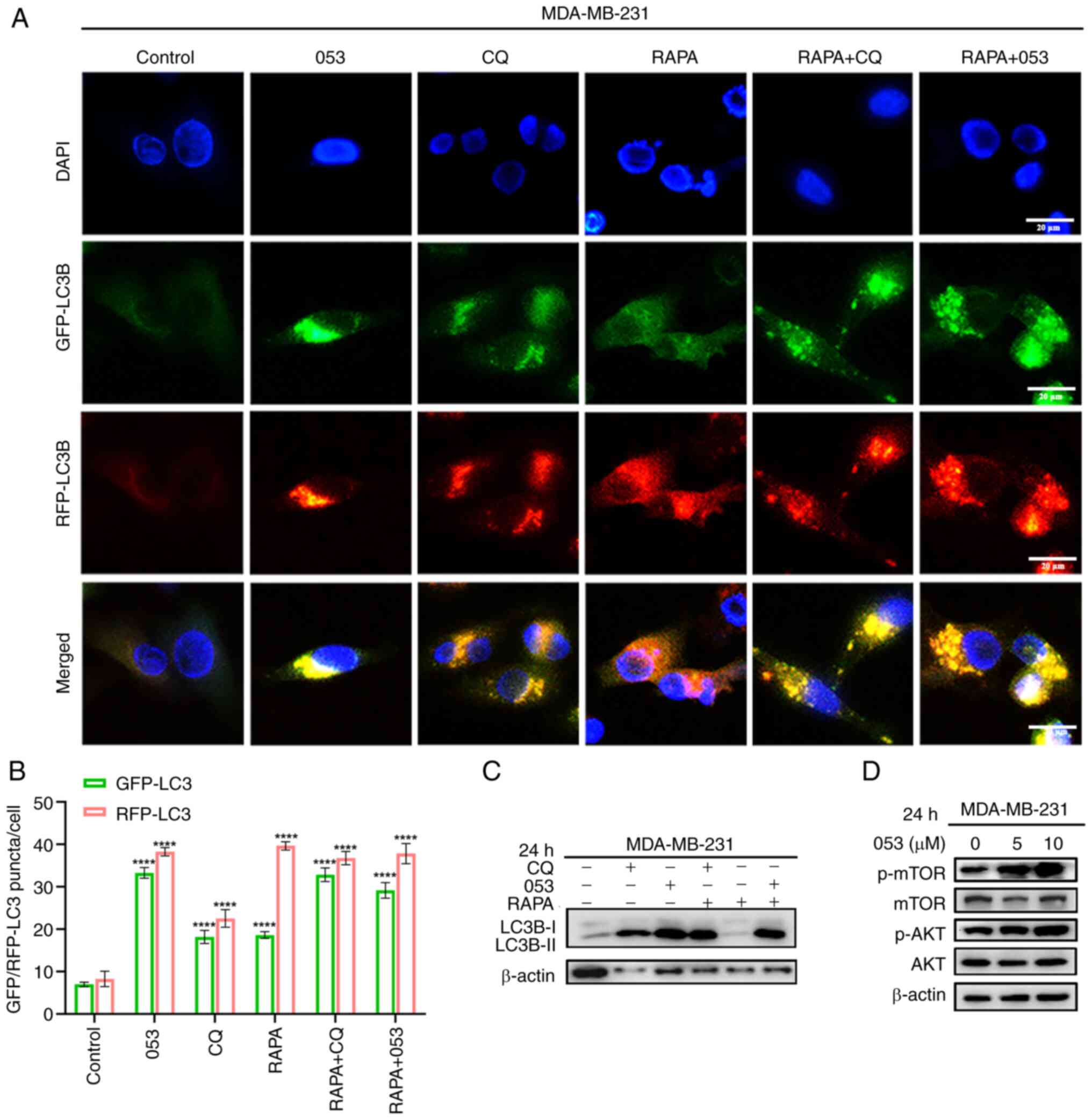
Figure 2

Compound 053 targets autophagic flux.
(A) MDA-MB-231 cells were treated with RAPA (10 μM) combined
with 053 (5 μM) or CQ (30 μM) or with each drug alone
for 24 h. Nuclei were stained with DAPI (blue), and intracellular
RFP-LC3 red fluorescence and GFP-LC3 green fluorescence were
observed by inverted fluorescence microscope. Scale bar, 20
μm. (B) The number of fluorescence points was analyzed using
ImageJ (1.8.0.1) software. Data are presented as mean ± SEM (n=5).
Statistical significance was determined by one-way ANOVA followed
by Dunnett's multiple comparisons test to compare all experimental
groups against a single control group. ****P<0.0001
vs. Control. (C) MDA-MB-231 cells were treated with RAPA (10
μM) combined with 053 (5 μM) or CQ (30 μM) or
with each drug alone for 24 h. The protein levels of LC3B-Ⅰ/Ⅱ were
analyzed by western blotting. (D) MDA-MB-231 cells were treated
with 053 (0-10 μM) for 24 h, the protein levels of AKT,
p-AKT, mTOR and p-mTOR were analyzed by western blotting. 053,
FZU-0045-053; LC3B, microtubule-associated protein 1A/1B-light
chain 3B; CQ, chloroquine; RAPA, rapamycin.

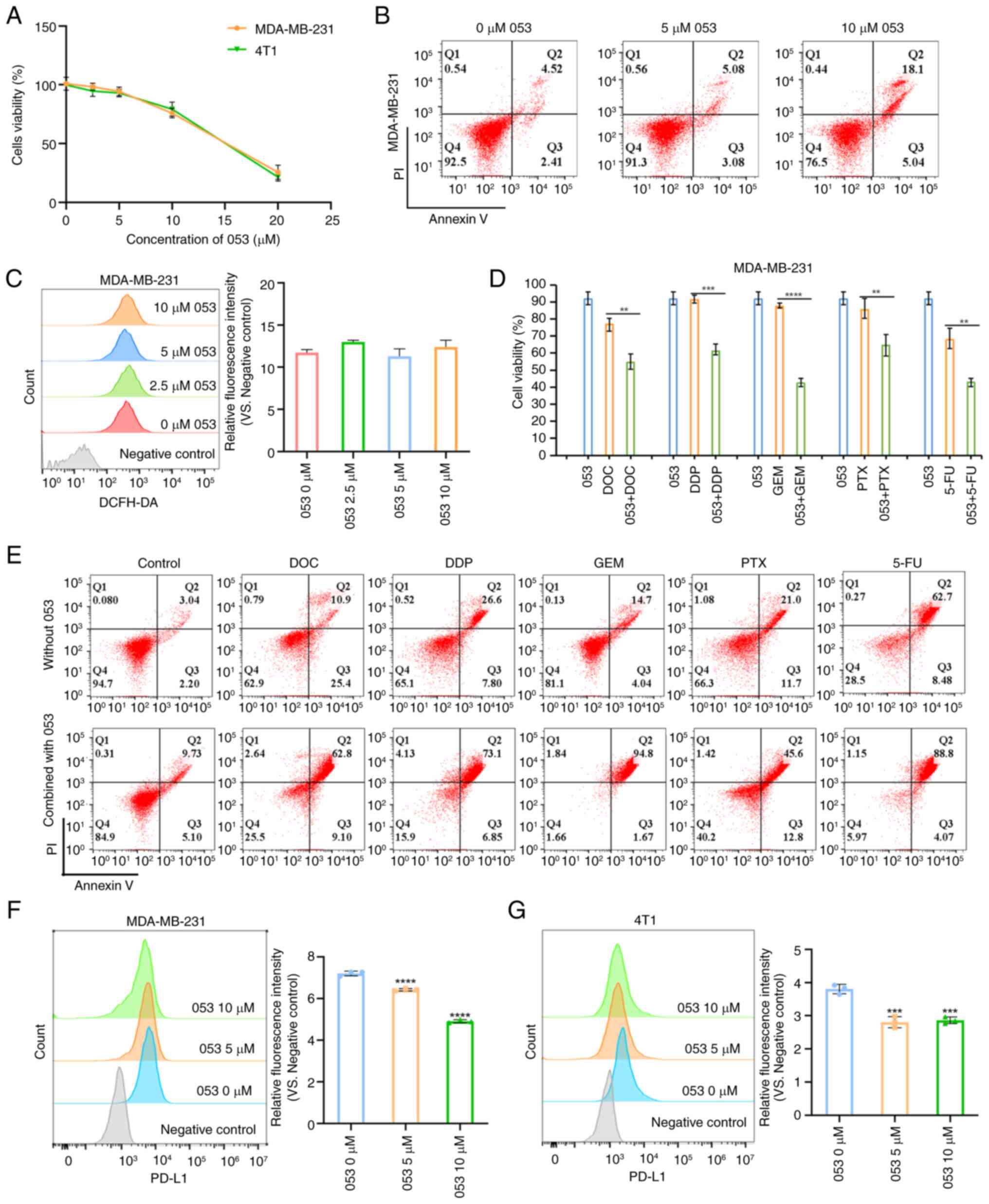
Figure 3

Compound 053 induces apoptosis and
downregulates PD-L1 expression in MDA-MB-231 cells. (A) CellTiter
96® AQueous One Solution Cell Proliferation Assay was
used to determine the proliferation of 4T1 and MDA-MB-231 cells
treated with 053 (0-20 μM) for 24 h. (B) The apoptosis of
MDA-MB-231 cells after treatment with 053 (0-10 μM) for 24 h
was analyzed by flow cytometry. (C) The ROS levels in MDA-MB-231
cells after treatment with 053 (0-10 μM) for 24 h was
analyzed by flow cytometry. The bar graph shows quantitative
analysis of relative fluorescence intensity. Data are presented as
mean ± SEM (n=3). Statistical significance was determined by
one-way ANOVA followed by Dunnett's multiple comparisons test to
compare all experimental groups against a single control group. (D)
CellTiter 96® AQueous One Solution Cell Proliferation
detection of MDA-MB-231 cell viability when treated with 053 (5
μM), DOC (10 μM), DDP (50 μM), GEM (80
μM), PTX (0.1 μM) and 5-FU (50 μM) treated
alone, or the effect of 053 combined with chemotherapy drugs on the
viability of MDA-MB-231 cells after 24 h treatment. Data are
presented as mean ± SEM (n=4). Statistical significance was
determined by one-way ANOVA followed by Dunnett's multiple
comparisons test to compare all experimental groups against a
single control group. **P<0.01,
***P<0.001 and ****P<0.0001. (E)
Apoptosis of MDA-MB-231 cells was detected by flow cytometry, cells
were treated with 053 (5 μM), DOC (10 μM), DDP (50
μM), GEM (80 μM), PTX (0.1 μM) and 5-FU (50
μM) or 053 in combination with chemotherapy drugs for 24 h.
(F) Flow cytometry was used to detect PD-L1 surface expression on
MDA-MB-231 cells treated with 053 (0-10 μM) for 24 h. The
bar graph shows quantitative analysis of relative fluorescence
intensity. Data are presented as mean ± SEM (n=3). Statistical
significance was determined by one-way ANOVA followed by Dunnett's
multiple comparisons test to compare all experimental groups
against a single control group. ****P<0.0001 vs. 0
μM 053. (G) Flow cytometry was used to detect surface
expression on 4T1 cells treated with 053 (0-10 μM) for 24 h.
The bar graph shows quantitative analysis of relative fluorescence
intensity. Data are presented as mean ± SEM (n=3). Statistical
significance was determined by one-way ANOVA followed by Dunnett's
multiple comparisons test to compare all experimental groups
against a single control group. ***P<0.001 vs. 0
μM 053. 053, FZU-0045-053; ROS, reactive oxygen species;
DOC, docetaxel; DDP, cisplatin; GEM, gemcitabine; PTX, paclitaxel;
5-FU, 5 -fluorouracil; PD-L1, programmed death-ligand 1.

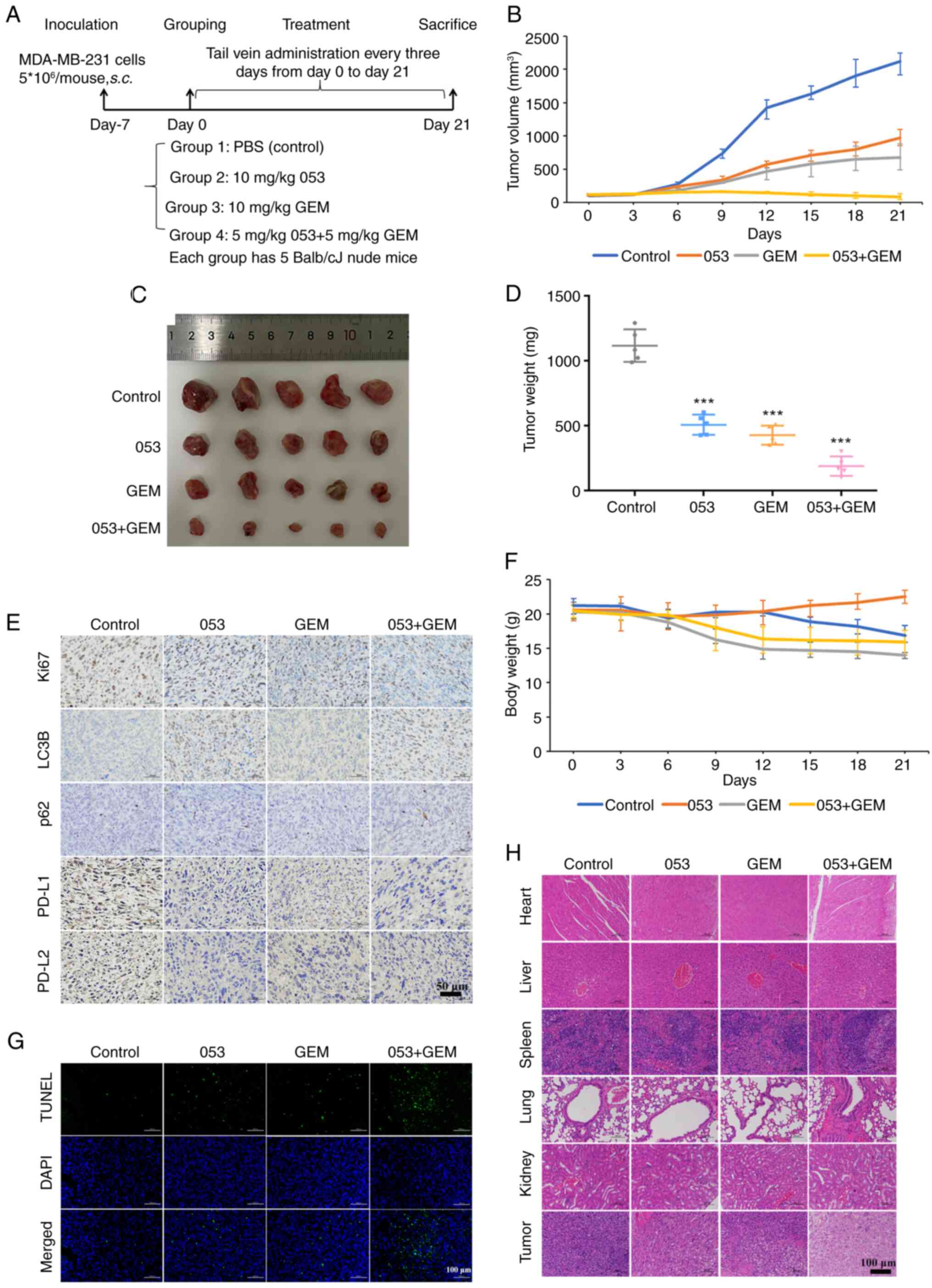
Figure 4

Compound 053 enhances the therapeutic
effect of GEM by inhibiting autophagy in the MDA-MB-231 xenograft
model. (A) Mouse treatment plan. (B) The tumor size was measured
with a caliper every 3 days and the volume was calculated (n=5).
(C) Tumor morphology of mouse removed at 21 days of treatment. (D)
The tumors were removed and weighed at 21 days of treatment. Data
are presented as mean ± SEM (n=5). Statistical significance was
determined by one-way ANOVA followed by Dunnett's multiple
comparisons test to compare all experimental groups against a
single control group. ***P<0.001 vs. Control. (E)
Protein levels of Ki67, LC3B, p62, PD-L1 and PD-L2 were detected
using immunohistochemical staining in tumor tissues of mice after
21 days of treatment. Nuclei are localized in blue and target
proteins are localized in brown. Scale bar, 50 μm. (F) Body
weight was measured every 3 days. (G) The TUNEL assay was used to
evaluate DNA fragmentation in mouse tumor tissues after 21 days of
treatment. Blue fluorescence indicates nuclear staining (DAPI),
while green fluorescence specifically labels DNA breaks associated
with apoptosis. Scale bar, 100 μm. (H) H&E staining of
tumor tissues and major organs (heart, liver, spleen, lungs and
kidneys) of mice after 21 days of treatment. Nuclei are blue-purple
and cytoplasm is red. Scale bar, 100 μm. 053, FZU-0045-053;
GEM, gemcitabine; LC3B, microtubule-associated protein 1A/1B-light
chain 3B; p62/SQSTM1, sequestosome 1; PD-L1/2, programmed
death-ligand 1/2.

Figure 5

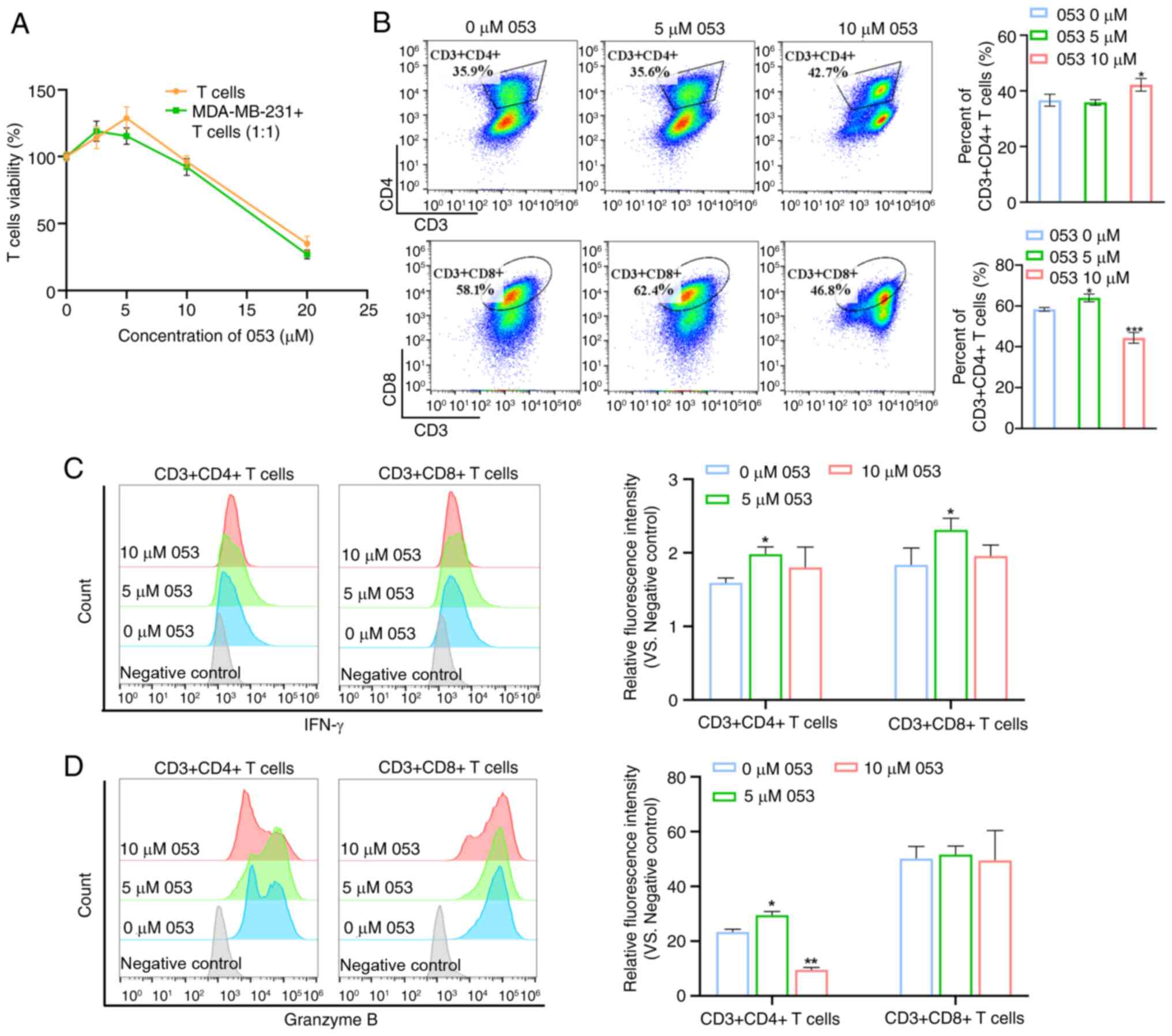
Compound 053 promotes T cell
activation and proliferation. (A) T cells were treated with 053
(0-20 μM) for 24 h, or MDA-MB-231 cells were co-cultured
with T cells followed by treatment with 053 (0-20 μM) for 24
h. T cell proliferation was assessed using an ATP detection kit.
(B) Flow cytometry was used to analyze the differentiation of
CD3+CD4+ T cells and
CD3+CD8+ T cells after 24 h treatment with
053 (0-10 μM). The bar graph shows the percentage of
CD3+CD4+ T cells and
CD3+CD8+ T cells. Data are presented as mean
± SEM (n=3). Statistical significance was determined by one-way
ANOVA followed by Dunnett's multiple comparisons test to compare
all experimental groups against a single control group.
*P<0.05 and ***P<0.001 vs. 0 μM
053. (C) Flow cytometry was used to analyze IFN-γ production in T
cells after 24 h treatment with 053 (0-10 μM). The bar graph
shows quantitative analysis of relative fluorescence intensity.
Data are presented as mean ± SEM (n=3). Statistical significance
was determined by one-way ANOVA followed by Dunnett's multiple
comparisons test to compare all experimental groups against a
single control group. *P<0.05 vs. 0 μM 053.
(D) Flow cytometry was used to analyze Granzyme B production in T
cells after 24 h treatment with 053 (0-10 μM). The bar graph
shows quantitative analysis of relative fluorescence intensity.
Data are presented as mean ± SEM (n=3). Statistical significance
was determined by one-way ANOVA followed by Dunnett's multiple
comparisons test to compare all experimental groups against a
single control group. *P<0.05 and
**P<0.01 vs. 0 μM 053. 053, FZU-0045-053.

Figure 6

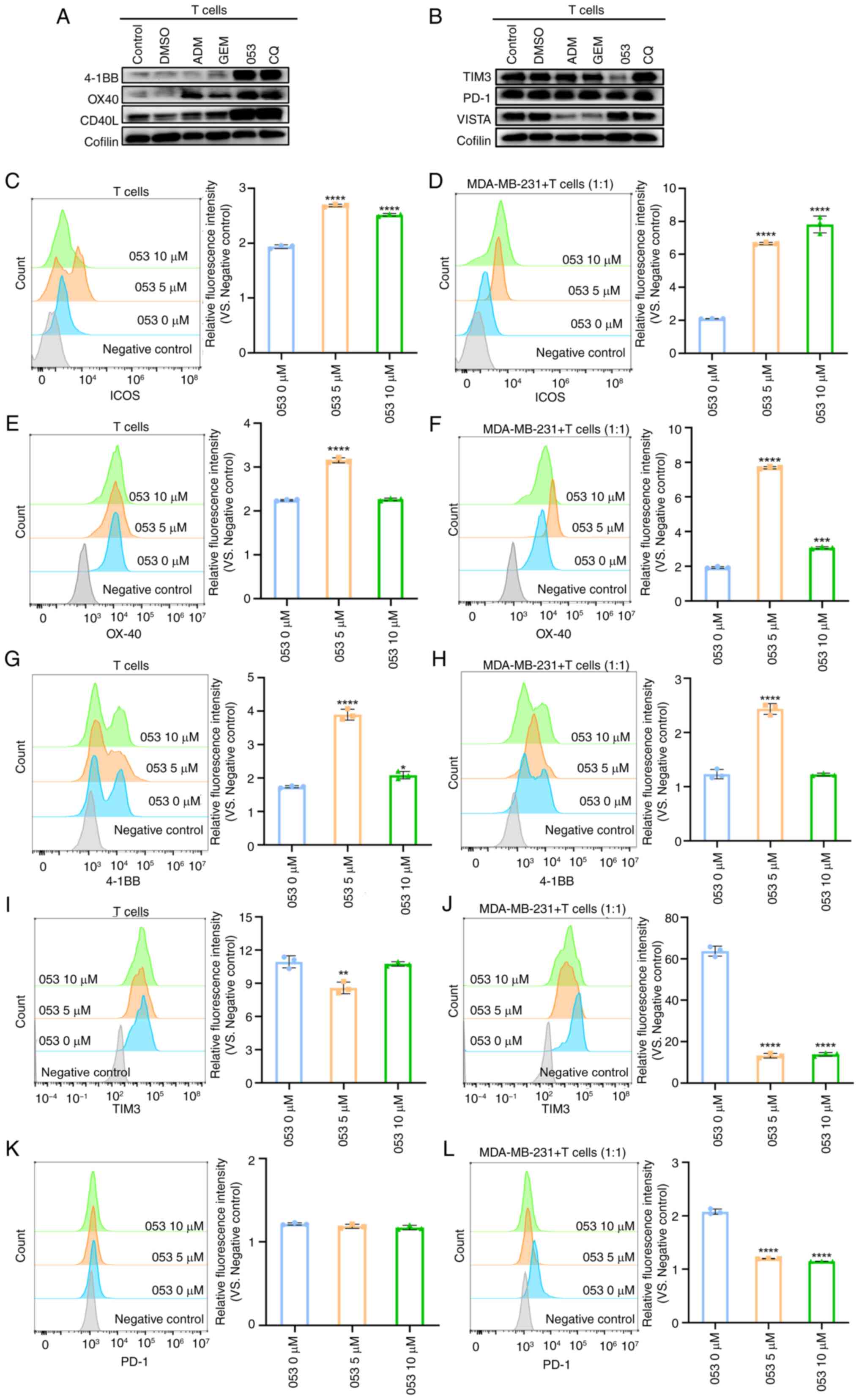
Compound 053 modulates co-stimulatory
and co-inhibitory molecules on T cell surfaces. (A) The protein
levels of 4-1BB, OX40 and CD40L after 5 μM ADM, GEM (80
μM), 053 (5 μM) or CQ (30 μM) treatment were
analyzed by western blotting. (B) The protein levels of TIM3, PD-1
and VISTA after 5 μM ADM, GEM (80 μM), 053 (5
μM) or CQ (30 μM) treatment were analyzed by western
blotting. (C) After T cells were treated with 053 (0-10 μM)
for 24 h, ICOS expression on T cell surfaces was analyzed by flow
cytometry. The bar graph shows quantitative analysis of relative
fluorescence intensity. (D) T cells were co-cultured with
MDA-MB-231 cells at a 1:1 ratio and treated with 053 (0-10
μM) for 24 h, followed by flow cytometric analysis of ICOS
expression on T cell surfaces. The bar graph shows quantitative
analysis of relative fluorescence intensity. (E) After T cells were
treated with 053 (0-10 μM) for 24 h, OX-40 expression on T
cell surfaces was analyzed by flow cytometry. The bar graph shows
quantitative analysis of relative fluorescence intensity. (F) T
cells were co-cultured with MDA-MB-231 cells at a 1:1 ratio and
treated with 053 (0-10 μM) for 24 h, followed by flow
cytometric analysis of OX-40 expression on T cell surfaces. The bar
graph shows quantitative analysis of relative fluorescence
intensity. (G) After T cells were treated with 053 (0-10 μM)
for 24 h, 4-1BB expression on T cell surfaces was analyzed by flow
cytometry. The bar graph shows quantitative analysis of relative
fluorescence intensity. (H) T cells were co-cultured with
MDA-MB-231 cells at a 1:1 ratio and treated with 053 (0-10
μM) for 24 h, followed by flow cytometric analysis of 4-1BB
expression on T cell surfaces. The bar graph shows quantitative
analysis of relative fluorescence intensity. (I) After T cells were
treated with 053 (0-10 μM) for 24 h, TIM3 expression on T
cell surfaces was analyzed by flow cytometry. The bar graph shows
quantitative analysis of relative fluorescence intensity. (J) T
cells were co-cultured with MDA-MB-231 cells at a 1:1 ratio and
treated with 053 (0-10 μM) for 24 h, followed by flow
cytometric analysis of TIM3 expression on T cell surfaces. The bar
graph shows quantitative analysis of relative fluorescence
intensity. (K) After T cells were treated with 053 (0-10 μM)
for 24 h, PD-1 expression on T cell surfaces was analyzed by flow
cytometry. The bar graph shows quantitative analysis of relative
fluorescence intensity. (L) T cells were co-cultured with
MDA-MB-231 cells at a 1:1 ratio and treated with 053 (0-10
μM) for 24 h, followed by flow cytometric analysis of PD-1
expression on T cell surfaces. The bar graph shows quantitative
analysis of relative fluorescence intensity. Data are presented as
mean ± SEM (n=3). Statistical significance was determined by
one-way ANOVA followed by Dunnett's multiple comparisons test to
compare all experimental groups against a single control group.
*P<0.05, **P<0.01,
***P<0.001, ****P<0.0001 vs. 0
μM 053. 053, FZU-0045-053; ADM, adriamycin; 4-1BB, tumor
necrosis factor receptor superfamily member 9; OX40, tumor necrosis
factor receptor superfamily member 4; CD40L, CD40 ligand; ICOS,
inducible T-cell co-stimulator; PD-1, programmed cell death protein
1; TIM3, T-cell immunoglobulin and mucin-domain containing-3;
VISTA, V-domain Ig suppressor of T cell activation; GEM,
gemcitabine; CQ, chloroquine.

Figure 7

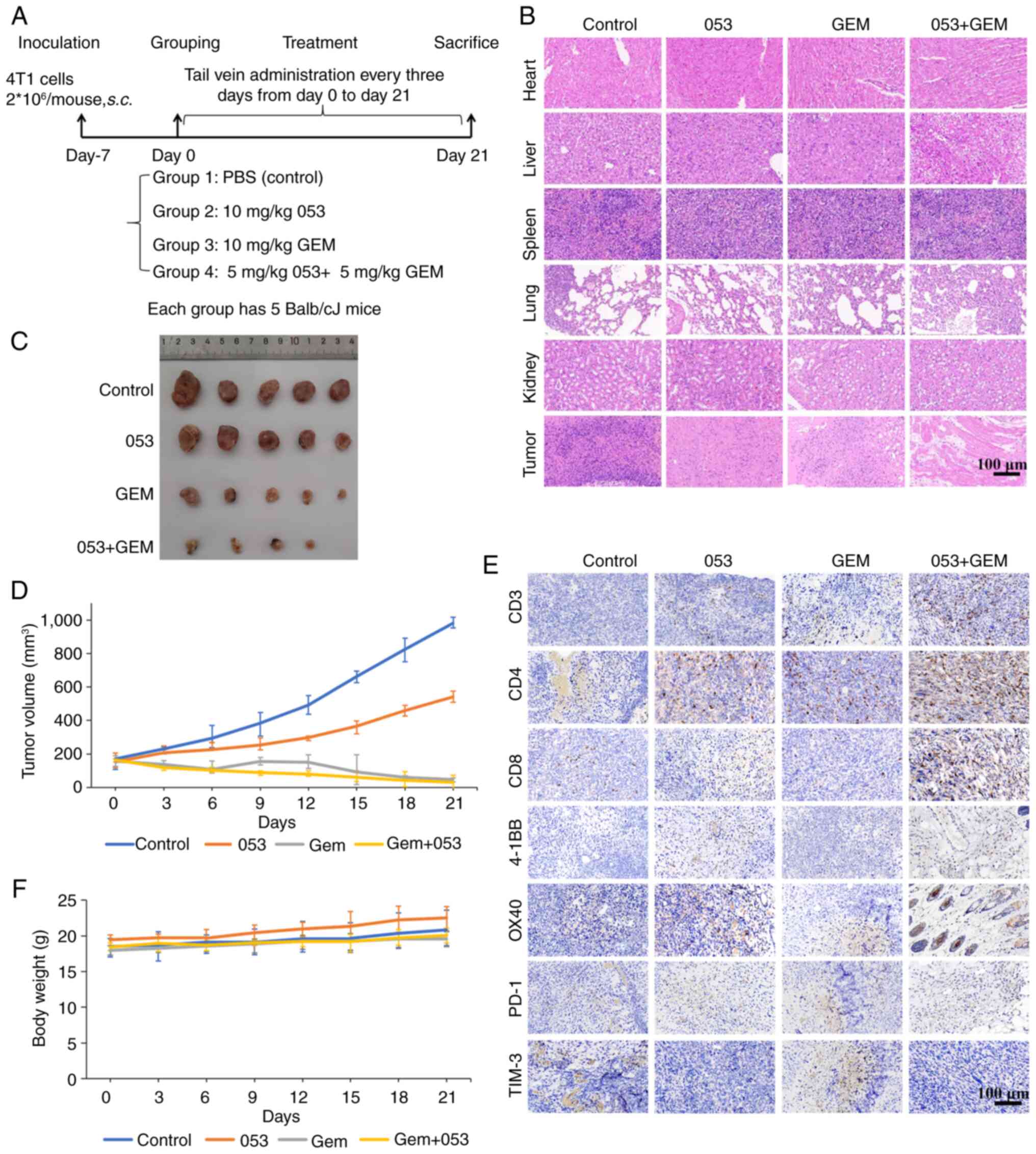
Compound 053 enhances the in
vivo antitumor effect of GEM in the 4T1 xenograft model. (A)
Mouse treatment plan. (B) H&E staining of heart, liver, spleen,
lung and kidney. Scale bar, 100 μm. (C) Tumor morphology of
mouse removed at 21 days of treatment. (D) The tumor size was
measured with a caliper every 3 days and the volume was calculated
(n=5). (E) Protein levels of CD3, CD4, CD8, 4-1BB, OX40, PD-1 and
TIM3 were detected using immunohistochemical staining in tumor
tissues of mice after 21 days of treatment. Nuclei are localized in
blue and target proteins are localized in brown. Scale bar, 100
μm. (F) Body weight was measured every 3 days (n=5). 053,
FZU-0045-053; GEM, gemcitabine; 4-1BB, tumor necrosis factor
receptor superfamily member 9; OX40, tumor necrosis factor receptor
superfamily member 4; PD-1, programmed cell death protein 1; TIM3,
T-cell immunoglobulin and mucin-domain containing-3.

Figure 8

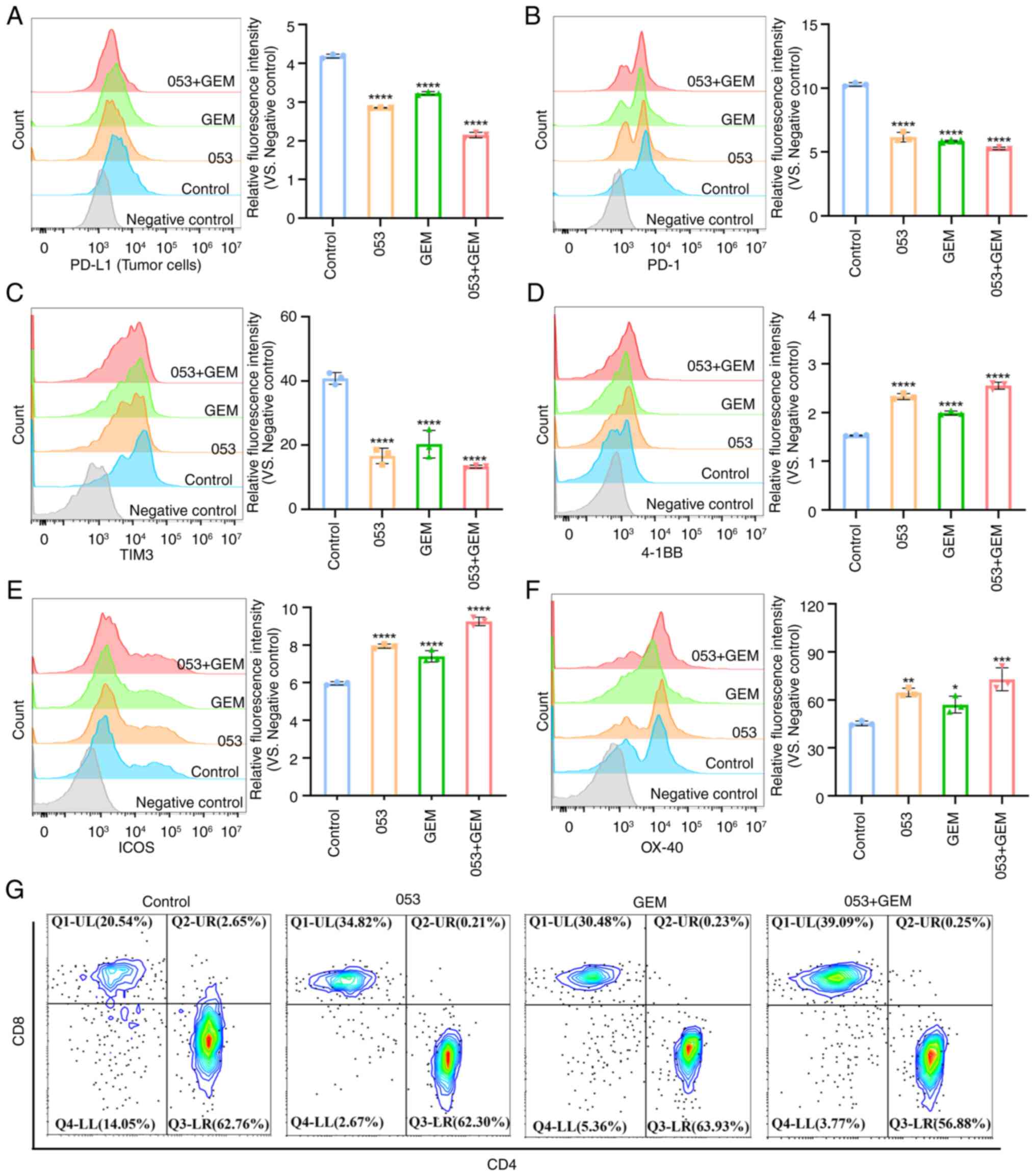
Compound 053 modulates PD-L1 on tumor
cells and co-stimulatory/co-inhibitory molecules on
tumor-infiltrating T cells in the 4T1 xenograft model. (A) Flow
cytometry was performed to analyze PD-L1 surface expression on
tumor cells. The bar graph shows quantitative analysis of relative
fluorescence intensity. (B) PD-1 expression on tumor-infiltrating T
cells surfaces was analyzed by flow cytometry. The bar graph shows
quantitative analysis of relative fluorescence intensity. (C) TIM3
expression on tumor-infiltrating T cells surfaces was analyzed by
flow cytometry. The bar graph shows quantitative analysis of
relative fluorescence intensity. (D) 4-1BB expression on
tumor-infiltrating T cells surfaces was analyzed by flow cytometry.
The bar graph shows quantitative analysis of relative fluorescence
intensity. (E) ICOS expression on tumor-infiltrating T cells
surfaces was analyzed by flow cytometry. The bar graph shows
quantitative analysis of relative fluorescence intensity. (F) OX-40
expression on tumor-infiltrating T cells surfaces was analyzed by
flow cytometry. The bar graph shows quantitative analysis of
relative fluorescence intensity. Data are presented as mean ± SEM
(n=3). Statistical significance was determined by one-way ANOVA
followed by Dunnett's multiple comparisons test to compare all
experimental groups against a single control group.
*P<0.05, **P<0.01,
***P<0.001, ****P<0.0001 vs. 0
μM 053. (G) Flow cytometry was used to analyze the
differentiation of CD3+CD4+ T cells and
CD3+CD8+ T cells. 053, FZU-0045-053; 4-1BB,
tumor necrosis factor receptor superfamily member 9; OX40, tumor
necrosis factor receptor superfamily member 4; ICOS, inducible
T-cell co-stimulator; PD-1, programmed cell death protein 1; TIM3,
T-cell immunoglobulin and mucin-domain containing-3; GEM,
gemcitabine; PD-L1, programmed death-ligand 1.

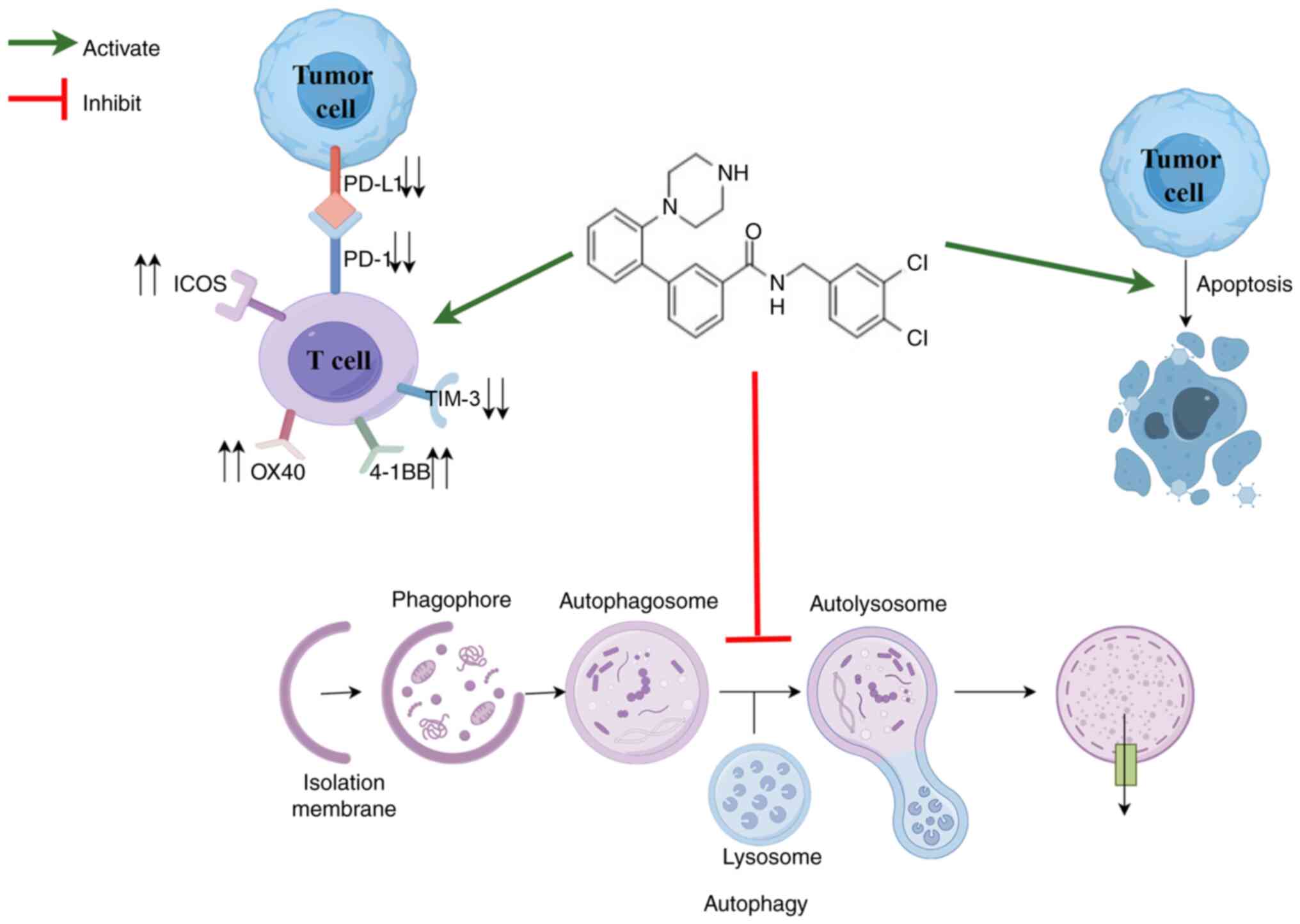
Figure 9

Mechanism of compound 053 regulating
autophagy and immune response to inhibit breast cancer. 053 can
inhibit autophagy and promote apoptosis of breast cancer cells. 053
also downregulated PD-L1 expression in breast cancer cells, while
promoting T cell activation and proliferation by upregulating
co-stimulatory molecules (4-1BB, OX40 and ICOS) and downregulating
co-inhibitory molecules (TIM-3 and PD-1) on the surface of the T
cells. (By Figdraw). 4-1BB, tumor necrosis factor receptor
superfamily member 9; OX40, tumor necrosis factor receptor
superfamily member 4; ICOS, inducible T-cell co-stimulator; PD-1,
programmed cell death protein 1; TIM3, T-cell immunoglobulin and
mucin-domain containing-3; PD-L1, programmed death-ligand 1.
View References

1 

Sung H, Ferlay J, Siegel RL, Laversanne M, Soerjomataram I, Jemal A and Bray F: Global cancer statistics 2020: GLOBOCAN estimates of incidence and mortality worldwide for 36 cancers in 185 countries. CA Cancer J Clin. 71:209–249. 2021.

2 

Xiong X, Zheng LW, Ding Y, Chen YF, Cai YW, Wang LP, Huang L, Liu CC, Shao ZM and Yu KD: Breast cancer: Pathogenesis and treatments. Signal Transduct Target Ther. 10:492025. View Article : Google Scholar :

3 

Obidiro O, Battogtokh G and Akala EO: Triple negative breast cancer treatment options and limitations: Future outlook. Pharmaceutics. 15:17962023. View Article : Google Scholar :

4 

Milane LS, Dolare S, Ren G and Amiji M: Combination organelle mitochondrial endoplasmic reticulum therapy (COMET) for multidrug resistant breast cancer. J Control Release. 363:435–451. 2023. View Article : Google Scholar

5 

Liu J, Liu Y, Wang Y, Li C, Xie Y, Klionsky DJ, Kang R and Tang D: TMEM164 is a new determinant of autophagy-dependent ferroptosis. Autophagy. 19:945–956. 2023. View Article : Google Scholar

6 

Tanida I: Autophagosome formation and molecular mechanism of autophagy. Antioxid Redox Signal. 14:2201–2214. 2011. View Article : Google Scholar

7 

Quan Y, Lei H, Wahafu W, Liu Y, Ping H and Zhang X: Inhibition of autophagy enhances the anticancer effect of enzalutamide on bladder cancer. Biomed Pharmacother. 120:1094902019. View Article : Google Scholar : PubMed/NCBI

8 

Cocco S, Leone A, Piezzo M, Caputo R, Di Lauro V, Di Rella F, Fusco G, Capozzi M, Gioia GD, Budillon A and De Laurentiis M: Targeting autophagy in breast cancer. Int J Mol Sci. 21:78362020. View Article : Google Scholar : PubMed/NCBI

9 

Zhang L, Jiang L, Yu L, Li Q, Tian X, He J, Zeng L, Yang Y, Wang C, Wei Y, et al: Inhibition of UBA6 by inosine augments tumour immunogenicity and responses. Nat Commun. 13:54132022. View Article : Google Scholar

10 

Zhao H, Yang M, Zhao J, Wang J, Zhang Y and Zhang Q: High expression of LC3B is associated with progression and poor outcome in triple-negative breast cancer. Med Oncol. 30:4752013. View Article : Google Scholar : PubMed/NCBI

11 

Yu S, Cao Z, Cai F, Yao Y, Chang X, Wang X, Zhuang H and Hua ZC: ADT-OH exhibits anti-metastatic activity on triple-negative breast cancer by combinatorial targeting of autophagy and mitochondrial fission. Cell Death Dis. 15:4632024. View Article : Google Scholar : PubMed/NCBI

12 

Hamurcu Z, Delibaşı N, Geçene S, Şener EF, Dönmez-Altuntaş H, Özkul Y, Canatan H and Ozpolat B: Targeting LC3 and Beclin-1 autophagy genes suppresses proliferation, survival, migration and invasion by inhibition of Cyclin-D1 and uPAR/Integrin β1/Src signaling in triple negative breast cancer cells. J Cancer Res Clin Oncol. 144:415–430. 2018. View Article : Google Scholar

13 

Spinelli FR, Moscarelli E, Ceccarelli F, Miranda F, Perricone C, Truglia S, Garufi C, Massaro L, Morello F, Alessandri C, et al: Treating lupus patients with antimalarials: Analysis of safety profile in a single-center cohort. Lupus. 27:1616–1623. 2018. View Article : Google Scholar : PubMed/NCBI

14 

Zheng Z, Liu J, Ma J, Kang R, Liu Z and Yu J: Advances in new targets for immunotherapy of small cell lung cancer. Thorac Cancer. 15:3–14. 2024. View Article : Google Scholar :

15 

Herrera-Quintana L, Vázquez-Lorente H and Plaza-Diaz J: Breast cancer: Extracellular matrix and microbiome interactions. Int J Mol Sci. 25:72262024. View Article : Google Scholar : PubMed/NCBI

16 

Duan Z, Shi Y, Lin Q, Hamaï A, Mehrpour M and Gong C: Autophagy-associated immunogenic modulation and its applications in cancer therapy. Cells. 11:23242022. View Article : Google Scholar : PubMed/NCBI

17 

Galluzzi L, Buqué A, Kepp O, Zitvogel L and Kroemer G: Immunological effects of conventional chemotherapy and targeted anticancer agents. Cancer Cell. 28:690–714. 2015. View Article : Google Scholar

18 

Xu X, Araki K, Li S, Han JH, Ye L, Tan WG, Konieczny BT, Bruinsma MW, Martinez J, Pearce EL, et al: Autophagy is essential for effector CD8(+) T cell survival and memory formation. Nat Immunol. 15:1152–1161. 2014. View Article : Google Scholar :

19 

Liu YC, Shou ST and Chai YF: Immune checkpoints in sepsis: New hopes and challenges. Int Rev Immunol. 41:207–216. 2022. View Article : Google Scholar

20 

Thomenius MJ, Totman J, Harvey D, Mitchell LH, Riera TV, Cosmopoulos K, Grassian AR, Klaus C, Foley M, Admirand EA, et al: Small molecule inhibitors and CRISPR/Cas9 mutagenesis demonstrate that SMYD2 and SMYD3 activity are dispensable for autonomous cancer cell proliferation. PLoS One. 13:e01973722018. View Article : Google Scholar :

21 

Eggert E, Hillig RC, Koehr S, Stöckigt D, Weiske J, Barak N, Mowat J, Brumby T, Christ CD, Ter Laak A, et al: Discovery and characterization of a highly potent and selective aminopyrazoline-based in vivo probe (BAY-598) for the protein lysine methyltransferase SMYD2. J Med Chem. 59:4578–4600. 2016. View Article : Google Scholar : PubMed/NCBI

22 

Sweis RF, Wang Z, Algire M, Arrowsmith CH, Brown PJ, Chiang GG, Guo J, Jakob CG, Kennedy S, Li F, et al: Discovery of A-893, a new cell-active benzoxazinone inhibitor of lysine methyltransferase SMYD2. ACS Med Chemi Lett. 6:695–700. 2015. View Article : Google Scholar

23 

Zhang B, Liao L, Wu F, Zhang F, Sun Z, Chen H and Luo C: Synthesis and structure-activity relationship studies of LLY-507 analogues as SMYD2 inhibitors. Bioorg Med Chem Lett. 30:1275982020. View Article : Google Scholar : PubMed/NCBI

24 

Tam S, Al-Zubaidi Y, Rahman MK, Bourget K, Zhou F and Murray M: The ixabepilone and vandetanib combination shows synergistic activity in docetaxel-resistant MDA-MB-231 breast cancer cells. Pharmacol Rep. 74:998–1010. 2022. View Article : Google Scholar : PubMed/NCBI

25 

Wang K, Zhu X and Yin Y: Maslinic acid enhances docetaxel response in human docetaxel-resistant triple negative breast carcinoma MDA-MB-231 cells via regulating MELK-FoxM1-ABCB1 signaling cascade. Front Pharmacol. 11:8352020. View Article : Google Scholar : PubMed/NCBI

26 

Taherian A and Mazoochi T: Different expression of extracellular signal-regulated kinases (ERK) 1/2 and Phospho-Erk Proteins in MBA-MB-231 and MCF-7 cells after chemotherapy with doxorubicin or docetaxel. Iran J Basic Med Sci. 15:669–677. 2012.PubMed/NCBI

27 

Jones S, Holmes FA, O'Shaughnessy J, Blum JL, Vukelja SJ, McIntyre KJ, Pippen JE, Bordelon JH, Kirby RL, Sandbach J, et al: Docetaxel with cyclophosphamide is associated with an overall survival benefit compared with doxorubicin and cyclophosphamide: 7-year follow-up of US oncology research trial 9735. J Clin Oncol. 27:1177–1183. 2009. View Article : Google Scholar : PubMed/NCBI

28 

Capri G, Tarenzi E, Fulfaro F and Gianni L: The role of taxanes in the treatment of breast cancer. Semin Oncol. 23(Suppl 2): S68–S75. 1996.

29 

McLeland CB, Rodriguez J and Stern ST: Autophagy monitoring assay: Qualitative analysis of MAP LC3-I to II conversion by immunoblot. Methods Mol Biol. 697:199–206. 2011. View Article : Google Scholar

30 

Colosetti P, Puissant A, Robert G, Luciano F, Jacquel A, Gounon P, Cassuto JP and Auberger P: Autophagy is an important event for megakaryocytic differentiation of the chronic myelogenous leukemia K562 cell line. Autophagy. 5:1092–1098. 2009. View Article : Google Scholar : PubMed/NCBI

31 

Mauthe M, Orhon I, Rocchi C, Zhou X, Luhr M, Hijlkema KJ, Coppes RP, Engedal N, Mari M and Reggiori F: Chloroquine inhibits autophagic flux by decreasing autophagosome-lysosome fusion. Autophagy. 14:1435–1455. 2018. View Article : Google Scholar : PubMed/NCBI

32 

Xu Z, Han X, Ou D, Liu T, Li Z, Jiang G, Liu J and Zhang J: Targeting PI3K/AKT/mTOR-mediated autophagy for tumor therapy. Appl Microbiol Biotechnol. 104:575–587. 2020. View Article : Google Scholar

33 

Cui Y, Shi J, Cui Y, Zhu Z and Zhu W: The relationship between autophagy and PD-L1 and their role in antitumor therapy. Front Immunol. 14:10935582023. View Article : Google Scholar : PubMed/NCBI

34 

Kroczek R and Hamelmann E: T-cell costimulatory molecules: Optimal targets for the treatment of allergic airway disease with monoclonal antibodies. J Allergy Clin Immunol. 116:906–909. 2005. View Article : Google Scholar : PubMed/NCBI

35 

Roy D, Gilmour C, Patnaik S and Wang LL: Combinatorial blockade for cancer immunotherapy: Targeting emerging immune checkpoint receptors. Front Immunol. 14:12643272023. View Article : Google Scholar : PubMed/NCBI

36 

Zhang L, Qiang P, Yu J, Miao Y, Chen Z, Qu J, Zhao Q, Chen Z, Liu Y, Yao X, et al: Identification of compound CA-5f as a novel late-stage autophagy inhibitor with potent anti-tumor effect against non-small cell lung cancer. Autophagy. 15:391–406. 2019. View Article : Google Scholar :

37 

Wu ST, Han SS, Xu XM, Sun HJ, Zhou H, Shang K, Liu ZH and Liang SJ: 3-methyladenine ameliorates surgery-induced anxiety-like behaviors in aged mice by inhibiting autophagy-induced excessive oxidative stress. Metab Brain Dis. 38:1913–1923. 2023. View Article : Google Scholar : PubMed/NCBI

38 

Shih FC, Lin CF, Wu YC, Hsu CC, Chen BC, Chang YC, Lin YS, Satria RD, Lin PY and Chen CL: Desmethylclomipramine triggers mitochondrial damage and death in TGF-β-induced mesenchymal type of A549 cells. Life Sci. 351:1228172024. View Article : Google Scholar

39 

Dong X, Zhao R, Li Y, Yu Q, Chen X, Hu X, Ma J, Chen X, Huang S and Chen L: Maduramicin inactivation of Akt impairs autophagic flux leading to accumulated autophagosomes-dependent apoptosis in skeletal myoblast cells. Int J Biochem Cell Biol. 114:1055732019. View Article : Google Scholar : PubMed/NCBI

40 

Pan SW, Hu LS, Wang H, Li RT, He YJ, Shang Y, Dai ZL, Chen LX and Xiong W: Resolvin D1 induces mTOR-independent and ATG5-dependent autophagy in BV-2 microglial cells. Curr Med Sci. 43:1096–1106. 2023. View Article : Google Scholar : PubMed/NCBI

41 

Jain V, Singh MP and Amaravadi RK: Recent advances in targeting autophagy in cancer. Trends Pharmacol Sci. 44:290–302. 2023. View Article : Google Scholar : PubMed/NCBI

42 

Liu Q, Yang Y, Cheng M, Cheng F, Chen S, Zheng Q, Sun Y and Chen L: The marine natural product, dicitrinone B, induces apoptosis through autophagy blockade in breast cancer. Int J Mol Med. 50:1302022. View Article : Google Scholar : PubMed/NCBI

43 

Young TM, Reyes C, Pasnikowski E, Castanaro C, Wong C, Decker CE, Chiu J, Song H, Wei Y, Bai Y, et al: Autophagy protects tumors from T cell-mediated cytotoxicity via inhibition of TNFα-induced apoptosis. Sci Immunol. 5:eabb95612020. View Article : Google Scholar

44 

Prabakaran T, Bodda C, Krapp C, Zhang BC, Christensen MH, Sun C, Reinert L, Cai Y, Jensen SB, Skouboe MK, et al: Attenuation of cGAS-STING signaling is mediated by a p62/SQSTM1-dependent autophagy pathway activated by TBK1. EMBO J. 37:e978582018. View Article : Google Scholar : PubMed/NCBI

45 

Zhang HJ, Liang CL, Ding XY, Zhang M, Lu SY and Hou L: Manganese-based nano-delivery system for sensitized anti-tumor immunotherapy via combined autophagy inhibition. Chinese Chem Lett. 36:1105252025. View Article : Google Scholar

46 

Herhaus L, Gestal-Mato U, Eapen VV, Mačinković I, Bailey HJ, Prieto-Garcia C, Misra M, Jacomin AC, Ammanath AV, Bagarić I, et al: IRGQ-mediated autophagy in MHC class I quality control promotes tumor immune evasion. Cell. 187:7285–7302.e29. 2024. View Article : Google Scholar : PubMed/NCBI

Related Articles

  • Abstract
  • View
  • Download
  • Twitter
Copy and paste a formatted citation
Spandidos Publications style
Luo J, Yang Y, Cheng L, Cheng F, Zhuang H, Chen S, Qiao P, Liang Y, Chen L, Sun Y, Sun Y, et al: Discovery of the late autophagy inhibitor FZU‑0045‑053 and its anti‑breast cancer and immunomodulatory effects. Int J Oncol 68: 10, 2026.
APA
Luo, J., Yang, Y., Cheng, L., Cheng, F., Zhuang, H., Chen, S. ... Liu, Q. (2026). Discovery of the late autophagy inhibitor FZU‑0045‑053 and its anti‑breast cancer and immunomodulatory effects. International Journal of Oncology, 68, 10. https://doi.org/10.3892/ijo.2025.5823
MLA
Luo, J., Yang, Y., Cheng, L., Cheng, F., Zhuang, H., Chen, S., Qiao, P., Liang, Y., Chen, L., Sun, Y., Chen, H., Liu, Q."Discovery of the late autophagy inhibitor FZU‑0045‑053 and its anti‑breast cancer and immunomodulatory effects". International Journal of Oncology 68.1 (2026): 10.
Chicago
Luo, J., Yang, Y., Cheng, L., Cheng, F., Zhuang, H., Chen, S., Qiao, P., Liang, Y., Chen, L., Sun, Y., Chen, H., Liu, Q."Discovery of the late autophagy inhibitor FZU‑0045‑053 and its anti‑breast cancer and immunomodulatory effects". International Journal of Oncology 68, no. 1 (2026): 10. https://doi.org/10.3892/ijo.2025.5823
Copy and paste a formatted citation
x
Spandidos Publications style
Luo J, Yang Y, Cheng L, Cheng F, Zhuang H, Chen S, Qiao P, Liang Y, Chen L, Sun Y, Sun Y, et al: Discovery of the late autophagy inhibitor FZU‑0045‑053 and its anti‑breast cancer and immunomodulatory effects. Int J Oncol 68: 10, 2026.
APA
Luo, J., Yang, Y., Cheng, L., Cheng, F., Zhuang, H., Chen, S. ... Liu, Q. (2026). Discovery of the late autophagy inhibitor FZU‑0045‑053 and its anti‑breast cancer and immunomodulatory effects. International Journal of Oncology, 68, 10. https://doi.org/10.3892/ijo.2025.5823
MLA
Luo, J., Yang, Y., Cheng, L., Cheng, F., Zhuang, H., Chen, S., Qiao, P., Liang, Y., Chen, L., Sun, Y., Chen, H., Liu, Q."Discovery of the late autophagy inhibitor FZU‑0045‑053 and its anti‑breast cancer and immunomodulatory effects". International Journal of Oncology 68.1 (2026): 10.
Chicago
Luo, J., Yang, Y., Cheng, L., Cheng, F., Zhuang, H., Chen, S., Qiao, P., Liang, Y., Chen, L., Sun, Y., Chen, H., Liu, Q."Discovery of the late autophagy inhibitor FZU‑0045‑053 and its anti‑breast cancer and immunomodulatory effects". International Journal of Oncology 68, no. 1 (2026): 10. https://doi.org/10.3892/ijo.2025.5823
Follow us
  • Twitter
  • LinkedIn
  • Facebook
About
  • Spandidos Publications
  • Careers
  • Cookie Policy
  • Privacy Policy
How can we help?
  • Help
  • Live Chat
  • Contact
  • Email to our Support Team