Spandidos Publications Logo
  • About
    • About Spandidos
    • Aims and Scopes
    • Abstracting and Indexing
    • Editorial Policies
    • Reprints and Permissions
    • Job Opportunities
    • Terms and Conditions
    • Contact
  • Journals
    • All Journals
    • Oncology Letters
      • Oncology Letters
      • Information for Authors
      • Editorial Policies
      • Editorial Board
      • Aims and Scope
      • Abstracting and Indexing
      • Bibliographic Information
      • Archive
    • International Journal of Oncology
      • International Journal of Oncology
      • Information for Authors
      • Editorial Policies
      • Editorial Board
      • Aims and Scope
      • Abstracting and Indexing
      • Bibliographic Information
      • Archive
    • Molecular and Clinical Oncology
      • Molecular and Clinical Oncology
      • Information for Authors
      • Editorial Policies
      • Editorial Board
      • Aims and Scope
      • Abstracting and Indexing
      • Bibliographic Information
      • Archive
    • Experimental and Therapeutic Medicine
      • Experimental and Therapeutic Medicine
      • Information for Authors
      • Editorial Policies
      • Editorial Board
      • Aims and Scope
      • Abstracting and Indexing
      • Bibliographic Information
      • Archive
    • International Journal of Molecular Medicine
      • International Journal of Molecular Medicine
      • Information for Authors
      • Editorial Policies
      • Editorial Board
      • Aims and Scope
      • Abstracting and Indexing
      • Bibliographic Information
      • Archive
    • Biomedical Reports
      • Biomedical Reports
      • Information for Authors
      • Editorial Policies
      • Editorial Board
      • Aims and Scope
      • Abstracting and Indexing
      • Bibliographic Information
      • Archive
    • Oncology Reports
      • Oncology Reports
      • Information for Authors
      • Editorial Policies
      • Editorial Board
      • Aims and Scope
      • Abstracting and Indexing
      • Bibliographic Information
      • Archive
    • Molecular Medicine Reports
      • Molecular Medicine Reports
      • Information for Authors
      • Editorial Policies
      • Editorial Board
      • Aims and Scope
      • Abstracting and Indexing
      • Bibliographic Information
      • Archive
    • World Academy of Sciences Journal
      • World Academy of Sciences Journal
      • Information for Authors
      • Editorial Policies
      • Editorial Board
      • Aims and Scope
      • Abstracting and Indexing
      • Bibliographic Information
      • Archive
    • International Journal of Functional Nutrition
      • International Journal of Functional Nutrition
      • Information for Authors
      • Editorial Policies
      • Editorial Board
      • Aims and Scope
      • Abstracting and Indexing
      • Bibliographic Information
      • Archive
    • International Journal of Epigenetics
      • International Journal of Epigenetics
      • Information for Authors
      • Editorial Policies
      • Editorial Board
      • Aims and Scope
      • Abstracting and Indexing
      • Bibliographic Information
      • Archive
    • Medicine International
      • Medicine International
      • Information for Authors
      • Editorial Policies
      • Editorial Board
      • Aims and Scope
      • Abstracting and Indexing
      • Bibliographic Information
      • Archive
  • Articles
  • Information
    • Information for Authors
    • Information for Reviewers
    • Information for Librarians
    • Information for Advertisers
    • Conferences
  • Language Editing
Spandidos Publications Logo
  • About
    • About Spandidos
    • Aims and Scopes
    • Abstracting and Indexing
    • Editorial Policies
    • Reprints and Permissions
    • Job Opportunities
    • Terms and Conditions
    • Contact
  • Journals
    • All Journals
    • Biomedical Reports
      • Information for Authors
      • Editorial Policies
      • Editorial Board
      • Aims and Scope
      • Abstracting and Indexing
      • Bibliographic Information
      • Archive
    • Experimental and Therapeutic Medicine
      • Information for Authors
      • Editorial Policies
      • Editorial Board
      • Aims and Scope
      • Abstracting and Indexing
      • Bibliographic Information
      • Archive
    • International Journal of Epigenetics
      • Information for Authors
      • Editorial Policies
      • Editorial Board
      • Aims and Scope
      • Abstracting and Indexing
      • Bibliographic Information
      • Archive
    • International Journal of Functional Nutrition
      • Information for Authors
      • Editorial Policies
      • Editorial Board
      • Aims and Scope
      • Abstracting and Indexing
      • Bibliographic Information
      • Archive
    • International Journal of Molecular Medicine
      • Information for Authors
      • Editorial Policies
      • Editorial Board
      • Aims and Scope
      • Abstracting and Indexing
      • Bibliographic Information
      • Archive
    • International Journal of Oncology
      • Information for Authors
      • Editorial Policies
      • Editorial Board
      • Aims and Scope
      • Abstracting and Indexing
      • Bibliographic Information
      • Archive
    • Medicine International
      • Information for Authors
      • Editorial Policies
      • Editorial Board
      • Aims and Scope
      • Abstracting and Indexing
      • Bibliographic Information
      • Archive
    • Molecular and Clinical Oncology
      • Information for Authors
      • Editorial Policies
      • Editorial Board
      • Aims and Scope
      • Abstracting and Indexing
      • Bibliographic Information
      • Archive
    • Molecular Medicine Reports
      • Information for Authors
      • Editorial Policies
      • Editorial Board
      • Aims and Scope
      • Abstracting and Indexing
      • Bibliographic Information
      • Archive
    • Oncology Letters
      • Information for Authors
      • Editorial Policies
      • Editorial Board
      • Aims and Scope
      • Abstracting and Indexing
      • Bibliographic Information
      • Archive
    • Oncology Reports
      • Information for Authors
      • Editorial Policies
      • Editorial Board
      • Aims and Scope
      • Abstracting and Indexing
      • Bibliographic Information
      • Archive
    • World Academy of Sciences Journal
      • Information for Authors
      • Editorial Policies
      • Editorial Board
      • Aims and Scope
      • Abstracting and Indexing
      • Bibliographic Information
      • Archive
  • Articles
  • Information
    • For Authors
    • For Reviewers
    • For Librarians
    • For Advertisers
    • Conferences
  • Language Editing
Login Register Submit
  • This site uses cookies
  • You can change your cookie settings at any time by following the instructions in our Cookie Policy. To find out more, you may read our Privacy Policy.

    I agree
Search articles by DOI, keyword, author or affiliation
Search
Advanced Search
presentation
International Journal of Oncology
Join Editorial Board Propose a Special Issue
Print ISSN: 1019-6439 Online ISSN: 1791-2423
Journal Cover
June-2026 Volume 68 Issue 6

Full Size Image

Cover Legend PDF

Sign up for eToc alerts
Recommend to Library

Journals

International Journal of Molecular Medicine

International Journal of Molecular Medicine

International Journal of Molecular Medicine is an international journal devoted to molecular mechanisms of human disease.

International Journal of Oncology

International Journal of Oncology

International Journal of Oncology is an international journal devoted to oncology research and cancer treatment.

Molecular Medicine Reports

Molecular Medicine Reports

Covers molecular medicine topics such as pharmacology, pathology, genetics, neuroscience, infectious diseases, molecular cardiology, and molecular surgery.

Oncology Reports

Oncology Reports

Oncology Reports is an international journal devoted to fundamental and applied research in Oncology.

Experimental and Therapeutic Medicine

Experimental and Therapeutic Medicine

Experimental and Therapeutic Medicine is an international journal devoted to laboratory and clinical medicine.

Oncology Letters

Oncology Letters

Oncology Letters is an international journal devoted to Experimental and Clinical Oncology.

Biomedical Reports

Biomedical Reports

Explores a wide range of biological and medical fields, including pharmacology, genetics, microbiology, neuroscience, and molecular cardiology.

Molecular and Clinical Oncology

Molecular and Clinical Oncology

International journal addressing all aspects of oncology research, from tumorigenesis and oncogenes to chemotherapy and metastasis.

World Academy of Sciences Journal

World Academy of Sciences Journal

Multidisciplinary open-access journal spanning biochemistry, genetics, neuroscience, environmental health, and synthetic biology.

International Journal of Functional Nutrition

International Journal of Functional Nutrition

Open-access journal combining biochemistry, pharmacology, immunology, and genetics to advance health through functional nutrition.

International Journal of Epigenetics

International Journal of Epigenetics

Publishes open-access research on using epigenetics to advance understanding and treatment of human disease.

Medicine International

Medicine International

An International Open Access Journal Devoted to General Medicine.

Journal Cover
June-2026 Volume 68 Issue 6

Full Size Image

Cover Legend PDF

Sign up for eToc alerts
Recommend to Library

  • Article
  • Citations
    • Cite This Article
    • Download Citation
    • Create Citation Alert
    • Remove Citation Alert
    • Cited By
  • Similar Articles
    • Related Articles (in Spandidos Publications)
    • Similar Articles (Google Scholar)
    • Similar Articles (PubMed)
  • Download PDF
  • Download XML
  • View XML

  • Supplementary Files
    • Supplementary_Data1.pdf
    • Supplementary_Data2.pdf
Article Open Access

RRP9 suppresses hepatocellular carcinoma progression by inhibiting the PI3K/AKT/mTOR pathway

  • Authors:
    • Zhengkang Fu
    • Man Li
    • Keshuai Dong
    • Jiarui Feng
    • Weixing Wang
  • View Affiliations / Copyright

    Affiliations: General Surgery Laboratory, Renmin Hospital of Wuhan University, Wuhan, Hubei 430060, P.R. China, Department of General Surgery, Renmin Hospital of Wuhan University, Wuhan, Hubei 430060, P.R. China
    Copyright: © Fu et al. This is an open access article distributed under the terms of Creative Commons Attribution License.
  • Article Number: 67
    |
    Published online on: April 6, 2026
       https://doi.org/10.3892/ijo.2026.5880
  • Expand metrics +
Metrics: Total Views: 0 (Spandidos Publications: | PMC Statistics: )
Metrics: Total PDF Downloads: 0 (Spandidos Publications: | PMC Statistics: )
Cited By (CrossRef): 0 citations Loading Articles...

This article is mentioned in:


Abstract

Ribosomal RNA processing 9 (RRP9) encodes a WD‑repeat domain‑containing protein, which is a potential carcinogenic biomarker for various tumors. As a key structural component of small nucleolar ribonucleoproteins, RRP9 serves a key role in ribosome biogenesis by facilitating 18S rRNA processing. Despite its association with the pathogenesis of various malignancies, its function and molecular mechanisms in hepatocellular carcinoma (HCC) remain unknown. The present study aimed to examine the biological role of RRP9 in HCC progression and the underlying regulatory mechanisms. Immunohistochemical and western blot analyses revealed a significant downregulation of RRP9 expression in patients with HCC compared with matched adjacent non‑tumorous tissues. To investigate RRP9 biological functions in HCC, stable RRP9‑knockdown and ‑overexpressing isogenic HCC cell line models were established using lentiviral transduction and puromycin selection. Functional assays, including Cell Counting Kit‑8 viability, colony formation, wound healing migration and Transwell invasion experiments, consistently demonstrated that RRP9 significantly suppressed HCC cell viability, proliferation, invasion and migration. Transcriptome sequencing and western blot analyses indicated that RRP9 inhibited the PI3K/AKT/mTOR pathway. Furthermore, functional rescue assays using the PI3K activator 740 Y‑P and the inhibitor PI3K/AKT/mTOR‑IN‑2 verified that RRP9 exerts its tumor‑suppressive role via this pathway. Protein‑protein interaction analysis revealed an association between RRP9 and cyclin A2 (CCNA2). Western blotting confirmed that RRP9 downregulated CCNA2 expression. Additionally, subcutaneous tumorigenesis in mice showed that RRP9 inhibits liver cancer progression via the PI3K/AKT/mTOR signaling pathway.
View Figures

Figure 1

RRP9 expression in hepatocellular
carcinoma tissue. (A) Western blot analysis of RRP9 protein levels
in patients with liver cancer. (B) Representative
immunohistochemical staining of RRP9 expression in cohort 1 and 2
liver cancer tissue microarrays. (C) Kaplan-Meier survival curve
showing overall survival (log-rank test). Scale bar, 100 μm.
*P<0.05, **P<0.01. RRP9, ribosomal RNA
processing 9; A, adjacent; T, tumor.

Figure 2

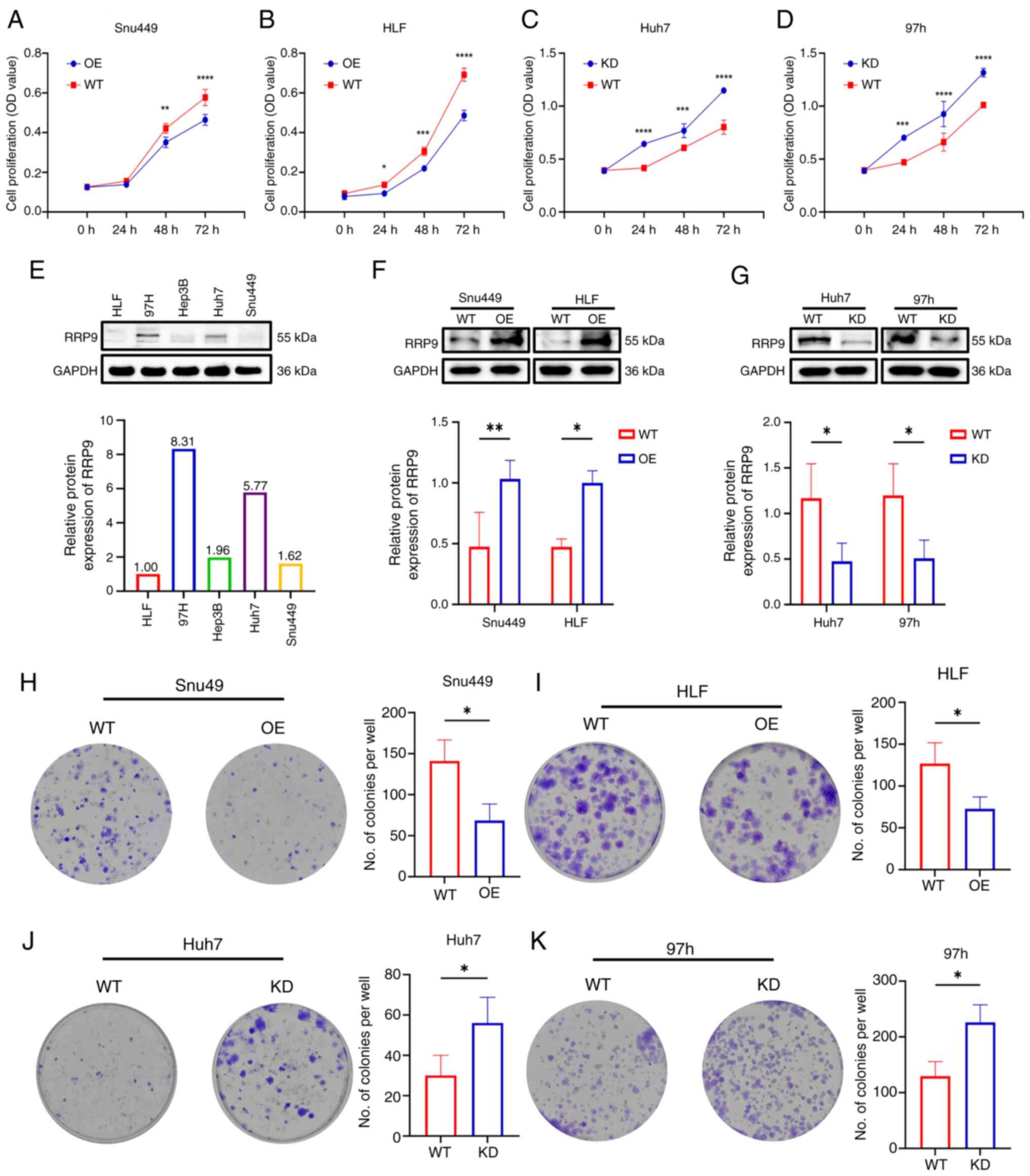
Impact of RRP9 on HCC proliferation.
(A) CCK-8 assay assessing Snu449 and (B) HLF cell proliferation
following RRP9 overexpression. (C) CCK-8 assay assessing Huh7 cell
proliferation following RRP9 knockdown. (D) CCK-8 assay assessing
97h cell proliferation following RRP9 knockdown. (E) Western blot
analysis of basal RRP9 expression in liver cancer cell lines. (F)
Western blot validation of RRP9 overexpression efficiency. (G)
Western blot validation of RRP9 knockdown efficiency. (H) Colony
formation assay evaluating Snu449 and (I) HLF cell proliferation
following RRP9 overexpression and (J) Huh7 cell proliferation
following RRP9 knockdown. (K) Colony formation assay evaluating 97h
cell proliferation following RRP9 knockdown. *P<0.05,
**P<0.01, ***P<0.001,
****P<0.0001 vs. WT group. RRP9, ribosomal RNA
processing 9; HCC, hepatocellular carcinoma; WT, wild-type; OE,
overexpression; KD, knockdown; OD, optical density.

Figure 3

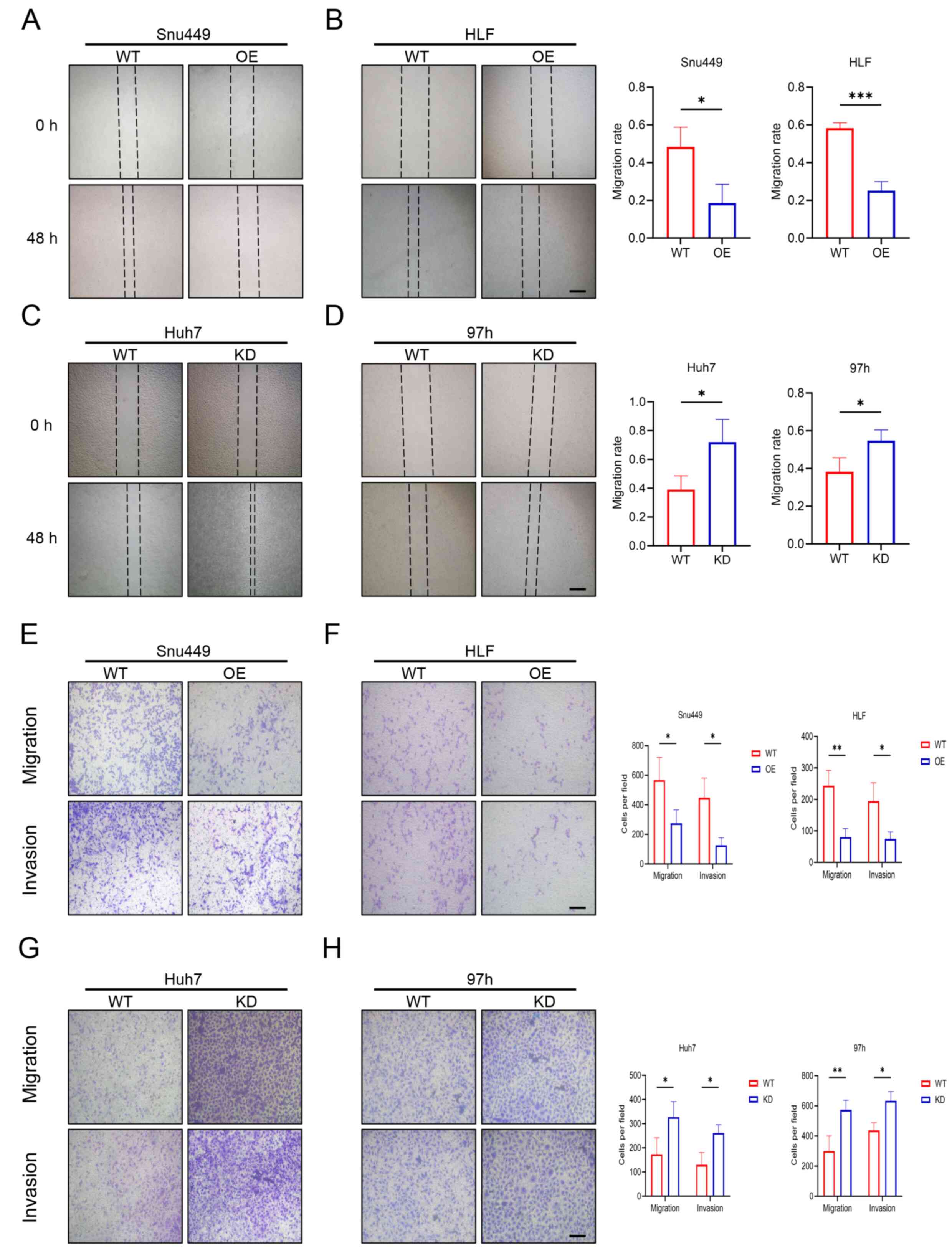
Impact of RRP9 on hepatocellular
carcinoma cell migration and invasion. (A) Wound healing assay
evaluating migration in Snu449 and (B) HLF cells following RRP9
overexpression. (C) Wound healing assay evaluating migration in
Huh7 cells following RRP9 knockdown. (D) Wound healing assay
evaluating migration in 97h cells following RRP9 knockdown. (E)
Transwell assays assessing migration and invasion of Snu449 cells
following RRP9 overexpression. (F) Transwell assays assessing
migration and invasion of HLF cells following RRP9 overexpression.
(G) Transwell assays assessing migration and invasion of Huh7 and
(H) Transwell assays assessing migration and invasion of 97h cells
following RRP9 knockdown. Scale bar, 100 μm.
*P<0.05, **P<0.01,
***P<0.001. RRP9, ribosomal RNA processing 9; WT,
wild-type; KD, knockdown; OE, overexpression.

Figure 4

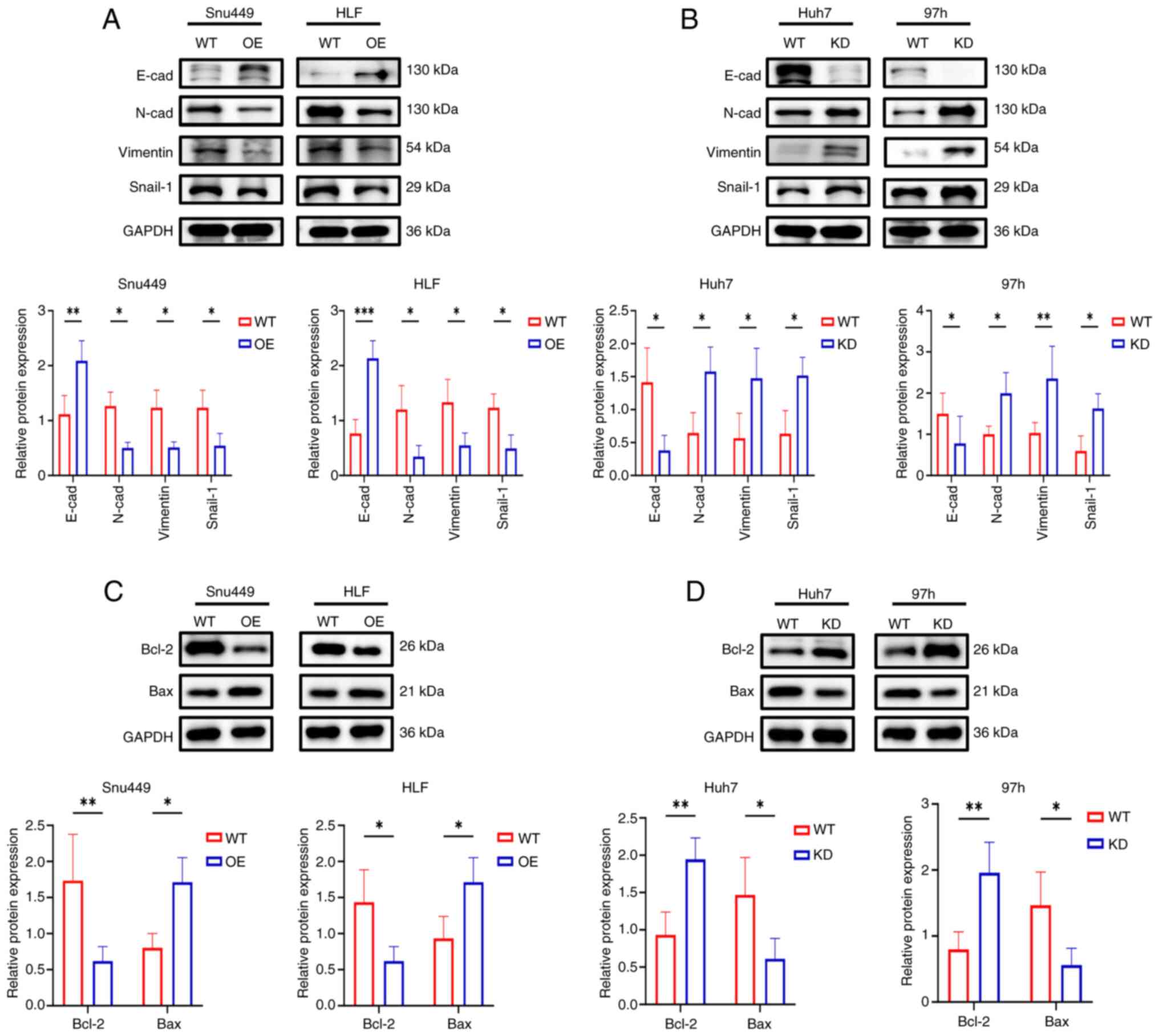
Effect of RRP9 on apoptosis- and
EMT-associated protein in HCC. (A) Western blot analysis of
EMT-associated proteins (E-cad, N-cad, vimentin, and Snail-1) in
Snu449 and HLF cells following RRP9 overexpression and (B) Western
blot analysis of EMT-associated proteins (E-cad, N-cad, vimentin,
and Snail-1) in Huh7 and 97h cells following RRP9 knockdown and (C)
apoptosis-related proteins (Bax and Bcl-2) in Snu449 and HLF cells
following RRP9 overexpression and (D) Western blot analysis of
apoptosis-related proteins (Bax and Bcl-2) in Huh7 and 97h cells
following RRP9 knockdown. *P<0.05,
**P<0.01. EMT, epithelial-mesenchymal transition;
HCC, hepatocellular carcinoma; cad, cadherin; WT, wild-type; OE,
overexpression.

Figure 5

RNA sequencing identified the cell
cycle and PI3K/AKT/mTOR signaling pathways as potential mechanisms
by which ribosomal RNA processing 9 regulates hepatocellular
carcinoma. (A) Volcano plot illustrating differentially expressed
genes from transcriptomic sequencing. (B) Venn diagram depicting
the intersecting genes. (C) Gene Ontology and (D) Kyoto
Encyclopedia of Genes and Genomes enrichment analysis. (E)
Protein-protein interaction network diagram. The color represents
the connectivity degree of the proteins, ranging from 10 to 4. WT,
wild-type; OE, overexpression

Figure 6

RRP9 regulates the PI3K/AKT/mTOR
signaling pathway and CCNA2. (A) Western blot analysis of
PI3K/AKT/mTOR signaling pathway proteins in Snu449 and HLF cells
following RRP9 overexpression and (B) Huh7 and 97h cells following
RRP9 knockdown. (C) Western blot analysis of CCNA2 protein
expression in Snu449 and HLF cells following RRP9 overexpression
and (D) Western blot analysis of CCNA2 protein expression in Huh7
and 97h cells following RRP9 knockdown. *P<0.05,
**P<0.01. RRP9, ribosomal RNA processing 9; CCNA2,
cyclin A2; WT, wild-Type; OE, overexpression; p-, phosphorylated-;
KD, knockdown.

Figure 7

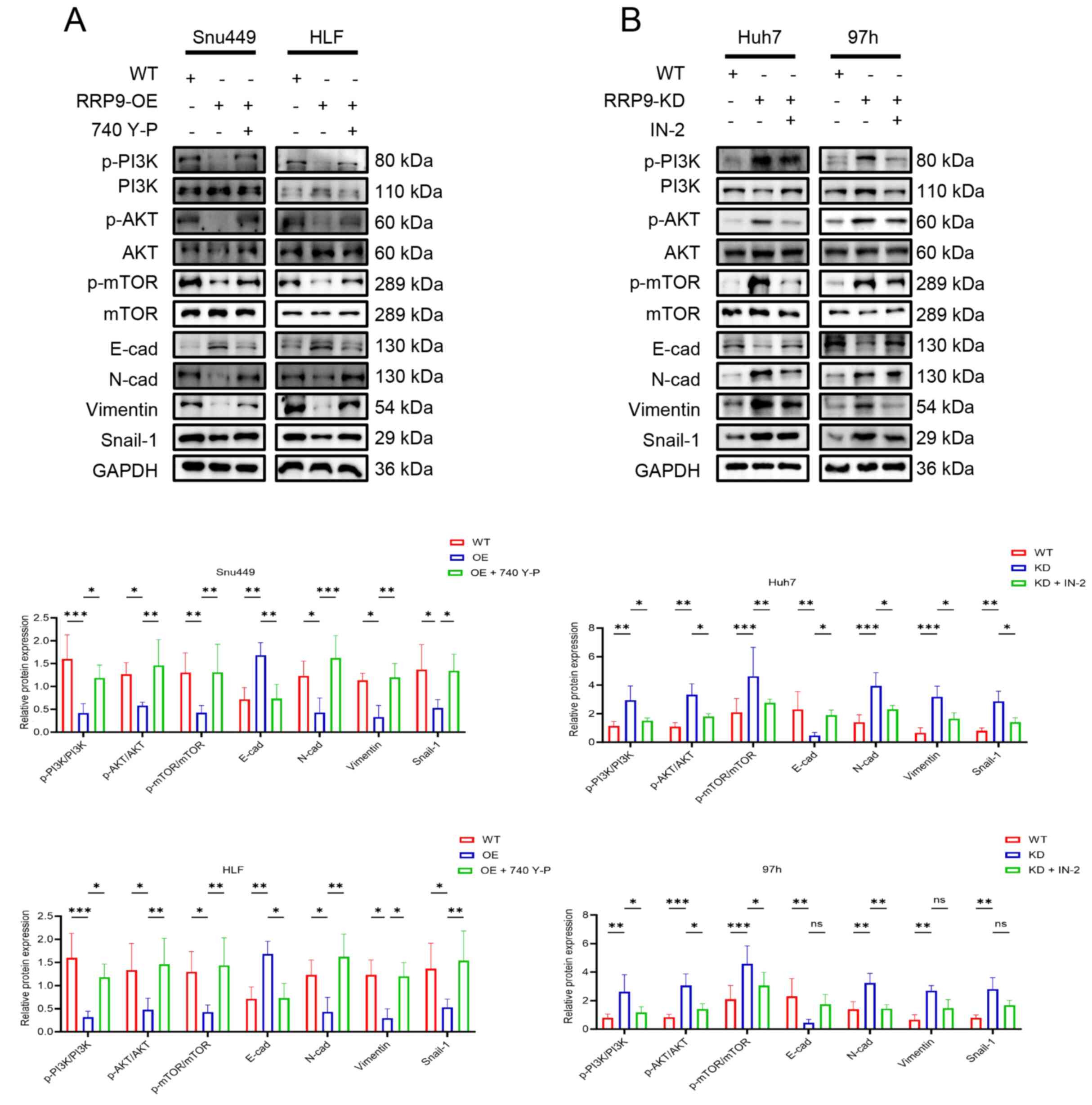
Rescue experiments in cells with RRP9
OE or KD with PI3K/AKT/mTOR pathway activator and inhibitor
treatment. (A) Western blot analysis of PI3K, AKT, mTOR, p-PI3K,
p-AKT, p-mTOR, E-cad, N-cad, vimentin and Snail-1 protein
expression in Snu449 and HLF cells following RRP9 overexpression
and (B) Huh7 and 97h cells following RRP9 knockdown.
*P<0.05, **P<0.01,
***P<0.001. RRP9, ribosomal RNA processing 9; OE,
overexpression; KD, knockdown; p-, phosphorylated-; E-cad,
epithelial cadherin; N-cad, neural cadherin; WT, wild-type; IN-2,
PI3K/Akt/mTOR-IN-2.

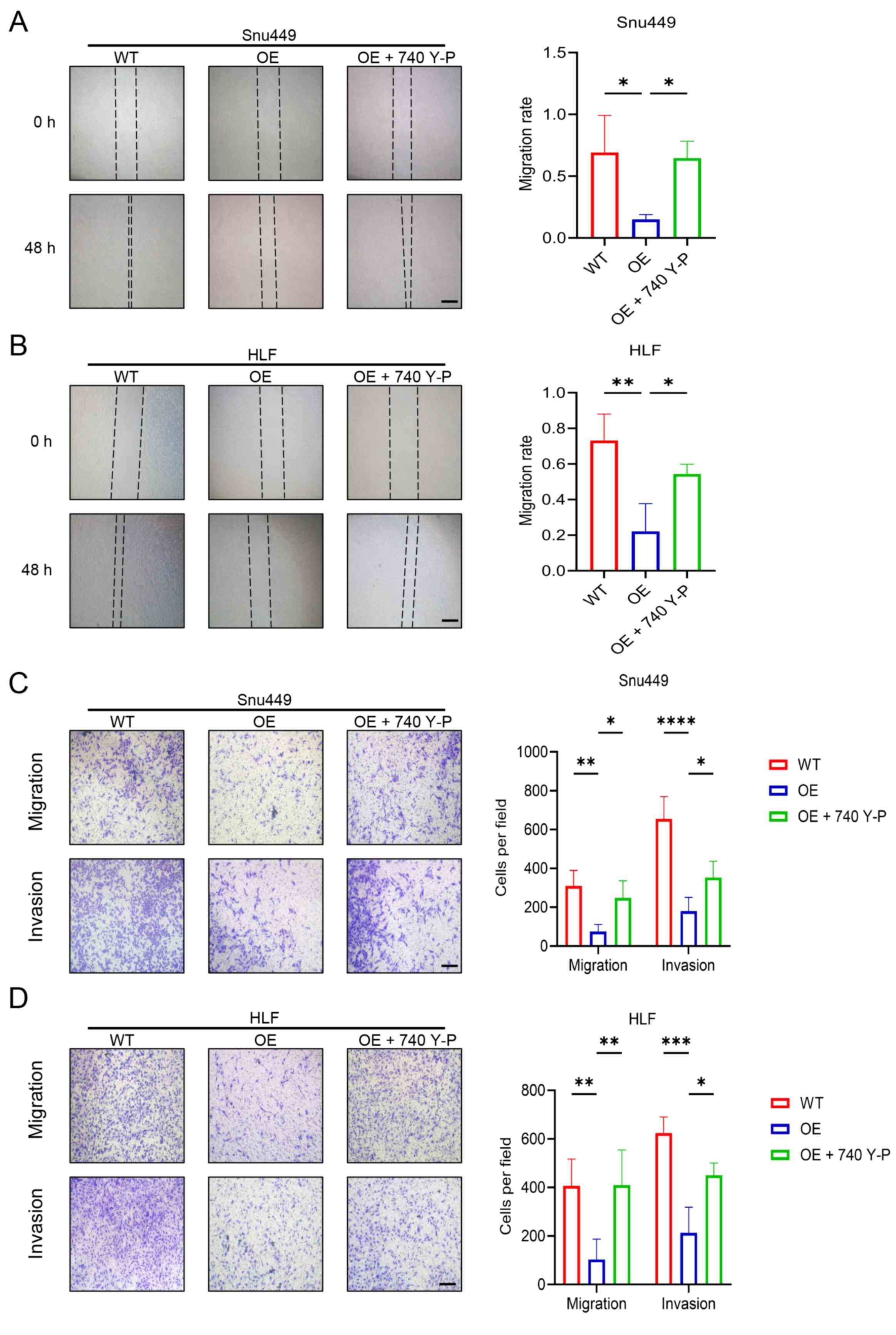
Figure 8

Rescue experiments using 740 Y-P in
RRP9-OE Snu449 and HLF cells. (A) Wound healing assay evaluating
the migration of Snu449 and (B) Wound healing assay evaluating the
migration of HLF cells. (C) Transwell assays assessing the
migration and invasion of Snu449 cells in the WT, OE, and OE + 740
Y-P groups. (D) Transwell assays assessing the migration and
invasion of HLF cells in the WT, OE, and OE + 740 Y-P groups. Scale
bar, 100 μm. *P<0.05, **P<0.01,
***P<0.001, ****P<0.0001. RRP9,
ribosomal RNA processing 9; OE, overexpression; WT, wild-type.

Figure 9

Rescue experiments using ribosomal
RNA processing 9 KD 97h and Huh7 cells treated with PI3K/AKT/mTOR
pathway inhibitor. (A) Wound healing assay evaluating the migration
of Huh7 and (B) 97h cells in the WT, KD, and KD + IN-2 groups. (C)
Transwell assays assessing the migration and invasion of Huh7 cells
in the WT, KD, and KD + IN-2 groups. (D) Transwell assay of
migration and invasion of 97h cells in the WT, KD, and KD + IN-2
groups. Scale bar, 100 μm. *P<0.05,
**P<0.01. KD, knockdown; IN-2, PI3K/Akt/mTOR-IN-2;
WT, wild-type.

Figure 10

In vivo validation of RRP9
role in tumor progression. (A) Mice on day 14 post-injection. (B)
Xenograft tumors excised from nude mice. Xenograft (C) tumor weight
and (D) volume. (E) TUNEL staining. (F) Western blot analysis of
RRP9, E-cad and N-cad protein expression in WT and OE groups. (G)
Immunohistochemistry analysis of Ki67, E-cad and N-cad expression
in xenograft tumor tissues. Scale bar, 100 μm.
*P<0.05, **P<0.01,
***P<0.001 ****P<0.0001. RRP9,
ribosomal RNA processing 9; E-cad, epithelial cadherin; N-cad,
neural cadherin; WT, wild-type; OE, overexpression.

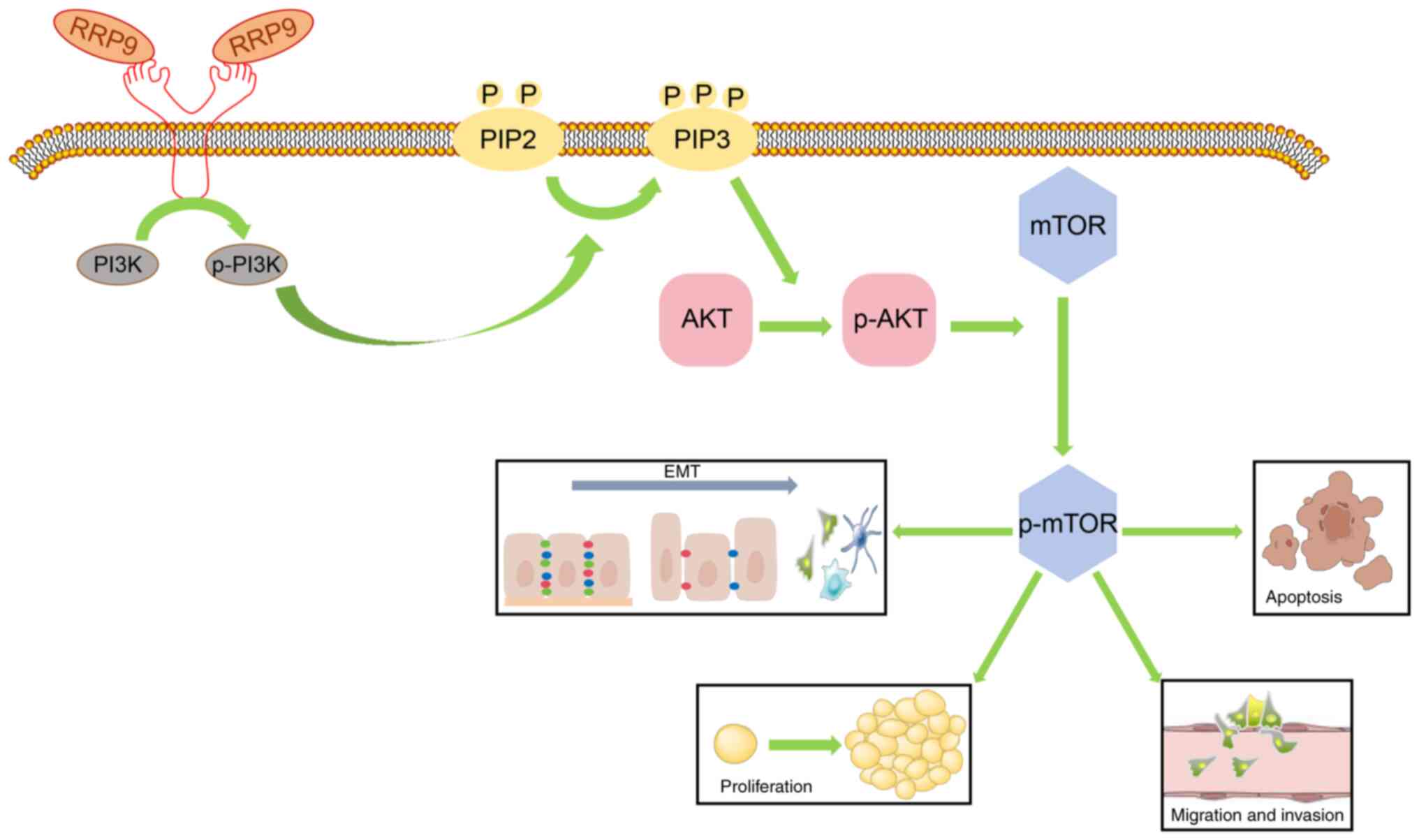
Figure 11

RRP9 regulates the PI3K/AKT/mTOR
signaling pathway. RRP9, ribosomal RNA processing 9; p-,
phosphorylated-; PIP2, phosphatidylinositol 4,5-bisphosphate; EMT,
epithelial-mesenchymal transition.
View References

1 

Sung H, Ferlay J, Siegel RL, Laversanne M, Soerjomataram I, Jemal A and Bray F: Global cancer statistics 2020: GLOBOCAN estimates of incidence and mortality worldwide for 36 cancers in 185 countries. CA Cancer J Clin. 71:209–249. 2021.PubMed/NCBI

2 

Rumgay H, Arnold M, Ferlay J, Lesi O, Cabasag CJ, Vignat J, Laversanne M, McGlynn KA and Soerjomataram I: Global burden of primary liver cancer in 2020 and predictions to 2040. J Hepatol. 77:1598–606. 2022. View Article : Google Scholar : PubMed/NCBI

3 

Hwang SY, Danpanichkul P, Agopian V, Mehta N, Parikh ND, Abou-Alfa GK, Singal AG and Yang JD: Hepatocellular carcinoma: Updates on epidemiology, surveillance, diagnosis and treatment. Clin Mol Hepatol. 31(Suppl): S228–S254. 2025. View Article : Google Scholar :

4 

Toh MR, Wong EYT, Wong SH, Ng AWT, Loo LH, Chow PK and Ngeow J: Global epidemiology and genetics of hepatocellular carcinoma. Gastroenterology. 164:766–782. 2023. View Article : Google Scholar : PubMed/NCBI

5 

Anwanwan D, Singh SK, Singh S, Saikam V and Singh R: Challenges in liver cancer and possible treatment approaches. Biochim Biophys Acta Rev Cancer. 1873:1883142020. View Article : Google Scholar

6 

Galicia-Moreno M, Silva-Gomez JA, Lucano-Landeros S, Santos A, Monroy-Ramirez HC and Armendariz-Borunda J: Liver cancer: Therapeutic challenges and the importance of experimental models. Can J Gastroenterol Hepatol. 2021:88378112021. View Article : Google Scholar : PubMed/NCBI

7 

Liang J, Wen J, Huang Z, Chen XP, Zhang BX and Chu L: Small nucleolar RNAs: Insight into their function in cancer. Front Oncol. 9:5872019. View Article : Google Scholar : PubMed/NCBI

8 

Pecoraro A, Pagano M, Russo G and Russo A: Ribosome biogenesis and cancer: Overview on ribosomal proteins. Int J Mol Sci. 22:54962021. View Article : Google Scholar : PubMed/NCBI

9 

Gaviraghi M, Vivori C and Tonon G: How cancer exploits ribosomal RNA biogenesis: A journey beyond the boundaries of rRNA transcription. Cells. 8:10982019. View Article : Google Scholar : PubMed/NCBI

10 

Elhamamsy AR, Metge BJ, Alsheikh HA, Shevde LA and Samant RS: Ribosome biogenesis: A central player in cancer metastasis and therapeutic resistance. Cancer Res. 82:2344–2353. 2022. View Article : Google Scholar : PubMed/NCBI

11 

Lorenzo HK: Small nucleolar RNAs as emerging players in cancer biology and precision medicine. Cancers (Basel). 17:38472025. View Article : Google Scholar : PubMed/NCBI

12 

Gee HE, Buffa FM, Camps C, Ramachandran A, Leek R, Taylor M, Patil M, Sheldon H, Betts G, Homer J, et al: The small-nucleolar RNAs commonly used for microRNA normalisation correlate with tumour pathology and prognosis. Br J Cancer. 104:1168–1177. 2011. View Article : Google Scholar : PubMed/NCBI

13 

Blenkiron C, Hurley DG, Fitzgerald S, Print CG and Lasham A: Links between the oncoprotein YB-1 and small non-coding RNAs in breast cancer. PLoS One. 8:e801712013. View Article : Google Scholar : PubMed/NCBI

14 

Yang X, Li Y, Li L, Liu J, Wu M and Ye M: SnoRNAs are involved in the progression of ulcerative colitis and colorectal cancer. Dig Liver Dis. 49:545–551. 2017. View Article : Google Scholar : PubMed/NCBI

15 

Yoshida K, Toden S, Weng W, Shigeyasu K, Miyoshi J, Turner J, Nagasaka T, Ma Y, Takayama T, Fujiwara T and Goel A: SNORA21-an oncogenic small nucleolar RNA, with a prognostic biomarker potential in human colorectal cancer. EBioMedicine. 22:68–77. 2017. View Article : Google Scholar : PubMed/NCBI

16 

Wu L, Zheng J, Chen P, Liu Q and Yuan Y: Small nucleolar RNA ACA11 promotes proliferation, migration and invasion in hepatocellular carcinoma by targeting the PI3K/AKT signaling pathway. Biomed Pharmacother. 90:705–712. 2017. View Article : Google Scholar : PubMed/NCBI

17 

Li G, He Y, Liu X, Zheng Z, Zhang M, Qin F and Lan X: Small nucleolar RNA 47 promotes tumorigenesis by regulating EMT markers in hepatocellular carcinoma. Minerva Med. 108:396–404. 2017. View Article : Google Scholar : PubMed/NCBI

18 

Cui L, Nakano K, Obchoei S, Setoguchi K, Matsumoto M, Yamamoto T, Obika S, Shimada K and Hiraoka N: Small nucleolar noncoding RNA SNORA23, up-regulated in human pancreatic ductal adenocarcinoma, regulates expression of spectrin repeat-containing nuclear envelope 2 to promote growth and metastasis of xenograft tumors in mice. Gastroenterology. 153:292–306.e2. 2017. View Article : Google Scholar : PubMed/NCBI

19 

Clerget G, Bourguignon-Igel V, Marmier-Gourrier N, Rolland N, Wacheul L, Manival X, Charron C, Kufel J, Méreau A, Senty-Ségault V, et al: Synergistic defects in pre-rRNA processing from mutations in the U3-specific protein Rrp9 and U3 snoRNA. Nucleic Acids Res. 48:3848–3868. 2020. View Article : Google Scholar : PubMed/NCBI

20 

Ojha S, Malla S and Lyons SM: snoRNPs: Functions in ribosome biogenesis. Biomolecules. 10:7832020. View Article : Google Scholar : PubMed/NCBI

21 

Beltrame M and Tollervey D: Base pairing between U3 and the pre-ribosomal RNA is required for 18S rRNA synthesis. EMBO J. 14:4350–4356. 1995. View Article : Google Scholar : PubMed/NCBI

22 

Zhang Z, Yu H, Yao W, Zhu N, Miao R, Liu Z, Song X, Xue C, Cai C, Cheng M, et al: RRP9 promotes gemcitabine resistance in pancreatic cancer via activating AKT signaling pathway. Cell Commun Signal. 20:1882022. View Article : Google Scholar : PubMed/NCBI

23 

Huan J, Liu X, Wang N, Mu Y, Li L and Du Y: The RRP9-JUN axis promotes breast cancer progression via the AKT signalling pathway. Biol Direct. 19:1312024. View Article : Google Scholar : PubMed/NCBI

24 

Liu H, Chi X, Yang N, Shan M, Xiao Y, Zhang M, Hao Y, Hou S, Liu Y and Wang Y: Joint effect of RRP9 and DDX21 on development of colorectal cancer and keloid. Aging (Albany NY). 15:14703–14719. 2023. View Article : Google Scholar : PubMed/NCBI

25 

Qin J, Sun X, Ma Y, Cheng Y, Ma Q, Jing W, Qu S and Liu L: Design, synthesis and biological evaluation of novel 1,3,4,9-tetrahydropyrano[3,4-b]indoles as potential treatment of triple negative breast cancer by suppressing PI3K/AKT/mTOR pathway. Bioorg Med Chem. 55:1165942022. View Article : Google Scholar : PubMed/NCBI

26 

An Y, Cao C, Sun S, Wu H, Zhang J, Li R and Zhao Y: SHP1 and its downstream p38/SP1/PI3K/YAP/Notch-1 signaling in trophoblast cells suppressed the progression of Preeclampsia via inhibiting proliferation of SMCs. Sci Rep. 15:162052025. View Article : Google Scholar : PubMed/NCBI

27 

Amin MB, Greene FL, Edge SB, Compton CC, Gershenwald JE, Brookland RK, Meyer L, Gress DM, Byrd DR and Winchester DP: The eighth edition AJCC cancer staging manual: Continuing to build a bridge from a population-based to a more 'personalized' approach to cancer staging. CA Cancer J Clin. 67:93–99. 2017.PubMed/NCBI

28 

Reig M, Forner A, Rimola J, Ferrer-Fàbrega J, Burrel M, Garcia-Criado Á, Kelley RK, Galle PR, Mazzaferro V, Salem R, et al: BCLC strategy for prognosis prediction and treatment recommendation: The 2022 update. J Hepatol. 76:681–693. 2022. View Article : Google Scholar

29 

Liu T, Shi Q, Yang L, Wang S, Song H, Wang Z, Xu X, Liu H, Zheng H and Shen Z: Long non-coding RNAs HERH-1 and HERH-4 facilitate cyclin A2 expression and accelerate cell cycle progression in advanced hepatocellular carcinoma. BMC Cancer. 21:9572021. View Article : Google Scholar : PubMed/NCBI

30 

Gan Y, Li Y, Li T, Shu G and Yin G: CCNA2 acts as a novel biomarker in regulating the growth and apoptosis of colorectal cancer. Cancer Manag Res. 10:5113–5124. 2018. View Article : Google Scholar : PubMed/NCBI

31 

Suski JM, Braun M, Strmiska V and Sicinski P: Targeting cell-cycle machinery in cancer. Cancer Cell. 39:759–778. 2021. View Article : Google Scholar : PubMed/NCBI

32 

Llovet JM, Kelley RK, Villanueva A, Singal AG, Pikarsky E, Roayaie S, Lencioni R, Koike K, Zucman-Rossi J and Finn RS: Hepatocellular carcinoma. Nat Rev Dis Primers. 7:62021. View Article : Google Scholar : PubMed/NCBI

33 

Bray F, Laversanne M, Sung H, Ferlay J, Siegel RL, Soerjomataram I and Jemal A: Global cancer statistics 2022: GLOBOCAN estimates of incidence and mortality worldwide for 36 cancers in 185 countries. CA Cancer J Clin. 74:229–263. 2024.PubMed/NCBI

34 

Zhang J, Hu Z, Horta CA and Yang J: Regulation of epithelial-mesenchymal transition by tumor microenvironmental signals and its implication in cancer therapeutics. Semin Cancer Biol. 88:46–66. 2023. View Article : Google Scholar :

35 

Morana O, Wood W and Gregory CD: The apoptosis paradox in cancer. Int J Mol Sci. 23:13282022. View Article : Google Scholar : PubMed/NCBI

36 

Ding Y, Sun Z, Zhang S, Zhou L, Xu Q, Zhou D, Li Y, Han X, Xu H, Bai Y, et al: Identification of snoRNA SNORA71A as a novel biomarker in prognosis of hepatocellular carcinoma. Dis Markers. 2020:88799442020. View Article : Google Scholar : PubMed/NCBI

37 

Zhang Z, Tao Y, Hua Q, Cai J, Ye X and Li H: SNORA71A promotes colorectal cancer cell proliferation, migration, and invasion. Biomed Res Int. 2020:82845762020. View Article : Google Scholar : PubMed/NCBI

38 

Dragon F, Gallagher JE, Compagnone-Post PA, Mitchell BM, Porwancher KA, Wehner KA, Wormsley S, Settlage RE, Shabanowitz J, Osheim Y, et al: A large nucleolar U3 ribonucleoprotein required for 18S ribosomal RNA biogenesis. Nature. 417:967–970. 2002. View Article : Google Scholar : PubMed/NCBI

39 

Chi X, Yang N and Liu Y: RRP9 and DDX21 as new biomarkers of colorectal cancer. Medicine (Baltimore). 102:e343842023. View Article : Google Scholar : PubMed/NCBI

40 

Li N, Jing Y, Xu L and Wang M: METTL1 enhances RRP9 mRNA stability through m7G modification to drive colorectal tumorigenesis. Mol Carcinog. 64:858–869. 2025. View Article : Google Scholar : PubMed/NCBI

41 

Alzahrani AS: PI3K/Akt/mTOR inhibitors in cancer: At the bench and bedside. Semin Cancer Biol. 59:125–132. 2019. View Article : Google Scholar : PubMed/NCBI

42 

Li Y, Liu Z, Yan H, Zhou T, Zheng L, Wen F, Guo G and Zhang Z: Polygonatum sibiricum polysaccharide ameliorates skeletal muscle aging and mitochondrial dysfunction via PI3K/Akt/mTOR signaling pathway. Phytomedicine. 136:1563162025. View Article : Google Scholar

43 

Chen J, Chen J, Huang J, Li Z, Gong Y, Zou B, Liu X, Ding L, Li P, Zhu Z, et al: HIF-2α upregulation mediated by hypoxia promotes NAFLD-HCC progression by activating lipid synthesis via the PI3K-AKT-mTOR pathway. Aging (Albany NY). 11:10839–10860. 2019. View Article : Google Scholar : PubMed/NCBI

44 

Yang J, Pi C and Wang G: Inhibition of PI3K/Akt/mTOR pathway by apigenin induces apoptosis and autophagy in hepatocellular carcinoma cells. Biomed Pharmacother. 103:699–707. 2018. View Article : Google Scholar : PubMed/NCBI

45 

Du MG, Liu F, Chang Y, Tong S, Liu W, Chen YJ and Xie P: Neddylation modification of the U3 snoRNA-binding protein RRP9 by Smurf1 promotes tumorigenesis. J Biol Chem. 297:1013072021. View Article : Google Scholar : PubMed/NCBI

46 

Chen S, Blank MF, Iyer A, Huang B, Wang L, Grummt I and Voit R: SIRT7-dependent deacetylation of the U3-55k protein controls pre-rRNA processing. Nat Commun. 7:107342016. View Article : Google Scholar : PubMed/NCBI

47 

Modenini G, Abondio P and Boattini A: The coevolution between APOBEC3 and retrotransposons in primates. Mob DNA. 13:272022. View Article : Google Scholar : PubMed/NCBI

48 

Chen X, Wang X, Zhu F, Qian C, Xu F, Huang X, Zhang W and Sun B: HBV infection-related PDZK1 plays an oncogenic role by regulating the PI3K-Akt pathway and fatty acid metabolism and enhances immunosuppression. J Immunol Res. 2022:87855672022. View Article : Google Scholar : PubMed/NCBI

49 

Qu H, Xie Y, Hu S, Sun S, Yuan Y, Xia Y, Liu M and Zhang XL: HBV upregulates TNNT1 expression through PI3K/AKT/mTOR-c-Myc axis, which in turn induces EMT and liver fibrosis in mice. Cell Signal. 134:1118992025. View Article : Google Scholar : PubMed/NCBI

50 

Hussain MS, Moglad E, Afzal M, Gupta G, Hassan Almalki W, Kazmi I, Alzarea SI, Kukreti N, Gupta S, Kumar D, et al: Non-coding RNA mediated regulation of PI3K/Akt pathway in hepatocellular carcinoma: Therapeutic perspectives. Pathol Res Pract. 258:1553032024. View Article : Google Scholar : PubMed/NCBI

51 

Zacchini F, Barozzi C, Venturi G and Montanaro L: How snoRNAs can contribute to cancer at multiple levels. NAR Cancer. 6:zcae0052024. View Article : Google Scholar : PubMed/NCBI

52 

Wang Z, Zhao C, Li M, Zhang L, Diao J, Wu Y, Yang T, Shi M, Lei Y, Wang Y, et al: Tuina therapy alleviates knee osteoarthritis by modulating PI3K/AKT/mTOR-mediated autophagy: An integrated machine learning and in vivo rat study. Front Immunol. 16:16358182025. View Article : Google Scholar : PubMed/NCBI

Related Articles

  • Abstract
  • View
  • Download
  • Twitter
Copy and paste a formatted citation
Spandidos Publications style
Fu Z, Li M, Dong K, Feng J and Wang W: RRP9 suppresses hepatocellular carcinoma progression by inhibiting the PI3K/AKT/mTOR pathway. Int J Oncol 68: 67, 2026.
APA
Fu, Z., Li, M., Dong, K., Feng, J., & Wang, W. (2026). RRP9 suppresses hepatocellular carcinoma progression by inhibiting the PI3K/AKT/mTOR pathway. International Journal of Oncology, 68, 67. https://doi.org/10.3892/ijo.2026.5880
MLA
Fu, Z., Li, M., Dong, K., Feng, J., Wang, W."RRP9 suppresses hepatocellular carcinoma progression by inhibiting the PI3K/AKT/mTOR pathway". International Journal of Oncology 68.6 (2026): 67.
Chicago
Fu, Z., Li, M., Dong, K., Feng, J., Wang, W."RRP9 suppresses hepatocellular carcinoma progression by inhibiting the PI3K/AKT/mTOR pathway". International Journal of Oncology 68, no. 6 (2026): 67. https://doi.org/10.3892/ijo.2026.5880
Copy and paste a formatted citation
x
Spandidos Publications style
Fu Z, Li M, Dong K, Feng J and Wang W: RRP9 suppresses hepatocellular carcinoma progression by inhibiting the PI3K/AKT/mTOR pathway. Int J Oncol 68: 67, 2026.
APA
Fu, Z., Li, M., Dong, K., Feng, J., & Wang, W. (2026). RRP9 suppresses hepatocellular carcinoma progression by inhibiting the PI3K/AKT/mTOR pathway. International Journal of Oncology, 68, 67. https://doi.org/10.3892/ijo.2026.5880
MLA
Fu, Z., Li, M., Dong, K., Feng, J., Wang, W."RRP9 suppresses hepatocellular carcinoma progression by inhibiting the PI3K/AKT/mTOR pathway". International Journal of Oncology 68.6 (2026): 67.
Chicago
Fu, Z., Li, M., Dong, K., Feng, J., Wang, W."RRP9 suppresses hepatocellular carcinoma progression by inhibiting the PI3K/AKT/mTOR pathway". International Journal of Oncology 68, no. 6 (2026): 67. https://doi.org/10.3892/ijo.2026.5880
Follow us
  • Twitter
  • LinkedIn
  • Facebook
About
  • Spandidos Publications
  • Careers
  • Cookie Policy
  • Privacy Policy
How can we help?
  • Help
  • Live Chat
  • Contact
  • Email to our Support Team