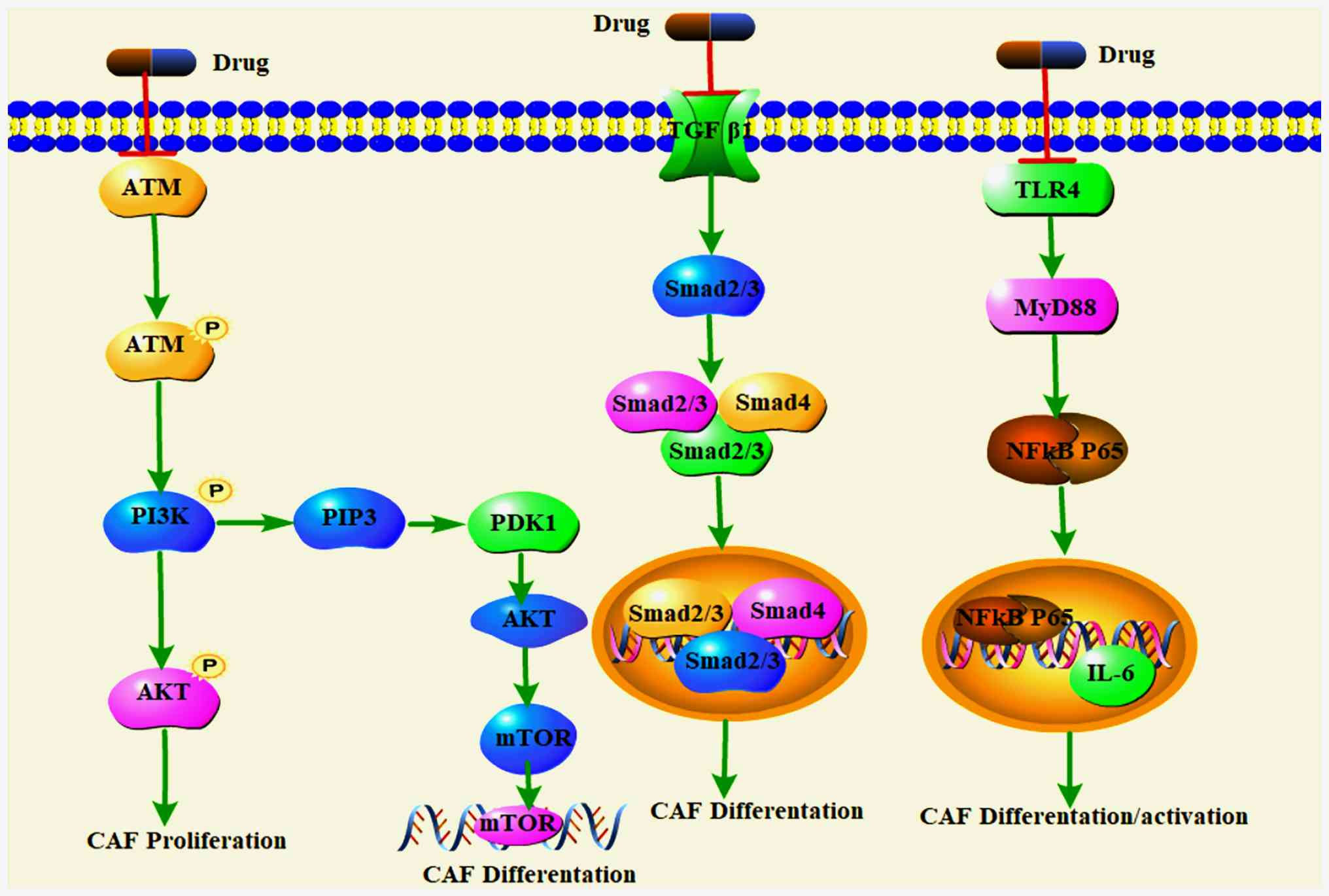
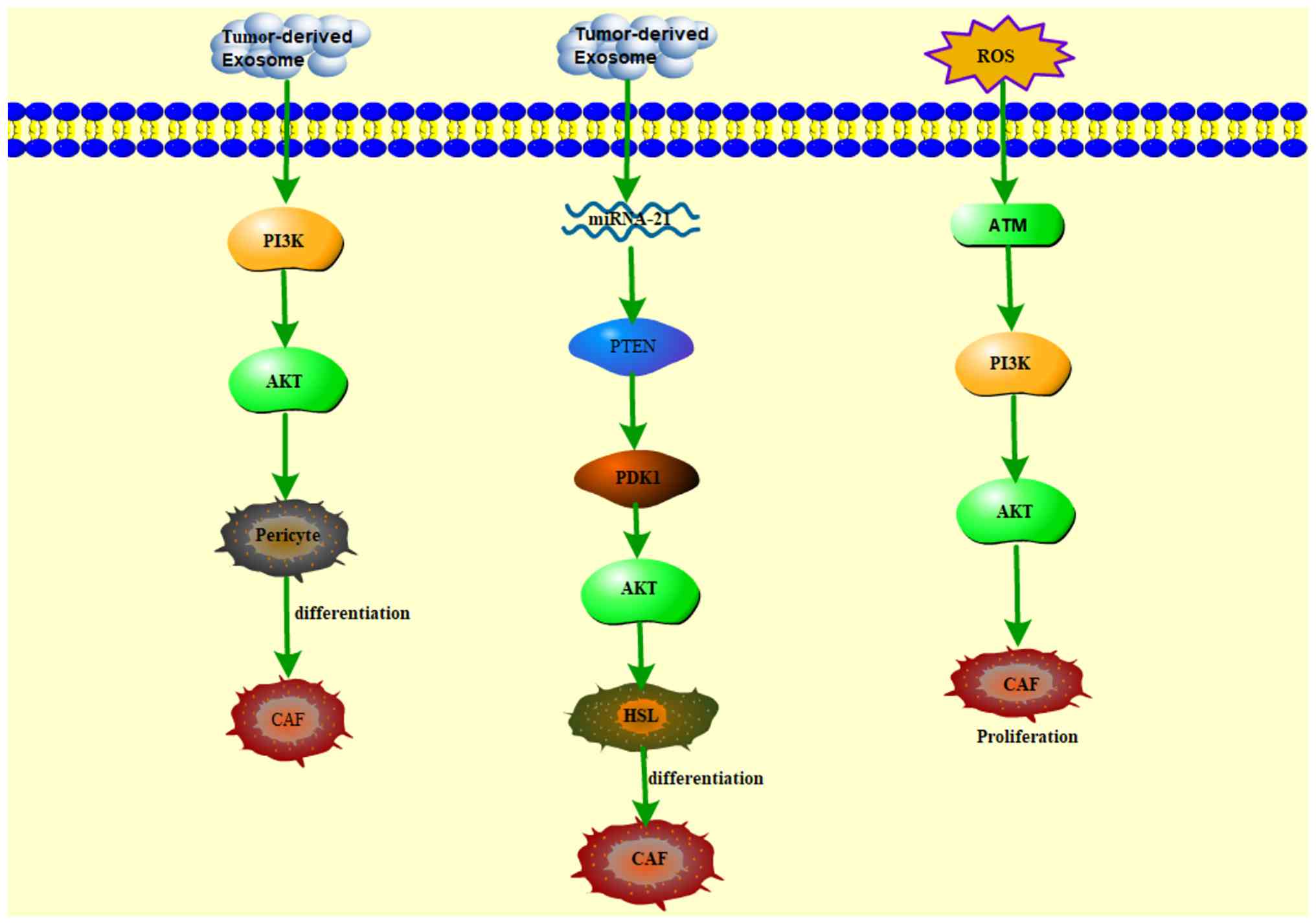
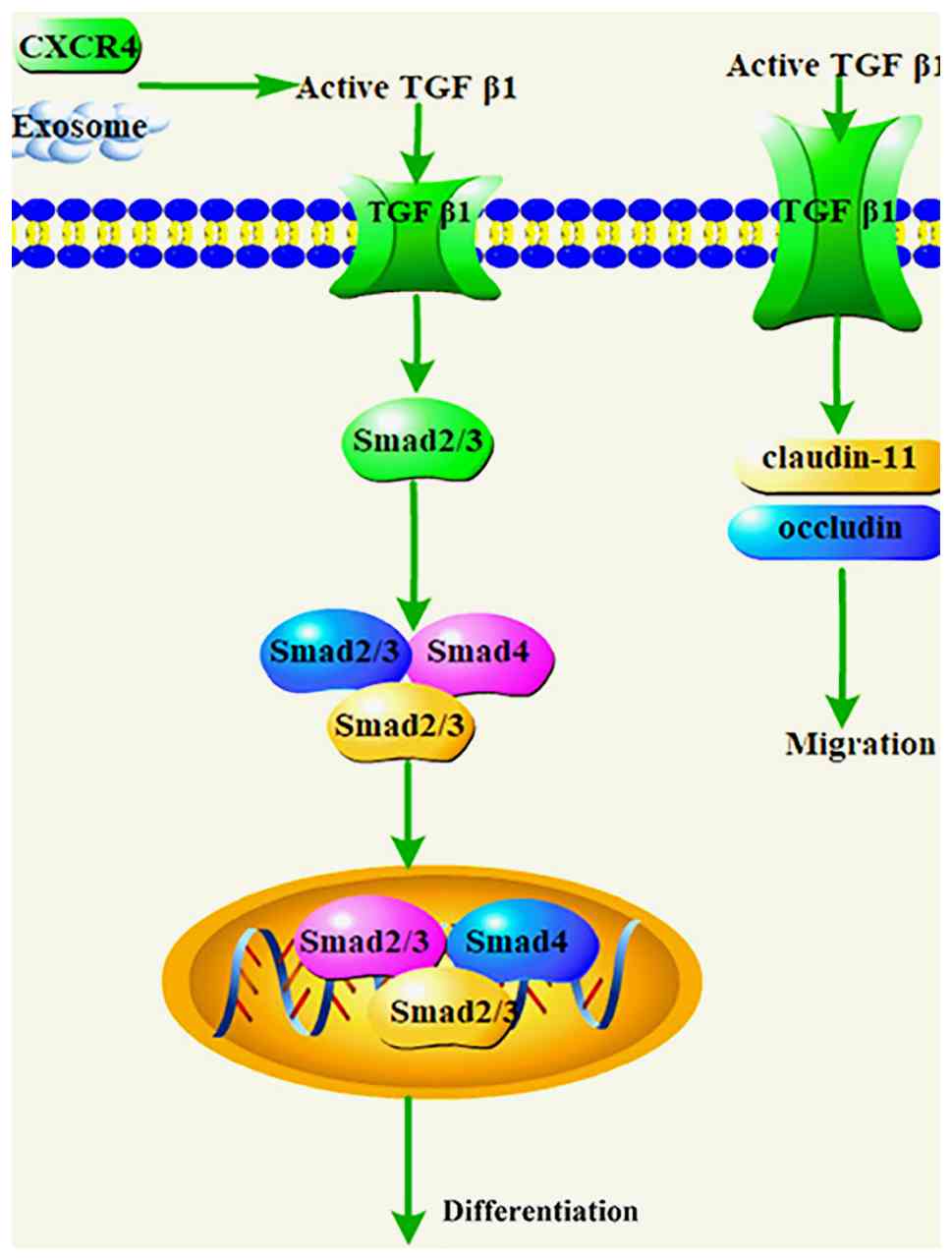
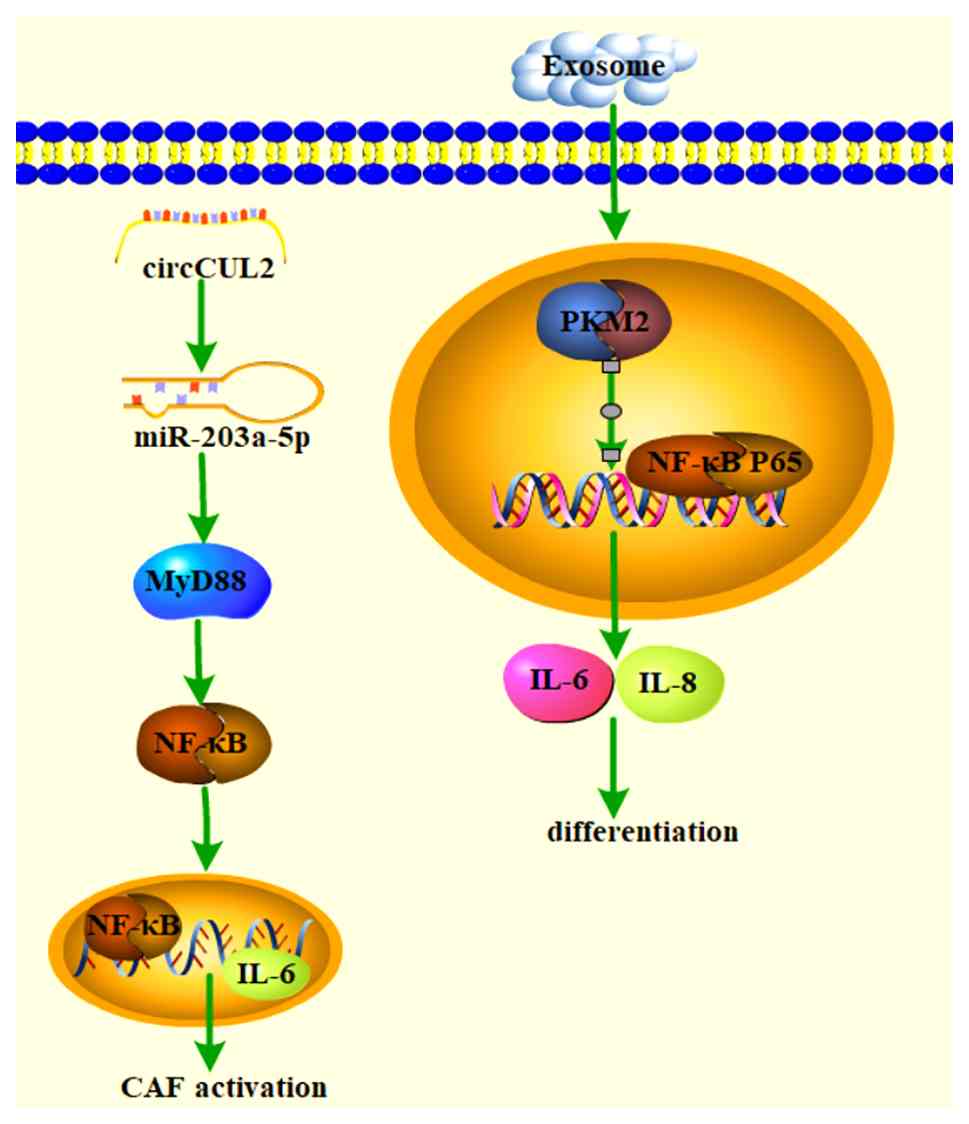
|
1
|
Singh D, Vignat J, Lorenzoni V, Eslahi M,
Ginsburg O, Lauby-Secretan B, Arbyn M, Basu P, Bray F and
Vaccarella S: Global estimates of incidence and mortality of
cervical cancer in 2020: A baseline analysis of the WHO Global
Cervical Cancer Elimination Initiative. Lancet Glob Health.
11:E197–E206. 2023. View Article : Google Scholar :
|
|
2
|
Fang H and Declerck YA: Targeting the
tumor microenvironment: From understanding pathways to effective
clinical trials. Cancer Res. 73:4965–4977. 2013. View Article : Google Scholar : PubMed/NCBI
|
|
3
|
de Visser KE and Joyce JA: The evolving
tumor microenvironment: From cancer initiation to metastatic
outgrowth. Cancer Cell. 41:374–403. 2023. View Article : Google Scholar : PubMed/NCBI
|
|
4
|
Rimal R, Desai P, Daware R, Hosseinnejad
A, Prakash J, Lammers T and Singh S: Cancer-associated fibroblasts:
Origin, function, imaging, and therapeutic targeting. Adv Drug
Deliv Rev. 189:1145042022. View Article : Google Scholar : PubMed/NCBI
|
|
5
|
Kalluri R and Zeisberg M: Fibroblasts in
cancer. Nat Rev Cancer. 6:392–401. 2006. View Article : Google Scholar : PubMed/NCBI
|
|
6
|
Yoshida GJ, Azuma A, Miura Y and Orimo A:
Activated fibroblast program orchestrates tumor initiation and
progression; molecular mechanisms and the associated therapeutic
strategies. Int J Mol Sci. 20:22562019. View Article : Google Scholar : PubMed/NCBI
|
|
7
|
LeBleu VS and Kalluri R: A peek into
cancer-associated fibroblasts: Origins, functions and translational
impact. Dis Model Mech. 11:dmm0294472018. View Article : Google Scholar : PubMed/NCBI
|
|
8
|
Biffi G and Tuveson DA: Diversity and
biology of cancer-associated fibroblasts. Physiol Rev. 101:147–176.
2021. View Article : Google Scholar
|
|
9
|
Gascard P and Tlsty TD:
Carcinoma-associated fibroblasts: Orchestrating the composition of
malignancy. Genes Dev. 30:1002–1019. 2016. View Article : Google Scholar : PubMed/NCBI
|
|
10
|
Yoshida GJ: Regulation of heterogeneous
cancer-associated fibroblasts: The molecular pathology of activated
signaling pathways. J Exp Clin Cancer Res. 39:1122020. View Article : Google Scholar : PubMed/NCBI
|
|
11
|
Li Z, Sun C and Qin Z: Metabolic
reprogramming of cancer-associated fibroblasts and its effect on
cancer cell reprogramming. Theranostics. 11:8322–8336. 2021.
View Article : Google Scholar : PubMed/NCBI
|
|
12
|
Fiori ME, Di Franco S, Villanova L, Bianca
P, Stassi G and De Maria R: Cancer-associated fibroblasts as
abettors of tumor progression at the crossroads of EMT and therapy
resistance. Mol Cancer. 18:702019. View Article : Google Scholar : PubMed/NCBI
|
|
13
|
Goulet CR, Champagne A, Bernard G, Vandal
D, Chabaud S, Pouliot F and Bolduc S: Cancer-associated fibroblasts
induce epithelial-mesenchymal transition of bladder cancer cells
through paracrine IL-6 signalling. BMC Cancer. 19:1372019.
View Article : Google Scholar : PubMed/NCBI
|
|
14
|
Wu F, Yang J, Liu J, Wang Y, Mu J, Zeng Q,
Deng S and Zhou H: Signaling pathways in cancer-associated
fibroblasts and targeted therapy for cancer. Signal Transduct
Target Ther. 6:2182021. View Article : Google Scholar : PubMed/NCBI
|
|
15
|
Ping Q, Yan R, Cheng X, Wang W, Zhong Y,
Hou Z, Shi Y, Wang C and Li R: Cancer-associated fibroblasts:
Overview, progress, challenges, and directions. Cancer Gene Ther.
28:984–999. 2021. View Article : Google Scholar : PubMed/NCBI
|
|
16
|
Li H, Zhang Q, Wu Q, Cui Y, Zhu H, Fang M,
Zhou X, Sun Z and Yu J: Interleukin-22 secreted by
cancer-associated fibroblasts regulates the proliferation and
metastasis of lung cancer cells via the PI3K-Akt-mTOR signaling
pathway. Am J Transl Res. 11:4077–4088. 2019.PubMed/NCBI
|
|
17
|
Yu L, Wei J and Liu P: Attacking the
PI3K/Akt/mTOR signaling pathway for targeted therapeutic treatment
in human cancer. Semin Cancer Biol. 85:69–94. 2022. View Article : Google Scholar
|
|
18
|
Tang S, Hou Y, Zhang H, Tu G, Yang L, Sun
Y, Lang L, Tang X, Du YE, Zhou M, et al: Oxidized ATM promotes
abnormal proliferation of breast CAFs through maintaining
intracellular redox homeostasis and activating the PI3K-AKT,
MEK-ERK, and Wnt-β-catenin signaling pathways. Cell Cycle.
14:1908–1924. 2015. View Article : Google Scholar
|
|
19
|
Ning X, Zhang H, Wang C and Song X:
Exosomes released by gastric cancer cells induce transition of
pericytes into cancer-associated fibroblasts. Med Sci Monit.
24:2350–2359. 2018. View Article : Google Scholar : PubMed/NCBI
|
|
20
|
Zhou Y, Ren H, Dai B, Li J, Shang L, Huang
J and Shi X: Hepatocellular carcinoma-derived exosomal miRNA-21
contributes to tumor progression by converting hepatocyte stellate
cells tocancer-associated fibroblasts. J Exp Clin Cancer Res.
41:3592022. View Article : Google Scholar
|
|
21
|
Wang YM, Wang W and Qiu ED: Osteosarcoma
cells induce differentiation of mesenchymal stem cells into cancer
associated fibroblasts through Notch and Akt signaling pathway. Int
J Clin Exp Pathol. 10:8479–8486. 2017.PubMed/NCBI
|
|
22
|
Zang C, Eucker J, Habbel P, Neumann C,
Schulz CO, Bangemann N, Kissner L, Riess H and Liu H: Targeting
multiple tyrosine kinase receptors with Dovitinib blocks invasion
and the interaction between tumor cells and cancer-associated
fibroblasts in breast cancer. Cell Cycle. 14:1291–1299. 2015.
View Article : Google Scholar : PubMed/NCBI
|
|
23
|
Li J, Gu X, Wan G, Wang Y, Chen K, Chen Q
and Lu C: Rocuronium bromide suppresses esophageal cancer via
blocking the secretion of C-X-C motif chemokine ligand 12 from
cancer associated fibroblasts. J Transl Med. 21:2482023. View Article : Google Scholar : PubMed/NCBI
|
|
24
|
Lu C and Zhang C: Oxaliplatin inhibits
colorectal cancer progression by inhibiting CXCL11 secreted by
cancer-associated fibroblasts and the CXCR3/PI3K/AKT pathway. Clin
Transl Oncol. 25:160–172. 2023. View Article : Google Scholar
|
|
25
|
Chen W, Yang X, Sun J, Chen Y, Zhao W, He
C, An H, Pang J, Xu W, Wen B, et al: Biejiajian pill inhibits
progression of hepatocellular carcinoma by downregulating PDGFRβ
signaling in cancer-associated fibroblasts. J Ethnopharmacol.
301:1158252023. View Article : Google Scholar
|
|
26
|
Li X, Song Q, Guo X, Wang L, Zhang Q, Cao
L, Ren Y, Wu X, Meng Z and Xu K: The metastasis potential promoting
capacity of cancer-associated fibroblasts was attenuated by
cisplatin via modulating KRT8. Onco Targets Ther. 13:2711–2723.
2020. View Article : Google Scholar : PubMed/NCBI
|
|
27
|
Che Y, Wang J, Li Y, Lu Z, Huang J, Sun S,
Mao S, Lei Y, Zang R, Sun N and He J: Cisplatin-activated PAI-1
secretion in the cancer-associated fibroblasts with paracrine
effects promoting esophageal squamous cell carcinoma progression
and causing chemoresistance. Cell Death Dis. 9:7592018. View Article : Google Scholar : PubMed/NCBI
|
|
28
|
Zhao X, Pan J, Li W, Yang W, Qin L and Pan
Y: Gold nanoparticles enhance cisplatin delivery and potentiate
chemotherapy by decompressing colorectal cancer vessels. Int J
Nanomedicine. 13:6207–6221. 2018. View Article : Google Scholar : PubMed/NCBI
|
|
29
|
Zhu K, Lv Z, Xiong J, Zheng H, Zhang S,
Jin H, Yu L, Li Z, Zhang J, Li C and Liang P: MET inhibitor,
capmatinib overcomes osimertinib resistance via suppression of
MET/Akt/snail signaling in non-small cell lung cancer and decreased
generation of cancer-associated fibroblasts. Aging (Albany NY).
13:6890–6903. 2021. View Article : Google Scholar : PubMed/NCBI
|
|
30
|
Heits N, Heinze T, Bernsmeier A, Kerber J,
Hauser C, Becker T, Kalthoff H, Egberts JH and Braun F: Influence
of mTOR-inhibitors and mycophenolic acid on human cholangiocellular
carcinoma and cancer associated fibroblasts. BMC Cancer.
16:3222016. View Article : Google Scholar : PubMed/NCBI
|
|
31
|
Zhang M, Li X, Wu W, Gao J, Han Q, Sun Z
and Zhao RC: Regorafenib induces the apoptosis of gastrointestinal
cancer-associated fibroblasts by inhibiting AKT phosphorylation.
Stem Cells Dev. 31:383–394. 2022. View Article : Google Scholar : PubMed/NCBI
|
|
32
|
Tang H, You T, Ge H, Gao J, Wang Y, Bai C,
Sun Z, Han Q and Zhao RC: Anlotinib may enhance the efficacy of
anti-PD1 therapy by inhibiting the AKT pathway and promoting the
apoptosis of CAFs in lung adenocarcinoma. Int Immunopharmacol.
133:1120532024. View Article : Google Scholar : PubMed/NCBI
|
|
33
|
Al-Ansari MM and Aboussekhra A: Caffeine
mediates sustained inactivation of breast cancer-associated
myofibroblasts via up-regulation of tumor suppressor genes. PLoS
One. 9:e909072014. View Article : Google Scholar : PubMed/NCBI
|
|
34
|
Fan KJ, Yang B, Liu Y, Tian XD and Wang B:
Inhibition of human lung cancer proliferation through targeting
stromal fibroblasts by dihydromyricetin. Mol Med Rep. 16:9758–9762.
2017. View Article : Google Scholar : PubMed/NCBI
|
|
35
|
Yadav VK, Huang YJ, George TA, Wei PL,
Sumitra MR, Ho CL, Chang TH, Wu ATH and Huang HS: Preclinical
evaluation of the novel small-molecule MSI-N1014 for treating
drug-resistant colon cancer via the LGR5/β-catenin/miR-142-3p
network and reducing cancer-associated fibroblast transformation.
Cancers (Basel). 12:15902020. View Article : Google Scholar
|
|
36
|
Harrison DA: The Jak/STAT pathway. Cold
Spring Harb Perspect Biol. 4:a0112052012. View Article : Google Scholar : PubMed/NCBI
|
|
37
|
Morris R, Kershaw NJ and Babon JJ: The
molecular details of cytokine signaling via the JAK/STAT pathway.
Protein Sci. 27:1984–2009. 2018. View Article : Google Scholar : PubMed/NCBI
|
|
38
|
Subramaniam KS, Omar IS, Kwong SC, Mohamed
Z, Woo YL, Mat Adenan NA and Chung I: Cancer-associated fibroblasts
promote endometrial cancer growth via activation of
interleukin-6/STAT-3/c-Myc pathway. Am J Cancer Res. 6:200–213.
2016.PubMed/NCBI
|
|
39
|
Cheteh EH, Sarne V, Ceder S, Bianchi J,
Augsten M, Rundqvist H, Egevad L, Östman A and Wiman KG:
Interleukin-6 derived from cancer-associated fibroblasts attenuates
the p53 response to doxorubicin in prostate cancer cells. Cell
Death Discov. 6:422020. View Article : Google Scholar : PubMed/NCBI
|
|
40
|
Biffi G, Oni TE, Spielman B, Hao Y, Elyada
E, Park Y, Preall J and Tuveson DA: IL1-Induced JAK/STAT Signaling
Is Antagonized by TGFβ to Shape CAF Heterogeneity in Pancreatic
Ductal Adenocarcinoma. Cancer Discov. 9:282–301. 2019. View Article : Google Scholar
|
|
41
|
Wang H, Chen J, Li S, Yang J, Tang D, Wu
W, Yu K, Cao Y, Xu K, Yin P, et al: Bufalin reverses
cancer-associated fibroblast-mediated colorectal cancer metastasis
by inhibiting the STAT3 signaling pathway. Apoptosis. 28:594–606.
2023. View Article : Google Scholar : PubMed/NCBI
|
|
42
|
Ochi K, Suzawa K, Thu YM, Takatsu F,
Tsudaka S, Zhu Y, Nakata K, Takeda T, Shien K, Yamamoto H, et al:
Drug repositioning of tranilast to sensitize a cancer therapy by
targeting cancer-associated fibroblast. Cancer Sci. 113:3428–3436.
2022. View Article : Google Scholar : PubMed/NCBI
|
|
43
|
Al-Jomah N, Al-Mohanna FH and Aboussekhra
A: Tocilizumab suppresses the pro-carcinogenic effects of breast
cancer-associated fibroblasts through inhibition of the STAT3/AUF1
pathway. Carcinogenesis. 42:1439–1448. 2021. View Article : Google Scholar : PubMed/NCBI
|
|
44
|
Ham IH, Wang L, Lee D, Woo J, Kim TH,
Jeong HY, Oh HJ, Choi KS, Kim TM and Hur H: Curcumin inhibits the
cancer-associated fibroblast-derived chemoresistance of gastric
cancer through the suppression of the JAK/STAT3 signaling pathway.
Int J Oncol. 61:852022. View Article : Google Scholar
|
|
45
|
Cao Y, Cao W, Qiu Y, Zhou Y, Guo Q, Gao Y
and Lu N: Oroxylin A suppresses ACTN1 expression to inactivate
cancer-associated fibroblasts and restrain breast cancer
metastasis. Pharmacol Res. 159:1049812020. View Article : Google Scholar : PubMed/NCBI
|
|
46
|
Suh J, Kim DH and Surh YJ: Resveratrol
suppresses migration, invasion and stemness of human breast cancer
cells by interfering with tumor-stromal cross-talk. Arch Biochem
Biophys. 643:62–71. 2018. View Article : Google Scholar : PubMed/NCBI
|
|
47
|
Tsang CM, Cheung YC, Lui VW, Yip YL, Zhang
G, Lin VW, Cheung KC, Feng Y and Tsao SW: Berberine suppresses
tumorigenicity and growth of nasopharyngeal carcinoma cells by
inhibiting STAT3 activation induced by tumor associated
fibroblasts. BMC Cancer. 13:6192013. View Article : Google Scholar
|
|
48
|
Zhang W, Tao N and Bai L: Polysaccharides
from Lentinus edodes prevent acquired drug resistance to docetaxel
in prostate cancer cells by decreasing the TGF-β1 secretion of
cancer-associated fibroblasts. J Nat Med. 77:817–828. 2023.
View Article : Google Scholar : PubMed/NCBI
|
|
49
|
Lee NY and Kim Y, Kim YS, Shin JH, Rubin
LP and Kim Y: β-Carotene exerts anti-colon cancer effects by
regulating M2 macrophages and activated fibroblasts. J Nutr
Biochem. 82:1084022020. View Article : Google Scholar
|
|
50
|
Ringuette Goulet C, Bernard G, Tremblay S,
Chabaud S, Bolduc S and Pouliot F: Exosomes induce fibroblast
differentiation into cancer-associated fibroblasts through TGFβ
signaling. Mol Cancer Res. 16:1196–1204. 2018. View Article : Google Scholar : PubMed/NCBI
|
|
51
|
Tan HX, Gong WZ, Zhou K, Xiao ZG, Hou FT,
Huang T, Zhang L, Dong HY, Zhang WL, Liu Y, et al: CXCR4/TGF-β1
mediated hepatic stellate cells differentiation into
carcinoma-associated fibroblasts and promoted liver metastasis of
colon cancer. Cancer Biol Ther. 21:258–268. 2020. View Article : Google Scholar
|
|
52
|
Wu YH, Huang YF, Chang TH, Chen CC, Wu PY,
Huang SC and Chou CY: COL11A1 activates cancer-associated
fibroblasts by modulating TGF-β3 through the NF-κB/IGFBP2 axis in
ovarian cancer cells. Oncogene. 40:4503–4519. 2021. View Article : Google Scholar : PubMed/NCBI
|
|
53
|
Barcellos-de-Souza P, Comito G,
Pons-Segura C, Taddei ML, Gori V, Becherucci V, Bambi F, Margheri
F, Laurenzana A, Del Rosso M and Chiarugi P: Mesenchymal stem cells
are recruited and activated into carcinoma-associated fibroblasts
by prostate cancer microenvironment-derived TGF-β1. Stem Cells.
34:2536–2547. 2016. View Article : Google Scholar : PubMed/NCBI
|
|
54
|
Karagiannis GS, Schaeffer DF, Cho CK,
Musrap N, Saraon P, Batruch I, Grin A, Mitrovic B, Kirsch R,
Riddell RH and Diamandis EP: Collective migration of
cancer-associated fibroblasts is enhanced by overexpression of
tight junction-associated proteins claudin-11 and occludin. Mol
Oncol. 8:178–195. 2014. View Article : Google Scholar
|
|
55
|
Shi X, Young CD, Zhou H and Wang X:
Transforming growth factor-β signaling in fibrotic diseases and
cancer-associated fibroblasts. Biomolecules. 10:16662020.
View Article : Google Scholar
|
|
56
|
Luong T and Cukierman E: Eribulin
normalizes pancreatic cancer-associated fibroblasts by simulating
selected features of TGFβ inhibition. BMC Cancer. 22:12552022.
View Article : Google Scholar
|
|
57
|
Lv Y, Xu C, Zhao X, Lin C, Yang X, Xin X,
Zhang L, Qin C, Han X, Yang L, et al: Nanoplatform Assembled from a
CD44-Targeted prodrug and smart liposomes for dual targeting of
tumor microenvironment and cancer cells. ACS Nano. 12:1519–1536.
2018. View Article : Google Scholar : PubMed/NCBI
|
|
58
|
Zhang Q, Hou X, Evans BJ, VanBlaricom JL,
Weroha SJ and Cliby WA: LY2157299 Monohydrate, a TGF-βR1 inhibitor,
suppresses tumor growth and ascites development in ovarian cancer.
Cancers (Basel). 10:2602018. View Article : Google Scholar
|
|
59
|
Liu FL, Mo EP, Yang L, Du J, Wang HS,
Zhang H, Kurihara H, Xu J and Cai SH: Autophagy is involved in
TGF-β1-induced protective mechanisms and formation of
cancer-associated fibroblasts phenotype in tumor microenvironment.
Oncotarget. 7:4122–4141. 2016. View Article : Google Scholar :
|
|
60
|
Wang H, Liu F, Wu X, Zhu G, Tang Z, Qu W,
Zhao Q, Huang R, Tian M, Fang Y, et al: Cancer-associated
fibroblasts contributed to hepatocellular carcinoma recurrence and
metastasis via CD36-mediated fatty-acid metabolic reprogramming.
Exp Cell Res. 435:1139472024. View Article : Google Scholar : PubMed/NCBI
|
|
61
|
Wawro ME, Sobierajska K, Ciszewski WM and
Niewiarowska J: Nonsteroidal anti-inflammatory drugs prevent
vincristine-dependent cancer-associated fibroblasts formation. Int
J Mol Sci. 20:19412019. View Article : Google Scholar : PubMed/NCBI
|
|
62
|
Shao S, Zhao L, An G, Zhang L, Jing X, Luo
M, Li W, Meng D, Ning Q, Zhao X and Lei J: Metformin suppresses
HIF-1α expression in cancer-associated fibroblasts to prevent
tumor-stromal cross talk in breast cancer. FASEB J. 34:10860–10870.
2020. View Article : Google Scholar : PubMed/NCBI
|
|
63
|
Coleman DT, Gray AL, Stephens CA, Scott ML
and Cardelli JA: Repurposed drug screen identifies cardiac
glycosides as inhibitors of TGF-β-induced cancer-associated
fibroblast differentiation. Oncotarget. 7:32200–32209. 2016.
View Article : Google Scholar : PubMed/NCBI
|
|
64
|
Takai K, Le A, Weaver VM and Werb Z:
Targeting the cancer-associated fibroblasts as a treatment in
triple-negative breast cancer. Oncotarget. 7:82889–82901. 2016.
View Article : Google Scholar : PubMed/NCBI
|
|
65
|
Mediavilla-Varela M, Boateng K, Noyes D
and Antonia SJ: The anti-fibrotic agent pirfenidone synergizes with
cisplatin in killing tumor cells and cancer-associated fibroblasts.
BMC Cancer. 16:1762016. View Article : Google Scholar : PubMed/NCBI
|
|
66
|
Mazzocca A, Fransvea E, Dituri F, Lupo L,
Antonaci S and Giannelli G: Down-regulation of connective tissue
growth factor by inhibition of transforming growth factor beta
blocks the tumor-stroma cross-talk and tumor progression in
hepatocellular carcinoma. Hepatology. 51:523–534. 2010. View Article : Google Scholar
|
|
67
|
Wang D, Tian M, Fu Y, Sun Y, Ding L, Zhang
X, Jing Y, Sun G, Ni Y and Song Y: Halofuginone inhibits tumor
migration and invasion by affecting cancer-associated fibroblasts
in oral squamous cell carcinoma. Front Pharmacol. 13:10563372022.
View Article : Google Scholar : PubMed/NCBI
|
|
68
|
Gabasa M, Ikemori R, Hilberg F, Reguart N
and Alcaraz J: Nintedanib selectively inhibits the activation and
tumour-promoting effects of fibroblasts from lung adenocarcinoma
patients. Br J Cancer. 117:1128–1138. 2017. View Article : Google Scholar : PubMed/NCBI
|
|
69
|
Shangguan L, Ti X, Krause U, Hai B, Zhao
Y, Yang Z and Liu F: Inhibition of TGF-β/Smad signaling by BAMBI
blocks differentiation of human mesenchymal stem cells to
carcinoma-associated fibroblasts and abolishes their protumor
effects. Stem Cells. 30:2810–2819. 2012. View Article : Google Scholar : PubMed/NCBI
|
|
70
|
Yao Y, Guo Q, Cao Y, Qiu Y, Tan R, Yu Z,
Zhou Y and Lu N: Correction to: Artemisinin derivatives inactivate
cancer-associated fibroblasts through suppressing TGF-β signaling
in breast cancer. J Exp Clin Cancer Res. 38:4512019. View Article : Google Scholar
|
|
71
|
Milián L, Monleón-Guinot I, Sancho-Tello
M, Galbis JM, Cremades A, Almenar-Ordaz M, Peñaroja-Martinez J,
Farras R, Martín de Llano JJ, Carda C and Mata M: In vitro effect
of Δ9-tetrahydrocannabinol and cannabidiol on cancer-associated
fibroblasts isolated from lung cancer. Int J Mol Sci. 23:67662022.
View Article : Google Scholar
|
|
72
|
Melegová N, Čoma M, Urban L, Kaňuchová M,
Szabo P, Smetana K Jr, Mučaji P and Gál P: Aesculus hippocastanum
L. extract differently modulates normal human dermal fibroblasts
and cancer-associated fibroblasts from basal/squamous cell
carcinoma. Neoplasma. 69:224–232. 2022. View Article : Google Scholar
|
|
73
|
Buhrmann C, Kraehe P, Lueders C, Shayan P,
Goel A and Shakibaei M: Curcumin suppresses crosstalk between colon
cancer stem cells and stromal fibroblasts in the tumor
microenvironment: Potential role of EMT. PLoS One. 9:e1075142014.
View Article : Google Scholar : PubMed/NCBI
|
|
74
|
Liang D, Liu L, Zheng Q, Zhao M, Zhang G,
Tang S, Tang J and Chen N: Chelerythrine chloride inhibits the
progression of colorectal cancer by targeting cancer-associated
fibroblasts through intervention with WNT10B/β-catenin and
TGFβ2/Smad2/3 axis. Phytother Res. 37:4674–4689. 2023. View Article : Google Scholar : PubMed/NCBI
|
|
75
|
Jalilian E, Abolhasani-Zadeh F, Afgar A,
Samoudi A, Zeinalynezhad H and Langroudi L: Neutralizing
tumor-related inflammation and reprogramming of cancer-associated
fibroblasts by Curcumin in breast cancer therapy. Sci Rep.
13:207702023. View Article : Google Scholar : PubMed/NCBI
|
|
76
|
Ting H, Deep G, Kumar S, Jain AK, Agarwal
C and Agarwal R: Beneficial effects of the naturally occurring
flavonoid silibinin on the prostate cancer microenvironment: Role
of monocyte chemotactic protein-1 and immune cell recruitment.
Carcinogenesis. 37:589–599. 2016. View Article : Google Scholar : PubMed/NCBI
|
|
77
|
Ting HJ, Deep G, Jain AK, Cimic A,
Sirintrapun J, Romero LM, Cramer SD, Agarwal C and Agarwal R:
Silibinin prevents prostate cancer cell-mediated differentiation of
naïve fibroblasts into cancer-associated fibroblast phenotype by
targeting TGF β2. Mol Carcinog. 54:730–741. 2015. View Article : Google Scholar
|
|
78
|
Zheng F, Luo Y, Liu Y, Gao Y, Chen W and
Wei K: Nano-baicalein facilitates chemotherapy in breast cancer by
targeting tumor microenvironment. Int J Pharm. 635:1227782023.
View Article : Google Scholar : PubMed/NCBI
|
|
79
|
Pang N, Yang Z, Zhang W, Du Y, Zhang L, Li
X, Peng Y and Qi X: Cancer-associated fibroblasts barrier breaking
via TGF-β blockade paved way for docetaxel micelles delivery to
treat pancreatic cancer. Int J Pharm. 665:1247062024. View Article : Google Scholar
|
|
80
|
Oeckinghaus A, Hayden MS and Ghosh S:
Crosstalk in NF-κB signaling pathways. Nat Immunol. 12:695–708.
2011. View Article : Google Scholar : PubMed/NCBI
|
|
81
|
Zheng S, Hu C, Lin H, Li G, Xia R, Zhang
X, Su D, Li Z, Zhou Q and Chen R: circCUL2 induces an inflammatory
CAF phenotype in pancreatic ductal adenocarcinoma via the
activation of the MyD88-dependent NF-κB signaling pathway. J Exp
Clin Cancer Res. 41:712022. View Article : Google Scholar
|
|
82
|
Gu J, Li X, Zhao L, Yang Y, Xue C, Gao Y,
Li J, Han Q, Sun Z, Bai C and Zhao RC: The role of PKM2 nuclear
translocation in the constant activation of the NF-κB signaling
pathway in cancer-associated fibroblasts. Cell Death Dis.
12:2912021. View Article : Google Scholar
|
|
83
|
Zheng B, Ohuchida K, Chijiiwa Y, Zhao M,
Mizuuchi Y, Cui L, Horioka K, Ohtsuka T, Mizumoto K, Oda Y, et al:
CD146 attenuation in cancer-associated fibroblasts promotes
pancreatic cancer progression. Mol Carcinog. 55:1560–1572. 2016.
View Article : Google Scholar
|
|
84
|
Xu Q, Zhao T, Han H, Fan J and Xie W:
EIF4A3 stabilizes the expression of lncRNA AGAP2-AS1 to activate
cancer-associated fibroblasts via MyD88/NF-κb signaling. Thorac
Cancer. 14:450–461. 2023. View Article : Google Scholar :
|
|
85
|
De Sanctis JB, Charris J, Blanco Z,
Ramírez H, Martínez GP and Mijares MR: Molecular mechanisms of
chloroquine and hydroxychloroquine used in cancer therapy.
Anticancer Agents Med Chem. 23:1122–1144. 2023. View Article : Google Scholar
|
|
86
|
Liu D, Shi K, Fu M and Chen F: Melatonin
indirectly decreases gastric cancer cell proliferation and invasion
via effects on cancer-associated fibroblasts. Life Sci.
277:1194972021. View Article : Google Scholar : PubMed/NCBI
|
|
87
|
Lou M, Iwatsuki M, Wu X, Zhang W,
Matsumoto C and Baba H: Cancer-associated fibroblast-derived IL-8
Upregulates PD-L1 expression in gastric cancer through the NF-κB
pathway. Ann Surg Oncol. 31:2983–2995. 2024. View Article : Google Scholar
|
|
88
|
Jin P, Li X, Xia Y, Li H, Li X, Yang ZY,
Wang Z, Xu C, Fang T, Zhou D, et al: Bepotastine sensitizes ovarian
cancer to PARP inhibitors through suppressing NF-κB-Triggered SASP
in cancer-associated fibroblasts. Mol Cancer Ther. 22:447–458.
2023. View Article : Google Scholar : PubMed/NCBI
|
|
89
|
Li R, Zhou J, Wu X, Li H, Pu Y, Liu N, Han
Z, Zhou L, Wang Y, Zhu H, et al: Jianpi Jiedu Recipe inhibits
colorectal cancer liver metastasis via regulating ITGBL1-rich
extracellular vesicles mediated activation of cancer-associated
fibroblasts. Phytomedicine. 100:1540822022. View Article : Google Scholar : PubMed/NCBI
|
|
90
|
Xu Y, Ma J, Zheng Q, Wang Y, Hu M, Ma F,
Qin Z, Lei N and Tao N: MPSSS impairs the immunosuppressive
function of cancer-associated fibroblasts via the TLR4-NF-κB
pathway. Biosci Rep. 39:BSR201821712019. View Article : Google Scholar
|
|
91
|
Ma J, Xu Y, Zheng Q, Wang Y, Hu M, Ma F,
Long H, Qin Z and Tao N: Ligustilide inhibits the activation of
cancer-associated fibroblasts. Life Sci. 218:58–64. 2019.
View Article : Google Scholar
|
|
92
|
Chen H, Han X, Zhang Y, Wang K, Liu D, Hu
Z and Wang J: Bruceine D suppresses CAF-promoted TNBC metastasis
under TNF-α stimulation by inhibiting Notch1-Jagged1/NF-κB(p65)
signaling. Phytomedicine. 123:1549282024. View Article : Google Scholar
|
|
93
|
Pan Y, Ma T, Chen D, Wang Y, Peng Y, Lu T,
Yin X, Li H, Zhang G and Wang X: Scutellaria barbata D.Don and
Scleromitrion diffusum (Willd.) R.J.Wang inhibits the progression
of triple negative breast cancer though the activation inhibition
of NF-κB triggered by CAFs-derived IL6. J Ethnopharmacol.
335:1186562024. View Article : Google Scholar
|
|
94
|
Kalluri R: The biology and function of
fibroblasts in cancer. Nat Rev Cancer. 16:582–598. 2016. View Article : Google Scholar : PubMed/NCBI
|
|
95
|
Liao Z, Tan ZW, Zhu P and Tan NS:
Cancer-associated fibroblasts in tumor microenvironment-Accomplices
in tumor malignancy. Cell Immunol. 343:1037292019. View Article : Google Scholar
|
|
96
|
Scott AM, Wiseman G, Welt S, Adjei A, Lee
FT, Hopkins W, Divgi CR, Hanson LH, Mitchell P, Gansen DN, et al: A
Phase I dose-escalation study of sibrotuzumab in patients with
advanced or metastatic fibroblast activation protein-positive
cancer. Clin Cancer Res. 9:1639–1647. 2003.PubMed/NCBI
|
|
97
|
Welt S, Divgi CR, Scott AM, Garin-Chesa P,
Finn RD, Graham M, Carswell EA, Cohen A, Larson SM, Old LJ, et al:
Antibody targeting in metastatic colon cancer: A phase I study of
monoclonal antibody F19 against a cell-surface protein of reactive
tumor stromal fibroblasts. J Clin Oncol. 12:1193–1203. 1994.
View Article : Google Scholar : PubMed/NCBI
|
|
98
|
Nagaraju GP, Saddala MS, Foote JB, Khaliq
AM, Masood A, Golivi Y, Bandi DSR, Sarvesh S, Reddy SP, Switchenko
J, et al: Mechanism of enhancing chemotherapy efficacy in
pancreatic ductal adenocarcinoma with paricalcitol and
hydroxychloroquine. Cell Rep Med. 6:1018812025. View Article : Google Scholar :
|
|
99
|
Wang W, Hu K, Xue J, Chen J, Du X, Zhao T,
Chen Y, Tang X, Xu L, Hao X, et al: In vivo FAP-CAR macrophages
enhance chemotherapy and immunotherapy against pancreatic cancer by
removing the fibrosis barrier. J Control Release. 384:1138882025.
View Article : Google Scholar : PubMed/NCBI
|
|
100
|
Santos AM, Jung J, Aziz N, Kissil JL and
Puré E: Targeting fibroblast activation protein inhibits tumor
stromagenesis and growth in mice. J Clin Invest. 119:3613–3625.
2009. View Article : Google Scholar : PubMed/NCBI
|
|
101
|
Feig C, Jones JO, Kraman M, Wells RJ,
Deonarine A, Chan DS, Connell CM, Roberts EW, Zhao Q, Caballero OL,
et al: Targeting CXCL12 from FAP-expressing carcinoma-associated
fibroblasts synergizes with anti-PD-L1 immunotherapy in pancreatic
cancer. Proc Natl Acad Sci USA. 110:20212–20217. 2013. View Article : Google Scholar : PubMed/NCBI
|
|
102
|
Wang H, Wei L, Mao D, Che X, Ye X, Liu Y
and Chen Y: Combination of oxymatrine (Om) and astragaloside IV
(As) enhances the infiltration and function of TILs in
triple-negative breast cancer (TNBC). Int Immunopharmacol.
125:1110262023. View Article : Google Scholar : PubMed/NCBI
|
|
103
|
Kao CC, Shih JW, Huynh HTLK, Chang CH,
Lawal B, Iamsaard S, Azizah N, Ritmaleni R, Lin JK, Huang PY, et
al: Nutraceutical evaluation of trigonelline's therapeutic
potential by targeting bladder cancer stem cells and
cancer-associated fibroblasts via downregulation of TGFβ3/GLI2/YAP1
Signaling Hub. Int J Med Sci. 22:1194–1207. 2025. View Article : Google Scholar
|
|
104
|
Li D, Lv Y, Hu L, Sun A and Sun L:
Rosmarinic acid potentiates gefitinib in lung adenocarcinoma by
modulating interactions between cancer cells and cancer-associated
fibroblasts. Sci Rep. 15:241002025. View Article : Google Scholar : PubMed/NCBI
|
|
105
|
Eum DY, Lee C, Tran CS, Lee J, Park SY,
Jeong MS, Jin Y, Shim JW, Lee SR, Koh M, et al: Regulatory role of
Echinochrome A in cancer-associated fibroblast-mediated lung cancer
cell migration. Toxicol Res. 40:409–419. 2024. View Article : Google Scholar : PubMed/NCBI
|
|
106
|
Ji T, Zhao Y, Ding Y, Wang J, Zhao R, Lang
J, Qin H, Liu X, Shi J, Tao N, et al: Transformable peptide
nanocarriers for expeditious drug release and effective cancer
therapy via cancer-associated fibroblast activation. Angew Chem Int
Ed Engl. 55:1050–1055. 2016. View Article : Google Scholar :
|
|
107
|
Liu Z, Ji P, Liu H, Yu L, Zhang SM, Liu P,
Zhang XZ, Luo GF and Shang Z: FNIII14 peptide-enriched membrane
nanocarrier to disrupt stromal barriers through reversing CAFs for
augmenting drug penetration in tumors. Nano Lett. 23:9963–9971.
2023. View Article : Google Scholar : PubMed/NCBI
|
|
108
|
Rodponthukwaji K, Thongchot S, Deureh S,
Thongkleang T, Thaweesuvannasak M, Srichan K, Srisawat C, Thuwajit
P, Nguyen KT, Tadpetch K, et al: Development of cancer-associated
fibroblasts-targeting polymeric nanoparticles loaded with
8-O-methylfusarubin for breast cancer treatment. Int J Pharm X.
8:1002942024.PubMed/NCBI
|
|
109
|
Gao C, Jian C, Wang L, Liu Y, Xiong Y, Wu
T and Shi C: FAP-targeting biomimetic nanosystem to restore the
activated cancer-associated fibroblasts to quiescent state for
breast cancer radiotherapy. Int J Pharm. 670:1251902025. View Article : Google Scholar : PubMed/NCBI
|
|
110
|
Watanabe S, Noma K, Ohara T, Kashima H,
Sato H, Kato T, Urano S, Katsube R, Hashimoto Y, Tazawa H, et al:
Photoimmunotherapy for cancer-associated fibroblasts targeting
fibroblast activation protein in human esophageal squamous cell
carcinoma. Cancer Biol Ther. 20:1234–1248. 2019. View Article : Google Scholar : PubMed/NCBI
|
|
111
|
Zhen Z, Tang W, Wang M, Zhou S, Wang H, Wu
Z, Hao Z, Li Z, Liu L and Xie J: Protein nanocage mediated
fibroblast-activation protein targeted photoimmunotherapy to
enhance cytotoxic T cell infiltration and tumor control. Nano Lett.
17:862–869. 2017. View Article : Google Scholar
|
|
112
|
Zhou S, Zhen Z, Paschall AV, Xue L, Yang
X, Bebin-Blackwell AG, Cao Z, Zhang W, Wang M, Teng Y, et al:
FAP-Targeted photodynamic therapy mediated by ferritin
nanoparticles elicits an immune response against cancer cells and
cancer associated fibroblasts. Adv Funct Mater. 31:20070172021.
View Article : Google Scholar : PubMed/NCBI
|
|
113
|
Mei J, Ma J, Xu Y, Wang Y, Hu M, Ma F, Qin
Z, Xue R and Tao N: Cinnamaldehyde treatment of prostate
cancer-associated fibroblasts prevents their inhibitory effect on T
cells through toll-like receptor 4. Drug Des Devel Ther.
14:3363–3372. 2020. View Article : Google Scholar : PubMed/NCBI
|
|
114
|
Wang Y, Zeng Y, Zhu L, Wan J, Lei N, Yao
X, Duan X, Zhang Y, Cheng Y, Tao N and Qin Z: Polysaccharides from
lentinus edodes inhibits lymphangiogenesis via the toll-like
receptor 4/JNK pathway of cancer-associated fibroblasts. Front
Oncol. 10:5476832021. View Article : Google Scholar : PubMed/NCBI
|
|
115
|
Ma J, Chen X, Chen Y, Tao N and Qin Z:
Ligustilide Inhibits Tumor Angiogenesis by Downregulating VEGFA
Secretion from Cancer-Associated Fibroblasts in Prostate Cancer via
TLR4. Cancers (Basel). 14:24062022. View Article : Google Scholar : PubMed/NCBI
|
|
116
|
Prossnitz ER and Barton M: The
G-protein-coupled estrogen receptor GPER in health and disease. Nat
Rev Endocrinol. 7:715–726. 2011. View Article : Google Scholar : PubMed/NCBI
|
|
117
|
Lappano R, Rosano C, Pisano A, Santolla
MF, De Francesco EM, De Marco P, Dolce V, Ponassi M, Felli L, Cafeo
G, et al: A calixpyrrole derivative acts as an antagonist to GPER,
a G-protein coupled receptor: Mechanisms and models. Dis Model
Mech. 8:1237–1246. 2015.PubMed/NCBI
|
|
118
|
Maggiolini M, Santolla MF, Avino S, Aiello
F, Rosano C, Garofalo A and Grande F: Identification of two
benzopyrroloxazines acting as selective GPER antagonists in breast
cancer cells and cancer-associated fibroblasts. Future Med Chem.
7:437–448. 2015. View Article : Google Scholar : PubMed/NCBI
|
|
119
|
Yang Y, Gu J, Li X, Xue C, Ba L, Gao Y,
Zhou J, Bai C, Sun Z and Zhao RC: HIF-1α promotes the migration and
invasion of cancer-associated fibroblasts by miR-210. Aging Dis.
12:1794–1807. 2021. View Article : Google Scholar : PubMed/NCBI
|
|
120
|
Du Y, Long Q, Zhang L, Shi Y, Liu X, Li X,
Guan B, Tian Y, Wang X, Li L and He D: Curcumin inhibits
cancer-associated fibroblast-driven prostate cancer invasion
through MAOA/mTOR/HIF-1α signaling. Int J Oncol. 47:2064–2072.
2015. View Article : Google Scholar : PubMed/NCBI
|
|
121
|
Kitadai Y, Sasaki T, Kuwai T, Nakamura T,
Bucana CD, Hamilton SR and Fidler IJ: Expression of activated
platelet-derived growth factor receptor in stromal cells of human
colon carcinomas is associated with metastatic potential. Int J
Cancer. 119:2567–2574. 2006. View Article : Google Scholar : PubMed/NCBI
|
|
122
|
Kinoshita K, Nakagawa K, Hamada J, Hida Y,
Tada M, Kondo S and Moriuchi T: Imatinib mesylate inhibits the
proliferation-stimulating effect of human lung cancer-associated
stromal fibroblasts on lung cancer cells. Int J Oncol. 37:869–877.
2010. View Article : Google Scholar : PubMed/NCBI
|
|
123
|
Pietras K, Pahler J, Bergers G and Hanahan
D: Functions of paracrine PDGF signaling in the proangiogenic tumor
stroma revealed by pharmacological targeting. PLoS Med. 5:e192008.
View Article : Google Scholar : PubMed/NCBI
|
|
124
|
Tang D, Kang R, Berghe TV, Vandenabeele P
and Kroemer G: The molecular machinery of regulated cell death.
Cell Res. 29:347–364. 2019. View Article : Google Scholar : PubMed/NCBI
|
|
125
|
Zhang H, Deng T, Liu R, Ning T, Yang H,
Liu D, Zhang Q, Lin D, Ge S, Bai M, et al: CAF secreted miR-522
suppresses ferroptosis and promotes acquired chemo-resistance in
gastric cancer. Mol Cancer. 19:432020. View Article : Google Scholar : PubMed/NCBI
|
|
126
|
Qi R, Bai Y, Li K, Liu N, Xu Y, Dal E,
Wang Y, Lin R, Wang H, Liu Z, et al: Cancer-associated fibroblasts
suppress ferroptosis and induce gemcitabine resistance in
pancreatic cancer cells by secreting exosome-derived
ACSL4-targeting miRNAs. Drug Resist Updat. 68:1009602023.
View Article : Google Scholar : PubMed/NCBI
|
|
127
|
Zhu Y, Fang S, Fan B, Xu K, Xu L, Wang L,
Zhu L, Chen C, Wu R, Ni J and Wang J: Cancer-associated fibroblasts
reprogram cysteine metabolism to increase tumor resistance to
ferroptosis in pancreatic cancer. Theranostics. 14:1683–1700. 2024.
View Article : Google Scholar : PubMed/NCBI
|
|
128
|
Qu X, Liu B, Wang L, Liu L, Zhao W, Liu C,
Ding J, Zhao S, Xu B, Yu H, et al: Loss of cancer-associated
fibroblast-derived exosomal DACT3-AS1 promotes malignant
transformation and ferroptosis-mediated oxaliplatin resistance in
gastric cancer. Drug Resist Updat. 68:1009362023. View Article : Google Scholar : PubMed/NCBI
|
|
129
|
Li Y, Ma Z, Li W, Xu X, Shen P, Zhang SE,
Cheng B and Xia J: PDPN+ CAFs facilitate the motility of
OSCC cells by inhibiting ferroptosis via transferring exosomal
lncRNA FTX. Cell Death Dis. 14:7592023. View Article : Google Scholar
|
|
130
|
Hu S, Ma J, Su C, Chen Y, Shu Y, Qi Z,
Zhang B, Shi G, Zhang Y, Zhang Y, et al: Engineered exosome-like
nanovesicles suppress tumor growth by reprogramming tumor
microenvironment and promoting tumor ferroptosis. Acta Biomater.
135:567–581. 2021. View Article : Google Scholar : PubMed/NCBI
|
|
131
|
Yao L, Hou J, Wu X, Lu Y, Jin Z, Yu Z, Yu
B, Li J, Yang Z, Li C, et al: Cancer-associated fibroblasts impair
the cytotoxic function of NK cells in gastric cancer by inducing
ferroptosis via iron regulation. Redox Biol. 67:1029232023.
View Article : Google Scholar : PubMed/NCBI
|
|
132
|
Jiang F, Jia K, Chen Y, Ji C, Chong X, Li
Z, Zhao F, Bai Y, Ge S, Gao J, et al: ANO1-Mediated Inhibition of
Cancer Ferroptosis Confers Immunotherapeutic Resistance through
Recruiting Cancer-Associated Fibroblasts. Adv Sci (Weinh).
10:e23008812023. View Article : Google Scholar : PubMed/NCBI
|
|
133
|
Pfeifer E, Burchell JM, Dazzi F, Sarker D
and Beatson R: Apoptosis in the pancreatic cancer tumor
microenvironment-the double-edged sword of cancer-associated
fibroblasts. Cells. 10:16532021. View Article : Google Scholar : PubMed/NCBI
|
|
134
|
Chen C, Liu J, Lin X, Xiang A, Ye Q, Guo
J, Rui T, Xu J and Hu S: Crosstalk between cancer-associated
fibroblasts and regulated cell death in tumors: Insights into
apoptosis, autophagy, ferroptosis, and pyroptosis. Cell Death
Discov. 10:1892024. View Article : Google Scholar : PubMed/NCBI
|
|
135
|
Li Y, Chen F, Chen J, Chan S, He Y, Liu W
and Zhang G: Disulfiram/copper induces antitumor activity against
both nasopharyngeal cancer cells and cancer-associated fibroblasts
through ROS/MAPK and ferroptosis pathways. Cancers (Basel).
12:1382020. View Article : Google Scholar : PubMed/NCBI
|
|
136
|
Lee HM, Lee E, Yeo SY, Shin S, Park HK,
Nam DH and Kim SH: Drug repurposing screening identifies bortezomib
and panobinostat as drugs targeting cancer associated fibroblasts
(CAFs) by synergistic induction of apoptosis. Invest New Drugs.
36:545–560. 2018. View Article : Google Scholar : PubMed/NCBI
|
|
137
|
Zeng Y, Du Q, Zhang Z, Ma J, Han L, Wang
Y, Yang L, Tao N and Qin Z: Curcumin promotes cancer-associated
fibroblasts apoptosis via ROS-mediated endoplasmic reticulum
stress. Arch Biochem Biophys. 694:1086132020. View Article : Google Scholar : PubMed/NCBI
|
|
138
|
Han L, Mei J, Ma J, Wang F, Gu Z, Li J,
Zhang Z, Zeng Y, Lou X, Yao X, et al: Cinnamaldehyde induces
endogenous apoptosis of the prostate cancer-associated fibroblasts
via interfering the Glutathione-associated mitochondria function.
Med Oncol. 37:912020. View Article : Google Scholar : PubMed/NCBI
|
|
139
|
Chang PM, Cheng CT, Wu RC, Chung YH,
Chiang KC, Yeh TS, Liu CY, Chen MH, Chen MH and Yeh CN:
Nab-paclitaxel is effective against intrahepatic cholangiocarcinoma
via disruption of desmoplastic stroma. Oncol Lett. 16:566–572.
2018.PubMed/NCBI
|
|
140
|
Donthireddy L, Vonteddu P, Murthy T, Kwak
T, Eraslan RN, Podojil JR, Elhofy A, Boyne MT II, Puisis JJ, Veglia
F, et al: ONP-302 Nanoparticles inhibit tumor growth by altering
tumor-associated macrophages and cancer-associated fibroblasts. J
Cancer. 13:1933–1944. 2022. View Article : Google Scholar : PubMed/NCBI
|
|
141
|
Chen B, Wang Z, Sun J, Song Q, He B, Zhang
H, Wang X, Dai W and Zhang Q: A tenascin C targeted nanoliposome
with navitoclax for specifically eradicating of cancer-associated
fibroblasts. Nanomedicine. 12:131–141. 2016. View Article : Google Scholar
|
|
142
|
Shen W, Yao PA, Li W, Gu C, Gao T, Cao Y,
Wang Z, Pei R and Xing C: Cancer-associated fibroblast-targeted
nanodrugs reshape colorectal tumor microenvironments to suppress
tumor proliferation, metastasis and improve drug penetration. J
Mater Chem B. 11:1871–1880. 2023. View Article : Google Scholar
|
|
143
|
Sousa CM, Biancur DE, Wang X, Halbrook CJ,
Sherman MH, Zhang L, Kremer D, Hwang RF, Witkiewicz AK, Ying H, et
al: Pancreatic stellate cells support tumour metabolism through
autophagic alanine secretion. Nature. 536:479–483. 2016. View Article : Google Scholar : PubMed/NCBI
|
|
144
|
Amornsupak K, Insawang T, Thuwajit P,
O-Charoenrat P, Eccles SA and Thuwajit C: Cancer-associated
fibroblasts induce high mobility group box 1 and contribute to
resistance to doxorubicin in breast cancer cells. BMC Cancer.
14:9552014. View Article : Google Scholar : PubMed/NCBI
|
|
145
|
Ren Y, Cao L, Wang L, Zheng S, Zhang Q,
Guo X, Li X, Chen M, Wu X, Furlong F, et al: Autophagic secretion
of HMGB1 from cancer-associated fibroblasts promotes metastatic
potential of non-small cell lung cancer cells via NFκB signaling.
Cell Death Dis. 12:8582021. View Article : Google Scholar
|
|
146
|
Zhao Z, Bai S, Wang R, Xiong S, Li Y, Wang
X, Chen W and Cheng B: Cancer-associated fibroblasts endow
stem-like qualities to liver cancer cells by modulating autophagy.
Cancer Manag Res. 11:5737–5744. 2019. View Article : Google Scholar : PubMed/NCBI
|
|
147
|
Martinez-Outschoorn UE, Pavlides S,
Whitaker-Menezes D, Daumer KM, Milliman JN, Chiavarina B, Migneco
G, Witkiewicz AK, Martinez-Cantarin MP, Flomenberg N, et al: Tumor
cells induce the cancer associated fibroblast phenotype via
caveolin-1 degradation: Implications for breast cancer and DCIS
therapy with autophagy inhibitors. Cell Cycle. 9:2423–2433. 2010.
View Article : Google Scholar : PubMed/NCBI
|
|
148
|
Han SY, Hu MH, Qi GY, Ma CX, Wang YY, Ma
FL, Tao N and Qin ZH: Polysaccharides from polygonatum inhibit the
proliferation of prostate cancer-associated fibroblasts. Asian Pac
J Cancer Prev. 17:3829–3833. 2016.PubMed/NCBI
|
|
149
|
Ferraresi A, Phadngam S, Morani F, Galetto
A, Alabiso O, Chiorino G and Isidoro C: Resveratrol inhibits
IL-6-induced ovarian cancer cell migration through epigenetic
up-regulation of autophagy. Mol Carcinog. 56:1164–1181. 2017.
View Article : Google Scholar
|
|
150
|
Savio M, Ferraresi A, Corpina C,
Vandenberghe S, Scarlata C, Sottile V, Morini L, Garavaglia B,
Isidoro C and Stivala LA: Resveratrol and its analogue
4,4'-Dihydroxy-trans-stilbene inhibit lewis lung carcinoma growth
in vivo through apoptosis, autophagy and modulation of the tumour
microenvironment in a murine model. Biomedicines. 10:17842022.
View Article : Google Scholar : PubMed/NCBI
|
|
151
|
Pereira BA, Vennin C, Papanicolaou M,
Chambers CR, Herrmann D, Morton JP, Cox TR and Timpson P: CAF
subpopulations: A new reservoir of stromal targets in pancreatic
cancer. Trends Cancer. 5:724–741. 2019. View Article : Google Scholar : PubMed/NCBI
|
|
152
|
Elyada E, Bolisetty M, Laise P, Flynn WF,
Courtois ET, Burkhart RA, Teinor JA, Belleau P, Biffi G, Lucito MS,
et al: Cross-species single-cell analysis of pancreatic ductal
adenocarcinoma reveals antigen-presenting cancer-associated
fibroblasts. Cancer Discov. 9:1102–1123. 2019. View Article : Google Scholar : PubMed/NCBI
|
|
153
|
Chen M, Cai Y, Han F, Li B, Xu Z, Cui K,
Bai W and Li F: Single-cell and bulk RNA-sequencing reveal
PRRX2-driven cancer-associated fibroblast-mediated perineural
invasion for predicting the immunotherapy outcome in colorectal
cancer. Front Cell Dev Biol. 13:16203882025. View Article : Google Scholar : PubMed/NCBI
|
|
154
|
Giorgio CD, Sette MR, Sensini B, Giannelli
E, Lachi G, Marchianò S, Paniconi F, Massa C, Urbani G, Gregorio R,
et al: LIFR antagonism reverses epithelial pro-CAF programs in
pancreatic ductal adenocarcinoma. Biochem Pharmacol.
246:1177072026. View Article : Google Scholar : PubMed/NCBI
|
|
155
|
Song J, Wei R, Liu C, Zhao Z and Liu X,
Wang Y, Liu F and Liu X: Antigen-presenting cancer associated
fibroblasts enhance antitumor immunity and predict immunotherapy
response. Nat Commun. 16:21752025. View Article : Google Scholar : PubMed/NCBI
|
|
156
|
Geng X, Chen H, Zhao L, Hu J, Yang W, Li
G, Cheng C, Zhao Z, Zhang T, Li L and Sun B: Cancer-Associated
fibroblast (CAF) heterogeneity and targeting therapy of CAFs in
pancreatic cancer. Front Cell Dev Biol. 9:6551522021. View Article : Google Scholar : PubMed/NCBI
|
|
157
|
Peng D, Fu M, Wang M, Wei Y and Wei X:
Targeting TGF-β signal transduction for fibrosis and cancer
therapy. Mol Cancer. 21:1042022. View Article : Google Scholar
|
|
158
|
Yang Y, Li X, Wang T, Guo Q, Xi T and
Zheng L: Emerging agents that target signaling pathways in cancer
stem cells. J Hematol Oncol. 13:602020. View Article : Google Scholar : PubMed/NCBI
|
|
159
|
Staff NP, Grisold A, Grisold W and
Windebank AJ: Chemotherapy-induced peripheral neuropathy: A current
review. Ann Neurol. 81:772–781. 2017. View Article : Google Scholar : PubMed/NCBI
|
|
160
|
Wang X, Zhou Y, Wang D, Wang Y, Zhou Z, Ma
X, Liu X and Dong Y: Cisplatin-induced ototoxicity: From signaling
network to therapeutic targets. Biomed Pharmacother.
157:1140452023. View Article : Google Scholar
|
|
161
|
Deac AL, Burz CC, Bocsan IC and Buzoianu
AD: Fluoropyrimidine-induced cardiotoxicity. World J Clin Oncol.
11:1008–1017. 2020. View Article : Google Scholar
|
|
162
|
Limper AH: Chemotherapy-induced lung
disease. Clin Chest Med. 25:53–64. 2004. View Article : Google Scholar : PubMed/NCBI
|
|
163
|
Zhang L, Song J, Kong L, Yuan T, Li W,
Zhang W, Hou B, Lu Y and Du G: The strategies and techniques of
drug discovery from natural products. Pharmacol Ther.
216:1076862020. View Article : Google Scholar : PubMed/NCBI
|
|
164
|
Harvey AL, Edrada-Ebel R and Quinn RJ: The
re-emergence of natural products for drug discovery in the genomics
era. Nat Rev Drug Discov. 14:111–129. 2015. View Article : Google Scholar : PubMed/NCBI
|
|
165
|
Huo JL, Fu WJ, Liu ZH, Lu N, Jia XQ and
Liu ZS: Research advance of natural products in tumor
immunotherapy. Front Immunol. 13:9723452022. View Article : Google Scholar : PubMed/NCBI
|
|
166
|
Pei L, Liu Y, Liu L, Gao S, Gao X, Feng Y,
Sun Z, Zhang Y and Wang C: Roles of cancer-associated fibroblasts
(CAFs) in anti-PD-1/PD-L1 immunotherapy for solid cancers. Mol
Cancer. 22:292023. View Article : Google Scholar
|
|
167
|
Yang D, Liu J, Qian H and Zhuang Q:
Cancer-associated fibroblasts: From basic science to anticancer
therapy. Exp Mol Med. 55:1322–1332. 2023. View Article : Google Scholar : PubMed/NCBI
|
|
168
|
Zhang F, Ma Y, Li D, Wei J, Chen K, Zhang
E, Liu G, Chu X, Liu X, Liu W, et al: Cancer associated fibroblasts
and metabolic reprogramming: Unraveling the intricate crosstalk in
tumor evolution. J Hematol Oncol. 17:802024. View Article : Google Scholar : PubMed/NCBI
|
|
169
|
Chen Y, McAndrews KM and Kalluri R:
Clinical and therapeutic relevance of cancer-associated
fibroblasts. Nat Rev Clin Oncol. 18:792–804. 2021. View Article : Google Scholar : PubMed/NCBI
|
|
170
|
Lavie D, Ben-Shmuel A, Erez N and
Scherz-Shouval R: Cancer-associated fibroblasts in the single-cell
era. Nat Cancer. 3:793–807. 2022. View Article : Google Scholar : PubMed/NCBI
|
|
171
|
Chen ZY, Liu HZ, Shang ZJ, Luo GF and
Zhang XZ: Nanomedicine for targeting cancer-associated fibroblasts
in cancer therapy. Theranostics. 16:1545–1576. 2026. View Article : Google Scholar :
|