Spandidos Publications Logo
  • About
    • About Spandidos
    • Aims and Scopes
    • Abstracting and Indexing
    • Editorial Policies
    • Reprints and Permissions
    • Job Opportunities
    • Terms and Conditions
    • Contact
  • Journals
    • All Journals
    • Oncology Letters
      • Oncology Letters
      • Information for Authors
      • Editorial Policies
      • Editorial Board
      • Aims and Scope
      • Abstracting and Indexing
      • Bibliographic Information
      • Archive
    • International Journal of Oncology
      • International Journal of Oncology
      • Information for Authors
      • Editorial Policies
      • Editorial Board
      • Aims and Scope
      • Abstracting and Indexing
      • Bibliographic Information
      • Archive
    • Molecular and Clinical Oncology
      • Molecular and Clinical Oncology
      • Information for Authors
      • Editorial Policies
      • Editorial Board
      • Aims and Scope
      • Abstracting and Indexing
      • Bibliographic Information
      • Archive
    • Experimental and Therapeutic Medicine
      • Experimental and Therapeutic Medicine
      • Information for Authors
      • Editorial Policies
      • Editorial Board
      • Aims and Scope
      • Abstracting and Indexing
      • Bibliographic Information
      • Archive
    • International Journal of Molecular Medicine
      • International Journal of Molecular Medicine
      • Information for Authors
      • Editorial Policies
      • Editorial Board
      • Aims and Scope
      • Abstracting and Indexing
      • Bibliographic Information
      • Archive
    • Biomedical Reports
      • Biomedical Reports
      • Information for Authors
      • Editorial Policies
      • Editorial Board
      • Aims and Scope
      • Abstracting and Indexing
      • Bibliographic Information
      • Archive
    • Oncology Reports
      • Oncology Reports
      • Information for Authors
      • Editorial Policies
      • Editorial Board
      • Aims and Scope
      • Abstracting and Indexing
      • Bibliographic Information
      • Archive
    • Molecular Medicine Reports
      • Molecular Medicine Reports
      • Information for Authors
      • Editorial Policies
      • Editorial Board
      • Aims and Scope
      • Abstracting and Indexing
      • Bibliographic Information
      • Archive
    • World Academy of Sciences Journal
      • World Academy of Sciences Journal
      • Information for Authors
      • Editorial Policies
      • Editorial Board
      • Aims and Scope
      • Abstracting and Indexing
      • Bibliographic Information
      • Archive
    • International Journal of Functional Nutrition
      • International Journal of Functional Nutrition
      • Information for Authors
      • Editorial Policies
      • Editorial Board
      • Aims and Scope
      • Abstracting and Indexing
      • Bibliographic Information
      • Archive
    • International Journal of Epigenetics
      • International Journal of Epigenetics
      • Information for Authors
      • Editorial Policies
      • Editorial Board
      • Aims and Scope
      • Abstracting and Indexing
      • Bibliographic Information
      • Archive
    • Medicine International
      • Medicine International
      • Information for Authors
      • Editorial Policies
      • Editorial Board
      • Aims and Scope
      • Abstracting and Indexing
      • Bibliographic Information
      • Archive
  • Articles
  • Information
    • Information for Authors
    • Information for Reviewers
    • Information for Librarians
    • Information for Advertisers
    • Conferences
  • Language Editing
Spandidos Publications Logo
  • About
    • About Spandidos
    • Aims and Scopes
    • Abstracting and Indexing
    • Editorial Policies
    • Reprints and Permissions
    • Job Opportunities
    • Terms and Conditions
    • Contact
  • Journals
    • All Journals
    • Biomedical Reports
      • Information for Authors
      • Editorial Policies
      • Editorial Board
      • Aims and Scope
      • Abstracting and Indexing
      • Bibliographic Information
      • Archive
    • Experimental and Therapeutic Medicine
      • Information for Authors
      • Editorial Policies
      • Editorial Board
      • Aims and Scope
      • Abstracting and Indexing
      • Bibliographic Information
      • Archive
    • International Journal of Epigenetics
      • Information for Authors
      • Editorial Policies
      • Editorial Board
      • Aims and Scope
      • Abstracting and Indexing
      • Bibliographic Information
      • Archive
    • International Journal of Functional Nutrition
      • Information for Authors
      • Editorial Policies
      • Editorial Board
      • Aims and Scope
      • Abstracting and Indexing
      • Bibliographic Information
      • Archive
    • International Journal of Molecular Medicine
      • Information for Authors
      • Editorial Policies
      • Editorial Board
      • Aims and Scope
      • Abstracting and Indexing
      • Bibliographic Information
      • Archive
    • International Journal of Oncology
      • Information for Authors
      • Editorial Policies
      • Editorial Board
      • Aims and Scope
      • Abstracting and Indexing
      • Bibliographic Information
      • Archive
    • Medicine International
      • Information for Authors
      • Editorial Policies
      • Editorial Board
      • Aims and Scope
      • Abstracting and Indexing
      • Bibliographic Information
      • Archive
    • Molecular and Clinical Oncology
      • Information for Authors
      • Editorial Policies
      • Editorial Board
      • Aims and Scope
      • Abstracting and Indexing
      • Bibliographic Information
      • Archive
    • Molecular Medicine Reports
      • Information for Authors
      • Editorial Policies
      • Editorial Board
      • Aims and Scope
      • Abstracting and Indexing
      • Bibliographic Information
      • Archive
    • Oncology Letters
      • Information for Authors
      • Editorial Policies
      • Editorial Board
      • Aims and Scope
      • Abstracting and Indexing
      • Bibliographic Information
      • Archive
    • Oncology Reports
      • Information for Authors
      • Editorial Policies
      • Editorial Board
      • Aims and Scope
      • Abstracting and Indexing
      • Bibliographic Information
      • Archive
    • World Academy of Sciences Journal
      • Information for Authors
      • Editorial Policies
      • Editorial Board
      • Aims and Scope
      • Abstracting and Indexing
      • Bibliographic Information
      • Archive
  • Articles
  • Information
    • For Authors
    • For Reviewers
    • For Librarians
    • For Advertisers
    • Conferences
  • Language Editing
Login Register Submit
  • This site uses cookies
  • You can change your cookie settings at any time by following the instructions in our Cookie Policy. To find out more, you may read our Privacy Policy.

    I agree
Search articles by DOI, keyword, author or affiliation
Search
Advanced Search
presentation
Molecular and Clinical Oncology
Join Editorial Board Propose a Special Issue
Print ISSN: 2049-9450 Online ISSN: 2049-9469
Journal Cover
March-April 2013 Volume 1 Issue 2

Full Size Image

Sign up for eToc alerts
Recommend to Library

Journals

International Journal of Molecular Medicine

International Journal of Molecular Medicine

International Journal of Molecular Medicine is an international journal devoted to molecular mechanisms of human disease.

International Journal of Oncology

International Journal of Oncology

International Journal of Oncology is an international journal devoted to oncology research and cancer treatment.

Molecular Medicine Reports

Molecular Medicine Reports

Covers molecular medicine topics such as pharmacology, pathology, genetics, neuroscience, infectious diseases, molecular cardiology, and molecular surgery.

Oncology Reports

Oncology Reports

Oncology Reports is an international journal devoted to fundamental and applied research in Oncology.

Experimental and Therapeutic Medicine

Experimental and Therapeutic Medicine

Experimental and Therapeutic Medicine is an international journal devoted to laboratory and clinical medicine.

Oncology Letters

Oncology Letters

Oncology Letters is an international journal devoted to Experimental and Clinical Oncology.

Biomedical Reports

Biomedical Reports

Explores a wide range of biological and medical fields, including pharmacology, genetics, microbiology, neuroscience, and molecular cardiology.

Molecular and Clinical Oncology

Molecular and Clinical Oncology

International journal addressing all aspects of oncology research, from tumorigenesis and oncogenes to chemotherapy and metastasis.

World Academy of Sciences Journal

World Academy of Sciences Journal

Multidisciplinary open-access journal spanning biochemistry, genetics, neuroscience, environmental health, and synthetic biology.

International Journal of Functional Nutrition

International Journal of Functional Nutrition

Open-access journal combining biochemistry, pharmacology, immunology, and genetics to advance health through functional nutrition.

International Journal of Epigenetics

International Journal of Epigenetics

Publishes open-access research on using epigenetics to advance understanding and treatment of human disease.

Medicine International

Medicine International

An International Open Access Journal Devoted to General Medicine.

Journal Cover
March-April 2013 Volume 1 Issue 2

Full Size Image

Sign up for eToc alerts
Recommend to Library

  • Article
  • Citations
    • Cite This Article
    • Download Citation
    • Create Citation Alert
    • Remove Citation Alert
    • Cited By
  • Similar Articles
    • Related Articles (in Spandidos Publications)
    • Similar Articles (Google Scholar)
    • Similar Articles (PubMed)
  • Download PDF
  • Download XML
  • View XML
Case Report

Metachronous liver and bone metastasis from small early gastric carcinoma without lymph node involvement: A case report

  • Authors:
    • Tsutomu Namikawa
    • Mai Shiga
    • Kengo Ichikawa
    • Hiroyuki Kitagawa
    • Michiya Kobayashi
    • Kazuhiro Hanazaki
  • View Affiliations / Copyright

    Affiliations: Department of Surgery, Kochi Medical School, Kochi 783-8505, Japan
  • Pages: 249-252
    |
    Published online on: December 14, 2012
       https://doi.org/10.3892/mco.2012.50
  • Expand metrics +
Metrics: Total Views: 0 (Spandidos Publications: | PMC Statistics: )
Metrics: Total PDF Downloads: 0 (Spandidos Publications: | PMC Statistics: )
Cited By (CrossRef): 0 citations Loading Articles...

This article is mentioned in:


Abstract

A 65-year-old man was referred to our Hospital for examination of gastric cancer initially diagnosed by medical check-up. Esophagogastroduodenoscopy demonstrated a superficial depressed-type gastric cancer in the antrum, and abdominal computed tomography showed no evidence of distant metastases. A tumor measuring 11 mm in diameter was removed by endoscopic submucosal dissection (ESD). Since histological examinations of ESD specimens showed a well‑differentiated adenocarcinoma invading the submucosal layer with lymphatic invasion, the patient subsequently underwent laparoscopy-assisted distal gastrectomy with regional lymph node dissection, resulting in no residual carcinoma and no lymph node metastasis. The patient developed solitary liver metastasis one year later and was treated with trastuzumab plus capecitabine/cisplatin since results of the immunohistochemical analysis of the resected specimens demonstrated overexpression of the human epidermal growth factor receptor 2 (HER2). The patient was alive 12 months after surgical resection of the liver metastasis and subsequently developed bone metastasis. Controversy remains over the role of HER2 status as a prognostic factor in gastric cancer. However, it has been generally reported that HER2 overexpression correlates with aggressive biological behavior and poor prognosis. HER2 overexpression is a potentially useful predictive factor for tumor recurrence and poor prognosis even in early gastric cancer cases.

Introduction

Early gastric cancer (EGC) is defined as the presence of a lesion confined to the mucosa or submucosa, regardless of the presence of regional lymph node metastasis, and has a good prognosis with appropriate treatment (1). Although the outcome of patients with EGC following curative surgery is excellent, cancer recurrence is a rare event and could occur even after curative gastrectomy with an incidence of 1.4–2.7% (2–5).

Endoscopic resection with endoscopic mucosal resection (EMR) or endoscopic submucosal dissection (ESD) is widely accepted as the standard treatment for EGC without lymph node metastasis and enables a clinician to resect a target lesion en bloc (6,7). Most EGC confined to the mucosa can be curatively treated by endoscopic resection, since lymph node metastasis is rare in such cases. Endoscopic resection is currently considered appropriate for the treatment of intestinal-type gastric cancer cases without central ulceration that are <2 cm in diameter, according to guidelines for EMR/ESD established by the Japanese Gastric Cancer Association (7). However, gastrectomy with lymph node dissection should be performed in patients with submucosal invasion with or without margin involvement following endoscopic resection (8,9).

In this study, a case of metachronous liver and bone metastasis after laparoscopy-assisted distal gastrectomy is described, following initial treatment by ESD for small EGC without lymph node metastasis, showing human epidermal growth factor receptor 2 (HER2) overexpression. All diagnostic procedures and therapy concerning the patient were performed after obtaining written informed consent.

Case report

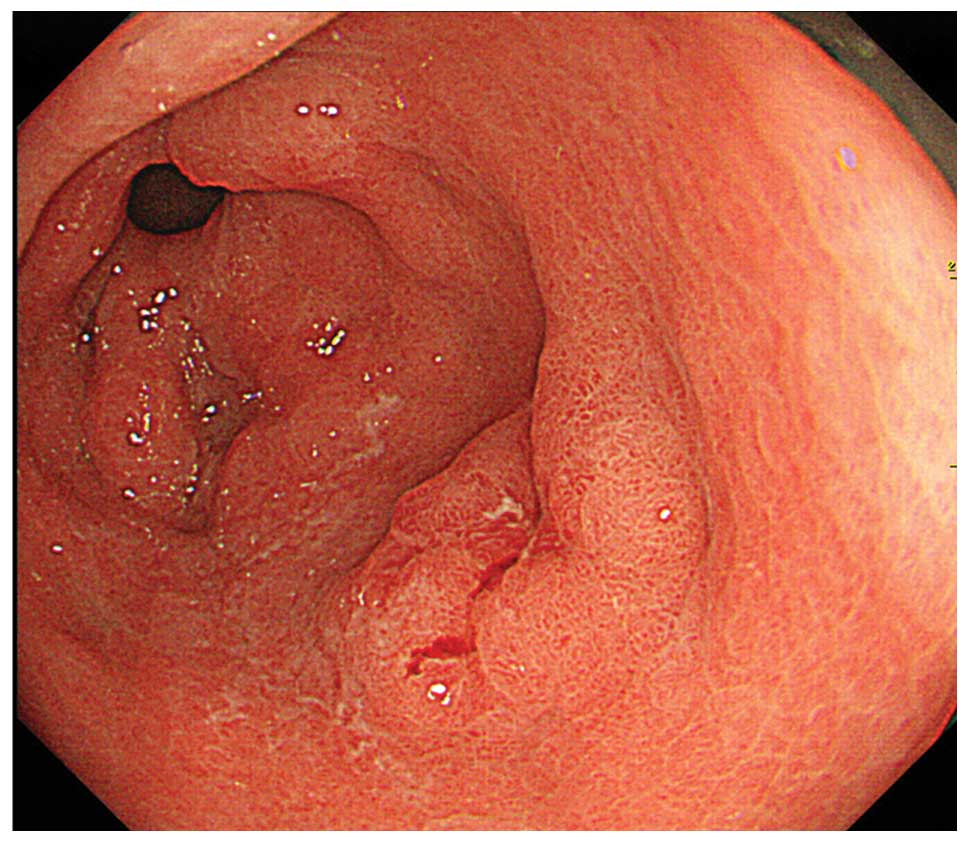
A 65-year-old man was referred to our hospital for examination of gastric cancer initially diagnosed by medical check-up. The patient’s medical and family history were unremarkable. The laboratory findings were almost within normal range, as were levels of serum carcinoembryonic antigen and cancer antigen 19-9. Esophagogastroduodenoscopy (EGD) demonstrated a superficial depressed-type gastric cancer in the antrum that proved to be a well-differentiated adenocarcinoma on biopsy (Fig. 1). Abdominal computed tomography (CT) demonstrated no evidence of distant metastases and endoscopic ultrasound (EUS) identified tumor invasion of the antral mucosa.

Figure 1

Esophagogastroduodenoscopy showing a small superficial depressed lesion in the antrum of the stomach.

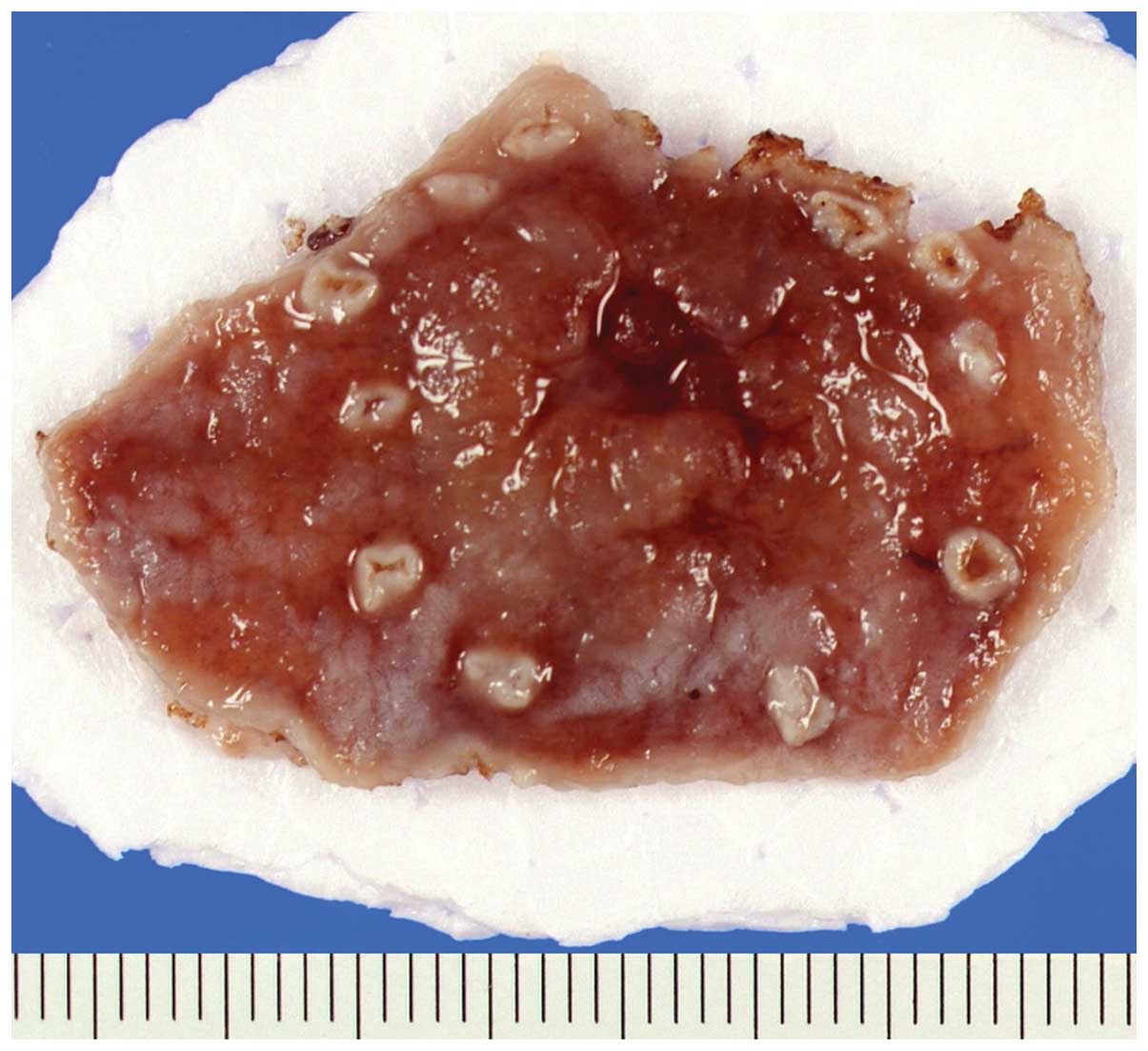
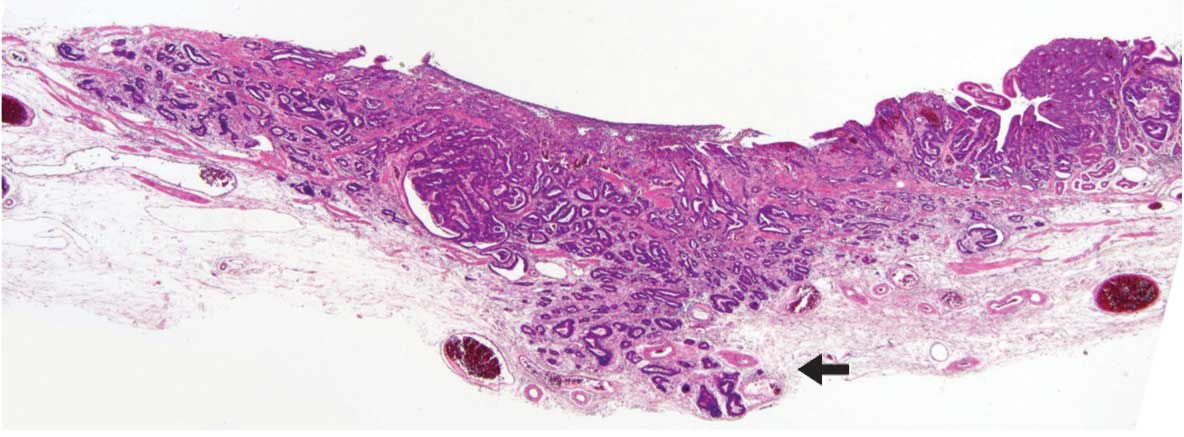
Following a clinical diagnosis of EGC confined to mucosa, ESD was performed. The macroscopic findings of the resected specimen showed that the tumor was an irregularly shaped depressed lesion, 11 mm in diameter (Fig. 2). Histological analyses revealed that the tumor was a well-differentiated adenocarcinoma that had invaded the submucosal layer to a depth of >500 μm at the center of the lesion with positive lymphatic and negative venous invasion (Fig. 3). Therefore, according to the extended criteria for endoscopic resection, the patient underwent laparoscopy-assisted distal gastrectomy with regional lymph node dissection, resulting in no residual carcinoma and no lymph node metastasis. The post-operative course was uneventful, and the patient was discharged on post-operative day 14.

Figure 2

Macroscopic appearance of the resected specimen by endoscopic submucosal dissection showing an irregularly shaped depressed lesion, 11 mm in diameter.

Figure 3

Hematoxylin and eosin-stained section of the gastric tumor demonstrating deep submucosal invasion of a well-differentiated adenocarcinoma in the center of the lesion (arrow).

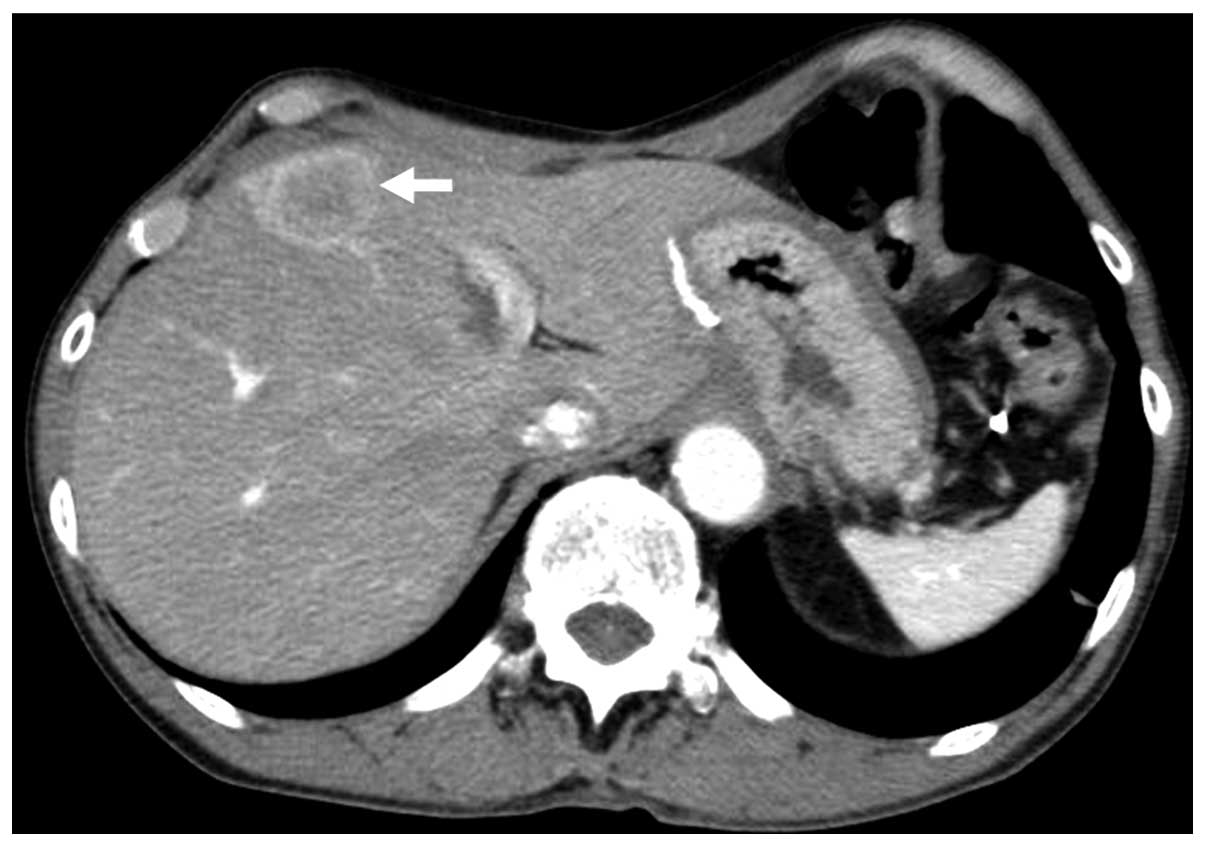
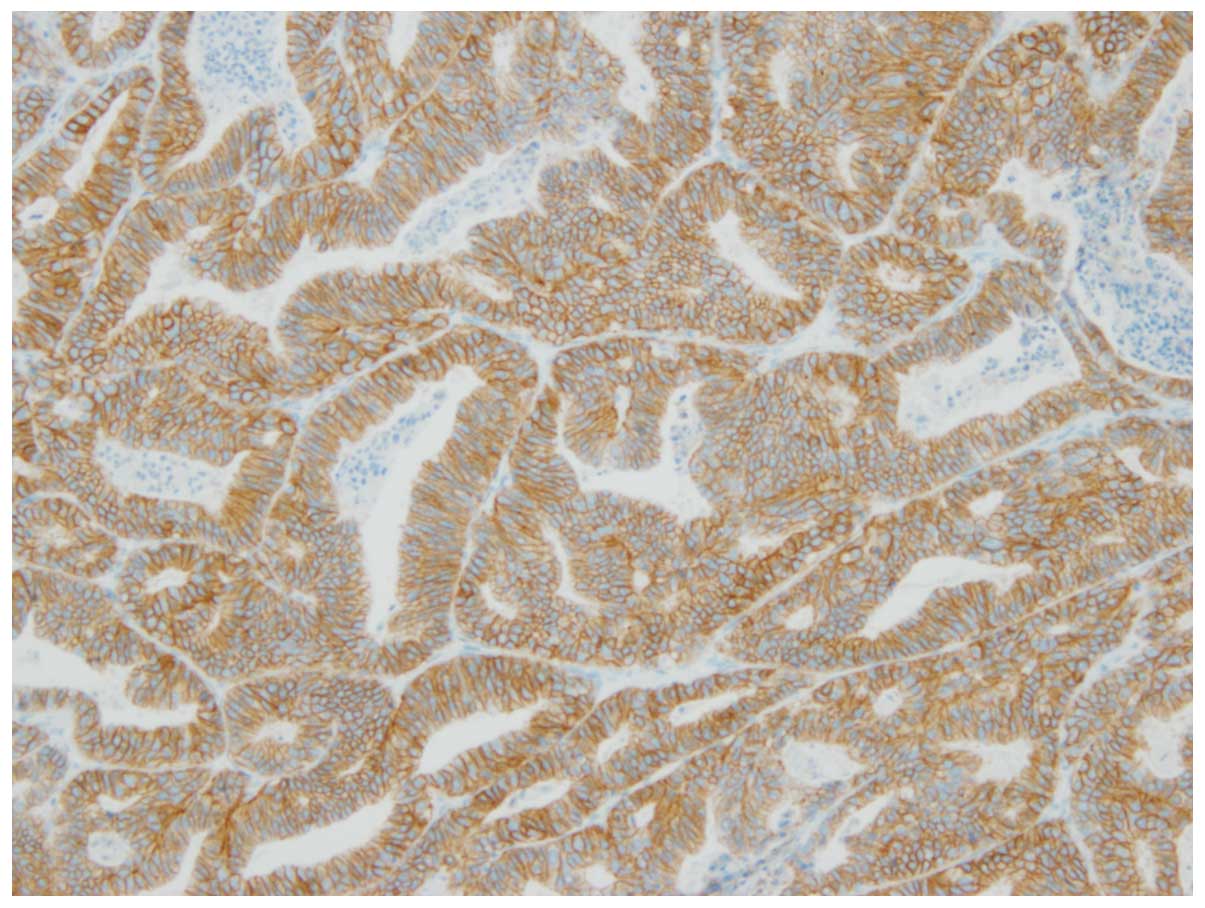
The patient underwent periodic follow-up physical examinations, and 1 year after the operation, abdominal CT showed a ring-enhanced, well-defined mass measuring 4.8 cm in diameter located in the liver (Fig. 4). Since there was no evidence of further metastatic lesions in other organs, the patient underwent surgical resection of the liver tumor. Histological examination confirmed the diagnosis of a well-differentiated adenocarcinoma originating from the previous gastric cancer and immunohistochemical analysis of the tumor showed strong reactivity for HER2 (Fig. 5). Therefore, the patient was administered trastuzumab in combination with chemotherapy consisting of capecitabine plus cisplatin.

Figure 4

Abdominal computed tomography scan showing a 4.8-cm mass in the liver, which demonstrated strong enhancement following intravenous administration of contrast material (arrow).

Figure 5

Specimen of the metastatic liver tumor showing strong basolateral membranous HER2 immunoreactivity in a well-differentiated adenocarcinoma, scored as 3+.

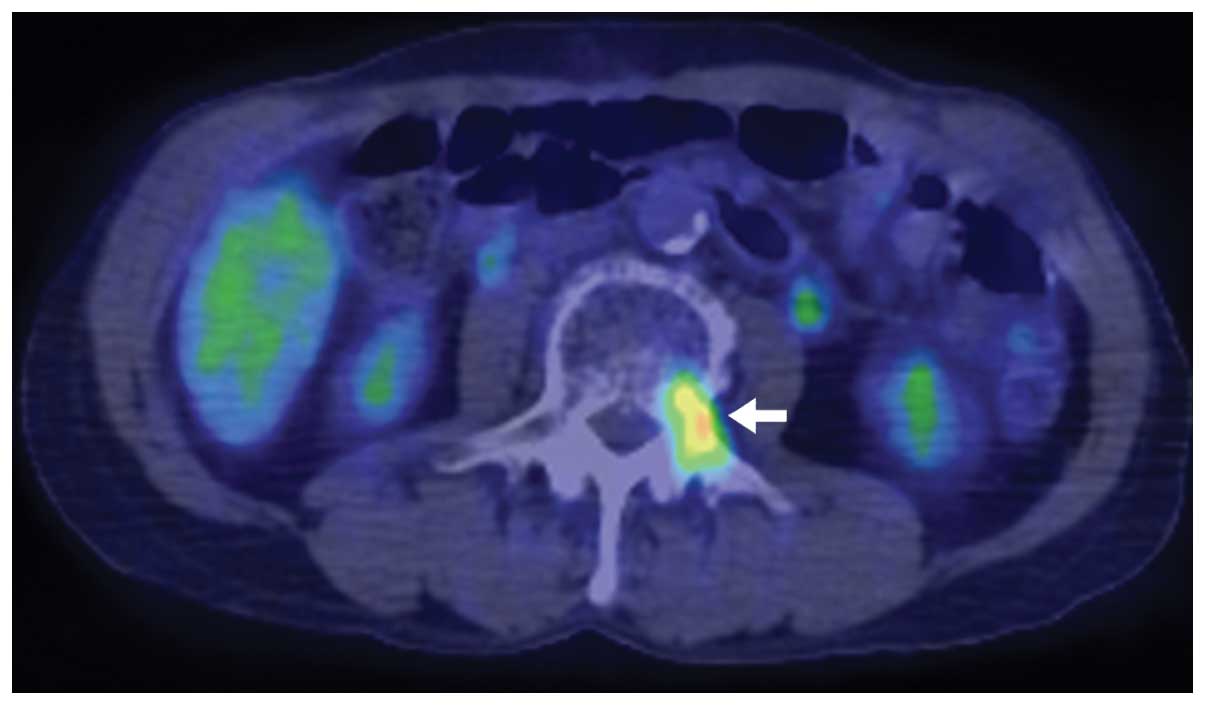
However, eight months after the second operation, the patient developed metastasis of the third lumbar vertebrae, which was detected using 18F-2-deoxy-2-fluoro-D-glucose positron emission tomography combined with CT imaging (FDG-PET/CT) (Fig. 6). Therefore, the patient was treated with trastuzumab plus irinotecan/docetaxel and was alive 12 months after the second operation.

Figure 6

18F-2-deoxy-2-fluoro-D-glucose positron emission tomography combined with computed tomography imaging (FDG-PET/CT) image showing intense FDG uptake in the third lumbar vertebrae (arrow).

Discussion

Solitary liver metastasis from EGC after curative gastrectomy is rare, with a reported incidence of 0.4–0.7%. A significant correlation between liver metastasis from gastric cancer that has invaded the submucosal layer and venous invasion has been reported (2,3,11). This clinical case emphasizes the risk of metachronous distant metastasis even after curative treatment for small EGC infiltrating the submucosa.

In the patient reported in this study, microscopic examination of a resected specimen by gastrectomy showed no residual cancer. Since endoscopic resection is generally performed using a coagulating device, the presence of cancer cells at the margins of the coagulated tissue, within the resected specimen and residual organ site, is unlikely. Therefore, in the present case, it is unlikely that cancer cells were present in the resected stomach following ESD. It has been reported that the rate of the residual tumor was 11.1% among cases where there was incomplete resection due to a positive vertical margin with submucosal invasion (10).

In general, lymph node metastasis is reported to be the most significant risk factor for the recurrence of EGC (2,3,11). Regarding the risk factors for liver metastasis, it has been reported that vascular involvement in the submucosal layer is significantly more important compared with nodal and lymphatic involvement (11,12). Furthermore, lymphatico-portal venous anastomosis due to mesenteric lymphatic occlusion is reportedly an important factor in the occurrence of liver metastasis of gastric cancer (13). Additional factors associated with cancer recurrence include lymphatic invasion, submucosal invasion, large tumor size, and a superficial spreading type (2,5,11). In contrast to these risk factors, the present EGC case was a small tumor of 11 mm in diameter without lymph node metastasis or venous invasion, although lymphatic invasion was positive. Despite the fact that these characteristics likely indicate a good prognosis, the overexpression of HER2 observed in this case may have increased the risk of metastasis, thus contributing to a poor prognosis.

Although HER2 overexpression has been reported to correlate with aggressive biological behavior and poor prognosis, there have been no universal conclusions regarding its significance as a prognostic factor (14–16). While certain studies have reported that HER2 overexpression is associated with a poor prognosis in gastric cancer, the impact of HER2 expression on patient survival is limited, particularly in earlier stages of the disease (17,18). The present case emphasizes the need for including HER2 status as a risk factor for tumor recurrence even in EGC cases.

The recent development of chemotherapy and administration of novel molecular-targeted drugs for advanced-stage gastric cancer has provided clinical benefits and improved the survival rate of patients (19–21). Trastuzumab is the current standard of care for the treatment of HER2-positive early and advanced breast cancer (22). In a recent international phase III randomized controlled trial, the addition of trastuzumab to chemotherapy significantly improved overall survival compared with chemotherapy alone in patients with advanced gastric cancer (21). Therefore, trastuzumab in combination with chemotherapy could be considered as a novel standard option for patients with HER2-positive advanced or recurrent gastric cancer.

Liver resection for hepatic metastases from gastric carcinoma is, however, not a common procedure due to poor prognosis. Therefore, there is still no widespread agreement regarding surgical resection of synchronous or metachronous liver metastases from gastric cancer (23,24). In the present case, as the first recurrence was limited to the liver, surgical resection was the chosen treatment, followed by a chemotherapy regimen consisting of trastuzumab in combination with capecitabine plus cisplatin. However, in the present case, bone metastasis appeared despite complete removal and disappearance of the liver metastasis. Additional case reports are therefore needed in order for the poor prognosis of EGC recurrence to be improved.

Despite the generally excellent outcome of EGC patients following curative surgery, a strong malignancy potential remains, which is associated with an extremely poor prognosis even in cases of small-sized tumors. Therefore, clinicians should take this possibility into consideration in follow-up management after curative treatment to treat recurrent disease earlier. Determination of the HER2 expression status in addition to conventional pathological diagnoses, such as lymph node metastasis as well as lymphatic and venous involvement may be helpful in predicting the risk of EGC recurrence.

References

1 

Japanese Gastric Cancer Association: Japanese Classification of Gastric Carcinoma - 2nd English edition. Gastric Cancer. 1:10–24. 1998. View Article : Google Scholar : PubMed/NCBI

2 

Youn HG, An JY, Choi MG, Noh JH, Sohn TS and Kim S: Recurrence after curative resection of early gastric cancer. Ann Surg Oncol. 17:448–454. 2010. View Article : Google Scholar : PubMed/NCBI

3 

Saka M, Katai H, Fukagawa T, Nijjar R and Sano T: Recurrence in early gastric cancer with lymph node metastasis. Gastric Cancer. 11:214–218. 2008. View Article : Google Scholar : PubMed/NCBI

4 

Sano T, Sasako M, Kinoshita T and Maruyama K: Recurrence of early gastric cancer. Follow-up of 1475 patients and review of the Japanese literature. Cancer. 72:3174–3178. 1993. View Article : Google Scholar : PubMed/NCBI

5 

Namikawa T, Kitagawa H, Iwabu J, et al: Clinicopathological properties of the superficial spreading type early gastric cancer. J Gastrointest Surg. 14:52–57. 2010. View Article : Google Scholar : PubMed/NCBI

6 

Ono H, Kondo H, Gotoda T, et al: Endoscopic mucosal resection for treatment of early gastric cancer. Gut. 48:225–229. 2001. View Article : Google Scholar : PubMed/NCBI

7 

Gotoda T: Endoscopic resection of early gastric cancer. Gastric Cancer. 10:1–11. 2007. View Article : Google Scholar : PubMed/NCBI

8 

Song KY, Hyung WJ, Kim HH, et al: Is gastrectomy mandatory for all residual or recurrent gastric cancer following endoscopic resection? A large-scale Korean multi-center study. J Surg Oncol. 98:6–10. 2008. View Article : Google Scholar

9 

Nagano H, Ohyama S, Fukunaga T, et al: Indications for gastrectomy after incomplete EMR for early gastric cancer. Gastric Cancer. 8:149–154. 2005. View Article : Google Scholar : PubMed/NCBI

10 

Lee HJ, Jang YJ, Kim JH, et al: Clinical outcomes of gastrectomy after incomplete EMR/ESD. J Gastric Cancer. 11:162–166. 2011. View Article : Google Scholar : PubMed/NCBI

11 

Ishida M, Morita S, Saka M, Fukagawa T, Taniguchi H and Katai H: Metachronous liver metastasis from early gastric cancer. J Gastrointest Surg. 16:837–841. 2012. View Article : Google Scholar

12 

Hyung WJ, Lee JH, Choi SH, Min JS and Noh SH: Prognostic impact of lymphatic and/or blood vessel invasion in patients with node-negative advanced gastric cancer. Ann Surg Oncol. 9:562–567. 2002. View Article : Google Scholar : PubMed/NCBI

13 

Yamagata K and Kumagai K: Experimental study of lymphogenous peritoneal cancer dissemination: migration of fluorescent-labelled tumor cells in a rat model of mesenteric lymph vessel obstruction. J Exp Clin Cancer Res. 19:211–217. 2000.

14 

Hofmann M, Stoss O, Shi D, et al: Assessment of a HER2 scoring system for gastric cancer: results from a validation study. Histopathology. 52:797–805. 2008. View Article : Google Scholar : PubMed/NCBI

15 

Grabsch H, Sivakumar S, Gray S, Gabbert HE and Müller W: HER2 expression in gastric cancer: rare, heterogeneous and of no prognostic value - conclusions from 924 cases of two independent series. Cell Oncol. 32:57–65. 2010.PubMed/NCBI

16 

Barros-Silva JD, Leitão D, Afonso L, et al: Association of ERBB2 gene status with histopathological parameters and disease-specific survival in gastric carcinoma patients. Br J Cancer. 100:487–493. 2009. View Article : Google Scholar

17 

Park DI, Yun JW, Park JH, et al: HER-2/neu amplification is an independent prognostic factor in gastric cancer. Dig Dis Sci. 51:1371–1379. 2006. View Article : Google Scholar : PubMed/NCBI

18 

Kim KC, Koh YW, Chang HM, et al: Evaluation of HER2 protein expression in gastric carcinomas: comparative analysis of 1,414 cases of whole-tissue sections and 595 cases of tissue microarrays. Ann Surg Oncol. 18:2833–2840. 2011. View Article : Google Scholar : PubMed/NCBI

19 

Boku N, Yamamoto S, Fukuda H, et al: Fluorouracil versus combination of irinotecan plus cisplatin versus S-1 in metastatic gastric cancer: a randomised phase 3 study. Lancet Oncol. 10:1063–1069. 2009. View Article : Google Scholar : PubMed/NCBI

20 

Koizumi W, Narahara H, Hara T, et al: S-1 plus cisplatin versus S-1 alone for first-line treatment of advanced gastric cancer (SPIRITS trial): a phase III trial. Lancet Oncol. 9:215–221. 2008. View Article : Google Scholar : PubMed/NCBI

21 

Bang YJ, Van Cutsem E, Feyereislova A, et al: Trastuzumab in combination with chemotherapy versus chemotherapy alone for treatment of HER2-positive advanced gastric or gastrooesophageal junction cancer (ToGA): a phase 3, open-label, randomised controlled trial. Lancet. 376:687–697. 2010. View Article : Google Scholar

22 

Boekhout AH, Beijnen JH and Schellens JH: Trastuzumab. Oncologist. 16:800–810. 2011. View Article : Google Scholar

23 

Sakamoto Y, Sano T, Shimada K, et al: Favorable indications for hepatectomy in patients with liver metastasis from gastric cancer. J Surg Oncol. 95:534–539. 2007. View Article : Google Scholar : PubMed/NCBI

24 

Munekage M, Okabayashi T, Hokimoto N, et al: A case with synchronous multiple liver metastases from gastric carcinoma: postoperative long-term disease-free survival. Langenbecks Arch Surg. 394:749–753. 2009. View Article : Google Scholar : PubMed/NCBI

Related Articles

  • Abstract
  • View
  • Download
  • Twitter
Copy and paste a formatted citation
Spandidos Publications style
Namikawa T, Shiga M, Ichikawa K, Kitagawa H, Kobayashi M and Hanazaki K: Metachronous liver and bone metastasis from small early gastric carcinoma without lymph node involvement: A case report. Mol Clin Oncol 1: 249-252, 2013.
APA
Namikawa, T., Shiga, M., Ichikawa, K., Kitagawa, H., Kobayashi, M., & Hanazaki, K. (2013). Metachronous liver and bone metastasis from small early gastric carcinoma without lymph node involvement: A case report. Molecular and Clinical Oncology, 1, 249-252. https://doi.org/10.3892/mco.2012.50
MLA
Namikawa, T., Shiga, M., Ichikawa, K., Kitagawa, H., Kobayashi, M., Hanazaki, K."Metachronous liver and bone metastasis from small early gastric carcinoma without lymph node involvement: A case report". Molecular and Clinical Oncology 1.2 (2013): 249-252.
Chicago
Namikawa, T., Shiga, M., Ichikawa, K., Kitagawa, H., Kobayashi, M., Hanazaki, K."Metachronous liver and bone metastasis from small early gastric carcinoma without lymph node involvement: A case report". Molecular and Clinical Oncology 1, no. 2 (2013): 249-252. https://doi.org/10.3892/mco.2012.50
Copy and paste a formatted citation
x
Spandidos Publications style
Namikawa T, Shiga M, Ichikawa K, Kitagawa H, Kobayashi M and Hanazaki K: Metachronous liver and bone metastasis from small early gastric carcinoma without lymph node involvement: A case report. Mol Clin Oncol 1: 249-252, 2013.
APA
Namikawa, T., Shiga, M., Ichikawa, K., Kitagawa, H., Kobayashi, M., & Hanazaki, K. (2013). Metachronous liver and bone metastasis from small early gastric carcinoma without lymph node involvement: A case report. Molecular and Clinical Oncology, 1, 249-252. https://doi.org/10.3892/mco.2012.50
MLA
Namikawa, T., Shiga, M., Ichikawa, K., Kitagawa, H., Kobayashi, M., Hanazaki, K."Metachronous liver and bone metastasis from small early gastric carcinoma without lymph node involvement: A case report". Molecular and Clinical Oncology 1.2 (2013): 249-252.
Chicago
Namikawa, T., Shiga, M., Ichikawa, K., Kitagawa, H., Kobayashi, M., Hanazaki, K."Metachronous liver and bone metastasis from small early gastric carcinoma without lymph node involvement: A case report". Molecular and Clinical Oncology 1, no. 2 (2013): 249-252. https://doi.org/10.3892/mco.2012.50
Follow us
  • Twitter
  • LinkedIn
  • Facebook
About
  • Spandidos Publications
  • Careers
  • Cookie Policy
  • Privacy Policy
How can we help?
  • Help
  • Live Chat
  • Contact
  • Email to our Support Team