Introduction
Breast cancer is the most commonly diagnosed cancer
in women. Up to 2013, breast cancer reportedly accounted for 29% of
all new cancer cases and 14% of all cancer -related deaths among
women worldwide (1). Breast
cancer-related mortality is closely associated with the development
of metastatic potential of the primary tumor. Despite the
significant efforts to reduce breast cancer metastasis and
mortality, its prognosis remains poor. Therefore, we must identify
novel biomarkers to improve the prognosis of breast cancer. It was
previously demonstrated that the expression of osteopontin (OPN)
may reflect breast cancer progression and metastasis (2).
OPN is a secreted glycophosphoprotein that has been
implicated in physiologic al as well as pathological processes
(3). Over the last few years, a
number of studies have reported that aberrant OPN expression is
closely associated with tumorigenesis and metastasis in several
tumors, including breast cancer (4–6). In
addition, several studies demonstrated that OPN overexpression was
associated with poor prognosis of patients with breast cancer
(7–11). OPN may also be used in conjunction
with other markers of known prognostic and predictive value that
are commonly evaluated in the primary tumor, such as estrogen
receptors (ER), progesterone receptors (PR) and HER2 (12, 13). However, the emerging data regarding
the ability of OPN to predict disease progression, overall survival
(OS) and disease-free survival (DFS) in patients with breast cancer
have been inconsistent. To address this issue, we conducted a
meta-analysis aimed at estimating the value of OPN as a prognostic
marker for breast cancer and to confirm the association between OPN
and several clinicopathological characteristics of breast
cancer.
Materials and methods
Study selection
A search was conducted through the PubMed electronic
database to identify studies investigating the association of
clinicopathological parameters and prognosis with OPN expression in
breast cancer up to February 14, 2014, for inclusion in the present
meta-analysis. The search terms were ‘breast cancer’ and ‘OPN’. The
published studies that were included in this meta-analysis were
required to meet the following criteria: i) the type of tumor
investigated was breast cancer; ii) the studies assessed the
association between OPN expression and clinicopathological
characteristics and/or survival and only full peer-reviewed papers
had been published as full texts; and iii) the protein expression
was evaluated in tumor tissues by immunohistochemistry (IHC). There
were no limitations regarding the language or the patient
numbers.
Data extraction
Two investigators independently reviewed all
potentially relevant studies to minimize bias and improve
reliability. The following data were extracted from the eligible
studies: name of first author, name of journal, year of
publication, sample size, test method, cut-off value, age, HER2,
PR, ER, p53, menopausal status, differentiation, lymph node
metastasis, stage and OPN expression-related survival. When the
prognosis was plotted as a Kaplan-Meier curve, the GetData Graph
Digitizer 2.24 software (http://getdata-graph-digitizer.com) and HR digitizer
Engauge 4.0 software (http://engauge-digitizer.software.informer.com/) were
used to digitize and extract the data. In brief, the Kaplan-Meier
curve was saved as a graph and open ed in the GetData Graph
Digitizer 2.24 and Engauge Digitizer 4.0 software, the scale was
set (coordinate system) and, finally, the points of the
Kaplan-Meier curve were manually digitized.
Quality assessment
The methodological quality of each included study
was assessed on basis of the Newcastle-Ottawa scale (NOS) (14) by two independent reviewers. A star
or point system of NOS has been developed for the evaluation. The
scores are shown in Table 1. The
publications included in our meta-analysis, with scores of ≥ 5,
were rated as high-quality.
 | Table I.Main characteristics and results of
the eligible studies. |
Table I.
Main characteristics and results of
the eligible studies.
| First authors
(Refs.) | Journal | Year | Country | Methods | Duration of follow-up
(months) | Cut-off point
(high/low) | No. of patients | No. of
deceased/alive/lost | HR estimation | Quality assessment
(0–8) |
|---|
| de Silva Rudland
(15) | Clin Cancer Res | 2006 | UK | IHC | 216 | ≥1% (143/148) | 291 | − | RR+95 %CI | 5 |
| Kim (16) | J Korean Med Sci | 1998 | Korea | IHC | 160 | 儥5% (221/32) | 253 | 52/153/38 | RR+95 %CI | 5 |
| Ribeiro-Silva A and
Oliveira da Costa (25) | Int J Biol
Markers | 2008 | Brazil | IHC | − | ≥1% (65/35) | 100 | − |
| 5 |
| Wang (31) | Radiology | 2010 | China | IHC | − | Score ≥2 (92/49) | 141 | − | − | 7 |
| Rudland (17) | Cancer Res | 2002 | UK | IHC | 228 | >5% (221/112) | 333 | 168/165/- | RR+95 %CI | 6 |
| Pang (18) | Cancer Epidemiol | 2013 | China | IHC | 92 | Score ≥2
(119/51) | 170 | − | HR+95 %CI | 4 |
| Wang (19) | Eur J Clin
Invest | 2008 | China | IHC | 62.4 | Score >4
(33/84) | 117 | − | Survival
curves | 5 |
| Tuck (9) | Int J Cancer | 1998 | Canada | IHC | 195.6 | Score >4
(11/143) | 154 | 45/109/- | Survival
curves | 4 |
Statistical analysis
All the statistical analyses were performed using
Stata 12.0 software for Windows (Stata Corporation, College
Station, TX, USA). The pooled estimates of odds ratios (ORs) with
their 95% confidence intervals (CIs) were applied to assess the
association between OPN expression and the clinical parameters of
breast cancer, including age, HER2, PR, ER, p53, menopausal status,
differentiation, lymph node metastasis and stage. The pooled
estimates of hazard ratios (HRs) with their 95% CIs were applied to
estimate the association between OPN expression and the survival
outcome of breast cancer. The statistical heterogeneity within
studies was detected with the Chi-squared based Q-test (P>0.10)
and I2. When I2<50%, there was no
heterogeneity and the fixed-effects model was used. In the opposite
case, the random-effects model was used. The assessment of
publication bias was performed by Egger's and Begg's tests and the
potential publication bias was deemed significant at P<0.05.
Results
Description of studies
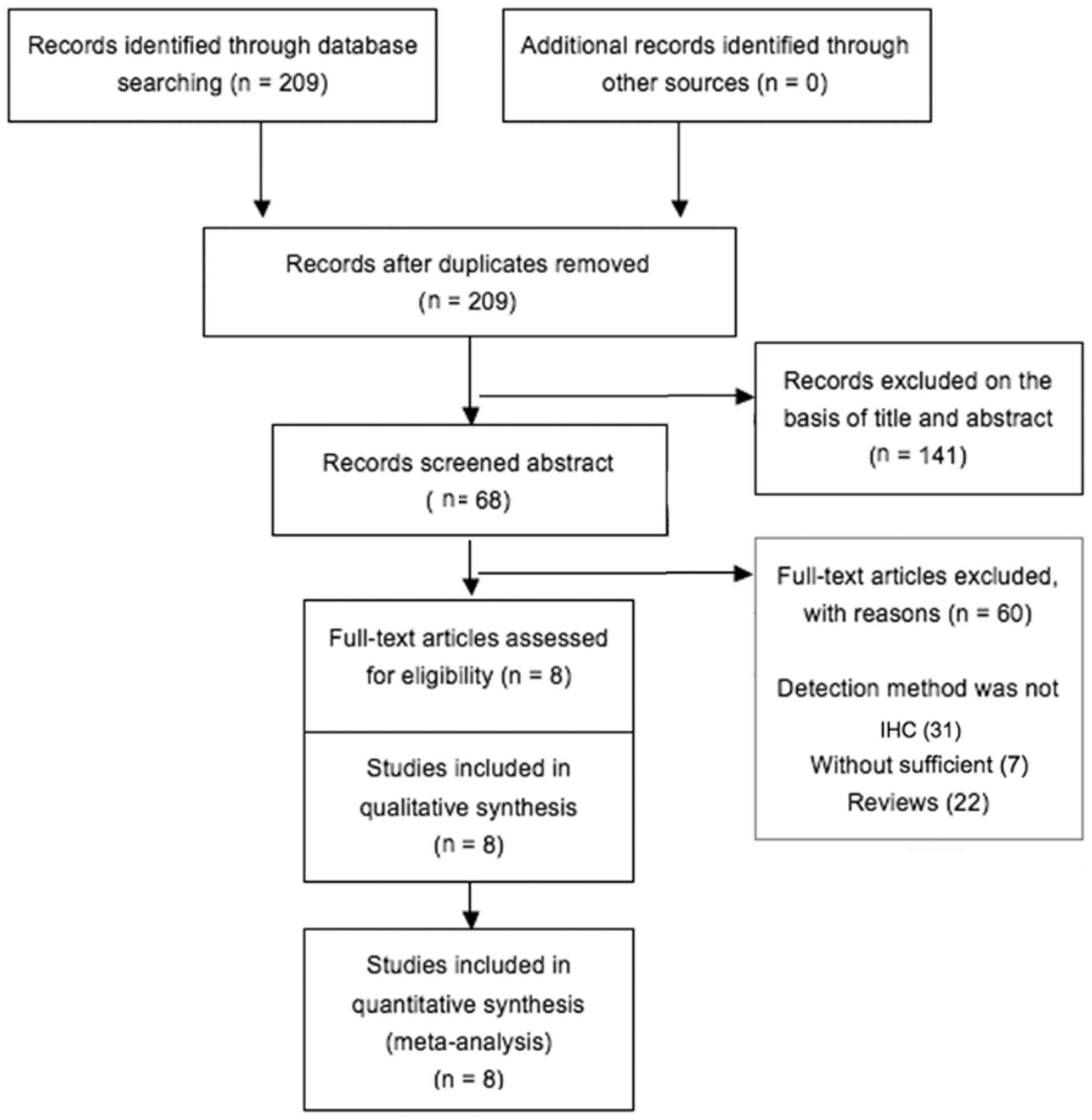
Following a combined search in PubMed using the
terms ‘breast cancer’ and ‘OPN’ 209 potentially relevant citations
were retrieved. After excluding animal experiments, non-breast
cancer-related studies, non-original articles, or studies lacking
data on the association of OPN with clinicopathological
characteristics and/or OS, only 8 studies met the inclusion
criteria for the present analysis (Fig. 1). Two of these publications lacked
information on survival and follow-up and could not be included in
the survival analysis. The sample size ranged between 100 and 333
patients. The expression of OPN was detected by IHC in all the
studies. Detailed information on the parameters of the included
publications is provided in Table
I.
Correlation of OPN expression with
clinicopathological characteristics
The main results of the meta-analysis are summarized
in Table II. In certain studies,
presented data on clinicopathological characteristics could not be
extracted and when parameters were provided by >3 publications,
a meta-analysis was performed. There was no correlation between OPN
expression and age (pooled OR= 1.132, 95% CI: 0.737-1.737,
P=0.572), HER2 (pooled OR= 1.780, 95% CI: 0.533-5.950, P=0.349), PR
(pooled OR= 0.716, 95% CI: 0.333-1.538, P=0.392), ER (pooled OR=
0.915, 95% CI: 0.477-1.753, P=0.798), p53 (pooled OR= 1.190, 95%
CI: 0.557-2.545, P=0.654), menopausal status (pooled OR= 0.844, 95%
CI: 0.368-1.935, P=0.688), tumor differentiation (pooled OR= 0.699,
95% CI: 0.386-1.265, P=0.237) and stage (pooled OR= 0.479, 95% CI:
0.202-1.136, P=0.095). However, OPN expression was positively
correlated with lymph node metastasis compared to the absence of
lymph node metastasis. (pooled OR=2.026, 95% CI: 1.199-3.425,
P=0.008).
| Table II.Main results of the meta-analysis
between confidence interval. |
Table II.
Main results of the meta-analysis
between confidence interval.
| Clinical
parameters | Studies
(refs.) | Overall OR (95%
CI) | Heterogeneity test
Q, I2, P (model) |
|---|
| Age (≤ 60 vs.
>60 years) | 16, 25, 18 | 1.132
(0.737-1.737) | 0.23, 0.0%, 0.572
(fixed-effects) |
| HER2 (positive vs.
negative) | 25, 31, 18 | 1.780
(0.533-5.950) | 5.87, 65.9%, 0.349
(random-effects) |
| ER (positive vs.
negative) | 15, 16, 25, 31,
18 | 0.915
(0.477-1.753) | 16.27, 75.4%, 0.798
(random-effects) |
| PR (positive vs.
negative) | 25, 31, 17, 18 | 0.716
(0.333-1.538) | 14.95, 79.9%, 0.392
(random-effects) |
| p53 (positive vs.
negative) | 16, 25, 17 | 1.190
(0.557-2.545) | 7.07, 71.7%, 0.654
(random-effects) |
| Differentiation
(poor vs. high) | 15, 16, 25, 31, 17,
18 | 0.699
(0.386-1.265) | 13.29, 62.4%, 0.237
(random-effects) |
| LN metastasis (+
vs. -) | 15, 16, 25, 31 17,
18 | 2.026
(1.199-3.425) | 16.77, 70.2%, 0.008
(random-effects) |
| Stage (III/IV vs.
I/II) | 25, 31, 18 | 0.479
(0.202-1.136) | 6.32, 68.3%, 0.095
(random-effects) |
| Menopausal status
(premenopausal vs. postmenopausal) | 25, 31, 18 | 0.844
(0.368-1.935) | 7.49, 73.3%, 0.688
(random-effects) |
Effect of OPN expression on OS of
breast cancer
The different results were extracted from previous
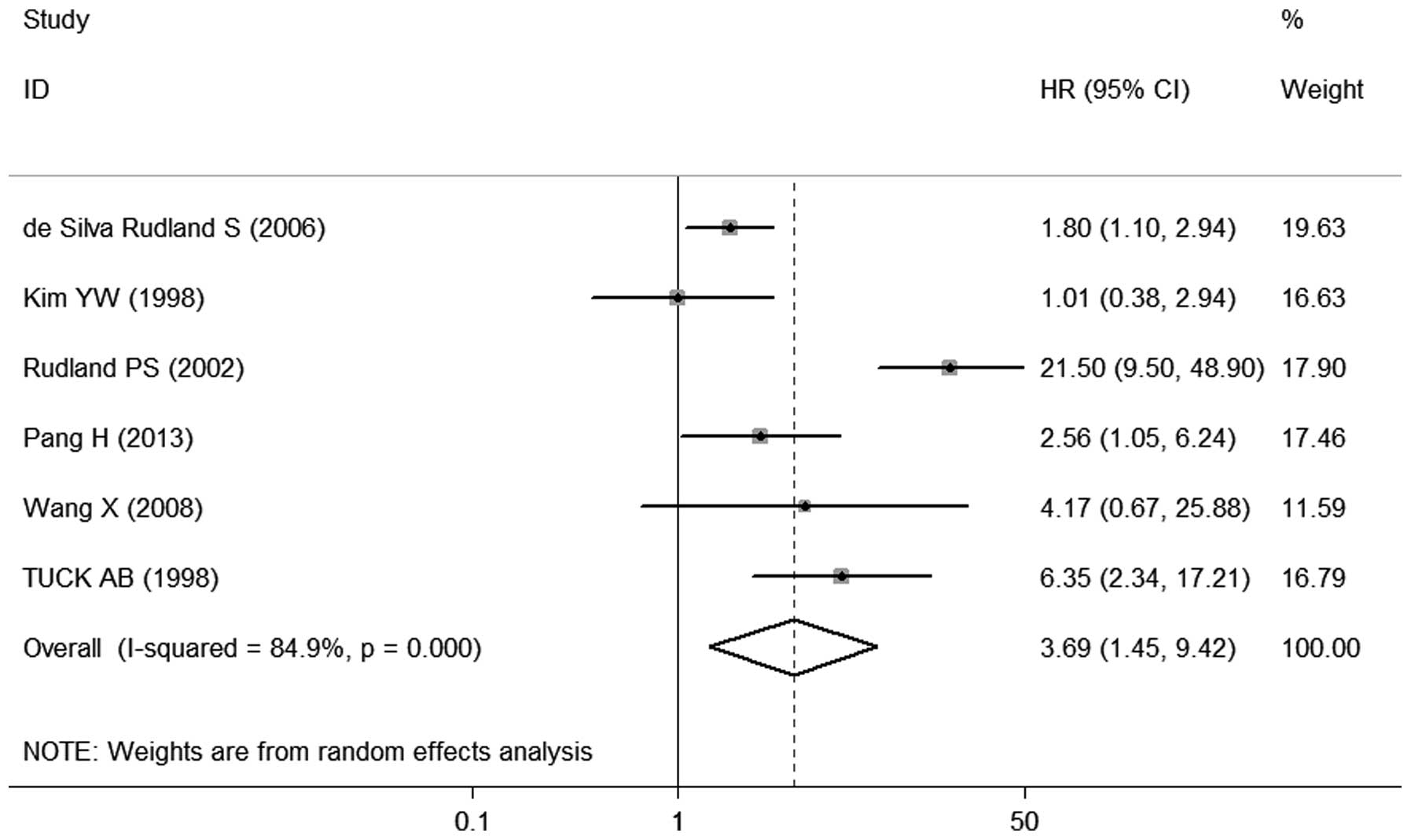
studies on the effect of OPN expression on OS. A total of 6 studies
(9, 15–19)
provided data on OS. All 6 studies investigating OS were pooled
into the meta-analysis. The results demonstrated that OPN
overexpression was correlated with poor OS (HR=3. 69, 95% CI: 1.
45-9.42, P=0.000) (Fig. 2), with
heterogeneity in the data (χ2 =33.04, I2
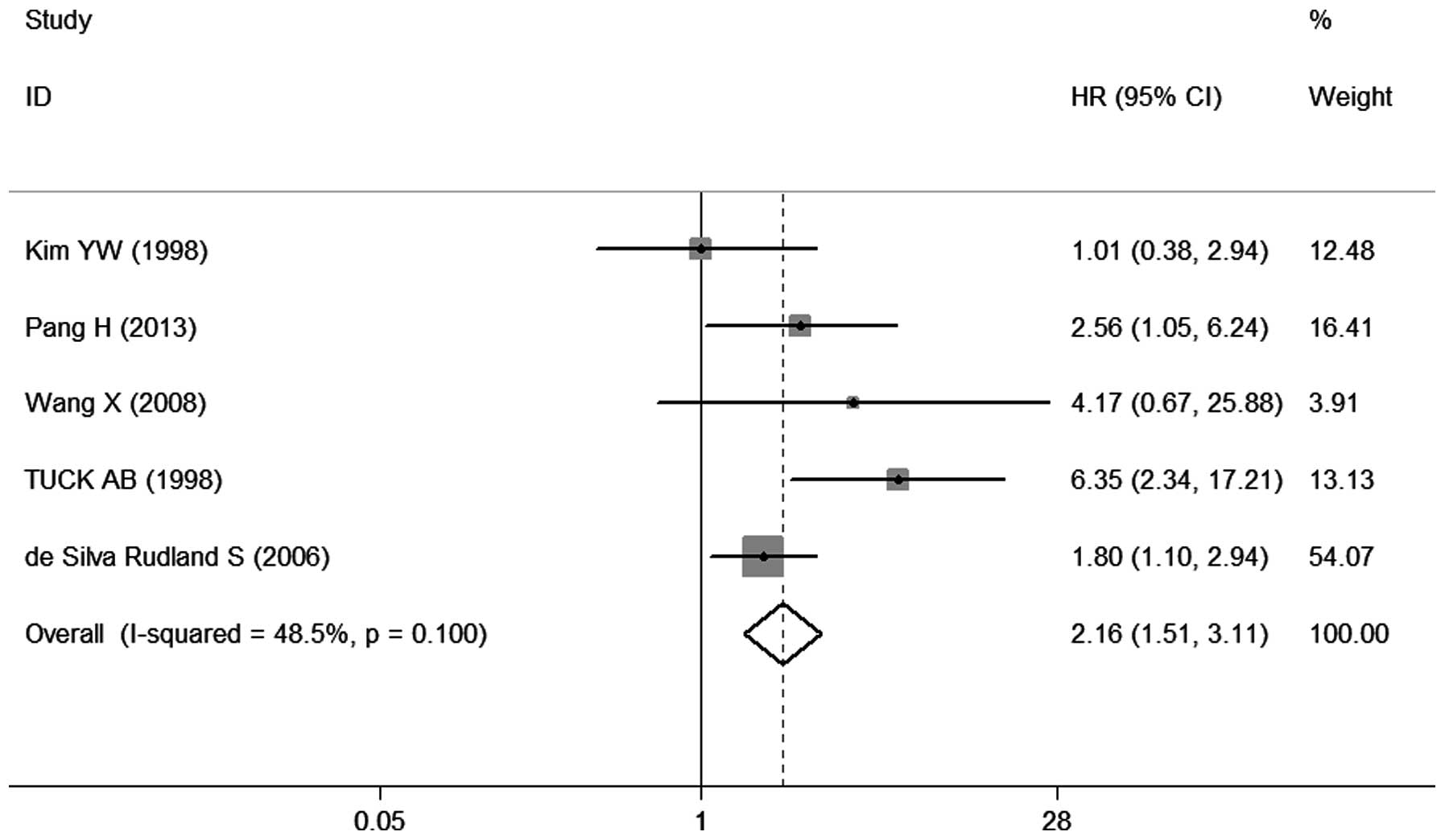
=84.9%, P=0.000). In order to test the heterogeneity in OS, we
performed sensitivity analyses to assess the stability of the
results. Our results suggested that the heterogeneity for OS was
significantly decreased by exclusion of the study of Rudland et
al (17) (χ2 =7.77,
I2 =48.5%, P=0.100), with a combined OR of 2.16 (95% CI:
1.5 1 −3.1 1, P=0.000) (Fig. 3),
demonstrating that the sensitivity is low and the result is more
robust and credible.
Effect of OPN expression on DFS of
breast cancer
The different results were extracted from previous
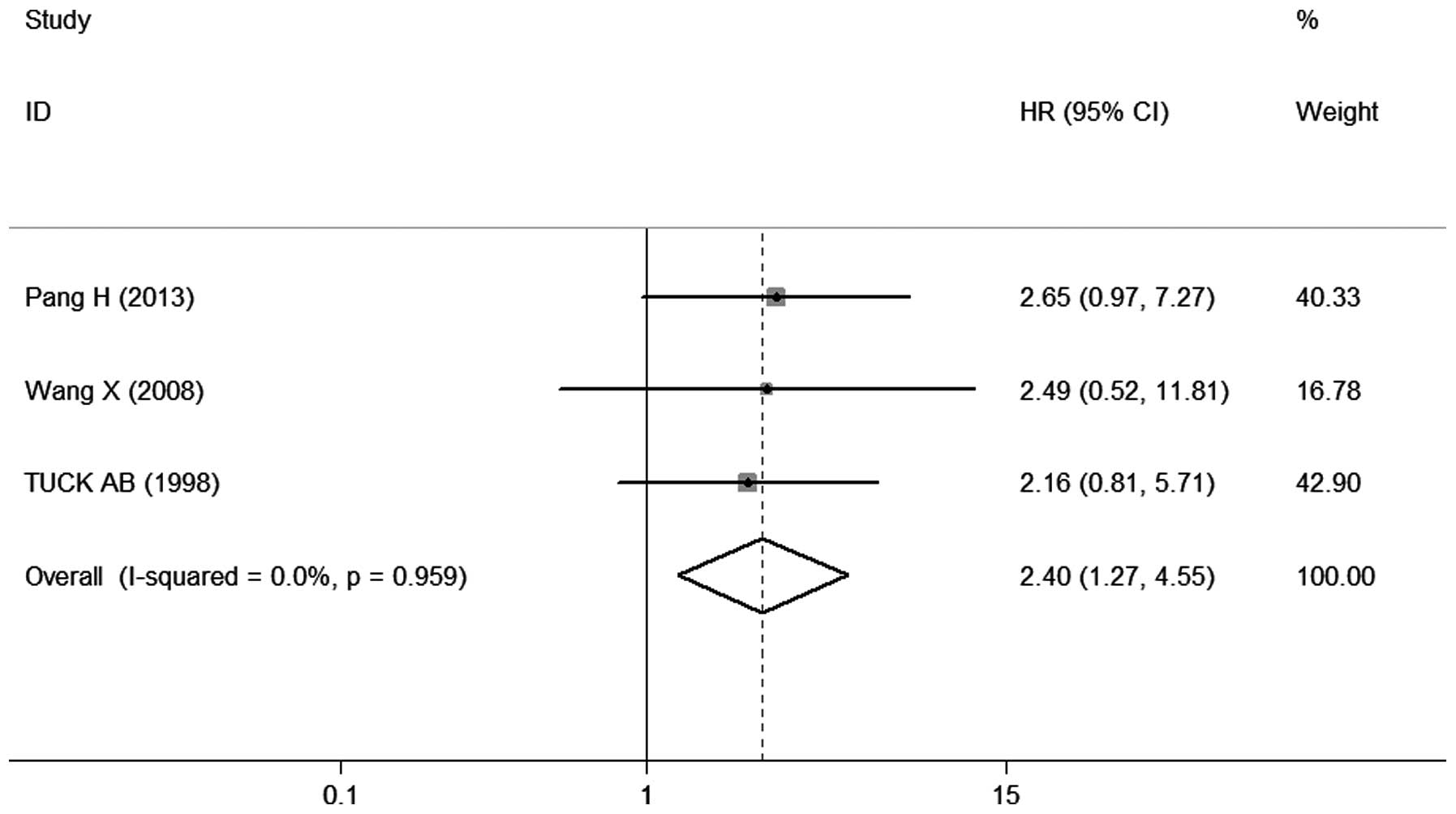
studies on the effect of OPN expression on DFS. A total of 3
studies (9, 18, 19)
provided information on DFS. The combined data of the 3 studies
indicated that patients with OPN overexpression exhibited a shorter
DFS (pooled HR=2.40, 95% CI: 1.2 7 −4.56, P=0.007) (Fig. 4), without any heterogeneity in the
data (χ2 =0.08, I2 =0.0%, P=0.959),
suggesting that the sensitivity is low and the result is more
robust and credible. These studies indicated that OPN
overexpression is associated with the prognosis of breast
cancer.
Publication bias
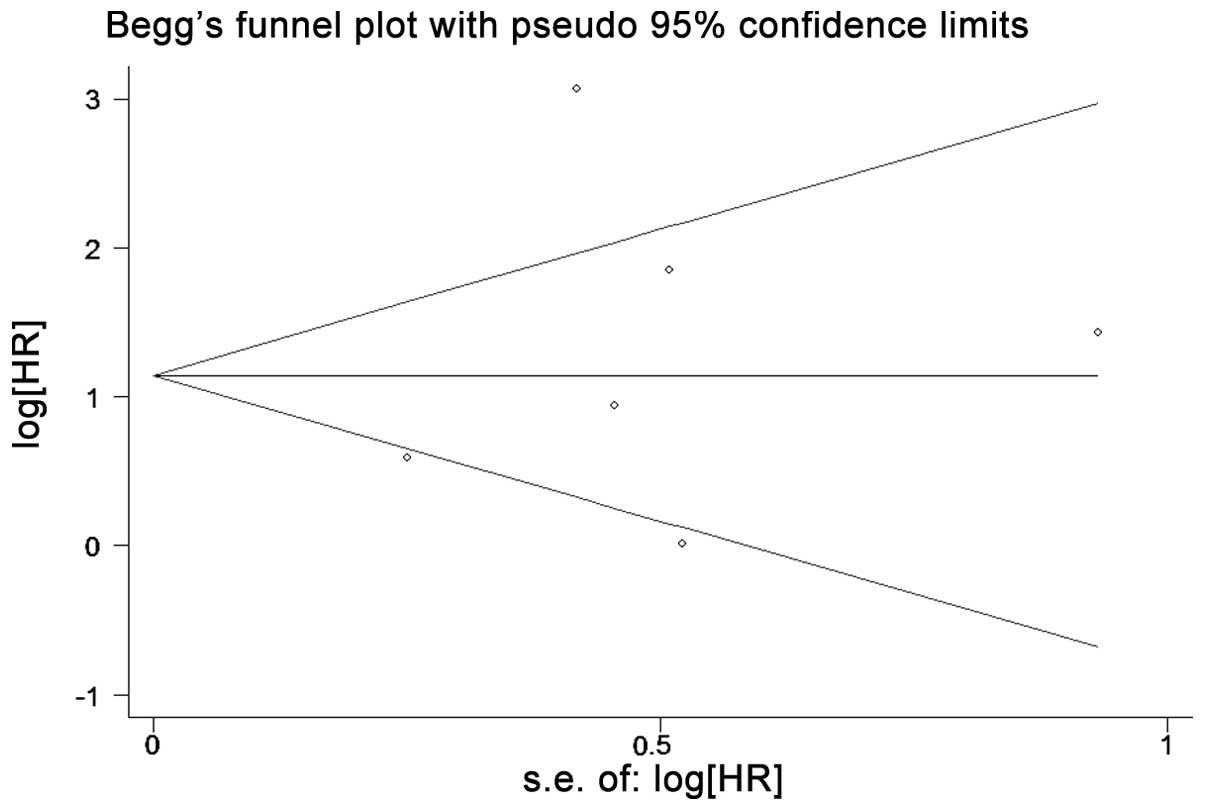
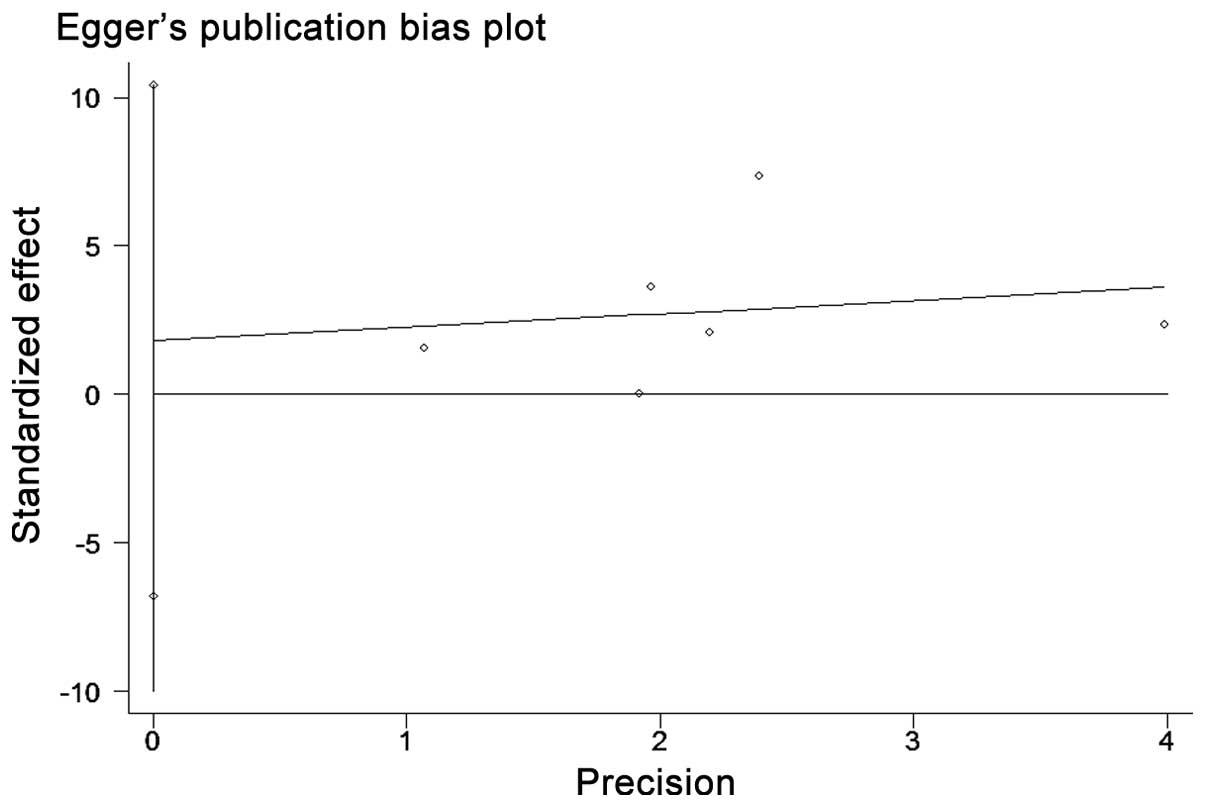
Begg's funnel plot with pseudo 95% confidence limits
and Egger's test were applied to estimate the publication bias of
the included literature (Figs. 5
and 6). Begg's and Egger's tests
did not reveal any evidence of obvious asymmetry in the overall
meta-analysis of all the studies.
Discussion
Meta-analyses based on individual data are currently
considered the gold en standard for systematic reviews (20). Meta-analysis has been successfully
applied in the evaluation of prognostic indicators in patients with
malignant diseases (21–24). To the best of our knowledge, this
meta-analysis is the first to systematically review the association
of OPN with clinicopathological parameters and prognostic factors
in breast cancer.
In our study, a combined analysis of all the
included articles that compared breast cancer patients according to
the tumor expression of OPN, revealed a poor prognostic outcome in
patients expressing high levels of OPN. OPN is a prognostic factor
in breast cancer; alt hough OPN overexpression was reportedly
associated with lower tumor grade (17, 18)
and lower tumor stage (18), PR
status (18, 25), ER status (25) and p53 status (17), our results indicated that the
positive expression of OPN was not correlated with these
clinicopathological parameters. The results indicated that OPN
expression is significantly associated with lymph node metastasis,
OS and DFS. Tumor invasion and metastasis have been frequently
correlated with poor prognosis of breast cancer (26, 27), as described above. Previous studies
have reported high OPN levels in the blood and primary tumors of
breast cancer patients and, in certain cases, this was correlated
with a poor prognosis (6, 9, 10,
17). A highly metastatic human
breast cancer cell line was shown to express significantly higher
levels of OPN compared to a cell line of low metastatic potential
(28). Dai et al (29) used a humaniz ed OPN-specific
antibody to effectively prevent breast cancer cell invasion in
vitro and inhibit pulmonary metastasis of breast cancer in nude
mice. OPN may act as a diagnostic marker as well as a potential
therapeutic target for breast cancer metastasis. Tuck et al
(30) demonstrated that OPN was
crucial for the metastasis of breast cancer, which may be regulated
through activation of the protein kinase C, phospholipase C and
phosphoinositide 3-kinase pathways. Consequently, OPN may be a
marker for poor prognosis and lymph node metastasis in breast
cancer.
There were several important limitations to this
meta-analysis. First, we searched studies only from one database
and the number of included studies was relatively small. Second, 4
of the 8 studies were from Asia (3 from China and 1 from Korea), 3
were from Europe and 1 was from Brazil. Distinct differences among
different locations may result in publication bias. Third, the
cut-off values for determining the positive or negative expression
of OPN were different among the included studies, which may
contribute to heterogeneity. New studies with the same cut-off
values must be included in a combined analysis for further
evaluation. Finally, there are only a few studies specifically
investigating OPN and the prognosis of breast cancer.
In summary, in this meta-analysis, we demonstrated
that OPN expression was not correlated with clinicopathological
parameters, apart from lymph node metastasis. Therefore, we
conclude that OPN overexpression is associated with poor OS and DFS
and may serve as a potential molecular target for the clinical
management of breast cancer.
Acknowledgements
This study was supported by the National Natural
Scientific Foundation of China (grant no. 81100225).
References
|
1
|
Siegel R, Naishadham D and Jemal A: Cancer
statistics, 2013. CA Cancer J Clin. 63:11–30. 2013. View Article : Google Scholar : PubMed/NCBI
|
|
2
|
Furger KA, Menon RK, Tuck AB, Bramwell VH
and Chambers AF: The functional and clinical roles of osteopontin
in cancer and metastasis. Curr Mol Med. 1:621–632. 2001. View Article : Google Scholar : PubMed/NCBI
|
|
3
|
Denhardt DT and Guo X: Osteopontin: a
protein with diverse functions. FASEB J. 7:1475–1482.
1993.PubMed/NCBI
|
|
4
|
Brown LF, Papadopoulos-Sergiou A, Berse B,
et al: Osteopontin expression and distribution in human carcinomas.
Am J Pathol. 145:610–623. 1994.PubMed/NCBI
|
|
5
|
Agrawal D, Chen T, Irby R, et al:
Osteopontin identified as lead marker of colon cancer progression,
using pooled sample expression profiling. J Natl Cancer Inst.
94:513–521. 2002. View Article : Google Scholar : PubMed/NCBI
|
|
6
|
Coppola D, Szabo M, Boulware D, et al:
Correlation of osteopontin protein expression and pathological
stage across a wide variety of tumor histologies. Clin Cancer Res.
10:184–190. 2004. View Article : Google Scholar : PubMed/NCBI
|
|
7
|
Tuck AB and Chambers AF: The role of
osteopontin in breast cancer: clinical and experimental studies. J
Mammary Gland Biol Neoplasia. 6:419–429. 2001. View Article : Google Scholar : PubMed/NCBI
|
|
8
|
Tuck AB, Chambers AF and Allan AL:
Osteopontin overexpression in breast cancer: knowledge gained and
possible implications for clinical management. J Cell Biochem.
102:859–868. 2007. View Article : Google Scholar : PubMed/NCBI
|
|
9
|
Tuck AB, O'Malley FP, Singhal H, et al:
Osteopontin expression in a group of lymph node negative breast
cancer patients. Int J Cancer. 79:502–508. 1998. View Article : Google Scholar : PubMed/NCBI
|
|
10
|
Singhal H, Bautista DS, Tonkin KS, et al:
Elevated plasma osteopontin in metastatic breast cancer associated
with increased tumor burden and decreased survival. Clin Cancer
Res. 3:605–611. 1997.PubMed/NCBI
|
|
11
|
Bellahcène A and Castronovo V: Increased
expression of osteonectin and osteopontin, two bone matrix
proteins, in human breast cancer. Am J Pathol. 146:95–100.
1995.PubMed/NCBI
|
|
12
|
Bramwell VH, Doig GS, Tuck AB, et al:
Serial plasma osteopontin levels have prognostic value in
metastatic breast cancer. Clin Cancer Res. 12:3337–3343. 2006.
View Article : Google Scholar : PubMed/NCBI
|
|
13
|
Chang J, Clark GM, Allred DC, Mohsin S,
Chamness G and Elledge RM: Survival of patients with metastatic
breast carcinoma: importance of prognostic markers of the primary
tumor. Cancer. 97:545–553. 2003. View Article : Google Scholar : PubMed/NCBI
|
|
14
|
Stang A: Critical evaluation of the
Newcastle-Ottawa scale for the assessment of the quality of
nonrandomized studies in meta-analyses. Eur J Epidemiol.
25:603–605. 2010. View Article : Google Scholar : PubMed/NCBI
|
|
15
|
de Silva Rudland S, Martin L, Roshanlall
C, et al: Association of S100A4 and osteopontin with specific
prognostic factors and survival of patients with minimally invasive
breast cancer. Clin Cancer Res. 12:1192–1200. 2006. View Article : Google Scholar : PubMed/NCBI
|
|
16
|
Kim YW, Park YK, Lee J, Ko SW and Yang MH:
Expression of osteopontin and osteonectin in breast cancer. J
Korean Med Sci. 13:652–657. 1998. View Article : Google Scholar : PubMed/NCBI
|
|
17
|
Rudland PS, Platt-Higgins A, El-Tanani M,
et al: Prognostic significance of the metastasis-associated protein
osteopontin in human breast cancer. Cancer Res. 62:3417–3427.
2002.PubMed/NCBI
|
|
18
|
Pang H, Lu H, Song H, et al: Prognostic
values of osteopontin-c, E-cadherin and beta-catenin in breast
cancer. Cancer Epidemiol. 37:985–992. 2013. View Article : Google Scholar : PubMed/NCBI
|
|
19
|
Wang X, Chao L, Ma G, et al: Increased
expression of osteopontin in patients with triple-negative breast
cancer. Eur J Clin Invest. 38:438–446. 2008. View Article : Google Scholar : PubMed/NCBI
|
|
20
|
Stewart LA and Parmar MK: Meta-analysis of
the literature or of individual patient data: is there a
difference? Lancet. 341:418–422. 1993. View Article : Google Scholar : PubMed/NCBI
|
|
21
|
Liu LY, Wang M, Ma ZB, et al: The role of
adiponectin in breast cancer: a meta-analysis. PLoS One.
8:e731832013. View Article : Google Scholar : PubMed/NCBI
|
|
22
|
Lum DW, Perel P, Hingorani AD and Holmes
MV: CYP2D6 genotype and tamoxifen response for breast cancer: a
systematic review and meta-analysis. PLoS One. 8:e766482013.
View Article : Google Scholar : PubMed/NCBI
|
|
23
|
Qu Q, Mao Y, Fei XC and Shen KW: The
impact of androgen receptor expression on breast cancer survival: a
retrospective study and meta-analysis. PLoS One. 8:e826502013.
View Article : Google Scholar : PubMed/NCBI
|
|
24
|
Zhang Z, Ni C, Chen W, et al: Expression
of CXCR4 and breast cancer prognosis: a systematic review and
meta-analysis. BMC Cancer. 14:492014. View Article : Google Scholar : PubMed/NCBI
|
|
25
|
Ribeiro-Silva A and Oliveira da Costa JP:
Osteopontin expression according to molecular profile of invasive
breast cancer: a clinicopathological and immunohistochemical study.
Int J Biol Markers. 23:154–160. 2008.PubMed/NCBI
|
|
26
|
Allan AL, George R, Vantyghem SA, et al:
Role of the integrin-binding protein osteopontin in lymphatic
metastasis of breast cancer. Am J Pathol. 169:233–246. 2006.
View Article : Google Scholar : PubMed/NCBI
|
|
27
|
Chambers AF, Groom AC and MacDonald IC:
Dissemination and growth of cancer cells in metastatic sites. Nat
Rev Cancer. 2:563–572. 2002. View
Article : Google Scholar : PubMed/NCBI
|
|
28
|
Tuck AB, Arsenault DM, O'Malley FP, et al:
Osteopontin induces increased invasiveness and plasminogen
activator expression of human mammary epithelial cells. Oncogene.
18:4237–4246. 1999. View Article : Google Scholar : PubMed/NCBI
|
|
29
|
Dai J, Li B, Shi J, et al: A humanized
anti-osteopontin antibody inhibits breast cancer growth and
metastasis in vivo. Cancer Immunol Immunother. 59:355–366. 2010.
View Article : Google Scholar : PubMed/NCBI
|
|
30
|
Tuck AB, Hota C, Wilson SM and Chambers
AF: Osteopontin-induced migration of human mammary epithelial cells
involves activation of EGF receptor and multiple signal
transduction pathways. Oncogene. 22:1198–1205. 2003. View Article : Google Scholar : PubMed/NCBI
|
|
31
|
Wang X, Chao L, Ma G, et al: Primary
breast carcinoma: association of mammographic calcifications with
osteopontin expression. Radiology. 254:69–78. 2010. View Article : Google Scholar : PubMed/NCBI
|