Spandidos Publications Logo
  • About
    • About Spandidos
    • Aims and Scopes
    • Abstracting and Indexing
    • Editorial Policies
    • Reprints and Permissions
    • Job Opportunities
    • Terms and Conditions
    • Contact
  • Journals
    • All Journals
    • Oncology Letters
      • Oncology Letters
      • Information for Authors
      • Editorial Policies
      • Editorial Board
      • Aims and Scope
      • Abstracting and Indexing
      • Bibliographic Information
      • Archive
    • International Journal of Oncology
      • International Journal of Oncology
      • Information for Authors
      • Editorial Policies
      • Editorial Board
      • Aims and Scope
      • Abstracting and Indexing
      • Bibliographic Information
      • Archive
    • Molecular and Clinical Oncology
      • Molecular and Clinical Oncology
      • Information for Authors
      • Editorial Policies
      • Editorial Board
      • Aims and Scope
      • Abstracting and Indexing
      • Bibliographic Information
      • Archive
    • Experimental and Therapeutic Medicine
      • Experimental and Therapeutic Medicine
      • Information for Authors
      • Editorial Policies
      • Editorial Board
      • Aims and Scope
      • Abstracting and Indexing
      • Bibliographic Information
      • Archive
    • International Journal of Molecular Medicine
      • International Journal of Molecular Medicine
      • Information for Authors
      • Editorial Policies
      • Editorial Board
      • Aims and Scope
      • Abstracting and Indexing
      • Bibliographic Information
      • Archive
    • Biomedical Reports
      • Biomedical Reports
      • Information for Authors
      • Editorial Policies
      • Editorial Board
      • Aims and Scope
      • Abstracting and Indexing
      • Bibliographic Information
      • Archive
    • Oncology Reports
      • Oncology Reports
      • Information for Authors
      • Editorial Policies
      • Editorial Board
      • Aims and Scope
      • Abstracting and Indexing
      • Bibliographic Information
      • Archive
    • Molecular Medicine Reports
      • Molecular Medicine Reports
      • Information for Authors
      • Editorial Policies
      • Editorial Board
      • Aims and Scope
      • Abstracting and Indexing
      • Bibliographic Information
      • Archive
    • World Academy of Sciences Journal
      • World Academy of Sciences Journal
      • Information for Authors
      • Editorial Policies
      • Editorial Board
      • Aims and Scope
      • Abstracting and Indexing
      • Bibliographic Information
      • Archive
    • International Journal of Functional Nutrition
      • International Journal of Functional Nutrition
      • Information for Authors
      • Editorial Policies
      • Editorial Board
      • Aims and Scope
      • Abstracting and Indexing
      • Bibliographic Information
      • Archive
    • International Journal of Epigenetics
      • International Journal of Epigenetics
      • Information for Authors
      • Editorial Policies
      • Editorial Board
      • Aims and Scope
      • Abstracting and Indexing
      • Bibliographic Information
      • Archive
    • Medicine International
      • Medicine International
      • Information for Authors
      • Editorial Policies
      • Editorial Board
      • Aims and Scope
      • Abstracting and Indexing
      • Bibliographic Information
      • Archive
  • Articles
  • Information
    • Information for Authors
    • Information for Reviewers
    • Information for Librarians
    • Information for Advertisers
    • Conferences
  • Language Editing
Spandidos Publications Logo
  • About
    • About Spandidos
    • Aims and Scopes
    • Abstracting and Indexing
    • Editorial Policies
    • Reprints and Permissions
    • Job Opportunities
    • Terms and Conditions
    • Contact
  • Journals
    • All Journals
    • Biomedical Reports
      • Information for Authors
      • Editorial Policies
      • Editorial Board
      • Aims and Scope
      • Abstracting and Indexing
      • Bibliographic Information
      • Archive
    • Experimental and Therapeutic Medicine
      • Information for Authors
      • Editorial Policies
      • Editorial Board
      • Aims and Scope
      • Abstracting and Indexing
      • Bibliographic Information
      • Archive
    • International Journal of Epigenetics
      • Information for Authors
      • Editorial Policies
      • Editorial Board
      • Aims and Scope
      • Abstracting and Indexing
      • Bibliographic Information
      • Archive
    • International Journal of Functional Nutrition
      • Information for Authors
      • Editorial Policies
      • Editorial Board
      • Aims and Scope
      • Abstracting and Indexing
      • Bibliographic Information
      • Archive
    • International Journal of Molecular Medicine
      • Information for Authors
      • Editorial Policies
      • Editorial Board
      • Aims and Scope
      • Abstracting and Indexing
      • Bibliographic Information
      • Archive
    • International Journal of Oncology
      • Information for Authors
      • Editorial Policies
      • Editorial Board
      • Aims and Scope
      • Abstracting and Indexing
      • Bibliographic Information
      • Archive
    • Medicine International
      • Information for Authors
      • Editorial Policies
      • Editorial Board
      • Aims and Scope
      • Abstracting and Indexing
      • Bibliographic Information
      • Archive
    • Molecular and Clinical Oncology
      • Information for Authors
      • Editorial Policies
      • Editorial Board
      • Aims and Scope
      • Abstracting and Indexing
      • Bibliographic Information
      • Archive
    • Molecular Medicine Reports
      • Information for Authors
      • Editorial Policies
      • Editorial Board
      • Aims and Scope
      • Abstracting and Indexing
      • Bibliographic Information
      • Archive
    • Oncology Letters
      • Information for Authors
      • Editorial Policies
      • Editorial Board
      • Aims and Scope
      • Abstracting and Indexing
      • Bibliographic Information
      • Archive
    • Oncology Reports
      • Information for Authors
      • Editorial Policies
      • Editorial Board
      • Aims and Scope
      • Abstracting and Indexing
      • Bibliographic Information
      • Archive
    • World Academy of Sciences Journal
      • Information for Authors
      • Editorial Policies
      • Editorial Board
      • Aims and Scope
      • Abstracting and Indexing
      • Bibliographic Information
      • Archive
  • Articles
  • Information
    • For Authors
    • For Reviewers
    • For Librarians
    • For Advertisers
    • Conferences
  • Language Editing
Login Register Submit
  • This site uses cookies
  • You can change your cookie settings at any time by following the instructions in our Cookie Policy. To find out more, you may read our Privacy Policy.

    I agree
Search articles by DOI, keyword, author or affiliation
Search
Advanced Search
presentation
Molecular and Clinical Oncology
Join Editorial Board Propose a Special Issue
Print ISSN: 2049-9450 Online ISSN: 2049-9469
Journal Cover
December-2016 Volume 5 Issue 6

Full Size Image

Sign up for eToc alerts
Recommend to Library

Journals

International Journal of Molecular Medicine

International Journal of Molecular Medicine

International Journal of Molecular Medicine is an international journal devoted to molecular mechanisms of human disease.

International Journal of Oncology

International Journal of Oncology

International Journal of Oncology is an international journal devoted to oncology research and cancer treatment.

Molecular Medicine Reports

Molecular Medicine Reports

Covers molecular medicine topics such as pharmacology, pathology, genetics, neuroscience, infectious diseases, molecular cardiology, and molecular surgery.

Oncology Reports

Oncology Reports

Oncology Reports is an international journal devoted to fundamental and applied research in Oncology.

Experimental and Therapeutic Medicine

Experimental and Therapeutic Medicine

Experimental and Therapeutic Medicine is an international journal devoted to laboratory and clinical medicine.

Oncology Letters

Oncology Letters

Oncology Letters is an international journal devoted to Experimental and Clinical Oncology.

Biomedical Reports

Biomedical Reports

Explores a wide range of biological and medical fields, including pharmacology, genetics, microbiology, neuroscience, and molecular cardiology.

Molecular and Clinical Oncology

Molecular and Clinical Oncology

International journal addressing all aspects of oncology research, from tumorigenesis and oncogenes to chemotherapy and metastasis.

World Academy of Sciences Journal

World Academy of Sciences Journal

Multidisciplinary open-access journal spanning biochemistry, genetics, neuroscience, environmental health, and synthetic biology.

International Journal of Functional Nutrition

International Journal of Functional Nutrition

Open-access journal combining biochemistry, pharmacology, immunology, and genetics to advance health through functional nutrition.

International Journal of Epigenetics

International Journal of Epigenetics

Publishes open-access research on using epigenetics to advance understanding and treatment of human disease.

Medicine International

Medicine International

An International Open Access Journal Devoted to General Medicine.

Journal Cover
December-2016 Volume 5 Issue 6

Full Size Image

Sign up for eToc alerts
Recommend to Library

  • Article
  • Citations
    • Cite This Article
    • Download Citation
    • Create Citation Alert
    • Remove Citation Alert
    • Cited By
  • Similar Articles
    • Related Articles (in Spandidos Publications)
    • Similar Articles (Google Scholar)
    • Similar Articles (PubMed)
  • Download PDF
  • Download XML
  • View XML
Case Report

Computed tomograpy evaluation of morphological changes, clinical response and survival in colorectal cancer liver metastasis treated by regorafenib: A case report

  • Authors:
    • Nobuhisa Matsuhashi
    • Takao Takahashi
    • Junko Kato
    • Toshiyuki Tanahashi
    • Satoshi Matsui
    • Yoshiyuki Sasaki
    • Hisashi Imai
    • Yoshihiro Tanaka
    • Naoki Okumura
    • Kazuya Yamaguchi
    • Manabu Futamura
    • Shinji Osada
    • Kazuhiro Yoshida
  • View Affiliations / Copyright

    Affiliations: Department of Surgical Oncology, Gifu University School of Medicine, Gifu 501‑1194, Japan
  • Pages: 807-810
    |
    Published online on: October 5, 2016
       https://doi.org/10.3892/mco.2016.1045
  • Expand metrics +
Metrics: Total Views: 0 (Spandidos Publications: | PMC Statistics: )
Metrics: Total PDF Downloads: 0 (Spandidos Publications: | PMC Statistics: )
Cited By (CrossRef): 0 citations Loading Articles...

This article is mentioned in:


Abstract

Pathological response to preoperative chemotherapy was recently found to be correlated with improved survival and has been proposed as a new outcome end‑point following resection of liver metastases from colorectal cancer (CRC). It was demonstrated that, particularly after therapy with bevacizumab, CRC liver metastases decreased in size and underwent distinct morphological changes on computed tomography (CT). However, morphological changes in response to treatment with regorafenib have not yet been reported. A 74‑year‑old male patient with synchronous multiple liver and lung metastases from colon cancer was treated with regorafenib as a fifth‑line therapy. CT imaging revealed a decrease in the tumor size and distinct morphological changes, namely homogeneous attenuation and sharp tumor‑liver interface. The patient continued to take regorafenib for 8 months. Thus, regorafenib appeared to be effective as a last‑line chemotherapy. In particular, the unique morphological changes of the metastases on CT imaging of may represent a method for evaluating the effects of crc cancer therapy.

Introduction

Regorafenib (Stivarga, Bayer HealthCare Pharmaceuticals) is an orally administered multikinase inhibitor. Preclinical studies demonstrated that regorafenib targets cell signaling pathways involved in tumor formation and progression, including inhibition of protein kinases associated with angiogenesis [e.g., vascular endothelial growth factor receptor (VEGFR) 1–3 and TIE2], oncogenesis (e.g., KIT and RET), and maintainance of the tumor microenvironment (e.g., platelet-derived growth factor receptor and fibroblast growth factor receptor) (1,2).

At present, regorafenib has been approved for use following 3rd-line therapy for metastatic colorectal cancer (CRC) (3). As shown by computed tomography (CT) imaging, last-line chemotherapy is often ineffective. In the present case, treatment with regorafenib was indicated based on the presence of synchronous multiple lung and liver metastases from colon cancer and CT imaging revealed a significant change in tumor size. We herein report the patient's clinical course and CT imaging findings.

Case presentation

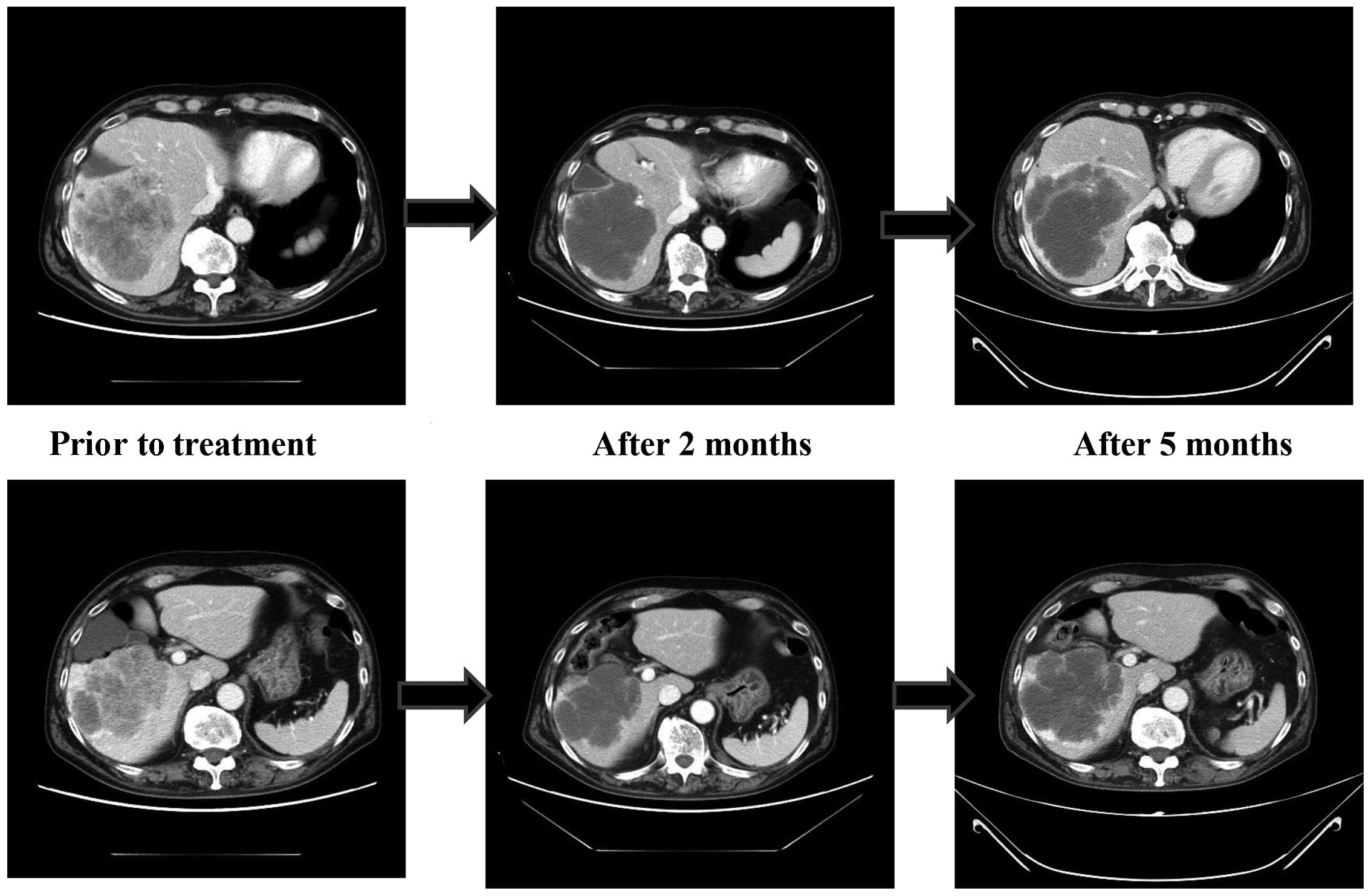
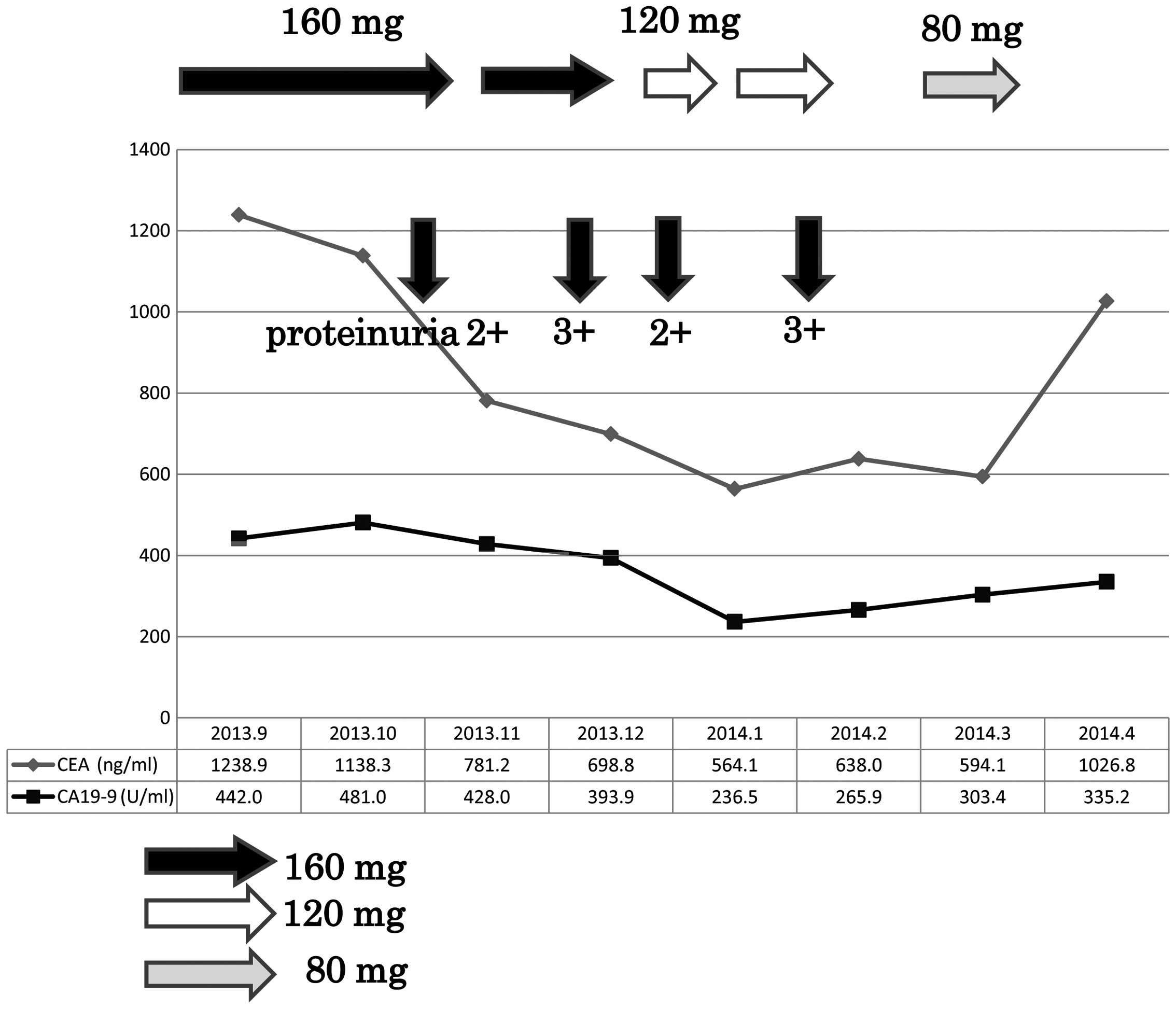
A 74-year-old male patient with sigmoid colon cancer and synchronous lung and liver metastases (stage IV) was treated with high anterior resection and D3 lymphadenectomy. The patient had undergone 16 courses of FOLFOX + bevacizumab (BV) as postoperative first-line therapy. Due to disease progression, follow-up treatment with 19 courses of BV + FOLFIRI was administered as a second-line therapy. The patient's performance status (PS) worsened to 2 due to the side effects of chemotherapy (general fatigue and edema). The disease continued to progress and the patient was administered 14 courses of panitumumab (an agent with anti-epidermal growth factor receptor activity in patients with wild-type Kras) as third-line chemotherapy, and the PS improved from 2 to 1. The disease progressed further and the patient underwent fourth-line chemotherapy comprising three courses of panitumumab plus irinotecan; however disease progression continued. Regorafenib was then administered as the last-line (fifth-line) therapy, the patient's side effects gradually subsided and the disease stabilized. The tumor size (liver and lung) decreased and morphological changes were revealed by CT imaging. In addition, the levels of the tumor markers carcinoembryonic antigen (CEA) and carbohydrate antigen (CA) 19-9 decreased in parallel with the changes in tumor morphology (Figs. 1–3). The patient continued to receive regorafenib for 8 months. As proteinuria (+++) appeared during the clinical course, the dose of regorafenib was gradually reduced from 160 to 80 mg, while repeating stop-and-go therapy. Although the condition improved with the dose reduction and the stop-and-go therapy, nephrotic syndrome ultimately developed (Fig. 3). The patient eventually succumbed to nephrotic syndrome and cardiac failure from the original disease at 3 years and 10 months after the initiation of first-line chemotherapy.

Figure 1.

Clinical course: Computed tomography images showing morphological response of colorectal cancer liver metastasis to regorafenib treatment. The liver metastasis was 102 mm prior to regorafenib treatment, 100 mm after 2 months and 105 mm after 5 months of treatment. Top row, posterior area; bottom row, left lobe.

Figure 3.

Tumor marker levels and proteinuria over the course of regorafenib treatment. CEA, carcinoembryonic antigen; CA19-9, carbohydrate antigen 19-9.

Written informed consent was obtained from the patient for the publication of this case report and accompanying images.

Discussion

Chemotherapy has played a pivotal role in the multidisciplinary management of colorectal liver metastases (CLM). Systemic chemotherapy may reduce the size of metastases, increase their resectability, and may also help select patients who are most likely to benefit from surgery by assessing tumor response to chemotherapy (4,5). However, the conventional tumor size-based radiological Response Evaluation Criteria in Solid Tumours (RECIST) may be inadequate for assessing the response to chemotherapy (6), particularly in patients treated with a regimen such as BV, which interferes with angiogenesis. The pathological response to preoperative chemotherapy was recently found to be correlated with improved survival and has been proposed as a new outcome end-point following resection of CLM (7,8). In particular, Shindoh et al (9) reported that, following therapy containing BV, the CLM tended to decrease in size and also underwent distinct morphological changes on CT, namely homogeneous attenuation and sharp tumor-liver interface. Recently, chemotherapy for CRC has markedly progressed. In particular, the treatment for advanced or metastatic CRC has significantly improved due to the development of the FOLFOX and FOLFIRI regimens. Furthermore, the introduction of targeted therapy has made the treatment of CRC patients more effective (10).

Regorafenib is the first small-molecule multikinase inhibitor to offer a survival benefit in metastatic CRC that has progressed after all standard therapies. In the CORRECT study, no patients achieved a complete response; however, 5 patients receiving regorafenib and 1 patient assigned to placebo exhibited a partial response, with objective response rates of 1.0 and 0.4%, respectively (P=0.19) (3). As complete and partial responses were obtained in only a few patients, regorafenib is unlikely to achieve complete or partial disease response. However, disease control was achieved in 41% of the patients assigned regorafenib and 15% of the patients assigned a placebo (P<0.0001). The median duration of stable disease was 2.0 months in the regorafenib group and 1.7 months in the placebo group. These data indicate that regorafenib as last-line chemotherapy is unlikely to produce effective results on imaging (RECIST, version1.1) (6). However, the results of the present study indicated that evaluation of liver metastases by CT may be effective (10).

The end-point in cancer research is overall survival; however, tumor response and time to progression are considered pivotal for surrogate assessment of treatment efficacy. Tumor response was initially assessed according to the World Health Organization (WHO) criteria, and later according to the RECIST guidelines (11). WHO and RECIST define standard measurement methods for converting radiological observations into a quantitative and statistically tractable framework for measuring the response of tumor size to therapy. Both methods offer simple approaches to determining anatomical size and changes during treatment as indicators of response (12,13). Target lesions may be measured with either the bilinear product approach (WHO) or the single linear summation (RECIST) (14–16). Of note, following anti-VEGF antigen-containing therapy, CRC metastases not only tend to decrease in size, but also undergo distinct morphological changes on CT (9).

Initially, the morphological changes on CT in our patient indicated a response to regorafenib. These changes may prolong overall survival and improve the quality of life. However, in a number of patients, morphological changes do not result in any change in tumor size; therefore, they are not suitable for evaluation according to RECIST. Evaluation of chemotherapeutic response following regorafenib and anti-VEGF antigen therapy were included in the modified RECIST (mRECIST) guidelines, which were developed to assess response in patients with hepatocellular carcinoma based on the measurement of viable tumor with arterial enhancement on CT. The guidelines of mRECIST were evaluated and compared with those in RECIST for patients who received sorafenib for advanced hepatocellular carcinoma. The mRECIST guidelines for hepatocellular carcinoma introduced amendments to RECIST for the determination of tumor response in target lesions. The majority of the patients with stable disease according to RECIST had a different prognosis according to mRECIST. We recommend that a suitable CT scan evaluation according to mRECIST guidelines is performed in patients with CLM. mRECIST should be used for the standard assessment of treatment efficacy, particularly in patients receiving regorafenib.

In conclusion, regorafenib appeared to be effective as a last-line chemotherapy treatment in a patient with sigmoid colon cancer and synchronous lung and liver metastases. Identifying unique morphological changes of metastatic lesions on CT imaging may be a suitable method for evaluating the effects of treatment in CRC.

References

1 

Strumberg D, Scheulen ME, Schultheis B, Richly H, Frost A, Büchert M, Christensen O, Jeffers M, Heinig R, Boix O and Mross K: Regorafenib (BAY 73–4506) in advanced colorectal cancer: A phase I study. Br J Cancer. 106:1722–1727. 2012. View Article : Google Scholar : PubMed/NCBI

2 

Mross K, Frost A, Steinbild S, Hedbom S, Büchert M, Fasol U, Unger C, Krätzschmar J, Heinig R, Boix O and Christensen O: A phase I dose-escalation study of regorafenib (BAY 73–4506), an inhibitor of oncogenic, angiogenic, and stromal kinases, in patients with advanced solid tumors. Clin Cancer Res. 18:2658–2667. 2012. View Article : Google Scholar : PubMed/NCBI

3 

Grothey A, Van Cutsem E, Sobrero A, Siena S, Falcone A, Ychou M, Humblet Y, Bouché O, Mineur L, Barone C, et al: Regorafenib monotherapy for previously treated metastatic colorectal cancer (CORRECT): An international, multicentre, randomised, placebo-controlled, phase 3 trial. Lancet. 381:303–312. 2013. View Article : Google Scholar : PubMed/NCBI

4 

Sorbye H, Mauer M, Gruenberger T, Glimelius B, Poston GJ, Schlag PM, Rougier P, Bechstein WO, Primrose JN, Walpole ET, et al: Predictive factors for the benefit of perioperative FOLFOX for resectable liver metastasis in colorectal cancer patients (EORTC Intergroup Trial 40983). Ann Surg. 255:534–539. 2012. View Article : Google Scholar : PubMed/NCBI

5 

Schwarz L, Michel P and Scotté M: Predictive factors for the benefit of perioperative FOLFOX for resectable liver metastasis in colorectal cancer patients (EORTC Intergroup Trial 40983). Ann Surg. 261:e28–e29. 2015. View Article : Google Scholar : PubMed/NCBI

6 

Eisenhauer EA, Therasse P, Bogaerts J, Schwartz LH, Sargent D, Ford R, Dancey J, Arbuck S, Gwyther S, Mooney M, et al: New Response Evaluation Criteria in Solid Tumours: Revised RECIST guideline (version 1.1). Eur J Cancer. 45:228–247. 2009. View Article : Google Scholar : PubMed/NCBI

7 

Adam R, Wicherts DA, de Haas RJ, Aloia T, Lévi F, Paule B, Guettier C, Kunstlinger F, Delvart V, Azoulay D and Castaing D: Complete pathologic response after preoperative chemotherapy for colorectal liver metastases: Myth or reality? J Clin Oncol. 26:1635–1641. 2008. View Article : Google Scholar : PubMed/NCBI

8 

Rubbia-Brandt L, Giostra E, Brezault C, Roth AD, Andres A, Audard V, Sartoretti P, Dousset B, Majno PE, Soubrane O, et al: Importance of histological tumor response assessment in predicting the outcome in patients with colorectal liver metastases treated with neo-adjuvant chemotherapy followed by liver surgery. Ann Oncol. 18:299–304. 2007. View Article : Google Scholar : PubMed/NCBI

9 

Shindoh J, Loyer EM, Kopetz S, Boonsirikamchai P, Maru DM, Chun YS, Zimmitti G, Curley SA, Charnsangavej C, Aloia TA and Vauthey JN: Optimal morphologic response to preoperative chemotherapy: An alternate outcome end point before resection of hepatic colorectal metastases. J Clin Oncol. 30:4566–4572. 2012. View Article : Google Scholar : PubMed/NCBI

10 

Chun YS, Vauthey JN, Boonsirikamchai P, Maru DM, Kopetz S, Palavecino M, Curley SA, Abdalla EK, Kaur H, Charnsangavej C and Loyer EM: Association of computed tomography morphologic criteria with pathologic response and survival in patients treated with bevacizumab for colorectal liver metastases. JAMA. 302:2338–2344. 2009. View Article : Google Scholar : PubMed/NCBI

11 

Therasse P, Arbuck SG, Eisenhauer EA, Wanders J, Kaplan RS, Rubinstein L, Verweij J, Van Glabbeke M, van Oosterom AT, Christian MC and Gwyther SG: New guidelines to evaluate the response to treatment in solid tumors. European Organization for Research and Treatment of Cancer, National Cancer Institute of the United States, National Cancer Institute of Canada. J Natl Cancer Inst. 92:205–216. 2000. View Article : Google Scholar : PubMed/NCBI

12 

Matsuhashi N, Takahashi T, Tanahashi T, Matsui S, Sasaki Y, Tanaka Y, Okumura N, Yamaguchi K, Osada S and Yoshida K: The efficacy of ‘Abound™’, a nutritional supplement containing L-glutamine, L-arginine, citric acid, and calcium HMB, for skin disorders that developed as adverse drug reactions to anti-EGFR antibody preparation administration: Pilot study. Int J Colorectal Dis. 31:1055–1057. 2016. View Article : Google Scholar : PubMed/NCBI

13 

Matsuhashi N, Takahashi T, Nonaka K, Ichikawa K, Yawata K, Tanahashi T, Imai H, Sasaki Y, Tanaka Y, Okumura N, et al: A case report on efficacy of Abound™ for anti-EGFR antibody-associated skin disorder in metastatic colon cancer. World J Surg Oncol. 12:352014. View Article : Google Scholar : PubMed/NCBI

14 

Ronot M, Bouattour M, Wassermann J, Bruno O, Dreyer C, Larroque B, Castera L, Vilgrain V, Belghiti J, Raymond E and Faivre S: Alternative Response Criteria (Choi, European Association for the Study of the Liver, and modified Response Evaluation Criteria in Solid Tumors [RECIST]) versus RECIST 1.1 in patients with advanced hepatocellular carcinoma treated with sorafenib. Oncologist. 19:394–402. 2014. View Article : Google Scholar : PubMed/NCBI

15 

Edeline J, Boucher E, Rolland Y, Vauléon E, Pracht M, Perrin C, Le Roux C and Raoul JL: Comparison of tumor response by Response Evaluation Criteria in Solid Tumors (RECIST) and modified RECIST in patients treated with sorafenib for hepatocellular carcinoma. Cancer. 118:147–156. 2012. View Article : Google Scholar : PubMed/NCBI

16 

Kawaoka T, Aikata H, Murakami E, Nakahara T, Naeshiro N, Tanaka M, Honda Y, Miyaki D, Nagaoki Y, Takaki S, et al: Evaluation of the mRECIST and α-fetoprotein ratio for stratification of the prognosis of advanced-hepatocellular-carcinoma patients treated with sorafenib. Oncology. 83:192–200. 2012. View Article : Google Scholar : PubMed/NCBI

Related Articles

  • Abstract
  • View
  • Download
  • Twitter
Copy and paste a formatted citation
Spandidos Publications style
Matsuhashi N, Takahashi T, Kato J, Tanahashi T, Matsui S, Sasaki Y, Imai H, Tanaka Y, Okumura N, Yamaguchi K, Yamaguchi K, et al: Computed tomograpy evaluation of morphological changes, clinical response and survival in colorectal cancer liver metastasis treated by regorafenib: A case report. Mol Clin Oncol 5: 807-810, 2016.
APA
Matsuhashi, N., Takahashi, T., Kato, J., Tanahashi, T., Matsui, S., Sasaki, Y. ... Yoshida, K. (2016). Computed tomograpy evaluation of morphological changes, clinical response and survival in colorectal cancer liver metastasis treated by regorafenib: A case report. Molecular and Clinical Oncology, 5, 807-810. https://doi.org/10.3892/mco.2016.1045
MLA
Matsuhashi, N., Takahashi, T., Kato, J., Tanahashi, T., Matsui, S., Sasaki, Y., Imai, H., Tanaka, Y., Okumura, N., Yamaguchi, K., Futamura, M., Osada, S., Yoshida, K."Computed tomograpy evaluation of morphological changes, clinical response and survival in colorectal cancer liver metastasis treated by regorafenib: A case report". Molecular and Clinical Oncology 5.6 (2016): 807-810.
Chicago
Matsuhashi, N., Takahashi, T., Kato, J., Tanahashi, T., Matsui, S., Sasaki, Y., Imai, H., Tanaka, Y., Okumura, N., Yamaguchi, K., Futamura, M., Osada, S., Yoshida, K."Computed tomograpy evaluation of morphological changes, clinical response and survival in colorectal cancer liver metastasis treated by regorafenib: A case report". Molecular and Clinical Oncology 5, no. 6 (2016): 807-810. https://doi.org/10.3892/mco.2016.1045
Copy and paste a formatted citation
x
Spandidos Publications style
Matsuhashi N, Takahashi T, Kato J, Tanahashi T, Matsui S, Sasaki Y, Imai H, Tanaka Y, Okumura N, Yamaguchi K, Yamaguchi K, et al: Computed tomograpy evaluation of morphological changes, clinical response and survival in colorectal cancer liver metastasis treated by regorafenib: A case report. Mol Clin Oncol 5: 807-810, 2016.
APA
Matsuhashi, N., Takahashi, T., Kato, J., Tanahashi, T., Matsui, S., Sasaki, Y. ... Yoshida, K. (2016). Computed tomograpy evaluation of morphological changes, clinical response and survival in colorectal cancer liver metastasis treated by regorafenib: A case report. Molecular and Clinical Oncology, 5, 807-810. https://doi.org/10.3892/mco.2016.1045
MLA
Matsuhashi, N., Takahashi, T., Kato, J., Tanahashi, T., Matsui, S., Sasaki, Y., Imai, H., Tanaka, Y., Okumura, N., Yamaguchi, K., Futamura, M., Osada, S., Yoshida, K."Computed tomograpy evaluation of morphological changes, clinical response and survival in colorectal cancer liver metastasis treated by regorafenib: A case report". Molecular and Clinical Oncology 5.6 (2016): 807-810.
Chicago
Matsuhashi, N., Takahashi, T., Kato, J., Tanahashi, T., Matsui, S., Sasaki, Y., Imai, H., Tanaka, Y., Okumura, N., Yamaguchi, K., Futamura, M., Osada, S., Yoshida, K."Computed tomograpy evaluation of morphological changes, clinical response and survival in colorectal cancer liver metastasis treated by regorafenib: A case report". Molecular and Clinical Oncology 5, no. 6 (2016): 807-810. https://doi.org/10.3892/mco.2016.1045
Follow us
  • Twitter
  • LinkedIn
  • Facebook
About
  • Spandidos Publications
  • Careers
  • Cookie Policy
  • Privacy Policy
How can we help?
  • Help
  • Live Chat
  • Contact
  • Email to our Support Team