Spandidos Publications Logo
  • About
    • About Spandidos
    • Aims and Scopes
    • Abstracting and Indexing
    • Editorial Policies
    • Reprints and Permissions
    • Job Opportunities
    • Terms and Conditions
    • Contact
  • Journals
    • All Journals
    • Oncology Letters
      • Oncology Letters
      • Information for Authors
      • Editorial Policies
      • Editorial Board
      • Aims and Scope
      • Abstracting and Indexing
      • Bibliographic Information
      • Archive
    • International Journal of Oncology
      • International Journal of Oncology
      • Information for Authors
      • Editorial Policies
      • Editorial Board
      • Aims and Scope
      • Abstracting and Indexing
      • Bibliographic Information
      • Archive
    • Molecular and Clinical Oncology
      • Molecular and Clinical Oncology
      • Information for Authors
      • Editorial Policies
      • Editorial Board
      • Aims and Scope
      • Abstracting and Indexing
      • Bibliographic Information
      • Archive
    • Experimental and Therapeutic Medicine
      • Experimental and Therapeutic Medicine
      • Information for Authors
      • Editorial Policies
      • Editorial Board
      • Aims and Scope
      • Abstracting and Indexing
      • Bibliographic Information
      • Archive
    • International Journal of Molecular Medicine
      • International Journal of Molecular Medicine
      • Information for Authors
      • Editorial Policies
      • Editorial Board
      • Aims and Scope
      • Abstracting and Indexing
      • Bibliographic Information
      • Archive
    • Biomedical Reports
      • Biomedical Reports
      • Information for Authors
      • Editorial Policies
      • Editorial Board
      • Aims and Scope
      • Abstracting and Indexing
      • Bibliographic Information
      • Archive
    • Oncology Reports
      • Oncology Reports
      • Information for Authors
      • Editorial Policies
      • Editorial Board
      • Aims and Scope
      • Abstracting and Indexing
      • Bibliographic Information
      • Archive
    • Molecular Medicine Reports
      • Molecular Medicine Reports
      • Information for Authors
      • Editorial Policies
      • Editorial Board
      • Aims and Scope
      • Abstracting and Indexing
      • Bibliographic Information
      • Archive
    • World Academy of Sciences Journal
      • World Academy of Sciences Journal
      • Information for Authors
      • Editorial Policies
      • Editorial Board
      • Aims and Scope
      • Abstracting and Indexing
      • Bibliographic Information
      • Archive
    • International Journal of Functional Nutrition
      • International Journal of Functional Nutrition
      • Information for Authors
      • Editorial Policies
      • Editorial Board
      • Aims and Scope
      • Abstracting and Indexing
      • Bibliographic Information
      • Archive
    • International Journal of Epigenetics
      • International Journal of Epigenetics
      • Information for Authors
      • Editorial Policies
      • Editorial Board
      • Aims and Scope
      • Abstracting and Indexing
      • Bibliographic Information
      • Archive
    • Medicine International
      • Medicine International
      • Information for Authors
      • Editorial Policies
      • Editorial Board
      • Aims and Scope
      • Abstracting and Indexing
      • Bibliographic Information
      • Archive
  • Articles
  • Information
    • Information for Authors
    • Information for Reviewers
    • Information for Librarians
    • Information for Advertisers
    • Conferences
  • Language Editing
Spandidos Publications Logo
  • About
    • About Spandidos
    • Aims and Scopes
    • Abstracting and Indexing
    • Editorial Policies
    • Reprints and Permissions
    • Job Opportunities
    • Terms and Conditions
    • Contact
  • Journals
    • All Journals
    • Biomedical Reports
      • Information for Authors
      • Editorial Policies
      • Editorial Board
      • Aims and Scope
      • Abstracting and Indexing
      • Bibliographic Information
      • Archive
    • Experimental and Therapeutic Medicine
      • Information for Authors
      • Editorial Policies
      • Editorial Board
      • Aims and Scope
      • Abstracting and Indexing
      • Bibliographic Information
      • Archive
    • International Journal of Epigenetics
      • Information for Authors
      • Editorial Policies
      • Editorial Board
      • Aims and Scope
      • Abstracting and Indexing
      • Bibliographic Information
      • Archive
    • International Journal of Functional Nutrition
      • Information for Authors
      • Editorial Policies
      • Editorial Board
      • Aims and Scope
      • Abstracting and Indexing
      • Bibliographic Information
      • Archive
    • International Journal of Molecular Medicine
      • Information for Authors
      • Editorial Policies
      • Editorial Board
      • Aims and Scope
      • Abstracting and Indexing
      • Bibliographic Information
      • Archive
    • International Journal of Oncology
      • Information for Authors
      • Editorial Policies
      • Editorial Board
      • Aims and Scope
      • Abstracting and Indexing
      • Bibliographic Information
      • Archive
    • Medicine International
      • Information for Authors
      • Editorial Policies
      • Editorial Board
      • Aims and Scope
      • Abstracting and Indexing
      • Bibliographic Information
      • Archive
    • Molecular and Clinical Oncology
      • Information for Authors
      • Editorial Policies
      • Editorial Board
      • Aims and Scope
      • Abstracting and Indexing
      • Bibliographic Information
      • Archive
    • Molecular Medicine Reports
      • Information for Authors
      • Editorial Policies
      • Editorial Board
      • Aims and Scope
      • Abstracting and Indexing
      • Bibliographic Information
      • Archive
    • Oncology Letters
      • Information for Authors
      • Editorial Policies
      • Editorial Board
      • Aims and Scope
      • Abstracting and Indexing
      • Bibliographic Information
      • Archive
    • Oncology Reports
      • Information for Authors
      • Editorial Policies
      • Editorial Board
      • Aims and Scope
      • Abstracting and Indexing
      • Bibliographic Information
      • Archive
    • World Academy of Sciences Journal
      • Information for Authors
      • Editorial Policies
      • Editorial Board
      • Aims and Scope
      • Abstracting and Indexing
      • Bibliographic Information
      • Archive
  • Articles
  • Information
    • For Authors
    • For Reviewers
    • For Librarians
    • For Advertisers
    • Conferences
  • Language Editing
Login Register Submit
  • This site uses cookies
  • You can change your cookie settings at any time by following the instructions in our Cookie Policy. To find out more, you may read our Privacy Policy.

    I agree
Search articles by DOI, keyword, author or affiliation
Search
Advanced Search
presentation
Molecular and Clinical Oncology
Join Editorial Board Propose a Special Issue
Print ISSN: 2049-9450 Online ISSN: 2049-9469
Journal Cover
September-2017 Volume 7 Issue 3

Full Size Image

Sign up for eToc alerts
Recommend to Library

Journals

International Journal of Molecular Medicine

International Journal of Molecular Medicine

International Journal of Molecular Medicine is an international journal devoted to molecular mechanisms of human disease.

International Journal of Oncology

International Journal of Oncology

International Journal of Oncology is an international journal devoted to oncology research and cancer treatment.

Molecular Medicine Reports

Molecular Medicine Reports

Covers molecular medicine topics such as pharmacology, pathology, genetics, neuroscience, infectious diseases, molecular cardiology, and molecular surgery.

Oncology Reports

Oncology Reports

Oncology Reports is an international journal devoted to fundamental and applied research in Oncology.

Experimental and Therapeutic Medicine

Experimental and Therapeutic Medicine

Experimental and Therapeutic Medicine is an international journal devoted to laboratory and clinical medicine.

Oncology Letters

Oncology Letters

Oncology Letters is an international journal devoted to Experimental and Clinical Oncology.

Biomedical Reports

Biomedical Reports

Explores a wide range of biological and medical fields, including pharmacology, genetics, microbiology, neuroscience, and molecular cardiology.

Molecular and Clinical Oncology

Molecular and Clinical Oncology

International journal addressing all aspects of oncology research, from tumorigenesis and oncogenes to chemotherapy and metastasis.

World Academy of Sciences Journal

World Academy of Sciences Journal

Multidisciplinary open-access journal spanning biochemistry, genetics, neuroscience, environmental health, and synthetic biology.

International Journal of Functional Nutrition

International Journal of Functional Nutrition

Open-access journal combining biochemistry, pharmacology, immunology, and genetics to advance health through functional nutrition.

International Journal of Epigenetics

International Journal of Epigenetics

Publishes open-access research on using epigenetics to advance understanding and treatment of human disease.

Medicine International

Medicine International

An International Open Access Journal Devoted to General Medicine.

Journal Cover
September-2017 Volume 7 Issue 3

Full Size Image

Sign up for eToc alerts
Recommend to Library

  • Article
  • Citations
    • Cite This Article
    • Download Citation
    • Create Citation Alert
    • Remove Citation Alert
    • Cited By
  • Similar Articles
    • Related Articles (in Spandidos Publications)
    • Similar Articles (Google Scholar)
    • Similar Articles (PubMed)
  • Download PDF
  • Download XML
  • View XML
Case Report

Angiomyofibroblastoma of the vulva diagnosed preoperatively: A case report

  • Authors:
    • Tadahiro Shoji
    • Ryosuke Takeshita
    • Rika Mukaida
    • Tamotsu Sato
    • Masami Taguchi
    • Shunichi Sasou
  • View Affiliations / Copyright

    Affiliations: Department of Obstetrics and Gynecology, Hachinohe Red Cross Hospital, Hachinohe, Aomori 039‑1104, Japan, Department of Radiology, Hachinohe Red Cross Hospital, Hachinohe, Aomori 039‑1104, Japan, Department of Pathology and Laboratory Medicine, Hachinohe Red Cross Hospital, Hachinohe, Aomori 039‑1104, Japan
  • Pages: 407-411
    |
    Published online on: July 25, 2017
       https://doi.org/10.3892/mco.2017.1347
  • Expand metrics +
Metrics: Total Views: 0 (Spandidos Publications: | PMC Statistics: )
Metrics: Total PDF Downloads: 0 (Spandidos Publications: | PMC Statistics: )
Cited By (CrossRef): 0 citations Loading Articles...

This article is mentioned in:


Abstract

A 50‑year‑old woman (gravida 2, para 2) first noticed a small nodule in the right labium majus 2 years prior to the initial visit to the Hachinohe Red Cross Hospital (Hachinohe, Japan), which had gradually increased in size. On physical examination, a well‑circumscribed, elastic, firm, goose egg‑sized, subcutaneous mass protruding from the right labium majus was identified. On magnetic resonance imaging (MRI), the lesion was hypointense on T1‑weighted images and was well‑circumscribed, strongly enhanced and homogeneous on gadolinium‑enhanced images, measuring 7.5x4 cm. The same tumor had measured 2.6 cm on an MRI performed 6 years earlier. Based on the clinical course and imaging findings, angiomyofibroblastoma was diagnosed and surgical resection of the tumor was performed. The tumor was well‑circumscribed and highly vascular. The intraoperative blood loss was 70 ml. Histopathologically, the tumor cells were concentrated around blood vessels, were spindle‑shaped to oval with mild atypia, and were positive for vimentin, desmin, neural cell adhesion molecule (N‑CAM), CD‑34, estrogen receptor and progesterone receptor, and negative for S‑100. Based on these findings, the diagnosis of angiomyofibroblastoma was confirmed. Angiomyofibroblastoma is a benign mesenchymal tumor that occurs in the female external genitalia. Differentiation of this tumor from aggressive angiomyxoma, a fast‑growing infiltrative malignancy that occurs in the same region, may be challenging. The diagnosis of angiomyofibroblastoma is usually based on the histopathological findings of the resected specimen. The present case is of value, as the angiomyofibroblastoma was successfully diagnosed preoperatively based on the clinical course and imaging findings.

Introduction

Angiomyofibroblastoma (AMFB) is a benign mesenchymal soft tissue tumor first described by Fletcher et al in 1992 (1). AMFB commonly develops in the female external genitalia, but it has also been reported to occur in the male scrotum or groin (2,3). The average age at onset is in the late 30s, and it is a well-circumscribed, elastic, soft tumor, usually sized <5 cm, white to yellowish brown and sponge-like or myxoid on cross-section. Histologically, the tumor cells are oval to spindle-shaped and arranged in a fascicular, wavy or palisade pattern, with areas of high and low cell density, with stromal proliferation of small vessels. Immunohistochemically, the tumor cells are usually positive for vimentin, desmin, estrogen receptor and progesterone receptor, and negative for S-100 and α-smooth muscle actin (α-SMA), although desmin-negative and α-SMA-positive cases have been reported (1,3–5). AMFB may be difficult to distinguish from aggressive angiomyxoma (AAM). AMFB is usually diagnosed based on the histopathological findings of the resected specimens. The aim of the present study was to report an AMFB case that was diagnosed preoperatively based on the clinical course and magnetic resonance imaging (MRI) findings and describe our experience with the management of this patient, along with a review of the related literature.

Case report

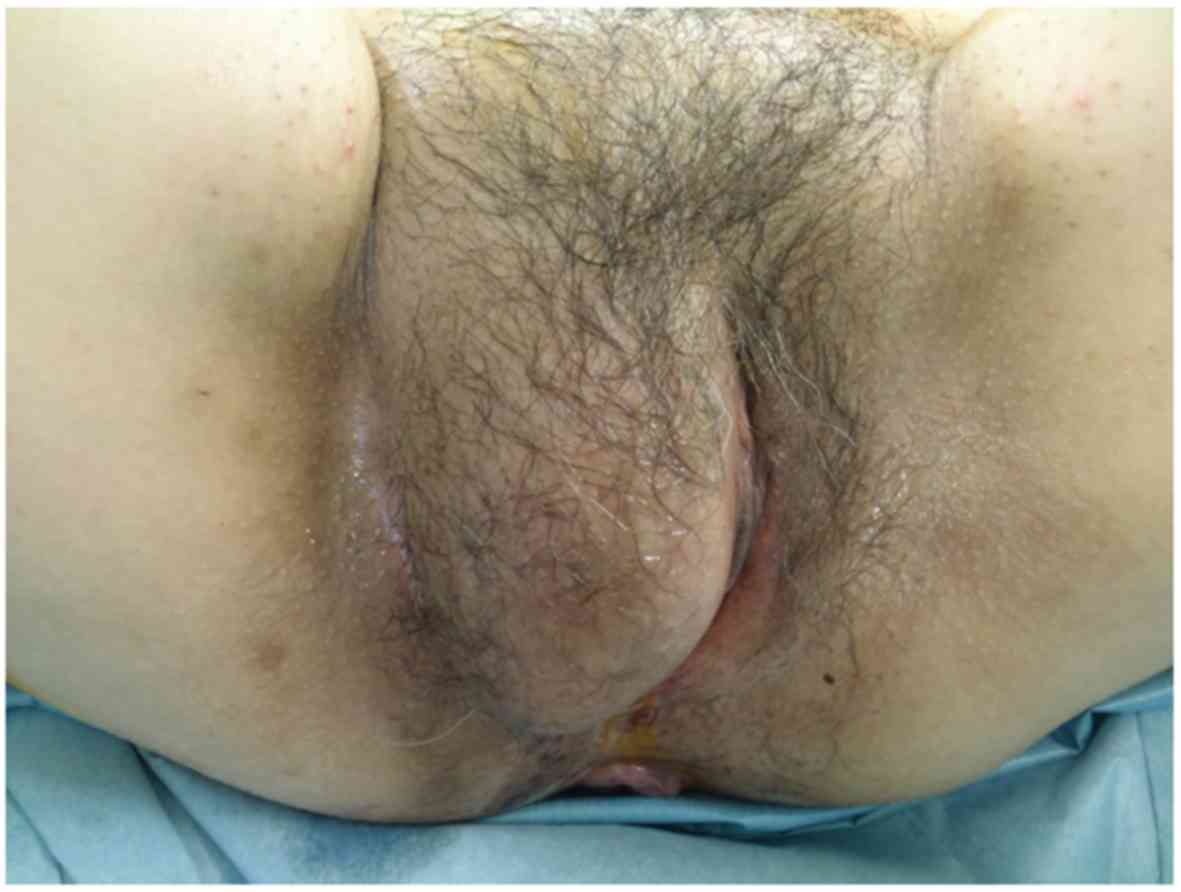
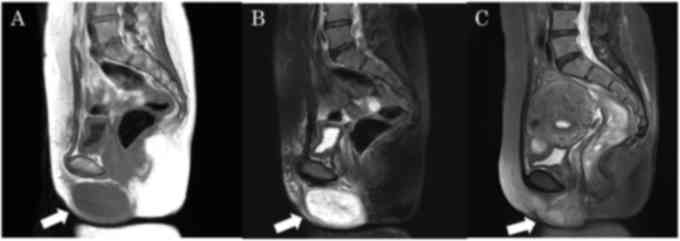
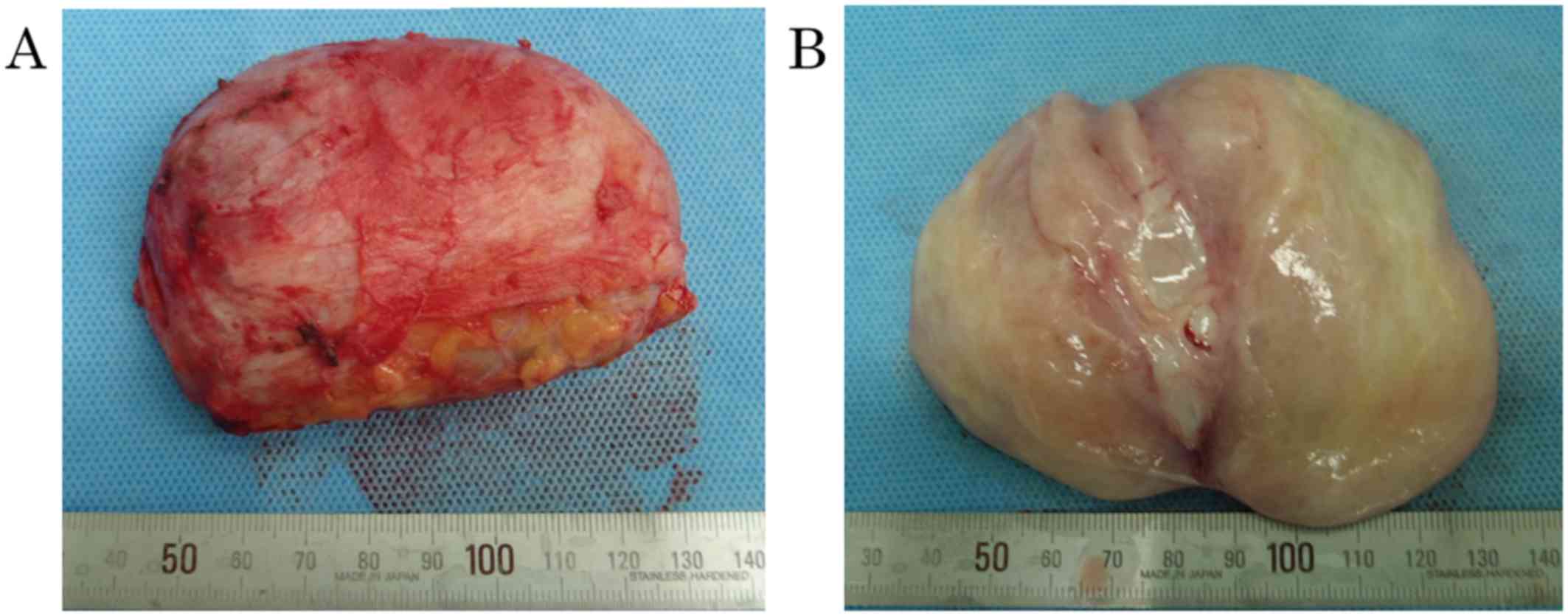
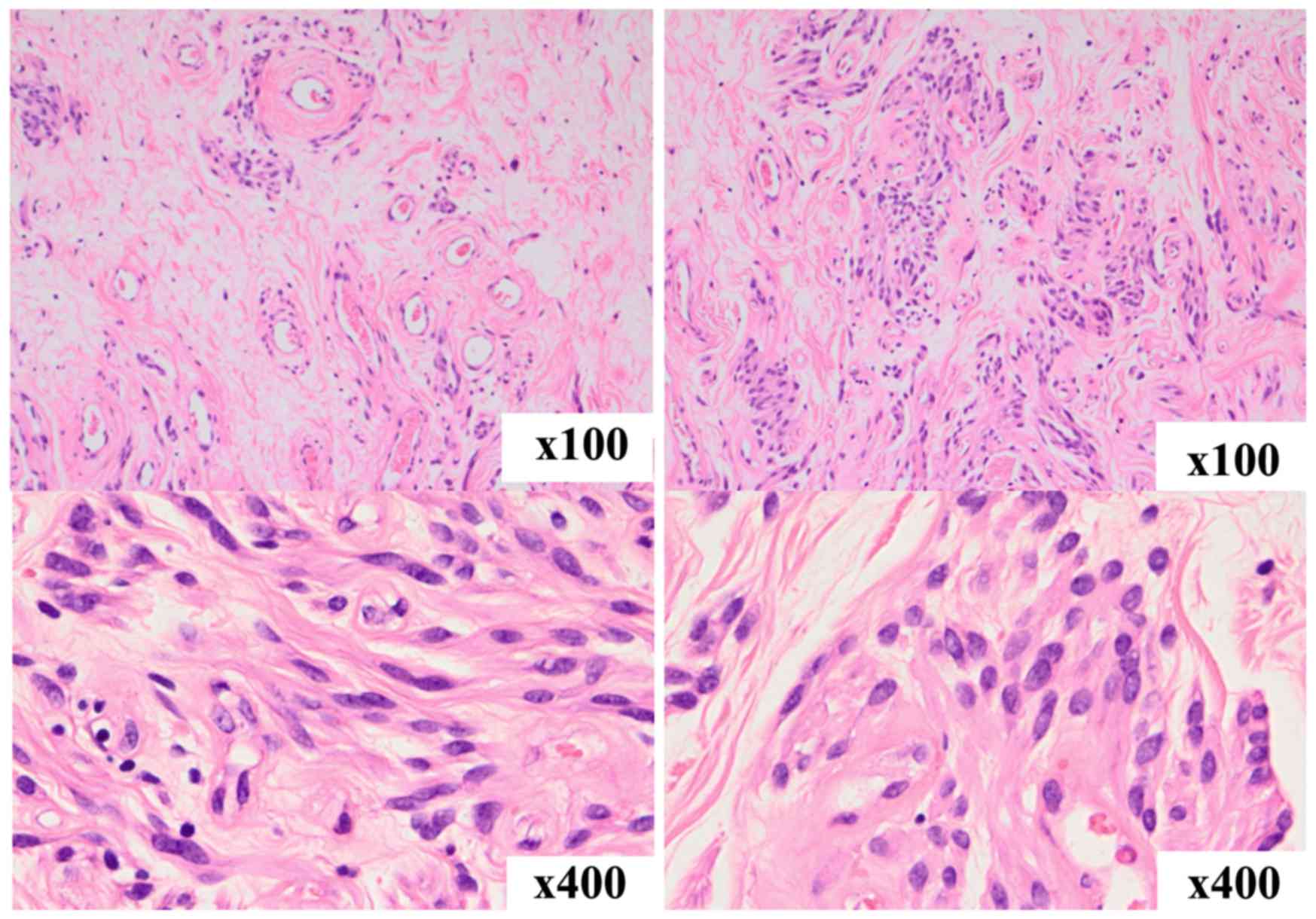
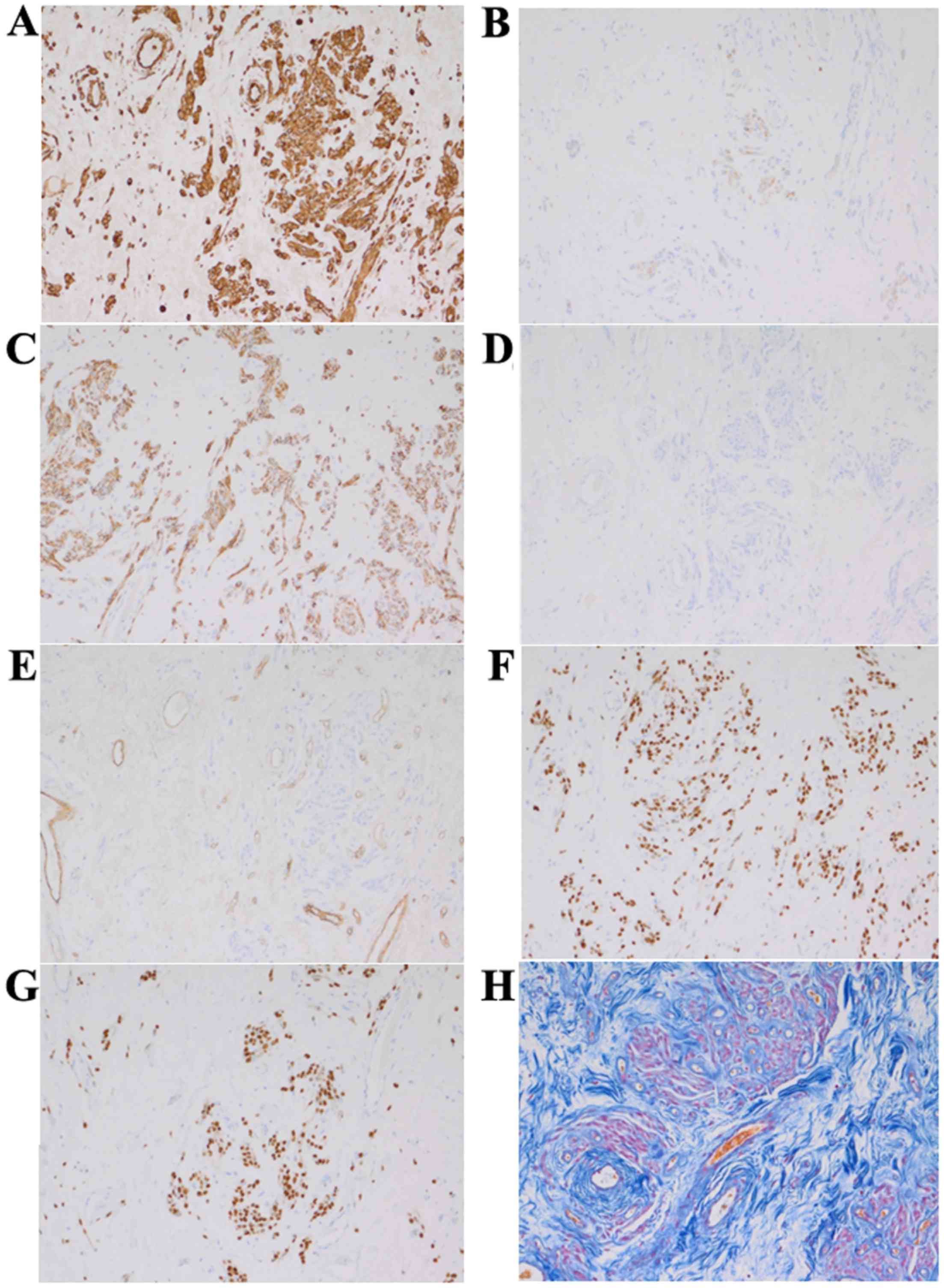
A 50-year-old woman (gravida 2, para 2) presented with the chief complaint of a palpable mass in the vulva. The patient's family history was unremarkable, but she had been diagnosed with uterine adenomyosis at the age of 44 years and underwent abdominal total hysterectomy. Two years earlier, the patient had noticed the presence of a small nodule in the right labium majus, but it was left untreated. The nodule gradually increased in size and was eventually accompanied by spontaneous pain, prompting the patient to visit our department. At the initial visit, an elastic, firm, goose egg-sized subcutaneous mass protruding from the right labium majus was detected on physical examination (Fig. 1). On palpation, the mass was well-circumscribed, with good mobility against the surrounding tissues. The skin overlaying the mass was macroscopically normal, and no subjective pain was noted. There were no abnormalities in the complete blood count or biochemical examinations. The tumor marker levels of carcinoembryonic antigen (1.0 ng/ml), carbohydrate antigen (CA)19-9 (<2.0 U/ml) and CA 125 (8.8 U/ml), were also normal. MRI scans revealed a solid tumor measuring 7 cm in diameter under the skin on the right labium majus, which was sharply marginated, without infiltration of the deep tissues. The tumor was hypointense on T1-weighted images and exhibited mostly homogeneous enhancement on fat-saturated (fat-sat) gadolinium-enhanced images, although there was a poorly enhanced area at the center, which was attributed to either necrosis or degeneration (Fig. 2A and B). The patient had previously undergone fat-sat T2-weighted MRI prior to undergoing hysterectomy at the age of 44 years, which detected a mass measuring 2.6 cm in the same region (Fig. 2C). Based on the clinical course and imaging findings, AMFB was diagnosed and surgery was performed. The tumor was removed under general anesthesia. Although the tumor was well-circumscribed, it was highly vascular, and the intraoperative ligation of the blood vessels was time-consuming. The operative time was 41 min and the intraoperative blood loss was 70 ml. The postoperative course was eventless and the patient was discharged on the 7th postoperative day. Macroscopically, the resected tumor measured 8×7×5 cm. The tumor was not encapsulated, but was well-circumscribed, white, edematous and solid (Fig. 3A and B). Histologically, the tumor consisted of sparse collagen fibers, along with small to medium-sized blood vessels, with a scattered or clustered distribution. The tumor cells were aggregated around blood vessels, they were oval to spindle-shaped and had acidophilic and fibrous cytoplasm. Outside the perivascular area, cellular components were sparse. No mucin deposition was seen in the stroma, and there was no thickening or hyalinization of the vascular walls (Fig. 4). On immunohistochemical examination, the tumor cells were positive for vimentin, desmin, N-CAM, CD-34, estrogen receptor and progesterone receptor, and negative for S-100. The Azan-Mallory staining result was also positive (Fig. 5A-H). Based on these findings, the histopathological diagnosis of AMFB was confirmed. At 10 months postoperatively, no recurrence was observed.

Figure 1.

On physical examination, an elastic, firm, well-circumscribed, goose egg-sized subcutaneous tumor was identified protruding from the right labium majus.

Figure 2.

On magnetic resonance imaging (MRI), a well-circumscribed mass measuring 7.5×4 cm was identified under the skin of the right labium majus. (A) The mass appeared contrast-enhanced on fat-saturated (fat-sat) gadolinium-enhanced images and (B) hypointense on T1-weighted images. (C) MRI findings from 6 years earlier: Fat-sat T2-weighted images revealed a well-circumscribed mass measuring 2.6×1.7 cm that appeared mildly hyperintense.

Figure 3.

(A) The resected tumor measured 8×7×5 cm, was non-encapsulated but well-circumscribed. (B) On cross section the tumor appeared white, edematous and solid.

Figure 4.

Histopathological findings. The tumor consisted of sparse collagen fibers and exhibited a higher cellular density around blood vessels. The cells proliferating around blood vessels were oval to spindle-shaped and had acidophilic and fibrous cytoplasm. No mucin deposition was seen in the stroma, and there was no thickening or hyalinization of vascular walls.

Figure 5.

Immunohistochemistry and Azan-Mallory staining. (A) Vimentin, (B) desmin, (C) neural cell adhesion molecule, (D) S-100, (E) CD34, (F) estrogen receptor, (G) progesterone receptor, (H) Azan-Mallory stain.

Written informed consent was obtained from the patient regarding the publication of the case details and associated images.

Discussion

AMFB is a benign mesenchymal soft tissue tumor first described by Fletcher et al in 1992 (1). AMFB commonly develops in the female external genitalia, but there have also been a few reports of AMFB involving the male scrotum or groin (2,3). As regards the clinical characteristics of AMFB, the average age at onset is in the late 30 s, and it is a well-circumscribed, elastic, soft subcutaneous tumor, usually <5 cm in diameter; the cut surface appears white to yellowish brown and sponge-like or myxoid. Histologically, oval to spindle-shaped tumor cells are arranged in a fascicular, wavy or palisade pattern, with areas of both high and low cell density. Proliferation of small vessels is noted in the stroma. Immunohistochemically, the tumor cells are usually positive for vimentin, desmin, estrogen receptor and progesterone receptor, and negative for S-100 and α-SMA, although some cases are reportedly desmin-negative and α-SMA-positive (1,3–5).

It is important to be aware that AAM must be considered in the differential diagnosis of AMFB. AAM was described in 1983 by Steeper and Rosai (6). AAM is a tumor of the external genitalia that affects young women and is similar to AMFB in terms of both clinical presentation and histopathological characteristics. AAM grows rapidly and infiltrates the surrounding tissues. This tumor often recurs locally after surgical resection, but usually does not metastasize (6). As regards the histological differences between AMFB and AAM, the former contains both hypo- and hypercellular areas, whereas the latter exhibits sparse, homogeneous growth of tumor cells with atypical nuclei. While the stroma in AAM displays mucin deposition, proliferation of small to medium-sized blood vessels, dilation of vascular spaces, hyalinization and thickening of vascular walls, the stroma in AMFB only exhibits proliferation of small blood vessels. On immunohistochemical examination, the tumor cells of both AAM and AMFB are positive for vimentin, estrogen receptor and progesterone receptor and negative for S-100, but the cell kinetics for desmin and α-SMA may differ among individual cases. Therefore, immunochemical results alone are not sufficient to distinguish AMFB from AAM. AAM grows rapidly and reaches a diameter of >5 cm. In the majority of AMFB cases, the tumor is sized <5 cm (7). According to Nagai et al, the average diameter of AMFB is 4.5 cm (7). However, there are reports describing AMFB cases with tumors >10 cm in size (8), and it is critical to distinguish these cases from AAM. The imaging characteristics that differentiate AMFB from AAM are listed in Table I. While AMFB appears well-circumscribed with strong heterogeneous enhancement, AAM has a strong infiltrative tendency and is poorly circumscribed, while the contrast-enhanced images are characterized by a whorled or swirling growth pattern (9,10).

Table I.

Differentiation between AMFB and AAM.

Table I.

Differentiation between AMFB and AAM.

CharacteristicsAMFBAAM
Imaging findings Well-circumscribedInfiltrative tendency
Strong heterogeneous enhancementEnhanced in a whorled or swirling growth pattern
Relatively small (≤5 cm)Large (≥5 cm)
Pathological findingsOval to spindle-shaped cellsStellate to spindle-shaped cells
Both hyper- and hypocellular areas are presentSparse, homogeneous cell distribution
Clinical outcomeRecurrence is rareRecurrence is frequent

[i] AMFB, angiomyofibroblastoma; AAM, aggressive angiomyxoma.

In the present case, based on the imaging characteristics and clinical course, the preoperative diagnosis was AMFB and surgery was performed. The tumor was 8 cm in diameter, which was rather large for an AMFB. Reducing intraoperative blood loss is important, and prior studies have explored measures to prevent excessive bleeding. Quintero et al reported that they succeeded in reducing blood loss in a patient with a large AMFB, 12 cm in diameter, by performing preoperative embolization (11). In the present case, there were several blood vessels feeding the tumor, necessitating intraoperative ligation. Thus, the operation lasted longer than expected and the amount of blood loss was 70 ml. AMFB has a benign prognosis following simple surgical resection. However, in patients with large AMFBs, the blood vessels feeding the tumor are well-developed, and it is important to consider the possibility of excessive blood loss when performing surgery in such patients.

There are sporadic reports on using gonadotropin-releasing hormone (GnRH) analogs for the preoperative reduction of AAM and prevention of postoperative recurrence (12–15). However, there have been no reports of their use for the treatment of AMFB. Thus, as there is no scientific evidence showing that GnRH analogs reduce the recurrence rate of AMFB, this patient is currently followed up without administering additional treatment after surgery.

The patient in the present case had also been diagnosed with uterine adenomyosis at the age of 44 years and underwent hysterectomy. The preoperative MRI performed at the time revealed a mass measuring 2.6 cm in diameter, but the patient received no medical treatment. When surgery was performed for the AMFB, the tumor was found to have grown to 7.5 cm in diameter over the previous 6 years, suggesting a relatively slow growth rate. Slow tumor growth is another characteristic of AMFB that distinguishes it from AAM, and was also one of the factors that facilitated the preoperative diagnosis. None of the past studies on AMFB used images obtained over the 6-year period prior to surgery for making comparisons. This report is considered valuable as it may serve as a verification of the relatively slow growth of AMFB.

References

1 

Fletcher CD, Tsang WY, Fisher C, Lee KC and Chan JK: Angiomyofibroblastoma of the vulva. A benign neoplasm distinct from aggressive angiomyxoma. Am J Surg Pathol. 16:373–382. 1992. View Article : Google Scholar : PubMed/NCBI

2 

Ding G, Yu Y, Jin M, Xu J and Zhang Z: Angiomyofibroblastoma-like tumor of the scrotum: A case report and literature review. Oncol Lett. 7:435–438. 2014.PubMed/NCBI

3 

Ito M, Yamaoka H, Sano K and Hotchi M: Angiomyofibroblastoma of the male inguinal region. Arch Pathol Lab Med. 124:1679–1681. 2000.PubMed/NCBI

4 

Laskin WB, Fetsch JF and Tavassoli FA: Angiomyofibroblastoma of the female genital tract: Analysis of 17 cases including a lipomatous variant. Hum Pathol. 28:1046–1055. 1997. View Article : Google Scholar : PubMed/NCBI

5 

Aono K, Sekine M, Serikawa T, Tojo Y, Hanaoka J and Takeuchi Y: Two cases of rare vulvar mesenchymal tumor: Comparisons of aggressive angiomyxoma with angiomyofibroblastoma. Acta Obst Gynaec Jpn. 50:975–978. 1998.(In Japanese).

6 

Steeper TA and Rosai J: Aggressive angiomyxoma of the female pelvis and perineum. Report of nine cases of distinctive type of gynecologic soft-tissue neoplasm. Am J Surg Pathol. 7:463–475. 1983. View Article : Google Scholar : PubMed/NCBI

7 

Nagai K, Adachi K and Saito H: Huge pedunculated angiomyofibroblastoma of vulva. Int J Clin Oncol. 15:201–205. 2010. View Article : Google Scholar : PubMed/NCBI

8 

Qiu P, Wang Z, Li Y and Cui G: Giant pelvic angiomyofibroblastoma: Case report and literature review. Diagn Pathol. 9:1062014. View Article : Google Scholar : PubMed/NCBI

9 

Sharon WW Goldkum JR: Enzinger & Weiss's Soft Tissue Tumors 5th edition. Philadelphia: Mosby Elsevier; pp. 10872008

10 

Geng J, Hu S and Wang F: Large paravaginal angiomyofibroblastoma: Magnetic resonance imaging findings. Jpn J Radiol. 29:152–155. 2011. View Article : Google Scholar : PubMed/NCBI

11 

Quintero C, Sasken H, Houck KL and Hernandez E: Angiomyofibroblastoma of the retroperitoneum: A case report. J Reprod Med. 52:741–744. 2007.PubMed/NCBI

12 

Lee CW, Yoon JH, Park DC and Lee SJ: Aggressive angiomyxoma of the vulva treated by using a gonadotropin-releasing hormone agonist: A case report. Eur J Gynaecol Oncol. 32:686–688. 2011.PubMed/NCBI

13 

Palomba S, Oppedisano R, Annunziata G, Zullo F and Amorosi A: Leuprolide acetate depot plus high-dose raloxifene hydrochloride before and after surgery for recurrent vaginal aggressive angiomyxoma: A case report. Gynecol Oncol. 123:172–173. 2011. View Article : Google Scholar : PubMed/NCBI

14 

McCluggage WG, Jamieson T, Dobbs SP and Grey A: Aggressive angiomyxoma of the vulva: Dramatic response to gonadotropin-releasing hormone agonist therapy. Gynecol Oncol. 100:623–625. 2006. View Article : Google Scholar : PubMed/NCBI

15 

Fine BA, Munoz AK, Litz CE and Gershenson DM: Primary medical management of recurrent aggressive angiomyxoma of the vulva with a gonadotropin-releasing hormone agonist. Gynecol Oncol. 81:120–122. 2001. View Article : Google Scholar : PubMed/NCBI

Related Articles

  • Abstract
  • View
  • Download
  • Twitter
Copy and paste a formatted citation
Spandidos Publications style
Shoji T, Takeshita R, Mukaida R, Sato T, Taguchi M and Sasou S: Angiomyofibroblastoma of the vulva diagnosed preoperatively: A case report. Mol Clin Oncol 7: 407-411, 2017.
APA
Shoji, T., Takeshita, R., Mukaida, R., Sato, T., Taguchi, M., & Sasou, S. (2017). Angiomyofibroblastoma of the vulva diagnosed preoperatively: A case report. Molecular and Clinical Oncology, 7, 407-411. https://doi.org/10.3892/mco.2017.1347
MLA
Shoji, T., Takeshita, R., Mukaida, R., Sato, T., Taguchi, M., Sasou, S."Angiomyofibroblastoma of the vulva diagnosed preoperatively: A case report". Molecular and Clinical Oncology 7.3 (2017): 407-411.
Chicago
Shoji, T., Takeshita, R., Mukaida, R., Sato, T., Taguchi, M., Sasou, S."Angiomyofibroblastoma of the vulva diagnosed preoperatively: A case report". Molecular and Clinical Oncology 7, no. 3 (2017): 407-411. https://doi.org/10.3892/mco.2017.1347
Copy and paste a formatted citation
x
Spandidos Publications style
Shoji T, Takeshita R, Mukaida R, Sato T, Taguchi M and Sasou S: Angiomyofibroblastoma of the vulva diagnosed preoperatively: A case report. Mol Clin Oncol 7: 407-411, 2017.
APA
Shoji, T., Takeshita, R., Mukaida, R., Sato, T., Taguchi, M., & Sasou, S. (2017). Angiomyofibroblastoma of the vulva diagnosed preoperatively: A case report. Molecular and Clinical Oncology, 7, 407-411. https://doi.org/10.3892/mco.2017.1347
MLA
Shoji, T., Takeshita, R., Mukaida, R., Sato, T., Taguchi, M., Sasou, S."Angiomyofibroblastoma of the vulva diagnosed preoperatively: A case report". Molecular and Clinical Oncology 7.3 (2017): 407-411.
Chicago
Shoji, T., Takeshita, R., Mukaida, R., Sato, T., Taguchi, M., Sasou, S."Angiomyofibroblastoma of the vulva diagnosed preoperatively: A case report". Molecular and Clinical Oncology 7, no. 3 (2017): 407-411. https://doi.org/10.3892/mco.2017.1347
Follow us
  • Twitter
  • LinkedIn
  • Facebook
About
  • Spandidos Publications
  • Careers
  • Cookie Policy
  • Privacy Policy
How can we help?
  • Help
  • Live Chat
  • Contact
  • Email to our Support Team