Spandidos Publications Logo
  • About
    • About Spandidos
    • Aims and Scopes
    • Abstracting and Indexing
    • Editorial Policies
    • Reprints and Permissions
    • Job Opportunities
    • Terms and Conditions
    • Contact
  • Journals
    • All Journals
    • Oncology Letters
      • Oncology Letters
      • Information for Authors
      • Editorial Policies
      • Editorial Board
      • Aims and Scope
      • Abstracting and Indexing
      • Bibliographic Information
      • Archive
    • International Journal of Oncology
      • International Journal of Oncology
      • Information for Authors
      • Editorial Policies
      • Editorial Board
      • Aims and Scope
      • Abstracting and Indexing
      • Bibliographic Information
      • Archive
    • Molecular and Clinical Oncology
      • Molecular and Clinical Oncology
      • Information for Authors
      • Editorial Policies
      • Editorial Board
      • Aims and Scope
      • Abstracting and Indexing
      • Bibliographic Information
      • Archive
    • Experimental and Therapeutic Medicine
      • Experimental and Therapeutic Medicine
      • Information for Authors
      • Editorial Policies
      • Editorial Board
      • Aims and Scope
      • Abstracting and Indexing
      • Bibliographic Information
      • Archive
    • International Journal of Molecular Medicine
      • International Journal of Molecular Medicine
      • Information for Authors
      • Editorial Policies
      • Editorial Board
      • Aims and Scope
      • Abstracting and Indexing
      • Bibliographic Information
      • Archive
    • Biomedical Reports
      • Biomedical Reports
      • Information for Authors
      • Editorial Policies
      • Editorial Board
      • Aims and Scope
      • Abstracting and Indexing
      • Bibliographic Information
      • Archive
    • Oncology Reports
      • Oncology Reports
      • Information for Authors
      • Editorial Policies
      • Editorial Board
      • Aims and Scope
      • Abstracting and Indexing
      • Bibliographic Information
      • Archive
    • Molecular Medicine Reports
      • Molecular Medicine Reports
      • Information for Authors
      • Editorial Policies
      • Editorial Board
      • Aims and Scope
      • Abstracting and Indexing
      • Bibliographic Information
      • Archive
    • World Academy of Sciences Journal
      • World Academy of Sciences Journal
      • Information for Authors
      • Editorial Policies
      • Editorial Board
      • Aims and Scope
      • Abstracting and Indexing
      • Bibliographic Information
      • Archive
    • International Journal of Functional Nutrition
      • International Journal of Functional Nutrition
      • Information for Authors
      • Editorial Policies
      • Editorial Board
      • Aims and Scope
      • Abstracting and Indexing
      • Bibliographic Information
      • Archive
    • International Journal of Epigenetics
      • International Journal of Epigenetics
      • Information for Authors
      • Editorial Policies
      • Editorial Board
      • Aims and Scope
      • Abstracting and Indexing
      • Bibliographic Information
      • Archive
    • Medicine International
      • Medicine International
      • Information for Authors
      • Editorial Policies
      • Editorial Board
      • Aims and Scope
      • Abstracting and Indexing
      • Bibliographic Information
      • Archive
  • Articles
  • Information
    • Information for Authors
    • Information for Reviewers
    • Information for Librarians
    • Information for Advertisers
    • Conferences
  • Language Editing
Spandidos Publications Logo
  • About
    • About Spandidos
    • Aims and Scopes
    • Abstracting and Indexing
    • Editorial Policies
    • Reprints and Permissions
    • Job Opportunities
    • Terms and Conditions
    • Contact
  • Journals
    • All Journals
    • Biomedical Reports
      • Information for Authors
      • Editorial Policies
      • Editorial Board
      • Aims and Scope
      • Abstracting and Indexing
      • Bibliographic Information
      • Archive
    • Experimental and Therapeutic Medicine
      • Information for Authors
      • Editorial Policies
      • Editorial Board
      • Aims and Scope
      • Abstracting and Indexing
      • Bibliographic Information
      • Archive
    • International Journal of Epigenetics
      • Information for Authors
      • Editorial Policies
      • Editorial Board
      • Aims and Scope
      • Abstracting and Indexing
      • Bibliographic Information
      • Archive
    • International Journal of Functional Nutrition
      • Information for Authors
      • Editorial Policies
      • Editorial Board
      • Aims and Scope
      • Abstracting and Indexing
      • Bibliographic Information
      • Archive
    • International Journal of Molecular Medicine
      • Information for Authors
      • Editorial Policies
      • Editorial Board
      • Aims and Scope
      • Abstracting and Indexing
      • Bibliographic Information
      • Archive
    • International Journal of Oncology
      • Information for Authors
      • Editorial Policies
      • Editorial Board
      • Aims and Scope
      • Abstracting and Indexing
      • Bibliographic Information
      • Archive
    • Medicine International
      • Information for Authors
      • Editorial Policies
      • Editorial Board
      • Aims and Scope
      • Abstracting and Indexing
      • Bibliographic Information
      • Archive
    • Molecular and Clinical Oncology
      • Information for Authors
      • Editorial Policies
      • Editorial Board
      • Aims and Scope
      • Abstracting and Indexing
      • Bibliographic Information
      • Archive
    • Molecular Medicine Reports
      • Information for Authors
      • Editorial Policies
      • Editorial Board
      • Aims and Scope
      • Abstracting and Indexing
      • Bibliographic Information
      • Archive
    • Oncology Letters
      • Information for Authors
      • Editorial Policies
      • Editorial Board
      • Aims and Scope
      • Abstracting and Indexing
      • Bibliographic Information
      • Archive
    • Oncology Reports
      • Information for Authors
      • Editorial Policies
      • Editorial Board
      • Aims and Scope
      • Abstracting and Indexing
      • Bibliographic Information
      • Archive
    • World Academy of Sciences Journal
      • Information for Authors
      • Editorial Policies
      • Editorial Board
      • Aims and Scope
      • Abstracting and Indexing
      • Bibliographic Information
      • Archive
  • Articles
  • Information
    • For Authors
    • For Reviewers
    • For Librarians
    • For Advertisers
    • Conferences
  • Language Editing
Login Register Submit
  • This site uses cookies
  • You can change your cookie settings at any time by following the instructions in our Cookie Policy. To find out more, you may read our Privacy Policy.

    I agree
Search articles by DOI, keyword, author or affiliation
Search
Advanced Search
presentation
Molecular and Clinical Oncology
Join Editorial Board Propose a Special Issue
Print ISSN: 2049-9450 Online ISSN: 2049-9469
Journal Cover
March-2018 Volume 8 Issue 3

Full Size Image

Sign up for eToc alerts
Recommend to Library

Journals

International Journal of Molecular Medicine

International Journal of Molecular Medicine

International Journal of Molecular Medicine is an international journal devoted to molecular mechanisms of human disease.

International Journal of Oncology

International Journal of Oncology

International Journal of Oncology is an international journal devoted to oncology research and cancer treatment.

Molecular Medicine Reports

Molecular Medicine Reports

Covers molecular medicine topics such as pharmacology, pathology, genetics, neuroscience, infectious diseases, molecular cardiology, and molecular surgery.

Oncology Reports

Oncology Reports

Oncology Reports is an international journal devoted to fundamental and applied research in Oncology.

Experimental and Therapeutic Medicine

Experimental and Therapeutic Medicine

Experimental and Therapeutic Medicine is an international journal devoted to laboratory and clinical medicine.

Oncology Letters

Oncology Letters

Oncology Letters is an international journal devoted to Experimental and Clinical Oncology.

Biomedical Reports

Biomedical Reports

Explores a wide range of biological and medical fields, including pharmacology, genetics, microbiology, neuroscience, and molecular cardiology.

Molecular and Clinical Oncology

Molecular and Clinical Oncology

International journal addressing all aspects of oncology research, from tumorigenesis and oncogenes to chemotherapy and metastasis.

World Academy of Sciences Journal

World Academy of Sciences Journal

Multidisciplinary open-access journal spanning biochemistry, genetics, neuroscience, environmental health, and synthetic biology.

International Journal of Functional Nutrition

International Journal of Functional Nutrition

Open-access journal combining biochemistry, pharmacology, immunology, and genetics to advance health through functional nutrition.

International Journal of Epigenetics

International Journal of Epigenetics

Publishes open-access research on using epigenetics to advance understanding and treatment of human disease.

Medicine International

Medicine International

An International Open Access Journal Devoted to General Medicine.

Journal Cover
March-2018 Volume 8 Issue 3

Full Size Image

Sign up for eToc alerts
Recommend to Library

  • Article
  • Citations
    • Cite This Article
    • Download Citation
    • Create Citation Alert
    • Remove Citation Alert
    • Cited By
  • Similar Articles
    • Related Articles (in Spandidos Publications)
    • Similar Articles (Google Scholar)
    • Similar Articles (PubMed)
  • Download PDF
  • Download XML
  • View XML
Article

The multiple faces of Langerhans cell histiocytosis in childhood: A gentle reminder

  • Authors:
    • Maria Papadopoulou
    • Paraskevi Panagopoulou
    • Anastasia Papadopoulou
    • Emmanuel Hatzipantelis
    • Ioannis Efstratiou
    • Assimina Galli‑Tsinopoulou
    • Efimia Papadopoulou‑Alataki
  • View Affiliations / Copyright

    Affiliations: Fourth Department of Pediatrics, Aristotle University of Thessaloniki, Papageorgiou General Hospital, 56403 Thessaloniki, Greece, Second Department of Pediatrics, Aristotle University of Thessaloniki, AHEPA General Hospital, 56403 Thessaloniki, Greece, Pathology Department, Papageorgiou General Hospital, 56403 Thessaloniki, Greece
  • Pages: 489-492
    |
    Published online on: December 18, 2017
       https://doi.org/10.3892/mco.2017.1539
  • Expand metrics +
Metrics: Total Views: 0 (Spandidos Publications: | PMC Statistics: )
Metrics: Total PDF Downloads: 0 (Spandidos Publications: | PMC Statistics: )
Cited By (CrossRef): 0 citations Loading Articles...

This article is mentioned in:


Abstract

Langerhans cell histiocytosis (LCH) is a rare hematologic disorder that results from the clonal multiplication and accumulation of immature dendritic Langerhans cells. Its reported incidence rate varies, but is considered to be 2.6‑8.9 per million children who are <15 years of age each year. It may affect any system or organ. The present study reported 4 pediatric LCH cases in order to highlight the heterogeneity of the initial presentation, and the pitfalls that may mislead clinicians and delay diagnosis. The clinical features, as well as the pathognomonic imaging, pathology findings and treatment options were presented. LCH may be rare, but it should always be included in the differential diagnosis of persistent eczema, unexplained skin lesions, diabetes insipidus and persistent bone pain, among others. While the debate on pathogenesis and treatment is ongoing, high index of suspicion among pediatricians, pediatric oncologists and other specialists (pathologists, dermatologists, orthopaedic surgeons, general practitioners or family physicians) is essential for early diagnosis, and optimal outcome.

Introduction

Langerhans cell histiocytosis (LCH) is a rare hematological disorder caused by the clonal proliferation and accumulation of LCH cells, which have similar phenotypic features and are thought to be a myeloid-derived precursor of epidermal Langerhans cells (1). Its exact aetiology remains unknown but recent data show that in a significant percentage of LCH patients mutations that activate the RAS-RAF-MEK-ERK pathway are identified [BRAF oncogene (V600E): 50–60%, MAP2KI genes: 10–20%, other genes (ERBB3 and ARAF)] (2). The disease has an extreme variety of possible clinical presentations ranging from a single focal bone lesion to a life-threatening multisystem disease requiring emergency and aggressive chemotherapy (3). LCH is a rare condition affecting <1 in 200,000 children younger than 15 years of age. Its incidence ranges from 2 to 9 cases per million per year, with a male to female ratio close to one. It can present at any age but among children its peak age at presentation is 3–4 years. There seems to be a seasonal variation with spikes in fall and winter (4). Whether this rare disorder is a neoplasia or a cancer-like condition of the immune system is still hotly debated and international collaborative trials aiming to identify the optimal treatment duration for the prevention of recurrent and the treatment of resistant disease are ongoing.

Herein, we report a striking series of four patients diagnosed with LCH in a single Pediatric Department with a catchment area of approximately 270,000 inhabitants during an eight-month period. We aim to highlight the heterogeneity of disease's presentation, to present the management and treatment options and to raise the index of suspicion for health care practitioners.

Case report

Four patients that were diagnosed with LCH in the Pediatric Department of a University Affiliated Hospital between September 2014 and April 2015 are presented after retrospective review of all patients' notes. Informed consent was obtained by all the parents of our patients. The present study was approved by the Papageorgiou Hospital Ethic Committee. Their demographic characteristics and initial clinical signs and symptoms are summarized in Table I.

Table I.

Demographic characteristics, clinical and radiological findings as well as treatment stratification group of all patients.

Table I.

Demographic characteristics, clinical and radiological findings as well as treatment stratification group of all patients.

PatientNo. 1No. 2No. 3No. 4
Age5 months7 years4 months4 ½ years
GenderFemaleMaleFemaleMale
LocationLeft frontal bone, SkinLeft iliac bonePerianal areaBrain, Left femur
Clinical manifestationOedema and redness, refractory eczema, early teethingPersistent pain after traumaRefractory eczemaDiabetes insipidus Limp
Symptom's duration½ month1 month3.5 months6 months
Imaging findingsLytic lesion (Brain MRI)Lytic lesion (Pelvic and lower limb CT)(−)Ectopic neurohypophysis, thickened pituitary stalk, loss of ‘bright spot’ (Brain MRI) Lytic lesion (Lower limb CT)
Diagnosis (LCH III)Multisystem, Group 2-low risk group/Group 3-localized special site involvementSingle system/Unifocal, Group 2-low risk groupUnifocal, Group 2-low risk groupMultisystem, Group 3-localized special site involvement

[i] MRI, magnetic resonance imaging; CT, computed tomography; LCH, Langerhans' cell histiocytosis.

Clinical presentation
Patient no. 1

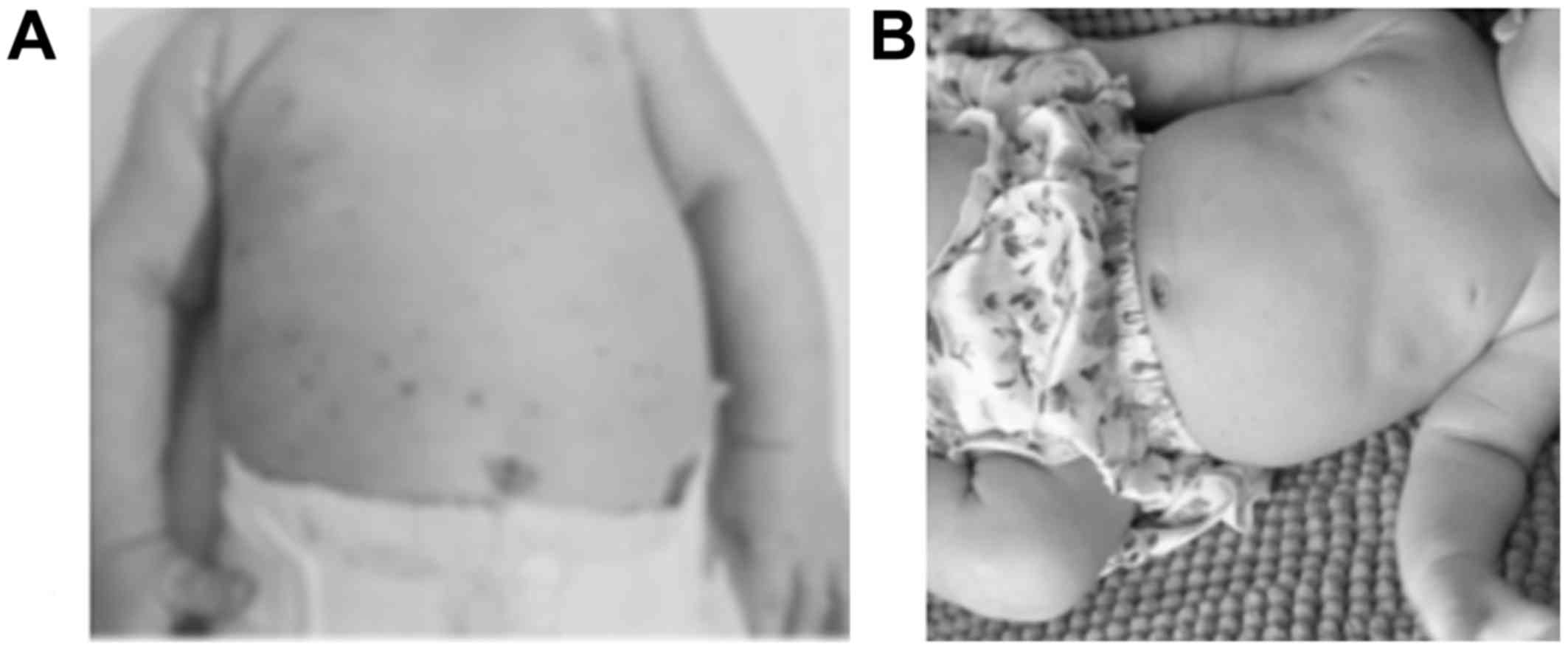
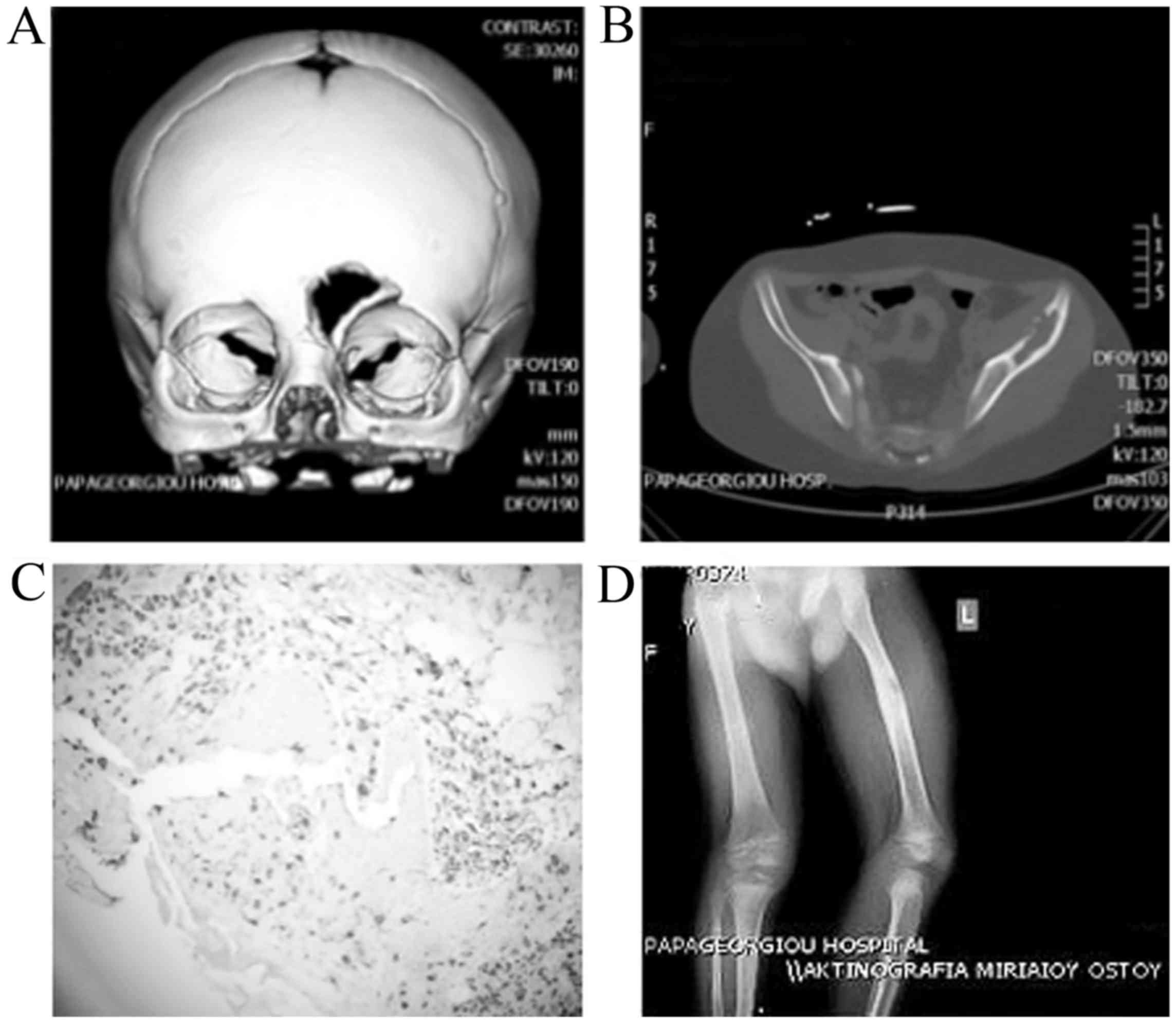
A 5-month old female infant was admitted for erythema and edema of the left orbit, after a reported insect bite that had been treated with oral amoxicillin for seven days without improvement. Her family and medical histories were unremarkable, except for a persistent rash on the trunk since birth (Fig. 1A). She was treated with intravenous ampicillin/sulbactam with prompt improvement. A skin biopsy of the trunkal rash was scheduled and the patient was discharged but returned three days later with recurrence of the inflammation in the left orbit. A plain film and MRI of the head revealed a lytic lesion in the frontal bone (Fig. 2A).

Figure 1.

A 5-month old female LCH patient with persistent rash on the trunk since birth, (A) before and (B) after the first cycle of chemotherapy (prednisolone + vinblastine).

Figure 2.

Initial imaging/pathology findings of all patients. (A) Patient no. 1: 3D-CT scan of the skull illustrating lytic lesion of the frontal bone. (B) Patient no. 2: CT scan of the pelvis illustrating lytic lesion of the left iliac bone. (C) Patient no. 3: Skin biopsy sample positive staining for protein S-100 (×200). (D) Patient no. 4: Plain film of the femur imaging lytic lesion of the left femur.

Patient no. 2

A 7-year-old boy with a history of Wolf-Parkinson-White syndrome presented with localized pain on the left hip with concomitant limp during the last month. The pain started after an injury while playing. A plain film of the hip at the time of the injury was normal. However, due to symptom persistence, imaging studies were performed (pelvic MRI and CT scan) that demonstrated a lytic lesion of the left iliac bone (Fig. 2B).

Patient no. 3

A 4-month old, otherwise healthy female infant was referred for a persistent circular, eczematous, perianal skin lesion approximately 5 cm in diameter. The lesion was initially treated with a local corticosteroid and antibiotic cream for a month without improvement. Because of the persistence of the lesion and of the non-typical location a biopsy was performed (Fig. 2C).

Patient no. 4

A 4.5 year-old boy with a known history of diabetes insipidus (DI) under hormone replacement treatment for the past two years was admitted for investigation of a limp and left lower limb pain. The pain had progressed over the past few weeks and was worse at night. At the time of DI diagnosis a brain MRI had showed an ectopic posterior pituitary gland. A plain film of the left lower limb revealed a 6 mm lytic lesion of the femur (Fig. 2D). A repeat brain MRI showed thickening of the pituitary stalk and loss of the ‘bright spot’ findings that are pathognomonic for pituitary gland LCH, that preceded the bone involvement.

Management and outcome

LCH was confirmed in all patients with biopsy of the affected sites. All pathology specimens stained positive for CD1a, protein S-100 and CD207 (Langerin) confirming the diagnosis (Fig. 2C) (5). All the patients underwent a thorough hematological evaluation and further imaging (skeletal survey, abdominal ultrasound and CT or MRI scan) to exclude multifocal bone disease and risk organ involvement.

All patients were referred to a Pediatric Hematology-Oncology unit where they were managed according to the LCH III protocol after risk stratification (Table I) (6). Patient 4 had the femur lesion surgically resected before chemotherapy. All patients received induction treatment with IV vinblastine weekly and oral prednisolone daily for 6 weeks, followed by maintenance treatment for 6 months (IV vinblastine and 5 day pulses of oral prednisolone every 3 weeks). They all demonstrated a good response except patient 1 who had an immediate skin disease response (Fig. 1B), but quick recurrence of the lytic lesion at the same site while on treatment. A surgical excision of the patient's left orbital mass was performed and maintenance treatment was further continued for 12 months in total. Two months after the end of treatment, a routine imaging unveiled multiple new lytic lesions of the skull. A water deprivation test performed because of polyuria-polydipsia confirmed DI as a result of pituitary gland involvement. The patient received 3 cycles of cytarabine and cladribine (2-CDA) as second line therapy for persistent/relapsed disease and maintenance treatment (with mercaptopurine and methotrexate) for 12 months and is now in remission.

Discussion

The clinical presentation of LCH is heterogeneous as practically every organ or system may be affected. The disease is divided into single-system (uni- or multi-focal) or multi-system. Depending on the organs involved patients are divided as high-risk (lungs, liver, spleen, bone marrow) or as low-risk (skin, bones, lymph nodes, gastrointestinal tract) that can be either unifocal or multifocal. There is significant difference in mortality rates in the two risk groups. In agreement with the literature in our case series the organs most frequently affected were the skeleton (80%), the skin (33%), and the pituitary gland (25%) (3).

Bone involvement may present as a painful bone lesion (patients nos. 2 and 3) or as a painless skull lytic lesion (patient no. 1). The bones most frequently affected are the skull, femur, ribs, humerus and the vertebrae. A skeletal survey is necessary to reveal asymptomatic sites (3). Lesions of the orbital, temporal, mastoid, sphenoid, zygomatic and ethmoid bones, as well as of the maxilla, sinuses and the anterior or middle cranial fossa are considered ‘CNS-risk’ lesions (patient no. 1) (3).

Diabetes insipidus (DI) is the most frequent type of CNS involvement and may precede or follow other manifestations (patient nos. 4 and 1, respectively). LCH is the most common cause of isolated DI and of a thickened pituitary stalk in brain MRI (7). Treatment should be initiated even without biopsy of the lesion, provided a germ cell tumor and a lymphoma have been excluded (7). Lacking specific imaging criteria, other MRI lesions resembling LCH that involve the skull need to be confirmed with biopsy in order to differentiate from other malignancies as meningioma, rhabdomyosarcoma and Ewing's sarcoma (8).

The incidence of the disease during early infancy is estimated to be 1–2/1.000.000, and the predominant initial symptom is a skin rash on the scalp or body, ranging from red or necrotic papules to hypopigmented macules or persistent ‘cradle cap’. Underdiagnosis is usual when LCH manifests as a skin rash during early infancy (patients nos. 1 and 3, Fig. 1) because of the difficulty to differentiate it from benign skin conditions like eczema or bacterial infections (9). Although isolated cutaneous LCH may be self-limited it is essential for primary health care providers to be aware of the disorder and closely follow-up their patients because it may progress to multisystem disease (40% of cases) (10), like patient no. 1. Among infants LCH is not only rarer but also carries a worse prognosis in comparison to older children, with a mortality rate reaching 50% (9,10).

The overall survival of low-risk LCH in children is estimated to be 99%, but for high-risk LCH is around 80% with high possibility of relapse (11). The LCH-IV is an international collaborative treatment protocol that is expected to be completed by 2018. Its main objectives are to reduce mortality and reactivation rates by intensification and prolongation of treatment especially in multisystem LCH and to devise strategies to avoid permanent consequences in treated patients (12).

BRAF is a kinase in the MAPK pathway playing a central role in cell growth. The BRAF-V600E mutation induces activation of the RAS/RAF/MAPK/ERK pathway. The discovery of recurrent BRAF-V600E and MAP2K1 mutations in LCH patients has revolutionized our understanding of the biology of the disease and has offered significant alternatives for its management. Therefore, despite ongoing considerations regarding safety and toxicity especially in childhood, agents such as vemurafenib, dabrafenib and trametinib have been recently introduced in the management of persistent and refractory LCH cases that harbor the mutations and have induced prolonged remissions (7).

Despite the advancements in our understanding of the disease's etiology and natural history and the novel therapeutic approaches for LCH, there are pitfalls that may delay the diagnosis from three months to several years (11,13), especially when the initial presentation is a common and non-specific symptom (patients nos. 2 and 3). Pediatricians, pediatric oncologists and other specialists treating children (family physicians, dermatologists, orthopedic surgeons, otorhinolaryngologists and dentists) should be familiar with the multiple faces of LCH in order to achieve timely diagnosis and to ensure appropriate treatment and optimal outcome.

References

1 

Badalian-Very G, Vergilio JA, Fleming M and Rollins BJ: Pathogenesis of Langerhans cell histiocytosis. Annu Rev Pathol. 8:1–20. 2013. View Article : Google Scholar : PubMed/NCBI

2 

Chakraborty R, Hampton OA, Shen X, Simko SJ, Shih A, Abhyankar H, Lim KP, Covington KR, Trevino L, Dewal N, et al: Mutually exclusive recurrent somatic mutations in MAP2K1 and BRAF support a central role for ERK activation in LCH pathogenesis. Blood. 124:3007–3015. 2014. View Article : Google Scholar : PubMed/NCBI

3 

Haupt R, Minkov M, Astigarraga I, Schäfer E, Nanduri V, Jubran R, Egeler RM, Janka G, Micic D, Rodriguez-Galindo C, et al: Langerhans cell histiocytosis (LCH): Guidelines for diagnosis, clinical work-up and treatment for patients till the age of 18 years. Pediatr Blood Cancer. 60:175–184. 2013. View Article : Google Scholar : PubMed/NCBI

4 

Stålemark H, Laurencikas E, Karis J, Gavhed D, Fadeel B and Henter JI: Incidence of Langerhans cell histiocytosis in children: A population-based study. Pediatr Blood Cancer. 51:76–81. 2008. View Article : Google Scholar : PubMed/NCBI

5 

Drutz JE: Histiocytosis. Pediatr Rev. 32:218–219. 2011. View Article : Google Scholar : PubMed/NCBI

6 

Gadner H, Minkov M, Grois N, Pötschger U, Thiem E, Aricò M, Astigarraga I, Braier J, Donadieu J, Henter JI, et al: Therapy prolongation improves outcome in multisystem Langerhans cell histiocytosis. Blood. 121:5006–5014. 2013. View Article : Google Scholar : PubMed/NCBI

7 

Allen CE, Ladisch S and McClain KL: How I treat Langerhans cell histiocytosis. Blood. 126:26–35. 2015. View Article : Google Scholar : PubMed/NCBI

8 

Liang C, Liang Q, Du C, Zhang X and Guo S: Langerhans' cell histiocytosis of the temporal fossa: A case report. Oncol Lett. 11:2625–2628. 2016. View Article : Google Scholar : PubMed/NCBI

9 

Minkov M, Prosch H, Steiner M, Grois N, Pötschger U, Kaatsch P, Janka-Schaub G and Gadner H: Langerhans cell histiocytosis in neonates. Pediatr Blood Cancer. 45:802–807. 2005. View Article : Google Scholar : PubMed/NCBI

10 

Lau L, Krafchik B, Trebo MM and Weitzman S: Cutaneous Langerhans cell histiocytosis in children under one year. Pediatr Blood Cancer. 46:66–71. 2006. View Article : Google Scholar : PubMed/NCBI

11 

Grana N: Langerhans cell histiocytosis. Cancer Contr. 21:328–334. 2014. View Article : Google Scholar

12 

The Histiocyte society, . LCH-IV International Collaborative Treatment Protocol for Langerhans Cell Histiocytosis. http://www.bspho.be/wp-content/uploads/LCH-IV-protocol-amended-version-Nov.-2015v1.3.pdfJanuary 8–2017

13 

Abla O, Egeler RM and Weitzman S: Langerhans cell histiocytosis: Current concepts and treatments. Cancer Treat Rev. 36:354–359. 2010. View Article : Google Scholar : PubMed/NCBI

Related Articles

  • Abstract
  • View
  • Download
  • Twitter
Copy and paste a formatted citation
Spandidos Publications style
Papadopoulou M, Panagopoulou P, Papadopoulou A, Hatzipantelis E, Efstratiou I, Galli‑Tsinopoulou A and Papadopoulou‑Alataki E: The multiple faces of Langerhans cell histiocytosis in childhood: A gentle reminder. Mol Clin Oncol 8: 489-492, 2018.
APA
Papadopoulou, M., Panagopoulou, P., Papadopoulou, A., Hatzipantelis, E., Efstratiou, I., Galli‑Tsinopoulou, A., & Papadopoulou‑Alataki, E. (2018). The multiple faces of Langerhans cell histiocytosis in childhood: A gentle reminder. Molecular and Clinical Oncology, 8, 489-492. https://doi.org/10.3892/mco.2017.1539
MLA
Papadopoulou, M., Panagopoulou, P., Papadopoulou, A., Hatzipantelis, E., Efstratiou, I., Galli‑Tsinopoulou, A., Papadopoulou‑Alataki, E."The multiple faces of Langerhans cell histiocytosis in childhood: A gentle reminder". Molecular and Clinical Oncology 8.3 (2018): 489-492.
Chicago
Papadopoulou, M., Panagopoulou, P., Papadopoulou, A., Hatzipantelis, E., Efstratiou, I., Galli‑Tsinopoulou, A., Papadopoulou‑Alataki, E."The multiple faces of Langerhans cell histiocytosis in childhood: A gentle reminder". Molecular and Clinical Oncology 8, no. 3 (2018): 489-492. https://doi.org/10.3892/mco.2017.1539
Copy and paste a formatted citation
x
Spandidos Publications style
Papadopoulou M, Panagopoulou P, Papadopoulou A, Hatzipantelis E, Efstratiou I, Galli‑Tsinopoulou A and Papadopoulou‑Alataki E: The multiple faces of Langerhans cell histiocytosis in childhood: A gentle reminder. Mol Clin Oncol 8: 489-492, 2018.
APA
Papadopoulou, M., Panagopoulou, P., Papadopoulou, A., Hatzipantelis, E., Efstratiou, I., Galli‑Tsinopoulou, A., & Papadopoulou‑Alataki, E. (2018). The multiple faces of Langerhans cell histiocytosis in childhood: A gentle reminder. Molecular and Clinical Oncology, 8, 489-492. https://doi.org/10.3892/mco.2017.1539
MLA
Papadopoulou, M., Panagopoulou, P., Papadopoulou, A., Hatzipantelis, E., Efstratiou, I., Galli‑Tsinopoulou, A., Papadopoulou‑Alataki, E."The multiple faces of Langerhans cell histiocytosis in childhood: A gentle reminder". Molecular and Clinical Oncology 8.3 (2018): 489-492.
Chicago
Papadopoulou, M., Panagopoulou, P., Papadopoulou, A., Hatzipantelis, E., Efstratiou, I., Galli‑Tsinopoulou, A., Papadopoulou‑Alataki, E."The multiple faces of Langerhans cell histiocytosis in childhood: A gentle reminder". Molecular and Clinical Oncology 8, no. 3 (2018): 489-492. https://doi.org/10.3892/mco.2017.1539
Follow us
  • Twitter
  • LinkedIn
  • Facebook
About
  • Spandidos Publications
  • Careers
  • Cookie Policy
  • Privacy Policy
How can we help?
  • Help
  • Live Chat
  • Contact
  • Email to our Support Team