Spandidos Publications Logo
  • About
    • About Spandidos
    • Aims and Scopes
    • Abstracting and Indexing
    • Editorial Policies
    • Reprints and Permissions
    • Job Opportunities
    • Terms and Conditions
    • Contact
  • Journals
    • All Journals
    • Oncology Letters
      • Oncology Letters
      • Information for Authors
      • Editorial Policies
      • Editorial Board
      • Aims and Scope
      • Abstracting and Indexing
      • Bibliographic Information
      • Archive
    • International Journal of Oncology
      • International Journal of Oncology
      • Information for Authors
      • Editorial Policies
      • Editorial Board
      • Aims and Scope
      • Abstracting and Indexing
      • Bibliographic Information
      • Archive
    • Molecular and Clinical Oncology
      • Molecular and Clinical Oncology
      • Information for Authors
      • Editorial Policies
      • Editorial Board
      • Aims and Scope
      • Abstracting and Indexing
      • Bibliographic Information
      • Archive
    • Experimental and Therapeutic Medicine
      • Experimental and Therapeutic Medicine
      • Information for Authors
      • Editorial Policies
      • Editorial Board
      • Aims and Scope
      • Abstracting and Indexing
      • Bibliographic Information
      • Archive
    • International Journal of Molecular Medicine
      • International Journal of Molecular Medicine
      • Information for Authors
      • Editorial Policies
      • Editorial Board
      • Aims and Scope
      • Abstracting and Indexing
      • Bibliographic Information
      • Archive
    • Biomedical Reports
      • Biomedical Reports
      • Information for Authors
      • Editorial Policies
      • Editorial Board
      • Aims and Scope
      • Abstracting and Indexing
      • Bibliographic Information
      • Archive
    • Oncology Reports
      • Oncology Reports
      • Information for Authors
      • Editorial Policies
      • Editorial Board
      • Aims and Scope
      • Abstracting and Indexing
      • Bibliographic Information
      • Archive
    • Molecular Medicine Reports
      • Molecular Medicine Reports
      • Information for Authors
      • Editorial Policies
      • Editorial Board
      • Aims and Scope
      • Abstracting and Indexing
      • Bibliographic Information
      • Archive
    • World Academy of Sciences Journal
      • World Academy of Sciences Journal
      • Information for Authors
      • Editorial Policies
      • Editorial Board
      • Aims and Scope
      • Abstracting and Indexing
      • Bibliographic Information
      • Archive
    • International Journal of Functional Nutrition
      • International Journal of Functional Nutrition
      • Information for Authors
      • Editorial Policies
      • Editorial Board
      • Aims and Scope
      • Abstracting and Indexing
      • Bibliographic Information
      • Archive
    • International Journal of Epigenetics
      • International Journal of Epigenetics
      • Information for Authors
      • Editorial Policies
      • Editorial Board
      • Aims and Scope
      • Abstracting and Indexing
      • Bibliographic Information
      • Archive
    • Medicine International
      • Medicine International
      • Information for Authors
      • Editorial Policies
      • Editorial Board
      • Aims and Scope
      • Abstracting and Indexing
      • Bibliographic Information
      • Archive
  • Articles
  • Information
    • Information for Authors
    • Information for Reviewers
    • Information for Librarians
    • Information for Advertisers
    • Conferences
  • Language Editing
Spandidos Publications Logo
  • About
    • About Spandidos
    • Aims and Scopes
    • Abstracting and Indexing
    • Editorial Policies
    • Reprints and Permissions
    • Job Opportunities
    • Terms and Conditions
    • Contact
  • Journals
    • All Journals
    • Biomedical Reports
      • Information for Authors
      • Editorial Policies
      • Editorial Board
      • Aims and Scope
      • Abstracting and Indexing
      • Bibliographic Information
      • Archive
    • Experimental and Therapeutic Medicine
      • Information for Authors
      • Editorial Policies
      • Editorial Board
      • Aims and Scope
      • Abstracting and Indexing
      • Bibliographic Information
      • Archive
    • International Journal of Epigenetics
      • Information for Authors
      • Editorial Policies
      • Editorial Board
      • Aims and Scope
      • Abstracting and Indexing
      • Bibliographic Information
      • Archive
    • International Journal of Functional Nutrition
      • Information for Authors
      • Editorial Policies
      • Editorial Board
      • Aims and Scope
      • Abstracting and Indexing
      • Bibliographic Information
      • Archive
    • International Journal of Molecular Medicine
      • Information for Authors
      • Editorial Policies
      • Editorial Board
      • Aims and Scope
      • Abstracting and Indexing
      • Bibliographic Information
      • Archive
    • International Journal of Oncology
      • Information for Authors
      • Editorial Policies
      • Editorial Board
      • Aims and Scope
      • Abstracting and Indexing
      • Bibliographic Information
      • Archive
    • Medicine International
      • Information for Authors
      • Editorial Policies
      • Editorial Board
      • Aims and Scope
      • Abstracting and Indexing
      • Bibliographic Information
      • Archive
    • Molecular and Clinical Oncology
      • Information for Authors
      • Editorial Policies
      • Editorial Board
      • Aims and Scope
      • Abstracting and Indexing
      • Bibliographic Information
      • Archive
    • Molecular Medicine Reports
      • Information for Authors
      • Editorial Policies
      • Editorial Board
      • Aims and Scope
      • Abstracting and Indexing
      • Bibliographic Information
      • Archive
    • Oncology Letters
      • Information for Authors
      • Editorial Policies
      • Editorial Board
      • Aims and Scope
      • Abstracting and Indexing
      • Bibliographic Information
      • Archive
    • Oncology Reports
      • Information for Authors
      • Editorial Policies
      • Editorial Board
      • Aims and Scope
      • Abstracting and Indexing
      • Bibliographic Information
      • Archive
    • World Academy of Sciences Journal
      • Information for Authors
      • Editorial Policies
      • Editorial Board
      • Aims and Scope
      • Abstracting and Indexing
      • Bibliographic Information
      • Archive
  • Articles
  • Information
    • For Authors
    • For Reviewers
    • For Librarians
    • For Advertisers
    • Conferences
  • Language Editing
Login Register Submit
  • This site uses cookies
  • You can change your cookie settings at any time by following the instructions in our Cookie Policy. To find out more, you may read our Privacy Policy.

    I agree
Search articles by DOI, keyword, author or affiliation
Search
Advanced Search
presentation
Molecular and Clinical Oncology
Join Editorial Board Propose a Special Issue
Print ISSN: 2049-9450 Online ISSN: 2049-9469
Journal Cover
March-2018 Volume 8 Issue 3

Full Size Image

Sign up for eToc alerts
Recommend to Library

Journals

International Journal of Molecular Medicine

International Journal of Molecular Medicine

International Journal of Molecular Medicine is an international journal devoted to molecular mechanisms of human disease.

International Journal of Oncology

International Journal of Oncology

International Journal of Oncology is an international journal devoted to oncology research and cancer treatment.

Molecular Medicine Reports

Molecular Medicine Reports

Covers molecular medicine topics such as pharmacology, pathology, genetics, neuroscience, infectious diseases, molecular cardiology, and molecular surgery.

Oncology Reports

Oncology Reports

Oncology Reports is an international journal devoted to fundamental and applied research in Oncology.

Experimental and Therapeutic Medicine

Experimental and Therapeutic Medicine

Experimental and Therapeutic Medicine is an international journal devoted to laboratory and clinical medicine.

Oncology Letters

Oncology Letters

Oncology Letters is an international journal devoted to Experimental and Clinical Oncology.

Biomedical Reports

Biomedical Reports

Explores a wide range of biological and medical fields, including pharmacology, genetics, microbiology, neuroscience, and molecular cardiology.

Molecular and Clinical Oncology

Molecular and Clinical Oncology

International journal addressing all aspects of oncology research, from tumorigenesis and oncogenes to chemotherapy and metastasis.

World Academy of Sciences Journal

World Academy of Sciences Journal

Multidisciplinary open-access journal spanning biochemistry, genetics, neuroscience, environmental health, and synthetic biology.

International Journal of Functional Nutrition

International Journal of Functional Nutrition

Open-access journal combining biochemistry, pharmacology, immunology, and genetics to advance health through functional nutrition.

International Journal of Epigenetics

International Journal of Epigenetics

Publishes open-access research on using epigenetics to advance understanding and treatment of human disease.

Medicine International

Medicine International

An International Open Access Journal Devoted to General Medicine.

Journal Cover
March-2018 Volume 8 Issue 3

Full Size Image

Sign up for eToc alerts
Recommend to Library

  • Article
  • Citations
    • Cite This Article
    • Download Citation
    • Create Citation Alert
    • Remove Citation Alert
    • Cited By
  • Similar Articles
    • Related Articles (in Spandidos Publications)
    • Similar Articles (Google Scholar)
    • Similar Articles (PubMed)
  • Download PDF
  • Download XML
  • View XML
Case Report

Oxaliplatin-induced hepatic sinusoidal obstruction syndrome in a patient with gastric cancer: A case report

  • Authors:
    • Fang Liu
    • Xin Cao
    • Jin Ye
    • Xiaoli Pan
    • Xuefeng Kan
    • Yuhu Song
  • View Affiliations / Copyright

    Affiliations: Institute of Hematology, Union Hospital, Tongji Medical College, Huazhong University of Science and Technology, Wuhan, Hubei 430022, P.R. China, Division of Gastroenterology, Union Hospital, Tongji Medical College, Huazhong University of Science and Technology, Wuhan, Hubei 430022, P.R. China, Department of Radiology, Union Hospital, Tongji Medical College, Huazhong University of Science and Technology, Wuhan, Hubei 430022, P.R. China
  • Pages: 453-456
    |
    Published online on: December 18, 2017
       https://doi.org/10.3892/mco.2017.1540
  • Expand metrics +
Metrics: Total Views: 0 (Spandidos Publications: | PMC Statistics: )
Metrics: Total PDF Downloads: 0 (Spandidos Publications: | PMC Statistics: )
Cited By (CrossRef): 0 citations Loading Articles...

This article is mentioned in:


Abstract

Oxaliplatin is a platinum-based antineoplastic agent used in cancer chemotherapy. Oxaliplatin-induced hepatic sinusoidal obstruction syndrome (HSOS) has been reported in the context of chemotherapy for liver metastasis of colorectal cancer. However, to the best of our knowledge, there is no report of oxaliplatin‑associated HSOS in patients with gastric cancer. The present study reported a patient with gastric cancer who received proximal gastrectomy and oxaliplatin‑containing chemotherapy. Contrast‑enhanced computed tomography revealed that liver parenchyma appeared heterogeneous and demonstrated hypoattenuation in the portal phase. In dynamic contrast‑enhanced magnetic resonance imaging, hypointense heterogeneity was demonstrated in the portal‑venous phase. Pathological examination indicated distinctive multifocal sinusoidal dilatation. In conclusion, the present report indicated a case of oxaliplatin‑induced HSOS in a patient with gastric cancer who received oxaliplatin-contained chemotherapy.

Introduction

Gastric cancer is one of the leading causes of cancer-related mortality worldwide. Despite a decrease in its incidence in some regions of the world, gastric cancer remains a major clinical challenge as the majority of cases are diagnosed in an advanced stage, with a poor prognosis and limited treatment options (1). Oxaliplatin, a platinum-based antineoplastic agent, is used as an essential part of chemotherapeutic regimens for colorectal liver metastasis (2). Oxaliplatin-based regimens have been associated with the development of injury to the hepatic parenchyma in the form of hepatic sinusoidal obstruction syndrome (HSOS) (3–6). Since oxaliplatin-induced severe hepatic sinusoidal obstruction was first reported in 2004 (7), oxaliplatin-induced hepatic injury has become a major concern in patients with metastatic colorectal cancer (8–11). To the best of our knowledge, there have been no previously published reports on oxaliplatin-induced HSOS in other types of solid cancer. The present study described a case of oxaliplatin-induced HSOS in a patient with gastric cancer who received oxaliplatin-containing chemotherapy.

Case report

A 52-year-old man received gastroscopy because of dysphagia at Union hospital, Tongji Medical College (Wuhan, China) in Feb 2016. Gastroscopic examination indicated cardia-fundus neoplasia and pathological examination demonstrated gastric adnenocarcinoma. Subsequently, the patient underwent proximal gastrectomy for cardia-fundus gastric carcinoma and the pathological diagnosis was stage pT3N0M0 moderately and well-differentiated tubular adenocarcinoma. For treatment, the patient received five cycles of S-1 and oxaliplatin (SOX) regimen, consisting of intravenous injection of 130 mg/m2 oxaliplatin (Sanofi Pharmaceutical, Gentilly, France) on day 1 followed by oral administration of 50 mg TGOP capsules (50 mg tegafur, 14.5 mg gimeracil and 49 mg oteracil potassium; Qilu Pharmaceutical Co., Ltd., Jinan, China) twice daily on days 1–14, every 3 weeks. Following the five cycles of SOX, the patient presented no abnormal symptoms, and the results of blood routine examination and liver function tests were normal. The patient had no previous history of liver disease and denied alcohol use.

The patient received a general check-up before the sixth cycle of SOX on schedule. Peripheral blood routine examination results were as follows: White blood cells, 3.79×10⁹ cells/l; red blood cells, 3.38×10¹² cells/l; and platelet count, 179×109 cells/l. Liver function test results were as follows: Total bilirubin, 6.6 mmol/l; direct bilirubin, 4.4 mmol/l; alanine aminotransferase, 34 U/l (normal range, 21–72 U/l); aspartate aminotransferase, 55 U/l (normal range, 17–59 U/l); alkaline phosphatase, 190 U/l (normal range, 40–150 U/l); γ-glutamyl transferase, 58 U/l (normal range, 17–53 U/l); total protein, 64.9 g/l; and albumin, 32.1 g/l. Non-invasive fibrosis scores were as follows: Aspartate aminotransferase to platelet ratio index, 0.52; and fibrosis-4 score, 2.74. Tests for hepatitis A, B, C, and E, Epstein-Barr virus, and cytomegalovirus infection were negative. Anti-nuclear antibody was weak positive; other autoantibodies were negative; immunoglobulin G level (18.3 g/l; normal range, 7.51–15.6 g/l) was increased and other immunoglobulin levels were within the normal range.

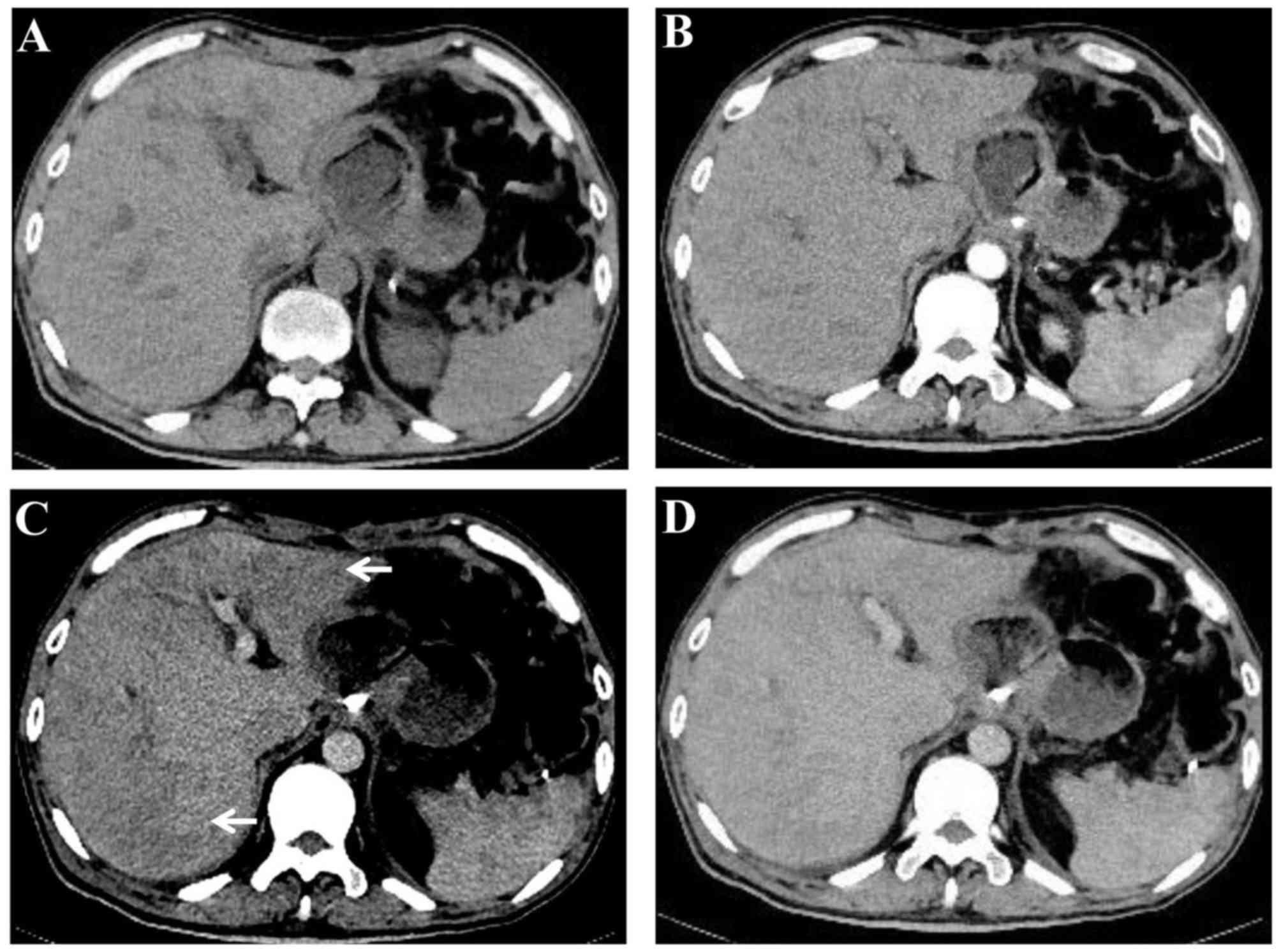
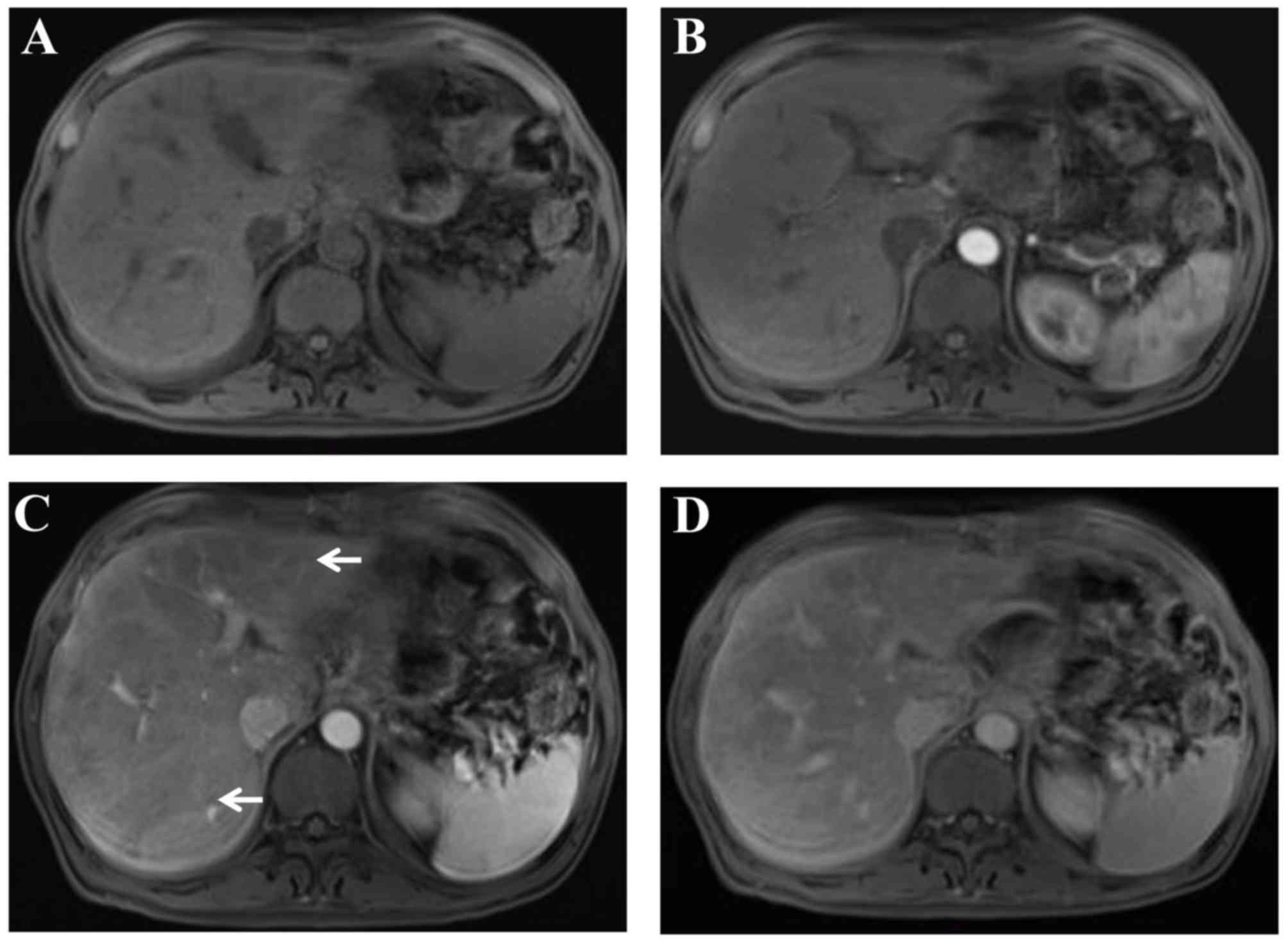
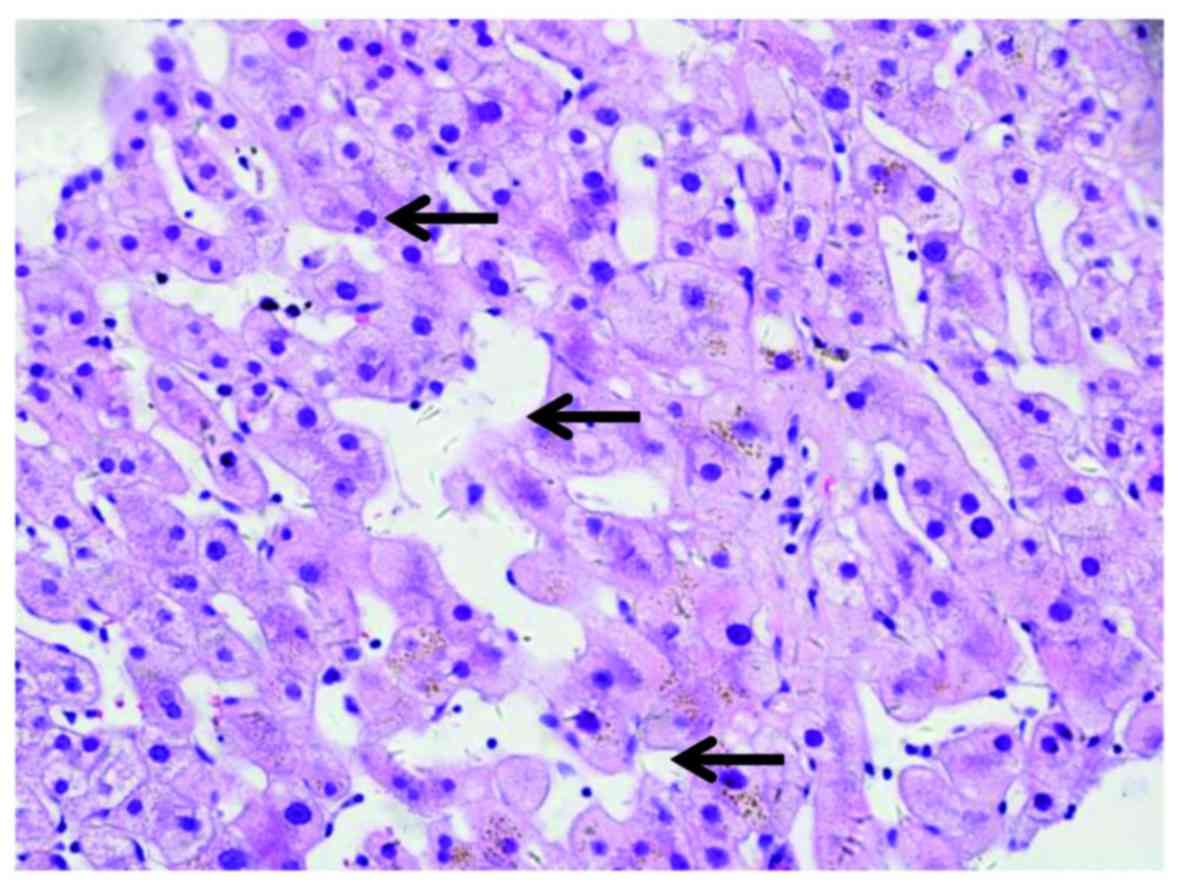
Enlargement of the lymph nodes was not observed in the patient through physical examination and ultrasonography. Contrast-enhanced computed tomography (CT) revealed that liver parenchyma appeared heterogeneous and demonstrated predominantly moderate hypoattenuation in the left and right lobe of the liver (Fig. 1) (8). On dynamic contrast-enhanced magnetic resonance imaging (12), heterogeneous hypointensity was demonstrated in the portal-venous phase (Fig. 2). In addition, the patient received liver biopsy. Tissue sections (5-µm thick) were fixed in formalin at room temperature, and paraffin-embedded liver samples were stained at room temperature with hematoxylin and eosin for standard histological examination using a light microscope. Pathological examination indicated distinctive multifocal sinusoidal dilatation without piecemeal necrosis, hepatic rosette formation and emperipolesis (Fig. 3). Written informed consent was obtained from the patient prior to publication of the present case report.

Figure 1.

Contrast-enhanced CT demonstrating heterogeneous hypoattenuation in the liver. (A) Pre-contrast, (B) artery phase, (C) portal phase and (D) hepatic venous phase images. Heterogeneous hypoattenuation (arrows) was demonstrated in the portal phase of contrast CT. CT, computed tomography.

Figure 2.

Liver parenchyma with a heterogeneous and predominantly hypointense appearance on T1-weighted gadolinium-enhanced MRI. (A) Pre-contrast, (B) artery phase, (C) portal phase and (D) hepatic venous phase images. A heterogeneous hypointense appearance (arrows) was revealed on the portal phase of contrast-enhanced MRI. MRI, magnetic resonance imaging.

Figure 3.

Pathological hematoxylin and eosin staining demonstrating distinctive sinusoidal dilatation (arrows) in the liver of a patient with gastric cancer who received oxaliplatin-containing chemotherapy (magnification, ×400).

Discussion

HSOS, also known as veno-occlusive disease, is an obliterative venulitis of the terminal hepatic venules (6). It occurs as a result of cytoreductive therapy prior to hematopoietic stem cell transplantation (HSCT), following oxaliplatin-containing chemotherapy for colorectal carcinoma metastatic to the liver, in patients taking pyrrolizidine alkaloid-containing herbal remedies (5,13,14). It is histologically characterized by sinusoidal dilatation, hepatocyte necrosis and obliterated hepatic venules due to damage to the sinusoidal endothelial cells (4). Sinusoidal changes induced by chemotherapeutic agents or pyrrolizidine alkaloid-containing herbals are caused by a direct toxicity to sinusoidal endothelial cells (12). In addition, toxic agents have an adverse effect on bone marrow progenitors of endothelial cells that are responsible for the repair of sinusoidal lesions (15). The clinical presentations of HSOS include jaundice, right upper-quadrant pain and tender hepatomegaly, ascites and unexplained weight gain. The diagnosis of a HSOS result from HSCT or pyrrolizidine alkaloid (PA)-containing herbals is based on a history of taking PAs-containing herbs and a classical triad of weight gain, painful hepatomegaly and jaundice (13,14). However, clinical manifestations of the patients with oxaliplatin-induced HSOS appear to be mild or absent (10). Thus, it is challenge to define HSOS in patients who have received oxaliplatin-contained chemotherapy. Notably, patients with oxaliplatin-induced HSOS may give rise to elevated morbidity rates and increased bleeding risk. Thus, it is important to identify HSOS in patients who receive oxaliplatin-contained chemotherapy.

The diagnosis of HSOS is established by histological examination; however, the patchy nature of HSOS incurs sampling variability that confines the diagnostic yield of the biopsy. Previous studies have demonstrated that CT and/or MRI scans may provide excellent strategies for the screening of oxaliplatin-induced HSOS (8,10,11,16). In the present study, heterogeneous and predominantly hypoattenuation of the hepatic parenchyma was a distinctive radiological sign of oxaliplatin-induced HSOS on the CT scan. In addition, reticular hypointensity was an important indicator of oxaliplatin-induced HSOS observed from MRI in the patient. These imaging signs were also reported in previous studies (8,10,11,16). Notably, various studies have demonstrated that oxaliplatin-induced HSOS manifested as focal liver lesions and mimicked metastatic colon cancer in the liver (17,18). Thus, HSOS should have been differentiated from metastatic gastric cancer. Details of history, careful observation of radiological findings, and histological examination provide assistance in distinguishing oxaliplatin-induced HSOS from metastatic cancer.

In conclusion, the present case report detailed oxaliplatin-induced HSOS in a patient with gastric cancer. HSOS should be considered as one of the potential causes of newly-developed hepatic lesions in patients with gastric cancer who receive oxaliplatin. The present case highlights that oxaliplatin may induce HSOS not only in metastatic colon cancer in the liver, but also in other types of cancer, such as gastric cancer. Further studies are required to identify characteristics that predispose individuals to HSOS secondary to oxaliplatin and the prognosis of oxaliplatin-induced HSOS in gastric cancer.

Acknowledgments

The present study was supported by the National Natural Science Foundation of China (grant nos. 81570555 and 81270506).

Glossary

Abbreviations

Abbreviations:

HSOS

hepatic sinusoidal obstruction syndrome

CT

computed tomography

MRI

magnetic resonance imaging

References

1 

De Manzoni G, Marrelli D, Baiocchi GL, Morgagni P, Saragoni L, Degiuli M, Donini A, Fumagalli U, Mazzei MA, Pacelli F, et al: The italian research group for gastric cancer (GIRCG) guidelines for gastric cancer staging and treatment: 2015. Gastric Cancer. 20:20–30. 2017. View Article : Google Scholar : PubMed/NCBI

2 

Sabanathan D, Eslick GD and Shannon J: Use of neoadjuvant chemotherapy plus molecular targeted therapy in colorectal liver metastases: A Systematic review and meta-analysis. Clin Colorectal Cancer. 15:e141–e147. 2016. View Article : Google Scholar : PubMed/NCBI

3 

Robinson SM, Mann J, Vasilaki A, Mathers J, Burt AD, Oakley F, White SA and Mann DA: Pathogenesis of FOLFOX induced sinusoidal obstruction syndrome in a murine chemotherapy model. J Hepatol. 59:318–326. 2013. View Article : Google Scholar : PubMed/NCBI

4 

Valla DC and Cazals-Hatem D: Sinusoidal obstruction syndrome. Clin Res Hepatol Gastroenterol. 40:378–385. 2016. View Article : Google Scholar : PubMed/NCBI

5 

Fan CQ and Crawford JM: Sinusoidal obstruction syndrome (hepatic veno-occlusive disease). J Clin Exp Hepatol. 4:332–346. 2014. View Article : Google Scholar : PubMed/NCBI

6 

Plessier A, Rautou PE and Valla DC: Management of hepatic vascular diseases. J Hepatol. 56 Suppl 1:S25–S38. 2012. View Article : Google Scholar : PubMed/NCBI

7 

Rubbia-Brandt L, Audard V, Sartoretti P, Roth AD, Brezault C, Le Charpentier M, Dousset B, Morel P, Soubrane O, Chaussade S, et al: Severe hepatic sinusoidal obstruction associated with oxaliplatin-based chemotherapy in patients with metastatic colorectal cancer. Ann Oncol. 15:460–466. 2004. View Article : Google Scholar : PubMed/NCBI

8 

Han NY, Park BJ, Kim MJ, Sung DJ and Cho SB: Hepatic parenchymal heterogeneity on contrast-enhanced ct scans following oxaliplatin-based chemotherapy: Natural history and association with clinical evidence of sinusoidal obstruction syndrome. Radiology. 276:766–774. 2015. View Article : Google Scholar : PubMed/NCBI

9 

Han NY, Park BJ, Sung DJ, Kim MJ, Cho SB, Lee CH, Jang YJ, Kim SY, Kim DS, Um SH, et al: Chemotherapy-induced focal hepatopathy in patients with gastrointestinal malignancy: Gadoxetic acid-enhanced and diffusion-weighted MR imaging with clinical-pathologic correlation. Radiology. 271:416–425. 2014. View Article : Google Scholar : PubMed/NCBI

10 

Shin NY, Kim MJ, Lim JS, Park MS, Chung YE, Choi JY, Kim KW and Park YN: Accuracy of gadoxetic acid-enhanced magnetic resonance imaging for the diagnosis of sinusoidal obstruction syndrome in patients with chemotherapy-treated colorectal liver metastases. Eur Radiol. 22:864–871. 2012. View Article : Google Scholar : PubMed/NCBI

11 

Ward J, Guthrie JA, Sheridan MB, Boyes S, Smith JT, Wilson D, Wyatt JI, Treanor D and Robinson PJ: Sinusoidal obstructive syndrome diagnosed with superparamagnetic iron oxide-enhanced magnetic resonance imaging in patients with chemotherapy-treated colorectal liver metastases. J Clin Oncol. 26:4304–4310. 2008. View Article : Google Scholar : PubMed/NCBI

12 

Anurathapan U, Pakakasama S, Mekjaruskul P, Sirachainan N, Songdej D, Chuansumrit A, Charoenkwan P, Jetsrisuparb A, Sanpakit K, Pongtanakul B, et al: Outcomes of thalassemia patients undergoing hematopoietic stem cell transplantation by using a standard myeloablative versus a novel reduced-toxicity conditioning regimen according to a new risk stratification. Biol Blood Marrow Transplant. 20:2066–2071. 2014. View Article : Google Scholar : PubMed/NCBI

13 

Li X, Yang X, Xu D, Li Q, Kong X, Lu Z, Bai T, Xu K, Ye J and Song Y: Magnetic resonance imaging findings in patients with pyrrolizidine alkaloid-induced hepatic sinusoidal obstruction syndrome. Clin Gastroenterol Hepatol. 15:955–957. 2017. View Article : Google Scholar : PubMed/NCBI

14 

Kan X, Ye J, Rong X, Lu Z, Li X, Wang Y, Yang L, Xu K, Song Y and Hou X: Diagnostic performance of contrast-enhanced CT in pyrrolizidine alkaloids-induced hepatic sinusoidal obstructive syndrome. Sci Rep. 6:379982016. View Article : Google Scholar : PubMed/NCBI

15 

DeLeve LD: Liver sinusoidal endothelial cells and liver regeneration. J Clin Invest. 123:1861–1866. 2013. View Article : Google Scholar : PubMed/NCBI

16 

ORourke TR, Welsh FK, Tekkis PP, Lyle N, Mustajab A, John TG, Peppercorn D and Rees M: Accuracy of liver-specific magnetic resonance imaging as a predictor of chemotherapy-associated hepatic cellular injury prior to liver resection. Eur J Surg Oncol. 35:1085–1091. 2009. View Article : Google Scholar : PubMed/NCBI

17 

Choi JH, Won YW, Kim HS, Oh YH, Lim S and Kim HJ: Oxaliplatin-induced sinusoidal obstruction syndrome mimicking metastatic colon cancer in the liver. Oncol Lett. 11:2861–2864. 2016. View Article : Google Scholar : PubMed/NCBI

18 

Arakawa Y, Shimada M, Utsunomya T, Imura S, Morine Y, Ikemoto T, Hanaoka J, Sugimoto K and Bando Y: Oxaliplatin-related sinusoidal obstruction syndrome mimicking metastatic liver tumors. Hepatol Res. 43:685–689. 2013. View Article : Google Scholar : PubMed/NCBI

Related Articles

  • Abstract
  • View
  • Download
  • Twitter
Copy and paste a formatted citation
Spandidos Publications style
Liu F, Cao X, Ye J, Pan X, Kan X and Song Y: Oxaliplatin-induced hepatic sinusoidal obstruction syndrome in a patient with gastric cancer: A case report. Mol Clin Oncol 8: 453-456, 2018.
APA
Liu, F., Cao, X., Ye, J., Pan, X., Kan, X., & Song, Y. (2018). Oxaliplatin-induced hepatic sinusoidal obstruction syndrome in a patient with gastric cancer: A case report. Molecular and Clinical Oncology, 8, 453-456. https://doi.org/10.3892/mco.2017.1540
MLA
Liu, F., Cao, X., Ye, J., Pan, X., Kan, X., Song, Y."Oxaliplatin-induced hepatic sinusoidal obstruction syndrome in a patient with gastric cancer: A case report". Molecular and Clinical Oncology 8.3 (2018): 453-456.
Chicago
Liu, F., Cao, X., Ye, J., Pan, X., Kan, X., Song, Y."Oxaliplatin-induced hepatic sinusoidal obstruction syndrome in a patient with gastric cancer: A case report". Molecular and Clinical Oncology 8, no. 3 (2018): 453-456. https://doi.org/10.3892/mco.2017.1540
Copy and paste a formatted citation
x
Spandidos Publications style
Liu F, Cao X, Ye J, Pan X, Kan X and Song Y: Oxaliplatin-induced hepatic sinusoidal obstruction syndrome in a patient with gastric cancer: A case report. Mol Clin Oncol 8: 453-456, 2018.
APA
Liu, F., Cao, X., Ye, J., Pan, X., Kan, X., & Song, Y. (2018). Oxaliplatin-induced hepatic sinusoidal obstruction syndrome in a patient with gastric cancer: A case report. Molecular and Clinical Oncology, 8, 453-456. https://doi.org/10.3892/mco.2017.1540
MLA
Liu, F., Cao, X., Ye, J., Pan, X., Kan, X., Song, Y."Oxaliplatin-induced hepatic sinusoidal obstruction syndrome in a patient with gastric cancer: A case report". Molecular and Clinical Oncology 8.3 (2018): 453-456.
Chicago
Liu, F., Cao, X., Ye, J., Pan, X., Kan, X., Song, Y."Oxaliplatin-induced hepatic sinusoidal obstruction syndrome in a patient with gastric cancer: A case report". Molecular and Clinical Oncology 8, no. 3 (2018): 453-456. https://doi.org/10.3892/mco.2017.1540
Follow us
  • Twitter
  • LinkedIn
  • Facebook
About
  • Spandidos Publications
  • Careers
  • Cookie Policy
  • Privacy Policy
How can we help?
  • Help
  • Live Chat
  • Contact
  • Email to our Support Team