Spandidos Publications Logo
  • About
    • About Spandidos
    • Aims and Scopes
    • Abstracting and Indexing
    • Editorial Policies
    • Reprints and Permissions
    • Job Opportunities
    • Terms and Conditions
    • Contact
  • Journals
    • All Journals
    • Oncology Letters
      • Oncology Letters
      • Information for Authors
      • Editorial Policies
      • Editorial Board
      • Aims and Scope
      • Abstracting and Indexing
      • Bibliographic Information
      • Archive
    • International Journal of Oncology
      • International Journal of Oncology
      • Information for Authors
      • Editorial Policies
      • Editorial Board
      • Aims and Scope
      • Abstracting and Indexing
      • Bibliographic Information
      • Archive
    • Molecular and Clinical Oncology
      • Molecular and Clinical Oncology
      • Information for Authors
      • Editorial Policies
      • Editorial Board
      • Aims and Scope
      • Abstracting and Indexing
      • Bibliographic Information
      • Archive
    • Experimental and Therapeutic Medicine
      • Experimental and Therapeutic Medicine
      • Information for Authors
      • Editorial Policies
      • Editorial Board
      • Aims and Scope
      • Abstracting and Indexing
      • Bibliographic Information
      • Archive
    • International Journal of Molecular Medicine
      • International Journal of Molecular Medicine
      • Information for Authors
      • Editorial Policies
      • Editorial Board
      • Aims and Scope
      • Abstracting and Indexing
      • Bibliographic Information
      • Archive
    • Biomedical Reports
      • Biomedical Reports
      • Information for Authors
      • Editorial Policies
      • Editorial Board
      • Aims and Scope
      • Abstracting and Indexing
      • Bibliographic Information
      • Archive
    • Oncology Reports
      • Oncology Reports
      • Information for Authors
      • Editorial Policies
      • Editorial Board
      • Aims and Scope
      • Abstracting and Indexing
      • Bibliographic Information
      • Archive
    • Molecular Medicine Reports
      • Molecular Medicine Reports
      • Information for Authors
      • Editorial Policies
      • Editorial Board
      • Aims and Scope
      • Abstracting and Indexing
      • Bibliographic Information
      • Archive
    • World Academy of Sciences Journal
      • World Academy of Sciences Journal
      • Information for Authors
      • Editorial Policies
      • Editorial Board
      • Aims and Scope
      • Abstracting and Indexing
      • Bibliographic Information
      • Archive
    • International Journal of Functional Nutrition
      • International Journal of Functional Nutrition
      • Information for Authors
      • Editorial Policies
      • Editorial Board
      • Aims and Scope
      • Abstracting and Indexing
      • Bibliographic Information
      • Archive
    • International Journal of Epigenetics
      • International Journal of Epigenetics
      • Information for Authors
      • Editorial Policies
      • Editorial Board
      • Aims and Scope
      • Abstracting and Indexing
      • Bibliographic Information
      • Archive
    • Medicine International
      • Medicine International
      • Information for Authors
      • Editorial Policies
      • Editorial Board
      • Aims and Scope
      • Abstracting and Indexing
      • Bibliographic Information
      • Archive
  • Articles
  • Information
    • Information for Authors
    • Information for Reviewers
    • Information for Librarians
    • Information for Advertisers
    • Conferences
  • Language Editing
Spandidos Publications Logo
  • About
    • About Spandidos
    • Aims and Scopes
    • Abstracting and Indexing
    • Editorial Policies
    • Reprints and Permissions
    • Job Opportunities
    • Terms and Conditions
    • Contact
  • Journals
    • All Journals
    • Biomedical Reports
      • Information for Authors
      • Editorial Policies
      • Editorial Board
      • Aims and Scope
      • Abstracting and Indexing
      • Bibliographic Information
      • Archive
    • Experimental and Therapeutic Medicine
      • Information for Authors
      • Editorial Policies
      • Editorial Board
      • Aims and Scope
      • Abstracting and Indexing
      • Bibliographic Information
      • Archive
    • International Journal of Epigenetics
      • Information for Authors
      • Editorial Policies
      • Editorial Board
      • Aims and Scope
      • Abstracting and Indexing
      • Bibliographic Information
      • Archive
    • International Journal of Functional Nutrition
      • Information for Authors
      • Editorial Policies
      • Editorial Board
      • Aims and Scope
      • Abstracting and Indexing
      • Bibliographic Information
      • Archive
    • International Journal of Molecular Medicine
      • Information for Authors
      • Editorial Policies
      • Editorial Board
      • Aims and Scope
      • Abstracting and Indexing
      • Bibliographic Information
      • Archive
    • International Journal of Oncology
      • Information for Authors
      • Editorial Policies
      • Editorial Board
      • Aims and Scope
      • Abstracting and Indexing
      • Bibliographic Information
      • Archive
    • Medicine International
      • Information for Authors
      • Editorial Policies
      • Editorial Board
      • Aims and Scope
      • Abstracting and Indexing
      • Bibliographic Information
      • Archive
    • Molecular and Clinical Oncology
      • Information for Authors
      • Editorial Policies
      • Editorial Board
      • Aims and Scope
      • Abstracting and Indexing
      • Bibliographic Information
      • Archive
    • Molecular Medicine Reports
      • Information for Authors
      • Editorial Policies
      • Editorial Board
      • Aims and Scope
      • Abstracting and Indexing
      • Bibliographic Information
      • Archive
    • Oncology Letters
      • Information for Authors
      • Editorial Policies
      • Editorial Board
      • Aims and Scope
      • Abstracting and Indexing
      • Bibliographic Information
      • Archive
    • Oncology Reports
      • Information for Authors
      • Editorial Policies
      • Editorial Board
      • Aims and Scope
      • Abstracting and Indexing
      • Bibliographic Information
      • Archive
    • World Academy of Sciences Journal
      • Information for Authors
      • Editorial Policies
      • Editorial Board
      • Aims and Scope
      • Abstracting and Indexing
      • Bibliographic Information
      • Archive
  • Articles
  • Information
    • For Authors
    • For Reviewers
    • For Librarians
    • For Advertisers
    • Conferences
  • Language Editing
Login Register Submit
  • This site uses cookies
  • You can change your cookie settings at any time by following the instructions in our Cookie Policy. To find out more, you may read our Privacy Policy.

    I agree
Search articles by DOI, keyword, author or affiliation
Search
Advanced Search
presentation
Molecular and Clinical Oncology
Join Editorial Board Propose a Special Issue
Print ISSN: 2049-9450 Online ISSN: 2049-9469
Journal Cover
November-2020 Volume 13 Issue 5

Full Size Image

Sign up for eToc alerts
Recommend to Library

Journals

International Journal of Molecular Medicine

International Journal of Molecular Medicine

International Journal of Molecular Medicine is an international journal devoted to molecular mechanisms of human disease.

International Journal of Oncology

International Journal of Oncology

International Journal of Oncology is an international journal devoted to oncology research and cancer treatment.

Molecular Medicine Reports

Molecular Medicine Reports

Covers molecular medicine topics such as pharmacology, pathology, genetics, neuroscience, infectious diseases, molecular cardiology, and molecular surgery.

Oncology Reports

Oncology Reports

Oncology Reports is an international journal devoted to fundamental and applied research in Oncology.

Experimental and Therapeutic Medicine

Experimental and Therapeutic Medicine

Experimental and Therapeutic Medicine is an international journal devoted to laboratory and clinical medicine.

Oncology Letters

Oncology Letters

Oncology Letters is an international journal devoted to Experimental and Clinical Oncology.

Biomedical Reports

Biomedical Reports

Explores a wide range of biological and medical fields, including pharmacology, genetics, microbiology, neuroscience, and molecular cardiology.

Molecular and Clinical Oncology

Molecular and Clinical Oncology

International journal addressing all aspects of oncology research, from tumorigenesis and oncogenes to chemotherapy and metastasis.

World Academy of Sciences Journal

World Academy of Sciences Journal

Multidisciplinary open-access journal spanning biochemistry, genetics, neuroscience, environmental health, and synthetic biology.

International Journal of Functional Nutrition

International Journal of Functional Nutrition

Open-access journal combining biochemistry, pharmacology, immunology, and genetics to advance health through functional nutrition.

International Journal of Epigenetics

International Journal of Epigenetics

Publishes open-access research on using epigenetics to advance understanding and treatment of human disease.

Medicine International

Medicine International

An International Open Access Journal Devoted to General Medicine.

Journal Cover
November-2020 Volume 13 Issue 5

Full Size Image

Sign up for eToc alerts
Recommend to Library

  • Article
  • Citations
    • Cite This Article
    • Download Citation
    • Create Citation Alert
    • Remove Citation Alert
    • Cited By
  • Similar Articles
    • Related Articles (in Spandidos Publications)
    • Similar Articles (Google Scholar)
    • Similar Articles (PubMed)
  • Download PDF
  • Download XML
  • View XML
Case Report

Dermatofibrosarcoma protuberans associated with trauma: A case report

  • Authors:
    • Robyn Cabral
    • Matthaus Wilford
    • Michael J. Ramdass
  • View Affiliations / Copyright

    Affiliations: Department of Intensive Care and Anaesthetics, Arima General Hospital, Port‑of‑Spain, Trinidad, West Indies, Department of Surgery, General Hospital, Port‑of‑Spain, Trinidad, West Indies
  • Article Number: 51
    |
    Published online on: August 20, 2020
       https://doi.org/10.3892/mco.2020.2121
  • Expand metrics +
Metrics: Total Views: 0 (Spandidos Publications: | PMC Statistics: )
Metrics: Total PDF Downloads: 0 (Spandidos Publications: | PMC Statistics: )
Cited By (CrossRef): 0 citations Loading Articles...

This article is mentioned in:


Abstract

A case of dermatofibrosarcoma protuberans (DFSP) in a 22‑year old female associated with blunt trauma of the mid‑upper back is presented in the current study with a review of the literature. DFSP is a rare slow growing sarcoma of the soft tissue most commonly seen on the trunk and upper extremities with a low to intermediate grade malignant potential, high chance of local invasion and a high local recurrence rate. The literature search revealed that both non‑congenital mutation as well as trauma serve a role in the development of this dermal neoplasm, but the exact mechanism by which trauma may predispose to development of DFSP is unknown. However, it seems intuitive that chronic inflammation and stimulation of the immune system at a local level may trigger the immunopathologic changes that could lead to the malignant transformation of dermal cells. Future research into the relationship between trauma and DFSP on a cellular level is required, as there appears to be a direct link present.

Introduction

Dermatofibrosarcoma protuberans (DFSP) is a rare slow growing sarcoma of the dermis, with a low propensity for distant metastases but high likelihood of local invasion into subcutaneous tissues. As a result, this tumor is treated with wide local excision, ensuring negative resection margins. Recurrence is a feature of DFSP when excision is incomplete. DFSP is most commonly seen in young adults on the trunk and limbs.

Fibrosarcomatous transformation sometimes occurs in a subset of DFSP tumours, referred to as FS-DFSP. Accurate differentiation of this variant is associated with a worse prognosis due to the incidence of distant metastases as compared to ordinary DFSP. Although the aetiology remains unclear, antecedent trauma has been proposed as a predisposing factor in the development of DFSP (1,2).

Case report

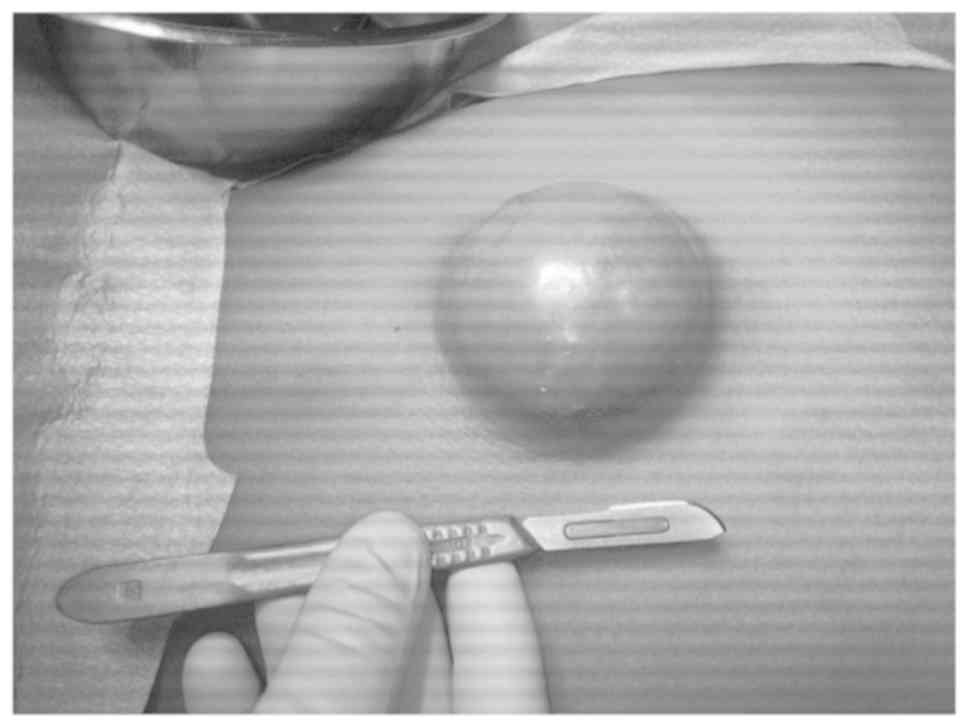
A 22-year old female presented with a history of sharp sensations, described as ‘sticking’ in nature over the mid-back region. Two years later the patient had a fall and sustained blunt trauma to her back. She then noted that the area became swollen approximately 4 cm and was painful. Swelling of the area gradually decreased, however the sharp pain persisted. There was no further medical intervention at this time. Four years later, the area in question began to increase in size once again, this time without any precipitating factors. Within two months the lesion grew to approximately 4 cm and was accompanied by return of excruciating pain with spontaneous resolution of swelling within one month. One-year later the lesion returned however, now painless, and grew to 8 cm within 4 months (Fig. 1). No Erythema nor discharge were noted at this time. The area became pruritic and developed overlying telangiectasia. The social history revealed occasional alcohol use with no smoking.

Figure 1

An 8 cm DFSP on the mid-back of a 22-year old female. DFSP, dermatofibrosarcoma protuberans.

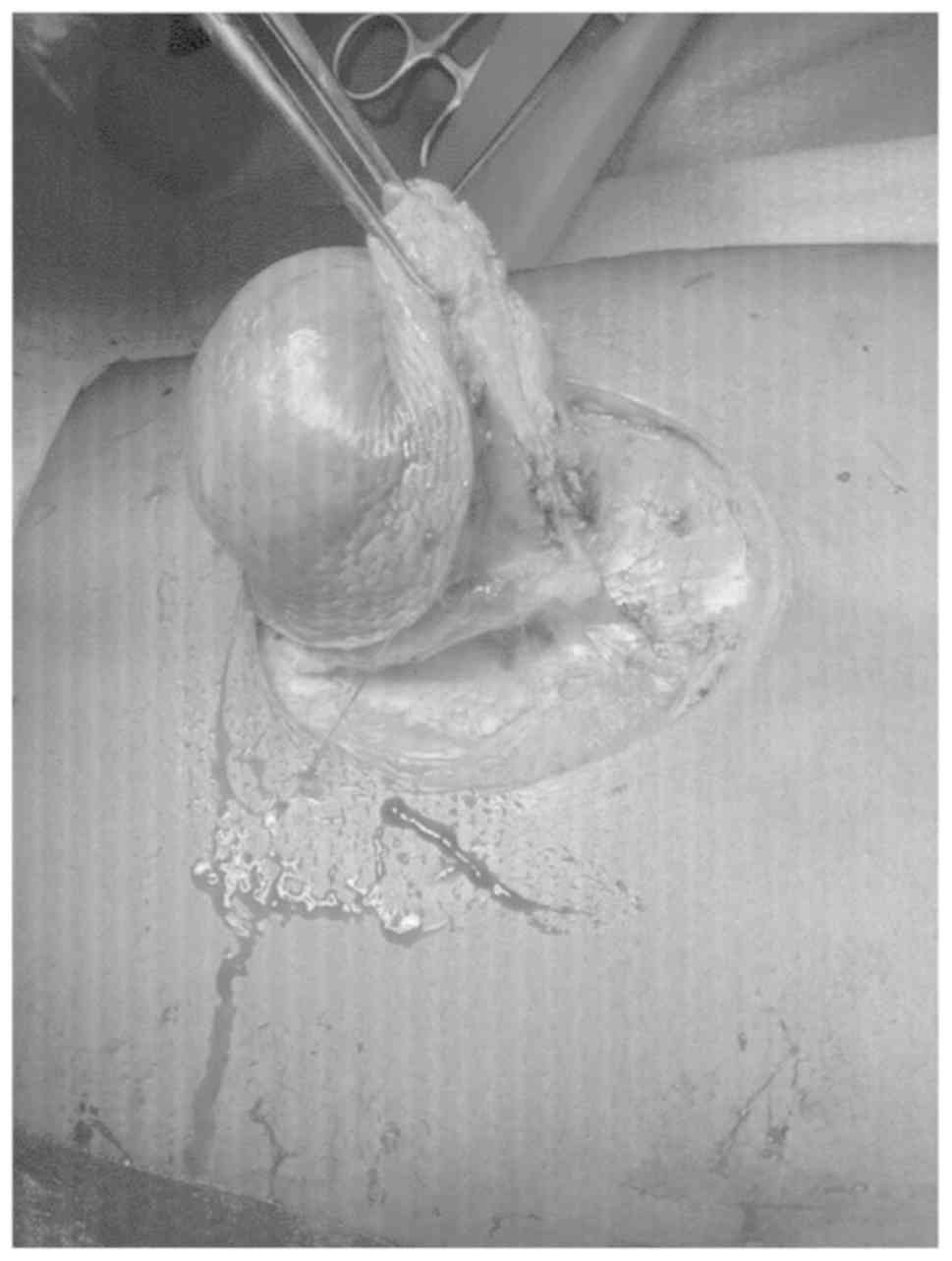
The mass was completely excised with a wide margin and a rotational skin flap done to cover the large defect (Figs. 2 and 3). Histological evaluation revealed a well-circumscribed non-encapsulated highly cellular fibroblastic proliferation. Cells displayed scant cytoplasm, tapering elongated nuclei with granular chromatin. Abnormal mitoses were seen at a rate of 10 per HPF. Immunohistochemical analysis showed the tumor to be SMA, Desmin, CD 34, and S100 negative with Ki-67: 30% proliferation. No vascular or local invasion was present.

Figure 2

Excision of DFSP with a wide margin. DFSP, dermatofibrosarcoma protuberans.

Discussion

DFSP is a rare tumor of the dermis with unknown etiology. The first case of DFSP was described by Taylor in 1890(3). It was first described as a distinct cutaneous disease entity called progressive and recurring dermatofibroma by Darier and Ferrand in 1924. DFSP is a slow growing sarcoma with a low likelihood of distant metastases, but can often result in local invasion of neighboring tissues. As a result, wide and deep local surgical excision has been the mainstay method of treatment. However, even 3-cm-wide local excision margins have resulted in a local recurrence rate of 11% and as such, new methods have been employed in management. In recent years, reports of DFSPs successfully treated with Mohs micrographic surgery have been appearing in the literature (4).

DFSP most commonly presents on the trunk (50%) and extremities (30-40%) with 10-15% of cases involving the head and neck (5). The overall annual incidence has been found to be 4.2 per million per year worldwide (6). According to Scott et al (7) the incidence in the Afro-Caribbean population is almost double that of the Caucasian (6.5 and 3.9 per million respectively). The most common age of presentation is between the ages of 30 and 50 and throughout our search of the literature, it was found that the prevalence or DFSP in the male gender outweighed that of the female. Our index case fell outside of these margins with a 22-year old female. One study by Criscione and Weinstock, contradictorily found that females were more frequently affected by DFSP (6).

DFSP is associated with translocation of genetic material between chromosomes 17 and 22. This translocation (17;22) fuses the COL1A1 gene on chromosome 17 with part of PDGFB gene on chromosome 22. These mutations which occur after birth, are not inherited and are only found in tumor cells (2). Two types of DFSP have been described; 85% of these display a more indolent course and have low potential for metastases, representing the classical DFSP. The remaining 15% are described as fibrosarcomatous ‘high grade’ type (FS-DFSP), and these can present more aggressively (1).

Benign fibrohistocytomas (BFH) are slow growing, asymptomatic neoplasms of the dermis which usually measure less than 1cm in diameter (8). Like DFSP, these lesions show spindle shaped cells during microscopic evaluation. BFH is usually differentiated from DFSP by the positive finding of CD34 in the latter. However, not all DFSP are CD34 positive. A very small percentage may be negative for this immunohistochemical marker as documented by Fernandez-Flores and Manjon (9). Despite negative staining of our index case for CD34, we still lean toward the diagnoses of DFSP versus BFH due to the presence of features such as overlying venous dilatation, large size and rapid increase in size over short period of time, more in keeping with a clinical diagnosis of DFSP as opposed to BFH. Although other Immunohistochemical markers used to differentiate between these two neoplasms are CD10 Apo D FXIIIa and NGFR, due to lack of resources, we were unable to check for the presence of the above mentioned in this case.

In the case described above, the area of skin at which DFSP subsequently developed, displayed altered sensation prior to sustaining blunt trauma. Considering this sensory change, we hypothesize that a pathological process possibly involving incidental translocation (17;22), had begun at the site prior to injury. With subsequent trauma and release of inflammatory mediators, propagation of the malignant process may have occurred, thus adding insult to injury and resulting finally in development of a rapidly growing DFSP. A similar inference has been made by Boukovalas et al, who suggest that trauma and dermal debris causing chronic low grade infection and inflammation, may trigger the molecular changes that lead to development of DFSP. They explained that the exact mechanism by which trauma may predispose to development of DFSP is unknown, but it seems intuitive that chronic inflammation and stimulation of the immune system at a local level may trigger the immunopathologic changes that could lead to the malignant transformation of dermal cells. A similar mechanism has been described in the pathogenesis of Marjolin ulcers after trauma or skin injury (1). Of note, no research linking inflammatory mediators or other molecular effects of trauma on tissues, to development of malignant processes, was found during our literature search.

Throughout the literature, however, DFSP has been reported to arise in areas with history of prior trauma, including tattoos, vaccination sites, burn scars, surgical scars and radiation treatment, trauma scars, radiodermatitis, sites of central venous lines and insect bites (1,10). According to Monnier et al, in a study conducted, 21% of patients had a history of prior trauma at the site where DFSP developed (11). Of note, all cases linked to trauma found in the literature involved some form of breech of skin or penetrating injury. This is the first case, to our knowledge, documented to show development of DFSP after blunt trauma.

Traditionally, DFSP has been described as a slow growing tumor, but our case was an exception to this description. The tumor grew from 0 to 8 cm within 4 months. Few similar cases were described in the literature.

Limitations in this case included the lack of IHC markers needed for complete diagnosis of the tumor excised. This lack of resources poses a hindrance to diagnosis of many tumors in our setting.

Here we have described a case of suspected DFSP of the trunk with a history of trauma, which presented on an area of skin with previous altered sensation, in a young female.

Based on the literature search and our current findings, the authors conclude that both non congenital mutation as well as trauma play a role in the development of this dermal neoplasm. Future research into the relationship between trauma and DFSP on a cellular level is suggested, as there seems to be direct link.

Acknowledgements

Not applicable.

Funding

No funding was received.

Availability of data and materials

Not applicable.

Authors' contributions

RC was involved in conception and design, acquisition of data, drafting the manuscript and revising it critically for important intellectual content. MW was involved in substantial contributions to conception and design and drafting the manuscript. MJR was the operating surgeon, was responsible for the conception of this paper and revised it critically for important intellectual content. All authors have read and given final approval of the version to be published.

Ethics approval and consent to participate

Both verbal and retrospective written consent were provided by the patient whose information was used for the writing of this case. In addition, consent for journal publication was also obtained from the patient.

Patient consent for publication

Consent was received from the patients owing to the publication of data.

Competing interests

The authors declare that they have no competing interests.

References

1 

Boukovalas S, Castillo AC, Andry D, Lombana N, Qiu S and Murphy KD: Dermatofibrosarcoma Protuberans: Trauma and genetics. Ann Plast Reconstr Surg. 1(1001)2017.

2 

Patel KU, Szabo SS, Hernandez VS, Prieto VG, Abruzzo LV, Lazar AJ and López-Terrada D: Dermatofibrosarcoma protuberans COL1A1-PDGFB fusion is identified in virtually all dermatofibrosarcoma protuberans cases when investigated by newly developed multiplex reverse transcription polymerase chain reaction and fluorescence in situ hybridization assays. Hum Pathol. 39:184–193. 2008.PubMed/NCBI View Article : Google Scholar

3 

Garg MK, Yadav MK, Gupta S, Kumar N and Khandelwal N: Dermatofibrosarcoma protuberans with contiguous infiltration of the underlying bone. Cancer Imaging. 9:63–66. 2009.PubMed/NCBI View Article : Google Scholar

4 

Haycox CL, Odland PB, Olbricht SM and Casey B: Dermatofibrosarcoma protuberans (DFSP): growth characteristics based on tumor modeling and a review of cases treated with mohs micrographic surgery. Ann Plast Surg. 38:246–251. 1997.PubMed/NCBI

5 

Stamatakos M, Fyllos A, Siafogianni A, Ntzeros K, Tasiopoulou G, Rozis M and Kontzoglou K: Dermatofibrosarcoma protuberans: A rare entity and review of the literature. J BUON. 19:34–41. 2014.PubMed/NCBI

6 

Criscione VD and Weinstock MA: Descriptive epidemiology of dermatofibrosarcoma protuberans in the United States, 1973 to 2002. J Am Acad Dermatol. 56:968–973. 2007.PubMed/NCBI View Article : Google Scholar

7 

Scott N, Causey C, Hodder SC and Kittur MA: ‘It Started as a Spot’ … Dermatofibrosarcoma Protuberans. J Cytol Histol. S5:1:2016.

8 

Vanni R: Skin: Cutaneous benign fibrous histiocytomas. Atlas Genet Cytogenet Oncol Haematol. 5:213–214. 2001.

9 

Fernandez-Flores A and Manjon JA: Mitosis in dermatofibroma: A worrisome histopathologic sign that does not necessarily equal recurrence. J Cutan Pathol. 35:839–842. 2008.PubMed/NCBI View Article : Google Scholar

10 

Stivala A, Lombardo GA, Pompili G, Tarica MS, Fraggetta F and Perrotta RA: Dermatofibrosarcoma protuberans: Our experience of 59 cases. Oncol Lett. 4:1047–1055. 2012.PubMed/NCBI View Article : Google Scholar

11 

Monnier D, Vidal C, Martin L, Danzon A, Pelletier F, Puzenat E, Algros MP, Blanc D, Laurent R, Humbert PH and Aubin F: Dermatofibrosarcoma protuberans: A population-based cancer registry descriptive study of 66 consecutive cases diagnosed between 1982 and 2002. J EurAcad Dermatol Venereol. 20:1237–1242. 2006.PubMed/NCBI View Article : Google Scholar

Related Articles

  • Abstract
  • View
  • Download
  • Twitter
Copy and paste a formatted citation
Spandidos Publications style
Cabral R, Wilford M and Ramdass MJ: Dermatofibrosarcoma protuberans associated with trauma: A case report. Mol Clin Oncol 13: 51, 2020.
APA
Cabral, R., Wilford, M., & Ramdass, M.J. (2020). Dermatofibrosarcoma protuberans associated with trauma: A case report. Molecular and Clinical Oncology, 13, 51. https://doi.org/10.3892/mco.2020.2121
MLA
Cabral, R., Wilford, M., Ramdass, M. J."Dermatofibrosarcoma protuberans associated with trauma: A case report". Molecular and Clinical Oncology 13.5 (2020): 51.
Chicago
Cabral, R., Wilford, M., Ramdass, M. J."Dermatofibrosarcoma protuberans associated with trauma: A case report". Molecular and Clinical Oncology 13, no. 5 (2020): 51. https://doi.org/10.3892/mco.2020.2121
Copy and paste a formatted citation
x
Spandidos Publications style
Cabral R, Wilford M and Ramdass MJ: Dermatofibrosarcoma protuberans associated with trauma: A case report. Mol Clin Oncol 13: 51, 2020.
APA
Cabral, R., Wilford, M., & Ramdass, M.J. (2020). Dermatofibrosarcoma protuberans associated with trauma: A case report. Molecular and Clinical Oncology, 13, 51. https://doi.org/10.3892/mco.2020.2121
MLA
Cabral, R., Wilford, M., Ramdass, M. J."Dermatofibrosarcoma protuberans associated with trauma: A case report". Molecular and Clinical Oncology 13.5 (2020): 51.
Chicago
Cabral, R., Wilford, M., Ramdass, M. J."Dermatofibrosarcoma protuberans associated with trauma: A case report". Molecular and Clinical Oncology 13, no. 5 (2020): 51. https://doi.org/10.3892/mco.2020.2121
Follow us
  • Twitter
  • LinkedIn
  • Facebook
About
  • Spandidos Publications
  • Careers
  • Cookie Policy
  • Privacy Policy
How can we help?
  • Help
  • Live Chat
  • Contact
  • Email to our Support Team