Spandidos Publications Logo
  • About
    • About Spandidos
    • Aims and Scopes
    • Abstracting and Indexing
    • Editorial Policies
    • Reprints and Permissions
    • Job Opportunities
    • Terms and Conditions
    • Contact
  • Journals
    • All Journals
    • Oncology Letters
      • Oncology Letters
      • Information for Authors
      • Editorial Policies
      • Editorial Board
      • Aims and Scope
      • Abstracting and Indexing
      • Bibliographic Information
      • Archive
    • International Journal of Oncology
      • International Journal of Oncology
      • Information for Authors
      • Editorial Policies
      • Editorial Board
      • Aims and Scope
      • Abstracting and Indexing
      • Bibliographic Information
      • Archive
    • Molecular and Clinical Oncology
      • Molecular and Clinical Oncology
      • Information for Authors
      • Editorial Policies
      • Editorial Board
      • Aims and Scope
      • Abstracting and Indexing
      • Bibliographic Information
      • Archive
    • Experimental and Therapeutic Medicine
      • Experimental and Therapeutic Medicine
      • Information for Authors
      • Editorial Policies
      • Editorial Board
      • Aims and Scope
      • Abstracting and Indexing
      • Bibliographic Information
      • Archive
    • International Journal of Molecular Medicine
      • International Journal of Molecular Medicine
      • Information for Authors
      • Editorial Policies
      • Editorial Board
      • Aims and Scope
      • Abstracting and Indexing
      • Bibliographic Information
      • Archive
    • Biomedical Reports
      • Biomedical Reports
      • Information for Authors
      • Editorial Policies
      • Editorial Board
      • Aims and Scope
      • Abstracting and Indexing
      • Bibliographic Information
      • Archive
    • Oncology Reports
      • Oncology Reports
      • Information for Authors
      • Editorial Policies
      • Editorial Board
      • Aims and Scope
      • Abstracting and Indexing
      • Bibliographic Information
      • Archive
    • Molecular Medicine Reports
      • Molecular Medicine Reports
      • Information for Authors
      • Editorial Policies
      • Editorial Board
      • Aims and Scope
      • Abstracting and Indexing
      • Bibliographic Information
      • Archive
    • World Academy of Sciences Journal
      • World Academy of Sciences Journal
      • Information for Authors
      • Editorial Policies
      • Editorial Board
      • Aims and Scope
      • Abstracting and Indexing
      • Bibliographic Information
      • Archive
    • International Journal of Functional Nutrition
      • International Journal of Functional Nutrition
      • Information for Authors
      • Editorial Policies
      • Editorial Board
      • Aims and Scope
      • Abstracting and Indexing
      • Bibliographic Information
      • Archive
    • International Journal of Epigenetics
      • International Journal of Epigenetics
      • Information for Authors
      • Editorial Policies
      • Editorial Board
      • Aims and Scope
      • Abstracting and Indexing
      • Bibliographic Information
      • Archive
    • Medicine International
      • Medicine International
      • Information for Authors
      • Editorial Policies
      • Editorial Board
      • Aims and Scope
      • Abstracting and Indexing
      • Bibliographic Information
      • Archive
  • Articles
  • Information
    • Information for Authors
    • Information for Reviewers
    • Information for Librarians
    • Information for Advertisers
    • Conferences
  • Language Editing
Spandidos Publications Logo
  • About
    • About Spandidos
    • Aims and Scopes
    • Abstracting and Indexing
    • Editorial Policies
    • Reprints and Permissions
    • Job Opportunities
    • Terms and Conditions
    • Contact
  • Journals
    • All Journals
    • Biomedical Reports
      • Information for Authors
      • Editorial Policies
      • Editorial Board
      • Aims and Scope
      • Abstracting and Indexing
      • Bibliographic Information
      • Archive
    • Experimental and Therapeutic Medicine
      • Information for Authors
      • Editorial Policies
      • Editorial Board
      • Aims and Scope
      • Abstracting and Indexing
      • Bibliographic Information
      • Archive
    • International Journal of Epigenetics
      • Information for Authors
      • Editorial Policies
      • Editorial Board
      • Aims and Scope
      • Abstracting and Indexing
      • Bibliographic Information
      • Archive
    • International Journal of Functional Nutrition
      • Information for Authors
      • Editorial Policies
      • Editorial Board
      • Aims and Scope
      • Abstracting and Indexing
      • Bibliographic Information
      • Archive
    • International Journal of Molecular Medicine
      • Information for Authors
      • Editorial Policies
      • Editorial Board
      • Aims and Scope
      • Abstracting and Indexing
      • Bibliographic Information
      • Archive
    • International Journal of Oncology
      • Information for Authors
      • Editorial Policies
      • Editorial Board
      • Aims and Scope
      • Abstracting and Indexing
      • Bibliographic Information
      • Archive
    • Medicine International
      • Information for Authors
      • Editorial Policies
      • Editorial Board
      • Aims and Scope
      • Abstracting and Indexing
      • Bibliographic Information
      • Archive
    • Molecular and Clinical Oncology
      • Information for Authors
      • Editorial Policies
      • Editorial Board
      • Aims and Scope
      • Abstracting and Indexing
      • Bibliographic Information
      • Archive
    • Molecular Medicine Reports
      • Information for Authors
      • Editorial Policies
      • Editorial Board
      • Aims and Scope
      • Abstracting and Indexing
      • Bibliographic Information
      • Archive
    • Oncology Letters
      • Information for Authors
      • Editorial Policies
      • Editorial Board
      • Aims and Scope
      • Abstracting and Indexing
      • Bibliographic Information
      • Archive
    • Oncology Reports
      • Information for Authors
      • Editorial Policies
      • Editorial Board
      • Aims and Scope
      • Abstracting and Indexing
      • Bibliographic Information
      • Archive
    • World Academy of Sciences Journal
      • Information for Authors
      • Editorial Policies
      • Editorial Board
      • Aims and Scope
      • Abstracting and Indexing
      • Bibliographic Information
      • Archive
  • Articles
  • Information
    • For Authors
    • For Reviewers
    • For Librarians
    • For Advertisers
    • Conferences
  • Language Editing
Login Register Submit
  • This site uses cookies
  • You can change your cookie settings at any time by following the instructions in our Cookie Policy. To find out more, you may read our Privacy Policy.

    I agree
Search articles by DOI, keyword, author or affiliation
Search
Advanced Search
presentation
Molecular and Clinical Oncology
Join Editorial Board Propose a Special Issue
Print ISSN: 2049-9450 Online ISSN: 2049-9469
Journal Cover
December-2021 Volume 15 Issue 6

Full Size Image

Sign up for eToc alerts
Recommend to Library

Journals

International Journal of Molecular Medicine

International Journal of Molecular Medicine

International Journal of Molecular Medicine is an international journal devoted to molecular mechanisms of human disease.

International Journal of Oncology

International Journal of Oncology

International Journal of Oncology is an international journal devoted to oncology research and cancer treatment.

Molecular Medicine Reports

Molecular Medicine Reports

Covers molecular medicine topics such as pharmacology, pathology, genetics, neuroscience, infectious diseases, molecular cardiology, and molecular surgery.

Oncology Reports

Oncology Reports

Oncology Reports is an international journal devoted to fundamental and applied research in Oncology.

Experimental and Therapeutic Medicine

Experimental and Therapeutic Medicine

Experimental and Therapeutic Medicine is an international journal devoted to laboratory and clinical medicine.

Oncology Letters

Oncology Letters

Oncology Letters is an international journal devoted to Experimental and Clinical Oncology.

Biomedical Reports

Biomedical Reports

Explores a wide range of biological and medical fields, including pharmacology, genetics, microbiology, neuroscience, and molecular cardiology.

Molecular and Clinical Oncology

Molecular and Clinical Oncology

International journal addressing all aspects of oncology research, from tumorigenesis and oncogenes to chemotherapy and metastasis.

World Academy of Sciences Journal

World Academy of Sciences Journal

Multidisciplinary open-access journal spanning biochemistry, genetics, neuroscience, environmental health, and synthetic biology.

International Journal of Functional Nutrition

International Journal of Functional Nutrition

Open-access journal combining biochemistry, pharmacology, immunology, and genetics to advance health through functional nutrition.

International Journal of Epigenetics

International Journal of Epigenetics

Publishes open-access research on using epigenetics to advance understanding and treatment of human disease.

Medicine International

Medicine International

An International Open Access Journal Devoted to General Medicine.

Journal Cover
December-2021 Volume 15 Issue 6

Full Size Image

Sign up for eToc alerts
Recommend to Library

  • Article
  • Citations
    • Cite This Article
    • Download Citation
    • Create Citation Alert
    • Remove Citation Alert
    • Cited By
  • Similar Articles
    • Related Articles (in Spandidos Publications)
    • Similar Articles (Google Scholar)
    • Similar Articles (PubMed)
  • Download PDF
  • Download XML
  • View XML
Case Report Open Access

Utility of X‑ray and indocyanine green fluorescence imaging in detecting hepatocellular carcinoma dissemination on laparoscopic surgery: A case report

  • Authors:
    • Shu Sasaki
    • Makoto Takahashi
    • Tatsuya Hayashi
    • Yasuhiro Morita
    • Shin Namiki
    • Shingo Itagaki
  • View Affiliations / Copyright

    Affiliations: Department of Surgery, Tokyo Metropolitan Tama Medical Center, Fuchu‑shi, Tokyo 183‑8524, Japan, Department of Gastroenterology and Hepatology, Tokyo Metropolitan Tama Medical Center, Fuchu‑shi, Tokyo 183‑8524, Japan, Department of Pathology, Tokyo Metropolitan Tama Medical Center, Fuchu‑shi, Tokyo 183‑8524, Japan
    Copyright: © Sasaki et al. This is an open access article distributed under the terms of Creative Commons Attribution License.
  • Article Number: 259
    |
    Published online on: October 19, 2021
       https://doi.org/10.3892/mco.2021.2421
  • Expand metrics +
Metrics: Total Views: 0 (Spandidos Publications: | PMC Statistics: )
Metrics: Total PDF Downloads: 0 (Spandidos Publications: | PMC Statistics: )
Cited By (CrossRef): 0 citations Loading Articles...

This article is mentioned in:


Abstract

Indocyanine green (ICG) fluorescence imaging is useful for the intraoperative detection of the peritoneal dissemination of hepatocellular carcinoma (HCC). However, in laparoscopic surgery, disseminations cannot be accurately identified unless the camera lens is positioned close to the lesion. The present study describes a case of HCC dissemination in which the lesions were accurately identified by combining intraoperative fluoroscopy with ICG fluorescence imaging. A 76‑year‑old male was diagnosed with HCC dissemination. Computed tomography revealed a 9‑mm disseminated nodule near the gallbladder. Although transarterial chemoembolization had also been used to treat this lesion, chemoembolization was technically difficult to perform. Therefore, a coil was placed around the lesion to serve as an intraoperative landmark for later laparoscopic resection. Given the potential difficulty of detecting the lesion during laparoscopic surgery, ICG fluorescence imaging was used to determine the approximate location of the dissemination. The lesion exhibited strong fluorescence, which facilitated its complete resection.

Introduction

Indocyanine green (ICG) fluorescence imaging is used intraoperatively to detect the disseminated recurrences of hepatocellular carcinoma (HCC) (1). However, as the tissue penetration of near-infrared light is limited, detecting tumors in deeper sites using this approach is difficult. At our department, a case of minor peritoneal dissemination of HCC was encountered, in which the lesions were able to be accurately identified and located by combining intraoperative fluoroscopy with ICG fluorescence imaging during laparoscopic surgery.

Case report

A 76-year-old male was diagnosed with HCC caused by alcoholic liver cirrhosis. The patient had received percutaneous ethanol injection therapy for S2 and S5 HCC 13 years previously, radiofrequency ablation for S4/5 HCC 6 years ago and S6 HCC 3 years previously.

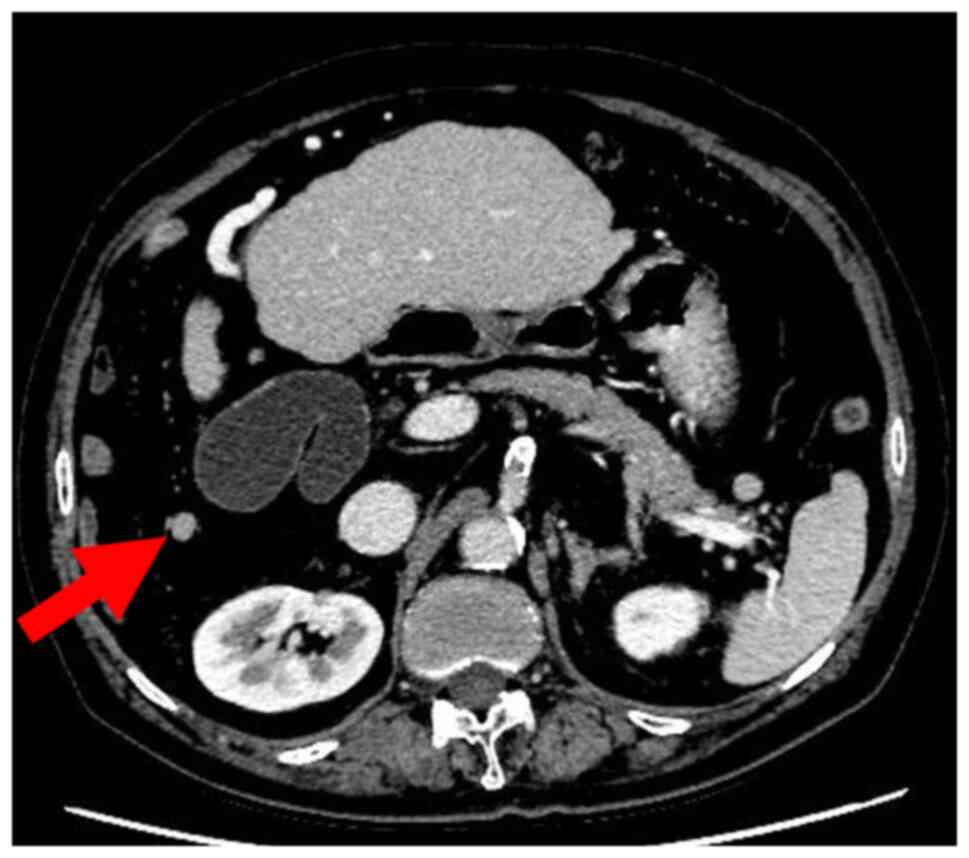
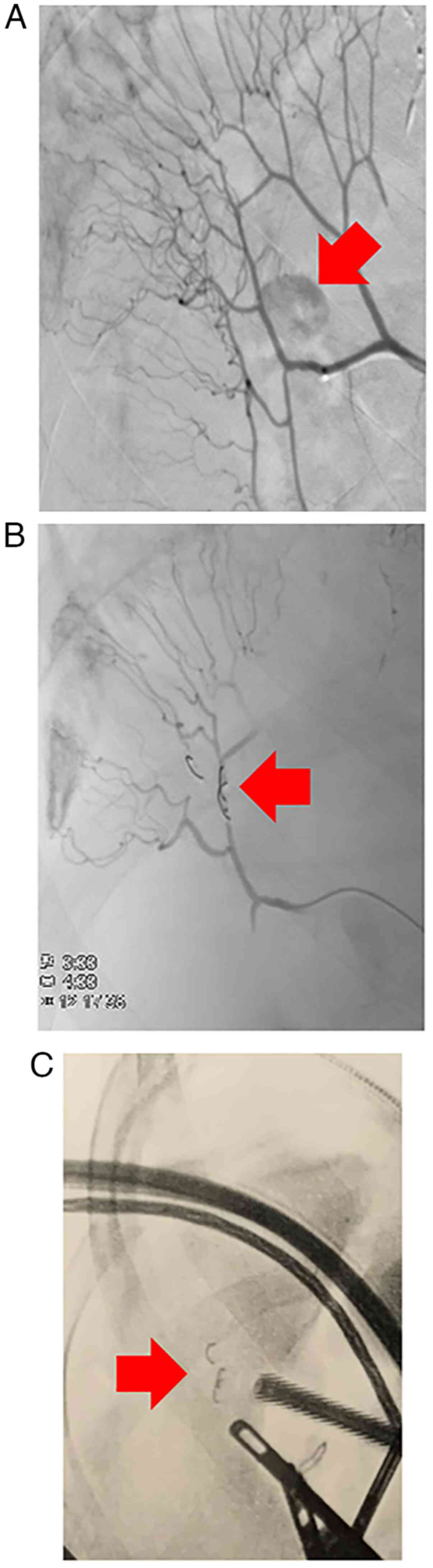
At one year prior to presentation, computed tomography revealed tumor dissemination on the surface of S6 and transcatheter arterial chemoembolization was performed. It also revealed a 9-mm disseminated nodule near the gallbladder (Fig. 1). Since intrahepatic lesions were well controlled and there was only one recurrent lesion, surgical treatment was suggested to the patient. However, the patient requested a less invasive treatment and thus, initiation of the treatment with transcatheter arterial chemoembolization was first planned. A disseminated nodule was identified by selective imaging of the ileal artery, which branches off from the superior mesenteric artery (Fig. 2A). Chemoembolization was attempted but impaired blood flow to the ileum was a concern. Since it was technically difficult to treat the lesion with chemoembolization, laparoscopic surgical resection was opted for to remove the lesion. A coil was placed in the artery that supplies the ileum near the disseminated nodule to serve as an intraoperative marker (Fig. 2B).

Figure 1

Dissemination of the hepatocellular carcinoma. Computed tomography indicated a 9-mm disseminated nodule around the gallbladder (red arrow).

Figure 2

(A) The disseminated nodule was identified by selective imaging from the ileal artery. (B) A coil is placed in the artery near the lesion. (C) Intraoperative fluoroscopy. The lesion is indicated by a red arrow.

Given the difficulty of identifying small, disseminated lesions during laparoscopic surgery, ICG fluorescence imaging with intraoperative fluoroscopy was used to facilitate identification. ICG (0.5 mg/kg) was injected intravenously into the patient 24 h prior to the operation.

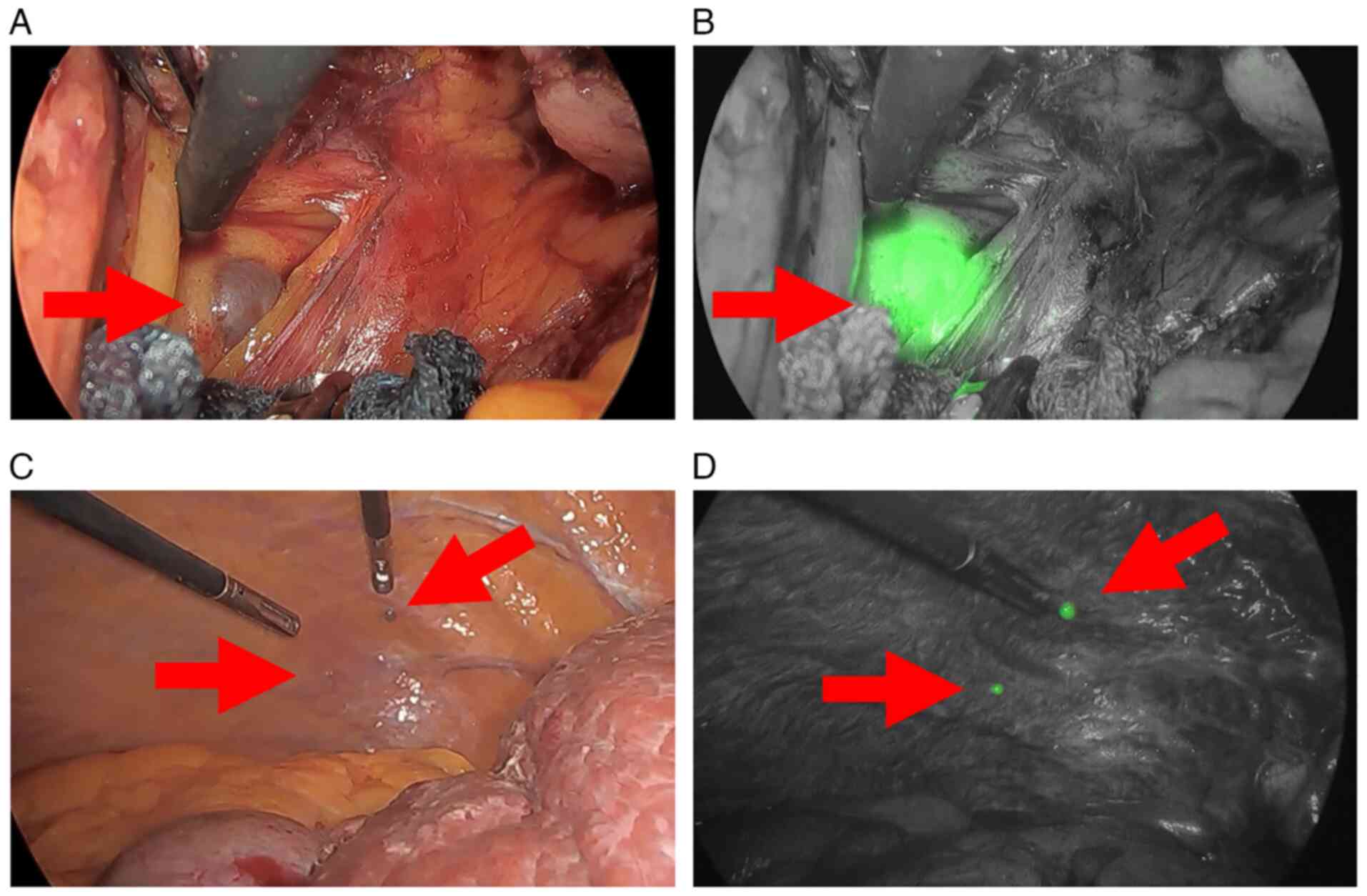
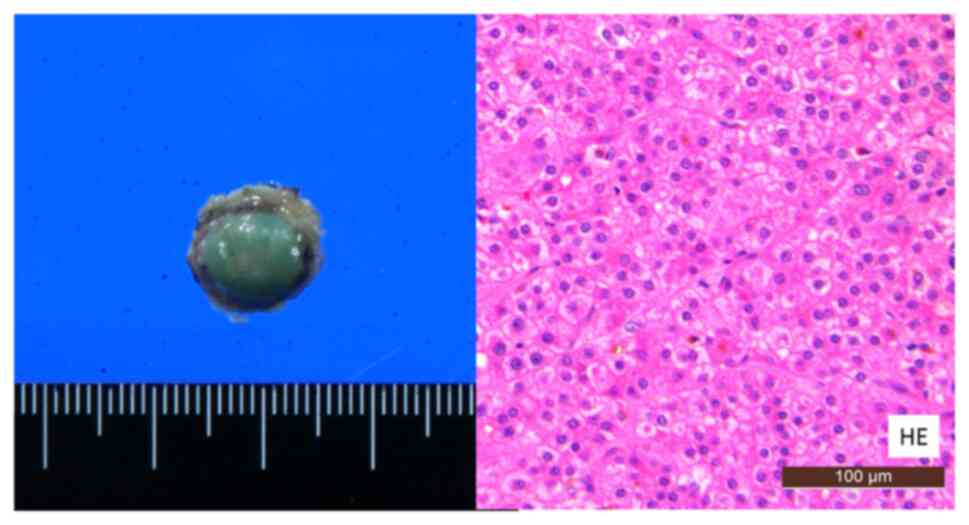
With the coil as a landmark, intraoperative fluoroscopy was used to gauge the disseminated nodule's approximate position (Fig. 2C), which was beneath the adipose tissue (Fig. 3A). The Stryker 1588 AIM camera system was utilized for this. ICG fluorescence imaging confirmed the exact position of the lesion (Fig. 3B), which exhibited strong fluorescence. Therefore, it was completely resected laparoscopically. In addition, two small lesions on the right diaphragm (Fig. 3C and D) and one small lesion on the liver surface were also detected by fluorography and all were resected. The patient's postoperative course was uneventful and he was discharged on postoperative day 4. Pathologically, all four lesions were diagnosed as HCC disseminations (Fig. 4). At the time of writing this case study, 10 months had passed since the operation and the patient has been alive without any recurrence.

Figure 3

Intraoperative images. (A) Tumor located beneath the adipose tissue. (B) The lesion from A exhibited strong fluorography in ICG mode. (C) Two small lesions, which were not able to be identified preoperatively, were detected on the right diaphragm. (D) The lesions from C exhibited strong fluorography in ICG mode. The lesion is indicated by red arrows.

Figure 4

Pathological examination indicated that the resected lesions were disseminations of hepatocellular carcinoma. Left: Image of resected lesion (~1 cm); right: Histology image with HE staining (scale bar, 100 µm).

Discussion

Molecular targeted drug therapy is the standard treatment for advanced HCC with extrahepatic lesions (2,3). However, if intrahepatic lesions are absent or well-controlled, resection of the disseminations may be beneficial. A previous study reported that the cumulative 1-, 3- and 5-year overall survival rates after resection of thoracoabdominal implants were 71, 44 and 39%, respectively, with a median survival time of 34.5 months (4).

ICG fluorescence imaging has been used in various fields of surgery. In breast cancer surgery, the identification of sentinel lymph nodes using ICG fluorescence imaging has been standardized (5). ICG fluorescence imaging is also used to determine the excision range of non-occlusive mesenteric ischemia (6-8) and evaluate the blood flow at the anastomotic site in colorectal cancer surgery (9). In the field of lung surgery, thoracoscopic lung segment resection using ICG fluorescence imaging has also been performed (10). Nishino et al (11) reported that ICG fluorescence imaging is useful for evaluating arterial blood flow to the stomach in distal pancreatectomy with celiac axis resection. In HCC surgery, ICG fluorescence imaging provides anatomical information during laparotomy and laparoscopic surgery (12,13). Previous studies have reported that ICG fluorescence imaging is a convenient method for intraoperatively detecting extrahepatic HCC metastases (14,15) The uptake of ICG by HCC cells in extrahepatic metastases is similar to that observed in hepatocytes and intrahepatic HCC cells (16). According to Satou et al (1), of the 33 lesions (lung, adrenal gland, lymph node and peritoneum) suspected to be extrahepatic metastases of HCC, 26 exhibited fluorescence on ICG and all were metastases of HCC. Of the seven lesions that did not exhibit any fluorescence, one was a metastasis of HCC and six were benign (1).

Ishizawa and Saiura (17) proposed that in patients with intrahepatic HCC, ICG at a dose of 0.5 mg/kg body weight should be administered within 2 weeks prior to surgery. In addition, they advised against the administration of ICG 1 day prior to surgery to decrease the possibility of false-positive nodules. In patients with extrahepatic HCC, the currently recommended interval ranges from 1 to 5 days (1). However, the duration of ICG retention in extrahepatic HCC may be longer than expected and ICG administration immediately prior to surgery may be permissible due to the lack of uptake by the background tissue (18). In the present case, ICG 0.5 mg/kg was administered intravenously 24 h prior to surgery.

Small metastatic nodules are difficult to recognize with the naked eye or on standard laparoscopic view. For extrahepatic HCC metastases, ICG fluorescence imaging has a positive predictive value of 100% and a sensitivity of 92% (1). However, as the tissue penetration of near-infrared light is limited to 5-10 mm (19), detecting tumors in deeper sites, such as the dorsal site of adipose tissue, using this approach is difficult. To identify deep-seated lesions, a coil may be placed in the artery near the lesion and intraoperative fluoroscopy with ICG fluorescence may be used to facilitate detection. In the present case, the disseminated lesion was able to be identified laparoscopically using this method. Placing a marker, such as a coil, around a tumor may be considered if the tumor is difficult to detect with ICG fluorescence imaging alone. Furthermore, disseminated lesions that cannot be identified preoperatively may be identified using ICG fluorescence imaging.

ICG contains iodine, and there are reports of occasional anaphylactic shock due to administration (20,21). Therefore, it is necessary to be aware of the patient's history of allergies.

In conclusion, the combination of intraoperative ICG fluorescence imaging and fluoroscopy is useful for identifying small, disseminated HCC lesions laparoscopically.

Acknowledgements

Not applicable.

Funding

No funding was received.

Availability of data and materials

The datasets used and/or analyzed during the current study are available from the corresponding author upon reasonable request.

Authors' contributions

SS drafted the manuscript. MT revised the manuscript. YM and SN contributed to preoperative checks and diagnoses. SS, MT and TH performed the surgery. YM and SN followed up the patient. SI diagnosed the disease as a pathologist. MT and SS checked and confirmed the authenticity of the raw data. All authors read and approved the final manuscript.

Ethics approval and consent to participate

Not applicable.

Patient consent for publication

Written informed consent was obtained from the patient for publication of this case report.

Competing interests

The authors declare that they have no competing interests.

References

1 

Satou S, Ishizawa T, Masuda K, Kaneko J, Aoki T, Sakamoto Y, Hasegawa K, Sugawara Y and Kokudo N: Indocyanine green fluorescent imaging for detecting extrahepatic metastasis of hepatocellular carcinoma. J Gastroenterol. 48:1136–1143. 2013.PubMed/NCBI View Article : Google Scholar

2 

Llovet JM, Ricci S, Mazzaferro V, Hilgard P, Gane E, Blanc JF, de Oliveira AC, Santoro A, Raoul JL, Forner A, et al: Sorafenib in advanced hepatocellular carcinoma. N Engl J Med. 359:378–390. 2008.PubMed/NCBI View Article : Google Scholar

3 

Cheng AL, Kang YK, Chen Z, Tsao CJ, Qin S, Kim JS, Luo R, Feng J, Ye S, Yang TS, et al: Efficacy and safety of sorafenib in patients in the Asia-Pacific region with advanced hepatocellular carcinoma: A phase III randomised, double-blind, placebo-controlled trial. Lancet Oncol. 10:25–34. 2009.PubMed/NCBI View Article : Google Scholar

4 

Takemura N, Hasegawa K, Aoki T, Sakamoto Y, Sugawara Y, Makuuchi M and Kokudo N: Surgical resection of peritoneal or thoracoabdominal wall implants from hepatocellular carcinoma. Br J Surg. 101:1017–1022. 2014.PubMed/NCBI View Article : Google Scholar

5 

Sugie T, Kinoshita T, Masuda N, Sawada T, Yamauchi A, Kuroi K, Taguchi T, Bando H, Yamashiro H, Lee T, et al: Evaluation of the clinical utility of the ICG fluorescence method compared with the radioisotope method for sentinel lymph node biopsy in breast cancer. Ann Surg Oncol. 23:44–50. 2016.PubMed/NCBI View Article : Google Scholar

6 

Nakagawa Y, Kobayashi K, Kuwabara S, Shibuya H and Nishimaki T: Use of indocyanine green fluorescence imaging to determine the area of bowel resection in non-occlusive mesenteric ischemia: A case report. Int J Surg Case Rep. 51:352–357. 2018.PubMed/NCBI View Article : Google Scholar

7 

Irie T, Matsutani T, Hagiwara N, Nomura T, Fujita I, Kanazawa Y, Kakinuma D and Uchida E: Successful treatment of non-occlusive mesenteric ischemia with indocyanine green fluorescence and open-abdomen management. Clin J Gastroenterol. 10:514–518. 2017.PubMed/NCBI View Article : Google Scholar

8 

Nitori N, Deguchi T, Kubota K, Yoshida M, Kato A, Kojima M, Kadomura T, Okada A, Okamura J, Kobayashi M, et al: Successful treatment of non-occlusive mesenteric ischemia (NOMI) using the HyperEye Medical System™ for intraoperative visualization of the mesenteric and bowel circulation: Report of a case. Surg Today. 44:359–362. 2014.PubMed/NCBI View Article : Google Scholar

9 

Arezzo A, Bonino MA, Ris F, Boni L, Cassinotti E, Foo DC, Shum NF, Brolese A, Ciarleglio F, Keller DS, et al: Intraoperative use of fluorescence with indocyanine green reduces anastomotic leak rates in rectal cancer surgery: An individual participant data analysis. Surg Endosc. 34:4281–4290. 2020.PubMed/NCBI View Article : Google Scholar

10 

Mun M, Okumura S, Nakao M, Matsuura Y and Nakagawa K: Indocyanine green fluorescence-navigated thoracoscopic anatomical segmentectomy. J Vis Surg. 3(80)2017.PubMed/NCBI View Article : Google Scholar

11 

Nishino H, Takano S, Yoshitomi H, Furukawa K, Takayashiki T, Kuboki S, Suzuki D, Sakai N, Kagawa S, Nojima H, et al: Ischemic gastropathy after distal pancreatectomy with en bloc celiac axis resection versus distal pancreatectomy for pancreatic body/tail cancer. Surg Open Sci. 1:14–19. 2019.PubMed/NCBI View Article : Google Scholar

12 

Ishizawa T, Fukushima N, Shibahara J, Masuda K, Tamura S, Aoki T, Hasegawa K, Beck Y, Fukayama M and Kokudo N: Real-time identification of liver cancers by using indocyanine green fluorescent imaging. Cancer. 115:2491–2504. 2009.PubMed/NCBI View Article : Google Scholar

13 

Felli E, Ishizawa T, Cherkaoui Z, Diana M, Tripon S, Baumert TF, Schuster C and Pessaux P: Laparoscopic anatomical liver resection for malignancies using positive or negative staining technique with intraoperative indocyanine green-fluorescence imaging. HPB (Oxford): Jun 7, 2021 (Epub ahead of print).

14 

Nanashima A, Tominaga T, Sumida Y, Tobinaga S and Nagayasu T: Indocyanine green identification for tumor infiltration or metastasis originating from hepatocellular carcinoma. Int J Surg Case Rep. 46:56–61. 2018.PubMed/NCBI View Article : Google Scholar

15 

He P, Huang T, Fang C, Su S, Tian J, Xia X and Li B: Identification of extrahepatic metastasis of hepatocellular carcinoma using indocyanine green fluorescence imaging. Photodiagn Photodyn Ther. 25:417–420. 2019.PubMed/NCBI View Article : Google Scholar

16 

Ishizawa T, Masuda K, Urano Y, Kawaguchi Y, Satou S, Kaneko J, Hasegawa K, Shibahara J, Fukayama M, Tsuji S, et al: Mechanistic background and clinical applications of indocyanine green fluorescence imaging of hepatocellular carcinoma. Ann Surg Oncol. 21:440–448. 2014.PubMed/NCBI View Article : Google Scholar

17 

Ishizawa T and Saiura A: Fluorescence imaging for minimally invasive cancer surgery. Surg Oncol Clin N Am. 28:45–60. 2019.PubMed/NCBI View Article : Google Scholar

18 

Yamamura K, Beppu T, Sato N, Kinoshita K, Oda E, Yuki H, Motohara T, Miyamoto H, Komohara Y and Akahoshi S: Complete removal of adrenal metastasis in hepatocellular carcinoma using indocyanine green fluorescent imaging. Anticancer Res. 40:5823–5828. 2020.PubMed/NCBI View Article : Google Scholar

19 

Ishizawa T, Bandai Y and Kokudo N: Fluorescent cholangiography using indocyanine green for laparoscopic cholecystectomy: An initial experience. Arch Surg. 144:381–382. 2009.PubMed/NCBI View Article : Google Scholar

20 

Kim M, Lee S, Park JC, Jang DM, Ha SI, Kim JU, Ahn JS and Park W: Anaphylactic shock after indocyanine green video angiography during cerebrovascular surgery. World Neurosurg. 133:74–79. 2020.PubMed/NCBI View Article : Google Scholar

21 

Chu W, Chennamsetty A, Toroussian R and Lau C: Anaphylactic shock after intravenous administration of indocyanine green during robotic partial nephrectomy. Urol Case Rep. 12:37–38. 2017.PubMed/NCBI View Article : Google Scholar

Related Articles

  • Abstract
  • View
  • Download
  • Twitter
Copy and paste a formatted citation
Spandidos Publications style
Sasaki S, Takahashi M, Hayashi T, Morita Y, Namiki S and Itagaki S: Utility of X‑ray and indocyanine green fluorescence imaging in detecting hepatocellular carcinoma dissemination on laparoscopic surgery: A case report. Mol Clin Oncol 15: 259, 2021.
APA
Sasaki, S., Takahashi, M., Hayashi, T., Morita, Y., Namiki, S., & Itagaki, S. (2021). Utility of X‑ray and indocyanine green fluorescence imaging in detecting hepatocellular carcinoma dissemination on laparoscopic surgery: A case report. Molecular and Clinical Oncology, 15, 259. https://doi.org/10.3892/mco.2021.2421
MLA
Sasaki, S., Takahashi, M., Hayashi, T., Morita, Y., Namiki, S., Itagaki, S."Utility of X‑ray and indocyanine green fluorescence imaging in detecting hepatocellular carcinoma dissemination on laparoscopic surgery: A case report". Molecular and Clinical Oncology 15.6 (2021): 259.
Chicago
Sasaki, S., Takahashi, M., Hayashi, T., Morita, Y., Namiki, S., Itagaki, S."Utility of X‑ray and indocyanine green fluorescence imaging in detecting hepatocellular carcinoma dissemination on laparoscopic surgery: A case report". Molecular and Clinical Oncology 15, no. 6 (2021): 259. https://doi.org/10.3892/mco.2021.2421
Copy and paste a formatted citation
x
Spandidos Publications style
Sasaki S, Takahashi M, Hayashi T, Morita Y, Namiki S and Itagaki S: Utility of X‑ray and indocyanine green fluorescence imaging in detecting hepatocellular carcinoma dissemination on laparoscopic surgery: A case report. Mol Clin Oncol 15: 259, 2021.
APA
Sasaki, S., Takahashi, M., Hayashi, T., Morita, Y., Namiki, S., & Itagaki, S. (2021). Utility of X‑ray and indocyanine green fluorescence imaging in detecting hepatocellular carcinoma dissemination on laparoscopic surgery: A case report. Molecular and Clinical Oncology, 15, 259. https://doi.org/10.3892/mco.2021.2421
MLA
Sasaki, S., Takahashi, M., Hayashi, T., Morita, Y., Namiki, S., Itagaki, S."Utility of X‑ray and indocyanine green fluorescence imaging in detecting hepatocellular carcinoma dissemination on laparoscopic surgery: A case report". Molecular and Clinical Oncology 15.6 (2021): 259.
Chicago
Sasaki, S., Takahashi, M., Hayashi, T., Morita, Y., Namiki, S., Itagaki, S."Utility of X‑ray and indocyanine green fluorescence imaging in detecting hepatocellular carcinoma dissemination on laparoscopic surgery: A case report". Molecular and Clinical Oncology 15, no. 6 (2021): 259. https://doi.org/10.3892/mco.2021.2421
Follow us
  • Twitter
  • LinkedIn
  • Facebook
About
  • Spandidos Publications
  • Careers
  • Cookie Policy
  • Privacy Policy
How can we help?
  • Help
  • Live Chat
  • Contact
  • Email to our Support Team