Spandidos Publications Logo
  • About
    • About Spandidos
    • Aims and Scopes
    • Abstracting and Indexing
    • Editorial Policies
    • Reprints and Permissions
    • Job Opportunities
    • Terms and Conditions
    • Contact
  • Journals
    • All Journals
    • Oncology Letters
      • Oncology Letters
      • Information for Authors
      • Editorial Policies
      • Editorial Board
      • Aims and Scope
      • Abstracting and Indexing
      • Bibliographic Information
      • Archive
    • International Journal of Oncology
      • International Journal of Oncology
      • Information for Authors
      • Editorial Policies
      • Editorial Board
      • Aims and Scope
      • Abstracting and Indexing
      • Bibliographic Information
      • Archive
    • Molecular and Clinical Oncology
      • Molecular and Clinical Oncology
      • Information for Authors
      • Editorial Policies
      • Editorial Board
      • Aims and Scope
      • Abstracting and Indexing
      • Bibliographic Information
      • Archive
    • Experimental and Therapeutic Medicine
      • Experimental and Therapeutic Medicine
      • Information for Authors
      • Editorial Policies
      • Editorial Board
      • Aims and Scope
      • Abstracting and Indexing
      • Bibliographic Information
      • Archive
    • International Journal of Molecular Medicine
      • International Journal of Molecular Medicine
      • Information for Authors
      • Editorial Policies
      • Editorial Board
      • Aims and Scope
      • Abstracting and Indexing
      • Bibliographic Information
      • Archive
    • Biomedical Reports
      • Biomedical Reports
      • Information for Authors
      • Editorial Policies
      • Editorial Board
      • Aims and Scope
      • Abstracting and Indexing
      • Bibliographic Information
      • Archive
    • Oncology Reports
      • Oncology Reports
      • Information for Authors
      • Editorial Policies
      • Editorial Board
      • Aims and Scope
      • Abstracting and Indexing
      • Bibliographic Information
      • Archive
    • Molecular Medicine Reports
      • Molecular Medicine Reports
      • Information for Authors
      • Editorial Policies
      • Editorial Board
      • Aims and Scope
      • Abstracting and Indexing
      • Bibliographic Information
      • Archive
    • World Academy of Sciences Journal
      • World Academy of Sciences Journal
      • Information for Authors
      • Editorial Policies
      • Editorial Board
      • Aims and Scope
      • Abstracting and Indexing
      • Bibliographic Information
      • Archive
    • International Journal of Functional Nutrition
      • International Journal of Functional Nutrition
      • Information for Authors
      • Editorial Policies
      • Editorial Board
      • Aims and Scope
      • Abstracting and Indexing
      • Bibliographic Information
      • Archive
    • International Journal of Epigenetics
      • International Journal of Epigenetics
      • Information for Authors
      • Editorial Policies
      • Editorial Board
      • Aims and Scope
      • Abstracting and Indexing
      • Bibliographic Information
      • Archive
    • Medicine International
      • Medicine International
      • Information for Authors
      • Editorial Policies
      • Editorial Board
      • Aims and Scope
      • Abstracting and Indexing
      • Bibliographic Information
      • Archive
  • Articles
  • Information
    • Information for Authors
    • Information for Reviewers
    • Information for Librarians
    • Information for Advertisers
    • Conferences
  • Language Editing
Spandidos Publications Logo
  • About
    • About Spandidos
    • Aims and Scopes
    • Abstracting and Indexing
    • Editorial Policies
    • Reprints and Permissions
    • Job Opportunities
    • Terms and Conditions
    • Contact
  • Journals
    • All Journals
    • Biomedical Reports
      • Information for Authors
      • Editorial Policies
      • Editorial Board
      • Aims and Scope
      • Abstracting and Indexing
      • Bibliographic Information
      • Archive
    • Experimental and Therapeutic Medicine
      • Information for Authors
      • Editorial Policies
      • Editorial Board
      • Aims and Scope
      • Abstracting and Indexing
      • Bibliographic Information
      • Archive
    • International Journal of Epigenetics
      • Information for Authors
      • Editorial Policies
      • Editorial Board
      • Aims and Scope
      • Abstracting and Indexing
      • Bibliographic Information
      • Archive
    • International Journal of Functional Nutrition
      • Information for Authors
      • Editorial Policies
      • Editorial Board
      • Aims and Scope
      • Abstracting and Indexing
      • Bibliographic Information
      • Archive
    • International Journal of Molecular Medicine
      • Information for Authors
      • Editorial Policies
      • Editorial Board
      • Aims and Scope
      • Abstracting and Indexing
      • Bibliographic Information
      • Archive
    • International Journal of Oncology
      • Information for Authors
      • Editorial Policies
      • Editorial Board
      • Aims and Scope
      • Abstracting and Indexing
      • Bibliographic Information
      • Archive
    • Medicine International
      • Information for Authors
      • Editorial Policies
      • Editorial Board
      • Aims and Scope
      • Abstracting and Indexing
      • Bibliographic Information
      • Archive
    • Molecular and Clinical Oncology
      • Information for Authors
      • Editorial Policies
      • Editorial Board
      • Aims and Scope
      • Abstracting and Indexing
      • Bibliographic Information
      • Archive
    • Molecular Medicine Reports
      • Information for Authors
      • Editorial Policies
      • Editorial Board
      • Aims and Scope
      • Abstracting and Indexing
      • Bibliographic Information
      • Archive
    • Oncology Letters
      • Information for Authors
      • Editorial Policies
      • Editorial Board
      • Aims and Scope
      • Abstracting and Indexing
      • Bibliographic Information
      • Archive
    • Oncology Reports
      • Information for Authors
      • Editorial Policies
      • Editorial Board
      • Aims and Scope
      • Abstracting and Indexing
      • Bibliographic Information
      • Archive
    • World Academy of Sciences Journal
      • Information for Authors
      • Editorial Policies
      • Editorial Board
      • Aims and Scope
      • Abstracting and Indexing
      • Bibliographic Information
      • Archive
  • Articles
  • Information
    • For Authors
    • For Reviewers
    • For Librarians
    • For Advertisers
    • Conferences
  • Language Editing
Login Register Submit
  • This site uses cookies
  • You can change your cookie settings at any time by following the instructions in our Cookie Policy. To find out more, you may read our Privacy Policy.

    I agree
Search articles by DOI, keyword, author or affiliation
Search
Advanced Search
presentation
Molecular and Clinical Oncology
Join Editorial Board Propose a Special Issue
Print ISSN: 2049-9450 Online ISSN: 2049-9469
Journal Cover
January-2022 Volume 16 Issue 1

Full Size Image

Sign up for eToc alerts
Recommend to Library

Journals

International Journal of Molecular Medicine

International Journal of Molecular Medicine

International Journal of Molecular Medicine is an international journal devoted to molecular mechanisms of human disease.

International Journal of Oncology

International Journal of Oncology

International Journal of Oncology is an international journal devoted to oncology research and cancer treatment.

Molecular Medicine Reports

Molecular Medicine Reports

Covers molecular medicine topics such as pharmacology, pathology, genetics, neuroscience, infectious diseases, molecular cardiology, and molecular surgery.

Oncology Reports

Oncology Reports

Oncology Reports is an international journal devoted to fundamental and applied research in Oncology.

Experimental and Therapeutic Medicine

Experimental and Therapeutic Medicine

Experimental and Therapeutic Medicine is an international journal devoted to laboratory and clinical medicine.

Oncology Letters

Oncology Letters

Oncology Letters is an international journal devoted to Experimental and Clinical Oncology.

Biomedical Reports

Biomedical Reports

Explores a wide range of biological and medical fields, including pharmacology, genetics, microbiology, neuroscience, and molecular cardiology.

Molecular and Clinical Oncology

Molecular and Clinical Oncology

International journal addressing all aspects of oncology research, from tumorigenesis and oncogenes to chemotherapy and metastasis.

World Academy of Sciences Journal

World Academy of Sciences Journal

Multidisciplinary open-access journal spanning biochemistry, genetics, neuroscience, environmental health, and synthetic biology.

International Journal of Functional Nutrition

International Journal of Functional Nutrition

Open-access journal combining biochemistry, pharmacology, immunology, and genetics to advance health through functional nutrition.

International Journal of Epigenetics

International Journal of Epigenetics

Publishes open-access research on using epigenetics to advance understanding and treatment of human disease.

Medicine International

Medicine International

An International Open Access Journal Devoted to General Medicine.

Journal Cover
January-2022 Volume 16 Issue 1

Full Size Image

Sign up for eToc alerts
Recommend to Library

  • Article
  • Citations
    • Cite This Article
    • Download Citation
    • Create Citation Alert
    • Remove Citation Alert
    • Cited By
  • Similar Articles
    • Related Articles (in Spandidos Publications)
    • Similar Articles (Google Scholar)
    • Similar Articles (PubMed)
  • Download PDF
  • Download XML
  • View XML
Case Report Open Access

Pathological examination of a placenta leading to the diagnosis of endometrial carcinoma: A case report

  • Authors:
    • Takaaki Maeda
    • Masato Nishimura
    • Eishi Sogawa
    • Takashi Kaji
    • Minoru Irahara
    • Takeshi Iwasa
  • View Affiliations / Copyright

    Affiliations: Department of Obstetrics and Gynecology, Tokushima University Hospital, Tokushima 770‑8503, Japan
    Copyright: © Maeda et al. This is an open access article distributed under the terms of Creative Commons Attribution License.
  • Article Number: 24
    |
    Published online on: December 1, 2021
       https://doi.org/10.3892/mco.2021.2457
  • Expand metrics +
Metrics: Total Views: 0 (Spandidos Publications: | PMC Statistics: )
Metrics: Total PDF Downloads: 0 (Spandidos Publications: | PMC Statistics: )
Cited By (CrossRef): 0 citations Loading Articles...

This article is mentioned in:


Abstract

Although endometrial cancer is extremely rare during pregnancy, the placental metastasis of endometrial cancer is even rarer. The current study presents a case of endometrial carcinoma that was diagnosed through the pathological examination of the placenta. A 35‑year‑old primipara woman who underwent frozen‑thawed embryo transfer at the Keiai Ladies Clinic in Tokushima prefecture (Japan) received regular prenatal check‑ups. She was transferred to Tokushima University Hospital for perinatal management due to the preterm premature rupture of membranes at 21 weeks and 6 days gestation. The administration of antibiotics and tocolytic agents was continued; however, labor pain occurred at 23 weeks and 3 days gestation, and a female fetus weighing 524 g was delivered vaginally. The placenta weighed 262 g and had no macroscopic abnormalities. It was submitted for pathological examination, which revealed metastatic adenocarcinoma (clear cell carcinoma suspected). The patient was subsequently diagnosed with endometrial cancer (stage Ⅰ suspected), and underwent abdominal total hysterectomy, bilateral salpingo‑oophorectomy, partial omentectomy and pelvic lymph node dissection. The final diagnosis was stage IA endometrial cancer (endometrioid carcinoma, G2). At 1 year after surgery, there was no evidence of disease. The present case highlights the importance of considering the emergence of endometrial cancer during pregnancy.

Introduction

When an abnormality occurs during the course of pregnancy, such as premature birth, the placenta is submitted for a pathological examination to identify the underlying cause. In some cases, malignant tumors are detected in the placenta. The placental metastasis of maternal malignancy is very rare. Previous case reports of metastatic tumors in the placenta included malignant melanoma, breast cancer, lung cancer, hematological malignancies, gastric cancer, and ovarian cancer (1,2). Most gynecological malignancies diagnosed during pregnancy are cervical and ovarian cancer (1). Endometrial cancer is often associated with estrogen, and so mostly occur in peri- or postmenopausal woman. However, endometrial cancer occurs in 5% of women <40 years of age. Smoking, family history, obesity and unstable menstruation are strong risk factors for endometrial cancer in individuals that are <40 years old. It is rare to observe endometrial cancer during or before pregnancy. Most patients diagnosed with endometrial cancer during pregnancy are first-trimester, which is attributable to spontaneous abortions by dilatation and curettage (3,4). A previous report has indicated that the symptoms of spontaneous abortion are often genital bleeding, which may be caused by damage of chorionic villi due to the the presence of endometrial cancer (3). Endometrial cancer before pregnancy adversely affects the intrauterine environment and implantation. Therefore, it is very rare to be able to deliver a surviving baby in a pregnancy where the mother is diagnosed with endometrial cancer. In some cases, endometrial cancer can be diagnosed postpartum. As a histopathological type, the proportion of grade 1 to 2 endometrioid adenocarcinoma is high (5). To the best of our knowledge, the placental metastasis of endometrial cancer has not yet been reported. In pregnancies where the individual has cancer and in nonpregnant patients, the former has a worse prognosis and worse response to therapy (6). Additionally, the diagnosis of cancer during pregnancy is often delayed due to pregnancy-specific changes. For example, the breast is well developed following hormonal changes during pregnancy, such that the sensitivity of mammography decreases (6). Certain reports indicate that pregnancy does not affect the prognosis of patients with endometrial cancer; however, it is unclear how endometrial cancer affects pregnancy or how pregnancy affects endometrial cancer (5). We herein describe a case in which a pathological examination of the placenta led to a diagnosis of endometrial carcinoma.

Case presentation

Placental pathology of endometrial carcinoma

A 34-year-old Japanese woman presented to a local clinic with infertility. An examination at the clinic revealed no thickening of the endometrium; therefore, the patient was treated with clomiphene citrate, received gonadotropin therapy, and underwent artificial insemination. However, she did not become pregnant. One year later, she underwent frozen-thawed embryo transfer with a hormone replacement therapy cycle regimen (estradiol patch, vaginal progesterone 300 mg/day) and became pregnant. The patient was referred to another hospital for an epidural birth. Although the progression of the pregnancy was uneventful, the patient presented to the hospital with scant bleeding in the 21st (21+2) week of gestation. A shortened cervical length and uterine contractions were detected. Therefore, the patient was admitted to the hospital with a diagnosis of threatened premature delivery and was administered ritodrine. The patient was diagnosed with the premature rupture of membranes and transferred to our hospital at 21 weeks and 6 days gestation. No obvious abnormalities were observed in the fetus, placenta (attached to the posterior wall of the uterus), or umbilical cord. Tocolytic agents (ritodrine and magnesium sulfate) and prophylactic antibiotics were administered. Labor pain occurred on the 23rd (23+3) week of gestation, and a female fetus weighing 524 g was delivered vaginally. Apgar scores at one and five minutes were two and seven, and umbilical artery pH was 7.2. The placenta was 262 g with no major macroscopic abnormalities. Since this was a preterm birth, the placenta was submitted for a pathological examination, which revealed metastatic adenocarcinoma (Expression of estrogen receptor was observed, but clear cell carcinoma was suspected because immunohistochemistry analysis showed positive for PAX8 and HNF1B; the tumor was also negative for CD10, Glypican, AMACR and p53). No significant inflammatory cell infiltration was noted in the placenta or umbilical cord. (Fig. 1A-E).
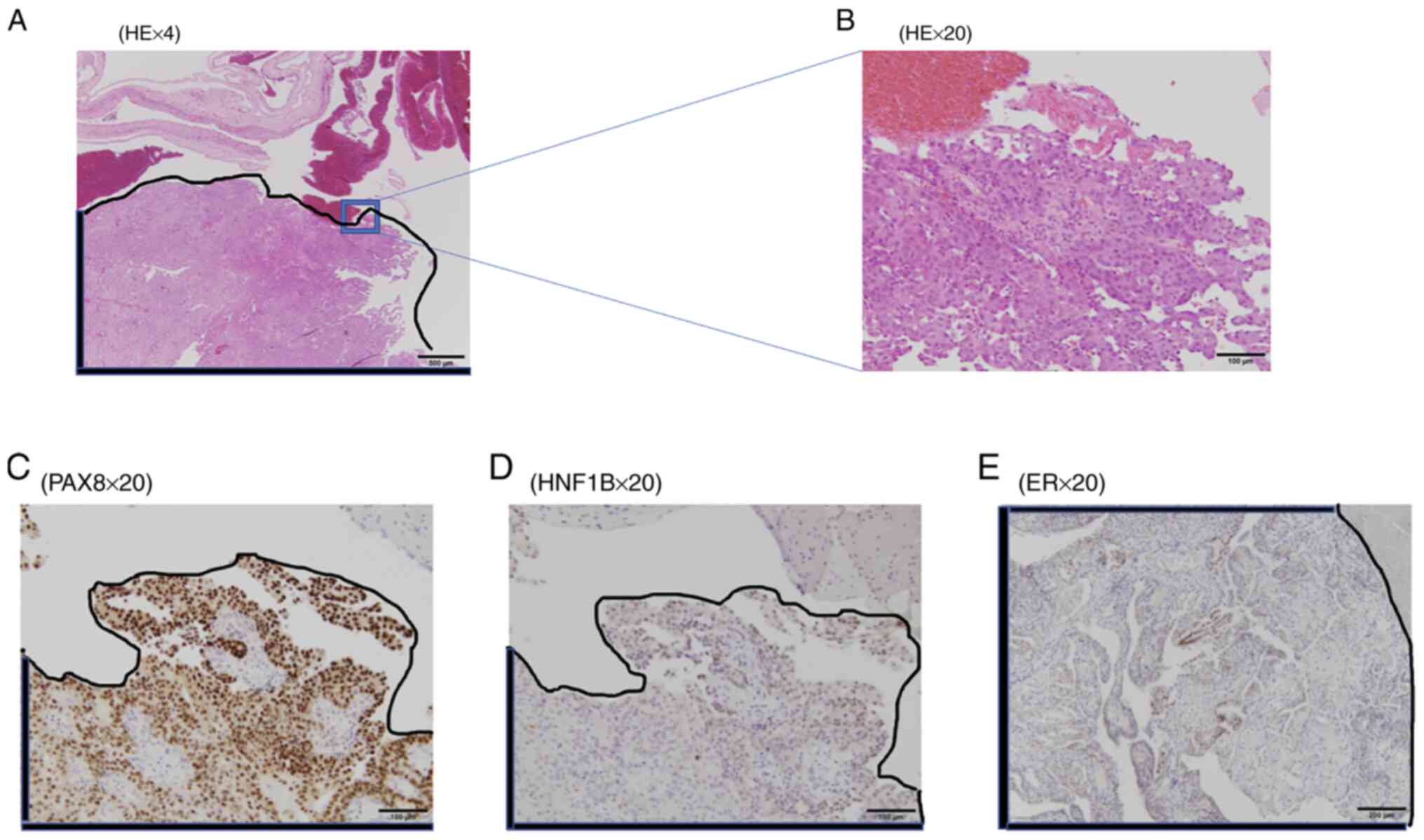
Figure 1

Histopathological findings of a resected placenta specimen. The tumor site is indicated by a black line. Microscopically, at (A) x4 and (B) x20 magnifications, a 10-mm neoplastic lesion in a section of the placenta exhibited metastatic adenocarcinoma. The tumor grew with a solid and luminal structure, and metastatic adenocarcinoma was suspected. Clear cell carcinoma was additionally suspected as immunohistochemistry analysis demonstrated that samples were positive for (C) PAX8 and (D) HNF1B (magnification, x20). PAX8 demonstrated strong positive staining in ~50% of the tumor. HNF1B was weakly positive in ~5% of the tumor. The tumor was however negative for CD10, Glypican, AMACR and p53. (E) ER demonstrated strong positive staining in ~10% of the tumor (magnification, x20). HE, hematoxylin and eosin; PAX8, paired box 8; HNF1B, hepatocyte nuclear factor 1β; ER, estrogen receptor.

Diagnosis of endometrial carcinoma

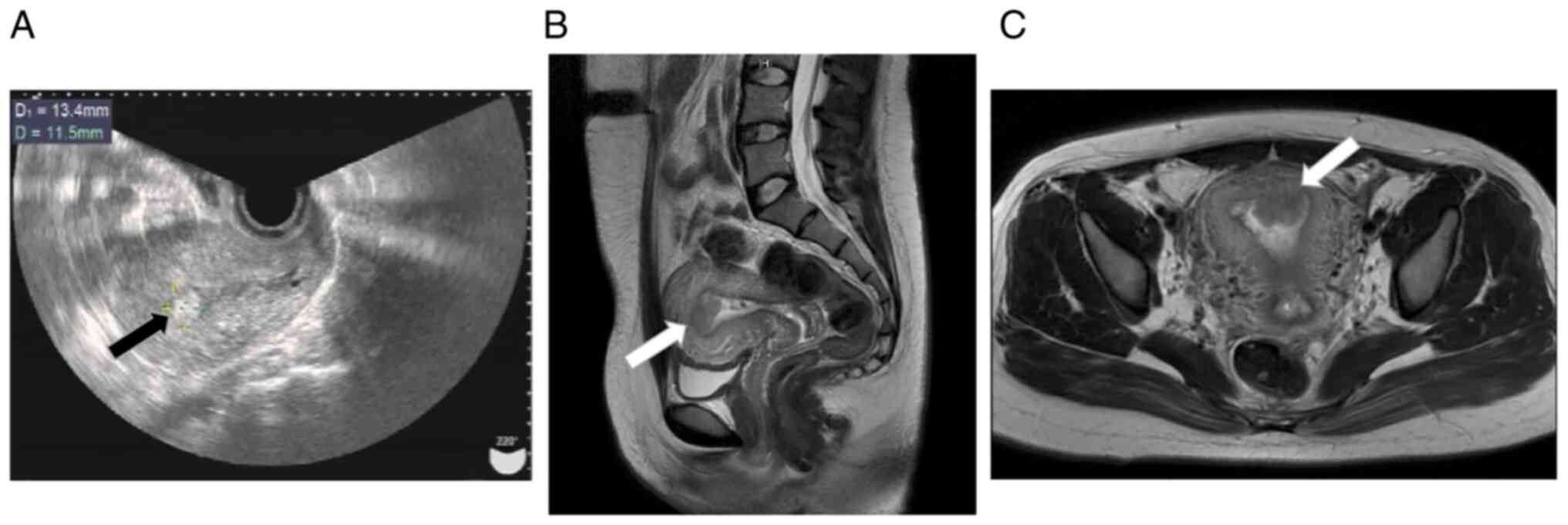
One month postpartum, a high echoic mass of 1.5 cm was detected in the endometrial cavity by transvaginal ultrasonography, and endometrial cancer was suspected. (Fig. 2A). Cytological findings of the uterine cervix were negative for intraepithelial lesions and malignancy, and endometrial cytology was also negative. Biopsy of the lesion revealed adenocarcinoma, and the final diagnosis was endometrial cancer. A 4-cm mass was detected in the endometrial cavity by contrast-enhanced magnetic resonance imaging. (Fig. 2B and C) Contrast-enhanced computed tomography did not show any distant metastasis, and tumor markers (CEA, CA125, and CA19-9) were negative.

Figure 2

Transvaginal ultrasonographic and MRI findings after 1 month postpartum. (A) Transvaginal ultrasonography demonstrated a high echoic mass of 1.5 cm in the endometrial cavity 1 month postpartum. (B) Sagittal and (C) axial contrast-enhanced T2-weighted MRI revealed endometrial carcinoma measuring 4 cm in diameter with a low signal. The location of the tumor is indicated by an arrow.

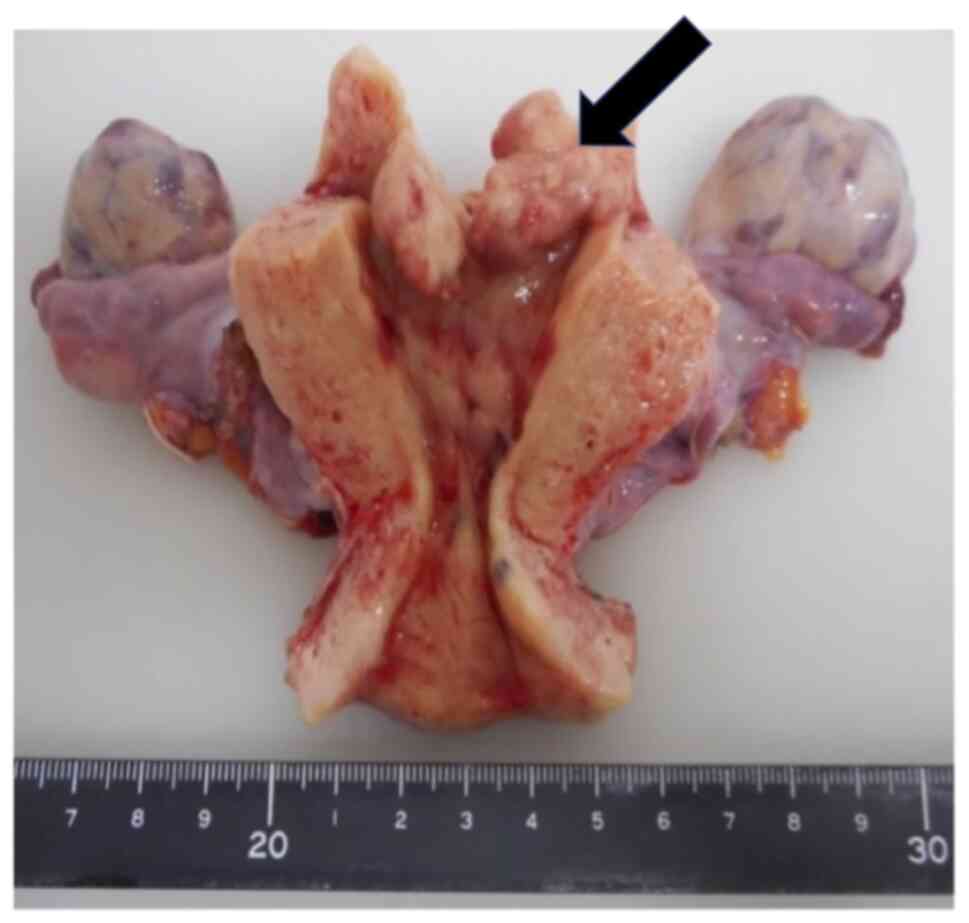
The patient was diagnosed with endometrial cancer (stage I suspected), and underwent abdominal total hysterectomy, bilateral salpingo-oophorectomy, partial omentectomy, and pelvic lymph node dissection based on suspected clear cell carcinoma in the preoperative diagnosis (intraoperative consultation, endometrioid carcinoma, grade 2, invasion involving less than one-half of the myometrium) (Fig. 3).

Figure 3

Macroscopic findings in the surgical specimen of the uterus and bilateral adnexa. The uterus was spilt at the front. Endometrial carcinoma is present in the uterine fundus. The location of the tumor is indicated by an arrow.

The postoperative diagnosis was endometrial cancer stage 1A (pT1aN0M0, endometrioid carcinoma, grade 2, negative peritoneal lavage cytology, positive lymphatic vessel invasion, negative blood vessel invasion, and myometrium invasion of 3 mm with endometrial thickness of 20 mm). There has been no evidence of disease one year after surgery and the patient is being followed up.

Discussion

The incidence of malignancy during pregnancy ranges between 0.05 and 0.1% (1). Common malignancies during pregnancy include melanoma, ovarian cancer, cervical cancer, leukemia, and breast cancer, whereas endometrial cancer is rare (2). In recent years, the number of cases of endometrial cancer in patients younger than 40 years and those with an advanced maternal age due to assisted reproductive technology has been increasing. Therefore, the rate of malignancy during pregnancy has also increased. A risk factor for endometrial cancer is the excessive and unopposed exposure of the endometrium to estrogen, such as obesity and nulliparity; therefore, pregnancy is a protective factor. The patient is overweight (Body Mass Index is 27.9 kg/m2) and has had menstrual disorders since junior high school student.

In the present case, endometrial cancer may have been present before or during pregnancy. We identified dozen of cases of endometrial carcinoma during pregnancy; however, more than 50% were detected at the time of dilatation and curettage for first-trimester spontaneous abortions (3-5). Other cases were diagnosed after childbirth. Although the reason why endometrial cancer coexists with pregnancy currently remains unknown, the partial resistance of the endometrium to progesterone has been proposed (3,6). In most cases, the histopathology of endometrial cancer during pregnancy is endometrioid carcinoma (4,5). The present case became pregnant by frozen-thawed embryo transfer with a hormone replacement therapy cycle regimen; therefore, the intra-uterine concentration of progesterone was high. A high progesterone status during pregnancy may have suppressed the growth of endometrioid carcinoma. Since the placenta was attached to the posterior wall of the uterine and located at a different position to the site of cancer, the pregnancy continued.

The underlying reason for the premature rupture of membranes was inhibited uterine growth and increased intrauterine pressure caused by cancer in the uterus. Previous cases of maternal to placental metastasis included malignant melanoma, gastric cancer, leukemia, breast cancer, lung cancer, and ovarian cancer (7-9). Furthermore, many cases of placental metastasis were advanced cancers. To the best of our knowledge, the placental metastasis of endometrial cancer has not yet been reported. A previous study showed that placental metastasis occurred via blood vessels (9). In the present case, the placenta was closely located to the site of cancer in the peripheral tissues, which allowed for its migration or attachment to the placenta.

Metastasis to not only the placenta, but also to the fetus may occur, and this may be attributed to the immature fetal immune system (8). Therefore, metastasis to the fetus also needs to be considered. At this time, it does not recognize obvious abnormalities in the pelvis by ultrasonography, but we will continue to follow up.

Lynch syndrome accounts for 2% of all endometrial cancer cases (10). Since our patient was young and has a family history of rectal cancer (father), it is important to consider the possible diagnosis of Lynch syndrome. Follow-up assessments are needed for both the patient and the child. However, NGS method was not performed due to lack of her consent; Therefore, we plan to begin colorectal surveillance with the possibility of Lynch syndrome in mind.

In previous cases of placental metastasis, metastatic lesions were not observed macroscopically, similar to the present case.

In conclusion, the study confirms the need to perform a histopathological examination of the placenta in the abnormal course of pregnancy, especially in all cancers coexisting with pregnancy and shows that careful observation of the potential development of hormone-dependent tumors during assisted reproductive procedures is needed.

Acknowledgements

The authors would like to thank Dr Takumi Kakimoto (Department of Pathology, Tokushima University Hospital) for conducting pathological evaluations.

Funding

Funding: No funding was received.

Availability of data and materials

The datasets used and/or analyzed during the current study are available from the corresponding author on reasonable requests.

Authors' contributions

MN, ES, TK, MI, TI and TM were involved in the conception and design of the current study. TM wrote the manuscript. MN, MI and TI supervised the study. TM and MN confirm the authenticity of all the raw data. All authors have read and approved the final version of the manuscript.

Ethics approval and consent to participate

The present study was approved by the Institutional Review Board of The University of Tokushima Hospital. Written informed consent was obtained from the patient.

Patient consent for publication

Consent for publication was obtained from the patient.

Competing interests

The authors declare that they have no competing interests.

References

1 

Skrzypczyk-Ostaszewicz A and Rubach M: Gynaecological cancers coexisting with pregnancy-a literature review. Contemp Oncol (Pozn). 20:193–198. 2016.PubMed/NCBI View Article : Google Scholar

2 

Pavlidis N, Peccatori F, Lofts F and Greco AF: Cancer of unknown primary during pregnancy: An exceptionally rare coexistence. Anticancer Res. 35:575–579. 2015.PubMed/NCBI

3 

Zhou F, Qian Z, Li Y, Qin J and Huang L: Endometrial adenocarcinoma in spontaneous abortion: Two cases and review of the literature. Int J Clin Exp Med. 8:8230–8233. 2015.PubMed/NCBI

4 

Saciragic L, Ball CG, Islam S and Fung-Kee-Fung M: Incidental endometrial carcinoma diagnosed at first trimester pregnancy loss: A case report. J Obstet Gynaecol Can. 36:1010–1013. 2014.PubMed/NCBI View Article : Google Scholar

5 

Shiomi M, Matsuzaki S, Kobayashi E, Hara T, Nakagawa S, Takiguchi T, Mimura K, Ueda Y, Tomimatsu T and Kimura T: Endometrial carcinoma in a gravid uterus: A case report and literature review. BMC Pregnancy Childbirth. 19(425)2019.PubMed/NCBI View Article : Google Scholar

6 

Hoellen F, Reibke R, Hornemann K, Thill M, Luedders DW, Kelling K, Hornemann A and Bohlmann MK: Cancer in pregnancy. Part I: Basic diagnostic and therapeutic principles and treatment of gynecological malignancies. Arch Gynecol Obset. 285:195–205. 2012.PubMed/NCBI View Article : Google Scholar

7 

Altman JF, Lowe L, Redman B, Esper P, Schwartz JL, Johnson TM and Haefner KH: Placental metastasis of maternal melanoma. J Am Acad Dermatol. 49:1150–1154. 2003.PubMed/NCBI View Article : Google Scholar

8 

Oga S, Hachisuga M, Hidaka N, Fujita Y, Tomonobe H, Yamamoto HY and Kato K: Gastric cancer during pregnancy with placental involvement: Case report and review of published works. Obstet Gynecol Sci. 62:357–361. 2019.PubMed/NCBI View Article : Google Scholar

9 

Honda M, Yamada M, Kumasawa T, Samejima T, Satoh H and Sugimoto M: Recurrence of ovarian cancer with placental metastasis: A case report. Case Rep Oncol. 10:824–831. 2017.PubMed/NCBI View Article : Google Scholar

10 

Pellat A, Netter J, Perkins G, Cohen R, Coulet F, Parc Y, Svrcek M, Duval A and André T: Lynch syndrome: What is new? Bull Cancer. 106:647–655. 2019.PubMed/NCBI View Article : Google Scholar : (In French).

Related Articles

  • Abstract
  • View
  • Download
  • Twitter
Copy and paste a formatted citation
Spandidos Publications style
Maeda T, Nishimura M, Sogawa E, Kaji T, Irahara M and Iwasa T: Pathological examination of a placenta leading to the diagnosis of endometrial carcinoma: A case report. Mol Clin Oncol 16: 24, 2022.
APA
Maeda, T., Nishimura, M., Sogawa, E., Kaji, T., Irahara, M., & Iwasa, T. (2022). Pathological examination of a placenta leading to the diagnosis of endometrial carcinoma: A case report. Molecular and Clinical Oncology, 16, 24. https://doi.org/10.3892/mco.2021.2457
MLA
Maeda, T., Nishimura, M., Sogawa, E., Kaji, T., Irahara, M., Iwasa, T."Pathological examination of a placenta leading to the diagnosis of endometrial carcinoma: A case report". Molecular and Clinical Oncology 16.1 (2022): 24.
Chicago
Maeda, T., Nishimura, M., Sogawa, E., Kaji, T., Irahara, M., Iwasa, T."Pathological examination of a placenta leading to the diagnosis of endometrial carcinoma: A case report". Molecular and Clinical Oncology 16, no. 1 (2022): 24. https://doi.org/10.3892/mco.2021.2457
Copy and paste a formatted citation
x
Spandidos Publications style
Maeda T, Nishimura M, Sogawa E, Kaji T, Irahara M and Iwasa T: Pathological examination of a placenta leading to the diagnosis of endometrial carcinoma: A case report. Mol Clin Oncol 16: 24, 2022.
APA
Maeda, T., Nishimura, M., Sogawa, E., Kaji, T., Irahara, M., & Iwasa, T. (2022). Pathological examination of a placenta leading to the diagnosis of endometrial carcinoma: A case report. Molecular and Clinical Oncology, 16, 24. https://doi.org/10.3892/mco.2021.2457
MLA
Maeda, T., Nishimura, M., Sogawa, E., Kaji, T., Irahara, M., Iwasa, T."Pathological examination of a placenta leading to the diagnosis of endometrial carcinoma: A case report". Molecular and Clinical Oncology 16.1 (2022): 24.
Chicago
Maeda, T., Nishimura, M., Sogawa, E., Kaji, T., Irahara, M., Iwasa, T."Pathological examination of a placenta leading to the diagnosis of endometrial carcinoma: A case report". Molecular and Clinical Oncology 16, no. 1 (2022): 24. https://doi.org/10.3892/mco.2021.2457
Follow us
  • Twitter
  • LinkedIn
  • Facebook
About
  • Spandidos Publications
  • Careers
  • Cookie Policy
  • Privacy Policy
How can we help?
  • Help
  • Live Chat
  • Contact
  • Email to our Support Team