Spandidos Publications Logo
  • About
    • About Spandidos
    • Aims and Scopes
    • Abstracting and Indexing
    • Editorial Policies
    • Reprints and Permissions
    • Job Opportunities
    • Terms and Conditions
    • Contact
  • Journals
    • All Journals
    • Oncology Letters
      • Oncology Letters
      • Information for Authors
      • Editorial Policies
      • Editorial Board
      • Aims and Scope
      • Abstracting and Indexing
      • Bibliographic Information
      • Archive
    • International Journal of Oncology
      • International Journal of Oncology
      • Information for Authors
      • Editorial Policies
      • Editorial Board
      • Aims and Scope
      • Abstracting and Indexing
      • Bibliographic Information
      • Archive
    • Molecular and Clinical Oncology
      • Molecular and Clinical Oncology
      • Information for Authors
      • Editorial Policies
      • Editorial Board
      • Aims and Scope
      • Abstracting and Indexing
      • Bibliographic Information
      • Archive
    • Experimental and Therapeutic Medicine
      • Experimental and Therapeutic Medicine
      • Information for Authors
      • Editorial Policies
      • Editorial Board
      • Aims and Scope
      • Abstracting and Indexing
      • Bibliographic Information
      • Archive
    • International Journal of Molecular Medicine
      • International Journal of Molecular Medicine
      • Information for Authors
      • Editorial Policies
      • Editorial Board
      • Aims and Scope
      • Abstracting and Indexing
      • Bibliographic Information
      • Archive
    • Biomedical Reports
      • Biomedical Reports
      • Information for Authors
      • Editorial Policies
      • Editorial Board
      • Aims and Scope
      • Abstracting and Indexing
      • Bibliographic Information
      • Archive
    • Oncology Reports
      • Oncology Reports
      • Information for Authors
      • Editorial Policies
      • Editorial Board
      • Aims and Scope
      • Abstracting and Indexing
      • Bibliographic Information
      • Archive
    • Molecular Medicine Reports
      • Molecular Medicine Reports
      • Information for Authors
      • Editorial Policies
      • Editorial Board
      • Aims and Scope
      • Abstracting and Indexing
      • Bibliographic Information
      • Archive
    • World Academy of Sciences Journal
      • World Academy of Sciences Journal
      • Information for Authors
      • Editorial Policies
      • Editorial Board
      • Aims and Scope
      • Abstracting and Indexing
      • Bibliographic Information
      • Archive
    • International Journal of Functional Nutrition
      • International Journal of Functional Nutrition
      • Information for Authors
      • Editorial Policies
      • Editorial Board
      • Aims and Scope
      • Abstracting and Indexing
      • Bibliographic Information
      • Archive
    • International Journal of Epigenetics
      • International Journal of Epigenetics
      • Information for Authors
      • Editorial Policies
      • Editorial Board
      • Aims and Scope
      • Abstracting and Indexing
      • Bibliographic Information
      • Archive
    • Medicine International
      • Medicine International
      • Information for Authors
      • Editorial Policies
      • Editorial Board
      • Aims and Scope
      • Abstracting and Indexing
      • Bibliographic Information
      • Archive
  • Articles
  • Information
    • Information for Authors
    • Information for Reviewers
    • Information for Librarians
    • Information for Advertisers
    • Conferences
  • Language Editing
Spandidos Publications Logo
  • About
    • About Spandidos
    • Aims and Scopes
    • Abstracting and Indexing
    • Editorial Policies
    • Reprints and Permissions
    • Job Opportunities
    • Terms and Conditions
    • Contact
  • Journals
    • All Journals
    • Biomedical Reports
      • Information for Authors
      • Editorial Policies
      • Editorial Board
      • Aims and Scope
      • Abstracting and Indexing
      • Bibliographic Information
      • Archive
    • Experimental and Therapeutic Medicine
      • Information for Authors
      • Editorial Policies
      • Editorial Board
      • Aims and Scope
      • Abstracting and Indexing
      • Bibliographic Information
      • Archive
    • International Journal of Epigenetics
      • Information for Authors
      • Editorial Policies
      • Editorial Board
      • Aims and Scope
      • Abstracting and Indexing
      • Bibliographic Information
      • Archive
    • International Journal of Functional Nutrition
      • Information for Authors
      • Editorial Policies
      • Editorial Board
      • Aims and Scope
      • Abstracting and Indexing
      • Bibliographic Information
      • Archive
    • International Journal of Molecular Medicine
      • Information for Authors
      • Editorial Policies
      • Editorial Board
      • Aims and Scope
      • Abstracting and Indexing
      • Bibliographic Information
      • Archive
    • International Journal of Oncology
      • Information for Authors
      • Editorial Policies
      • Editorial Board
      • Aims and Scope
      • Abstracting and Indexing
      • Bibliographic Information
      • Archive
    • Medicine International
      • Information for Authors
      • Editorial Policies
      • Editorial Board
      • Aims and Scope
      • Abstracting and Indexing
      • Bibliographic Information
      • Archive
    • Molecular and Clinical Oncology
      • Information for Authors
      • Editorial Policies
      • Editorial Board
      • Aims and Scope
      • Abstracting and Indexing
      • Bibliographic Information
      • Archive
    • Molecular Medicine Reports
      • Information for Authors
      • Editorial Policies
      • Editorial Board
      • Aims and Scope
      • Abstracting and Indexing
      • Bibliographic Information
      • Archive
    • Oncology Letters
      • Information for Authors
      • Editorial Policies
      • Editorial Board
      • Aims and Scope
      • Abstracting and Indexing
      • Bibliographic Information
      • Archive
    • Oncology Reports
      • Information for Authors
      • Editorial Policies
      • Editorial Board
      • Aims and Scope
      • Abstracting and Indexing
      • Bibliographic Information
      • Archive
    • World Academy of Sciences Journal
      • Information for Authors
      • Editorial Policies
      • Editorial Board
      • Aims and Scope
      • Abstracting and Indexing
      • Bibliographic Information
      • Archive
  • Articles
  • Information
    • For Authors
    • For Reviewers
    • For Librarians
    • For Advertisers
    • Conferences
  • Language Editing
Login Register Submit
  • This site uses cookies
  • You can change your cookie settings at any time by following the instructions in our Cookie Policy. To find out more, you may read our Privacy Policy.

    I agree
Search articles by DOI, keyword, author or affiliation
Search
Advanced Search
presentation
Molecular and Clinical Oncology
Join Editorial Board Propose a Special Issue
Print ISSN: 2049-9450 Online ISSN: 2049-9469
Journal Cover
January-2026 Volume 24 Issue 1

Full Size Image

Sign up for eToc alerts
Recommend to Library

Journals

International Journal of Molecular Medicine

International Journal of Molecular Medicine

International Journal of Molecular Medicine is an international journal devoted to molecular mechanisms of human disease.

International Journal of Oncology

International Journal of Oncology

International Journal of Oncology is an international journal devoted to oncology research and cancer treatment.

Molecular Medicine Reports

Molecular Medicine Reports

Covers molecular medicine topics such as pharmacology, pathology, genetics, neuroscience, infectious diseases, molecular cardiology, and molecular surgery.

Oncology Reports

Oncology Reports

Oncology Reports is an international journal devoted to fundamental and applied research in Oncology.

Experimental and Therapeutic Medicine

Experimental and Therapeutic Medicine

Experimental and Therapeutic Medicine is an international journal devoted to laboratory and clinical medicine.

Oncology Letters

Oncology Letters

Oncology Letters is an international journal devoted to Experimental and Clinical Oncology.

Biomedical Reports

Biomedical Reports

Explores a wide range of biological and medical fields, including pharmacology, genetics, microbiology, neuroscience, and molecular cardiology.

Molecular and Clinical Oncology

Molecular and Clinical Oncology

International journal addressing all aspects of oncology research, from tumorigenesis and oncogenes to chemotherapy and metastasis.

World Academy of Sciences Journal

World Academy of Sciences Journal

Multidisciplinary open-access journal spanning biochemistry, genetics, neuroscience, environmental health, and synthetic biology.

International Journal of Functional Nutrition

International Journal of Functional Nutrition

Open-access journal combining biochemistry, pharmacology, immunology, and genetics to advance health through functional nutrition.

International Journal of Epigenetics

International Journal of Epigenetics

Publishes open-access research on using epigenetics to advance understanding and treatment of human disease.

Medicine International

Medicine International

An International Open Access Journal Devoted to General Medicine.

Journal Cover
January-2026 Volume 24 Issue 1

Full Size Image

Sign up for eToc alerts
Recommend to Library

  • Article
  • Citations
    • Cite This Article
    • Download Citation
    • Create Citation Alert
    • Remove Citation Alert
    • Cited By
  • Similar Articles
    • Related Articles (in Spandidos Publications)
    • Similar Articles (Google Scholar)
    • Similar Articles (PubMed)
  • Download PDF
  • Download XML
  • View XML

  • Supplementary Files
    • Supplementary_Data1.pdf
    • Supplementary_Data2.pdf
Article Open Access

A prognostic gene signature derived from aging‑related genes predicts survival, immune landscape and therapy response in glioma

  • Authors:
    • Zhenzhe Li
    • Liuyue Zhang
    • Xiaopeng Li
    • Peng Luo
    • Xingbo Liang
    • Tao Wen
    • Jieqin Yao
    • Qingwang Yu
    • Qianshuo Zhong
  • View Affiliations / Copyright

    Affiliations: Department of Neurosurgery, Affiliated Hospital of Guangdong Medical University, Zhanjiang, Guangdong 524000, P.R. China
    Copyright: © Li et al. This is an open access article distributed under the terms of Creative Commons Attribution License.
  • Article Number: 9
    |
    Published online on: November 24, 2025
       https://doi.org/10.3892/mco.2025.2918
  • Expand metrics +
Metrics: Total Views: 0 (Spandidos Publications: | PMC Statistics: )
Metrics: Total PDF Downloads: 0 (Spandidos Publications: | PMC Statistics: )
Cited By (CrossRef): 0 citations Loading Articles...

This article is mentioned in:


Abstract

Gliomas, the most common primary brain tumors, show diverse prognostic outcomes. Differences in gene expression between low‑grade gliomas and glioblastoma and the role of aging‑related genes highlight the need for robust prognostic models. The present study identified differentially expressed genes (DEGs) and developed a predictive risk model. Using The Cancer Genome Atlas (TCGA) and Chinese Glioma Genome Atlas (CGGA) datasets, 29 overlapping aging‑related DEGs were identified (|LogFC|>1, adjusted P<0.05). Cox and LASSO regression analyses selected 8 genes for a risk scoring model, validated across datasets and subgroups. Functional and single‑cell analyses explored immune microenvironments and drug sensitivities. Additionally, reverse transcription‑quantitative PCR (RT‑qPCR) was performed to validate the differential expression of these genes in normal astrocytes (HA) and glioblastoma (GBM) cell lines (U251 and U87). The 8‑gene model (Netrin‑4, retinol‑binding protein 1, Twist Family BHLH Transcription Factor 1, growth arrest and DNA damage inducible gamma (GADD45G), NUAK2, glutamate ionotropic receptor kainate type subunit 2, WEE1 and ribonucleotide reductase regulatory subunit) stratified patients into high‑ and low‑risk groups, with high‑risk patients showing significantly poorer survival (TCGA, HR=6.84; CGGA, HR=3.72; P<0.001). High‑risk tumors were enriched in cell cycle and senescence pathways and exhibited elevated immune checkpoint expression and reduced chemotherapeutic sensitivity. Single‑cell analysis revealed differential GADD45G expression in M1 and M2 macrophages, suggesting a role in immune evasion. RT‑qPCR results further confirmed differential expression patterns of the 8 genes between normal and GBM cells, supporting their involvement in GBM pathogenesis. This 8‑gene risk model effectively predicts glioma prognosis and supports personalized treatment strategies by highlighting immune microenvironment differences and drug sensitivities between risk groups.
View Figures

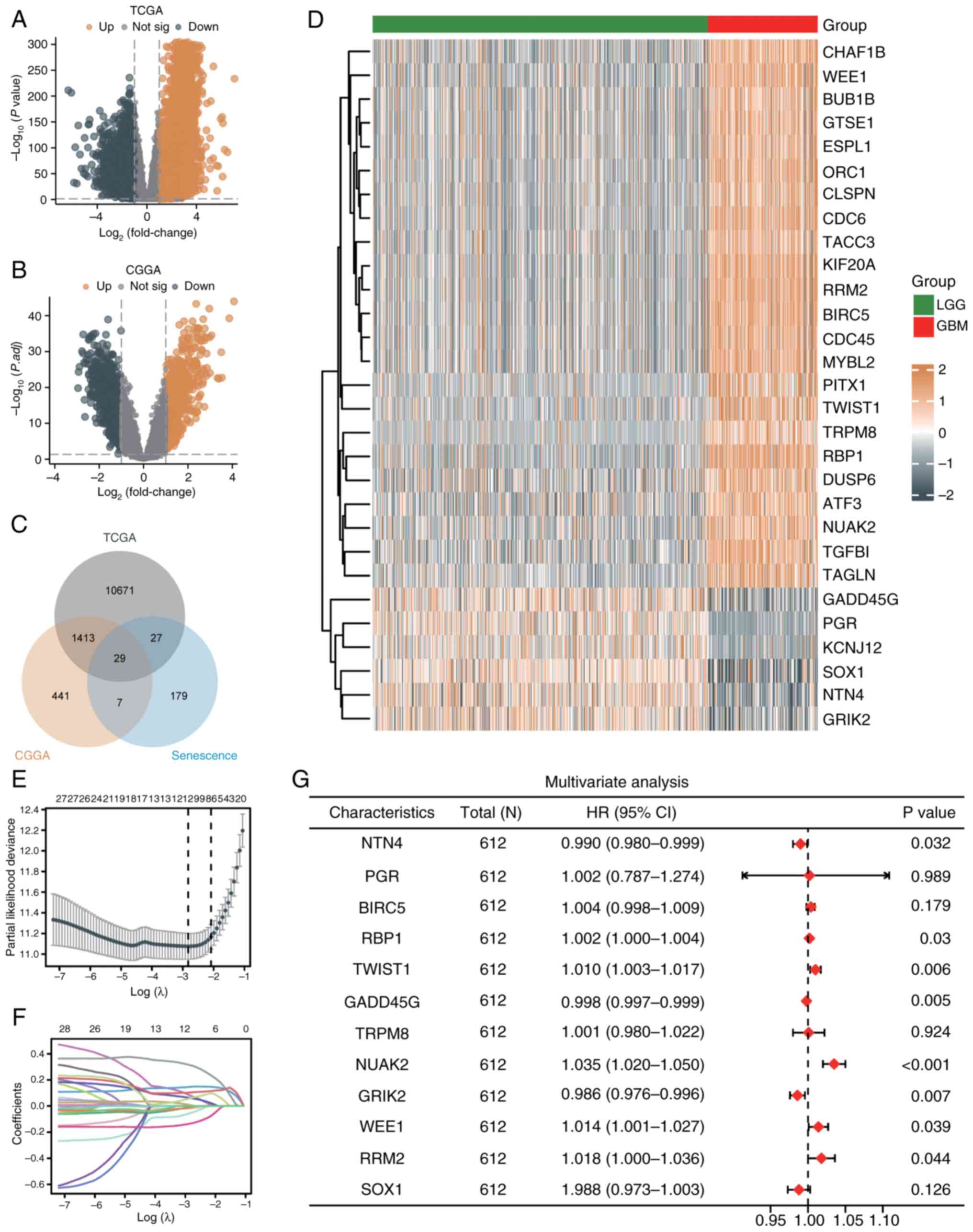
Figure 1

Screening of DEGs and model
construction. (A) Volcano plot of significantly upregulated (red)
and downregulated (blue) genes in the TCGA dataset (|LogFC|>1,
adjusted P<0.05). (B) Volcano plot of DEGs in the CGGA dataset
(|LogFC|>1, adjusted P<0.05). (C) Venn diagram showing 29
shared senescence-related genes from TCGA and CGGA datasets. (D)
Heatmap of hierarchical clustering of 29 genes, separating LGG and
GBM samples. (E) Partial likelihood deviance plot from LASSO
regression identifying 12 genes at the optimal lambda. (F)
Coefficient profiles of 12 genes across lambda values in LASSO
analysis. (G) Forest plot from multivariate Cox regression of 8
genes significantly associated with prognosis, displaying HRs and
P-values. DEGs, differentially expressed genes; TCGA, The Cancer
Genome Atlas; CGGA, Chinese Glioma Genome Atlas; LGG, low-grade
glioma; GBM, glioblastoma; HR, hazard ratio; CI, confidence
interval.

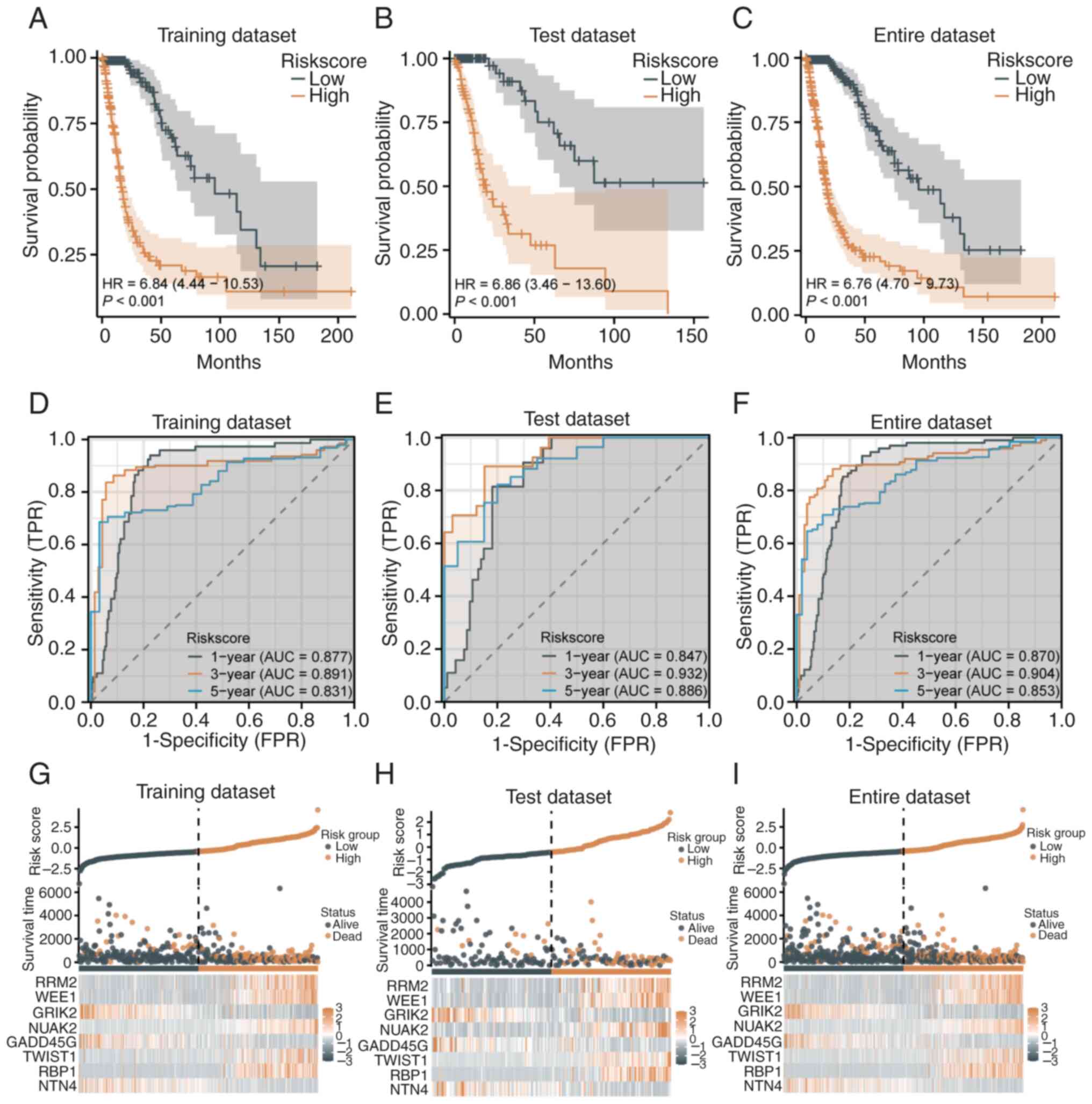
Figure 2

Evaluation of the prognostic
predictive ability of the 8-gene risk score model. (A-C)
Kaplan-Meier survival curves showing significantly lower survival
in the high-risk group across the (A) training set, (B) test set
and (C) entire dataset (P<0.001). (D-F) Receiver operating
characteristic curves for 1-, 3- and 5-year survival predictions in
the (D) training set, (E) test set and (F) entire dataset,
demonstrating high predictive accuracy. (G-I) Risk score
distribution and survival status plots illustrating shorter
survival and higher mortality in high-risk patients in the (G)
training set, (H) test set and (I) entire dataset.

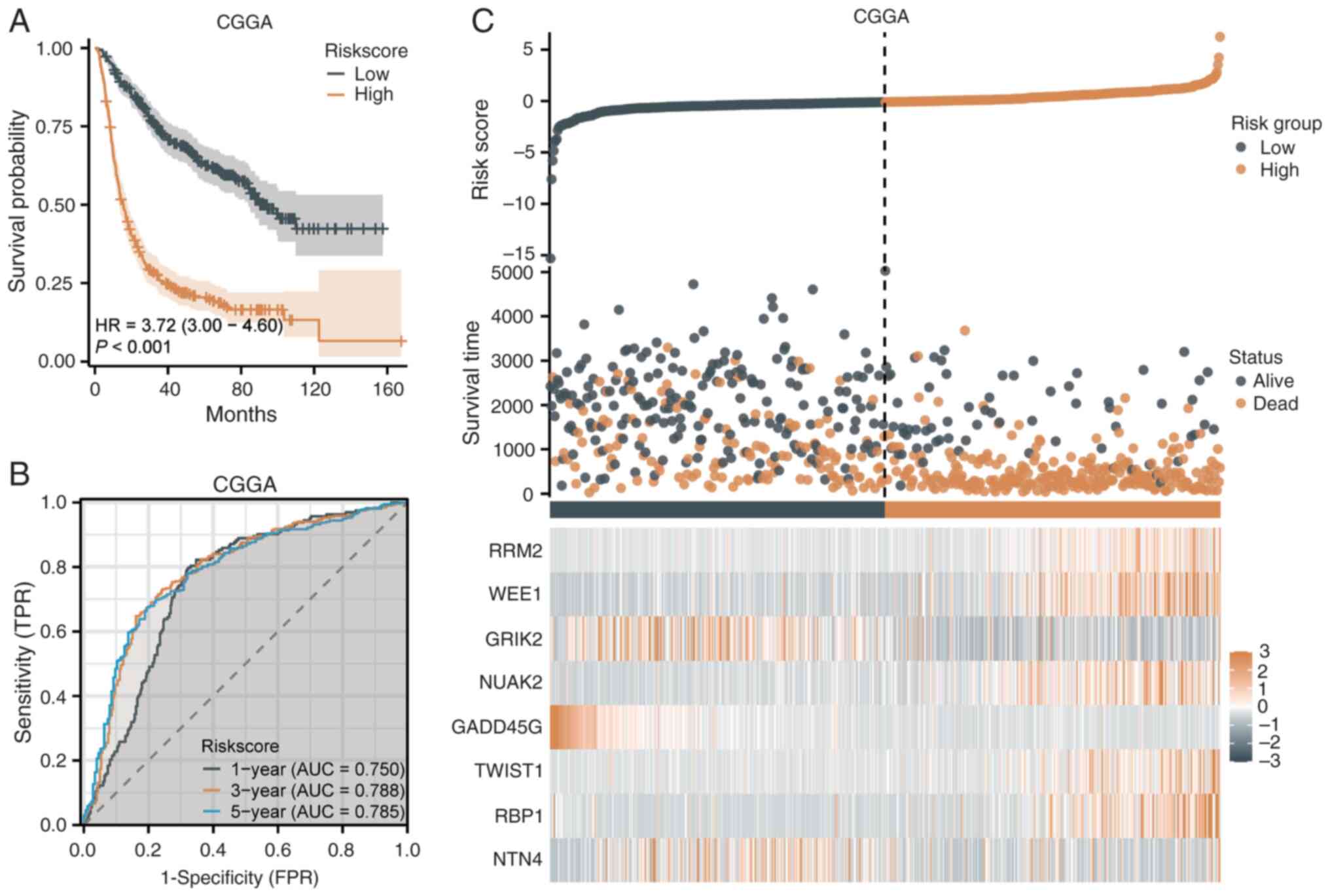
Figure 3

Validation of the 8-gene risk score
model in the CGGA dataset. (A) Kaplan-Meier survival curves showing
lower survival in the high-risk group (Hazard ratio=3.72;
P<0.001). (B) Receiver operating characteristic curves for 1-,
3-, and 5-year survival predictions with area under the curve
values of 0.750, 0.788 and 0.785, indicating favorable performance.
(C) Risk score distribution and survival status plot illustrating
shorter survival and higher mortality in the high-risk group. CGGA,
Chinese Glioma Genome Atlas.

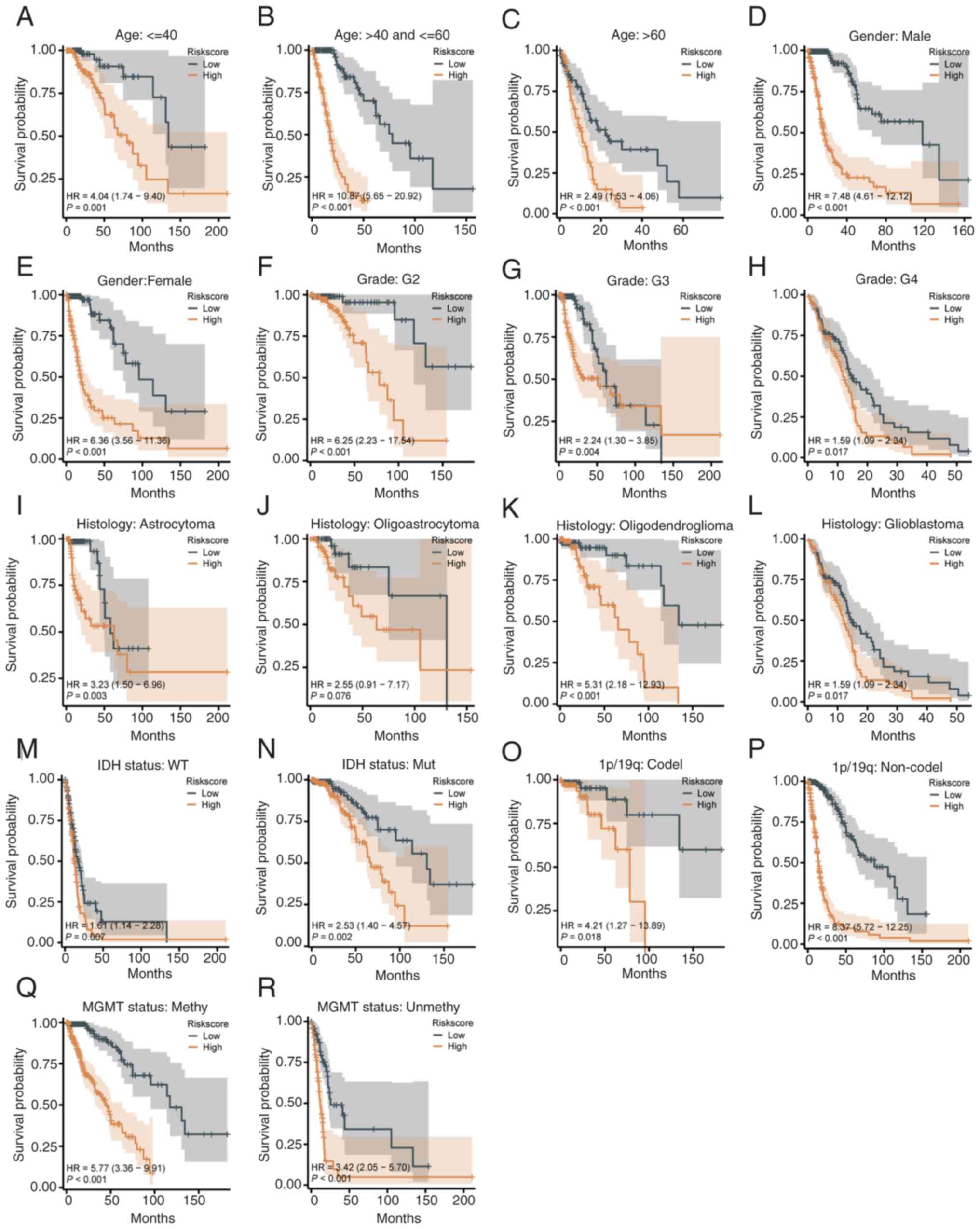
Figure 4

Prognostic ability of the risk score
model in clinical and molecular subgroups. (A-C) Kaplan-Meier
curves for age groups under 40 years (A), 40-60 years (B), and over
60 years (C), showing worse survival in high-risk patients. (D and
E) Survival stratification by sex, with high-risk groups having
worse outcomes for both males and females. (F-H) Stratification by
tumor grade (G2-G4), where high-risk patients consistently had
shorter survival. (I-L) Stratification by histological type,
showing significant differences for astrocytoma (I),
oligoastrocytoma (K) and glioblastoma (L), but not for
oligodendroglioma (J). (M and N) (M and N) Kaplan-Meier curves for
IDH wild-type (M) and IDH-mutant (N) patients, revealing worse
survival in the high-risk group. (O and P) Stratification by 1p/19q
status, with significant differences in patients with (O) and
without (P) codeletion. (Q and R) Stratification by the MGMT
methylation status, with worse survival in the high-risk group for
both methylated (Q) and unmethylated (R) patients.

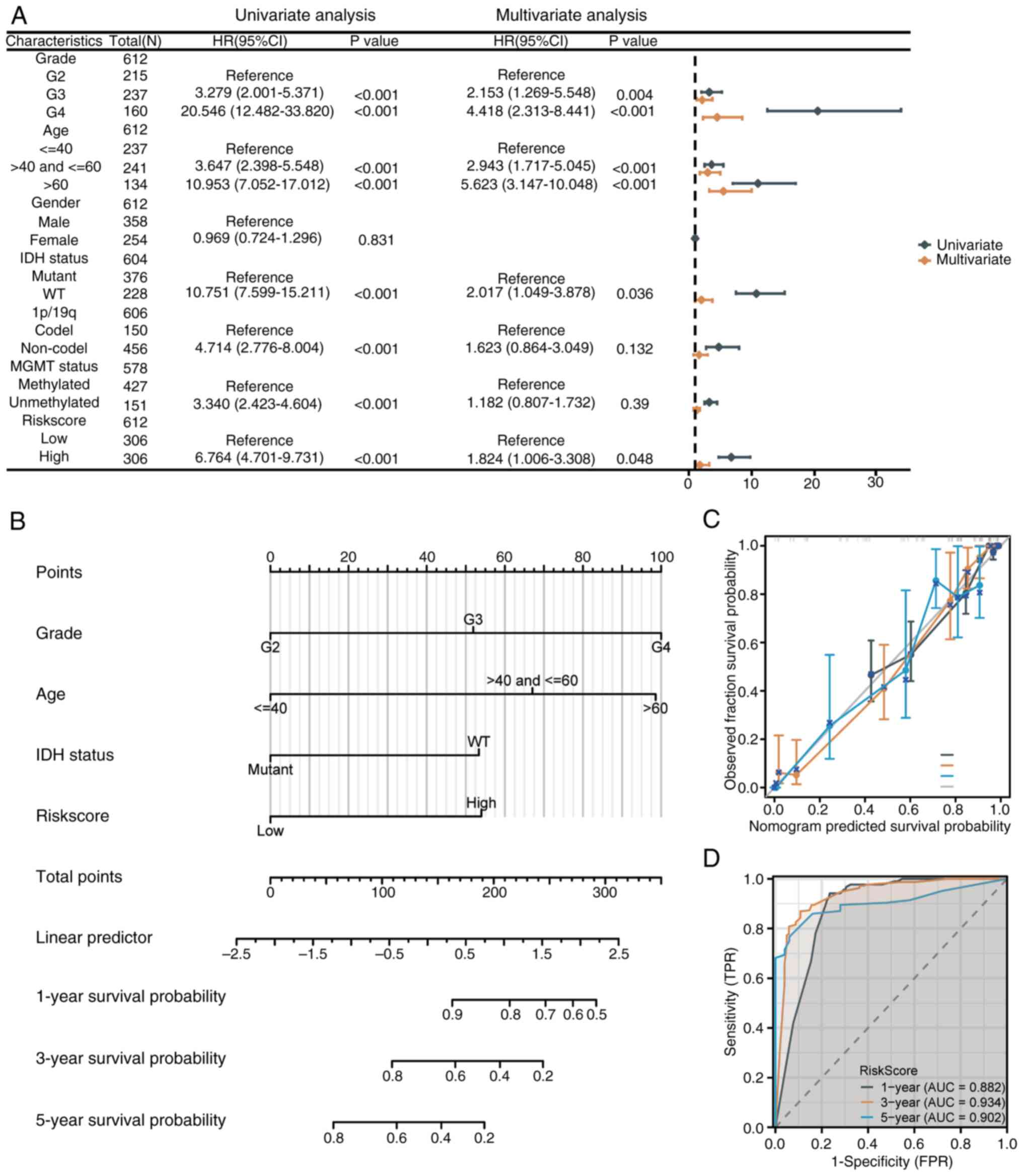
Figure 5

Construction and evaluation of the
nomogram. (A) Multivariate Cox regression analysis identifying
tumor grade, age, IDH status, and risk score as independent
prognostic factors. (B) Nomogram predicting 1-, 3- and 5-year
survival probabilities based on clinicopathological factors and
risk score. (C) Calibration plot showing strong alignment between
predicted and actual survival outcomes. (D) Time-dependent receiver
operating characteristic curves with area under the curve values of
0.882, 0.934 and 0.902 for 1-, 3- and 5-year survival predictions,
demonstrating high model accuracy.

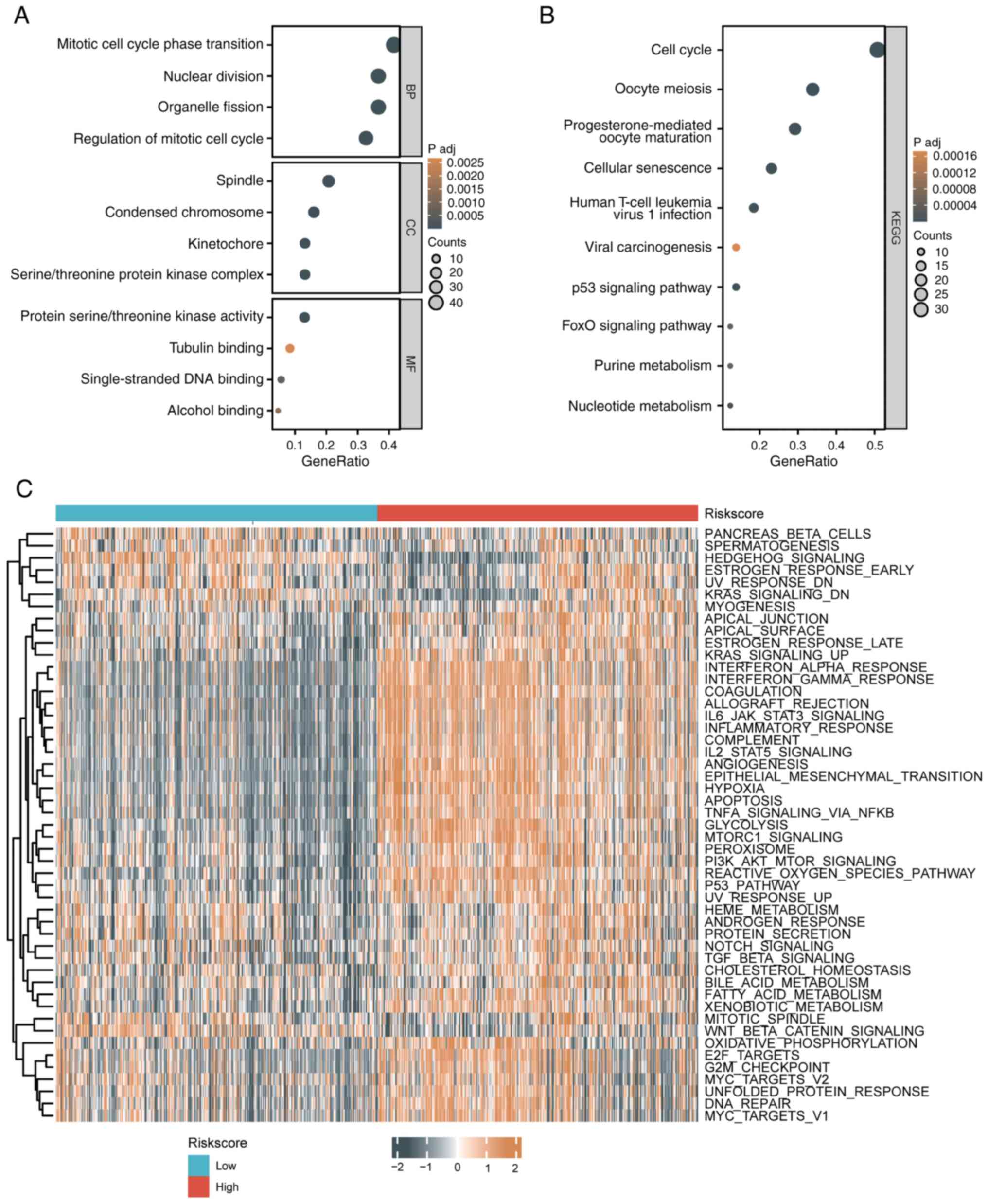
Figure 6

Biological Function Differences
between patients with high-risk and low-risk glioma. (A) Gene
Ontology enrichment analysis showing involvement in the cell cycle,
nuclear division, and protein kinase activity. (B) Kyoto
Encyclopedia of Genes and Genomes pathway analysis highlighting
enrichment in the cell cycle, senescence, p53 and FoxO signaling
pathways. (C) Gene set variation analysis showing the upregulation
of KRAS signaling and the inflammatory response in the high-risk
group and oxidative phosphorylation and DNA repair in the low-risk
group.

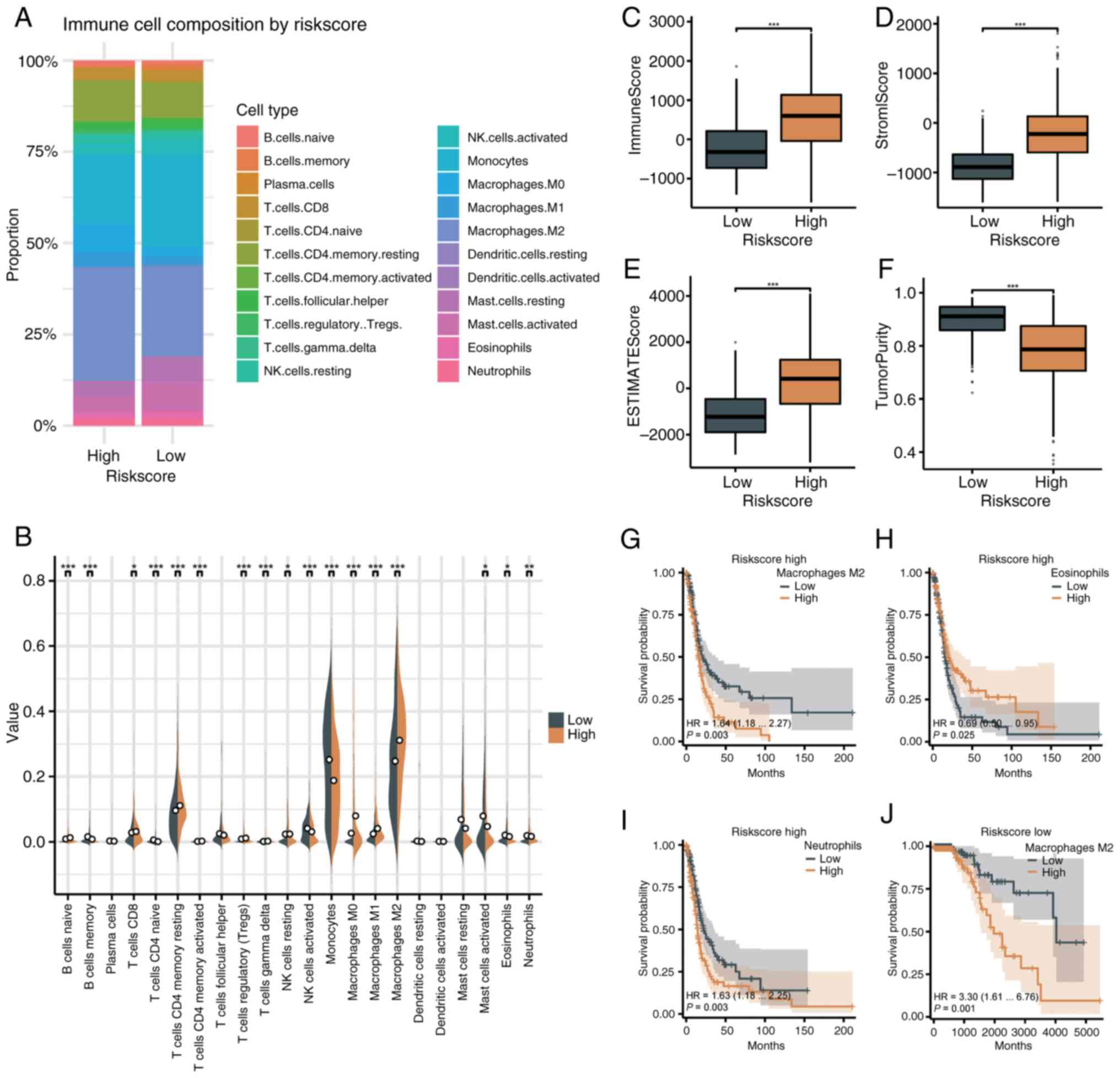
Figure 7

Immune microenvironment in patients
with high-risk and low-risk glioma. (A) Proportions of immune
cells, with M2 macrophages and monocytes being the most abundant in
both groups. (B) High-risk group showed increased CD8+ T
cells, Tregs and macrophage infiltration, while low-risk group had
higher memory B cells, monocytes and neutrophils. (C-F) High-risk
group exhibited higher ImmuneScore and StromalScore, but lower
tumor purity. (G-J) Survival analysis showed worse outcomes with
greater M2 macrophage and neutrophil infiltration, and improved
outcomes with higher eosinophil infiltration
(*P<0.05, **P<0.01,
***P<0.001).

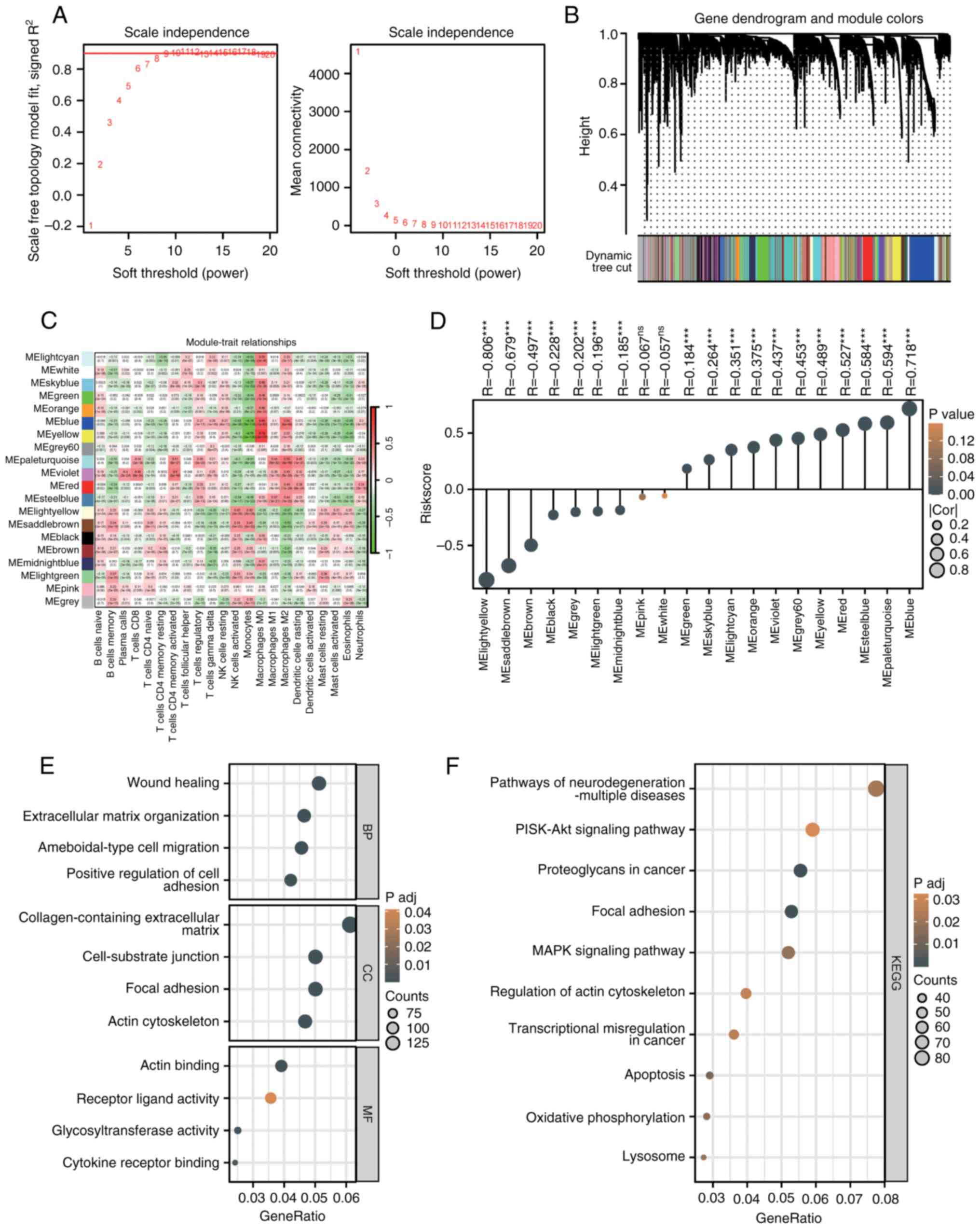
Figure 8

Weighted gene co-expression network
analysis and functional enrichment. (A) Soft threshold at 12
ensures scale-free network topology. (B) Gene dendrogram
identifying 20 co-expression modules. (C) Correlation heatmap
showing that the MEblue module is positively associated with M2
macrophages and Tregs and negatively associated with activated NK
cells. (D) The risk score was positively correlated with the MEblue
module (R=0.718, ***P<0.001). (E) Gene Ontology
analysis of the MEblue module highlights enrichment in
extracellular matrix organization and cell adhesion. (F) Kyoto
Encyclopedia of Genes and Genomes analysis revealed enrichment of
the PI3K-Akt, focal adhesion and MAPK signaling pathways.

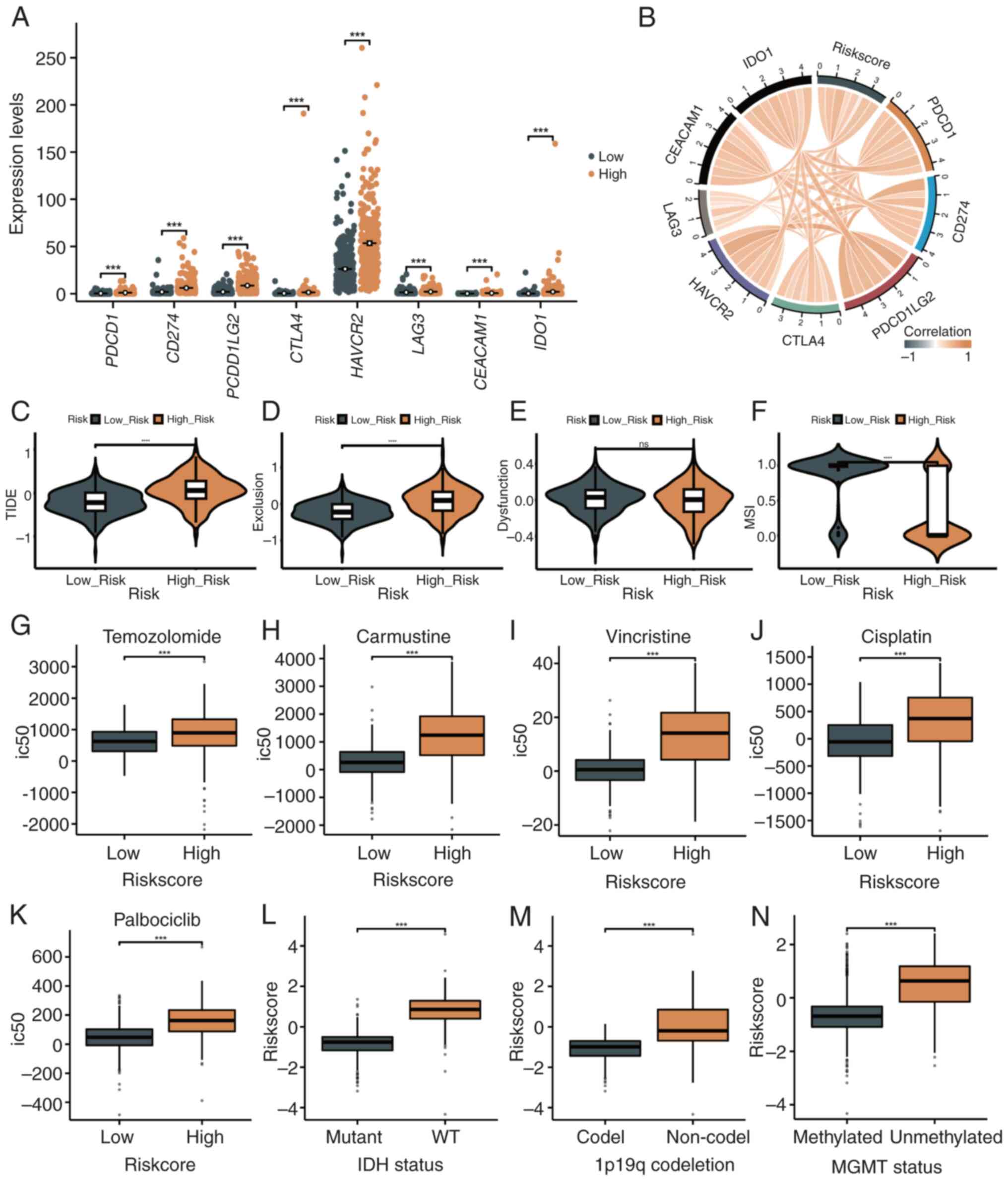
Figure 9

Associations of the risk score with
immune checkpoints, immunotherapy and chemotherapy sensitivity. (A)
Increased expression of immune checkpoint molecules (PD-1, PD-L1
and CTLA4) in the high-risk group. (B) Positive correlation between
the risk score and immune checkpoint expression. (C-F) High-risk
patients have higher TIDE, immune exclusion and microsatellite
instability scores, indicating stronger immune evasion. (G-K)
High-risk patients have reduced sensitivity to chemotherapy, with
higher IC50 values for multiple drugs. (L-N) Higher risk
scores are linked to IDH wild-type, 1p/19q non-codeletion and MGMT
unmethylated status (***P<0.001).

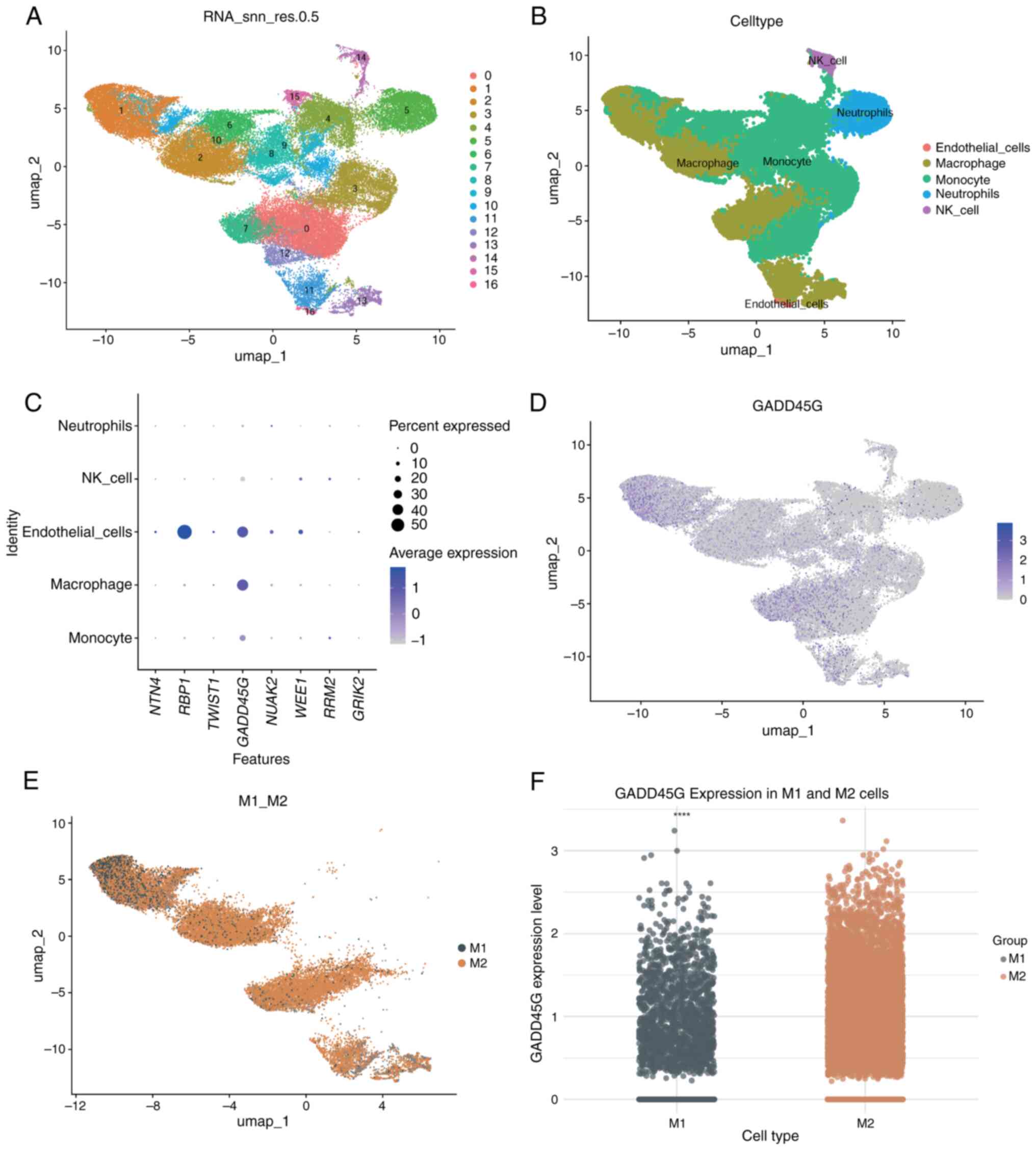
Figure 10

Single-cell differential expression
analysis of GADD45G in M1 and M2 macrophages. (A) UMAP plot showing
17 cell clusters identified from glioblastoma single-cell data. (B)
Cell type annotation via ‘SingleR’, identifying subpopulations such
as monocytes, macrophages, endothelial cells, neutrophils and
natural killer cells. (C) Expression distribution of eight model
genes across subpopulations, with GADD45G highly expressed in
macrophages and endothelial cells. (D) UMAP plot showing
predominant GADD45G expression in macrophages. (E) Manual
annotation of M1 and M2 macrophages. (F) GADD45G expression is
significantly greater in M2 macrophages than in M1 macrophages.
GADD45G, growth arrest and DNA damage inducible gamma
(***P<0.001).

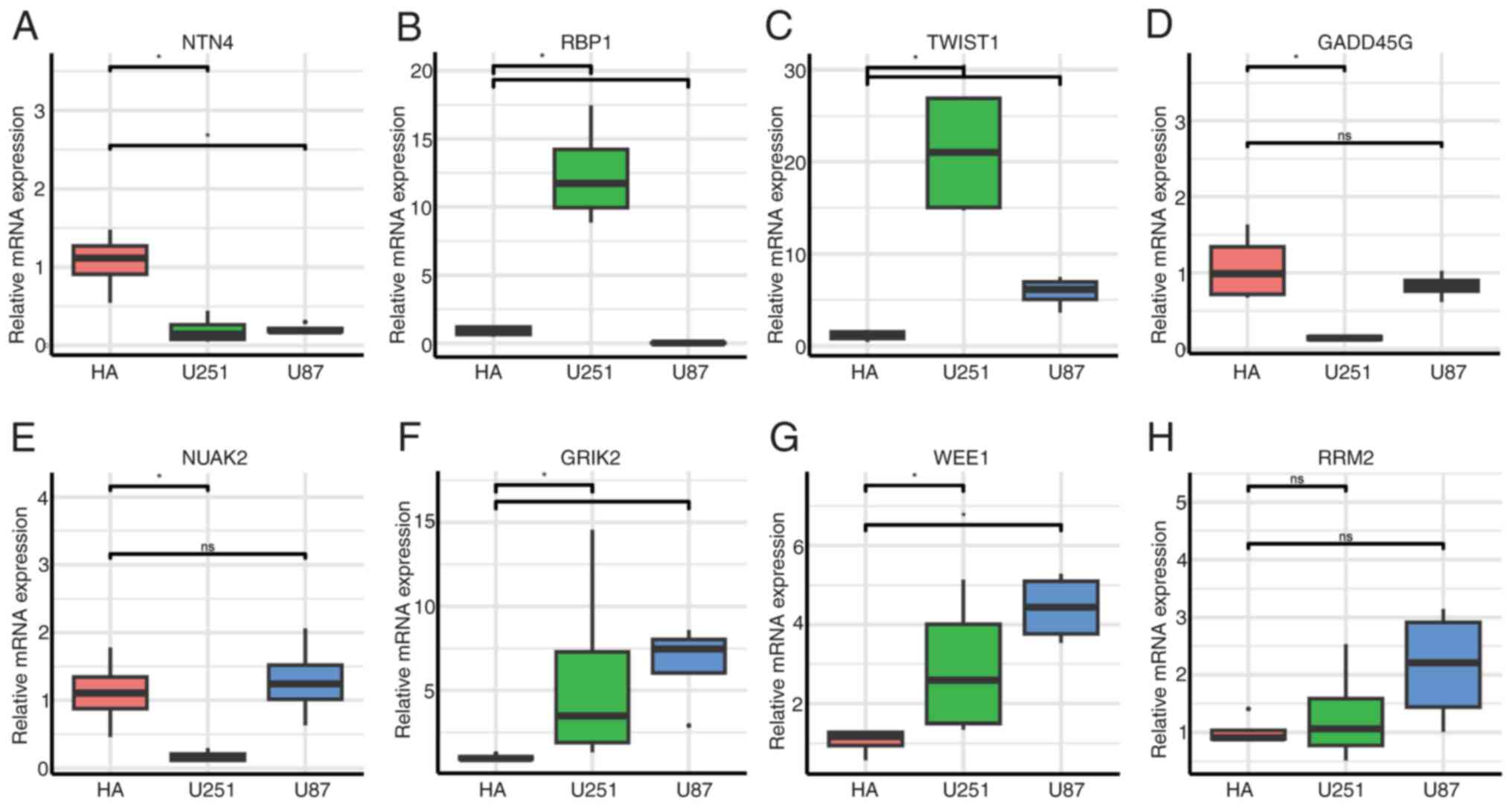
Figure 11

RT-qPCR validation of 8-gene
expression in normal astrocytes (HA) and glioblastoma cell lines
(U251 and U87). (A-H) RT-qPCR analysis of eight genes: (A) NTN4,
(B) RBP1, (C) TWIST1, (D) GADD45G, (E) NUAK2, (F) GRIK2, (G) WEE1
and (H) RRM2. *P<0.05. RT-qPCR, reverse
transcription-quantitative PCR; NTN4, netrin-4; RBP1,
retinol-binding protein 1; TWIST1, Twist Family BHLH Transcription
Factor 1; GADD45G, growth arrest and DNA damage inducible gamma;
RRM2, ribonucleotide reductase regulatory subunit; GRIK2, glutamate
ionotropic receptor kainate type subunit 2; ns, not
significant.
View References

1 

Louis DN, Perry A, Reifenberger G, von Deimling A, Figarella-Branger D, Cavenee WK, Ohgaki H, Wiestler OD, Kleihues P and Ellison DW: The 2016 world health organization classification of tumors of the central nervous system: A summary. Acta Neuropathol. 131:803–820. 2016.PubMed/NCBI View Article : Google Scholar

2 

Ostrom QT, Gittleman H, Truitt G, Boscia A, Kruchko C and Barnholtz-Sloan JS: CBTRUS Statistical report: Primary brain and other central nervous system tumors diagnosed in the United States in 2011-2015. Neuro Oncol. 20 (Suppl 4):iv1–iv86. 2018.PubMed/NCBI View Article : Google Scholar

3 

Yan H, Parsons DW, Jin G, McLendon R, Rasheed BA, Yuan W, Kos I, Batinic-Haberle I, Jones S, Riggins GJ, et al: IDH1 and IDH2 mutations in gliomas. N Engl J Med. 360:765–773. 2009.PubMed/NCBI View Article : Google Scholar

4 

Wen PY and Kesari S: Malignant gliomas in adults. N Engl J Med. 359:492–507. 2008.PubMed/NCBI View Article : Google Scholar

5 

Campisi J: Aging, cellular senescence, and cancer. Annu Rev Physiol. 75:685–705. 2013.PubMed/NCBI View Article : Google Scholar

6 

Lopez-Otin C, Blasco MA, Partridge L, Serrano M and Kroemer G: The hallmarks of aging. Cell. 153:1194–1217. 2013.PubMed/NCBI View Article : Google Scholar

7 

De Carvalho DD, You JS and Jones PA: DNA methylation and cellular reprogramming. Trends Cell Biol. 20:609–617. 2010.PubMed/NCBI View Article : Google Scholar

8 

Hinshaw DC and Shevde LA: The tumor microenvironment innately modulates cancer progression. Cancer Res. 79:4557–4566. 2019.PubMed/NCBI View Article : Google Scholar

9 

Hoxhaj G and Manning BD: The PI3K-AKT network at the interface of oncogenic signalling and cancer metabolism. Nat Rev Cancer. 20:74–88. 2020.PubMed/NCBI View Article : Google Scholar

10 

Weller M, van den Bent M, Preusser M, Le Rhun E, Tonn JC, Minniti G, Bendszus M, Balana C, Chinot O, Dirven L, et al: EANO guidelines on the diagnosis and treatment of diffuse gliomas of adulthood. Nat Rev Clin Oncol. 18:170–186. 2021.PubMed/NCBI View Article : Google Scholar

11 

Xie Y, He L, Lugano R, Zhang Y, Cao H, He Q, Chao M, Liu B, Cao Q, Wang J, et al: Key molecular alterations in endothelial cells in human glioblastoma uncovered through single-cell RNA sequencing. JCI Insight. 6(e150861)2021.PubMed/NCBI View Article : Google Scholar

12 

Macosko EZ, Basu A, Satija R, Nemesh J, Shekhar K, Goldman M, Tirosh I, Bialas AR, Kamitaki N, Martersteck EM, et al: Highly parallel Genome-wide expression profiling of individual cells using nanoliter droplets. Cell. 161:1202–1214. 2015.PubMed/NCBI View Article : Google Scholar

13 

Habicht J, Mooneyham A, Shetty M, Zhang X, Shridhar V, Winterhoff B, Zhang Y, Cepela J, Starr T, Lou E and Bazzaro M: UNC-45A is preferentially expressed in epithelial cells and binds to and co-localizes with interphase MTs. Cancer Biol Ther. 20:1304–1313. 2019.PubMed/NCBI View Article : Google Scholar

14 

Becht E, McInnes L, Healy J, Dutertre CA, Kwok IWH, Ng LG, Ginhoux F and Newell EW: Dimensionality reduction for visualizing single-cell data using UMAP. Nat Biotechnol: Dec 3, 2018 (Epub ahead of print) doi: 10.1038/nbt.4314.

15 

Aran D, Looney AP, Liu L, Wu E, Fong V, Hsu A, Chak S, Naikawadi RP, Wolters PJ, Abate AR, et al: Reference-based analysis of lung single-cell sequencing reveals a transitional profibrotic macrophage. Nat Immunol. 20:163–172. 2019.PubMed/NCBI View Article : Google Scholar

16 

Livak KJ and Schmittgen TD: Analysis of relative gene expression data using real-time quantitative PCR and the 2(-Delta Delta C(T)) method. Methods. 25:402–408. 2001.PubMed/NCBI View Article : Google Scholar

17 

Childs BG, Durik M, Baker DJ and van Deursen JM: Cellular senescence in aging and age-related disease: From mechanisms to therapy. Nat Med. 21:1424–1435. 2015.PubMed/NCBI View Article : Google Scholar

18 

Li L, Huang Y, Gao Y, Shi T, Xu Y, Li H, Hyytiäinen M, Keski-Oja J, Jiang Q, Hu Y and Du Z: EGF/EGFR upregulates and cooperates with Netrin-4 to protect glioblastoma cells from DNA damage-induced senescence. BMC Cancer. 18(1215)2018.PubMed/NCBI View Article : Google Scholar

19 

Guo Z, Zhao Y, Wu Y, Zhang Y, Wang R, Liu W, Zhang C and Yang X: Cellular retinol-binding protein 1: A therapeutic and diagnostic tumor marker. Mol Biol Rep. 50:1885–1894. 2023.PubMed/NCBI View Article : Google Scholar

20 

Yang J, Mani SA, Donaher JL, Ramaswamy S, Itzykson RA, Come C, Savagner P, Gitelman I, Richardson A and Weinberg RA: Twist, a master regulator of morphogenesis, plays an essential role in tumor metastasis. Cell. 117:927–939. 2004.PubMed/NCBI View Article : Google Scholar

21 

Yu X, He T, Tong Z, Liao L, Huang S, Fakhouri WD, Edwards DP and Xu J: Molecular mechanisms of TWIST1-regulated transcription in EMT and cancer metastasis. EMBO Rep. 24(e56902)2023.PubMed/NCBI View Article : Google Scholar

22 

Hollander MC, Sheikh MS, Bulavin DV, Lundgren K, Augeri-Henmueller L, Shehee R, Molinaro TA, Kim KE, Tolosa E, Ashwell JD, et al: Genomic instability in Gadd45a-deficient mice. Nat Genet. 23:176–184. 1999.PubMed/NCBI View Article : Google Scholar

23 

Qiu W, David D, Zhou B, Chu PG, Zhang B, Wu M, Xiao J, Han T, Zhu Z, Wang T, et al: Down-regulation of growth arrest DNA damage-inducible gene 45beta expression is associated with human hepatocellular carcinoma. Am J Pathol. 162:1961–1974. 2003.PubMed/NCBI View Article : Google Scholar

24 

Wang W, Huper G, Guo Y, Murphy SK, Olson JA Jr and Marks JR: Analysis of methylation-sensitive transcriptome identifies GADD45a as a frequently methylated gene in breast cancer. Oncogene. 24:2705–2714. 2005.PubMed/NCBI View Article : Google Scholar

25 

Li Y, Song X, Liu L and Yue L: NUAK2 silencing inhibits the proliferation, migration and epithelial-to-mesenchymal transition of cervical cancer cells via upregulating CYFIP2. Mol Med Rep. 24(817)2021.PubMed/NCBI View Article : Google Scholar

26 

Namiki T, Yaguchi T, Nakamura K, Valencia JC, Coelho SG, Yin L, Kawaguchi M, Vieira WD, Kaneko Y, Tanemura A, et al: NUAK2 amplification coupled with PTEN deficiency promotes melanoma development via CDK activation. Cancer Res. 75:2708–2715. 2015.PubMed/NCBI View Article : Google Scholar

27 

Tang L, Tong SJ, Zhan Z, Wang Q, Tian Y and Chen F: Expression of NUAK2 in gastric cancer tissue and its effects on the proliferation of gastric cancer cells. Exp Ther Med. 13:676–680. 2017.PubMed/NCBI View Article : Google Scholar

28 

Wang R, Su D, Liu Y, Huang H, Qiu J, Cao Z, Yang G, Chen H, Luo W, Tao J, et al: The NF-kappaB/NUAK2 signaling axis regulates pancreatic cancer progression by targeting SMAD2/3. iScience. 27(109406)2024.PubMed/NCBI View Article : Google Scholar

29 

Wu CS, Lu YJ, Li HP, Hsueh C, Lu CY, Leu YW, Liu HP, Lin KH, Hui-Ming Huang T and Chang YS: Glutamate receptor, ionotropic, kainate 2 silencing by DNA hypermethylation possesses tumor suppressor function in gastric cancer. Int J Cancer. 126:2542–2552. 2010.PubMed/NCBI View Article : Google Scholar

30 

Sanai N, Li J, Boerner J, Stark K, Wu J, Kim S, Derogatis A, Mehta S, Dhruv HD, Heilbrun LK, et al: Phase 0 Trial of AZD1775 in First-recurrence glioblastoma patients. Clin Cancer Res. 24:3820–3828. 2018.PubMed/NCBI View Article : Google Scholar

31 

Li C, Zheng J, Chen S, Huang B, Li G, Feng Z, Wang J and Xu S: RRM2 promotes the progression of human glioblastoma. J Cell Physiol. 233:6759–6767. 2018.PubMed/NCBI View Article : Google Scholar

32 

Aarts M, Sharpe R, Garcia-Murillas I, Gevensleben H, Hurd MS, Shumway SD, Toniatti C, Ashworth A and Turner NC: Forced mitotic entry of S-phase cells as a therapeutic strategy induced by inhibition of WEE1. Cancer Discov. 2:524–539. 2012.PubMed/NCBI View Article : Google Scholar

33 

Xiao Y, Li M, Ma T, Ning H and Liu L: AMG232 inhibits angiogenesis in glioma through the p53-RBM4-VEGFR2 pathway. J Cell Sci. 136(jcs260270)2023.PubMed/NCBI View Article : Google Scholar

34 

Zhao Y, Chen Y, Wei L, Ran J, Wang K, Zhu S and Liu Q: p53 inhibits the Urea cycle and represses polyamine biosynthesis in glioma cell lines. Metab Brain Dis. 38:1143–1153. 2023.PubMed/NCBI View Article : Google Scholar

35 

Herranz N and Gil J: Mechanisms and functions of cellular senescence. J Clin Invest. 128:1238–1246. 2018.PubMed/NCBI View Article : Google Scholar

36 

Ryan MB and Corcoran RB: Therapeutic strategies to target RAS-mutant cancers. Nat Rev Clin Oncol. 15:709–720. 2018.PubMed/NCBI View Article : Google Scholar

37 

Zuchegna C, Leone S, Romano A, Porcellini A and Messina S: KRAS is a molecular determinant of platinum responsiveness in glioblastoma. BMC Cancer. 24(77)2024.PubMed/NCBI View Article : Google Scholar

38 

Chen Z, Yan X, Miao C, Liu L, Liu S, Xia Y, Fang W, Zheng D and Luo Q: Targeting MYH9 represses USP14-mediated NAP1L1 deubiquitination and cell proliferation in glioma. Cancer Cell Int. 23(220)2023.PubMed/NCBI View Article : Google Scholar

39 

Stine ZE, Walton ZE, Altman BJ, Hsieh AL and Dang CV: MYC, Metabolism, and Cancer. Cancer Discov. 5:1024–1039. 2015.PubMed/NCBI View Article : Google Scholar

40 

Qiu X, Li Y and Zhang Z: Crosstalk between oxidative phosphorylation and immune escape in cancer: A new concept of therapeutic targets selection. Cell Oncol (Dordr). 46:847–865. 2023.PubMed/NCBI View Article : Google Scholar

41 

Ashton TM, McKenna WG, Kunz-Schughart LA and Higgins GS: Oxidative phosphorylation as an emerging target in cancer therapy. Clin Cancer Res. 24:2482–2490. 2018.PubMed/NCBI View Article : Google Scholar

42 

Kuo CL, Ponneri Babuharisankar A, Lin YC, Lien HW, Lo YK, Chou HY, Tangeda V, Cheng LC, Cheng AN and Lee AY: Mitochondrial oxidative stress in the tumor microenvironment and cancer immunoescape: Foe or friend? J Biomed Sci. 29(74)2022.PubMed/NCBI View Article : Google Scholar

43 

Mun JY, Leem SH, Lee JH and Kim HS: Dual relationship between stromal cells and immune cells in the tumor microenvironment. Front Immunol. 13(864739)2022.PubMed/NCBI View Article : Google Scholar

44 

Deng Y, Chen Q, Wan C, Sun Y, Huang F, Hu Y and Yang K: Microglia and macrophage metabolism: A regulator of cerebral gliomas. Cell Biosci. 14(49)2024.PubMed/NCBI View Article : Google Scholar

45 

Li C, Jiang P, Wei S, Xu X and Wang J: Regulatory T cells in tumor microenvironment: New mechanisms, potential therapeutic strategies and future prospects. Mol Cancer. 19(116)2020.PubMed/NCBI View Article : Google Scholar

46 

Feng B, Wu J, Shen B, Jiang F and Feng J: Cancer-associated fibroblasts and resistance to anticancer therapies: Status, mechanisms, and countermeasures. Cancer Cell Int. 22(166)2022.PubMed/NCBI View Article : Google Scholar

47 

Borst R, Meyaard L and Pascoal Ramos MI: Understanding the matrix: Collagen modifications in tumors and their implications for immunotherapy. J Transl Med. 22(382)2024.PubMed/NCBI View Article : Google Scholar

48 

Wei R, Zhou J, Bui B and Liu X: Glioma actively Orchestrate a self-advantageous extracellular matrix to promote recurrence and progression. BMC Cancer. 24(974)2024.PubMed/NCBI View Article : Google Scholar

49 

Ellert-Miklaszewska A, Poleszak K, Pasierbinska M and Kaminska B: Integrin signaling in glioma pathogenesis: From biology to therapy. Int J Mol Sci. 21(888)2020.PubMed/NCBI View Article : Google Scholar

50 

Wu M, Huang Q, Xie Y, Wu X, Ma H, Zhang Y and Xia Y: Improvement of the anticancer efficacy of PD-1/PD-L1 blockade via combination therapy and PD-L1 regulation. J Hematol Oncol. 15(24)2022.PubMed/NCBI View Article : Google Scholar

51 

Pulanco MC, Madsen AT, Tanwar A, Corrigan DT and Zang X: Recent advancements in the B7/CD28 immune checkpoint families: New biology and clinical therapeutic strategies. Cell Mol Immunol. 20:694–713. 2023.PubMed/NCBI View Article : Google Scholar

52 

Vidyarthi A, Agnihotri T, Khan N, Singh S, Tewari MK, Radotra BD, Chatterjee D and Agrewala JN: Predominance of M2 Macrophages in gliomas leads to the suppression of local and systemic immunity. Cancer Immunol Immunother. 68:1995–2004. 2019.PubMed/NCBI View Article : Google Scholar

53 

Ravi VM, Neidert N, Will P, Joseph K, Maier JP, Kückelhaus J, Vollmer L, Goeldner JM, Behringer SP, Scherer F, et al: T-cell dysfunction in the glioblastoma microenvironment is mediated by myeloid cells releasing interleukin-10. Nat Commun. 13(925)2022.PubMed/NCBI View Article : Google Scholar

54 

Puviindran BJ, Wallace S, Ayasoufi K, Lerner E and Fecci PE: Within and beyond the tumor: Mechanisms of glioblastoma-induced immunosuppression. Neurooncol Adv. 7 (Suppl 4):iv4–iv18. 2025.PubMed/NCBI View Article : Google Scholar

55 

Zajac A, Sumorek-Wiadro J, Langner E, Wertel I, Maciejczyk A, Pawlikowska-Pawlęga B, Pawelec J, Wasiak M, Hułas-Stasiak M, Bądziul D, et al: Involvement of PI3K pathway in glioma cell resistance to temozolomide treatment. Int J Mol Sci. 22(5155)2021.PubMed/NCBI View Article : Google Scholar

56 

Meng J, Qian W, Yang Z, Gong L, Xu D, Huang H, Jiang X, Pu Z, Yin Y and Zou J: p53/E2F7 axis promotes temozolomide chemoresistance in glioblastoma multiforme. BMC Cancer. 24(317)2024.PubMed/NCBI View Article : Google Scholar

57 

Perrault EN, Shireman JM, Ali ES, Lin P, Preddy I, Park C, Budhiraja S, Baisiwala S, Dixit K, James CD, et al: Ribonucleotide reductase regulatory subunit M2 drives glioblastoma TMZ resistance through modulation of dNTP production. Sci Adv. 9(eade7236)2023.PubMed/NCBI View Article : Google Scholar

58 

Pokorny JL, Calligaris D, Gupta SK, Iyekegbe DO Jr, Mueller D, Bakken KK, Carlson BL, Schroeder MA, Evans DL, Lou Z, et al: The efficacy of the wee1 inhibitor MK-1775 combined with temozolomide is limited by heterogeneous distribution across the Blood-brain barrier in glioblastoma. Clin Cancer Res. 21:1916–1924. 2015.PubMed/NCBI View Article : Google Scholar

59 

Hussain SF, Yang D, Suki D, Aldape K, Grimm E and Heimberger AB: The role of human glioma-infiltrating microglia/macrophages in mediating antitumor immune responses. Neuro Oncol. 8:261–279. 2006.PubMed/NCBI View Article : Google Scholar

60 

Quail DF and Joyce JA: The microenvironmental landscape of brain tumors. Cancer Cell. 31:326–341. 2017.PubMed/NCBI View Article : Google Scholar

61 

Deng R, Qin J, Wang L, Li H, Wen N, Qin K, Dong J, Wu J, Zhu D and Sun X: Energy metabolism-related GLUD1 contributes to favorable clinical outcomes of IDH-mutant glioma. BMC Neurol. 24(344)2024.PubMed/NCBI View Article : Google Scholar

62 

Familiari P, Lapolla P, Picotti V, Palmieri M, Pesce A, Carosi G, Relucenti M, Nottola S, Gianno F, Minasi S, et al: Role of 1p/19q codeletion in diffuse Low-grade glioma tumour prognosis. Anticancer Res. 43:2659–2670. 2023.PubMed/NCBI View Article : Google Scholar

63 

Mansouri A, Hachem LD, Mansouri S, Nassiri F, Laperriere NJ, Xia D, Lindeman NI, Wen PY, Chakravarti A, Mehta MP, et al: MGMT promoter methylation status testing to guide therapy for glioblastoma: Refining the approach based on emerging evidence and current challenges. Neuro Oncol. 21:167–178. 2019.PubMed/NCBI View Article : Google Scholar

Related Articles

  • Abstract
  • View
  • Download
  • Twitter
Copy and paste a formatted citation
Spandidos Publications style
Li Z, Zhang L, Li X, Luo P, Liang X, Wen T, Yao J, Yu Q and Zhong Q: A prognostic gene signature derived from aging‑related genes predicts survival, immune landscape and therapy response in glioma. Mol Clin Oncol 24: 9, 2026.
APA
Li, Z., Zhang, L., Li, X., Luo, P., Liang, X., Wen, T. ... Zhong, Q. (2026). A prognostic gene signature derived from aging‑related genes predicts survival, immune landscape and therapy response in glioma. Molecular and Clinical Oncology, 24, 9. https://doi.org/10.3892/mco.2025.2918
MLA
Li, Z., Zhang, L., Li, X., Luo, P., Liang, X., Wen, T., Yao, J., Yu, Q., Zhong, Q."A prognostic gene signature derived from aging‑related genes predicts survival, immune landscape and therapy response in glioma". Molecular and Clinical Oncology 24.1 (2026): 9.
Chicago
Li, Z., Zhang, L., Li, X., Luo, P., Liang, X., Wen, T., Yao, J., Yu, Q., Zhong, Q."A prognostic gene signature derived from aging‑related genes predicts survival, immune landscape and therapy response in glioma". Molecular and Clinical Oncology 24, no. 1 (2026): 9. https://doi.org/10.3892/mco.2025.2918
Copy and paste a formatted citation
x
Spandidos Publications style
Li Z, Zhang L, Li X, Luo P, Liang X, Wen T, Yao J, Yu Q and Zhong Q: A prognostic gene signature derived from aging‑related genes predicts survival, immune landscape and therapy response in glioma. Mol Clin Oncol 24: 9, 2026.
APA
Li, Z., Zhang, L., Li, X., Luo, P., Liang, X., Wen, T. ... Zhong, Q. (2026). A prognostic gene signature derived from aging‑related genes predicts survival, immune landscape and therapy response in glioma. Molecular and Clinical Oncology, 24, 9. https://doi.org/10.3892/mco.2025.2918
MLA
Li, Z., Zhang, L., Li, X., Luo, P., Liang, X., Wen, T., Yao, J., Yu, Q., Zhong, Q."A prognostic gene signature derived from aging‑related genes predicts survival, immune landscape and therapy response in glioma". Molecular and Clinical Oncology 24.1 (2026): 9.
Chicago
Li, Z., Zhang, L., Li, X., Luo, P., Liang, X., Wen, T., Yao, J., Yu, Q., Zhong, Q."A prognostic gene signature derived from aging‑related genes predicts survival, immune landscape and therapy response in glioma". Molecular and Clinical Oncology 24, no. 1 (2026): 9. https://doi.org/10.3892/mco.2025.2918
Follow us
  • Twitter
  • LinkedIn
  • Facebook
About
  • Spandidos Publications
  • Careers
  • Cookie Policy
  • Privacy Policy
How can we help?
  • Help
  • Live Chat
  • Contact
  • Email to our Support Team