Spandidos Publications Logo
  • About
    • About Spandidos
    • Aims and Scopes
    • Abstracting and Indexing
    • Editorial Policies
    • Reprints and Permissions
    • Job Opportunities
    • Terms and Conditions
    • Contact
  • Journals
    • All Journals
    • Oncology Letters
      • Oncology Letters
      • Information for Authors
      • Editorial Policies
      • Editorial Board
      • Aims and Scope
      • Abstracting and Indexing
      • Bibliographic Information
      • Archive
    • International Journal of Oncology
      • International Journal of Oncology
      • Information for Authors
      • Editorial Policies
      • Editorial Board
      • Aims and Scope
      • Abstracting and Indexing
      • Bibliographic Information
      • Archive
    • Molecular and Clinical Oncology
      • Molecular and Clinical Oncology
      • Information for Authors
      • Editorial Policies
      • Editorial Board
      • Aims and Scope
      • Abstracting and Indexing
      • Bibliographic Information
      • Archive
    • Experimental and Therapeutic Medicine
      • Experimental and Therapeutic Medicine
      • Information for Authors
      • Editorial Policies
      • Editorial Board
      • Aims and Scope
      • Abstracting and Indexing
      • Bibliographic Information
      • Archive
    • International Journal of Molecular Medicine
      • International Journal of Molecular Medicine
      • Information for Authors
      • Editorial Policies
      • Editorial Board
      • Aims and Scope
      • Abstracting and Indexing
      • Bibliographic Information
      • Archive
    • Biomedical Reports
      • Biomedical Reports
      • Information for Authors
      • Editorial Policies
      • Editorial Board
      • Aims and Scope
      • Abstracting and Indexing
      • Bibliographic Information
      • Archive
    • Oncology Reports
      • Oncology Reports
      • Information for Authors
      • Editorial Policies
      • Editorial Board
      • Aims and Scope
      • Abstracting and Indexing
      • Bibliographic Information
      • Archive
    • Molecular Medicine Reports
      • Molecular Medicine Reports
      • Information for Authors
      • Editorial Policies
      • Editorial Board
      • Aims and Scope
      • Abstracting and Indexing
      • Bibliographic Information
      • Archive
    • World Academy of Sciences Journal
      • World Academy of Sciences Journal
      • Information for Authors
      • Editorial Policies
      • Editorial Board
      • Aims and Scope
      • Abstracting and Indexing
      • Bibliographic Information
      • Archive
    • International Journal of Functional Nutrition
      • International Journal of Functional Nutrition
      • Information for Authors
      • Editorial Policies
      • Editorial Board
      • Aims and Scope
      • Abstracting and Indexing
      • Bibliographic Information
      • Archive
    • International Journal of Epigenetics
      • International Journal of Epigenetics
      • Information for Authors
      • Editorial Policies
      • Editorial Board
      • Aims and Scope
      • Abstracting and Indexing
      • Bibliographic Information
      • Archive
    • Medicine International
      • Medicine International
      • Information for Authors
      • Editorial Policies
      • Editorial Board
      • Aims and Scope
      • Abstracting and Indexing
      • Bibliographic Information
      • Archive
  • Articles
  • Information
    • Information for Authors
    • Information for Reviewers
    • Information for Librarians
    • Information for Advertisers
    • Conferences
  • Language Editing
Spandidos Publications Logo
  • About
    • About Spandidos
    • Aims and Scopes
    • Abstracting and Indexing
    • Editorial Policies
    • Reprints and Permissions
    • Job Opportunities
    • Terms and Conditions
    • Contact
  • Journals
    • All Journals
    • Biomedical Reports
      • Information for Authors
      • Editorial Policies
      • Editorial Board
      • Aims and Scope
      • Abstracting and Indexing
      • Bibliographic Information
      • Archive
    • Experimental and Therapeutic Medicine
      • Information for Authors
      • Editorial Policies
      • Editorial Board
      • Aims and Scope
      • Abstracting and Indexing
      • Bibliographic Information
      • Archive
    • International Journal of Epigenetics
      • Information for Authors
      • Editorial Policies
      • Editorial Board
      • Aims and Scope
      • Abstracting and Indexing
      • Bibliographic Information
      • Archive
    • International Journal of Functional Nutrition
      • Information for Authors
      • Editorial Policies
      • Editorial Board
      • Aims and Scope
      • Abstracting and Indexing
      • Bibliographic Information
      • Archive
    • International Journal of Molecular Medicine
      • Information for Authors
      • Editorial Policies
      • Editorial Board
      • Aims and Scope
      • Abstracting and Indexing
      • Bibliographic Information
      • Archive
    • International Journal of Oncology
      • Information for Authors
      • Editorial Policies
      • Editorial Board
      • Aims and Scope
      • Abstracting and Indexing
      • Bibliographic Information
      • Archive
    • Medicine International
      • Information for Authors
      • Editorial Policies
      • Editorial Board
      • Aims and Scope
      • Abstracting and Indexing
      • Bibliographic Information
      • Archive
    • Molecular and Clinical Oncology
      • Information for Authors
      • Editorial Policies
      • Editorial Board
      • Aims and Scope
      • Abstracting and Indexing
      • Bibliographic Information
      • Archive
    • Molecular Medicine Reports
      • Information for Authors
      • Editorial Policies
      • Editorial Board
      • Aims and Scope
      • Abstracting and Indexing
      • Bibliographic Information
      • Archive
    • Oncology Letters
      • Information for Authors
      • Editorial Policies
      • Editorial Board
      • Aims and Scope
      • Abstracting and Indexing
      • Bibliographic Information
      • Archive
    • Oncology Reports
      • Information for Authors
      • Editorial Policies
      • Editorial Board
      • Aims and Scope
      • Abstracting and Indexing
      • Bibliographic Information
      • Archive
    • World Academy of Sciences Journal
      • Information for Authors
      • Editorial Policies
      • Editorial Board
      • Aims and Scope
      • Abstracting and Indexing
      • Bibliographic Information
      • Archive
  • Articles
  • Information
    • For Authors
    • For Reviewers
    • For Librarians
    • For Advertisers
    • Conferences
  • Language Editing
Login Register Submit
  • This site uses cookies
  • You can change your cookie settings at any time by following the instructions in our Cookie Policy. To find out more, you may read our Privacy Policy.

    I agree
Search articles by DOI, keyword, author or affiliation
Search
Advanced Search
presentation
Molecular and Clinical Oncology
Join Editorial Board Propose a Special Issue
Print ISSN: 2049-9450 Online ISSN: 2049-9469
Journal Cover
May-2026 Volume 24 Issue 5

Full Size Image

Sign up for eToc alerts
Recommend to Library

Journals

International Journal of Molecular Medicine

International Journal of Molecular Medicine

International Journal of Molecular Medicine is an international journal devoted to molecular mechanisms of human disease.

International Journal of Oncology

International Journal of Oncology

International Journal of Oncology is an international journal devoted to oncology research and cancer treatment.

Molecular Medicine Reports

Molecular Medicine Reports

Covers molecular medicine topics such as pharmacology, pathology, genetics, neuroscience, infectious diseases, molecular cardiology, and molecular surgery.

Oncology Reports

Oncology Reports

Oncology Reports is an international journal devoted to fundamental and applied research in Oncology.

Experimental and Therapeutic Medicine

Experimental and Therapeutic Medicine

Experimental and Therapeutic Medicine is an international journal devoted to laboratory and clinical medicine.

Oncology Letters

Oncology Letters

Oncology Letters is an international journal devoted to Experimental and Clinical Oncology.

Biomedical Reports

Biomedical Reports

Explores a wide range of biological and medical fields, including pharmacology, genetics, microbiology, neuroscience, and molecular cardiology.

Molecular and Clinical Oncology

Molecular and Clinical Oncology

International journal addressing all aspects of oncology research, from tumorigenesis and oncogenes to chemotherapy and metastasis.

World Academy of Sciences Journal

World Academy of Sciences Journal

Multidisciplinary open-access journal spanning biochemistry, genetics, neuroscience, environmental health, and synthetic biology.

International Journal of Functional Nutrition

International Journal of Functional Nutrition

Open-access journal combining biochemistry, pharmacology, immunology, and genetics to advance health through functional nutrition.

International Journal of Epigenetics

International Journal of Epigenetics

Publishes open-access research on using epigenetics to advance understanding and treatment of human disease.

Medicine International

Medicine International

An International Open Access Journal Devoted to General Medicine.

Journal Cover
May-2026 Volume 24 Issue 5

Full Size Image

Sign up for eToc alerts
Recommend to Library

  • Article
  • Citations
    • Cite This Article
    • Download Citation
    • Create Citation Alert
    • Remove Citation Alert
    • Cited By
  • Similar Articles
    • Related Articles (in Spandidos Publications)
    • Similar Articles (Google Scholar)
    • Similar Articles (PubMed)
  • Download PDF
  • Download XML
  • View XML

  • Supplementary Files
    • Supplementary_Data.pdf
Article Open Access

Downregulation of MGST3 promotes colorectal cancer progression

  • Authors:
    • Yuchun Wu
    • Changjiang Fan
    • Jiaqi Zhou
    • Fengshan Huang
    • Yang Zhang
    • Yuqi He
    • Jianxun Wang
  • View Affiliations / Copyright

    Affiliations: Department of Pathology and Pathophysiology, School of Basic Medicine, Qingdao University, Qingdao, Shandong 266071, P.R. China, Guangdong Provincial Key Laboratory of Synthetic Genomics, Key Laboratory of Quantitative Synthetic Biology, Shenzhen Institute of Synthetic Biology, Shenzhen Institutes of Advanced Technology, Chinese Academy of Sciences, Shenzhen, Guangdong 518055, P.R. China, Department of Gastroenterology, The Seventh Medical Center of Chinese PLA General Hospital, Beijing 100853, P.R. China
    Copyright: © Wu et al. This is an open access article distributed under the terms of Creative Commons Attribution License.
  • Article Number: 29
    |
    Published online on: March 3, 2026
       https://doi.org/10.3892/mco.2026.2938
  • Expand metrics +
Metrics: Total Views: 0 (Spandidos Publications: | PMC Statistics: )
Metrics: Total PDF Downloads: 0 (Spandidos Publications: | PMC Statistics: )
Cited By (CrossRef): 0 citations Loading Articles...

This article is mentioned in:


Abstract

Colorectal cancer (CRC), the third most common malignancy worldwide, presents significant treatment challenges due to an incomplete understanding of its molecular progression. Therefore, identifying the specific developmental mechanisms of CRC holds potential to improve diagnosis, treatment and prognosis. In the present study, RNA‑sequencing analysis of samples from patients with an early‑stage tumor, advanced carcinoma or adenoma was conducted with the aim of uncovering differentially expressed genes. At the same time, gene knockdown and tumor‑related phenotype verification were conducted using a normal colon epithelial cell line. Subsequently, a group of genes related to the target gene was analyzed using The Cancer Genome Atlas (TCGA) database and the differences in colon tumor mutation burden, immune infiltration, epithelial‑mesenchymal transition (EMT) and ferroptosis were observed between samples with high and low expression of the gene group. Microsomal glutathione S‑transferase 3 (MGST3) was identified as a crucial tumor‑suppressive gene in colon cancer pathogenesis. Functional studies demonstrated that MGST3 knockdown in normal human colonic epithelial cells activated glutathione metabolic pathways and induced tumorigenic transformation, characterized by accelerated proliferation and suppression of EMT. TCGA database analysis revealed distinct phenotypes associated with low MGST3 expression, including elevated tumor mutational burden, attenuated EMT processes, diminished immune cell infiltration and enhanced ferroptosis. These findings establish MGST3 as a potential novel regulator of colon carcinogenesis, with its downregulation creating a tumor microenvironment conducive to ferroptosis while simultaneously suppressing EMT and immune responses. The present study not only elucidates previously unrecognized mechanisms driving colon cancer progression but also identifies MGST3‑related pathways as promising therapeutic targets for intervention.
View Figures

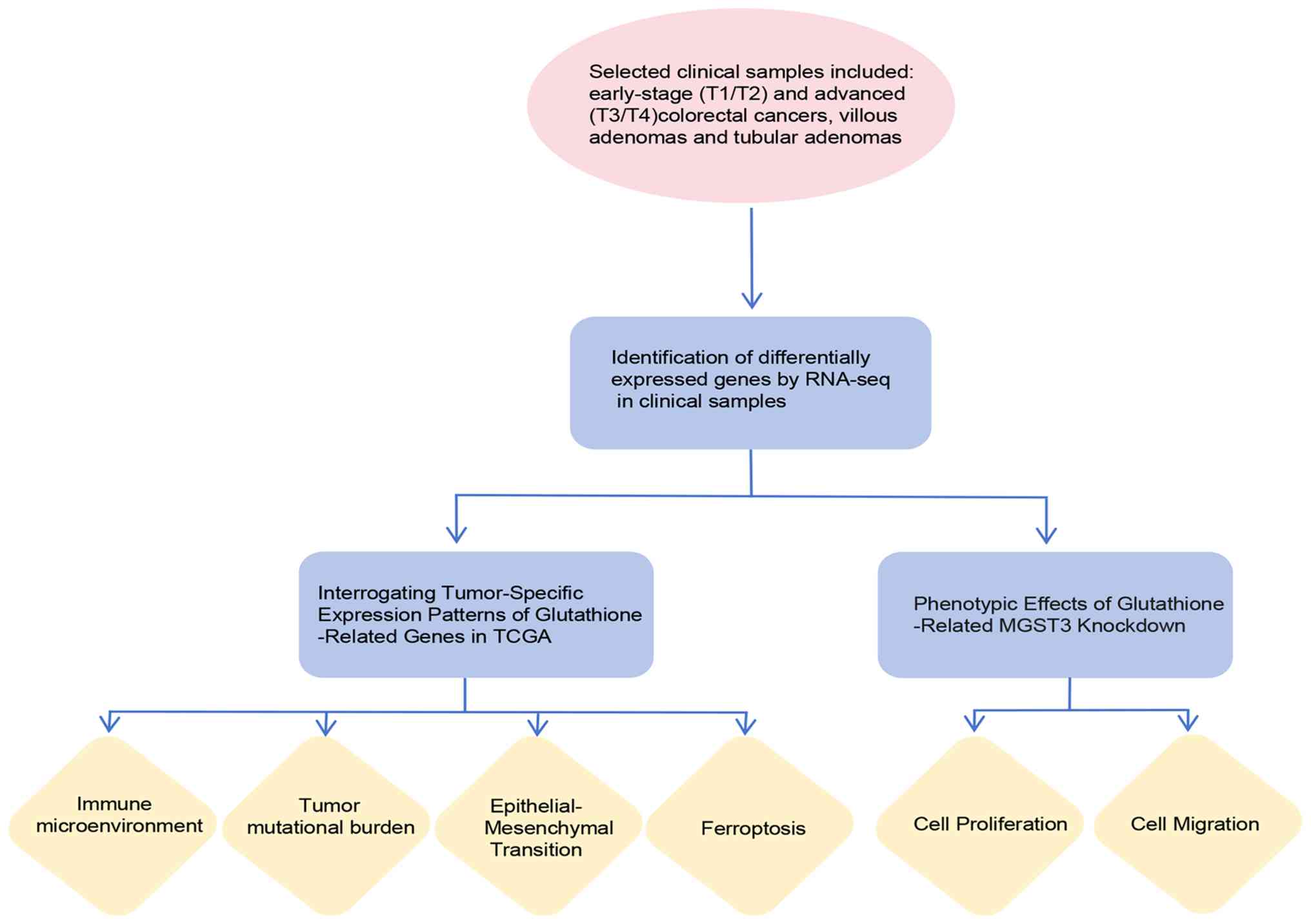
Figure 1

Schematic diagram of the experimental
workflow. RNA-seq, RNA sequencing; TCGA, The Cancer Genome Atlas;
MGST3, microsomal glutathione S-transferase 3.

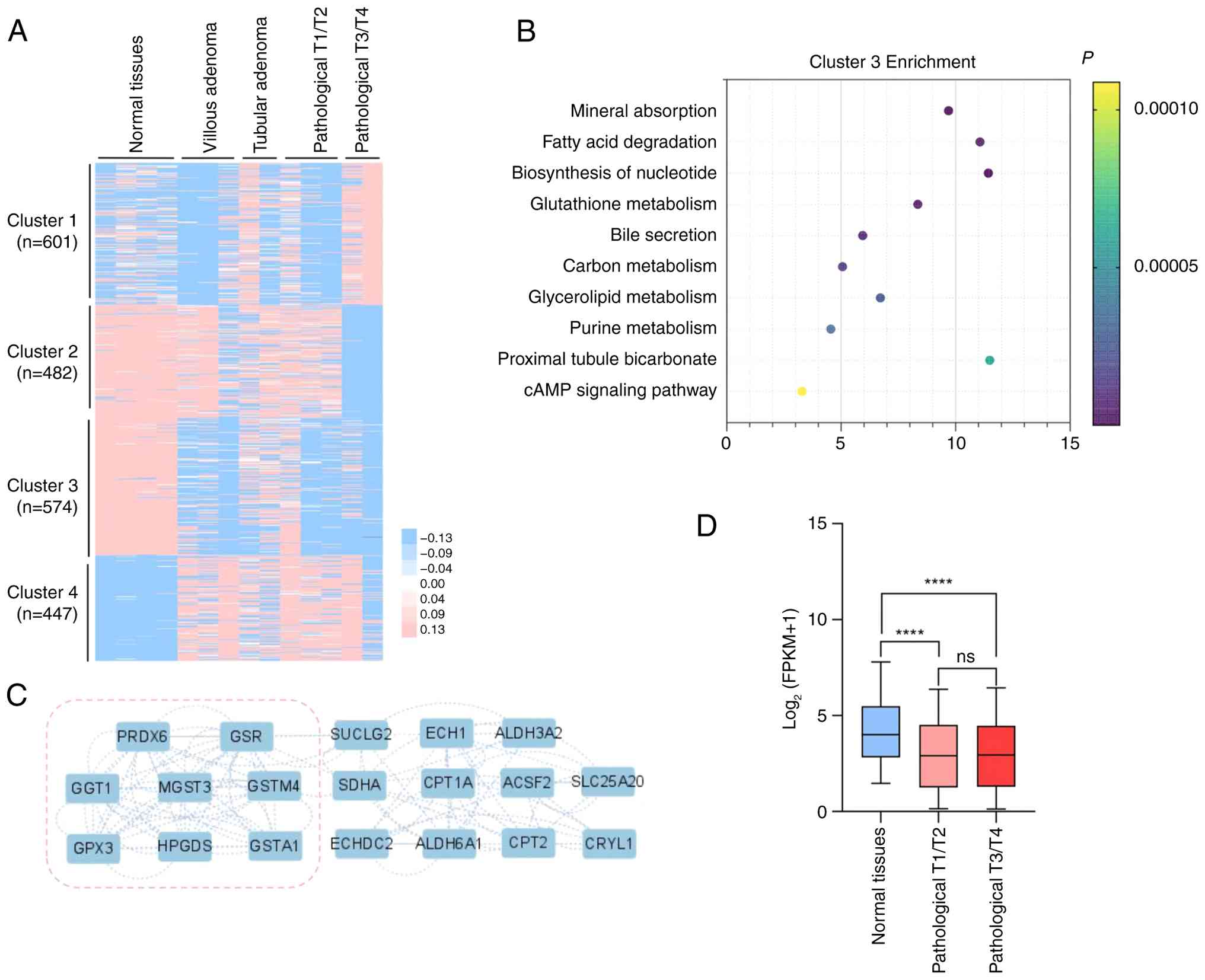
Figure 2

Discovering a gene cluster that has
low expression in colorectal cancer. (A) Four types of clustering
analysis of differentially expressed genes between different
tumors: Adjacent normal tissues (n=4), villous adenoma (n=3),
tubular adenoma (n=2), pathological T1/T2 (n=3) and pathological
T3/T4 (n=2). (B) The top 10 pathways enriched by Kyoto Encyclopedia
of Genes and Genomes clustering analysis of the Cluster 3 genes.
(Fisher's exact test). (C) The molecular interaction network with
the most genes in Cluster 3. The genes within the pink dashed box
represents those enriched in the glutathione pathway. (D)
Differential analysis of normal, pathological T1/T2 tumor and
pathological T3/T4 tumor tissues according to TCGA database
(TCGA-COAD cohort). Data were analyzed using Kruskal-Wallis test
followed by Dunn's multiple comparisons test;
****P<0.0001. ns, not significant; FPKM, fragments
per kilobase of exon model per million mapped fragments; TCGA, The
Cancer Genome Atlas; COAD, colon adenocarcinoma.

Figure 3

Differences in tumor characteristics
and the immune microenvironment in glutathione gene set expression
profiles in The Cancer Genome Atlas-colon adenocarcinoma cohort.
(A) Differences in TMB between the high (n=178) and low (n=179)
glutathione gene set expression samples (two-tailed unpaired
t-test; *P<0.05). (B) Distribution of high and low
glutathione gene set expression across lymphocyte, macrophage,
dendritic cell, mast cell, neutrophil and eosinophil populations
(two-tailed unpaired t-test; ns, not significant;
**P<0.01, ****P<0.0001). (C) Difference
in the EMT scores (gene set: EMTome) between the high (n=236) and
low (n=235) glutathione gene set expression samples (two-tailed
unpaired t-test; ***P<0.001). (D) EMT scores [gene
set: Tan et al (20)]
between high (n=236) and low (n=235) glutathione gene set
expression samples (two-tailed unpaired t-test; ns, not
significant; **P<0.01, ****P<0.0001).
(E) Differences in immune score, estimate comprehensive score and
stromal score between the high (n=236) and low (n=235) glutathione
gene set expression samples. (two-tailed unpaired t-test;
*P<0.05, ***P<0.001). EMT,
epithelial-mesenchymal transition; TMB, tumor mutation burden.

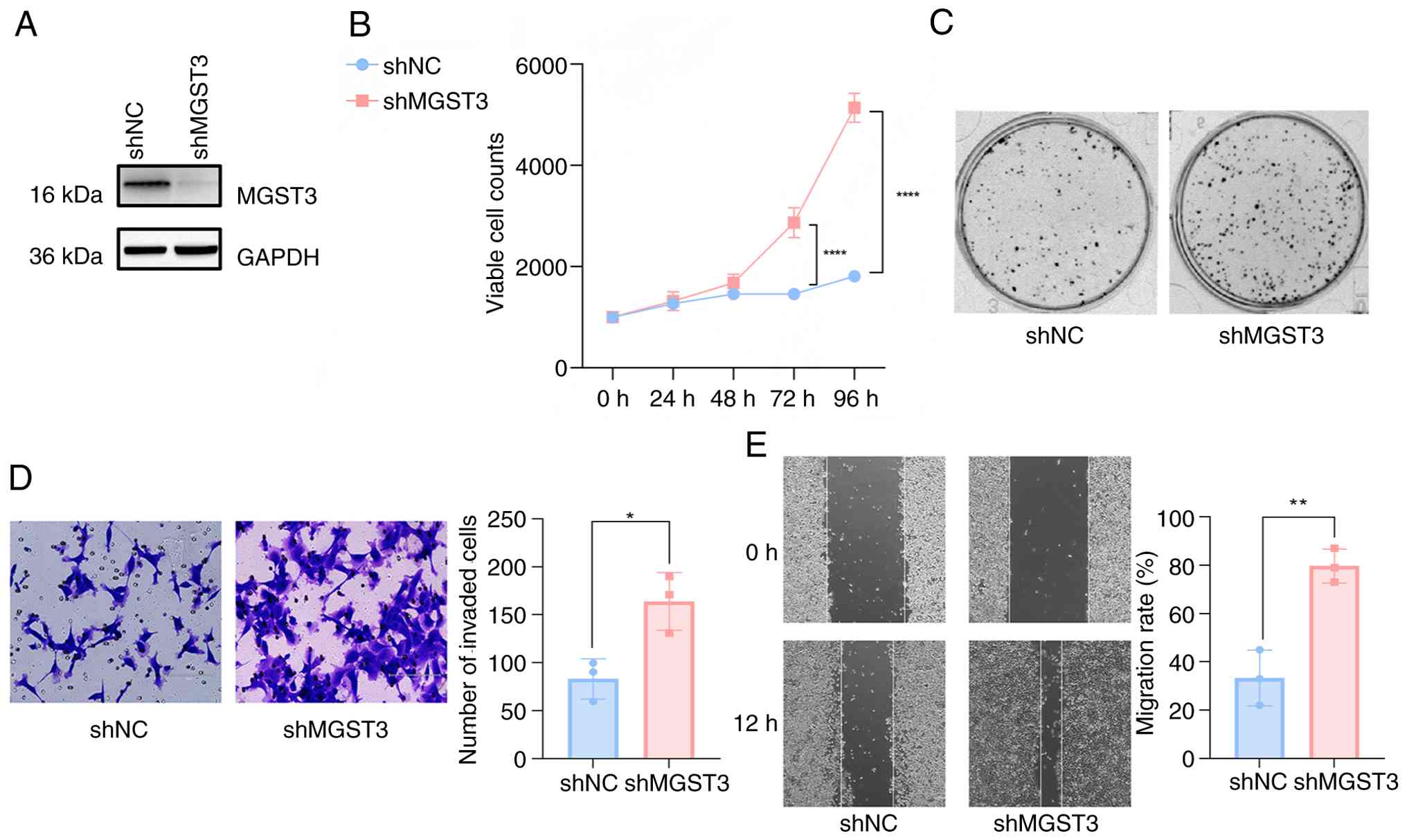
Figure 4

Knockdown of MGST3 promotes cell
proliferation and migration. (A) Protein expression levels were
assessed in NCM460 cell lines following knockdown with shMGST3 or
shNC. (B) Proliferation analysis of shMGST3 and shNC cells. Top:
Cell Counting Kit-8 assay (two-way ANOVA followed by Bonferroni's
multiple comparisons test; ****P<0.0001). (C)
Proliferation analysis of shMGST3 and shNC cells: Colony formation
assay. (D) Migration analysis of shMGST3 and shNC cells: Transwell
assay (magnification, x20). (E) Migration analysis of shMGST3 and
shNC cells: Scratch healing assay (magnification, x4). Two-tailed
unpaired t-test; *P<0.05, **P<0.01.
MGST3, microsomal glutathione S-transferase 3; sh, short hairpin
RNA; NC, negative control.

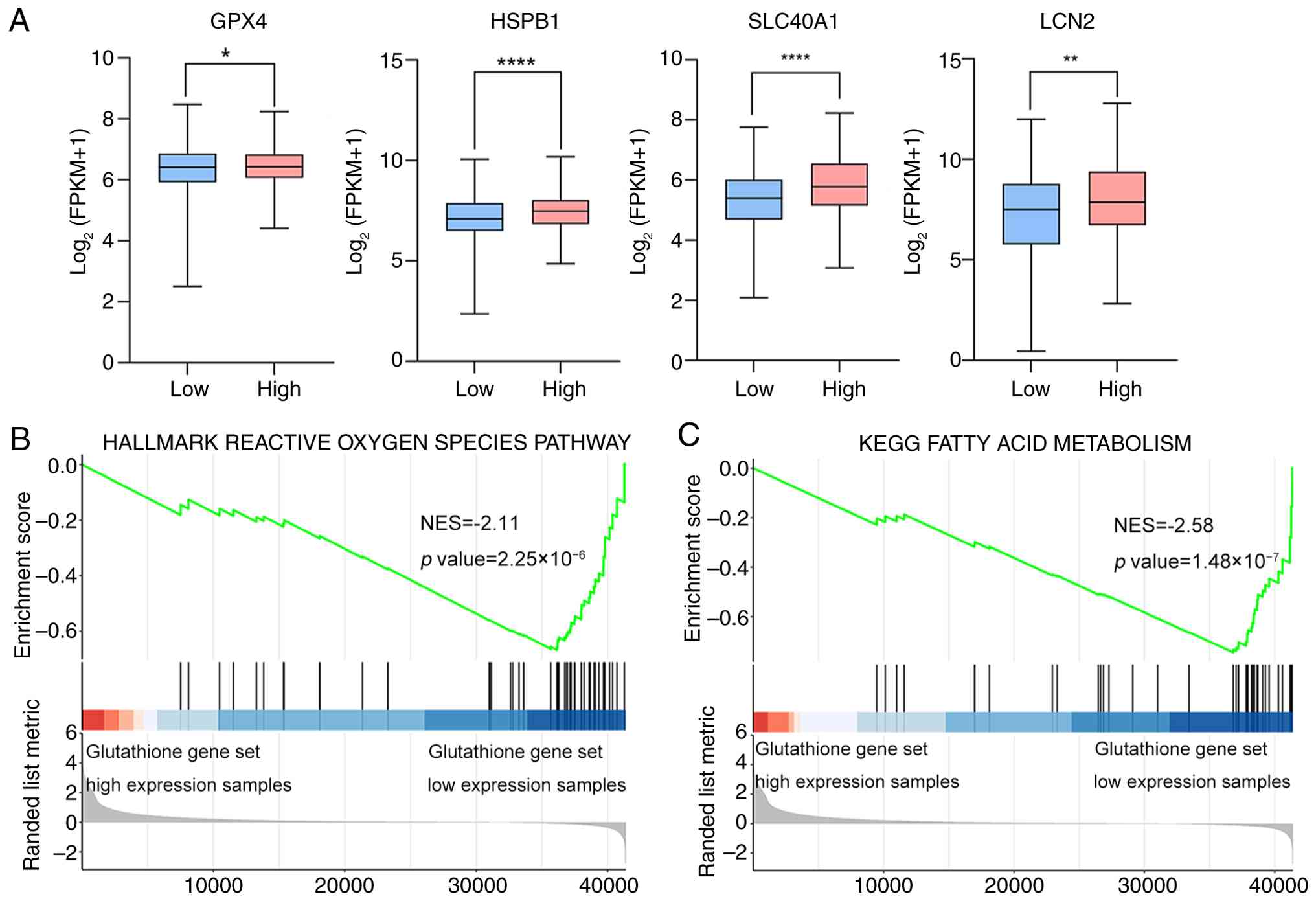
Figure 5

Relationship between the glutathione
gene set dysfunction and ferroptosis. (A) The expression
differences of ferroptosis-related genes in the glutathione gene
set between the low (n=235) and high (n=236) expression samples in
TCGA database (TCGA-COAD cohort) (two-tailed unpaired t-test;
*P<0.05, **P<0.01,
****P<0.0001). (B) The enrichment status of the
glutathione gene set between the low (n=235) and high (n=236)
expression samples in the reactive oxygen species-related gene set
by GSEA analysis. (C) The enrichment status of the glutathione gene
set between the low (n=235) and high (n=236) expression samples in
the fatty acid metabolism gene set by GSEA analysis
(Kolmogorov-Smirnov test). FPKM, fragments per kilobase of exon
model per million mapped fragments; GPX4, glutathione peroxidase 4;
HSPB1, heat shock protein family B (small) member 1; SLC40A1,
solute carrier family 40 member 1; LCN2, lipocalin-2; GSEA, Gene
Set Enrichment Analysis; NES, normalized enrichment score; KEGG,
Kyoto Encyclopedia of Genes and Genomes; TCGA, The Cancer Genome
Atlas; COAD, colon adenocarcinoma.
View References

1 

Siegel RL, Giaquinto AN and Jemal A: Cancer statistics, 2024. CA Cancer J Clin. 74:12–49. 2024.PubMed/NCBI View Article : Google Scholar

2 

Qu R, Ma Y, Zhang Z and Fu W: Increasing burden of colorectal cancer in China. Lancet Gastroenterol Hepatol. 7(700)2022.PubMed/NCBI View Article : Google Scholar

3 

Dantas AAG, de Oliveira NPD, Costa GAB, Martins LFL, Dos Santos JEM, Migowski A, de Camargo Cancela M and de Souza DLB: Multilevel analysis of social determinants of advanced stage colorectal cancer diagnosis. Sci Rep. 14(9667)2024.PubMed/NCBI View Article : Google Scholar

4 

Myers DJ and Arora K: Villous adenoma (Archived). In: StatPearls. StatPearls Publishing, Treasure Island, FL, 2025.

5 

Nguyen LH, Goel A and Chung DC: Pathways of colorectal carcinogenesis. Gastroenterology. 158:291–302. 2020.PubMed/NCBI View Article : Google Scholar

6 

Uno Y, Murayama N, Kunori M and Yamazaki H: Characterization of microsomal glutathione S-transferases MGST1, MGST2, and MGST3 in cynomolgus macaque. Drug Metab Dispos. 41:1621–1625. 2013.PubMed/NCBI View Article : Google Scholar

7 

Bolger AM, Lohse M and Usadel B: Trimmomatic: A flexible trimmer for Illumina sequence data. Bioinformatics. 30:2114–2120. 2014.PubMed/NCBI View Article : Google Scholar

8 

Dobin A, Davis CA, Schlesinger F, Drenkow J, Zaleski C, Jha S, Batut P, Chaisson M and Gingeras TR: STAR: Ultrafast universal RNA-seq aligner. Bioinformatics. 29:15–21. 2013.PubMed/NCBI View Article : Google Scholar

9 

Ghosh S and Chan CK: Analysis of RNA-seq data using tophat and cufflinks. Methods Mol Biol. 1374:339–361. 2016.PubMed/NCBI View Article : Google Scholar

10 

Adan A, Kiraz Y and Baran Y: Cell proliferation and cytotoxicity assays. Curr Pharm Biotechnol. 17:1213–1221. 2016.PubMed/NCBI View Article : Google Scholar

11 

Franken NA, Rodermond HM, Stap J, Haveman J and van Bree C: Clonogenic assay of cells in vitro. Nat Protoc. 1:2315–2319. 2006.PubMed/NCBI View Article : Google Scholar

12 

Liang CC, Park AY and Guan JL: In vitro scratch assay: A convenient and inexpensive method for analysis of cell migration in vitro. Nat Protoc. 2:329–333. 2007.PubMed/NCBI View Article : Google Scholar

13 

Justus CR, Marie MA, Sanderlin EJ and Yang LV: Transwell in vitro cell migration and invasion assays. Methods Mol Biol. 2644:349–359. 2023.PubMed/NCBI View Article : Google Scholar

14 

Mahmood T and Yang PC: Western blot: Technique, theory, and trouble shooting. N Am J Med Sci. 4:429–434. 2012.PubMed/NCBI View Article : Google Scholar

15 

Schubert M, Klinger B, Klünemann M, Sieber A, Uhlitz F, Sauer S, Garnett MJ, Blüthgen N and Saez-Rodriguez J: Perturbation-response genes reveal signaling footprints in cancer gene expression. Nat Commun. 9(20)2018.PubMed/NCBI View Article : Google Scholar

16 

Szklarczyk D, Nastou K, Koutrouli M, Kirsch R, Mehryary F, Hachilif R, Hu D, Peluso ME, Huang Q, Fang T, et al: The STRING database in 2025: protein networks with directionality of regulation. Nucleic Acids Res. 53:D730–D737. 2025.PubMed/NCBI View Article : Google Scholar

17 

Shannon P, Markiel A, Ozier O, Baliga NS, Wang JT, Ramage D, Amin N, Schwikowski B and Ideker T: Cytoscape: A software environment for integrated models of biomolecular interaction networks. Genome Res. 13:2498–2504. 2003.PubMed/NCBI View Article : Google Scholar

18 

Guo X, Liang X, Wang Y, Cheng A, Zhang H, Qin C and Wang Z: Significance of tumor mutation burden combined with immune infiltrates in the progression and prognosis of advanced gastric cancer. Front Genet. 12(642608)2021.PubMed/NCBI View Article : Google Scholar

19 

Mayakonda A, Lin DC, Assenov Y, Plass C and Koeffler HP: Maftools: Efficient and comprehensive analysis of somatic variants in cancer. Genome Res. 28:1747–1756. 2018.PubMed/NCBI View Article : Google Scholar

20 

Tan TZ, Miow QH, Miki Y, Noda T, Mori S, Huang RY and Thiery JP: Epithelial-mesenchymal transition spectrum quantification and its efficacy in deciphering survival and drug responses of cancer patients. EMBO Mol Med. 6:1279–1293. 2014.PubMed/NCBI View Article : Google Scholar

21 

Subramanian A, Tamayo P, Mootha VK, Mukherjee S, Ebert BL, Gillette MA, Paulovich A, Pomeroy SL, Golub TR, Lander ES and Mesirov JP: Gene set enrichment analysis: A knowledge-based approach for interpreting genome-wide expression profiles. Proc Natl Acad Sci USA. 102:15545–15550. 2005.PubMed/NCBI View Article : Google Scholar

22 

Chen B, Khodadoust MS, Liu CL, Newman AM and Alizadeh AA: Profiling tumor infiltrating immune cells with CIBERSORT. Methods Mol Biol. 1711:243–259. 2018.PubMed/NCBI View Article : Google Scholar

23 

Yoshihara K, Shahmoradgoli M, Martínez E, Vegesna R, Kim H, Torres-Garcia W, Treviño V, Shen H, Laird PW, Levine DA, et al: Inferring tumour purity and stromal and immune cell admixture from expression data. Nat Commun. 4(2612)2013.PubMed/NCBI View Article : Google Scholar

24 

Yan H, Talty R and Johnson CH: Targeting ferroptosis to treat colorectal cancer. Trends Cell Biol. 33:185–188. 2023.PubMed/NCBI View Article : Google Scholar

25 

Jardim BV, Moschetta MG, Leonel C, Gelaleti GB, Regiani VR, Ferreira LC, Lopes JR and Zuccari DAPDC: Glutathione and glutathione peroxidase expression in breast cancer: An immunohistochemical and molecular study. Oncol Rep. 30:1119–1128. 2013.PubMed/NCBI View Article : Google Scholar

26 

Inoue T, Ishida T, Sugio K, Maehara Y and Sugimachi K: Glutathione S transferase Pi is a powerful indicator in chemotherapy of human lung squamous-cell carcinoma. Respiration. 62:223–227. 1995.PubMed/NCBI View Article : Google Scholar

27 

Xu H, Hu C, Wang Y, Shi Y, Yuan L, Xu J, Zhang Y, Chen J, Wei Q, Qin J, et al: Glutathione peroxidase 2 knockdown suppresses gastric cancer progression and metastasis via regulation of kynurenine metabolism. Oncogene. 42:1994–2006. 2023.PubMed/NCBI View Article : Google Scholar

28 

Xiao Y and Meierhofer D: Glutathione metabolism in renal cell carcinoma progression and implications for therapies. Int J Mol Sci. 20(3672)2019.PubMed/NCBI View Article : Google Scholar

29 

Sobhakumari A, Love-Homan L, Fletcher EV, Martin SM, Parsons AD, Spitz DR, Knudson CM and Simons AL: Susceptibility of human head and neck cancer cells to combined inhibition of glutathione and thioredoxin metabolism. PLoS One. 7(e48175)2012.PubMed/NCBI View Article : Google Scholar

30 

Schmitt M and Greten FR: The inflammatory pathogenesis of colorectal cancer. Nat Rev Immunol. 21:653–667. 2021.PubMed/NCBI View Article : Google Scholar

31 

Kalluri R and Weinberg RA: The basics of epithelial-mesenchymal transition. J Clin Invest. 119:1420–1428. 2009.PubMed/NCBI View Article : Google Scholar

32 

Bethmann D, Feng Z and Fox BA: Immunoprofiling as a predictor of patient's response to cancer therapy-promises and challenges. Curr Opin Immunol. 45:60–72. 2017.PubMed/NCBI View Article : Google Scholar

33 

Tiwari N, Gheldof A, Tatari M and Christofori G: EMT as the ultimate survival mechanism of cancer cells. Semin Cancer Biol. 22:194–207. 2012.PubMed/NCBI View Article : Google Scholar

34 

Wellenstein MD and de Visser KE: Cancer-cell-intrinsic mechanisms shaping the tumor immune landscape. Immunity. 48:399–416. 2018.PubMed/NCBI View Article : Google Scholar

35 

Mukherjee AG, Wanjari UR, Namachivayam A, Murali R, Prabakaran DS, Ganesan R, Renu K, Dey A, Vellingiri B, Ramanathan G, et al: Role of immune cells and receptors in cancer treatment: An immunotherapeutic approach. Vaccines (Basel). 10(1493)2022.PubMed/NCBI View Article : Google Scholar

36 

Mazari AMA, Zhang L, Ye ZW, Zhang J, Tew KD and Townsend DM: The multifaceted role of glutathione S-transferases in health and disease. Biomolecules. 13(688)2023.PubMed/NCBI View Article : Google Scholar

37 

Moyer MP, Manzano LA, Merriman RL, Stauffer JS and Tanzer LR: NCM460, a normal human colon mucosal epithelial cell line. In Vitro Cell Dev Biol Anim. 32:315–317. 1996.PubMed/NCBI View Article : Google Scholar

38 

Xue X, Wang M, Cui J, Yang M, Ma L, Kang R, Tang D and Wang J: Glutathione metabolism in ferroptosis and cancer therapy. Cancer Lett. 621(217697)2025.PubMed/NCBI View Article : Google Scholar

39 

Ma T, Du J, Zhang Y, Wang Y, Wang B and Zhang T: GPX4-independent ferroptosis-a new strategy in disease's therapy. Cell Death Discov. 8(434)2022.PubMed/NCBI View Article : Google Scholar

40 

Sun X, Ou Z, Xie M, Kang R, Fan Y, Niu X, Wang H, Cao L and Tang D: HSPB1 as a novel regulator of ferroptotic cancer cell death. Oncogene. 34:5617–5625. 2015.PubMed/NCBI View Article : Google Scholar

41 

Zhang Y, Zou L, Li X, Guo L, Hu B, Ye H and Liu Y: SLC40A1 in iron metabolism, ferroptosis, and disease: A review. WIREs Mech Dis. 16(e1644)2024.PubMed/NCBI View Article : Google Scholar

42 

Chaudhary N, Choudhary BS, Shah SG, Khapare N, Dwivedi N, Gaikwad A, Joshi N, Raichanna J, Basu S, Gurjar M, et al: Lipocalin 2 expression promotes tumor progression and therapy resistance by inhibiting ferroptosis in colorectal cancer. Int J Cancer. 149:1495–1511. 2021.PubMed/NCBI View Article : Google Scholar

43 

Klusek J, Głuszek S and Klusek J: GST gene polymorphisms and the risk of colorectal cancer development. Contemp Oncol (Pozn). 18:219–221. 2014.PubMed/NCBI View Article : Google Scholar

44 

Xie Z, Kawasaki T, Zhou H, Okuzaki D, Okada N and Tachibana M: Targeting GGT1 eliminates the tumor-promoting effect and enhanced immunosuppressive function of myeloid-derived suppressor cells caused by G-CSF. Front Pharmacol. 13(873792)2022.PubMed/NCBI View Article : Google Scholar

45 

Chen J, Wu Y, Zhou Q, Song Y, Zhuang J, Lu K and Yang X: GPX3 is a key cholesterol-related gene associated with prognosis and tumor-infiltrating T cells in colorectal cancer. Neoplasma. 70(230704N348)2023.PubMed/NCBI View Article : Google Scholar

46 

Lagal DJ, Montes-Osuna AM, Ortiz-Olivencia A, Arribas-Parejas C, Ortiz-Alcántara Á, Pescuezo-Castillo C, Bárcena JA, Padilla CA and Requejo-Aguilar R: Tumoral malignancy decreases coupled with higher ROS and lipid peroxidation in HCT116 Colon cancer cells upon loss of PRDX6. Antioxidants (Basel). 13(881)2024.PubMed/NCBI View Article : Google Scholar

47 

Merino DM, McShane LM, Fabrizio D, Funari V, Chen SJ, White JR, Wenz P, Baden J, Barrett JC, Chaudhary R, et al: Establishing guidelines to harmonize tumor mutational burden (TMB): In silico assessment of variation in TMB quantification across diagnostic platforms: Phase I of the friends of cancer research TMB harmonization project. J ImmunoTher Cancer. 8(e000147)2020.PubMed/NCBI View Article : Google Scholar

48 

Sha D, Jin Z, Budczies J, Kluck K, Stenzinger A and Sinicrope FA: Tumor mutational burden as a predictive biomarker in solid tumors. Cancer Discov. 10:1808–1825. 2020.PubMed/NCBI View Article : Google Scholar

49 

Zgura A, Chipuc S, Bacalbasa N, Haineala B, Rodica A and Sebastian V: Evaluating tumour mutational burden as a key biomarker in personalized cancer immunotherapy: A Pan-cancer systematic review. Cancers (Basel). 17(480)2025.PubMed/NCBI View Article : Google Scholar

50 

Kim ES, Velcheti V, Mekhail T, Yun C, Shagan SM, Hu S, Chae YK, Leal TA, Dowell JE, Tsai ML, et al: Blood-based tumor mutational burden as a biomarker for atezolizumab in non-small cell lung cancer: The phase 2 B-F1RST trial. Nat Med. 28:939–945. 2022.PubMed/NCBI View Article : Google Scholar

51 

Addeo A, Friedlaender A, Banna GL and Weiss GJ: TMB or not TMB as a biomarker: That is the question. Crit Rev Oncol/Hematol. 163(103374)2021.PubMed/NCBI View Article : Google Scholar

52 

Brabletz T, Kalluri R, Nieto MA and Weinberg RA: EMT in cancer. Nat Rev Cancer. 18:128–134. 2018.PubMed/NCBI View Article : Google Scholar

53 

Kim DH, Xing T, Yang Z, Dudek R, Lu Q and Chen YH: Epithelial mesenchymal transition in embryonic development, tissue repair and cancer: A comprehensive overview. J Clin Med. 7(1)2017.PubMed/NCBI View Article : Google Scholar

54 

Atreya I and Neurath MF: Immune cells in colorectal cancer: Prognostic relevance and therapeutic strategies. Expert Rev Anticancer Ther. 8:561–572. 2008.PubMed/NCBI View Article : Google Scholar

55 

Ye L, Zhang T, Kang Z, Guo G, Sun Y, Lin K, Huang Q, Shi X, Ni Z, Ding N, et al: Tumor-infiltrating immune cells act as a marker for prognosis in colorectal cancer. Front Immunol. 10(2368)2019.PubMed/NCBI View Article : Google Scholar

56 

Nguyen A, Loo JM, Mital R, Weinberg EM, Man FY, Zeng Z, Paty PB, Saltz L, Janjigian YY, de Stanchina E and Tavazoie SF: PKLR promotes colorectal cancer liver colonization through induction of glutathione synthesis. J Clin Investig. 126:681–694. 2016.PubMed/NCBI View Article : Google Scholar

57 

Endale HT, Tesfaye W and Mengstie TA: ROS induced lipid peroxidation and their role in ferroptosis. Front Cell Dev Biol. 11(1226044)2023.PubMed/NCBI View Article : Google Scholar

58 

Li S, Tao K, Yun H, Yang J, Meng Y, Zhang F and Ma X: Ferroptosis is a protective factor for the prognosis of cancer patients: A systematic review and meta-analysis. BMC Cancer. 24(604)2024.PubMed/NCBI View Article : Google Scholar

59 

Liebl MC and Hofmann TG: The role of p53 signaling in colorectal cancer. Cancers (Basel). 13(2125)2021.PubMed/NCBI View Article : Google Scholar

60 

Xie Y, Zhu S, Song X, Sun X, Fan Y, Liu J, Zhong M, Yuan H, Zhang L, Billiar TR, et al: The tumor suppressor p53 limits ferroptosis by blocking DPP4 activity. Cell Rep. 20:1692–1704. 2017.PubMed/NCBI View Article : Google Scholar

61 

Yang L, WenTao T, ZhiYuan Z, Qi L, YuXiang L, Peng Z, Ke L, XiaoNa J, YuZhi P, MeiLing J, et al: Cullin-9/p53 mediates HNRNPC degradation to inhibit erastin-induced ferroptosis and is blocked by MDM2 inhibition in colorectal cancer. Oncogene. 41:3210–3221. 2022.PubMed/NCBI View Article : Google Scholar

Related Articles

  • Abstract
  • View
  • Download
  • Twitter
Copy and paste a formatted citation
Spandidos Publications style
Wu Y, Fan C, Zhou J, Huang F, Zhang Y, He Y and Wang J: Downregulation of MGST3 promotes colorectal cancer progression. Mol Clin Oncol 24: 29, 2026.
APA
Wu, Y., Fan, C., Zhou, J., Huang, F., Zhang, Y., He, Y., & Wang, J. (2026). Downregulation of MGST3 promotes colorectal cancer progression. Molecular and Clinical Oncology, 24, 29. https://doi.org/10.3892/mco.2026.2938
MLA
Wu, Y., Fan, C., Zhou, J., Huang, F., Zhang, Y., He, Y., Wang, J."Downregulation of MGST3 promotes colorectal cancer progression". Molecular and Clinical Oncology 24.5 (2026): 29.
Chicago
Wu, Y., Fan, C., Zhou, J., Huang, F., Zhang, Y., He, Y., Wang, J."Downregulation of MGST3 promotes colorectal cancer progression". Molecular and Clinical Oncology 24, no. 5 (2026): 29. https://doi.org/10.3892/mco.2026.2938
Copy and paste a formatted citation
x
Spandidos Publications style
Wu Y, Fan C, Zhou J, Huang F, Zhang Y, He Y and Wang J: Downregulation of MGST3 promotes colorectal cancer progression. Mol Clin Oncol 24: 29, 2026.
APA
Wu, Y., Fan, C., Zhou, J., Huang, F., Zhang, Y., He, Y., & Wang, J. (2026). Downregulation of MGST3 promotes colorectal cancer progression. Molecular and Clinical Oncology, 24, 29. https://doi.org/10.3892/mco.2026.2938
MLA
Wu, Y., Fan, C., Zhou, J., Huang, F., Zhang, Y., He, Y., Wang, J."Downregulation of MGST3 promotes colorectal cancer progression". Molecular and Clinical Oncology 24.5 (2026): 29.
Chicago
Wu, Y., Fan, C., Zhou, J., Huang, F., Zhang, Y., He, Y., Wang, J."Downregulation of MGST3 promotes colorectal cancer progression". Molecular and Clinical Oncology 24, no. 5 (2026): 29. https://doi.org/10.3892/mco.2026.2938
Follow us
  • Twitter
  • LinkedIn
  • Facebook
About
  • Spandidos Publications
  • Careers
  • Cookie Policy
  • Privacy Policy
How can we help?
  • Help
  • Live Chat
  • Contact
  • Email to our Support Team