Spandidos Publications Logo
  • About
    • About Spandidos
    • Aims and Scopes
    • Abstracting and Indexing
    • Editorial Policies
    • Reprints and Permissions
    • Job Opportunities
    • Terms and Conditions
    • Contact
  • Journals
    • All Journals
    • Oncology Letters
      • Oncology Letters
      • Information for Authors
      • Editorial Policies
      • Editorial Board
      • Aims and Scope
      • Abstracting and Indexing
      • Bibliographic Information
      • Archive
    • International Journal of Oncology
      • International Journal of Oncology
      • Information for Authors
      • Editorial Policies
      • Editorial Board
      • Aims and Scope
      • Abstracting and Indexing
      • Bibliographic Information
      • Archive
    • Molecular and Clinical Oncology
      • Molecular and Clinical Oncology
      • Information for Authors
      • Editorial Policies
      • Editorial Board
      • Aims and Scope
      • Abstracting and Indexing
      • Bibliographic Information
      • Archive
    • Experimental and Therapeutic Medicine
      • Experimental and Therapeutic Medicine
      • Information for Authors
      • Editorial Policies
      • Editorial Board
      • Aims and Scope
      • Abstracting and Indexing
      • Bibliographic Information
      • Archive
    • International Journal of Molecular Medicine
      • International Journal of Molecular Medicine
      • Information for Authors
      • Editorial Policies
      • Editorial Board
      • Aims and Scope
      • Abstracting and Indexing
      • Bibliographic Information
      • Archive
    • Biomedical Reports
      • Biomedical Reports
      • Information for Authors
      • Editorial Policies
      • Editorial Board
      • Aims and Scope
      • Abstracting and Indexing
      • Bibliographic Information
      • Archive
    • Oncology Reports
      • Oncology Reports
      • Information for Authors
      • Editorial Policies
      • Editorial Board
      • Aims and Scope
      • Abstracting and Indexing
      • Bibliographic Information
      • Archive
    • Molecular Medicine Reports
      • Molecular Medicine Reports
      • Information for Authors
      • Editorial Policies
      • Editorial Board
      • Aims and Scope
      • Abstracting and Indexing
      • Bibliographic Information
      • Archive
    • World Academy of Sciences Journal
      • World Academy of Sciences Journal
      • Information for Authors
      • Editorial Policies
      • Editorial Board
      • Aims and Scope
      • Abstracting and Indexing
      • Bibliographic Information
      • Archive
    • International Journal of Functional Nutrition
      • International Journal of Functional Nutrition
      • Information for Authors
      • Editorial Policies
      • Editorial Board
      • Aims and Scope
      • Abstracting and Indexing
      • Bibliographic Information
      • Archive
    • International Journal of Epigenetics
      • International Journal of Epigenetics
      • Information for Authors
      • Editorial Policies
      • Editorial Board
      • Aims and Scope
      • Abstracting and Indexing
      • Bibliographic Information
      • Archive
    • Medicine International
      • Medicine International
      • Information for Authors
      • Editorial Policies
      • Editorial Board
      • Aims and Scope
      • Abstracting and Indexing
      • Bibliographic Information
      • Archive
  • Articles
  • Information
    • Information for Authors
    • Information for Reviewers
    • Information for Librarians
    • Information for Advertisers
    • Conferences
  • Language Editing
Spandidos Publications Logo
  • About
    • About Spandidos
    • Aims and Scopes
    • Abstracting and Indexing
    • Editorial Policies
    • Reprints and Permissions
    • Job Opportunities
    • Terms and Conditions
    • Contact
  • Journals
    • All Journals
    • Biomedical Reports
      • Information for Authors
      • Editorial Policies
      • Editorial Board
      • Aims and Scope
      • Abstracting and Indexing
      • Bibliographic Information
      • Archive
    • Experimental and Therapeutic Medicine
      • Information for Authors
      • Editorial Policies
      • Editorial Board
      • Aims and Scope
      • Abstracting and Indexing
      • Bibliographic Information
      • Archive
    • International Journal of Epigenetics
      • Information for Authors
      • Editorial Policies
      • Editorial Board
      • Aims and Scope
      • Abstracting and Indexing
      • Bibliographic Information
      • Archive
    • International Journal of Functional Nutrition
      • Information for Authors
      • Editorial Policies
      • Editorial Board
      • Aims and Scope
      • Abstracting and Indexing
      • Bibliographic Information
      • Archive
    • International Journal of Molecular Medicine
      • Information for Authors
      • Editorial Policies
      • Editorial Board
      • Aims and Scope
      • Abstracting and Indexing
      • Bibliographic Information
      • Archive
    • International Journal of Oncology
      • Information for Authors
      • Editorial Policies
      • Editorial Board
      • Aims and Scope
      • Abstracting and Indexing
      • Bibliographic Information
      • Archive
    • Medicine International
      • Information for Authors
      • Editorial Policies
      • Editorial Board
      • Aims and Scope
      • Abstracting and Indexing
      • Bibliographic Information
      • Archive
    • Molecular and Clinical Oncology
      • Information for Authors
      • Editorial Policies
      • Editorial Board
      • Aims and Scope
      • Abstracting and Indexing
      • Bibliographic Information
      • Archive
    • Molecular Medicine Reports
      • Information for Authors
      • Editorial Policies
      • Editorial Board
      • Aims and Scope
      • Abstracting and Indexing
      • Bibliographic Information
      • Archive
    • Oncology Letters
      • Information for Authors
      • Editorial Policies
      • Editorial Board
      • Aims and Scope
      • Abstracting and Indexing
      • Bibliographic Information
      • Archive
    • Oncology Reports
      • Information for Authors
      • Editorial Policies
      • Editorial Board
      • Aims and Scope
      • Abstracting and Indexing
      • Bibliographic Information
      • Archive
    • World Academy of Sciences Journal
      • Information for Authors
      • Editorial Policies
      • Editorial Board
      • Aims and Scope
      • Abstracting and Indexing
      • Bibliographic Information
      • Archive
  • Articles
  • Information
    • For Authors
    • For Reviewers
    • For Librarians
    • For Advertisers
    • Conferences
  • Language Editing
Login Register Submit
  • This site uses cookies
  • You can change your cookie settings at any time by following the instructions in our Cookie Policy. To find out more, you may read our Privacy Policy.

    I agree
Search articles by DOI, keyword, author or affiliation
Search
Advanced Search
presentation
Medicine International
Join Editorial Board Propose a Special Issue
Print ISSN: 2754-3242 Online ISSN: 2754-1304
Journal Cover
March-April 2022 Volume 2 Issue 2

Full Size Image

Sign up for eToc alerts
Recommend to Library

Journals

International Journal of Molecular Medicine

International Journal of Molecular Medicine

International Journal of Molecular Medicine is an international journal devoted to molecular mechanisms of human disease.

International Journal of Oncology

International Journal of Oncology

International Journal of Oncology is an international journal devoted to oncology research and cancer treatment.

Molecular Medicine Reports

Molecular Medicine Reports

Covers molecular medicine topics such as pharmacology, pathology, genetics, neuroscience, infectious diseases, molecular cardiology, and molecular surgery.

Oncology Reports

Oncology Reports

Oncology Reports is an international journal devoted to fundamental and applied research in Oncology.

Experimental and Therapeutic Medicine

Experimental and Therapeutic Medicine

Experimental and Therapeutic Medicine is an international journal devoted to laboratory and clinical medicine.

Oncology Letters

Oncology Letters

Oncology Letters is an international journal devoted to Experimental and Clinical Oncology.

Biomedical Reports

Biomedical Reports

Explores a wide range of biological and medical fields, including pharmacology, genetics, microbiology, neuroscience, and molecular cardiology.

Molecular and Clinical Oncology

Molecular and Clinical Oncology

International journal addressing all aspects of oncology research, from tumorigenesis and oncogenes to chemotherapy and metastasis.

World Academy of Sciences Journal

World Academy of Sciences Journal

Multidisciplinary open-access journal spanning biochemistry, genetics, neuroscience, environmental health, and synthetic biology.

International Journal of Functional Nutrition

International Journal of Functional Nutrition

Open-access journal combining biochemistry, pharmacology, immunology, and genetics to advance health through functional nutrition.

International Journal of Epigenetics

International Journal of Epigenetics

Publishes open-access research on using epigenetics to advance understanding and treatment of human disease.

Medicine International

Medicine International

An International Open Access Journal Devoted to General Medicine.

Journal Cover
March-April 2022 Volume 2 Issue 2

Full Size Image

Sign up for eToc alerts
Recommend to Library

  • Article
  • Citations
    • Cite This Article
    • Download Citation
    • Create Citation Alert
    • Remove Citation Alert
    • Cited By
  • Similar Articles
    • Related Articles (in Spandidos Publications)
    • Similar Articles (Google Scholar)
    • Similar Articles (PubMed)
  • Download PDF
  • Download XML
  • View XML
Case Report Open Access

Superior mesenteric artery syndrome following esophageal cancer surgery: A report of two cases and a literature review

  • Authors:
    • Yun Zhou
    • Zhi-Liang Yang
    • Zheng Wang
  • View Affiliations / Copyright

    Affiliations: Department of Cardiothoracic Surgery and Abdominal Hernia Surgery, The People's Hospital of Kai Zhou District, Chongqing 405400, P.R. China, Department of Cardiothoracic Surgery and Abdominal Hernia Surgery, The People's Hospital of Kai Zhou District, Chongqing 405400, P.R. China
    Copyright: © Zhou et al. This is an open access article distributed under the terms of Creative Commons Attribution License.
  • Article Number: 10
    |
    Published online on: March 17, 2022
       https://doi.org/10.3892/mi.2022.35
  • Expand metrics +
Metrics: Total Views: 0 (Spandidos Publications: | PMC Statistics: )
Metrics: Total PDF Downloads: 0 (Spandidos Publications: | PMC Statistics: )
Cited By (CrossRef): 0 citations Loading Articles...

This article is mentioned in:


Abstract

The present study describes two cases of superior mesenteric artery syndrome (SMAS) which occurred following esophageal cancer surgery. The first case was that of a 68‑year‑old woman who underwent left sided trans‑thoracic esophagectomy for esophageal squamous cell carcinoma. Specific symptoms, including bloating and postprandial vomiting, firstly appeared repeatedly 1 week following surgery. She was diagnosed with SMAS using a barium swallow (upper gastrointestinal series), and the symptoms did not improve following nutritional support treatment. Finally, the symptoms were relieved following a duodenojejunostomy. The second case involved a 66‑year‑old woman who underwent radical esophageal cancer resection. At 4 years after the surgery, the patient developed abdominal distension and postprandial vomiting. She was diagnosed with SMAS, again using an upper gastrointestinal series. Her symptoms were relieved following parenteral nutrition support. SMAS is a rare disease characterized by abdominal distension and vomiting. It is similar to the gastrointestinal manifestations caused by anastomotic stenosis and gastrointestinal reconstruction following esophageal cancer surgery, and it may also prompt thoracic surgeons to ignore the diagnosis of SMAS. Therefore, the possibility of SMAS occurrence in patients who have undergone radical esophageal cancer surgery, should be taken into consideration if they experience gastrointestinal symptoms, including abdominal distension and vomiting, following a rapid weight loss.

Introduction

Superior mesenteric artery (SMA) syndrome (SMAS) is a rare gastrointestinal disease, initially having been reported in 1842. Wilkie (1) reported the disease in more detail in 1927. Based on this report, SMAS has been termed as ‘Wilkie's syndrome’. The angle between the aorta and SMA of a normal individual ranges from 38˚ to 56˚. A mesenteric fat pad is present within this angle to relieve compression. SMAS occurs when this angle becomes narrow due to various reasons, including gastrointestinal dyskinesia, malabsorption, peritoneal adhesions and corrective surgery for spinal diseases, leading to the oppression of the distal end of the duodenum (2). Patients usually present with symptoms similar to intestinal obstruction, including abdominal distension and frequent vomiting (3). Frequent vomiting and the loss of digestive juices may lead to further weight loss and aggravated duodenal compression, resulting in the formation of a continuous cycle of severe symptoms. This syndrome is usually related to certain anatomical variations, including a weak body type, shortening of the Treitz ligament, a higher physiological position of the duodenum and an abnormally low position of the SMA (4). The risk factors which have been reported include gastrointestinal dyskinesia, malabsorption, peritoneal adhesion, and corrective surgery for spinal diseases (2).

SMAS can be caused by aortomesenteric angle reduction. In patients presenting with abdominal pain, nausea, anorexia, weight loss and vomiting, the diagnosis of SMA syndrome should be considered (5). The diagnostic criteria for SMA include an aortomesenteric angle <20˚ and a aortomesenteric distance <8 mm with gastric and proximal duodenal dilatation (6). The typical barium swallow (upper gastrointestinal series) of SMAS reveals abrupt or nearly total cessation of the barium flow from the duodenum to the jejunum (7). Nutritional support treatment leads to a higher rate of symptom relief. In a previous study, in a modern case series of 22 children managed for SMAS, the symptom relief rate of non-surgical treatment was 86% (8). Weight gain may increase fat in the mesenteric fat pad, covering the third part of the duodenum to relieve duodenal compression (9). Early surgery should be considered for patients who have failed nutritional support treatment. Surgical options include the lysis of the Treitz ligament, gastrojejunostomy or duodenojejunostomy (5,10-13).

The present study describes two cases of SMAS which occurred following esophageal cancer surgery and describes the symptoms presented and the treatments used. It is hoped that the findings presented herein may aid in the treatment of other similar cases in the future.

Case report

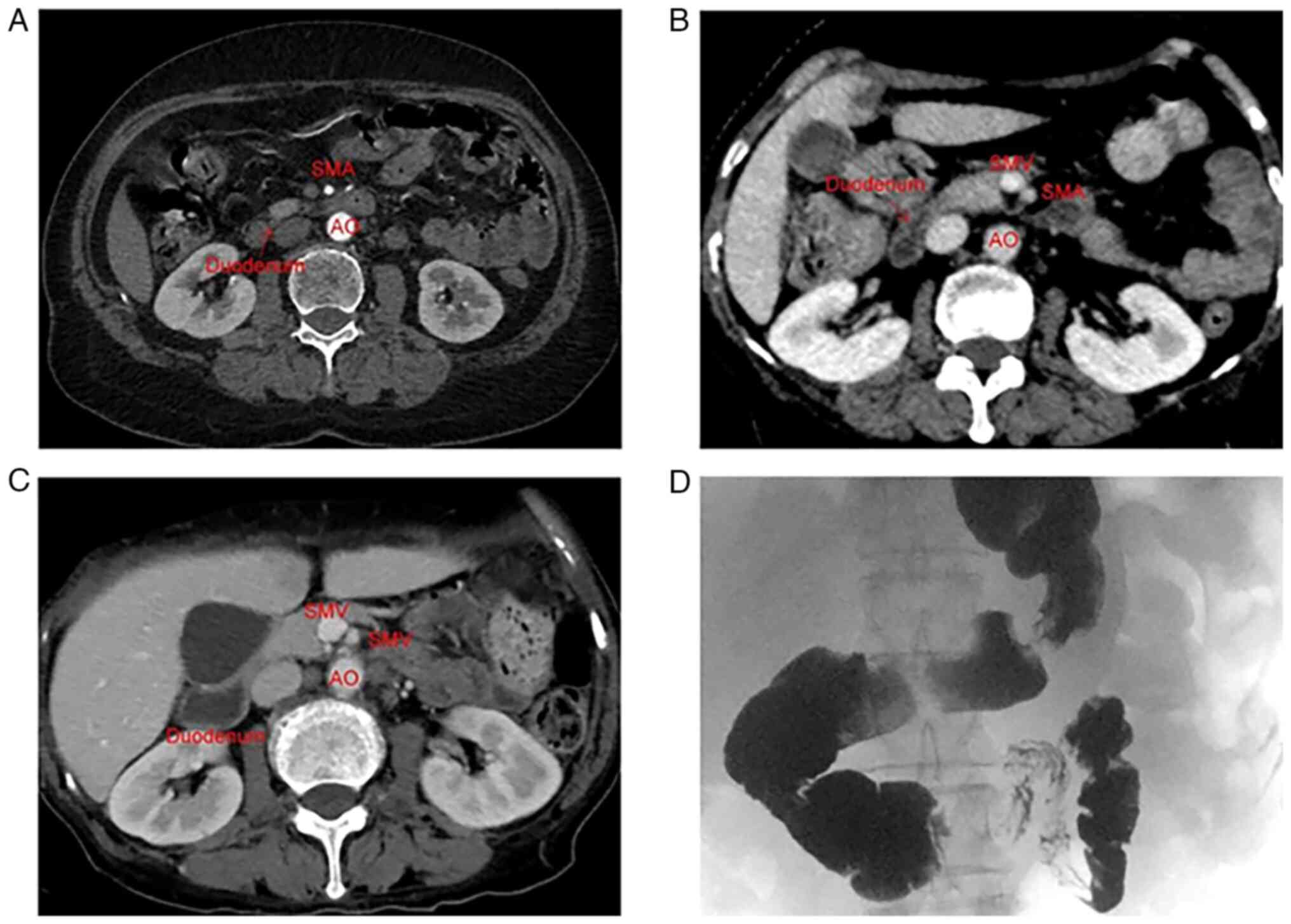
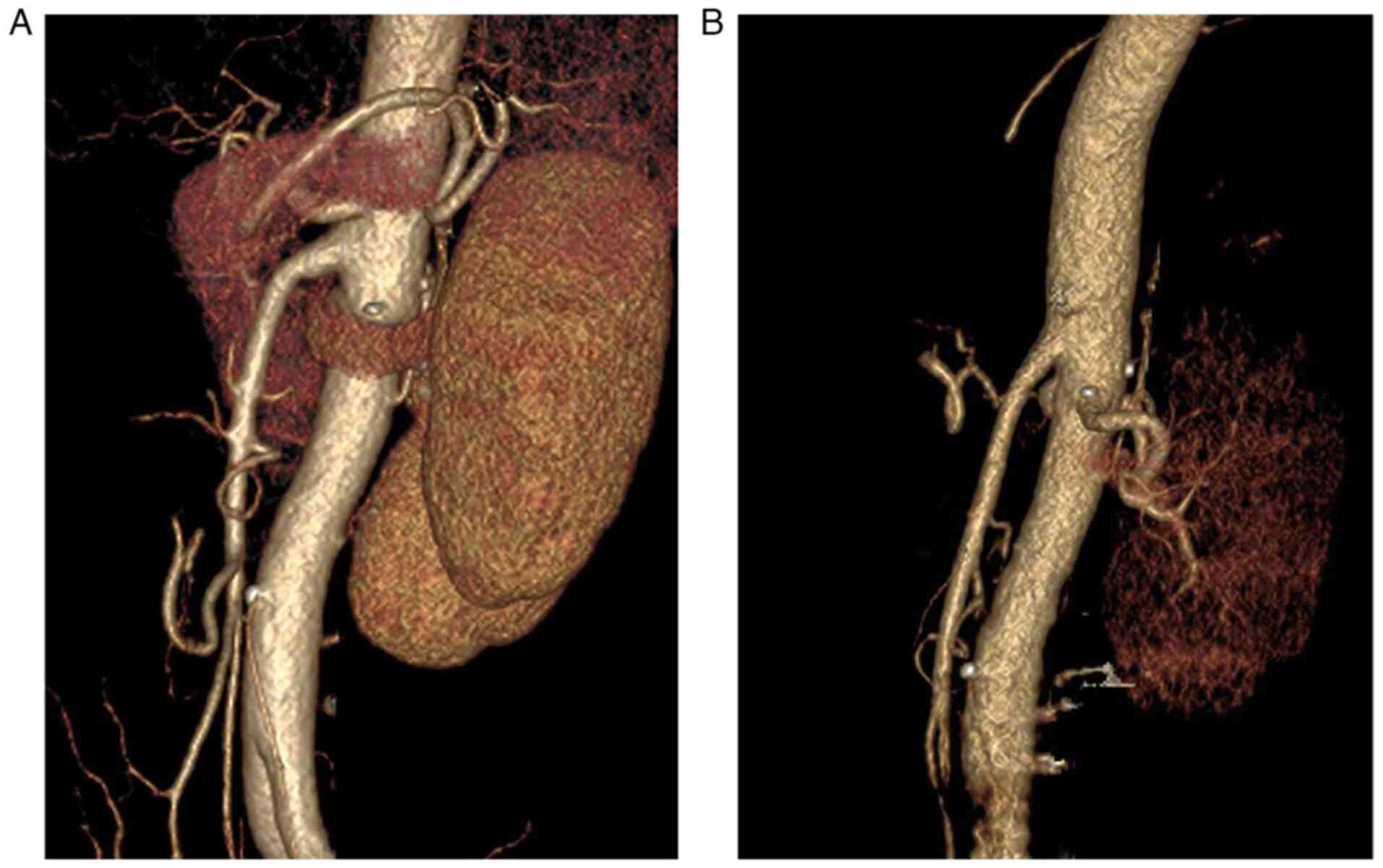
The first case included a 68-year-old female patient who was diagnosed with squamous cell carcinoma, due to weight loss (4 kg) and intermittent dysphagia. The computerized tomography (CT) scan (PHILIPS Brilliance 64) of the abdomen prior to surgery did not reveal any abnormalities (Figs. 1A and 2A). Surgical resection of the esophageal cancer was performed by trans-left thoracic esophagectomy at the People's Hospital of Kai Zhou District on January 26, 2021. The post-operative pathological examination revealed moderately differentiated esophageal squamous cell carcinoma. The pathological stage was determined as T3N0M0.

Figure 1

(A) A pre-operative enhanced CT scan of the abdomen indicates no apparent compression in the horizontal section of the duodenum (January 22, 2021). (B) An abdominal contrast-enhanced CT scan indicates beak-like stenosis at the distal end of the duodenum. The distance between the SMA and the abdominal aorta is estimated to be 11.8 mm (March 11, 2021). (C) The enhanced CT scan of the abdomen indicates that the distance between the SMA and the abdominal aorta is reduced further, and the horizontal segment of the duodenum is significantly compressed (May 15, 2021). (D) The barium swallow (upper gastrointestinal series) indicated that the descending part of the duodenum was dilated and longitudinal indentations with smooth and neat edges were noted in the horizontal part (May 15, 2021). CT, computerized tomography; SMA, superior mesenteric artery; SMV, superior mesenteric vein; AO, abdominal aorta.

Figure 2

(A) Three-dimensional reconstruction of abdominal blood vessels prior to surgery (January 22, 2021). (B) Three-dimensional reconstruction of abdominal blood vessels following the operation indicates that the angle between the superior mesenteric artery and the abdominal aorta was significantly reduced (May 15, 2021).

An esophageal lipiodol angiography confirmed the absence of esophagogastric anastomotic fistula on post-operative day 7. Therefore, the patient began drinking water and receiving oral liquid food; however, the patient also presented with a poor appetite and exhibited satiety following the consumption of only a limited portion of food. On the 10th day after surgery, the patient began to complain of symptoms of acid reflux and belching, which became more apparent following food consumption. These symptoms were not relieved after the administration of mosapride and omeprazole. The patient developed symptoms of bloating and frequent vomiting within a few minutes to half an hour after eating on post-operative day 13. Initially, it was considered that these symptoms were caused by post-operative gastroparesis and the patient was asked to suspend oral intake. The patient underwent a CT scan of the abdomen on post-operative day 16 (Fig. 1B), and no apparent abnormalities were observed. Following 7 days of parenteral nutritional support, the patient's vomiting symptoms gradually subsided and she was discharged on the 20th day post-surgery. The patient's pre-operative body mass index (BMI) was 25.5 kg/m2, which was decreased to 20.8 kg/m2 at the time of discharge.

During the first few months after the surgery, the patient repeatedly experienced a series of symptoms, including abdominal distension, vomiting and loss of appetite. Therefore, she received parenteral nutrition treatment at our department several times. Due to repeated hospitalizations, she was examined using barium swallow (upper gastrointestinal series) and an enhanced CT scan of the abdomen was performed on May 15, 2021, which indicated an apparent duodenal compression (Figs. 1C and D, and 2B). Therefore, the diagnosis of SMAS was confirmed. Since the symptoms of bloating and vomiting were not relieved following nutritional support, the patient underwent a duodenojejunostomy on May 20, 2021. During the surgery, the proximal duodenal bowel of the SMA was dilated, whereas the distal intestinal tube was free and smooth, indicating that the duodenum was compressed by the SMA. Following post-operative nutritional support, the symptoms of vomiting and abdominal distension were relieved. She was discharged 2 weeks after the surgery, having a BMI of 23.5 kg/m2.

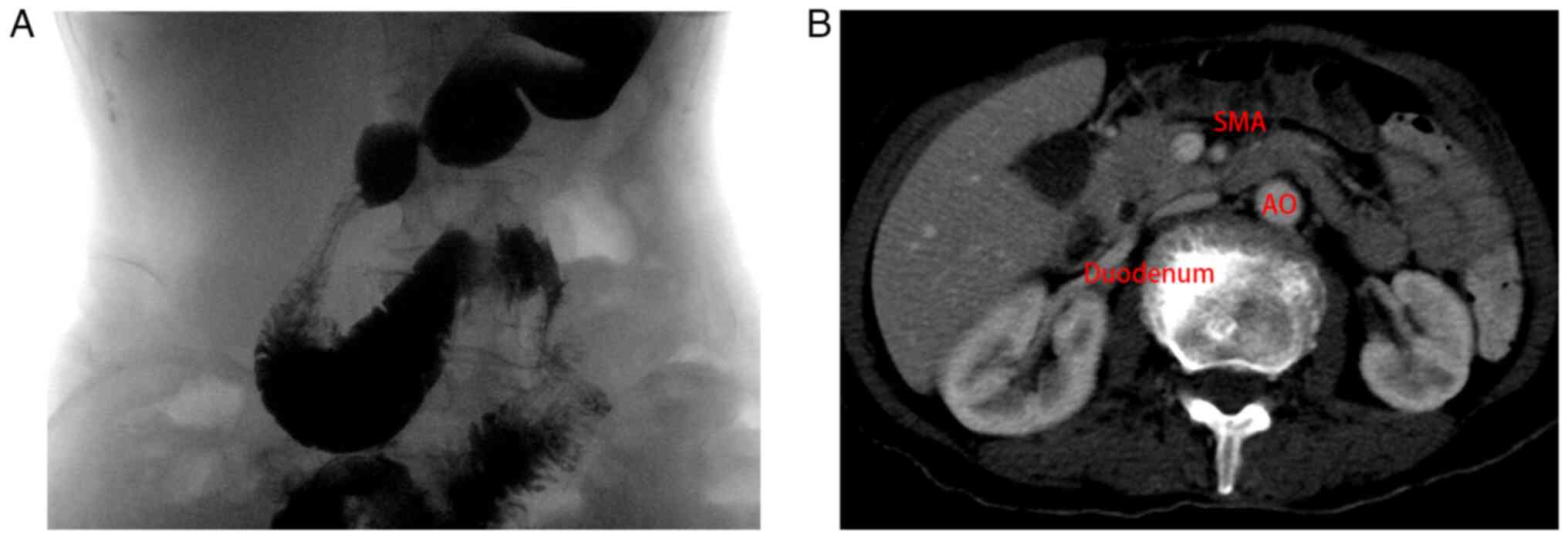
The second case included a 66-year-old female patient who underwent radical esophageal cancer surgery four years ago. She did not receive systemic chemotherapy following the surgery, and other detailed surgical information was not available. The post-operative pathological examination revealed moderately differentiated esophageal squamous cell carcinoma. The pathological stage was determined as T2N0M0. At 1 month prior to admission to our hospital, the patient exhibited abdominal distension and intermittent vomiting without apparent cause. The symptoms did not resolve spontaneously during that time, and she was admitted to our hospital for further treatment. Following admission to the hospital, the patient underwent barium swallow (upper gastrointestinal series) (Fig. 3), which indicated that the third part of the duodenum was compressed, and the enhanced CT scan of the abdomen revealed that the proximal duodenal bowel of SMA was dilated. She was diagnosed with SMAS due to her typical clinical symptoms and specific imaging studies. Following 11 days of nutritional support, the symptoms of vomiting and abdominal distension were relieved. At 1 week after being discharged from the hospital, the patient's vomiting or abdominal distension after eating was completely relieved, and the current BMI has increased from 17.9 kg/m2 at admission to 19.2 kg/m2.

Figure 3

(A) Barium swallow (upper gastrointestinal series) indicate the proximal dilation of the horizontal part of the duodenum and the longitudinal compression marks with smooth edges at the distal end. (B) The enhanced computerized tomography scan of the abdomen demonstrates that the proximal duodenal bowel of SMA was dilated. SMA, superior mesenteric artery; AO, abdominal aorta.

Discussion

In the first case of the present case report, the most frequently used duodenal-jejunal anastomosis was used. On the 7th day following operation, the patient had his stomach tube removed and started eating. The symptoms of bloating and vomiting were significantly relieved. A duodenojejunostomy involves an end-to-side anastomosis between the duodenum and jejunum, bypassing the SMA and reducing compression. It has been reported that the symptom relief rate of duodenojejunostomy reaches 90% (14). The symptoms of the second patient were relieved by providing nutritional support treatment for 11 days.

No standard guidelines have been reported regarding the indications for surgery in this rare syndrome. In the second case, the patient's symptoms were gradually relieved after 11 days of parenteral nutrition treatment. It is considered that conservative treatment for patients with mild SMAS can be extended to 4 weeks. During treatment, oral enteral nutrition preparations can be attempted (15). When vomiting and abdominal distension are relieved, enteral and parenteral nutrition can be performed simultaneously. If the patient presents with severe abdominal distension, frequent vomiting, electrolyte balance disorder, or the symptoms of conservative treatment for a long period of time without relief, early surgical intervention should be considered. By contrast, for those patients with esophageal cancer and severe preoperative nutritional impairment, long-term eating difficulties, and/or in elderly patients, post-operative prefabricated jejunostomy may be used to reduce the incidence of SMAS. However, the risk of prefabricated jejunostomy must be carefully evaluated prior to the surgery.

SMAS is a rare disease encountered in clinical practice and it is even rarer in patients undergoing radical resection of esophageal cancer combined with SMAS. The authors believe that the main reasons for this include the following: i) The typical symptoms of milder SMAS are similar to the gastrointestinal symptoms of gastrointestinal reconstruction, following esophageal cancer resection; ii) routine examinations, including esophageal iodine contrast, chest and abdomen CT scans, and electronic gastroscopy exhibit decreased sensitivity in disease diagnosis; and iii) the severe obstructive symptoms of SMAS are similar to the symptoms of viscous intestinal obstructions, which may mislead the attending physician. Both patients reported in the present study underwent several CT scans, esophageal lipiodol and electronic gastroscopy. The SMAS of these two patients was not diagnosed at an early stage by multiple examinations, prolonging the treatment period and hospital stay. The early diagnosis of esophageal cancer is difficult. The slow progress of eating obstruction in patients with esophageal cancer may lead to a poor nutritional status, and the radical resection of esophageal cancer requires the removal of the majority of the stomach and the repositioning of the stomach into the thoracic cavity, which may result in an upward displacement of the horizontal part of the duodenum. Those processes may also cause SMAS.

In conclusion, the diagnosis of SMAS should be considered in patients following esophagectomy who have a poor oral intake and present with bloating, vomiting and other gastrointestinal obstructions.

Acknowledgements

Not applicable.

Funding

Funding: No funding was received.

Availability of data and materials

Not applicable.

Authors' contributions

YZ and ZLY designed the study and drafted the initial manuscript. ZLY and ZW collected the original data and information. YZ and ZLY confirm the authenticity of all the raw data. All authors have read and approved the final manuscript.

Ethics approval and consent to participate

The patients described herein provided their consent for their inclusion in the present case report, and written consent was obtained and stored electronically as a PDF.

Patient consent for publication

The patients provided their consent for the publication of personal data, and written consent was obtained and stored electronically as a PDF.

Competing interests

The authors declare that they have no competing interests.

References

1 

Wilkie DP: Chronic duodenal ileus. Br J Surg. 9:204–214. 1921.

2 

Diab S and Hayek F: Combined superior mesenteric artery syndrome and nutcracker syndrome in a young patient: A case report and review of the literature. Am J Case Rep. 21(e922619)2020.PubMed/NCBI View Article : Google Scholar

3 

Baltazar U, Dunn J, Floresguerra C, Schmidt L and Browder W: Superior mesenteric artery syndrome: An uncommon cause of intestinal obstruction. South Med J. 93:606–608. 2000.PubMed/NCBI

4 

Rai RR, Shah S, Palliyil NS, Dalvie S and Shah R: Superior mesenteric artery syndrome complicating spinal deformity correction surgery a case report and review of the literature. JBJS Case Connect. 9(e0497)2019.PubMed/NCBI View Article : Google Scholar

5 

Merrett ND, Wilson RB, Cosman P and Biankin AV: Superior mesenteric artery syndrome: Diagnosis and treatment strategies. J Gastrointest Surg. 13:287–292. 2009.PubMed/NCBI View Article : Google Scholar

6 

Hines JR, Gore RM and Ballantyne GH: Superior mesenteric artery syndrome. Diagnostic criteria and therapeutic approaches. Am J Surg. 148:630–632. 1984.PubMed/NCBI View Article : Google Scholar

7 

Reckler JM, Bruck HM, Munster AM, Curreri PW and Pruitt BA Jr: Superior mesenteric artery syndrome as a consequence of burn injury. J Trauma. 12:979–985. 1972.PubMed/NCBI View Article : Google Scholar

8 

Biank V and Werlin S: Superior mesenteric artery syndrome in children: A 20-year experience. J Pediatr Gastroenterol Nutr. 42:522–525. 2006.PubMed/NCBI View Article : Google Scholar

9 

Sun Z, Rodriguez J, McMichael J, Walsh RM, Chalikonda S, Rosenthal RJ, Kroh MD and El-Hayek K: Minimally invasive duodenojejunostomy for superior mesenteric artery syndrome: A case series and review of the literature. Surg Endosc. 29:1137–1144. 2015.PubMed/NCBI View Article : Google Scholar

10 

Wilson-Storey D and MacKinlay GA: The superior mesenteric artery syndrome. J R Coll Surg Edinb. 31:175–178. 1986.PubMed/NCBI

11 

Yao SY, Mikami R and Mikami S: Minimally invasive surgery for superior mesenteric artery syndrome: A case report. World J Gastroenterol. 21:12970–12975. 2015.PubMed/NCBI View Article : Google Scholar

12 

Strong EK: Mechanics of arteriomesentric duodenal obstruction and direct surgical attack upon etiology. Ann Surg. 148:725–730. 1958.PubMed/NCBI View Article : Google Scholar

13 

Ha CD, Alvear DT and Leber DC: Duodenal derotation as an effective treatment of superior mesenteric artery syndrome: A thirty-three-year experience. Am Surg. 74:644–653. 2008.PubMed/NCBI

14 

Morris TC, Devitt PG and Thompson SK: Laparoscopic duodenojejunostomy for superior mesenteric artery syndrome-how I do it. J Gastrointest Surg. 13:1870–1873. 2009.PubMed/NCBI View Article : Google Scholar

15 

Sinagra E, Raimondo D, Albano D, Guarnotta V, Blasco M, Testai S, Marasà M, Mastrella V, Alaimo V, Bova V, et al: Superior mesenteric artery syndrome: Clinical, endoscopic, and radiological findings. Gastroenterol Res Pract. 2018(1937416)2018.PubMed/NCBI View Article : Google Scholar

Related Articles

  • Abstract
  • View
  • Download
Copy and paste a formatted citation
Spandidos Publications style
Zhou Y, Yang Z and Wang Z: Superior mesenteric artery syndrome following esophageal cancer surgery: A report of two cases and a literature review. Med Int 2: 10, 2022.
APA
Zhou, Y., Yang, Z., & Wang, Z. (2022). Superior mesenteric artery syndrome following esophageal cancer surgery: A report of two cases and a literature review. Medicine International, 2, 10. https://doi.org/10.3892/mi.2022.35
MLA
Zhou, Y., Yang, Z., Wang, Z."Superior mesenteric artery syndrome following esophageal cancer surgery: A report of two cases and a literature review". Medicine International 2.2 (2022): 10.
Chicago
Zhou, Y., Yang, Z., Wang, Z."Superior mesenteric artery syndrome following esophageal cancer surgery: A report of two cases and a literature review". Medicine International 2, no. 2 (2022): 10. https://doi.org/10.3892/mi.2022.35
Copy and paste a formatted citation
x
Spandidos Publications style
Zhou Y, Yang Z and Wang Z: Superior mesenteric artery syndrome following esophageal cancer surgery: A report of two cases and a literature review. Med Int 2: 10, 2022.
APA
Zhou, Y., Yang, Z., & Wang, Z. (2022). Superior mesenteric artery syndrome following esophageal cancer surgery: A report of two cases and a literature review. Medicine International, 2, 10. https://doi.org/10.3892/mi.2022.35
MLA
Zhou, Y., Yang, Z., Wang, Z."Superior mesenteric artery syndrome following esophageal cancer surgery: A report of two cases and a literature review". Medicine International 2.2 (2022): 10.
Chicago
Zhou, Y., Yang, Z., Wang, Z."Superior mesenteric artery syndrome following esophageal cancer surgery: A report of two cases and a literature review". Medicine International 2, no. 2 (2022): 10. https://doi.org/10.3892/mi.2022.35
Follow us
  • Twitter
  • LinkedIn
  • Facebook
About
  • Spandidos Publications
  • Careers
  • Cookie Policy
  • Privacy Policy
How can we help?
  • Help
  • Live Chat
  • Contact
  • Email to our Support Team