Spandidos Publications Logo
  • About
    • About Spandidos
    • Aims and Scopes
    • Abstracting and Indexing
    • Editorial Policies
    • Reprints and Permissions
    • Job Opportunities
    • Terms and Conditions
    • Contact
  • Journals
    • All Journals
    • Oncology Letters
      • Oncology Letters
      • Information for Authors
      • Editorial Policies
      • Editorial Board
      • Aims and Scope
      • Abstracting and Indexing
      • Bibliographic Information
      • Archive
    • International Journal of Oncology
      • International Journal of Oncology
      • Information for Authors
      • Editorial Policies
      • Editorial Board
      • Aims and Scope
      • Abstracting and Indexing
      • Bibliographic Information
      • Archive
    • Molecular and Clinical Oncology
      • Molecular and Clinical Oncology
      • Information for Authors
      • Editorial Policies
      • Editorial Board
      • Aims and Scope
      • Abstracting and Indexing
      • Bibliographic Information
      • Archive
    • Experimental and Therapeutic Medicine
      • Experimental and Therapeutic Medicine
      • Information for Authors
      • Editorial Policies
      • Editorial Board
      • Aims and Scope
      • Abstracting and Indexing
      • Bibliographic Information
      • Archive
    • International Journal of Molecular Medicine
      • International Journal of Molecular Medicine
      • Information for Authors
      • Editorial Policies
      • Editorial Board
      • Aims and Scope
      • Abstracting and Indexing
      • Bibliographic Information
      • Archive
    • Biomedical Reports
      • Biomedical Reports
      • Information for Authors
      • Editorial Policies
      • Editorial Board
      • Aims and Scope
      • Abstracting and Indexing
      • Bibliographic Information
      • Archive
    • Oncology Reports
      • Oncology Reports
      • Information for Authors
      • Editorial Policies
      • Editorial Board
      • Aims and Scope
      • Abstracting and Indexing
      • Bibliographic Information
      • Archive
    • Molecular Medicine Reports
      • Molecular Medicine Reports
      • Information for Authors
      • Editorial Policies
      • Editorial Board
      • Aims and Scope
      • Abstracting and Indexing
      • Bibliographic Information
      • Archive
    • World Academy of Sciences Journal
      • World Academy of Sciences Journal
      • Information for Authors
      • Editorial Policies
      • Editorial Board
      • Aims and Scope
      • Abstracting and Indexing
      • Bibliographic Information
      • Archive
    • International Journal of Functional Nutrition
      • International Journal of Functional Nutrition
      • Information for Authors
      • Editorial Policies
      • Editorial Board
      • Aims and Scope
      • Abstracting and Indexing
      • Bibliographic Information
      • Archive
    • International Journal of Epigenetics
      • International Journal of Epigenetics
      • Information for Authors
      • Editorial Policies
      • Editorial Board
      • Aims and Scope
      • Abstracting and Indexing
      • Bibliographic Information
      • Archive
    • Medicine International
      • Medicine International
      • Information for Authors
      • Editorial Policies
      • Editorial Board
      • Aims and Scope
      • Abstracting and Indexing
      • Bibliographic Information
      • Archive
  • Articles
  • Information
    • Information for Authors
    • Information for Reviewers
    • Information for Librarians
    • Information for Advertisers
    • Conferences
  • Language Editing
Spandidos Publications Logo
  • About
    • About Spandidos
    • Aims and Scopes
    • Abstracting and Indexing
    • Editorial Policies
    • Reprints and Permissions
    • Job Opportunities
    • Terms and Conditions
    • Contact
  • Journals
    • All Journals
    • Biomedical Reports
      • Information for Authors
      • Editorial Policies
      • Editorial Board
      • Aims and Scope
      • Abstracting and Indexing
      • Bibliographic Information
      • Archive
    • Experimental and Therapeutic Medicine
      • Information for Authors
      • Editorial Policies
      • Editorial Board
      • Aims and Scope
      • Abstracting and Indexing
      • Bibliographic Information
      • Archive
    • International Journal of Epigenetics
      • Information for Authors
      • Editorial Policies
      • Editorial Board
      • Aims and Scope
      • Abstracting and Indexing
      • Bibliographic Information
      • Archive
    • International Journal of Functional Nutrition
      • Information for Authors
      • Editorial Policies
      • Editorial Board
      • Aims and Scope
      • Abstracting and Indexing
      • Bibliographic Information
      • Archive
    • International Journal of Molecular Medicine
      • Information for Authors
      • Editorial Policies
      • Editorial Board
      • Aims and Scope
      • Abstracting and Indexing
      • Bibliographic Information
      • Archive
    • International Journal of Oncology
      • Information for Authors
      • Editorial Policies
      • Editorial Board
      • Aims and Scope
      • Abstracting and Indexing
      • Bibliographic Information
      • Archive
    • Medicine International
      • Information for Authors
      • Editorial Policies
      • Editorial Board
      • Aims and Scope
      • Abstracting and Indexing
      • Bibliographic Information
      • Archive
    • Molecular and Clinical Oncology
      • Information for Authors
      • Editorial Policies
      • Editorial Board
      • Aims and Scope
      • Abstracting and Indexing
      • Bibliographic Information
      • Archive
    • Molecular Medicine Reports
      • Information for Authors
      • Editorial Policies
      • Editorial Board
      • Aims and Scope
      • Abstracting and Indexing
      • Bibliographic Information
      • Archive
    • Oncology Letters
      • Information for Authors
      • Editorial Policies
      • Editorial Board
      • Aims and Scope
      • Abstracting and Indexing
      • Bibliographic Information
      • Archive
    • Oncology Reports
      • Information for Authors
      • Editorial Policies
      • Editorial Board
      • Aims and Scope
      • Abstracting and Indexing
      • Bibliographic Information
      • Archive
    • World Academy of Sciences Journal
      • Information for Authors
      • Editorial Policies
      • Editorial Board
      • Aims and Scope
      • Abstracting and Indexing
      • Bibliographic Information
      • Archive
  • Articles
  • Information
    • For Authors
    • For Reviewers
    • For Librarians
    • For Advertisers
    • Conferences
  • Language Editing
Login Register Submit
  • This site uses cookies
  • You can change your cookie settings at any time by following the instructions in our Cookie Policy. To find out more, you may read our Privacy Policy.

    I agree
Search articles by DOI, keyword, author or affiliation
Search
Advanced Search
presentation
Medicine International
Join Editorial Board Propose a Special Issue
Print ISSN: 2754-3242 Online ISSN: 2754-1304
Journal Cover
September-October 2026 Volume 6 Issue 5

Full Size Image

Sign up for eToc alerts
Recommend to Library

Journals

International Journal of Molecular Medicine

International Journal of Molecular Medicine

International Journal of Molecular Medicine is an international journal devoted to molecular mechanisms of human disease.

International Journal of Oncology

International Journal of Oncology

International Journal of Oncology is an international journal devoted to oncology research and cancer treatment.

Molecular Medicine Reports

Molecular Medicine Reports

Covers molecular medicine topics such as pharmacology, pathology, genetics, neuroscience, infectious diseases, molecular cardiology, and molecular surgery.

Oncology Reports

Oncology Reports

Oncology Reports is an international journal devoted to fundamental and applied research in Oncology.

Experimental and Therapeutic Medicine

Experimental and Therapeutic Medicine

Experimental and Therapeutic Medicine is an international journal devoted to laboratory and clinical medicine.

Oncology Letters

Oncology Letters

Oncology Letters is an international journal devoted to Experimental and Clinical Oncology.

Biomedical Reports

Biomedical Reports

Explores a wide range of biological and medical fields, including pharmacology, genetics, microbiology, neuroscience, and molecular cardiology.

Molecular and Clinical Oncology

Molecular and Clinical Oncology

International journal addressing all aspects of oncology research, from tumorigenesis and oncogenes to chemotherapy and metastasis.

World Academy of Sciences Journal

World Academy of Sciences Journal

Multidisciplinary open-access journal spanning biochemistry, genetics, neuroscience, environmental health, and synthetic biology.

International Journal of Functional Nutrition

International Journal of Functional Nutrition

Open-access journal combining biochemistry, pharmacology, immunology, and genetics to advance health through functional nutrition.

International Journal of Epigenetics

International Journal of Epigenetics

Publishes open-access research on using epigenetics to advance understanding and treatment of human disease.

Medicine International

Medicine International

An International Open Access Journal Devoted to General Medicine.

Journal Cover
September-October 2026 Volume 6 Issue 5

Full Size Image

Sign up for eToc alerts
Recommend to Library

  • Article
  • Citations
    • Cite This Article
    • Download Citation
    • Create Citation Alert
    • Remove Citation Alert
    • Cited By
  • Similar Articles
    • Related Articles (in Spandidos Publications)
    • Similar Articles (Google Scholar)
    • Similar Articles (PubMed)
  • Download PDF
  • Download XML
  • View XML
Article Open Access

Salinomycin is effective for clinically relevant radioresistant oral squamous cell carcinoma cancer cells and their cancer stem cell marker positive fraction

  • Authors:
    • Ryo Saga
    • Yoichiro Hosokawa
    • Manabu Fukumoto
  • View Affiliations / Copyright

    Affiliations: Department of Radiation Science, Hirosaki University Graduate School of Health Sciences, Hirosaki, Aomori 036‑8564, Japan, Department of Rehabilitation Science, Hirosaki University of Health and Welfare, Hirosaki, Aomori 036‑8102, Japan, Radiological Disasters and Medical Science Laboratory, Disaster Medical Science Division, International Research Institute of Disaster Science, Tohoku University, Sendai, Miyagi 980‑8572, Japan
    Copyright: © Saga et al. This is an open access article distributed under the terms of Creative Commons Attribution License [CC BY 4.0].
  • Article Number: 51
    |
    Published online on: August 11, 2026
       https://doi.org/10.3892/mi.2026.335
  • Expand metrics +
Metrics: Total Views: 0 (Spandidos Publications: | PMC Statistics: )
Metrics: Total PDF Downloads: 0 (Spandidos Publications: | PMC Statistics: )
Cited By (CrossRef): 0 citations Loading Articles...

This article is mentioned in:


Abstract

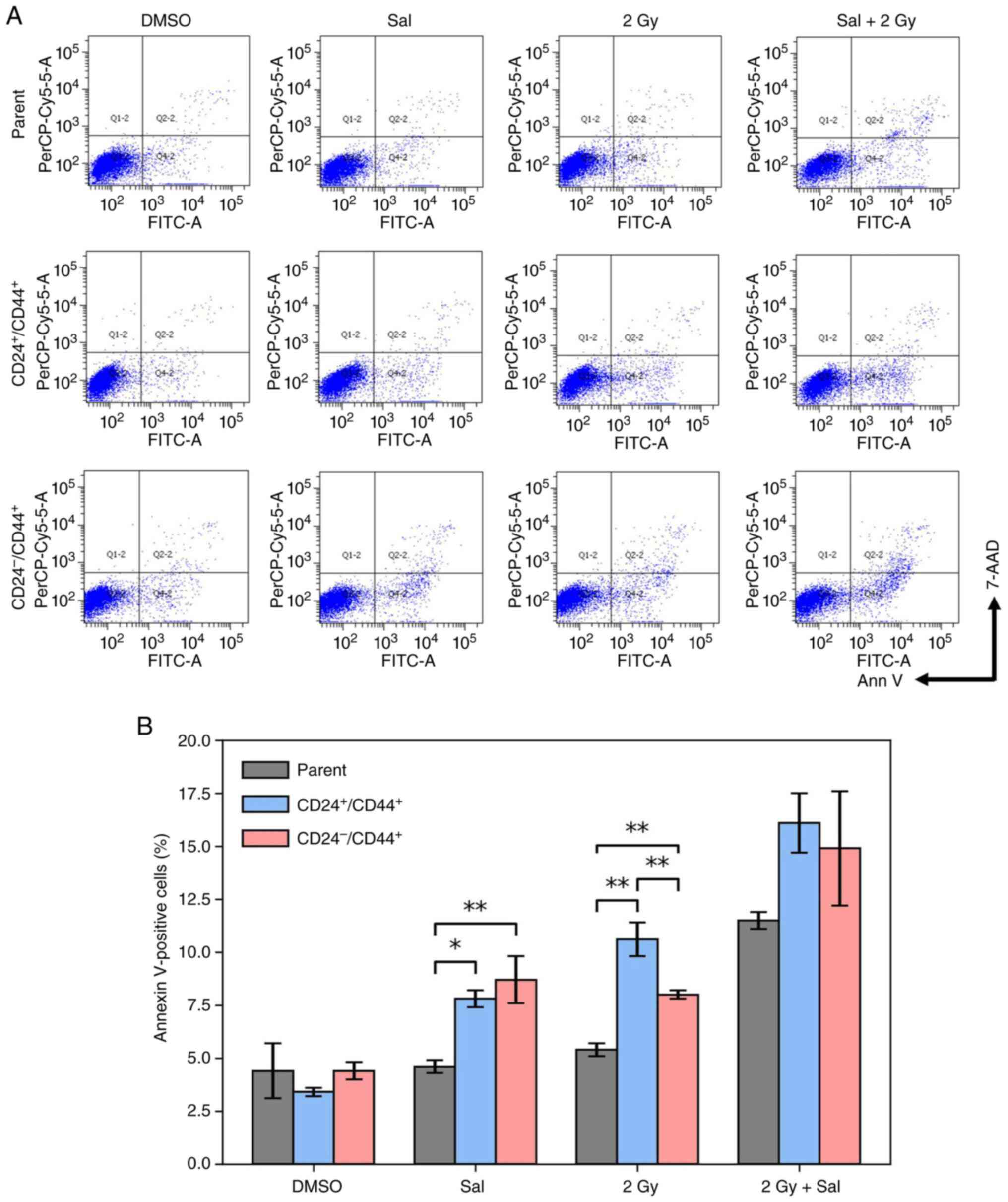
Numerous patients with cancer experience metastasis, recurrence and resistance to chemotherapy and radiotherapy due to the presence of cancer stem cells (CSCs). Salinomycin (Sal) is a candidate for CSC‑targeting therapy and may consequently sensitize tumors to radiation. Therefore, the present study investigated whether Sal can alleviate radioresistance using a clinically relevant radioresistant cell line and sorted CSC‑like cells. The human oral squamous carcinoma cell line, SAS, and its radioresistant counterpart, SAS‑R, were used. The fraction of CD24‑/CD44+ cells was identified in the CSC‑like cell population and that of CD24+/CD44+ cells was in identified in the non‑CSC‑like counterparts. These were sorted from the SAS cells. Clonogenic potency was evaluated using a colony formation assay. The positive fractions of CSC markers (CD24 and CD44) and the number of apoptotic SAS and SAS‑R cells were measured using flow cytometry. The percentage of the CD24+/CD44+ fraction in the SAS‑R cells was lower than that in the SAS cells, whereas the CD24‑/CD44+ population was higher in the SAS‑R cells than in the SAS cells. The Sal concentration‑dependent decrease in the cell surviving fraction was more rapid in the SAS‑R cells than in the SAS cells (IC50 values: 0.250 and 0.332 µM, respectively). The fraction of CD24‑/CD44+ cells exhibited a greater radioresistance than the parent SAS cells and the fraction of CD24+/CD44+ cells. Moreover, the surviving fraction of CD24‑/CD44+ cells was significantly reduced by treatment with 0.3 µM Sal. The addition of Sal increased the number of apoptotic cells compared to 2 Gy radiation alone. On the whole, the present study indicates that Sal is effective in killing the radioresistant population in SAS cells, which comprise a large proportion of CSCs in oral cancer, that is, the CD24‑/CD44+ fraction. Furthermore, clinically relevant radioresistant cells (SAS‑R) are sensitive to Sal; therefore, further investigations are necessary.
View Figures

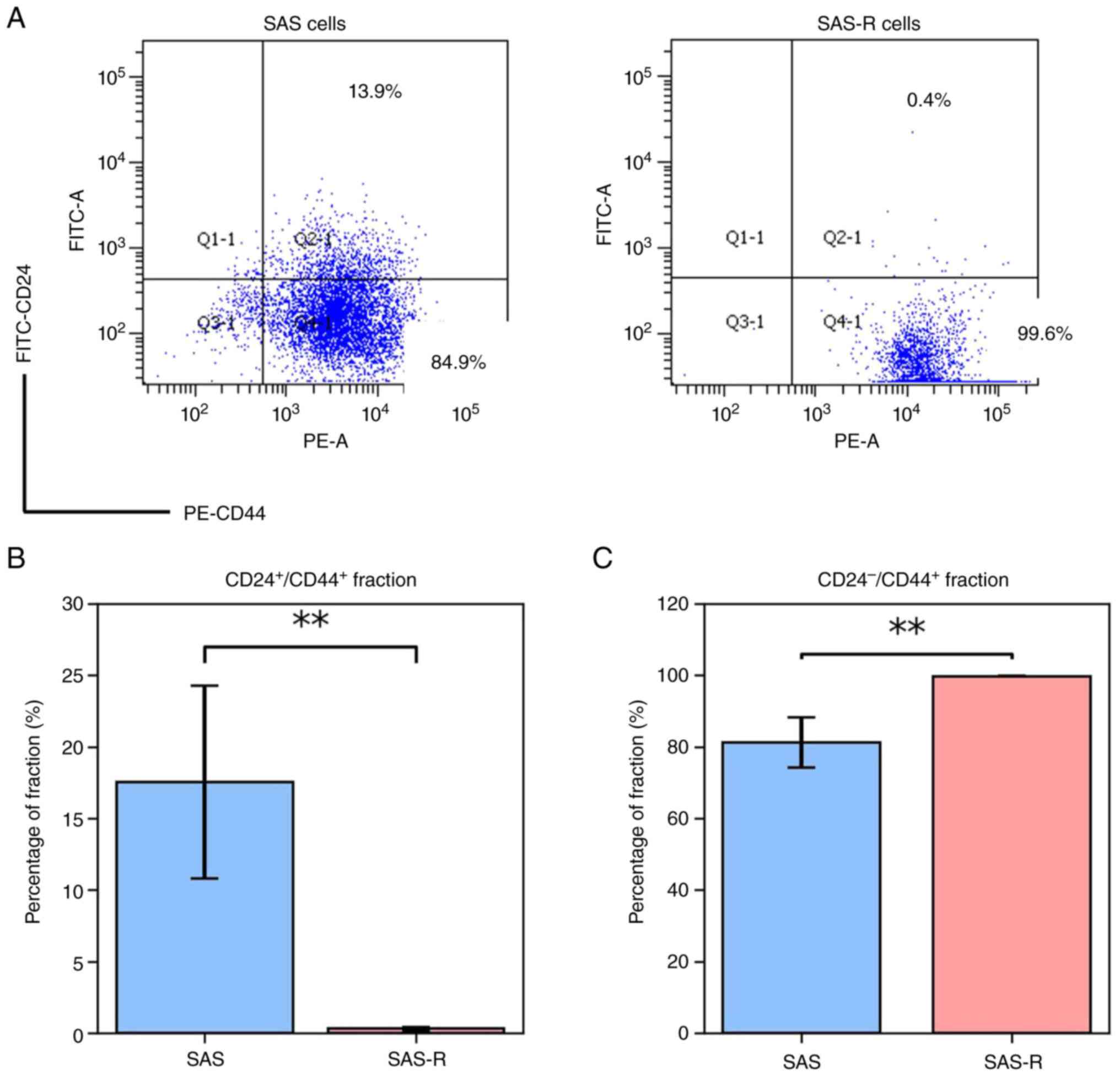
Figure 1

Measurements of the cancer stem cell
markers, CD24 and CD44. (A) Representative cytograms of SAS and
SAS-R cells. The fractions of (B) CD24+/CD44+
and (C) CD24-/CD44+ were measured from the
fractions shown in the cytograms. Values are presented as the mean
± standard deviation. **P<0.01, significant
differences.

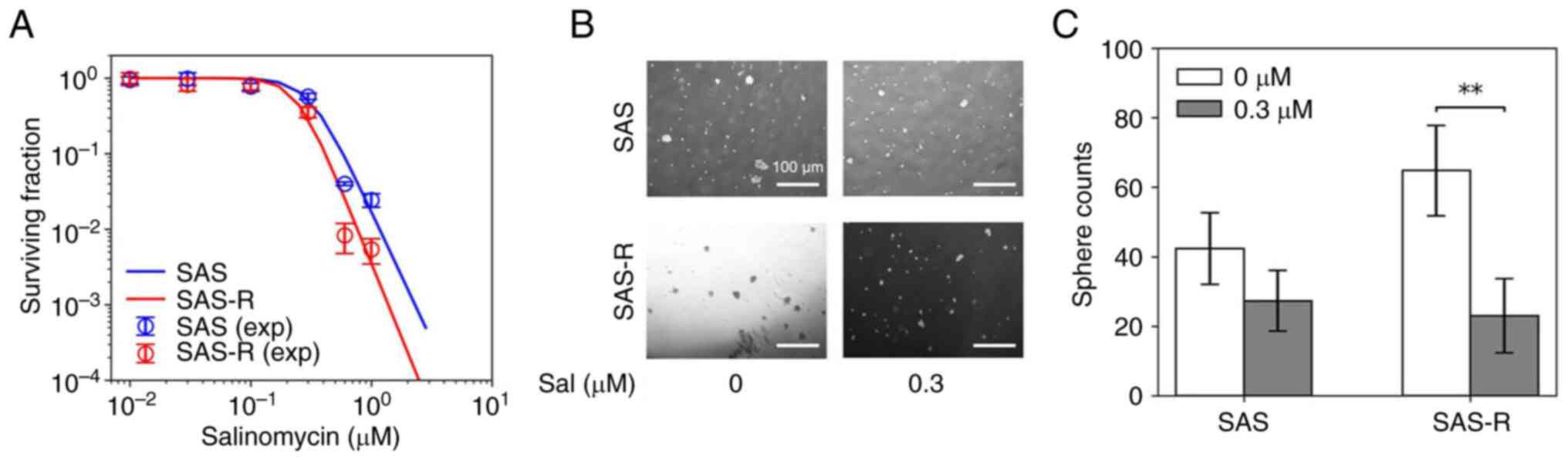
Figure 2

Cell surviving fraction and sphere
formation following treatment with Sal. (A) The cell surviving
fraction of the SAS and SAS-R cells, Sal concentration (i.e., 0,
0.01, 0.03, 0.1, 0.3, 0.6 and 1 µM) gradient. Exp represents
experimental data. Blue and Red solid lines indicate log-logistic
sigmoidal curve fitting SAS and SAS-R cell surviving fraction,
respectively. (B) Representative images are shown. White scale
bars, 100 µm. (C) Sphere counts following treatment with 0.3 µM
Sal. Values are presented as the mean ± standard deviation.
**P<0.01, significant differences. Sal,
salinomycin.

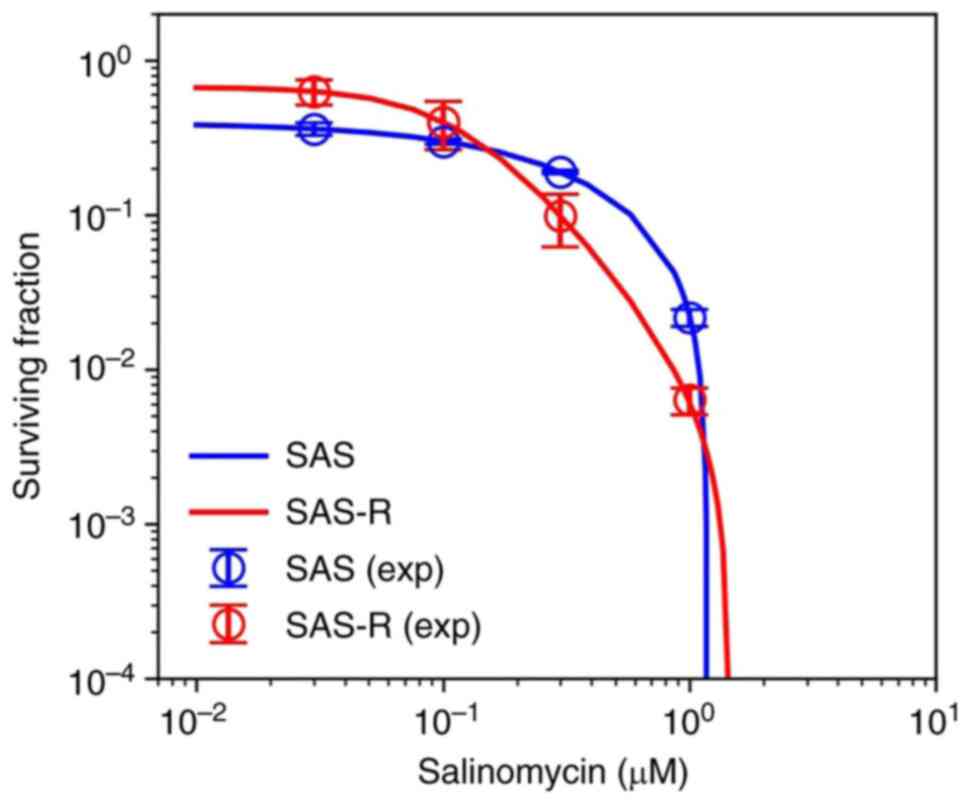
Figure 3

Surviving fractions of SAS and SAS-R
cells following 2 Gy irradiation under Sal administration. These
surviving fractions were normalized to the respective untreated
controls for SAS (blue) and SAS-R (red) cells. Exp represents
experimental data.

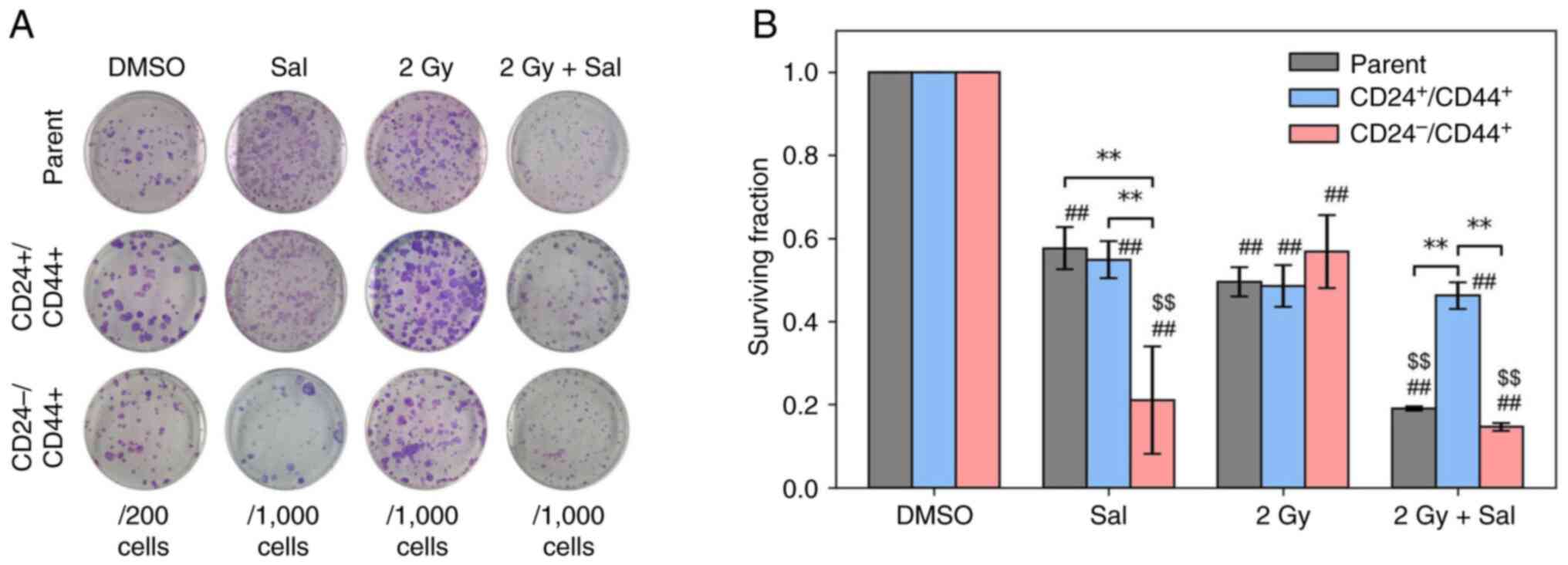
Figure 4

Cell surviving fractions of SAS cells
and their subpopulations. (A) Representative colony images are
shown. The numbers indicate the number of seeded cells. (B)
Surviving fractions of the parental SAS cells and their
subpopulations (i.e., CD24+/CD44+ and
CD24-/CD44+ fractions). Values are presented
as the mean ± standard deviation. **P<0.01,
##P<0.01 and $$P<0.01, significant
differences between brackets (above the bars), DMSO group and 2 Gy
group, respectively. Sal, salinomycin.

Figure 5

Apoptotic cells treated with Sal
and/or 2 Gy irradiation. (A) Representative cytograms of apoptotic
cells 24 h following treatment with Sal and/or 2 Gy irradiation.
(B) Annexin V-positive fractions were defined as the apoptotic
fractions. Values are presented as the mean ± standard deviation.
*P<0.05 and **P<0.01, significant
differences. Sal, salinomycin.
View References

1 

Sung H, Ferlay J, Siegel RL, Laversanne M, Soerjomataram I, Jemal A and Bray F: Global cancer statistics 2020: GLOBOCAN estimates of incidence and mortality worldwide for 36 cancers in 185 countries. CA Cancer J Clin. 71:209–249. 2021.PubMed/NCBI View Article : Google Scholar

2 

Ganesh K and Massagué J: Targeting metastatic cancer. Nat Med. 27:34–44. 2021.PubMed/NCBI View Article : Google Scholar

3 

Yin W, Wang J, Jiang L and James Kang Y: Cancer and stem cells. Exp Biol Med (Maywood). 246:1791–1801. 2021.PubMed/NCBI View Article : Google Scholar

4 

Shibue T and Weinberg RA: EMT, CSCs, and drug resistance: The mechanistic link and clinical implications. Nat Rev Clin Oncol. 14:611–629. 2017.PubMed/NCBI View Article : Google Scholar

5 

Olivares-Urbano MA, Griñán-Lisón C, Marchal JA and Núñez MI: CSC radioresistance: A therapeutic challenge to improve radiotherapy effectiveness in cancer. Cancers (Basel). 9(1651)2020.PubMed/NCBI View Article : Google Scholar

6 

Shimura T, Nara H, Yamazaki M, Sasatani M and Ushiyama A: Suppression of cancer stem-like cell radioresistance by inhibiting AMPK signaling. J Radiat Res. 66:227–233. 2025.PubMed/NCBI View Article : Google Scholar

7 

Yuan SF, Wang YM, Chan LP, Hung AC, Nguyen HDH, Chen YK, Hu SC, Lo S and Wang YY: IL-1RA promotes oral squamous cell carcinoma malignancy through mitochondrial metabolism-mediated EGFR/JNK/SOX2 pathway. J Transl Med. 21(473)2023.PubMed/NCBI View Article : Google Scholar

8 

Hasegawa K, Saga R, Takahashi R, Fukui R, Chiba M, Okumura K, Tsuruga E and Hosokawa Y: 4-Methylumbelliferone inhibits clonogenic potency by suppressing high molecular weight-hyaluronan in fibrosarcoma cells. Oncol Lett. 19:2801–2808. 2020.PubMed/NCBI View Article : Google Scholar

9 

Oyama T, Hosokawa Y, Abe K, Hasegawa K, Fukui R, Aoki M and Kobayashi W: Prognostic value of quantitative FDG-PET in the prediction of survival and local recurrence for patients with advanced oral cancer treated with superselective intra-arterial chemoradiotherapy. Oncol Lett. 19:3775–3780. 2020.PubMed/NCBI View Article : Google Scholar

10 

Fuchs D, Heinold A, Opelz G, Daniel V and Naujokat C: Salinomycin induces apoptosis and overcomes apoptosis resistance in human cancer cells. Biochem Biophys Res Commun. 390:743–749. 2009.PubMed/NCBI View Article : Google Scholar

11 

Gupta PB, Onder TT, Jiang G, Tao K, Kuperwasser C, Weinberg RA and Lander ES: Identification of selective inhibitors of cancer stem cells by high-throughput screening. Cell. 138:645–659. 2009.PubMed/NCBI View Article : Google Scholar

12 

Qi D, Liu Y, Li J, Huang JH, Hu X and Wu E: Salinomycin as a potent anticancer stem cell agent: State of the art and future directions. Med Res Rev. 42:1037–1063. 2022.PubMed/NCBI View Article : Google Scholar

13 

Kuwahara Y, Mori M, Kitahara S and Fukumoto M, Ezaki T, Mori S, Echigo S, Ohkubo Y and Fukumoto M: Targeting of tumor endothelial cells combining 2 Gy/day of X-ray with everolimus is the effective modality for overcoming clinically relevant radioresistant tumors. Cancer Med. 3:310–321. 2014.PubMed/NCBI View Article : Google Scholar

14 

Begg AC, Stewart FA and Vens C: Strategies to improve radiotherapy with targeted drugs. Nat Rev Cancer. 11:239–253. 2011.PubMed/NCBI View Article : Google Scholar

15 

Fukui R, Saga R, Matsuya Y, Tomita K, Kuwahara Y, Ohuchi K, Sato T, Okumura K, Date H, Fukumoto M and Hosokawa Y: Tumor radioresistance caused by radiation-induced changes of stem-like cell content and sub-lethal damage repair capability. Sci Rep. 12(1056)2022.PubMed/NCBI View Article : Google Scholar

16 

Todoroki K, Ogasawara S, Akiba J, Nakayama M, Naito Y, Seki N, Kusukawa J and Yano H: CD44v3+/CD24- cells possess cancer stem cell-like properties in human oral squamous cell carcinoma. Int J Oncol. 48:99–109. 2016.PubMed/NCBI View Article : Google Scholar

17 

Panagiotou E, Syrigos NK, Charpidou A, Kotteas E and Vathiotis IA: CD24: A novel target for cancer immunotherapy. J Pers Med. 12(1235)2022.PubMed/NCBI View Article : Google Scholar

18 

Blick T, Hugo H, Widodo E, Waltham M, Pinto C, Mani SA, Weinberg RA, Neve RM, Lenburg ME and Thompson EW: Epithelial mesenchymal transition traits in human breast cancer cell lines parallel the CD44(hi)/CD24(lo/-) stem cell phenotype in human breast cancer. J Mammary Gland Biol Neoplasia. 15:235–252. 2010.PubMed/NCBI View Article : Google Scholar

19 

Kawano T, Yanoma S, Nakamura Y, Ozeki A, Kokatsu T, Kubota A, Furukawa M and Tsukuda M: Soluble CD44 standard, CD44 variant 5 and CD44 variant 6 and their relation to staging in head and neck cancer. Acta Otolaryngol. 125:392–397. 2005.PubMed/NCBI View Article : Google Scholar

20 

Joshua B, Kaplan MJ, Doweck I, Pai R, Weissman IL, Prince ME and Ailles LE: Frequency of cells expressing CD44, a head and neck cancer stem cell marker: Correlation with tumor aggressiveness. Head Neck. 34:42–49. 2012.PubMed/NCBI View Article : Google Scholar

21 

Davis SJ, Divi V, Owen JH, Bradford CR, Carey TE, Papagerakis S and Prince ME: Metastatic potential of cancer stem cells in head and neck squamous cell carcinoma. Arch Otolaryngol Head Neck Surg. 136:1260–1266. 2010.PubMed/NCBI View Article : Google Scholar

22 

Arnold CR, Mangesius J, Skvortsova II and Ganswindt U: The role of cancer stem cells in radiation resistance. Front Oncol. 10(164)2020.PubMed/NCBI View Article : Google Scholar

23 

Szumiel I: Ionizing radiation-induced oxidative stress, epigenetic changes and genomic instability: The pivotal role of mitochondria. Int J Radiat Biol. 91:1–12. 2015.PubMed/NCBI View Article : Google Scholar

24 

Xia P and Xu XY: PI3K/Akt/mTOR signaling pathway in cancer stem cells: From basic research to clinical application. Am J Cancer Res. 5:1602–1609. 2015.PubMed/NCBI

25 

Ohuchi K, Saga R, Hasegawa K, Tsuruga E, Hosokawa Y, Fukumoto M and Okumura K: DNA-PKcs phosphorylation specific inhibitor NU7441 enhances the radiosensitivity of clinically relevant radioresistant oral squamous cell carcinoma cells. Biomed Rep. 18(28)2023.PubMed/NCBI View Article : Google Scholar

26 

Dewangan J, Srivastava S and Rath SK: Salinomycin: A new paradigm in cancer therapy. Tumour Biol. 39(1010428317695035)2017.PubMed/NCBI View Article : Google Scholar

27 

Kim KY, Park KI, Kim SH, Yu SN, Lee D, Kim YW, Noh KT, Ma JY, Seo YK and Ahn SC: Salinomycin induces reactive oxygen species and apoptosis in aggressive breast cancer cells as mediated with regulation of autophagy. Anticancer Res. 37:1747–1758. 2017.PubMed/NCBI View Article : Google Scholar

28 

Tyagi M and Patro BS: Salinomycin reduces growth, proliferation and metastasis of cisplatin resistant breast cancer cells via NF-κB deregulation. Toxicol In Vitro. 60:125–131. 2019.PubMed/NCBI View Article : Google Scholar

29 

Patel S, Patel A, Nair A, Shah K, Shah K, Tanavde V and Rawal R: Salinomycin mediated therapeutic targeting of circulating stem like cell population in oral cancer. J Biomol Struct Dyn. 40:11141–11153. 2022.PubMed/NCBI View Article : Google Scholar

30 

Lim YC, Ensbey KS, Offenhäuser C, D'souza RCJ, Cullen JK, Stringer BW, Quek H, Bruce ZC, Kijas A, Cianfanelli V, et al: Simultaneous targeting of DNA replication and homologous recombination in glioblastoma with a polyether ionophore. Neuro Oncol. 22:216–228. 2020.PubMed/NCBI View Article : Google Scholar

31 

Zhang Y, Zuo Y, Guan Z, Lu W, Xu Z, Zhang H, Yang Y, Yang M, Zhu H and Chen X: Salinomycin radiosensitizes human nasopharyngeal carcinoma cell line CNE-2 to radiation. Tumour Biol. 37:305–311. 2016.PubMed/NCBI View Article : Google Scholar

32 

Tomita K, Fukumoto M, Itoh K, Kuwahara Y, Igarashi K, Nagasawa T, Suzuki M, Kurimasa A and Sato T: MiR-7-5p is a key factor that controls radioresistance via intracellular Fe2+ content in clinically relevant radioresistant cells. Biochem Biophys Res Commun. 518:712–718. 2019.PubMed/NCBI View Article : Google Scholar

33 

Mai TT, Hamaï A, Hienzsch A, Cañeque T, Müller S, Wicinski J, Cabaud O, Leroy C, David A, Acevedo V, et al: Salinomycin kills cancer stem cells by sequestering iron in lysosomes. Nat Chem. 9:1025–1033. 2017.PubMed/NCBI View Article : Google Scholar

34 

Zhang G, Wang W, Yao C, Ren J, Zhang S and Han M: Salinomycin overcomes radioresistance in nasopharyngeal carcinoma cells by inhibiting Nrf2 level and promoting ROS generation. Biomed Pharmacother. 91:147–154. 2017.PubMed/NCBI View Article : Google Scholar

Related Articles

  • Abstract
  • View
  • Download
Copy and paste a formatted citation
Spandidos Publications style
Saga R, Hosokawa Y and Fukumoto M: Salinomycin is effective for clinically relevant radioresistant oral squamous cell carcinoma cancer cells and their cancer stem cell marker positive fraction. Med Int 6: 51, 2026.
APA
Saga, R., Hosokawa, Y., & Fukumoto, M. (2026). Salinomycin is effective for clinically relevant radioresistant oral squamous cell carcinoma cancer cells and their cancer stem cell marker positive fraction. Medicine International, 6, 51. https://doi.org/10.3892/mi.2026.335
MLA
Saga, R., Hosokawa, Y., Fukumoto, M."Salinomycin is effective for clinically relevant radioresistant oral squamous cell carcinoma cancer cells and their cancer stem cell marker positive fraction". Medicine International 6.5 (2026): 51.
Chicago
Saga, R., Hosokawa, Y., Fukumoto, M."Salinomycin is effective for clinically relevant radioresistant oral squamous cell carcinoma cancer cells and their cancer stem cell marker positive fraction". Medicine International 6, no. 5 (2026): 51. https://doi.org/10.3892/mi.2026.335
Copy and paste a formatted citation
x
Spandidos Publications style
Saga R, Hosokawa Y and Fukumoto M: Salinomycin is effective for clinically relevant radioresistant oral squamous cell carcinoma cancer cells and their cancer stem cell marker positive fraction. Med Int 6: 51, 2026.
APA
Saga, R., Hosokawa, Y., & Fukumoto, M. (2026). Salinomycin is effective for clinically relevant radioresistant oral squamous cell carcinoma cancer cells and their cancer stem cell marker positive fraction. Medicine International, 6, 51. https://doi.org/10.3892/mi.2026.335
MLA
Saga, R., Hosokawa, Y., Fukumoto, M."Salinomycin is effective for clinically relevant radioresistant oral squamous cell carcinoma cancer cells and their cancer stem cell marker positive fraction". Medicine International 6.5 (2026): 51.
Chicago
Saga, R., Hosokawa, Y., Fukumoto, M."Salinomycin is effective for clinically relevant radioresistant oral squamous cell carcinoma cancer cells and their cancer stem cell marker positive fraction". Medicine International 6, no. 5 (2026): 51. https://doi.org/10.3892/mi.2026.335
Follow us
  • Twitter
  • LinkedIn
  • Facebook
About
  • Spandidos Publications
  • Careers
  • Cookie Policy
  • Privacy Policy
How can we help?
  • Help
  • Live Chat
  • Contact
  • Email to our Support Team